




Abstract
Purpose
This study aims to review the policy background of China's ever-growing fiscal spending on education and discusses the aggregate growth of its national fiscal spending on education and the responsible bodies involved.
Design/Approach/Methods
This study adopts policy analysis and descriptive statistics as its primary research methods.
Findings
Since 2012, China's national fiscal spending on education has accounted for no less than 4% of its gross domestic product for nine consecutive years. Additionally, over 80% of China's total education spending is underpinned by state finances, with the country boasting the largest education system in the world. While compulsory education accounts for approximately half of China's national fiscal spending on education, higher education reflects the highest budgetary education spending per student. Furthermore, China has been actively increasing its fiscal spending on pre-school education.
Originality/Value
The findings of this study have implications for understanding the status quo and changes in China's education spending.
Keywords
Introduction
The Ministry of Education of the People's Republic of China (MOE) recently released the 2020 Statistical Bulletin on Education Spending in conjunction with other ministries and commissions. According to published data, in 2020, China's national fiscal spending on education saw an increase of 7.15% from 2019, amounting to roughly 4.22% of the country's gross domestic product (GDP), thus marking the ninth consecutive year in which China spent no less than 4% of its national GDP on education since 2012. In view of the adverse impact of the pandemic, a number of education finance experts have expressed concerns about whether China could meet its target and sustain its national fiscal expenditure of at least 4% of its GDP on education in 2020. Despite the complexities of the international environment and economic landscape, China succeeded in achieving its education finance target—a testament to China's prioritization of and devotion to education spending across all levels of government.
The education finance target of no less than 4% has attracted significant research attention in China (Yuan & He, 2019). By analyzing the amount and structural characteristics of China's financial investment in education over the past two decades, this study can provide a new perspective for understanding why and how the Chinese government is committed to education. The purpose of this policy review is twofold: (1) to show China's effort at investing in education, revealing potential investment preferences and challenges faced by the government, and (2) to discuss potential associations between educational investment and achievement, providing some reference and inspiration for educational development in other developing countries.
The remainder of this paper is divided into the following sections. Section 2 introduces the policy background for China's ever-growing fiscal spending on education. Section 3 analyzes the aggregate growth of China's fiscal spending on education and responsible bodies, while Section 4 discusses the internal structure of this spending and changes therein. Section 5 presents an overview of the advancements and achievements made by China's education sector over the last 20 years, and Section 6 discusses the country's prospects, providing recommendations in this respect.
Policy background
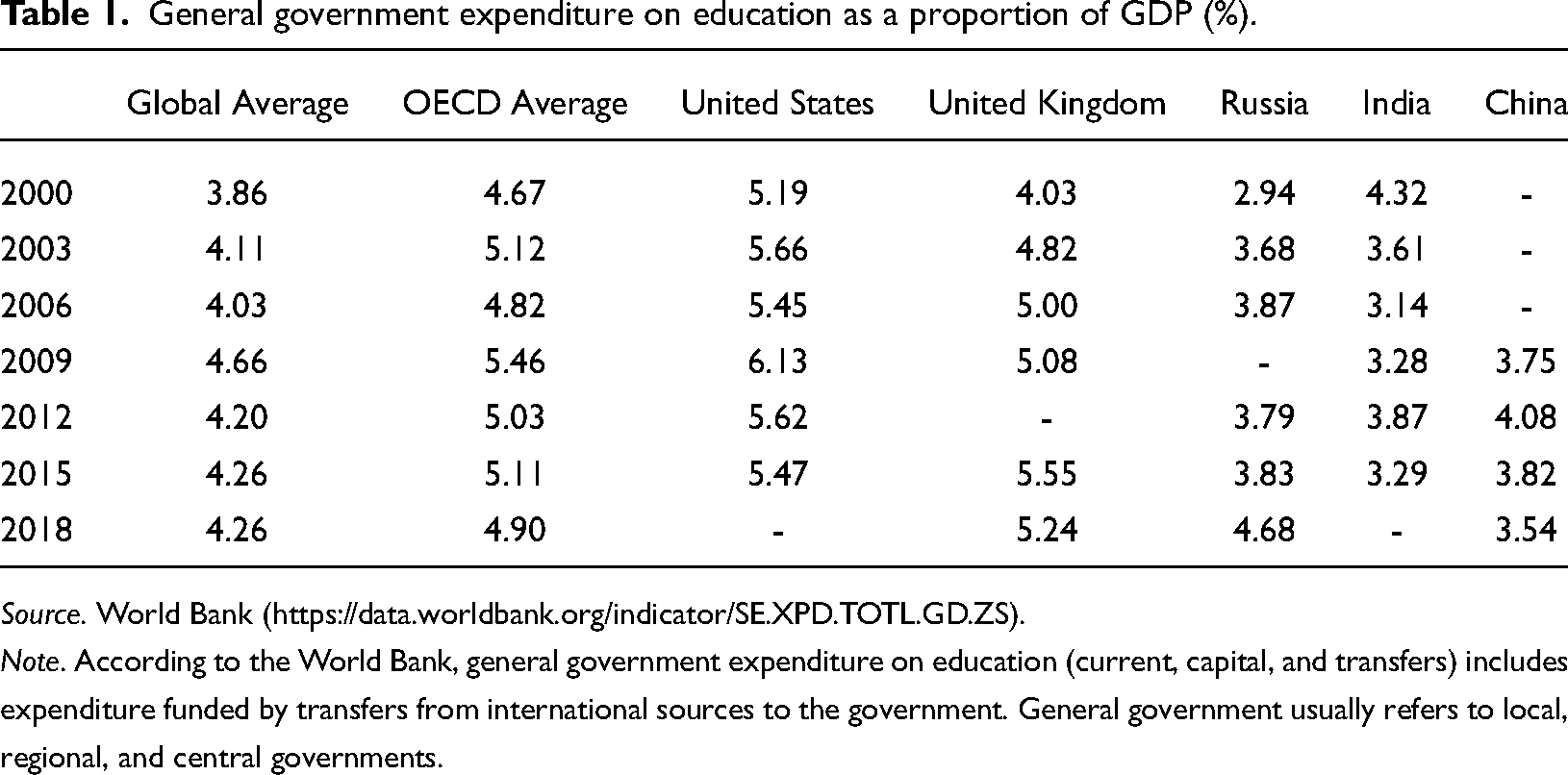
Since the beginning of the 21st century, governments worldwide have generally increased their education spending. As Table 1 illustrates, the global average of general government expenditure on education as a proportion of GDP saw a gradual increase from 3.9% in 2000 to 4.3% in 2018. There are significant cross-country differences, with Organisation for Economic Co-operation and Development (OECD) member countries reporting higher government education expenditures as a proportion of their GDP. In the United States, for instance, the percentage was as high as 5.2% in 2000, remaining above 5% over the next 20 years. Although at relatively low levels, Russia's government expenditure on education has seen rapid growth recently, accounting for close to 4.7% of the GDP in 2018. The opposite trend was observed in India, where government expenditure on education as a proportion of GDP plummeted from 4.3% in 2000 to 3.3% in 2015.
General government expenditure on education as a proportion of GDP (%).
Source. World Bank (https://data.worldbank.org/indicator/SE.XPD.TOTL.GD.ZS).
Note. According to the World Bank, general government expenditure on education (current, capital, and transfers) includes expenditure funded by transfers from international sources to the government. General government usually refers to local, regional, and central governments.
According to statistics provided by the World Bank, in 2018, China's GDP per capita, as measured in current USD, was estimated to be around USD 9,900, placing the country in the upper-middle-income category. However, its government education expenditure, measured as a proportion of GDP, stood at around 3.5% in 2018, which is below the global average level and substantially behind that of OECD and other developed countries. Although there is still a gap between China's education spending and that of developed countries, the Chinese government has spent the last 20 years working to close this gap with a core target in mind: maintaining its national fiscal spending on education at above 4% of its GDP, while sustaining growth in aggregate education spending.
Setting this goal had a good reason. The no-less-than-4% target was launched as part of China's policy on education spending following extensive research and surveys, communication with stakeholders, and intensive government promotional campaigns. In the early 1980s, Chinese scholars such as Beilong Zhou and Liangkun Chen found that if the levels of economic development of a number of countries in a given year (e.g., GDP per capita) were plotted along the x-axis on a coordinate system and the proportions of government finances allocated to education (i.e., public education expenditures) relative to their GDP along the y-axis, the resulting scatter graph would clearly show the points distributed along a straight line with a slope greater than zero (Liu, 2011). Such data can be used to create a standardized model for evaluating and predicting the proportion of education spending in the GDP and can be used for the prediction and planning of future spending. As China's target GDP per capita was estimated to be around USD 800–1,000 by the end of the 20th century, substituting the USD 800 estimate into the model indicated that an education spending of around 4.06% of the GDP would be appropriate. In other words, when an economy reaches a per capita GDP of USD 800, its national spending on education as a proportion of GDP should average at approximately 4.06%.
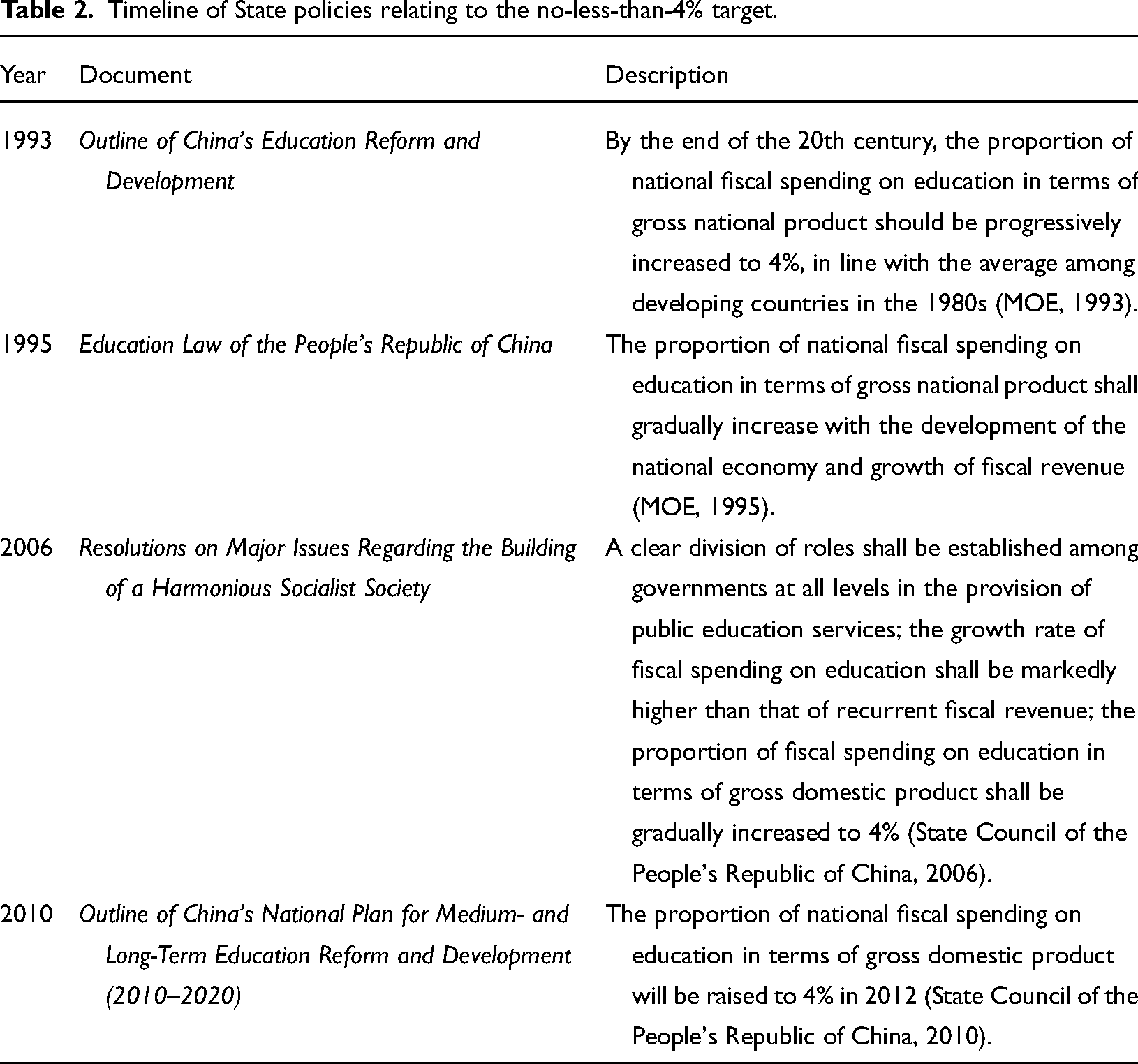
The estimates and policy recommendations of scholars are independent of the actual decision-making by countries. Given the scarcity of fiscal resources, governmental departments in China were sharply divided on whether national spending on education should be benchmarked against 4% of the GDP. Following years of coordination and hard work by the then-State Education Commission, the 4% target was eventually written into the Outline of China's Education Reform and Development in 1993, and the statistical scope of public education expenditure was defined as national fiscal spending on education. Since then, the Chinese government has launched a number of policy documents, gradually imparting a high level of political sensitivity to the no-less-than-4% approach. Support from all government levels and different sectors of society has also been mobilized to foster a unified understanding of the overriding policy target in education across the Communist Party of China and the Chinese society as a whole.
Table 2 chronicles the major policy milestones in this initiative. Thus, whereas the Chinese government first proposed a 4% target in fiscal education spending at the end of the 20th century in 1993, the actual implementation took far longer than originally anticipated. Indeed, from its initial proposal, it took two long decades to turn the no-less-than-4% target into reality. With no less than 4% as a starting point and through a series of policies highlighting and providing guidance, all levels of the Chinese government continue to drive the implementation and growth of the country's fiscal spending on education. In 2012, its fiscal spending on education reached 4.28% of its GDP, an unprecedented instance in which the country not only attained, but also exceeded, its target. This figure has remained above 4% since then.
Timeline of State policies relating to the no-less-than-4% target.
Fiscal spending on education and the parties involved
In China, education spending refers to the total funds channeled into education by society as a whole; it mainly comprises national fiscal spending on education as part of fiscal funds and education spending from other sources. The study focuses on the former because state finances have been the main source of China's education spending and the cornerstone of the world's largest education system.
Conceptually, national fiscal spending on education encompasses all fiscal funds obtained by schools, including education funds earmarked by public fiscal and government fund budgets, grants from school-running enterprises, and education funds allocated from the revenue of school-run industries and social services. Of these, the education funds earmarked by public fiscal budgets, otherwise known as general budgetary spending on education, can be subdivided into several categories, including operating expenditure on education, capital spending, and education surcharges. Operating expenditures on education can be further broken down into personnel and public expenditures. The former entails expenses such as remuneration and benefits for teachers and scholarships and grants for students, while the latter comprises the expenses of daily operations, public services, and procurement of equipment by schools and education administrative units at all levels (see Figure 1), among others. In short, operating expenditure on education forms a core component of general budgetary spending on education, which is an integral part of national fiscal spending on education.
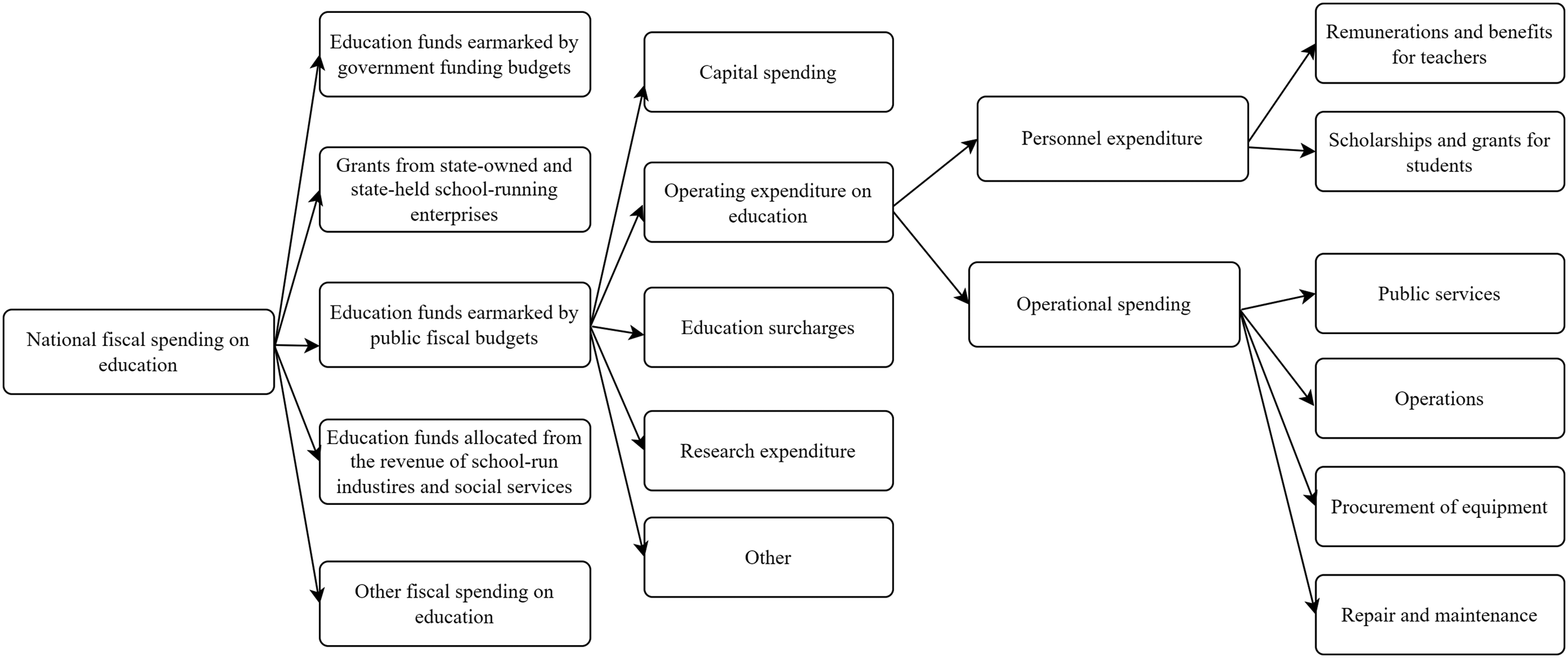
Composition of China's national fiscal spending on education. Source. The National Bureau of Statistics, the Ministry of Education, and the Ministry of Finance.
National fiscal spending on education, the focus of this study, is broadly equivalent to the concept of public education expenditures adopted worldwide (Blankenau & Simpson, 2004). It is generally thought that a country's public expenditure on education, as a proportion of its GDP, reflects its government's prioritization of and spending on educational development and plays a significant role in the country's educational development. It is also regarded as an important measure of national development, from education to the socioeconomic landscape on the whole (Guo et al., 2011).
Chinese society has always prioritized education and committed itself to increasing its education spending. China's total national spending on education increased from RMB 384.908 billion in 2000 to RMB 5.3 trillion in 2020, with a compound annual growth rate exceeding 12%. As Figure 2 shows, there has been a clear increase in China's total national expenditure on education since 2009, with the figure remaining above 4% of the GDP since 2012.
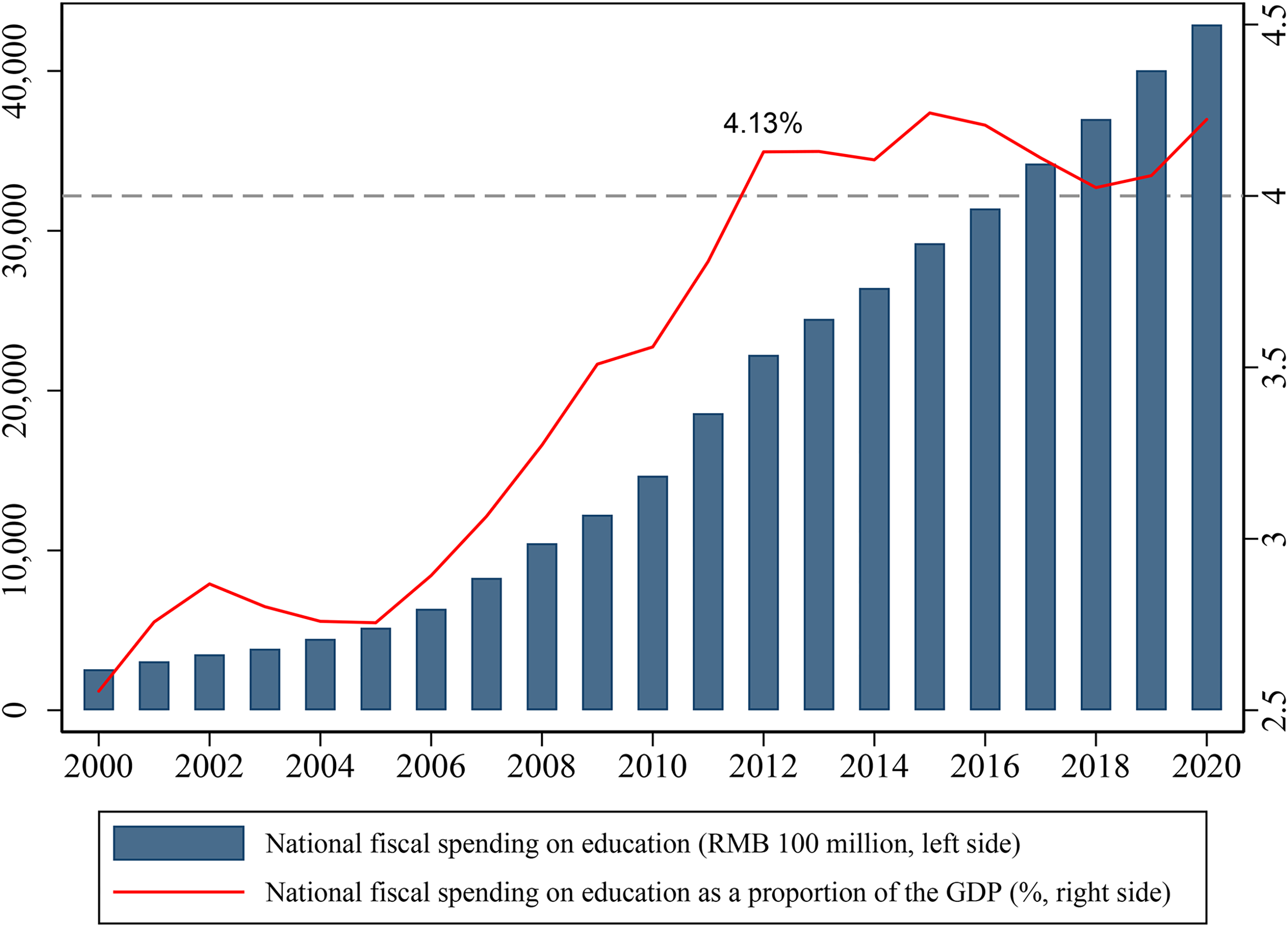
Trends in national fiscal spending on education, 2000–2020. Source. The National Bureau of Statistics, the Ministry of Education, and the Ministry of Finance.
Moreover, as Figure 3 illustrates, China's national fiscal spending on education has followed a relatively similar upward trend. The total national fiscal spending on education and its proportion to GDP have both increased significantly since 2009, with the latter first exceeding 4% in 2012 and remaining above this target. Accordingly, China's national fiscal spending on education contributes to over 80% of its total spending on education, whereas non-fiscal spending on education accounts for approximately 1% of the GDP. 1
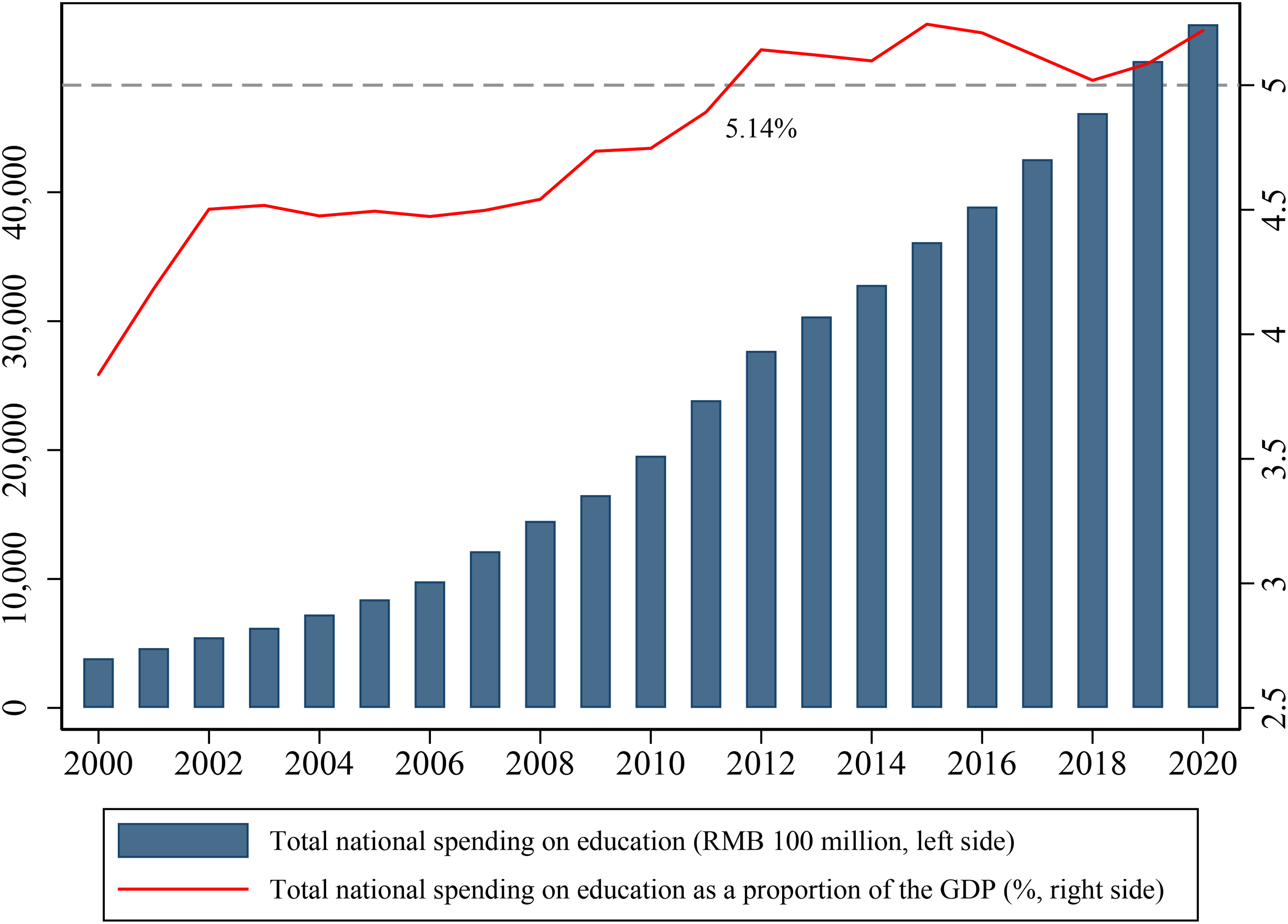
Trends in total national spending on education, 2000–2020. Source. The National Bureau of Statistics, the Ministry of Education, and the Ministry of Finance.
From a hierarchical viewpoint, national fiscal spending on education can be divided into central and local fiscal spending. In terms of the actual responsible parties, local governments are the primary source of education spending in Chinese society. For example, in 2020, the national general public funding of education was 3,631.05 billion yuan, of which the local public funding was 3,089.68 billion yuan, accounting for approximately 85% (MOE, 2021a). The central government primarily allocates funds to local education through grants to higher education institutions directly under the Central Committee, as well as through transfer payments (i.e., grants for education projects). This aligns with general practices globally, with the main responsibility for fiscal spending on education assumed by local governments in almost all countries (Fisher & Papke, 2000; Zanzig, 1997). This is largely because schools offering basic public education services are scattered around these countries in large numbers, making it difficult for central governments to manage them and causing them to rely largely on local governments.
At the local government level, China's fiscal spending on primary and secondary education is generally borne by county-level governments (Li & Ying, 2012; Tsang & Ding, 2003). This stands in stark contrast to countries led by provincial governments, such as Australia and Germany. However, this county-led governance model has faced a variety of practical challenges. While country-level governments have a better understanding of local customs and traditions and a greater ability to adapt the implementation of education policies to local needs, they tend to have poorer financing capacities and often face tremendous pressure on education funding. Consequently, they tend to struggle to break even and lack the fiscal resources necessary to secure their educational initiatives. As Figure 4 shows, recently, general public budgetary spending on education by local governments has accounted for over 30% of all fiscal budgetary revenue attributable to local governments (excluding transfer payments from the central government to the local governments).
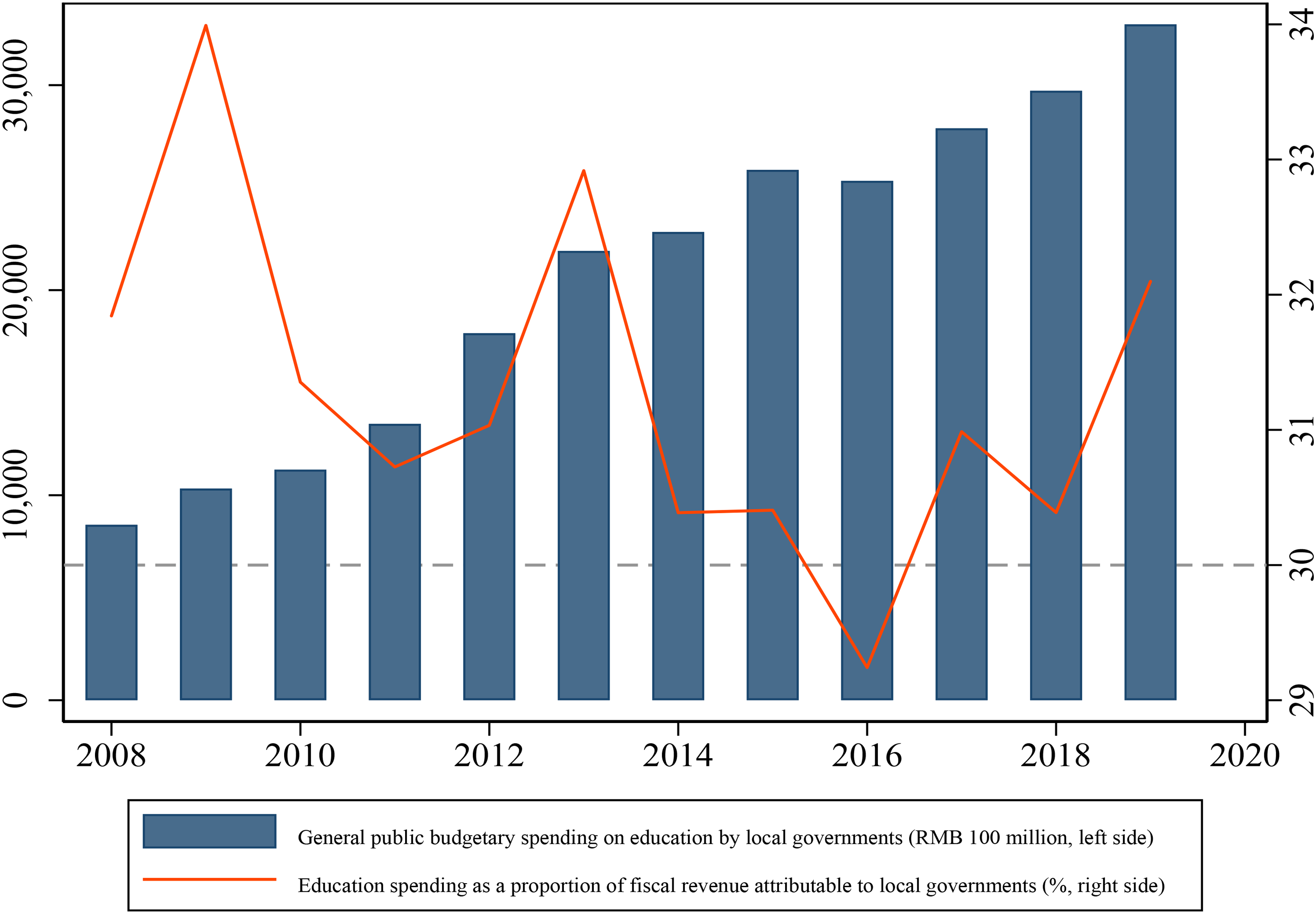
Changes in China's general public budgetary spending on education by local governments as a proportion of fiscal budgetary revenue attributable to local governments. Source. Previous issues of the China Financial Yearbook.
Regional economic disparities result in disparities in access to educational resources across China. More specifically, local governments in the central and western parts of China, such as Qinghai, Gansu, and Guangxi, face heavier financial burdens with respect to education. To reconcile the mismatch between fiscal and administrative powers, China's central government has adopted transfer payments as the primary approach to ensuring the normal functioning of local governments, especially at the county level, and has begun devolving more power to provincial governments in terms of coordinating education affairs. In other words, provincial governments have become the primary bodies responsible for education, coordinating the financial resources required to provide public education services.
The purpose of the transfer payment system for compulsory education in China is to ensure the supply of funds for popularizing 9-year compulsory education in economically backward rural areas and promote the balanced development of compulsory education. Specifically, the system focuses on the issues such as paying teachers’ salaries in disadvantaged areas in full, school-running conditions meeting basic standards, and poor students receiving necessary subsidies. Every year, there are huge amounts of transfers from central government to local governments, especially in western provinces. 2 Therefore, China's central government plays an important role as a moderator providing public education services.
Internal structure of and changes in China's fiscal spending on education
As discussed, China's national fiscal spending on education plays a key role in its education expenditure, which has been increasing annually and has reported an aggregate amount exceeding RMB 5 trillion in 2020. This begs the question of how fiscal spending is distributed on such a massive scale. This section analyzes the distribution of China's national fiscal spending across different stages of education. In doing so, it draws on the example of fiscal budgetary spending on education per student at the local level to elucidate the preferences underlying the Chinese government's fiscal spending on students at various stages of education.
First, Chinese education is spread across several levels and institutions, including kindergartens, elementary schools, junior high schools, senior high schools, secondary vocational schools, and higher education institutions (Figure 5). In this respect, compulsory education is the most crucial, accounting for over 50% of national fiscal spending on education between elementary and junior high schools.
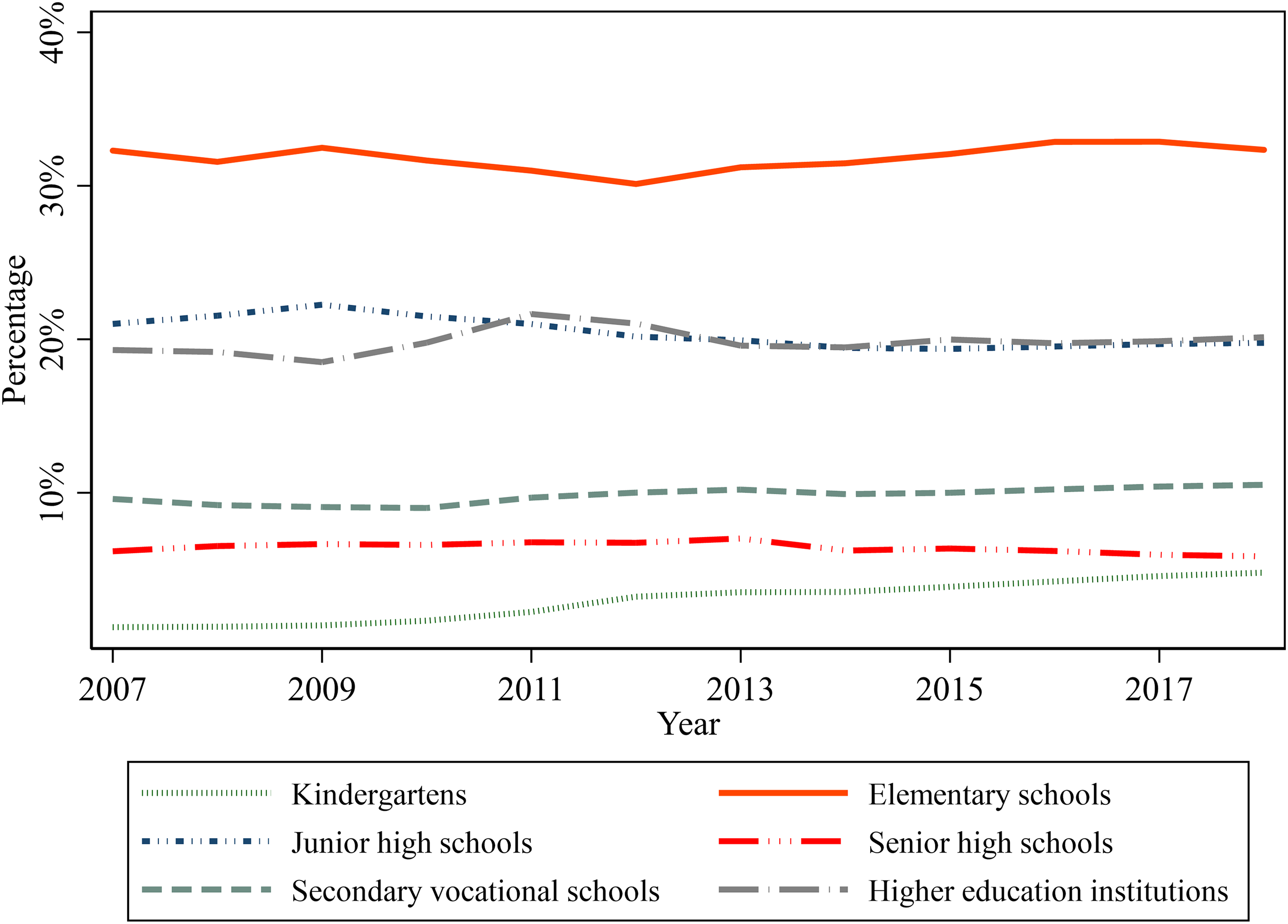
Distribution of China's national fiscal spending on education by stage of education. Source. Previous issues of the China Statistical Yearbook of Education.
Second, it is estimated that approximately 20% of fiscal spending is allocated to higher education every year. Under the guiding strategy of “seizing the commanding heights” (Yang & Wang, 2020), the Chinese government has spared no effort to invest in higher education institutions, particularly the country's top universities. This trend is unlikely to change in the near future.
Third, senior high schools and secondary vocational schools (including senior vocational high schools, specialized secondary schools, and technical schools) account for approximately 10% and 6% of education spending, respectively. Although vocational education is as important as general education, China's total national fiscal spending on secondary vocational schools remains significantly lower.
Finally, although China's fiscal spending on pre-school education is considerably lower in comparison to other levels owing to the significant penetration of privately run kindergartens in the country, its growth rate is the highest among all stages. Indeed, the fiscal funds obtained by kindergartens gradually increased from as little as 1.2% of the total national fiscal spending on education in 2007 to 4.8% in 2018. 3
As the effect of school size has not been considered previously, to the best of our knowledge, the distribution of fiscal spending across schools and institutions at different levels does not fully reflect the relative magnitude of fiscal spending. Accordingly, to elucidate this matter, this study drew on an example of budgetary education spending per student across local schools at various levels. In addition to reflecting the cost of educating a student, this indicator reveals the government's preference for fiscal spending on education.
As Figure 6 illustrates, spending per student is the greatest for higher education, totaling over RMB 23,000 in 2019. This finding aligns with the general state of affairs in the rest of the world. Among the various stages of secondary education, spending per student is relatively consistent across junior high schools, senior high schools, and secondary vocational schools, approximating RMB 16,000 in 2019. Elementary schools account for over 30% of the total spending. However, after factoring in school size, the respective spending per student at the elementary level is significantly lower than that at the secondary level. There has also been a rapid increase in spending per student in pre-school education since 2010, with the local budgetary spending per kindergartener soaring from just RMB 1,870 in 2010 to over RMB 8,000 in 2019.
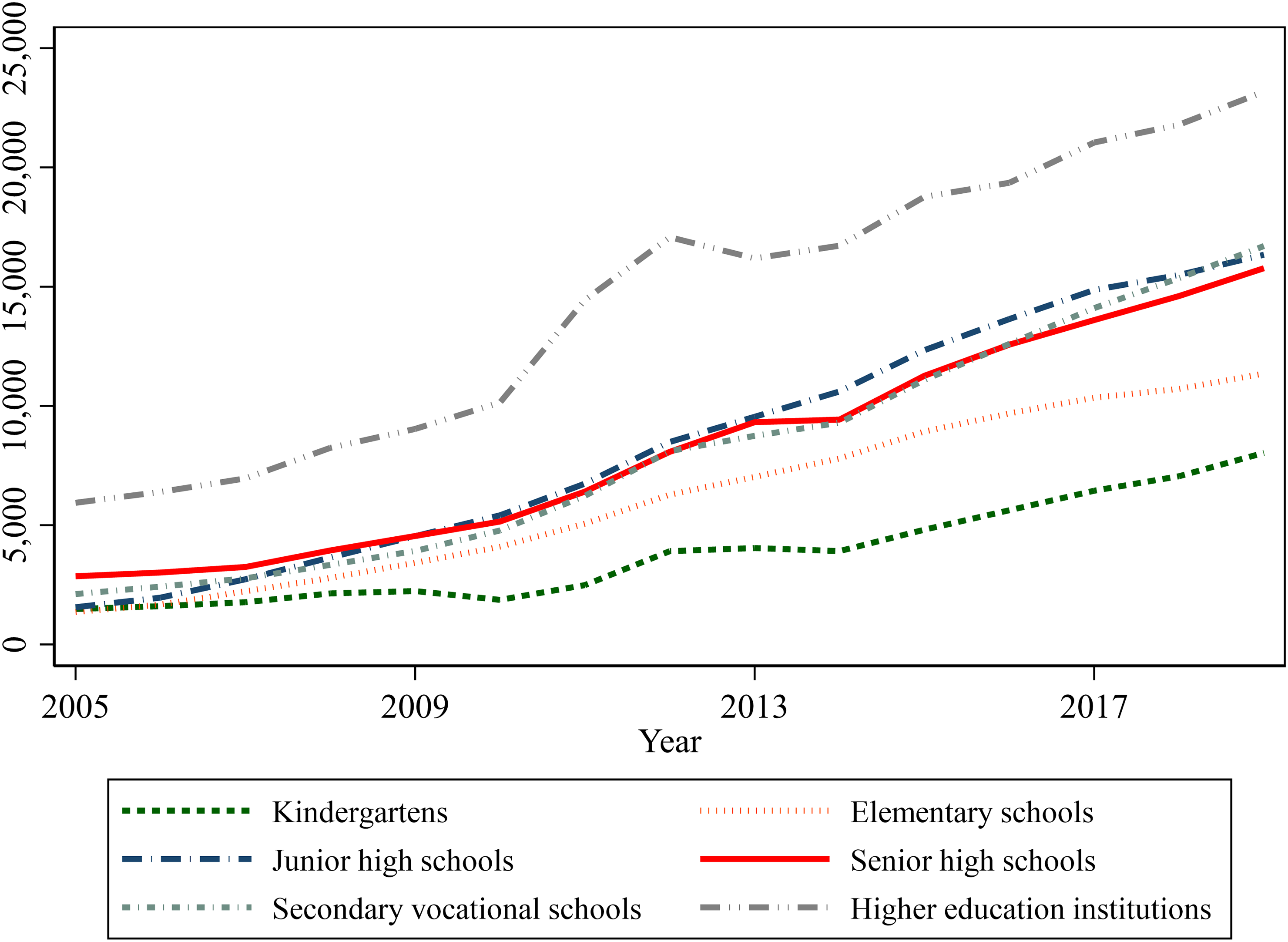
Budgetary education spending per student in local schools at all levels. Source. Previous issues of the China Statistical Yearbook of Education Spending.
Achievements in education
With the implementation and progression of the no-less-than-4% policy, China has invested trillions (RMB) in education. Focusing on two stages of education, compulsory and higher, this section traces the advancements and achievements made by China's education sector over the last 20 years, shedding light on the effectiveness and returns of the country's fiscal spending on education.
Changes in the development of China's compulsory education can be viewed from several perspectives, including increased enrolment rates in elementary and junior high schools, reduced rates of adult illiteracy, improved quality of education, and enhanced fairness of education. First, China has maintained a compulsory education system of enormous scale, the universalization of which has provided students with a continuous stream of opportunities to further their studies. Recently, the country has seen a marked increase in the enrolment rates of students graduating from elementary and junior high schools. More specifically, the enrolment rate after completion of elementary school increased from 94.89% in 2000 to 98.7% in 2010; it has remained above 98%. Meanwhile, the enrolment rate of junior high school graduates increased from 51.1% in 2000 to 87.5% in 2010 and 95.2% in 2018.
Second, the significant reduction in the rate of adult illiteracy (i.e., individuals aged 15 or above who can neither read nor write) is another important indicator of China's progress toward achieving universal compulsory education. According to China's Population Census and the 1% National Population Sample Survey, the illiteracy rate in the country's adult population dropped from approximately 10% in 2000 to 4.08% in 2010 and 2.67% in 2020.
Third, there has been a notable improvement in the quality of compulsory education. According to the China's Compulsory Education Quality Oversight Report published by the MOE's Basic Education Quality Monitoring Center (MOE, 2018), students receiving basic education in China performed relatively well. For example, 84.6% of fourth graders and 78.9% of eighth graders received an average rating or higher in their mathematic performance, while 23.8% of fourth and 26.7% of eighth graders achieved an excellent rating. 4 More recently, Chinese students have excelled in various international assessments, including the Program for International Student Assessment, far outstripping their peers from OECD countries in reading, mathematics, and science. These achievements notwithstanding, the assessments are only representative of the national average or the education level in some developed cities, with glaring regional disparities still present in some poorly educated parts of China.
Fourth, China's education was significantly improved in terms of fairness. A large body of research has demonstrated China's considerable improvements in enhancing the gender equality in educational opportunities (Zeng et al., 2014), especially in compulsory education, where little or no significant gender differences can be found. Furthermore, the number of students with disabilities has increased significantly. Thus, according to the Statistical Bulletin of China's National Educational Development, the number of children with disabilities attending schools in China increased from roughly 377,000 in 2000 to 426,000 in 2010 and 880,800 in 2020.
The expansion of China's higher education since the end of the 20th century has opened a path to achieving a mass and universal system of higher education. According to Trow's (1974) three-stage theory of universal higher education, the expansion of higher education can be classified into elite, mass, and universal stages, defined as a gross enrolment ratio (GER) below 15%, 15%–50%, and above 50%, respectively. Using this framework, this study traces the changes in China's GER for higher education over time (Figure 7).
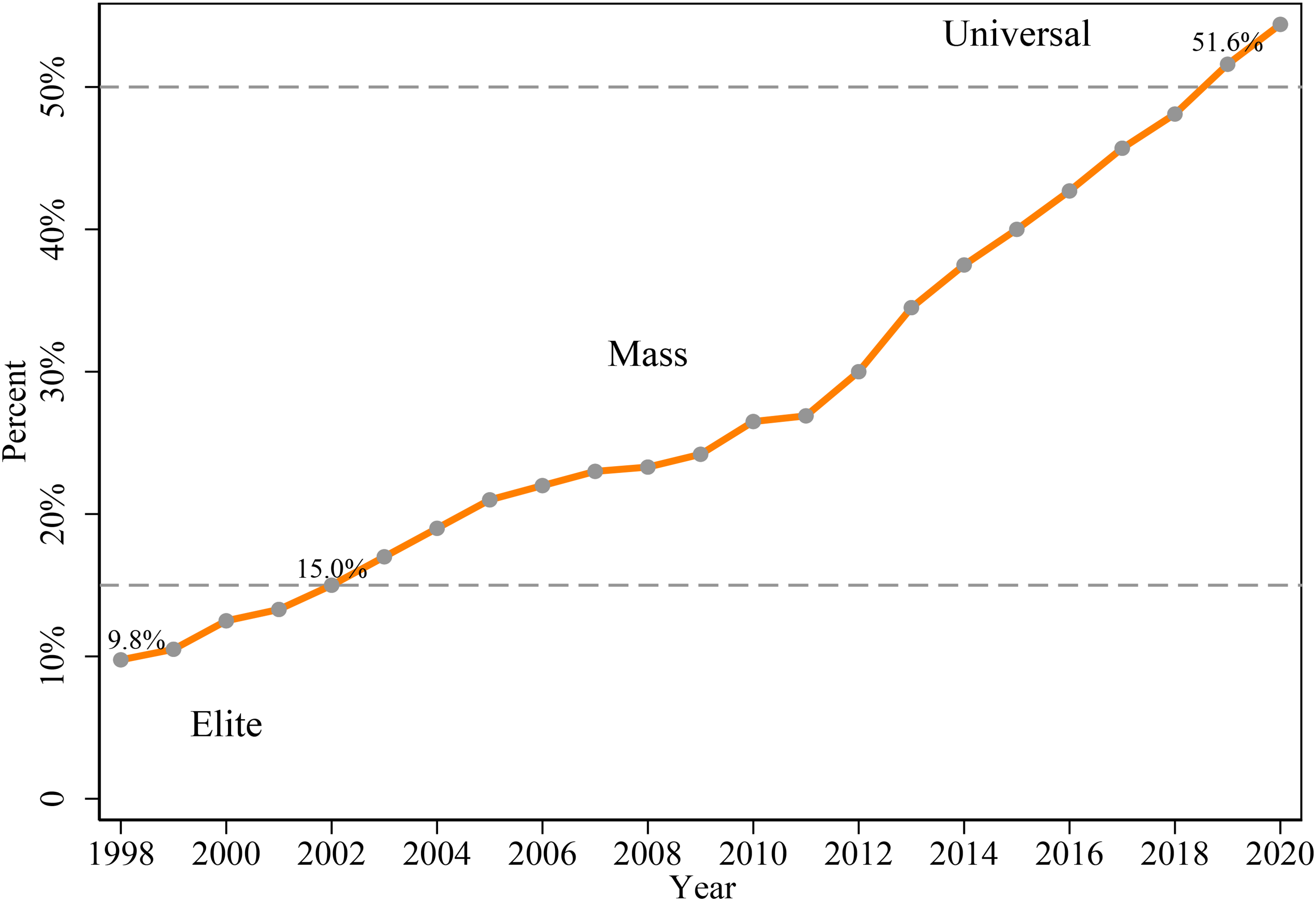
Changes in China's GER for higher education. Source. Previous issues of the Statistical Bulletin of China's National Educational Development.
In 1998, with China's GER for higher education at only 9.76%, opportunities for higher education carried distinctive elitist undertones. In 2002, China's GER for higher education exceeded 15% for the first time, marking the country's transition into mass high education. Since then, China's higher education system has completed the transition from mass to universal access to education in a short span of just 18 years, growing faster than that in most other countries. It is also evident that China's GER for higher education has been growing at a notably faster pace since 2011, indicating that the no-less-than-4% policy has promoted the burgeoning development of China's higher education.
It is worth highlighting that the Chinese government has always valued the construction of institutions of higher education, making the development of higher education part of the national strategy. In the late 20th century, the Chinese government initiated the World-Class University Program (i.e., Project 211 and Project 985) to support the development of certain key universities. In 2017, the government launched a policy called Construction of First-Class Universities and First-Class Disciplines (also known as the Double First-Class Initiative) to reinforce the comprehensive capabilities and international competitiveness of China's higher education system.
Large sums of fiscal spending have resulted in a flourishing field of scientific research. Meanwhile, a variety of national and school-based talent development programs have attracted an influx of talented researchers, both local and international, to take positions in China's higher education institutions. Through increased scientific spending and infrastructure improvements, Chinese universities have been actively expanding their academic competitiveness. Consider the U.S. News’ Best Global Universities Rankings as an example. In 2009, only seven of China's higher education institutions were ranked among the world's top 400 universities; in 2021, this number skyrocketed to 35 (U.S. News, 2022).
Implications
Despite the recent prominent fiscal imbalances between state revenues and expenditures, the proportion of China's national fiscal spending on education in the GDP has remained above 4%. This demonstrates the Chinese government's consistent prioritization of educational development and commitment to ensuring educational development, promoting education reform, enhancing fairness in education, and improving the quality of education through fiscal spending. By reviewing China's educational investment over the past two decades, this study was also able to provide inspiration for the development of education in other developing countries. Education finance is as much of the foundation and backbone of governance as it is a guiding force driving the modernization, reform, and development of education. As the primary provider of public goods and national welfare, the state (i.e., the government) holds primary responsibility for the provision of basic public education services.
Issued by the Central Committee of the Chinese Communist Party and the State Council in early 2019, China's Education Modernization 2035 advanced the need to build a well-established and long-term mechanism for sustaining stable growth in fiscal spending on education, ensure an uninterrupted upward trend annually in general public budgetary spending on education and on education per attending student, and maintain the proportion of national fiscal spending on education at no less than 4% of the GDP in general (SC, 2019a). As such, the proportion of China's national fiscal spending on education in terms of GDP is expected to remain at approximately 4% in the foreseeable future.
Going forward, three matters are worth noting regarding fiscal spending on education. First, recently, the Chinese government has emphasized the need to ease students’ curricular and extra-curricular burdens and alleviate the anxiety and competition in family education to re-establish education as a public good and the school as the main field of education and construct a high-quality basic education system (MOE, 2021b). Therefore, in addition to continuing its high spending on compulsory education, China is expected to promote a balanced distribution of education resources through other fiscal means. Such means include accelerating the transformation of poorly performing schools and implementing a teacher-and-principal rotation system within counties or regions.
Second, unlike general education, vocational education places a heavier emphasis on the cultivation of technical talent. Against the social backdrop of mounting employment-related pressure, the practical value and importance of vocational education will become increasingly prominent. Although it receives a relatively small proportion of fiscal spending, it has been projected that it is going to become the key direction and area of government investment in China. Currently, active efforts are being made across the country to implement the state policies of “shifting education spending toward vocational education” and “increasing per-student fiscal appropriations for secondary vocational schools to appropriate levels above those for local and general senior high schools” (SC, 2019b), to ensure stable growth of vocational education spending.
Third, in the context of the current population strategy and pronatalist policy (Attané, 2016), privately run and public-interest kindergartens will become the prevailing trend in China. In other words, more private kindergartens financed by fiscal funds will be established across the country. Meanwhile, the nursery service system for children aged 3 and younger has been forecasted to grow rapidly, with the government expected to encourage members of society to provide nursery services through public service procurement and other incentives.
Footnotes
Declaration of conflicting interests
The author declared no potential conflicts of interest with respect to the research, authorship, and/or publication of this article.
Funding
The author disclosed receipt of the following financial support for the research, authorship, and/or publication of this article: This research was supported by the National Natural Science Foundation of China under the program titled “Study on the Household Education Expenditure of Chinese Residents in the Perspective of Human Capital Investment: Decision-making Mechanism and Its Influence Analysis” (Grant 71804171).
