




Abstract
Purpose
This study examines the role and development of faculty members in university-based principal development institutions in China to elucidate the Chinese experience of educational leadership development and the tensions and challenges faced by the faculty of such institutions.
Design/Approach/Methods
Interviews with 34 faculty members from five state-authorized university-based principal development institutions were conducted.
Findings
Faculty members in principal development institutions fulfill a variety of complex, time-consuming, and taxing administrative, professional, and service responsibilities. In China, principal development institutions are affiliated with universities, and their faculty members are subject to university regulations on career sustenance and advancement. However, standards for administrative and academic promotion have no bearing on the sustainable improvement of principal development programs.
Originality/Value
This study is the first to describe the roles and development of faculty members in university-based principal development institutions in China. Knowledge of the unique structure of such programs and the experiences of faculty members may provide insights into how university-based principal training institutions can better utilize faculty to enhance program quality.
Keywords
Introduction
Both researchers and practitioners have confirmed the importance of school leadership in school improvement (Darling-Hammond et al., 2010; Hallinger & Heck, 1996; Leithwood et al., 2020; Leithwood & Jantzi, 2008). With principals facing increasingly complex challenges (Tintoré et al., 2020), the development of high-quality leadership programs to enhance the quality of school leadership has become a priority in educational development (Eadens & Ceballos, 2022; Huber, 2004; Pont et al., 2008).
Governments have intervened in the development of school leadership in a variety of ways, including monopolized provision (Bush et al., 2005), the state regulation of program accreditation, imposition of licensure requirements (Murphy et al., 2008; Orr et al., 2010), establishment of leadership standards (Anderson, 2001; Duignan & Hurley, 2007; Gronn, 2002; Murphy et al., 2000), and financial support (Orr et al., 2010). Alongside official interventions, providers of leadership development programs have sought to improve program quality by reforming program elements, such as strengthening student recruitment and selection (Darling-Hammond et al., 2007; Huber & Pashiardis, 2008), redesigning program and curricula (Bryant et al., 2012; Corrie & Sonya, 2020; Eadens & Ceballos, 2022; Glatthorn, 2000; Osterman & Hafner, 2008), improving pedagogy (Shelby, 2020; Taylor et al., 2009), adopting active learning pedagogical approaches (Shelby, 2020), modifying the program cohort structure (Barnett et al., 2000), and introducing experiential courses such as internships (Barnett et al., 2009; Crow & Whiteman, 2016).
However, the impact of such initiatives cannot be sustained without the commitment of faculty members responsible for program design and implementation. Numerous researchers have advanced the importance of faculty members in the sustainable improvement of leadership development programs (Grunefeld et al., 2017; Hackmann et al., 2009; Hackmann & McCarthy, 2011; McCarthy & Forsyth, 2008; McCarthy et al., 1988; Oplatka, 2010). In this respect, research indicates that having a sufficient number of faculty members involved in delivering the program is an important feature across programs (Jacobson et al., 2015). Similarly, Levin (2005, p. 13) identified faculty composition as one of the nine criteria by which to assess the quality of educational leadership programs. The National Commission on Excellence in Educational Administration (NCEEA) has suggested the minimum number of faculty required for leadership preparation programs, noting that it is essential that leadership preparation units possess sufficient faculty resources to deliver high-quality learning experiences to aspiring school administrators, furnishing them with the knowledge and skills necessary to effectively lead the nation's schools and school systems (NCEEA, 1987). Educational leadership faculty contribute other factors to the quality of the leadership preparation program (Grunefeld et al., 2017; Young et al., 2002).
Many studies on educational administration faculties have been conducted in Western countries (Campbell, 1981; Campbell & Newell, 1973; Hackmann et al., 2017; Hackmann & McCarthy, 2011, 2013; Hills, 1965; Martinez & Welton, 2017; McCarthy & Kuh, 1997; McCarthy et al., 1988; Newell, 1983). Investigations of educational leadership faculty are dominated by Anglo-American theories, practices, and structures, with relatively little scholarly attention to educational leadership faculty outside of the United States (Oplatka, 2010; Strom & Porfilio, 2019). Given the highly contextualized nature of the knowledge base in educational administration (Oplatka, 2004, 2009), it would be interesting to explore education leadership faculties in non-Western countries.
China's outstanding performance in the recent Programme for International Student Assessment (PISA) has led to growing international interest in the country's approach to school administration and principal development. Under China's national leadership development policy for primary and secondary school principals (Ministry of Education of the People's Republic of China [MOE], 2013), each new principal is required to attend and complete 300 h of training at authorized training institutions, while every in-service principal is required to complete a minimum of 360 h of training at authorized training institutions every 5 years. As of 2020, China's national schooling system comprised 157,979 primary schools and 52,805 junior secondary schools (MOE, 2022), each of which possessed at least one principal. As such, the scale and workload of principal development programs in China are extraordinarily challenging.
In China, principal training has emerged as a strong administrative push. As noted, principals must receive a specified number of hours of training from training institutions recognized by the educational administrative department on content specified by the state to obtain a state-recognized certificate of qualification. Principal development programs can be divided into three hierarchical levels: qualification, enhancement, and advanced training. As in-service programs for incumbent principals, they are not preparation programs in nature. Moreover, the programs are mainly provided by authorized university-based institutions at different levels. Like their counterparts in Western countries, faculty members occupy two roles simultaneously, that is, as professionals and employees of large bureaucratic organizations (Stromquist, 2007), whose work has long been devoted to teaching, research, and service, although the extent and ratio of each role function varies from one university and discipline to another. Faculty members also experience tensions between theory and practice.
State-dominated and funded, principal development programs in China are typically made up of short-term intensive workshops comprising 2 weeks to 3 months of residential training that fulfill continuing education requirements. The comprehensive workload of faculty members includes professional work (e.g., program design, implementation, and evaluation), administrative work on behalf of the government and local educational bureaus, and service work (e.g., logistical support for a program comprising at least 40 participants and liaising with schools to arrange shadowing opportunities) (Zheng et al., 2013). Therefore, research on the role and development of faculty members in university-based principal development institutions may improve our intellectual and theoretical understanding of how Chinese school principal development programs are implemented, particularly insofar as the field can be advanced, nurtured, and sustained through these faculty members.
Accordingly, this study explores China's principal training programs, focusing on the roles of faculty members and the development of university-based principal training institutions. In doing so, this study addresses the following research questions regarding university-based principal training institutions in China:
What roles do faculty members play in university-based principals development institutions and how do faculty members perceive their job? What are the possible career paths of faculty members and what factors influence their career choices in university-based institutions? What tensions and challenges are experienced by faculty members of university-based institutions at different levels?
The principal training system in China
State regulation and support of principal development
Unlike Western countries, China maintains tight control over principal development via regulations, funding, and authorized provisions (Lo et al., 2010; Zheng et al. 2013). State dominance is readily demonstrated in policymaking, training institution authorization, and even the content and curricula prescription of training programs (Lo et al., 2010). As noted, in China, principal development programs are in-service programs and are not preparation programs in nature. Principals are appointed, and only those in posts have access to principal development programs. These programs typically comprise short-term intensive workshops—that is, 2 weeks to 3 months of residential training fulfilling continuing education requirements—at authorized principal development institutions, with satisfactory performance awarded with a license, rather than an academic degree. Principals can study full time while receiving full pay and benefits. Indeed, principals are given paid leave to pursue state-funded professional development, a privilege rarely enjoyed by principals in other countries (Su et al., 2000).
Principal development is administered at four levels: national, provincial, municipal, and county. Within each administrative tier, programs are further differentiated into three hierarchical levels of training that cater to the needs of principals at different career stages, namely, qualification training, enhancement training, and advance training (MOE, 1999).
Program providers
Four levels of program providers operate programs that cover the training of principals at different career stages and school levels (primary, junior secondary, and senior secondary). Generally, primary school principals seek qualifications and enhancement training from county-level course providers, junior secondary school principals from municipal-level course providers, and senior secondary school principals from provincial-level course providers. Principals regarded as “excellent principals” at any level are selected to attend advanced training in national principal development centers in Beijing and Shanghai. Given the diversity of governance and the uneven stages of socioeconomic development across provinces, some provinces may also have different principal training divisions among training providers. Figure 1 illustrates the administration of principal development and the major responsibilities of course providers.
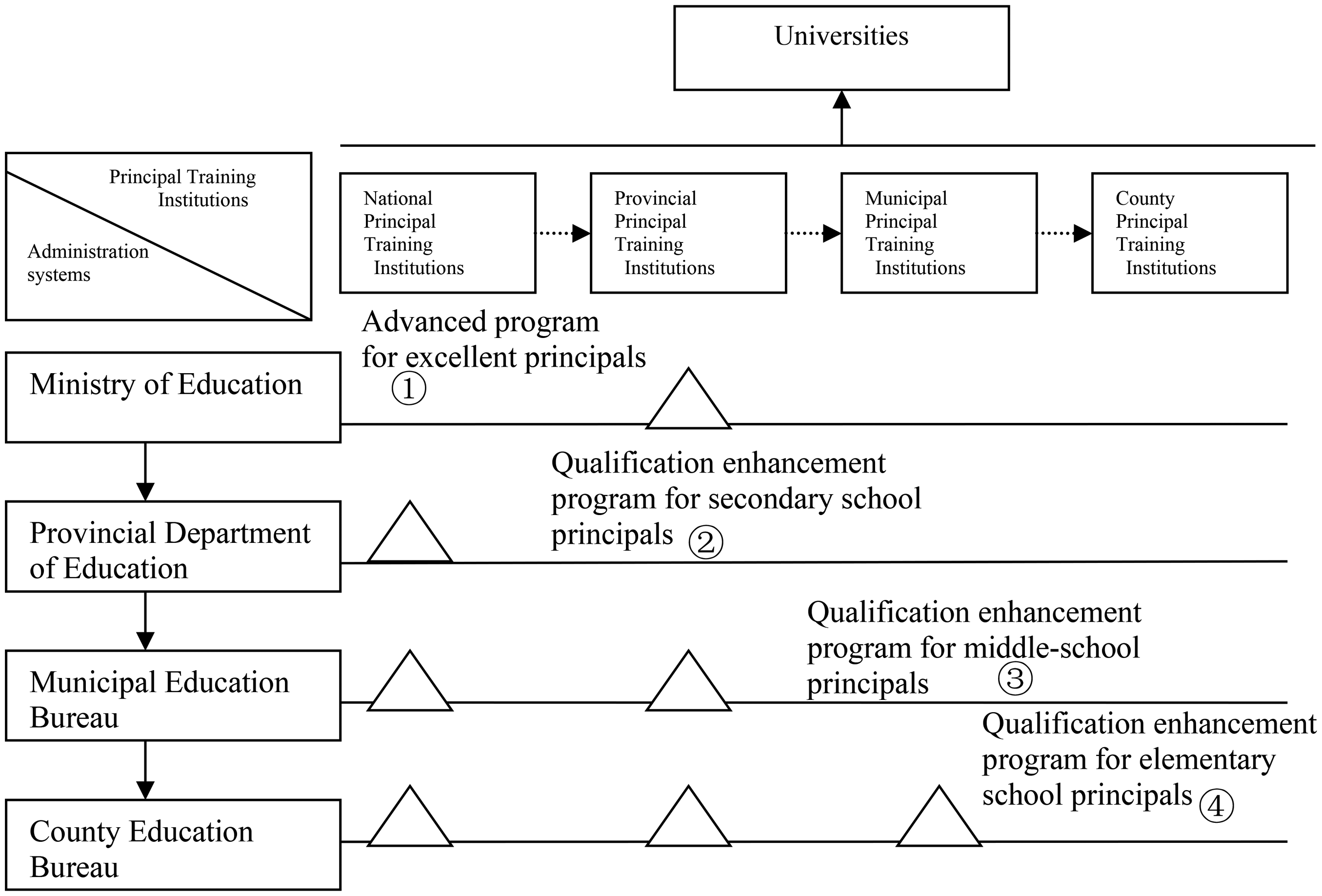
Principal development system in China.
University-based program providers
Like American education leadership development providers, principal development institutions in China are affiliated with universities and under the administration of their corresponding levels of the educational system. Notwithstanding such affiliations, there are two types of organizational relationships and functional orientations in principal development institutions: Where some university-based principal training units function as stand-alone offices for leadership development, others—such as the Department of Education—are housed in university academic departments (Figure 2). In universities, principal training units may be designated as teaching, research, or administrative units. Different organizational relationships and functional designations determine the size, quality, and career tracks of the unit staff.
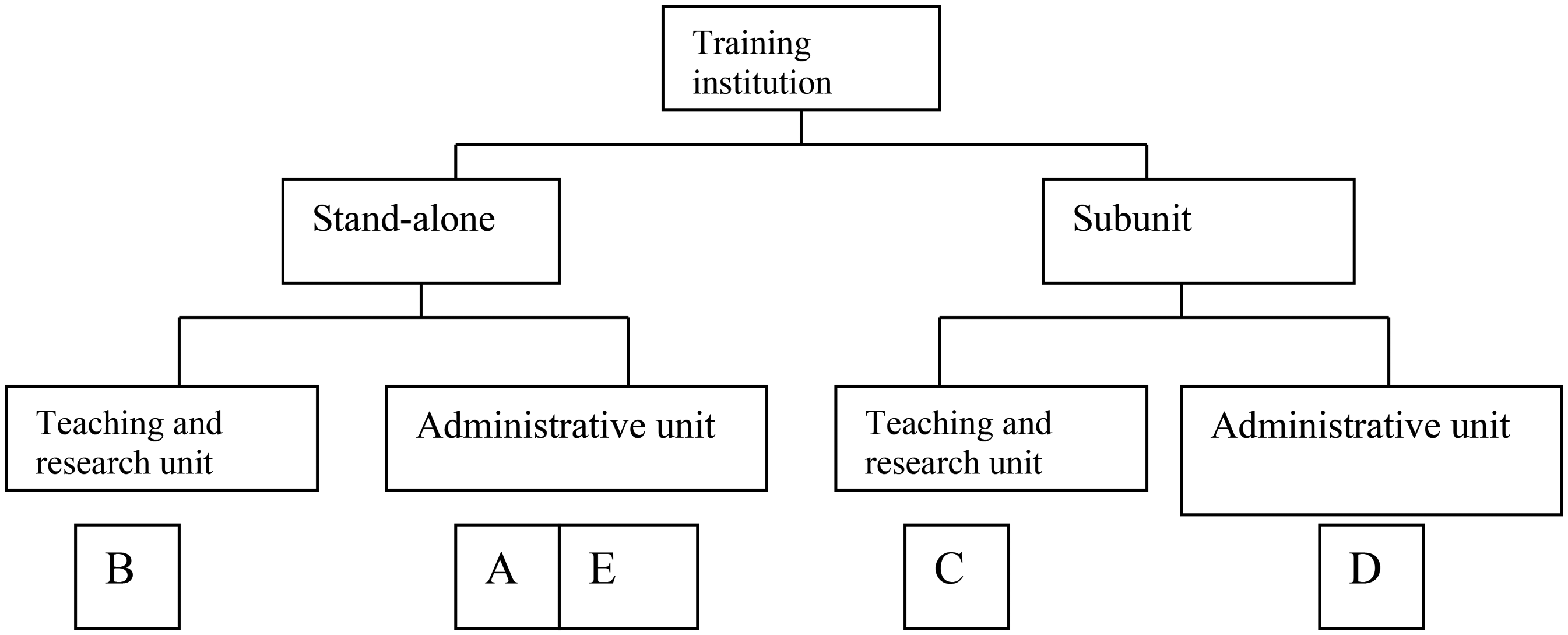
Structure of university-based course providers.
Program structure and course delivery
Principal development programs typically include lectures, school visits, and group seminars on experiential sharing, and sometimes shadowing. Lecture courses are delivered by three types of lecturers: full-time faculty members, experienced principals or local education agency officials, and university professors from other departments.
Literature review
Of the many factors influencing the quality of training programs, highly qualified and dedicated faculty members responsible for designing and implementing such programs are the most important. University-based institutions are the main providers of principal development programs and are thus worth exploring further. This section reviews the relevant literature, focusing on where principal development programs are conducted and who provides them, as well as the composition and responsibilities of faculty in this respect.
University-based leadership development programs
School leader preparation is shaped by where such preparations take place. The majority of leadership development programs are university-based and grant either a degree or license, although alternative programs provided by professionals, entrepreneurs, and private companies have begun to emerge (Hackmann & McCarthy, 2011; McCarthy, 1999a; McCarthy & Kuh, 1997; McCarthy et al., 1988). Program units include both stand-alone and educational leadership programs housed in larger departments (Hackmann & McCarthy, 2011, 2013). Over the past two decades, departmental restructuring of educational leadership units has been relatively widespread. Such efforts have included “merging the educational leadership unit with related disciplinary areas, repositioning the program from within one department to another, transitioning from a program area within a department to an autonomous department and creating new degree programs or disciplines within the existing unit” (Hackmann & McCarthy, 2011, p. 43). However, few studies have explored the relationship between leadership development programs and affiliated universities (Orr et al., 2010).
Research on educational administration and leadership faculty
Longitudinal studies have been conducted on educational administration professors in Western countries (Campbell, 1981; Campbell & Newell, 1973; Hackmann & McCarthy, 2011; Hills, 1965; McCarthy & Kuh, 1997; McCarthy et al., 1988; Newell, 1983; Oplatka, 2010). In this respect, several studies have discussed changes and continuity in terms of the size, structure, composition, and programming of educational leadership units, as well as the demographic features, professional expertise and preparation, attitudes, values, beliefs, and professional activities of education faculty members (Campbell & Newell, 1973; Hackmann & McCarthy, 2011; Hills, 1965; McCarthy & Kuh, 1997; McCarthy et al., 1988; Newell, 1983). Others have focused on changes in faculty composition with a focus on the swing toward practice and theory (Forsyth & Murphy, 1999; Hills, 1965; Levin, 2005; McCarthy, 1986, 1999a, 1999b), proximity tensions in academia (Griffiths et al., 1988; Hackmann et al., 2009; Young et al., 2002), and issues concerning the demands of teaching and research (Hackmann & McCarthy, 2011) that confront the faculty of educational leadership development units, especially those who work in the context of university-based institutions (Lamagdeleine et al., 2008).
Faculty composition
The practice of hiring faculty members with administrative experience has evolved over time. In the early years, faculty members with rich professional experience were recruited from administrative ranks, particularly superintendents looking to retire (Hills, 1965). During the so-called “theory movement” of the mid-1950s and 1960s, emphasis shifted to the hiring of faculty members with expertise in the social science disciplines (Forsyth & Murphy, 1999). From the 1960s to the early 1980s, faculty ranks became increasingly specialized. New hires were less likely to have administrative experience, tended to identify with narrower subfields, and were less concerned with administrative practice than scholarship (McCarthy, 1986, 1999a). By 1994, the field had experienced a “renewed commitment to field connection” (McCarthy, 1999b, p. 78), with a growing concern over the perceived detachment of the professoriate from the real world of school administration. Hackmann and McCarthy (2011) observed a striking growth in full-time clinical faculty members in leadership development units as a result of such commitment.
Educational leadership units typically rely on a “critical mass of faculty members” (Hackmann et al., 2009, p. 225) to staff their programs, including full-time tenure-line faculty, full-time clinical faculty members, and part-time adjunct instructors. Each faculty type fulfills an important function. Certainly, most universities require a skilled core of tenure-line faculty to satisfy the institution's staffing requirements. Using online questionnaire data, Hackmann and McCarthy (2013) examined faculty staffing patterns in 217 university-based leadership preparation programs, finding that the instructional core of such units consisted of full-time educational leadership, external faculty, and adjuncts. They also found that research institutions have smaller student–faculty ratios than other institution types, and units with enrollments exceeding 500 students employ significantly more adjuncts than institutions with smaller enrollments. In this respect, units were found to be hiring more adjuncts and full-time clinical faculty while employing fewer tenure-line faculty members than reported in previous professoriate studies. Moreover, full-time faculty members did not increase proportionately with enrollment.
Faculty members in leadership preparation programs tend to be white men in their mid-1950s, although the number of women is increasing. There has been a slow but steady increase in the number of people of color enrolling in such programs. Interestingly, there are increasing numbers of part-time clinical and adjunct faculty members in preparation programs and a decreasing number of full-time clinics. Clinical faculty members primarily fulfill teaching and advisory roles, along with some services. A growing number of faculty members have prior administrative experience, although this is to be expected given the increasing number of clinical faculty. Prior experience in school- and district-level administration also characterizes tenure-track faculty (Crow & Whiteman, 2016).
Professional activities
According to Hackmann and McCarthy (2011), the professional activities of educational leadership faculty members have not changed significantly since the early 1970s. Teaching remains faculty members’ primary strength (Hackmann & McCarthy, 2011; McCarthy & Kuh, 1997; McCarthy et al., 1988), with half of the workweek devoted to teaching and advising students and supervising their dissertations. McCarthy and Kuh (1997) found that, in 1994, the typical educational administration professor “taught two courses per term, chaired four doctoral committees in the preceding 3 years, spent over two-fifths of the workweek teaching and advising graduate students and supervising doctoral work and 14% in research activities” (p. 141). Tenure-track faculty members typically conduct research, teach courses and advise students, and provide service to the institution and profession, with the emphasis on these responsibilities varying by institution type (Lamagdeleine et al., 2008; McCarthy, 2013).
Dilemmas facing faculty development
As educational leadership is an area of professional study, it is vital that faculties maintain close connections with the field and provide opportunities for administrators to apply classroom theory in practice (Foster, 1988). However, sustaining professional connections is challenging because professors are primarily promoted and rewarded on the basis of their research and scholarly activities, particularly at research universities (Griffiths et al., 1988; McCarthy, 1999b). Consequently, such educational leadership faculty members are often torn between addressing the needs of the field and fulfilling the performance expectations of their institutions (Young et al., 2002).
Although extensive faculty involvement with practitioners and schools is an important and valued activity, it is often discouraged by the university culture. To enhance their status on university campuses, education colleges have adopted an arts and sciences model rather than a professional school model of education, even though educational leadership is an applied field of study (Hackmann et al., 2009). This approach has channeled faculty activities into a “single, narrowly construed research path to tenure” (Griffiths et al., 1988, p. 299) that focuses on theoretical and empirical models rather than applied research. Under the arts and sciences model, field-based connections are classified as service activities and given relatively little consideration when assessing faculty performance and productivity. Professors are promoted and rewarded primarily on the basis of scholarly activities disseminated through recognized academic channels. This approach discourages faculty from establishing close working relationships with practitioners, conducting applied research activities, and even presenting and publishing their research in practitioners’ venues (Oplatka, 2022; Young et al., 2002).
In China, a search of the China National Knowledge Infrastructure (CNKI) database from 1989 to July 2023 reveals that research on trainers in principal training institutions has not emerged as an academic concern. Indeed, few scholars have focused on the development of trainers, with only seven articles addressing this topic (Jian, 2019; Liu, 2011; Tang & Fang, 2009; Wan, 2010; Weng, 2008; Yang, 2010; Yang, 2012). There is also a marked lack of research on the development of full-time faculty members in principal training institutions, with only three articles exploring the construction and development of full-time faculty members in these institutions. Of these, two were not evidence-based articles (Zhang, 2010a, 2010b), while one was an empirical study (Zheng et al., 2013). It is worth noting that none were published in core journals. Most faculty studies have used surveys to collect data, which may not capture the complexity of their work and experience. As such, an in-depth examination of the relationship between a leadership development program and its affiliated university is necessary to identify and explore the tensions experienced by faculty members in leadership development.
Methodology
This study focused on the daily work and career choices of full-time faculty members in university-based principal development institutions in China. As previous studies on continuity and change in the educational leadership professoriate have mainly used surveys and “the format of most questions required respondents to select from fixed choices” (Hackmann & McCarthy, 2011, p. 270), this study adopted a qualitative methodology for its investigation. As noted, in China, principal training is divided into four levels—the national, provincial, municipal, and county levels—with each level responsible for providing training to principals at different stages. Generally, national- and provincial-level training institutions are affiliated with universities. Table 1 lists the levels and types of institutions in the study sample.
Principal development institutions and informants.
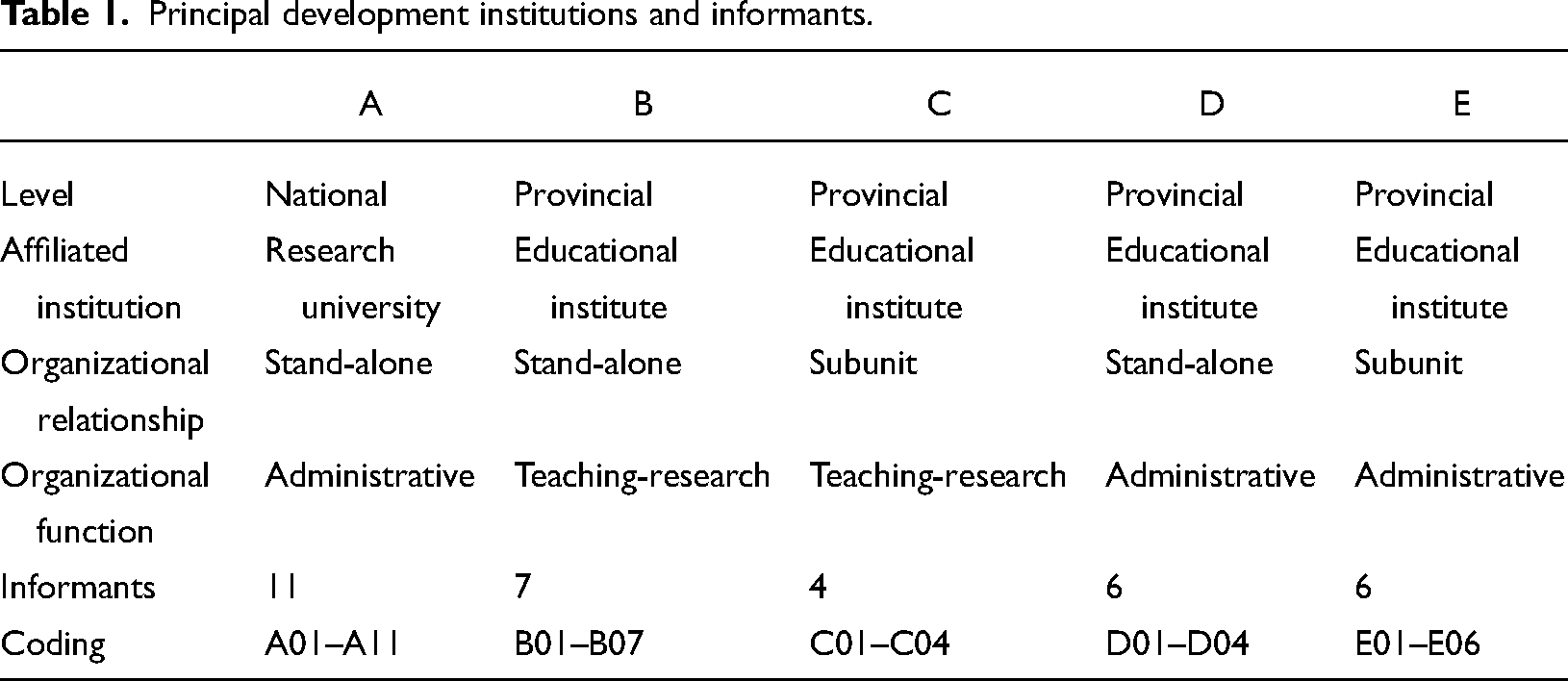
Data were collected through in-depth interviews with 34 current and past full-time faculty members from the five sampled institutions. All participants provided informed consent. All interviews were audio-recorded with permission, and all informants were coded to protect participant anonymity. As Table 1 shows, the sample consisted of five institutions representing a diverse range of affiliations with various higher education institutions. The selected institutions were chosen to ensure their representativeness and included one national- and four provincial-level institutions dedicated to training. In this respect, due to recent transformations in principal training organizations, the majority of training programs are now concentrated in provincial-level institutions, hence the predominance of such institutions in the sample.
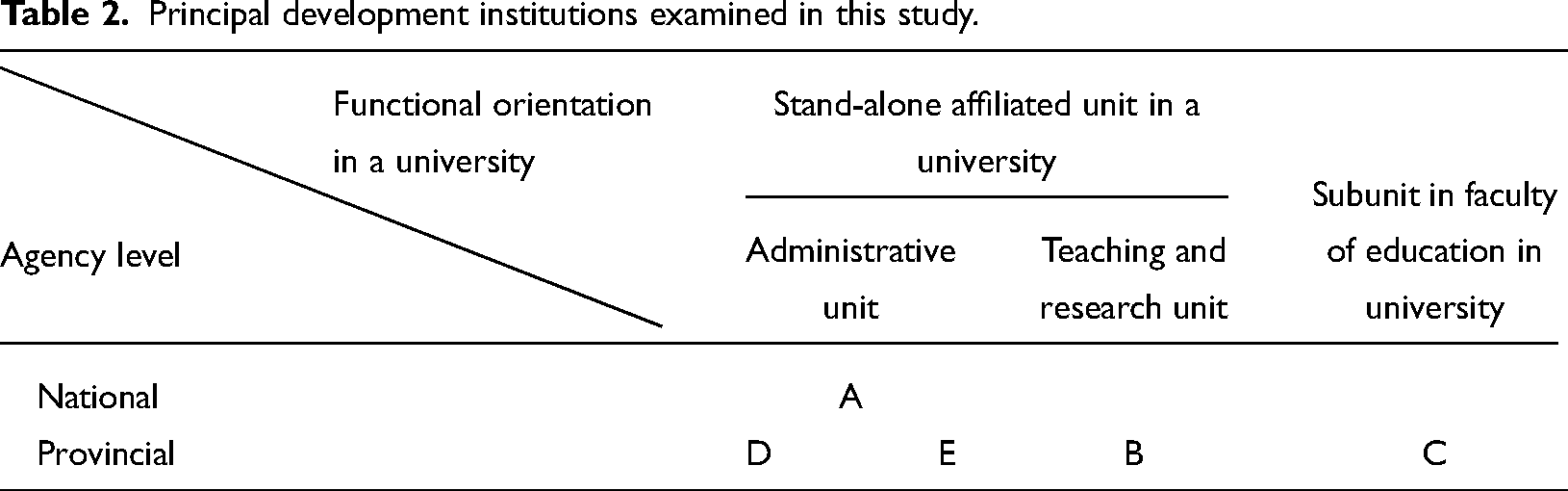
Institution A is a national training center for secondary school principals. It is a stand-alone administrative unit affiliated with an established research university in eastern China. Institution B is a provincial program provider affiliated with a provincial educational university that functions as a stand-alone teaching and research unit. Institution C is also a provincial program provider, which is a subunit of the faculty of education in provincial universities and functions as a teaching and research unit. Institution D is also a subunit of the faculty of education in provincial universities but functions as an administrative unit. Institution E is a stand-alone unit at a provincial university that functions as an administrative unit.
To capture faculty members’ work and career choices at various levels, informants were sampled by gender, academic titles, and administrative titles, which usually reflect their seniority, years of experience, educational degrees, and working status within their current institution. Table 2 presents the background information of the participants.
Principal development institutions examined in this study.
The interview protocol focused on what the participants did and how they perceived their jobs, career choices, and professional development. This semistructured interview protocol sought to reveal faculty members’ job duties and the tensions they experienced. Each interview lasted approximately one hour. All interviews were audio-recorded with the participants’ permission. After each interview, analytical memos were written to capture nuanced information. At least 2 days of onsite observations were conducted at each principal development institution to triangulate the information gathered from the interviews.
All data were transcribed and coded with the support of NVivo software. The process began more inductively by searching for patterns and themes (Miles & Huberman, 1994), and then the author performed cross-checking procedures to validate the data. This involved the meticulous verification and comparison of information from multiple sources to ensure accuracy and reliability. Extensive analysis and exploration resulted in data saturation, whereby new data points no longer significantly contributed to the existing patterns and themes. A set of initial categories was produced that included what participants do, administrative work, logistic work, training design, and implementation. Data were organized into three major themes: administrative, service, and professional. To code how they perceived their job, we used emotional coding to determine their positive and negative emotions toward their job. In coding their possible career path, interview transcripts were analyzed using an open coding strategy looking for possible career paths and their choices in this respect. Convergent and divergent patterns were delineated by comparing categories and subcategories across participants. Despite the common nature of their jobs, there were clear differences in career paths and choices among faculty members in different institutions with different functional orientations.
Findings
Faculty workload
In China, principal development is accomplished within a state–profession nexus markedly different from that of most Western societies, where state control and involvement in employment is much more limited (Jones, 1990). To some extent, principal training in China tends to be a state-located profession, with development institutions exercising administrative functions on behalf of the government. Observations and analysis revealed that the faculty members’ work comprises professional work as well as administrative work and services. Their work is complex, time-consuming, energy-intensive, and occasionally tedious.
Some of this work was administrative. The work of faculty members in principal development institutions is closely connected to China's principal training system. In this state-dominated system, which was established in the late 1980s (Lo et al., 2010), only appointed principals are eligible to attend training, which is considered both the duty and right of participating principals (Lo et al., 2010). Training program participants are selected by the local education bureau. Therefore, maintaining close contact with local education boards to identify training lists emerged as an important part of their administrative work. Principal development institutions affiliated with higher institutions are expected to implement policies issued by the central government and local educational bureaus, and are tasked with providing quality programs for principals to meet national and local licensure standards. Training institutions are administrative agencies that hold upward responsibility and issue official documents on behalf of education bureaus to local education agencies on planning and administrative matters.
Faculty members were also required to perform logistical tasks. As participation in principal training is the duty and right of principals, every principal has access to and must participate in development programs at designated time and training institutions. China has the largest number of school principals in the world, many of whom must travel to participate in development programs. Training programs are typically 10–90 days in length. As such, course providers need to arrange logistical support for a program with 40–200 participants, if not more. They also need to arrange the diverse training activities, which often include school visits and shadowing, making liaising with schools an essential component of faculty work. These elements constitute the service features of their work.
As faculty members are professional principal trainers, they are expected to design programs, teach and inspire participating principals, and conduct research to improve their schools (Tang & Fang, 2009). According to an investigation of 93 principals, faculty member roles include cultivating networks, instructing principals, disseminating new knowledge, inspiring participants, and consulting on principal development (Yang, 2010). Their work is always perceived as professional.
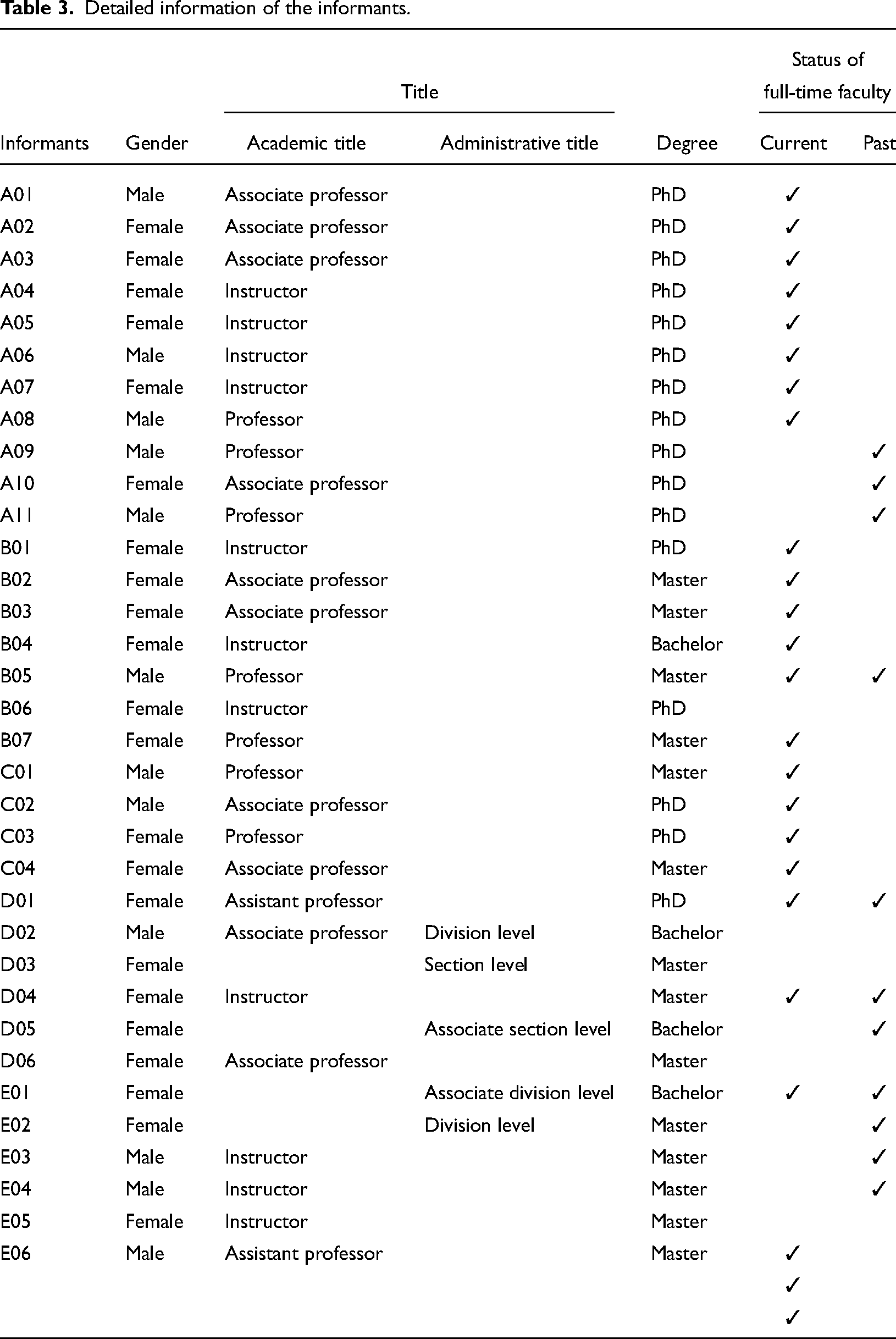
Table 3 outlines the work performed by the 34 faculty members interviewed in this study.
Detailed information of the informants.
Faculty tasks.
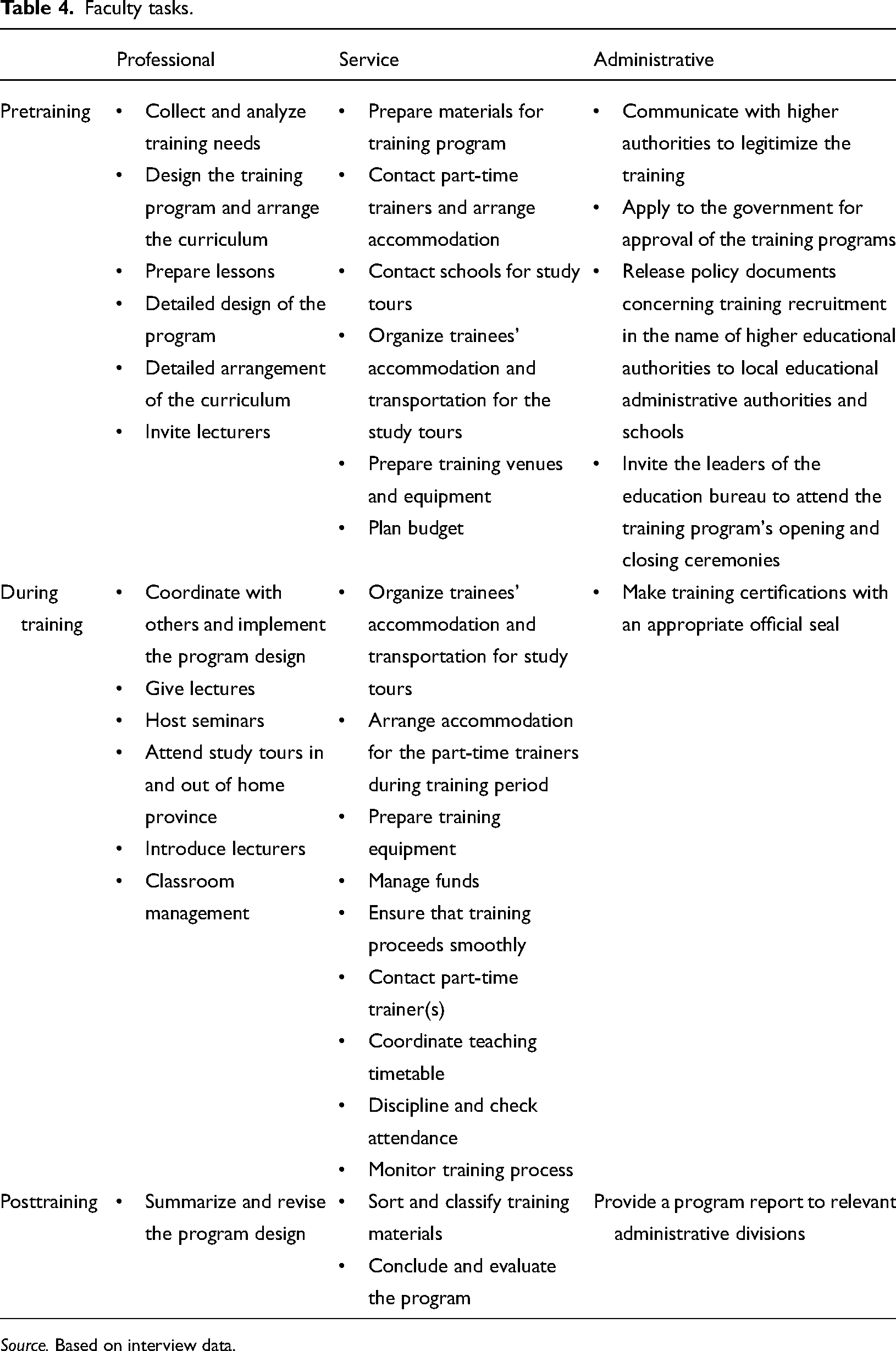
Source. Based on interview data.
As Table 4 shows, their work covers diverse elements such as program design and implementation, teaching, management (including teaching management, general affairs management, and administration), and logistics. While fragmented and occasionally tedious, their work is complex and all-encompassing. As one faculty member explained, You have to make training and budget plans, select lecturers, arrange accommodation and transportation for trainees, and so on. You have to [take] care [of] all things in and out of class in the whole process, not only the few hours in your own lectures. (C03)
According to another interviewee, You have to bid for the programs, earn support from the education bureau, make plans, draft training documents, prepare for the accommodation of trainees, select lecturers, etcetera. In other words, from the beginning to the end of a program, you have to do all the chores, such as making the certificates and records of the trainees; even when the classroom is out of drinking water, it is my responsibility to fetch water for them. It seems like you have to collapse several years of a college program into 10 days or even fewer. You have to do everything, chores, and professional [tasks]. (E05)
While some training institutions attempt to divide work among faculty members, most principal development institutions do not have enough full-time staff to do so effectively. This means that most faculty members need to perform all types of tasks, with professional, administrative, and service tasks interwoven into their work.
According to faculty members, their administrative and service tasks were comprehensive, time and energy-consuming, urgent, and in need of quick response (B04, E01, E05, C03, A04, A01, A06), as well as “easily seen and measured” (E05, E01, D01). Their professional tasks required “great intellectual investment” (A01, A03, E05) and “frequent liaison with schools” (A02, A04). However, their tasks were also difficult “to identify and evaluate” (E05). Faculty members reported spending most of their time on service tasks to “keep the principal trainees satisfied” (E01) and on administrative tasks to “keep the educational officers satisfied” (E05). They claimed to spend the least amount of time on their professional tasks due to “time, financial, energy, capacity, and manpower limitations” (E04, E06, D01, B01, B04, A06), although most recognized that these tasks are critical to maintaining the quality of the program.
Faculty members perform different duties based on the functional orientations of their units. This study found that faculty members in administrative units spent more time on administrative tasks, seldom teaching in the programs offered by the units. Those who serve in units oriented toward “teaching and research” assume more teaching responsibilities and thus focus more on professional work. Regardless of their unit, all faculty members shoulder the burden of service work. According to several longitudinal studies (Hackmann & McCarthy, 2011; McCarthy & Kuh, 1997; McCarthy et al., 1988), teaching is the primary strength of educational leadership faculties. As such, it is peculiar that administrative and service work consume most of the faculty's time and energy in China.
Job perceptions
As most principal development institutions are affiliated with universities, faculty members who train principals are considered university teachers. These faculty members occupy two roles simultaneously. Some faculty members at principal development institutions know little about the kinds of work involved before taking the job, but are attracted by the prospect of being a university teacher at an established research university. Certainly, such employment has several attractive aspects, including long summer and winter holidays, the university environment and campus life, access to university academic resources, development opportunities, and the “iron bowl” of tenure (i.e., guaranteed job security once hired) (E04, A04, A03, A06).
Most faculty members reported enjoying their jobs due to the provision of opportunities for growth. All of the informants admitted that they could learn and benefit from interacting with program trainees—all of whom are in-service principals with a wealth of experience in school administration, management, and leadership. The training also provides faculty with an opportunity to work with those on the frontlines of education and bridge the gap between theory and practice. As one interviewee noted, [I can] learn a lot from the principals, they are experienced, you can grasp the status quo of education in our province and gain first-hand information by interacting with them and learn what they care about. If you want to conduct empirical research, you have much easier access. (C03)
Possible career paths for faculty members and factors influencing their career choices
Possible career paths
The development channels for faculty members, especially those at university-based units, are limited to administrative and academic tracks. On the administrative track, there is fierce competition for the relatively scarce number of leadership positions available. Therefore, some faculty members seek promotion by competing for posts in other departments. Of the five informants who succeeded in this regard, one noted, I love this job. However, I must recognize this. If you stay in the same place, no one acknowledges your abilities. And I have to get a status that is closely connected with the benefits that I should get. (E01)
Influence of institutional orientation on career choice
Most faculty were attracted to the post by the university teacher identity, with the work itself promoting their own growth and development. However, university performance systems limit the development of faculty members in principal training units. Similar to their Western peers, university teachers, especially those serving at research universities, are expected to teach and counsel students as well as lead and conduct research. Such duties constitute their performance profile for assessment (Boyer, 1990; Grunefeld et al., 2017). However, the complex nature of their principal training jobs—which involve diverse demands that are taxing in both time and energy—has made it more difficult to meet the standards set for ordinary university teachers. An obvious frustration is that most of what they do for training programs is invisible work excluded from the performance assessment. Essentially, the identity that attracts them to their jobs actually inhibits their further development.
Under the pressure of university performance systems, the university level and functional orientation of the principal development institution mediate the impact of university performance systems on faculty members’ career choices, leading to two distinctive career development routes in different principal development institutions. The first is the positive cycle that emerges in research universities and Institution A (Figure 2). Faculty members in these institutions receive institutional support from affiliated universities, which recruit high-quality staff and provide support and resources. Institution A is a national training center affiliated with an established research university. It recruits excellent faculty members, generally PhD holders, and adopts labor division in program implementation, thereby reducing the heavy workload caused by the complex features of principal training. Significantly, although Institution A is a stand-alone office that functions as an administrative unit, affiliated universities allocate separate quotas for their staff to pursue academic tracks.
The functional orientation of principal development institutions mediates the impact of university performance systems on faculty members’ career choices. As teaching and research units, Institutions B and C are located in the faculties of education at provincial universities. The size of the unit's staff is large enough to adopt labor division in program implementation, and faculty quality is generally high, usually holding at least a master's degree in education or psychology. Faculty are competent in their professional work of principal training, and they can enrich their research through in-depth exchanges with trainees. In addition to principal training, they conduct undergraduate education, enabling them to meet the requirements for professional promotion. Faculty members can thus pursue academic career tracks via the normal channels. Therefore, most of the faculty members in Institutions B and C were satisfied with their career choices and focused more on the professional development of principal training.
Institutions with a functional orientation as administrative units
In this regard, Institutions D and E exhibited a negative cycle of principal training development. As administrative units in affiliated higher institutions, the two provincial training institutions have a limited number of faculty members, thus placing the burden of high workload on full-time faculty (Grunefeld et al., 2017). Faculty members in such institutions are required to fulfill administrative, service, and professional roles. However, the recruitment standards are generally lower than those of teaching and research units, with faculty typically holding only a bachelor's degree and only able to pursue administrative promotions, not academic ones. That said, there are fewer administrative promotion opportunities, prompting faculty to seek opportunities elsewhere. Although interviewed faculty members expressed love for their jobs, most admitted that they would leave if they had a chance. The reasons for this paradoxical situation are closely related to the service nature of their jobs, limited opportunities for career advancement at principal development institutions, and poor institutional support they receive.
Discussion and conclusion
To date, few studies have focused on the relationship between principal development institutions and their affiliated universities and how this relationship affects the quality of leadership training programs, especially through their functional orientations. Affiliated universities have been treated as identical to principal development institutions when considering improvements in program quality. However, this study found that host universities could support or hinder the improvement of program quality through their relationships with principal development institutions.
In Western countries, most leadership development programs are housed in universities and given the status of degree-granting programs. Faculty members of these programs typically focus on teaching, advising students, and supervising dissertations. Although they experience tensions between theory and practice, their work is more aligned with the university's normal functions and evaluation system (Hackmann et al., 2017; McCarthy, 2013). However, in China, principals are civil servants whose appointments and training are arranged by the local educational authority (Chu & Yang, 2009). Implemented on behalf of the education bureau, principal training is provided in the form of short-term workshops that fulfill continuing education requirements or lead to licensing. They differ from universities in terms of the kind of work they do, as well as their operations, schedules, and approaches to course delivery. They must perform administrative, professional, and service tasks that are much more complex than the job requirements of their peers in Western countries.
In both China and the Western world, faculty positions in principal development institutions are attractive, albeit for different reasons. Interviewed faculty members in preparation programs were mostly satisfied with their jobs, and this satisfaction increased over time. The top three factors that influenced interviewees’ decision to enter professorial positions in this field were their interest in students and teaching, their desire to improve education and/or society, and their interest in research and extension of knowledge (Crow & Whiteman, 2016). In China, the position is attractive and rewarding in terms of self-esteem, growth, and social capital. According to several longitudinal studies on the career choice and satisfaction of the professoriate in the West, academic career choices are primarily influenced by students and teaching, the pursuit of ideas and knowledge, the influence of colleagues, and the desire to improve education (Hackmann & McCarthy, 2011; McCarthy & Kuh, 1997; McCarthy et al., 1988). Professors seem satisfied with their career choices and few choose to leave. It is worth noting that while Chinese faculty members find their work attractive and rewarding, some admitted that they would leave their positions if other opportunities emerged, especially those in institutions functioning as administrative units.
Like those in Western countries, faculty members working in affiliated universities in China are subject to university scrutiny in terms of performance assessment, substantiation, and advancement. That said, faculty in Western countries can concentrate on teaching and supervision, and the tensions they experience are mainly those between theory and practice (Griffiths et al., 1988; Hackmann et al., 2009; Young et al., 2002) and teaching and research (Hackmann & McCarthy, 2011; McCarthy & Kuh, 1997). By contrast, faculty members in China are expected to perform complex, time-consuming, and energy-intensive work that combines administrative, professional, and service tasks. They are trapped in a paradox. Although they enjoy and recognize the meaning of their work, the limited channels for career development often drive them toward a professional path that is not beneficial for principal development. In addition to the tensions experienced by their Western counterparts, they endure administrative/professional and service/professional tension.
Principal development programs occupy a critical space in school improvement efforts and require a solid knowledge base that combines theory and practice. Committed full-time faculty members in charge of principal development programs are of great importance, and their development is shaped by faculty reward systems, faculty governance, institutional resources, and university responses to state-level influences, which deserve institutional support and in-depth academic research.
In China, the growing recognition of the value of principal training is evidenced by the increasing government attention to and support for such training. However, there is a marked lack of research focusing on the full-time faculty of principal training institutions, with a pressing need for empirical research on the several aspects of such institutions. First, further research on the profile of dedicated staff members in university-based principal training institutions is necessary. In this respect, a comprehensive investigation should be conducted to identify the demographic characteristics, qualifications, and professional backgrounds of these individuals. Such an investigation will provide a deeper understanding of their roles and contributions in supporting frontline principals. Second, further research is necessary to identify the opportunities for full-time faculty members to work at university-based principal training institutions, with a focus on the specific training and developmental needs of these professionals. By identifying the necessary skills, knowledge, and resources of such professionals, we can design targeted programs to enhance principals’ capabilities and provide high-quality professional support. Third, an evaluation of full-time faculty of university-based principal training institutions is necessary. More specifically, a robust evaluation framework needs to be established to assess the performance and effectiveness of these professionals in their roles. This evaluation should go beyond traditional metrics and consider factors such as the impact of their support on principals’ performance and the overall improvement of principal training quality. Addressing these research gaps will provide valuable insights into the characteristics, training needs, and evaluation methods of the dedicated staff members of principal training institutions, facilitating evidence-based improvements in the quality of principal training and ultimately benefiting China's education system.
Footnotes
Declaration of conflicting interests
The author declared no potential conflicts of interest with respect to the research, authorship, and/or publication of this article.
Ethical statement
Interviews were conducted with 34 faculty members from five state-authorized university-based principal development institutions. The study was conducted in accordance with ethical principles. All participants provided informed consent. All interviews were audio-recorded with permission, and all informants were coded to protect participant anonymity.
Funding
The author disclosed receipt of the following financial support for the research, authorship, and/or publication of this article: This research was supported by the National Social Science Funding for Education Project: No. BFA210075 Chinese innovation on principals’ knowledge governance in school networks.
