




Abstract
Purpose
This study examines the impacts of two modes of internationalization on students’ global competence, namely, internationalization abroad and at home. This study divides global competence into five secondary dimensions to further explore the impacts of the different modes of internationalization on each dimension.
Design/Approach/Methods
This study uses a propensity score matching design to estimate the impacts of different modes of internationalization on university students’ global competence. Data were collected from high-level research universities in China.
Findings
Concerning experiences of internationalization abroad, overseas travel and visits were found to have no significant effect on university students’ global competence, whereas studying abroad significantly improved the latter. In terms of experiences of internationalization at home, engagement with international curricula and contact with foreigners had a significantly positive effect on university students’ global competence.
Originality/Value
The study results demonstrate that internationalization at home is an effective way to enhance students’ global competence and is of considerable theoretical and practical significance in the post-COVID-19 pandemic era.
Keywords
Introduction
Since the turn of the twenty-first century, the world has been transforming into a global village with the rapid movement of people, capital, knowledge, and technology. Indeed, globalization has far-reaching impacts on every aspect of human life (Litz, 2011; Smith, 2019). To adapt to the ever-changing global education landscape, it is increasingly important to foster a pool of globally competent human capital (Knight & de Wit, 2018). Global competence allows individuals from different cultural backgrounds to work together effectively (Taylor, 1994). As such, cultivating the global competence of university students constitutes an indispensable duty of higher education (Lee et al., 2012).
However, the COVID-19 pandemic has continued to devastate the internationalization of higher education since 2020, with particularly negative impacts on modes of internationalization that are traditionally dependent on the cross-border mobility of people. Research shows that the COVID-19 pandemic has elicited significant concern over the risk of contagion, campus closures, and the cancellation of international language examinations among students, disrupting their plans for overseas travel (Guo, 2020). A survey report published by Quacquarelli Symonds (QS) similarly revealed that the pandemic encumbered the international movements of students, with 69% of students claiming that it had upended their plans to study abroad (QS, 2020). Against the backdrop of limited internationalization, it is imperative that we seek new ways of enhancing university students’ global competence.
With their abundant resources and high caliber of talent, research universities are known to be the main drivers of internationalization, especially internationalization abroad (Horta, 2009; Zha et al., 2019). Studies show that research universities have actively promoted academic exchange programs, collaborative research projects, and overseas campus establishments as means of internationalization (Braskamp et al., 2009; Knight, 2007). Meanwhile, some research universities are embarking on the path of internationalization at home, designing programs and courses to facilitate communication between local and international students (Harrison, 2015), as well as enhance students’ awareness of international cultures and contents (Soria & Troisi, 2014). However, scholars have yet to address the effects of internationalization at home in China's research universities.
In short, existing research and practitioners agree on the need to enhance university students’ global competence. A large body of research has elucidated the roles of different modes of internationalization, providing the empirical basis for and theoretical underpinning of this study. However, the literature suffers several limitations. First, most studies focus on the effects of internationalization abroad, while discussions on internationalization at home remain largely at the theoretical level and lack an assessment of its effects on students. Second, while global competence encompasses several sub-dimensions—including knowledge, skills, and attitudes (Hunter et al., 2006)—existing studies have rarely evaluated the impacts of different modes of internationalization on each sub-dimension of global competence. Finally, in terms of methodology, most studies have applied regression analysis without considering the endogeneity of internationalization in higher education and thus suffer from a lack of causal identification regarding the impacts of internationalization on global competence.
Accordingly, this study explores whether students’ global competence is affected by different approaches to internationalization, especially domestic internationalization. To this end, this study investigates the global competence of students in high-level research universities in China, including the sub-dimensions thereof. Using propensity score matching (PSM), this study explores the effect of two different modes of internationalization on students’ global competence, namely, internationalization abroad and at home. In doing so, this study provides empirical evidence for universities to choose more effective internationalization methods and policy recommendations for diversifying internationalization modes in the post-epidemic era.
Literature review
Amid the increasing interconnectedness of the world, the internationalization of higher education has gained significant attention as a crucial aspect of preparing university students for the challenges of the twenty-first century (Knight & de Wit, 2018; Sibawaihi & Fernandes, 2023). Defined as the ability to effectively engage with individuals from diverse cultural backgrounds (Hunter, 2004), global competence is considered a fundamental goal for internationalization in higher education (Lee et al., 2012). However, a significant area of contention concerns the effectiveness of different modes of internationalization and their impact on students’ global competence.
Spatially speaking, there are two ways to enhance students’ global competence: internationalization abroad and internationalization at home. The former refers to the process of traveling across borders to other regions or countries to engage in internationalization activities (Knight, 2004). Research shows that studying abroad and participating in short-term overseas study programs can significantly improve undergraduate students’ global and intercultural competence (Braskamp et al., 2009; Luo & Jamieson-Drake, 2015). As contact with individuals from different cultural backgrounds also substantially influences intercultural competence, many students or institutions emphasize promoting students’ global competence through increased opportunities to study abroad (Vande Berg et al., 2009). Regarding the objectives of overseas travel, Stebelton et al. (2013) suggest that, although traveling abroad for tourism or recreational purposes has no significant impact on overall intercultural competence, it plays a vital role in the development of linguistic and cultural competencies. However, Wen et al. (2010) have noted that while studying abroad may be a more effective approach, it appeals to a smaller target group due to its higher cost.
The second crucial mode of internationalization is internationalization at home, defined as any internationally related activity that does not include the outbound mobility of students (Nilsson, 2003). As a result of the COVID-19 pandemic catalyzing the emergence of online education, students can attend international conferences and engage in online courses and other activities domestically via the Internet (Batdi et al., 2023; Xie et al., 2020). Consequently, internationalization at home is set to become an increasingly important mode of internationalization in the post-pandemic era. Indeed, researchers worldwide are exploring the necessity of internationalization at home, arguing that it is built on the same foundation as internationalization abroad but expressed in different forms (Jon, 2013; Phùng & Phan, 2021; Woicolesco et al., 2022).
Existing research indicates that different forms of internationalization—at home or abroad—enhance students’ global competence, albeit through different mechanisms. Deardorff (2006) emphasized the role of cross-cultural experiences in developing global competencies, while Soria and Troisi (2014) highlighted the importance of internationalized curricula. These studies suggest that, despite the varying modes of internationalization, developing global competencies remains the overarching goal and focus. Moreover, internationalization experiences strengthen different aspects of students’ global competencies. For instance, Xu et al. (2019) found that students participating in overseas internationalization programs often exhibit higher foreign language skills and better communication abilities in different cultural contexts. Meanwhile, according to Leask (2020), domestic internationalized courses and globally oriented seminars can enhance global knowledge acquisition.
However, research on the effects of internationalization at home on global competence is markedly limited, with existing studies producing mixed findings. According to Harrison (2015), the implementation of internationalization at home is fraught with problems. For instance, students globally often display resistance to intercultural group work and domestic students are generally reluctant to actively engage with their international peers. In their analysis of an internationalization program at several higher education institutions, Prieto-Flores et al. (2016) found that participation in an internationalization program at home had no significant effects on students’ performance in various dimensions, including attitudes, skills, comprehension, and desired internal outcomes. In contrast, Soria and Troisi's (2014) examination of nine public universities in the United States revealed that participation in on-campus global activities was more beneficial for students’ development of global competence than studying abroad.
Given these contradictions and gaps in the literature, there is a need for more nuanced investigations into the impacts of different modes of internationalization on global competence. In light of the existing research (e.g., Braskamp et al., 2009; Prieto-Flores et al., 2016; Soria & Troisi, 2014; Stebelton et al., 2013), this study contends that both internationalization modes—internationalization at home and abroad—can enhance students’ global competence to certain extents. Accordingly, this study proposes the following hypotheses:
Research design
Data
The questionnaires for this study were distributed through email and social media. We collected university students’ email addresses and 20 social media groups from 14 higher education institutions involved in Double World-Class (DWC) universities (i.e., high-level research universities 1 ) in China and sent the questionnaires to the students randomly. The sample included students in natural sciences (e.g., mathematics, physics, and chemistry), engineering (e.g., mechanics, architecture, and automobile), and the humanities and social sciences (e.g., education, economics, and management science). Colleges with undisclosed email or social media information were not included in the survey.
These high-level research universities were chosen for the following reasons. First, this study seeks to investigate how internationalization impacts university students’ global competence, which aligns with one of the educational goals of many high-level universities (Horta, 2009). Second, high-level universities are more proactive in internationalization efforts and possess richer international experiences and resources (Salmi, 2009). This provides an ideal environment in which to examine how different modes of internationalization influence students’ global competence.
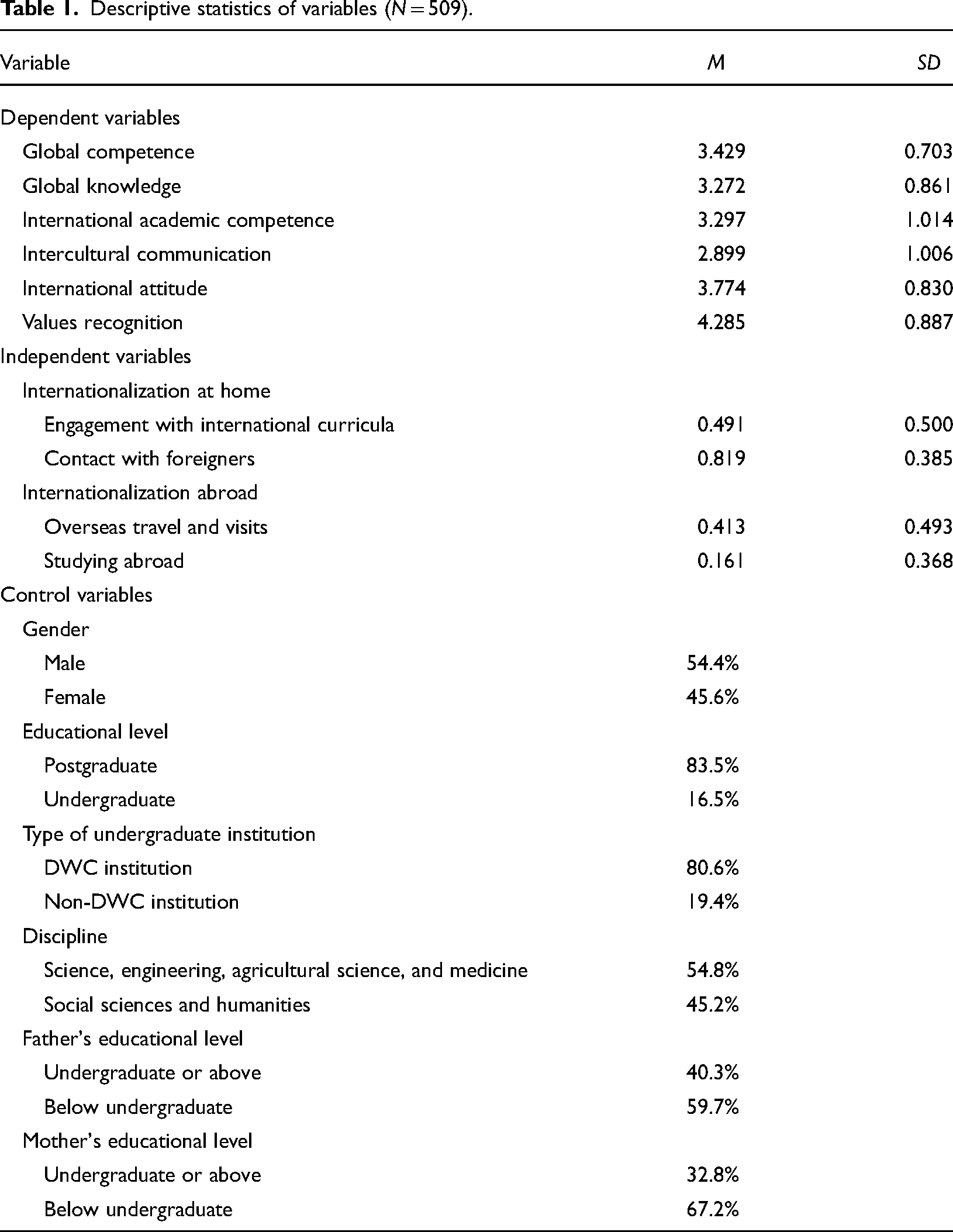
The questionnaires were distributed via the Internet. A total of 563 questionnaires were returned; after eliminating the invalid responses, 509 responses remained, making for a valid response rate of 90.41%. Regarding respondent gender, the sample comprised 54.4% males and 45.6% females. In terms of student level, most respondents (83.5%) were postgraduate students, while 16.5% were undergraduates. With respect to the type of undergraduate institution, 80.6% of undergraduate respondents studied at a university involved in the DWC project, while the remaining 19.4% attended a non-DWC university. In terms of academic discipline, 54.8% of respondents were majoring in science, engineering, agricultural science, and medicine, while 45.2% were majoring in the social sciences and humanities. Regarding family background, 40.3% of respondents reported that the highest education level achieved by their father was undergraduate or above, while 59.7% responded that their father had an educational level below undergraduate. Meanwhile, 32.8% of respondents reported that their mother's highest education level was undergraduate or above, while 67.2% reported a maternal education level below undergraduate. Table 1 presents the detailed descriptive statistics.
Descriptive statistics of variables (N = 509).
Variable selection
This study's key dependent variable is university students’ global competence, measured using Hunter et al.'s (2006) scale for evaluating global competence. Drawing on relevant literature (Hu, 2017; Liu & Wu, 2015), the questionnaire items were modified to better align with the context of Chinese research universities. The global competence scale comprised 25 items scored on a 5-point Likert scale. In terms of reliability, the scale had a Cronbach's α coefficient of 0.930. Based on factor analysis, globalization competence can be divided into the following five dimensions: global knowledge (six items), international academic competence (four items), intercultural communication (six items), international attitude (six items), and values recognition (three items). The first dimension, “global knowledge,” refers to understanding what globalization means and having a basic knowledge of the history, culture, language, and geography of other countries. The second, “international academic competence,” refers to the ability to follow and understand the frontiers of one's research field, exchange academic information with foreign colleagues, and produce international academic publications. The third, “intercultural communication,” refers to the ability to successfully exchange information and emotions with people from different cultural backgrounds and achieve a degree of understanding and trust. The fourth dimension, “international attitude,” refers to the willingness to respect and understand other cultures and values openly when interacting with people from different cultural backgrounds. Finally, “values recognition” refers to identifying with the culture and values of one's home country. This study conducted a factor analysis of global competence and its five dimensions, the results of which were used to calculate their scores. These variables were standardized and included in the regression equation as dependent variables.
This study identified four independent variables: (1) engagement with international curricula, (2) contact with foreigners, (3) overseas travel and visits, and (4) studying abroad. According to Soria and Troisi (2014) and Xu et al. (2019), internationalization at home is primarily achieved through contact with foreigners and learning courses with international content, with these two modes the most popular with students. Stebelton et al. (2013) classify internationalization abroad into two categories: overseas travel and visits and studying abroad. More specifically, the first variable, “engagement with international curricula,” concerned whether the student had studied curricula that focus on international content in their home country; this variable was assigned a value of 1 if “yes” and 0 if “no.” The second variable, “contact with foreigners,” indicated whether the student had come into contact with a foreigner from another country in their home country; it was assigned a value of 1 if “yes” and 0 if “no.” The third variable, “overseas travel and visits,” denoted whether the student had experience of overseas (outbound) travel in any form, such as traveling for tourism purposes and visiting friends; this variable was assigned a value of 1 if “yes” and 0 if “no.” The fourth variable, “studying abroad,” indicated whether the student had learning experiences, such as overseas exchange or pursuing a degree program; it was coded as 1 if “yes” and 0 if “otherwise.” Of the four variables, the first two are indicators of internationalization at home, while the other two are indicators of internationalization abroad. As Table 1 shows, in terms of the former, 49.1% of respondents had engaged in international curricula, while 81.9% had been in contact with a foreigner in their home country. Regarding internationalization abroad, 41.3% and 16.1% of students had experience of overseas travel and studying abroad, respectively.
Based on existing research, this study adopted control variables covering three aspects: individual characteristics, institutional background, and family background (Salisbury et al., 2013; Twombly et al., 2012): namely, gender, educational level, type of undergraduate institution, academic discipline, and father's and mother's educational level. All of these control variables were dummy variables.
Research methods
This study used ordinary least squares (OLS) to produce preliminary estimates of the factors influencing university students’ global competence. Although OLS regression can control for some factors influencing university students’ global competence, such as individual, institutional, and familial factors, it is prone to self-selection bias. For example, globally competent individuals are more likely to travel overseas or participate in internationalization programs at home, leading to biased estimates in the results (Roy, 1951). Therefore, in order to obtain more accurate estimation results, this study incorporated the quasi-experimental method of PSM for causal inference (Rosenbaum & Rubin, 1985).
PSM works by comparing the difference in a student's competence under two different modes—namely, “with experience of internationalization” and “without experience of internationalization”—to determine whether changes in competence are caused by their experience of internationalization. As the same person cannot possess the two states simultaneously, the presence or absence of such treatment is an established fact for the student. In this case, PSM can help construct a “counterfactual framework” and match students with experience of internationalization to those without it to ensure that the matched treatment group and reference group differ only in the experience of internationalization and keep their other characteristics as consistent as possible.
By drawing on the technique used by Dehejia and Wahba (2002), this study first computed the probability of each student having internationalization experience using logit regression based on performance in global competence in relation to each control variable. This probability was used as the propensity score. Thereafter, each student in the treatment group (i.e., with experience of internationalization) was matched with a student in the reference group with the closest propensity score. The average treatment effect on the treated (ATT) of internationalization experience, which represents the difference between the treatment and reference groups in terms of students’ global competence, can thus be computed via Equation (1):
Results
Effects of different modes of internationalization on students’ global competence
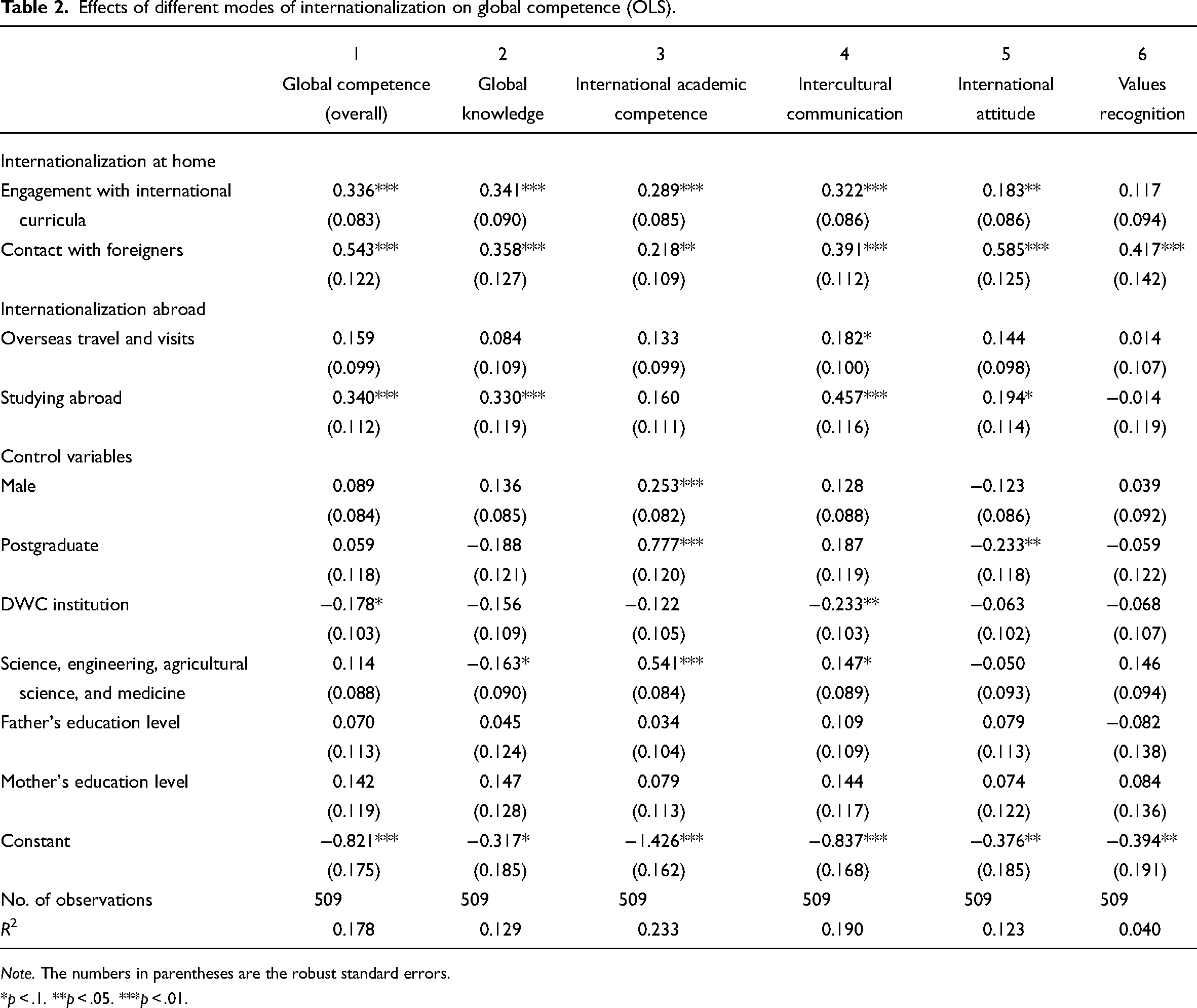
First, this study estimated the effects of different modes of internationalization on global competence using OLS. Table 2 presents the standardized regression coefficients (β) and standard errors. In Model (1), when controlling for all other variables, the three internationalization modes of “engagement with international curricula,” “contact with foreigners,” and “studying abroad” had a significantly positive effect on students’ global competence (standardized βcurricula = 0.336, p < .01; standardized βcontact = 0.543, p < .01; standardized βstudying abroad = 0.543, p < .01). In contrast, “overseas travel and visits” had no significant influence on global competence.
Effects of different modes of internationalization on global competence (OLS).
Note. The numbers in parentheses are the robust standard errors.
*p < .1. **p < .05. ***p < .01.
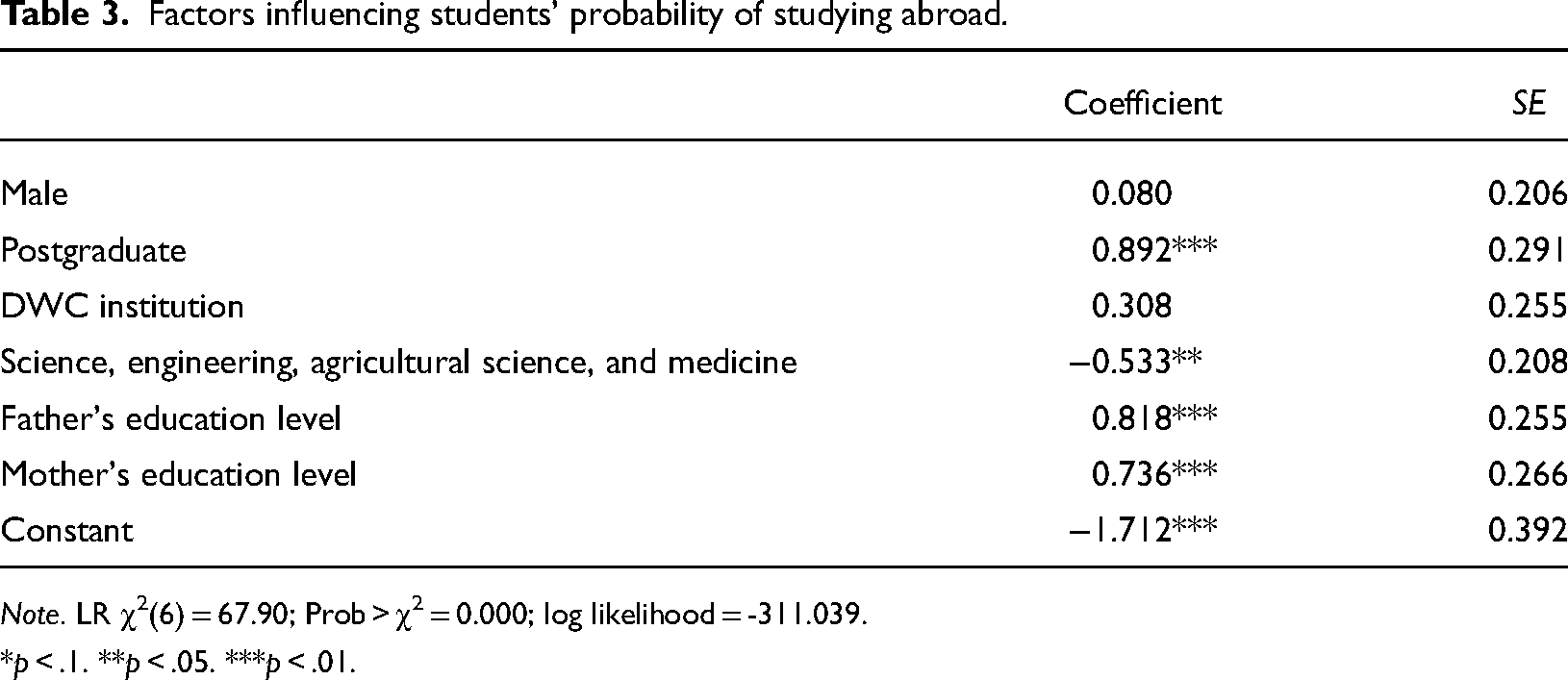
To mitigate the influence of the endogeneity problem, this study employed PSM to evaluate the effects of different modes of internationalization on global competence. Before conducting PSM, it is necessary to first estimate the propensity scores based on the logit model. However, to limit the length of this paper, this section only presents the logit regression on a student's probability of studying abroad as an example. Table 3 illustrates the results of the logit model. According to the likelihood ratio (LR) chi-square test, the overall model is statistically significant (LR χ2 = 67.90, p < .01). The coefficient tests revealed that “educational level,” “discipline,” “father's education level,” and “mothers’ education level” had a significant effect on studying abroad.
Factors influencing students’ probability of studying abroad.
Note. LR χ2(6) = 67.90; Prob > χ2 = 0.000; log likelihood = -311.039.
*p < .1. **p < .05. ***p < .01.
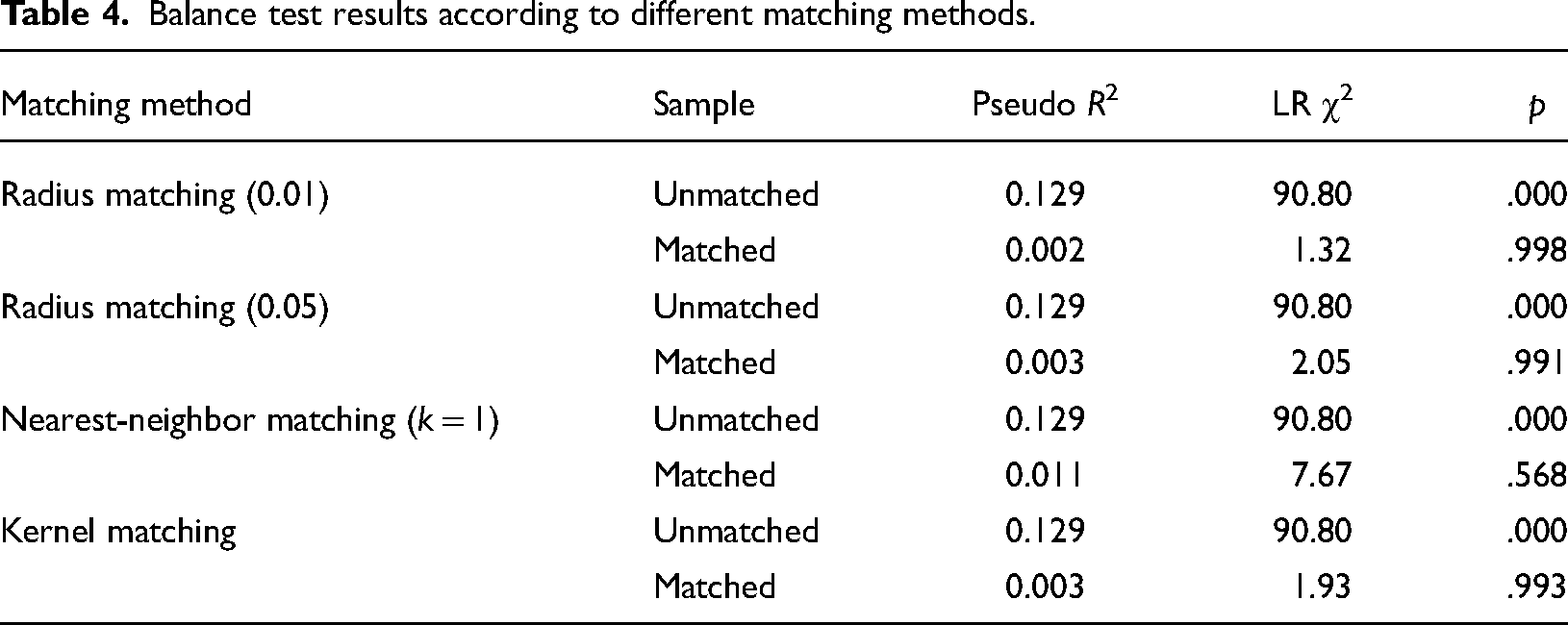
This study then conducted sample matching using several methods, primarily the radius method with a radius of 0.01, as this method can prevent the occurrence of bad matches. This study also utilized radius matching with a radius of 0.05, 1:1 nearest-neighbor matching, and kernel matching to ensure the robustness of the conclusions. As the results in Table 4 show, there were significant differences (p < .001) between the treatment and control groups before matching. However, after matching, the sample passed the LR test, displaying no significant differences between the two groups (p = .998). Similarly, testing with different methods yielded p-values of .991, .568, and .993, respectively, indicating no significant difference. Meanwhile, there was also a decrease in the pseudo-R2 values. Overall, a good matching effect was achieved.
Balance test results according to different matching methods.
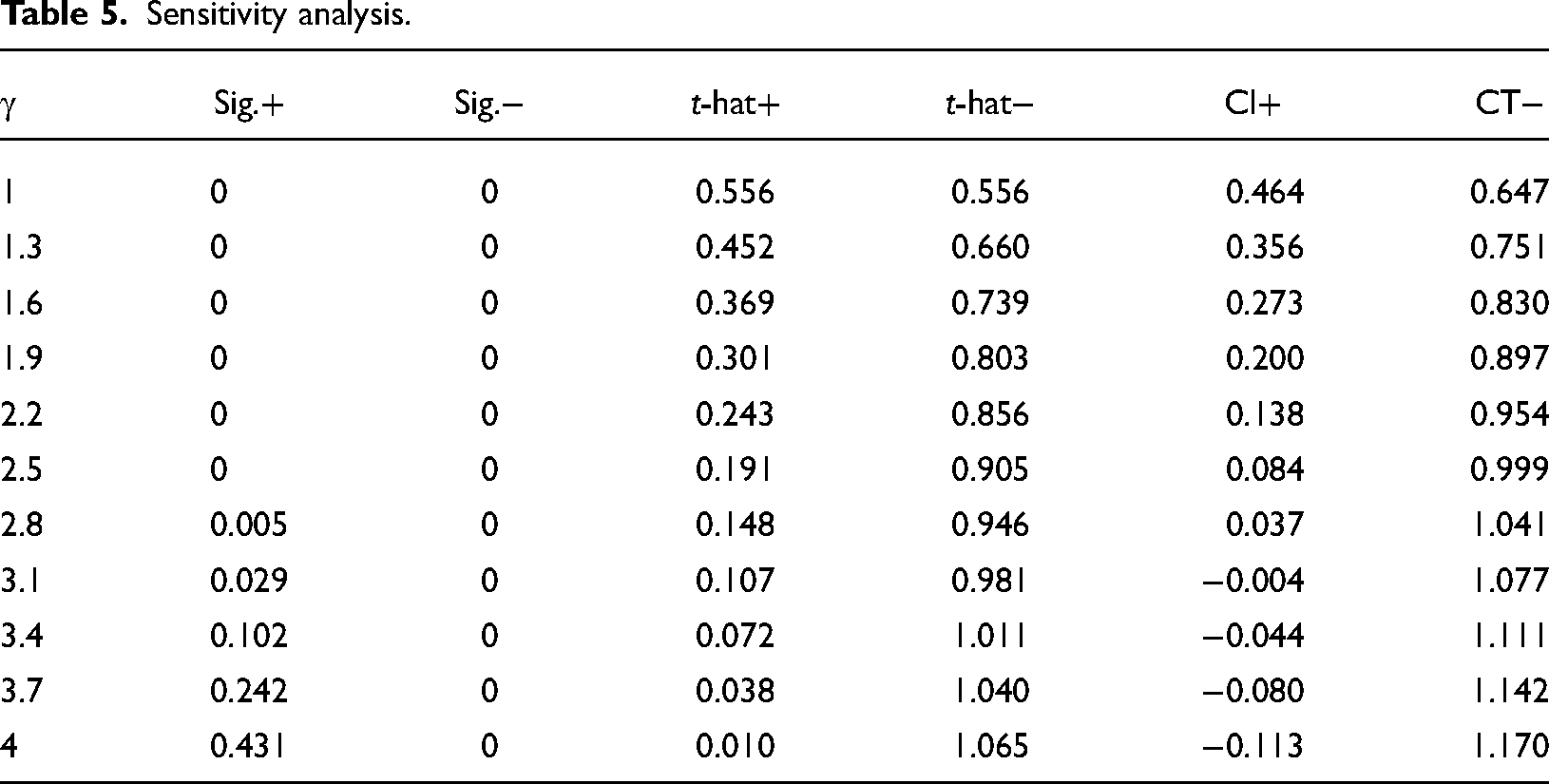
To evaluate whether any selection bias remained after applying the PSM method, this study utilized the Wilcoxon signed-rank test proposed by Rosenbaum (2002) for sensitivity analysis. Table 5 presents the sensitivity analysis results. As Table 5 shows, results become sensitive to hidden bias when Gamma exceeds 3.1 at a 10% statistical level. Therefore, it is reasonable to assume that the treatment variable is unrelated to the omitted variable, inferring that there is no selection bias.
Sensitivity analysis.
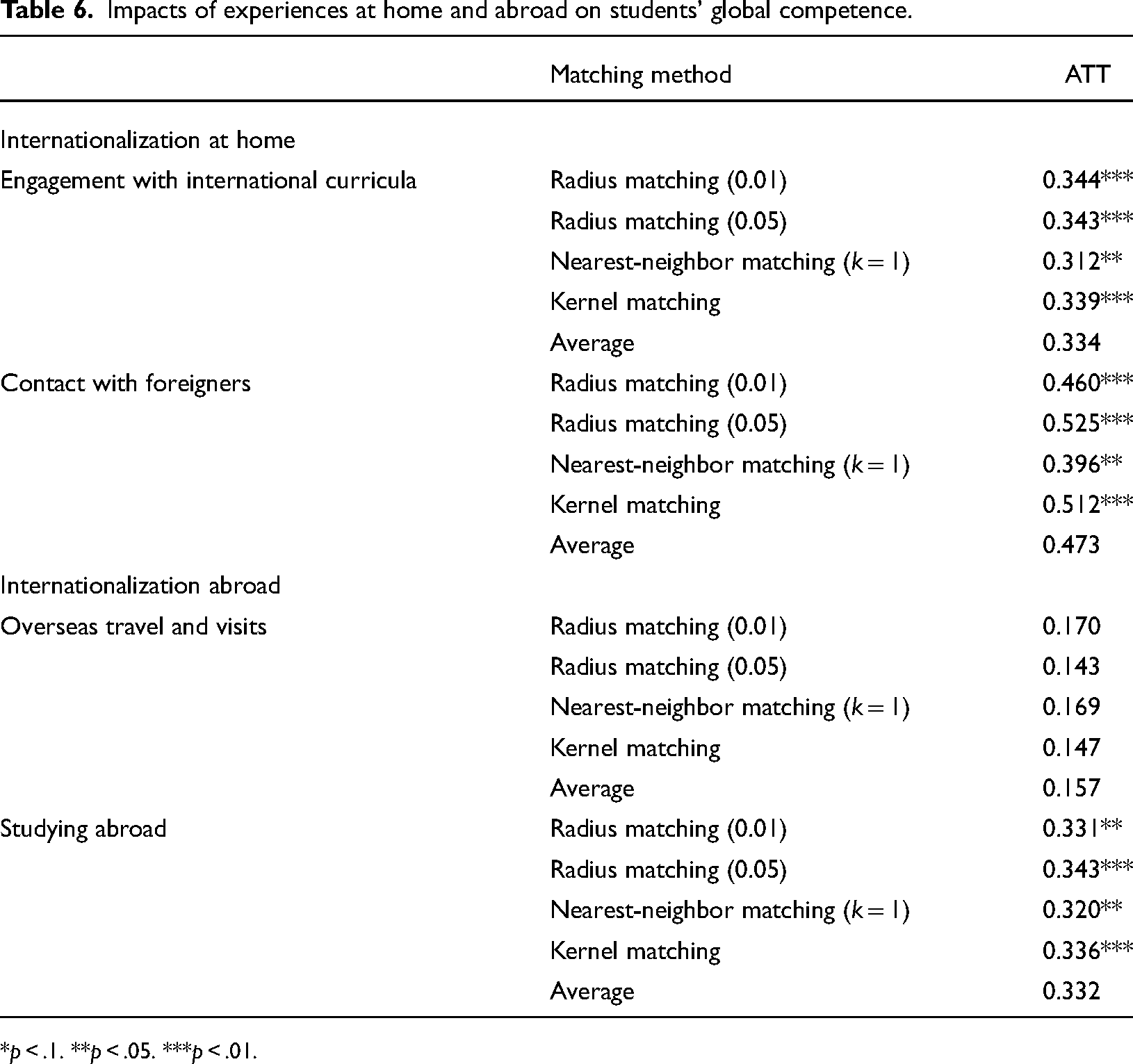
Finally, Table 6 presents the effects of internationalization at home and abroad on students’ global competence when tested using four different methods at the same time, namely, radius matching with a radius of 0.01, radius matching with a radius of 0.05, nearest-neighbor matching (k = 1), and kernel matching. This section only presents the results of radius matching with a radius of 0.01, with the other three matching methods used as robustness tests. In terms of internationalization at home, results indicated that “engagement with international curricula” significantly improved students’ global competence, with an ATT of 0.344 (p < .01). In other words, “engagement with international curricula” improved students’ global competence by 0.344 standard deviations. “Contact with foreigners” also led to a significant improvement in global competence, with an ATT of 0.460. Accordingly, the global competence scores of students who had been in contact with a foreigner increased by 0.460 standard deviations. These results confirm H1, suggesting that internationalization at home has significant positive effects on students’ global competence.
Impacts of experiences at home and abroad on students’ global competence.
*p < .1. **p < .05. ***p < .01.
Regarding internationalization abroad, “overseas travel and visits” had no significant effect on global competence, which aligns with the estimation results obtained using OLS. However, “studying abroad” significantly improved students’ global competence, as students with study-abroad experiences saw an increase in their global competence scores by 0.331 standard deviations. These findings partially confirm H2, suggesting that among types of internationalization abroad, only studying abroad has a significant positive effect on students’ global competence, while overseas travel and visits do not. These findings generally align with those of studies conducted in Europe and the United States (Braskamp et al., 2009).
Impacts of experiences at home and abroad on different dimensions of global competence
This study employed OLS regression to estimate the effects of experiences at home and abroad on different dimensions of global competence. Table 2 shows the results of Models (2)–(6), indicating that “engaging with international curricula” can significantly and positively influence students’ global knowledge, international academic competence, intercultural communication, and international attitude. Contrastingly, “contact with foreigners” can significantly promote their global knowledge, international academic competence, intercultural communication, international attitude, and values recognition. “Overseas travel and visits” only had a significantly positive effect on the intercultural communication dimension. Meanwhile, “studying abroad” had a significantly positive influence on global knowledge, intercultural communication, and international attitude but no significant effect on international academic competence and values recognition.
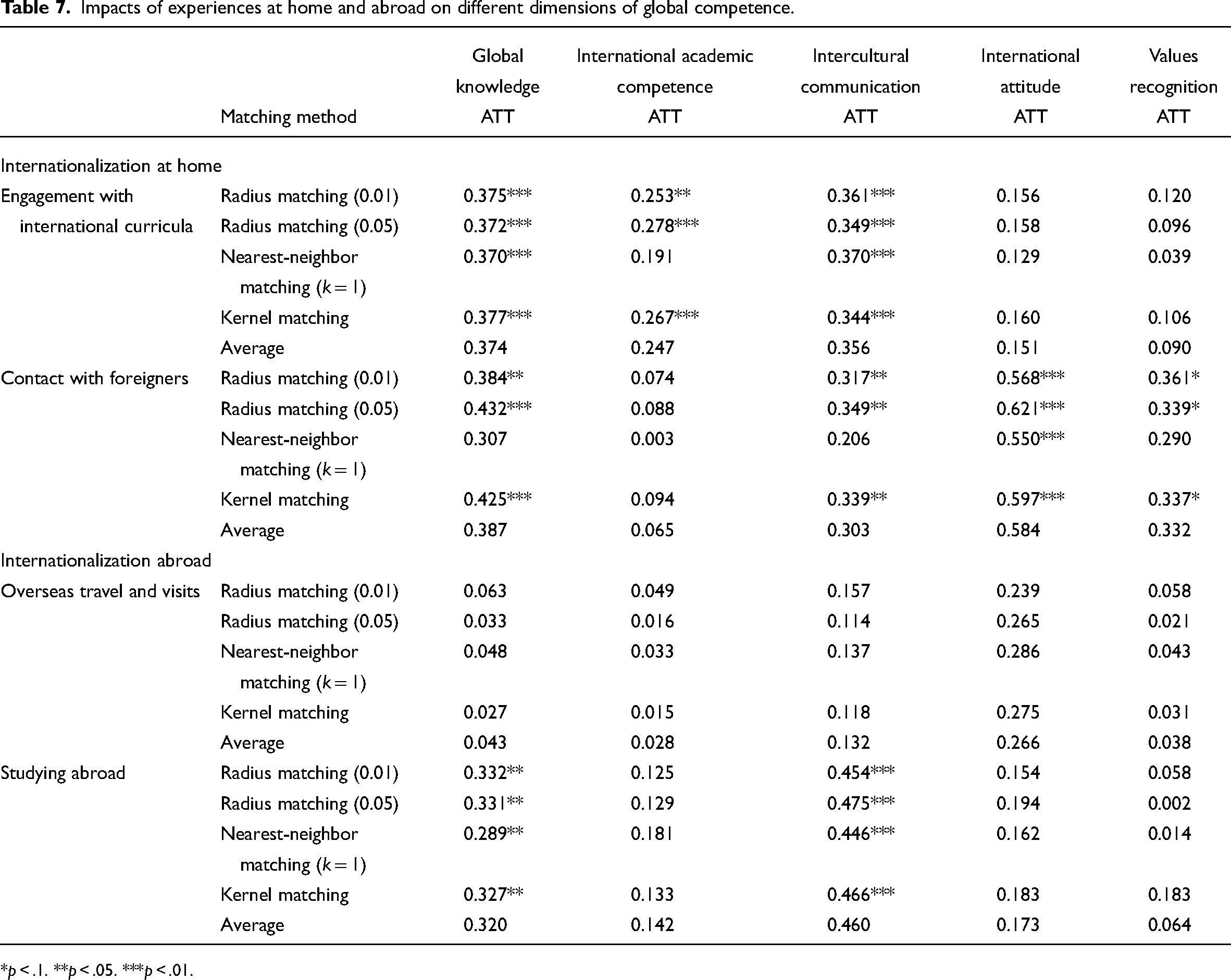
This study applied PSM to estimate the impacts of experiences at home and abroad on students’ global competence, the results of which are presented in Table 7. In terms of internationalization at home, “engagement with international curricula” had a significantly positive effect on global knowledge, international academic competence, and intercultural communication competence, increasing the average scores by 0.374, 0.247, and 0.356 standard deviations, respectively. Surprisingly, PSM results indicated that “engagement with international curricula” did not have a significant effect on international attitude, which is inconsistent with the OLS regression results. This is possibly because students with higher internationalization attitudes tend to take international curricula, thus creating a selectivity bias when estimating its effect using OLS regression. “Contact with foreigners” had a significantly positive effect on global knowledge, intercultural communication, international attitude, and values recognition, raising the average scores by 0.387, 0.303, 0.584, and 0.332 standard deviations, respectively. Regarding internationalization abroad, “overseas travel or visits” did not appear to impact any of the five dimensions. However, “studying abroad” experiences had a significantly positive effect on global knowledge as well as intercultural communication, increasing the average scores by 0.320 and 0.460 standard deviations, respectively. Overall, internationalization at home appears to have certain advantages in enhancing students’ international academic competence and fostering their internationalized attitudes.
Impacts of experiences at home and abroad on different dimensions of global competence.
*p < .1. **p < .05. ***p < .01.
Heterogeneity analysis
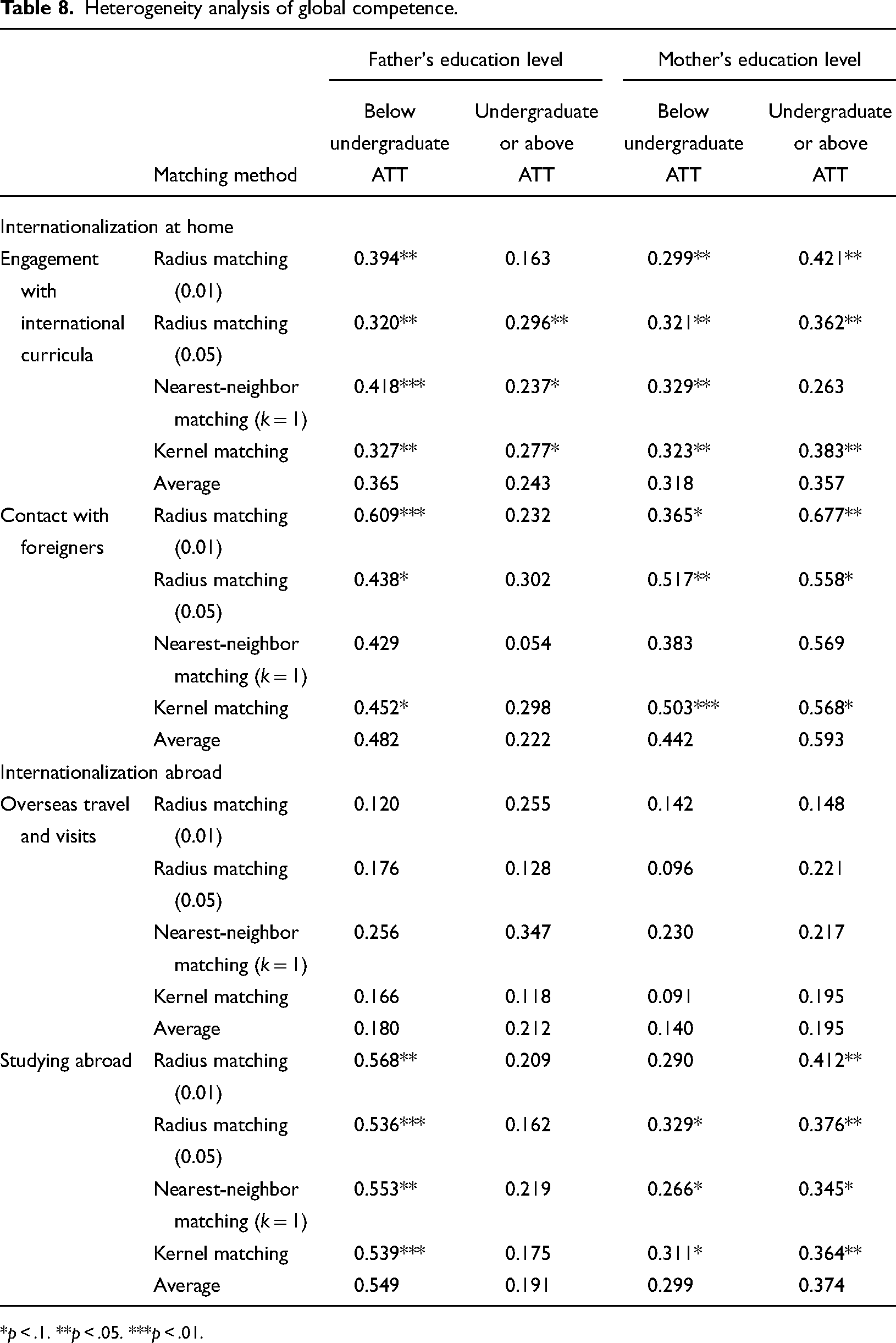
As students from different family socioeconomic backgrounds may benefit differently from internationalization (Simon & Ainsworth, 2012), this study conducted a heterogeneity analysis considering students’ family backgrounds. However, due to the limited number of variables related to family background in the survey, this study only conducted heterogeneity analysis based on the educational level of students’ parents (Table 8). First, engaging in international curricula, contact with foreigners, and studying abroad enhanced the global competence of students whose fathers had an education level below undergraduate. In contrast, for students whose fathers had an undergraduate degree or above, only engaging in international curricula significantly improved their global competence. These results suggest that internationalization at home is more beneficial for students from lower socioeconomic backgrounds. Second, PSM results revealed that regardless of whether the mother's education was above or below the undergraduate level, engaging in international curricula, contact with foreigners, and studying abroad had a significant positive impact on students’ global competence.
Heterogeneity analysis of global competence.
*p < .1. **p < .05. ***p < .01.
Discussion and conclusion
In the context of the limited internationalization resulting from the COVID-19 pandemic, this study explored approaches to enhancing students’ global competence. Based on survey data of university students from high-level research universities in China, this study used PSM to estimate the impacts of two different modes of internationalization—namely, internationalization at home and internationalization abroad—on global competence among Chinese university students. This study yielded the following findings.
First, this study found that internationalization at home has a significantly positive effect on students’ global competence. In terms of the specific dimensions of global competence, “engagement with international curricula” can improve students’ global knowledge, international academic competence, and intercultural communication competence. This underscores the role of international curricula as an important vehicle for developing global competence, as the knowledge taught by faculty members in class not only expands students’ views of the world (e.g., Lohmann et al., 2006) but also helps boost their academic competence.
This study also found that “contact with foreigners” within the country can promote knowledge and understanding, intercultural communication, international attitude, and value recognition. Contact with foreigners can provide students with opportunities to access related knowledge, allowing them to expand their knowledge of different countries, improve their academic and interpersonal skills, and stimulate their willingness to communicate with others (Meng et al., 2017).
Results revealed that contact with foreigners has a greater effect in promoting global competence in terms of international attitude and values recognition than engagement with international curricula. This is likely because coming into contact with foreigners is an important means of developing a comprehensive understanding of the customs and habits of different countries and how China is viewed by different communities. As a result, students are willing to step out of their own cultures and experience those of other countries, which influences their international attitudes and personal values in turn (Lewin, 1936). Therefore, compared to engaging with international curricula, contact with foreigners is more effective in improving the attitude and values dimensions of students’ global competence.
Moreover, according to the heterogeneity analysis, the benefits of internationalization at home are more pronounced among students from less educated families. On the one hand, students from low socioeconomic status (SES) families have fewer opportunities to study abroad and interact with students from diverse cultural backgrounds (Simon & Ainsworth, 2012). Therefore, their global competence is usually lower than that of students from high-SES families, which means that their marginal benefit from internationalization may be more significant. Internationalization at home is also less costly and thus of greater benefit for low-SES students.
Second, regarding internationalization abroad, the study results revealed that “overseas travel and visits” do not play any significant role in promoting students’ global competence. This is likely because such travel is solely for the purposes of tourism, shopping, or visiting relatives and friends. With a clearly recreational purpose, these relatively short trips have no effect in enhancing overall global competence. In contrast, traveling for the purpose of studying abroad can significantly strengthen global competence in terms of knowledge and understanding and intercultural communication competence (Braskamp et al., 2009). Study-abroad programs generally last longer and are premised on the traveling student receiving education at an overseas college or university. As this knowledge acquisition process inevitably requires students to communicate with foreigners, it plays a significant role in promoting students’ global competence.
While studying abroad had a positive effect on most sub-dimensions of global competence in this study, it had no significant influence on international academic competence, which is inconsistent with the conclusions of existing studies (e.g., Luo & Jamieson-Drake, 2015; Vande Berg et al., 2009). The reason for this may be twofold. First, the questionnaire items used to measure international academic competence in this study concerned the publication of academic papers in foreign-language journals. In China, most higher education institutions have certain requirements for postgraduate students’ graduate publications, with some internationalized curricula placing a substantial premium on fostering their academic publication competence. However, the majority of higher education institutions overseas have no such requirements regarding student publications (Gao & Xu, 2022). Second, the study-abroad programs were largely short-term exchanges, and students may have had difficulty adapting to the foreign culture in such a short amount of time (Cao et al., 2018), potentially undermining their academic performance.
Third, this study found that the two methods of internationalization at home had a significant positive impact on students’ global competence. However, the two methods of internationalization abroad did not consistently produce a significant effect. According to Soria and Troisi (2014), compared to studying abroad, participation in global/international curricula in a student's home country may elicit greater perceived benefits for the development of global competence. There are two explanations for this finding. First, China has seen an increasing number of domestic research universities offering internationalized curricula and year-on-year growth in the number of international students (Tamene et al., 2017). This has laid a sound foundation for internationalization at home. Students who focus on internationalization at home may be able to improve their global competence to a greater extent than they would by studying abroad. Second, students who study abroad for a short time may find it difficult to assimilate into the local culture and prefer engaging with ethnically Chinese people rather than foreigners (Zhang & Li, 2022). This behavior may be detrimental to improving their global competence.
Policy implications
The foregoing conclusions elicit several policy implications for transforming the modes of internationalization at universities and strengthening the global competence of student groups. Emphasis should be placed on the internationalization of higher education at home, with educational resources prepared accordingly. These implications can be summarized as follows.
First, internationalization at home is not possible without internationalized faculty members. Therefore, it is necessary to promote faculty members’ global competence in teaching. There are various ways to achieve this, such as providing them with training in teaching international courses and funding for international curriculum development.
Second, the internationalization of the curriculum is a core component of the process of achieving internationalization at home (Beelen & Jones, 2015). Ideally, curricula should impart global cutting-edge knowledge and skills as well as a global perspective and diverse values. Higher education institutions should also design special courses to enhance students’ global competence, such as those focused on intercultural communication skills or foreign culture and history. Doing so can facilitate students’ understanding of different cultures and promote the accumulation of international knowledge while equipping them for communication with foreigners from multicultural backgrounds.
Third, students should be encouraged to engage in intercultural communication activities, which could broaden their international outlook. For instance, students could be motivated to actively participate in internationalized curricula and activities, make use of existing international resources, and initiate contact and communication with peers from different countries and cultural backgrounds (Meng et al., 2017). Universities should also ensure that students are provided with an environment that facilitates intercultural communication. For example, in terms of student management, international and domestic students should be subject to convergent management without setting physical boundaries (Wang et al., 2019), as this will enable them to perceive an internationalized climate on campus and pave the way for a diverse and enriching array of cultural activities.
Limitations
This study has several limitations. First, as no distinction was made between the duration of internationalization at home and that of internationalization abroad, it was not possible to determine their long-term and short-term effects on global competence. To resolve this issue, future studies should explore the impacts on global competence based on the frequency and duration of overseas travel and visits, as well as study-abroad programs. Second, as resource and financial constraints hindered information acquisition, this study's sample comprised students from high-level research universities in China. Additionally, the sample did not involve students from all disciplines. Future research should target university students enrolled in different disciplines and institutions of varying levels to verify the generalizability of the conclusions.
Footnotes
Authors’ note
This paper is partially based on the authors’ recent study, “Abroad or at Home: The Influence of Different Internationalization Modes on the International Competence of Postgraduates,” which was published in October 2022 as a Chinese-language article in China Higher Education Research (《中国高教研究》) (Li & Yang, 2022). In this article, the authors supplement the previous study, which was limited to postgraduate students, by adding a sample of undergraduate students to make the findings more generalizable. There are some changes in the selection of control variables, and in this paper, we add heterogeneity analysis of parents at different educational levels. At the same time, in order to make the results more robust, we also use sensitivity analysis methods. The use of the analysis results of Li and Yang (2022) has been authorized by China Higher Education Research and acknowledged by ECNU Review of Education.
Contributorship
Xi Yang was responsible for the research design and article revision. Tingsong Li was responsible for the literature review and data analysis. Both authors were responsible for writing this article. Both authors finalized this article and responded to the reviewers’ comments.
Declaration of conflicting interests
The authors declared no potential conflicts of interest with respect to the research, authorship, and/or publication of this article.
Ethical statement
The questionnaire provided an ethical statement at the beginning, clearly stating that no personal information was involved and that the data collected would only be used for scientific research. Informed consent was indicated when the questionnaire began to be filled out.
Funding
The authors disclosed receipt of the following financial support for the research, authorship, and/or publication of this article: This study was supported by the National Education Scientific Planning Projects-National General Projects (BIA230184).
