




Abstract
Purpose
This study provides an overview of the changes and developments of the sociology of education in China as it enters the new era as well as its future outlook.
Design/Approach/Methods
This study combed and analyzed research in the field of the sociology of education in China during the period from 2012 to 2022 on three issues—educational fairness, rural education, and educational reform—to clarify the field's research characteristics and trends.
Findings
In the new era, scholarship on the sociology of education has shifted to focus on achieving high-quality education, modernization, and digitization as new avenues for promoting educational fairness, rural education, and educational reform. As a result, research on the sociology of education in China has employed broader perspectives, adopted a more reflexive approach toward research objects, and embraced more humanistic values.
Originality/Value
This study compiles research on the sociology of education in China in the new era and identifies that the field is moving toward a highly integrative approach. The findings provide useful references for learning and understanding the sociology of education in China.
Keywords
Introduction
If Tao's (1922) Society and Education is considered the pioneering work of the Chinese sociology of education, then the field may be split into four stages in the wake of the text's publication in the 1920s: “inception,” “disruption,” “reconstruction,” and “transformation” (Cheng, 2011). The development of the Chinese sociology of education has been profoundly shaped by the unique characteristics of each period, from the early stage of exploration to the challenging process of reconstruction and, finally, to the establishment of a comprehensive disciplinary system. In recent years, the sociology of education in China has presented an international research vision at the theoretical level, and has increasingly drawn on international experience at the theoretical level and applied it to the Chinese context; considered the real situation and, relatedly, problems of local education in China; employed the humanistic research lens at the micro level; and explored how best to promote educational fairness, rural education revitalization, and the quality development of education.
Over the past decade, the sociology of education in China has maintained its prominence and stability while also exploring new topics. Educational fairness has long been a central concern in the field of the sociology of education. With the onset of a new era, China's socio-economic development has shifted toward a greater emphasis on quality enhancement and balanced development, resulting in increased attention to educational fairness. Given China's urban–rural divide, the problem of regional differences between urban and rural education has become more prominent; accordingly, Chinese scholars have become concerned with how rural education may be improved. At the same time, the issue of educational reform has become a popular topic in the sociology of education in the new era, as new changes have occurred in policies and concepts related to educational fairness.
Regarding research on educational fairness, a constant concern has been how to address educational differences across areas and groups while making “high quality” education the new norm. Modernization and information technology have provided a new social context for this work. Meanwhile, regarding research on rural education, the rise of new urbanization has become a social reality in recent years, and empowering rural revitalization through education has become a new research perspective. Notably, this new perspective downplays the traditional dichotomy between urban and rural areas. Further, regarding research on educational reform, policy design, technological innovation, and social support have become the essential elements for all levels and types of education, and enhancing the depth and overall quality of educational reform has become a popular subject among researchers.
After summarizing how research on the Chinese sociology of education has addressed these three issues in Chinese education over the last decade, this paper contends that the Chinese sociology of education integrates world consciousness and local characteristics in its research perspective, combines disciplinary understandings and educational practice in its research object, and integrates scientific pursuits and humanistic care in its disciplinary values. At the same time, based on existing research and the field's social background, this paper also predicts that the Chinese sociology of education will become more integrated in the future.
Issues for the new era: Changes and constants
In the new era, research on the Chinese sociology of education has been focused on real educational dilemmas and pinpointing societal problems. Unlike previous discussions on education, which did not involve lesions, did not study pathology, and treated the symptoms rather than the root cause, Educational Pathologies in China (Zheng, 2013) approaches education from many perspectives and tells the shocking truth of Chinese education, points out its etiology, and directly describes solutions. It can be said that sociological research into specific educational issues in China during the new era addresses a diverse range of aspects, is pioneering new scholarly directions, and emphasizes promoting educational fairness, a rural renaissance, and educational transformation.
Educational fairness
In 2010, the Outline of the State Medium- and Long-Term Program on Education Reform and Development (2010–2020) made the promotion of equality in education the basic education policy of China. In 2012, the Report to the 18th CPC National Congress laid out the goal of promoting fairness in Chinese education and making every child a useful person. Today, the principal contradiction facing Chinese society has evolved into the contradiction between unbalanced and inadequate development and the people's ever-growing needs for a better life, which necessitates the new policies on educational fairness as well as related conceptual changes. Against this social background, the sociology of education in China has become more vigorous and more deeply concerned with educational fairness; further, it has produced new changes. In the China Knowledge Network Internet (CNKI), “educational fairness” appears 1,596 times in papers published between 2012 and August 2022. The statistics of similar keywords with high frequencies and the number of times they appear are shown in Figure 1.
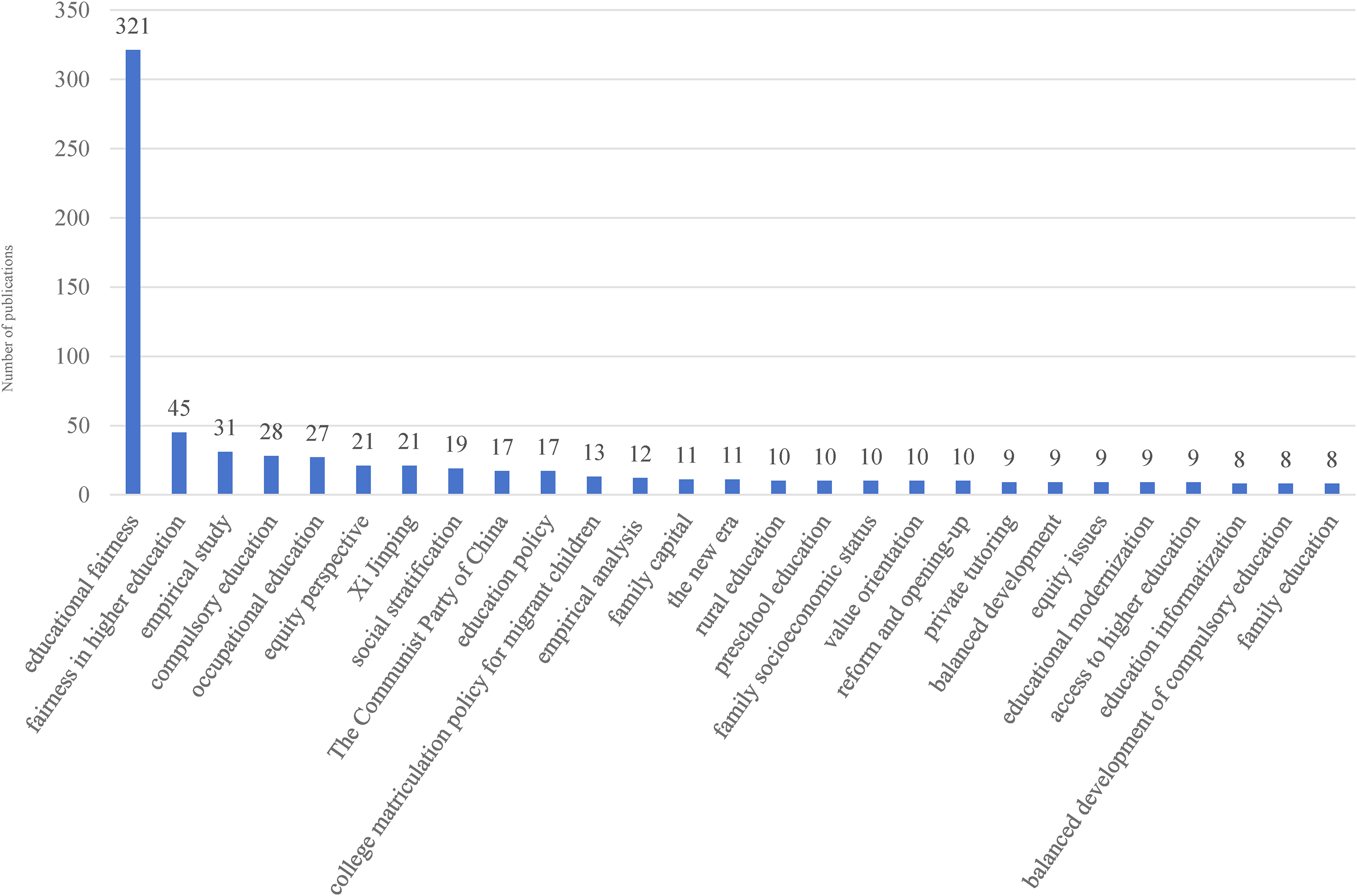
Word frequency statistics and distribution map of themes in papers related to “educational equity” since the beginning of the new era.
The statistics above reveal that studies on educational fairness encompass all levels and forms of education, ranging from compulsory education to higher education, family education to private tutoring, and pre-school education to vocational education. Among these, fairness in higher education has drawn significant attention; notably, this trend is related to the expansion of higher education. Themes such as “family socioeconomic status,” “social stratification,” and “rural education” focus on differences in education across populations and regions. Meanwhile, research on topics such as “educational modernization” and “education informatization” are closely connected to the emerging phenomenon of new educational fairness, which arises from recent developments in science and technology. Concerns over educational disparities remain constant, particularly in regard to educational fairness. Meanwhile, the advent of information technology and the need for high-quality modernization provide a new context for these ongoing issues.
Since the extensive expansion of higher education in China toward the end of the twentieth century, higher education has transitioned from an elite experience to a more widely accessible one. Some scholars argue that prioritizing the quality and impartiality of higher education pathways is a practical necessity for managing the discrepancy between the supply of and demand for higher education; this drives the advancement of higher education standards, solutions to the issue of the inequitable development of higher education, and understandings that high-quality and equitable higher education should allow a student's unique nature to freely develop (Zhang & Dong, 2018). One study (Zhou & Xie, 2020) found that the expansion of higher education reshaped the relative opportunity structures of general and elite universities and affected the impact of higher education mechanisms on social stratification. Before the expansion of higher education, there was no significant disparity in the returns on higher education completed at top-tier and non-top-tier universities (notably the returns on university were significantly higher than the returns on high school). However, after the expansion of higher education, graduates from prestigious universities earned significantly more than those from non-prestigious universities whereas university graduates enjoyed substantially higher earnings than those who only completed senior high school. The different returns on different levels of university were greater than the difference between the returns on university and high school, and this reshaped the social stratification structure of contemporary China. Further, an empirical analysis (Fang, 2019a) suggested that, on the one hand, the differentiated pursuit of educational resources will lead to the stratification of residential space while, on the other hand, the stratification of residential space plays a role in the monopolization of specific educational resources and the blocking of other classes from enjoying specific educational resources.
The implementation of policies, such as those that have increased enrollment in higher education, has allowed students from diverse family backgrounds to access universities. Nevertheless, higher education opportunities have not necessarily led to equal educational opportunities, and research on educational fairness has consistently centered on family background. A series of studies by Wu indicates that students from families with higher socioeconomic statuses tend to choose academic education over occupational education and are more inclined to enroll in priority schools and attend priority schools at an earlier stage, which notably impacts their later access to priority schooling (Wu, 2013). The socioeconomic composition (SEC) of schools significantly affects students’ educational expectations: The higher a school's average SEC or heterogeneity, the greater the educational expectations of its students; further, students with lower cognitive abilities who fall behind at school are more likely to benefit from an increase in the socioeconomic status (SES) and heterogeneity of their schools (Wu & Huang, 2016). Because children from wealthier families are more likely to attend higher-quality schools, cultural capital in China involves a “double reproduction” process, which means that the intergenerational transmission of cultural capital is successively reinforced by the socio-economic context of the family and the school system in the process of social reproduction, and, as an important mechanism of educational inequality and class reproduction, is increasingly related to status and social inequality in China (Wu et al., 2017). Cultural capital can have a more substantial impact for children of the elite when it is combined with other resources, and this outcome aligns with cultural reproduction theory (Zhu, 2018). Numerous studies have shown that families contribute to the different educational opportunities afforded to their children through their socioeconomic resources. Additionally, parents’ educational involvement and behavioral support can shape their children's learning attitudes and study habits, thereby impacting their academic achievement. Family socioeconomic status has a more significant effect on the academic achievement of urban students compared to their rural counterparts, whose academic accomplishment depends more on their learning behaviors (Jin et al., 2019; Li & Qiu, 2016).
Regarding regional disparities in education, scholars have elaborated on macro-educational policies, meso-educational phenomena, and micro-educational practices. Some studies have found that expansion of opportunities for enrollment in higher education has had a significant positive effect on improving access to higher education for both urban and rural residents; however, the problem of unequal access to education between urban and rural areas has worsened since the implementation of the policy (Meng et al., 2017). Based on higher education enrollment rates by age and the enrollment rates of the college-age population in each region, the 31 provinces in China have been classified into areas of absolute advantage, areas of relative advantage, and areas of relative disadvantage with regard to the opportunities for enrollment in higher education. Despite nearly two decades of enrollment growth, regional disparities in higher education enrollment persist in China. Notably, the expansion of enrollment significantly reduces disparities in overall access to enrollment opportunities. However, although the expansion of enrollment has enhanced general access to higher education, it has failed to eradicate entrenched regional inequalities in access to quality opportunities (Zhang & Li, 2019). It has also been argued that the expansion of higher education enrollment has interrupted the trend of the widening of the inter-regional enrollment gap, whereas the enrollment gap between genders has significantly narrowed after the expansion and the intergenerational transmission of parental cultural capital has weakened to a certain extent (Lu et al., 2016). In terms of education gaps in minority areas, policies have effectively reduced ethnic disparities. Although compared with the Han population, ethnic minorities in western China still experience significant obstacles in accessing education, their educational discrepancies mainly stem from differences between urban and rural areas and among different socioeconomic classes (Ma, 2016).
Since the new era, with the deepening development of education informatization, there have also been relevant empirical studies confirming that educational reform based on informatization can help the development of education in poverty-stricken areas. For example, based on a survey of 20 counties (districts and cities) in eight provinces (cities) across the country, Wang and Zhang (2018) found that four education models rooted in informatization, such as the dual-track digital school model, the “double teacher” model of mutual assistance between urban and rural areas, the organized MOOC model, and the full coverage model of appropriate digital resources, can promote the balanced development of county education. As a starting point for equity, information technology could ensure universal access to quality educational resources by achieving a balanced configuration of educational resources through the co-construction, sharing, and exchange of educational information resources and synchronous distance learning. For process equity, information technology could be used to provide high-quality individualized knowledge services tailored to each learner. For outcome equity, information technology could be applied to help learners to achieve self-adaptive development and objective assessment by facilitating collaborative knowledge building and transfer and for big data-based formative assessments (Xiong et al., 2016).
Therefore, it is necessary to reflect on and reconstruct the theory of educational fairness, explore social support strategies for educational fairness, and expand the path of the development of schooling under the new vision of educational fairness. The “Theoretical Construction and Practical Exploration of New Educational Fairness” innovation team, led by Tianjun Cheng, has done a lot of research on “new educational fairness.” Cheng believes that, in the new era, the main contradiction in education has become the one between the eager expectation of the masses for high-quality education and the serious shortage and uneven development of education. This transformation requires a new idea of educational fairness that is people-centered and that extends beyond the traditional view of educational equity as based on economic development or political rights (Cheng, 2019). New educational fairness advocates a new education development concept that focuses on sustainable development and educational quality. Relying on development and reform and encouraging creativity are feasible paths for realizing the new concept of educational equity (Cheng, 2017). In short, educational fairness in the new era requires the joint effort of the government and all sectors of the society to face the difficulties and challenges of reform and work together to achieve “fair and quality education for every child.”
Rural revitalization
Rural education holds intrinsic value for cultural heritage and innovation. The selection and cultivation of particular cultures reflect the fundamental quality of rural education, and the culture of rural education deeply determines the value of rural education. The rural revitalization strategy and poverty alleviation goals outlined in the 19th National Congress of the Communist Party of China are closely linked to the development of rural education. Therefore, the revitalization of rural areas and the fight against poverty require new approaches and breakthroughs in rural education, particularly in the context of new urbanization and large-scale mobility. A search on the CNKI found more than 2,000 articles on the themes of “rural education” and “society” published between 2012 and 2022. These papers have received support from various projects, such as the National Social Science Fund of China, the National Education Science Planning Project, and the National Natural Science Foundation of China. This funding demonstrates the significance of rural education in both social science research and national development strategies. As depicted in Figure 2, in terms of specific research topics, these articles mainly focus on rural community education, rural education revitalization, and the integration of urban and rural education in the context of new urbanization; further, within these foci, the papers are primarily concerned with the social mobility of rural youth and those who migrate with their parents to urban areas, as social mobility constitutes a crucial aspect of the life trajectories of these groups.
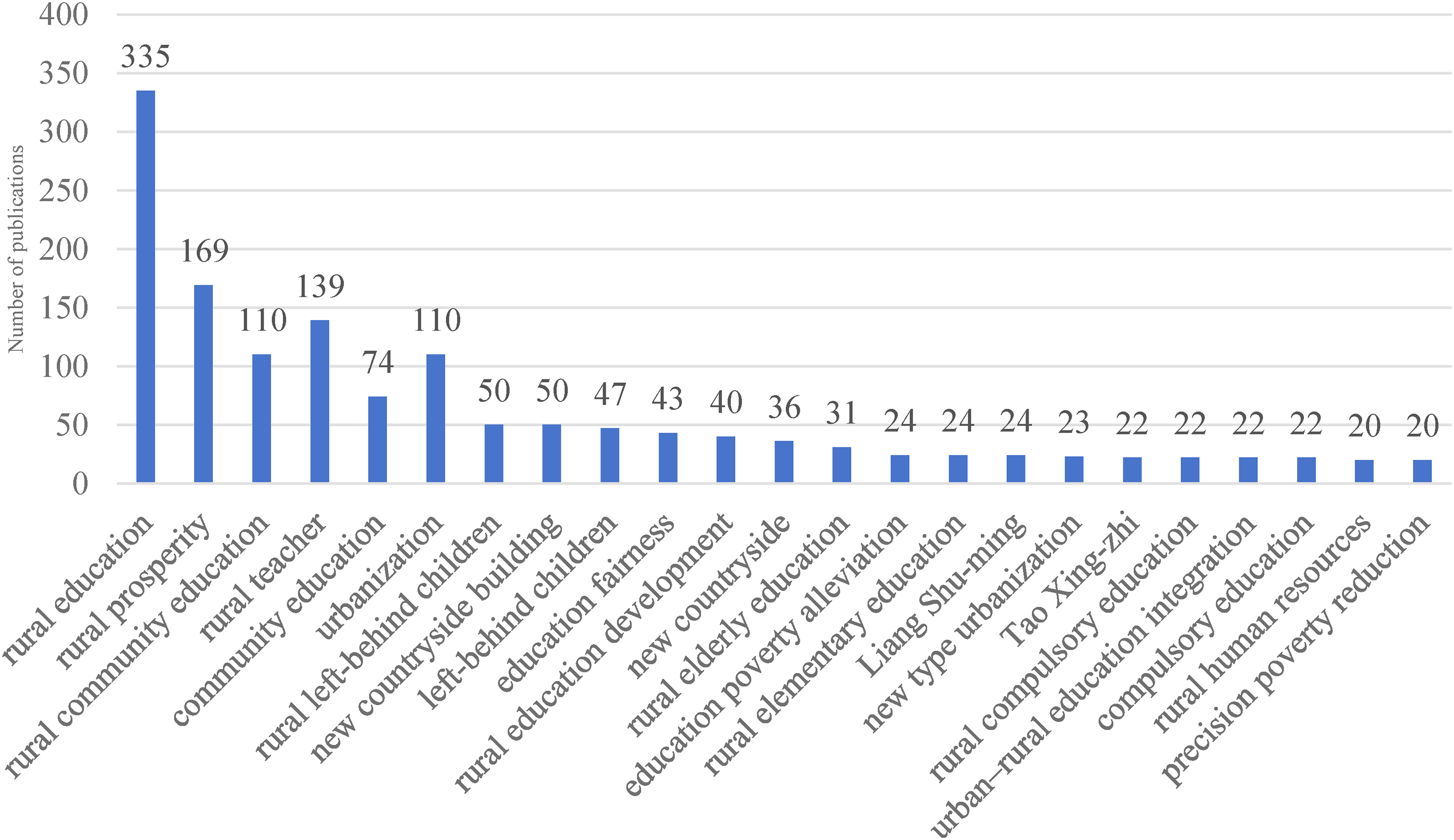
Frequency statistics and distribution of subject words in papers concerning “rural education” and “society” published between 2012 and 2022.
Urbanization has had a significant impact on rural education, resulting in the closure and consolidation of schools and leading to a range of issues. The contemporary trend of “words-up-moving” in rural education is a response to the modernization of the countryside, following the earlier “words-to-countryside” trend, the trend of “words-to-countryside” and the trend of “words-up-moving” are two contrasting statements, referring respectively to the rapid establishment of rural schools under the modernization of rural education, and their disappearance and decline. In this context, the problem of finding accommodations for rural students has become a major constraint on the development of quality rural education, and rural boarding school often separate students from their families of origin and vernacular contexts (Wang & Pan, 2012). In the absence of boarding schools, interpersonal relationships in rural society have become important. Students can live with host families, who operate in an orderly manner based on social networks and the principle of market order; this beneficial situation notably combines urbanization and rural nature (Xie, 2021). In rural society during the transition period, “moving out of the countryside” has become an inevitable path for rural youth; however, they cannot fully integrate into urban life. Nevertheless, the tension of social mobility among rural educational elites can to some degree mitigate the social conflicts caused by class segregation (Zhu, 2021). To comprehend the fundamental reasons for the shift from “words-to-countryside” to “words-up-moving” in rural education in China, one should examine the various factors that have contributed to social change and transformation in Chinese villages in the twentieth century.
However, it is crucial to bear in mind that we must be cautious of the possible adverse effects of the “excessive urbanization of education.” Some studies indicate that in the pursuit of urbanization, the government took measures to strengthen China's educational advantages, which accelerated the flow of rural students to the county seat and eventually gave rise to the phenomenon of excessive education urbanization. County schools attended by both rural and county students exhibit a dual educational structure in which the rural students are at the bottom and in a dependent position and thus are less likely to realize class mobility through education (Qi, 2020). Moreover, population mobility has led to the social trend of “leaving agriculture.” However, research indicates that the educational experiences of rural migrant children have made them outsiders in both urban and rural areas, leading to difficulties in integrating into society. This is evident in their daily life (Li, 2020). In summary, the recent development of new urbanization has become a social reality in rural education research, and the dichotomous perspective of urban–rural education research has been reconsidered and, turn, interpreted as weak.
Educational reform
The Proposal of the Central Committee of the Communist Party of China on Formulating the 14th Five-Year Plan for National Economic and Social Development and the Long-Term Goals for 2035 adopted at the Fifth Plenary Session of the 19th Central Committee proposed “building a high-quality education system”; in turn, educational reform has entered a period characterized by the continuous and comprehensive improvement of the quality of education. A search for papers focused on the themes of “educational reform” and “society” in the CKNI identified more than 4,000 articles on these themes published between 2000 and 2022. The trends in the number of relevant papers published in each year during this period are shown in Figure 3.
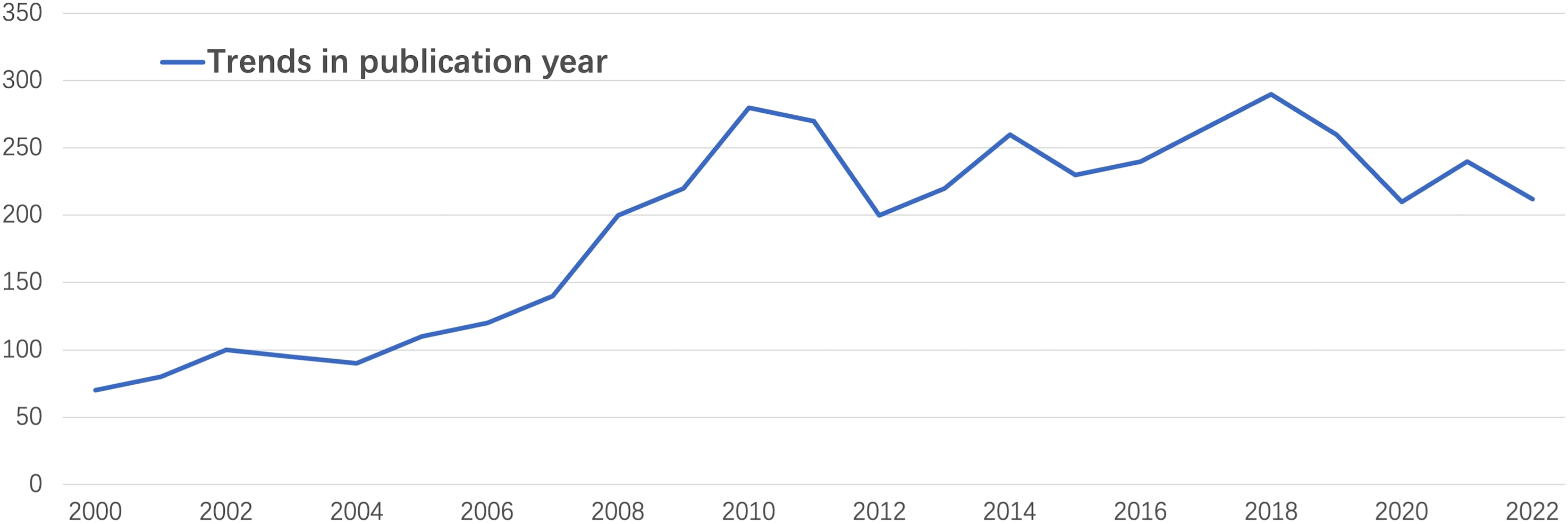
Trends in the number of papers on the themes of “educational reform” and “society” between 2000 and 2022.
Figure 3 shows that the number of related papers has demonstrated a rising year-over-year trend since before 2010, that the average annual number of related papers peaked in 2010, and that the number of papers has demonstrated smaller fluctuations after peaking. However, between 2012 and 2022, approximately 200 papers were generally published on average. These findings correlate with changes in social concerns about the current state of educational reform and to a certain extent indicate that the issue of education reform is still the focus of educational researchers in the new era. Further, in these studies, educational policy support, the current state of educational fairness, and the foundation of educational reform are topics of high concern.
Presently, the advent of the “Internet+” and “information society” has compelled greater support for educational reform. With the extensive advancement of cross-border integration in “online education,” the Internet can now be applied to overcome long-standing issues in education preventing high-quality public education, such as those related to scale, individualization, equity, and quality. Therefore, the implementation of Internet + can result in profound changes to various aspects of supply, including content, mode, form, structure, decision-making, and regulation (Yu & Wang, 2017). In addition to educational fairness, another issue brought about by information technology in education that deserves the attention of researchers is whether education that involves artificial intelligence (AI) will bring about a new style of “alienation” among human beings. For instance, although AI and fifth-generation (5G) technologies offer convenience, they also tend to homogenize information access, trapping university students in an “information cocoon” that worsens the solidification of the cognitive system (Zhang et al., 2021). Some studies propose the incorporation of various perspectives and knowledge sources beyond the learning community, as well as the connection of fragmented information for the reconstruction of the knowledge system. Moreover, optimizing the evaluation system for learning members can stimulate interactivity, while combining offline learning modes can facilitate sharing. These measures can enhance the learning functions of the online community and make it more effective in acquiring knowledge in the era of social media (Fang, 2019b). Technological innovation can cloud our consciousness of life and result in value alienation. Therefore, when implementing AI, it is crucial to establish coherence and harmony between technological logic and theoretical logic and, thus, a bidirectional integration of both (Zheng et al., 2021). In summary, it is necessary to methodically approach this thriving method of learning with care within the educational reform process to allow information technology to better support the advancement of education.
In terms of the three facets of the social foundation of, the power base of, and the means of promoting educational reform, researchers have presented and advocated for the immediate and sound rekindling of the educational reform agenda. Among them, Shao (2015) believes that it is necessary to strengthen top-level design; pay attention to comprehensive reform; promote system planning; comprehensively, thoroughly, and truly establish a modern education system; give full play to the integrated and comprehensive effects of the modern education system; and firmly shift the paradigm in educational reform from “patching adjustment” to “comprehensive promotion.” These concepts provide an excellent institutional framework and a perfect institutional basis for the in-depth promotion of educational reform. The emphasis on the social constraints of educational reform is intended to draw great attention to the issue of the social legitimacy of educational reform, encourage an active search for ways to enhance social support for educational reform, and support rationale choices regarding the best timing and methods for educational reform (Wu, 2016). In brief, educational reform is an essential component of social reform and a distinct field. It is rooted in society and cannot exist independently or apart from it. As such, educational reform is inevitably subjected to the complete range of social limitations.
Based on the experience and opportunities of educational reform, the present era also poses challenges and risks to the development of education. Currently, fundamental education reform in China faces multiple barriers, such as high quality and low equity, high burden and low efficiency, high control and low support, and high investment and low support (Zhang & Jia, 2020). Teaching and research face challenges concerning job orientation, management systems, level of competence, and provisions and assurances (Liu & He, 2022). Meanwhile, the reform of occupational education is influenced by various factors, including industrial structure, the labor market, and the new economic policies of the current development model. To leverage the opportunities of the new era, it is crucial to enhance the groundwork of occupational education, redevelop a regional, cross-border ecosystem of collaborative services, and facilitate the development of a system of overall management (Hu & Shi, 2022). Wang and Fan (2013) suggest that the rationalized nature of educational reform in China remains unclear, particularly due to inadequate understandings of the characteristics and implications of “educational reform,” the irrational structure of the key bodies involved in educational reform; inadequate interpretations of educational reform in policy documents; and insufficient monitoring, evaluation, and conclusion mechanisms for educational reform. Educational reform is a multifaceted process of change closely linked with political, economic, social, and cultural objectives. Repetition and inconsistency are the hallmarks of reform and progress, while differential concerns intermittently persist. It is vital that we examine the latest complexities, order, and ecological aspects of educational reform, which ultimately serve as the origin and impetus of practices in educational reform (Ma, 2022).
Cheng (2012) pointed out that the educational history of the People's Republic of China is largely a process of reform. Many of the major educational reforms during this period were based on political-economic needs and logical reasoning. It is necessary to transform educational reform to refocus it on society and culture. Qin (2016), on the other hand, expresses concern that the current trends in education reform have led to a state of aphasia in the pursuit of basic educational reform questions. Such aphasia even becomes a collective unconscious practice, decision, or research choice. In this context, pursuing basic questions on educational reform has seemingly become redundant. This trend contributes to the absence of contemplation on educational reform practices and a lack of meta-theoretical framework, which somewhat hinders the progress and theoretical enhancement of educational reform. It would appear that the importance of policy design, technological innovation, and social support in educational reform at all levels and across all types of education is evident, and that researchers are currently most concerned with the continued deepening of educational reform and the overall quality of related improvements.
Postscript: Priorities and prospects
In the wake of the new era, amidst the advancement of educational modernization and the overarching goal of “constructing a high-quality education system,” the field of sociology of education has embraced an international outlook. This perspective serves as a foundation for translating and assimilating foreign sociological theories, enabling a comprehensive analysis of the educational landscape in China. Consequently, it offers a sociological interpretation of the nation's unique educational challenges and their interconnected social dimensions. Simultaneously, scholars of the sociology of education have been paying more and more attention to cultural phenomena in the field of micro-education, especially those related to the cultures of special groups of students who are in disadvantaged positions; in particular, this work helps scholars use culture to examine and construct in-depth theories of the sociology of education out of the Chinese context. In short, the sociology of education in the new era has gradually begun to synthesize world consciousness and local characteristics in its research perspective, combine disciplinary understandings and educational practices in its research object, and merge the scientific and humanistic pursuits in its disciplinary value—in this way, it is demonstrating a new trend of synthesis.
Research perspectives: Integrating world consciousness and local characteristics
Academic exchanges drive academic development and prosperity. As a result of economic globalization and the internationalized education environment, we have started systematically translating and introducing the world's most representative works on the sociology of education. This action will facilitate understandings of the broader scope of sociological theories in education worldwide, while simultaneously elevating the standard of local sociological education theories in China. This work will, in turn, positively impact educational reforms and innovations in China. Table 1 presents incomplete statistics on translated and published works in the sociology of education in China during the new era.
List of important translated and published works on the sociology of education in China in the twenty-first century.
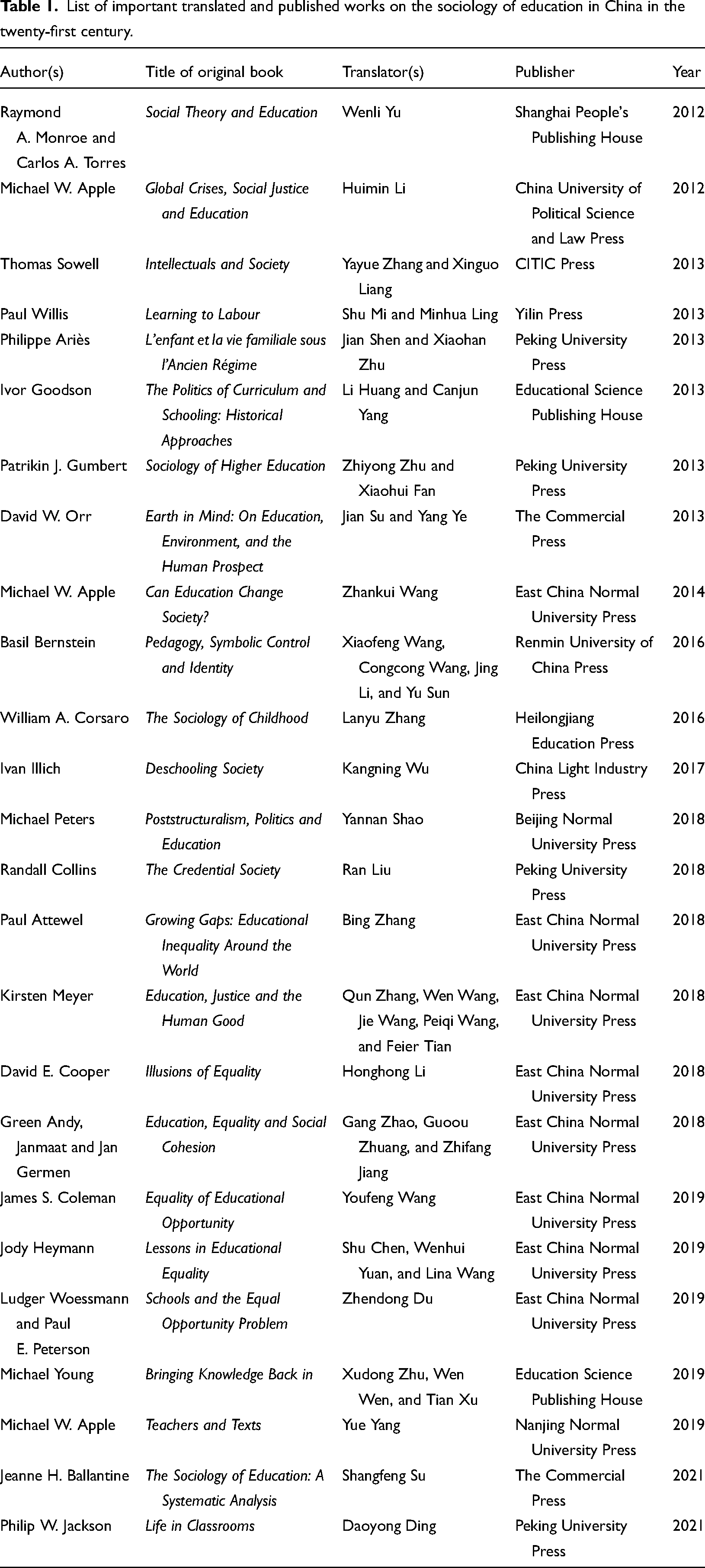
While it may not be feasible to enumerate all the classic works of the sociology of education that have been translated, it is possible to identify certain traits by collating the foreign sociological works of education that have been translated and published in China since the new era.
Firstly, several authors have had their monographs translated and published in a systematic manner. Most of these authors possess considerable international influence. For instance, the American scholar Michael W. Apple, a prolific writer, has published at least 30 books. The benefits of systematically translating the monographs of a selected scholar in the sociology of education are clear: This work makes the research of this prominent scholar available to readers outside his context. Meanwhile, a methodical review of existing work can enable researchers to understand a scholar's overarching thought process and development of pivotal concepts, which may inspire their own work.
Secondly, a book series has emerged, which offers a comprehensive investigation of the subject, such as the “Translation Series on Educational Equity” published by the East China Normal University Press, which covers some of the works on the sociology of education. Translated versions of single books by foreign authors are not enough to get a complete picture of a particular subject, let alone a subfield. Regarding the book series, the majority of the translators are esteemed scholars from leading universities and scientific research institutes, who were invited to do this work. The translated works also cover the majority of the discipline's subfields and establish a reasonably comprehensive academic knowledge structure.
Thirdly, the selection of source texts for translation can partly reflect most of the current concerns of the Chinese sociology of education, which are related to local characteristics. Maintaining educational equity has always been a major focus. Currently, there is an increasing concern about how global social fairness may be manifested in education amidst worldwide crises, educational issues, environmental problems, and an unpredictable future. In light of this, the Chinese sociology of education has taken on integrating global consciousness and grasping local conditions (the responsibility of the century) under the guiding principle of creating a community of human destiny.
Object of study: Integration of disciplinary reflection and educational practice
Every field of study has a unique history that shapes its development, and reflecting on this history is crucial for the discipline's self-awareness. The depth of this reflection is indicative of the discipline's level of scientific maturity. In this regard, a meta-study of the sociology of education by the field's own scholars is an effective way to systematically reflect on the discipline and retrace its value—only through such profound reflection can we better guide the practice of education and comprehensively pursue the practical significance of the theory of sociology of education.
Meta-research has recently become more necessary in the field. The sociology of education encompasses scientific and humanistic elements. Currently, there is a greater emphasis on scientization than humanism, prompting a need for additional support for the field's humanistic perspective (Wang & Ma, 2022). Some scholars have examined the local features and global awareness of the Chinese sociology of education's theoretical framework by re-examining classic concepts within the discipline. For instance, researchers have examined Bourdieu's theories of cultural reproduction and reconsidered the concept of cultural capital (Tang, 2021). They have also acknowledged Durkheim's scholarly reputation and promoted the comprehensive interpretation of his ideas (Hu, 2021). Additionally, they have rearranged the intellectual genealogy of the sociology of education and elucidated the related intellectual categories and their interconnections (Wang, 2021).
Other scholars have analyzed research methodologies in the sociology of education. Among them, He (2014) analyzed the use of in-depth interviews in qualitative research based on the phenomenon of language separation, pointing out that in-depth interviews can only be used to understand the Western world—where language and text are the same—and that the prevalence of such methodologies in China reflects the manifestation of “power,” that is, of Western hegemony. In the past decade or so, research in the sociology of education has taken a more obvious turn toward decision-making research and is now facing the dilemma of transformation and development; therefore, it is necessary to further clarify its unique disciplinary eye and research threshold in China (Wang, 2019). Starting with the classic sociological proposition of the “sociological imagination” and probing into the integrated paradigms of educational sociology in both micro and macro research orientations, some scholars think that the sociological imagination is not only a quality of the mind, but also a research methodology; further, they emphasize the viewpoint of shuttling between different levels of macroscopic theories and microscopic empirical materials, which are all important methodological reflections (Zhang & Zhao, 2021). These reflections have important methodological implications.
The evolution of the theory and discipline of the sociology of education must adapt to the current trends and objectives of the field. The advent of the technological era, specifically the era of AI, inevitably necessitates a reimagining of the field by educators immersed in this era—a new image of the times. Those who reside in this era must promptly and appropriately respond to its developments.
Disciplinary values: Integrating scientific pursuits and humanistic concerns
Whether due to the refinement academic fields, the diversified development of Chinese culture, or the introspection of past educational research issues divorced from cultural dynamics, the sociology of education has developed a more practical cultural orientation to the study of the field of micro-education, interpreting and explaining the relationship between the formation of group culture and education. Since the start of the twenty-first century, there has been a notable rise in research papers exploring the connection between “community culture” and “education,” as illustrated in Figure 4.
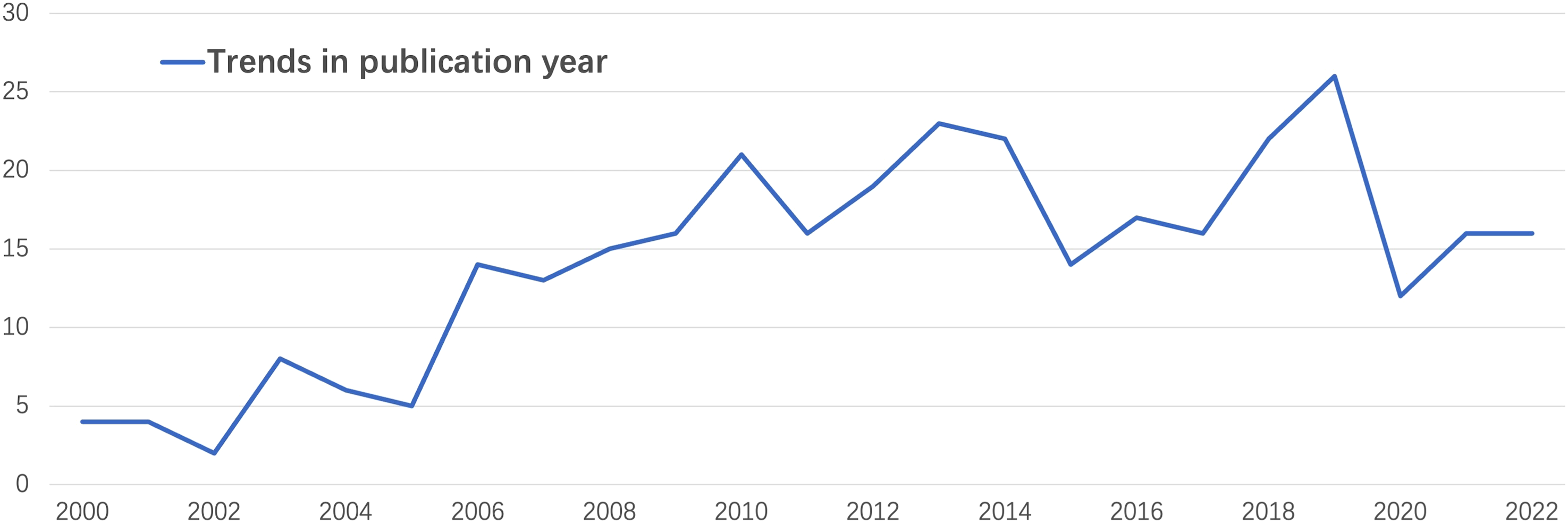
Trends in the number of papers on the themes of “community culture” and “education” between 2000 and 2022.
In terms of specific research content, the diversity of groups and the plurality of cultures determine the multiple levels and themes of the research. Issues such as students’ subcultures, the cultural shuttling of migrant children, and the cultures and education of students with disabilities have become the focus of the sociology of education.
For example, a cultural study of schools for migrant workers’ children found that the formation of anti-school culture among students involves a shift from institutional self-selection to institutional self-abandonment (Xiong & Liu, 2014). Similarly, the development of dropout styles is also subject to structural constraints. For example, with the universalization of nine-year compulsory education as the nodal point, dropouts shift from primary to secondary school dropouts, explicit to implicit dropouts, involuntary to voluntary dropouts, and school to repeat dropouts (Shen, 2013). Another branch of the research focuses on “transgressive” behavior on campus and argues that it is strongly influenced by peer group culture.
Some researchers also start by considering the experience of schooling to highlight the process of cultural shuttling among learners. For example, the children of eco-migrants, who have a dual identity as students and community members, face a double cultural shock in that they migrate from both school and home and are easily marginalized in both cultures (Li & Cheng, 2019). Other studies have focused on migrant children's emotional experiences of “justice,” including the transmission of ethical dogma emphasizing the notion of the equality of all beings, and the emotion of personal experience based on the organizational structure of the group and the relationships between its members (Xiong et al., 2013). Meanwhile, other scholars consider the emotional experiences of farm children across class and cultural boundaries (Cheng et al., 2019).
In the realm of gender culture, scholars have focused on the impact of both teachers and teaching materials. Specifically, there is evidence of heterogeneity in teachers’ gender beliefs that is embodied in their instructional practices and management of the classroom. This variability, in turn, influences students’ comprehension of gender roles and experiences of classroom learning (Zhang & Détrez, 2018). An analysis of the portrayal of gender in textbooks and educational materials revealed a clear tendency to focus on a single gender and biased representations of gendered images (Cui & Wu, 2019). In particular, this bias is evidenced by the frequent appearance of female characters (both youth and adults) whose occupations and social statuses are lower than those of males and who are often depicted in negative supporting roles. Additionally, the language and wording in these materials promote a male-dominated hierarchy.
Regarding the cultural and educational aspects of students with disabilities, researchers suggest that the higher education system for deaf students in China lacks a clearly defined curriculum and cultural symbolism. However, educational tools, such as the International Sign Language Camp, can serve as useful educational rituals for introducing cultural symbols within the deaf community (sign language), promoting the influence of significant others (deaf elite leaders), reinforcing a shared emotional state (pride in being deaf), and promoting the identity of deaf college students in education (Guo & Qu, 2013). Furthermore, the levels of self-determination exhibited by individuals with disabilities substantially impact their educational outcomes. Higher levels of self-determination can lead to better integration and adaptation to their surroundings. Moreover, sustained support and opportunities in settings such as the home, school, community, and future employment environment can enhance self-determination among individuals with disabilities (Xu, 2016). Simultaneously, information technology has a robust positive influence on the academic achievement of deaf students and contributes to their social development; additionally, visual compensation is deemed crucial for the successful implementation of information technology in the education of deaf students (Chen, 2021). Meanwhile, although the discourse characterized by macro-institutional expressions is imbued with hope and a passion for social justice, offers operational guidelines for specific reforms, and often highlights disparities in opportunities and resources, it does not consider individuals’ personal experiences, feelings, and meanings. For this reason, constructing new approaches to educational fairness requires sensitivity to individuals’ life experiences, feelings, and meanings. Furthermore, it is essential to develop the ability to think equally and transpositionally (He, 2017). Hence, it is imperative to establish a “disability culture” that is emblematic of the disabled community, akin to a cultural identity based on race and gender. This will aid in surpassing the notion of “defect” within the integrated education context and transforming the educational outlook to support students with disabilities (Zhao et al., 2022).
In the first decade of the new era, research on the sociology of education has demonstrated a trend of synthesizing research orientations, methodologies, paradigms, and fields. This is evident in both macroscopic studies of the discipline and microscopic research on the reality of education. It is expected that the future development of the sociology of education will remarkably continue to synthesize related concepts from the sciences and humanities, including quantitative and qualitative concerns and topics related to internationalization and localization.
Footnotes
Contributorship
Tianjun Cheng was responsible for selecting the research topic, dividing the stages of history, finalizing the paper, and combing the literature. Xiaoxuan Li was responsible for combing the literature, summarizing the characteristics of the sociology of education in China in the new era, and responding to the reviewers’ comments.
Declaration of conflicting interests
The authors declared no potential conflicts of interest with respect to the research, authorship, and/or publication of this article.
Funding
The authors received no financial support for the research, authorship, and/or publication of this article.
