



Abstract
Purpose
This study investigates the role of the engineering education environment created by the implementation of the “Plan for Educating and Training Outstanding Engineers” (PETOE) on the professional capability development of engineering students from the perspective of students’ experience.
Design/Approach/Methods
This study uses data from the National Engineering Student Survey and multiple regression analysis to explore the role of institutional resources and support, teaching reforms, and interpersonal interaction on the professional development of engineering students.
Findings
The opportunities for on-campus practical activities provided by the institution, content of the teachers’ teaching, teaching methods, comprehensive coursework assessment, and interpersonal interactions contributed to the development of students’ engineering competencies, with limited contributions from research-based teaching methods. Internship opportunities and international exchange environments were negatively associated with the development of engineering skills in an “unexpected” manner.
Originality/Value
Focusing on students’ experiences of engineering education reform, this study comprehensively evaluates the implementation of the reform measures adopted under PETOE. Furthermore, it assesses how corresponding changes in the general educational environment relate to students’ professional capability development. Thus, this study addresses an important research gap in educational reform—the lack of domestic empirical studies in China.
Keywords
Introduction
A new round of technological revolution and employers’ changing demands require engineering education to shift away from its pursuit of purely academic achievements and toward the provision of practical education committed to responding to and resolving emerging social problems (D. Zhong, 2017). Educational goals proposed at the end of the 20th century—such as “returning to engineering practice,” “realizing the shift in the engineering education paradigm,” and “reengineering engineering education”—echoed an increasingly international trend of innovative engineering education. The scale of China's higher engineering education accounts for about one-third of the total scale of higher education and ranks first in the world in terms of cultivation scale, but the problems of weak practical teaching and insufficient innovation education have existed for a long time, and engineering graduates need further improvement in terms of international competition, engineering practice, and interdisciplinary knowledge integration abilities.
Within this context, a series of localized responses were initiated in China's engineering education sector. In 2010, the Ministry of Education (MOE) launched the “Plan for Educating and Training Outstanding Engineers 1.0” (PETOE). It advanced reform measures intended “to enhance the engineering and innovation capabilities of engineering students, encourage in-depth participation of industries and enterprises in the talent training process, innovate the training model, and actively promote the internationalization of engineering education.” The participating universities—209 in total covering 30 provinces and cities in China—were selected in three batches. A total of 10,415 participating enterprises have built 980 engineering practice education centers with colleges and universities. The number of undergraduate majors was 1,257, and that of graduate majors was 514. 1
With the accelerated advancement and transformation of industry in recent years, engineering education in China has placed greater emphasis on cultivating talent for future industries. In 2018, the MOE, Ministry of Industry and Information Technology, and Chinese Academy of Engineering jointly issued Opinions on Accelerating the Construction and Development of New Engineering and Implementing the Plan for Educating and Training Outstanding Engineers 2.0, also known as “New Engineering Education (NEE).” It has served to indulge in the following: promoting educational reform; generating further cross-disciplinary collaboration between industry, universities, and research centers in corresponding schools; and triggering the development and implementation of a series of educational policies intended to integrate innovation and entrepreneurship into engineering education. These two policies are hereinafter referred to as PETOE. “PETOE 2.0” has been conducted in the form of research and practice projects, and 612 and 845 projects have been recognized as the first and second batches of national research and practice projects in new engineering disciplines, respectively. 2
Since the implementation of the PETOE, studies have focused more on the “front end” of the implementation of institutional reforms. More specifically, several studies have analyzed and summarized the progress of implementation, identified existing problems, and made suggestions for measures based on progress reports issued by participating higher education institutions (Li et al., 2016; Lin, 2013a, 2013b; Wang et al., 2016). Several scholars have conducted surveys among students to examine their satisfaction with the reform measures adopted by their colleges and universities, finding that students in the PETOE group were relatively unsatisfied with the program (Chen & Wang, 2015). In this respect, teaching content was found to lag behind society, and teaching quality was considered subpar (Zhou et al., 2021).
Few studies have explored the impact of the “back end”—the impact of engineering education reform on the development of actual engineering capabilities. Despite the emphasis on and active promotion of reform measures, such reforms are likely relatively ineffective for students. Represented by the PETOE, engineering education reform has focused on creating a more professional educational environment, indicating that the effectiveness of reform should be determined by its effect on students’ development of professional capability. Therefore, it is necessary to conduct a comprehensive assessment of the general educational environment following the implementation of the reform program as well as its effect on students’ development.
Accordingly, from the perspective of students’ experience, this study evaluates the role of the engineering education environment created by the implementation of the PETOE on the development of the professional capabilities of engineering students. First, what is the current status of the educational reform initiatives implemented by universities and of students’ engineering capabilities? Second, how have changes in the general educational environment resulting from the PETOE been related to the development of engineering students’ professional capabilities?
Literature review
Reform measures: Political requirements and orientation
Contrary to the advocacy system adopted by engineering reforms in the United States, China determines the orientation and standardization of its reform policies according to its higher education system. The PETOE provides a general direction rather than specific procedures, making front-line implementation a challenging prospect. Represented by Lin, a group of engineering education researchers have adapted the goals into a set of specific policies (Lin, 2011, 2017b) to assist researchers and practitioners in reaching a consensus on the best way to execute the reform.
A review of the corresponding reform policies and relevant studies reveals that the PETOE primarily focuses on the following: support of practice opportunities, school–enterprise collaboration, international exchanges, enhanced teaching and teacher development, quality improvement, development of new engineering subdomains, and fundraising. 3 In this respect, practical activities, school–enterprise cooperative programs, and international exchange programs are institutional, with resource support and teaching environments provided at the college level. Meanwhile, teacher development and the enhancement of teaching models are related to the educational environment at the teacher level. This study's subject of analysis is engineering students. However, as students are unlikely to be aware of the behind-the-scenes efforts of colleges and universities in terms of teacher development, quality improvement, and the development of new disciplines, these dimensions are not included in this study. Instead, this study identifies its independent variable based on the review above.
In terms of support for practice opportunities, the PETOE suggested that colleges and universities establish educational centers to serve as bases for engineering practice, provide infrastructure to support practical activities, and offer makerspaces and incubation bases to encourage innovation and entrepreneurship. Here, the PETOE advanced a scenario in which “at least 50% of engineering students are engaged in at least one training program or competition during their study period.” In terms of school–enterprise collaborations, support should be provided for on-site practical opportunities for students, thereby offering them “around a year of learning in an enterprise environment.” In such programs, companies should provide experienced engineers to serve as instructors and arrange for students to engage in operations, technological innovation, and engineering development. Collaborating companies are also expected to engage in the talent training process and establish joint training mechanisms that can be generalized to universities and enterprises. Thus, they can facilitate the development of joint-design systems and shared objectives, curriculum and course content, implementation procedures, and quality evaluation systems. In terms of international exchange, both the “importing” and “exporting” of resources are emphasized. More specifically, colleges and universities are expected to introduce both advanced educational resources and high-level engineering educational knowledge from other nations, actively organize student participation in international exchanges and overseas internships, and support high-level Sino–foreign collaboration projects related to engineering education.
At the teaching level, the PETOE emphasizes focusing on “vigorously reforming the curriculum and teaching methods.” More specifically, institutions are expected to update their teaching methods and course content and focus on promoting problem-, project-, case-, and research-based learning methods. In addition to basic technical knowledge and skills, the PETOE notes that interdisciplinary knowledge should be emphasized. Furthermore, teacher–student interactions should be enhanced, and assessment methods should be reformed to ensure a learner-centered engineering education model.
Students’ engineering capabilities
According to major accreditation standards, reform practices, and policies both at home and abroad, engineering capabilities can be divided into four categories: professional capabilities, engineering and society, teamwork and communication, and engineering and professional ethics. Table 1 presents the engineering competency framework comprising these four categories.
Engineering competency framework.
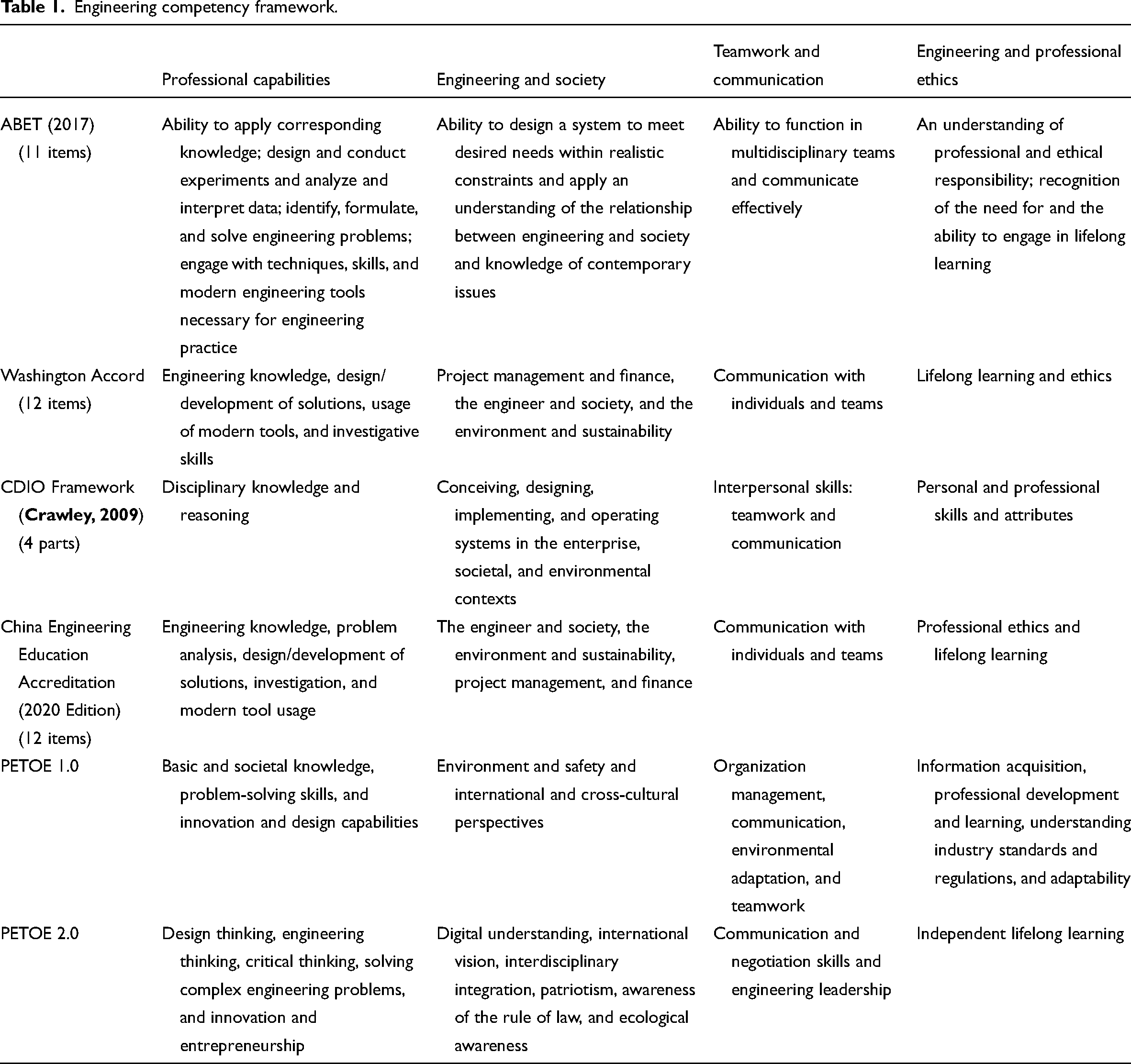
Based on a systematic analysis of 52 studies on the competencies of engineering students, Passow and Passow (2017) identify 16 key skills, including applying technical foundations; collaborating with coworkers, clients, suppliers, and other stakeholders; engineering within constraints; and managing one's own performance. Applying technical foundations includes interpreting data, applying acquired knowledge and skills, and making accurate measurements. Collaborating with coworkers, clients, suppliers, and other stakeholders involves both effective communication and coordination. Furthermore, engineering within constraints includes taking the initiative, gathering information, defining constraints, thinking creatively, solving problems, designing solutions, and making decisions. Finally, managing one's own performance comprises devising processes, taking responsibility, and expanding one's own skillset. The review above provides important practical and theoretical bases for the design of this study's competency framework.
Role of engineering education reform practices for engineering competence development
Few empirical studies have explored the relationship between engineering education reform practices and the development of engineering capabilities within the context of reform. Volkwein et al. (2007) compared the changes in 40 institutions in the United States prior to and following the implementation of the EC2000 accreditation standards. Their study was complemented by Lambert et al. (2007), who explored the role of college support and teaching quality on students’ experiences and capability development. The results showed that EC2000 accreditation served as a catalyst for change, with students’ capabilities in all dimensions significantly improving. Moreover, the emphasis on basic knowledge in teaching helped students develop teamwork and design analysis skills, whereas traditional teaching methods were not conducive to teamwork skills. Meanwhile, Chinese scholars have found that although the PETOE has provided students with greater opportunities to participate in international exchanges and internships, issues such as a lack of classroom interaction or emphasis on engineering design capabilities remain prevalent. Studies have found that students’ satisfaction with the curriculum and teaching quality were conducive to the development of engineering problem-solving capabilities, while satisfaction with the program's internationalization and internship practice did not (Yu et al., 2019). Sun et al. (2021) observed that the workload of students in the PETOE group was extremely heavy, and the evaluation criteria lacked diversity, resulting in cognitive overload and excessive pursuit of personal success, neither of which is conducive to the development of creativity. Although the aforementioned studies investigated the role of teaching quality, international exchange, internships, and interpersonal interaction in the development of engineering students’ capabilities, the joint effect of these factors and policies is yet to be comprehensively analyzed. Additionally, reform initiatives in engineering education may not always be conducive to student development.
Theoretical foundation and hypotheses
According to the General Model for Assessing Change proposed by Pascarella and Terenzini (2005, pp. 56–57, 82), student learning and development are the result of various factors, with the institutional environment and social interaction influencing the quality of students’ efforts and learning as well as their cognitive development. The institutional environment is shaped by school culture, policies, and courses and influenced by the institution's structure, organizational characteristics, and student background. Social interaction refers to the interaction between students and other individuals during the study period, including student–teacher interaction and peer-to-peer communication, and it contributes directly to student learning and development. Based on the General Model for Assessing Change, measures implemented under the PETOE, and the content of engineering capabilities, this study's research framework is based on the relationship between the educational environment and the development of engineering students’ engineering capabilities.
This study defines engineering capabilities as a latent variable comprising seven capabilities under the four categories identified earlier (Table 1). More specifically, the category of professional capabilities includes design thinking, problem-solving, and tool application. Furthermore, engineering and society include interdisciplinary thinking and systems thinking, and team collaboration and communication include teamwork skills. Moreover, engineering and professional ethics include awareness of engineering ethics. These seven categorical factors effectively represent the full range of engineering capabilities.
The three dimensions that characterize the general engineering educational environment are encompassed in the categories of institutional support, teaching reforms, and interpersonal interaction. Institutional support comprises five subcategories: in-class practice training, extracurricular practice, internship opportunities, corporate engagement in the course, and international exchange. Institutional support is a factor in government policy and is assumed to be conducive to the development of engineering capabilities. Based on the foregoing, we propose the following hypothesis: Institutional support has a positive correlation with the development of engineering capabilities.
Teaching reforms comprise three subcategories: teaching content, methods, and evaluation. First, considering the practical and comprehensive nature of engineering and the emphasis on interdisciplinary knowledge in engineering education reform, this study uses two variables—the applicability of knowledge and interdisciplinary knowledge—to measure teaching content. Second, effective teaching methods should be efficient and low-cost and provide immediate face-to-face feedback (Yan, 2019b). Traditional teaching methods, which focus on the one-way transmission of information and students’ passivity, have received significant criticism. Unlike traditional methods that use indoctrination, heuristic teaching methods focus on inspiring and encouraging modes of thinking, incorporating the deduction of the logic underlying knowledge, and providing students with space for thinking and understanding. However, even the most exciting lectures are limited to the transmission of information and stimulation of enthusiasm for knowledge. Accordingly, a problem remains in that lectures do not inherently achieve the goals of training student thinking and improving analytical and problem-solving capabilities (Barkley & Major, 2020, p. 6). Research-based teaching combines knowledge learning with research questions and allows students to develop engineering competencies through problem-solving. As such, this study measures teaching methods using two variables: heuristic teaching and research-based teaching. Third, traditional coursework evaluations tend to be unidimensional; therefore, this study uses comprehensive coursework evaluation as a variable to assess how teachers test student abilities and provide feedback. Based on the foregoing, we propose the following hypothesis to encompass teaching reforms: Teaching reforms have a positive correlation with the development of engineering capabilities.
Interpersonal interaction was divided into two dimensions: student–teacher and peer interactions. As the PETOE calls for interdisciplinary cooperative learning, peer interactions are further subdivided into within-major and cross-major peer interactions. Educational activities are realized through communication, and the essence of interpersonal interactions lies in social learning. Therefore, we propose the following hypothesis: Interpersonal interaction has a positive correlation with the development of engineering capabilities.
Methodology
Data source and variable description
Data source
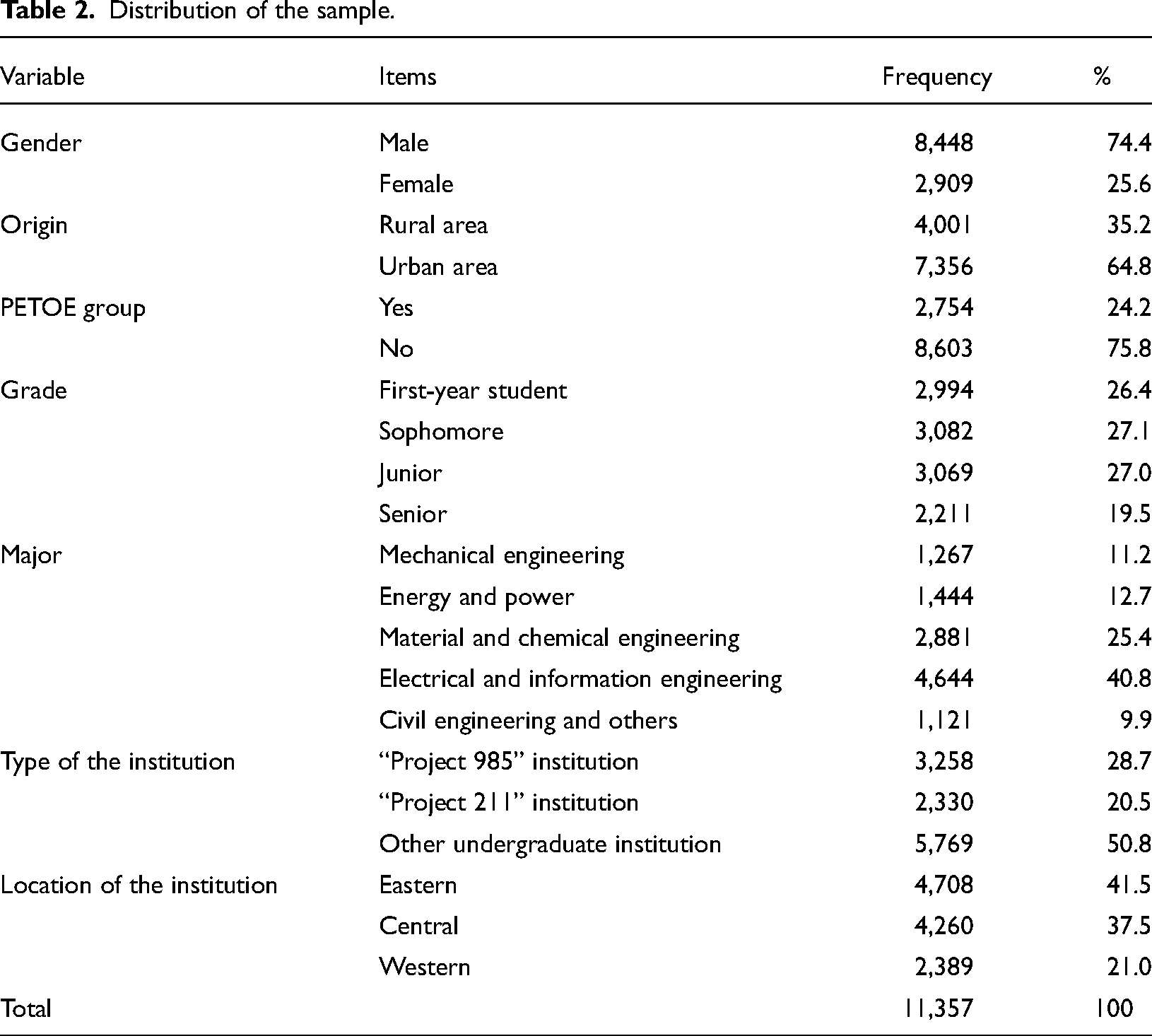
Data were extracted from the National Engineering Student Survey (NESS) developed by the Engineering Education Research Center of Huazhong University of Science and Technology in 2021. The survey covered 109 majors from the 59 institutions included in the PETOE in China. 4 The survey was conducted online, and 15,316 responses were collected. Informed consent was obtained from all participants included in the study. After cleaning and sorting the data, 11,374 valid responses were obtained (valid sample rate = 74.26%). Moreover, samples with missing data for individual items were excluded, leaving 11,357 samples for subsequent analyses. Table 2 presents the sample distribution.
Distribution of the sample.
Variable description
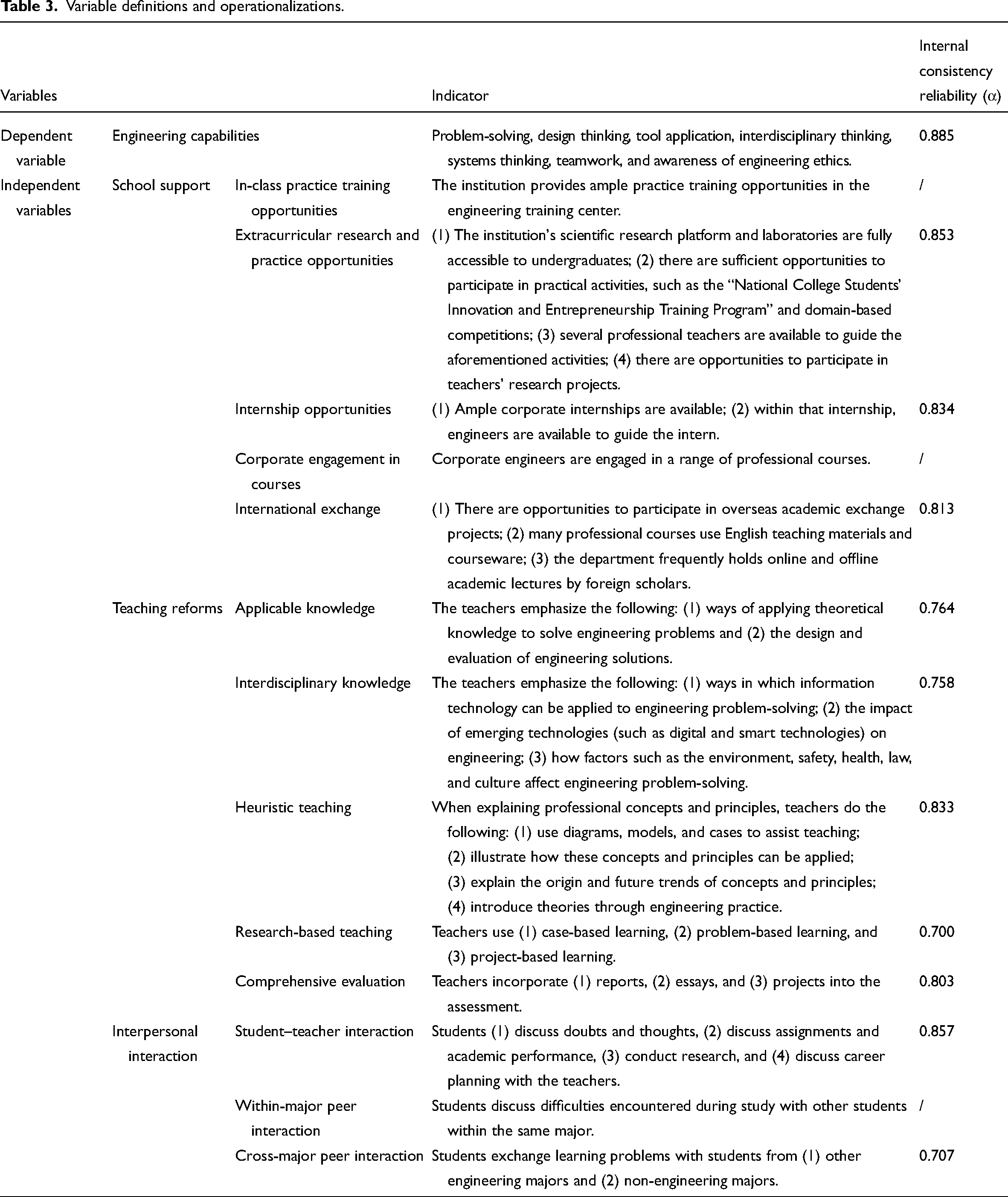
Based on the research design, this study identified the definitions and operationalizations of the variables (Table 3). As students may differ in their capabilities prior to the start of the program, this study used perceived growth in capabilities to measure the growth of student capabilities following changes in the learning environment. Based on the students’ ratings of items within a given dimension, the mean was calculated and used as the rating for that dimension. Table 3 shows the internal consistency of each item. The internal consistency coefficients of the variables measured by more than one item were greater than 0.7, indicating that the scale's reliability was satisfactory.
Variable definitions and operationalizations.
Reliability and validity tests
This study used MPLUS 7.0 and confirmatory factor analysis to test the reliability and validity of the scale. Following the elimination of items with low correlations, this study constructed second-order single-factor and first-order seven-factor models. Table 4 presents the fit indices for the modified model.
Fit indices of the models.
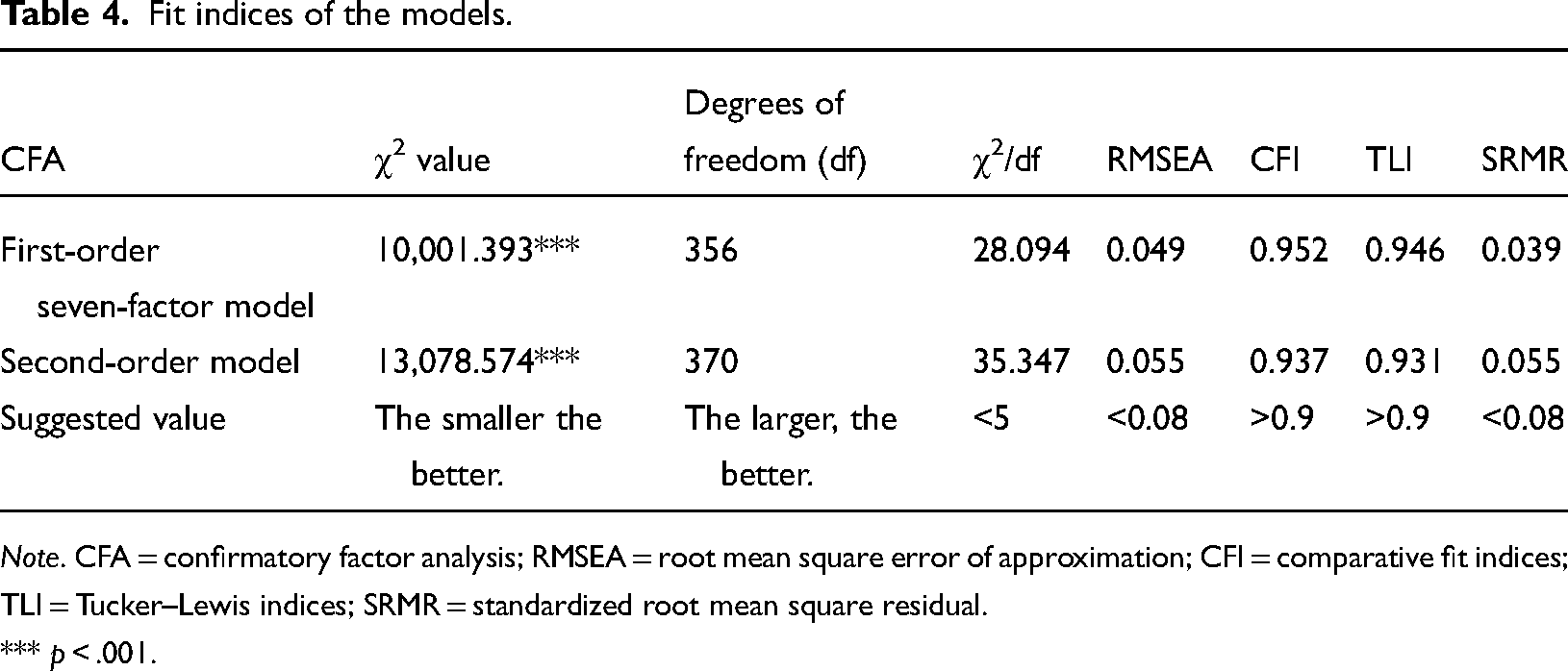
Note. CFA = confirmatory factor analysis; RMSEA = root mean square error of approximation; CFI = comparative fit indices; TLI = Tucker–Lewis indices; SRMR = standardized root mean square residual. *** p < .001.
The root mean square error of approximation for the first-order seven-factor model and second-order single-factor model was 0.049 and 0.055, respectively (<0.08). The values of the comparative fit indices and Tucker–Lewis indices were greater than 0.9, while those of the standardized root mean square residual were 0.039 and 0.055, respectively (<0.08). The model's fit indices were satisfactory, except for the degree of freedom (df) for the chi-square test (>5). However, when the sample size becomes considerably large, the df tends to grow proportionally, and the likelihood of Type I errors increases. In such a case, it is necessary to combine indices (Wang, 2014, p. 98).
Standardized factor loadings for each item ranged from 0.65 to 0.85 (>acceptable standard of 0.5). Furthermore, the construct validity of the seven latent variables ranged from 0.80 to 0.90 (>acceptable standard of 0.6), and the average variance extracted (AVE) ranged from 0.55 to 0.67 (>acceptable standard of 0.5). These results suggest that the scale has satisfactory convergent validity. The square roots of the AVE values of the seven latent variables were greater than the Pearson correlation coefficient for each dimension, indicating that the scale had good overall discriminant validity.
Results and discussion
Status quo in the education environment and development of engineering capabilities
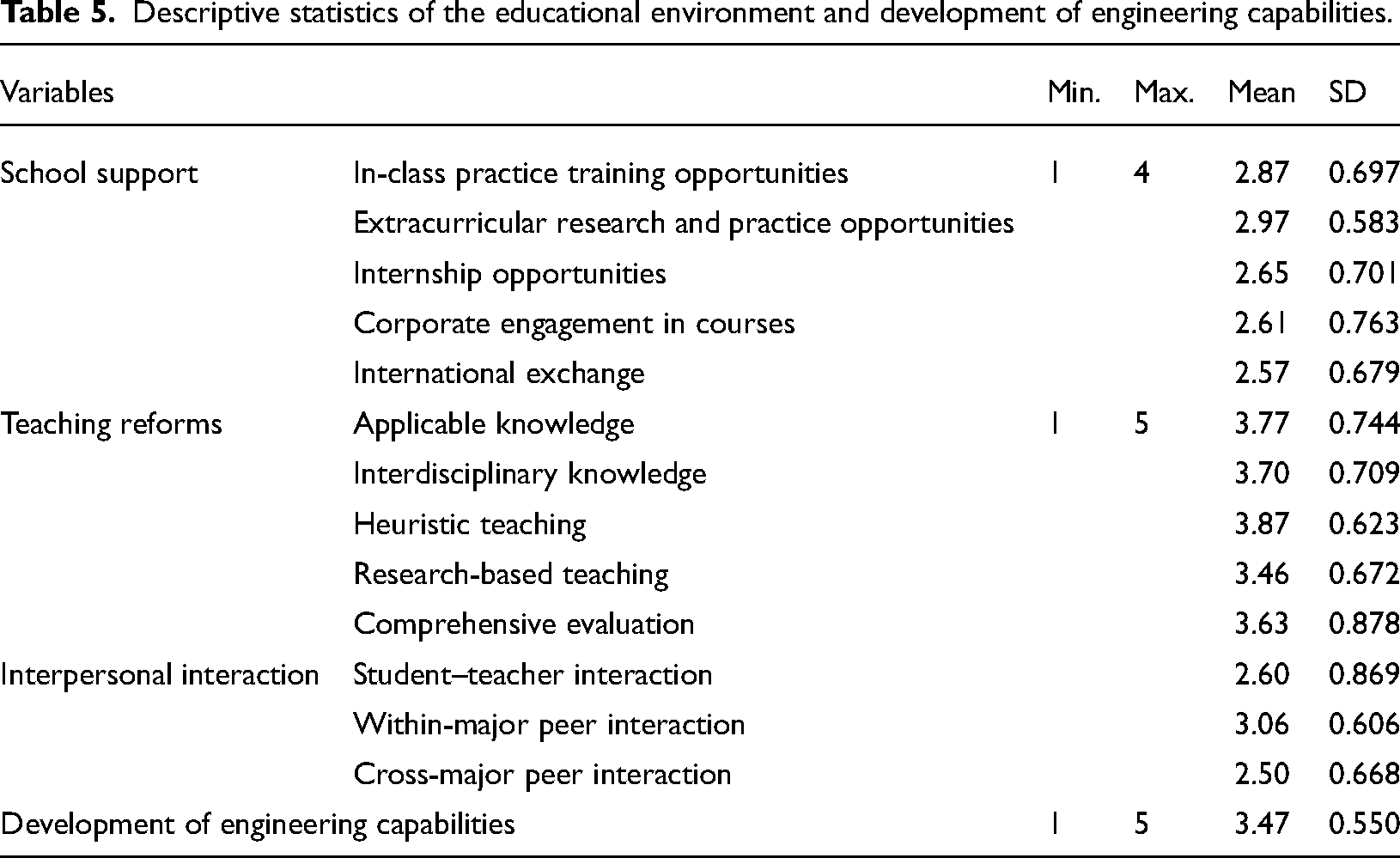
Table 5 presents the mean ratings of the perceived educational environment and the development of engineering capabilities. The development of engineering capabilities has a mean score of 3.47, which is higher than the theoretical mean; this indicates that the development of engineering students’ capabilities following the implementation of the PETOE was satisfactory. In terms of institutional support, the means for in-class practice training opportunities and extracurricular research and practice opportunities were relatively high, suggesting that students perceived practice training opportunities to be available on campus. However, the means for internship opportunities, corporate engagement in courses, and international exchange were lower than expected, signaling that students perceived a lack of opportunities in these areas. Regarding teaching reforms, the means for the applicability of knowledge and interdisciplinary knowledge were relatively high (>3.7). Compared to heuristic teaching, students perceived that research-based teaching, which utilizes problem-based learning, case-based learning, and project-based learning, was rarely applied. Furthermore, compared to the traditional assessment method, 5 the mean for the comprehensive evaluation was slightly lower. Finally, regarding interpersonal interactions, within-major peer interactions were more frequent than cross-major peer and student–teacher interactions.
Descriptive statistics of the educational environment and development of engineering capabilities.
Relationship between the educational environment and the development of engineering capabilities
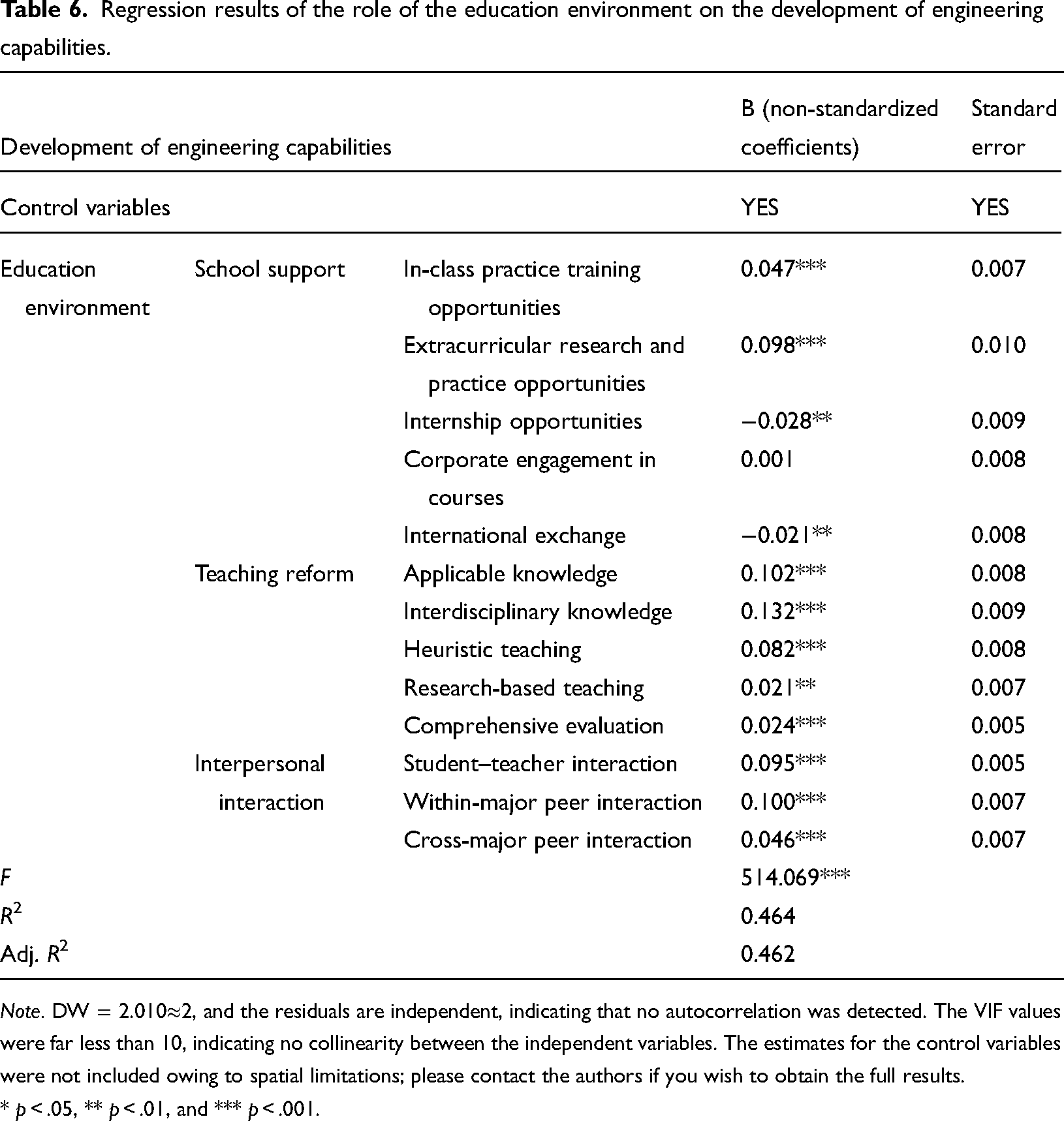
A difference test revealed that the development of engineering capabilities differed from one participant to the next depending on the personal background (e.g., gender, place of origin, family financial status, and performance in the National College Entrance Examination) and institutional background (e.g., the location and level of the institution, the student's grade and major, and whether the student was part of the OEP group). Accordingly, this study controlled for the aforementioned variables while introducing independent variables into the regression model to examine the relationship between the independent and dependent variables. Table 6 presents the results of the regression analysis.
Regression results of the role of the education environment on the development of engineering capabilities.
Note. DW = 2.010≈2, and the residuals are independent, indicating that no autocorrelation was detected. The VIF values were far less than 10, indicating no collinearity between the independent variables. The estimates for the control variables were not included owing to spatial limitations; please contact the authors if you wish to obtain the full results.
* p < .05, ** p < .01, and *** p < .001.
The regression results revealed that the R2 value of the model was 0.464, indicating that the model explained 46.4% of the variance in the development of engineering capabilities. In terms of the effect size of the variables, interdisciplinary knowledge, applicable knowledge, and student–teacher interaction were the largest. As an important educational environment factor, the ease with which close connections can be established between teachers and students through teaching activities both in and beyond the classroom can be considered the core of the educational environment; institutional support can be seen as the periphery of the educational environment. Students are expected to actively obtain information and maintain a strong motivation to convert what they have learned into effective learning inputs and develop their own capabilities.
Relationship between institutional support and the development of engineering capabilities
In-class practice training opportunities and extracurricular research and practice were found to have a significant positive correlation with the development of engineering capabilities. Moreover, the correlation between extracurricular research and practice was stronger than that of in-class activities. While corporate engagement in courses had no correlation with engineering capability development, internship opportunities and international exchange were found to have a negative correlation; therefore, H1 is partially supported. The negative correlation between internship opportunities and international exchange on engineering capability development was not in line with the goal of educational reform; this point is discussed further below.
Strong positive correlation between extracurricular research and practice opportunities and engineering capability development. Existing studies have confirmed that engaging in scientific research has a significantly positive correlation with research achievements (Guo & Han, 2018). These findings suggest that providing students with more opportunities to participate in scientific research leads to greater academic gains. This study provides further support for this argument, verifying that extracurricular research and practice opportunities have a stronger correlation with the development of engineering capabilities than other types of support. Opportunities to participate in scientific research activities are widely accessible to Chinese engineering students. According to the NESS survey, 51.8% of participating students had engaged in undergraduate research, such as the “National College Students’ Innovation and Entrepreneurship Training Program,” subject competitions, and teachers’ research projects. Furthermore, students generally invested considerable effort in research activities. More specifically, more than 80% of the students who claimed to have engaged in scientific research asserted that they had invested considerable time in self-learning professional knowledge and skills, with approximately 60% frequently interacting with their instructors.
Negative correlation between internship opportunities and international exchange and engineering capability development. It is worth exploring why providing more internship and international exchange opportunities were found to have a negative correlation with the development of engineering capabilities. When controlling for personal and institutional background variables and only introducing institutional support into the regression equation, the results showed that both internship and international exchange opportunities presented a significantly positive correlation. However, when variables for teaching reform were introduced, the correlation of the aforementioned variables shifted from positive to negative. Conflict occurred between corporate internships, the international exchange environment, and teaching reform when the correlation between the above variables and engineering competence development was considered at the same time. The students’ perceived environmental support appeared to be an indicator of the frequency of their participation in a given activity. Accordingly, using NESS data, this study conducted a logistic regression analysis to examine the relationship between internship opportunities and student participation in such opportunities. The results showed that students who recognized that they had more internship opportunities were 1.604 times more likely to participate in internships. In this respect, the conflicting effects between internships and international exchange opportunities and teaching reforms suggest a likely conflict between internships, international exchanges, and the required courses for students. When time and energy are limited, investing more time in the required classes may have a crowding effect on extracurricular and practice activities (Yan, 2020).
The NESS survey found that approximately 40% of the students who worked as interns in enterprises considered their engagement in production/design activities to be high, with approximately half of the students feeling that they did not apply the professional knowledge they had acquired during the internship. Only 40% of the students believed that they had frequent interactions with engineers during their internships. These findings echo past studies such as that of Liu and Chen (2013), who found that 50.6% of internships were on-site visits only, a mere 10% of the students actually participated in production operations, and the frequency of communication between students and internship instructors was generally low. As such, student participation in production activities during their internships remains limited, and the theoretical knowledge acquired in school is seldom applied in real engineering practice. The lack of communication with experienced engineers affected students’ understanding of the complexity and diversity of real-life professional situations; this negatively influenced their observation and acquisition of knowledge regarding how experts think when solving real-life engineering problems.
Notably, owing to the coronavirus disease 2019 (COVID-19) pandemic, institutions have been subject to various restrictions on internship arrangements since early 2020. More specifically, internship duration has been shortened, and on-site internships have typically been replaced with laboratory simulations. These changes partly explain why the internship participation rate was low over the period of investigation and why in-person internship participation may be inadequate. The reduction and virtualization of internships have hindered in-depth learning within enterprises, which may have resulted in internships being considered an additional burden.
Subsequently, this study introduced three items related to international exchange into the regression model. The results showed that the “exporting” measure (i.e., participating in overseas academic exchange projects) had a negative correlation with the development of engineering capabilities; the two “importing” measures had no correlation. The quality of international exchange activities influenced student investment in engineering studies. According to the NESS survey results, the number of students with overseas exchange experience accounted for only 3.3% of the total sample, and the average duration of the exchange was approximately 1 month. As language and cultural adaptation cost students time, a short exchange period may be preferable insofar as it requires a relatively limited amount of time and energy for in-depth participation in professional learning. Without long-term exchange programs and accessible language training activities, international exchange opportunities may weaken or even hinder students’ participation motivation.
Relationship between teaching reforms and the development of engineering capabilities
In this study, applied knowledge, interdisciplinary knowledge, heuristic teaching, research-based teaching, and a comprehensive evaluation system had a positive correlation with the development of engineering capabilities; therefore, H2 was supported. Moreover, the correlation between applicable and interdisciplinary knowledge was found to be substantial. These results align with those of past studies that emphasize the importance of interdisciplinary content in education (Lambert et al., 2007). However, compared to heuristic teaching, the positive correlation between research-based teaching and the development of engineering capabilities was weaker.
The design of effective teaching involves organizing teaching activities based on the balance between learning content and students’ understanding of knowledge to engage students and stimulate their enthusiasm and initiative in learning (Yan, 2019a). The teaching of engineering, combined with Chinese college students’ learning habits, has produced some unique characteristics. First, as engineering education is based on hard knowledge and concepts and is subject to the inherent logic and difficulty gradient of the course, teachers typically adopt knowledge dissemination and teacher-centered methods (Lattuca & Stark, 2020). Second, Chinese students tend to take a passive role in the classroom (Lyu & Zhang, 2015), which leads to an aversion to research-based learning methods requiring the investment of enthusiasm, time, and energy.
Furthermore, engineering projects used in research-based teaching should originate from engineering practice and industry, thus requiring frequent student–teacher interaction, which increases the difficulty of controlling the teaching process and evaluating teaching effectiveness. Therefore, research-based teaching has higher requirements in terms of teachers’ practical experience, research experience, knowledge structure, and teaching ability (Lin, 2017a), and teachers are expected to be highly involved in teaching activities. However, the current evaluation systems generally emphasize teachers’ research achievements, which increases the uncertainty of their engagement during teaching.
Relationship between interpersonal interaction and the development of engineering capabilities
This study found that student–teacher, within-major peer, and cross-major peer interactions had a positive correlation with the development of engineering capabilities; therefore, H3 is supported. Moreover, the positive correlation between student–teacher interaction and engineering competency was stronger than that of peer interaction. This may be because teachers had more accumulated knowledge and skills than students; hence, interaction with teachers provided more guidance than interaction with peers.
Meanwhile, the positive correlation of cross-major peer interaction with the development of engineering competencies was weaker, which could be due to the following reasons. First, few interdisciplinary organizations exist within institutions, and the boundaries between majors are usually distinctive. Consequently, interactions between students from different majors are less frequent than those within majors. Second, the curriculum is organized according to majors and tends to be considerably rigid (Zhang, 2019). Most available interdisciplinary courses tend to be additive rather than an organic integration of knowledge already gained in a given discipline, thus preventing the in-depth development of ideas. Third, although most cross-disciplinary, in-depth, and inspiring exchanges tend to occur in interdisciplinary team projects, these opportunities are limited. Accordingly, along with the reasons mentioned above, the quality of interdisciplinary learning may be relatively inadequate. Under China's existing disciplinary structure, the challenges in implementing large-scale interdisciplinary teaching and communication and developing any substantial depth of practice at the organizational level are significant. Most such exchanges rely on students’ own initiative.
Conclusions and suggestions
Based on “return to practice,” the concept of “future-oriented” international engineering education has become increasingly prominent. The PETOE marks that China has been at the forefront of international engineering education reform and development. By analyzing the reform initiatives of institutions under the PETOE, this study shows that institutions have made great efforts to create a good environment for engineering education. For instance, institutions have been providing high-level, in-school practice training opportunities; teachers have been emphasizing applicable and interdisciplinary knowledge, and heuristic teaching and comprehensive evaluation methods have been adopted. However, improvement is required in terms of creating high-quality universities–enterprise collaboration environments and international exchanges, and teachers should further improve the effective adoption of research-based teaching methods.
Compared with the individual nature of international engineering education reform, the macro-guidance of China's higher education system and the large-scale nature of Chinese engineering education give higher value to the study of the factors influencing students’ engineering capability development under the PETOE, which is conducive to clarifying the mechanism of learning and development of Chinese engineering students and enriching the content of international engineering education research. This study enables domestic and international scholars to understand the universal role of highly regarded engineering education reform initiatives, such as in-class practice training opportunities; extracurricular research and practice opportunities; reforms in teaching content, methods, and evaluation; and interpersonal interactions, which have a stronger positive correlation with the development of students’ engineering ability. At the same time, this study clearly presents the special characteristics of Chinese engineering students’ learning mechanism; for instance, internship and international exchanges were found to have an “unexpected” negative correlation with the development of Chinese engineering students’ capabilities, and research-based teaching methods (such as project-based teaching) did not play their expected roles.
Based on the foregoing, this study makes the following recommendations.
Institutions should coordinate various educational and teaching activities
As represented by the PETOE, the goal of China's engineering education reform is to create a sound learning environment for students and promote the development of engineering capabilities by influencing students’ input. Various measures have been proposed to reform engineering education systems. The evaluation system dominated by grade point averages and extracurricular scientific research activities has forced students to choose between course participation, internships, scientific research, and international exchanges. The creation of an environment for engineering education has thus transformed into a “battle for time” between activities, where the quality of activities has failed to meet students’ needs, and conflicts have arisen in the timing of activities. Therefore, this study suggests that institutions should coordinate activities to facilitate ease of participation, clarify the priorities and proportion of activities, focus on improving the quality of educational and teaching activities, and stimulate students’ in-depth involvement through challenging tasks that provide a high sense of achievement and satisfaction. For example, focus should be placed on the integration of the curriculum and extracurricular activities, incorporating scientific research into courses so that it becomes a regular activity; and introducing internships, scientific research, and international exchange activities in a gradual and layered manner.
Institutions should reinforce collaboration with enterprises and improve the quality of internships
Internships are an important component of engineering education, serving as a significant means by which students can understand society, apply theories to practice, and cultivate engineering capabilities. However, the crowding effect of course learning on internships, the fact that interns have long been excluded from the core of corporate operations, and the restrictions implemented following the outbreak of the COVID-19 pandemic have made internships ineffective. Therefore, engineering education reform policies must balance the conflicts between internships and course learning. More specifically, on-campus studies should primarily focus on basic engineering education and theoretical knowledge, supplemented by basic experiments and practical training, and internships should concentrate on practical training, supplemented by the necessary theories (Lin, 2012). Moreover, it is necessary to strengthen in-depth school–enterprise collaborations, establish a bond between enterprises and universities, motivate enterprises to engage in talent training, and provide students with opportunities to participate in real-world practice.
Teachers should select teaching content that effectively utilizes various teaching methods
Real teaching only occurs when teaching activities stimulate learning activities and are designed around learning (Q. Zhong, 2017). China's current teaching reform emphasizes the reform of teaching methods. However, “it is far from enough to reform teaching methods and technology without reforming the content taught in class” (Zhang, 2019). The practical and comprehensive nature of engineering education, as well as the borderless knowledge sharing and exchanges triggered by the information technology revolution (Yan, 2019b), require engineering educators to select teaching content that incorporates the available modes. They are also expected to fully integrate practical and interdisciplinary knowledge, including knowledge at the edge of theoretical frontiers and scientific research results. The essential feature of effective teaching lies in its ability to stimulate students and guide them to conduct self-inquiry. Therefore, downplaying the range of available teaching methods reduces process control and complicates the implementation of reforms. In this context, reform goals cannot be achieved. Moreover, neither the simple pursuit of novelty in the form of teaching nor solely emphasizing the liveliness of the class is advisable.
Institutions should create a sound teaching quality evaluation system
In addition to teaching content, methods, and coursework evaluation, positive teacher–student interactions—such as tutoring and answering student questions, discussing career plans, and participating in research activities—have a positive correlation with student development. These beneficial activities require teachers to invest significant amounts of time and energy. However, the current teacher assessment systems tend to focus on quantifiable and assessable indicators related to scientific research achievements, ignoring the efforts invested in teaching. Consequently, teachers are less enthusiastic about teaching reforms and guiding student development. Therefore, to ensure a supportive student environment, institutions should incorporate teachers’ involvement in teaching reforms and student guidance ability into performance evaluation criteria.
Limitations
As this study used a self-report survey to measure the development of engineering capabilities, it is possible that the collected data were affected by social desirability. The measurement of in-class practice training opportunities, corporate engagement in courses, and within-major peer interaction from the students’ perspective is relatively simple. Subsequent research should construct latent variables and conduct simultaneous surveys with deans and educators. The results of the analysis of the influencing factors presented through the regression equation in this study are a reflection of the correlation between the engineering education environment and the development of students’ engineering ability and do not aim to explore a strict causal relationship; subsequent studies will use causal inference methods to test the relationship between the independent and dependent variables. Additionally, this study did not include measures related to the informatization of teaching and in-depth integration of information technology in engineering education involved in the current reform. Therefore, future studies should explore the educational value of these factors.
Footnotes
Contributorship
Xuting Tang was responsible for organizing and analyzing the data, searching and summarizing relevant literature, and writing the original draft. She covered the specific revision tasks and responded to the reviewers comments. As the leader of the funded project, Hui Guo undertook the questionnaire design and data collection. She also proposed crucial revisions to the paper's main idea and framework structure and was responsible for its finalization.
Declaration of conflicting interests
The authors declared no potential conflicts of interest with respect to the research, authorship, and/or publication of this article.
Ethical statement
All procedures performed in this study that involved human participants were in accordance with the ethical standards of Huazhong University of Science and Technology. Informed consent was obtained from all participants included in the study.
Funding
The authors disclosed receipt of the following financial support for the research, authorship, and/or publication of this article: This work was supported by the Consulting Project of Chinese Academy of Engineering: Research on cultivating multi-directional thinking of engineering students for the digital-intelligence era (grant number 2021-XY-47).
