




Abstract
Purpose
To advocate educational improvement science (EIS) as an emerging transdisciplinary field, I reflect on the three major pathways of educational advancement in human history, discern the misuses and pitfalls of reform, and theorize how education can be improved to better serve its mission.
Design/Approach/Methods
Employing a multiperspectival approach, I critically re-examine educational reforms and improvements worldwide and conceptualize the emerging transdisciplinary field through an extensive literature review, etymological analysis, international comparisons, and socio-historical, -cultural and -philosophical reflections.
Findings
In this paper, I advance the concept of neo-improvementalism for EIS by elucidating its philosophical assumptions, disciplinary fundamentals, and theoretical frameworks through historical and comparative lenses. I identify and construct disciplinary knowledge of EIS comprising two categories, namely, subject matter knowledge and profound knowledge, adopted from improvement science. I then highlight three methodological approaches of EIS and the building of professional improvement communities empowering individual and institutional improvement capabilities. I propose that EIS is the art of the improving organization for classes, schools, and/or more broadly defined educational agencies.
Originality/Value
This study recognizes the significance of EIS and research thereon, especially discipline-building and exploration based on local characteristics in a global vision, and the cultivation of new frontiers of educational research and practices.
Keywords
Education mission: Which pathway?
As a recurring topic, education mission has been a mainstay of concern and research. Certainly, the definition and norms of education mission differ across historical periods and political, economic, ethnic, religious, cultural, and other backgrounds. Regardless of society or geopolitical region, education is often characterized by incongruous or even conflicting missions. How education should fulfill its predetermined mission is a global and perennial concern. Consequently, how education can be improved to better realize its mission under the prevailing conditions has been a critical, fundamental question at the core of almost all educational policies, practices, studies, and related discussions throughout human history.
This critical and fundamental question has primarily been explored through three common epistemological pathways. The first one takes for granted the status quo of education and the provisions satisfying the basic needs of individuals and society, and is primarily an approach of maintenance or fine-tuning as necessary. This is a more sufficiency-based, laissez-faire approach that resembles Taoist or naturalist views on education. In his work, The Reconstruction of Chinese Education (1928), Tao Xingzhi captured it as the “Five Old Fashions”: relying on what is innate, continuing in the old rut, doing as improvised, imitating foreign countries, and trying out incidentally only (Tao, 2005a, pp. 5–9). However, throughout history, this pathway has been recognized and accepted with reservation, offering very little impetus for educational advancement.
The second one represents an overall dissatisfaction with the status quo of education and follows the belief that there is no reconstruction without destruction, inferring that educational advancement can only be accomplished by completely obliterating the old system and building a new one. Essentially, this approach holds that institutional revolution is the only way forward. In some watershed moments in history, educational revolution became an instrument for social change or transformation, as was the case with the emergence of the New Education Movement from the late Qing Dynasty to the early years of the Republic of China era in the 1910s. Evidently, such a response may incur an extremely high social price and may not always unfold as expected, sometimes producing counterproductive consequences. For example, the decade-long “Cultural Revolution” (1966–1976) resulted in incalculable loss in education, destroying established education systems at all levels in China.
The third one involves a grievance against educational reality and a belief in more pragmatic solutions outside the revolutionist mindset. It is a belief in improvement as a means to incremental advancement in education. This approach is based on the premise that education must be built on certain social conditions and institutional establishments. Featured with incrementalism (Lindblom, 1959), this improvementalist pathway has been the predominant route chosen for education by most societies throughout history.
In different historical contexts, varying pathways have been selected in response to the critical, fundamental question regarding education mission. For instance, in a tumultuous era of change, individuals may gravitate toward a revolutionary form to initiate radical destruction and reconstruction because restorative inaction or incremental action may appear ineffective or too slow. Meanwhile, in a peaceful and constructive society, where education is already established with certain institutional structure, improvementalism or neo-improvementalism is likely to become an effective and desirable pathway to educational advancement. In this case, fixating on revolutions may annihilate the hard-earned fruits of educational change.
In short, no perfect answer exists to the critical and fundamental question of how to better achieve education mission, whether it be value-laden, instrumental, or both. The three epistemological pathways to educational advancement summarized above are historical explorations and choices adventured by different systems within their unique social contexts, underpinned by various historical imperatives and practical bases. Based on Hegelian philosophy, each pathway has its own historical rationale of existence and cannot be weighed on a black-and-white dichotomy between right or wrong. More importantly, the underlying sociohistorical conditions must not be dismissed when seeking a different answer.
Misuses of reform: Change for rectification or improvement?
Responding to how education may better serve its mission, the third epistemological pathway represents a way of thinking often predominated and overshadowed by the politically charged jargon of reform. Etymologically, the word gaige (改革)—the Chinese term for reform—meant to “abolish” or “rectify” (Xia, 1999, p. 3065; Xia & Chen, 2015, p. 1044), and its usage was neutral in tone in history. In the Chinese context, since the Eastern Han and early Tang Dynasties in the 2nd to 7th centuries, this term has been used without referring to positive or negative directions of change, as evidenced in the following two classical examples: Additionally, Qiong proposed to nominate governmental servants by initially examining them at local offices and reexamining them in the imperial palace, followed by an anti-proposal abolishing such an approach by Sheng ZHANG, a secretary of the Emperor's House. Qiong again proposed: The mechanism of the reexamination is to identify the good from the bad and to authenticate the nominations by voiding the incompetents, thus it shall not be reformed. His Majesty decided not to abolish it. (The Book of the Eastern Han Dynasties: Biographies of Zuo, Zhou, and Huang, Vol. 51 by Ye FAN [the Southern Dynasties].) In year six of the Zhenguan Period, Emperor Taizong said the following to Xuanling FANG, the Vice Director on the Left of the Imperial Secretariat: “Lately, the four clans in Shandong, the Cui's, Lu's, Li's, and Zheng's, have been exploiting the lost prestige of their pedigree to aggrandize themselves and proclaim themselves as scholar-gentry, despite having been in decline over generations. Every time they marry off a woman to another clan, they always demand betrothal gifts, placing quantity above everything else. They negotiate numbers and settle on agreements like merchants in a market. This grossly corrupts public morals and desecrates social rites and the teachings of scriptures. This is an inappropriate misplacement of priorities, thus must be reformed.” (The Essentials of Government in the Zhenguan Period: On Rites and Music, Vol. 29 by Jing WU [the Tang Dynasty].)
There are numerous reasons for the misuse of the term “reform.” Notably, its usage in related discourses provides the utterer with the safe armor of political correctness regardless of the occasion, and carries politically progressive undertones. Consequently, the word “reform” readily morphs into the political jargon of policymakers, educational and/or academic communities, and the general public. As a result of its frequent misuse, the term has gradually lost its original, semantic denotation, overshadowing the implication and functionality of improving or improvement.
A recent policy example can be found in The Master Plan for Deepening Educational Evaluation Reform in the New Era (hereinafter, the Plan), which was approved by the Central Committee of the Communist Party of China and the State Council on June 30, 2020. The term “reform” is a keyword in the policy document title and a high-frequency word in the policy text, appearing 19 times in total. However, based on the context in which the word is used, the term does not appear within the semantic bounds of “re-form,” “correct,” or “restore things to normal.” Rather, the real intention of the Plan is brought to light if the word “reform” is replaced by “improve” or “improvement.” Other recent policy examples include The Guidelines on Comprehensively Strengthening and Improving Physical Education in Schools in the New Era and The Guidelines on Comprehensively Strengthening and Improving Aesthetic Education in Schools in the New Era. Both policy documents frequently use the key terms “reform,” “improve,” and “improvement” interchangeably in their titles and texts to convey the same meaning: improvement. These policy cases show that, in policy texts, the word “reform”—the meaning of which is often misused to infer “improve” or “improvement”—has lost its original, semantic denotation of “re-form,” “correct,” or “restore things to normal.” A similar phenomenon can also be observed in other East or South Asian countries, such as Japan and Singapore.
Such misuses are by no means unique to East or South Asian systems of education. In fact, they are widespread among political and academic circles in the rest of the world. The term “reform” has also come into fashion in the West for long, and its popularity can be traced to the Protestant Reformation initiated and espoused by figures like German theologian Martin Luther and French reformer John Calvin in the early- to mid-16th century. Primarily used to refer to a schism from the Roman Catholic Church as well as the rise and legalization of Protestantism, this religious reformation spanned more than a century and was a revolutionary milestone in the history of Christianity. Since then, reform has been deeply embedded in political or policy communities in the West, similar to the political discourse in China.
Meanwhile, in the political sphere, the word “reform” gained popularity in North America due to the economic or parliamentary reforms led by the Yorkshire Association, of which Christopher Wyvill served as secretary and later as chairman, after the outbreak of the American Revolutionary War in the late 18th century. Here, reform was intended to cut governmental spending, establish annual parliaments, and increase county seats in the parliament. Along with the unfolding of the reform movement in just a few years, Christopher Wyvill soon became a prominent political reformer.
In the West, reformism usually refers to a political ideology that advocates the reform rather than abolition or replacement of an existing system, as well as incremental changes that can lead to fundamental changes in the sociopolitical system. Interestingly, the English word “reform” is derived from the Latin word formare, which means “to form.” Etymologically speaking, neither the English reform nor the Chinese gaige denotes improvement, coincidentally. Their modern applications have veered from these etymological origins. For example, Webster's 11th New Collegiate Dictionary defines “reform” as a synonym of the word “improve”: (1) “to put or change into an improved form or condition” and (2) “to amend or improve by change of form or removal of faults or abuses.”
Notably, the uses of “reform” in Western political discourses are semantically regarded as antithetical to revolution, embodying a subtle and intricate interplay between the second and third epistemological pathways categorized earlier. Evidently, neither reform nor (fundamental) change refers to revolution in this case. Rather, both terms refer to institutional improvements, with the term “reform” misused to mean improve or improvement. Approximately half a century ago, it was concluded: “reform denotes simply an attempt to change things for the better” (Merritt & Coombs, 1977, p. 254).
Nonetheless, the problem of reform is hardly limited to its misuse. In fact, reform is rife with pitfalls.
The pitfalls of reform: Déjà vu continued?
Professor Larry Cuban of Stanford University critically investigated the inherent pitfalls of some major educational reforms in US history. A historian of education, he identified and examined three major educational reform movements with regards to instructional, curricular, and governance-planned changes that emerged more than once in history (Cuban, 1990b). According to Cuban, the first real-life example of reform was that of the instructional mode in classrooms—that is, how to teach and learn. Over the span of 150 years, classroom pedagogy shifted from the “chalk-and-talk,” teacher-centered traditions of the mid-19th century to the child-centered pedagogy of progressive education, most notably championed by John Dewey. These antagonistic pedagogies and instructional models in classrooms have been in continuous competition, with one yet to gain the upper hand. In this respect, people throughout history have observed too many recurrences of similar reforms, resulting in a sense of déjà vu.
Closely related to the question of how to teach and learn in the classroom is that concerning what content should be taught and learned, that is, the question underlying curricular reform. This question has imbued another century-long reform movement in the US history of education. Such reform attempts prompted several key questions, including whether the subjects in the stage of compulsory education should be standardized and how academic and practical subject knowledge ought to be prioritized in core curricula. Certainly, following the successful launch of the Soviet Union's Sputnik 1 in 1957, the shocked US government and American public engaged in heated debates centered on the split between academic and practical curricula, triggering recurring attempts at curricula reform across the country. This debate continues to reappear to this day.
The third reappearing type of reform cited by Cuban concerns the issue of decentralizing or centralizing authority in school governance, yet another century-long reform movement in the US history of education. According to Cuban, the US once favored the decentralized school governing model built on voting among different school districts. Indeed, there were more than 100,000 school districts in the US over a century ago, with some large city school districts boasting school boards of up to 50 members. However, the decentralized model of school governance had obvious drawbacks, including inefficiency and severe corruption. By the mid-20th century, the burgeoning popularity of progressive education resulted in increasing criticism of the decentralized model and the enthusiastic embrace of centralized school governance. In the 1960s, centralized governance came under fierce attack from civil rights activists, which led to the return of decentralization in a large part of the country, including Chicago, Los Angeles, Philadelphia, and Washington, DC. The state-driven model of centralized governance regained momentum in the 1980s, demonstrating another case of déjà vu.
Professor Robert E. Slavin of Johns Hopkins University dubbed this cycle of “early enthusiasm, widespread dissemination, subsequent disappointment, and eventual decline” the “Educational Pendulum” (Slavin, 1989, p. 752). This phenomenon is commonplace in the ebbs and flows of educational reform worldwide, including those in China. Since 1949, China has seen seven swings of the educational pendulum in terms of reforming the university governance system from the Chinese University 2.0 (CU2.0) stage to the Chinese University 3.0 (CU3.0) stage (Table 1). Each swing of the pendulum was propelled by the prevailing political, economic, and sociohistorical context in that particular period. This periodic and historical pendulum is similarly observable in the governance reforms of elementary and secondary schools in China. From a historical perspective, each of these swings does not necessarily signify an actual educational improvement. Rather, they may represent a recurring testimony to the universal cyclical phenomenon of reform without improvement.
Educational pendulum of university governance models in China since 1949 (Li, 2020, p. 996).
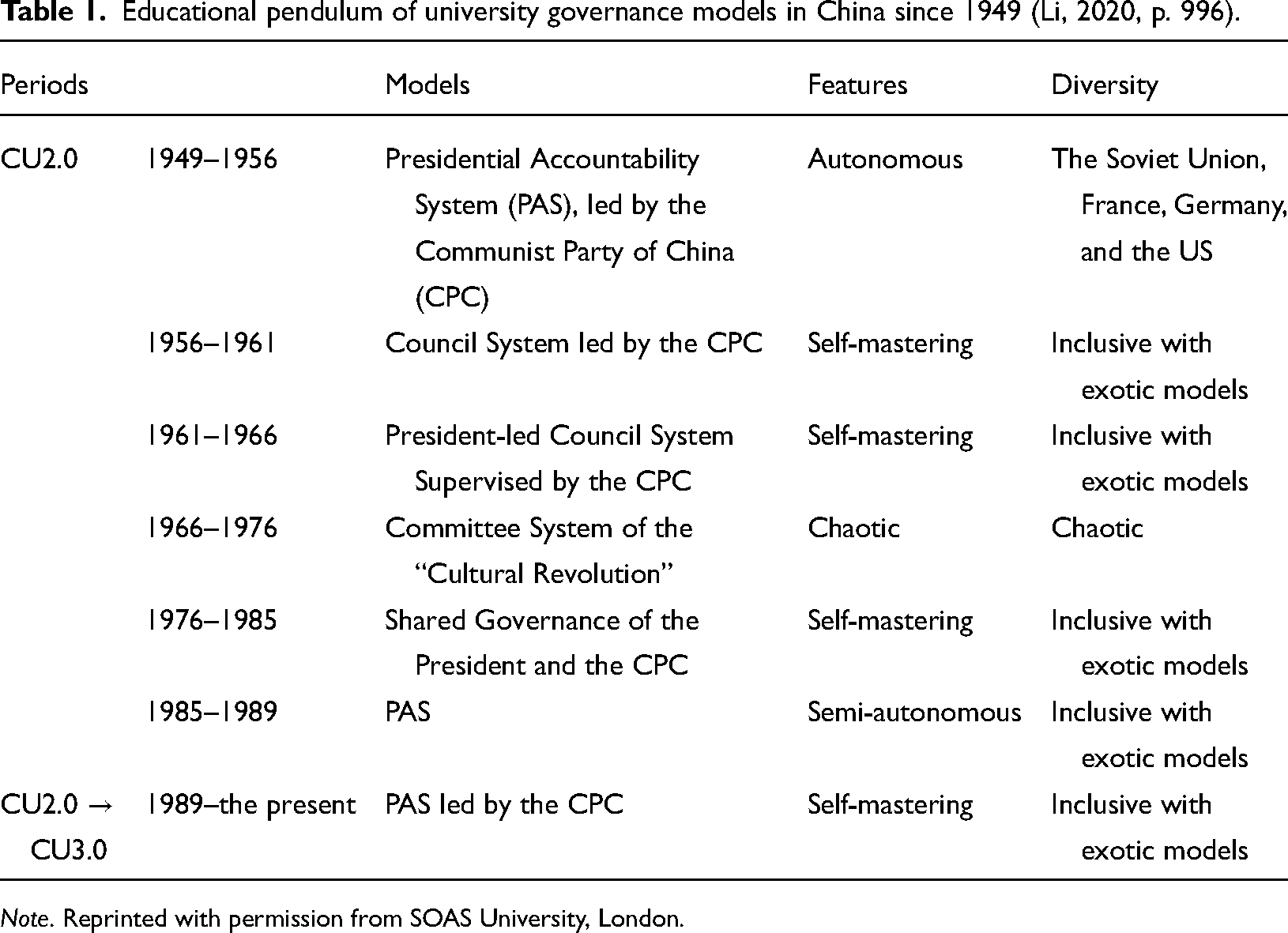
Note. Reprinted with permission from SOAS University, London.
Based on widely observable phenomena in history, Slavin (1989, pp. 755–756) argued that the educational pendulum swings in two directions, the upswing and the downswing, each comprising six phases:
The Upswing:
Program (reform) is proposed. Program (reform) is piloted. Program (reform) is introduced in innovative districts. Program (reform) becomes the “hot topic” among staff developers. Program (reform) expands rapidly. Controlled evaluations begin. Innovative school districts move on to other programs (reforms). Complaints surface in professional publications. Preliminary evaluations are disappointing. Developer (reformer) claims that the disappointing results are due to poor implementation. Interest in program (reform) flags. Controlled evaluation studies are published.
The Downswing:
According to Slavin (1989), a lack of patience among reformers is an important reason for this pattern. Prompted by various motives or rationales, reformers often hastily advance an educational reform despite a lack of scientific evidence (Slavin, p. 753). This argument resonates with the views of so-called scientific rationalism, which suggests that educational reforms often fail because of the insufficient and unscientific formulation and implementation of policies. Rationalists pose the following questions: Are the true problems of reform targeted? Do the solutions designed by policymakers align with the problems of reform? Are they the wrong solutions for the right problems, or vice versa? Is the reform dealing with the problem or the politics of the problem? What analogies and metaphors do reformers use as a basis for forming policy? Have practitioners implemented the policies as intended? (Cuban, 1990b, pp. 5–6).
However, many scholars disagree that a lack of scientific rationalism accounts for the phenomenon of such pendulum swings. As early as the 1970s, John I. Goodlad (1975a), a well-known educator of the University of Washington, identified Western rational bias as responsible for fruitless, sometimes failed, education reforms (p. 7). He also criticized reform attempts for being limited to focus on schools while ignoring other crucial agencies for educational advancement as an organic whole (e.g., educational ecology) (Goodlad, 1994, p. 235). Goodlad (1975b) subsequently proposed school or educational “renewal” as a more proactive approach to systemic improvement in teaching and learning (p. 19), namely, his committed core process of “systemic pedagogy” (Goodlad, 1994, p. 2), and an internal condition driving the improvement of teachers, schools, and education (Goodlad, 1994, p. 17). Interestingly, he discussed these forms of “renewal” in the same sense as “improvement.”
Scholars have identified several other factors responsible for fruitless or failed educational reforms. For instance, in an article entitled “Change without Difference: School Restructuring in Historical Perspective,” Jesse Goodman, a professor at Indiana University, Bloomington, argued that doctrines like social functionalism, efficiency, productivity, individualism, and expertism are responsible for failed reforms that used “the past as future” (Goodman, 1995, p. 4). Accordingly, Goodman appealed for authentic improvement in various respects, including values, theories, and practices, by forsaking the traditional mentality of reform.
Adopting the multiperspectival approach popularized by political science and organizational studies, Cuban (1990b) contended that schools are battlefields where different values compete with one another and different social classes strive to maximize the interests of their own class, inevitably leading to value incongruity or even conflict. However, Cuban (1990b) added that while the social functions of education, and schools in particular, are designed, ruled, and enforced by the elite, they must also accommodate the social expectations of the general public. Such incongruities, gaps, paradoxes, and even conflicts within the school setting are difficult—if not impossible—to reconcile. When applied collectively to educational reforms, these factors constitute the periodic cycle or “recurring waves” of reforms in history (Figures 1 and 2). Cuban (1990a) thus concluded that “change is not necessarily improvement … Change may or may not be progress” (p. 72). Cuban identified several puzzling issues surrounding reform; for instance, he questioned why schools have remained the same as they were a century ago despite the implementation of numerous reforms. Underlying such a puzzle of unsuccessful reforms is a paradox: the long-term rigidity and formality of schools and school reforms.
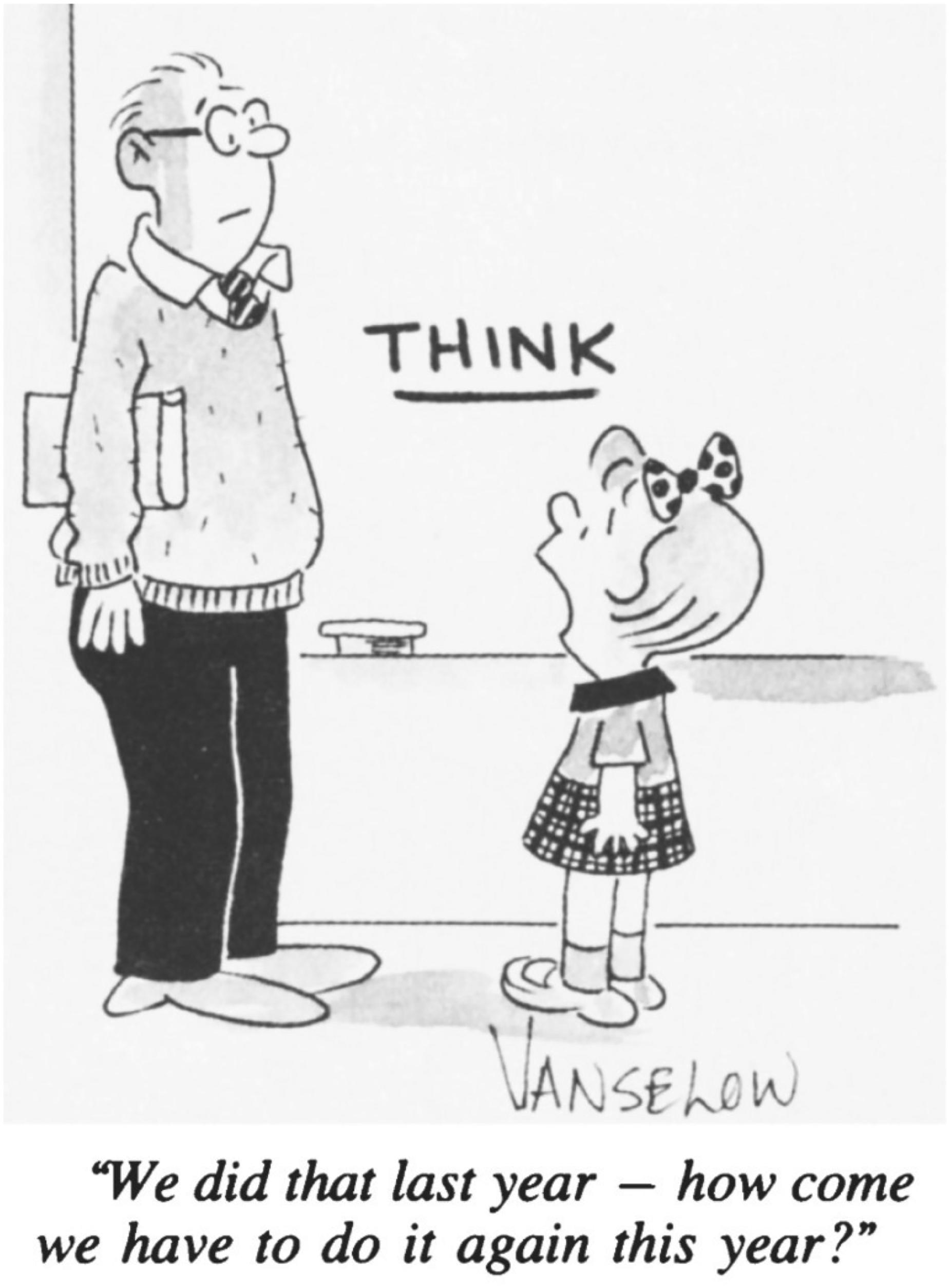
Think (Slavin, 1989, p. 756).
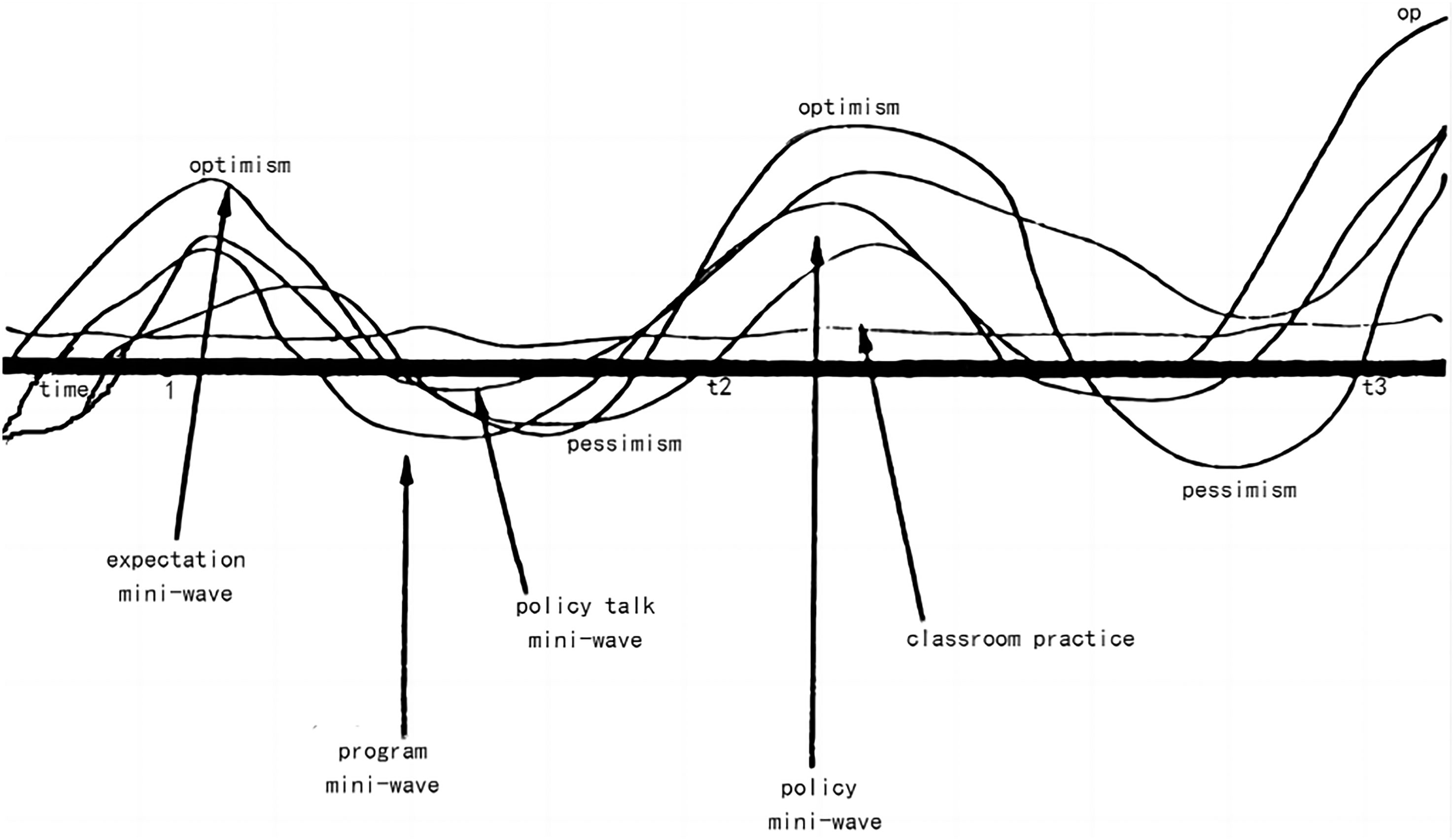
Recurring waves of school reform (Cuban, 1990b, p. 9).
Of course, there are other reasons for the futility and failure of educational reforms than those discussed by researchers and practitioners like Goodlad, Slavin, Goodman, and Cuban. A closer examination of educational reforms worldwide and throughout history reveals their inherent absence and vagueness in terms of value orientation, a fact represented by the term “reform.” For instance, the coincidental similarity among the etymologies of gaige in Chinese, kaikaku in Japanese, and reform in English demonstrates that the concept itself fails to provide a clear direction to advance and work toward. In other words, it simply signifies an act of re-forming, reshaping, or changing the status quo, or simply reproducing the status quo in different forms; it does not specify any value orientation of educational change. The notion of reform is underpinned by expectations of what Langley et al. (2009) defined as improvement characterized by being faster, easier, more efficient, more effective, less expensive, safer, cleaner, and so on (p. 16). The absence of orientation and vagueness in terms of values have served to shape and limit the means and effectiveness of educational reforms in almost all systems, fundamentally hindering their intended, positive outcomes. Furthermore, many of the theoretical assumptions of education reforms are based on the gold standard of experimental science: randomized controlled trials (RCTs), that is, extrapolating and applying findings from samples to the target population and equating findings from samples to real life of learning, teaching and schooling. The tenets of RCTs dictate the limitation of sampling and the controllability of variables, thus determining, resulting in, and ensuring inevitable and pervasive errors in the findings from limited samples compared to the real world of education. As the limited variables often reflect the outcomes of the experimental intervention and setting after excluding diverse or less visible factors, as required by the process, they cannot truly reflect educational reality (Lipsey, 1993).
The global COVID-19 pandemic provides a recent manifestation of this problem. Although numerous COVID-19 vaccines were claimed to be effective against the virus under laboratory conditions and during the trial phases, their efficacy was often less than satisfactory and varied to some extent when applied on a larger scale in different contexts. In addition to not providing the anticipated level of immunity, the large-scale, real-life applications of these vaccines did not always prevent infections or fatalities, as reported repeatedly by mass media worldwide.
The situation in education is far more complex than that of COVID-19 vaccines. Significantly, the differences among individual variables allow us to distinguish and understand real problems in education (Bryk et al., 2010). This offers an excellent scientific explanation as to why educational reforms are often ineffective, futile or unsuccessful. The word “reform” is misused to represent improvement, and the process of reform is itself fraught with formidable pitfalls involving value systems and institutional uniqueness. Evidently, we can conclude that reform has three inherent flaws: the absence of orientation, vagueness of means, and limitedness of solutions.
The opening chapter of the seminal classic, The New Meaning of Educational Change, starts as follows: “One person claims that schools are being bombarded by change; another observes that there is nothing new under the sun” (Fullan, 2016, p. 3). This led Professor Michael Fullan of the University of Toronto to conclude pessimistically that five decades of educational reforms, from systemic reforms to the standardization and evaluations of classroom teaching and school-based governance, had ended in failure (Fullan, 2016, pp. 3–10). Michael Fullan is hardly alone in this view.
The predicament and endless cycle of “reform without improvement” in education has been subject to widespread criticism and reflection. Since the end of the 20th century, reformism has been met with considerable skepticism and repudiation. In his notable work, A Place Called School (1984), John Goodlad scrapped the use of the word “reform” altogether, adopting the notion of improvement to expound on the pursuit of effective schools, as outlined in Chapter Nine, “Improving the Schools We Have” (pp. 271–320). More recently, the 67th Comparative and International Education Society (CIES) Annual Meeting in 2023, decided on a theme highlighting the core value of improvement: Improving Education for a More Equitable World. As Slavin (1989) asserts, “If education is ever to make serious generational progress, educators must somehow stop the pendulum by focusing their efforts to improve education on programs that are effective, rather than on those that are merely new and sound good” (p. 752).
The conclusion is clear: Reform does not necessarily involve improvement. In other words, improvement does not necessarily happen when reform occurs. This conclusion is applicable to other concepts synonymous with reform, such as change and innovation (Qin et al., 2020). Therefore, one of the most important solutions to the pitfalls of educational reform is shifting to neo-improvementalism, the new generation of improvementalism or post-reformism.
Neo-improvementalism: Constructing educational improvement science 1
A paradigm of change that considers reform as susceptible to getting stuck in politics, neo-improvementalism clearly defines the directions, values, methods, and outcomes of how things change—that is, the multifaceted, desirable directions of progress or advancement. Methodologically, neo-improvementalism rigorously adheres to three major methodological principles of improvement science insofar as it is discipline-oriented, systems thinking, and evidence-based (Han et al., 2020). The key to constructing neo-improvementalism is to establish a system framework of improvement in which directionality, scientificity, and practicality coexist, intermingle, and co-evolve. In the field of education, this means shifting to and constructing educational improvement science (EIS).
In terms of definition, EIS is an emerging, problem-oriented, transdisciplinary field studying the process of and/or approach to advancement in education at individual, institutional, systemic, national, and/or global levels. It involves the promotion of authentic improvement in education by building on evidence-based research and professional improvement communities (PICs). Here, problem refers to the challenges or obstacles facing education in its advancement toward a desirable direction or predetermined mission. More specifically, problems can take many forms, from concrete and microscopic to abstract and macroscopic. The understanding, identification, management, and solution of a problem must be translated scientifically into investigative research questions through specific methods, approaches, or techniques. Based on the scientific results derived to answer the research questions, resolutions to the problem are proposed and the problem is systematically conceptualized into an issue for improvement. An educational improvement following these interactive, dynamic steps and paths is characteristically problem-oriented. Problem-oriented educational improvements are those activities—including proposals, approaches, and processes—which are centered around the scientific identification and solution of a problem with the aim of achieving authentic improvement.
Problem-oriented educational improvement must adhere to the fundamental, methodological principle of evidence-based research. Evidence-based research in EIS is derived from a way of thinking that emphasizes scientific and effective evidence in the clinical field, such as evidence-based medicine, which combines research evidence, clinical experience, and patients’ needs (Evidence-Based Medicine Working Group, 1992). It encompasses various evidence-based research paradigms, including quantitative, qualitative, and mixed methods research (Mertens, 2019, pp. 8–39). The evidence used in EIS must come from real-world scenarios arising from educational practices. Evidence must be explored and tested in practice and then applied to educational improvement.
Here, the distinction between empirical and evidence-based research needs to be clarified. Although the two ideal types may seem synonymous and overlapping, they are different vastly in both definition and application. Empirical research emphasizes empirical interpretations using research methods based on a theoretical framework. However, evidence-based research centers on the practical orientation of an improvement problem and highlights the quality and direct application of evidence. Empirical studies often employ RCTs as the standard model to develop chains of evidence for various causal relationships. Nevertheless, in the real practice of educational improvement, this type of studies with controlled variables does not make sense. Both the dynamic changes and real-world scenarios constituting the basic preconditions for understanding educational improvements are difficult to study via experiments. As evidence-based research is rooted in the dynamism of changes, real-world scenarios, and situated contexts, it can compensate for the shortfalls of empirical studies.
According to the methodological principles of evidence-based research, educational improvement must meet the following four essential conditions (Slavin, 2008, p. 125; Slavin et al., 2021, p. 15):
There must be a broad range of proven programs in every area of education, including every subject and grade level. Trusted, impartial, educator-friendly reviews of research must be available to ensure that educators and policymakers can identify which specific programs and practices have been proven to work via rigorous evaluation. Government agencies must provide incentives to schools to adopt proven programs. Policies and mechanisms must be formulated to continuously accumulate related knowledge and effective practices.
EIS covers wide-ranging aspects of educational improvement, including educational vision, mission, values, objectives, equality, quality, quantity, diversity, effectiveness, efficiency, governance, policies, structures, mechanisms, budgeting, financing, planning, strategies, the curriculum (programs), performance, accountability, impact, status, stakeholders, networking, and uniqueness (Li, 2021). Any educational activities or theoretical discussions that involve improvement may fall within the scope of EIS. The subjects of educational improvement can be microscopic, mesoscopic, and/or macroscopic. They can include macroscopic vision and objectives of education, formulation and implementation of educational policies, educational justice, educational governance, and school characteristics, as well as microscopic learning processes, classroom instruction, and teaching and research groups. Other areas include comparisons between hierarchical levels, organizations, systems, and even countries, among others.
EIS is concerned with the direction, intensity, extensity, velocity, and sustainability of their processes of improvement (Figure 3) (Li, 2021). In terms of velocity, for example, it may explore whether China's improvement in compulsory education in the 1990s accelerated progress compared to that in the 1980s. Questions regarding extensity include how widespread a teaching improvement strategy may be applied in practice. They can serve as desirables or indicators for measuring educational improvement, as well as the subjects of study or focus of EIS.
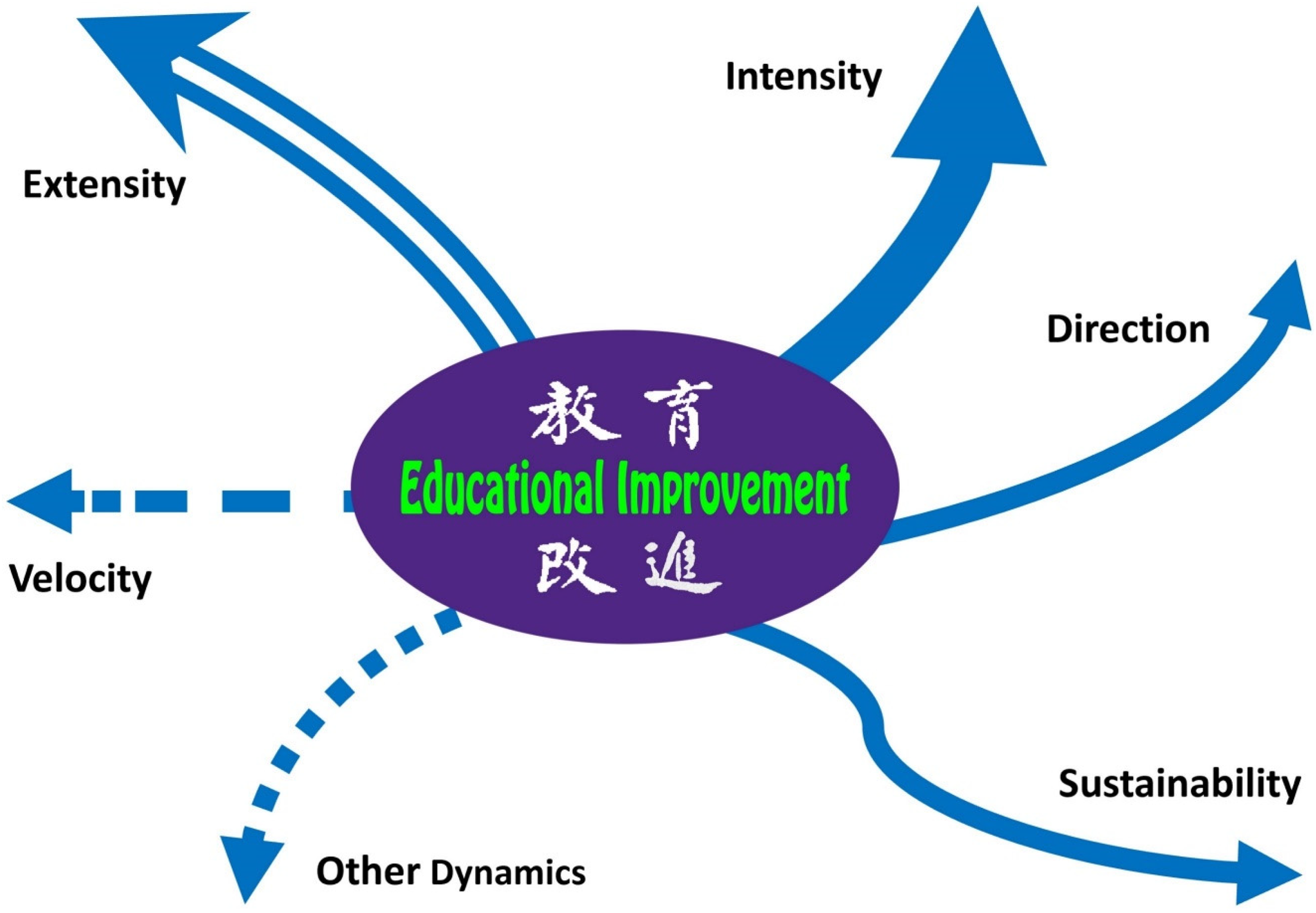
Core framework of Eucational Improvement Science.
In terms of disciplinary scope, EIS has inherited the genes, essential elements, core concepts, and characteristics of both improvement science and educational science, as it is a hybrid of these two broadly defined fields. For example, improvement science underscores the significance of two types of basic knowledge: subject matter knowledge and profound knowledge. Subject matter knowledge serves as the foundation for professional activities of improvement. A school principal's subject matter knowledge includes their professional knowledge of school leadership, governance, and management. Meanwhile, profound knowledge comprises four areas: appreciation for a system, knowledge about variation, theory of knowledge, and psychology (Deming, 2018, pp. 63–78; Langley et al., 2009, pp. 75–88). A school principal's profound knowledge includes their understanding and recognition of the system and variation of the school where they work and they accumulate and construct the systemic knowledge about the school, and an overall and concrete understanding of the people at school (including students, parents, and other stakeholders). The application of the knowledge derived from the intersection of subject matter knowledge and profound knowledge to the field of education produces the transdisciplinary knowledge system of EIS (Figure 4), which is the hallmark of neo-improvementalism in education.
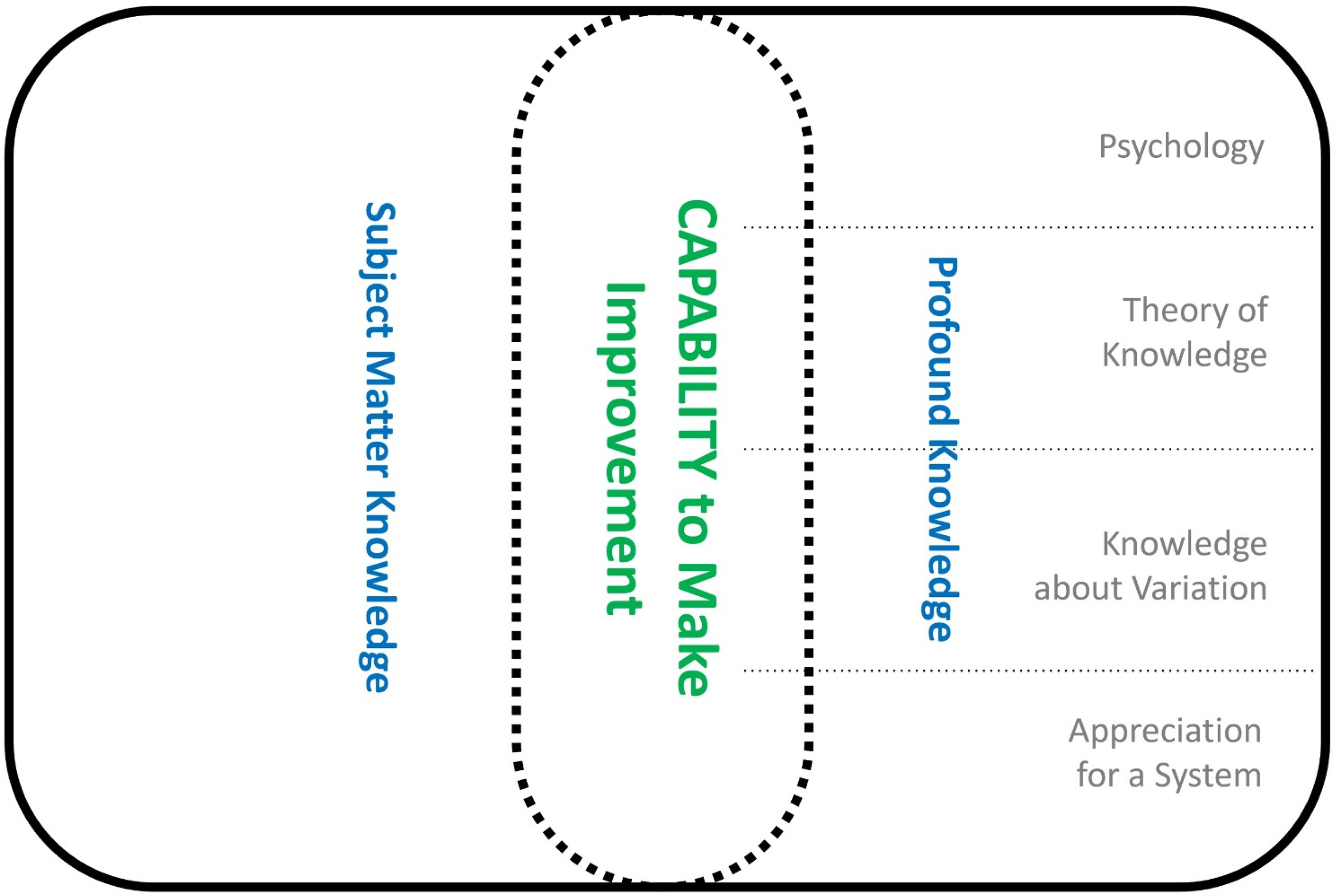
Knowledge system for the capability to make improvement.
Broadly speaking, neo-improvementalism in education is inclusive by nature. For instance, it may include what Hargreaves and Shirley (2012) call “the Fourth Way,” that is, the organic fusion of educational improvement and innovation. Meanwhile, studies on school effectiveness or school improvement (Goodlad, 1975b; Reynolds, 1982, 1985), which originated in the 1960s and 1970s and soon gained widespread attention, laid the groundwork for EIS, especially the studies and practices championed by the International Congress for School Effectiveness and Improvement after its founding in 1988 (Gray et al., 1999; Hopkins & Reynolds, 2001; Li et al., 2020; Reynolds et al., 2020; Shen, 2020; Teddlie & Reynolds, 2000; Townsend, 2007).
EIS tackles the inherent flaws of educational reform. For example, in terms of value orientation, the directions, approaches, and values of EIS are guided by educational advancement. With respect to theoretical premises and philosophical assumptions, it recognizes three inbred attributes shared by all living worlds, i.e., growability, developability and improvability. The three attributes determine the five inherent characteristics of improvement activities, namely, the endogeneity, eternity, universality, necessity, and significance of improvement (Qin et al., 2020). Essentially, all activities of improvement are endogenous needs, eternal themes, and universal phenomena arising from the process of educational advancement. Therefore, educational improvement is imperative, pervasive, and continuous.
EIS emphasizes three methodological approaches: discipline-oriented, systems thinking, and evidence-based research. Such research is not confined to measuring and predicting the effectiveness of reform by establishing a few variables. Significantly, it advocates for capability building and sustainability as the essential elements, endpoints, and means of improvement work in addition to the construction of PICs (Li et al., 2020), the promotion for the sustainability of educational improvement, and envisioning the freedom of and cooperation in education as its ultimate mission (Chen et al., 2020). As such, improvement itself becomes both the means and the endpoint. Consequently, although neo-improvementalism and reformism are inextricably linked in some ways, they are different fundamentally by distinct paradigms.
As a result of these fundamental differences, EIS has grown enormously in just over a decade and rapidly gained recognition worldwide. A notable example is the Carnegie Foundation for the Advancement of Teaching, a US-based organization founded as a private charitable organization in 1905. In recent years, the organization has focused on EIS and networked improvement communities. Led by figures like Professor Anthony Bryk, the foundation's ninth president, these efforts have opened up new avenues for educational improvement to resolve the long-existing problem of inequality in educational outcomes by adhering to the following six core principles (Bryk et al., 2015):
Make improvement problem-specific and user-centered. Focus on variation in performance. See the system that produces the current outcomes. Do not improve at scale what cannot be measured. Use disciplined inquiry to drive improvement. Accelerate learning through networked communities.
The Carnegie Foundation for the Advancement of Teaching has actively engaged in the construction and exploration of disciplinary essentials at the frontiers of EIS, publishing a series of works in recent years, including Learning to Improve: How America's Schools Can Get Better at Getting Better (2015) and Continuous Improvement in Education (2013). They have provided exploratory resources for educational improvers.
Recently, CIES Annual Conferences have seen an upswing in academic papers on topics in the new field of EIS. At the 65th CIES Annual Conference in 2021, Professor Axel Rivas, Dean of the School of Education at the University of San Andrés in Argentina, organized a featured panel session entitled “The Black Box of Educational Improvement: A Comparative Study of 487 Subnational Educational Systems in Latin America.” This special panel garnered considerable attention from the attendees. Shortly thereafter, a new Special Interest Group (SIG) of the global CIES community was petitioned and officially approved by the CIES Board of Directors in 2021. This new SIG is the first global academic community on EIS in the field of comparative and international education, marking a significant milestone toward the internationalization and specialization of EIS. Additionally, the CIES Annual Conference 2023 was themed on Improving Education for a More Equitable World online and in Washington, D. C. on February 14–22, with over 4,000 participants across the globe. Earlier in 2020, The Tsinghua Journal of Education created a special section on Educational Improvement, becoming China's first publication series on theoretical explorations in and practical frameworks for EIS (Cai et al., 2020; Chen et al., 2020; Han et al., 2020; Li et al., 2020; Qin et al., 2020; Xiu et al., 2020). Building on this, my team and I have recently authored a book entitled Educational Improvement Science: The Art of the Improving Organization (in press). Furthered by the exploration and theorization in this study, these endeavors hold immeasurable prospects for the fledgling field of EIS.
Educational improvement: Classes, schools, and education agencies as improving organizations
An organization is commonly defined as an entity operated by one or more people for a single or multiple missions. The construction, development and practices of EIS are not possible without the systemic transformation of classes, schools, and educational agencies as various forms of organizations. Granted, such organizational transformation can draw on past experiences from the field of improvement science. Business and organizational studies, which began gaining traction in the US in the 1970s, gave rise to the conceptualization of corporations as “learning organizations,” as notably espoused by Jay Forrester and his colleague Peter M. Senge at the Massachusetts Institute of Technology. Senge (1990) defined learning organizations as places “where people continually expand their capacity to create the results they truly desire, where new and expansive patterns of thinking are nurtured, where collective aspiration is set free, and where people are continually learning how to learn together” (p. 3). This idea has had a significant and far-reaching influence on the systemic improvement of firms. For instance, reputable multinational corporations such as Microsoft, Apple, Intel, DuPont, and the FedEx Corporation have all benefited from this concept and built their individual learning organizations, laying a solid foundation of learning to sustain their success. In the field of education, this has inspired the popular concept and wide practices of professional learning communities.
However, the conceptualization of the learning organization suffers a fatal problem for organizational improvement: the tendency to make learning one of the developmental goals of the organization often results in ubiquitous learning that obfuscates, de-focuses, or even overshadows the original vision and missions of the organizational improvement. Considering this problem, I move beyond the conception of the learning organization and proposes viewing classes, schools, and educational agencies as “improving organizations.”
Improving organizations are those in which members, guided by improvement science, continuously expand their individual and collective improvement capabilities, build professional improvement communities, establish and reinforce the improvement mechanism and culture of the organization, realize the overarching vision and specific goals of organizational improvement, and allow the organization to improve in a sustainable manner. Any organization—not just learning, teaching and/or research groups, classes, schools (including post-secondary education institutions), education decision-making units or authorities, and non-governmental or non-profit organizations—can be considered an improving organization, as long as it can continuously improve by purposively implementing the principles and approaches of improvement science.
When applied to classes, schools, and educational agencies, improving organizations are those which are theoretically guided by Educational Improvement Science and consistently place improvement at the center of their leadership, governance, evaluations, performance, curricula, teaching and learning, student development, educators’ professional development, etc. Such organizations build their improvement capabilities through individuals, groups, or PICs, and regard sustainable improvement as their means and ultimate purpose. In this respect, it is important to note that schools encompass all levels and types, from elementary and secondary schools to colleges and universities, whereas educational agencies take various forms, from formal, non-formal, and informal to distinct categories of online and offline education.
Unlike conventional ones, improving classes, schools, and educational agencies foreground the values, ideas, disciplinary approaches, and practical orientation of improvement. They emphasize building PICs to cultivate the capabilities of individuals, teams, and the whole organization or system, and create a fitting, flattened, and flexible mechanism and culture of improvement aligned with organizational characteristics. By constantly activating and re-institutionalizing the basic units and communities of improvement across time and space, such a mechanism facilitates sustainable organizational improvement. The key characteristics of improving classes, schools, and educational agencies are derived from those of EIS—namely, discipline-oriented, systems thinking, and evidence-based research—and coupled with PICs to identify, manage, and solve the real problems of learning, teaching, and/or schooling, and promote their authentic improvement.
It is worth reiterating that improving classes, schools, and educational agencies must prioritize the building of their PICs. PICs engage in improvement activities by building and enhancing capabilities through the scientific paradigms from systems and shared thinking as well as multiperspectival approaches based on the consensual visions, aims, rules, strategies, and expectations of the organization (Li et al., 2020). In the field of education, PICs can be built at different organizational units or levels and are characterized by properties such as being open and diverse, evidence-based and professional, collaborative and symbiotic, and feasible and sustainable; they also tend to have shared visions and objectives, reciprocal learning and commitments, and regular and effective communication mechanisms. In terms of current practices, PICs in education are fraught with innumerable and extensive forms ranging from small teaching and research teams at schools to the large-scale international alliances of various systems. They also include the conventional face-to-face format and online modes universally employed in the post-COVID-19 era.
One purpose of building PICs in education is to resolve complex problems in improving organizations that individual improvers struggle or are incapable to address independently to advance the authentic improvement of their organizations. The process of building these communities is vital to nurturing, enriching, enhancing, and empowering improvers’ capabilities systemically, such as improvement in decision-making, leadership, implementation, and evaluation, as well as the capabilities to learn from and collaborate with one another. Therefore, it is a continuous undertaking centered around improvement work, eventually ensuring the success of the improving organizations.
As noted, improvement measures that are partial, occasional, fragmented, unintentional, or unplanned are far from sufficient or satisfactory. An authentic educational improvement is akin to a performing orchestra as a cohesive improving community. The latter requires true harmony, concert and interaction between the conductor and the orchestra, an organic team in which every member is uniquely necessary and actively participating. Each individual member plays a role that is as crucial as the orchestra itself in improving its performance capability. Meanwhile, there must be a consistent set of faith, shared mission, clearly differentiated roles, concerted order, and great rapport between the conductor and the instrumentalists and among different sections. Only then can the conductor lead the orchestra in delivering an immaculate performance of the highest artistic quality, and only then can the orchestra attain the highest artistic achievement. EIS is an emerging transdisciplinary field that guides, precipitates, and protects the improving organizations, and an art requiring an abundance of skills to ensure the sustained success of improvement.
We can thus anticipate the transformation of classes, schools, and educational agencies into improving organizations empowered by EIS.
Conclusion
Eeducation mission and how education should better function and fulfill its mission are perennial themes with varied responses across sociohistorical contexts. Given the global and historical trend of education discussed and summarized by this paper, neo-improvementalism is an effective and feasible approach to addressing this critical, fundamental question. Unfortunately, histories of education worldwide, including that of China, reveal that neo-improvementalism has often been overshadowed by reformism for the reasons that we have witnessed.
The three inherent flaws of reformism—the absence of orientation, vagueness of means, and limitedness of solutions—have led to the disorientated, swinging, and recurring phenomenon known as the education pendulum. In the practices of educational reform worldwide, this has often translated into radical frenzy, stagnation, decline, the subsequent return to the same state—that is, old wine in a new bottle—or, in extreme cases, major setbacks in education. Education reforms may even become the undefeatable enemies that they sought to defeat.
To overcome the drawbacks of reformism and debunk suspicions surrounding reforms, it is imperative to explore and advocate alternative resolutions to education advancement. Such resolutions include promoting neo-improvementalism in education and propagating and instilling new ideas, paradigms, approaches, and models that treat classes as improving communities, schools as improving organizations, educational agencies as improving enterprises, and all stakeholders (including learners, teachers, principals, parents, and policy actors) as improvers or improving agents. As an emerging transdisciplinary field derived from improvement science and education science, EIS is a problem-oriented discipline studying the process of and/or approach to advancement in education at individual, institutional, systematic, national, and/or global levels. It is rooted in promoting authentic educational improvement through evidence-based research and the building of PICs. The new concepts and perspectives developed by EIS urge everyone to comprehensively reflect on and critically re-examine education mission and the greater role that education can play in realizing the two fundamental visions of education: the individual freedom and emancipation of human beings, and the collaboration between and co-prosperity of human societies as one global community with a shared future.
The birth of EIS and its scientific emphasis on improvement practices rightly reflect the recognition of the professional status and disciplinary field of educational improvement, and provide an essential pathway toward the specialization and scientificization of improvement work in education. Consequently, in just over a decade, EIS has attracted global attention from education policymakers, implementers, researchers, and educators, and has grown dramatically in terms of its theoretical and practical remit. Tao Xingzhi, a pioneer in political activism and educational improvement in China, called for increased attention to educational improvement as early as in the 1930s, asserting that “we need education and [we] need a good education. To improve is to turn the bad into good and the good into better … We must improve it continuously and continue moving it forward” (Tao, 2005b, p. 467). Today, his spirit of sustainable improvement is upheld by the China National Association for the Advancement of Education, which was originally established in 1921 by Tao and his colleagues, and reestablished by his new followers in 2011.
Nonetheless, as an emerging transdisciplinary field, EIS has yet to receive the global attention it deserves. Apart from the substantial theoretical and practical gaps in related areas, there is a pressing need to explore, develop, and promote the burgeoning discipline with local characteristics in a global vision. In terms of disciplinary construction, EIS is a fertile field worth cultivating. It merits concerted effort from all sides to promote the specialization of educational improvement, construct and explore EIS, develop new disciplinary areas in education, and enhance the disciplinarization and scientification of educational research and practices.
Footnotes
Author's note
This article is rewritten from its Chinese version entitled “Educational Improvement Studies: The Art of the Improving Organization” published by the Journal of East China Normal University (Educational Sciences) in 2022. The publication of this revised version is authorized by the Journal of East China Normal University (Educational Sciences) and acknowledged by the ECNU Review of Education.
Declaration of conflicting interests
The author declared no potential conflicts of interest with respect to the research, authorship, and/or publication of this article.
Funding
The author disclosed receipt of the following financial support for the research, authorship, and/or publication of this article: This work was supported partially by the National Natural Science Foundation of China (grant number 71834001).
