




Abstract
Purpose
This study investigates the fairness preference of five-year-old children in Shanghai, observing their distributive behaviors in both stakeholder and spectator games and showing how this behavior is linked to their family background.
Design/Approach/Methods
Participants had to make distributive choices in two experiments and distribute between themselves and another participant in the first choice. They had to distribute between two other participants in luck, merit, or efficiency situations in the second choice.
Findings
The results suggest that preschoolers showed a preference for splitting equally between themselves and another participant. The second choice showed a significant difference in fairness preference under a situation of luck between genders, and only children were more likely to accept an unequal allocation than those who had siblings.
Originality/Value
We believe that our study makes a significant contribution to the literature because it illustrates the variety of factors that can influence a child's fairness preference and fairness behavior and suggests when and how these aspects develop in children. Further, this is an original study exploring the fairness preference of preschoolers in Shanghai using an experimental economics method.
Introduction
Fairness is crucial for maintaining relationships and advancing social collaboration. People show an aversion to unfairness and are willing to pay to reduce the difference (Fehr & Fischbacher, 2004). Research indicates that a sense of fairness emerges in the early stages of children's development; as they grow older, they develop an increasing concern for fairness (Gordon-Hecker et al., 2022; Shaw et al., 2014). Children's fairness view fundamentally affects the development of their social behaviors, such as sharing and cooperation (Fehr et al., 2008).
However, the development of fairness preferences during childhood remains inconclusive. Research shows that three-year-old children already understand fairness, but their understanding of fairness does not lead to consistently fair behavior (Bernhard et al., 2020). Some studies have found that, in the dictator game, children between the ages of four and six years would strictly follow equal distributions of resources between themselves and others (Blake & McAuliffe, 2011). Several studies have found that four- to six-year-old children behave in a more self-centered manner; however, although they would like to share some resources with others, they prefer to allocate more to themselves, especially when they do the same amount of work (Fehr et al., 2008; McAuliffe et al., 2017). Conversely, in spectator games, research has found that children between the ages of four and six years have an aversion to inequality (Bernhard et al., 2020), while other research has demonstrated that children accept inequality under certain circumstances (Shaw, 2013). However, further studies are needed on the effects of family background on children's fairness preferences (Almås et al., 2017).
To examine children's fairness preference, we conducted an experiment that involved two distribution games: a dictator game and a spectator game with five-year-old children. Through the experiment, we analyzed the children's fairness preference in the dictator game and their views on inequity distribution under luck, merit, and efficiency treatments in the spectator game. Moreover, we matched the results with the students’ family backgrounds to explain the factors that may affect children's fairness preference. In this study, we attempt to answer three research questions:
What is the fairness preference of young children in dictator games? What is the fairness preference of young children in spectator games? What role does family background play in the development of children's preference for fairness?
Literature review
Children show a preference for fairness at a very early stage, and this develops with age. Research has pointed out that infants aged 15 months could show a preference for fairness by looking longer at equal allocations (Geraci & Surian, 2011). Studies have also found that children as young as three years old demonstrate an understanding of fairness and can decide if the distribution is unequal (Liu et al., 2015), while five- to six-year-old children are sensitive to distribution justice (Grocke et al., 2015); they prefer egalitarian decisions, show an aversion to inequity, and prefer to pay a cost to reduce unfair allocation (Bernhard et al., 2020; Blake & McAuliffe, 2011). Qiu et al. (2017) analyzed the inequality aversion of four-, six-, and eight-year-old children and found that they were more likely to make egalitarian decisions and were more concerned with altruism rather than self-interest as their age increased.
However, a gap exists between children's fairness preference and fairness behavior. Research suggests that young children under the age of 7–8 years can understand several fairness principles, although this knowledge and preference for fairness does not always align with their behavior (Blake et al., 2014). Although children older than three years old demonstrate some knowledge of fairness, younger children (4–6 years old) are still more likely to make a selfish allocation, while older children (7–9 years old) make fairer decisions (McAuliffe et al., 2017). Children in middle childhood (4–7 years old) are still learning to follow social norms to align their fairness preference and fairness behavior (Chajes et al., 2022).
Preschool education can lead to children's early adherence to these norms by providing life experiences (Blake et al., 2015; Callaghan & Corbit, 2018). Some studies have reported that early education experience has a strong causal impact on children's social preferences and fairness views and that preschool makes children more egalitarian than those who receive education at home (Cappelen et al., 2016). As children move from informal playgroups in kindergarten to more formal schools, they may learn that equity is a concept or principle endorsed by authority figures (e.g., teachers); for example, preschool teachers typically encourage sharing and fair behavior among students. Hence, younger children learn about social norms and engage in observable egalitarian behaviors by observing teachers’ approval of sharing and equitable distribution behaviors (Fehr et al., 2008; Smetana et al., 2014).
Despite inequity-aversion, children accept inequity in certain situations. Some studies have investigated fairness preference under certain contexts; researchers have found that children between five and eight years old accept unequal distributional outcomes resulting from a coin toss or other fair procedures (Dunham et al., 2018; Grocke et al., 2015; Shaw & Olson, 2014), and as children grow older, they increasingly take merit into account when facing inequalities and are more likely to accept uneven distribution if it reflects differences in individual ability (Schmidt et al., 2016). Another study examined preschoolers’ (4–6 years old) consideration of charity and found that older (5–6 years old) preschoolers were more likely to give more money to the poor than wealthy people (Wörle & Paulus, 2018). Young children have the willingness to intervene in inequality, but some studies have found that children are not willing to pay costs to punish violations of fairness norms until age six (McAuliffe et al., 2015). Other studies have found that this costly inequality intervention begins to emerge around the age of four or five when children are in a third-party context (Bernhard et al., 2020).
Some studies have examined the role of family background in explaining differences in fairness preferences. The relationship between family socioeconomic status (SES) and children's allocation behavior in the dictator game has shown inconsistent findings. Studies have pointed out that children from varying family socioeconomic statuses may show significant differences in fairness preference. Family income has an effect on children's fairness views from preschool age, and four-year-old children from lower-income families are more likely to view equal distribution as fair and prefer to donate more to others (Chen et al., 2013). Research has also pointed out that as the socioeconomic status level increases, children prefer to behave equally, but the family SES level does not affect the fairness view until primary school (six years old; Benenson et al., 2007). One study suggests that parental socioeconomic status affects children's social preference, finding that children in families with less educated parents are less likely than children in families with more educated parents to believe that selflessness is an important personal quality (Bauer et al., 2014).
Siblings and birth order also affect fairness view development. Researchers have speculated that living with siblings offers young children an opportunity to develop early social interactions (McAlister & Peterson, 2013). Having a sibling boosts the opportunities for a child to compete with others and become more concerned with fairness (McAlister & Peterson, 2013; Lu & Chang, 2018); in contrast, an only child is often seen as self-centered and less likely to share with others. However, some research has found that in a sharing game, only children and the youngest children are more willing to share than children with siblings (Fehr et al., 2008). A few studies have analyzed the effect of gender on children's fairness preference. Research has found no significant differences between boys’ and girls’ equal allocation behaviors (Berger et al., 2022); however, in spectator games, a study found that nine-year-old girls were less tolerant of unequal distribution than boys (Almås et al., 2020; Fehr et al., 2013).
Whether five-year-old children will strictly follow the principle of equal sharing or show self-centricity in dictator games is unclear. Children's fairness preferences in spectator games and the influence of family background factors and other sociodemographic characteristics on their fairness preferences need further analysis. Therefore, in this study, we investigated the fairness preferences of kindergarten children in both dictator and spectator games and analyzed the influence of their family backgrounds.
Methods
Participants
All participants were five-year-old children recruited from four public preschools in Shanghai. Participation was voluntary, and informed consent was verbally explained to them by the investigator. Written informed consent was obtained from the parents of 309 participants for their children to participate in the allocation experiment. Finally, 309 children participated in the distribution experiment. After the experiment, we collected family background information through a parental questionnaire, which 221 of the 309 participants’ parents completed. After excluding repeated and incomplete questionnaires, 177 valid questionnaires were obtained. This study analyzes the fairness preferences of 177 five-year-old children and the influence of their family background factors based on experimental data and personal information.
Experimental procedure
The experiment comprised two phases. In the first phase, children were asked to act as stakeholders and distribute resources in a dictator game after completing six real situational tasks. Dictator games are helpful in exploring human sociality (Engel, 2011). In the dictator game, a preschooler is free to choose any distribution of resources between themselves and another person, and the decision would be the actual distribution of the pair. The assumption is that children must make a trade-off between self-interest and fairness, and their distributive choices show their consideration of fairness.
The second phase included a spectator game with three treatments—luck, merit, and efficiency—and the researcher randomly assigned each child to one of the treatments before the experiment. Each treatment represented a prearranged unequal allocation; for example, luck indicated that tokens would be allocated according to a lottery, and this allocation would determine how many tokens the other two children would receive. Participants had to decide whether they wanted to keep or change the unequal allocation decision as a third party, although they would not be paid for making this decision. The results of the spectator game demonstrated children's fairness preferences in luck, merit, and efficiency scenarios. Table 1 summarizes the design of the experiment.
Experiment design.
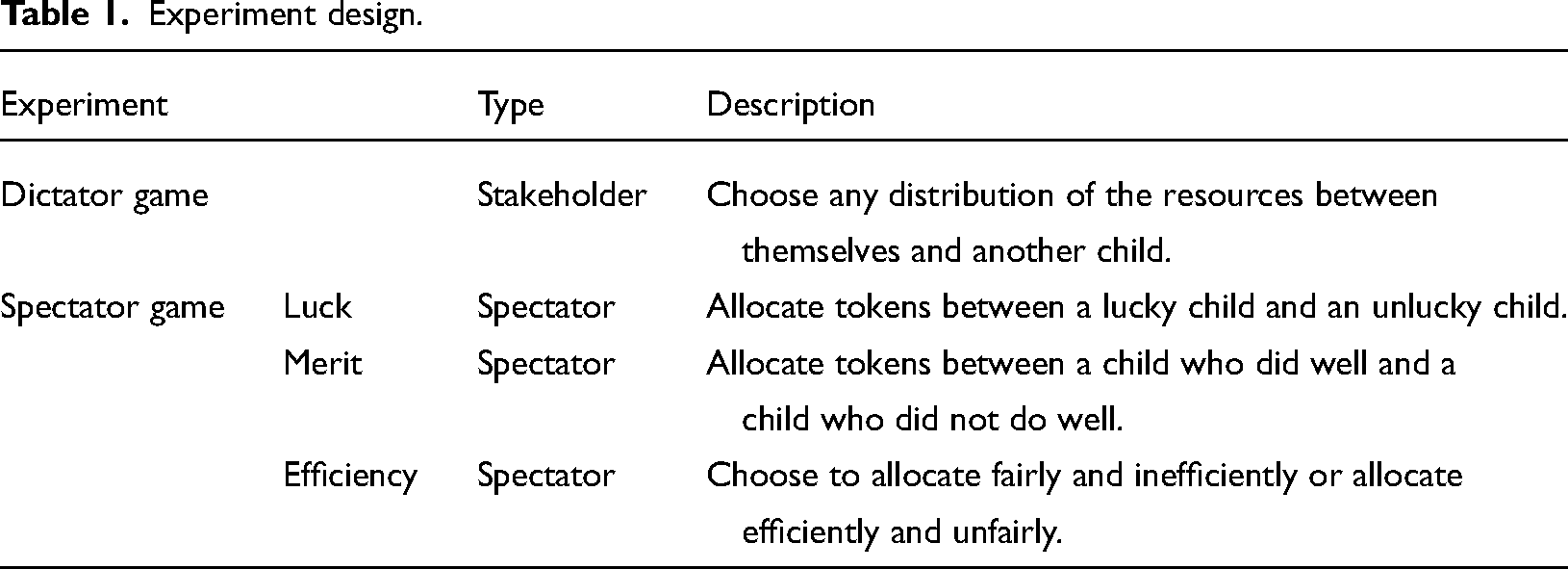
The face-to-face experiment was conducted in the playroom or reading room of a kindergarten. Each participant interacted individually with an experimenter who conducted the experiment and told the participants the following statements before the task: “Hello, today we will play a game together, and after the game, you can get prizes. Now, you can see the tokens in my hand, and after the game, you can exchange tokens for the prizes we prepared.”
The experimenter then instructed each participant to complete six small tasks in one minute each (i.e., stringing beads, finishing a nine-piece puzzle, counting figures, spotting the difference between two pictures, counting, and completing a simple sentence) after they made sure the children understood the instructions.
The dictator game
After the participants completed these tasks, they began to participate in the first phase of stakeholder decision-making. Participants were told that they were randomly paired with another child of the same grade before the experiment, but neither knew who the other was. The other child had also completed the same six tasks, and each participant had to allocate 10 plastic tokens between themselves and the other child. These tokens could be exchanged for prizes after the game. The experimenter would leave when the participant was assigned the tokens and then later return to record the results of the assignment and ask the participant to begin the second phase of the experiment.
The spectator game
After participants had completed the tasks and made their choice as stakeholders in the first phase, they were then asked to take part in a spectator game. In this game, the spectator's task was to decide whether they wanted to redistribute some of the tokens that had already been assigned to two other children. The participants were told the following statements before the spectator game: “You have distributed the tokens between yourself and another child, but now you need to assign tokens to two other children. Your decision will affect the number of tokens that the other two children receive at the end of the game.”
According to the random allocation results before this part of the experiment, the participant was asked to make this decision in a particular redistribution situation. The spectator game included three such redistribution situations: luck, merit, and efficiency. In our study, 76 children participated in the luck treatment, 52 in the merit treatment, and 49 in the efficiency treatment.
In the luck treatment, the participant was told that two other children had also completed the tasks and would be given 10 plastic tokens in total and that the initial tokens those two children received had been determined by a lottery. The child who had won the lottery was assigned all 10 plastic tokens, and the other child got none; however, the participant (the spectator) was given an opportunity to redistribute the tokens, and they may choose to redistribute or not redistribute the tokens of two other children according to their own ideas. The experimenter left the area during the participant's decision-making process and returned to record the results after the participant had made a decision.
In the merit treatment, the participant was told that the other two children had also completed the tasks and would be given 10 plastic tokens in total. The participant here (the spectator) was informed that the initial tokens for the two children had been determined by their task performance. The child who did well in the tasks would get eight plastic tokens, while the one who did not do well would only get two; however, the participant would be given the opportunity to redistribute these tokens, and the choice to redistribute depended on their ideas. The experimenter left the area during the decision-making process and returned to record the results after the participant had made a decision.
In the efficiency treatment, the participant was told that the other two children had also completed the same tasks and would be given plastic tokens to exchange for prizes. In this treatment, the participant (or spectator) could allocate tokens in two ways and was shown two cards that explained these allocation options. If the spectator chose the first method, each child would get two tokens, for a total of four tokens. If the spectator chose the second method, then one child would get one token and the other six tokens, for a total of seven tokens; thus, the spectator would decide in what way the tokens of the two children would be allocated. The experimenter left the area during the decision-making process and returned to record the results after the participant had made a decision.
This experiment was conducted in a kindergarten classroom, and the decision-making results were recorded by the experimenters. All participants were rewarded with prizes after the experiment.
The children's family background data were collected from the parental questionnaires, which asked about the children's gender, whether they were only children, the highest education level of both parents, and other information such as family income. SPSS22.0 was used for data collation and analysis.
Results
Descriptive analysis
In the dictator game, participants were asked to distribute tokens between themselves and another person, and giving tokens to the other participant implied no potential economic benefit. Thus, if a participant was simply selfish and wanted to earn as much as possible, they would likely allocate all the tokens to themselves. However, since both individuals had made equal contributions, participants were usually affected by a sense of fairness and divided the tokens equally. By examining the ways in which participants allocated the tokens, we were able to learn whether they cared more about fairness or self-interest. The number of tokens the participant chose to give to the other can serve as a measure of how much value the participant placed on fairness relative to self-interest.
We counted the number of tokens each participant gave away and calculated the proportions of distribution patterns between each participant and the other child. The calculation method was “y = (a−b)/10,” where “y” is the share given, “a” stands for the number of tokens allocated to the dictator, “b” stands for the number of tokens given to the other person, and 10 represents the number of all tokens that should have been assigned in the dictator game. When the share given is 0, it means that the participant chose to divide the tokens equally.
Children tend to allocate equally between themselves and others in the dictator game. Figure 1 summarizes the decisions made by stakeholders in the dictator game. From the distribution results in Figure 1, we know that, on average, the 177 participants gave the other person 4.4 tokens when they were stakeholders, and the average share given in the dictator game was 0.12. Most children (68%) found that it was fair to divide the tokens equally between themselves and another child in the dictator game; thus, a spike was observed in those who chose the 5–5 distribution. About 29% of the children kept more tokens for themselves, although only 4% of the children kept everything; in contrast, 5% of the children gave more than half of the tokens to another child, and all those children chose the 4–6 distribution. Figure 1 shows that young children have a clear tendency in the allocation to share the tokens equally.
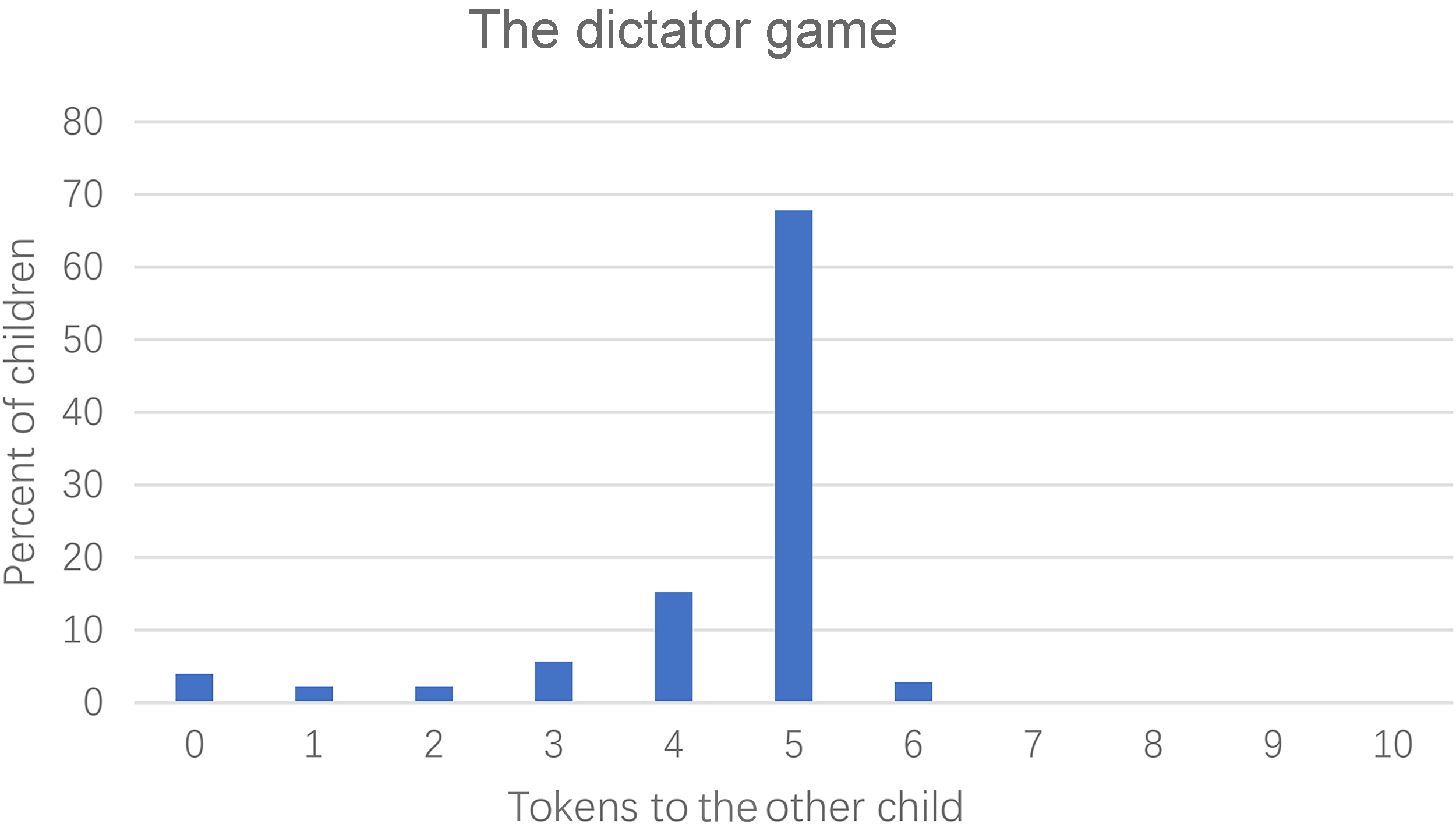
Decisions made in the dictator game.
In the spectator game, participants had to make an allocation decision, but they would not receive economic benefits from the decision; thus, they did not need to consider the balance between their self-interest and fairness. We assumed that the children would implement what they viewed as fair allocation. Their decisions in the spectator game demonstrated fairness preferences in different predefined scenarios. The allocations could show the degree of inequality acceptance of five-year-old children. In this study, we found that children showed a preference for equality in luck and efficiency situations but could accept inequality in the merit situation.
In the luck treatment, we counted the number of tokens given to the lucky child and the proportions of participants who made each possible decision. Figure 2 summarizes how children in the luck treatment chose to allocate the tokens. Here, we observed a spike at the 5–5 allocation again, and approximately 45% of the participants preferred this allocation, which shows a tendency toward equal distribution.

Decisions in the luck treatment of the spectator game.
For the merit treatment, we counted the number of tokens given to the child who did well and proportions of participants who made each possible allocation choice. Figure 3 provides an overview of the decisions made by the participants in the merit treatment of the spectator game, in which only 10% of the participants chose equal allocation and 90% chose to give more tokens to the child who did well in the tasks. There was a tendency for most participants to accept the unequal allocation and treat the unequal distribution as a reward for those who did better in the tasks.
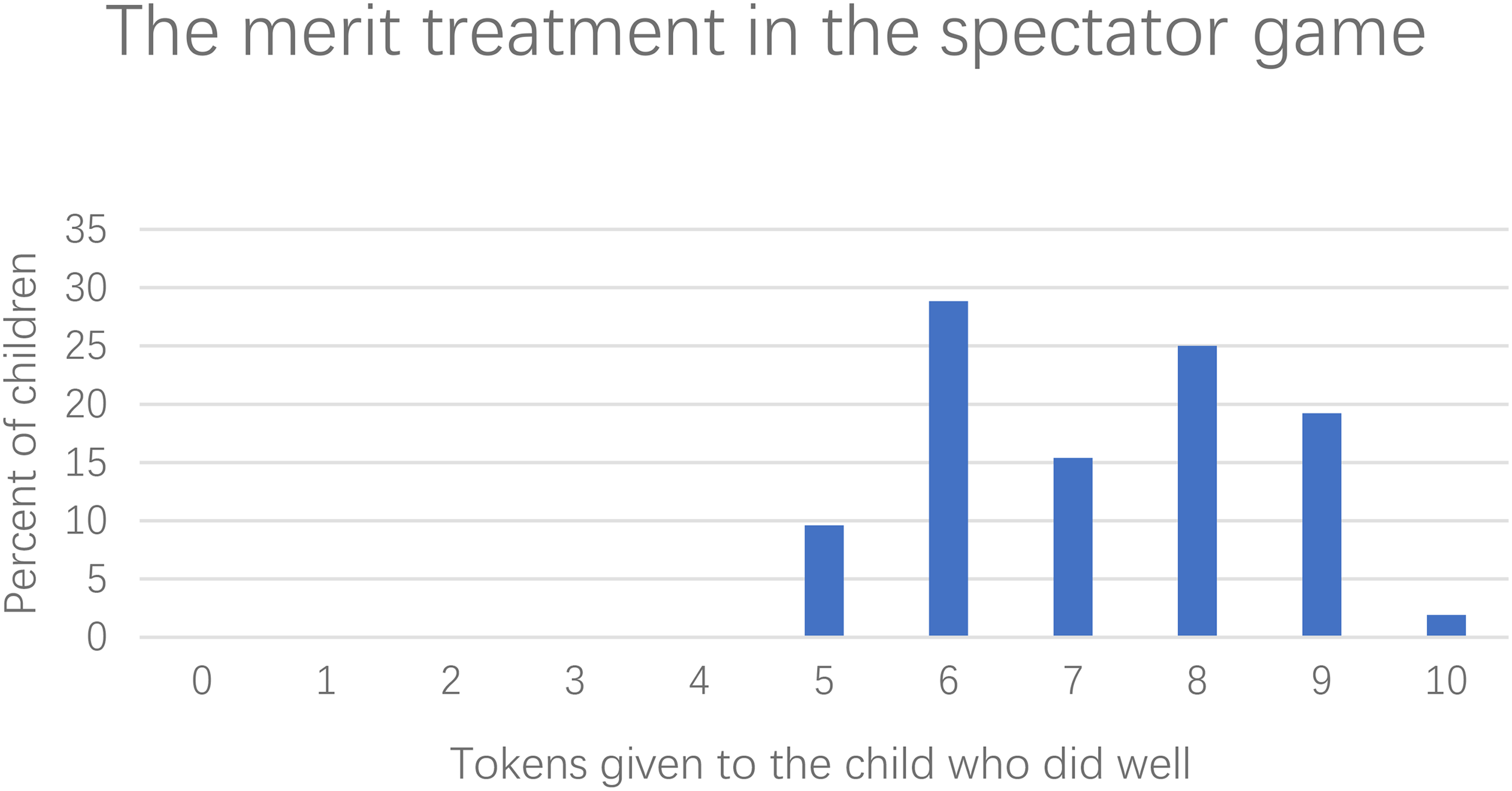
Decisions under the merit treatment in the spectator game.
In the efficiency treatment, the participants needed to decide between two distributions: (6, 1) and (2, 2); there was a cost for redistribution. Figure 4 shows the descriptive statistics. If the participant chose the (2, 2) allocation, then the share given was 0, showing that the spectator cared more about fairness and was willing to sacrifice some benefits for an equal outcome. If the participant chose the (6, 1) allocation, then the share given was expressed as 0.5. Choosing the (6, 1) allocation indicates that the child cared more about efficiency and benefits than equity.
Figure 4 shows the decisions made by the participants in the efficiency treatment. About 43% of participants preferred efficient but unequal allocation, while 58% chose inefficient but fair allocation and were willing to pay the cost of redistribution. Therefore, in the efficiency treatment, most students prioritized equity over efficiency.
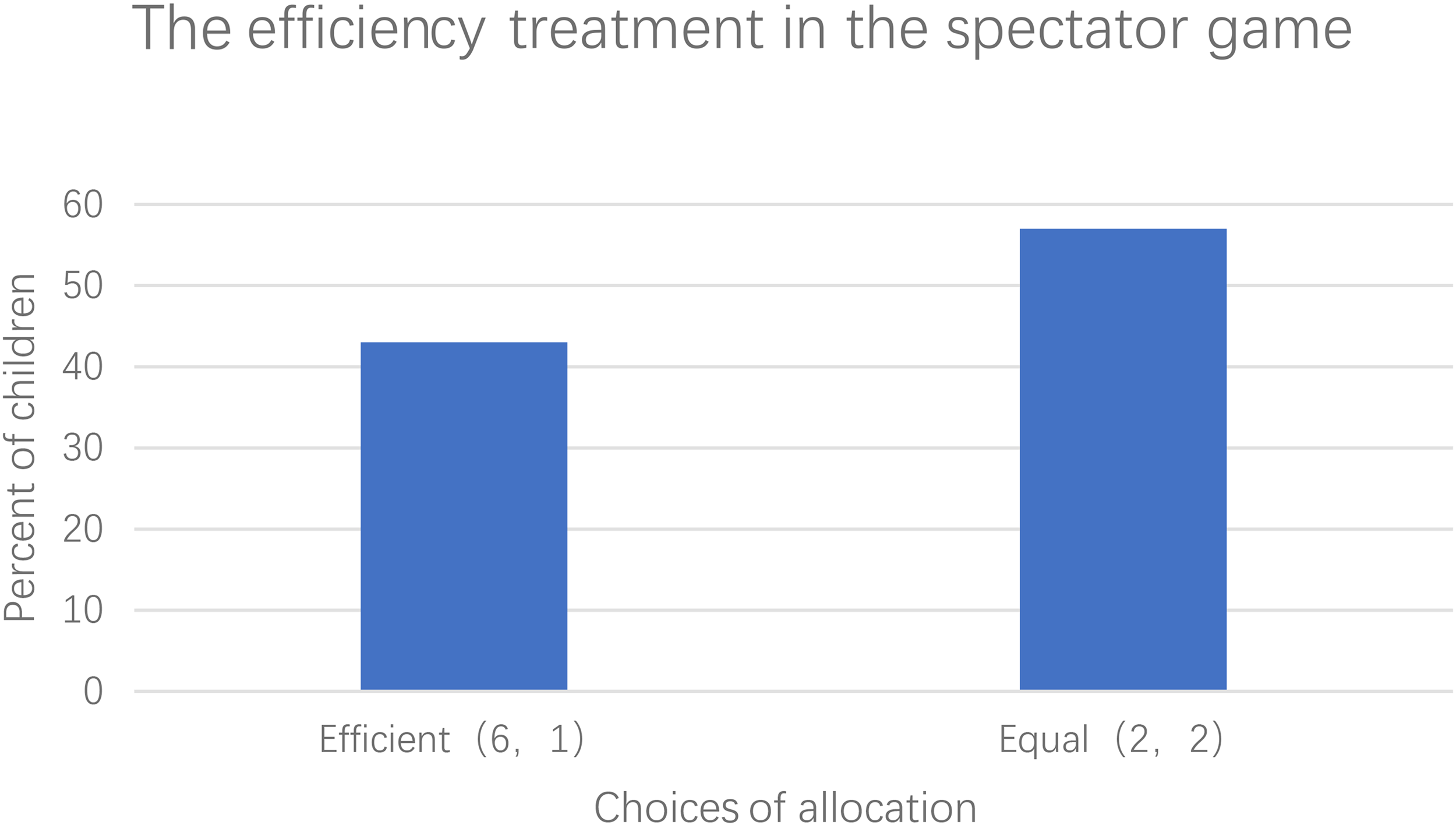
Decisions under the efficiency treatment in the spectator game.
The average share given in each of the three spectator game treatments is shown in Figure 5. When the value of the share given is higher, the allocation between the two children was more unequal; when the share given is closer to zero, the child chose a more equal allocation.
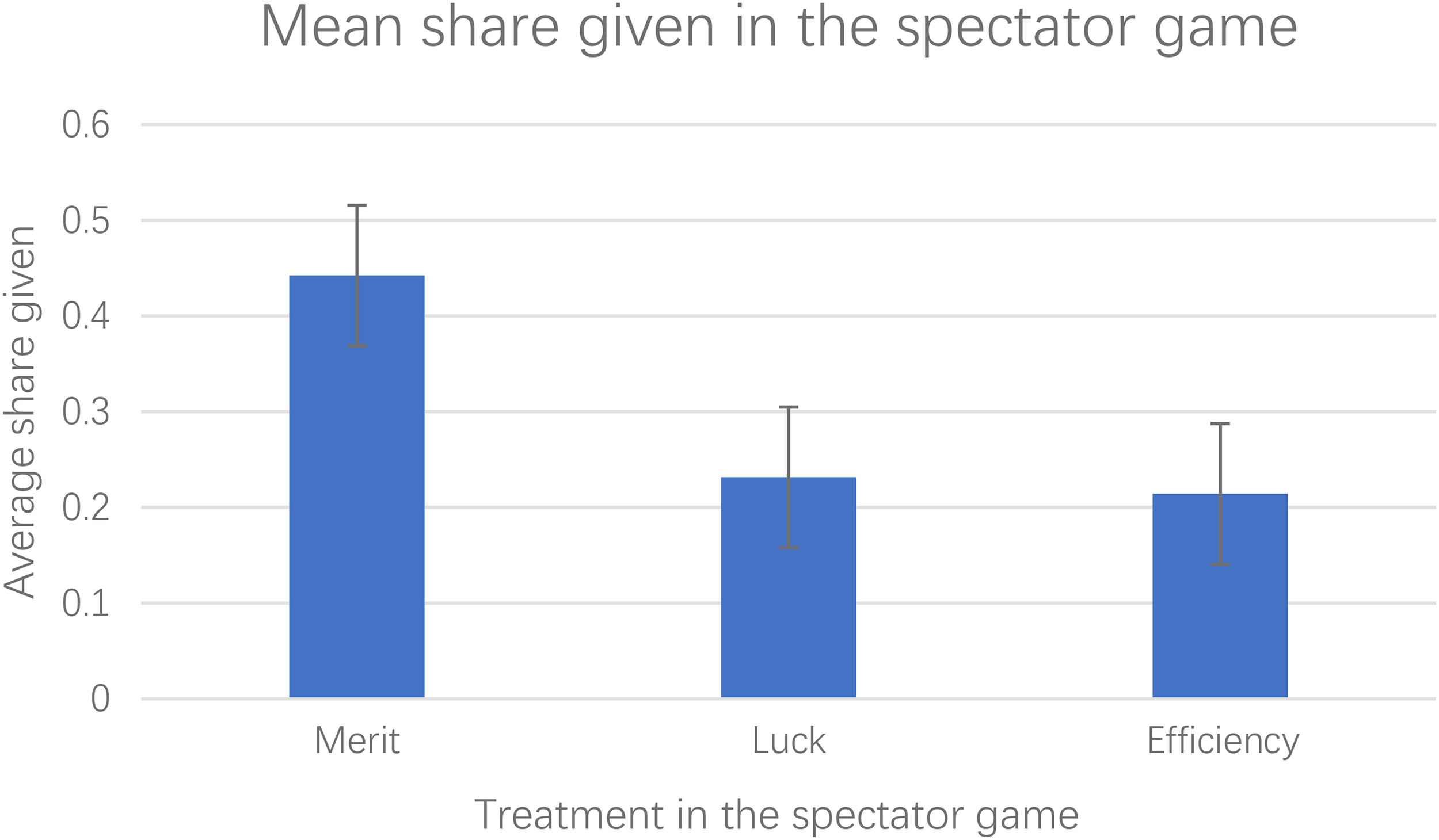
Average share given in the three treatments of the spectator game.
As seen in Figure 5, the average share given in the merit treatment was 0.44, which means that most children chose to give eight tokens to the child who performed well in the tasks. In contrast, the average shares given in the luck and efficiency treatments were 0.23 and 0.21, respectively. We observed significantly more inequality acceptance when the difference in allocation was due to merit rather than luck, and considerations of efficiency did not make spectators more likely to accept inequality.
Factor analysis
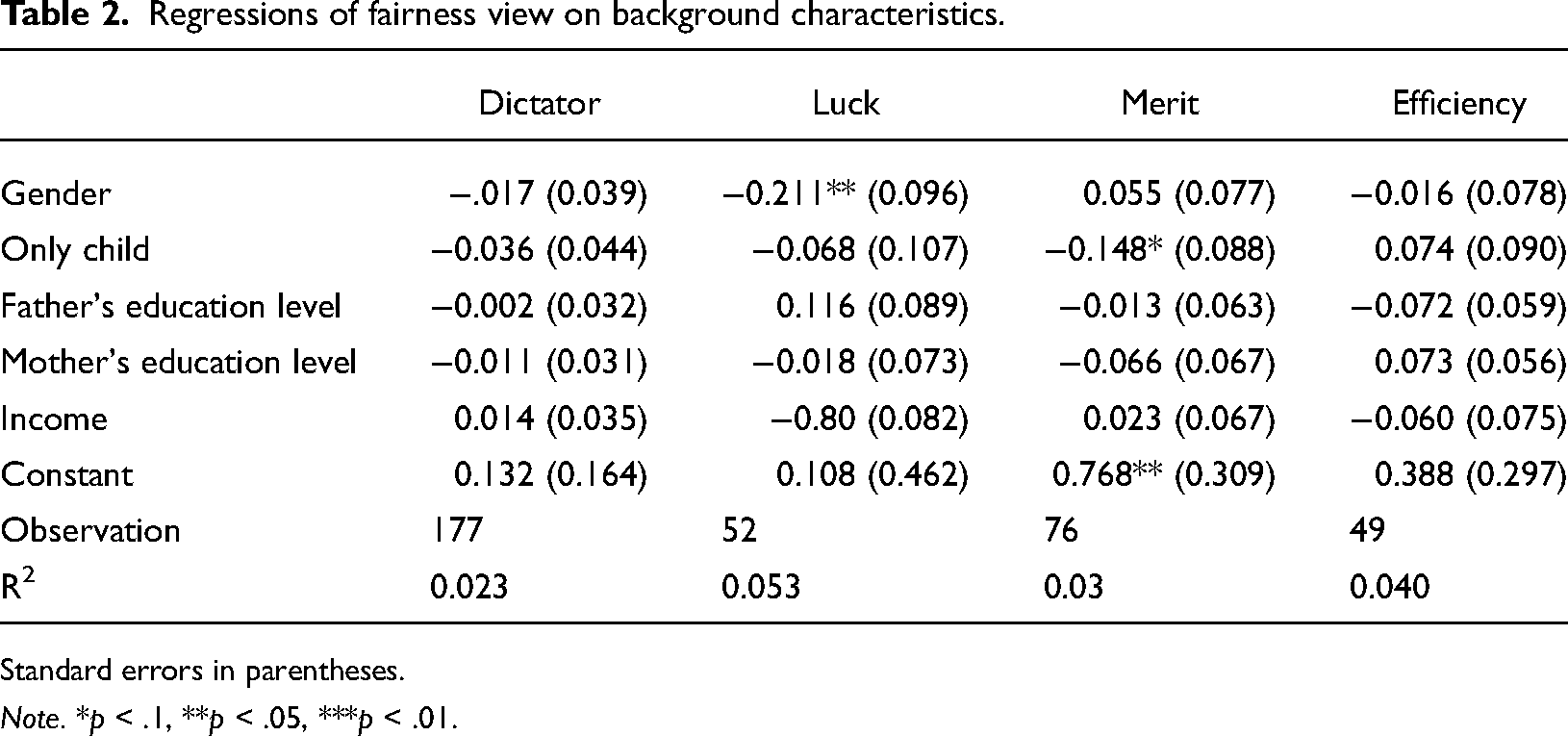
To analyze the relationship between family background and the child's fairness preference, we examined the association between family background information and fairness preference in the dictator and spectator games. The results are presented in Table 2. No statistically significant difference was observed between the groups in the dictator game; in the spectator game, the gender factor affected children's fairness preferences in the luck treatment, and the “only child” factor affected the fairness views in the merit treatment.
Regressions of fairness view on background characteristics.
Standard errors in parentheses.
Note. *p < .1, **p < .05, ***p < .01.
First, five-year-old preschoolers showed a preference for equality in the dictator game. By analyzing the relationship between family background information and the allocation results of the dictator game, we observed that children's fairness preferences were not significantly affected by the factors of “gender”, “only child”, “father's education level”, “mother's education level”, and “income” (see Table 2). Gender and family background did not affect children's self-interest or sense of fairness. All children who participated in the dictator game showed a strong preference for an equal distribution of tokens. This general egalitarianism is consistent with the results of recent studies on the development of children's fairness preferences.
Second, a significant group difference was observed in the luck and merit treatments. The luck treatment included 76 children—33 boys and 43 girls, who treated luck differently. In Figure 6, we report the allocation results of the luck treatment by gender. Column 2 of Table 2 represents a significant difference in fairness preference under the luck treatment between different genders (p < .05). According to Figure 7, more than 50% of boys and 37% of girls who participated in the luck treatment chose to equally split the tokens. This may indicate that boys and girls react differently to the luck treatment, with boys being more reluctant to accept inequality allocation due to luck, and girls being relatively more willing to accept inequitable distributions assigned by lottery results.
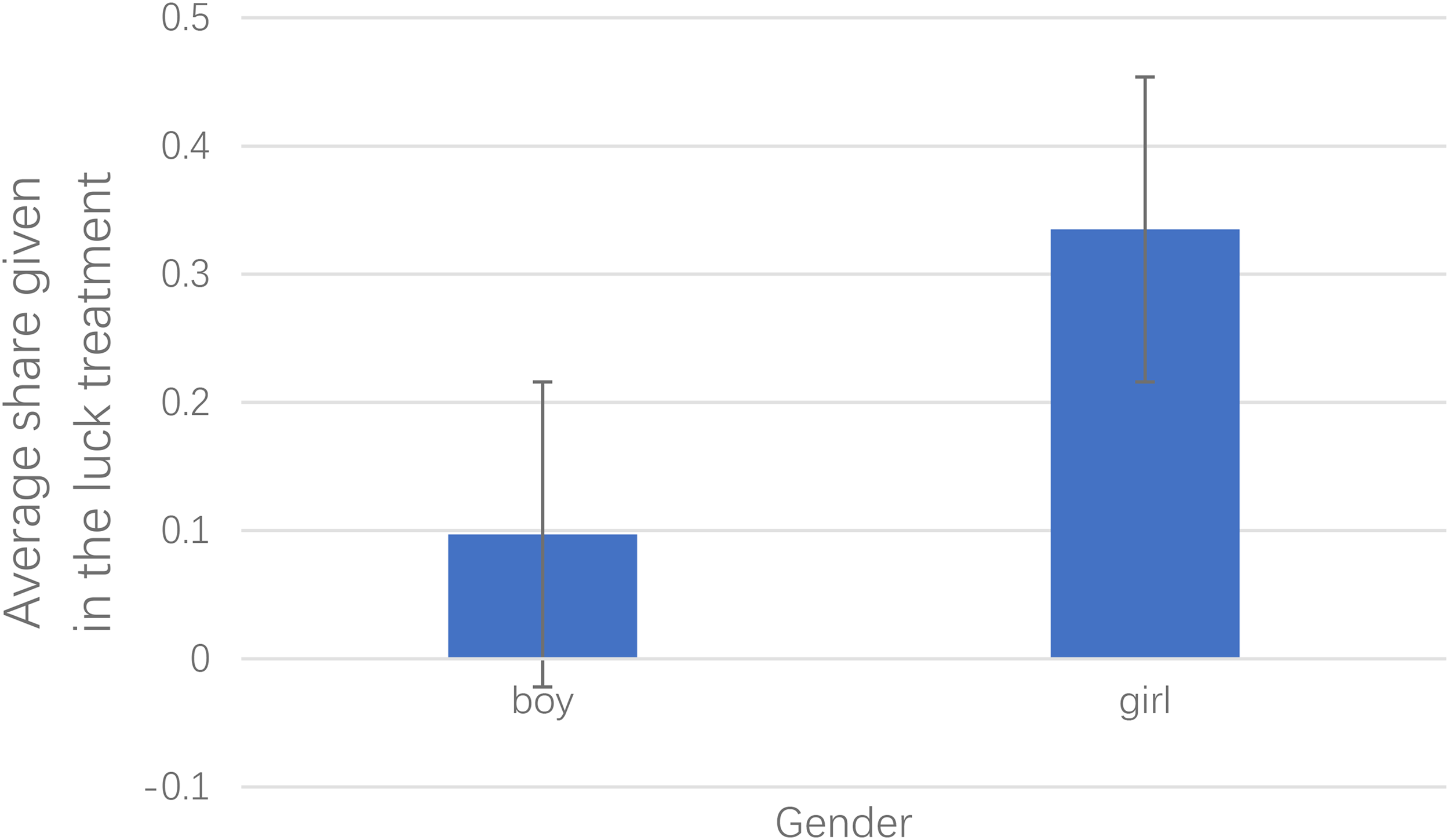
Effect of gender on the luck treatment.
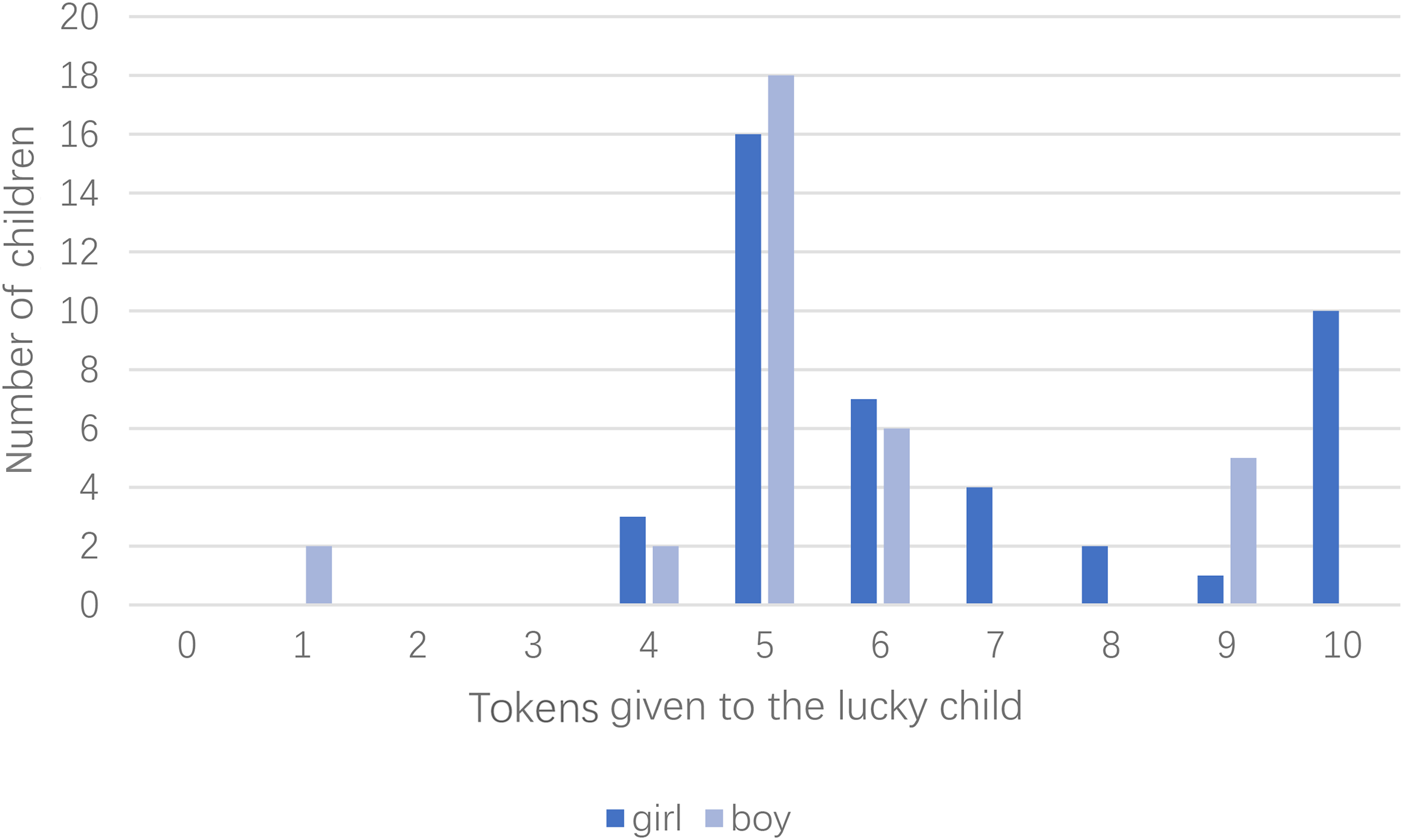
Decisions in the luck treatment by gender.
In the merit treatment, the only-child factor had a significant influence on the results. A total of 52 children participated in the merit treatment of the spectator game, 38 of whom were only children and 14 of whom lived with siblings. We found a significant difference (p < .1) in the merit treatment allocation results between only children and children with siblings in the family (see column 3 of Table 2). Only children are more likely to accept unequal allocation than children with siblings. We observed that only children cared more about merit and wanted to distribute more tokens to the child who performed better in the tasks, while children with siblings were more inclined to redistribute and narrow the gap between tokens received by the children who completed the tasks well and those who did not (Figure 8).
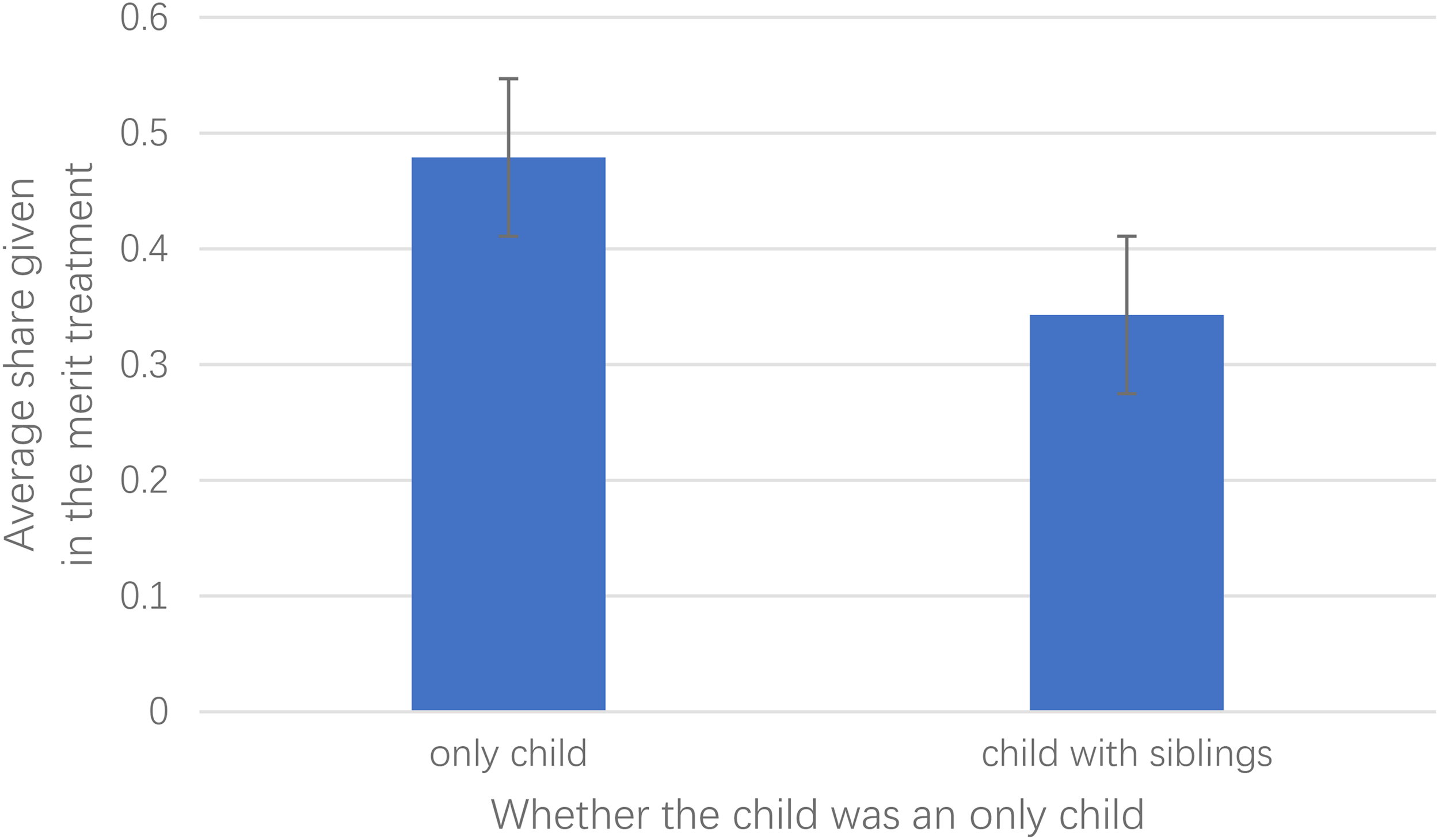
Effect of the only-child factor on the merit treatment.
However, we observed that the education level of parents and family income did not affect the fairness views of preschoolers (see Table 2), and no significant difference was found in dictator and spectator games between children from families with different levels of parental education and family income.
Discussion
In this paper, we examined the development of fairness preference among five-year-old children from four kindergartens in Shanghai. We observed children's fairness preference in a dictator game, studied their distribution decisions in luck, merit, and efficiency treatments of a spectator game, and analyzed the effects of their family background on their distributive behavior.
First, the results from the present study indicate that most of the children showed a preference to distribute the ten tokens equally by giving the other child five tokens in the dictator game. This finding is consistent with previous studies in which five-year-old children showed a preference for equal allocation (Bernhard et al., 2020; Blake & McAuliffe, 2011). Most participants did not show significant self-interest but were willing to share equally with the other child. This finding is slightly different from McAuliffe et al.'s (2017) observation that children under seven years of age could understand fairness but still engage in selfish distribution behavior. The findings of this study suggest that some five-year-olds already have knowledge of fairness and can demonstrate fairness behavior consistent with perception.
This egalitarianism allocation behavior of some five-year-old children may be a result of preschool education. Previous studies have pointed out that formal early education experience plays an important role in shaping fairness preference and fairness behavior (Blake et al., 2015). Children who attend full-time preschool have relatively weaker self-interest than those in parenting programs, and they are more likely to choose to distribute resources equally between themselves and others (Cappelen et al., 2016). In this study, all participants attended full-time preschool and showed a strong tendency toward egalitarianism in the dictator game, which may be a result of the preschool education experience. This finding may support the view of Callaghan and Corbit (2018) that early education experience can boost children's compliance with fair behavioral norms.
Second, five-year-old children can accept unequal distribution due to differences in individual merit but refuse the inequality caused by luck and efficiency. In the spectator game, participants accepted unequal allocation when more tokens were given to children who performed well, which is consistent with existing research findings that children consider merit a factor in inequalities (Schmidt et al., 2016). The finding in the efficiency treatment is also similar to Bernhard et al.'s (2020) observation that five-year-olds preferred to pay a cost to intervene in unequal distribution; however, unlike the observation in Dunham et al.'s (2018) finding, the five-year-olds in this study could not accept unequal distribution caused by impartial procedures, such as allocating by lottery.
In terms of the family background factor effect, we did not find an effect of family socioeconomic status on children's fairness behavior. Both in the dictator and spectator game, no statistically significant differences were observed in the allocation behaviors of children from different socioeconomic families. This result supports Benenson et al.'s (2007) finding that family SES has no effect on preschoolers’ equal allocation behavior. However, this finding is different from Chen et al.'s (2013) observation that fairness behavior declines as family SES levels increase. Further research is needed to analyze the effects of family SES on preschoolers’ fairness preference and behavior.
In the merit treatment of the spectator game, we found a systematic difference in the redistribution behavior between only children and those with siblings. We observed that the unequal allocation in which the well-performing person got more was more acceptable to only children, while children with siblings were more inclined to reallocate between the better- and worse-performing children. In other words, in this study, participants with siblings showed a greater tendency toward equality in the merit treatment of the spectator game. This result is consistent with the finding that having siblings facilitates enhanced equity concerns in children (Lu & Chang, 2018; McAlister & Peterson, 2013).
In the luck treatment of the spectator game, a significant difference was observed in the redistribution behavior of boys and girls. The results indicated that girls were more likely to accept unfair distribution due to fair procedures, such as using lotteries and coin tosses, while boys were less likely to accept such unfair distribution and preferred equal redistribution. This finding differs from the observation that girls are less likely to tolerate unequal distributions than boys (Almås et al., 2020). However, further research is necessary to investigate the effects of family SES, gender, presence of siblings, and other sociodemographic characteristics on children's fairness behavior in different spectator game treatments.
This study has some shortcomings. First, the experimental design was mainly based on the theory of psychological and behavioral economics. The experimental setting is different from daily life and the real experiences of children and thus cannot fully represent their fair views and preferences. In a real school setting, students may not show the same fair behaviors that they did in this experiment. Second, all participants were recruited from public preschools located in one region. Further studies should expand the sample size and enhance the representation of children from different regions and family backgrounds. Third, further research is necessary to analyze the effects of family SES level, gender, and presence of siblings on children's decisions in spectator games with different treatment contexts to improve the understanding of young children's fairness preference and fairness behavior.
Footnotes
Contributorship
Zhongjing Huang was responsible for writing the conclusions and policy recommendations. He was the Principal Investigator of the project, responsible for implementing the experiment and contributed to the theory of the article and methodology for analyzing the experimental data. Lan Shi participated in the experimental data collection and was responsible for writing the literature review, research methodology, research findings, and responding to the reviewers’ comments. Jie Wu wrote the article abstract, participated in the experimental data collection, and was responsible for the experimental ethics application.
Declaration of conflicting interests
The authors declared no potential conflicts of interest with respect to the research, authorship, and/or publication of this article.
Ethical statement
This study and the informed consent letter were approved by the University Committee on Human Research Protection of East China Normal University. Informed consent was obtained from all participants.
Funding
The authors disclosed receipt of the following financial support for the research, authorship, and/or publication of this article: This work was supported by the Shanghai Peak Discipline Construction Project.