



Abstract
Purpose
The new Finnish National Core Curriculum for Early Childhood Education and Care (2018) strongly highlights pedagogical knowledge and practice, demanding teachers to develop their pedagogical thinking, evaluation, judgment, and operating culture. Since ethics is viewed as vital characteristics of the teaching profession, our objective is to make these complex ethical issues more visible to be subject to democratic discussion and change.
Design/Approach/Methods
The framework comprises a broad theory base of codes of ethics and professional codes of ethics of teaching. The research materials were national curricula of early childhood education and care (ECEC)- and pre-primary education. The eight-step qualitative analysis process was applied to identify and shed light on the codes of ethics laying the foundations for purposeful and ethical early childhood education (ECE) teacher.
Findings
The results indicate that through both theoretical lenses, the Finnish ECEC curricula comprise several ethical codes. For the future purposeful ECE teachers as ethical professionals, the results raise questions for further discussion. Particularly, issues related to the ethics of care, intellectual freedom, inquiry stance, and professional competence, and diversity may further enhance our ECEC curricula.
Originality/Value
During recent decades, the ethics concerning ECEC have gained increasing global attention. Particularly, there is a large international consensus considering ECEC as a prominent policy equalizing opportunities.
Keywords
Introduction
During recent decades, the ethics of early childhood education and care (ECEC) has gathered increasing global attention. In particular, recognizing ECEC as a prominent policy to realize equality of opportunities has gained widespread international consensus (e.g., Paananen et al., 2019; Penn, 2002, 2005). In this context, high-quality early learning opportunities have been established to positively affect children (e.g., Burchinal et al., 2010; Sylva et al., 2006). Western research literature continuously connects the quality of early childhood education (ECE) with improved school-readiness skills, especially in reading and mathematics (e.g., Burchinal, 2017; Burchinal et al., 2015). In some European countries, the last 15 years of ECE policy have led early childhood institutions to increasingly place more emphasis on enhancing children’s academic skills than on play and general well-being (Marschall, 2019). However, quality is a value- and cultural-driven concept (e.g., Grammatikopoulos et al., 2015; see also Pellegrini & Vivanet, 2021), and child development is culturally embedded (e.g., Super & Harkness, 2002). Against this backdrop, we consider the prevailing influences and values affecting the content of Finnish ECE (Kelly, 2009) in this article.
Two different traditions have emerged from the ECEC literature: the Nordic tradition and its “social pedagogical approach” and the French–English tradition, which adopts an “early education approach” also known as “readiness for school tradition” (e.g., OECD, 2006). As per the Nordic tradition, research has identified two salient principles, namely, the child-centeredness of ECEC and the welfare model of Scandinavian countries. Accordingly, as part of Scandinavian educational policies, ECEC services have been developed for all families (Einarsdottir et al., 2015; Karila, 2012; Kristjánsson, 2006). Leveling out the differences caused by varying living conditions and providing equal developmental resources have been among the central goals of Nordic ECEC. In particular, the child-centeredness and good childhoods of the Nordic ECEC ideal promulgate equality, democracy, freedom, participation, collaboration, solidarity, and emancipation (Karila, 2012; Kumpulainen, 2018; Wagner & Einarsdottir, 2008).
To elucidate value principles, Einarsdottir et al. (2015) studied how Nordic early childhood educational policies have framed value education in preschools, with themes of democracy, care, and competence. They found notable variations in how areas of ethical content are implemented in curriculum documents. For example, sections on ethics, religions, and philosophy were found only in the Finnish and Norwegian curricula. Similarly, Christianity is mentioned only in Norwegian and Icelandic curricula. The Finnish curriculum promoted the worldview of parents and their preference for their children's religious education. A holistic view of learning through the active role of children is addressed in the curriculum documents of all Nordic countries. More pertinently, the concept of care dominated in the Finnish National Core Curriculum for Early Childhood Education and Care, which was not the case in other Scandinavian countries. Furthermore, the concept of democracy is not mentioned in Finnish documents, although it has been implemented in terms of children's participation and rights. Concerning Finland, in particular, the researchers stressed the need to carry out further studies and discussions about democratic values in ECE (Einarsdottir et al., 2015).
In recent decades, Finnish ECEC has been under the spotlight, especially due to the renewed ECEC legislation and the pedagogical changes in the National Core Curriculum for Early Childhood Education and Care. Renewed ECEC legislation has redefined the structure of staff and their professional titles at early childhood centers. The Finnish National Core Curriculum for Early Childhood Education and Care (FNAE, 2018, p. 7) states: “The purpose of the national steering of ECEC is to create equal preconditions for the holistic growth, development, and learning of children participating in early childhood education and care.”
Similar to the Nordic tradition, Finnish ECEC espouses the sociocultural view that children's growth occurs through interaction and communication in shared activities with peers and adults. Thus, play, relationships, and participation are reiterated with an understanding of the significance of children's ownership of their own learning. The Finnish “educare” model appreciates and values basic care situations as opportunities for pedagogical learning, in addition to learning through play (FNAE, 2018). As a part of ECEC, “pre-primary education and basic education form an entity proceeding consistently in relation to a child's growth and learning and build a foundation for life-learning” (FNAE, 2014, p. 14).
Although common Nordic ECEC principles and values have elicited consideration and scholarly attention, only a few studies have articulated these principles of ethics and values in Nordic and—in particular—Finnish ECEC documents and investigated how these values, grounded on ECEC curriculum documents, are implemented in ECEC practices. Likewise, not many studies have examined the values or ethical issues in the Finnish ECEC, and none has analyzed the present ECEC and pre-primary education curriculum documents. Therefore, the purpose of this study is to identify and elucidate the ethical principles and guidelines defining Finnish ECEC practices in accordance with the official curriculum documents based on the Convention on the Rights of the Child (United Nations, 1989) and related legislation. Considering the assertion of Schwimmer and Maxwell (2017) that openness of meaning, space for dissidence, and avoidance of moralistic language should be sought as conditions for a code of ethics, the research aim of this paper is twofold: first, to explore how ethical codes and regulations are stated in Finnish guidelines for ECEC and pre-primary education (FNAE, 2014, 2018), and second, to study the guiding national documents as codes of professional ethics.
Theoretical background
The difference between the terms “morals” and “ethics” is complex but significant. Morality indicates whether a way of behaving is right or wrong (Ellemers et al., 2019; Mahoney, 2008), while ethics is about “making and defending moral choices” (Hanssen, 2001, p. 247). This implies that ethics focuses on behavior and attitudes, such as acting, evaluating, and considering appropriate actions (e.g., Sanger & Osguthorpe, 2011). Ethics is also generally understood as a set of socially accepted rules and standards premised on the values of the society of the profession (Dahlberg & Moss, 2005). Professionals, institutions, and societies often consider ethical behavior to be a desirable universal trait guiding the behavior of all human beings (MacNaughton & Hughes, 2008). However, Foucault and Gordon (1980), as a critic of this universalistic perspective, contended that a universal understanding of reason would entail the domination of one particular perspective, thus suppressing the pluralism of other cultures (see also Lyotard, 1984). Differentiating the ethics of care from universalistic ethics, Sevenhuijsen (1998), among others, opined that the former denotes concern about relationships and responsibilities, bounding it to contextual situations as a moral activity that requires reflective judgment. From this perspective, “the ethics of care posits the image of a ‘relational self,’ a moral agent who is embedded in concrete relationships with other people” (Sevenhuijsen, 1998, p. 55; see also 2013). As ethics and morals are often used interchangeably, it would be pertinent to understand that (a) morals such as individual beliefs, understandings, or judgments of actions are acceptable according to professional communities/social norms; (b) morality indicates what is the right and wrong way to behave; and (c) ethics, including collective rules or principles, guide or govern a profession's preferred, or accepted behavior.
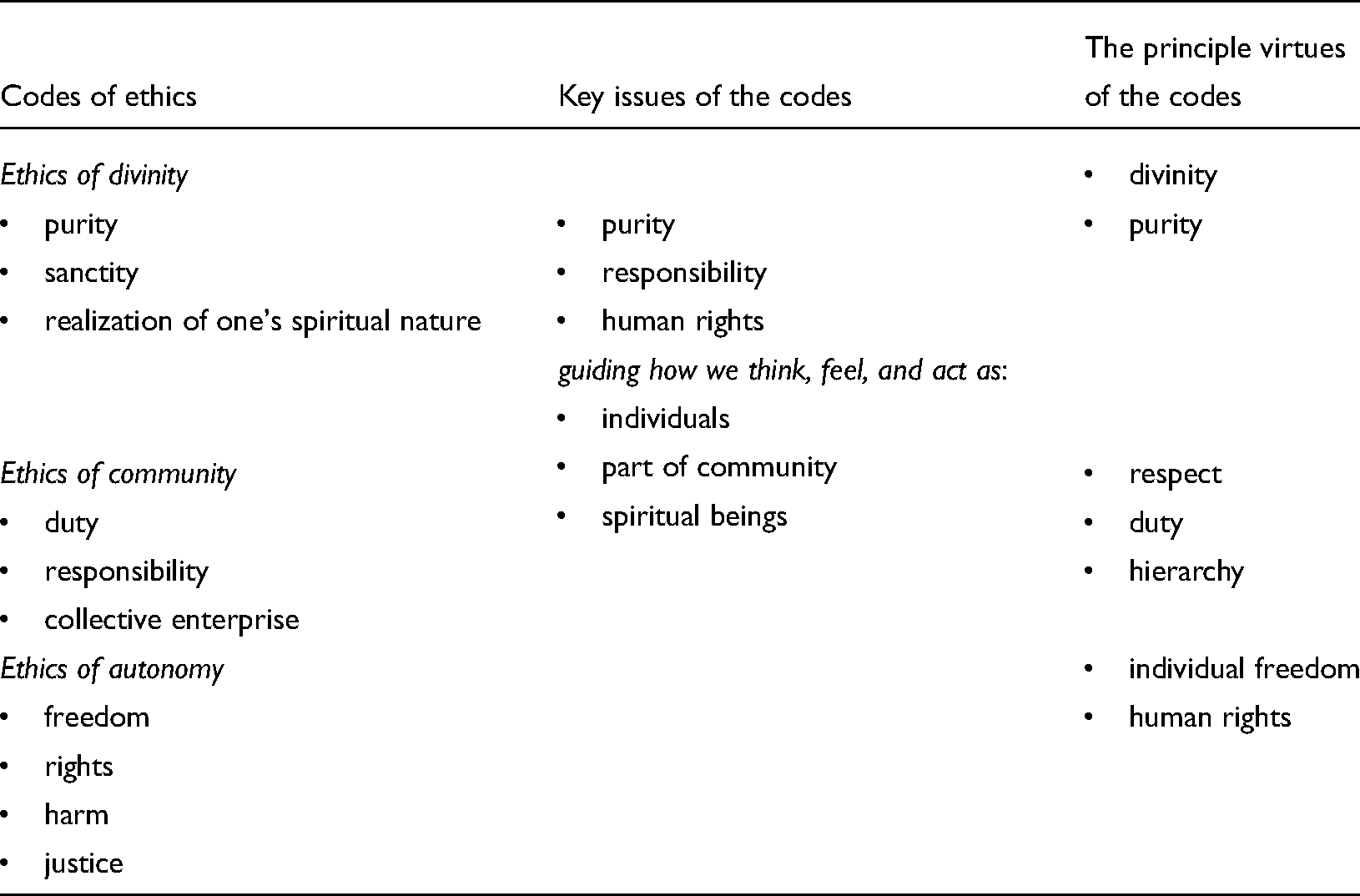
Shweder and colleagues (Shweder et al., 1997; Shweder & Haidt, 1993) argue that Western culture and thought entail three major codes of ethics (Table 1). Toivonen (2014) points out that traditionally, the most central issues in the ethical codes have been purity, duty, and rights, all of which should be viewed as interlaced and mutually respected. It is possible to attain this interconnectedness and respect by interpreting the interaction between personal ethical growth and dialogic education aiming at the good life and ideals of becoming self (Toivonen, 2014).
Major codes of ethics by Shweder and Colleagues (Shweder & Haidt, 1993; Shweder et al., 1997).
Early childhood teachers as implementers of values and principles of the curriculum
To serve the best interests of children (e.g., Husu & Tirri, 2001; Shapira-Lischinsky, 2010), teaching involves agentic moral action in classrooms and communities (Buzzelli & Johnston, 2013). Besides pedagogical skills, new teachers need to develop knowledge and understanding that enable them to navigate ethical demands (Orchard et al., 2016). Numerous researchers have defined teaching and education as a moral endeavor (e.g., Hanssen, 2001; Sanger et al., 2013; Zubay & Soltis, 2005) with an understanding of their moral basis (e.g., Campbell, 2007; Evans, 2001; Kelchtermans, 1996).
In this context, ethics is frequently viewed as one of the vital attributes of the teaching profession (Campbell, 2008). Professional ethics, working in the best interests of the children and building appropriate relations with parents and colleagues, have often been presented as one of three dimensions of teacher professionalism (O’Neill & Bourke, 2010).
Perceptions of right and wrong are based on values, and ethics is frequently viewed as one of the vital characteristics of the teaching profession (Campbell, 2008). Professional ethics, working in the best interests of the children, and conducting appropriate relations with parents and colleagues, have often been presented as one of three dimensions of teacher professionalism (O’Neill & Bourke, 2010).
Teaching is a normative enterprise because it is apt for appraisal according to measures or standards of goodness or badness, efficiency, or inefficiency (Carr, 2000). Besides, occupational knowledge and professionalism include compliance with standards of behavior, processes to hold members of the profession to account, and commitment to what the profession regards as morally right or good in terms of ethical conduct (O’Neill & Bourke, 2010). The professional ethics and values of teaching underline teachers’ own ethical conduct and provide an excellent grounding for their professional development with goals to be a purposeful teacher (Tirri, 2018). In Finnish teacher education, the growing diversity among children places expectations on teachers to meet the various needs of diverse learners when teaching in heterogeneous and multicultural classrooms, which can be onerous in more ways than one (e.g., Lavonen, 2020). The ethical code of diversity competence promotes responding to individual differences in learning to support and respect the dignity of each child. Awareness of the cultural context means interacting sensitively across multicultural contexts (ethnic, lingual, religious, age, gender, sexuality, and social class) (Bennett, 2009). Built on ethical values, attitudes, and ethnorelative views, intercultural competency is manifested in communication concerning diverse intercultural situations (Deardorff, 2006). The demand for new members’ socialization is also included in the professional ethics of teaching (Schwimmer & Maxwell, 2017).
Teachers’ expertise, including their familiarity with the curriculum, allows them to transform the curriculum from text to an independent entity (e.g., Doyle, 1992; Shulman, 1987). Sahlberg (2011) opines that in Finland, teacher education is responsible for ensuring that all educators have well-developed curriculum knowledge and planning skills. For example, Schwab (1973) argued that “scholars, as such, are incompetent to translate scholarly material into the curriculum.” Scholars generally possess one type of discipline but lack four others that are equally indispensable: learners, the milieus, teachers, and curriculum making” (Schwab, 1973, p. 501).
In addition to formal knowledge, teachers’ practical knowledge is based on acquired experiences; a teacher can choose the appropriate course of action by following her/his concept of what is good (Buchman, 2013; Elbaz, 1981; Husu, 2002). Moral functioning, making judgment, and the willingness to put moral decisions into practice rely upon four components: moral sensitivity, moral judgment, moral motivation, and moral character (Rest et al., 1999). Moral motif refers to a central ethical value that guides an agent in a situation involving morality (Oser, 2013). Dominant interpersonal norms in the operational culture of a community may create ethical tensions and pose potential threats to collegial relations, shared practices, and the success of a professional community (Campbell, 2005). Teachers often state that they want what they believe to be the best interests of the child; however, their interpretations may hold perceptions that are different from their colleagues or parents, thus resulting in schisms concerning moral judgments (e.g., Husu & Tirri, 2001; Tirri & Husu, 2002; see also Cherrington & Dalli, 2019).
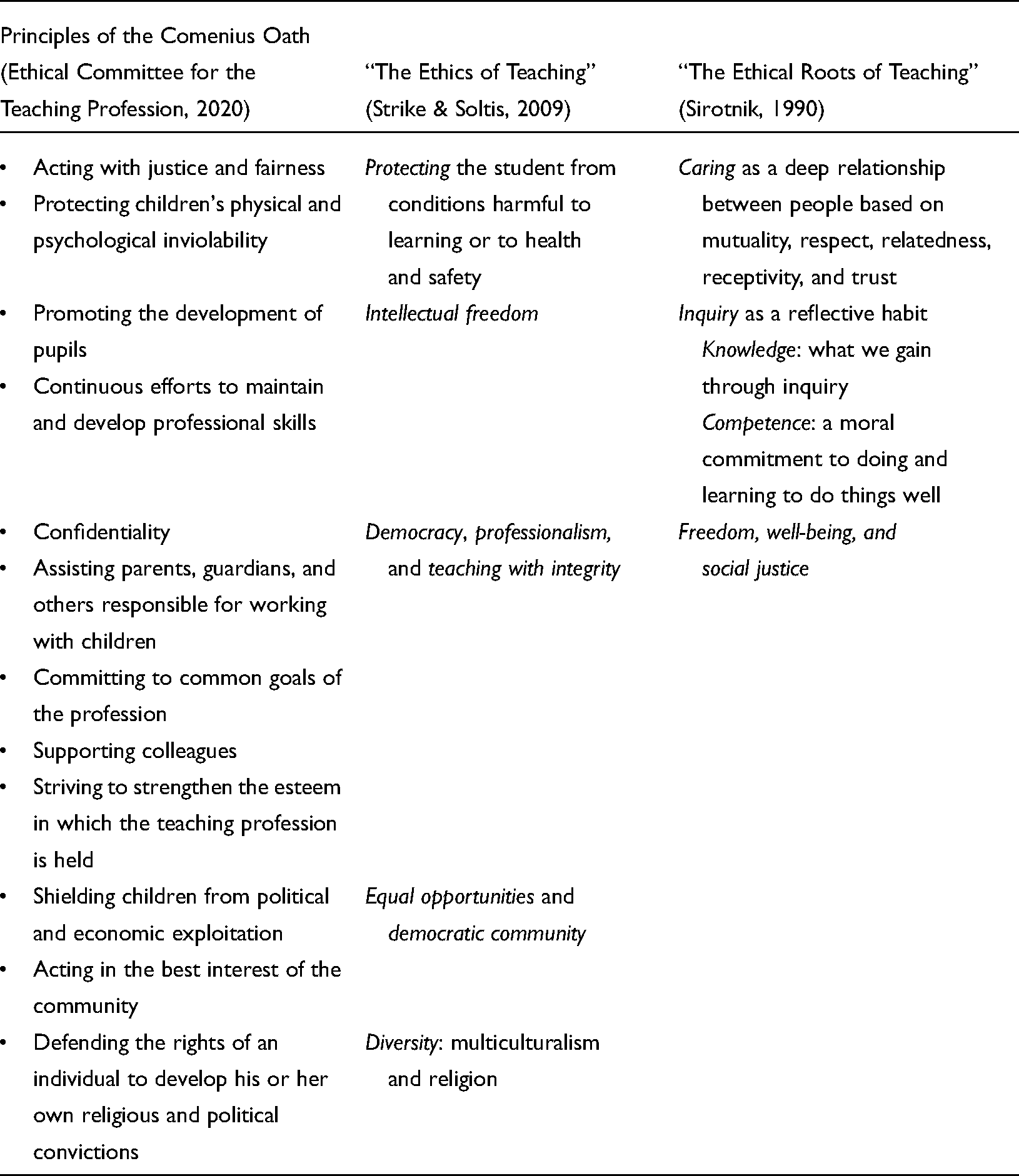
Relational tensions of an ethical nature occur when a teacher feels helpless against the norms of collective pressure not to range against colleagues, especially when considering the needs or welfare of a child (Campbell, 2005; Melasalmi & Husu, 2018). Therefore, teachers’ daily work involves knowing ways of making appropriate decisions within pedagogically challenging relationships (Husu, 2001). Since the 1980s, ethics have been introduced into the standard curricula of professions such as medicine and law, and they are now relatively commonplace. However, existing preparation programs for teachers do not provide many opportunities for education in ethics (e.g., Orchard, 2016). To demonstrate this paper's theoretical understanding of the ethical foundation of the teaching profession, we present the following framework (Table 2) comprising the principles of the Comenius’ Oath (Ethical Committee for the Teaching Profession, 2020), which are aligned with Strike and Soltis's “The Ethics of Teaching” (2009) and Sitronik's “The Ethical Roots of Teaching” (1990).
Professional ethical codes for teaching modified based on principles of the Comenius’ Oath (Ethical Committee for the Teaching Profession, 2020), Srike and Soltis (2009), and Sirotnik (1990).
Research context and design
Finnish ECEC & pre-primary education context and policy
In Finland, ECEC is based on the Act of Early Childhood Education and Care (540/2018) and the National Core Curriculum of Early Childhood Education and Care (FNAE, 2018). The National Core Curriculum of Pre-primary Education (FNAE, 2014) is based on the Basic Education Act (628/1998). Via this definition, Finnish ECEC is defined as a planned and goal-orientated entity of education, upbringing, and care with an emphasis on pedagogy. Both national core curricula promulgate the United Nations Convention on the Rights of the Child (1989) to ensure that Finnish local authorities are responsible for offering ECE and that care is available to all children (ten months to six years) in families that are willing to participate in ECEC. Only pre-primary education for six- to seven-year-olds, which precedes compulsory education, is obligatory for all children of that age group in Finland. The Finnish ECEC and pre-primary curricula promote a holistic and sociocultural conception of learning in which children grow, learn, and develop by interacting with the people nearest to them as well as in their immediate learning environment. Children's holistic learning occurs by playing, exploring, moving, and expressing themselves through activities based on the arts (FNAE, 2018, p. 22). According to the Finnish National Core Curriculum for Early Childhood Education and Care, ECEC establishes the edifice for children's transversal competencies comprising knowledge, skills, values, attitudes, and will. As such, the need for transversal competencies stems from changes in the surrounding world. In addition, their development promotes children's growth as individuals and as members of their community for the rest of their lives (FNAE, 2018, p. 24).
Both pre-primary and ECEC core curricula explicate principles in a generic manner and leave more detailed practices, such as planning and implementation, to teachers. For this reason, these curricula have adopted an approach that allows teachers to use their professional knowledge and knowledge of children and context. When considering the quality of Finnish ECEC, the pedagogical competence of the teacher to plan, implement, and develop both curriculum and operational culture are perceived to be a critical factor. In Finland, the National Core Curriculum for Early Childhood Education and Care (FNAE, 2018) strongly underscores pedagogical knowledge and practice, which demands that teachers develop their pedagogical thinking, evaluation, judgment, and operating culture.
Study design
The research aim of this paper is to explore how ethical codes and regulations are stated in Finnish guidelines for ECEC and pre-primary education (FNAE, 2014, 2018). Therefore, the research material chosen consisted of national documents, namely, The National Core Curriculum for Pre-primary Education (hereinafter referred to as “Pre-primary curriculum”) (FNAE, 2014) and the National Core Curriculum for Early Childhood Education (hereinafter referred to as “ECEC curriculum”) (FNAE, 2018) to guide the implementation of ECEC practices in municipalities and ECE centers. Document analysis was undertaken to scrutinize the documents in order to comprehend the content of the data (Bowen, 2009). The eight-step process was followed as part of the analysis (Figure 1) (O’Leary, 2014). First, the first and third authors gathered the relevant texts. Second, the authors made annotations and reflected on data based on selected background theories after the development of a management scheme (phases 1–4 in Figure 1). Third, during this process, the first and third authors organized the data based on a theoretical understanding of ethics by Shweder et al. (Shweder et al., 1997; Shweder & Haidt, 1993), and ethics of teaching by Strike and Soltis (2009), and Sirotnik (1990) especially during the phases 5 and 6 in Figure 1 (Bowen, 2009; O’Leary, 2014). In this phase, the second author served the role of a critical friend, reading and negotiating. After negotiations, initial themes were finally produced allowing synthesis between findings and the chosen ethics theory base (phases 7–8 in Figure 1).
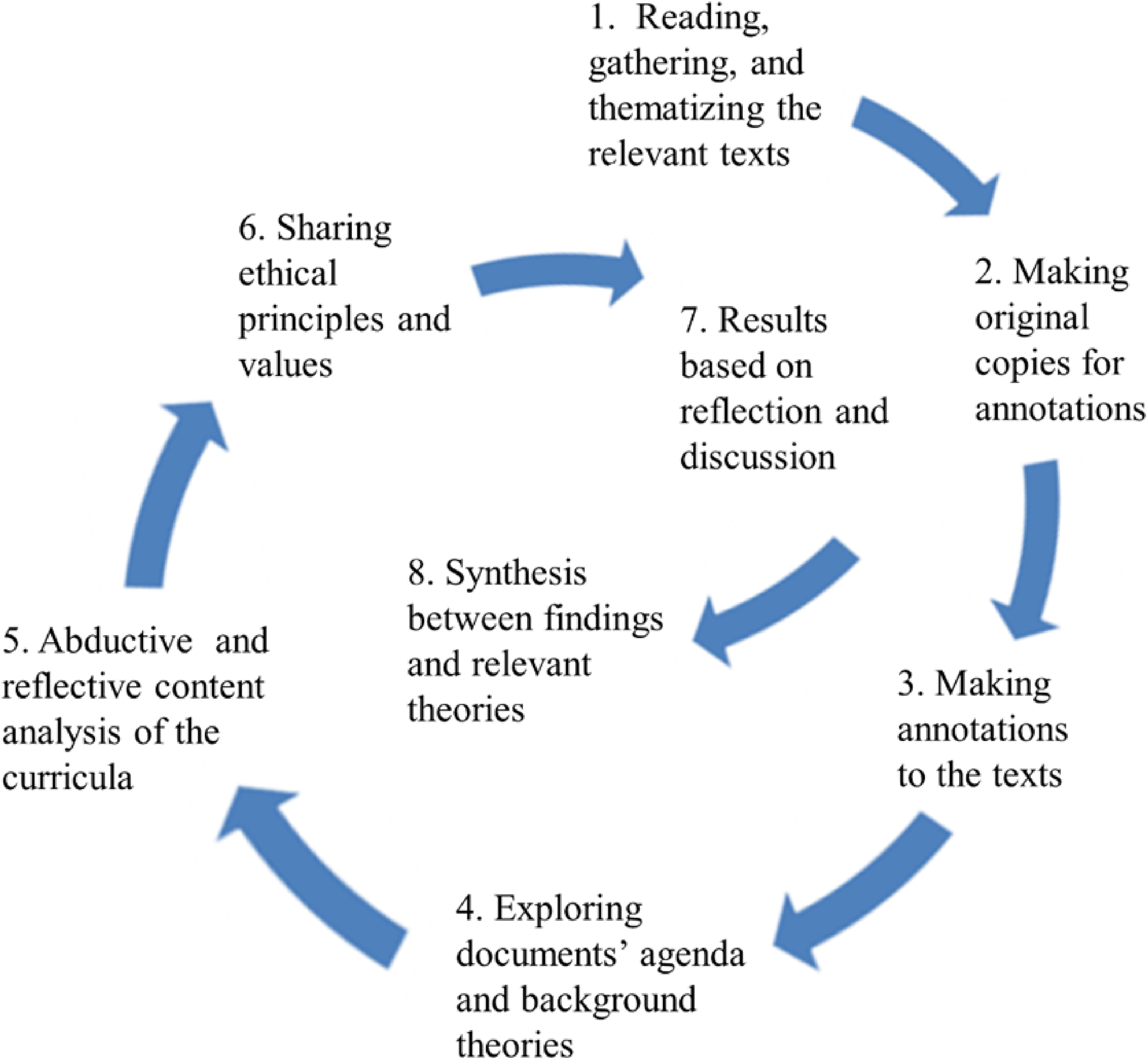
The analysis process of the study modified from O’Leary (2014).
Results
Since the aim of this study is to explore how the ethical codes and regulations are stated in Finnish guidelines for ECEC and pre-primary education, we present this study's findings under two subsections. First, we present the results of the study as interpreted through the theoretical understanding of ethics by Shweder et al. (1997) highlighting the codes of autonomy, ethics of community, and ethics of divinity comprising the themes found in both curricula. Second, we show the results as reflectively themed entities of professional ethics of teaching based on the works of Strike and Soltis (2009) and Sirotnik (1990).
The ethical themes of the national ECEC and pre-primary curricula examined through major codes of ethics by Shweder et al. (1997)
Ethical codes by Shweder et al. (1997) can be found in the ECEC curriculum (FNAE, 2018) and Pre-primary curriculum (FNAE, 2014). Democracy, responsibility, and human rights are the salient issues in these ethics. Individual ethics involved thinking, feeling, and acting as an individual, part of community, or a spiritual being. In community ethics, the principal virtues are respect, duty, and hierarchy. Meanwhile, in ethics of autonomy, the principal virtues are individual freedom and human rights, whereas the diversity of worldview is the principal virtue in divinity ethics. The themes found promoting the ethics of autonomy are freedom and responsibility, rights and obligations, harm and justice. Similarly, the themes found promoting the ethics of community are duty and collective enterprise. The themes found promoting the ethics of divinity are diverse worldviews and spirituality.
Ethics of autonomy
The theme of freedom in the ethics of autonomy, whereby teachers have great autonomy in planning their local curricula and teaching according to the national core curriculum, is essential in Finnish education as it provides the main guidelines. Both curricula accommodate the possibility of local decision-making at every level. This concerns mission and general goals, operational culture, planning and implementing ECEC, organizing support for a child's development and learning, offering ECEC based on alternative pedagogy or a particular worldview, as well as evaluation and development of operations in ECEC. For example: “The local curriculum shall describe and specify principles of planning and implementing pedagogical activities as well as mentoring and evaluating practices” (FNAE, 2018, p. 56). The Pre-primary curriculum also highlights the responsibility that entails autonomy (FNAE, 2014): The education provider carries the responsibility for the preparation and development of the local curriculum for pre-primary education. The organisation and implementation of instruction and education, pupil welfare, co-operation between pre-primary education and guardians and other pre-primary education activities are decided upon in the local curriculum based on the national core curriculum. (pp. 8–9)
Thus, the autonomy given to providers and professionals also binds them to curriculum work, considering, for instance, the needs of the children, self-evaluation outcomes, and development work relevant to pre-primary education. Finnish ECEC promotes democratic values in education, which is evidenced at the curriculum level. The theme of children's rights in the ethics of autonomy forms the basis of Finnish ECEC and pre-primary education. Both curricula comprise the aim of active and responsible participation as well as the involvement in creating the foundation for a sustainable and democratic future. It is via participatory pedagogy that the child's voice is heard. Holistic pedagogical activity flourishes from children's interests and needs. For example: “When working, children are encouraged to ask questions and express wonder, as well as to explore and solve problems together” (FNAE, 2018, p. 40). Thus, an individual ECEC plan is prepared for each child to ensure systematic and goal-oriented education, instruction, and care. In ECEC, apart from children's rights, the issue of obligations is addressed in the Pre-primary curriculum (FNAE, 2014), thereby highlighting the role of organizations, guardians, and staff. In particular, the 1998) obligates the guardians to “ensure that the child participates in pre-primary education or some other form of activities meeting the goals of pre-primary education” (p. 14). In turn, guardians are also given the right to receive information about the goals and activities of both early childhood and pre-primary education. The theme of justice in the ethics of autonomy is apparent in both curricula through the principle of equity to learn.
The best interests of the child guide cross-sectoral collaboration. Every child is supported in their individual development and learning, mostly in inclusive groups through additional help. When needed, support is provided to the child, guardians, and other parties in collaboration with child health clinics, educational advice centers, family counseling centers, or services for people with disabilities. This cooperation between ECEC services and hospitals or other institutions ensures the continuity of the child's ECEC in all situations, including medical emergencies. As a case in point, if a child with severe disabilities or illness needed extended compulsory education, the decision to begin providing this would be made before in advance. For example: Special support is provided to children who otherwise cannot adequately achieve the goals set for their growth, development or learning. The child’s prerequisites may have been weakened by disability or serious illness. The purpose of special support is to provide the child holistic and systematic support for growth and learning and to promote his or her prerequisites for learning. A child receiving special support must also be able to experience the joy of success and learning. This strengthens his or her self-confidence and learning motivation. (FNAE, 2014, p. 54)
Ethics of community
The ethics of community and its collective enterprise or responsibility is a pervasive principle in curriculum texts. The operational culture of ECEC develops through interaction within the community. In both the curricula, the operational culture is an entity or collective enterprise and responsibility that comprises common values and principles, norms and goals, learning environments and methods, atmosphere and interaction, collaboration in all forms, professionalism and developmental approach of personnel, leadership structures and practices, organization and planning, implementation and collective evaluation. One of the general principles of ECEC's underlying values is the right of the child to well-being, care, and protection. Hence, the personnel are duty-bound to: “Guide children to act based on the underlying values and discuss values and ideals. Bullying, violence, racism or other types of discrimination are not acceptable in any form or by anyone” (FNAE, 2018, p. 21).
A holistic understanding of a child's learning gives autonomy for early childhood teachers to implement their curricula after considering contextual perspectives and needs. This agentic position is responsible for pedagogical documentation, versatile working methods, appreciating, and using play as a source of development, learning, and well-being. These highlighted perspectives and values require that the whole community works accordingly toward the well-being and teaching of the children. Pedagogical leadership and respect for others are highlighted in the ECEC curriculum to accomplish a dialogically committed, supportive, and learning community (FNAE, 2018). The value of trust is outlined as “Dialogue that is characterised by respect for others, ensures the participation of all members of the community and inspires trust is key to development” (FNAE, 2018, p. 30).
Ethics of divinity
The themes of diverse worldviews and spirituality found both in the ECEC curriculum (FNAE, 2018) and the Pre-primary curriculum (FNAE, 2014) promote the ethics of divinity. Finnish ECEC and pre-primary education are part of a culturally transforming and diverse society. Cultural diversity and different worldviews are seen as a resource. The community recognizes the right to one's own language, culture, religion, and worldview as being fundamental. This means that those involved in ECEC have to be aware of, and have some knowledge about, different cultures and perspectives. Intercultural sensitivity emerges as an important issue in cultural interaction with families and children. Positive and encouraging interaction supports the development of a child's self-esteem and identity. In Finnish early childhood worldview education, the focus is primarily on examining the religions and other worldviews that are present in a group. For example: The mission of ECEC is to develop children’s capabilities of understanding diversity of the local community and practice acting on it. This topic is approached from the perspectives of ethical thinking, worldviews, the past, present and future of the local community, as well as the media. (FNAE, 2018, p. 47)
Ethical thinking is mostly connected to the learning area of “Me and our community.” According to learning content, the development of children's ethical thinking is supported by group reflection on ethical questions arising in different everyday situations. Ethical questions are discussed in a safe and free atmosphere; in addition, the rules of the group are collectively planned, and justifications are reflected on with the children.
The ethical themes of the national ECEC and pre-primary curricula as entities of the professional ethics of teaching
Care and protection
In the Finnish ECEC curriculum, the concept of care extends beyond caring for the basic physical needs of a child. Other aspects, such as social and emotional caring, ensuring positive relationships, and providing a safe atmosphere and reciprocity, are strongly interconnected within the framework for pedagogical activity, the operational culture of the ECEC, and the principles guiding the provision of support. In both curricula, the emphasis “that children feel valued and understood, and experience a connection with other people” (FNAE, 2018, p. 23) is evident. By highlighting respectful, interactive relationships between adults and children and also between children and children, as well as positive connection, these emphases do not merely serve as the foundation of ECE staff's nurturing practices but also become a prerequisite to children's learning. This holistic understanding of a child's learning and development demands ECE teachers to form deep relationships with their students based on care, mutuality, receptivity, respect, and trust.
The starting point of learning (i.e., sensitive receptivity and respect) is stated rather similarly in both curricula: The previous experiences of each child and his or her competences are the starting point for learning. It is important that new knowledge and skills learned by children are connected to their everyday life and the world they experience. (FNAE, 2014, p. 18)
Related to care, supporting children's growth as human beings depend upon respect toward human rights, creating sustainable development, and protecting children's physical and psychological inviolability, according to the Finnish ECEC. To act with justice and fairness, and to strive for truth, ECE teachers must “guide the children to act based on the underlaying values and discuss values and ideals. Bullying, violence, racism or other types of discrimination are not acceptable in any form or by anyone” (FNAE, 2018, p. 21). However, the aspects of care are intertwined in the curricula and, as a consequence, more hidden despite the emphasis on the importance of the relationships, sensitivity, and experiences as starting points of learning.
Equality and diversity
The Finnish ECEC is committed to the values of inclusion and the principle that all children have a right to access ECEC services irrespective of their ability, ethnic and linguistic background, gender, or faith. Notably, the concept of inclusion is not visibly stated and defined in the curricula, although many of its facets can be found in both. Definitions of equality are based on values and beliefs, for example, about having a good childhood and its beginning. The Finnish ECEC states this idea of equality as being granted a good childhood as follows: “The task of early childhood and care is to protect and promote the right of children to a good and safe childhood” (FNAE, 2018, p. 20). The responsibility of ECE personnel is elucidated when equality is viewed from the perspective of treatment. Although the notion of equality as a treatment can be found in both curricula, the idea of equality as treatment is formulated more clearly in the Pre-primary curriculum: Pre-primary education as an operating environment supports the equality of children. This includes, among other features, equality of opinions and genders. Pre-primary education promotes children’s possibilities for developing their skills and making choices without expectations and limitations related to gender. The underlying principle is always equality and equity. Instruction does not demand or lead to political, religious or philosophical commitment of the children. Pre-primary education may not be used as a channel of commercial influences. (FNAE, 2014, p. 18)
The ECEC curriculum is issued by FNAE, and the ECEC was formulated to create equal preconditions for children's holistic growth, development, and learning when participating in the ECE. Put differently, each child has a right to systematic and goal-oriented education, instruction, and care as ensured by an individual ECEC plan prepared by an ECE teacher. Additionally, nonstandard hour ECEC can be obtained for a child when the guardians’ profession requires opportunities for flexible working hours.
The ECEC curriculum also further requires that the individual ECEC plan “must include information about any support in development and learning needed by the child and its implementation” (FNAE, 2018, p. 11). However, when considering these two documents, individual support and the structure and processes of this support (general, intensified, and special support) are clearly articulated only in the Pre-primary curriculum. Furthermore, this model of three-tier support is not mandatory in ECE (children under the age of six).
Democracy, professionalism, and well-being
Although democracy is a multilayered concept, it is understood as a way of being and thinking of oneself in relation to others rather than a governance or policymaking issue. Furthermore, it calls for practices of dialogue, negotiation, and treating others respectfully and seriously. When considering democracy from this relational and ethical perspective, these ideas are evidenced in both ECEC curricula, although they are not explicitly stated as democratic values or practices. The text related to operational culture particularly underlines the values of democratic relational ethics from the viewpoints of community and collaboration. Additionally, the Pre-primary curriculum states the responsibility of leading the learning community (i.e., ethical responsibility of others) clearly: “Preconditions for developing the operational culture include operational and pedagogical leadership, securing the participation of personnel, and commitment to shared ways of doing things” (FNAE, 2014, p. 24). The ECEC curriculum lacks this view of pedagogical leadership, although it does emphasize the shared responsibility of the community.
The professional and ethical responsibility of supporting children's learning and development toward the democratic agency, citizenship, relationships, and voice is stated in both curricula. Professionalism, or the ethics of professionalism, is connected to every teaching practice, particularly to making decisions (or choices). In the ECEC curriculum, the responsibility of the ECE teachers is, for the first time, explicitly connected to pedagogy as well as their ability to give reasons for their chosen working methods and practices. The Act on Early Childhood Education and Care put emphasis on the significance of pedagogy and, at the same time, the pedagogic responsibility of ECEC teachers and special ECEC teachers. The ECEC teachers bear the overall responsibility for planning the activities for the groups of children, the implementation of activities with a goal-oriented and systematic approach as well as the assessment and the development of the activities. (FNAE, 2018, p. 18)
Intellectual freedom, inquiry, and professional competence
ECE teachers’ intellectual freedom as professionals to hold, access, plan, and implement ideas or pedagogical knowledge is evident, and it is also required as a necessity by the Finnish ECEC. The nature of ECE teaching, however, is realized within teams; therefore, planning, implementing, and evaluating ECE pedagogy is relational. This highlights the multiprofessional autonomy of ECE teaching and the individual agency possessed by each teacher. The responsibility of ECE teachers as autonomous agents who are part of the community is to engage in dialogue to rectify the undesirable features of the operational culture; this duty is stated in both curricula. Furthermore, a position of inquiry toward the teachers’ own and shared professional development is supported by the curricula: The personnel are encouraged in self-assessment, sharing of knowledge and competence and, at the same, professional development. Reflecting on jointly agreed goals and tasks, regularly assessing one's work as well as the feedback obtained from the guardians and other partners promote the learning of the community. (FNAE, 2018, p. 31)
Mentoring newly qualified teachers and socializing the new members to the profession and community during their induction phase remain unclear although intellectual freedom, professional autonomy, and inquiry are clearly stipulated in Finnish ECEC curricula.
Discussion
The purpose of this study was to identify ethical principles and guidelines in Finnish ECEC curricula and describe how the ethical codes and regulations are stated. The curricula were analyzed using two different ethical lenses to elucidate the ethical codes for purposeful teachers, teachers with moral purposes, and ethical professionals. First, the ethical principles were identified and described through the lens of three major ethical codes by Shweder and colleagues (Shweder et al., 1997; Shweder & Haidt, 1993). Second, the curricula were analyzed through the lens of professional ethics (Principles of the Comenius Oath; Sirotnik, 1990; Strike & Soltis, 2009). In this discussion, we unite these ethical lenses for the openness of meaning and dissidence as a contribution to ECEC research on ethics.
This study found the following broad ethical themes relating to Finnish ECEC and pre-primary education: (1) freedom, responsibility, rights, obligations, harm, and justice as ethics of autonomy; (2) respect, duty, and collective enterprise as ethics of community; and (3) diverse worldviews and spirituality as ethics of divinity. The broad entities of professional ethics were care and protection; equality and diversity; democracy, professionalism, and well-being; and intellectual freedom, inquiry stance, and professional competence. These slightly different themes and entities were interconnected, mirroring moral ethics and professional ethics from individual and collective angles. Similarly, the act of teaching is viewed as moral through both lenses since the documents mirror premises to educate, care, and support children's development toward ethical growth (e.g., Campbell, 1997, 2007; O’Neill & Bourke, 2010). However, despite their similarities, the entities of professional ethics underline and divide the ethical codes more clearly, especially highlighting the ethics of care and protection. Moreover, the important perspectives of inquiry and professional competence were included in the entities of professional ethics. Considering Tirri’s (2018) definition of purposeful ECE teachers as ethical professionals who have both freedom and responsibility to make pedagogical decisions in the best interest of their students, some central notions to these ethics that are worthy of discussion are presented below.
First, Einarsdottir et al. (2015) found the notion of care to dominate in the Finnish ECEC curriculum, but this predominance has faded. In the era of increased emphasis on diversity and complexity, this is contentious as ethics of care focus on trust, social bonds, cooperation, caring relations, and response to the needs of children and their families (e.g., Noddings, 2013; Sevenhuijsen, 1998). Regardless of power and privilege, the codes of ethics should be applied with justice (Zembylas, 2010). Moreover, Marschall’s (2019) notion regarding the effect Danish ECE policy had on early childhood institutions focuses more on enhancing children’s academic skills than on play and general well-being, and this emphasis is alarming. In contrast, Van Laere and Vandenbroeck (2018) stated that the balance between education and care was central to Nordic values in ECEC. Hence, more research focused on these perspectives, especially on “educare,” is needed; research related to ECEC ethics is scarce, especially in the Finnish context.
Second, inclusion as a term should be more explicitly conceptualized in both ECE curricula. Recently, there has been a change in the myopic conceptualization emphasizing disabilities and specialist support, welcoming all children to ECEC groups without segregating them based on ability, ethnic background, gender, socioeconomic status, or other individual or sociocultural characteristics (Engelbrecht et al., 2017). Koskela (2021) emphasized that being accepted is one of the rudimentary aspects of children's and parents’ well-being. Therefore, being accepted promotes collaboration among ECEC and the guardians, which allows for the cultivation of a truly inclusive ECE environment. However, no explicit interpretation can be made of the support systems for children with disabilities and specialist support needs. Thus, no unified instructions exist for municipalities to organize support. Fortunately, a new legislation concerning these issues is being worked upon.
Third, both ECEC curricula ignored the issue of mentoring newly qualified teachers regarding intellectual freedom, inquiry, and professional competence, despite the professional codes of ethics that reinforce public trust, guide professional conduct, and frame the professional socialization of new members (e.g., Schwimmer & Maxwell, 2017). Despite research on teachers’ professional development, collaborative learning, quality ECEC, and the difficulties newly graduated ECE teachers face in Finland (e.g., Onnismaa et al., 2015), mentoring remains absent in the Finnish ECEC curricula.
The world is diverse and constantly changing, which is why intercultural knowledge and sensitivity are needed in educational situations. The ethics of divinity must be highlighted to support purposeful preservice and in-service teachers (Tirri, 2018) with the “intention to accomplish something that is both meaningful to the self and of intended consequence to the world beyond the self” (Damon et al., 2003, p. 121). Through continued education and lifelong learning, ECEC teachers can further develop their pedagogical practices to produce culturally and linguistically diverse children (Gunn et al., 2020) while also exploring efficacious ways of affirming all children, families, and communities (Bennett et al., 2017). For this reason, more emphasis needs to be placed on the role of diverse and integrated worldviews in ECEC and to offer tools for forging mutual understanding about complex worldviews (Åhl et al., 2019). Educating purposeful and ethical ECE teachers requires conscious and deliberate reflection about morals, ethics, and equity. Thus, more attention should also be paid to how ethics and the implementation of pedagogical practices that support cultural and linguistic diversity become visible in teacher education. This is attributed to the fact that both pre-service teachers and teachers in the field have a significant role in influencing the attitudes of future society (Kimanen et al., 2019).
Finally, individuals need to reflect to think about what is right and to consider how they should act or solve a problem, a process that is informed by their principles of justice, values, and beliefs (e.g., Dewey, 1933; see also Buchman, 2013; Elbaz, 1981; Husu, 2002). Furthermore, reflective thinking enhances individuals’ ability to consider children's voices, thus supporting children's resilience and sense of belonging (Pihlainen et al., 2020). Reflection also involves individuals’ ability to evaluate their strengths and weaknesses while seeking out future growth (Zuckerman, 2011), which needs to take place in a community through interaction with others (Cherrington & Dalli, 2019; Rodgers, 2002) since teachers’ daily work involves knowing how to make appropriate decisions within relationships that can be seen as pedagogically challenging (Husu, 2001). Thus, ECE teachers must be cognizant of and reflect on how ethical principles, which build sustainable development for the future, relate to the holistic pedagogy of ECE, combining education, teaching, and care.
The findings of this study are strongly related to Finnish culture. Despite these contextual limitations, the results offer valuable insights into ethical principles and guidelines.
Footnotes
Contributorship
Anitta Melasalmi, the first writer of the paper, was responsible for writing the bulk of the main body, finalizing the paper, and responding to reviewers’ comments. She covered various aspects of the paper including theorizing and analyzing Finnish ECEC curricula on the basis of professional codes of ethics of teaching, writing the results and conclusions. Tarja-Riitta Hurme negotiated the results with the first writer and contributed by writing the discussion section with the first writer. Inkeri Ruokonen contributed by identifying and analyzing the ECEC curricula through the theory of  ) and negotiated with the first writer regarding the results and abstract.
Declaration of conflicting interests
The authors declared no potential conflicts of interest with respect to the research, authorship, and/or publication of this article.
Funding
The authors received no financial support for the research, authorship, and/or publication of this article.