




Abstract
Purpose:
This article presents the theoretical framework, research design, methodology, and main findings of the comparative measurement of ethical–moral competences of 15-year-old upper secondary students in Shanghai, under the ETiK-International-Shanghai project.
Design/Approach/Methods:
By dividing the ethical–moral competences into the categories of basic ethical–moral knowledge, ethical–moral judgment competence, and competence in developing ethical–moral action plans, a survey of 2,036 students was conducted, using a reliable and valid testing instrument.
Findings:
In general, 15-year-olds from homes with more educational resources perform higher in all three scales across all countries taken under consideration in our study. Furthermore, school practices, teaching, as well as quantity and quality of instruction play a very important role in the moral education process and especially in developing students’ proficiency levels of ethical–moral knowledge, reasoning competence, as well as students’ high abilities in developing moral action plans. When relevant educational background factors are held constant, Chinese students show lower average scores on basic ethical–moral knowledge and moral judgment competence. With exception of the tested Vienna students, all other European samples scored better than the Chinese students—also on the test for developing ethical–moral action plans. However, Chinese students are especially able to display outstanding empathy when dealing with suffering, misfortune, and sorrow, as well as in their willingness to help others.
Originality/Value:
The findings of this article can foster thinking about which topics should be further discussed to improve the ethical–moral knowledge and competences of Chinese students and highlight requirements for the further development of moral education in China at the levels of teaching, curriculum, teacher education, and research.
Keywords
Introduction
Ethical–moral education has a long-standing tradition in China, during which the development and the acquirement of moral knowledge and skills were integrated in public education programs at an early age. For instance, moral education and Confucian thoughts on self-cultivation were intrinsically interwoven into the early public education system (Bauer, 2018). In the period of the Republic of China (1912–1949), the authorities believed that ethical–moral aspects should play a central role in the educational system (Peng, 2017; Peng & Gu, 2018; Peng et al., 2018; Roetz, 2006). The recent development in the modern education system has further underlined the importance of ethical and moral education but in a different form (Moore et al., 2006). The focus of ethical–moral education in the modern Chinese school goes beyond teaching and learning of cognitive academic outcomes and places rather a special emphasis on the development of morality and social skills. These are seen to be vital for educating and preparing Chinese children to be good citizens: a central goal that has been recognized since the establishment of the People’s Republic of China in 1949. In primary education, formal ethical–moral curricula are titled under the labels “Morality and Life” and “Morality and Society,” in junior high school education under the labels “Ideology and Morality” (moral education courses for Grades 1–9 are renamed “Morality and Law” from 2019), and in senior high school education under “Ideology and Politics” (Peng, 2018).
This study presents a new educational approach to theoretically and empirically grounded measurement of ethical–moral competences of upper secondary students under the name ETiK. It was developed in 2008 and piloted between 2008 and 2013 by a research team at the Humboldt University of Berlin formed by the educational scientists Dietrich Benner, Roumiana Nikolova, Stanislav Ivanov, Jana Swiderski, and Martina von Heynitz, who administered it in the German states of Berlin, Brandenburg, North Rhine-Westphalia, and Hamburg. In 2013–2017, this project work was adopted and internationalized by Dariusz Stępkowski (Poland), Georg Ritzer (Austria), Zhengmei Peng (China), and Andrea English (Scotland) (Benner & Nikolova, 2016a).
ETiK refers to an educational model and an assessment instrument for measuring moral knowledge and competence and is the acronym of a German project title,
Modeling and testing
The approach and guidelines adopted in all ETiK projects for theoretical modeling of ethical and moral competences of upper secondary students and designing an adequate test instrument both differ from psychologically based approaches to measuring moral beliefs and judgment preferences. The ETiK approach targets the students’ knowledge of classical philosophical traditions of ethical concepts and moral reasoning aspects and deals with them as part of the core curriculum at upper grade levels of schooling. The ETiK test instrument is thus conceived and designed to describe and assess primarily students’ outcomes as effects of school teaching and learning processes as well as to analyze the specific characteristics of ethical–moral education programs as utilized in the countries and societies the tests are conducted in. Unlike Kohlberg’s psychological developmental stage model of moral judgment (Kohlberg et al., 1983), the theoretical framework, the items and tasks developed within the ETiK approach, and the subsequent competence scales determined do not target to describe formal judgment preferences but aim at the measurement of acquired ethical–moral knowledge and ethical–moral competences and skills that are supposed to be taught at public schools. As such, ethical–moral knowledge and competences are defined as educational outcomes that are theoretically determined in terms of educational theory and domain-specific content as well as practically promoted by ethics lessons and comparable coursework given in schools (for the relationship between ETiK scales and proximal psychological scales, refer to Ivanov/Nikolova et al., 2020/2021).
ETiK was conceived and implemented as one of the first empirical approaches in the field of ethical–moral education that adopted the methodology of domain-specific competence measurements. As an empirically based project, it can be seen in the tradition of educational research studies like Programme for International Student Assessment, The Progress in International Reading Literacy Study (PIRLS), Trends in International Mathematics and Science Study (TIMSS), and other similar projects. However, in contrast to them, it is set in field of ethics as school subject domain. It does not work with merely psychologically defined literacy scales, but it builds upon school and educational theory background, classical philosophical traditions, as well as ethical and moral pedagogical frameworks (Benner, 2020b). The following four theoretical guidelines determine the core elements of the basic scientific model and guide the overall approach upon which the ETiK test instrument is built.
The first theoretical aspect recognized as an important guideline in describing the dimensional structure of educational outcomes is based on school theory concepts and highlights that educational outcomes can be generally grouped in three dimensions. The proposed theoretical description and definition of (1) ethical–moral knowledge, (2) reasoning skills, and (3) competences in the ETiK model reflects on this trinity of domain-specific basic knowledge, domain-specific reasoning competence, and domain-specific problem-solving skills, which generally applies to all subjects and content domains at school.
The second basic theoretical guideline of the ETiK approach that was mainly identified for the development of test items builds on the trinity of moral perspectives to be addressed: (1) one’s own perspective, (2) the perspective of other individuals as opposed to one’s own point of view, and (3) the public view or society perspective as a whole.
The third important guideline reflects both theoretical frameworks within classical ethical ideas and spheres of moral justice.
The fourth guideline in the development of test items and the test instrument as a whole draws on selected concepts of ethical–moral education from the traditions of Socrates and Plato, Aristotle, Kant, Marx, Nietzsche, Dewey, and Walzer.
The four theoretical guidelines are described in more detail in Benner and Nikolova (2016b) and Benner (2020a) and will be only briefly introduced in the following paragraphs.
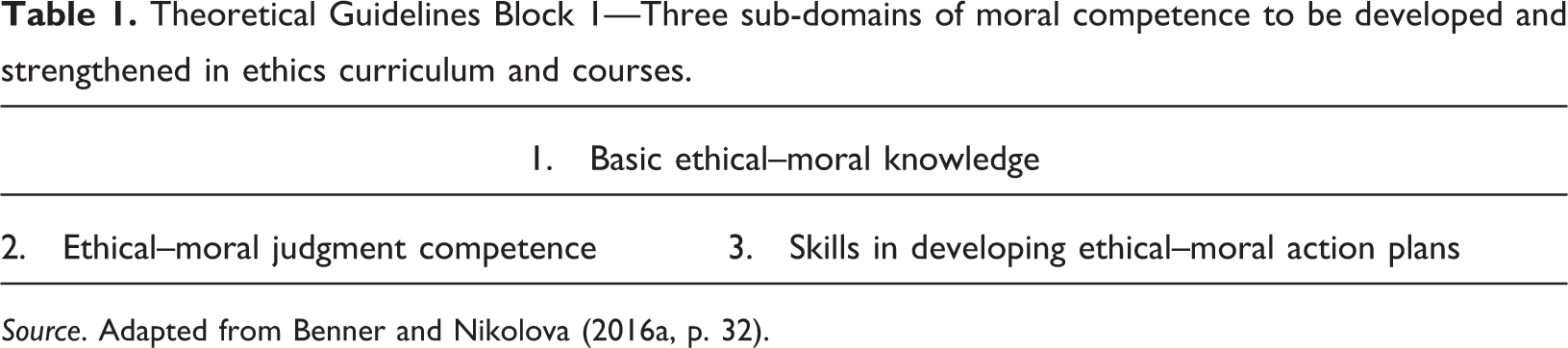
In all subjects, the purpose of school teaching is to impart basic knowledge, which is not self-taught, and pass it on in the coexistence of others. This knowledge is to be acquired by the learners in such a way that they develop a subject-specific judgment competence as well as the ability to apply what they have learned in real-life situations and public discourse. As teaching–learning processes are inherently artificial, competences in the moral-evaluative field are consistently referred to as ethical–moral competences. The term indicates that they are not developed directly through habituation and socialization but through ethical teaching. For this reason, the third ethical–moral dimension is referred to as competence or skills in developing ethical–moral action plans. The term refers not only to the artificiality of the processes but also to the fact that ethics teaching only promotes the ability to design and coordinate ethical–moral actions with others; however, it does not guarantee the ability to act accordingly to one’s own ethical–moral competence and moral judgment level in real-life situations (see Table 1).
Theoretical Guidelines Block 1—Three sub-domains of moral competence to be developed and strengthened in ethics curriculum and courses.
Source. Adapted from Benner and Nikolova (2016a, p. 32).
Guidelines Block 2 (see Table 2) points to another feature of artificial educational and teaching–learning processes that is also important in all areas of learning promoted through public school education; it will only be clarified here for the purposes of the moral-evaluative field. In a familiar context, children develop the morals of their parents and the tradition in which they grow up. These can be embedded in lifestyles from a diverse range of backgrounds, such as rural or urban, or those of a minority or majority. In school, one’s own moral meets with other morals. The aim of a joint teaching–learning process is not to consolidate different morals based on origin or similarity but to ensure that students learn to distinguish theirs from “other morals,” to assess arguments that follow different moral views, and to participate in the formation of a common public moral.
Theoretical Guidelines Block 2—The classification of moral orientation: Three clusters.

Source. Adapted from Benner and Nikolova (2016a, p. 34).
In this context, public moral is not a uniform morality but a moral understanding and moral consciousness that approves, tolerates, or permits different moral ideas in certain fields of action and advocates in others the strengthening of common or shared ethical and moral competences.
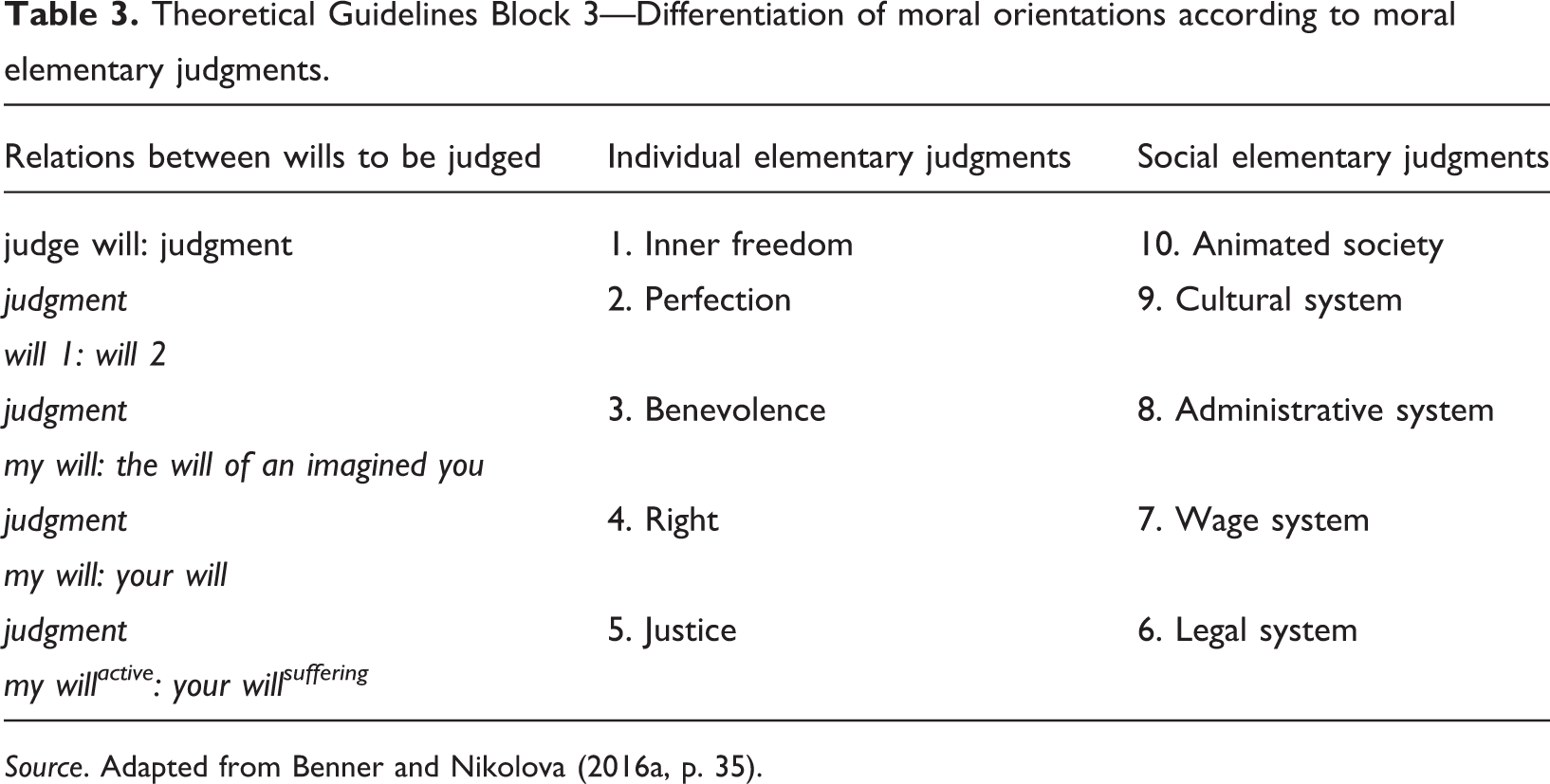
Guidelines Block 3 (see Table 3) differentiates the ethical systems with which the ethics curriculum is thematically aligned; they are distinguished by the classical ethics of Aristotle to Kant and Herbart to Walzer’s (1983) differentiation of social systems with similar or even identical terms (Benner et al., 2015). The order outlined has been proven to have a strong affinity for Chinese ideas and traditions, in which the primary ethical and moral judgments, particularly those of perfection, benevolence, the cultural system, and animated society, are of central importance (Li et al., 2011; Peng, 2017).
Theoretical Guidelines Block 3—Differentiation of moral orientations according to moral elementary judgments.
Source. Adapted from Benner and Nikolova (2016a, p. 35).
The object of moral judgments can be viewed as the relationship between will and judgment in general, whereby the elementary judgment is that the judgment should not be made directly by the will itself but as an inner freedom over will. It can also refer to the multiple wills of one individual. Everyone should develop will multifacetedly, not one-sidedly, to perfect themselves. For the relationship of will between different people, the elementary judgment is that they should not only see each other as a means of enforcing one’s own will but also show goodwill and benevolence for one another. Where the wills of several people meet, the elementary judgment suggests that they agree on a legal agreement to prevent disputes, but if a dispute ensues, it is necessary to settle it according to justice. For the social or political sphere aspect, five social systems can be assigned to these five areas with their own elementary judgments, which distinguish between the justice orders of state law, the reward and punishment of citizens, the public administration, the cultural system, and the animated society as a whole (Benner & Xu, 2004).
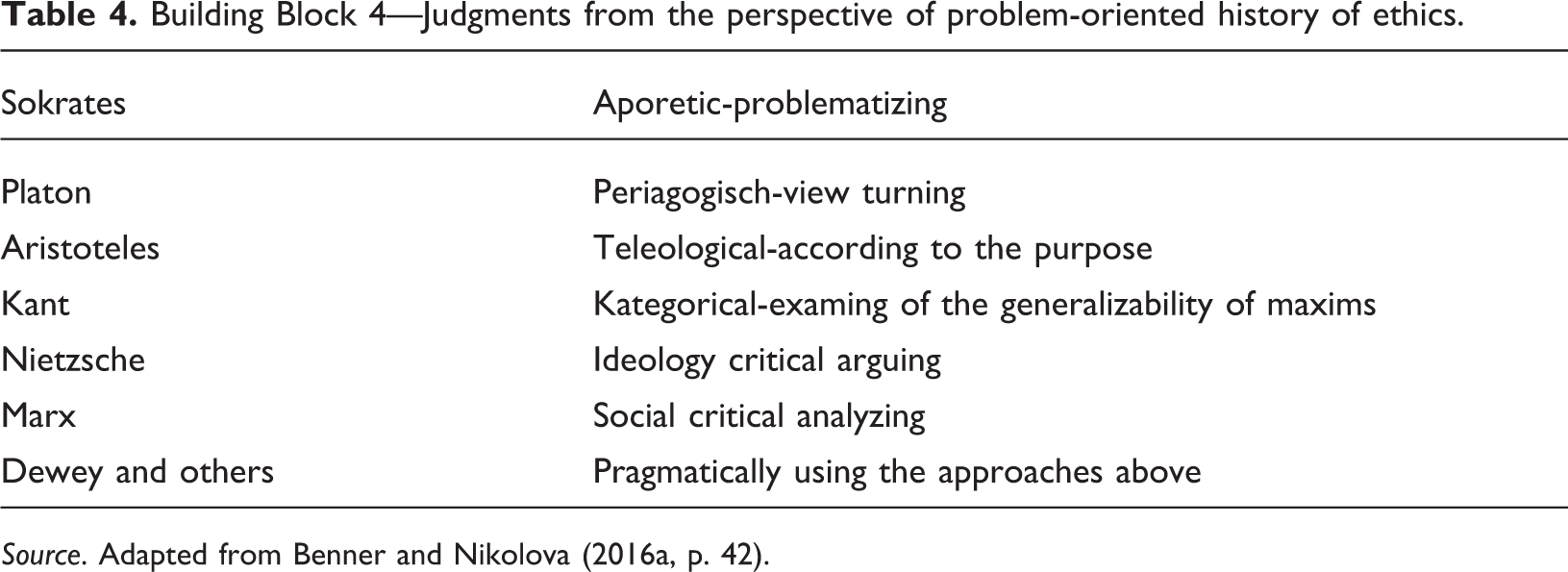
Guidelines Block 4 (see Table 4) complements the preceding three frames by including notions and positions developed in philosophical and philosophy-critical ethics. These interpret the fields of judgment and action arranged in Guideline 3, according to problem areas that can be connected, but in a different way. They bring into play a multiplicity of ethical–moral arguments that cannot be superimposed or subordinated by each other and, therefore, cannot be entered into a final system or unified in a developmental way (Benner et al., 2015).
Building Block 4—Judgments from the perspective of problem-oriented history of ethics.
Source. Adapted from Benner and Nikolova (2016a, p. 42).
The implications of ethical–moral competency modeling and measurements are not intended to turn students into experts in ethics history. These orientations include the form of problematizing and aporetic argumentation stemmed from Socrates; the periagogisch-view turning art developed by Plato; the Aristotelian order of the purposes of human action according to ethical and moral hierarchies; the examination of maxims of action based on Kant’s formal generalization; the genealogical critique of ideology developed by Nietzsche; the social critique founded by Marx; and the pragmatism developed by Dewey and others in dealing with the multiplicity of moral–legal–political orders. Instead, they are designed to align the construction of test items with the current problems faced by the learners and to address developmental problems of modern societies, which are considered according to different ethical–moral paradigms but cannot already be solved by the learners themselves.
The test items constructed upon the given theoretical model with the four guidelines were piloted in international comparative studies and empirically proven to be useful (Heynitz, 2016).
The piloting and validation procedures were carried out in 2008–2013. Item Response Theory (IRT) scaling methods as well as confirmatory factor analyses were used to examine and confirm the theoretically expected three-dimensional structure of the cognitive ETiK test instrument. There were several reasons for applying IRT scaling methods (one-parameter Rasch model was fitted to the data). On the one hand, because of the multi-matrix design of the administered testlets, it was necessary to apply the Rasch model to provide common scales for all participating samples of test takers. Furthermore, Rasch scaling proved useful for the purpose of identifying and setting the cut scores for the specific levels of proficiency within the three ethical–moral scales. The theoretically based and empirically confirmed different levels of proficiency on the three scales, ethical–moral knowledge, ethical–moral reasoning competence, and skills in developing ethical–moral action plans, are helpful to examine and analyze learners’, schools’, or even countries’ levels of performance in ethical and moral education and instruction, but they also identify the competence-enhancing efforts and effects of teaching and learners’ context background variables. This can provide valuable feedback to education policymakers, school authorities, and individual teachers on the effectiveness of reforms as well as advise them on the opportunities and needs of optimization of the education processes and instructional practices.
The ethical–moral knowledge scale consists test items seeking to determine the extent to which students understand the curriculum-based ethical–moral knowledge and concepts. These items do not claim to explore the moral reasoning judgment or the students’ ability to develop moral action plans, instead they draw on students’ acquired content knowledge of ethical–moral concepts and the variety of that knowledge. The ethical–moral knowledge scale consists of 19 test items developed to evaluate basic knowledge competence across three different proficiency levels (see Table 5) (Benner & Nikolova, 2016a).
Difficulty levels on the scale basic ethical–moral knowledge.
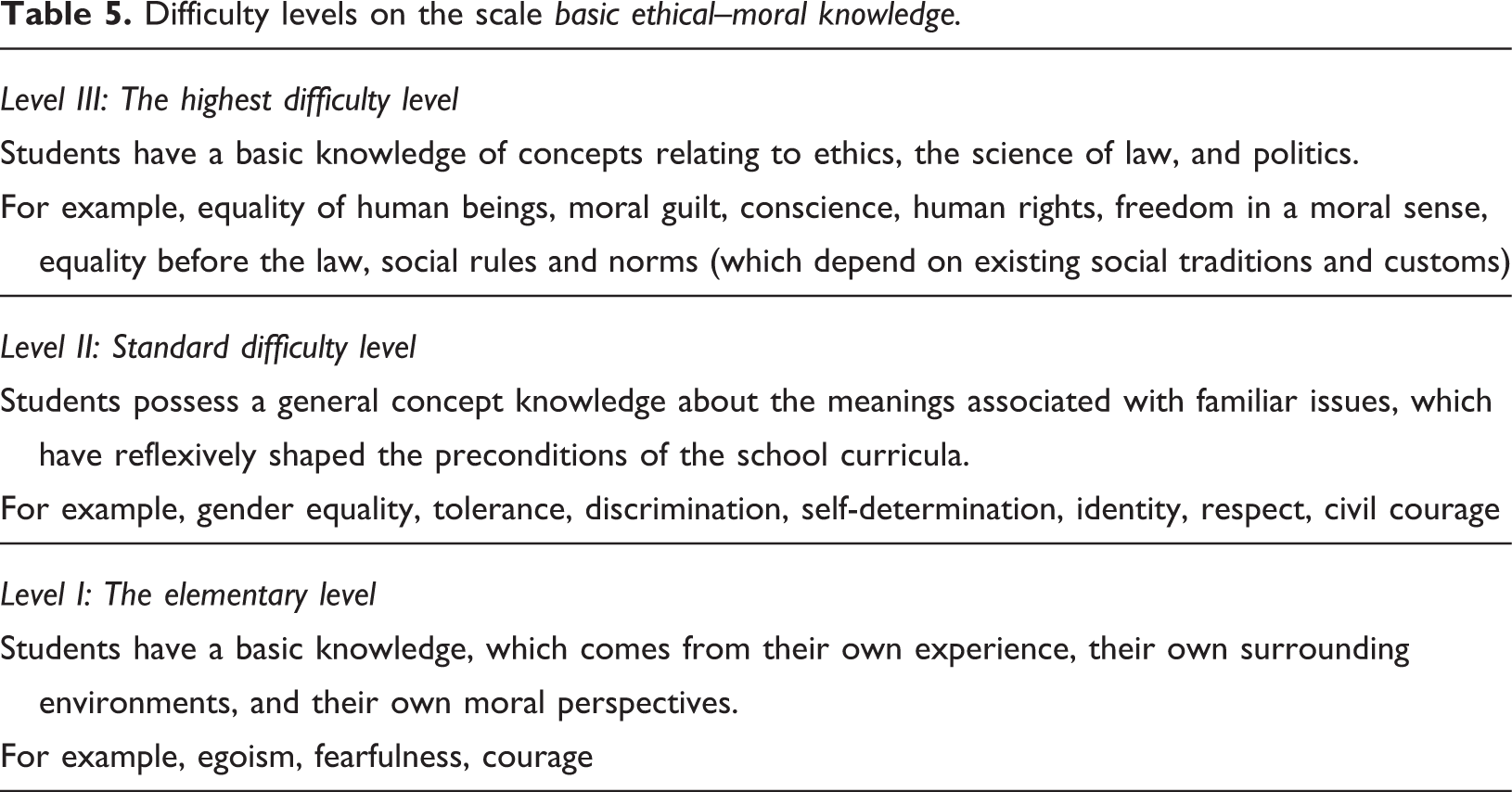
Generally, students’ achievement of Level I proficiency does not require much of any ethical curriculum. To achieve the second proficiency level, however, presupposes the ability to debate ethical–moral issues and problems, while Level III demands a reflexive understanding of the boundaries of problems as ethics, justice, and politics. The achievement of Levels II and III is hardly possible without ethics courses because the solving of the higher level tasks requires knowledge of specific content as well as the support of reflective and problem-based ethics teaching and learning.
We used 34 items across four different levels to assess ethical–moral judgment competence as measured by the second ethical–moral scale (see Table 6).
Difficulty levels on the scale ethical–moral judgment competence.
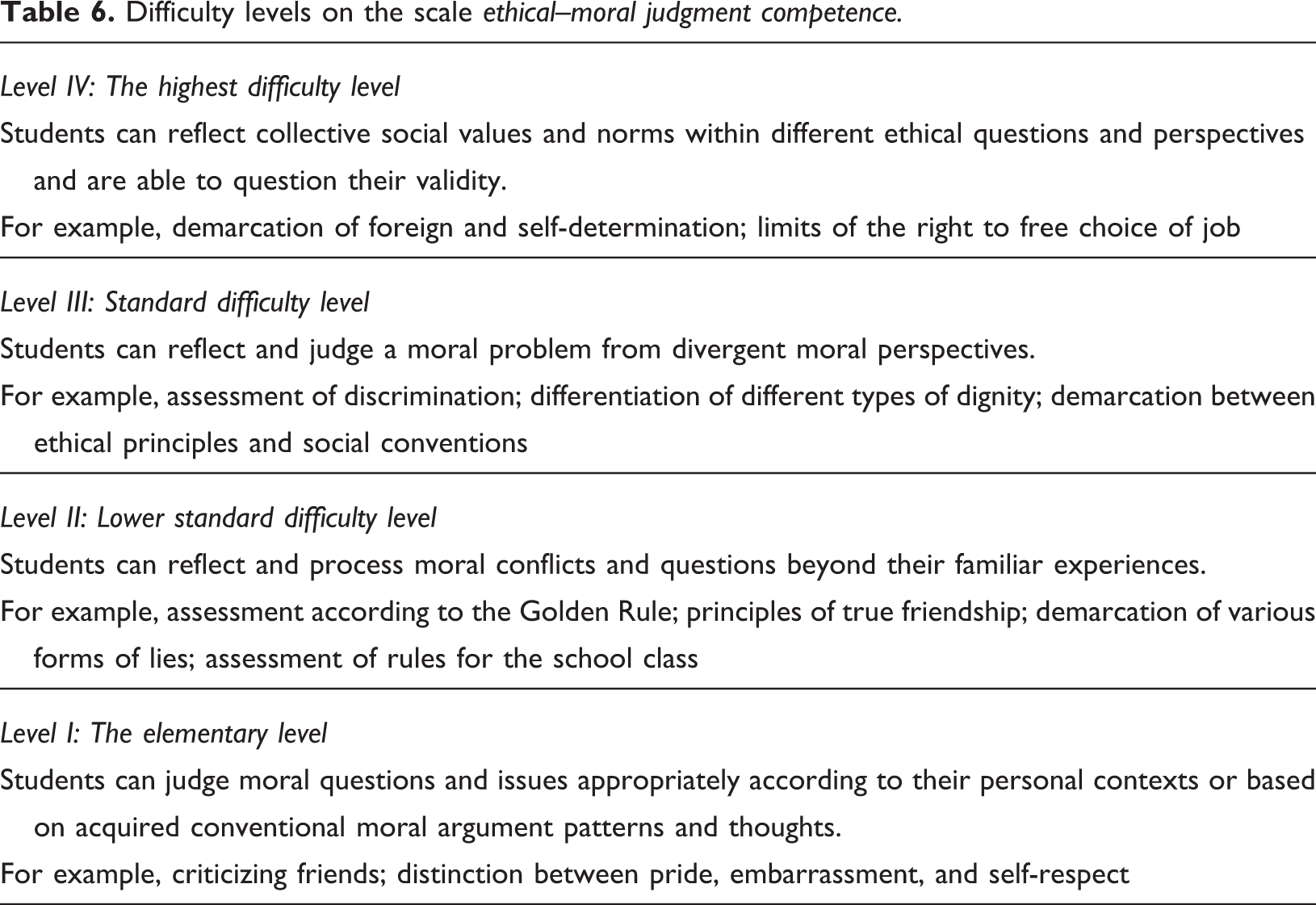
In general, Level I proficiency refers to the experiences and reasoning abilities that have been acquired through individual experiences in familiar, peer groups and other social group contexts; it does not require participating in an ethical course. Level II assumes a reflexivity among certain morals; its achievement usually depends on training and participating in an ethical course. Level III includes the ability to debate the morals of others, and Level IV requires the ability to engage in deeper debates on public moral issues and problems. Only few students can achieve Levels III and IV without having acquired the needed proficiency in an ethical course.
The third scale designed to measure specifically students’ abilities in developing ethical–moral plan of action consists of 19 test items describing four different proficiency levels (see Table 7).
Difficulty levels on the scale skills in developing ethical–moral action plans.
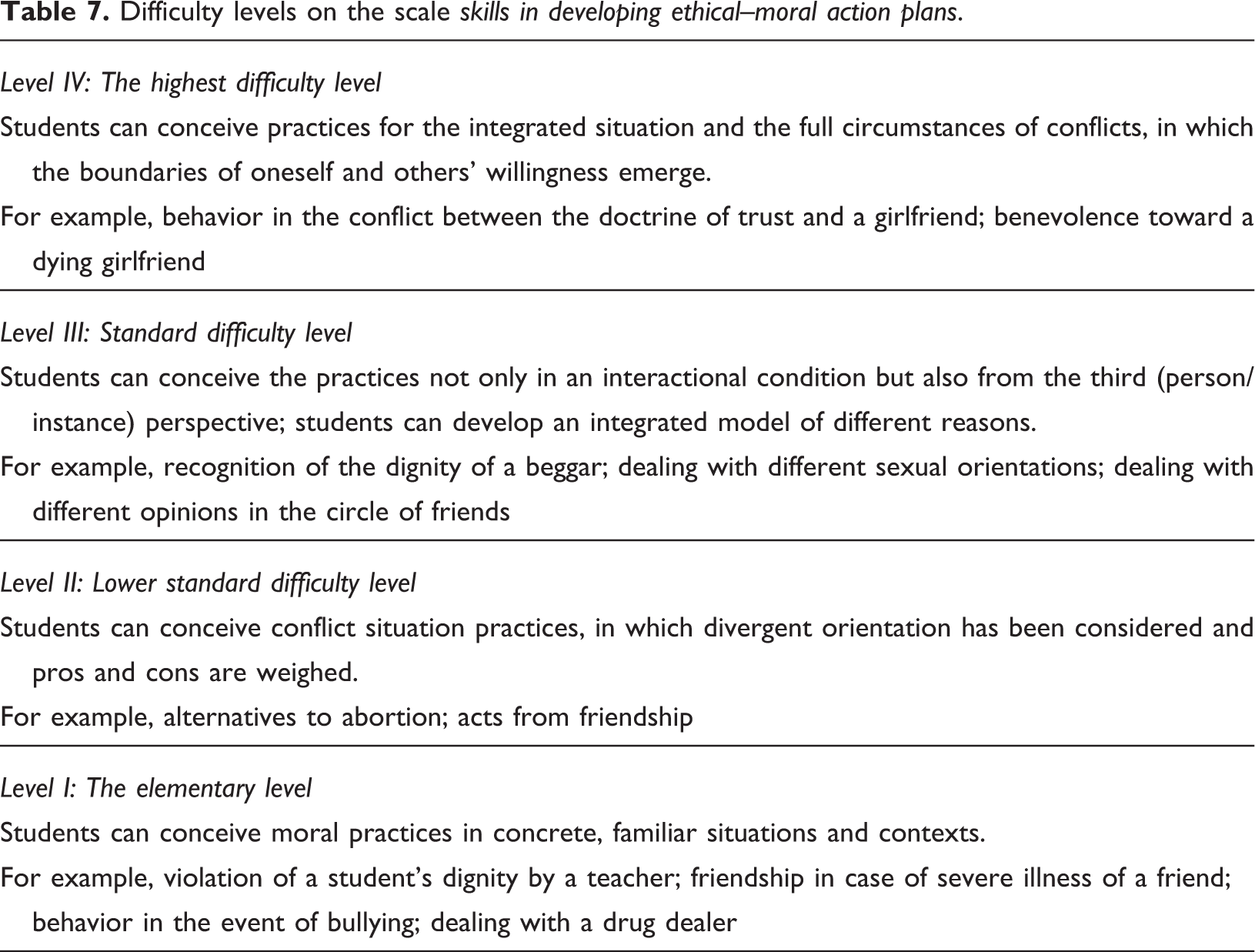
Level I again addresses familiar moral perspectives learned through life experience, and its achievement is independent of students’ participation in an ethical course. Level II, however, demands reflexive consideration and balance among divergent moral orientations; Level II achievement requires more specific knowledge, skills, and abilities, which are typically supported, taught, and learned by students participating in ethical courses. Level III refers to the relationship between the individual and others, which concerns non-vital negotiation decisions. Level IV is associated with practices in which existential issues need to be addressed. Such issues demand a capacity of distinguishing the boundaries between the willingness of oneself and others. It is impossible for students to achieve Levels III and IV without prior experience of a reflective and problem-based ethical coursework and curriculum.
Comparative analyses
The second part of this article presents the methods, databases, and results of the comparative study conducted in Shanghai in 2017. The analysis reveals which levels of competence Chinese students achieved in the three competence domains and compares these with the results from similar surveys in Berlin, Hamburg, Warsaw, and Vienna, by controlling differences in sociocultural and achievement-related students’ background characteristics.
ETiK-International-Shanghai does not conduct a comparative study of internationally representative samples but only targets at convenience samples of 15-year-old students in Shanghai schools aiming to obtain some basic information, trends, and research data on assessing the levels of ethical–moral proficiencies as described by the three ETiK dimensions of moral knowledge, competence, and skills as stated above. It is necessary to note that this project does not carry out an international comparison ranking but, rather, investigates what role school-based ethical–moral instruction plays in developing and shaping ethical–moral competences. As to whether the research conclusions provide a useful understanding of moral education programs in China and Germany, we must carefully study and consider the specific moral education contexts of both countries.
In terms of ethics education, the results of the project’s preliminary case study have shown wide consistency in different regions (Benner & Nikolova, 2016a). However, as to the specific curriculum implemented in schools, there are great differences among the research data groups: In Berlin, Hamburg, and Vienna, the curriculum focuses more on reflective issues and a problem-solving approach, whereas in the participating schools from Shanghai, the teaching focus of moral education courses is defined more or less by morality issues and social skills aspects; in Warsaw, the majority of the tested students were only engaged in Catholic religious courses (Stępkowski et al., 2016), while in Vienna, all tested schools participated in an ethics coursework, which was a pilot project experimented at the time of the testing (Ritzer et al., 2016).
To ensure that the testing tools developed in the German ETiK project could be adapted for valid use in the ETiK-International-Shanghai project, we (1) compared the curriculum standards of China and Germany and identified the similarities and differences among ethical–moral issues, concepts, and forms of judgment; (2) examined whether the ETiK instrument conformed to Chinese curriculum standards and whether it was necessary to develop new test questions for the Chinese context; (3) verified the validity of ETiK testing tools and made necessary improvements to individual test questions; and (4) distinguished test items that conformed with the actual situation in China and Europe and extracted test items that matched both contexts and those that matched only one.
The purpose of these measures was to ensure that the testing instrument, which claims to be universal, but is actually Eurocentric, was feasible in the Chinese context. Thus, we had to distinguish two types of content in the test items: content items that were common to both China and Europe, and some content items unique to the Chinese or European context. We also examined cultural differences in empirical aspects (items by country interaction) and then discussed and reflected upon the cultural differences with Chinese students, teachers, and scholars prior to administering the real run of the study.
After translating more than 90% of the original test questionnaire into Chinese, we found that some minor adjustments to language expressions were required, which meant that the test items were valid in the context of Chinese curriculum standards. Newly designed test items for the Chinese context mainly referred to the content knowledge of ethical–moral relationship between individuals and groups (collectives). In addition to testing in Shanghai, these newly developed test items are planned to be piloted in Germany and other ETiK-International projects in future studies as well.
When investigating the reliability of the test items, reviewing the data analysis, and presenting the test results, great importance was given to Walzer’s (1994) distinction between reiterative universalism and abstract universalism. This was built on as we attempted to examine and consider the characteristics of the moral competency of students in China, comparing their results with the results of European upper secondary students without any Eurocentric preconceptions, in the hope to identify and prove Walzer’s (1994) distinction in the Chinese–European context.
Assessment administration in Shanghai
The testing tools used in the ETiK-International-Shanghai project included a test and a student questionnaire. We used data from Shanghai, Berlin, Hamburg, Warsaw, and Vienna for comparative purposes. In addition, the curriculum situation relating to moral education was considered, as well as the individual learning conditions of the compared student populations. To achieve this, we also used a nonverbal reasoning test battery (Heller & Perleth, 2000) to measure levels of logical thinking ability. The student questionnaires surveyed: Gender. Background information related to parental academic achievement, which was differentiated depending on whether neither or at least one parent had a university entry-level qualification. Language environment, which was differentiated depending on whether the student spoke Mandarin or a dialect. Social and cultural resources indicated by the number of books at home.
A psychological scale on ethical attitudes and beliefs was also administered to analyze the correlation between individual attitudes, beliefs, and achieved levels of ethical–moral competence (Benner & Nikolova, 2016a).
The numbers of participants in the study totaled 2,036 15-year-old students across nine schools in the Shanghai area. Six of the nine schools were located in Shanghai and the remaining three were from neighboring cities. Eight schools were high schools and one was a vocational secondary school. As shown in Table 8, 57% of the students were female and 66% of the students tested spoke only Mandarin or primarily Mandarin at home. Nearly half (48%) of the students claimed to have more than 100 books at their homes. Most (84%) of the students’ parents had a high school degree or higher. These parameters indicate that the Chinese sample had high academic potential, which was also confirmed by the cognitive ability test results: The average score of the Chinese students was 20.1 of a possible 25.
Students’ demographic information.
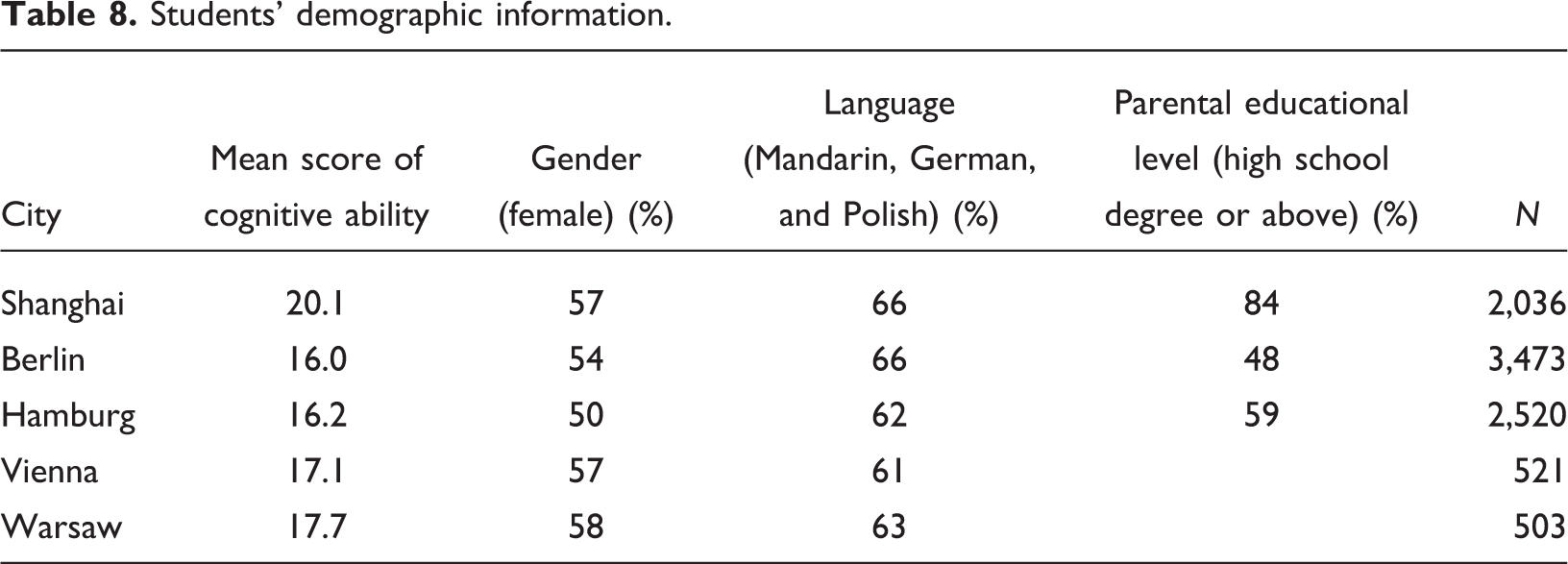
To further understand the relevant background characteristics of the Shanghai sample, we compared it with samples from Berlin, Hamburg, Warsaw, and Vienna. The descriptive analysis showed that 50% of the tested student population in Hamburg and 54% in Berlin were female; the gender breakdown in Vienna (57% female) and Warsaw (58% female) was closer to that of the Shanghai sample. In terms of family language, 66% of Berlin participants, 62% of Hamburg participants, and 61% of Vienna participants spoke mainly German at home; 63% of Warsaw participants spoke mainly Polish at home.
As to social and cultural background information, the education of the students’ parents was taken as a valid indicator. In our data, nearly half (48%) of the parents in the Berlin sample and 59% in the Hamburg sample had a high school diploma. This background information was not available for the Vienna and Warsaw samples, as the question referring to parental educational level could not be included in the local survey; however, a relatively high proportion of households with more than 100 books indicates that the samples from Warsaw and Vienna are students from well-educated families. At 66% for both Warsaw and Vienna, this proportion is higher than the Shanghai sample of 48%. At 50%, the proportion of families in the Berlin sample is comparable to that of the Shanghai sample. The lowest proportion of families with more than 100 books is the Hamburg sample, with 44%.
In terms of cognitive ability, the Shanghai sample showed obvious advantages: The average score of the cognitive ability test was 16.0 in Berlin and 16.2 in Hamburg, both of which are significantly lower than that of Shanghai. The average cognitive ability test score in Vienna was 17.1 and in Warsaw 17.7, both of which are higher than Berlin and Hamburg but still significantly lower than China (20.1).
When considering the curricular requirements, as well as the instructional contexts for the participating cities and regions, it can be generalized that a reflexive teaching approach in ethic courses—in terms of the assumed theoretical model and designed instruments used here—is utilized in Berlin and Vienna, especially in the grammar schools, and in Hamburg in all school types from Grade 7. However, in Warsaw and Shanghai, they were only just beginning to apply this instructional approach at public schools.
Results: Ethical–moral competence of Chinese students in view of reiterative universalism
As mentioned above, the sample for the ETiK-International-Shanghai project has clear advantages over the samples taken in Berlin, Hamburg, Warsaw, and Vienna, in terms of their cognitive, linguistic, and sociocultural characteristics related to educational achievement. 1 Therefore, it can be assumed under the given conditions that Chinese students have a background benefit on the achieved test scores in comparison to the evaluated European students.
To fully consider the significant bias in background characteristics between the Chinese and European samples, we subsequently clustered the Shanghai, Berlin, Hamburg, Warsaw, and Vienna samples into three data analysis groups with balanced background characteristics:
The first group scored an average of 12.4 on the cognitive ability test. Of these students, 44% did not speak the country’s official language at home and 55% of the students had only a small collection of educational resources at home. These data show that the students in this group experienced less beneficial social, cultural, and cognitive background.
The second group scored an average of 19.1 on the cognitive ability test. Of these students, 36% did not speak the country’s official language at home and 44% of the students had only a small collection of educational resources at home. In terms of cognitive ability, language, and sociocultural background, the second group was significantly better than the first but still less beneficial than the third group.
The third group scored an average of 22.4 on the cognitive ability test. Of these students, 30% did not speak the country’s official language at home. This group of students experienced the most favorable conditions compared with the first two groups. Two thirds of the students’ families had above-average level of social and cultural status; the level of cognitive ability is significantly higher than those of the first two groups. 2
Table 9 shows the correlation between background information, on which the grouping was based, and ability values. Taking the first group as the control group, the students in the second group were significantly better than those in the first group on all three ETiK scales, with effect size d ≥ .30. The ability gap between the third group and the first group was even larger: d > .50.
The average value and standard deviation of ETiK scales, and the effect size of the average value, all presented by data analysis groups (the first group is the control group).
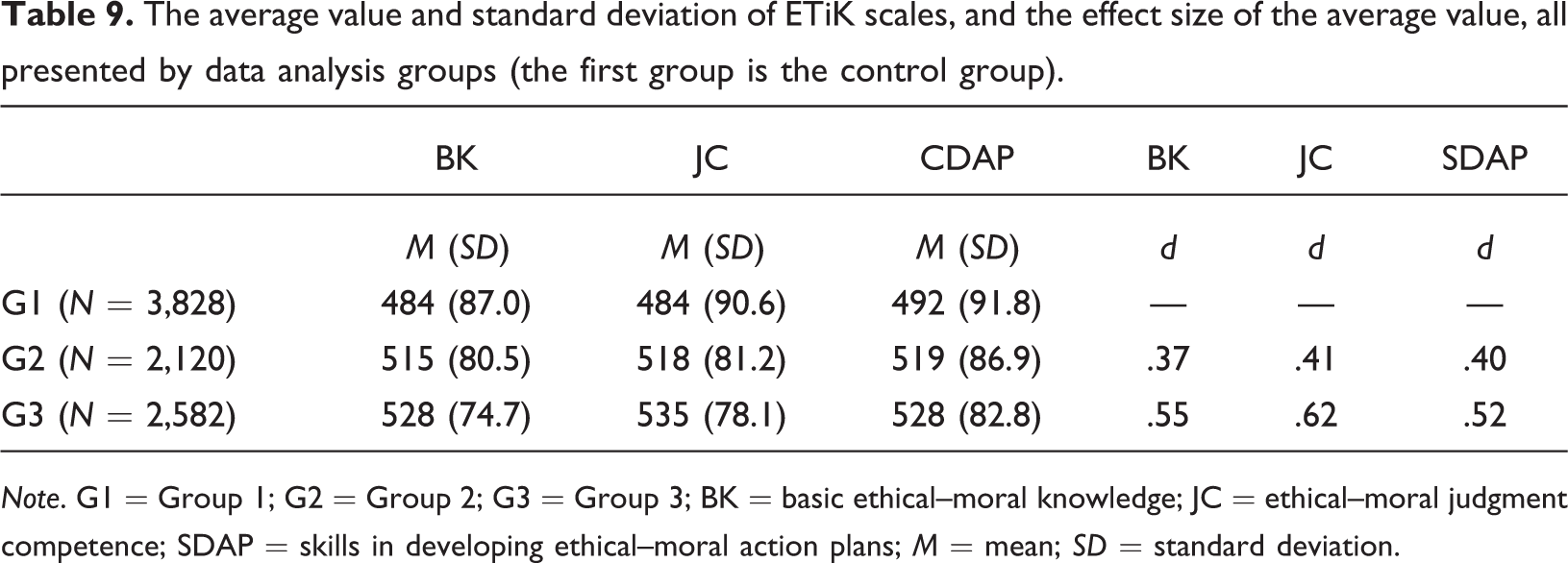
Note. G1 = Group 1; G2 = Group 2; G3 = Group 3; BK = basic ethical–moral knowledge; JC = ethical–moral judgment competence; SDAP = skills in developing ethical–moral action plans; M = mean; SD = standard deviation.
The descriptive results of the comparative analysis run showed that when accounting for relevant cognitive, cultural, and social background characteristics of the compared student groups, the average scores of the test results on basic ethical–moral knowledge and moral judgment competence scales for the four European samples were generally higher than those of the Chinese students. For the moral plan of action competence scale, the European samples achieved higher scores than the Chinese sample, with the exception of Vienna.
To statistically validate these descriptive results of the differences between the sample scores for Berlin, Hamburg, Warsaw, Vienna, and Shanghai on the three competence scales, we ran linear regression analysis within the three data analysis groups controlling educational context, the participants’ cognitive ability test scores, gender, family language, and home literacy resources (average amount of books at home). The Chinese sample was used as the reference group in the regression models.
Table 10 shows the standardized regression coefficient weights of the independent factors as a quantitative measure to explain the score differences in the five comparative samples. A significantly positive regression coefficient for the predictor variables of “Berlin,” “Hamburg,” “Warsaw,” and “Vienna” may indicate that differences between the students of the four sample origins, and of Shanghai, for each ETiK scale, can be explained not only by performance-related cognitive, social, and home literacy background factors but also by differences in the taken quantity and quality of schools’ moral education courses and instruction. By linking these to the predictor variables of the four samples examined here, we extracted the following results: For all three competence scales and three ability groups, the Hamburg variable yielded a significantly positive regression coefficient. For the judgment competence scale, not only Hamburg but Berlin also yielded a significantly positive regression coefficient; however, because its coefficients in Groups 1 and 2 were significantly smaller, the advantage was overall smaller. For the basic knowledge scale, Berlin had a significantly positive coefficient, except for the first ability group. Vienna did not present such a systematic situation: Although the regression coefficients in Group 3 for the basic knowledge scale and ability Groups 2 and 3 for the judgment competence scale were significantly positive, the regression coefficient in Group 1 for the practice competence scale was significantly negative. Finally, the Warsaw variable did not produce any significant effects in any analysis group, for any scale.
Predictors of test scores of basic ethical–moral knowledge, ethical–moral judgment competence, and skills in developing ethical–moral action plans: Standardized regression coefficients.
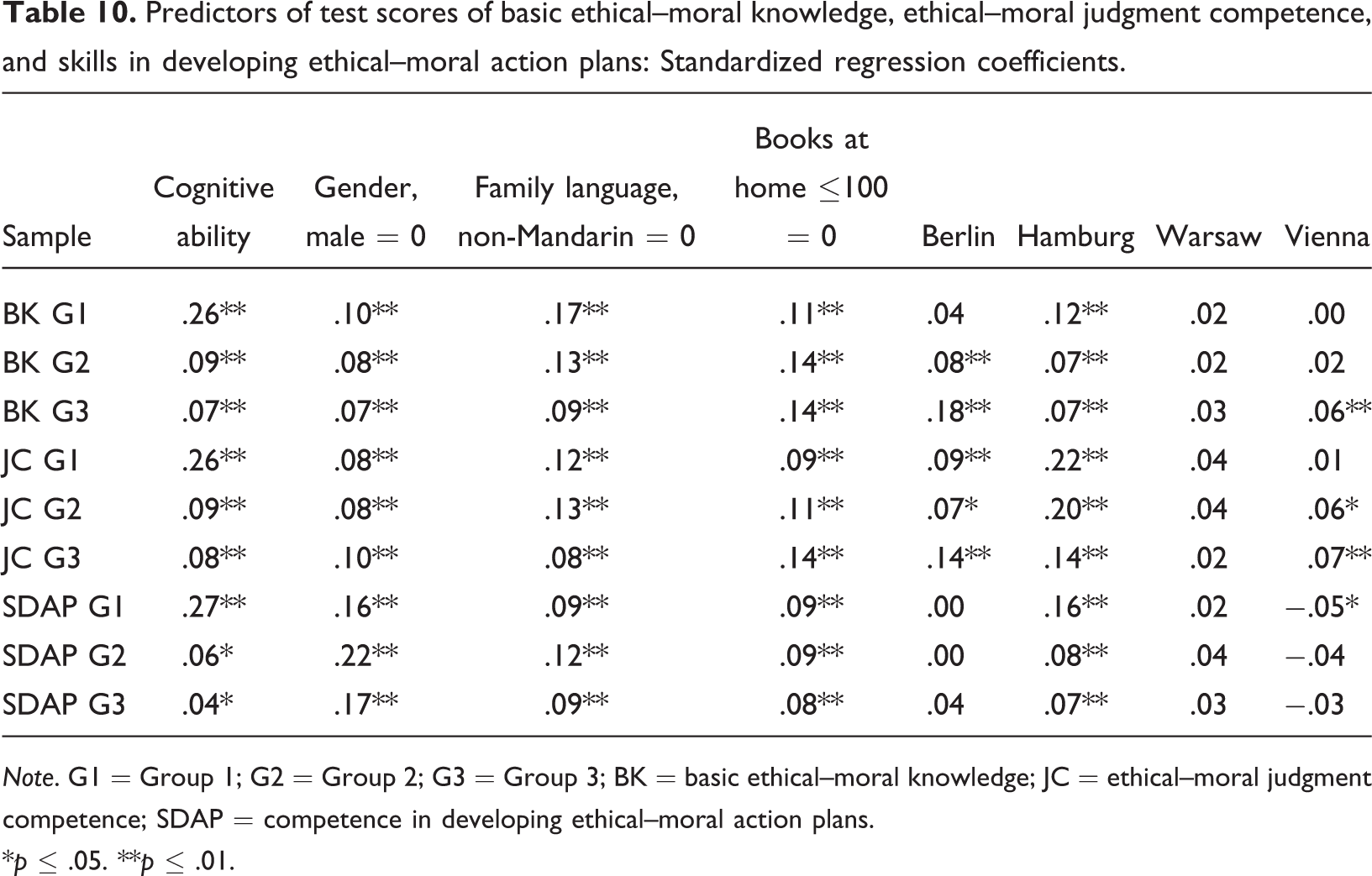
Note. G1 = Group 1; G2 = Group 2; G3 = Group 3; BK = basic ethical–moral knowledge; JC = ethical–moral judgment competence; SDAP = competence in developing ethical–moral action plans.
*p ≤ .05. **p ≤ .01.
These results indicate that the significant advantages of Chinese students in the studied sample, in terms of cognitive ability, did not necessarily lead to better test results on the ethical–moral competence scales when compared to students in the tested European samples: Shanghai test scores generally lagged behind Hamburg and Berlin. Based on this result, it is predicted that compared with ethics courses and instruction practices at schools in Hamburg and Berlin, ethical–moral education courses offered in China (Shanghai) generally lack reflective and problematic components in a considerable amount. This prediction is also verified by another statistic: The test scores of Shanghai students are only slightly different from those of Vienna students and are not significantly different from those of Warsaw students. In both cities (Vienna and Warsaw), reflective and problematic ethics classes are either not provided or offered in an unsystematic way at their public school systems.
Discussion
Summary and interpretations of the results
This article presents the theoretical framework, measurement instrument, and findings of ETiK-International-Shanghai, with a focus on measuring achievement in the domain of ethical and moral competences in China, followed by a comparison of the results of the Shanghai study with selected European cities. In China, despite the fact that contents of ethical and moral education consisting of various issues relating to morality, law, politics, and psychology are basically included in public school programs, curriculum and instruction itself have been largely marginalized. As to the implementation of ethics courses in China, little space has been left for self-reflection and open-ended questions. In most instances, answers deemed correct have been fixed by curriculum criteria and textbooks. Such a curriculum design makes it difficult to educate students on competences related to reflective judgment and the development of ethical–moral action plans. Our study also reveals that China’s ethical and moral curriculum does not devote sufficient attention to the basic concepts of ethics and morality. This, to a certain degree, explains why Chinese students achieved a lower score on items assessing ethical–moral basic knowledge and were at a disadvantage when answering questions related to judgment competence and the competence to develop ethical–moral action plans. More specifically, contrary to the ethics curriculum in Germany, China’s moral education on morality and life, morality and society, ideology and morality, and ideology and politics does not encourage argumentative and problem-posing discussion. Moreover, it can scarcely guide students on how to deal with a dilemma: They only offer guidance or a model for developing a standardized reflection and competence in developing ethical–moral action plans. Thus, Chinese students are unfamiliar with responding to items containing multiple competitive or contradictory choices.
Beyond this, the study also suggests that traditional Chinese cultural influences restrict students’ ways of thinking. In China, family is considered the most important unit that links individuals with society. As a virtue, filial piety—which proposes obedience to parents, elders, and ancestors—has been promoted by Chinese society for centuries to guide family relationships (Chen, 2016; Hui et al., 2011). As such, there is a reticence in challenging others and reflecting on varied ethics and ideas in China. Additionally, in contrast to the rational spirit of ethical–moral education and a boundary between morality, law, and politics in the West, China’s ethics highlight moral motivations and moral emotions (Chen et al., 2018). Taking this into account, the average achievements of the Chinese participants in this test are even seen as exceeding our expectations and assumptions. The overall study results show that Chinese students are knowledgeable, have judgment competence, and possess practice competence in both Chinese and European discourse.
Chinese students are particularly sensitive in topics and questions for which the answers require a high degree of empathy—at least in relation to their own group. However, the reflection and treatment of problems relating to minorities is barely within their horizons. It should also be noted that Chinese students display outstanding empathy when dealing with suffering, misfortune, and sorrow, as well as in their willingness to help others.
Based on the results of our evaluation, we draw several conclusions: In the Chinese context, self-determination and collectivism are not an either-or choice; Chinese students reserve space for their own self-determination, even when they belong to different groups, hence, they have a developing ability for reflecting on the coordination among social morality, individual virtues, and positive laws; we consider that such competence is not regional, abstract, or comprehensive, but rather, it has distinctive Chinese characteristics.
Chinese student participants in this test demonstrated a recognition of China beyond commonality, as well as the qualities of global citizens, international judgment, and the general competence to develop action plans.
The results from the main test suggest that aspects such as self-determination, discrimination, differences between social norms and ethical principles, and differences between equities and inequities in all forms should be improved and therefore included in further programs.
Implications and limitations
The findings of the comparative study of the ETiK-International-Shanghai project can highlight requirements for the further development of moral education in China at the levels of teaching, curriculum, teacher education, and research.
With regard to teaching, there were clear or substantial differences in performance in the higher levels of the scale in reference Group 3 (students with high cognitive ability and higher home literacy resources), especially in the dimension of basic ethical and moral knowledge and judgment. Such differences could best be reduced by strengthening the reflective components of specific teaching.
Regarding curriculum, the lack of reflective content has a specific impact on the performance of students with low cognitive ability and disadvantaged family background. In this case, the failure to achieve higher levels could be reduced by strengthening reflective teaching and differentiation, according to the needs of individuals, to provide support for students from all three ability groups.
When considering teacher education, upper secondary school students could benefit from learning more classical ethics, improved by experience and a knowledge of data-based teaching and instruction, as well as subject-didactic diagnostics.
Finally, at the level of research, it would be desirable to establish a conceptual link between reflective teaching concepts, school reform, and evaluation of instruction, which checks the effectiveness of teaching by assessing the level achieved by students in the descriptions of the sub-competences.
Reforms and school-based projects are recommended, in which dependencies between methodological and thematic aspects of ethics teaching and its effects on the development of competences of students are examined through scientific support. These proposals also designate one of several possible directions for follow-up projects, in which the work begun could be continued.
However, when interpreting and generalizing the results, it is important to bear in mind that although the findings reported in this study have a solid foundation of data, they are not representative for the whole of China. Further research is needed to corroborate the implications for education and school-didactics and to compare problematic competence developments and successful teaching.
Finally, particularly the comparative study of instructional differences between the school programs of moral education in China and Germany offers important implications for improvement of moral education curriculum in both China and Germany. Germany emphasizes rational argumentation, while China’s moral education emphasizes empathy and social skills. These two approaches could be complementary, if both countries learned from each other. For example, it would be greatly significant if Germany could cultivate more attitudes of moral empathy in its upper secondary students. As Rousseau (1979, pp. 274–278) said, we should encourage people to observe and think more about those who are less fortunate than them, and reflect on people’s miseries and help them out, but not focus on those who are happier than them.
Footnotes
Contributorship
Zhengmei Peng conducted the ETiK-International-Shanghai project at the ECNU and the implementation of the tests in China, Dietrich Benner and Roumiana Nikolova conducted the work of the project group at the Humboldt University of Berlin. Tao Peng worked in the group, particularly on adapting the content of the instrument to the Chinese context and on the development of new China-related test tasks. Roumiana Nikolova and Stanislav Ivanov were responsible for the empirical modeling and data analysis. The mentioned scientists wrote the part for the discussion of the project results together. The project was realized through mixed financing. The Chinese Scholarship Council provided the Chinese young scientist Tao Peng with a PhD scholarship at the Humboldt University of Berlin, the Alexander von Humboldt Foundation established an institute partnership between the Humboldt University of Berlin and the East China Normal University in Shanghai, and the Fritz Thyssen Foundation financed the first trip to carry out pretests and the entire data analysis.
Declaration of conflicting interests
The authors declared no potential conflicts of interest with respect to the research, authorship, and/or publication of this article.
Funding
The authors disclosed receipt of the following financial support for the research, authorship, and/or publication of this article: This study was sponsored by the Peak Discipline Construction Project of Education at East China Normal University.