




Abstract
Purpose:
This study aims to research the impact of the e-learning environment, in which game-based education software was used, on the learning of students with intellectual disabilities.
Design/Approach/Methods:
The study group consisted of 34 students with intellectual disabilities studying at a special education vocational school in Çanakkale, Turkey. In this study, the true experimental method was used. For 5 weeks, the experimental group received blended learning that was supported by the usage of a game-based education software designed by the researcher, which includes interactive educational game applications. At the same time, control group students only received the teaching process in the classroom with the traditional teaching method. A course attitude scale and an achievement test were used for data collection.
Findings:
The analysis of the findings showed that there was a significant increase between pre-course and post-course attitudes and academic achievement scores of the students. There wasn’t a significant difference between pre-course and post-course attitudes and academic achievement scores according to the gender and academic achievement scores. Males’ academic achievement and attitude post-test scores were higher than females’ scores. Students having upper daily mobile devices usage experience had higher post-test and academic achievement scores than students having lower daily mobile devices usage experience.
Originality/Value:
This article has the potential to construct a new practice example as a supplement for analyzing the game-based educational software usage on the education of students with intellectual disabilities. As a pilot study, it provides a good sample for further investigations.
Introduction
Playing computer games is an important part of our social and cultural environment (Oblinger, 2004). They are especially appealing as the most popular and attractive usage activity of the computers and mobile devices in the home to children and adolescents (Chassiakos et al., 2016; Downes, 1999; Harris, 1999; Mumtaz, 2001; Subrahmanyam et al., 2001). Gamification and game-based learning is a trend that has been applied in many settings including education, social media, and workplace training (Kapp et al., 2020; Pho & Dinscore, 2015). Generally, games are defined as an immersive, voluntary, and enjoyable activity in which a challenging goal is pursued according to agreed-upon rules by researchers (Kinzie & Joseph, 2008). In game-based learning, games are used in getting learning outcomes with their properties of containing a challenge, a response to play, and feedback (Plass et al., 2015).
Using this enjoyable feature of the games can give opportunities for combining gameplays with educational objectives. This combination could trigger students’ learning motivation and academic achievement by providing them with interactive learning opportunities (Addy et al., 2018; Al-Azawi et al., 2016; Hamari et al., 2016; Prensky, 2001). In gameplays, users are expected to solve problems in a simulated environment, which can include simple or complex challengings (Kiili, 2005). This environment design can challenge, motivate, and engage users in their learning processes (Chang & Hwang, 2019).
In analyzing and designing game-based learning environments, some frameworks have been developed (Kapp et al., 2020). For example, Ke (2016) developed a framework focusing on designing and developing games for learning, which included designing for knowledge activation and acquisition, context integration, learning spaces, reflection and iteration, and in-game support. As a different framework, Hamari et al. (2016) developed a framework focusing on the three outcomes (motivational, psychological, and behavioral outcomes). Similarly, Stewart et al. (2013) also developed a framework focusing on outcomes (learning, behavioral, and skill changement). Game-based learning environments can be developed for different outcomes. In this study, it is intended to examine how both learning and motivation are impacted by educational gameplay.
Using educational computer games is one of the most natural forms of learning (Kickmeier-Rust & Albert, 2010). Also, digital game-based learning environments may affect students’ motivation and engagement to the curricular contexts and objectives. Unfortunately, young people generally do not reflect the instinctual motivations they have shown for games similar to the curriculum content (Prensky, 2003). The challenging world of games shapes students’ expectations and cognitive skills, which are related to learning. But making educational practices and contents may seem boring and meaningless (Egenfeldt-Nielsen, 2011; Prensky, 2003). But it is believed that games that include educational objectives and subjects have the potential to make the learning of academic subjects easier, more learner-centered, more interesting, more enjoyable, and therefore more effective (Charlier & De Fraine, 2013; Papastergiou, 2009; Prensky, 2001). In recent years, this belief is affected and widely discussed due to the fast progress of multimedia and computer technologies (Hwang & Wu, 2012). This discussion has inspired many research topics on educational computer games subject.
Many researchers are pointing out that educational computer games can be an effective method of creating a more interesting and attractive learning environment (Cagiltay, 2007; Combefis et al., 2016; Papastergiou, 2009; Tuzun et al., 2009). Also, many researchers are pointing out that educational computer games can improve students’ learning motivation and interest (Burguillo, 2010; Dickey, 2011; Ebner & Holzinger, 2007; Harris & Reid, 2005; Liu & Chu, 2010, Manero et al., 2015). As a result of this research, researchers examine the outcome effects (motivational affordances, achievements, satisfaction, behavior change, etc.) of the games. Hwang et al. (2013) pointed out that well-designed educational computer games with their advanced features can improve the academic achievements of students even in the lessons in which students have difficulties.
Geometry is one of the lessons students have difficulties in (Bhagat & Chang, 2015; Zhang, 2017). But it is used widely in a real-life situation (Çelik, 2020; Hwang et al., 2020). Therefore, the basic principles of the geometry should be gained in the early years of school education (Novita et al., 2018). Deficits in visual and spatial working memory can be one of the most important reasons for the difficulties of students in geometry lesson (Passolunghi & Mammarella, 2012). Hosťovecký et al. (2019), Ketamo (2002), Madrigal et al. (2018), and Wallner and Kriglstein (2012) in their studies developed game-based learning software for geometry education. They also found out that these software were efficient on students’ academic achievements in geometric shape, angle, and length measure education. Similarly, students with intellectual difficulties live with these problems at least as much as other students. Game-based applications supporting these memories may help in the eliminating process of the difficulties in geometry education. Geometric shapes are important and the base topic of the geometry curriculum (Orihuela et al., 2019). Because of this, in the educational software design, it will be important to have applications providing the permanence of geometric shapes to solve memory problems. So, in this research’s software design process, it was aimed to support the memorizing skills of students with intellectual disabilities by the games as matching.
When we review the educational technology studies in Turkey, we can see that the research studies on the usage level of game-based educational software for educational purposes of students with intellectual disabilities and the evaluation of these usages obtained are so limited. Although there are interactive educational software for general usage of the students, there is currently no interactive educational software system that is designed as a resource for the courses in special education schools of Turkey. Special education students need materials that support their education at least as much as other students. Because educational games and software can help special education students in learning abstract subjects where they may have problems. Also, giving the right to equal and accessible education to all students is a very important feature for equal opportunity in education throughout the world. As a result, limited studies examining the impact of geometry education software on students with intellectual disabilities have been reached. These studies generally have aimed to find out the effect of using educational software with different technologies (augmented reality, etc.) on academic achievements of the students with intellectual disabilities (Cihak, 2009; Creech-Galloway et al., 2013; Orihuela et al., 2019; Rahman & Wangid, 2018; Wuang et al., 2018; Zamfirov, 2011). Therefore, it is expected that this study will fill an important gap in the literature by bringing a different perspective on the issue of game-based e-learning environments that are created for the education of students with disabilities.
As a result, this study aims to assess the academic and motivational effect on the students with intellectual disabilities of using an e-learning game designed for the basic objectives of geometric shapes concepts. Besides, the study aimed to investigate potential differences according to the students’ gender and daily mobile devices usage experience in the students’ academic achievement and attitude. Especially, the gender differences in the choices of playing games and in the addiction level to these games have been the subject of different studies (Ayhan & Koselioren, 2019; Bulduklu, 2019; Cavus et al., 2016; Wardaszko & Podgórski, 2017). In this research, a comparison of a different platform was made by using game-based education software.
Within the scope of the main problem: “What is the effect of a game-based education software on the geometry education of the students with intellectual disabilities?” the following subproblems are identified: What is the effect of using game-based education software on the attitudes of students with intellectual disabilities toward geometry education? What is the effect on the academic achievement of students with intellectual disabilities of using game-based education software in geometry education? Does the effect of using game-based education software on the academic attitude of the students with intellectual disabilities differ according to the personal characteristics (gender, daily mobile devices usage experience)? Does the effect of using game-based education software on academic achievement of the students with intellectual disabilities differ according to personal characteristics (gender, daily mobile devices usage experience)?
Method
Participants
This study was conducted with the students having mild intellectual disabilities attending a Math class in the Çanakkale Special Education Vocational and Technical High School, Turkey. The study was carried out with the participation of all of the students (34 students) who continue their education at this school. The distribution of the students according to demographic characteristics is shown in Table 1. The number of female (n = 15) and male (n = 19) students are close to each other and the average age of the students is approximately 15.5. Çanakkale’s provincial directorate of national education gave ethical approval for the study. In the sample choosing process, students’ parental written permission and their voluntary participation were asked. All the students wanted to participate in the application process. In this study, a true experimental design (including control and experimental groups) was used.
Pre-course comparison of attitude scores of the control and experimental group students (n = 34).
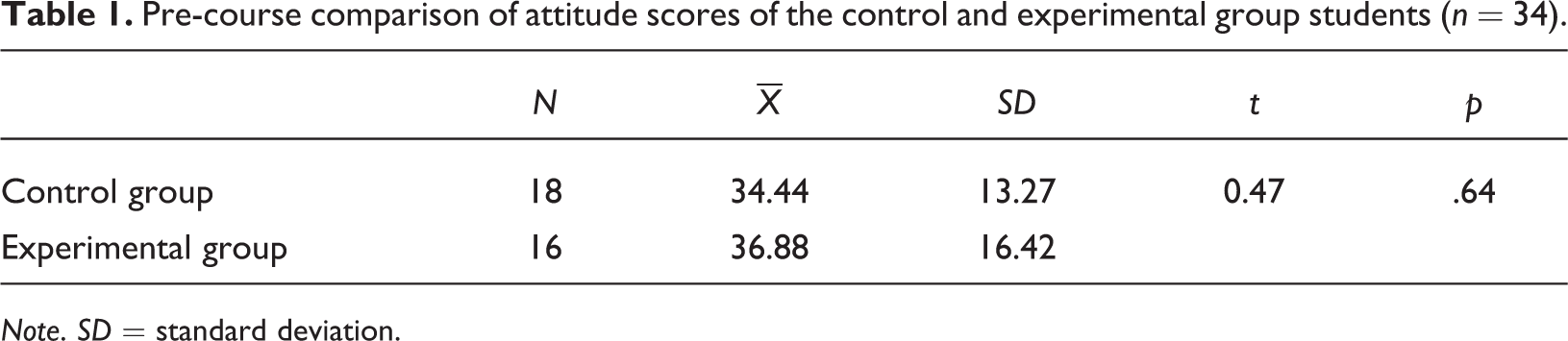
Note. SD = standard deviation.
Variables
The independent variables of the research were the gender and daily mobile devices usage experience. Students were categorized up to the daily mobile device usage experience as low level (1 hr and less), intermediate level (1–3 hr), and high level (above 3 hr). They were verbally asked about daily mobile device usage, and their answers were categorized by the researchers.
The dependent variables of the research were the attitude and academic achievement scores of students. The attitude scale includes 17 test items with 5 points Likert (1 point means: I disagree at all; 5 points mean: I agree at all). The total score of the scale changes to a maximum of 85. The academic achievement test includes 20 test items. Each question’s correct answer calculated as 5 points and the total score of the achievement test to a maximum of 100.
The normality of the data was tested by the Shapiro–Wilk test (p > .05 was considered normal). The data followed a normal distribution. The normal data evaluated by analysis of t-test, analysis of variance, least significant difference (LSD), and Scheffe tests. Cohen’s d values were calculated to determine the effect size of the differences resulting from the t-test comparisons (academic achievement and attitude).
Method of data collection and materials
In this study, the true experimental method with the pre-post design was used. For 5 weeks, the experimental group received blended learning that was supported by the usage of a game-based education software designed by the researcher, which includes interactive educational game applications. The context of the educational software was prepared according to the handbook of the students and the curriculum of the Ministry of Education Special Education Vocational School Academic Program (For Mild Mentally Handicapped). According to this program, students in the ninth grade are expected to recognize the geometric shapes at a basic level. The validity confirmation of the software content was taken from two special education mathematics teachers. This educational software named “Geometrica” (reachable with the web address in original language: http://www.uzakademi.org/geometri/) contains many visual learning components (graphs, animation, pictures, etc.) and interactive games (matching, drag-drop). In this software, casual games and gamification techniques were used. In general, casual games include less complex game controls and less gameplay complexity (Johnson, 2019). Therefore, while developing game applications in the software, it has been developed following casual game criteria. Also, it has a user-friendly interface design including the background color and music choice. Users have opportunities to make a personal change as the background color of the software. In the game-based educational software, students have different opportunities to practice their knowledge level. In Figure 1, the drag-drop application for the matching game is shown. In this application, users are expected to match the geometrical shapes and their names.
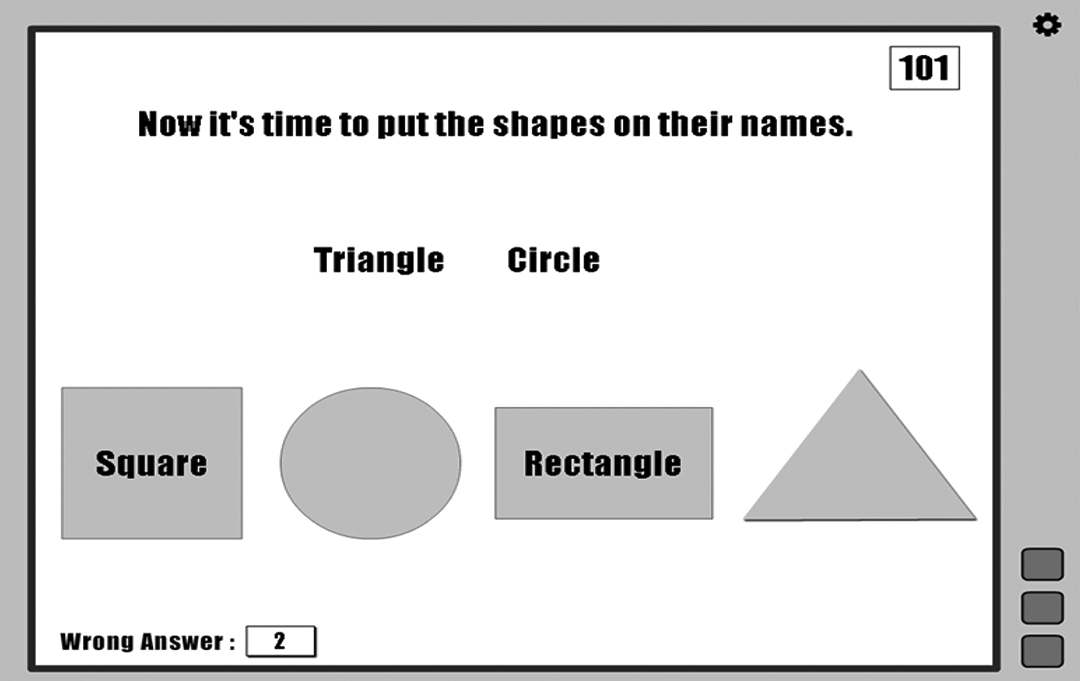
Drag-drop application page for matching the game screenshot.
In other game applications of the software, users are expected to find the same as the geometrical shape in a 4 × 4 matrix. In this game, in each matching shape finding users get 100 points as it is shown in Figure 2. In this software, personalized feedback opportunity is also given to users. For example, in Figure 3, “geometric shape with no corners and no edges” is asked. As a wrong answer, if the user writes “square,” the evaluation system gives feedback with the explanation of the reasons. As a feedback it says, “Wrong Answer, square has four edges and four corners.” By this application, users have opportunities to learn why their answer is wrong.
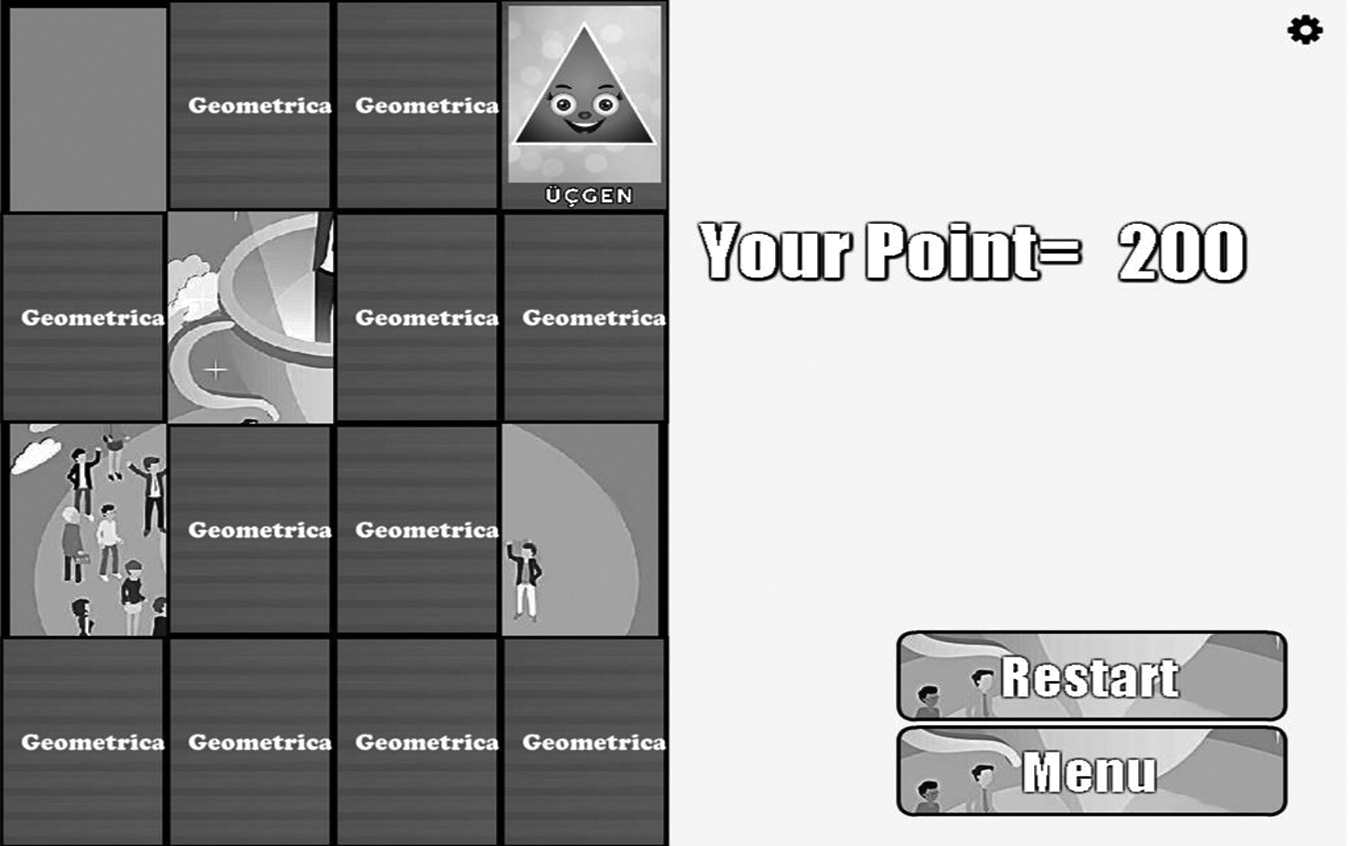
Matching finding game screenshot.

Personalized feedback in the evaluation page screenshot.
A course attitude scale and an academic achievement test were used for data collection in pre- and post-test processes. The “Attitude Toward Geometry Lesson Scale” developed by Bulut et al. (2002) was used to obtain the data within the scope of the study. A reliability test was carried out on this 5-point Likert-type scale (1 point means: I disagree at all; 5 points mean: I totally agree) including 17 test items. This scale is composed of 10 positive and 7 negative items. The three-factor scale’s Cronbach-α value was calculated as .92. The “Geometry Achievement test” containing 20 items (maximum point: 100) was used to measure the academic achievement of the students depending on the e-learning environment that was created by using game-based learning. Math achievement test approved by the Ministry of National Education was used. Validity study of the test items of achievement test was conducted by two math teachers of the special education school. The reability ability constant of the test has been determined according to Spearman–Brown’s method of division of the test to two equivalent halves (α = .814).
Experimental procedures
This study was carried out with 34 students attending a Math class in the Çanakkale Special Education Vocational and Technical High School, Turkey. The six classes in this school were randomly divided into two groups as experimental and control groups. In this context, three of these six classes were selected as the control group and three as the experimental group. The research process was carried out for 7 weeks with these students. In the first step of the research process, a short form for determining gender and daily mobile devices usage experience, the pre-tests of academic achievement, and attitude tests were applied. After the form filling operations, the interactive game-based educational software developed by the researcher was used by the students. At the beginning of the experimental process, the experimental group students were informed about the usage of the software. This software was used in the computer laboratory by students individually under the math teacher’s supervision. At the same time, control group students only received the teaching process in the classroom with the traditional teaching method. After the experimental process (following 5 weeks), the same achievement test and attitude scale were applied to the same group again.
Results
Students’ pre-course attitude scores were determined before the game-based educational software usage process. After this educational process, students’ post-course attitudes were determined. The findings concerning the differences between the control and experimental groups’ pre-course attitude scores are presented in Table 1. Table 1 demonstrates that there is no significant difference, t (32) = 0.47, p > .05, between the control and experimental groups’ pre-course attitude scores. This result shows that experimental and control group students are equal in terms of attitude. When the post-course attitude scores of the control and experimental group students are examined, in Table 2, it is seen that there is also no significant difference, t (32) = 1.04, p > .05, between the control and experimental groups’ post-course attitude scores.
Post-course comparison of attitude scores of the control and experimental group students (n = 34).
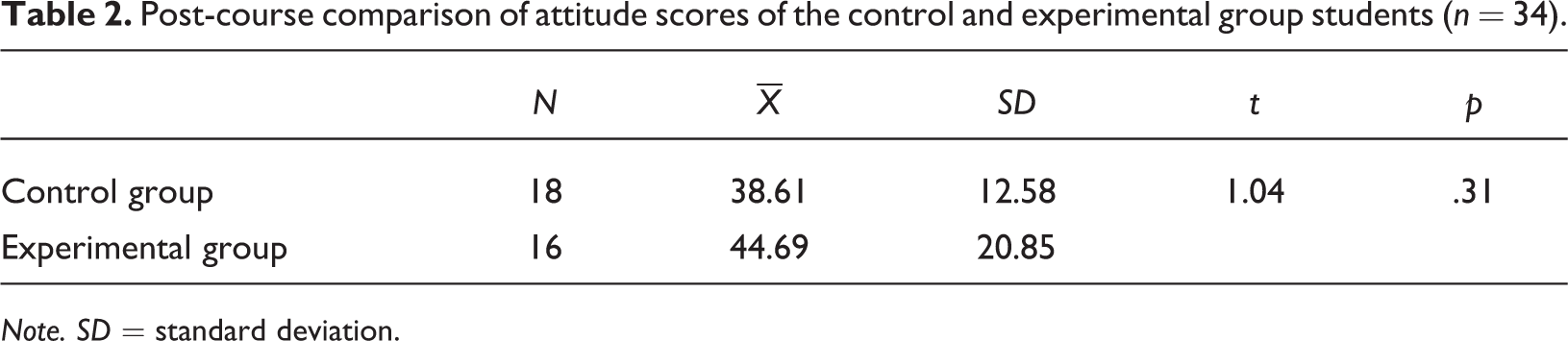
Note. SD = standard deviation.
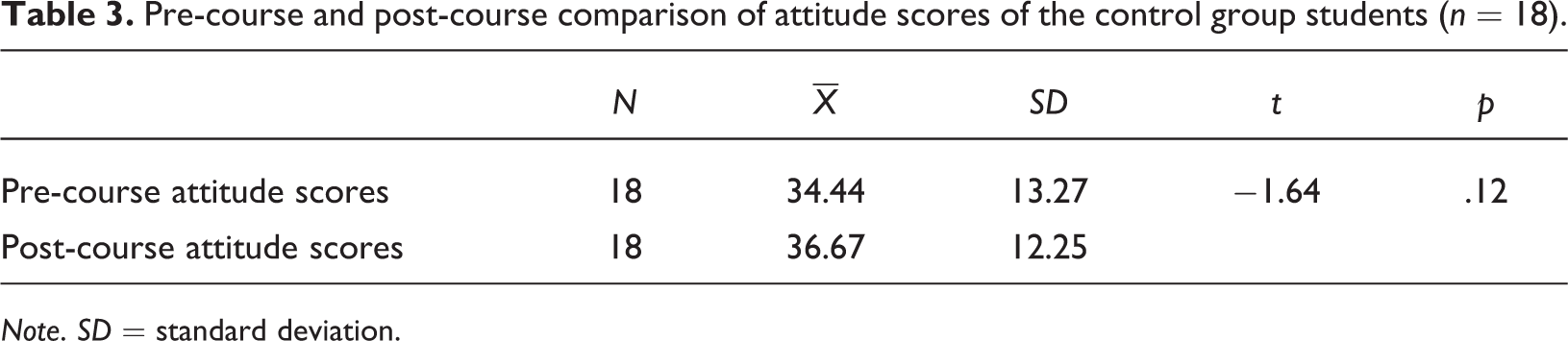
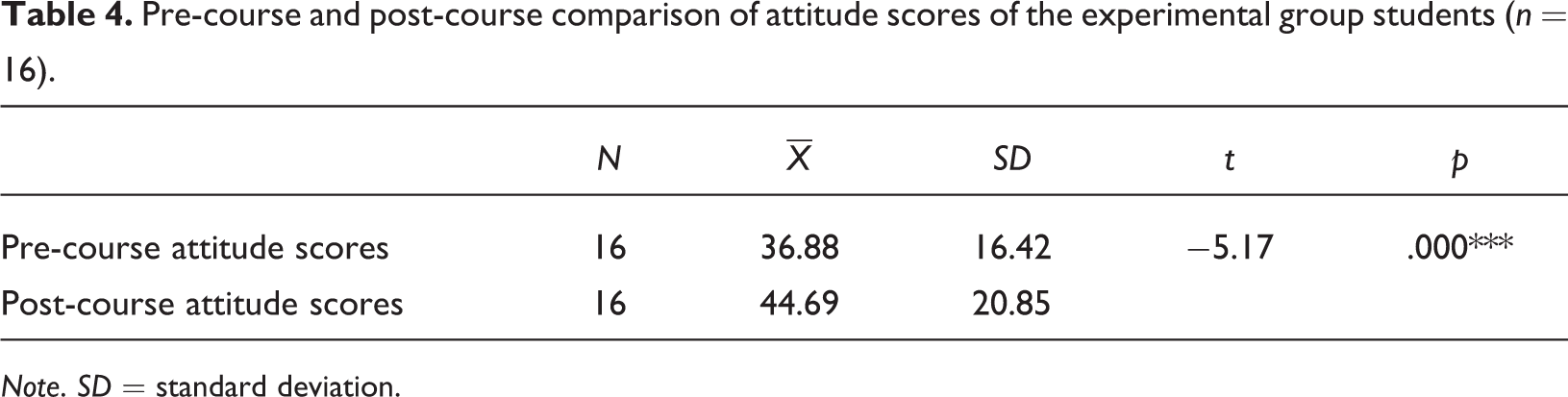
In Table 3, there was no significant difference, t (17) = −1.64, p > .05, between the pre-course and post-course attitude scores of the control group, whereas in Table 4, a significant difference, t (15) = −5.17, p < .001, d = .416, between the pre-course and post-course attitude scores of the experimental group was determined. Effect size score (Cohen’s d = .416) was between .20 and .50 because using game-based education software had a medium-level effect on students’ academic achievement. While the average point of the experimental group’s pre-course attitude score was 36.88, the experimental group’s post-course average attitude score increased to 44.69.
Pre-course and post-course comparison of attitude scores of the control group students (n = 18).
Note. SD = standard deviation.
Pre-course and post-course comparison of attitude scores of the experimental group students (n = 16).
Note. SD = standard deviation.
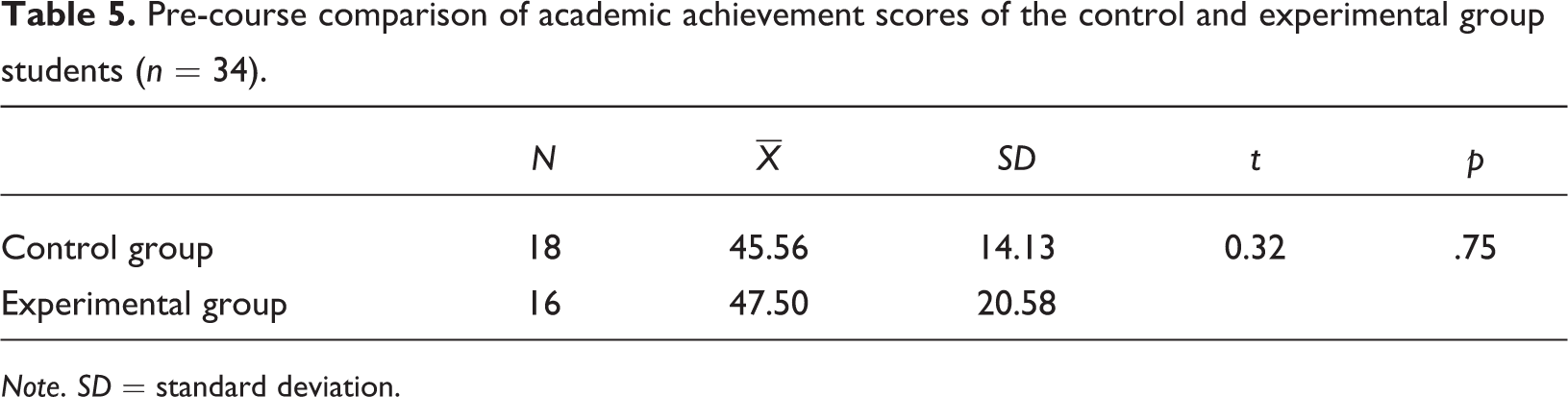
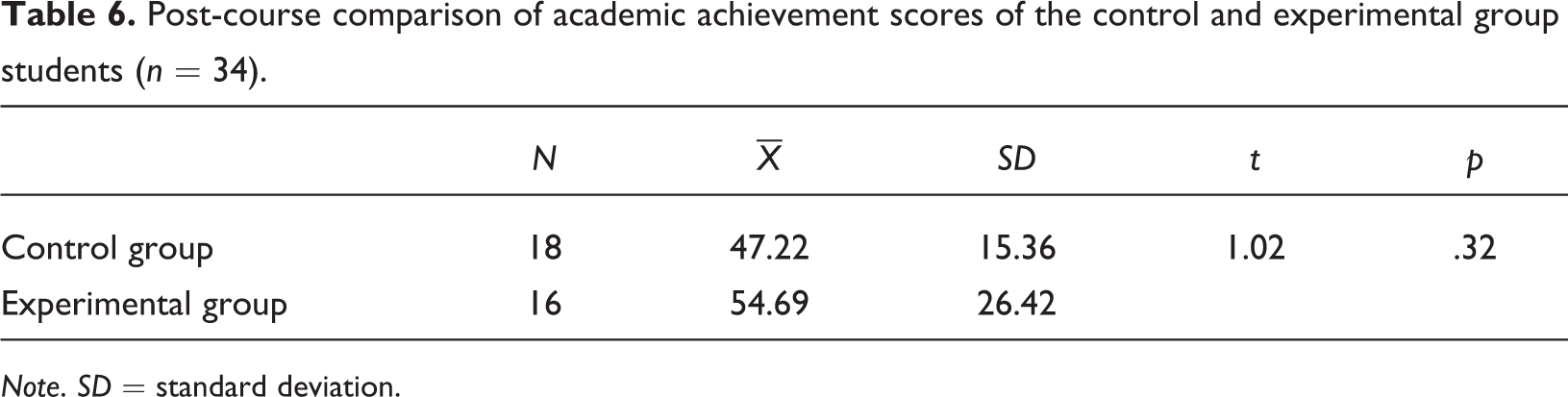
Students’ pre-course academic achievement scores were determined before the experimental process as it was in attitude measurements. After the experimental process, students’ post-course achievements were determined as it was in attitude measurements. The findings concerning the difference between the control and experimental groups’ pre-course academic achievement scores are presented in Table 5. Table 5 demonstrates that there is no significant difference, t (32) = 0.75, p > .05, between the control and experimental groups’ pre-course academic achievement scores. This result shows that experimental and control group students are equal in terms of academic achievement. When the post-course academic achievement scores of the control and experimental group students are examined, in Table 6, it is seen that there is also no significant difference, t (32) = 1.021, p > .05, between the control and experimental groups’ post-course academic achievement scores.
Pre-course comparison of academic achievement scores of the control and experimental group students (n = 34).
Note. SD = standard deviation.
Post-course comparison of academic achievement scores of the control and experimental group students (n = 34).
Note. SD = standard deviation.
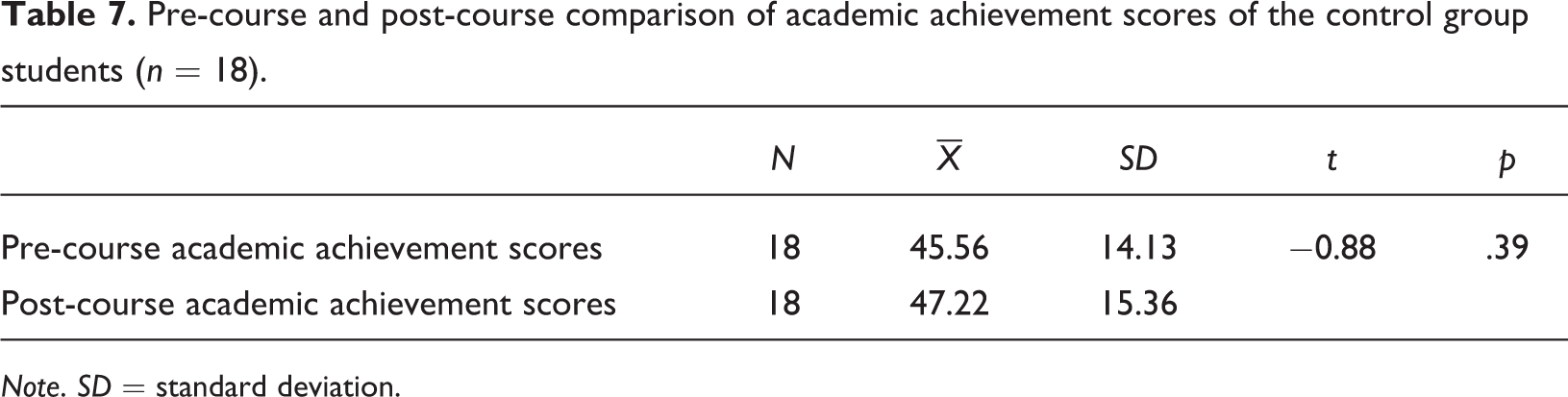
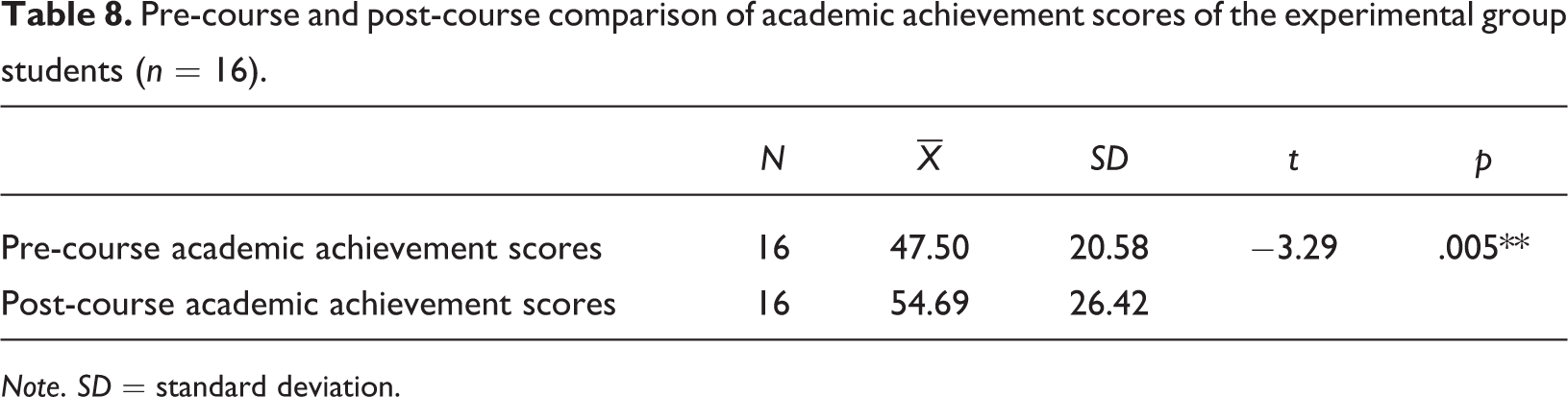
In Table 7, there was no significant difference, t (17) = −.88, p > .05, between the pre-course and post-course academic achievement scores of the control group, whereas in Table 8, a significant difference, t (15) = −3.29, p < .01, d = .304, between the pre-course and post-course academic achievement scores of the experimental group was determined. Effect size (Cohen’s d = .304) was between .20 and .50 because using game-based education software had a medium-level effect on students’ academic achievement. While the average point of the experimental group’s pre-course academic achievement score was 47.50, their average point of post-course academic achievement score increased to 54.69.
Pre-course and post-course comparison of academic achievement scores of the control group students (n = 18).
Note. SD = standard deviation.
Pre-course and post-course comparison of academic achievement scores of the experimental group students (n = 16).
Note. SD = standard deviation.
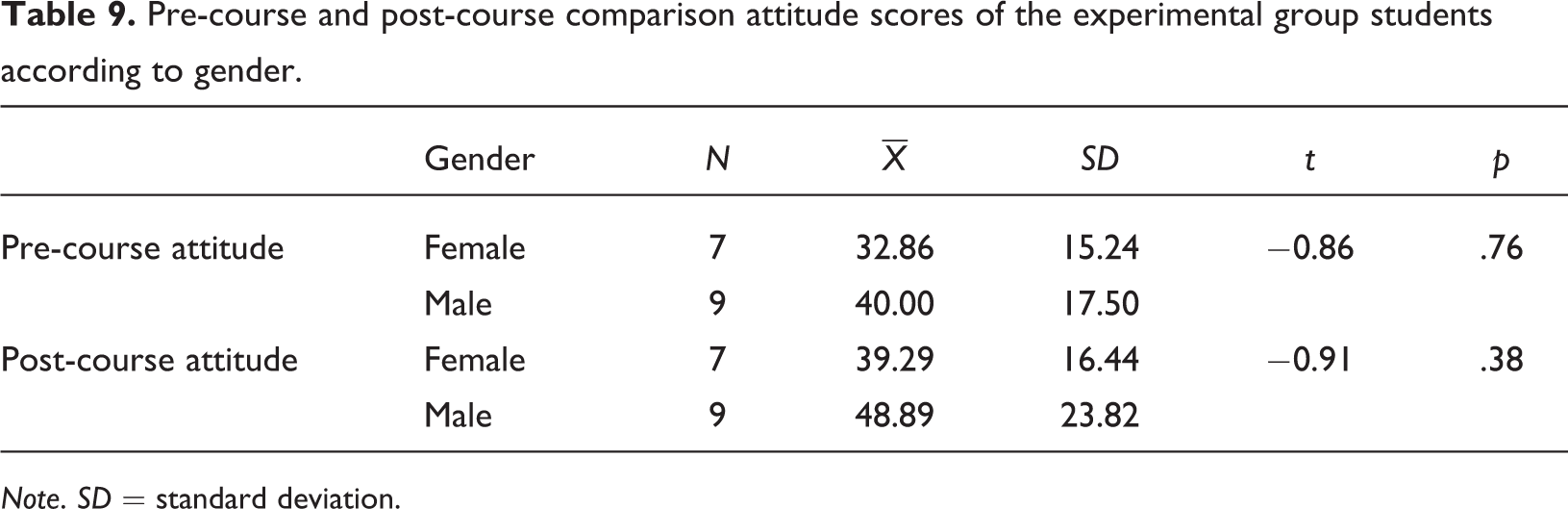
Table 9 demonstrates that there is no significant difference, t (7) = −0.86, p > .05, between pre-course attitude scores of the student’s group according to gender. Also in the post-course attitude score results, there is no significant difference, t (7) = −0.91, p > .05, according to gender. While the average point of females’ pre-course attitude scores was 32.86, the average point of males’ post-course attitude scores was 40.00. When the post-course achievement scores were examined, both the scores of males (48.89) and females (39.29) were increased. As a result, using game-based geometric shapes education software increased both males’ and females’ academic attitudes.
Pre-course and post-course comparison attitude scores of the experimental group students according to gender.
Note. SD = standard deviation.
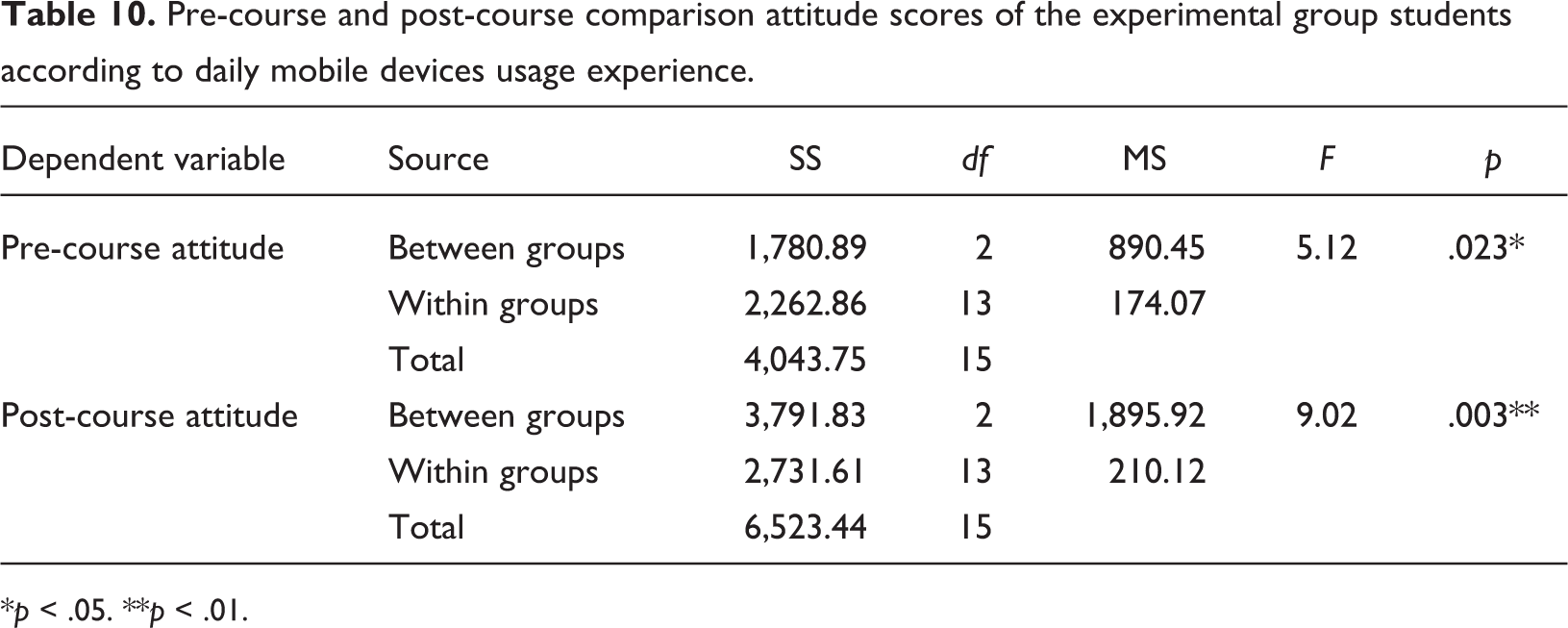
Table 10 demonstrates that there is a significant difference between both pre-course, F (2–13) = 5.12, p < .05, and post-course, F (2–13) = 9.02, p < .01, attitude scores of the student’s group according to daily mobile devices usage experience.
Pre-course and post-course comparison attitude scores of the experimental group students according to daily mobile devices usage experience.
*p < .05. **p < .01.
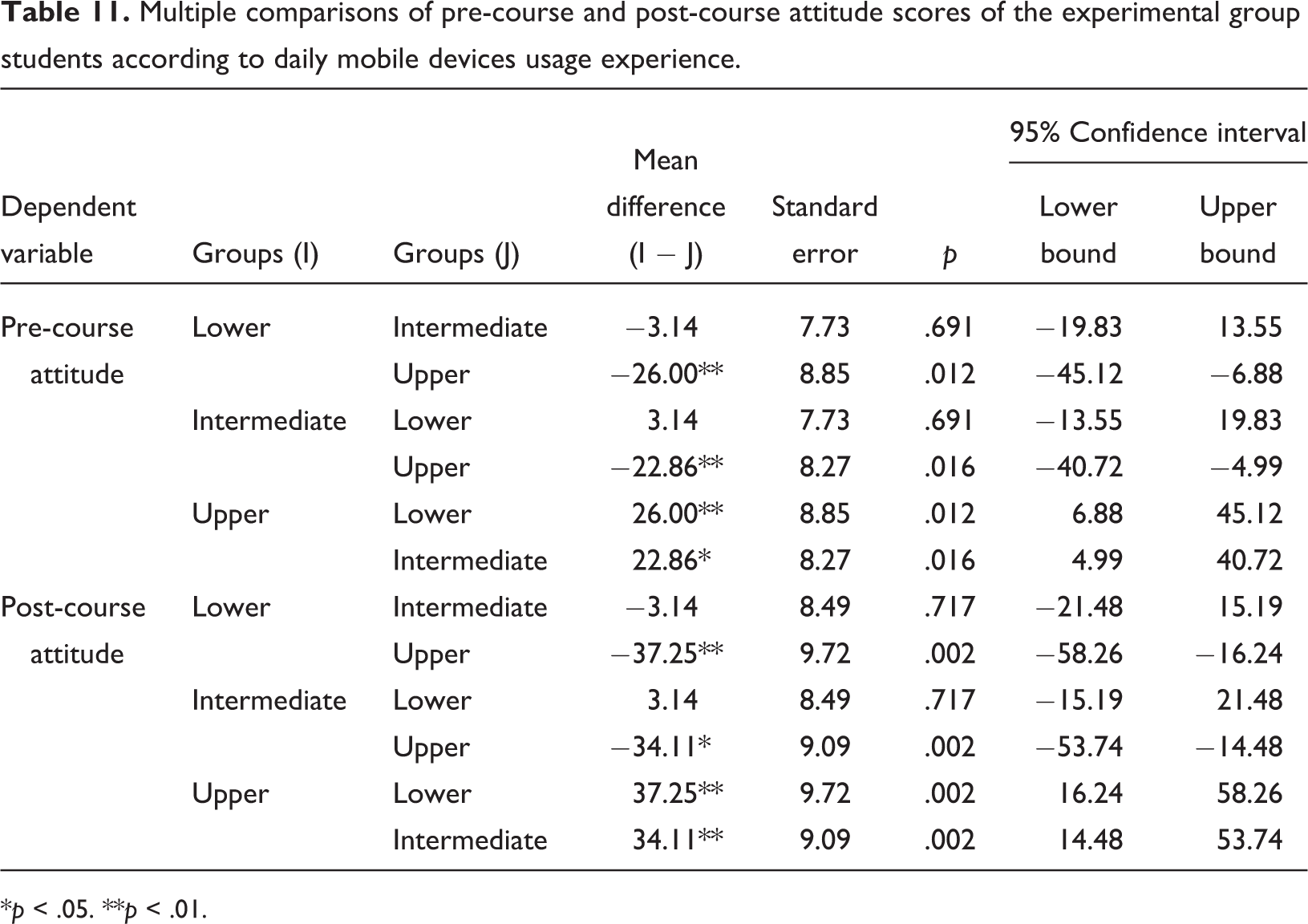
According to the Scheffe test in Table 11, the sources of the main differences are between Lower-Upper and Intermediate-Upper groups in the daily mobile device usage level. In both pre-course and post-course attitude scores, the students in the upper level at daily mobile devices usage experience level had more positive attitude scores than intermediate level students and lower level students. There was no significant mean difference between the students having intermediate and lower level daily mobile devices usage experiences.
Multiple comparisons of pre-course and post-course attitude scores of the experimental group students according to daily mobile devices usage experience.
*p < .05. **p < .01.
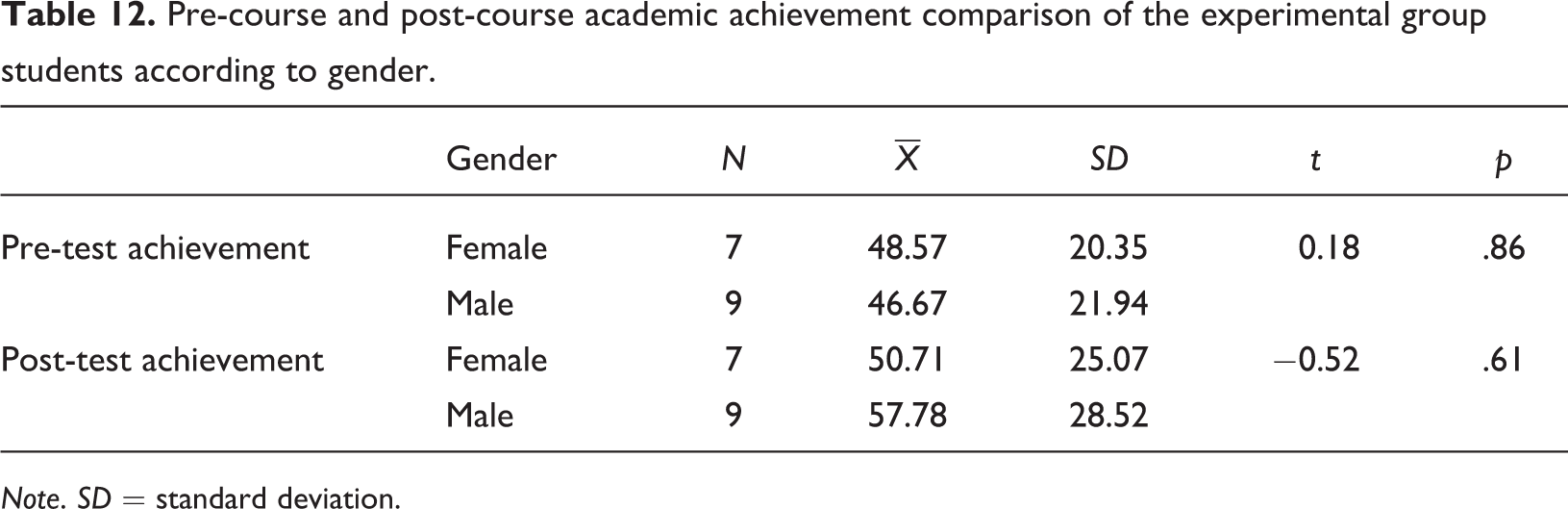
Table 12 shows that there is no significant difference between pre-course, t (7) = 0.18, p > .05, and post-course achievement scores, t (7)= −0.52, p > .05, of the students according to gender. While the average point of females’ pre-course achievement scores was 48.57, the average point of males’ post-course attitude scores was 46.67. When the post-course achievement scores were examined, both the scores of males (57.78) and females (50.71) were increased. But this increment is not meaningful enough to make a significant difference.
Pre-course and post-course academic achievement comparison of the experimental group students according to gender.
Note. SD = standard deviation.
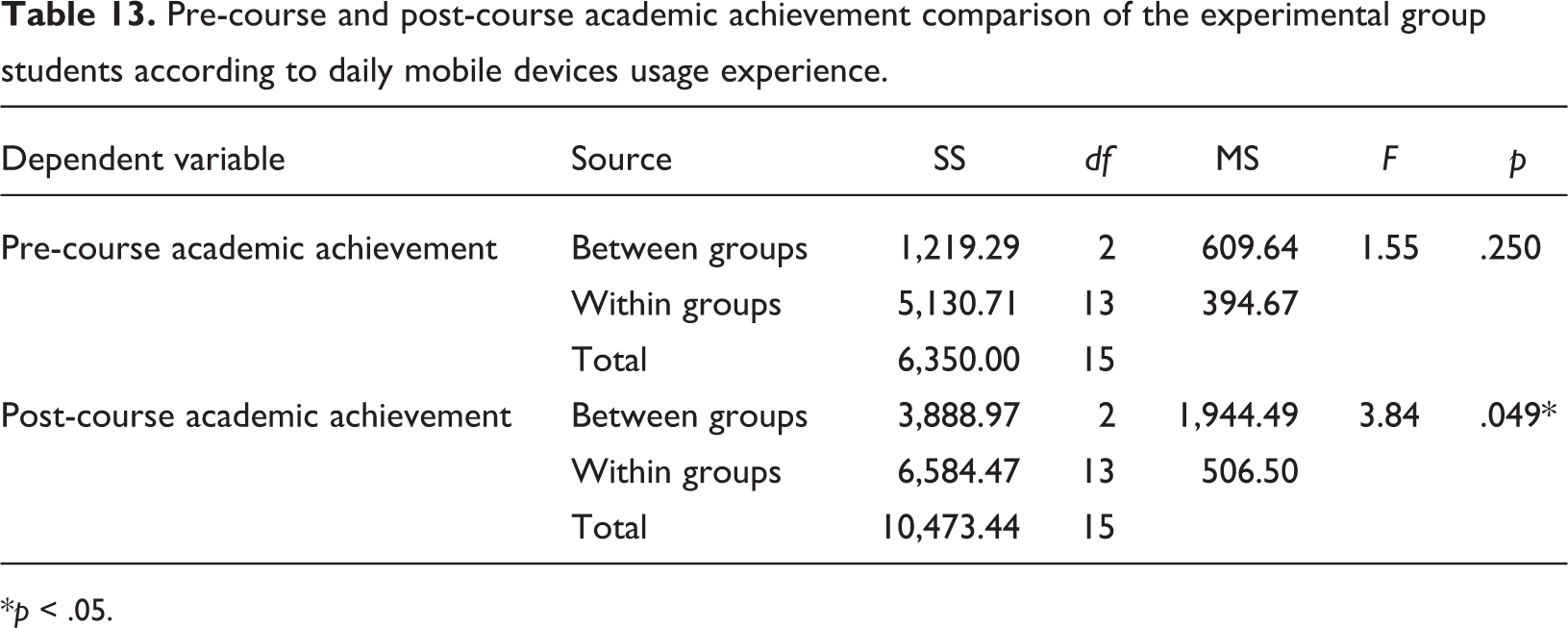
Table 13 shows that there is no significant difference, F (2–13) = 1.55, p < .05, between pre-course academic achievement scores of the students according to daily mobile devices usage experience. But in the post-course academic achievement score result, there is a significant difference, F (2–13) = 3.84, p < .05, according to daily mobile devices usage experience.
Pre-course and post-course academic achievement comparison of the experimental group students according to daily mobile devices usage experience.
*p < .05.
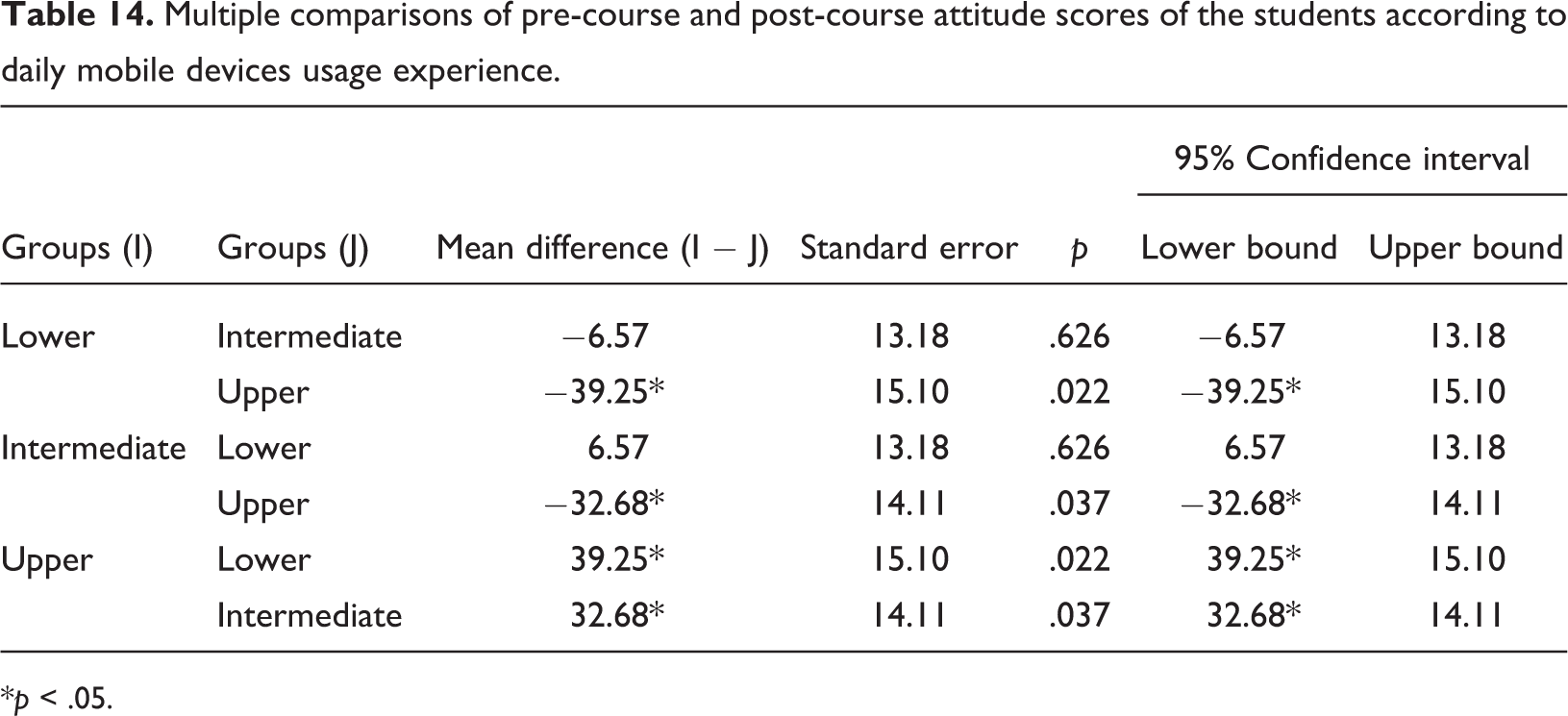
According to the LSD test in Table 14, the sources of the main difference in academic achievement are between Lower-Upper and Intermediate-Upper groups in daily mobile devices usage experience level as it was in academic achievement. The students in the upper level of daily mobile devices usage experience level had higher achievement scores than intermediate level students (I − J = 32.68) and from lower level students (I − J = 39.25). There was no significant mean difference between intermediate and lower level students as a similar result with academic attitude scores.
Multiple comparisons of pre-course and post-course attitude scores of the students according to daily mobile devices usage experience.
*p < .05.
As a result, using user-centered game-based education software affected students’ academic achievement and attitude. This effect did not differ according to gender but differed according to the daily mobile device usage experience. Students having upper daily mobile devices usage experience got higher academic achievement and attitude scores than the students having lower daily mobile devices usage experiences.
Discussion
This study evaluated the learning effectiveness and attitudinal appeal of the user-centered game-based educational software targeted at the teaching of geometrical shapes within the special education curriculum. Furthermore, the study investigated potential daily mobile devices usage experience and gender differences in the games’ effectiveness in academic achievement and attitude. Then, the main findings and their implications are discussed. The study demonstrated that using game-based educational software can considerably improve both achievement and attitude toward geometry in the learning process. These results corroborate the research results of Cheng et al. (2014), Su and Cheng (2015), and Wardaszko and Podgórski (2017) in which they found out the gamification learning system improved both academic achievement and attitude.
In this study, also potential differences in the academic achievement and attitude scores of game-based educational software usage according to gender and daily mobile device usage experience were investigated. As a result, there was no significant difference between pre-course and post-course attitude and academic achievement scores of the experimental group students according to gender. Both the females’ and males’ post-course attitude and academic achievement scores increased. It can be because of both male and female students’ positive attitudes to computers/mobile devices and the applications for game-based learning (Pruet et al., 2016). No difference according to gender shows similarities with the research studies (Barab et al., 2007; Dede et al., 2004; Papastergiou, 2009). Barab et al. (2007) found out that there was no difference according to the gender in the pre-test to post-test scores and overall participation points of boys and girls in the space game. Dede et al. (2004) also found that there was no difference according to the gender in learning outcomes and motivation toward science in their study of River City Game. As a similar result, Papastergiou (2009) in her study found no academic achievement difference according to gender except in “accessibility of learning material and questions.” Contrary to these research studies finding no difference according to gender, some researchers (Nelson, 2007; Su & Cheng, 2015) have found that there is a difference in academic achievement and attitude scores according to gender.
This result in academic achievement shows differences with the research studies of Nelson (2007) and Su and Cheng (2015). Nelson (2007) found out that girls used and viewed guidance messages more than boys in River City Game. In that game, girls had higher academic scores than boys (Nelson, 2007). Su and Cheng (2015) found out that the difference in gender leads to differences in post-test achievement scores of the students with intellectual disability. They also found out that males had higher scores than females in math games. This result contrasted with Nelson's (2007) research. Nelson (2007) found females had higher results than males. Joiner et al. (2011) also found out contrast results in academic achievement and attitude scores according to gender. In that research, males perceived higher competence scores than females in the pre-test and the post-test results in the digital game with a meaningful difference. But in the same research, no significant difference according to the gender was found out in motivation toward engineering after playing the game. So playing the game didn’t change males’ and females’ motivation toward engineering. Engineering motivations of the males and females were both high in the pre-test and the post-test scores of the digital game.
As another difference result obtained from this research, there was no significant difference between pre-course and post-course attitude and academic achievement scores of the experimental group students according to daily mobile device usage experience. Firstly, both pre-course and post-course attitude scores were close to each other according to daily mobile device usage experience. As a result, students having a higher level of daily mobile device usage experience had higher attitude scores than the students having lower experience. Students’ daily mobile device usage levels may affect students’ attitudes toward mobile learning. Su and Cheng (2015) found out that experienced mobile device users had higher learning performances than inexperienced mobile device users. So, users’ experience may positively affect students’ performance.
In this research, 7 of 19 males and 1 of 15 females claimed that their daily mobile devices usage experience was at the upper level. As a similar result, Papastergiou (2009) found that boys had much more background knowledge of computer usage memory than girls had. Lucas and Sherry (2004), in their research, found out males were more likely to be digital game players than females were. Roberts and Foehr (2008) applied a scale survey with the large attendance of over 3,000 children aged between 2 and 18. As a result, they concluded that many more boys play interactive games than girls do. Also, boys play these games for much longer periods. Lenhart et al. (2008) found that males are twice as likely to play video games for 2 hr more each day than females. Greenberg et al. (2010) reported that male high school and college students played video games for 19 hr a week. But females played the same games for 8 hr a week. This finding was replicated by Winn and Heeter (2009). McFarlane et al. (2002) reported that 57% of boys (aged between 7 and 16) were playing video games for up to 2 hr or more a day in the U.K. But 80% of girls at the same age-group reported that they were playing video games up to 1 hr or less. Chou and Tsai (2007) found that male students played video games on average for 4.7 hr per week while females played video games on average for 2.9 hr per week. Heeter and Winn (2008) pointed out that by the time students reach college, a boy has played digital games thousands of more hours than a girl has played. As a result, daily computer and mobile game usage experience can be important to get benefits from the game-based educational software. This experience can make the software more useful and easier. Additionally, generally, males’ computer usage and game-playing experiences are much more than females.
As a result of all research findings, game-based geometry education software was effective both at academic achievement and attitude. In this research, students with intellectual disabilities were generally high-level daily mobile game players. So, this situation is a good opportunity to support their learnings via game-based education software. It is expected that this study will have important implications in the design of digital game-based educational software. In game-based educational software designs, it is also very important to take measures to eliminate game addiction (Liu, 2011). These games should be designed with having the requirement of short-time playing periods because students can have time management problems while playing the games (Wong & Lam, 2016). Also, they should be designed to give opportunities to the users to control the end of the game session (Joiner et al., 2011). This design criterion may ease time management and allow a temporary concentration on playing game without the anxiety of stopping on time. This criterion may also help in preventing game addiction.
Limitations
The application participants in this study represent a small convenience sample of special education. Future studies using large and representative samples (including different disabilities) of special education can be made. In this research, a few game categories (matching and drop-drag) were used. Different game categories (action, racing, sports, strategy game, etc.) can be selectable in educational games. This may contribute to the adaptability feature of the educational games. Also, differences in academic achievements may be the subject of research according to game choice from different game selections because the game preferences of people may differ. For example, males are more likely to prefer to play action, fighting, sports, and strategy games than females. But females prefer to play puzzle games more than males do (Joiner et al., 2011). Games having selection opportunities may affect students’ motivation toward the software and course positively. Also, the study involved a short-term application process in a special education high school. A long-term intervention with the follow-up tests can provide more insight into the effects of students’ motivation and academic achievement.
Footnotes
Declaration of conflicting interests
The author declared no potential conflicts of interest with respect to the research, authorship, and/or publication of this article.
Ethical statement
The study and informed consent letter were approved by Provincial Directorate of National Education in Çanakkale, Turkey (number and date of the official letter: 16032253, 4 September 2019).
Funding
The author received no financial support for the research, authorship, and/or publication of this article.
