




Abstract
Purpose:
This article examines the Japanese teaching profession’s position on current school governance reforms in Japan and the difficulties teachers are facing as the reforms progress.
Design/Approach/Methods:
This article describes how a policy for developing teacher quality standards tends to suppress teacher independence while increasing the heteronomy of the teaching profession. The article discusses how Japan can meet its goal of ensuring “expertise in the teaching profession” by referring to the relationship between “professionalism” and “publicness” in the theories of occupational sociology.
Findings:
Expertise in the teaching profession is based on a mixture of academic and practical knowledge. The term “educational professionals” should be interpreted to include both “researchers” and “practitioners.” A sustainable governance mechanism for the Japanese teaching profession should be built on a four-way relationship among researchers, practitioners, citizens, and government administrators.
Originality/Value:
This study provides a critical review of a broad-reaching educational policy and proposes a new approach for restructuring the governance of the Japanese teaching profession.
Introduction
This article examines the Japanese teaching profession’s position on current school governance reforms in Japan and the difficulties teachers are facing as the reforms progress.
I will first summarize the recent educational governance reforms and discuss how the concept of “expertise in the teaching profession” has become an important policy-making issue in Japan. Next, I will examine how a policy for developing standards to ensure the quality of teachers tends to suppress teacher independence and increases the heteronomy of the teaching profession. I will then discuss an alternative approach through which policymakers can ensure expertise in the teaching profession by referring to the relationship between “professionalism” and “publicness” in the theories of occupational sociology, as well as in science, technology, and society.
Educational governance reforms in contemporary Japan
Japanese academics frequently use the term “governance” to describe the situation in which traditionally public functions are delegated by the government to various nongovernmental actors. Since the 1980s, this concept of governance has been discussed in various academic disciplines and has become the focus of educational policies in Japan beginning around 1997. Concrete examples include the implementation of school choice in public elementary and junior high schools (since 1997), institutionalization of school advisors (2000) and “private citizen” principals (2000), institutionalization of school councils consisting of community residents and parents (2004), and the introduction of a system for school evaluation, including evaluations from parents and community residents (2007). These systems place school education under “shared governance by the private sector” through participation and evaluation by various stakeholders (Hamada, 2012) (see Figure 1).
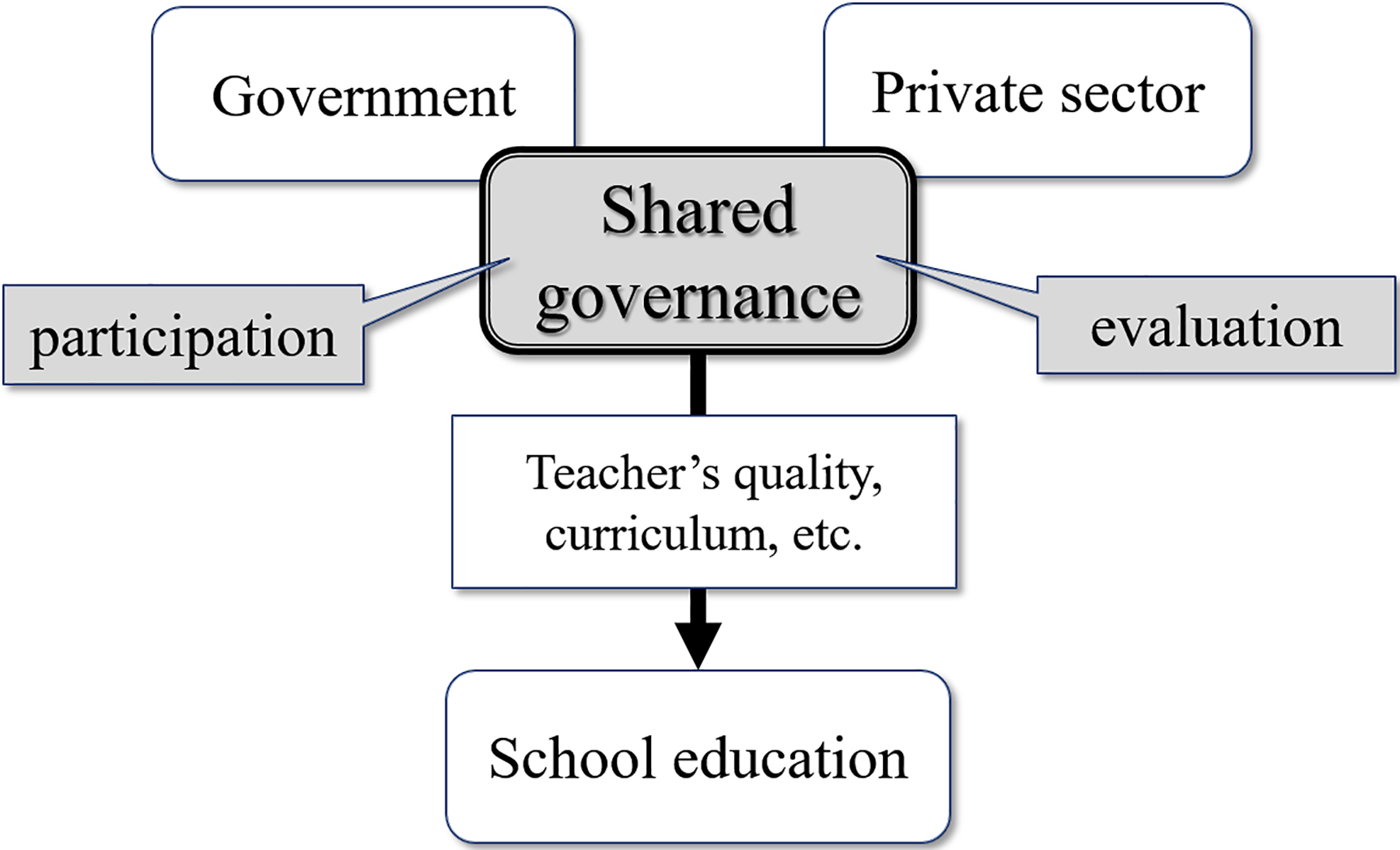
Shared governance of school education.
In particular, the system of evaluation is being steadily established within and outside school organizations. For example, teacher assessments, national surveys on academic performance and learning, and in-depth verifications of measures taken by boards of education have affected the activities of teachers and staff, as well as school organizations.
Relativizing the teaching profession
The governance reforms discussed earlier have relativized the concept of government in Japan as it relates to education. By extension, the teaching profession, made up of professionals who are qualified based on the government’s authority, the university as an institution for teacher education, and researchers, who create the academic knowledge base for the teaching profession, have also been relativized. Students, parents, community residents, ordinary taxpayers, nonprofit organizations, and businesses are stakeholders in this governance structure. Recent educational governance reforms have vested these stakeholders with greater authority at the expense of educational professionals and have placed teachers in an increasingly inferior position.
For example, educational reforms aimed at establishing school autonomy and strong leadership by principals have actually relaxed the requirements applicable to principals, allowing schools to appoint “civilian” principals who lack teaching licenses or experience. When faculty meetings became legislated, teachers’ authority was limited because faculty meetings served the purpose of aiding principals’ authority, while community residents and parents were given power to oversee school management as school council members. These reforms reflect a larger trend toward reducing the role and authority of teachers in school administration.
Aside from institutional reforms, there are more cases from the past two decades in which parents have made unreasonable demands of schools and teachers. Schools and teachers have faced tough criticisms through newspapers and television-based media. These trends indicate a tendency in which the teaching profession is placed in an increasingly inferior position among stakeholders of education.
As a result of these developments, the concept of expertise in the teaching profession, on which the system and education theory have thus far relied, has been significantly shaken (see Figure 2). How should we interpret the crisis the teaching profession faces under these educational governance reforms? Let me refer to the example of doctors, who are generally considered to represent a classic “profession.”
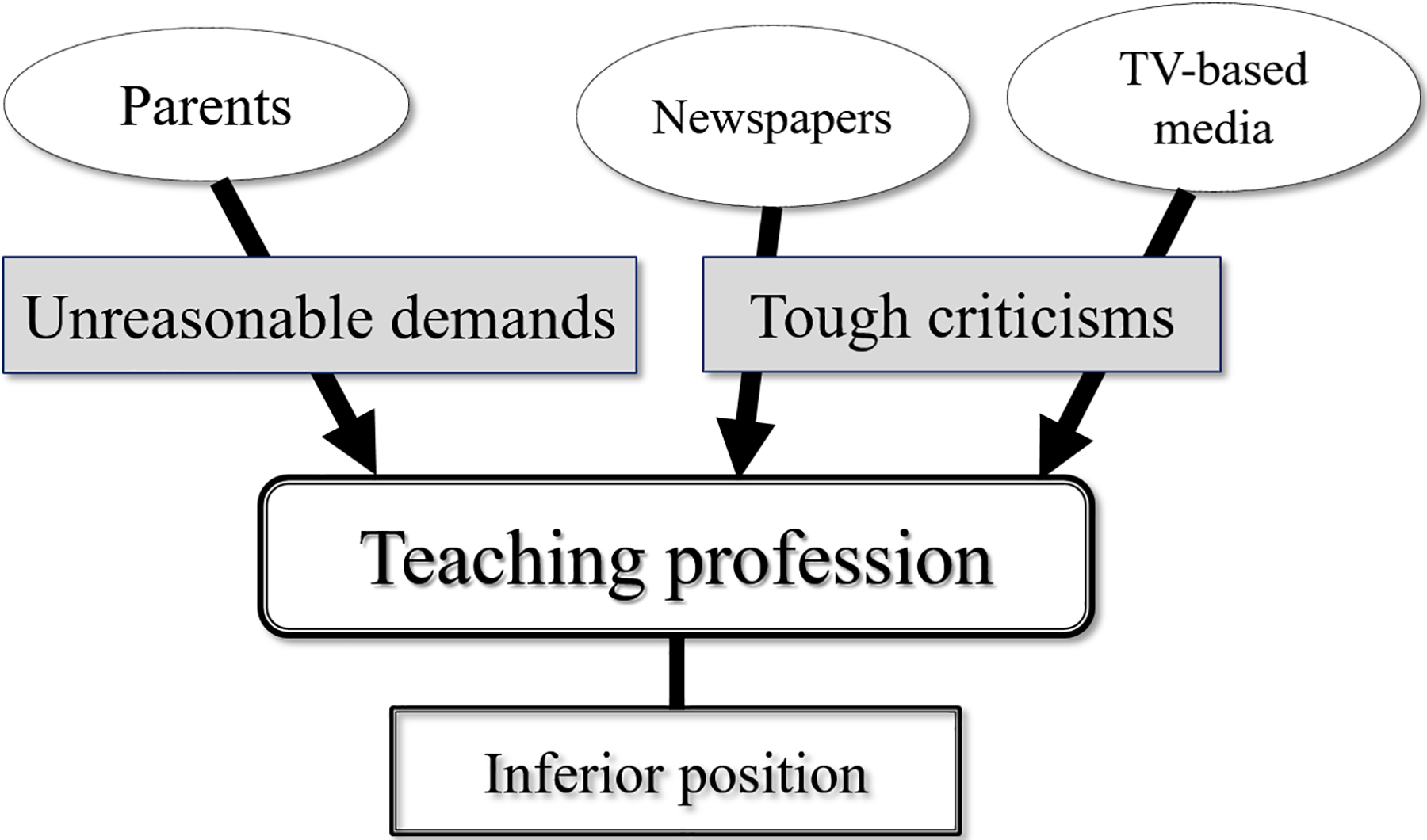
Crisis in teaching profession.
In modern health care, doctors typically enjoy a position of authority vis-à-vis patients, nurses, engineers, and social policies (Shindo, 2005, pp. 23–41). However, the industry has seen significant changes since the 1970s. Along with advancements of and specializations in health care and medical science, health care began to shift from “clinic and doctor centralism” to “organization (hospital) centralism.” Also, doctors as a profession became relativized as informed consent was established, the rights of patients were institutionalized, and the level of patient sophistication increased. The professional position of doctors was created by state institutionalized. In other words, it relied on heteronomy. As the rights and consciousness of various stakeholders increased, the position of doctors became relativized (Shindo, 2005, p. 38). This reflects the fact that the key to establishing autonomy in a profession is self-control of the expertise that forms its foundation.
Research, practice, and policies regarding modern educational systems have been premised on the concept of expertise in the teaching profession. However, recent educational governance reforms in Japan have relativized the teaching profession, leaving it in an inferior position. Researchers of education and teachers themselves must now reinterpret what expertise means in the teaching profession and reconstruct it independently (see Figure 3).
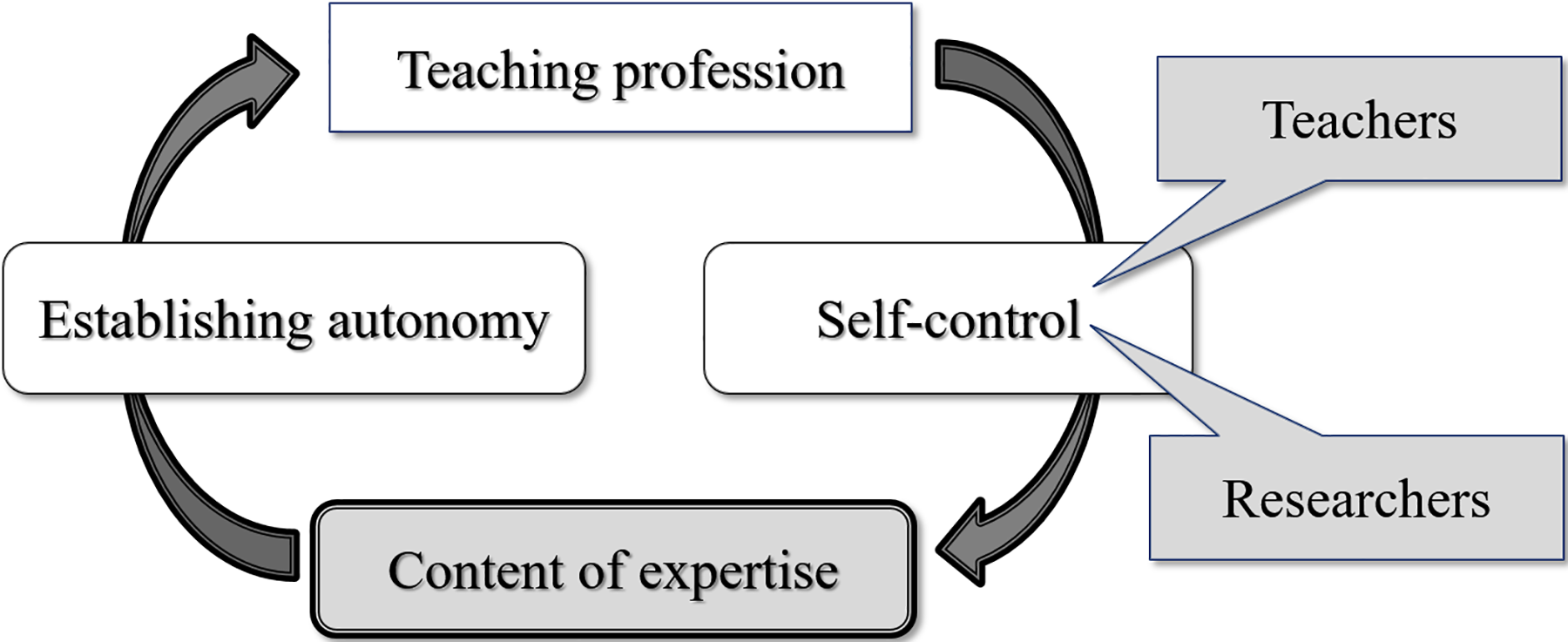
Keys to establishing professional autonomy.
Making the teaching profession heteronomous through the development of standards
Governance reforms that are affiliated with new public management policies focus on achievement and increase accountability of public works. Actors engaging in public works must clearly present their achievements or effects while maintaining transparency. Therefore, in educational governance reforms, various standards have been developed as tools for demonstrating and evaluating the improvements of school organizations and the growth of teachers and staff, which are considered the primary quality improvements in school education.
One example of these reforms is the establishment of a teacher evaluation system in 2000. Beginning with Tokyo, various municipalities began to adopt teacher evaluation systems comprised of competence assessments, performance evaluations, self-reporting, and guidance and/or advice from supervisors. In 2014, a system for objectively evaluating “abilities shown” and “performance achieved” by individuals based on clearly defined evaluation criteria was institutionalized in accordance with the Local Public Service Act.
Developing standards for teacher education was also institutionalized and fell to appointers (the boards of education of prefectures and designated cities). After the Special Act for Education Personnel was revised, the appointers now define an aptitude index for principals and teachers in accordance with the situations in each prefecture and city based on guidelines set by the Minister of Education, Culture, Sports, Science and Technology. They must also develop a “teacher training plan” every year. As of February 2017, 30 prefectures and cities have generated an index, while 54 prefectures and cities have developed teacher training plans (National Institute for School Teachers and Staff Development, 2017). The reason many municipalities developed an index is because a planned promotion of human resources development, including those in managerial positions, is now a pressing issue. In other words, legislating the development of an index matches the needs of the appointers.
The Japanese Association of Universities of Education implemented a model core curriculum research project for teacher development from 2001 to 2006 (Japan Association of Universities of Education, 2006, 2007) and a project for developing goals for university teacher development and education (Japan Association of Universities of Education, 2008). Universities have begun to develop their own standards for teacher development (Hasegawa, 2013). The Ministry of Education, Culture, Sports, Science and Technology is also developing a core curriculum for teacher training courses. The fact that universities develop their own teacher development programs is a sign of independence and individuality of universities, but the core curriculum set by the national government for evaluating the details of teacher development programs tends to suppress the unique efforts made by universities.
The aim of the various standards developed thus far is primarily to advance and guarantee expertise in the teaching profession. The standards are designed to clarify the concrete content of expertise in the teaching profession appropriate for today’s public education (i.e., to guarantee legitimacy). In this sense, the standards have value. However, as discussed in the previous section, the development and implementation of the new standards have relativized the teaching profession, leaving it in an inferior position, while also subjecting universities to excessive supervision. This may be increasing the heteronomy of the teaching profession.
Asymmetry between the “doctor–medical science” relationship and the “teacher–educational sciences” relationship
What are the requirements for calling teaching a “profession?” This has been discussed in comparison with medicine and law, which are traditionally considered specialized professions. Certain scholars have reached the conclusion that “the teaching profession is an incomplete profession” (Mimizuka, Yufu, & Sakai, 1988, p. 90). Some say that medicine and law are “the learned professions” based on university education and training (Takeuchi, 1972). The teaching profession possesses certain similar characteristics, but there are also key differences. This is because the relationship between doctors and medical science varies significantly from the relationship between teachers and educational sciences.
A doctor’s license and doctors’ authority are based on the discipline of medical science (an academic science) and the superiority of the knowledge that derives from that science (i.e., medical knowledge and skills). A medical license is legitimized by a national examination. In other words, the expertise of doctors is based on academic knowledge of medical science. However, even though doctors are proficient in medical knowledge and skills, it does not mean that all treatments succeed. The health-care system does not hold doctors responsible even if treatments based on medical knowledge do not succeed. In other words, the scope, limitations, and content of the expertise of doctors are clarified by the system (Nakagawa, 2015).
In contrast, the expertise in the teaching profession does not rely solely on academic knowledge of the educational sciences (see Figure 4). Knowledge and skills based on the experience of educational practitioners are emphasized instead. In certain respects, acts of education directed to students are more complex and diverse than treatments given to patients. Patients seek out medical treatment, while not all children voluntarily seek the education provided by teachers. Even though children may not want to learn, teachers must guarantee learning opportunities for them.
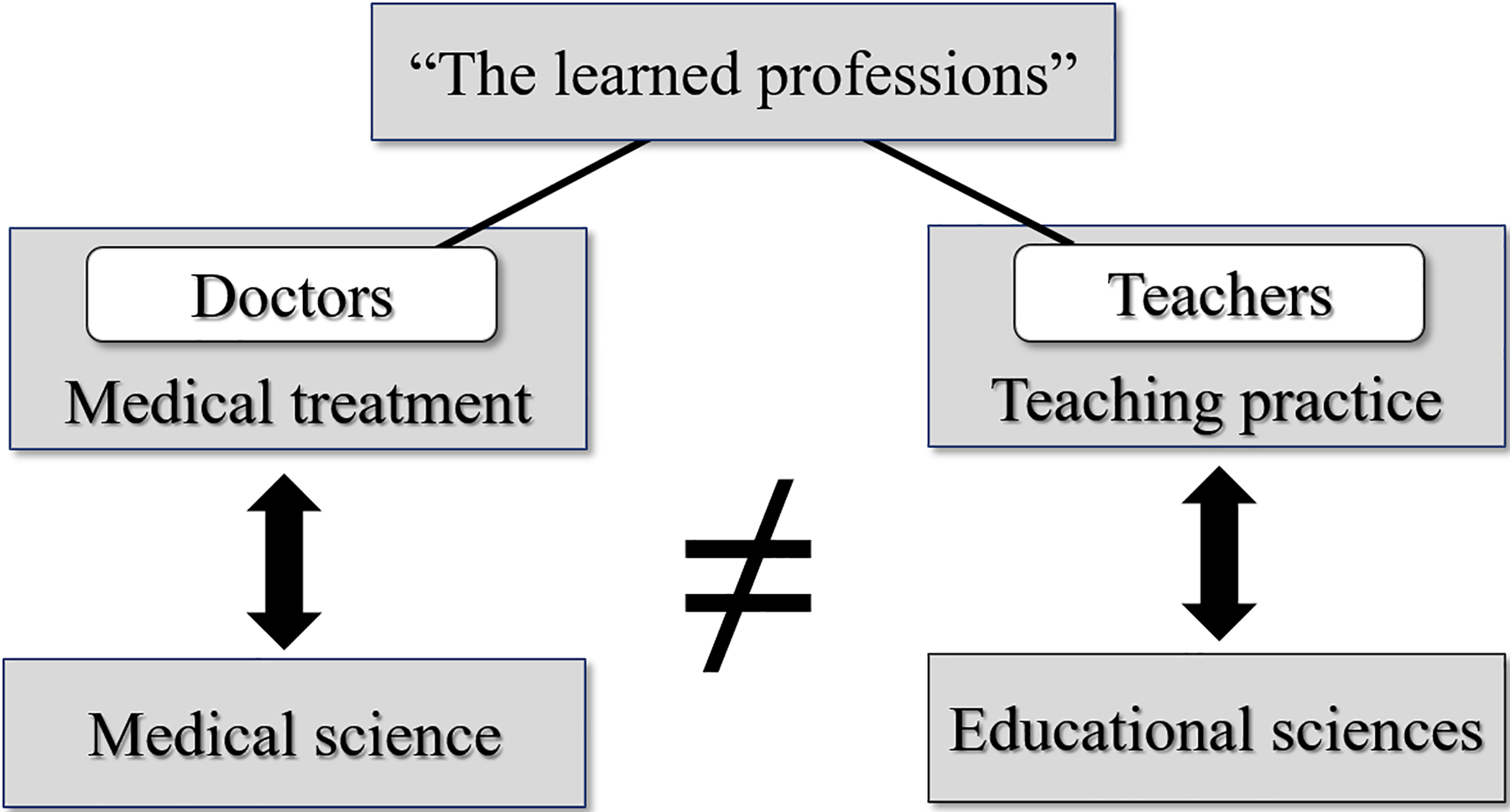
Asymmetry between “doctor–medical science” relationship and “teacher–educational sciences” relationship.
From this perspective, education can be considered a more complex endeavor than health care, one that cannot be adequately practiced only with knowledge of a specific academic discipline. The essence of expertise in the teaching profession is created with the knowledge and skills obtained through practical experience coupled with the knowledge and theories of the educational sciences; therefore, it must be considered through a fusion of both elements. Teaching expertise should not be determined by government policymakers alone (see Figure 5).
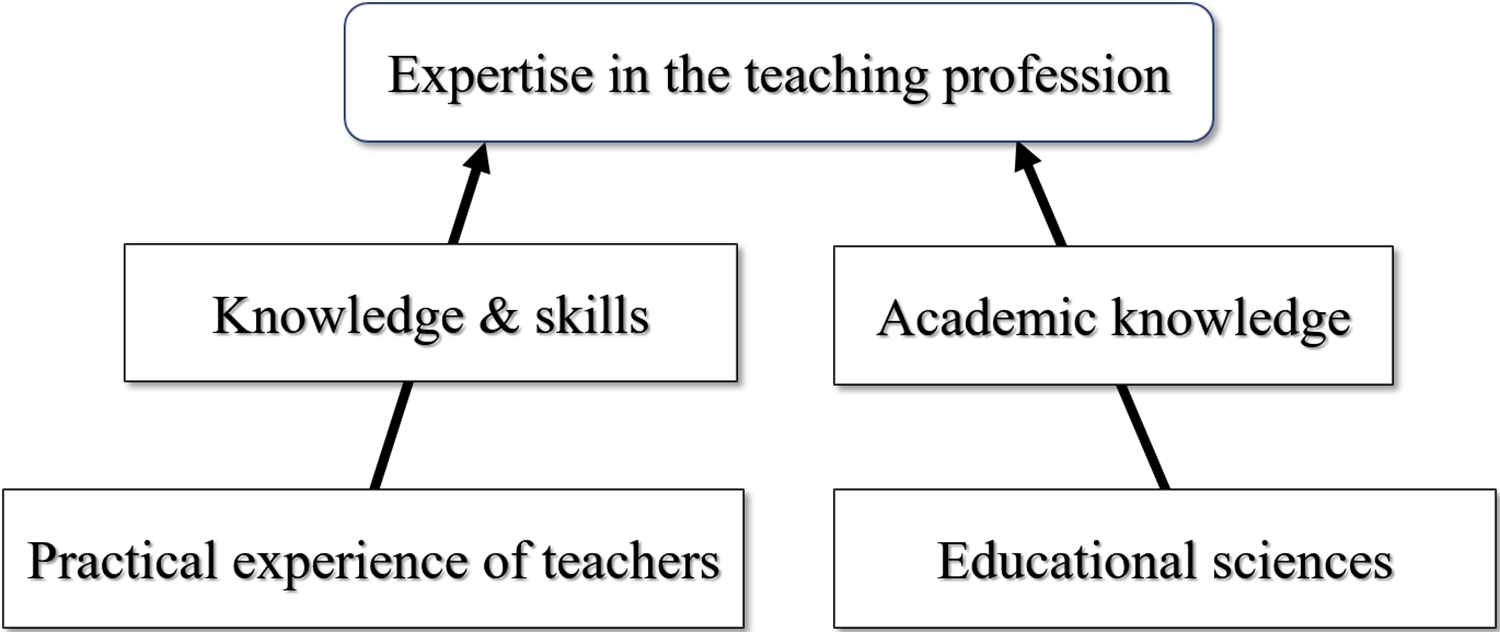
Expertise in the teaching profession.
Relationships among professionals, citizens, and government administrators in the governance of the teaching profession
Relationships among professionals, citizens, and government administrators regarding social issues
While the teaching profession is relativized in various aspects, what are the necessary conditions for a system to legitimize expertise in the teaching profession? One is to build a social mechanism for establishing the knowledge base on which those who engage in educational practice should rely. This cannot be done solely through academic learning or government decree.
There are many problems that even science cannot solve in today’s society. In such instances, social decision-making is necessary in “public spaces” in which professionals, citizens, and the government all participate (Fujigaki, 2003, pp. 85–92).
Since the 19th century, the professionalization of science has progressed, and learning processes have been institutionalized. The process of learning has also gradually been specialized, and scientists have formed “journal communities” as groups for developing and populating professional journals. While scientists pay great attention to the screening of their journal communities and ongoing production of knowledge, from the perspective of the citizens at the heart of these social issues, public issues cannot necessarily be solved based only on this knowledge. However, creating or deepening mutual distrust between scientists and citizens should be avoided. Citizens must understand that scientists produce knowledge based on their journal communities according to their responsibility as professionals. At the same time, scientists must understand that they cannot solve public issues solely with knowledge based on journal communities (Fujigaki, 2003, pp. 13–30).
The referee system of journal communities is a unique mechanism of “knowledge judgment” set by each community. However, knowledge is constantly updated. Scientific scholarship is always “active” and “cutting-edge knowledge is always in the process of being rewritten.” (Fujigaki, 2003, p. 65).
From the viewpoint of researchers in the educational sciences, knowledge in the field of medical science seems to have high levels of objectivity and rigor and is constructed in a very systematic fashion. Many are tempted to see the natural sciences, humanities, and social sciences in a similar way. In other words, they have a relatively rigid view on science. However, according to Fujigaki (2003), “solid and precise answers do not always exist. Scientists create, rewrite, and update them every day” (pp. 66–67). Therefore, if citizens and government administrators fully understand this, communications among professionals, citizens, and government administrators might go more smoothly (Fujigaki, 2003, pp. 64–71).
Based on the abovementioned, to solve highly public issues, it is necessary to form a “social consensus” to apply the knowledge of professionals to the resolution of public issues. Facilitation and governance of consensus formation among professionals, citizens, and government administrators is the key (see Figure 6).
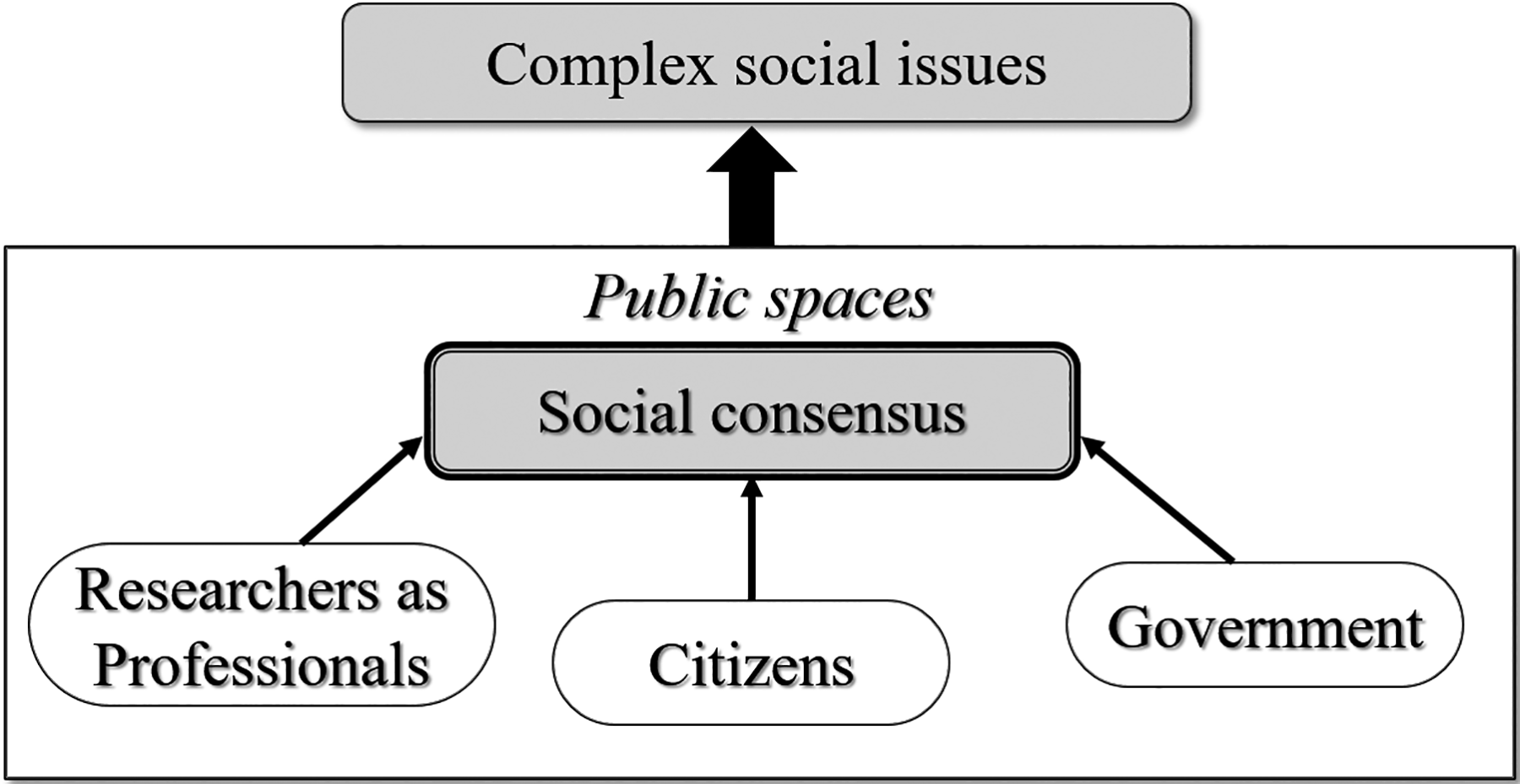
Governance of consensus formation to solve complex social issues.
Governance of the teaching profession
The abovementioned discussion highlights the value of governing expertise in the teaching profession. However, it is not appropriate to apply the “public space” model discussed by Fujigaki (2003) directly to the governance of expertise in the teaching profession. The teaching profession follows a more complex structure than the “three-way relationship among professionals, citizens, and government administrators” described by Fujigaki (2003, pp. 85–92).
Knowledge on which expertise in the teaching profession relies is both academic knowledge produced by researchers and practical knowledge created by practitioners. Educational professionals include both researchers and practitioners. It is necessary to design a governance mechanism for expertise in the teaching profession based on the four-way relationship among researchers as professionals, practitioners as professionals, citizens, and government administrators (see Figure 7).
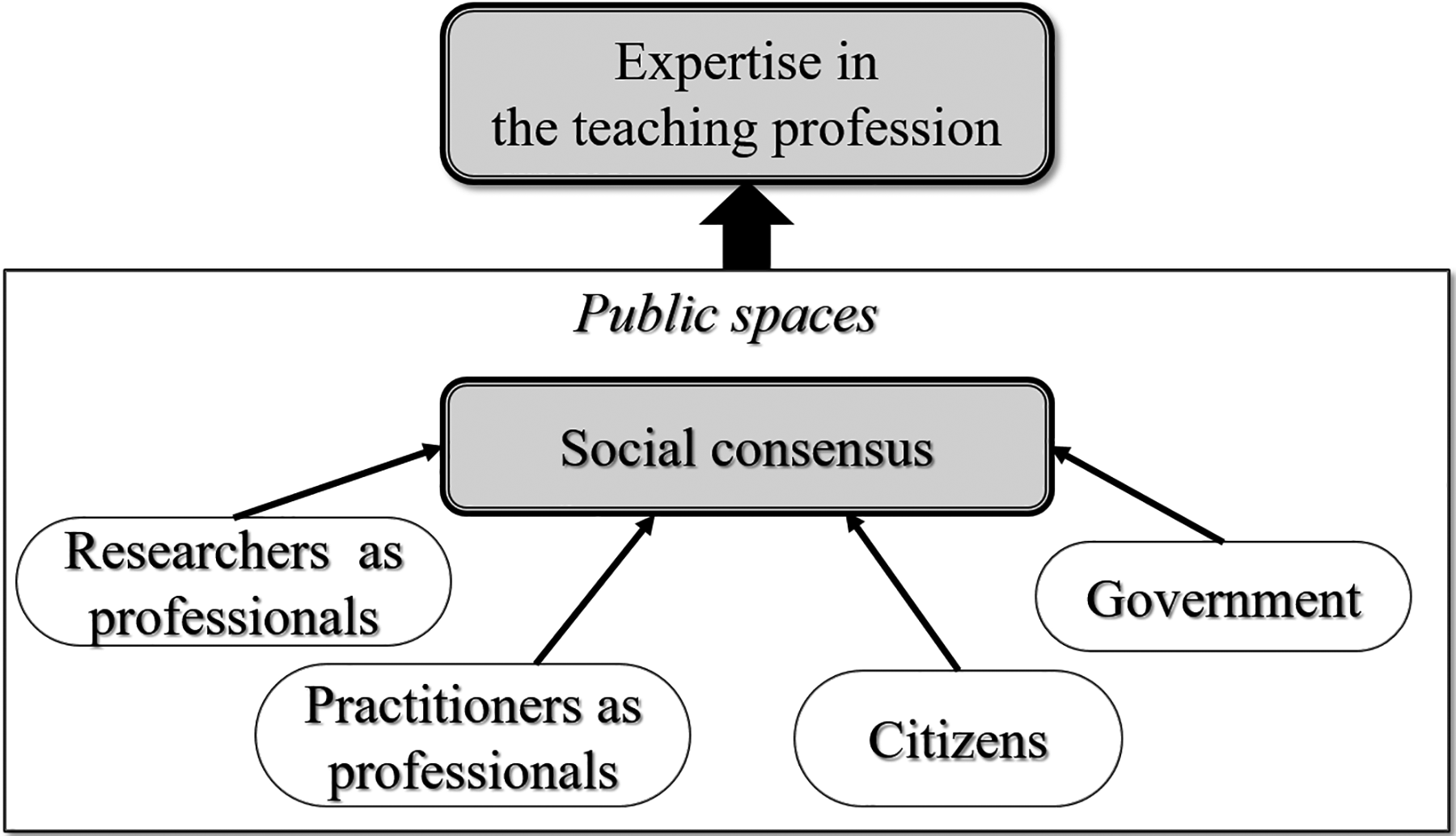
Governance of consensus formation to build expertise in the teaching profession.
Governance reforms are meant to encourage effective coordination and policy-making processes for public issues in which stakeholders, including government administrators, participate. Ideally, knowledge and understanding of various actors should be equal, but this is not usually the case. Therefore, it is important to carefully consider how the relationships among actors, including government administrators, should be coordinated and controlled. “Meta-governance,” which refers to governance of governance, involves a repositioning of the roles of public actors and professionals and has become a focus in political science (Kogure, 2011).
Fujigaki examined how to overcome the power structure between professionals who possess specialized knowledge and citizens who do not (2003, pp. 85–92). This is important of course, but for the teaching profession, it is also necessary to attempt to remove the hierarchy regarding knowledge from the relationship between researcher and practitioner professionals.
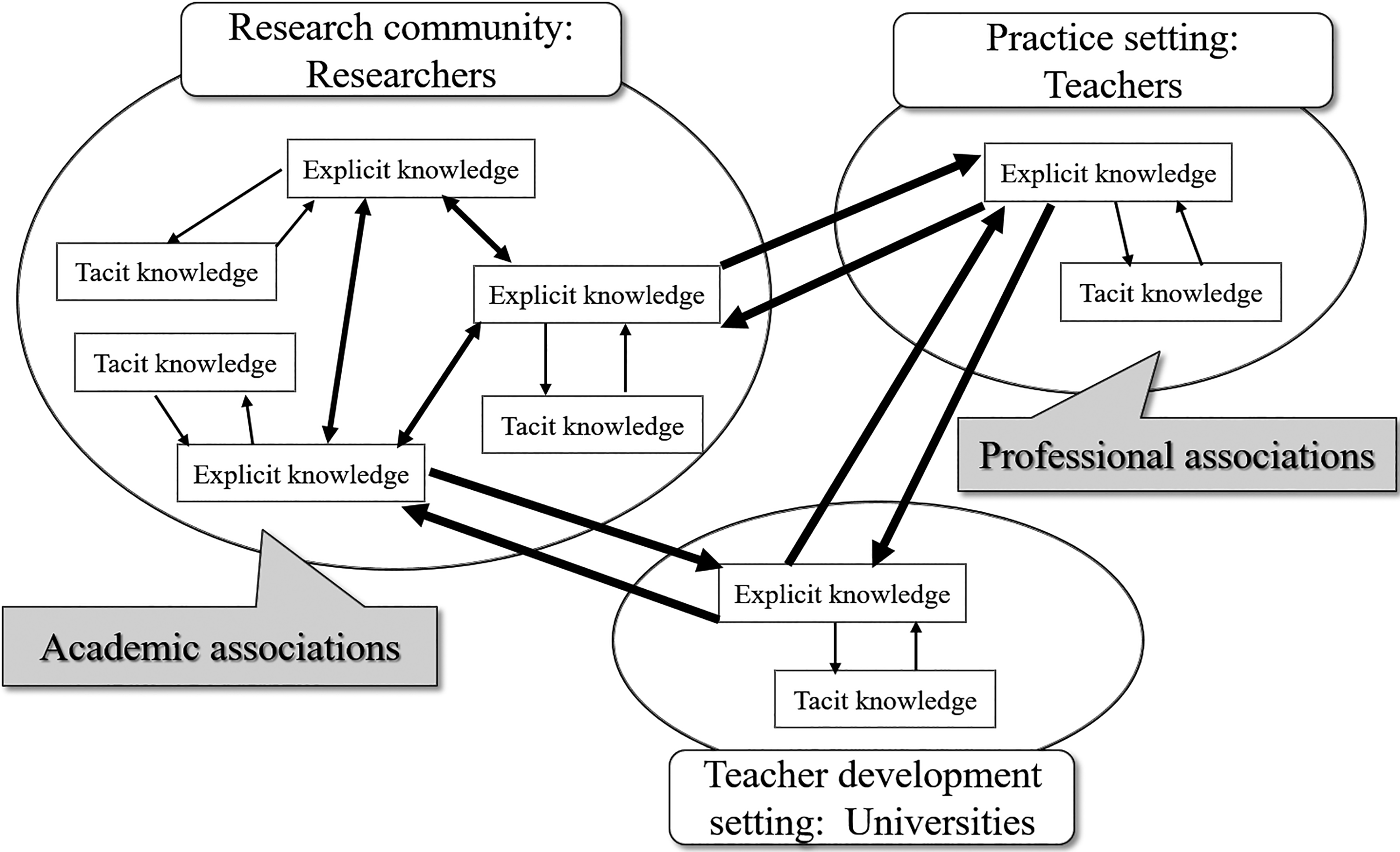
Based on the knowledge creation model (Nonaka, 1990), I believe that “tacit knowledge–explicit knowledge” on both the sides of researchers and practitioners interact with each other (Ono, Fuchigami, Hamada, & Soyoda, 2004, pp. 39–47). Figure 8 illustrates the concept that research communities (academic associations, study groups, etc.), educational practice settings (schools), and teacher development settings (universities) mutually exchange tacit and explicit knowledge (Hamada, 2017, p. 89).
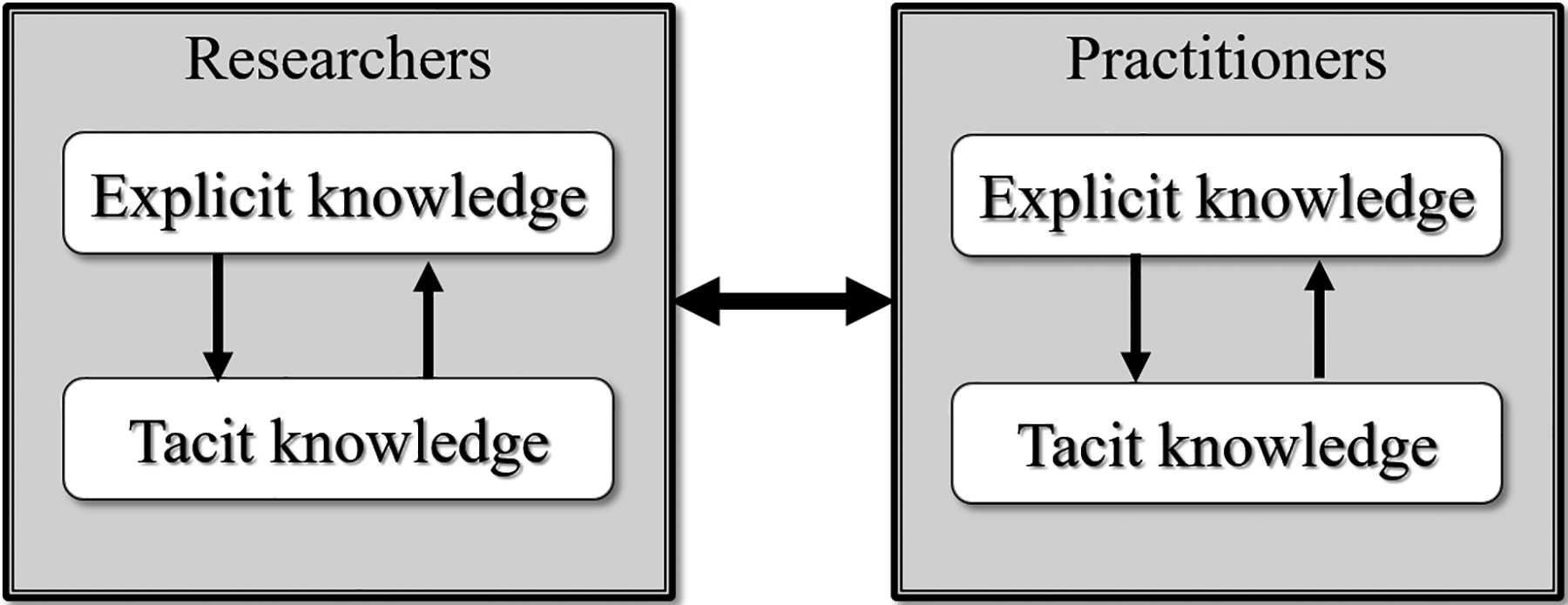
A model of knowledge creation by interaction between researchers and practitioners.
We can assume that “local knowledge” (Fujigaki, 2003, p. 129) shared among educational practitioners includes tacit knowledge and explicit knowledge of educational practice settings. If the teaching profession seeks to become a specialized profession, then the professional association of teachers must clearly define what their expertise entails by translating tacit knowledge into explicit knowledge and building a self-control mechanism. No such mechanism currently exists in Japan. Study group organizations, through which teachers discuss their educational practices with each other, sometimes result in the creation of explicit knowledge, but the knowledge generated by these groups tends to be context-dependent, and thus, it is often difficult to achieve coordination between research communities and explicit knowledge (see Figure 9).
Relationships between research and practice in education based on the knowledge creation model (Hamada, 2017, p. 89).
Either way, a new governance mechanism is essential for defining and maintaining expertise in the Japanese teaching profession. A public space is needed to encourage social rationality, where various actors, including researchers, practitioners, citizens, and government administrators participate without traditional hierarchies.
Issues regarding “Kyoin-Ikusei-Shihyo”
The Special Act for Education Personnel revised in 2016 (enforced in April 2017) mandates that the boards of education develop “Kyoin-Ikusei-Shihyo” (an index for teacher development) and create a teacher training plan. To develop Kyoin-Ikusei-Shihyo, a council that includes university representatives must be established. This new system is a social mechanism for governance of the teaching profession as discussed earlier.
However, academic associations, which are responsible for producing the knowledge base on which the profession relies, are not included in this governance structure. In addition, the professional associations of teachers are not participating actors in the governance of the teaching profession.
Conclusion
The tasks of the various professions (including teaching) are characterized by uncertainty and cannot always be evaluated objectively by third parties. This is why discretionary power is generally afforded to professionals and why self-control by occupational groups is essential. The measures developed under “Kyoin-Ikusei-Shihyo,” however, interfere with this self-control and make expertise in the teaching profession heteronomous through executive authority. To ensure legitimacy of expertise in the teaching profession, it is necessary to devise a structure of governance involving government administrators and citizens while being conscious of the generation of professional knowledge through interaction between researchers and practitioners.
Footnotes
Declaration of conflicting interests
The author(s) declared no potential conflicts of interest with respect to the research, authorship, and/or publication of this article.
Funding
The author(s) disclosed receipt of the following financial support for the research, authorship, and/or publication of this article: This work was supported by JSPS KAKENHI under grant number JP15K13172.