Abstract

Valuing opportunities to learn from scholars around the world, East China Normal University (ECNU) has for more than a decade aggressively pursued the goal of expanding its global partnerships. ECNU scholars and students have studied and conducted research projects with colleagues at universities throughout the world. The Dean of the Faculty of Education, Zhenguo Yuan, realized that leaders needed similar opportunities to learn from their international colleagues. In Rick Ginsburg, the Dean of the School of Education at the University of Kansas (KU), Dean Yuan found a like-minded partner. With help from KU Professor Yong Zhao and others, they hosted 40 Deans from five continents for the first Global Education Deans Forum (GEDF) at ECNU on October 25–26, 2018 in Shanghai, China.
Despite initial uncertainty about the value of the Forum for busy leaders, at the end of two days of intensive, frank, and substantive conversations, the organizers and participants agreed that such an opportunity would add substantial value to their work. During the discussions, participants raised a range of issues that confront educational leaders across the globe.
Several participants as well as Dean Yuan highlighted the advance of technology that is driving seismic shifts in education as well as the world of work. Dean Yuan cautioned that AI development appears to be outpacing our wisdom. With jobs changing at an ever-increasing pace, educators face the question of how best to prepare students for jobs and a world that do not yet exist. As a Dean from a Middle Eastern university pointed out, schools are designed “to prepare students for the world of the present, not the future.”
Other participants expressed the concern that a growing preoccupation with the functional purposes of education was increasingly overshadowing the moral dimensions of teaching and schooling. One South American Dean challenged his colleagues by asking, “Are we primarily teaching students to become part of the economy or part of the society?” A U.S. Dean echoed this sentiment: “We need to reframe our message—we are human development specialist and need to get away from a purely instrumental view of our purpose.”
A related theme that several participants identified was a perceived narrowing of the curriculum that they feel is being driven, in large part, by international assessments that have captured the attention of policymakers and the public world-wide yet may be marginalizing the humanities and the arts. At the same time, some participants expressed a need for better ways of evaluating the impact of educator preparation programs on teachers’ knowledge and skills. Ideally, institutions would use similar methods of measuring program impact to enable the teacher preparation field to identify promising practices and programs.
At several points in the discussion, the issues of educational inequities and diversity arose. The conversation made clear that definitions of both these terms were highly context specific and deserved deeper investigation. Exploring these concepts within their social, historical, and institutional contexts could be a task for the group moving forward. Understanding how inequities manifest globally and how governments, NGOs, schools, and higher education institutions are attempting to address these could be the type of issue that lends itself to collaborative inquiry. As both U.S. and Chinese Deans noted, issues such as this lend themselves to collaborative research of a type that does not currently exist. As most of the institutions represented at the Forum were research institutions, the GEDF could serve to facilitate such cross-national research.
Another recurring issue concerned the deanship itself. Several Deans noted that few opportunities for their own continuing development and learning exist. As the conversation unfolded over the two days, the need for more opportunities to learn from colleagues emerged as an issue. Similarly, participants identified the need for opportunities to further develop the knowledge of leaders in their schools and colleges who aspire to become Deans.
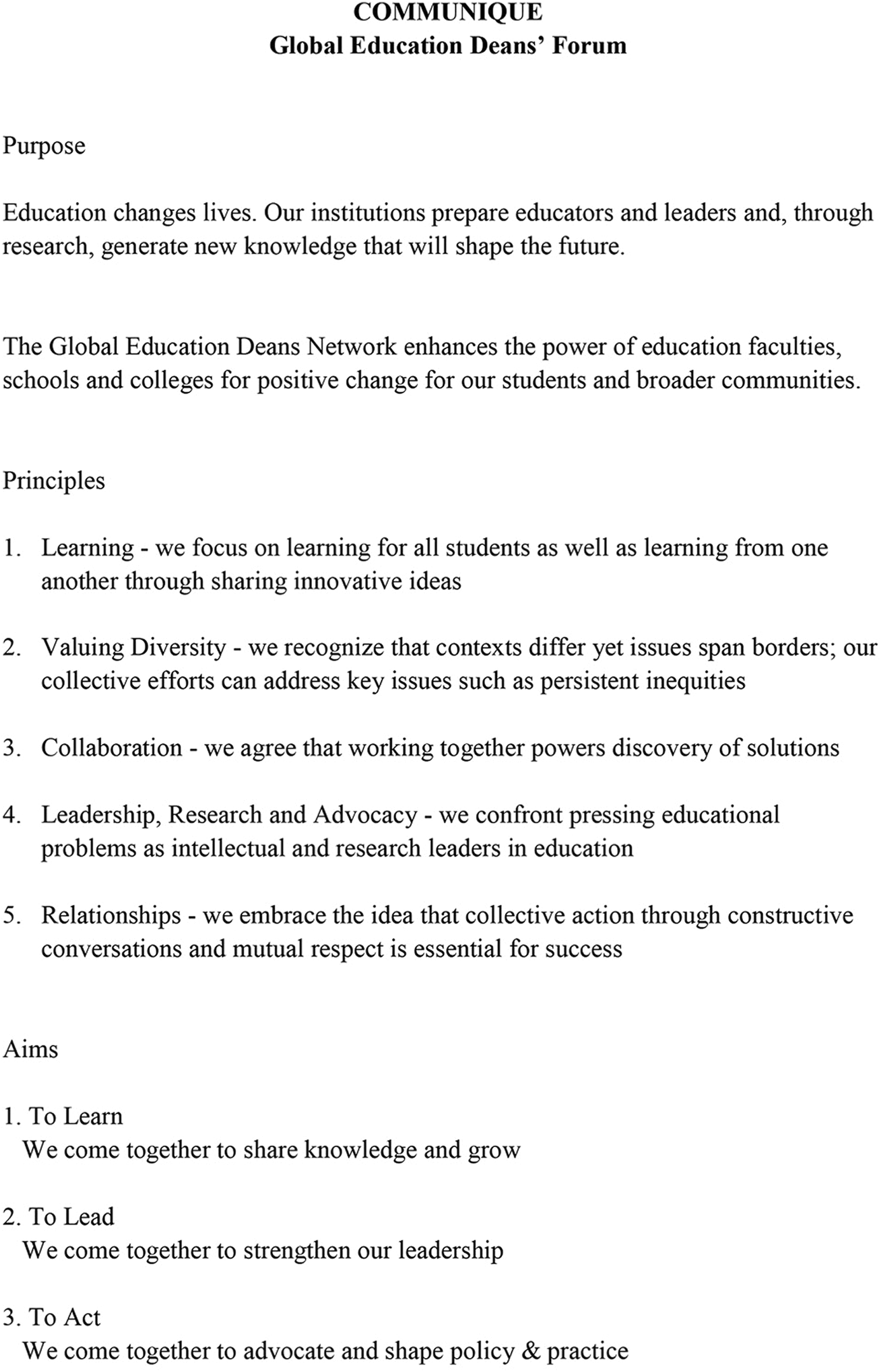
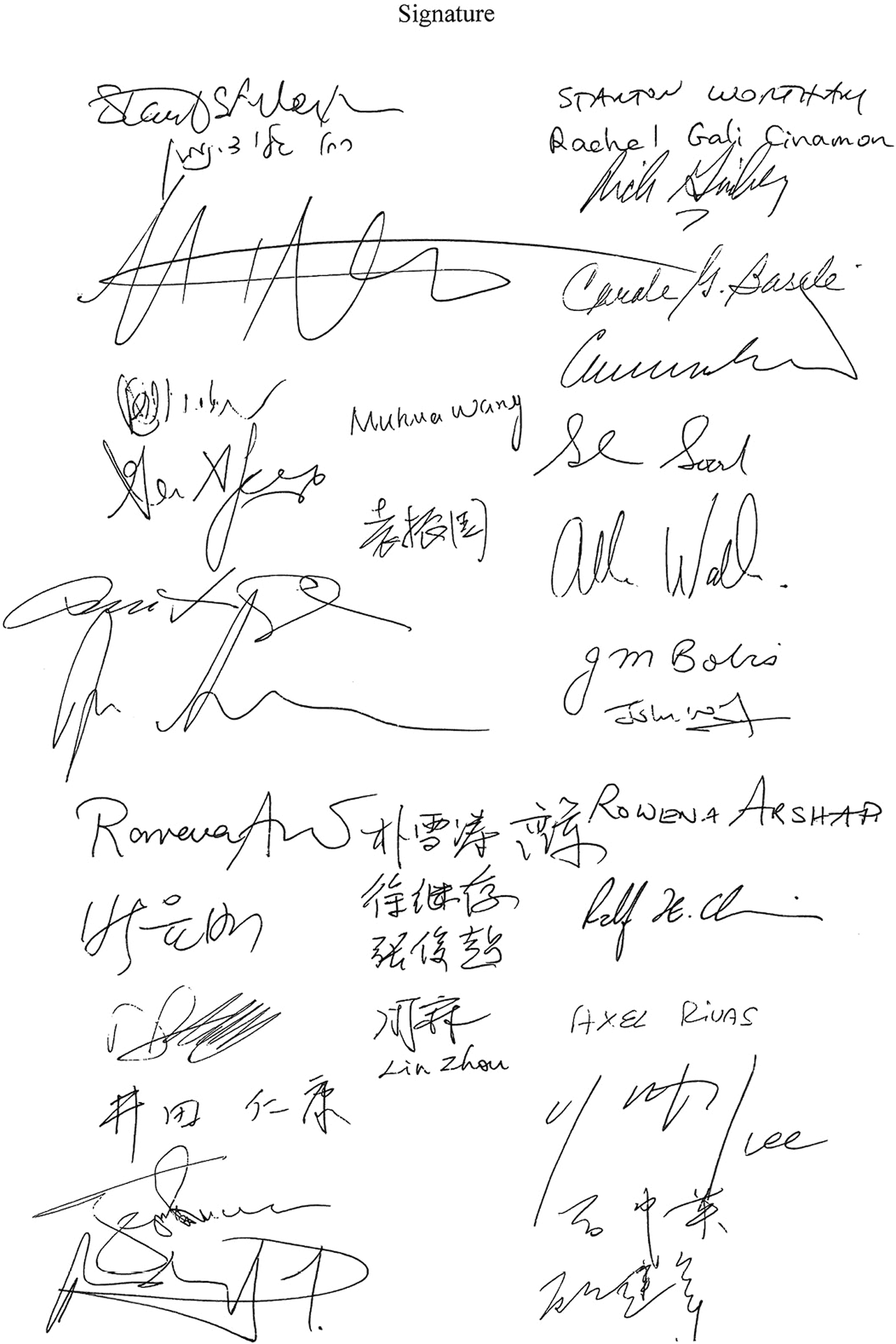
In sum, the assembled leaders discovered that they faced a multitude of issues and challenges in common that they identified as worthy of future collaborative inquiry and deliberations, many of which are not included in this brief overview. On the final day, the group spent time crafting a joint communique to capture and express the shared goals and commitments of the participating Deans. That the group drafted a statement to which all the leaders could agree is itself a notable achievement—and portends a productive return meeting of the GEDF next fall in Shanghai that ECNU has graciously agreed to host again.