



Abstract
In 2019, legislation was passed in Punjab, Pakistan, mandating the use of risk/need assessment tools. Subsequently, the Probation Service Assessment Planner (PSAP; Brown and Bhutta, 2021), a ground-up gender and culturally informed assessment tool and case management planner, was developed and piloted in a sample of 45 women on probation in Pakistan. Participants reported culturally influenced and gendered needs, including relational challenges and a lack of access to education and employment, as well as gender neutral needs. Most PSAP domains had acceptable to excellent internal consistency (α = 0.58−0.90) and assessors broadly discriminated well between priority and non-priority needs. While the PSAP is a promising assessment tool, future research must further evaluate the measure’s psychometric validity and create a framework for applying the PSAP in Pakistan’s resource-scarce correctional system.
Introduction
In 2012, the Pakistani criminal justice system began to shift towards a rehabilitative and community-based response to crime; unfortunately, this shift has been stunted, despite the support of Pakistani scholars, due to resource and infrastructure limitations (Bhutta and Wormith, 2016; Penal Reform International et al., 2012; Rais et al., 2021). Presently, 100 probation officers serve the Punjab province of Pakistan and each district office in Punjab has caseloads ranging from 1000 to 1800 clients (Home Department, Government of Punjab Pakistan, personal communication, 2023). All women on probation in Punjab (196 women) are facing their first conviction (not including offences punishable by death; Probation of Offender Ordinance, 1960).
In 2019, the Punjab Probation and Parole Service Act legislated the use of risk/need assessment tools in probation settings. Subsequently, Brown and Bhutta (2021) developed the Probation Service Assessment Planner (PSAP). The PSAP is a ground-up culturally and gender informed structured professional judgement assessment tool that identifies gender neutral and gender responsive dynamic needs and strengths among women on probation in Pakistan (further described in the Methods). This article will describe the results of the pilot PSAP study conducted with 45 women on probation in Punjab, Pakistan.
The Psychology of Criminal Conduct
Bonta and Andrew’s (2024) Psychology of Criminal Conduct is arguably the dominant framework guiding evidence-based correctional assessment and treatment in the Western world. The framework encapsulates a general personality and cognitive social learning (GPCSL) theory and the operationalization of the GPCSL theory – the risk-need-responsivity (RNR) model. The GPCSL theory describes that criminal behaviour is learned following a cognitive appraisal of the perceived rewards and costs associated with antisocial versus prosocial behaviour. This cognitive appraisal is informed by the Central Eight risk/need factors: criminal history (static), antisocial personality pattern, substance misuse, school/work, leisure/recreation, procriminal attitudes, family/marital, and procriminal associates, which explain individual-level variations in one’s propensity to engage in criminal conduct. Ultimately, criminal behaviour occurs when antisocial behaviour is more rewarding than costly and is more rewarding than prosocial behaviour. The RNR model directs that correctional treatment is most effective when it is proportionate in intensity to one’s level of risk (risk principle), targets the Central Eight’s seven dynamic needs (need principle), and is tailored to a client’s personal characteristics and delivered using cognitive behavioural and social learning approaches (specific and general responsivity principles, respectively).
Bonta and Andrews’ (2024) Central Eight are presented as universally relevant, regardless of an individual’s identity-based characteristics (socially constructed characteristics that determine one’s identity, e.g. gender and race). Despite early criticisms of the model for its neglect of identity-based characteristics, it has more recently been convincingly argued that this criticism is a mischaracterization as the current iteration of the model implicitly accommodates gender and culture through an additional eleven principles (e.g. principles of respect for the person, use of human services, application of theoretically grounded programming, and empirically defensible use of professional override; Bonta and Andrews, 2024; Wormith and Zidenberg, 2018). Collectively, these principles facilitate the integration of validated gender and culturally responsive theories in correctional assessment and encourage consideration of identity-specific (e.g. gender and culturally informed) needs in treatment, provided criminogenic needs are the primary focus.
The Central Eight have been well-substantiated and predict general recidivism with similar accuracy in male and female populations (female: r = 0.31, 95% CI [0.26, 0.35], male: r = 0.30, 95% CI [0.27, 0.34]) and in ethnic minority and non-minority groups (results were not disaggregated further; ethnic minority: r = 0.27, 95% CI [0.22, 0.32], non-minority: r = 0.29, 95% CI [0.23, 0.34]; Olver et al., 2014).
Gender and culturally informed understandings of criminal conduct
Pathways theory posits that women follow gendered pathways into the legal system, marked by experiences of trauma, psychiatric illness, relational dysfunction, and socioeconomic disadvantage, which produce gender responsive needs (Belknap, 2020; Daly, 1992). Accordingly, these pathways also contribute to women’s disproportionate representation as perpetrators of economically driven and drug-related offences (e.g. Brennan et al., 2012; Daly, 1992; Scott et al., 2019). While Pathways theory has not yet been validated in Pakistan, findings have supported its applicability in Malaysia, another predominantly Muslim country in Asia (Teh, 2006). It is important to validate this theoretical model cross-culturally as culture influences gender roles, with Pakistani gender roles encouraging women to hold roles as wives and mothers and placing great value on their relational strengths (Ali et al., 2011; Mushtaq and De Visser, 2023). Thus, these values may influence the presentation of gender responsive needs.
While there is a growing body of literature (e.g. Gehring, 2018; Sutton and Simons, 2021) supporting the relationship between gender responsive needs (e.g. mental illness and relational dysfunction) and criminal conduct, risk/need assessment tools are traditionally gender neutral. Certain tools have been constructed to assess gender responsive needs in justice-impacted women (e.g. Service Planning Instrument for Women, Orbis Partners, 2006; and Women’s Risk Needs Assessment Instrument, Van Voorhis et al., 2013). However, the incorporation of gender responsive items has not yet consistently improved predictive accuracy relative to gender neutral tools (Jones and Robinson, 2018; Van Voorhis et al., 2013), despite arguments that incorporating identity-specific factors improves the predictive validity of RNR-based assessment tools (e.g. Shepherd and Lewis-Fernandez, 2016). Presently, no ground-up tools that are jointly culturally and gender responsive exist.
The argument for using risk/need assessment tools for diverse populations without explicit consideration of gender responsive factors hinges on the universality of gender neutral needs, their predictive strength relative to gender responsive needs, and the predictive accuracy of gender neutral tools (Olver and Stockdale, 2022). However, these arguments neglect potential gender differences in the predictive strength of gender-neutral needs, the contributions of gender responsive needs to women’s criminal conduct, and the male lens through which gender neutral needs were largely developed. In addition, there is an evident need to assess and treat gender responsive needs in conjunction with gender neutral approaches as women who attend programs with gender responsive elements experience more community success than women who attend gender neutral programming alone (Gobeil et al., 2016).
While this integrative approach addresses considerations of gender, it is not known how culture (the socially constructed meaning applied to a group and their practices based on their membership in a culture; Schmidt et al., 2020) can best be incorporated in risk/need assessments. Presently, the Central Eight, which were first identified in Western cultures, are explored in a confirmatory manner in diverse populations, with minimal exploration of culturally specific needs and culturally influenced behavioural expressions of the Central Eight (Shepherd and Lewis-Fernandez, 2016). This approach mirrors early research on justice-impacted women, wherein constructs developed and validated on men were applied to women. This approach allowed for the confirmation of the Central Eight’s presence, but gender responsive needs were not formally identified until Daly’s (1992) qualitative exploration of justice-impacted women’s unique experiences. Thus, it is evident that culturally responsive needs require specific exploration.
As of 2023, only Bhutta and Wormith (2016) have validated a risk/need assessment tool (a culturally adapted version of the gender neutral Level of Service/Case Management Inventory; LS/CMI) in a sample of probation clients (N = 506) in Pakistan. On average, the clients were of low risk (M score = 8.58; out of 43). In contrast to past findings that justice-impacted women are of lower risk (Olver and Stockdale, 2022), women had higher LS/CMI scores than the men (M = 13.00; males: M = 8.24) and recidivated at similar rates (8.3%; males: 8.7%). The authors posited that this result occurred due to inaccurate assignment of risk scores for female clients (contrary to past findings of their universality; Olver et al., 2014) and/or raters’ cultural and gender biases.
The sample had a low base rate of recidivism; however, the LS/CMI total score was similarly predictive of recidivism in Pakistan (r = 0.38; Bhutta and Wormith, 2016) as in Canada (r = 0.38; Olver et al., 2014) and there were no significant gender differences in predictive accuracy. Excluding leisure/recreation (r = 0.07), all sub-scale scores (education/employment, r = 0.25; family/marital, r = 0.15; companions, r = 0.23; alcohol/drug, r = 0.31; procriminal attitudes, r = 0.10; and antisocial pattern, r = 0.21) were significantly related to recidivism. Of note, only two of the subscales (alcohol/drug: r = 0.49 and education/employment: r = 0.35) were significantly related to recidivism for women, although the sample had limited power (n = 36). The correlations reported in the mixed-gender sample were similar in strength to those identified by a Western-dominant meta-analysis, except for the alcohol/drug (r = 0.20), procriminal attitudes (r = 0.19), antisocial pattern (r = 0.31), and leisure/recreation (r = 0.16) domains (Olver et al., 2014).
In addition, Bhutta and Wormith (2016) identified that the LS/CMI Other Client Issues section, which includes items often conceptualized as gender responsive needs (e.g. mental health and past victimization; Andrews et al., 2004), was positively correlated with recidivism to a similar degree to the domain subscales (r = 0.22). Last, the study evaluated a proposed culturally responsive factor of religiosity, finding that it did not add incremental validity to the LS/CMI (Bhutta and Wormith, 2016). These findings support that culturally adapted gender neutral tools can be applied in Pakistani probation populations with strong predictive accuracy and that gender responsive themes are salient in a mixed-gender sample; however, additional investigations of culturally and gender responsive needs are required.
Strengths as tools to improve rehabilitative efficacy
In recent years, strengths have emerged as powerful tools to optimize correctional rehabilitation efficacy. A recent scoping review found that strengths are consistently related to recidivism and improve the incremental validity of risk/need assessment tools (Barnes-Lee and Petkus, 2023). Unfortunately, most of this research has been conducted on youth samples, with less investigation occurring in adult samples (see Jones et al., 2015; Kleeven et al., 2022 for exceptions). Additionally, limited research has examined the impact of culture on strengths (e.g. Feldmeyer and Cui, 2015; Kim and Goto, 2000). It is necessary to further examine this phenomenon as strengths may be an optimal treatment target to prevent violation of the risk principle in the treatment of low-risk probation clients. For this study, strengths are defined as positive characteristics that reduce the client’s risk of criminal conduct (Jones et al., 2015; Scott and Brown, 2018; Scott et al., 2022).
The Probation Service Assessment Planner
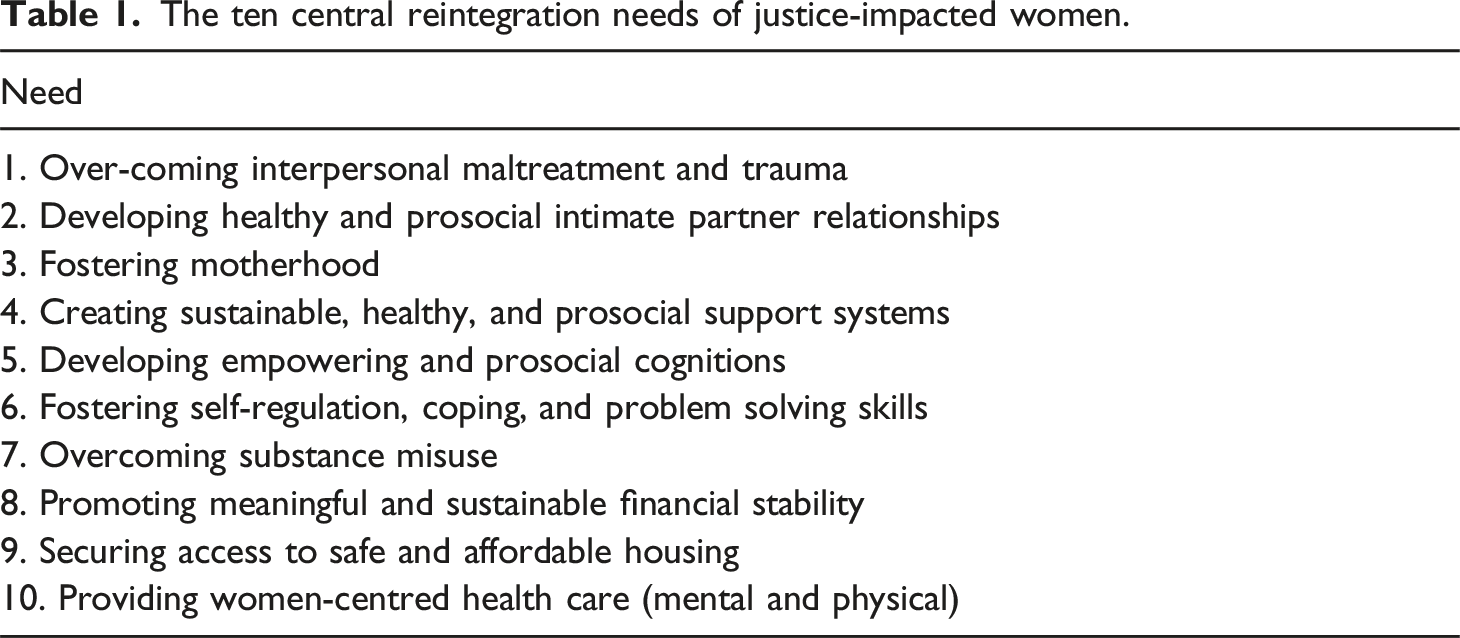
The ten central reintegration needs of justice-impacted women.
Purpose of the study
Our pilot study had three goals: (1) generate a needs and strengths profile of women on probation in Punjab, (2) explore the PSAP’s internal consistency, and (3) assess whether PSAP items help raters to discriminate between priority and non-priority need domains. It is expected that pathways theory will be validated in this sample, as it was in Malaysia (Teh, 2006), as evidenced by the presence of gender responsive needs. Given the predictive focus of Bhutta and Wormith (2016), our investigation of gender neutral needs is largely exploratory, as is our exploration of culturally responsive needs as the current literature on cultural responsivity in risk assessment has focused on racially minoritized populations in Western settings, with few studies utilizing a racialized majority population. As this study serves as a preliminary validation, no a priori hypotheses will be made regarding the PSAP’s internal consistency or rater discrimination.
Method
Participants
The participants were 45 women (M age = 40.73 years, SD = 13.47) on probation in May 2022 in Pakistan’s largest province, Punjab (population: 127.7 million; more than half of Pakistan’s population; Government of Pakistan, 2023). Five women on probation were sampled from each of Punjab’s nine administrative districts. There were no additional exclusion or inclusion criteria.
The majority of women were from urban areas (n = 32, 71.11%), with fewer women from rural areas (n = 8, 17.78%) or the extremely impoverished city outskirts (n = 5, 11.11%). The majority of participants were married (n = 28, 62.22%) and on average, reported having 3.09 children (SD = 2.08). Of note, 20.00% of the participants (n = 9) had no children and 48.89% of the participants (n = 22) had 4 or more children. Their average probation term length was 1.51 years (SD = 0.59, range: 1.00–3.00). The most common offences were selling drugs (n = 14, 31.11%), other offences (n = 13, 28.89%; e.g. theft of electricity and sex-trade related offences), and theft (n = 10, 22.22%). Fewer women were convicted of substance use (n = 6, 13.33%) and assault-related offences (n = 2, 4.44%). The motives for their offences were largely unknown (n = 25; 55.56%). Of the known motives, the most common reasoning was financially driven (n = 10, 22.22%), followed by addiction (n = 6, 13.33%), and emotionally driven (n = 4, 8.89%). Only 17 (38.64%) of the participants had an accomplice (1 participant was missing accomplice information).
Measure
The PSAP is comprised of 53 dynamic factors spanning 9 domains: basic life necessities (6 items: healthcare, housing, food, and childcare), marital and family relationships (10 items: marital and family relationships and adverse experiences), social support and leisure time (7 items: prosocial relationships, leisure time, and religion/spirituality), human capital (5 items: financial, employment, education, and childcare), emotions, coping, problem solving (5 items: emotional regulation and problem solving skills), illegal substances (3 items: attitudes surrounding and relationship to drug use), thinking styles and self-concept (5 items: procriminal attitudes, self-esteem, and arrogance), health (8 items: physical and mental health), and life purpose and outlook (4 items: future orientation, dreams, and spirituality). The PSAP is scored following a semi-structured interview and file review. Administration begins with a case analysis, wherein raters record the client’s geographic location, length of probation, and date of birth. Next, the raters pose a series of structured questions regarding the client’s index offence (crime type, motive, and accomplice) and clients identify a response option best-fitting their offence using a predefined response list. Raters further verify index offence information in the file review. Each dynamic item is then scored on a three-point scale: high need (high-level need, no evidence of strength), low/moderate needs (some need concern, may be strengths present), or high strength (no evidence of need) based on the past 3 months of client behaviour. Next, using structured professional judgement, raters identify high priority need domains (using a yes/no response format). Given that the women are on probation for a first offence with no formal criminal history, the PSAP does not currently include static risk items.
Procedure
The measure was constructed in English and then translated to Urdu. Following ethics approval in Canada and Pakistan, Dr Bhutta and two student research assistants in Punjab collected the data under Dr Bhutta’s supervision. Students were first trained by Drs. Abida Parveen, Brown and Bhutta on how to score the measure, ethical procedures, and interviewing techniques before travelling to each administrative region to conduct in-person interviews (approximately 1 to 1.5 hours). In-person interviews could be conducted at any point during the participants’ probation terms during a monthly reporting session with their probation officer. Research assistants then reviewed participants’ first information reports (akin to pre-sentence reports), which inform decisions as to the appropriateness of a community sentence. Due to resource constraints, it was not possible to assess inter-rater reliability.
Statistical approach
To prepare a profile of participants’ needs and strengths, frequency statistics were produced for all PSAP items and domains. To explore the PSAP’s internal consistency, we examined domain alphas and mean inter-item correlations. Last, we used correlational analyses and t-tests to explore the ability of raters to use PSAP items to discriminate between high priority and non-priority needs. A series of point biserial correlations were used to identify a relationship between tabulated domain scores and the designation of a domain as a priority or non-priority need. Next, bootstrapped (n = 1000) t-tests were conducted comparing the mean domain scores of priority and non-priority need groups. Bootstrapping was used due to the sample size and deviations from normality identified across all domains. For all correlations, t-tests, and reliability statistics, all items with not applicable response options were omitted to maximize the sample size. The data was analyzed using SPSS (Versions 28 and 29).
Results
PSAP need and strength profiles at the domain level
Proportion of clients with priority need and strengths identified in each domain.
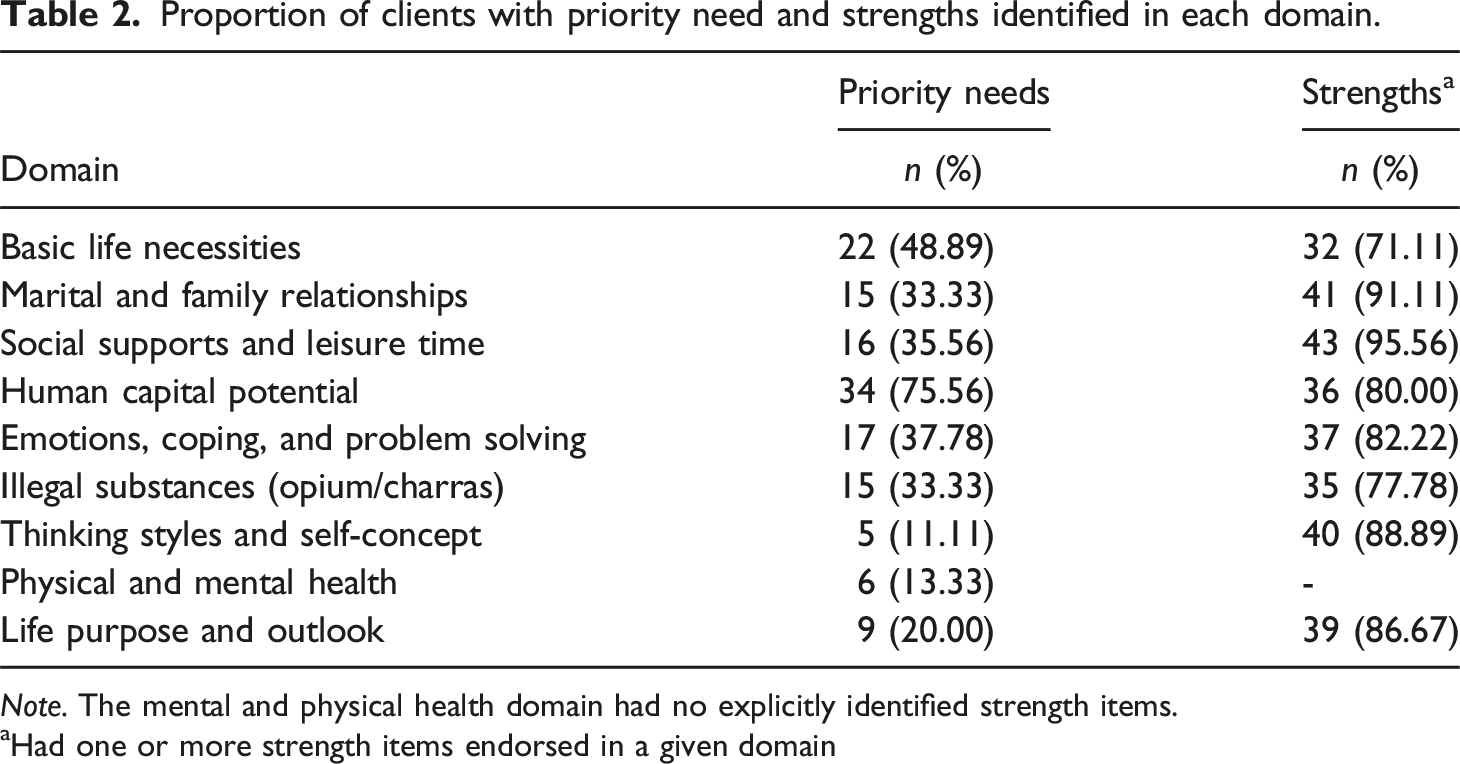
Note. The mental and physical health domain had no explicitly identified strength items.
aHad one or more strength items endorsed in a given domain
Considering only items with explicit strength response options (as opposed to an absent risk factor/more strength focused orientation), on average, raters endorsed an average of 17.96 strength items per woman (SD = 7.46; plausible range: 0–29). One or more strengths were identified in all domains by more than two-thirds of the participants (see Table 2). Social supports and leisure time, family and marital relationships, and thinking styles and self-concept were nearly universally identified as strengths.
Need and strength profiles at the item level
PSAP item frequencies.
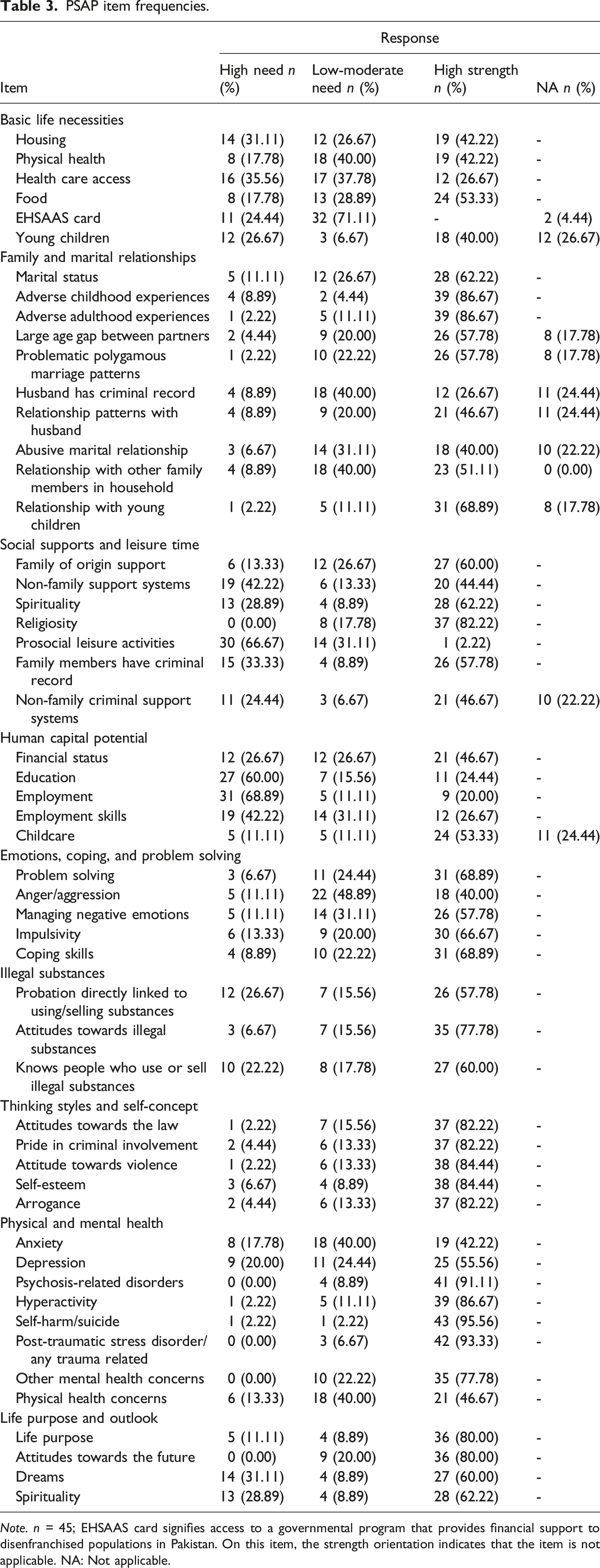
Note. n = 45; EHSAAS card signifies access to a governmental program that provides financial support to disenfranchised populations in Pakistan. On this item, the strength orientation indicates that the item is not applicable. NA: Not applicable.
Focusing further on culturally and gender responsive items, approximately a quarter of women reported some level of concern regarding a large age gap between partners or problematic polygamous marriage patterns. More than one-third of participants reported additional relational stressors including experiencing a lack of familial support, family members having criminal records, or an abusive marital relationship and approximately half of the women reported a lack of non-family support. Nearly two-thirds of the women reported mental health concerns (n = 28; 62.22%), most commonly reporting internalizing concerns with an average of 1.58 comorbid conditions (SD = 1.66, range: 0.00–7.00). Last, religiosity, a lack of arrogance, strong life purpose, and clear future orientation were identified as strengths in four-fifths or more of participants.
PSAP internal consistency
Internal consistency of the PSAP domains.
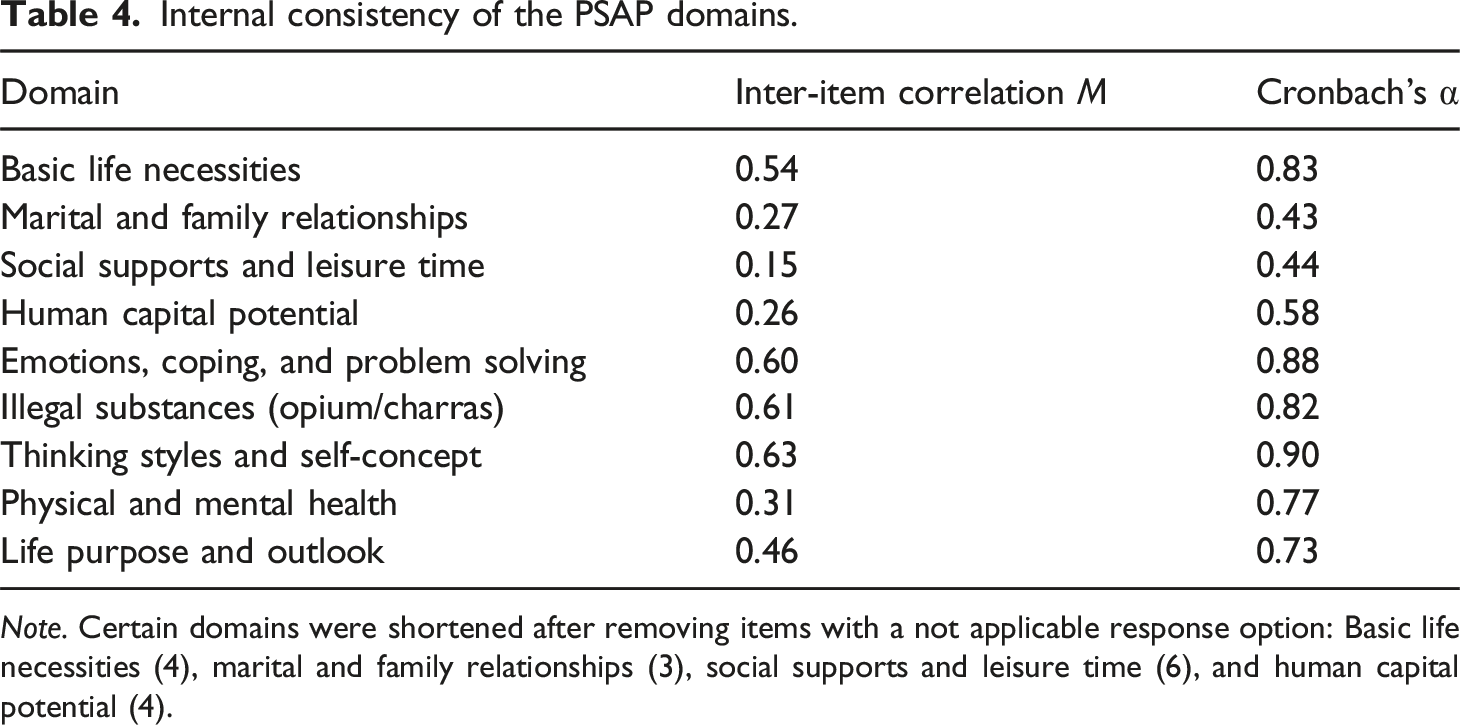
Note. Certain domains were shortened after removing items with a not applicable response option: Basic life necessities (4), marital and family relationships (3), social supports and leisure time (6), and human capital potential (4).
Six of the nine domains had acceptable to excellent internal consistency, with only three domains having an α < 0.70 (see Table 4). Only the internal consistency of the family and marital relationships domain can be improved to an acceptable level (α = 0.89; by removing the marital relationships item). The complete PSAP is strongly internally consistent: α = 0.93.
Ability of PSAP items to distinguish between priority and non-priority cases
PSAP domain-level mean scores as a function of priority versus non-priority need group designation.
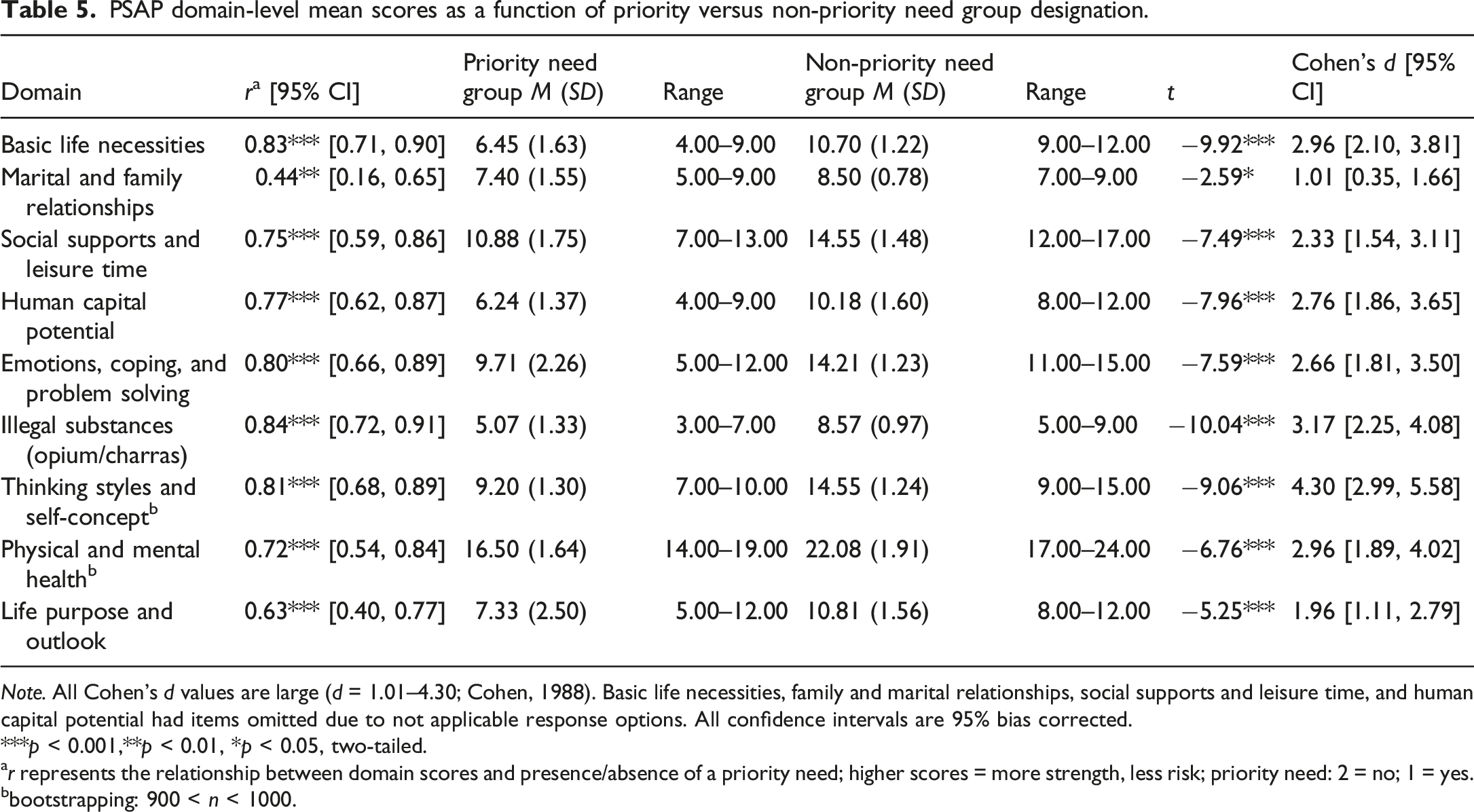
Note. All Cohen’s d values are large (d = 1.01–4.30; Cohen, 1988). Basic life necessities, family and marital relationships, social supports and leisure time, and human capital potential had items omitted due to not applicable response options. All confidence intervals are 95% bias corrected.
***p < 0.001,**p < 0.01, *p < 0.05, two-tailed.
ar represents the relationship between domain scores and presence/absence of a priority need; higher scores = more strength, less risk; priority need: 2 = no; 1 = yes.
bbootstrapping: 900 < n < 1000.
Discussion
In response to Punjab’s legislative mandate to implement risk/need assessment tools in their probation system, this study sought to provide the first description of the needs and strengths of women on probation in Pakistan (N = 45) and a preliminary validation of the PSAP’s (Brown and Bhutta, 2021) internal consistency. Additionally, the study examined whether PSAP items facilitated rater identification of priority needs. In sum, both gender neutral and gender responsive needs were identified in the sample, the PSAP largely had appropriate internal consistency, and raters appeared to discriminate well between priority and non-priority needs. However, alterations will be required prior to the measure being implemented in the Pakistani probation system.
Profile of women on probation in Punjab
Salient needs in this sample reflect gender responsive needs identified as disproportionately impacting women due to their experiences of victimization, social dislocation, and systemic disenfranchisement in patriarchal societies (Belknap, 2020; Daly, 1992). Specifically, participants reported high levels of mental health concerns, particularly internalizing disorders; however, interestingly health was not frequently identified as a priority need. Instead, the most prevalent priority needs reflected an inability to meet basic needs and a lack of access to economic and educational capital. One-third of the women additionally had substance use priority needs. While this study did not explore predictive accuracy, raters perceived these needs to be related to participants’ criminal conduct, aligning with Bhutta and Wormith’s (2016) finding that the LS/CMI’s Other Client Issues, substance misuse, and education/employment subscales predicted criminal conduct in a Pakistani probation sample. While these needs are not all criminogenic, it is described within the RNR model that needs related to sustaining human dignity should be addressed first in treatment (Bonta and Andrews, 2024). Thus, given individuals living in low- and middle-income countries and members of otherwise marginalized populations face restricted access to basic life necessities and educational and economic capital, these needs may need to be addressed to stabilize the client prior to addressing criminogenic needs.
Despite these domains being commonly flagged as priority needs, 70–80% of women reported one or more strengths in these domains, demonstrating that these domains may be powerful areas in which to mobilize strengths in case management practices. Additionally, this finding evinces that needs and strengths can coexist in a singular domain, supporting a need to assess both needs and strengths at the item level. In terms of criminal conduct characteristics, the patterns of offending of the participants aligned with gendered patterns of offending in that women largely engaged in economically driven offences (Belknap, 2020). Uniquely, their probation terms (M = 1.51 years) were lengthier to those identified in other mixed-gender (predominantly male) samples of individuals on probation in Pakistan (n = 450; M = 1.25 years; M. Bhutta, 2025; personal communications). This finding may indicate that women’s offences are more serious in nature than those engaged in by men or they are simply perceived by the legal system to be more serious. In sum, the sample’s need and strength profile supports the salience of pathways theory in Pakistan and demonstrates the utility of integrating gender responsive and gender neutral correctional rehabilitation approaches.
Two notable deviations from pathways theory were identified which require consideration: (1) the low prevalence of adverse childhood and adult experiences and (2) high levels of relational strengths (family and marital relationships and social supports and leisure time). These findings may reflect a true cultural difference; however, it is additionally possible that they are a result of cultural stigma. First, it is typically found that justice-impacted women report disproportionately high levels of trauma compared to community populations (Grella et al., 2013). Low levels of reported adversity in this sample may reflect nondisclosure due to stigma rather than an absence of these experiences, or a reluctance on the part of the interviewers to ask adversity-focused questions – an issue that will need to be addressed in future training initiatives. Only 13.33% of participants reported ACEs and experiencing any form of adult adversity despite reported community prevalence rates of approximately 58.73% for ACEs and 24.6% for physical intimate partner violence among women in Pakistan (Islam and Broidy, 2024; LeMasters et al., 2021).
Second, despite descriptions of relational challenges in samples of Western justice-impacted women, women in Pakistan reported greater access to relational capital, which may occur due to the heightened value placed on interpersonal relationships in collectivist cultures, particularly for women (whose gender roles encourage a high degree of relational investment). Thus, this finding may be evidence of how culture impacts the accessibility of specific strengths. However, it is additionally possible that this finding reflects socially desirable responding to avoid punishment for violations of gender roles, which could contribute to an under-reporting of present relational needs. This area of study is of particular importance as despite the high prevalence of relational strengths, many women in this sample simultaneously experienced familial stressors. Future predictive studies will need to examine the relationship between coexisting relational strengths and needs and whether Pakistan’s collectivist culture impacts the influence of relational needs and strengths on criminal conduct.
Cultural factors were also seen to shape the clients’ need/strength profiles through the social support and leisure time and thinking styles and self-concept domains, demonstrating the need for the integration of cultural factors in risk/need assessment tools. Bhutta and Wormith (2016) identified that the leisure and recreation domain was the only domain of the LS/CMI that was not predictive of offending in probation clients in Pakistan. This study identified that when applying a ground-up culturally informed construct of social support and leisure time, more than one-third of women were assessed as having a priority need in this area which was perceived to be related to their offending. Second, antisocial cognitions by their nature challenge collectivist orientations by encouraging deviations from social norms, the prioritization of individualism, and a lack of empathy towards others. Thus, Pakistan’s collectivist culture may discourage antisocial cognitions, contributing to the low identified prevalence of the thinking styles and self-concept domain and the relatively weaker predictive validity of this construct in Pakistan (compared to Western countries, as identified by Bhutta and Wormith, 2016).
Last, at the item level, certain culturally defined items were identified at comparable rates to items reflecting the Central Eight (e.g. substance use items). Specifically, nearly a quarter of women reported that there was a large age gap between themselves and their partner or that they experienced problematic polygamous marriage patterns. Thus, overall, these results support our hypotheses that despite the identified relevance of Central Eight needs in this sample, culture and gender shape women’s pathways to justice-system involvement in Pakistan and these needs may serve as important non-criminogenic targets for probation officers.
A preliminary psychometric evaluation of internal consistency and priority need identification efficacy
The measure has acceptable to excellent internal consistency and the items effectively informed priority need designation at the domain level. Broadly, raters consistently identified that individuals with more risk-focused and less strength-focused orientations had priority needs in each domain. While most domains had an acceptable level of breadth, as noted by their inter-item correlations, some domains, like the thinking styles and self-concept domain, can be streamlined to reduce measure length. One-third of the domains had unacceptable internal consistency, indicating that the items do not cohesively measure their domain construct. However, it is important to acknowledge that accommodating a breadth of items is perhaps more important in the context of risk/need assessment than internal consistency. Particularly in the Pakistani context, the assessment tool must be brief, yet comprehensive, and thus a larger degree of breadth must be accommodated within each domain to achieve this goal. Additionally, while items can be removed to improve internal consistency, it is important to consider the consequences of this decision. For example, if the marital relationships item is removed from the family and marital relationships domain, the internal consistency improves, but the measure would no longer identify an individual’s relationship status, which influences the likelihood of criminal conduct (Bonta and Andrews, 2024). Thus, the unacceptable degree of internal consistency of certain domains is not of great concern.
Implications
This study illustrates the necessity of integrating gender neutral, gender responsive, and culturally responsive approaches in forensic assessment. The PSAP is a valuable resource for Pakistani probation officers as it facilitates need identification and integrates RNR principles, including the specific responsivity principle, within the measure items, standardizing their application. By standardizing this step, as is done in tools like the LS/CMI (Andrews et al., 2004), adherence to the responsivity principle should improve, notwithstanding the lack of additional training available in Pakistan on evidence-based practices. Therefore, the tool has the potential to improve the rehabilitative capacity of Pakistan’s community corrections programs by facilitating need identification and the provision of gender and culturally responsive services.
To facilitate application of the PSAP, a triage system should be developed (in consultation with the Punjab Probation and Parole Service) which identifies priority clients for a full assessment given it is not feasible for one probation officer to assess all 1800 clients on their caseload. Potential items to consider for triage include degree of victim physical injury, age when probation sentence was issued, and mitigating/contextual circumstances of the offence. Additionally, in delivering the measure, therapeutic alliance will be paramount as non-judgemental, empathetic relationships between the probation officer and client may foster feelings of safety and security, increasing the likelihood of disclosure of stigmatized experiences (Harris et al., 2014).
Critically considering the implementation of this measure raises the question as to whether there is utility in developing this tool when there is currently insufficient infrastructure to administer the measure to all clients and most clients likely pose little to no risk to commit new offences. The clients are presumed to be of low risk as two of the strongest predictors of future criminal conduct – criminal legal history and early onset of antisocial conduct – are absent in all the women (who were generally older and serving their first sentence; Bonta and Andrews, 2024). Regardless, Pakistani legislation now mandates the use of risk/need assessment tools. As such, a thoughtful solution must be proposed, validated, adjusted as the evidence dictates, and then re-validated.
In doing so, we must carefully consider how best to balance the evidence-based principles of the RNR model with valid concerns raised by criminological scholars who have long underscored the dangers of conflating need with risk; notably how risk scores can (and do) penalize women for their oppression and trauma (Hannah-Moffat, 2010). This harm stems from an over-emphasis on the importance of criminogenic risk in risk/need assessment which has become embedded in Western cultures and led to the social criminalization of justice-impacted people (Werth, 2019a, 2019b). In Pakistan, a starting point may be to apply a default low-risk classification to all women unless certain triage flags are present (e.g. physical victim injury present, no mitigating factors, woman is relatively young, and prior offending evident), allowing probation officers to prioritize providing services to women who are more likely to offend in the future, while recognizing that most of these women will not reoffend, particularly seriously or violently.
We would also like to underscore that the PSAP has been specifically developed in accordance with gender responsive principles that dictate risk assessments be strength based. In the absence of predictive validity data, all PSAP items are currently referred to as needs or strengths, never as risk factors. This approach encourages probation officers to help clients translate needs into strengths, a process that will, in part, require referrals to available resources which will ideally lie outside of the criminal legal system to prevent further entrenchment and criminogenic exposure.
As the Pakistani probation system does not currently have knowledge of risk assessment tools, it serves as a valuable setting in which to reconstruct the meaning of ‘risk’ to be focused on program dosage needs – which invariably will include programming which targets crime causing needs (referred to as criminogenic needs in the RNR model) alongside non-crime causing needs (referred to as non-criminogenic needs within the RNR model). As such, in its application, we will focus on using the PSAP as a tool to identify high need clients, facilitate human service provision for those most in need, and determine appropriate program dosages. Once we have ascertained the predictive validity of the PSAP in future studies, we will re-evaluate the PSAP’s potential to assess the risk of serious re-offending as a means of prioritizing care.
Limitations and future directions
While these results are promising, they must be interpreted with select cautions. First, no inter-rater reliability statistics are available, precluding a fulsome understanding of the measure’s validity. Second, when the measure was translated, it was not back-translated to ensure accuracy. Thus, it is possible that some meaning from the original measure was not retained. Third, the sample size of this pilot study was quite small, which impacts the study power. However, given all analyses were significant, this limitation likely had little influence on the study.
Future research should validate a shortened version of the measure in a larger sample. Following the validation of this shortened measure, researchers should investigate probation officers’ knowledge of available rehabilitative resources and identify barriers to accessing these resources. Later research should examine whether PSAP scores are predictive of recidivism and whether matching services to identified priority needs on the PSAP is related to reductions in recidivism. It will be especially important for this research to evaluate the predictive accuracy of culturally and gender responsive items and domains and to compare their predictive strength to items and domains more closely related to the Central Eight. Last, qualitative research should examine further whether identified deviations from pathways theory reflect true cultural differences or whether the responses are impacted by social pressures.
In conclusion, this study provides strong evidence that culturally and gender responsive needs are present among justice-impacted women in Pakistan, encouraging the integration of culturally aware case management practices and gender neutral and gender responsive approaches to correctional rehabilitation. While the PSAP has strong internal consistency and is used effectively by raters to identify priority needs, future research must further examine the psychometric validity of the tool, particularly its predictive validity, and create clear, realistic guidelines for its application in the Pakistani probation system.
Footnotes
Declaration of conflicting interests
The author(s) declared no potential conflicts of interest with respect to the research, authorship, and/or publication of this article.
Funding
The author(s) disclosed receipt of the following financial support for the research, authorship, and/or publication of this article: this work was supported by the Higher Education Commission Local Challenge Fund and Carleton University’s International Research Seed Grant.
