




Abstract
Autoethnography—a combination of autobiography and ethnography—focuses on the intersection of personal experiences and the culture in which they take place and is considered a viable method for exploring human experiences. The Russo-Ukrainian war has resulted in millions of forcibly displaced asylum-seeking refugees facing ambiguous loss. Whereas much is known about refugees’ support needs, little is known about the needs and experiences of the humanitarian delegation members (HDM) who assist them. Through a debrief-based co-autoethnographic account of a female HDM who supported Ukrainian refugee mothers and children on the Polish borders, we explored the lived experiences involved in such a mission. Specifically, we conducted a transnational dyadic autoethnography debrief-based co-autoethnography which included both verbal and photo-based debriefing (eight 2-hour sessions) alongside a reflexive (10-day) field diary analysis. Content analysis revealed cognitive dilemmas, emotional struggles, and practical adaptations occurring within the HDM’s three identity-related domains: personal, professional (psychologist), and ethnic. The methodology presented and demonstrated in this paper enhances our theoretical understanding of the challenges faced by HDMs and may contribute to better future design of HDM training.
Introduction
The Russo-Ukrainian war, initiated by Russia’s invasion of Ukraine on the February 24, 2022 (Vlados and Chatzinikolaou, 2024), led to the forced displacement of millions of Ukrainian refugees. Estimations are that more than six million Ukrainians have left their country and are seeking safety outside its borders (Ukraine Refugee Situation, 2024), where the most common migration destination is Poland. In fact, it is considered the biggest migration crisis Europe has faced in the 21st century (Babicki et al., 2023). They left their homes and possessions behind, without knowing when or whether they would be able to return (Bajaj and Stanford, 2022(. Such a situation may produce an ambiguous experience of loss since there is uncertainty regarding the possible future loss of family members as well as of the home. The term “ambiguous loss” was coined by Boss (1999, 2004; Boss et al., 2011), and refers to uncertain, ambiguous, non-permanent loss. In recent years it has been expanded to include ambiguous situations due to disasters such as earthquakes, being prisoners of war (Faber et al., 2008; Shalev and Ben-Asher, 2011), as well as for refugee children (Luster et al., 2008, 2009; Renner et al., 2021). While much is known about the support needs of refugees (Kagabo et al., 2023; Sleijpen et al., 2013), few studies have examined the experience of those sent to help them. Specifically, humanitarian assistance is designed to alleviate human suffering in emergency situations, independent of race, citizenship, and other political considerations (Fink and Redaelli, 2011). As such, aid workers are being exposed to traumatic situations. Hence, the present article seeks to understand the processes a humanitarian aid worker underwent to assist Ukrainian refugee mothers and children experiencing ambiguous loss, via an autoethnographic approach (Chang, 2016).
Autoethnography in the study of human experience
Autoethnography is a combination of autobiography and ethnography, focusing on the intersection of personal experiences and the culture in which they take place (Matthews, 2019; Narayan, 2006). Autoethnography uses personal narrative to engage in “cultural analysis and interpretation” (Chang, 2016: 46). It is a self-analysis to understand culture (Durrani, 2021; Ellis and Bochner, 2000). It links “personal troubles and public issues” (Denzin, 2014: 31). For instance, some autoethnography work was made around personal experiences following the Jewish genocide during the Holocaust (Ellis et al., 2017; Ellis and Rawicki, 2015; Sørly et al., 2019). As such, it is the most suitable method to explore the experiences of a humanitarian aid worker assisting Ukraine refugees, as it is the personal narrative that reflects a cultural issue—the troubling issue of Ukrainian refugees’ struggle following the Russian invasion of Ukraine. The current study involved two psychologist-researchers—the first is the humanitarian delegation member (HDM) and the second is a colleague of hers, a combination previously used in research by Akehurst and Scott (2023), by co-analyzing the process that one of them underwent. Thus we refer to it as co-autoethnography (i.e. an autoethnography conducted by two researchers simultaneously where one is the debriefer and the other is the debriefed), as opposed to traditional autoethnography which is conducted by one individual and differs from collaborative autoethnography that includes two or more colleagues reflecting on a shared experience.
Autoethnography uses “systematic sociological introspection” to transform confessional tales into examinations of the social world through a personal lens (Bochner, 1994; Brunner, 1993; Ellis and Bochner, 2000). Autoethnography as a debriefing strategy promotes creative-relational encounters in academia as a concrete action facilitating “hands-on” experience to posit questions and insights about how we produced growth and change that becomes materialized through relationality, alongside all those intersecting elements (Tolmos et al., 2023). Debriefing sessions invite participants to jump from individual tasks to shared discussions and/or feedback. At its core is the idea of interpersonal-interprofessional collaboration to process experience and benefit working practice alongside their personal lives (Sick et al., 2019). There are multiple ways in which debriefing sessions can be facilitated (Tolmos et al., 2023). In our study, we used debriefing in order to deepen the understanding and conducting a debrief-based co-autoethnography. We used a post-journey dyadic debriefing (8× 2-hour sessions), which involved both verbal and photo-based debriefing, to provide a comprehensive understanding of the explored phenomenon (see Figure 1) alongside an extensive introspection through a 10-day diary. To achieve trustworthiness through triangulation of materials, we also used WhatsApp correspondence between the delegation members and the college/home. The rationale for this was that this medium was often used to discuss challenges and experiences during the journey, thereby providing important data about the HDM’s experiences. Figure 1 demonstrates the study’s method.
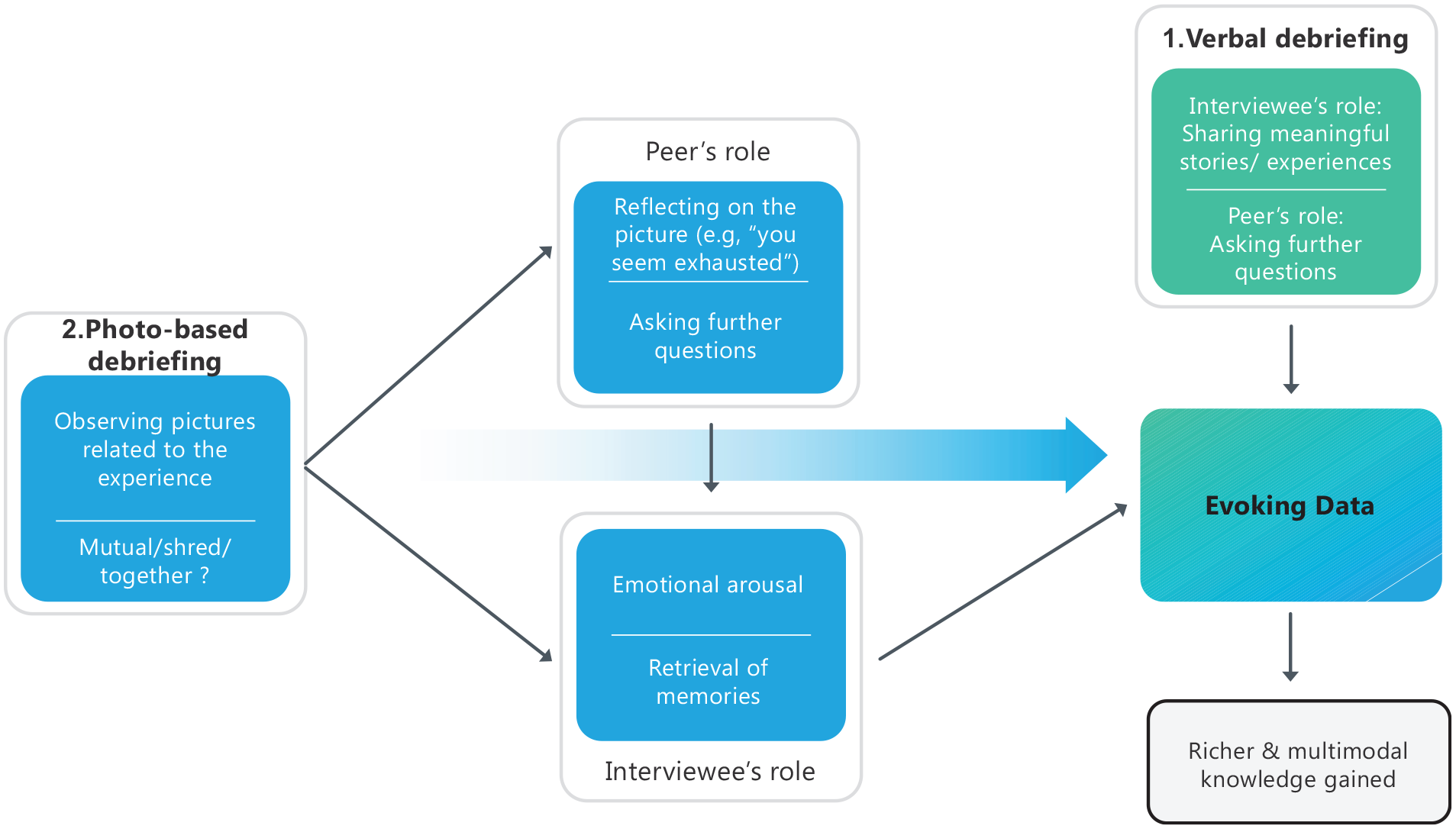
The co-autoethnographic dual-debriefing model.
As demonstrated in Figure 1, the debriefing process involved two pathways: (1) verbal debriefing, which refers to a conversation in which the debriefed HDM shares her meaningful stories and experiences while the debriefer (co-researcher) mirrors and asks further questions for elaboration; (2) photo-based debriefing, which refers to recalling memories following a visual trigger. Specifically, it involves shared observation in pictures related to the experience investigated during which the debriefer reflects on the pictures and asks questions and in response the debriefed shares deeper memories. Overall, this is a bidirectional dynamic process which starts from the debriefed verbal experiences and continues to the debriefer’s request to refer to and interpret the relevant and reflecting picture (see method section for detailed examples). In the current study we demonstrate the use of this method of debrief-based co-autoethnography, which is a unique variant of co-autoethnography (Denzin, 2013; Ellis and Rawicki, 2013, 2014, 2015; Martinez and Merlino, 2014) as it combines the debriefing process, the visual analysis and the co-autoethnography, in the context of exploring the lived experiences of an HDM assisting Ukraine refugees on the Polish borders.
Ambiguous loss
Loss can cause great distress and undermine a person’s worldview (Frei-Landau et al., 2022, 2023). Contemporary theoretical literature also recognizes situations of loss that do not necessarily include death—a concept called “non-death loss” that refers to a situation in which actual or symbolic loss is experienced that does not include death (Mitchell, 2018)—for example, the transfer of children to foster homes or situations of migration. Subsequently, the term “ambiguous loss” refers to an uncertain, ambiguous, unclear, and impermanent loss (Boss, 1999). In recent years, this concept has been expanded to include situations of ambiguity and uncertainty due to migration-related loss (Pottinger, 2005; Solheim et al., 2016) and for refugee children (Luster et al., 2008, 2009; Renner et al., 2021).
The war between Russia and Ukraine has forced millions of Ukrainian refugees to migrate from their homes, leaving behind family members who could not or were not allowed to emigrate. In migration situations, people often “disappear” without anyone knowing whether and how they died. Such a situation may create an ambiguous experience of loss, as there is a disconnect between family members, and there is uncertainty and ambiguity regarding the actual or future loss of one of them. A recent study of war refugees from Syria, Iran, Iraq, and Afghanistan who arrived in Germany (Comtesse et al., 2022) found that people who experienced the ambiguous loss of a family member were at higher risk of developing prolonged grief compared to people who experienced the confirmed loss of a family member. Another recent study examined levels of prolonged grief disorder (PGD) among the Ukrainian community, breaking down the circumstances of death, and found higher levels of PGD among people who experienced war-related murder. Furthermore, it is argued that ambiguous loss requires tolerance for ambiguity, while ambiguity in situations of ambiguous loss can lead to an increase in depression, relationship conflicts, difficulties in functioning and coping, aggressive behavior among children, and sleep difficulties and concentration problems in adults. A recent study of Syrian refugees who experienced ambiguous loss found high levels of depression, PTSD, and prolonged grief (Renner et al., 2021).
Researcher Tomsa (2010) studied children of migrant workers from Romania who leave their children with relatives. She claims that the children left behind have behavioral problems, boundary problems and delayed psychological development. These studies heighten the understanding that although children have not lost their parents to death, the loss of parental presence for years produces feelings similar to the loss of a parent: loneliness, abandonment, grief, and prolonged grief (Bocknek et al., 2009).
Shalev and Ben-Asher (2011) argue that the circumstances of the absence greatly influence coping. Thus, for example, in a war involving public debate about its legitimacy, the family may find itself in the eye of a political storm. On the other hand, when the loss is perceived as socially desirable, the support received is greater (Shalev and Ben-Asher, 2011). In light of this, it seems that the general debate on the legitimacy of the fighting between Russia and Ukraine may also influence the confrontation. In general, the body of knowledge regarding ambiguous loss, the responses to it, and ways of coping with it grew out of theories about stress, crisis, and resilience in the family (ibid.). Subsequently, the family’s coping—and specifically parental coping—may be meaningful in the context of dealing with an ambiguous situation.
Parenting as refugees
Parenting is a complex task in general and becomes doubly so for refugees (Akesson and Sousa, 2020; Lembcke et al., 2020). Recent studies show that refugee mothers experience challenges such as language barriers, discrimination, poverty, and separation from their culture (Braun-Lewensohn et al., 2019; Lembcke et al., 2020). Some studies have indicated that women refugees are especially vulnerable, with high rates of depression and mental-health problems (Hollander et al., 2011). A recent study found that refugee parents emphasized the necessity of appropriate information and education about the health system. Moreover, cultural change was mentioned as stressful for parent-child interaction and parental well-being (Baauw et al., 2024). Not only does parenting as a refugee create hardship, but parenting in situations of ambiguous loss can be even more challenging. For example, a study among prisoners’ children indicated that these children showed more conflicts in the relationship with the remaining parent (Lane and Tribe, 2014). In the case of the Russo-Ukrainian War, the family is required to function while dealing with this ambiguity, which may increase distress and heighten the need for support that is often provided by humanitarian helpers.
Coping of helpers in emergencies
Studies among emergency aid workers have shown that their exposure to stressful events can create fatigue, burnout, and secondary traumatization (Norman Harling et al., 2020; Rauvola et al., 2019). Furthermore, as the literature indicates that combat and trauma may undermine one’s identity (Brewin et al., 2011), it is fair to speculate that the identity of emergency aid workers may also be challenged. For example, the professional identity of child-protection workers has been undermined by experiences of compassion fatigue (Geoffrion et al., 2016). In other words, intensive care of individuals who have experienced trauma may create a traumatic experience in their caregivers as well (Arpacioglu et al., 2021; Greene et al., 2021: Greinacher et al., 2019) and require a rebalancing of their identity. This is particularly relevant among aid workers assisting refugees in the context of parenting, as mentioned.
Research aim
The aim of the study was to examine the experiences and processes of a humanitarian aid worker helping refugee mothers and their children in the context of ambiguous loss, using the methodology of dual debrief-based co-autoethnography.
Method
Procedure and ethics
The study protocol was approved by the College’s ethics committee (0145). The materials used were: (1) a 10-day reflexive field diary (coded as FD Day 1–D10); and (2) Debriefing Interviews sessions via Zoom involving the first author—the HDM, an educational psychologist, and the second author—a rehabilitation psychologist (coded as DI Session 1–session 8). Sessions were held following the return of the HDM and lasted 8 weeks. Sessions lasted 1.5–2.5 hours and were audio-recorded and transcribed. During the process, all personal information of the refugees assisted by the researcher was concealed and are referred to in this article by pseudonyms. As follows, we demonstrate the dual debrief-based co-autoethnography method using a vignette from the materials.
A vignette—Demonstrating the dual debrief-based co-autoethnography method
To demonstrate the dual debrief based co-autoethnography method we will present an example of a conversation held after mutual observation in the following picture (taken on the third day of the mission; *Debriefed = delegation member, main researcher (first author); Debriefer = partner, co-researcher psychologist, second author):
This is a picture from the third day. We sat in the dining room, and they surprised me with a cake. Well, sort of a cake. They improvised a cake because they found out it was my birthday.
Oh, wow! So, they surprised you, That’s nice of them. But you know, looking at the picture you don’t seem so happy.
Yeah, umm…I was quite exhausted.
Only exhausted? You know what, I think about celebrating a birthday overseas. How was it for you?
umm… when I think about it, now I actually remember it was quite a lonely experience, weird, right?
What do you mean by lonely?
I mean, it actually emphasized the fact that I’m away from home, away from my family and from my comfort zone. You know, I wasn’t expecting it, but I sort of felt like a stranger there.
a stranger?
yes, a stranger. I sit with them at the table and often they naturally switch from English to Ukrainian, and I make an effort to ask for a translation. I feel that it’s not just the language. There’s a gap, I feel an outsider in many contexts.
This conversation continued with a discussion of the strangeness in the experience that evoked further insights and data about the HDM’s experience and needs, which will be elaborated further in the findings section.
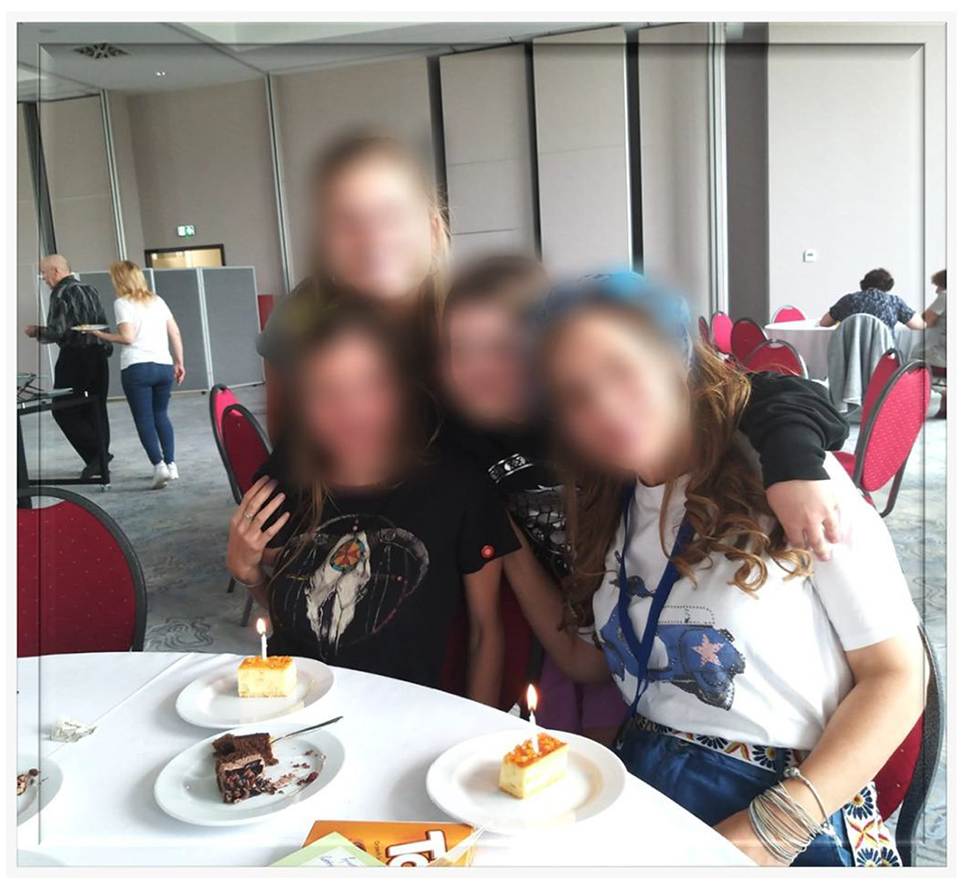
Dining room, lunch, third day of mission (with colleague assistants and refugee child, faces blurred for anonymity).
Data analysis
Data were analyzed using Braun and Clarke’s (2006) six-phase inductive thematic analysis process. First, we read the transcripts separately to become immersed in the data and highlighted key statements reflecting the HDM’s experiences. Second, we separately generated initial codes across all data sets. Subsequently, collaborative discussion between the two coders (Authors) sought to identify the most significant codes related to the HDM’s experience. This microanalysis was used to ensure that no important ideas or constructs were overlooked. Third, codes were classified into potential themes and were compared and contrasted. Fourth, themes were reviewed and refined to ensure internal homogeneity and external heterogeneity. Fifth, the themes were “refined and defined” by eliciting the “essence” of each theme. Finally, in stage six, we were able to identify the aspects that highlighted the studied phenomenon—the HDM’s identity-related experience during the mission of supporting refugee mothers and children in the context of ambiguous loss.
It should be emphasized that two independent coders (the interviewer and interviewee, both experienced in qualitative analysis) analyzed the initial data, followed by recurrent brainstorming sessions. This special dual debrief-based co-autoethnography included two separated coding stages. First, each coder went through the transcripts of the 10-day reflexive field diary and the transcripts of the Debriefing Interviews sessions via Zoom involving the two authors. Each coder analyzed the materials according to Braun and Clarke’s (2006) six-phase inductive thematic analysis process. In the second stage, the coders compared the themes and discussed the disagreements the arose. Cases of disagreement were settled through conceptual clarification and consensus. At this stage, the themes that were not agreed upon were removed from the findings.
Findings
“I returned a different person to the one who left” (May 2022, field diary upon return).
The analysis of study materials revealed that the HDM’s experience was composed of three different identities, each of which was manifested in three different personality aspects. The HDM’s experience revolved around the issue of identity, along three axes: personal, professional, and ethnic. Each of these identities involved three aspects of the HDM’s personality: cognitive dilemmas, emotional struggles, and adaptation processes. The study model is shown in Figure 2.
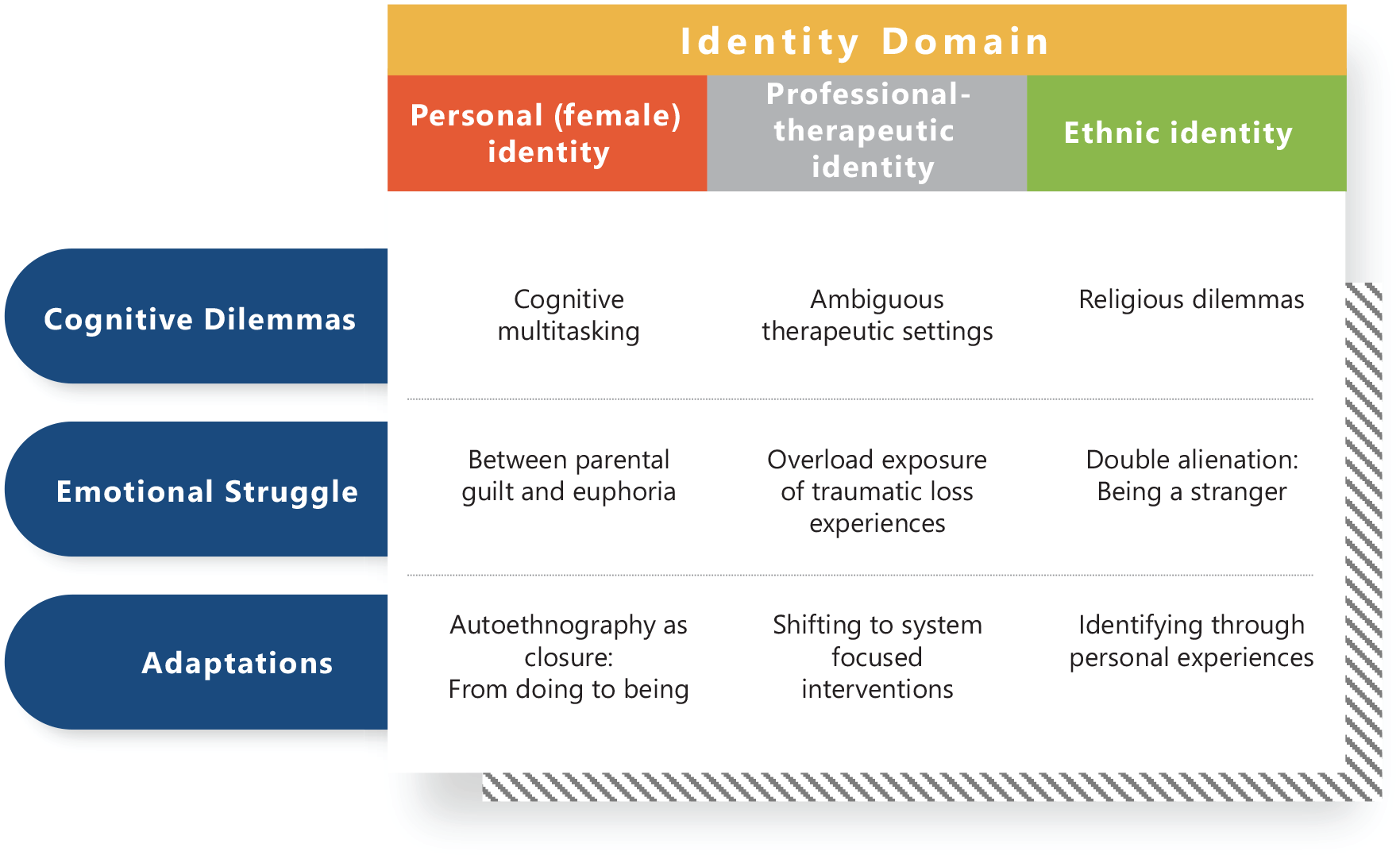
The study’s findings.
Personal (female) identity
Being a HDM challenged my identity first and foremost as a woman who came to volunteer primarily from the most personal humane motive.
Cognitive dilemmas
Cognitive multitasking
I arrived at the fancy “refugee camp” at the hotel in Warsaw after a sleepless night and no food. An immediate meeting was held with the staff who assigned us the various roles we were expected to fulfill, which led to the thought that there are multiple tasks we must perform immediately.
Tuesday morning. we arrived at the hotel, where all 100 refugees were housed. The hotel looks beautiful and cozy. It is almost inconceivable that this is ‘our refugee camp’. When our missions were explained to us, I realized that we had to multitask, and especially me as head of a delegation. How do we do all this? Where do I start? The accompaniment is educational, emotional, and technical. That’s a lot of things. I’m deliberating how to move forward… (Field diary—FD, D1)
I was troubled by the fact that there were many tasks: technical—helping to obtain equipment and enter data into information systems; content-related—organizing educational activities for children and a language club for adults; and providing a therapeutic response to the plight of refugees. I found myself mentally overloaded. I wondered to whom I should give top priority (an elderly man who had undergone three days of traveling on his own or a mother who had left her son behind), how to assign suitable people to a task, and when to conduct therapeutic interventions (would it be appropriate to conduct a therapy session immediately after returning from a trip?) I realized how important it is that we give our very best so that our many tasks are fully performed. This created an additional cognitive load throughout the stay.
Emotional struggle
Between parental guilt and euphoria
The journey to Warsaw required me to disconnect for 10 days from my home, both physically and mentally, as I was busy doing non-stop work. This made me feel guilty.
I spoke with a teenager the age of my 16-year-old son and accompanied her through her anxieties about the bombings she had experienced, trying to normalize her anxiety, be empathetic, and then remembering that I had left my son at home. He is a closed and uncooperative teenager, quite the opposite of her. I wondered if I had sat with him for an hour alone, perhaps I would have also had such an intimate conversation with him. But he was so far away in all respects. I didn’t even have time for a short chat there. (Debriefing interview—DI, Session 2—S2)
Research shows that female psychologists often feel guilt toward their own children (Waldman, 2018). In the context of functioning as an HDM, the guilt was intensified as I was physically and mentally far away. I felt I was not a “good enough” mother. Paradoxically, this feeling was experienced parallel to an opposite feeling of euphoria and a sense of omnipotence: When the college and the Jewish Agency finally approved that I would be going on this mission, I had a sense of euphoria. I felt like I was part of something human that was great, just like in chapters of history that are meaningful to humanity. What’s more, I was going as a psychologist and as the head of delegation to lead the students in meaningful volunteering. It gave me a lot of strength. (DI, S2)
As demonstrated, I felt a euphoria that “I am on a mission at a historical moment” that nourishes the sense of omnipotence. As a female, this euphoria was intensified by the fact that I intended to assist mothers who were left alone with their children.
Adaptation
Autoethnography as closure: From doing to being
During the reflexive debriefing sessions, I suddenly realized that during the mission I had actually put my personal self aside in order to function and cope with the cognitive dilemmas and emotional struggles, and only later on—by conducting the autoethnographic process—did I actually make adaptations and find closure.
I am suddenly aware and feel a lot more. It’s the difference between DOING and BEING. I finally let go of the DOING and I allow myself the BEING. I didn’t let myself feel. I was so focused on doing that I didn’t have room for myself. Now, retrospectively, I allow myself to feel emotions that I didn’t feel at the time – that I put aside. I feel a lot of pain, empathy, guilt, fear, and a little bit of unease. Three months have passed, and it feels surprisingly strong. (DI, S7)
In seems that this adaptation was actually possible only with the awareness of the processes that matured after my return to Israel, following the intensive debriefing sessions conducted as part of the co-autoethnographic research.
Professional-therapeutic identity
Another aspect of my identity that was challenged during the experience was me being a certified educational psychologist, which was the initial reason I was appointed as head of the delegation.
Cognitive dilemmas
Ambiguous therapeutic settings
One of the basic principles of therapy is to keep the boundaries of treatment time and place—the “setting” (Hacohen et al., 2019). In this context, the therapeutic setting was confusingly violated, with ambiguous boundaries created between therapist and patient.
I finished a therapy session with Yelena. She felt so terrible that she had left her son behind because young men were not allowed to leave. She cried bitterly the entire session. She felt very guilty. I sat facing her for 45 minutes, feeling her pain and trying to find a way to support her. After the therapy session ended, I went down to the dining room for dinner. Yelena was sitting there at the table alone. I found myself in a dilemma: should I sit next to her or not? If I sit next to her, maybe it will be intrusive, and if I don’t, will she interpret it as rejection? (FD, D2)
Violation of the therapeutic setting bothered me continuously and I was preoccupied with the dilemmas that arose from the simple fact that, on the one hand, I was a helper and on the other, I lived and ate together with the refugees/patients.
Emotional struggle
Overload of exposure to traumatic loss experiences
Traumatic stories arose in the individual therapy sessions.
I was indirectly exposed to many traumas. For example, Sasha shared with me that she had to abandon her 21-year-old son because the government didn’t allow him to escape because he’s of draft age. Another mother shared with me that she had to put her 4-year-old son in the trunk of the car to hide him when escaping through enemy areas. He was in the trunk for three weeks! Do you get it?! It’s just horrific" (DI, S5).
As a therapist, I was intensively exposed to harsh stories. The combination of their intensity, frequency and repetition was emotionally overwhelming. Sometimes I felt a vague sense of loss that enveloped me and in retrospect during the debriefing sessions. I realized that I had actually experienced secondary traumatization (Arpacioglu et al.,2021; Greinacher et al., 2019).
Adaptation
Shifting to system-focused interventions
Working under such unusual conditions made me reevaluate and adapt my professional view of what is required in such cases. As a result, I adjusted the work style on a general level—mostly, shifting to system-focused interventions.
I quickly realized that only a portion of the refugees came to therapy sessions, the club and the children’s space. In addition, I knew the refugees did not have the financial means to leave the hotel, which I thought was necessary for their wellbeing. This led me to realize that there is actually a large group of people who were not having any respite activity. I also realized that being confined all day in the hotel in this way was creating loneliness and seclusion. As a psychologist, I knew how important it is in emergencies to strengthen a sense of belonging, so, in addition to the individual sessions, I decided to add systemic interventions in the form of relaxing group outings, which, indeed, turned out to be therapeutically valuable.
One day we went to the Warsaw Zoo. You should have seen it… Going out into the open space made them talk to each other. They began sharing with each other stories of the horror of their escape. It was amazing to see how much they took an interest in each other and at the same time enjoyed going out… On another day, we held activities around a campfire. This was accompanied by a guitar player who, at one point, began to play Ukrainian folk songs. You had to see the light in their eyes and the enthusiasm with which they sang. There was a strong sense of togetherness. And it had a very strong therapeutic effect. (DI, S3).
The incremental transition from individual activity to comprehensive systemic intervention had repercussions. For example, upon our return to the hotel dining room, I noticed that people began to mingle and sit with each other at meals, and there was a sense of belonging and hope. I think it helped them in their challenging situation.
Ethnic identity
The multicultural encounter introduced me to dilemmas and struggles related to my ethnic identity, as an observant Orthodox Jew.
Cognitive dilemmas
Religious dilemmas
As an Orthodox Jew, I customarily observe the “Sabbath” (Saturday)—the holy day in Judaism when, according to tradition, one refrains from doing activities that require the use of electricity, such as turning on the TV, taking the elevator, turning on the light, etc. Since the mission lasted 10 days, there was one Saturday in which I had to deal with dilemmas related to prohibitions of the sanctity of the “Sabbath.” On the one hand, I wanted to avoid desecrating the Sabbath, and on the other hand, it was clear to me that I could not be absent from the activity. As a compromise, I decided to participate passively, yet for me it was still a struggle.
I’ve never had such a ‘Sabbath’! For the first time in my life, I was complicit in violating the sanctity of the Sabbath. I sat in the kids’ club with the TV on, with arts and crafts being done, with electronic presentations turned on and everything going on like every day. I struggled - on the one hand I couldn’t help but be part of the activities and couldn’t absent myself, and on the other, I felt I couldn’t really be a full partner, as I strictly adhere to the Orthodox rules. I debated with myself about my place in such situations, and how right it was for me to be in this situation there. (DI, S4).
I kept thinking about it throughout the day. I struggled between my commitment as head of a delegation to work for the refugees, and my commitment to my ethnic identity. I couldn’t give myself answers to these questions. Eventually, I resolved this dissonance by viewing this as emergency work like that of medical staff, who are permitted to work on the Sabbath according to the laws of my religion.
Emotional struggle
Double alienation: being a stranger
In the encounter with the refugees, I was the only volunteer who had not previously lived in the Ukraine, and I did not speak the language. I often felt like a linguistical and cultural outsider. It required an effort to get closer.
I sit with them at the table and often they naturally switch from English to Ukrainian, and I make an effort to ask for a translation. I feel that it’s not just the language. There’s a gap, I feel an outsider in many contexts…Yesterday at the bonfire when they sang Ukrainian folk songs, I suddenly felt that they were together, and I was outside. (DI, S5)
Similarly, when I returned home from the uplifting 10-day mission, I felt that I had made one of the most humane efforts ever. During social gatherings, where everyone was interested in this work, I tried hard to explain the magnitude and the meaning of this work, and very quickly the discourse moved on to everyday life events that I hadn’t been involved in for 10 days, and so I felt a certain alienation from my friends.
I came to Poland as a foreigner and returned to my social circle as an outsider; I came to the refugees as a stranger to their language, culture, and everything they had experienced and I returned as a stranger to my friends and their former experiences… (DI, S8).
This experience of bidirectional “foreignness” was emotionally challenging. I felt some loneliness and even a little sadness, yet I am not sure I was fully aware of that prior to conducting the autoethnography.
Adaptation
Identifying through personal experiences
The encounter with the refugees echoed my childhood personal experience of emigration when I had to move twice to different countries. Being connected to these personal experiences aroused my empathy toward the refugees and in fact served as a way of connecting with them.
My own experience of emigration as a child helped me to connect. It helped me remember how difficult, confusing, tiring, and instructive emigration is. And when sharing it, they trusted me more so that I could understand their concerns and adversities surrounding emigration (DI, S8).
My personal experience when I was 12 years old helped me understand the refugees better and helped them connect and believe in my ability to understand them. It definitely brought us all closer and was helpful.
Discussion
The current study used co-autoethnography to examine the experiences of an HDM who helped Ukrainian refugee mothers and their children in a situation of ambiguous loss. The novelty of the current study has two aspects: regarding methodology, it conceptualizes and demonstrates a unique form of debrief-based co-autoethnography, using photo-based and verbal debriefing. Regarding content, it is innovative in highlighting what an HDM experiences in relation to her personal, professional, and ethnic identity.
Methodological contribution: The unique method of debrief-based co-autoethnography
As mentioned, autoethnography focuses on the intersection of personal experiences and the culture in which they take place (Narayan, 2006) and it has previously been used to explore various phenomena such as targeted faculty harassment (Durrani, 2021), parenting children with special needs (Woodcock, 2020), and experiences of loss and grief (Matthews, 2019). Autoethnography is a self-analysis to understand culture (Ellis and Bochner, 2000), while linking “personal troubles and public issues” (Denzin, 2014). As such, it is the most suitable method to explore the experiences of a humanitarian aid worker assisting Ukrainian refugees in light of the troubling issue of their struggle following the Russian invasion of the Ukraine. Hence, we used this method as a basis but added complimentary components to optimize the use of this method, thereby conceptualizing the unique debrief-based dual co-autoethnography, that involves both verbal and visual aspects. Furthermore, the combining of a visual research methodology was applied in former studies (Bartoli, 2020; Chalfen and Lutrell, 2010; Huss, 2012) and it is a well-established research method within the social sciences (Pauwels, 2015) but not with a debrief-based dual co-autoethnography method. Thus, this combination applied in the current study is a unique and outstanding research approach.
The main methodological innovation of the study lies in the debrief-based co-autoethnography—self-exploration with the help of a colleague, allowing a deeper debriefing through dialogue. This is a new method, compared to the accepted one based on individual autoethnography (Chang, 2016). Furthermore, this model helps evoke rich and deep information when exploring phenomena when conducting autoethnography because of two main components: (1) it involves a dyadic debriefing that ultimately helps elicit further knowledge, since studies have shown that debriefing methods promote higher levels of reflection and self-introspection (Lee et al., 2020), and (2) that asking questions is a method that results in higher-order thinking processes (Nappi, 2017: 2). In this case, both verbal and visual photo-based debriefing were involved. Combining verbal and visual aspects has been found to foster better recall and learning from experiences (Glaser and Schwan, 2020). Ultimately, these two aspects facilitate a better understanding of the explored phenomena.
Content contribution to the knowledge of humanitarian aid workers
The world is flooded with humanitarian disasters caused by wars or nature, which call for hundreds of helpers worldwide (Mashuri et al., 2022). Several studies have addressed processes that therapists undergo during their patient treatment (Halevi and Idisis, 2018). However, no studies have investigated what HDMs undergo when intensively providing care to refugee mothers and children. Moreover, few studies have addressed helping refugees coping with ambiguous loss—that is, loss accompanied by uncertainty about the future (Renner et al., 2021).
This study found that HDMs may undergo complex processes spanning three identity aspects: personal, professional, and ethnic, and encompassing three issues: cognitive dilemmas, emotional struggles, and adaptations. The contribution of the research lies in promoting the theoretical understanding of the processes undergone by HDMs, to enable better preparation for them in the future.
Maternal guilt feelings versus the euphoria of helping
In the current study, the HDM encountered an upsetting dilemma; on the one hand, the mission made her feel like an omnipotent rescuer who redirects energies, devoting them to the mothers and their children (Abramovitz, 2017), and on the other, her maternal guilt toward her own children who were left behind. Previous studies have found gender differences in PTSD (Olff, 2017) and showed that mothers feel deeply committed to raising children, thus any clash between motherhood and work needs generates maternal feelings of guilt (Waldman, 2018). This is even more true when an HDM has to distance herself from her children for a period of time. The current research reveals an upheaval to move around in such a different internal space, which on the one hand imparts the sense of a mission of unparalleled historical magnitude, and on the other, an agonizing personal experience undergone while helping daily wherever and whenever needed.
Overload of exposure to traumatic loss experiences
The findings revealed an overwhelming experience in a setting of very intensive 10 days of therapeutic volunteering that overwhelmed the HDM because of the numerous highly traumatic experiences of the refugees. This is quite distinct from routine treatment. A previous study found that therapists who have shared experiences with their patients while living in missile-stricken areas speak about security tensions that threaten to disrupt their daily routine, harm their emotional well-being and negatively affect their family life. They noted exposure to traumatic incidents, emotional flooding, overload, and tension (Levkovich and Swisa, 2022). In fact, this involves providing treatment in shared traumatic realities (Dekel and Baum, 2010). In the current study, however, the overload did not stem from living together in the shadow of trauma, but from the large number of traumatic stories that were funneled into a concentrated time period.
Ethnic religious dilemmas
The current study shows that the religious conflict experienced by the HDM is an important and unique finding for a situation in which caregivers who help refugees over time have to integrate into shared living with a majority environment that is ethnically and religiously different. Previous studies found that religious identity is a significant factor in the functioning and integration into the workplace (Héliot et al., 2020). Moreover, the issue of multiple identities has been found to be a central factor in the treatment dynamics between therapist and patient (Hacohen et al., 2019). Religious people who combine a religious and liberal lifestyle are subjected to an ongoing identity conflict that in fact becomes part of their identity (Paryente & Orr, 2003; Frei-Landau et al., 2020, 2022). From the present study it can be understood that these gaps must be taken into account, as must the ensuing inner conflict.
Study limitations
This study has certain limitations. Firstly, it is based on the experiences of one HDM, and it is possible that other HDMs experienced the events differently. Secondly, the experiences are not just those of a single participant, but of a woman who is married and religiously observant. These characteristics certainly color the process the HDM underwent. However, this characteristic is an inherent part of the autoethnographic methodology.
This raises the need for follow-up studies that will conduct ethnographic research on several HDMs from diverse cultural backgrounds to examine the processes they have undergone. Factors to take into account are gender, marital status, religious and ethnic affiliation, and profession.
Recommendations for future research
Methodologically, the main contribution of the study is the work in co-autoethnography—self-exploration with the help of colleague—allowing a deeper debriefing through dialogue. This is a unique method compared to the accepted one based on individual autoethnography (Chang, 2016). We call for the use of this method in other contexts and formats. In addition, it would be significant to study the ethical aspects of working in co-autoethnography—self-exploration with the help of a colleague. It could be interesting to study researchers who have conducted auto-ethnography, co-auto-ethnography, or collaborative auto-ethnography, and check their dilemmas regarding the publishing of personal, non-anonymous experiences, feelings, and conflicts, which reveal private information regarding the manuscript researcher. In addition, relational ethics could be another major research concern of autoethnographic work, since as researchers using this method, we implicate others in our work through our stories that always have contexts and relations (Ellis, 2007).
Finally, there could be a complementary quantitative study to examine levels of stress and distress, as well as the sense of competence and coherence.
Practically, the findings of the current study suggest the need for a three-stage accompaniment, for HDMs relating to their personal, professional, and ethnic identities and considering their cognitive, emotional, and adaptive aspects. First, before leaving, HDMs should be briefed on personal and professional aspects of their experiences and ways of coping with them, as well as ethnic and religious affiliation issues. Second, while volunteering, every evening their dilemmas, emotional struggles and ways of adapting should be addressed for the three layers of identities. And finally, shortly after their return, there should be a final meeting to discuss all aspects of their identities and layers of personality. In this way, HDMs can become more effective in the important mission they fulfill. We hope that future HDMs and the bodies that send them on humanitarian missions of paramount importance will adopt these recommendations and generate proactive insights for members of future delegations.
Footnotes
Declaration of conflicting interests
The author(s) declared no potential conflicts of interest with respect to the research, authorship, and/or publication of this article.
Funding
The author(s) received no financial support for the research, authorship, and/or publication of this article.
Data availability statement
The data that support the findings of this study are available on request from the corresponding author. The data are not publicly available due to their containing information that could compromise the privacy of research participants.
Author biographies
