




Abstract
This article addresses the methodological challenge of capturing and comparing children’s experiences of everyday life by using a novel rhythmanalysis approach to explore the experiences of a small sample (N = 16) of home based children aged 7–10 in England and Greece during the 2020 global lockdown. The children kept a 1 day diary in which they recorded their activities and feelings at regular intervals during their waking hours. The data collected indicates that the children’s lives were both disrupted and synchronised during this period, and highlights how their individual experiences were interconnected in time and space by shared rhythms which underpinned the patterns of their day. The paper highlights the utility of the specially designed rhythmanalysis data collection tool and analytical approach for future comparative international studies of children’s everyday lives.
Introduction
The methodological challenge of capturing and comparing children’s experiences of everyday life has been well documented in the fields of Sociology and Childhood Studies (see Thomson et al., 2018). This article presents and evaluates an innovative approach to this challenge through the use of child-friendly time check forms during the 2020 global lockdown. These data collection forms were specially designed to incorporate and reflect the theoretical approach of rhythmanalysis (Lefebvre, 2004), a sociological approach to understanding time and space which is enjoying a resurgence of interest in certain areas of academic research including Education (see Dakka and Smith, 2019) and Communication Studies (Brown and Morgan, 2021). Such projects have established rhythmanalysis as a fruitful technique for uncovering otherwise unseen ways in which our social and material worlds are experienced rhythmically in time and space. Previous attempts to use rhythmanalysis in the field of Childhood Studies have been illuminating (see Kullman and Palludan, 2011), but extremely limited, largely due to the difficulty of aligning the approach with a clear methodology and practical child-friendly method of collection and analysing data. This article addresses this methodological gap and contributes a novel approach to understanding how children experience the temporal, spatial and emotional aspects of their everyday lives through an exploratory empirical study with a small sample of home based children aged 7–10 in England and Greece who filled out time check forms for 1 day of the covid-19 lockdown in the summer of 2020.
The data collected represents a unique record of the ways the child participants’ lives were both disrupted and synchronised during this period and highlights how most of the children persisted with their regular routines, suggesting that their individual experiences were interconnected by social, environmental and cultural influences underpinning the rhythms of their days.
The approach to understanding the interrelationship between space and time termed as rhythmanalysis was originally formulated by the French Marxist sociologist Henri Lefebvre (1901–91), and developed by Catherine Régulier (Lefebvre and Régulier, 2004; Lefebvre et al., 1999). From a rhythmanalysis perspective any disruption to ‘normal’ life offers opportunities to rethink accepted ideas and revisit normative beliefs and ways of being (Lefebvre, 2004). The global lockdown enforced new ways of doing everyday life for people of all ages and it is within the rare opportunity that this disruption engendered for the children in this study that this exploratory piece of research is positioned.
The article draws on previous studies of children’s everyday activities and time use to contextualise the study and adopts a rhythmanalysis perspective to explore potentially less tangible patterns of rhythm underlying the surface structure of the children’s days. The questions being asked of the data reflect this aim and are: ‘In what ways were the rhythms of the children’s days connected to wider social, environmental and cultural factors?’ ‘To what extent was there evidence of synchronisation (similarity) or disruption (difference) in the daily rhythms of place, association, activity and emotion captured in the children’s time check forms across different households and in the two countries?’
The third question is methodological and arises from the call for innovative child-centred methodologies which ‘capture a holistic view of children’s activities’ (Archbell et al., 2020). The question is: ‘How useful is rhythmanalysis as a methodological approach in exploring, understanding and comparing the holistic lived experiences of different groups of children?’
The study used the central rhythmanalysis principle of conceptualising the relationship between time, space and lived experience by asking children the same following four questions every 2 hours: Where are you? What are you doing? Who are you with? and How do you feel? These questions were devised to relate to the three dimensions – mental, social/interactional and physical/material – which were identified by Lefebvre (2004: 30/31) as constitutive of all human activity.
The next section offers an overview of the rhythmanalytical approach and some of the ways it has been adapted as a method to explore everyday life. In this sense rhythmanalysis can be understood as both the theoretical framework and the methodology of the study. There follows a review of previous studies which have attempted to capture the complexity and diversity of children’s everyday lives.
The data provided by the children in this study is presented in the form of ‘rhythm tables’ with accompanying reflections on the children’s experiences of lockdown. The potential of rhythmanalysis as an approach for exploring the relationship between social and individual elements of childhood and as a method for comparing children’s experiences of everyday life across cultural and social contexts is discussed in the conclusion.
Rhythmanalysis and everyday life
‘(E)verywhere where there is interaction between a place, a time, and an expenditure of energy, there is rhythm’ (Lefebvre, 2004: 15),
Rhythmanalysis is concerned with ‘how time and space are lived, produced, remembered and imagined and how they shape the experience of everyday life’ (Lyon, 2019: 2). As such, rhythmanalysis offers a way to conceptualise time and space together and to explore the linear (day to day) and cyclical (recurring) rhythms which inform all aspects of human and non-human experience.
From a rhythmanalysis perspective every day is made up of a complex array of habits and routines that provide security and predictability and, over time, become our accepted ways of being and living. With disruption of these normative everyday practices, such as with the 2020 global pandemic, comes discomfort as the individual experiences the loss of habitual routines and the reassuring sensation of belonging to the wider social group. The loss of such normative settings can be highly distressing, and in some cases cause experiences of anxiety related disorders (Lanza and Drabick, 2011).
Zerubavel (1985 : 2) explains how our rhythmic rituals and habits produce ‘places, landscapes and nations as recognisable and shared entities through everyday synchronisation, the simultaneous participation of millions of people in timetables and routines which. . .is a fundamental principle of social organisation usually eluding analysis because of its very familiarity’.
In terms of rituals, habits and rhythms the lockdown consisted of multiple influences on the children’s daily lives – from the background beat of a global pandemic, to the internalised routines of school, to the normative times of meals and leisure in the family home. From the view of a longer time period, the lockdown can also be seen as an irregular, or in rhythmanalytical terms an ‘arrhythmic’, disruption to the children’s lives, a brief rupture in their childhood that temporarily threw normal rhythms off course and allowed new patterns and time-space rhythms to emerge.
From a methodological perspective rhythmanalysis has commonly been approached through observation and/or audio-visual methods which have allowed rhythms and patterns in behaviour or sound to be recorded by the researcher either in field notes or recordings (see Lyon, 2019). The aim of such research has been to explore otherwise hidden aspects of social life or those everyday occurrences that are so familiar to those people involved that they simply occur unnoticed and unquestioned.
The following section discusses some of the ways children’s everyday lives have been investigated in previous research, and the methodology section explains how rhythmanalysis has been adapted and adopted as a theoretical and methodological approach in this study.
Children’s everyday lives
Various methods of researching children’s everyday lives have been utilised in previous studies, each with its own strengths and limitations. For example, Moss (2010) interviewed adults about their memories of childhood, Plowman and Stevenson (2012) recruited parents to keep mobile phone diaries of their children’s daily experiences and Tudge et al. (2006) observed the daily activities of young children from different cultural groups. Whatever the method used, studies of children’s everyday lives seem to agree on the complex relations between children, families and community and between different places and different times.
One of the most commonly used methods of examining children’s time use is parental daily logs or diaries to record what their children do and how long they spend on different activities. However this approach to data collection has been demonstrated to have limitations including the overlooking of infrequent activities (Hofferth and Sandberg, 2001) and the overestimation of time spent in certain prominent activities (Juster and Stafford, 1991).
Archbell et al. (2020) attempted to overcome some of these limitations by devising a parental telephone interview protocol whereby they were able to record a daily log of the type and context of the daily out of school activities of 189 children in Canada. They found that the children in their study spent nearly half of their time in unstructured activities (such as free play), 14% of their time on screen and 6% in structured activities such as sports. They also found that the children spent about two-thirds of their free time with family, 22% of their time with peers and only 10% of time alone.
Other studies focussing on how children spend their time outside of school have established that the ability to spend time alone is associated with ‘positive adjustment, more autonomy and less dependency’ (on others) (Youngblade et al., 1999: 135) and that children’s engagement in solitary behaviours outside school positively impacts on children’s self-reflection and concentration (Galanaki et al., 2015). There is also a clear link between ‘participation in organised activities and development of social skills, well-being and academic functioning in middle childhood’ (Archbell et al., 2020: 195) as well as a distinct developmental benefit to children spending time with their peers (Pearce et al., 2014). This suggests that the experience of lockdown with its lack of physical organised activities and lack of time spent alone, but without the company of peers could have been a negative experience for many. However, studies have also found that outside of school children spend the majority of time with family members, a condition which is likely to have continued during lockdown, and that this has significant socio-emotional outcomes (Spagnola and Fiese, 2007). Although useful in highlighting the diversity of children’s everyday activities and how they are experienced, these conflicting findings mean that there is still much to know about how place, company, activity and emotions interplay both negatively and positively in children’s daily lives.
A relevant application of a rhythmanalytical approach to understanding aspects of children’s everyday lives comes from the field of Children’s Geographies. Kullman and Palludan (2011) used ethnographies including picture-making and interviews to explore the environmental, social and technological rhythms of young children’s journeys between home and school in Copenhagen and Helsinki. They found that ‘Rhythmanalysis is suited for a detailed examination of the various rhythms that children relay and vary when engaging with everyday settings’ (Kullman and Palludan, 2011: 353) and furthermore that ‘there are endless possibilities to repeat and vary the study of rhythms to better understand the diversity of children’s everyday lives’ (Kullman and Palludan, 2011: 357).
The need to develop methodologies which explore the complexity of the activities children are engaged in and where they are situated, the social context of children’s activities and how they feel is clear from previous research in the area. What is also important is the practice of putting the child at the centre of the research process whereby they are given a direct voice to describe their daily activities and their feelings about them, rather than being spoken for and/or having their experiences described by their parents or other adults. Both these aims underpin the methodology outlined below which takes a holistic view of children’s experience of time and space premised on the approach of rhythmanalysis (Lyon, 2019) and which is designed to be straight forward enough to allow children in middle childhood to record their own responses unmediated by adults.
Methodology and data analysis
In line with much of the world, the vast majority of children in England and Greece were being homeschooled by their parents or carers to some extent during the Spring and early Summer of 2020. At the stage in the lockdown when the data for this study was collected the government directive in England was to go out only for exercise for half an hour a day within walking distance of your house or for essential shopping. In Greece at this time people were allowed to go out for essential shopping or exercise and, with State permission, to visit a family member or an aged person in need.
Given the unusual circumstances of the research project and the need to collect data relatively quickly (it was not known at the time how much longer the schools would be closed) the study consisted of a purposive sample of participants recruited through the friends and family of the researchers in Birmingham, England and Veroia and Athens, Greece. The decision to include participants from England and Greece was both pragmatic and methodologically strategic. From a practical perspective in the restrictive circumstances of lockdown the researchers, one English, one Greek living in England, were able to draw on children of friends and family to recruit as participants for the study. A purposive, available sample needed to be used in order to be able to capture data quickly during the unique temporary circumstances of lockdown. From a strategic research design perspective, the value of including children from the two European countries – one in Northern Europe, one in the South – made it possible to compare daily rhythms for children of the same age in different countries and to explore the impact of social and cultural context on the individual and collective patterns of the children’s days. In this sense, there was no specific reason the countries had to be England and Greece but it was important that the children were geographically and culturally separated in order to form a clear basis for comparison.
The criteria for inclusion were that the children should be between 8 and 11 years old (higher primary) and be locked down at home and not attending school. This age group was chosen due to the children’s ability to read and write and understand what was required of them as well as to understand the details of the consent form. Older children were not selected for the study as the daily routines for primary school are more consistent and therefore more easily comparable to the lockdown day than high school/secondary school days which tend to vary more according to type of school and student specialisms. In line with ethical procedures the study was approved by the University ethics committee before participant recruitment or data collection began.
In total there were ten participants in England (three girls, seven boys) and six in Greece (three girls, three boys) ranging in age from eight to eleven. The parents completed questionnaires providing demographic information about their children and the schools they normally attended. In England eight of the children attended regular state primary schools which followed very similar daily routines and two attended a private fee paying school which also followed a similar daily routine. In Greece five of the children attended state primary schools and one a private fee paying school. All of the children were living with their immediate family during lockdown. For the majority this consisted of two parents and at least one sibling, although one child in England was the only child of a single parent. All participating families had access to computers and wifi which meant that parents could work remotely from home and that the children could access school work sent from school.
Each child in the study was given a daily time sheet entitled ‘How am I spending my time today?’ and asked to fill in answers to four questions every 2 hours throughout a specified day. This day was 4 weeks into lockdown after the schools were shut in both England and Greece (9.4.20 in Greece, 30.4.20 in England). This day was chosen to allow the children to have settled into some sort of new routine after the novelty of being at home had begun to wear off and to allow the children’s days to be compared at the same stage of lockdown.
Aspects of rhythmanalysis were adopted and adapted in order to explore how children’s use of time was organised and experienced during lockdown without the usual physical constraints and temporal boundaries of the school day both in the design of the data collection sheet and in the analysis. Two key rhythmanalysis concepts, ‘synchronisation’ and ‘disruption’ (based on Lefebvre (2004: 77) descriptions of ‘eurhythmia’ and ‘arrhythmia’), were used as heuristic devices to frame the analysis. A focus on ‘synchronisation’ allowed similarities in the children’s experiences and their connection to the established rhythms of the habitual school day as well as wider social and cultural influences to be documented, whereas noticing the areas of ‘disruption’ where these aspects were different, novel or unexpected allowed insight into the opportunities of lockdown to uncover new rhythms and temporal organisation of children’s time.
The study asked children to respond to the same four questions every 2 hours. These were: Where are you? What are you doing? Who are you with? and How do you feel? These questions allowed the children’s experience to be apprehended holistically by incorporating their physical location, their activity, their social context and their emotional response to the situation at specific times during the day. They were also simple enough to be answered directly by the child without adult intervention, although adult support was often required in prompting the children to fill in their diaries either by hand or on Word, and on occasion, to scribe the responses for them.
Although this data collection method meant that the length of time spent by the children on each activity or in each place was not recorded, the regular, linear intervals between the questions made it possible to plot the rhythms that structured each child’s day and to examine how these different elements of mental, social and physical experience interplayed to create nuance, harmony and discord throughout the time period.
The diaries also represented a basis of comparison whereby each child’s day could be compared with the others in the study to detect synchronicity and disruption in the children’s new daily rhythms in order to unpick common and idiosyncratic elements of their lockdown experiences as well as the extent of their adherence or disruption from their usual school routines.
The participants were expected to find a convenient moment in which to note down their short responses to each question as near to the specified time as possible, or if they forgot, to fill them in from memory later in the day. Depending on recall may have impacted the accuracy of some of the data, but given the unusual boundaries of the children’s lives at this time, especially the limited places they could be and the limited range of activities they could be involved in, any inaccuracies should have been minimal.
The children’s responses to each question were analysed in order to illuminate common trends, patterns or rhythms in their experiences and feelings over the course of a day. The coding categories used emanated from the data. The children’s four individual responses at every recorded point in the day were coded, collated and compared to explore connections between place, company, activity and feeling. Finally the children’s days were plotted visually so that the overall rhythms of their days could be compared on all four aspects and points of synchronicity and disruption both in relation to each other and to their normal school routine could be identified.
As would be expected the children’s experiences during lockdown varied according to country, family situation, domestic setting, parental support (or lack of due to working from home or other caring responsibilities), siblings, availability of technology, school contact and many other variations in the material and social situations of their domestic environments. Given the range and complexity of these variations, rhythmanalysis was a useful methodological approach because it allows a consideration of both the temporal (passing, changing) and structural (underlying, established) rhythms which govern and underpin behaviour, and places the symbiotic relationship between the individual and the social at the heart of the enquiry. In this way rhythmanalysis allowed the similarities and differences in the children’s experiences to be considered as parts of a unified whole connected by time and space, rather than as a series of separate factors to be examined in isolation. In terms of comparing the data to pre-pandemic settings the Findings section below begins with an outline of normative daily routines for children in Greece and England.
It is important to clarify that the data collected for this study differs from traditional diary based data as it is not continual and therefore it cannot and does not tell us how long the participants spent on each task. Rather, it offers a series of intervalled snapshots or instances during the period under consideration which were compared and contrasted with the rest of the sample and collated to produce visual representations of the rhythms of the day.
Findings: Synchronicity and disruption during the Covid-19 lockdown
The primary school environment in both England and Greece is typically highly regulated with pupils required to focus on learning, playing and eating at specified times during the day, expected adherence to codes of behaviour and conduct and little opportunity for children to spend time alone or in unstructured activities (Robinson, 2019). These routines represent what Atkinson (2019) terms ‘imposed timings’ and are characteristic of life in contemporary capitalist societies such as those across Europe, which are centred around the requirements of institutional productivity. In this sense school can be conceptualised as a training ground for work in terms of habituating children into the daily and weekly regulation of their time as well as for teaching them centrally dictated curriculum content. This normative rhythm of children being at school during weekdays during term time was replaced during lockdown with the counter rhythm of children being at home with their families all day every day, albeit with varying degrees of directed work set remotely by their schools which they were expected to complete. This experience presented an entirely different weekday environment for the children socially, educationally and emotionally. The lockdown day diaries kept by the children are a record of the ways in which they experienced their time away from school and the extent to which the rhythms of their days aligned with or diverged from those of other children their age in the two countries.
The following examines the children’s responses throughout the day to the four questions and discusses the patterns and rhythms which emerged from the data and the extent that synchronicity or discord was evident in the children’s responses. The questions were designed to be straightforward enough for responses to be unambiguous on the vast majority of occasions. In order to maintain clarity in the patterns of their responses in the rare instances where children wrote more than one answer to a question, only the first one was taken to record on the rhythm table. For example in one response to the question ‘How are you feeling?’ a child answered ‘happy and relaxed’, so only ‘happy’ was recorded.
Each child in England is represented by a diamond in each time slot and the children in Greece are represented by circles.
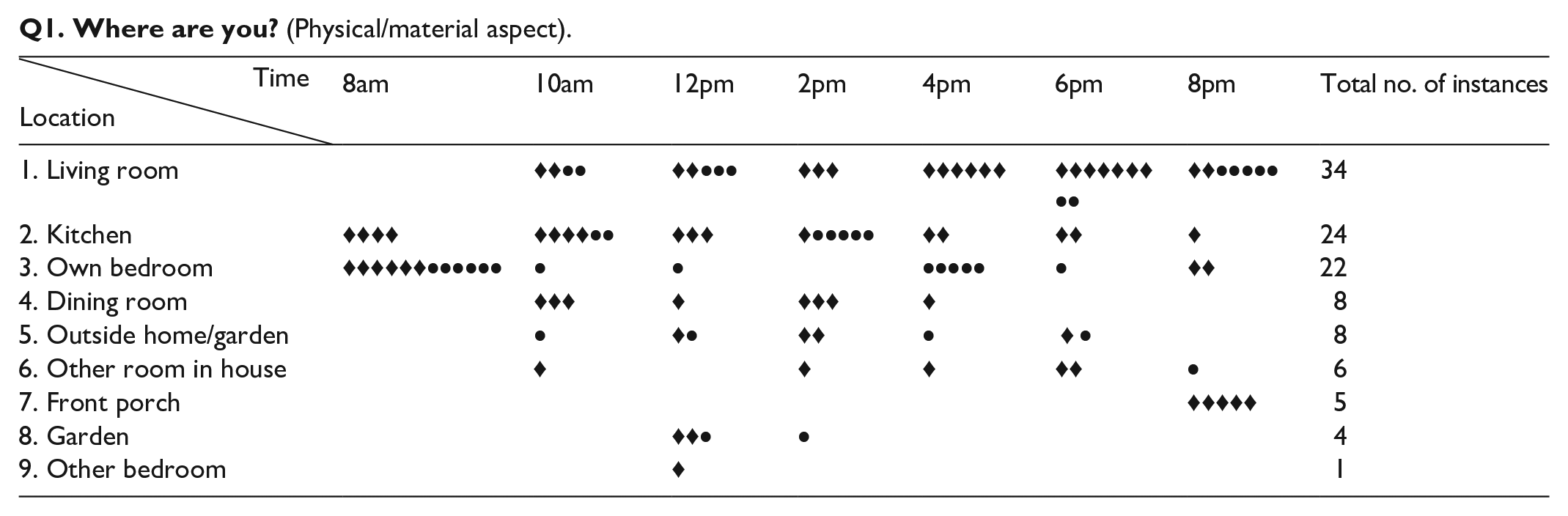
The children answered this question in relation to their whereabouts in the house or outside. Although the geographical space occupied by the children was enormously curtailed by the constraints of being locked down at home the rhythmanalytical perspective taken avoided the conception of place as static and allowed the focus instead to be on the rhythms of the children’s dynamic flow through and around their home environments. As Pink (2007: 62) notes, such time-geographical rhythms encompass our ‘emplaced engagement with the material, sensory, social and cultural contexts in which we dwell’.
The table above allows the clusters of occupation in different locations of the 16 children to be seen at a glance. The majority of children in both countries were in their bedrooms at 8am with four of the English children already in the kitchen having breakfast. The cultural norm of a later lunch time for Greek children than for those in England is evident in the chart with most of the Green cohort in their kitchen at 2pm. The largest part of the school day in England is spent indoors with short periods of outside playtime and this seemed to be echoed in the times the children were inside and outside the house (out of 70 instances only two were in the garden when asked where they were at specific time points during the day).
The clustering of the majority of children in the living room later in the afternoon and early evening is consistent with the common practice among children of watching TV and relaxing after school (Archbell et al., 2020). An interesting anomaly is the cluster of five children in England who were on the front porch of their homes at 8 pm. This is due to the social directive to ‘clap for the NHS’ which was encouraged throughout the UK on Thursday evenings at 8pm during the first 8 weeks of the lockdown. This wider cultural norm became, temporarily, part of the rhythm of the children’s week for that duration and is captured in the data table presented above.
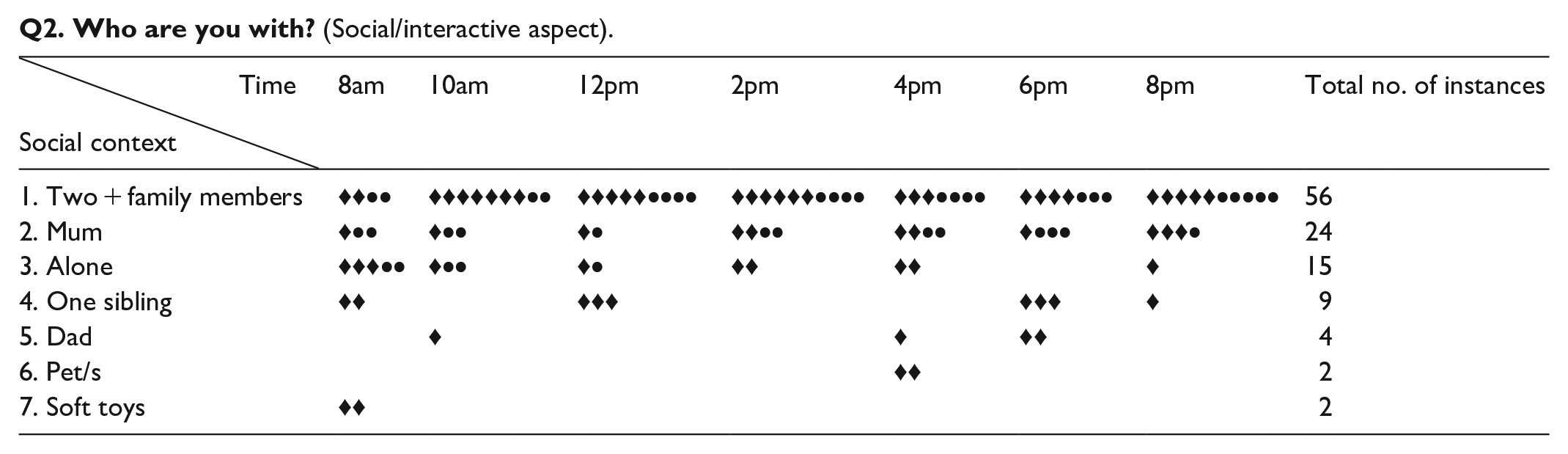
The points in this chart demonstrate points of synchronisation the children had with family members, as well as time spent alone at different stages of the day. In 56 out of the 112 instances recorded the children were with two or more family members with only 15 instances recorded of their being alone (19 if pets and soft toys are excluded). This pattern of companionship seems likely to be connected to the fact that none of the children expressed feelings of loneliness in Q4.
Evans and Franklin (2010) describe eurhythmic moments of ‘floating harmony’ when rhythms are synchronised between humans (or between humans and non-humans) and it seems that such moments were sought out and experienced by the children in this study who were drawn to spend time with others in their household and reported positive feelings throughout their day.
The clustering of time spent solely with mothers rather than fathers (24 instances compared to 4) is noticeable and suggestive of the persistence of traditional gender roles around childcare being ‘women’s work’, the role of women within the domestic setting of the home and patterns of paid work being parallelled in the working from home scenario that lockdown engendered for many adults (Layte, 2020).
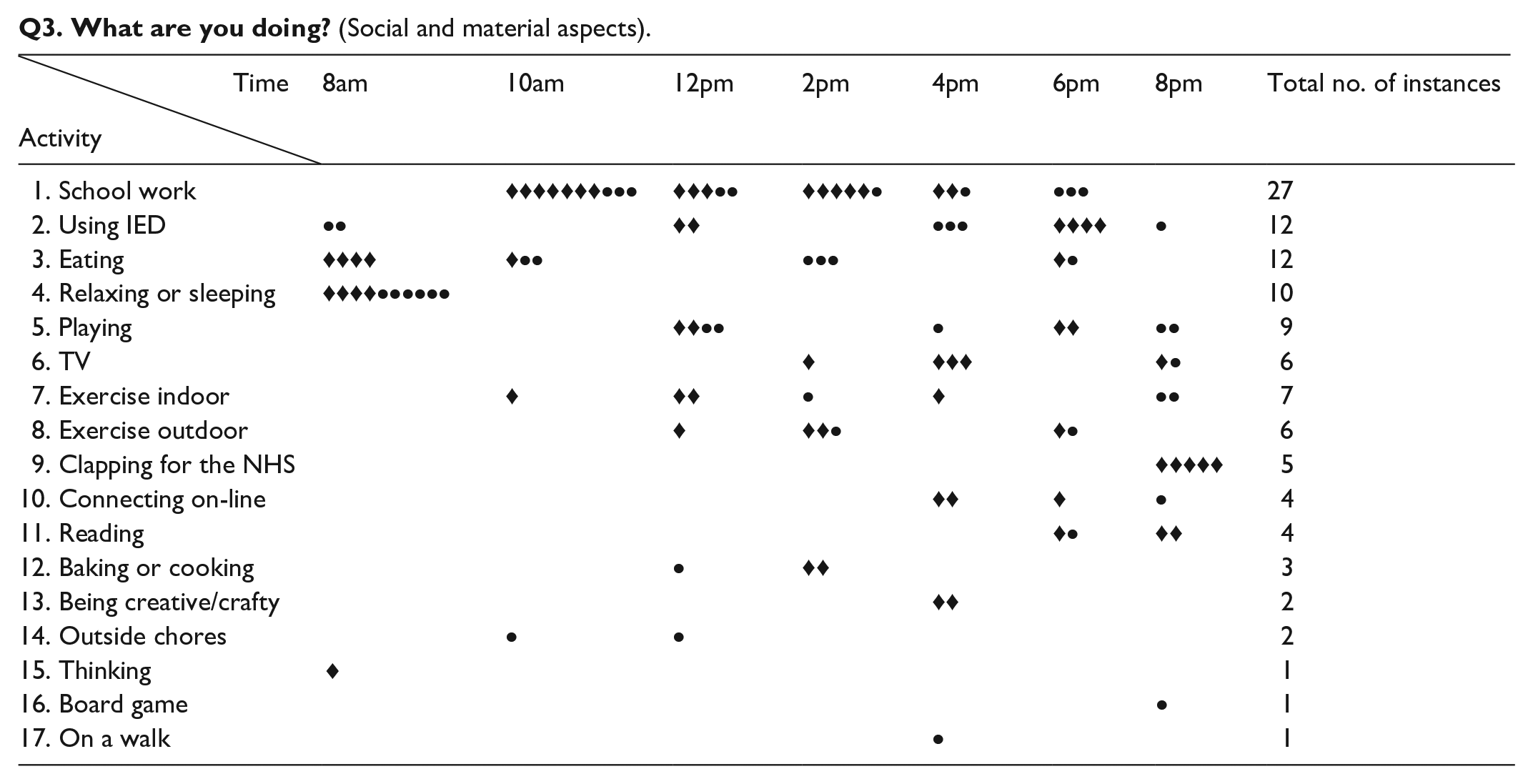
It is interesting how the activities of the school day are reflected in the clustering of symbols in the above table. The majority of instances in the middle of the day indicate the children being engaged with school work, interspersed with eating and other activities including outside or ‘play’ time. As Edensor (2010: 8) notes, there is a comforting reliability of daily or weekly rituals and within everyday life ‘there is a regulatory dimension through which the braiding of multiple mobile rhythms is organised’.
The adherence to familiar school and home based activities during lockdown was pervasive as despite being based at home during this period none of the children reported being engaged with domestic chores, housework or caring activities apart from one Greek child who reported two instances of assisting with picking olives on the family’s land. Rather, the children continued to engage in conventionally child appropriate activities and schoolwork, directed by their parents and remotely by teachers, even with the disruption to their normalised everyday lives in terms of location, company and socially determined structure.
As mentioned earlier, the 8 o’clock clap for the NHS for the children in England was a new regular touchpoint in the day reminiscent of Matos Wunderlich (2008: 383) rhythmanalysis of the complex rhythms of a London square which focused on the ‘distinct sense of flow collectively produced and the particular soundscape produced by regular social activities and shared cultural practices’.
The other activities captured by the children in response to this question reflect a dynamic process whereby adapted versions of practices such as lessons and playtime are echoed in a different place (home) and context (a global pandemic) whilst providing comforting links to the normative sociality of their pre and post lockdown everyday lives and the people they share them with.
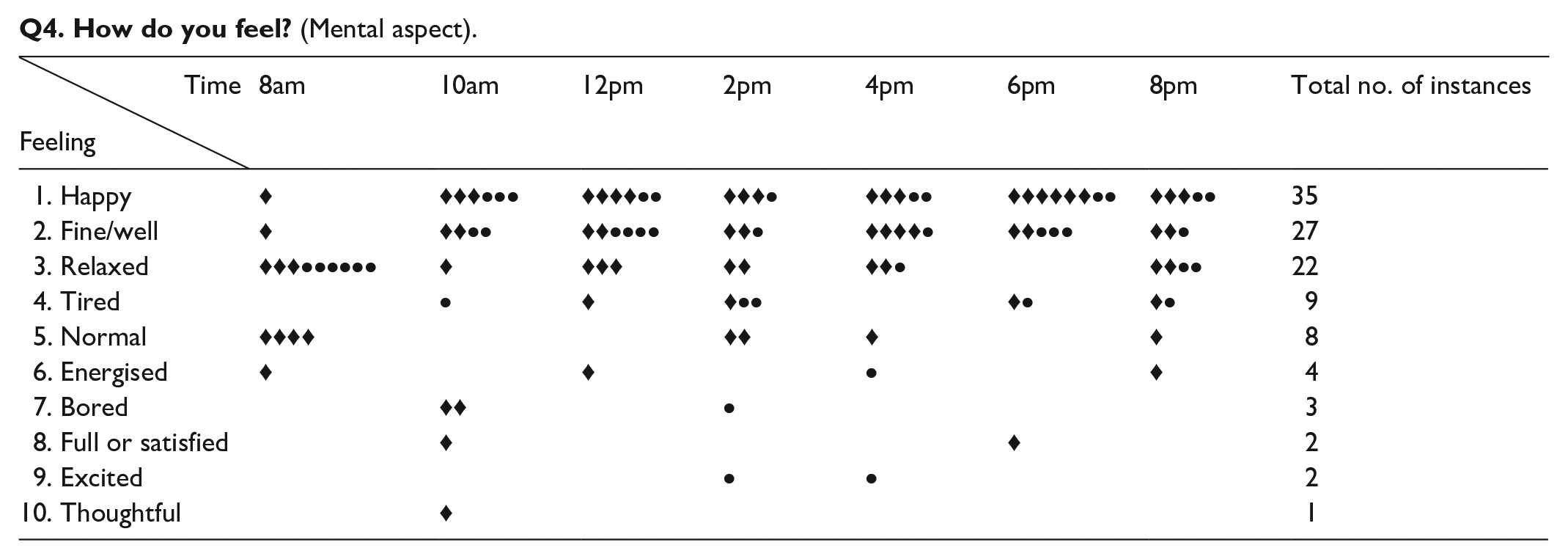
The clusters of responses in this table reflect patterns of feeling that suggest a degree of synchronicity in the children’s emotional states throughout the day. Most began the day feeling relaxed and spent much of the day feeling ‘happy’ or at least ‘fine’. Tiredness began to be reported by a few at lunchtime and then in clusters throughout the afternoon and evening.
It is heartening that none of the children in this study reported feelings of sadness or anger or of being upset, scared or lonely during this most unprecedented, uncertain and frightening period of time. However, it is important to highlight the uncommon privilege of the middle class children of educated, employed parents who constituted this sample. Evidence is beginning to emerge that for many children the experience of lockdown was not a happy or enjoyable one for a variety of family, economic, medical and social reasons (Gilhooly, 2020). Therefore, the small sample of children in this study is in no way intended to be representative of all primary aged children in England and Greece, many of whom unfortunately, are likely to have experienced a dramatic, negative shift in their everyday lives and well-being during the lockdown.
Discussion and conclusion
This paper set out to explore the experience of the global 2020 lockdown for a small sample of children in England and Greece using a rhythmanalytical approach. The focus of the research was on the rhythms of the children’s day rather than on the background context of their lives, as the intention was to explore the potential of time/space rhythm patterns for comparing the synchronicity (or not) of the participants’ material and affective experiences.
The following section discusses the findings in relation to the research questions which framed this study.
To what extent was there evidence of synchronisation or disruption in the daily rhythms of place, association, activity and emotion captured in the children’s diaries across different households and in the two countries?’
Jarvis (2005 : 137) remarks that: ‘most of us spend much of each day orchestrating continual movement in relation to others. . . knowledge of where, when and how activities and relations are to be conducted is essential’.
There was much evidence of this synchronisation in the daily diaries kept by the children in relation to time, activity, companionship and feeling. Through this lens, internalised rhythm can be recognised as one of the often invisible mechanisms that connects the individual to the social and that regulates and harmonises everyday life for most people, most of the time.
From the Marxist perspective from which it originated (see Lefebvre et al., 1999), rhythmanalysis has been drawn upon to argue that social control is instantiated through the conformity and consistency of everyday ‘productive’ rhythms (Lefebvre, 2004). People are conceptualised as being locked into maintaining daily routines which are commensurate with productivity in a capitalist society and that these ‘good habits’ are often laid down by the state (Frykman and Lofgren, 1996 ). As Lefebvre comments, power ‘knows how to utilise and manipulate time, dates, time-tables’ (Lefebvre, 2004: 68).
Indeed, it could be argued that the somewhat surprising finding that the locked down children in this study largely persisted with their regular routines is at least partly due to an internalising of the ‘good habits’ and ‘productive’ practices of the school day by themselves and their parents. It is hard to ignore the fact that such routines underpin modern systems of schooling and extend to include the timing and duration of school stages and the chronological age at which life course transitions occur (Elchardus and Smits, 2006 : 305). As Alheit (1994 : 311) concurs cultural systems such as the ages and stages framework of schooling, follow ‘institutionalised expectation structures’.
It seems likely that the children in this study and their families had internalised the ‘expectation structure’ of the school day and attempted to replicate it in a modified form in their own homes during lockdown. This could then explain the degree of synchronisation of the rhythms of the children’s activities and their use of time and space across the cohorts.
In what ways were the rhythms of the children’s days connected to wider social, environmental and cultural factors?
As emphasised earlier, it is not possible or helpful to attempt to make generalisations about children’s diverse experiences of lockdown from the findings of this small scale, exploratory piece of research.
What the study has made possible though, through a snapshot of 1 day in the life of a small number of children in lockdown, is the capture of the lived experience of an unprecedented period of time from a child-centred perspective and a recognition of the shared rhythms that may underpin their daily routines even in the absence of the regulated environment of school.
Even in the novel and threatening situation of a lockdown during a global pandemic the children adapted existing familiar rhythms and created new rhythms in their daily lives which were remarkably synchronised across households, genders and national contexts. As Edensor points out such abrupt upheavals to normalised routines generally settle into new patterns of time-space relations fairly quickly due to the human need to feel secure:
‘The usually unreflexive sensual and rhythmic attunement to place and familiar space may be confounded when the body is ‘out of place’, though spatio-temporal patterns may be quickly re-installed to reconfigure presence in a changed or unfamiliar space in order to regain ontological security’. (Edensor, 2010: 5).
Despite evidence of the imposition of institutionalised routines and rhythms on the individual children and their families it is important to also recognise the flexibility and fluidity in the children’s everyday rhythms. As Harrison (2000: 498) states, ‘in the everyday enactment of the world there is always immanent potential for new possibilities of life’ and this is characterised by the dissonance and even breaking down and rebuilding of everyday rhythms ‘weaving and disconnecting, constantly mutating and creating’ (Harrison, 2000: 502). This potentiality of creating new rhythms to be incorporated into everyday life was reflected in the 8 o’clock Thursday clap in England, for example, and in the location of the school day being transferred to the kitchen or living room in many homes in Greece and England.
How useful is rhythmanalysis as a methodological approach in exploring, understanding and comparing the holistic lived experiences of different groups of children?
The study reported in this article has explored how the broad approach of rhythmanalysis might be useful in both generating important questions about the lived experience of children’s everyday lives and offering techniques to explore and compare them in fresh ways.
The data collected by the children using the daily time check form four question technique devised for this study was particularly useful for several reasons.
Firstly the technique was simple enough to be carried out by the children directly without interference or mediation by parents/other adults. The questions were straightforward, easy to answer and were clearly linked to specific time points in the day. This meant that, as far as possible, it was the child’s voice and their own definition of their time/space experiences which were captured by the method. This is not to say that there was no parental influence in what was recorded or that the children may have recorded answers that they thought were ‘right’ – perennial problems with any research where there is a power differential between the participants and the researcher – but on balance the method used mitigated these issues more effectively than asking for the parents to report on their children’s daily activities for example, or devising a questionnaire for children to tick boxes rather than express their answers in their own words.
Secondly, the technique allowed the children’s responses to be represented visually as a pattern of diamonds and circles in the rhythm tables which allowed for clear comparisons with each other and the identification of trends or clusters of time/space similarities or differences. Capturing and representing something as ethereal, invisible and transient as the rhythms of everyday life on paper is a notoriously tricky aspect of rhythmanalysis (Lyon, 2019). This study contributes an innovative method that has the potential to be a useful addition to the emerging raft of methodological approaches being devised to explore and represent the complex rhythms which constitute the social, emotional and material aspects of life.
Finally, the technique used in this study can be replicated with the same or different groups of children living in a vast array of circumstances. Given the repetitive nature of many everyday rhythms, taking a data snatch of 1 day in a sample of children’s lives is less onerous than keeping a diary for days or weeks and can give a wealth of information about the child’s use of space and time in relation to others and within specific social and cultural contexts. In this sense there is potential for the technique to be used to explore, for example, issues around economic, educational and social inequality in childhood, comparisons of daily life of able/disabled children and the diversity of the lived experience of being a child in different countries around the world.
It is recognised that although useful in exploring a new approach to understanding children’s everyday lives, this study has limitations in both design and scope. On reflection, a follow up interview with the child participants about the day they recorded on the time check forms would have provided more detailed information about the context of their experiences and feelings which may have been helpful in understanding the brief responses they provided. However, a particular value of this study is the opportunity to develop and report on an innovative, child-centred, rhythm capture methodology which has the potential to be used in many social and cultural contexts and this central aim is addressed and shared in the paper.
In terms of the reduction of the participants’ complex daily experiences to a simple table format, it is recognised that this excludes much rich contextual information about the children’s lives. However, as the purpose of this method was to innovate an approach to collecting and comparing large sets of data on children’s daily lives, in this respect the format was appropriate. The exclusion of detailed information about the family, household and spatial contexts which frame the participants’ daily rhythms is acknowledged as a limitation of the study.
On reflection it is also recognised that the question about how participants felt at different times during the day could have been a sensitive one for respondents, especially given the circumstances of the pandemic. For this reason in any future research using this method it is recommended that ‘How do you feel?’ should be flagged as an optional question on the data collection sheets.
As McCormack (2013: 73) puts it, rhythmanalysis is particularly useful ‘as a source for inventive thinking’. Such an approach is arguably even more useful now that it is becoming clear that new ways of thinking about how society, education and childhood are organised and regulated will be required after the world changing event of the Covid-19 pandemic opening the door to possibilities for transformation in children’s lives.
Rhythmanalysis has the potential to offer a unique way of both recognising the normative discourses and institutions which dictate contemporary everyday life whilst also attempting to understand the timeless nature of the cycles and rhythms that underpin human experience. In this way rhythmanalysis allows for the conceptualisation of children’s daily activities as manifestations of wider shared rhythms, and opens up a space to reflect on how these rhythms are experienced, regulated, synchronised and disrupted. In this context, new questions could be asked post pandemic about the agency of children in creating their own routines and the degree of external authority needed in monitoring children’s everyday activities.
For the children in this study the experience of lockdown both reinforced existing familiar, often comforting, daily rhythms and also engendered the creation of new ones in a dynamic, complex interaction between the individual children and the social and cultural influences on their lives.
Footnotes
Declaration of conflicting interests
The author(s) declared no potential conflicts of interest with respect to the research, authorship, and/or publication of this article.
Funding
The author(s) received no financial support for the research, authorship, and/or publication of this article.
