



Abstract
Punctuated equilibrium is a characteristic of some natural and social systems that occasionally generate bursts of activity at different scales following periods of stagnation of different durations. This phenomenon can be formalized as pink noise, which is an attribute of self-organized criticality (SOC). This paper outlines the main ideas of the SOC theory and the tools for identifying pink noise. It presents examples of punctuated equilibrium found in computer experiments with artificial societies, as well as in historical and political studies. Such examples are found, in particular, in demographic processes, in the development of markets, in the dynamics of electoral choice, in the Internet activity of network communities, in terrorist and criminal activity, and in protest movements in the past and present. The SOC theory explains why avalanche-like social transformations do not always occur under the influence of some major extraordinary factor. Social cataclysms can be caused by the intrinsic properties of systems as well as by micro-level processes and local impulses. Internal transformational potential can be high enough and, at the same time, subtle. The SOC theory describes the ways in which such avalanche conditions can be identified with mathematic rigor and, at the same time, relatively easily.
Object and objectives
Punctuated equilibrium is a phenomenon that is widespread in both physical and social realities and is manifest in some sort of intermittence in the activity of systems. Punctuated equilibrium accounts for many research problems, since it causes abnormally rapid and significant deviations of the system from familiar patterns.
This paper explores some of these anomalies as they are found in both simulation experiments and empirical observations. The theory of self-organized criticality (SOC) is an interdisciplinary concept that has succeeded in providing a universal explanation for the phenomenon of punctuated equilibrium. We seek to answer the question of how SOC approaches can help to detect, explain, and predict the effects of intermittent equilibrium in social and political studies.
What is punctuated equilibrium?
Punctuated equilibrium is usually described as the alternation between periods when a system is by and large at rest and bursts of sudden and intense activity. Modern general scientific understanding of this phenomenon was greatly influenced by the works in the field of evolutionary biology by Gould and Eldredge (1977). These researchers showed that there were bursts (i.e. rapid and significant changes) in evolution, interposed with long periods of relative stability.
The concept of punctuated equilibrium, as formalized in the theory of SOC, was formed under the direct influence of the empirical observations and ideas of the founder of fractal geometry, Mandelbrot. In his fundamental work The Fractal Geometry of Nature (Mandelbrot, 1982), in the subsection “Fractal Events and Cantor Dust,” Mandelbrot made a number of insightful comments about noises in electrical circuits (long known by then) that can described by a model known as pink noise. First, Mandelbrot discovered that this is not a particular parasitic phenomenon, but rather a fundamental immanent property of some systems. Secondly, he emphasized that such noise is a fractal process, that is, it represents bursts of different scales. Thirdly, Mandelbrot pointed out that similar fractal time series take place in social reality. In particular, he investigated the historical dynamics of cotton prices in the USA. All this allowed him to reflect on a wide range of phenomena within the framework of the same concepts (originally those of natural science and mathematics).
In the SOC theory, in keeping with Mandelbrot’s views, punctuated equilibrium is formalized as a fractal process—pink noise (e.g. a wave that carries smaller waves, which, in turn, carry tiny ripples, etc.). In the pink noise mode, the periods when a system is by and large at rest are, in fact, filled with weak and medium fluctuations (events), which are usually either not recorded in observations or not perceived by researchers as significant phenomena.
Podlazov writes in his dissertation on self-organized critical models: Punctuated equilibrium. . . is characteristic of many fields, such as biological evolution, seismology, astrophysics, economics, hydrodynamics, etc. All systems for which punctuated equilibrium is typical should be considered complex. Despite the universality of this phenomenon, until fairly recently, there was no general theory for it, although within the framework of certain disciplines it received partial explanations. . . or was taken for granted. . . While a certain commonality of its specific manifestations – say, earthquakes and economic crises – is intuitively clear. (Podlazov, 2001: 7–8)
“Jerks” and “jams” in the course of forced modernization in history, modern protest movements, bursts of terrorist and extremist activity, mass hysteria, and mass infatuation—these and many similar changes can proceed rather quickly and can, in many cases, be non-linear. At first glance, socio-political activity in a number of cases increases spontaneously: insignificant causes grow quickly in the information sphere to become “sufficient reasons” to overthrow political regimes. Some revolutions in recent years did not have a clearly defined preparatory stage or well-observed socio-economic prerequisites. Even institutional transformations can be multivariate and contain phase transitions, and in some circumstances they depend on weak and even random influences. Of course, this is not a complete list of the oddities that can be viewed as manifestations of punctuated equilibrium in social systems.
Accordingly, there is a need to develop approaches, tools, and explanatory schemes for a comprehensive description and forecasting of such phenomena; a trend has emerged of studying nonlinear socio-political effects that are unexpected to an outside observer.
Punctuated equilibrium, as a rule, is associated with a lack of proportion between cause and effect. In some cases, social systems are extremely inert, showing a weak response or even no response at all to strong and powerful activating impulses. Periods of stagnation, however, from time to time give way to an excited state, in which the system reacts violently to insignificant circumstances and events and even destroys itself. Stagnation and agitation can be considered within the same concept of punctuated equilibrium.
If a system is characterized by punctuated equilibrium, then, with a high probability, the analysis of the immediate causes of a certain event (those preceding the event in time) may not provide an adequate explanation. In addition, the effects of punctuated equilibrium are generated by the system itself, and their interpretation does not require recourse to external and/or extraordinary factors.
The discovery of the fact that punctuated equilibrium is ubiquitous raises two questions.
First, what are the mechanisms of this phenomenon: what causes the system to show inertness or sudden activity? This question is all the more complex and interesting because, as mentioned, in systems with punctuated equilibrium it is difficult to observe any immediate or compelling reasons for counter-intuitive behavior.
Second, what markers can be used for the accurate identification of systems with punctuated equilibrium? This question is relevant since punctuated equilibrium is quite easy to confuse with the effects of some little-studied external or internal extraordinary factors.
In the final subsections of the article, we shall provide the answers that the SOC theory gives to these questions. However, first let us consider in more detail some examples of punctuated equilibrium.
Self-organized criticality theory
The SOC theory, after being formulated by the end of the 1980s, was originally intended to explain phenomena in natural science. However, soon after it emerged, it began to spread in the social science field.
Systems in a critical state exhibit some special properties and dynamics. In this state, even those cause and effect chains that are initiated by weak and local impulses do not decay quickly enough and can, therefore, affect the system as a whole. The general system dynamics turn out to be dependent on a set of micro-events. The concept of “self-organized criticality” was used by Bak et al. (1988) in relation to systems that, because of some self-tuning mechanism, are able to remain in a critical state for quite a long time.
SOC can arise only in those systems that have certain characteristics: integrity, complexity, a large number of feedback loops, and some others.
Self-organized critical systems from time to time experience so-called avalanches—very fast and large-scale deviations of the main parameters. In subject-specific research, avalanches are usually identified with abrupt qualitative transformations and even catastrophes: strong earthquakes and large floods, mass extinctions of biological species, huge traffic jams, etc.
It should be emphasized that ordinary—even routine—micro-level processes can lead to avalanches. Because such processes have not caused any catastrophic consequences for a long time in the past, observers tend to consider them harmless and even insignificant. Therefore, an avalanche for an observer may seem unexpected, causeless, coming from nothing. Of course, for extraordinary large-scale events, historians might come up with extraordinary large-scale causes ex post facto, while contemporary observers quite often assign responsibility for an avalanche to foreign agents, supernatural forces, conspirators, secret organizations, and so on. An avalanche, however, is a legitimate immanent product of a self-organized critical system.
The basic heuristic metaphor and key model for the SOC theory is a sandpile (Figure 1).
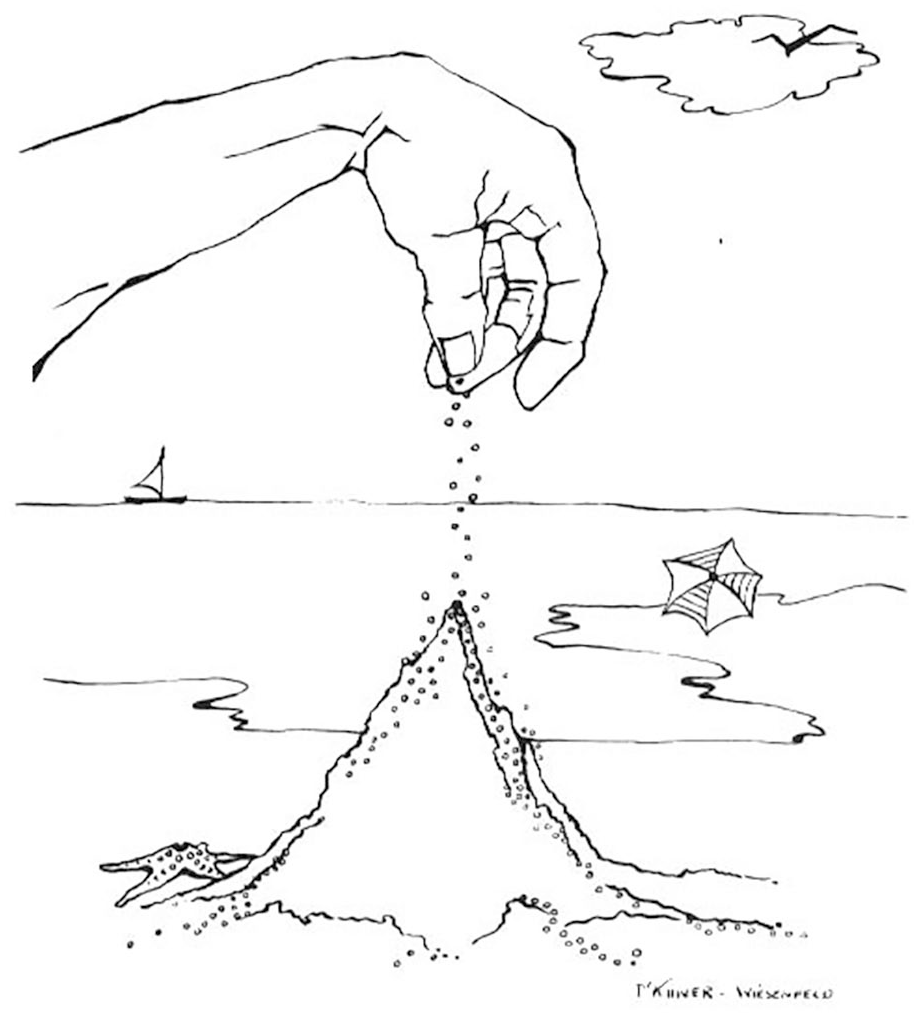
Sandpile as a symbol of the SOC theory. Drawing by Ms. Elaine Wiesenfeld.
When sand grains are gradually and steadily added to the top of the pile, this can cause the pile to collapse in a slide. However, unlike the dynamics of the sand inflow, the dynamics of the collapse are intermittent, since they consist of slides of different—and all possible—sizes. Small and some medium-sized slides are considered as usual phenomena, but they are generated by the same systemic properties as large and even massive slides.
An avalanche—a slide that covers a significant part of the slopes—is triggered by a single grain of sand, which can cause a minor collapse of the slope in a local, highly-inclined, area. This collapse causes the sand to slip in adjacent areas if they also slope too much. This self-reinforcing process develops rapidly. Of course, there was nothing special about that particular grain of sand. It played a historical role only insofar as the system as a whole was in a critical state: the minimally stable areas (i.e. the areas with a large local slope) almost constituted a coupled cluster. One grain of sand—a single weak impact—was enough to make the system (slope) act (collapse) as a whole.
The sandpile model is thus a good illustration of the relationship between micro-level processes and the general behavior of a self-organized critical system.
In such a system, many micro- and macro-level events and the causal chains initiated by them form fluctuations of different scales—pink noise (1/f noise), which is an attribute of SOC. Pink noise can be found in time series that record changes over time in the key parameters of a system or the results of its activity. Typically, the system being studied generates many signals (a time series) that can be tested for the presence of pink noise.
Many processes—and quite different ones—turn out to be pink noise: A phenomenon called 1/f (one-over-f) noise has been observed in systems as diverse as the flow of the river Nile, light from quasars. . . and highway traffic.… There are features of all sizes: rapid variations over minutes, and slow variations over years. . .. The signal can be seen as a superposition of bumps of all sizes; it looks like a mountain landscape in time, rather than space. The signal can, equivalently, be seen as a superposition of periodic signals of all frequencies. This is another way of stating that there are features at all time scales. Just as Norway has fjords of all sizes, a 1/f signal has bumps of all durations. . . One-over-f noise is different from random white noise, in which there are no correlations between the value of the signal from one moment to the next. (Bak, 1996: 21–22)
Bak viewed punctuated equilibrium as the manifestation of the theoretical laws described by him and his colleagues: Large intermittent bursts have no place in equilibrium systems, but are ubiquitous in history, biology, and economics. . . The complex status is on the border between predictable periodic behavior and unpredictable chaos. . . Why is it that the concept of punctuated equilibrium is so important for our understanding of nature? Maybe the phenomenon illustrates better than anything else the criticality of a complex system. Systems with punctuated equilibria combine features of frozen, ordered systems with those of chaotic, disordered systems. Systems can remember the past because of the long periods of stasis allowing them to preserve what they have experienced through history, mimicking the behavior of frozen systems. Meanwhile, they can evolve because of intermittent bursts of activity. (Bak, 1996: 29–31, 143)
In his introduction to Bak’s book How Nature Works. . . Malinetskii writes: The theory of self-organized criticality has provided an explanation for the phenomenon of punctuated equilibrium, which is observed in the process of biological evolution, in the functioning of social and technical systems. A typical situation is when nothing noticeable happens for a very long time, and then rapid changes radically change the shape of the system, the time of revolutions comes, which, of course, does not negate many small events that we simply do not notice. (Malinetskii, 2014: 39)
Periods of calm and stagnation in a self-organized critical system do not imply that the system has reached a certain static state. The stability of such a system is only the result of the subjective perception of the observer. The same incessant processes determine both temporary equilibrium and bursts of activity of different sizes.
A critical state is one that is close to the bifurcation point, when weak and local impulses can influence the choice of an attractor; that is, they can determine the pattern of development of the system. At the point of bifurcation, therefore, there is a lack of proportion between cause and effect. Usually, such a state of a system is considered transient. Indeed, systems, as a rule, quickly pass bifurcation points, since weak influences quickly bring the control parameters outside their critical value.
However, as it turns out, some systems can remain in a state of permanent choice and constant expectancy of a catastrophe for a very long time. The SOC theory describes exactly such systems; they can self-adjust, or self-organize, so as to maintain criticality. The mechanism of such self-adjusting, in the general case, is a combination of two processes in opposite directions—stress growth (e.g. the addition of grains of sand) and relaxation (e.g. sand falling downwards) (Podlazov, 2001).
Contemplating “life in the Sandpile World,” Bak makes a few key points: Once the pile has reached the stationary critical state, though, the situation is entirely different. A single grain of sand might cause an avalanche involving the entire pile. A small change in the configuration might cause what would otherwise be an insignificant event to become a catastrophe. . . Parts of the critical system cannot be understood in isolation. The dynamics observed locally reflect the fact that it is part of an entire sandpile. . . In the critical state, the sandpile is the functional unit, not the single grains of sand. No reductionist approach makes sense. The local units exist in their actual form, characterized for instance by the local slope, only because they are a part of a whole. (Bak, 1996: 59–60)
An attribute of SOC, as mentioned, is pink noise—a fractal process whose spectrogram shows a power distribution with an exponent (α) of about 1 (Figure 2). This allows us to identify pink noise accurately and, accordingly, to interpret the system that generates it as self-organized and critical. For identification procedures, the time series generated by the system under study is required as raw data.
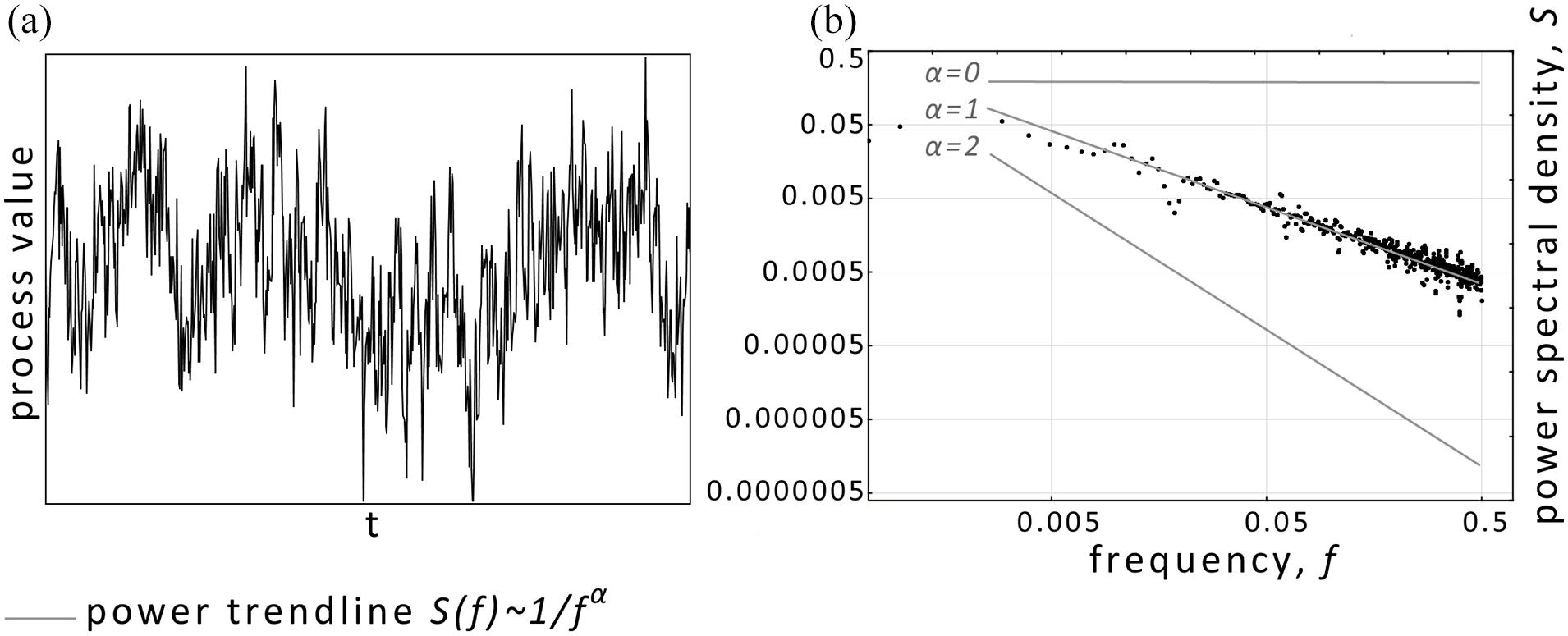
Specimen (a) and spectrogram (b) of pink noise.
With α ≈ 2, a signal is conservative red (Brownian) noise; with α ≈ 0, a signal can be chaotic white noise (Figure 2b). However, to identify white noise accurately, other procedures are required.
Thus, just the one parameter α allows the diagnosis of the complex and, often, implicit states of a system.
Power distributions in the variational series containing the results of the operation of a system can also be markers of SOC (although this diagnosis is less accurate than the identification of pink noise).
With its many interpretations, the phenomenon of punctuated equilibrium was known before and outside the SOC theory, but the capacity of the SOC theory to identify and measure this phenomenon formally allows it to claim to be the leader in defining and explaining punctuated equilibrium.
The SOC theory does not allow the prediction of the exact time of an avalanche. The timing of a particular avalanche can vary significantly because of many nonlinear effects, but the occurrence of pink noise in the system indicates a significant increase in the danger of an avalanche.
Punctuated equilibrium in computational experiments
Punctuated equilibrium has been noticed and investigated in some detail in artificial societies. This is a vast class of simulation models that have the ability to imitate the behavior of large social systems.
Lotzmann and Neumann (2017) point out the key advantage of this approach: “Agent-based models enable the generation of macro-social patterns through the local interaction of individual agents” (p. 13). In this regard, the subtitle of the book by Epstein and Axtell (1996) on artificial societies is characteristic: Social science from the bottom up. The Nobel laureate Schelling (2006) proposed one of the first models of this kind.
Artificial societies show the mechanisms by which the macro-behavior of a system—sometimes unexpected and non-trivial—comes from the ordinary and predictable micro-behavior of individual agents (i.e. people or small groups).
Epstein (2002) demonstrated the capacity of artificial societies to model modern protest movements. Among other things, he discovered punctuated equilibrium in computational experiments and interpreted this phenomenon as an intrinsic property of revolutionary processes.
Epstein’s model simulates the behavior and interaction of two types of unit: citizens (agents) and government officials (cops). Citizens may, to a varying extent, be satisfied with the status quo, and may have different degrees of willingness to take risks to change it. Among other things, the model reproduces the dynamics of the agents’ transition from one state (law-abiding citizens) to another state (insurgents).
Figure 3 shows the dynamics of the number of insurgents revealed in computational experiments. The intermittent character of this dynamic is clearly visible. Significant bursts alternate with small disturbances and periods of calm. The bursts do not have a clearly visible preparatory period: having arisen from nothing, the revolutionary impulse very quickly reaches its maximum value. There are no long and gentle upturns on the graph that could tell the observer that a build-up of revolutionary intentions is occurring.
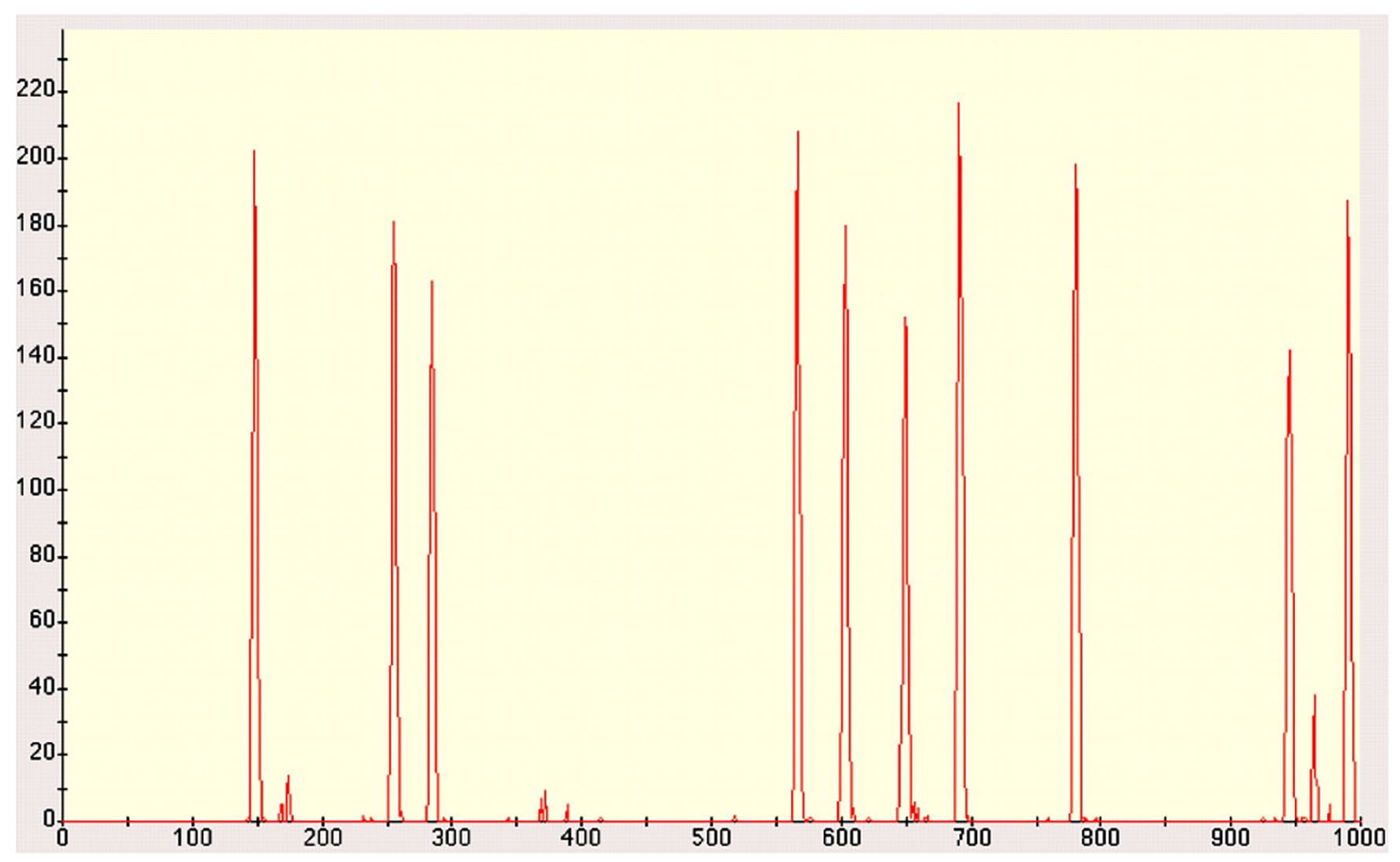
Punctuated equilibrium in Epstein’s model. x axis—simulation time; y axis—the number of insurgents.
Epstein characterizes this dynamic as follows: Random spatial correlations of activists catalyze local outbursts. This is why freedom of assembly is the first casualty of repressive regimes. . . To be the first rioter, one must be either very angry or very risk-neutral, or both. But to be the 4000th – if the mob is already big, relative to the cops – the level of grievance and risk-taking required to join the riot is far lower. This is how, as Mao Tse Tung liked to say, ‘a single spark can cause a prairie fire.’ Coincidentally, the Bolshevik newspaper founded by Lenin was called Iskra, the spark! The Russian revolution itself provides a beautiful example of the chance spatial correlation of aggrieved agents. . . A time series of total rebels is also revealing. It displays one of the hallmarks of complex systems: punctuated equilibrium. . . Long periods of relative stability are punctuated by outbursts of rebellious activity. And indeed, many major revolutions (e.g. East German) are episodic in fact. The same qualitative pattern of behavior – punctuated equilibrium – persists indefinitely. (Epstein, 2002: 7245)
Another well-known model in experiments in which punctuated equilibrium occurs under certain conditions is a forest fire model. This is, perhaps, one of the most popular for the simulation of socio-political and historical processes, since it simulates the spread of agitation in a certain environment. Units of this model can be in one of three states: growing tree, burning tree, and immune to ignition (ash). In some cases, the fire cannot cover large areas simply because there are not enough trees growing near the point where it initially started (the spark). If huge territories are overgrown with forest (i.e. if there has been a “rejuvenation”: the transition of units from the state of ash to the state of readiness for ignition), then the fire can be on a very large scale.
Roberts and Turcotte (1998) used a forest fire model to interpret the global dynamics of interstate armed conflicts. These authors concluded that such a dynamic is a punctuated equilibrium.
As sources, the authors used statistical data on wars from the beginning of the 19th century to the present day. These statistics revealed some regularities (power distributions) that also appear in experiments with a forest fire model. Therefore, the hypotheses formulated by the authors were based on analogies between real events and computational experiments: One can qualitatively discuss the breakdown of order in the world in a similar manner to the ‘forest fires’ in the forest-fire model. In the forest-fire model, sometimes a match starts a fire and sometimes it does not. Some fires are large and some are small. But the frequency-size statistics are power law. In terms of world order there are small conflicts that may or may not grow into major wars. The stabilizing and destabilizing influences are clearly very complex. The results we have shown indicate that world order behaves as a self-organized critical system independent of the efforts made to control and stabilize interactions between people and countries. (Roberts and Turcotte, 1998: 357)
Is there any experience of applying the SOC theory to the study of social and political processes?
In classical works on the theory of SOC, as well as in other theoretical and survey studies, the idea is repeatedly expressed that SOC ideas can be very productive when applied to socio-humanitarian subjects. Publications on socio-humanitarian subjects include, in particular, the works of Bak (1996), Turcotte (1999), Turcotte and Rundle (2002), Brunk (2000, 2001, 2002a, 2002b), Kron and Grund (2009), Malinetskii (2014), and Borodkin (2019).
In a number of works, the authors discovered power laws in some social phenomena and processes. It is known that the presence of such regularities (together with some other conditions) can be interpreted as manifestations of SOC. These results are reported in papers written by Roberts and Turcotte (1998), Cederman (2003), Picoli et al. (2014), Shimada and Koyama (2015), Thietart (2016), Tadić et al. (2017), Zhukov et al. (2015, 2016, 2017, 2020), Dmitriev and Dmitriev (2021), and Lu et al. (2021).
Let me take a closer look at some of these works in order to clarify the main features of their research design. Picoli et al. (2014) found evidence of SOC in data on violent events in Iraq (2003–2005), Afghanistan (2008–2010), and Northern Ireland (1969–2001). This prompted them to make an assumption about the causes of outbreaks of violence by analogy with self-organized critical models of earthquakes: Despite the fact that human activities and natural phenomena are very different in nature, it has been suggested that both could be described by a common approach. For example, the occurrence of earthquakes has been related to the relaxation of accumulated stress after reaching a threshold as in self-organized criticality (SOC). Analogously, violent events in human conflicts could be associated with a threshold mechanism. In this scenario, a description of human conflicts in terms of SOC seems plausible. Our findings are consistent with this possibility, providing quantitative support for the analogy between patterns in human conflicts and natural phenomena exhibiting SOC. (Picoli et al., 2014: 3)
Shimada and Koyama (2015) put forward and supported the idea that the appearance of power distributions (with an exponent of about 1) in data reflecting electoral activity may indicate that certain social groups are ready for political transformation. Thus, the measurement of the magnitude of the power law can be used to diagnose the transformational potential of society. The researchers summarized this as follows: The JCP (Japanese Communist Party) displays a definite power law and large changes in its vote share. . . in contrast to the JCP, the LDP (Liberal Democratic Party), which is regarded as the establishment party, exhibits an exponential distribution, and has a relatively stable rate of change with minor fluctuations. . . However, as indicated by the fallout from the Lehman collapse and the severe deflationary economic downturn in Japan, the buildup of discrepancies in the basis of Japanese society is reaching an extreme level. In order to break free from this stagnant era and open up future prospects, new strategy for social change is needed. Currently, the country is approaching a dramatic transition from the state of social change that has existed up until now (exponent DM = 1.27) to a state of real criticality, the most probable for social change (DM = 1). The model suggests that a decrease of the power exponent DM (1.27) changes the agonistic structure greatly, leading to an increase in the change output R. (Shimada and Koyama, 2015: 348)
Thietart (2016) made an attempt to understand the evolution of a large corporation. To achieve this goal, he studied over 500 strategic events at Danone Corporation from 1966 to 2008. The qualitative characteristics of these activities were formalized and transformed into time series showing the intensity of transformation processes within the corporation.
Over several sub-periods (S1: 1966–1969, S3: 1987–1996, S4: 1996–2004), Thietart identified SOC (in particular by pink noise), which enabled him to draw the following conclusions: Power Law’s results with a pink noise pattern are ‘the most conspicuous signature’ (Morel and Ramanujam, 1999) of a self-organized criticality phenomenon where, as in punctuated equilibrium models, long periods of small changes are followed by brisk and large transformations. . . During the S1, and specially S3, and S4 periods, very intense strategic activities followed phases of search during which time many strategic activities of smaller amplitude took place. Frequent strategic actions were driven by a clear strategic vision such as to become a leader in glass industry (S1), or to transform the firm into a new food business company (S3 and S4). When the number of small changes reached a threshold, the accumulated initiatives triggered a sudden and larger strategic change. These were periods of adaptation to opportunities, and learning shaped by strategic intent. (Thietart, 2016)
It can be asserted that the SOC toolkit is applied to very diverse social processes. In all studies carried out in a similar vein, qualitative interpretations (based on the explanatory schemes and models of the SOC theory) follow from the accurate identification of SOC markers in the systems being studied.
Searching for pink noise: Tracking down criticality
For several years, our team at the Center for Fractal Modeling (http://ineternum.ru/) has been looking for social processes that can be identified as pink noise. In the course of these studies, we have obtained results that indicate that the behavior of socio-political systems can be strongly influenced by SOC. Moreover, signs of SOC have been found both in the present and in the past.
Revolutions and riots in the 19th and early 20th centuries
Historical processes—especially those associated with rebellions and other mass movements—show rapid bursts of activity. In collaboration with fellow historians, we examined the intensity of peasant unrest during the second half of the 19th century in 31 European provinces of the Russian Empire, and also studied the dynamics of riots in Russian cities in 1917–1918. Intensity was calculated as a complex indicator of the amount, duration, and scale of disturbances. Information about the violent events was gleaned from archival and published sources (Zhukov et al., 2017) and is available online: http://ineternum.ru/bunt/ and http://ineternum.ru/bd-pr/.
Figure 4 shows the typical dynamics. Periods of stagnation were interspersed with surges, many of which had no clearly visible compelling reasons. Such surges, of course, baffled contemporaries, to whom the rapidly growing activity of the masses must have seemed unreasonable and, accordingly, senseless.
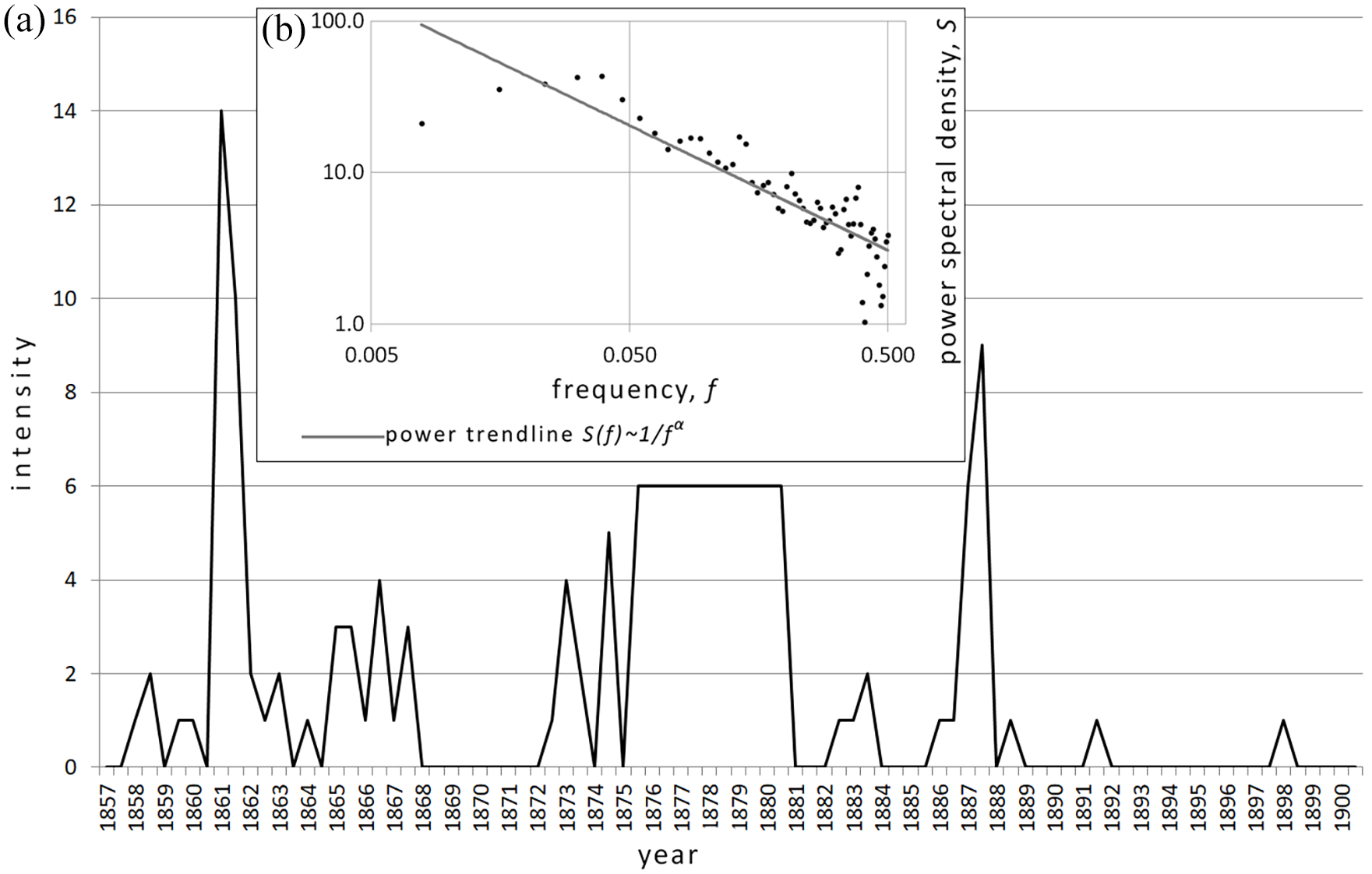
(a) Dynamics of the intensity of peasant unrest in the Vologda governorate and (b) spectrogram of the presented time series.
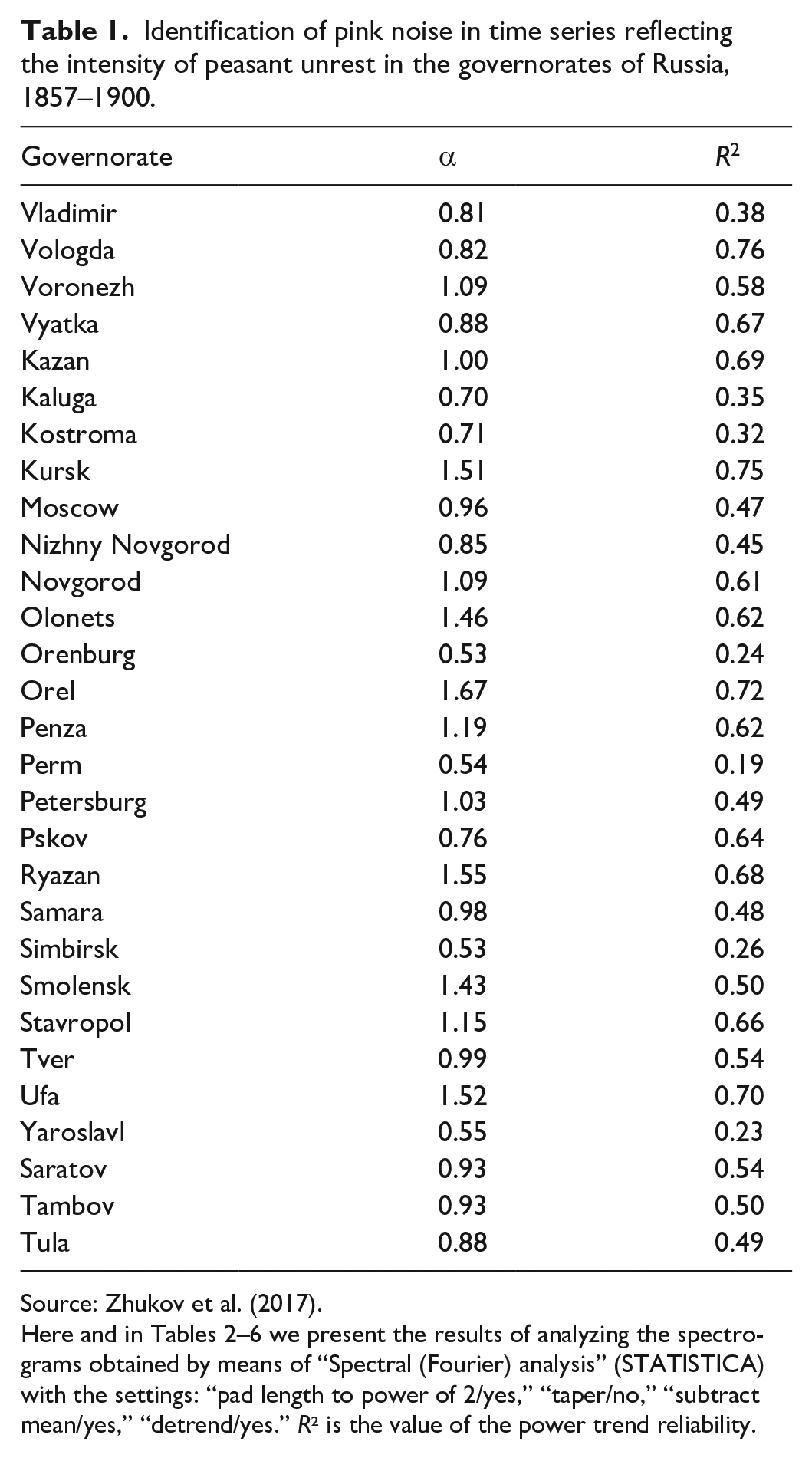
The dynamics of peasant unrest in a number of regions were pink noise, and the corresponding regional communities were in a critical state (Table 1).
Identification of pink noise in time series reflecting the intensity of peasant unrest in the governorates of Russia, 1857–1900.
Source: Zhukov et al. (2017).
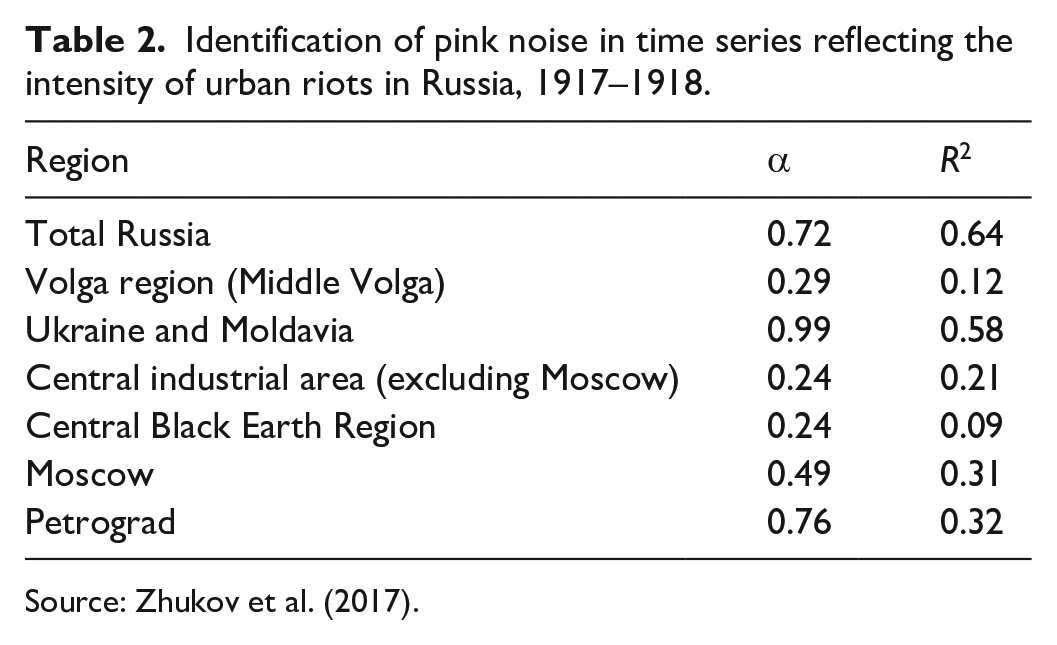
Rebellious activity in Russia in general (and especially in Moscow and Petrograd) in 1917–1918 largely had the character of pink noise. Other individual regions showed a slightly lower (albeit not zero) value of α. This indicates that society, at least in the capitals, was in a state of criticality (Table 2). Events and processes at the micro-level generated bursts of activity at all levels, including avalanches—considerable social disturbances.
Identification of pink noise in time series reflecting the intensity of urban riots in Russia, 1917–1918.
Source: Zhukov et al. (2017).
Having compared the results for urban and peasant protests, we made some generalizations. The state of SOC indicates that there were significant internal threats to stability. In the societies in question, there were constant sources of conflict and tension. It appears that some social problems constantly built up and were reproduced at the micro-level. Society needed a quick relaxation, a release of tension. Pink noise, therefore, indicates avalanche-prone periods in history, when socio-political upheavals of various scales up to catastrophes were possible. Potentially destabilizing processes never faded within “pink” societies—even during periods of long stagnation. One or other combination of such processes was able to initiate surges in activity—unrest, riots and, finally, revolutions. Since everyday processes led to the avalanche, contemporaries—both politicians and analysts—were less likely to discover that the society was in a pre-catastrophic state. The flaws of the social system, which seemed insignificant to contemporaries, might have been the causes of revolutions and other kinds of catastrophes, but this understanding would develop only in hindsight.
Trade history
To study the state and evolution of the Russian grain market, we carried out a spectral analysis of data on rye prices for individual regions of Russia and for the European part of Russia for 1707–1915 (Mironov, 1986).
Mandelbrot drew attention to the widespread use of power laws in price dynamics (Mandelbrot, 1982). The self-regulating market is an ideal example of a system in an SOC state. We made some assumptions about the price dynamics in the grain market, which is a key market for traditional and early industrial society. Changes in the “color” of noise may indicate the emergence of a single market and serve as an index of the level of its regulation. If there is no single market in a region and trade is purely local, then the goods are not transported from one part of the region to another. This makes the price highly dependent on natural factors, random events, and local conditions. In this case, the price dynamics are even more chaotic. The appearance of pink noise indicates the creation of a single self-regulating market, and the presence of Brownian (red) noise in price dynamics can be interpreted as a situation in which the market is heavily regulated by means of non-market instruments.
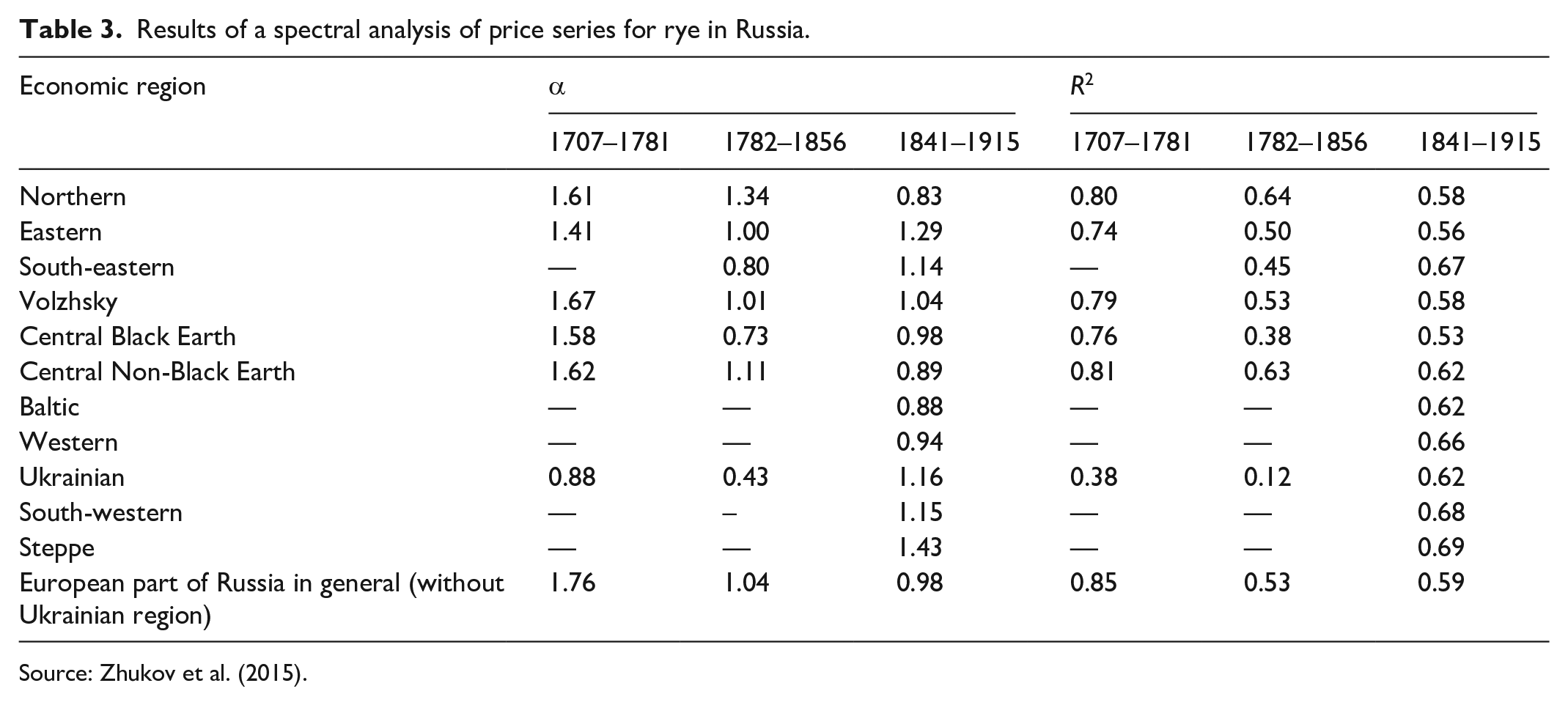
We managed to establish that, as early as the beginning of the 19th century, the Russian grain market exhibited pink noise (Table 3) (Zhukov et al., 2015). This testifies to the consolidation and high level of market development. Interestingly, during an earlier period, the market had been characterized by strong government intervention and regulation, which manifested itself in the presence of red noise in the price dynamics.
Results of a spectral analysis of price series for rye in Russia.
Source: Zhukov et al. (2015).
Demographic behavior
As the raw data for studying the demographic strategies of the Russian agrarian population, we used the annual data on the number of births in several agrarian communities of the Tambov region of Russia: http://ineternum.ru/bd-dem/.
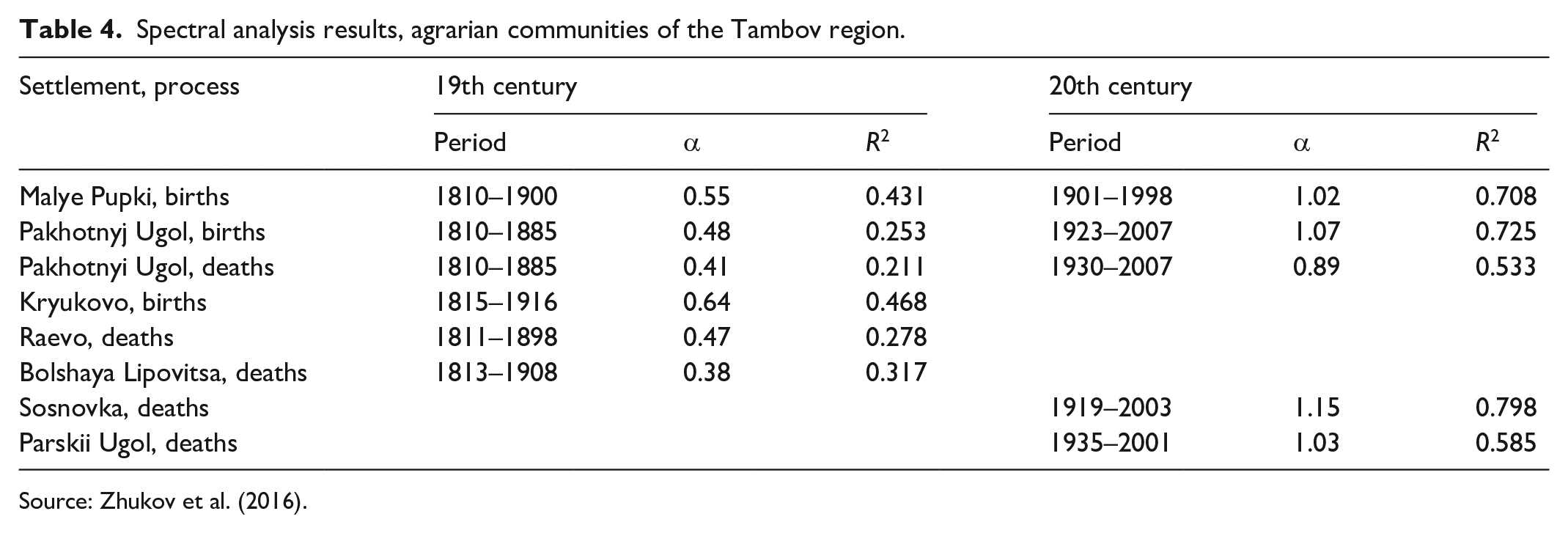
The study of births shows that in the 20th century the value of α was close to 1, while in the 19th century the value of α was significantly less (Table 4) (Zhukov et al., 2016). These results can be interpreted as a manifestation of the demographic transition. Any event in a system that is in a critical state affects the behavior of all the actors. This means that people, families, and communities, begin to perceive and respond to many external circumstances (e.g. the availability of resources, etc.) in which they implement their particular demographic strategy. By contrast, a wholly traditional society is purely local and is not inclined to develop demographic strategies in response to circumstances that are distant in time or space (whether they are threatening or favorable). Thus, the appearance of pink noise in the series of demographic data may be an indicator of a change in the demographic strategy of society.
Spectral analysis results, agrarian communities of the Tambov region.
Source: Zhukov et al. (2016).
Terrorist and criminal activity
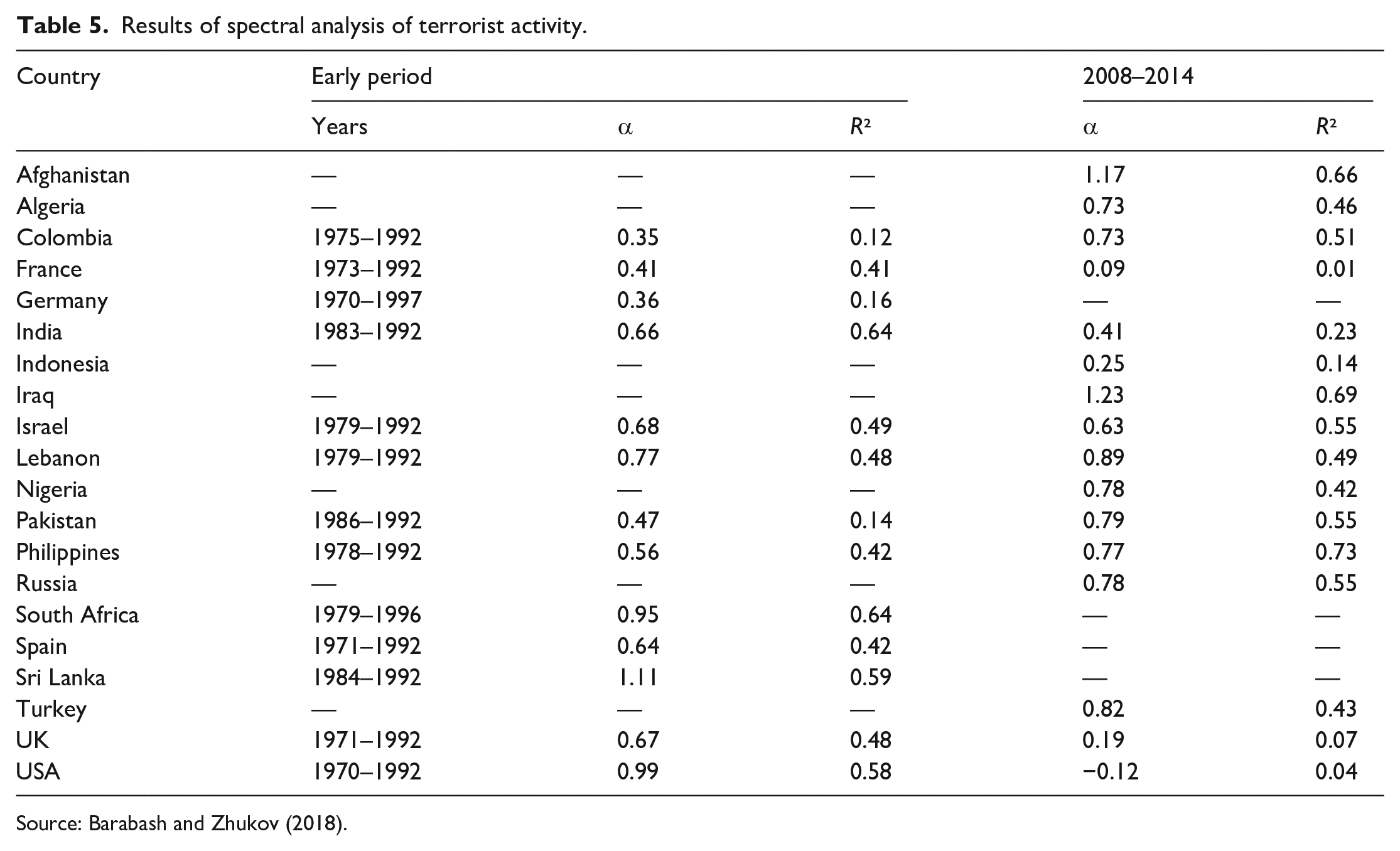
Time series of terrorist activity were retrieved from the Global Terrorism Database (START (The National Consortium for the Study of Terrorism and Responses to Terrorism), 2020). We studied 20 countries and found that, in more than half of them, the dynamics of terrorist activity (in different periods) were pink noise (Barabash and Zhukov, 2018). Accordingly, any trends describe the numerous and significant outbursts of terrorism poorly. From the point of view of the SOC theory, such bursts must not be considered merely freaks of chance or products of extraordinary circumstances. The results of this work are partially presented in Table 5.
Results of spectral analysis of terrorist activity.
Source: Barabash and Zhukov (2018).
We believe that a low value of α is typical for a society in which terrorism does not have an internal systemic source. Outbursts of terrorism in such a society can be caused by short-term, external, or local extraordinary reasons. “Pink”-type societies contain an intrinsic natural long-term potential for avalanches, that is, for a significant and rapid increase in the number of terrorist events—hence the prerequisites for terrorist activity at the micro-level and for large-scale outbreaks.
Interestingly, SOC can also be found in criminal activity in some countries—at least in 16 out of the 26 that we studied (Barabash and Zhukov, 2018). The raw data were extracted from two sources: the Fink-Jensen (2015) and the reports of the United Nations Office on Drugs and Crime (Statistics and Data, 2020).
Online revolutions
Modern political processes take place largely in social networks (Volodenkov and Fedorchenko, 2021). Such processes provide examples of spontaneous mobilization and unexpected information avalanches: significant bursts of creation, reproduction, and dissemination of messages. We examined the activity of some protest network clusters—structures consisting of connected groups in social networks on Facebook and VK.com (Zhukov et al., 2020). Figure 5 shows the change in the total number of shares (for each day) generated by the protest clusters in Brazil in 2015–2016 (the movement to impeach President Dilma Rousseff) and in Armenia in 2018 (the Velvet Revolution), which we studied. The raw data on the Internet activity of the communities were extracted using the Popsters.ru service and are available online at http://ineternum.ru/bd-arm-repost/, http://ineternum.ru/braz-reposts/, and http://ineternum.ru/bd-arm2/.
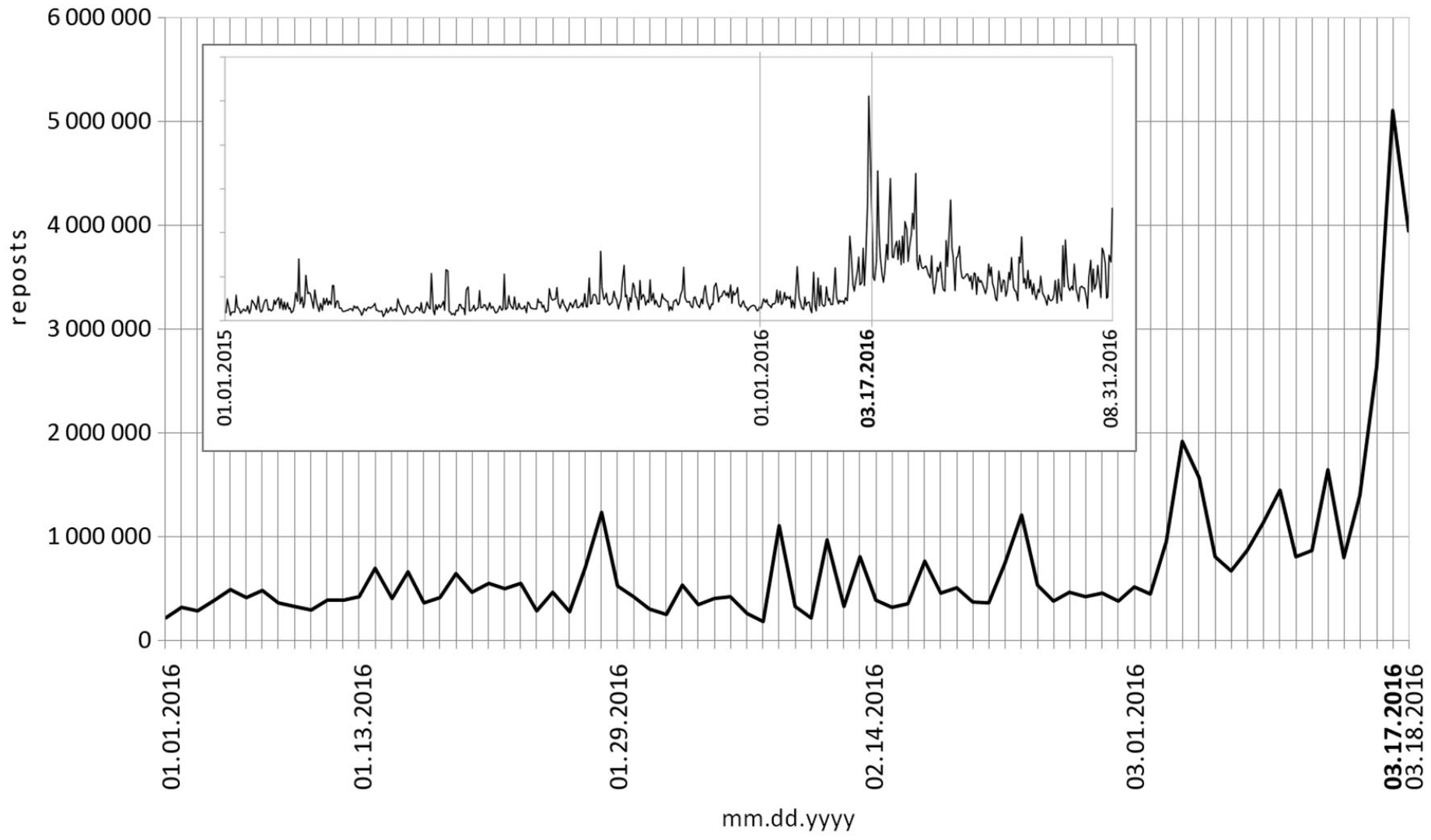
Dynamics of daily sharing activity of Facebook groups opposing Dilma Rousseff, Brazil.
Through sharing, users distribute messages on a social network among their virtual friends, thereby becoming an information source. Therefore, sharing activity is very important for understanding the nature and degree of influence of people and groups.
In Figures 5 and 6, the trends can be interpreted on the basis of external and, by and large, well-known circumstances, but the bursts—which are very intense and rapid—have no sufficient cause. At the same time, in many cases, it is precisely such bursts—major events—that determine social life and affect political processes, with an impact on a par with trends. Seemingly extraordinary and single, such events baffle observers and researchers. The reasons that preceded the bursts of activity seem insignificant, and direct causal explanations are of little use.
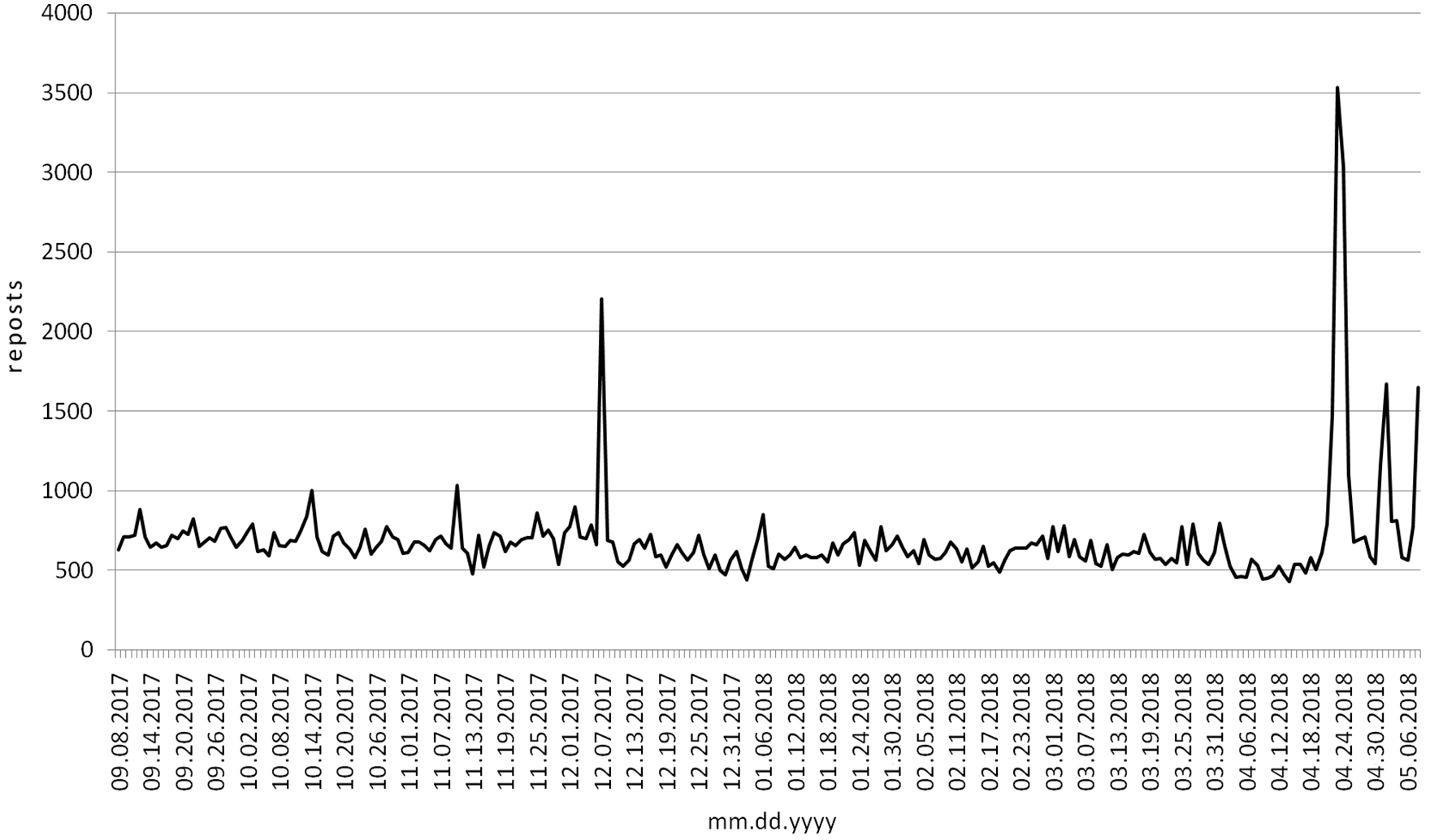
Daily dynamics of the total shares for the protest cluster on VK.com before and during the Velvet Revolution, Armenia.
It seems that when explaining such effects, it is necessary to take into account the fact that the virtual network environment is inclined to function in SOC mode in some cases. This imparts some unique qualities to online communities.
Some observations were made in the course of comparing the dynamics of street protests and the periods when pink noise emerged in protest communities (Zhukov et al., 2020). Thus, in the Brazilian episode, it was discovered that an information avalanche in the media had provoked the street protests. This supports the hypothesis that communities in an SOC state can play the role of drivers of offline activity.
In the Armenian episode, it was found that the appearance and disappearance of pink noise corresponded to the periods of preparation, peak, and “demobilization” of the protest movement in the streets. In addition, the emergence of pink noise in a variety of communicating network communities preceded the information avalanche (Zhukov, 2018) (Figure 7).
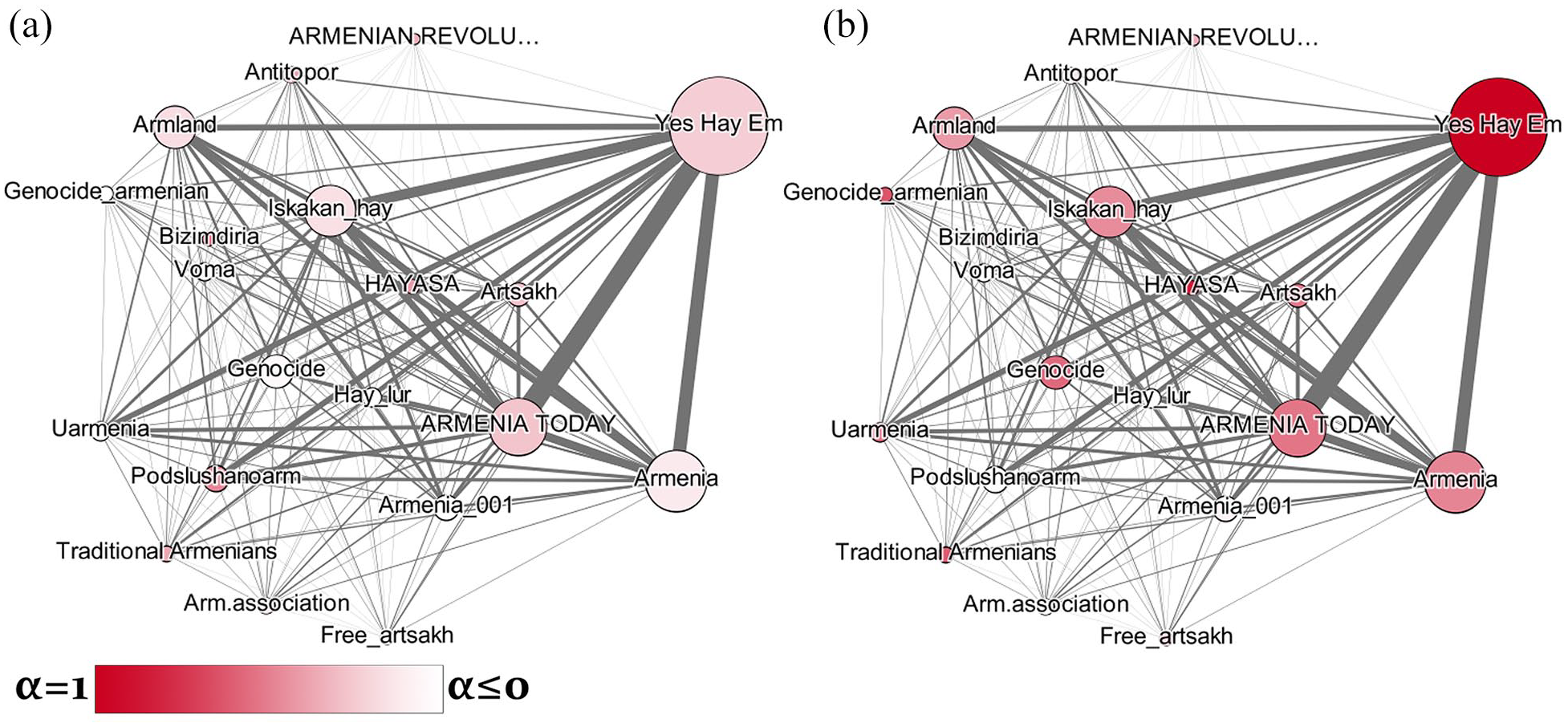
VK.com protest network cluster: (a) sub-period 08.09.2017–06.01.2018 and (b) sub-period 08.01.2018–08.05.2018. The thickness of the links between the nodes (VK-communities) is proportional to the number of common members.
Communities operating in the SOC mode have a high level of participant involvement. Such groups are internally linked by relationships of reflexivity. The essence of such a relationship boils down to the fact that the participants tend to get information from each other, distribute it, and change their behavior under its influence. These properties ensure the community’s unity. Among other things, this means that such communities have a great mobilization capacity, and the detection of pink noise in a group may indicate political mobilization of the corresponding network community.
Electoral behavior
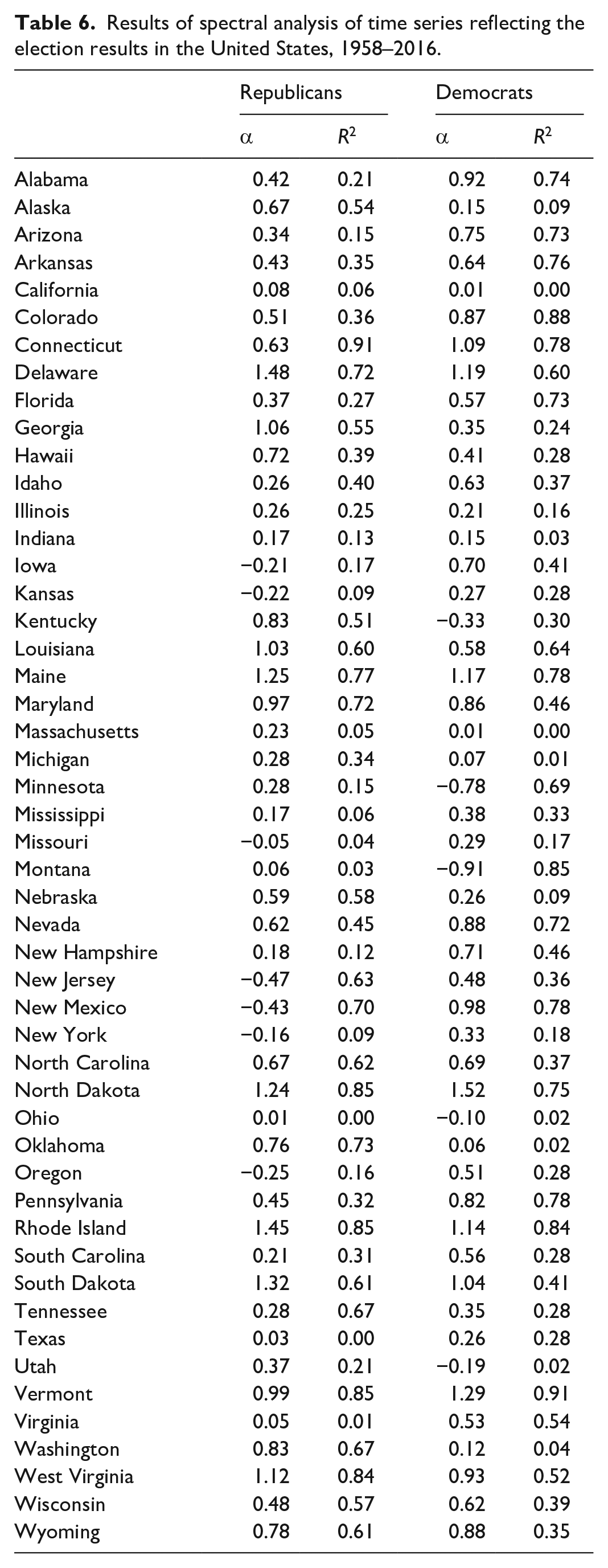
Pink noise is found in the dynamics of electoral choice in some US states from 1958 to 2016 (see Table 6). To account for electoral choice, the results for the state elections of members of the lower house of the United States Congress were used. The data for the calculations were taken from reports published by the Office of the Clerk of the US House of Representatives (Election Statistics, 1920–Present 2020).
Results of spectral analysis of time series reflecting the election results in the United States, 1958–2016.
Every 4 years, elections for Representatives coincide with presidential elections. Significant financial and media resources are involved in presidential campaigns. These surges in voter turnout significantly distort our calculations. Therefore, in all the spectrograms, before testing them for the presence of a power law, we remove the harmonics with a frequency of about 0.5 (Figure 8b).
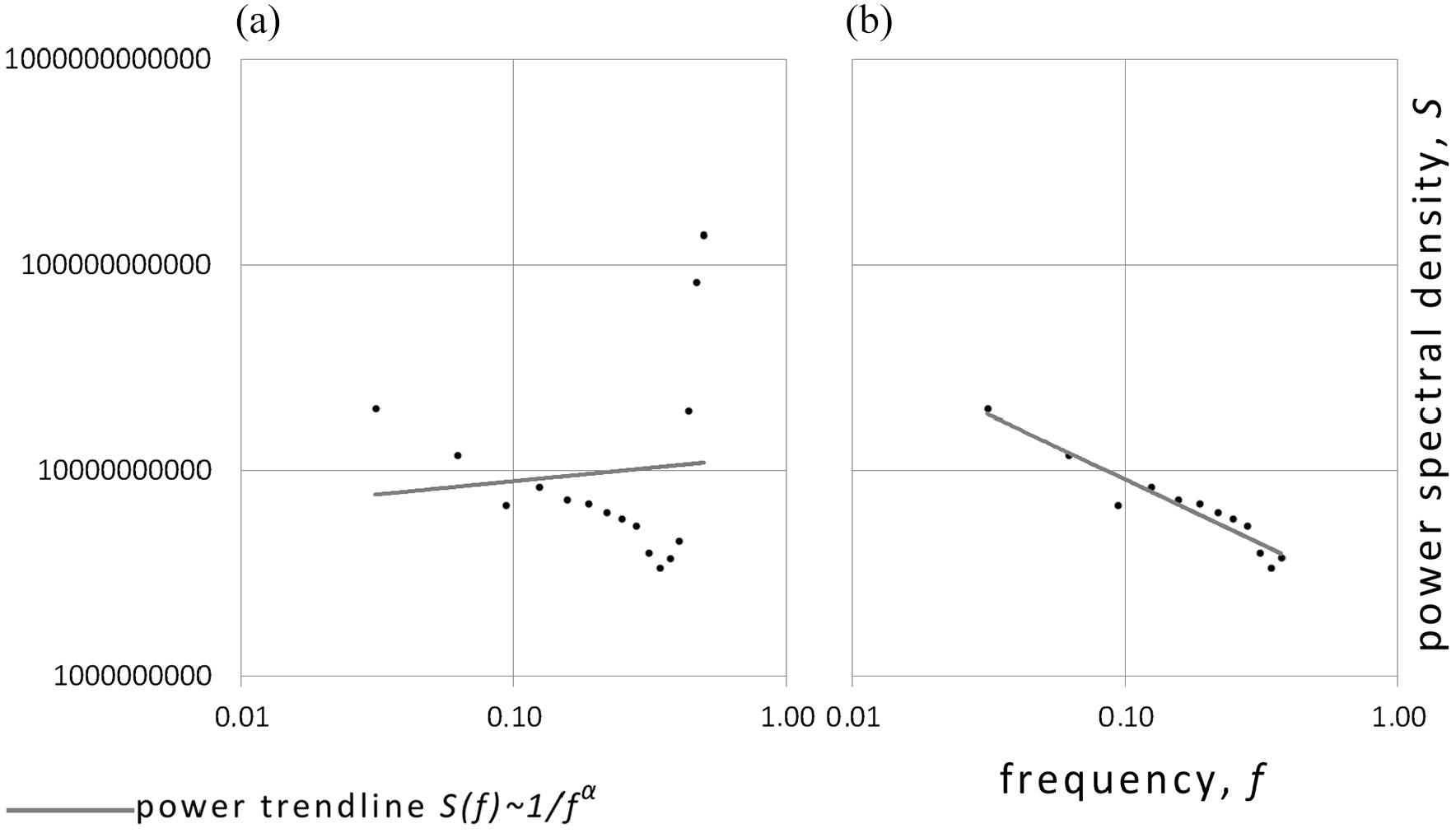
Spectrogram of Republican electoral support in the election of Representatives in Connecticut, 1958–2016: (a) full spectrogram (α = –0.129; R2 = 0.009) and (b) spectrogram after removing harmonics with frequencies from 0.4 to 0.6 (α = 0.63; R2 = 0.911).
The results that are obtained justify the assumptions about possible avalanche-like bursts in electoral behavior in the future. Similar results were obtained earlier by Shimada and Koyama (2015) for Japan. Like these researchers, we see the emergence of SOC effects as a marker of the high transformational potential of societies. In this case, the SOC toolkit makes it possible to reveal the latent readiness of the political landscape for rapid and radical changes.
Conclusion
Traditionally (in historical science and, to some extent, in political science and sociology), a large-scale burst has been viewed as the result of a major external cause—an event that has shaken the system and caused a strong response. Such extraordinary events appear to be the product of “external chaos”: they are akin to a volcanic eruption, which can wipe out an entire species. From the point of view of biological laws, such events seem to be random (although they are quite natural within the framework of a more extensive system of ideas, including, for example, geological laws). Undoubtedly, this kind of extraordinary external cause (leading to a cataclysm or, conversely, a social breakthrough) has cropped up repeatedly. However, as it turns out, the potential for the formation of large-scale deviations can also be intrinsic to systems that are characterized by punctuated equilibrium. Such internal causes ought to be intense enough and, at the same time, subtle, and to become manifest only from time to time.
Experiments with artificial societies suggest that such a potential can be intrinsic to ordinary—common, routine—processes, or interactions of subjects at the micro-level. It is this layer of socio-political life that is very often (explicitly or implicitly) ignored in schemes designed to explain social and political reality.
The processes presented in this article, although filled with random events, are not completely chaotic, as they might seem at first glance; they are not chains of events formed as a result of volcanic eruptions, meteorite falls, the spread of epidemics, or other similar causes. The processes presented are, in a sense, natural. The SOC theory contains ideas and tools for detecting and interpreting such patterns.
From the point of view of the SOC theory, in order to explain explosive social transformations (including revolutions and other outbursts of socio-political activity), there is, in some cases, no need to look for a major extraordinary factor. Social transformations can be caused by quite ordinary—and therefore subtle or inconspicuous—properties of systems, micro-level processes, and local impulses. The SOC theory, therefore, refocuses the attention of researchers from the search for the immediate causes of events to the identification of the state of the subject that generates these events.
Of course, the explanations of the SOC theory cannot be automatically extended to all socio-political cataclysms without exception. The presence of SOC markers in the system under study has to be revealed before the models and explanatory schemes of the SOC theory can be used. Here an important advantage of the SOC theory is manifest: it aptly describes the means to identify, with mathematical rigor and, at the same time, relatively simply, avalanche-prone states.
This result appears to be mainly methodological and to require further comparison with empirical evidence. However, it is already evident that the application of the SOC theory to political forecasting can yield heuristically valuable results. We believe that the dynamics of voter sentiment, protests, strikes, politically motivated violence, acts of violent extremism, and so on, can serve as an indicator of the potential for political transformation. The SOC theory makes it possible to discern the harbingers of future shocks in the routine of everyday life.
Footnotes
Declaration of conflicting interests
The author declared no potential conflicts of interest with respect to the research, authorship, and/or publication of this article.
Funding
The author disclosed receipt of the following financial support for the research, authorship, and/or publication of this article: The reported study was funded by RFBR and EISR, project number 21-011-31405. The work on adapting the SOC theory toolkit for historical research was supported by the Russian Science Foundation, grant no. 18-18-00187.
