



Abstract
This methodological study details the effectiveness of emotion mapping as a method to explore the lived experiences of professional male athletes (n = 9) with a long-term injury. This represents the first use of emotion mapping to garner phenomenal knowledge on long-term injury within a sport psychology context, and as such is a departure from traditional approaches in this field. Following an orientation meeting, each participant was asked to produce an emotion map in the privacy of their home of two critical spaces occupied during their rehabilitation. Using video conferencing software, they were then asked to narrate their map, to facilitate understanding of their lived experiences of injury. Overall, the method was found to be efficacious in supporting existing literature on injury and revealing previously unknown aspects of long-term injury. In particular, the study provided phenomenal knowledge that was previously absent. As such, recommendations are made for the use of emotion mapping both as an effective research technique, and as a therapeutic tool.
Research methods in sport psychology
Before beginning to consider the prime purpose of this paper, namely, to explore and evaluate the use of emotion mapping with long-term injured professional athletes, it is perhaps pertinent to examine and contextualise the research traditions inherent to sport psychology, the field within which this study sits. Sport psychology carries with it the positivist inheritance of sport science, and with it a reluctance to value research that is not quantitative in nature (Goldman and Gervis, 2021; Krane and Waldron, 2021). This was illustrated by research by Poucher et al. (2020) that states that of the 710 qualitative empirical papers published between 1987 and 2017, from five major sports psychology journals, the number of qualitative research studies published increased from 2 papers to 60, never exceeding 90 in any given year. Although this demonstrates an increased engagement with qualitative research, it is still, overwhelmingly, a minority approach. Indeed, the Journal of Sport and Exercise Psychology only published 5% qualitative studies in this timeframe. Additionally, the increase only began to occur after 2005. Whilst the data reveals a shift in the number of qualitative studies being published more recently, there remains a relative dearth of qualitative research. Calls for diversity in qualitative research were first raised over 20 years ago (Biddle et al., 2001; Scanlan et al., 1989; Sparkes, 1998; Strean, 1998) and this is arguably still the case today.
Moving forward we encourage exploration and use of additional qualitative research methods. . . To be clear, what we advocate is not the use of new and/or different methods just because they are new or different, but rather, to expand the range of ways of knowing. Part of such expansion may also mean an acknowledgement that ways of exploring experiences are not only gleaned through interviews. (McGannon et al., 2021: 18)
Moreover, recent analysis of sport psychology research methods reveal that this trend has continued (Meredith et al., 2018). Indeed, diversity within qualitative research in sport psychology is still limited given that qualitative research methods are viewed by many researchers as being solely textual in nature (Lapum et al., 2015; Meredith et al., 2018; Sparkes, 2014), with the dominant paradigm being the combination of semi-structured interviews and content analysis (Biddle et al., 2001; Meredith et al., 2018). This narrow interpretation of the multitude of possible approaches to qualitative data is constricting. Contemporary forms of qualitative research, such as art-based research, are, although not entirely absent, largely ignored within sports psychology (Blodgett et al., 2014; McGannon et al., 2021). In this way, a hierarchy of research methods appears to have developed within sport psychology, and arguably throughout psychology as a whole, which places numerical data at its pinnacle, followed by textual data, and with visual data as an afterthought, or disregarded entirely (Blodgett et al., 2014; Culver et al., 2003; Dark, 2009; Howitt, 2019; Knowles and Cole, 2008; Lapum et al., 2015; Rennie et al., 2002).
Perhaps, a further indicator of the positivist stance embedded in sport psychology can be demonstrated by the creation in 2009 of the journal ‘Qualitative Research in Sport and Exercise’ (changed in 2011 to ‘Qualitative Research in Sport, Exercise and Health), which suggests that researchers were not able to get qualitative research published within the discipline’s mainstream journals. Indeed, of all the studies published by this journal between 2009 and 2017, only 28% of them were empirical qualitative studies, which appears to be at odds with the title of the journal (Poucher et al., 2020). This is echoed by research that has exposed the scepticism with which qualitative research is viewed within sport psychology (Berry, 2011). Whilst there have been calls for more innovative qualitative approaches in sport psychology, and whilst there is evidence of some innovation (e.g. McMahon et al., 2017; Tarr and Thomas, 2011), as of yet this call has remained largely unanswered in terms of creative approaches to research (Schinke et al., 2016; Smith and Sparkes, 2009). Set against the aforementioned backdrop, the innovation of this study’s method must be acknowledged.
Art-based research
To some, art and science appear at opposite ends of a research continuum, a perspective some social scientists have strived to perpetuate (Kincaid, 1996; Napier and Nilsson, 2008). As noted by Gergen and Gergen (2012): There is a set of debilitating binaries operating here, one that equates science with reason, truth, objectivity, and progress, and the arts with emotionality, artifice, subjectivity, and entertainment. . . there has been an unnecessary distancing between classes of pursuits that might otherwise draw enormous sustenance from each other (p. 15).
Moving past this outdated notion offers the opportunity for different methodologies to sustain and inform each other. Perhaps, conventional positivists find it difficult to undertake artistic qualitative methods due to the rigid configuration of their research practice. As art-based research methods require researchers to forfeit control over the process of data generation and subjectively represent findings as opposed to ‘objectively’ presenting them, this necessitates a radically different approach to research that acknowledges multiple ways of knowing about social phenomena (Sparkes, 2002).
Art-based research methods, such as: emotion mapping, drawing, poetry, and photography (Kara, 2015), adopt a different approach by removing the constraints of the aforementioned binary perspective. An example of this is the long-held acknowledgement by therapists that using art as a therapeutic method is powerful in accessing the inner world of children and adults alike (Gabb, 2008, 2009). These creative methods, borne out of traditional forms of therapy, have long been implemented to help patients process and overcome trauma in their life (Gabb, 2009; Perryman et al., 2019). Malchiodi (2003) explained that the emotive and visual nature of art-based therapy activates several senses simultaneously which aids the individual in conveying a far richer narrative (Trevenen-Jones et al., 2020). Within the world of applied psychology, this approach has been widely accepted, and indeed highly successful in a range of therapeutic contexts, and therefore is not subject to the same scepticism that art-based research garners as a method for scientific enquiry (Gabb, 2009).
Emotion mapping
Gabb (2009) pioneered emotion mapping as a tool for understanding family relationships and highlighted its effectiveness when exploring sensitive or traumatic topics with adults and children (Gabb, 2010; Gabb and Singh, 2015). Emotion mapping is a method whereby the individual either creates or populates a map of a designated space with their emotional experiences of that space. Emotion mapping has long been utilised within family therapy, allowing the therapist insight into each family member’s perspective of life within the home (Gabb and Singh, 2015). Emotion maps can be used to help reveal complex relationships between emotion and space as well as the way individuals experience that space (Gieseking, 2013; Kara, 2015). An individual’s relationship with a space is dependent upon the events that occur there as well as the people they share the space with (Gabb and Singh, 2015). Thus, it becomes relevant to consider the intersectional relationship between emotion and space, as ‘The articulation of emotion is. . . spatially mediated in a manner that is not simply metaphorical’. (Davidson and Milligan, 2004: 523). Thus far, this relationship has not been explored in the context of rehabilitation from long-term injury.
Emotion mapping as a research method is usually paired with a form of participant-led qualitative inquiry to allow the participant the opportunity to explain their map to the researcher, as opposed to the researcher interpreting it themselves as is typical of a positivist approach in sport psychology (McGrath et al., 2020). A holistic understanding of emotion mapping also unveils the possibility of application to the wider social science research community outside of its origins in family therapy. An example of this is the study by McGrath et al. (2020) of emotional experiences of space by people with learning disabilities using mental health services. The authors argued that emotion mapping was efficacious as ‘both a process and a product’ (p. 75) in understanding the relationship between emotion and space and was useful in ‘the construction of sense making in qualitative research’ (p. 75).
Emotion mapping was designed so that it would be as easy for children to engage with as adults. Moreover, the visual nature of maps accesses a universal language that facilitates investigation into emotionally charged lived experiences (MacDougall, 1997). This is critical when working with individuals who do not possess a rich emotive vocabulary, as the maps allow participants to ‘show not tell’ their narrative (Reavey, 2012). Furthermore, recent developments in the literature have raised concerns that the verbal expression of emotional states as being inherently feminine, and as such, may create barriers for men in contexts where emotional expression is needed (Morison et al., 2014; Seager, 2019). Liddon et al. (2019) found that men preferred less verbal, and more action orientated approaches, often using mediating activities as a means to access and express their own emotional landscapes. This positions emotion mapping as a potentially useful action-orientated approach.
When creating visual materials, such as emotion maps, meaning is formed throughout the process of construction, as well as during the participants explication of the map (Rose, 2001). Therefore Rose (2001) maintains that it is important to explore the finished product, its construction and the context within which it was created and displayed as part of the analytical process. Furthermore, Lichtman (2002) concurs with Rose’s (2001) theory, adding that no image is innocent and that intent, and therefore opportunity for analysis, is present within every image.
This study aims to investigate the effectiveness of emotion mapping as a method for understanding the traumatic emotional consequences of long-term injury in athletes, and how the spaces they inhabit interact to determine their emotional landscapes. This study also represents the first instance where emotion mapping has been implemented within the area of sport psychology to explore long-term injury. It is thus important to now turn to the specific context within which this study took place.
Study background
One of the most traumatic experience for a professional athlete is perceived to be long-term injury (Gouttebarge et al., 2015; Souter et al., 2018), thus making emotion mapping an appropriately sensitive method (Gabb, 2010; Gabb and Singh, 2015). Injuries in professional team-sports are common and almost expected (López-Valenciano et al., 2020). They range from minor muscle strains, to serious long-term injuries such as severe head trauma, torn ligaments and fractured bones, which may keep an athlete out of training for many months (Brooks et al., 2005; Ekstrand et al., 2013, 2016; Kay et al., 2017; Pfirrmann et al., 2016; Quarrie and Hopkins, 2008; Williams et al., 2013). Aside from physiological harm, there are numerous negative psychological consequences to injury that elite athletes can encounter.
Research has highlighted that athletes experience a diverse range of negative symptomology. These have included: feelings of boredom, loss, confusion, fear, helplessness, frustration, denial and anger (Clement et al., 2015; Gervis et al., 2019; Lentz et al., 2015; Tracey, 2003). Responses such as these have been shown to be almost universal (Gervis et al., in press). Athletes also experience disruptions to their motivation and can experience a loss of athletic identity and feelings of exclusion (Gervis et al., 2020; Manuel et al., 2002; Ruddock-Hudson et al., 2012; Smith and Sparkes, 2005). This can lead to more severe consequences, including depression, suicidal ideation, addiction and substance abuse, eating disorders, PTSD and anxiety (Appaneal et al., 2009; Ardern et al., 2012; Gervis et al., 2019, 2020; Gouttebarge et al., 2017; Heaney, 2006; Hsu et al., 2017; Putukian, 2016; Rao and Hong, 2016; Smith and Milliner, 1994; Sundgot-Borgen, 1994; Trojian, 2016; Wolanin et al., 2015). Indeed, injury has been shown to heighten the risk of mental health problems for athletes at a level which is comparable to, and in some studies greater than, the general population (Gouttebarge et al., 2015; McManus et al., 2016; Rice et al., 2016; van Ramele et al., 2017). However, generally, research on injury has primarily taken a physiological perspective, often ignoring emotion as a mediating factor of athletes’ experiences (Bonazza et al., 2017; Mooney et al., 2017).
The immediate and long-term emotional trauma experienced by an injured professional athlete has, until recently, been ignored (Podlog et al., 2015). Moreover, research has further exposed a stark lack of emotional and organisational support for injured players (Gervis et al., 2019, 2020). What limited research there is has begun uncovering the stressors associated with professional male team-sports both on and off the pitch (Rees et al., 2010). Traditionally, rehabilitation for injured athletes has been the sole responsibility of physiotherapists and medics, with little to no attention paid to the psychological and emotional consequences of injury (Gervis et al., 2020). Indeed, the literature demonstrates there to be inadequate amounts of training in terms of recognition, evaluation, and treatment of psychological and emotional factors of sports injuries by physiotherapists (American College of Sports Medicine, 2006; Gervis et al., 2020; Roh and Perna, 2000; Tracey, 2003). A better understanding of the link between emotions and spaces, by the professionals that inhabit them, can therefore only be beneficial to support long-term injured athletes.
Traditionally, in professional sports clubs in the UK, the physiotherapy room is a public space containing multiple beds and several staff members, alongside other athletes (injured and non-injured). This is a layout which can prevent athletes from disclosing their thoughts and feelings to the physiotherapists for fear of being overheard and negatively evaluated (Wallace, 2018). The communal facet of the physiotherapy room detracts from the safety and security commonly sought after when experiencing and processing trauma such as injury (Salim and Wadey, 2018). The physiotherapy room is theoretically a space in which healing should happen, and yet, due to its configuration, may not be a ‘safe’ comfortable place to do so. To date, there has been no research that has specifically explored the emotional experiences of long-term injured athletes in the context of the important spaces they inhabit during the healing process. Therefore, emotion mapping presents an opportunity to explore the previously unknown connection between space and the emotional consequences of injury. Thus, the aim of the research is as follows: to explore the effectiveness of emotion mapping as a method for understanding the traumatic emotional consequences of long-term injury in athletes, and how the spaces they inhabit interact to determine their emotional landscapes.
Method
Participants
Purposive and convenience sampling (Patton, 1990) was used to recruit participants according to the following inclusion criteria: (1) they were currently under professional playing contracts, (2) they had suffered an injury preventing them from playing and training for a minimum of 8-weeks (Bianco (2001) defines long-term injury as any injury lasting eight or more weeks), and (3) they were male. The sample used in this study was comprised of male professional athletes due to the understanding this method may act as an appropriate gateway activity to more deeply explore the impact of long-term injury (Liddon et al., 2019). A total of 13 participants were contacted, with permissions from relevant gatekeepers, and nine agreed to participate. The nine participants were from three different team sports (n = 6 football, n = 2 rugby, n = 1 basketball), with ages ranging from 18 to 31 (Mage = 25.2). It has been suggested that 10 participants are appropriate for a qualitative study with a homogenous sample, however, it is equally recognised that there is little consensus on what constitutes an ‘adequate’ sample size (Boddy, 2016).
Procedure
University ethical approval was gained and informed consent, including the right to withdraw, to record audio and retain a copy of the emotion maps, was sought, and obtained. Using video conferencing software, participants were invited to an initial orientation meeting in which they were introduced to emotion mapping. Specifically, they were shown an authentic example of two emotion maps, drawn by the interviewer, who had experienced long-term injury (see Figure 1; further, it should be noted that whilst the participants were shown these maps, they were not provided with hard copies in order to reduce the likelihood of participant bias; Podsakoff et al., 2012). One map depicted the researcher’s home, while the other showed their training facility (work), both in a not-to-scale floor plan format. These locations were selected as they are the two spaces a professional athlete divides most of their time between. As such, these spaces were deemed to have the highest emotional significance, vital for emotion mapping (Gabb and Singh, 2015).
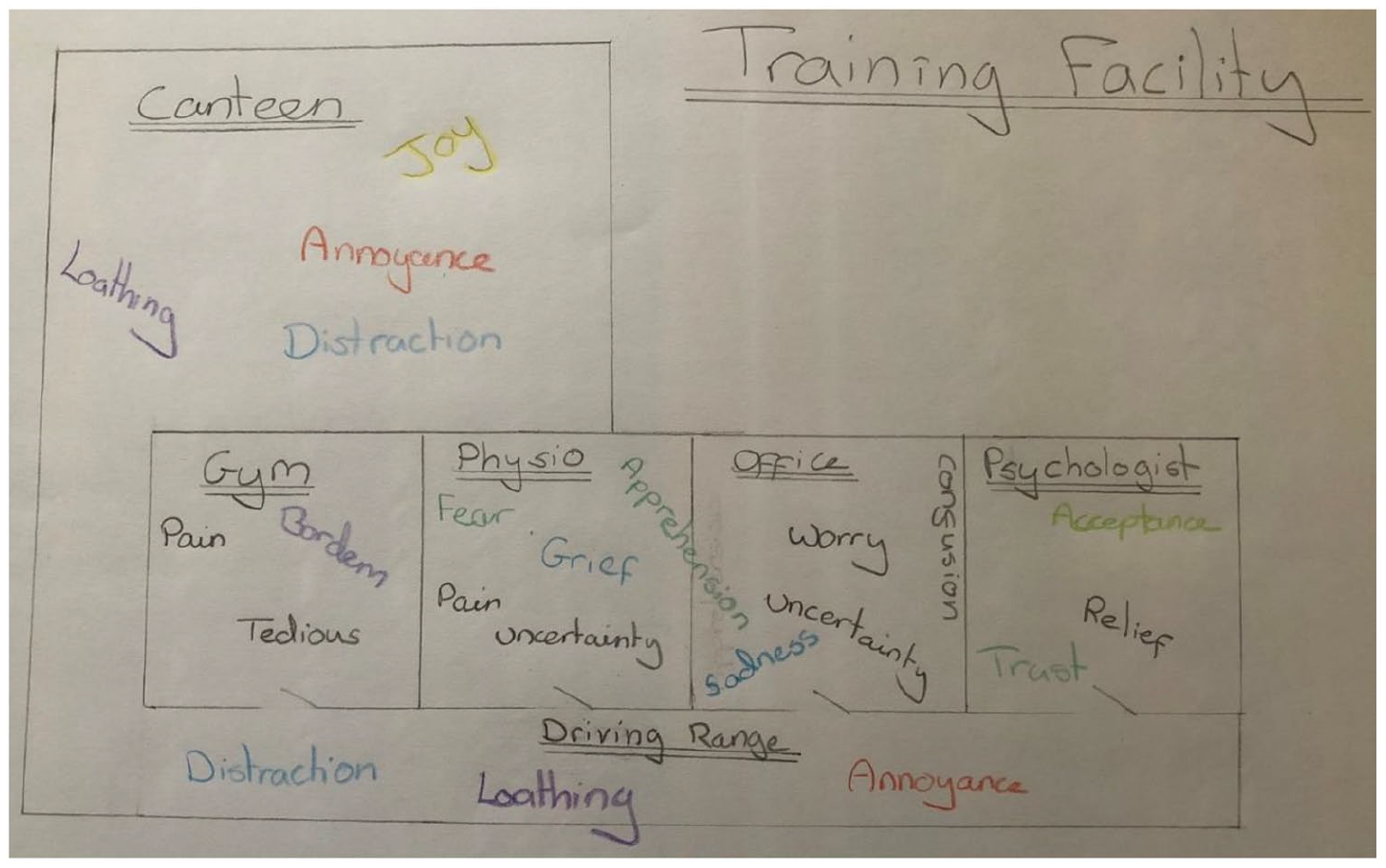
Exemplar emotional map shown to participants.
The emotions labelled in each room were explained by the researcher in relation to the injury they incurred in order to offer an exemplar and create authenticity within the activity (Jones, 2013). A range of colours were used to display emotions on the exemplar maps. It was stressed to the participant that there was no empirical system applied to this, nor was its inclusion essential to the map. However, the addition of colour was explained to provide the opportunity to further make the maps a unique depiction of their emotional relationship with the spaces in question. The researcher’s explanation emphasised that the participants’ maps should not look identical to the example as they should portray their own story. While originality was encouraged, participants were all asked to include certain key rooms in the training facility (physiotherapy room, gym, changing room) in order to create an opportunity for comparative analysis.
Participants were asked to create, in the privacy of their own homes, their own representations of these two locations, namely: home and work. Suggestions were made regarding emotional vocabulary tools and map design. The emotional vocabulary tool to which participants were referred was Ekman’s Atlas of Emotions website (http://atlasofemotions.org). The rationale for implementing such a tool was threefold: (1) utilisation could provide more specific and accurate emotive terms that the participant may not have otherwise included, (2) preventing the repetition of basic emotive language, and (3) allowing the inclusion of varying intensities of emotion (e.g. on the website anger is represented as a spectrum increasing intensity from frustration to fury). However, it should be noted that none of the participants professed to using this resource. It is also important to note here that this approach to the emotional labelling component to emotion mapping was less prescriptive that Gabb (2009) or Gabb and Singh’s (2015) procedure. Instead of using emoticon stickers, participants were given free rein to explore the nuances of their own emotional landscapes.
Prior to concluding the first meeting, participants were asked if they felt confident enough to construct two maps of their own and, if not, an opportunity to ask any further questions was provided. Finally, a date and time for the second meeting was set by the participants, thus providing them with autonomy within the research process (Newman and Kaloupek, 2009). After their orientation meeting (first orientation meeting length range = 10:08–21:42, Mlength = 14:22), participants went away to create their own emotion maps. The space between the first meeting and subsequent personal interpretation and explanation of their maps (time between first and second meeting M = 6 days) allowed time for the participants to reflect on their experience of being injured and how it felt to live in those different spaces whilst injured.
In the second meeting (second meeting length range = 12:52–31:20, Mlength = 22:58 minutes), participants were encouraged to explain their maps and how they had decided to create them. The participants took photographs of their map in order to share it with the interviewer during the meeting. As such, the interviewer sought to understand the artistic decisions made by participants, the process by which they created their maps, and their personal narratives that underpinned each space and emotion they represented. No direction was set by the interviewer on how the participant should order their explanations. Follow-up probes were used to evoke greater understanding of the emotion map, such as: ‘can you tell me a little more?’, however each conversation evolved organically between interviewer and participant was unique. These discussions were participant led with much of the contextual detail later attributed to sharing their traumatic experiences for the first time (Bravington and King, 2019). This approach aligns with that taken by Gabb (2009) in her original study on emotion mapping. By mixing methods (emotion mapping and participant narration of the maps), ‘understandings of relational processes and the public–private intersections’ (Gabb, 2009: 43) are facilitated. The second meeting was only concluded once the participant was satisfied that their story had been told in its entirety.
Exploration and evaluation of method
A combination of data types, namely, emotion maps and textual transcripts, were collated, and all map narrations were transcribed verbatim. Both the transcripts and emotion maps were considered in the following ways. First, the method was evaluated in relation to the different ways participants generated their maps to covey nuanced and personal meanings. Second, the method was appraised in relation to its effectiveness in unlocking new understandings of athlete lived experiences at the interface between image and oratory. Moreover, the emotion maps and transcripts were viewed by the researchers as integral and fundamentally interlinked with regards to the construction of meaning and important in evaluating the efficacy of the method (Trevenen-Jones et al., 2020).
Discussion of methodological findings
This paper sought to explore the effectiveness of emotion mapping as a method for understanding the traumatic emotional consequences of long-term injury in athletes, and how the spaces they inhabit interact to determine their emotional landscapes. As such, the focus of this paper will be on the methodological merits and the emergent features of the emotional experience that were brought to light through the implementation of this method.
Methodological merits
Overall, each of the participants’ emotion maps provided a richer and more meaningful understanding of the hereto-unknown relationship between emotions and space for injured athletes. As such, as a method, emotion mapping added value and a new depth of knowledge to the current literature on long-term injury. Despite this being their first encounter with emotion mapping, participants found it easy to relate to the method and enjoyed making their emotion maps. During the map narrations, participants effortlessly switched between their story and their emotion maps, using the map as a springboard for their narratives. This is exemplified by the following quotation taken from one of the participants: ‘I was like standing in the kitchen here (points to right side of kitchen) and they were all sitting around (gestures to space in between kitchen and pool table) there’s a bit of an archway like around the pool table’. This ease speaks to the well-documented inclusivity of art-based research methods (Van der Vaart et al., 2018), highlighting how minimal familiarity with the method is required for effective participation.
The method also illuminated facets of knowledge that were previously unknown. For example, the communal environment of the physiotherapy room elicited the most complex of emotional responses of any room. As such, it was a conflicted space, making it a confusing place for athletes to inhabit. Participants identified both anger and joy, calm and fear, and connection and loneliness existing together in the same space. To date, this has not been recorded in the literature, and as such is an important new finding which has been elicited through this method.
The range of emotion maps presented by participants was varied in terms of detail and depth (see Figures 2 and 3). While this was to be expected, it is important to stress that it did not compromise the overall depth of explanation in the narrative. Indeed, whilst Figure 2 might appear to be somewhat limited, it still served as a useful stimulus to explore the emotional experiences of injury. As such, it is the methodological merits of the emotion map, combined with the narrative that must be considered together, as together they convey a far richer narrative than either do alone, thus supporting Malchiodi (2003). Further, this allows the researcher to be able to access novel insights that may not have been elicited without the emotion map (Gabb, 2008, 2009).
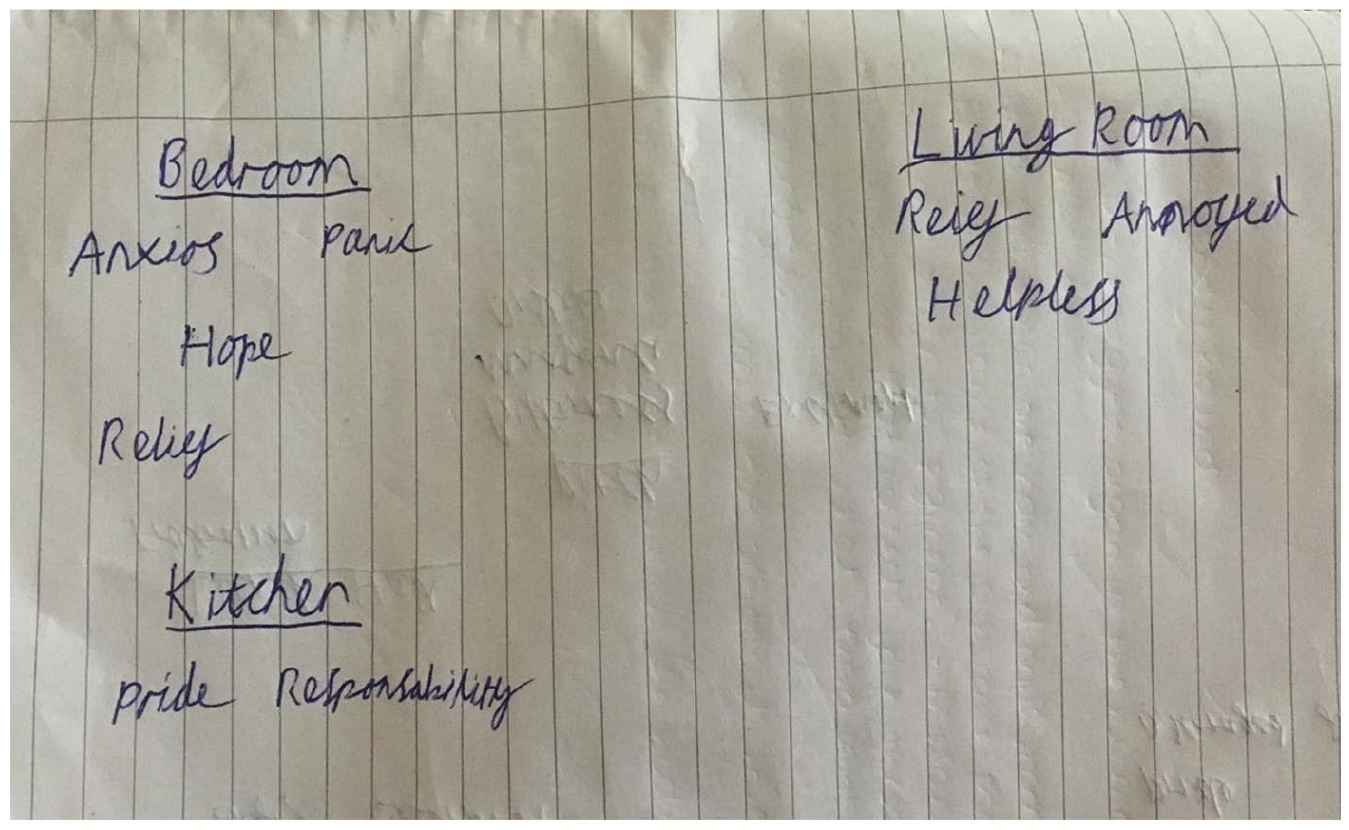
An emotional map lacking detail.
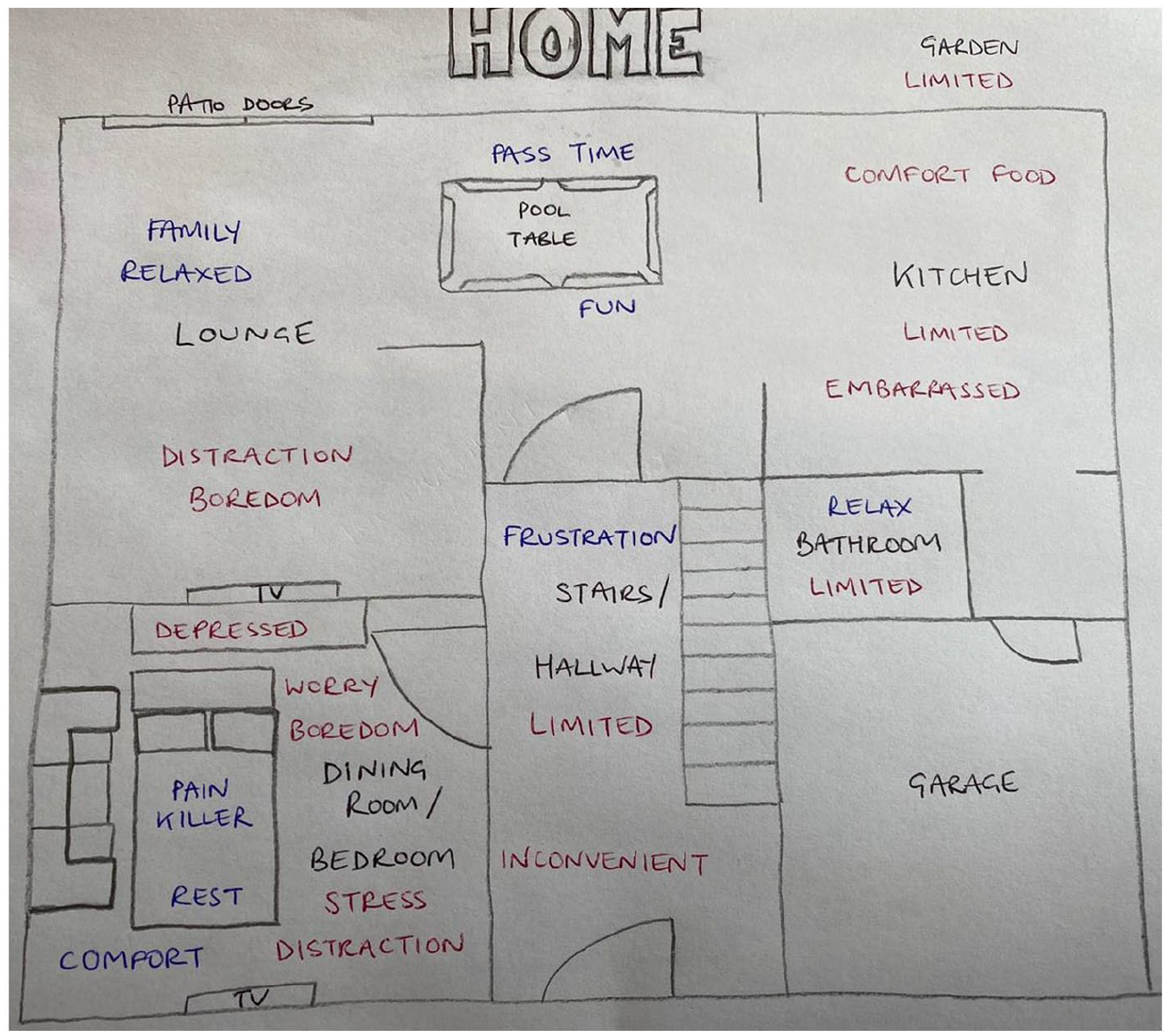
Exemplar 1 emotional map.
In order to demonstrate the utility and effectiveness of the method, consideration will be given to three emotion maps in particular. These maps were chosen to illustrate the importance of the conjunction between the emotion map, and the narrative. It is not intended to offer these exemplars as an explanation of the psychological consequences of injury, but rather, how the method serves to provide a rich and meaningful insight into the athlete’s lived experiences.
Exemplar 1: The importance of colour (home map)
To contextualise the experiences of this professional athlete, it should be noted that they had a double leg fracture which kept them out of competitive sport for 12 months. This participant created two maps, one entitled ‘home’ (see Figure 3), the other entitled ‘training’.
The participant chose to distinguish between his emotional states through the use of colour. Notably, red was used to represent emotions with a negative valence, such as: worry, boredom, depression, and embarrassment, and blue was used to express emotions with a positive valence, such as: relaxed, fun, and comfort. Despite this, when asked, nuance was discovered in the ways in which the participant construed certain ‘negative’ emotions. For example, whilst he used the term ‘frustration’ in the hallway, he clarified that: ‘Yeah so, “frustration” probably should have wrote in red but, you use it as a good thing as well like wherever I was moving around I was always trying to find better ways of getting around’.
This participant also closely tied particular emotions with specific objects in his spaces. Initial observation of the map does not offer a complete understanding of this, however, when coupled with the narrative, it becomes very clear: I had a lot of memories of like lying in bed and behind me which was like here (points to cabinet marked ‘depressed’) where I wrote ‘depressed’ this was like a cabinet which would have drawers in (and) loads of stuff was basically put in there and my mum would come in every day and open one of the drawers and all of like my drugs, my painkillers they had to clean all of the pins around my leg all of that (equipment) would be in one of them drawers. So that was like, I put painkiller in there (dining room/bedroom) its not really an emotion but it’s a memory of mine, lying in bed having painkillers like having nightmares off morphine and things like that and mum having to clean the pins and the screws and stuff in my leg every day and all things like that it was, yeah, it was quite, my biggest memory of that room kind of thing.
This quotation is undeniably powerful and serves to give important depth and insight into the choices he made in constructing his emotion map, as well as the psychological challenges he experienced.
A word with particular resonance for this participant was ‘limited’, which he used in both of his maps. Whilst at first glance this does not appear to be an emotion as such, detailed analysis of the narrative revealed that the participant experienced helplessness, an emotion that Ekman classifies as being part of sadness which exists as one of the more intense versions of this emotion. This is aptly demonstrated by the following quotation: When someone puts a limit on you when you feel limited like, it was kind of like that everywhere do you know what I mean like in the house I put the same (‘limited’) in the kitchen like I couldn’t just get up and go and cook myself food you know as you would on a normal day or something like that. I relied massively on other people (which) sometimes made me feel ‘embarrassed’ do you know what I mean?
This case represents the most detailed emotion map from this study, and combined with the narrative explanation of the emotion map, resulted in an exceptionally powerful and in-depth perspective of this athlete’s long-term injury, thus supporting the efficacy of the method.
Exemplar 2: The importance of emotional vocabulary (training ground map)
This professional athlete had a torn anterior cruciate ligament and was out of competitive sport for 10 months. This participant also created two maps, one entitled ‘home’, the other entitled ‘training ground’ (see Figure 4).
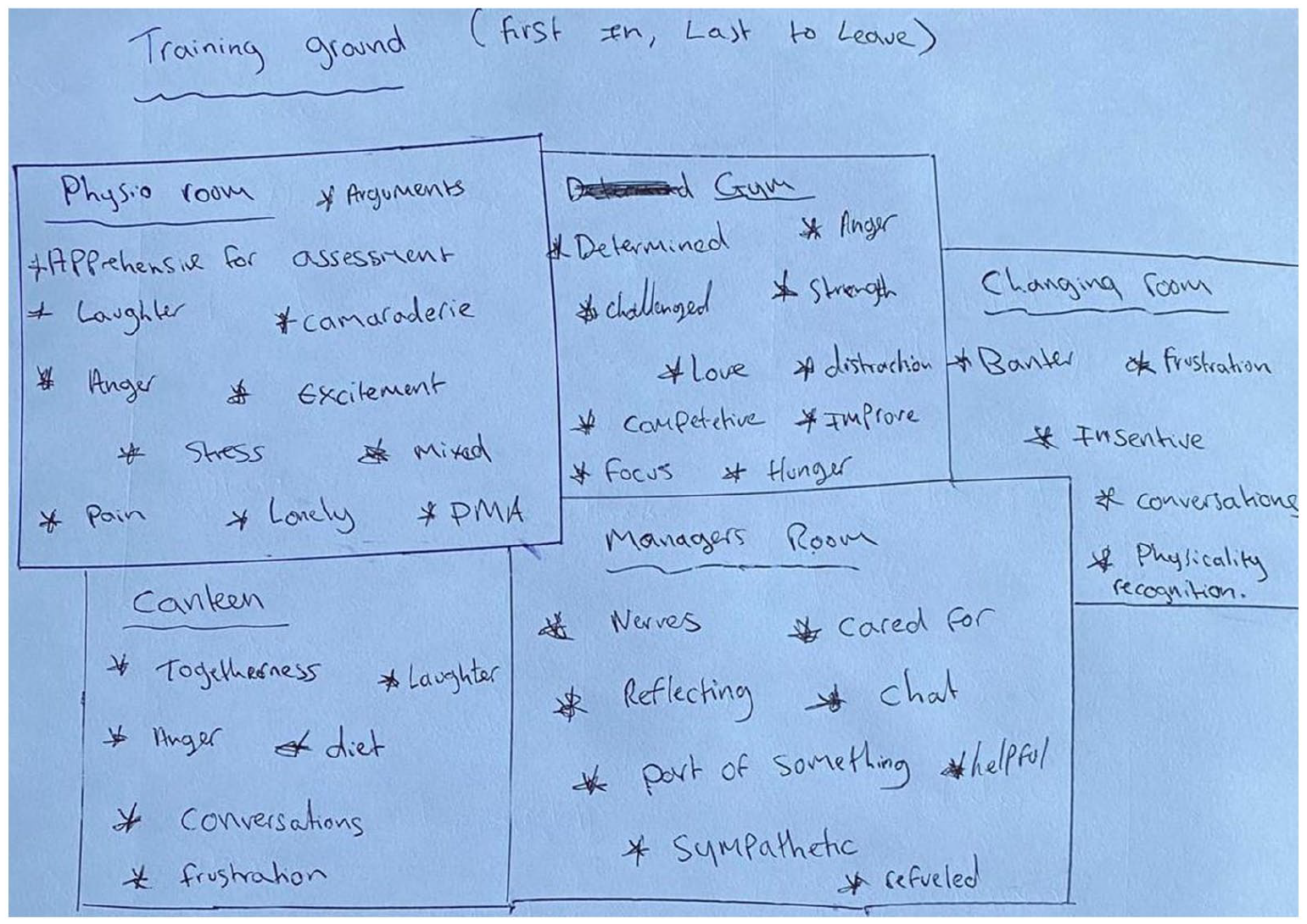
Exemplar 2 emotional map.
This emotion map appears to be largely bereft of actual emotional terms, and full of terms that are more strongly related to cognitions or behaviours. The conversation revealed how difficult the participant found creating his map to be: ‘I found it difficult to think of emotions and stuff because you have so many from your injury. So much happens in each different room’. However, whilst many of the terms used by this participant were not strictly emotional terms, the sentiment behind those word choices was deeply emotional. For example, whilst laughter is not an emotion, this participant explained that laughter in the canteen actually referred to feelings of ‘togetherness’ and enjoying connecting with his teammates. By combining the narration and the map, the method enables a deeper understanding of the participants’ emotional landscape. Thus, this supports Reavey’s (2012) assertion that more creative methods allow those without a rich emotive vocabulary to ‘show not tell’ of their experiences.
Indeed, the participant explained that despite the inherent challenge of this task, they benefitted from it: I don’t open up very much so for me writing all this down it was kind of a way of opening up for me to how I felt during the process of it all. . . It’s quite nice to actually think about it for a minute cos I haven’t really done that so, yeah, it was quite good to be honest I actually quite enjoyed it yeah. To be honest I didn’t think I would cos I’ve not done homework if you like for about 7 years, but I actually did like it. I actually sat down with my mum for a bit and talked through how I was with her back then and myself and I thought, at the end of it I thought, you know I actually quite like that thinking back through it and understanding what I’ve been through so, yeah I quite enjoyed it.
In this way, the therapeutic benefits of this kind of technique were realised in line with existing literature (Gabb, 2008, 2009; Perryman et al., 2019).
This participant typified the conflicted emotions that exist in the space designated for healing (the physiotherapy room). The emotions described included anger, excitement, loneliness and joy. These represent polarised experiences in a single space that was consistent across all participants.
I was always apprehensive to think “is there gonna be more swelling? Does he like how it’s looking? Has it progressed well since yesterday?” Some days ‘excitement’ cos I know it’s good so I’m excited for him to see what he thinks. . . it kind of flipped a switch for me and when the lads would come in and speak about the football and I could hear them moan and stuff in the physio room about football it would kind of drive me mad. It would ‘anger’ me like, “how can you moan about football when I’m sat in here for the whole season?” So, it was ‘mixed’ emotions really, good things when the boys would come in but bad things too.
This quotation is demonstrative of the negative consequences of the communal aspect to treatment in the physiotherapy room, whereby the presence of others diminishes feelings of safety and security, and exacerbates emotions that are not conducive to healing (Salim and Wadey, 2018). It also serves to demonstrate the point made by Gabb and Singh (2015) that spaces are influenced by both the people who inhabit them, and what takes place within them.
This case represents a less detailed emotion map, that has not used strictly emotional terminology. However, when combined with the narrative explanation of the emotion map, a deep emotional profile of this athlete’s experiences is illuminated. This is demonstrative of the efficacy of the method, and stresses the importance of combining the emotion map with the interpretation provided by the participant.
Exemplar 3: The facilitation of individuality and creativity (home and training ground map)
To contextualise the experiences of this professional athlete, it should be noted that they suffered a torn anterior cruciate ligament which prevented them from competing for 9 months. This participant created one map, which depicts the most important spaces during his recovery, notably: ‘campus’, ‘my house’ and ‘hospital complex’ (see Figure 5). Each of these spaces is contained within a bubble. This was used by the participant to express global emotional states that were pervasive to his experience of recovery, regardless of which space he occupied within each bubble: ‘I’ve drawn them as like bubbles like they’re in circles so whatever is associated with that sort of bubble was what I drew first and then I drew everything else’. Thus, this method allows for participants to present their spatially bound emotional landscapes in a way that is flexible and only limited by their own creativity.
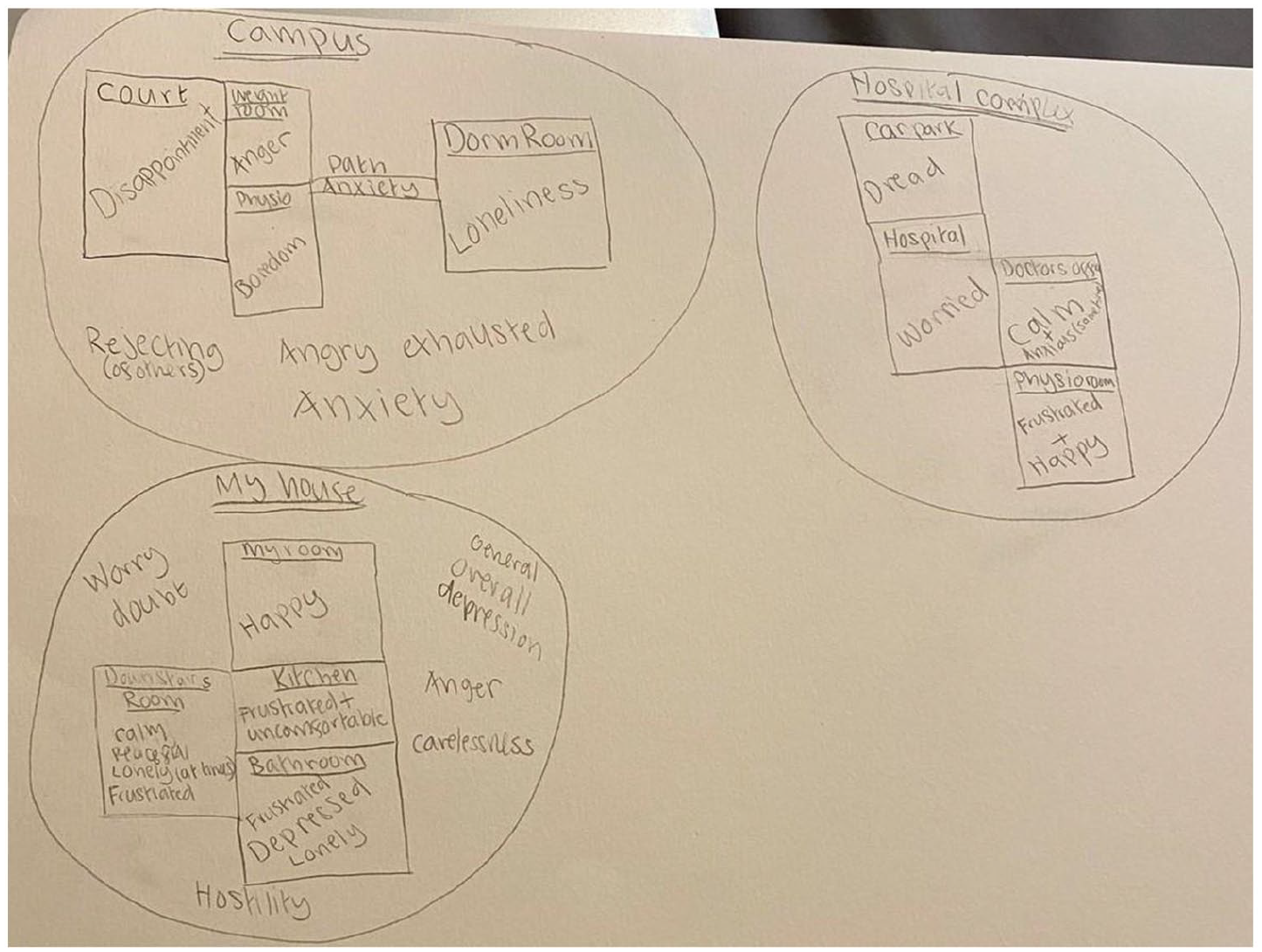
Exemplar 3 emotional map.
This map highlights another key space for athletes where conflicted emotions arose, namely: the gym. Prior to injury, many of the athletes used this space to manage their emotions, particularly anger-based emotions: I put ‘anger’ cos, I used to use the weight room if I was there, if I was frustrated like I’d lost a game or had a bad practise or whatever. But I was frustrated that I couldn’t even do that cos I’d been hurt. That was my place to unwind a bit without having the pressures of the coach and basketball and whatever. It was sort of, I’d go there and sort of just take all the stress away. . . I knew I could go in there and smash out a workout so I was very angry that I couldn’t escape from it if that makes sense?
In this way, we learn that emotional associations and relationships with certain spaces can be transformed by injury. This can be extremely challenging when these athletes are still expected to inhabit these spaces in the same way. This is somewhat mirrored by the fact that this participant, and several others who lived in two-storey houses, could no longer access their bedroom upstairs, and so had to create one downstairs. In this way, an important space is relocated and the emotions that might typically reside in that space are also transplanted.
Another facet of this participants experience that is illustrated by his emotion map is the emotional potency of transitional spaces. For example, the path between his campus sport complex and his dorm room can be seen to be imbued with anxiety, which in effect becomes a gateway to the loneliness of his bedroom: Then I drew like a path, cos from there you had to walk to get to your dorm room, walking I was always ‘anxious’ I was worried I was gonna slip or do more damage or people were gonna talk to me about it (the injury) I just wanted to be left alone. Then, dorm room I put ‘loneliness’ cos I spent a lot of the time just in there by myself.
This emotion map was unique amongst the sample due to his creation of the ‘bubbles’ to contain each particular emotional landscape. He was deliberate and purposeful in his depiction of the key spaces in his recovery, and the emotional consequences of living in them. In this way, this method has been extremely effective in unlocking the lived experience, both for the participant, and for the researcher.
Conclusion
Overwhelmingly, the method was shown to be efficacious in exploring the lived experiences of long-term injured athletes. The use of emotion mapping combined with a narration of the map, enabled participants to connect with their lived experiences deeply, as well as critically exploring and reflecting on them. Bringing these two streams of data together provided a rich understanding of the intersections between emotion and space than either data type would have afforded alone (Copeland and Agosto, 2012). Consequently, the method allowed for the integration of polysemic interpretations of the injured athletes’ experiences. Indeed, the data revealed through the use of this method aligned with the findings from the extant literature on the psychological consequences of injury (Clement et al., 2015; Gervis et al., 2019, 2020; Gouttebarge et al., 2015; Lentz et al., 2015; Souter et al., 2018; Tracey, 2003). However, the method employed by this study differs significantly in that it allowed for a different kind of knowledge to emerge. Nevertheless, we do acknowledge that a limitation of the study was that it utilised a homogenous sample of male professional athletes, and it would be important to extend this method to women, a wider range of sports, and non-professional athletes.
In broad terms, whilst most of the athletic injury literature presents abstract, usually statistical, knowledge, this art-based method imparts phenomenal knowledge and allows for the participants voice to be heard in a new way. Indeed, we can go further and suggest that this art-based method itself enabled participants to imagine, recognise, and remember their experiences, thus conveying a different kind of depth and nuance of understanding. Specific examples of new understandings include the conflicted emotions associated with the physiotherapy room and the gym, which help us to empathise with the lives of injured athletes and provides opportunities for better athlete support. Additionally, whilst the existing literature details common emotional states for injured athletes (Clement et al., 2015; Gervis et al., 2019; Lentz et al., 2015), emotion mapping allowed for the identification of the locations and associated intensities of these emotions, which were previously unknown.
Whilst emotion mapping still lacks widespread use, perhaps in part due to the fact that it is a method used specifically to explore a particular facet of emotional experience, it was found to be useful and efficacious. As such, we would advocate its usage as a method both for research, and within the therapeutic context of sport psychology. This method was able to reveal the complex relationships between space and emotions, and sometimes people, which, from a methodological perspective, presents new opportunities for the sport psychology literature to explore. From a therapeutic perspective, emotion mapping could be critical in supporting an athlete’s psychological recovery, and thus warrants consideration as a therapeutic tool. However, we fully acknowledge that more research is needed into the therapeutic benefits incurred by this method to support our advocacy.
Furthermore, this study made some adaptations to the emotion mapping process as outlined by Gabb (2009) and Gabb and Singh (2015). First, as the participants were adults, the use of emoticon stickers to represent emotional states was foregone in favour of the participants exercising their own emotional vocabulary. Second, the maps were created away from the researcher which differed from Gabb and Singh who were present when the maps were made. Our rationale for this change was that it allowed participants time and space to create the own map and process their experiences in relation to the map. We would advocate for these adaptations in future studies with adults.
Thus, we support the assertion that the athletic injury research requires greater innovation (Schinke et al., 2016; Smith and Sparkes, 2009). As previously stated, sport psychology is largely anchored in positivism (Goldman and Gervis, 2021) which may limit the range of research methods utilised and compromise the complexity of our understanding of injury. Positivist methods, whilst undeniably useful, assume too great an importance within the sport psychology literature when they only provide one part of a larger picture. Thus, sport psychology is the poorer for this unidimensional approach to research, and the value of this art-based method, and other creative methods, cannot be underestimated.
Footnotes
Declaration of conflicting interests
The author(s) declared no potential conflicts of interest with respect to the research, authorship, and/or publication of this article.
Funding
The author(s) received no financial support for the research, authorship, and/or publication of this article.
