




Abstract
Mammalian predators are threatening New Zealand’s endemic species with extinction. Community-led predator control may contribute to a predator-free nation by 2050. An individual’s present and future thoughts about, and subsequent actions for, conservation rely on their current and projected motivations and concerns. Innovative approaches to conservation action theme elicitation and analysis were developed through this visual arts based qualitative study to better understand how people feel about the present and future and their place within. Twenty-five males and females from New Zealand’s rural and urban communities, aged between 12 and 75 years, from primary, secondary and tertiary student, environmental education and community conservation backgrounds, each created two collages of themselves situated in today’s and a future world. Interviewer-led open-ended laddering questions elicited participant responses to their collages. A further open-ended question elicited actions participants would take to move from their perceived present to a projected future world. Trello, a web-based list-making application, facilitated reflexive thematic analysis of the interview transcripts. The following six common themes resulted: connectivity, commitment, learning cycle, practical actions, unconditional belief and group action. These themes, presented as eight-point Likert-type scale items in a Qualtrics digital survey, contributed to the quantitative aspect of this mixed-methods study and may facilitate understanding of future New Zealand volunteer community conservation participation.
Introduction
New Zealand (NZ) native biodiversity has a precarious present and an uncertain future. More than 4000 of NZ’s critically endangered or naturally uncommon native species are threatened with extinction by introduced predators, climate change and habitat loss (Department of Conservation, 2019a; Parliamentary Commissioner for the Environment, 2017). In response, the NZ government established Predator Free NZ (PFNZ), a nationwide public and private partnership (Department of Conservation, 2019b) mandated to create a predator-free country by 2050.
PFNZ’s implementation mechanisms include increasing support for community-led projects (Department of Conservation, 2017). The current community-led voluntary conservation (CLC) group model is assumed to support the PFNZ vision (Department of Conservation, 2017). However, it is unknown whether there will be the necessary public engagement by 2050 to support this vision. Currently, the majority of active NZ community conservationists are at or beyond 65 years of age (Peters et al., 2015). This article builds on ways of addressing the future conservation volunteering capacity concerns raised by Peters et al. (2015).
Engagement in community-led conservation is influenced by an individual’s personal beliefs about, and attitudes towards the world and their place within it (Thiermann and Sheate, 2020; Wray-Lake et al., 2010) and may shape their ‘. . . responses and willingness to alter (their future) behavior’ (Paterson et al., 2020: 1). Our research took a pragmatic critical realist approach that ‘arises out of actions, situations and consequences . . .’ (Cresswell and Cresswell, 2018: 10). In order to help understand the ‘rich and complex lives and opinions of the people we are researching’ (Davies and Hughes, 2014: 26), we adopted a two-phase mixed-method methodology; the qualitative phase incorporating collage-elicited interviews and reflexive thematic analysis. These methods helped address Moon and Blackman (2014) cautionary comment that ‘studying and understanding human-environment action needs to fully account for the subjective nature of human reasoning and choices’ (p. 1168). The qualitative phase results underpinned the subsequent quantitative study phase. This approach is supported by triangulation, the use of more than one research technique to examine a research question, thus further verifying the research findings: ‘[It is an] attempt to map out, or explain more fully, the richness and complexity of human behavior by studying it from more than one standpoint and, in so doing, by making use of both quantitative and qualitative data’ (Cohen et al., 2007: 141).
Our intention was to gather wide-ranging views about current conservation actions and future conservation intentions. Consequently, the main researcher accessed the voices of others through her primary, secondary and tertiary education, conservation and public sector contacts thus ‘enhancing the validity of the research outcomes’ (Richards and Munsters, 2010: 213). We identified collage-elicited interviews as the means of gathering such information.
Collage-elicited interview as a research method
What is collage?
Collage is a visual artform with a long history. Derived by Picasso and Braque from the French verb coller, ‘to glue’ or ‘to stick together’ (Poggi, 1992), collage is ‘the process of cutting and sticking found materials onto a flat surface’ (Butler-Kisber, 2010: 114). Popularised by 20th-century artists including Picasso and Braque, collage forms visual representations through the selection, placement and combination of disparate materials. These representations express new meanings outside of the materials’ original intended purpose. Found and created materials including fabric, paper, natural objects, photographs and print clippings are often employed. As Butler-Kisber (2010) describes, ‘Collage creation involves working from the “heart to the head” . . . seeking fragments and glues (to piece) them together to express a feeling or sense of an experience or phenomenon rather than a particular idea’ (p. 104).
What is collage-elicited interview?
Collage-elicited interviews utilise interviewee-created collages as conversational triggers. This interview type has been used to better understand attitudes and actions towards sea-level rise; investigate children’s place attachment and to develop strategic plans for future scenarios (Paterson et al., 2020; Saunders, 2009; Sorin et al., 2012). This flexible, inclusive attitude-illuminating arts based tool is suitable for a wide age range (children, Huss and Cwikel, 2005; adolescents, Awan, 2007; and adults, Mannay, 2010) and accessible to those who feel they are less artistically able (Landgarten, 1994; Williams, 2002).
The collage-elicited interview helps create a ‘common language’ (Williams, 2002) that, according to Vaughan (2005), ‘. . . form(s) the basis of discussion and learning’ (p. 40). Collages have the potential ‘to create new understandings and bring unconscious dimensions of experience to the fore’ (Butler-Kisber, 2010: 118) and capture participants’ sense-making of their relationship to the present world based on their lived experience as well as ‘to predict future events based on (those) observations’ (Margolis and Zunjarwad, 2018: 600). The term ‘elicitation’ used in this research context is defined as ‘to elicit multiple perceptions, interpretations, and possibilities’ (Schwartz, 1992: 13), to visualise rather than ‘to bring to light’ (Collins English Dictionary, 2020).
The qualitative research community is increasingly incorporating collage into its methodological ‘toolbox’, to illuminate feminist, postmodern and postcolonial method of inquiry (Vaughan, 2005), marginal voice participation in art gallery exhibitions (Gerstenblatt, 2013), researcher reflexivity (Lahman et al., 2019) and the struggles of experienced secondary school teachers (Culshaw, 2019). In summary, collage-elicited interviews are easy to administer, user-friendly, accessible irrespective of participants’ self-perceived artistic ability or location, relatively inexpensive and suited to participants from differing age groups, and ethnicities (Butler-Kisber and Poldma, 2010; Gerstenblatt, 2013) and provided participants ‘with the opportunity to both “show” and “narrate” their experiences and lives’ (Mannay, 2016: 64).
However, there are a few examples of thematic outcomes from collage-elicited interviews informing and enriching quantitative research, for example, local concepts of cultural tourism (Fernandez et al., 2010) and photo-elicited descriptive adjectives used to create a photo-semantic assessment survey instrument (Ball, 2014).
We anticipated that reflexive thematic analysis of collage-elicited ideas could be incorporated into a future (Figure 20) quantitative study. Our research thus goes a small way towards confirming collage inquiry as a valuable qualitative tool with quantitative applications.
Trello as a reflexive thematic analysis coding tool
What is Trello?
Trello, a digital cardwall application (Atlassian, 2020; Gossage et al., 2015), is a collaborative teamwork, project management tool. This app enables the virtual ‘hands-on’ organisation of data, processes and ideas both within and between groups of participants incorporating personal or group boards built on a list and card system (Kaur, 2018).
To date, Trello has mainly been used by businesses and institutions for a variety of data manipulation purposes: hospital library information organisation and access (Kaur, 2018), knowledge management among non-profit organisations (Rathi and Given, 2017) and journal publication ‘. . . from ideation through promotion’ (Fic, 2019: 15).
However, Trello offers more than data manipulation. Trello has been described by Conner (2018) as ‘afford[ing] rapid, collaborative, and colourful codification of insight’. An application, therefore, that appears suited to qualitative research. There are a few examples of Trello being used as a reflexive thematic analysis tool. Wan (2018) utilised Trello when data coding Indigenous languages, while Watson (2019) investigated travel industry customers’ automated booking system experiences. Watson (2019) explains that Trello was ‘chosen as a simple and accessible tool to enable collaborative participation and efficient data processing, while still producing usable results’ (p. 178).
While Trello has not been specifically designed for reflexive thematic analysis, its functionality and flexibility can be relatively easily adapted as a reflexive thematic analysis tool for qualitative researchers. In particular, in terms of the qualitative research phase, Trello provided the means to explore our research questions within the qualitative, then quantitative research phases (Figure 20).
Trello facilitated reflexive thematic analysis of collage-elicited interview transcripts displaying participants’ thoughts and actions about present-day and future worlds. These themes formed survey items investigating how individual attitudes and concerns might relate to future community-led conservation. As Butler-Kisber (2010) explain, ‘Collage can be a way of conceptualising a response to a research question . . . a way of finding commonalities across collages . . . new conceptualisations can emerge that respond to the question . . .’ (p. 116).
We chose the Braun and Clarke (2020) reflexive thematic analysis approach as it is can shed light on common conservation-related patterns stimulated by the collage-elicited participant interviews.
Trello-assisted reflexive thematic analysis
Trello (Atlassian, 2020), a cloud-based digital cardwall application was originally designed to manage complex publication projects. Trello, while offering the same strengths as NVivo (QSR International, 2020) ease of use; documents, memos and images can be imported and coded on screen (Welsh, 2002), Trello provided the researchers a more tactile ‘hands-on’ interaction with the data. The programme’s hierarchical functionality (cards, labels, lists, boards) Table 1) provided us with the phased approach needed for coding data extracts through to proposing candidate themes.
Locating reflexive thematic analysis phases using Trello as a hierarchical coding tool.
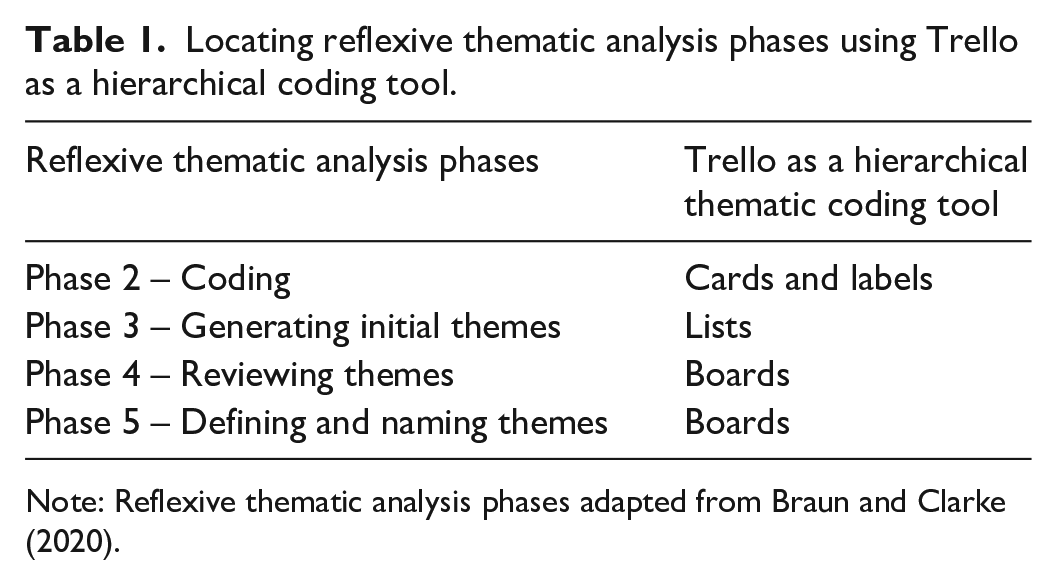
Note: Reflexive thematic analysis phases adapted from Braun and Clarke (2020).
Each data extract could be considered and labelled (coded) on individual virtual cards, and, as codes developed and focused into candidate themes, the resulting information could be gathered into lists and from there to candidate themes presented on boards. In brief, Trello functionality aligns with the Braun and Clarke (2020) reflexive thematic analysis phase approach.
Researcher reflexivity
Throughout collage-elicited transcript reflexive thematic analysis, we adopted a deliberate multi-phased process that was both linear, moving from phase to phase, and recursive, moving backwards and forwards between phases (Figure 1). This approach deliberately mirrors Braun and Clarke (2020) description of analysis as a ‘. . . typically a recursive process . . .’.
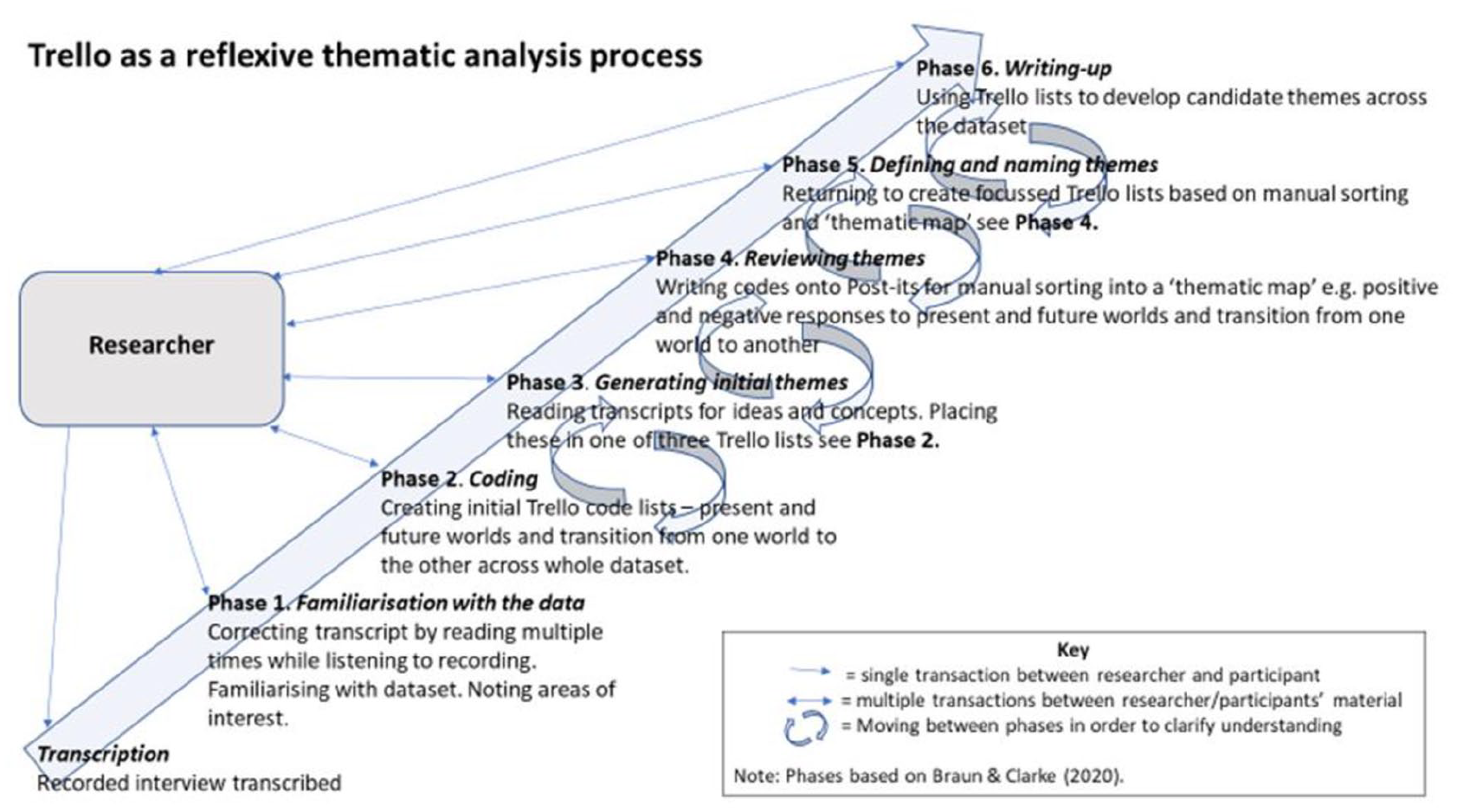
Schematic of Trello app as a reflexive thematic analysis process.
Understanding current and future conservationists’ thoughts about the present and future world and their place within it may help support future community conservation resilience. Consequently, we adopted two innovative and relatively underutilised qualitative methodological approaches: (1) collage-elicited interviews and (2) reflexive thematic analysis based on the Braun and Clarke (2020) approach, using a readily available web-based list tool – Trello (Atlassian, 2020).
Method
The study investigated diverse participant self-perceptions of their actions in the world today, and in the future. Two research phases were undertaken – a pilot and a full study.
Participant recruitment
Participants for both the pilot and full study were deliberately recruited from a wide range of ages, educational backgrounds, conservation interests and involvement, and physical locations. We anticipated that a heterogeneous group would provide a variety of themes more representative of the general New Zealand public than if we had contributed the themes ourselves.
Participants were recruited through email invitations and social media posts. This approach was cost-effective, time-efficient, encompassing and ensured an initial separation between the interviewer and potential participants. Social media posts were distributed to potential community conservation volunteers through New Zealand’s Bay of Islands Facebook and Bay of Islands community email platforms. Email invitations were sent to the Toimata Foundation (parent body of Enviroschools) for dispersal through New Zealand’s national Enviroschool educators’ networks. Enviroschools are New Zealand’s only nationwide ‘environmental action based programme where young people are empowered to design and lead sustainability projects in their schools, neighbourhoods and country’ (Enviroschools, 2020). Emails were also sent to Bay of Islands Enviroschool and non-Enviroschool primary and secondary school principals inviting participation from their Years 8 and 13 students. Given that some participants were classified as vulnerable (below the age of 16 years) both pilot and full study operated under Auckland University of Technology Ethics Committee approval (AUTEC Reference number 18/406).
We adopted a two-phase exploratory mixed-methods approach; the qualitative component results underpinning the subsequent quantitative study. Triangulation uses more than one research technique to examine a research question, thus further verifying the research findings. ‘[It is an] attempt to map out, or explain more fully, the richness and complexity of human behavior by studying it from more than one standpoint and, in so doing, by making use of both quantitative and qualitative data’ (Cohen et al., 2007: 141).
Our study asked the following two research questions: (1) What do people think about the present world and their place within it? and (2) What do people think about the future world and their place within it? These questions support this study’s overarching research question, ‘Who will be the community conservationists of the future?’
Pilot study phase
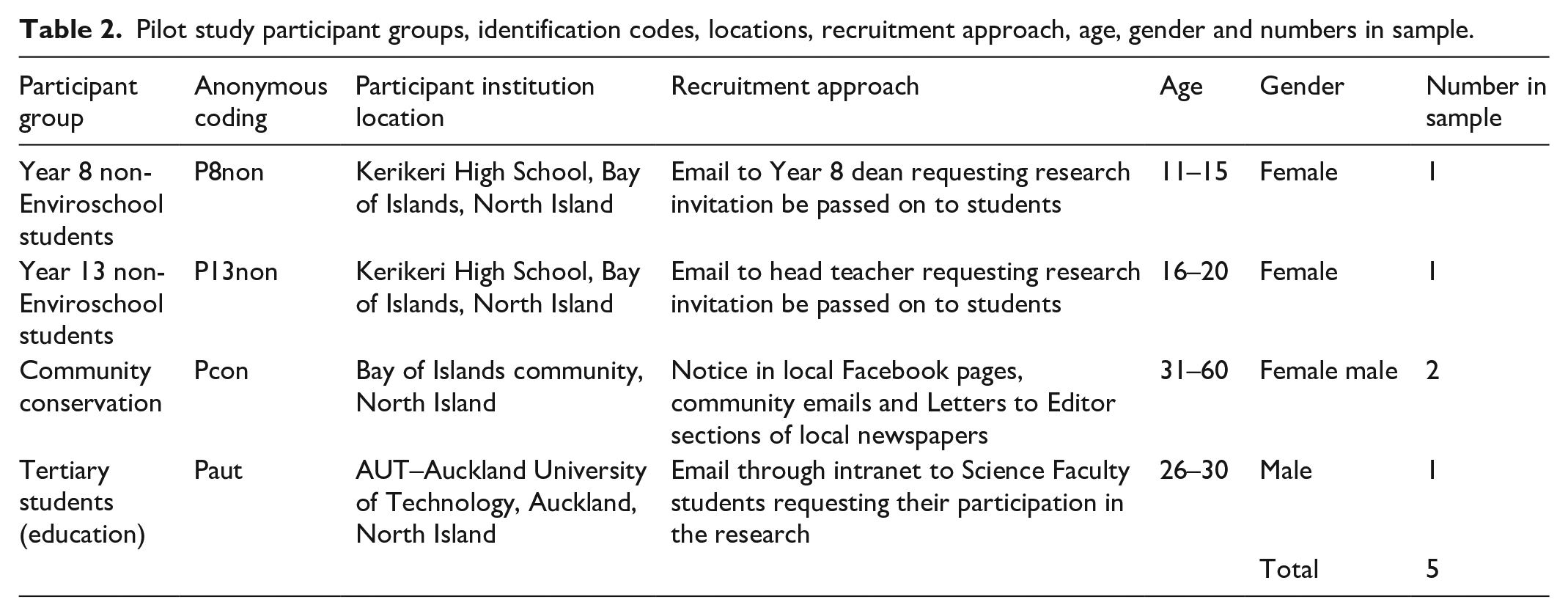
The pilot study phase determined whether the paperwork (information sheets, consent and assent forms, laddering questions; Online Appendix B) and collage-elicitation interviews were age-appropriate, and that the recorded interviews produced the richness and breadth of data necessary for reflexive thematic analysis from a sample ‘large enough to capture a range of perspectives; not so large that you are drowning in data’ (Braun and Clarke, 2017: 46). Five individuals (three females, two males) aged 11–60 years, from community conservation, primary, secondary and tertiary student backgrounds, took part (Table 2).
Pilot study participant groups, identification codes, locations, recruitment approach, age, gender and numbers in sample.
Meeting with and interviewing the participants
All meetings and interviews were conducted in person by the lead author. A two-step research process was adopted for each participant; an initial scoping meeting, followed by a collage-elicited recorded interview.
Scoping meeting
Following initial contact by email, letter or word of mouth (Table 2) potential participants were invited to an initial in-person meeting with the interviewer (the lead researcher). This meeting was held in a public place (e.g. school, library, café) at a time and date agreeable to the potential participant. Where that individual was below 16 years of age, an adult (their guardian, parent or schoolteacher), other than the interviewer, was present, thus satisfying any ethics concerns. At this initial meeting, the interviewer explained the reason for the research, the individual’s possible role within it, and their likely time commitment. The potential participant was then given an age-appropriate information sheet, a consent form (for those 16 years and above), assent and consent forms (the assent form for the potential participant, if below 16 years of age; the consent form for their parent or guardian), and a box of collage materials (Online Appendix A). At this stage, and in the time, leading up to the collage-elicited interview, three individuals decided not to continue with their involvement in the research. Their reasons for not continuing included: ‘too busy’, ‘not interested’, ‘didn’t have the necessary artistic skills’, ‘didn’t have the time’. Twenty individuals agreed to take part in the next stage of the research, each were given a box of collage materials (Figure 2, Online Appendix A) compiled by the lead researcher. The boxes, while varying in content, all contained scissors, glue-stick, cellotape, fabric, coloured cardboard and paper, coloured crayons, felt-pens, pencils, magazines, newspapers, A3 paper collage backing sheets as well as varied craft materials including feathers, sequins, buttons, lace, ribbons, plastic plants and raffia.
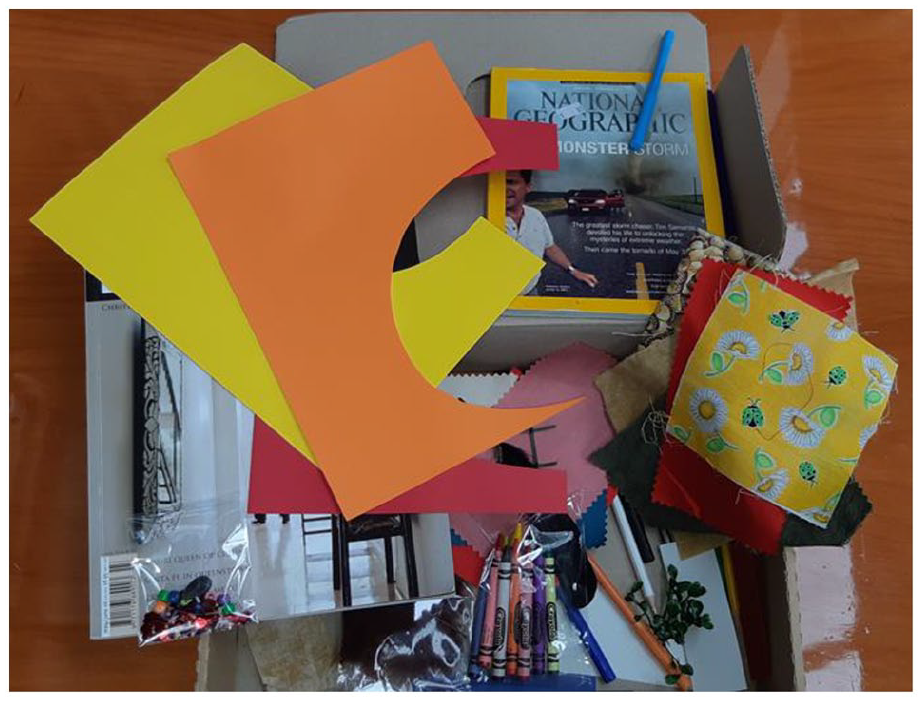
Example of box containing collage materials given to individual study participants.
Collage making
Each participant was asked to create two collages on the A3 backing paper provided, using materials from the collage box as well as self-identified materials participants found for themselves. The participants were asked, While you are making your first collage, think about the world you live in today; the second collage should be about the world you would like to live in the future. You need to include a picture/drawing/illustration of yourself in both collages.
No further explanation was provided, either in what constituted today’s world or what time period ‘future world’ referred to. The interviewer’s statements to the participants were left deliberately vague, providing them with a broad interpretive ‘playing-field’. The participants had up to 4 weeks of their own time, in which to create their collages.
Collage-elicited interview
The collage-elicited interview was held at a location of the participant’s choosing under similar conditions to the initial scoping interview. During this meeting, the participant and lead author carried out a one-on-one recorded interview designed to elicit the participant’s responses to the collages they had created. Participants brought with them their signed consent or assent forms and completed collages.
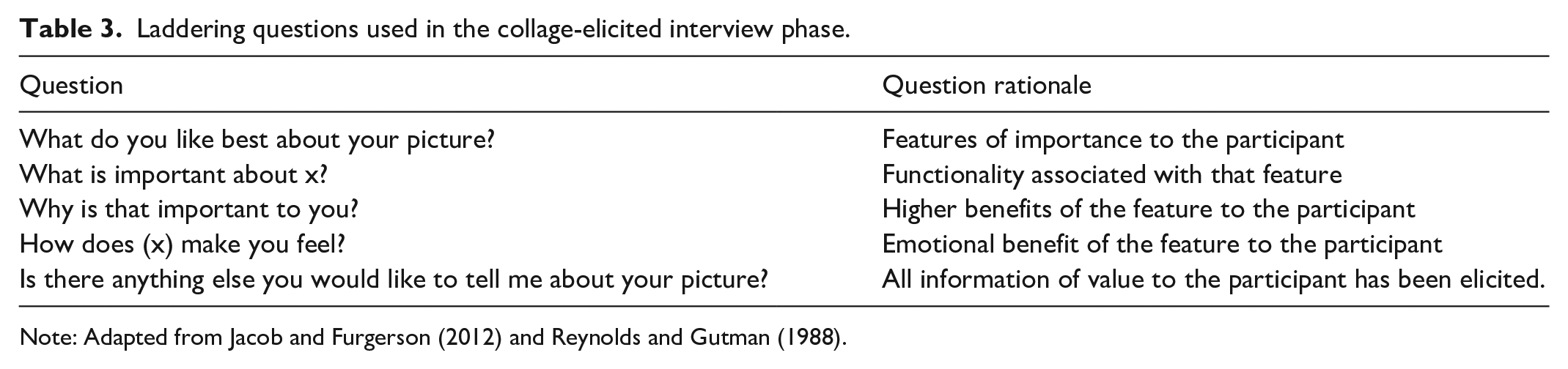
The participants responded to their own collages in the same order, today’s world followed by the future world. The lead author read five open-ended laddering questions (Jacob and Furgerson, 2012; Reynolds and Gutman, 1988; Online Appendix B) to the participants enabling them to respond to their collages in a semi-structured manner (Table 3).
Laddering questions used in the collage-elicited interview phase.
Note: Adapted from Jacob and Furgerson (2012) and Reynolds and Gutman (1988).
These questions elicited an open-ended free-flowing ‘conversation’ between researcher and participant. The first question established those features of importance to the participant ‘What do you like best about your picture?’ The second question queried any functionality associated with that feature ‘What is important about x?’ The third question explored the higher benefit of the feature to the participant ‘Why is that important to you?’ and the fourth question delved into the emotional benefit of the feature to the participant ‘How does (x) make you feel?’ The fifth question ‘Is there anything else you would like to tell me about your picture?’ ensured that all information of value to the participant had been elicited. Once all aspects of the initial feature had been elicited, the same sequence of probing questions was used on other features that had meaning for the participant. The interview concluded when no new themes emerged, and saturation had been achieved (Grady, 1998), or the participant indicated they wished to stop.
Pilot interviews ranged in length from 30 to 60 minutes. Each interview was recorded on a Galaxy A8 (2018) smartphone (Samsung Electronics, 2018) using a Samsung voice-recorder app.
Transcription
The MP3 audio recordings created during the collage interviews were sent to an independent contract transcriber, Raji Unka for transcription. The contractor was instructed to transcribe the recordings verbatim and include any speech disfluencies such as fillers and pauses, repetitions and overlapping talk. Once all recordings were transcribed, the lead researcher listened to each audio recording while reading the relevant transcript. Any amendments or corrections identified were made on the transcript. Each transcript line was numbered to facilitate identification of relevant or interesting text. As described by Terry and Braun (2009), data extracts presented in this article differ slightly from the original transcripts to facilitate reading. The annotation . . . indicates ‘text not relevant to the analytic point being made’ (Terry and Braun, 2009) has been deleted. Participant names were replaced with codes representing the individual’s group affiliation (Table 2), for example, 8env (Year 8 student from an Enviroschool school).
Transition from pilot to full-study phase
Only two changes to the research design and methodology resulted from the pilot phase. A laddering question was reworded from ‘What does (x) do for you?’ to ‘How does (x) make you feel?’ and a question asking each collage creator how they would move between the present-day as depicted in their collage to their future world collage, was incorporated into the full study. This verbal discussion ‘bridge’ framed as a transitional question ‘How did you get from one (the world of today) to the other (the world of tomorrow)?’ enabled participants to describe what actions they would take to move from today’s to tomorrow’s world.
Full-study phase
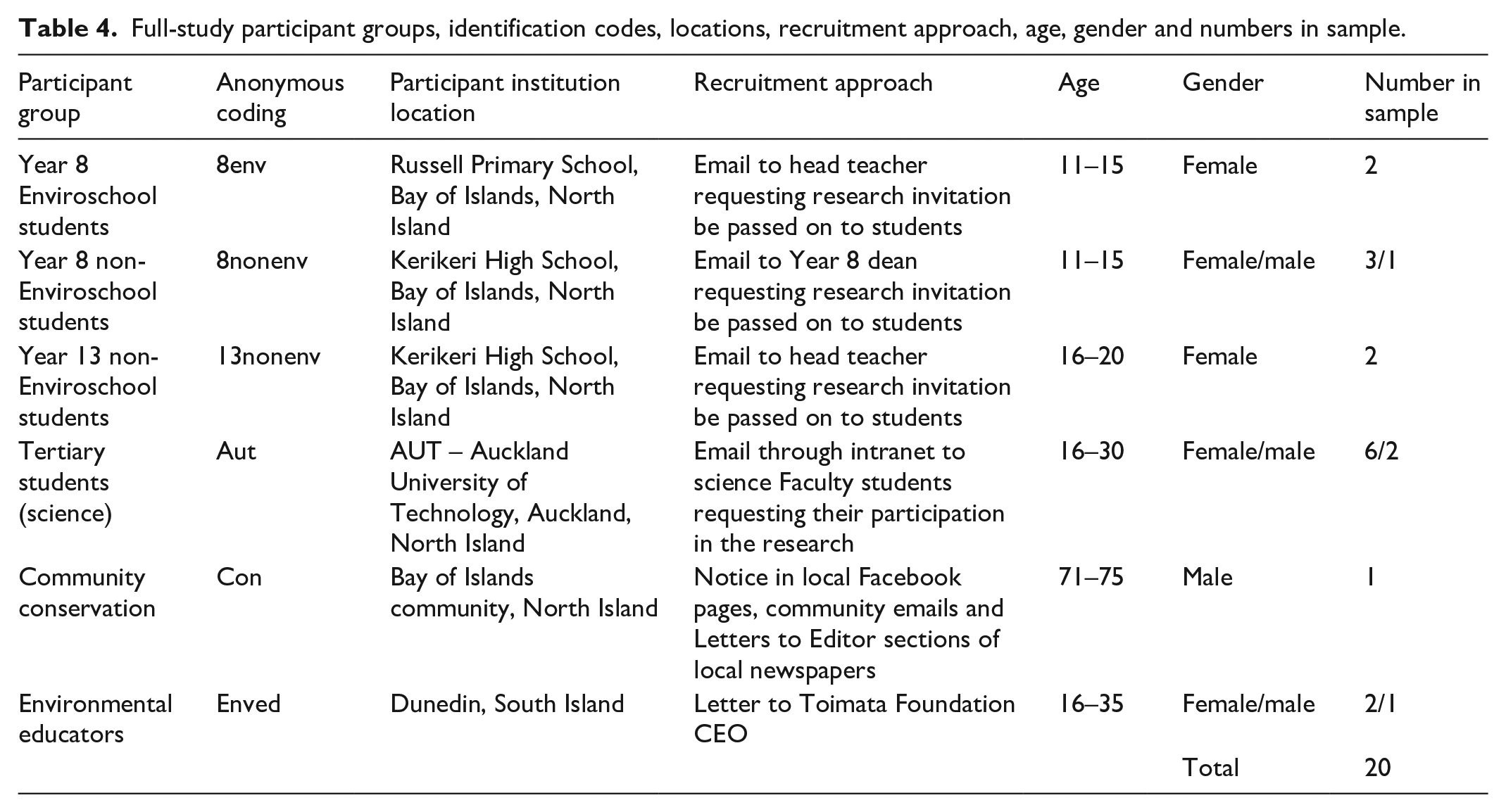
Twenty participants (5 males, 15 females) from a range of educational and environmental backgrounds, age groups, and New Zealand locations (Table 4) took part in the full-study interview. The full group of participants ranged in age from 11 to 75 years. Interview times ranged from 11 to 37 minutes.
Full-study participant groups, identification codes, locations, recruitment approach, age, gender and numbers in sample.
Coding and reflexive thematic analysis process
The following six reflexive thematic analysis phases (Braun and Clarke, 2020): (1) familiarisation with the data, (2) coding, (3) generating initial themes, (4) reviewing themes, (5) defining and naming themes, and (6) writing-up framed the coding and thematic analysis aspects of this research. The phases offered not only a rigorous, objective framework within which to analyse the data but supports the credibility of reflexive thematic analysis as a trustworthy qualitative process (Nowell et al., 2017). An inductive data-driven approach was taken throughout the reflexive thematic analysis process (Boyatzis, 1998; Braun and Clarke, 2006).
Phase 1 – familiarisation with the data
Throughout the coding process, a copy of the research questions was visible to the coder (lead author) thus ensuring coding continually related to these questions. The lead author familiarised herself with the data by reading and re-reading each transcript. Becoming familiar with the dataset was the first step in creating a uniquely identifiable digital card in Trello for each text extract (Figure 3).
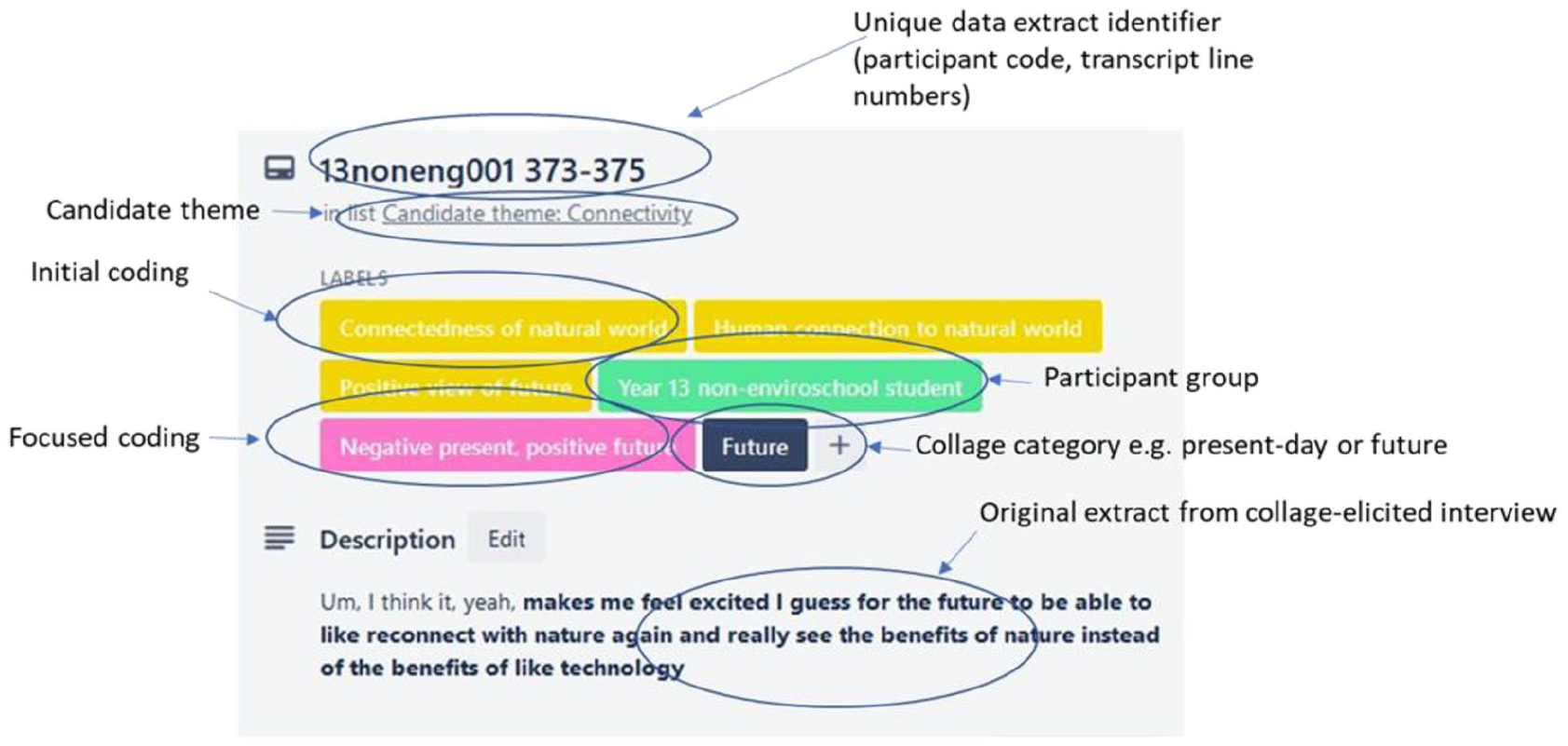
Screenshot of a Trello coding card showing unique data extract identifier, original extract, initial and focused coding, participant group, collage category and candidate theme.
Phase 2 – coding
According to Braun and Clarke (2020), the coding phase involves ‘generating succinct labels (codes!) that identify important features of the data that might be relevant to answering the research question’.
The lead researcher ensured within-transcript coding consistency by coding each transcript fully before moving on to a different transcript. She encapsulated the main thought or idea within each text extract as a Trello label. These labels were all the same colour (yellow) (Figure 4) to reduce any unintentional hierarchical ordering or relationships and to support the bottom-up approach from code to sub-theme to candidate theme.
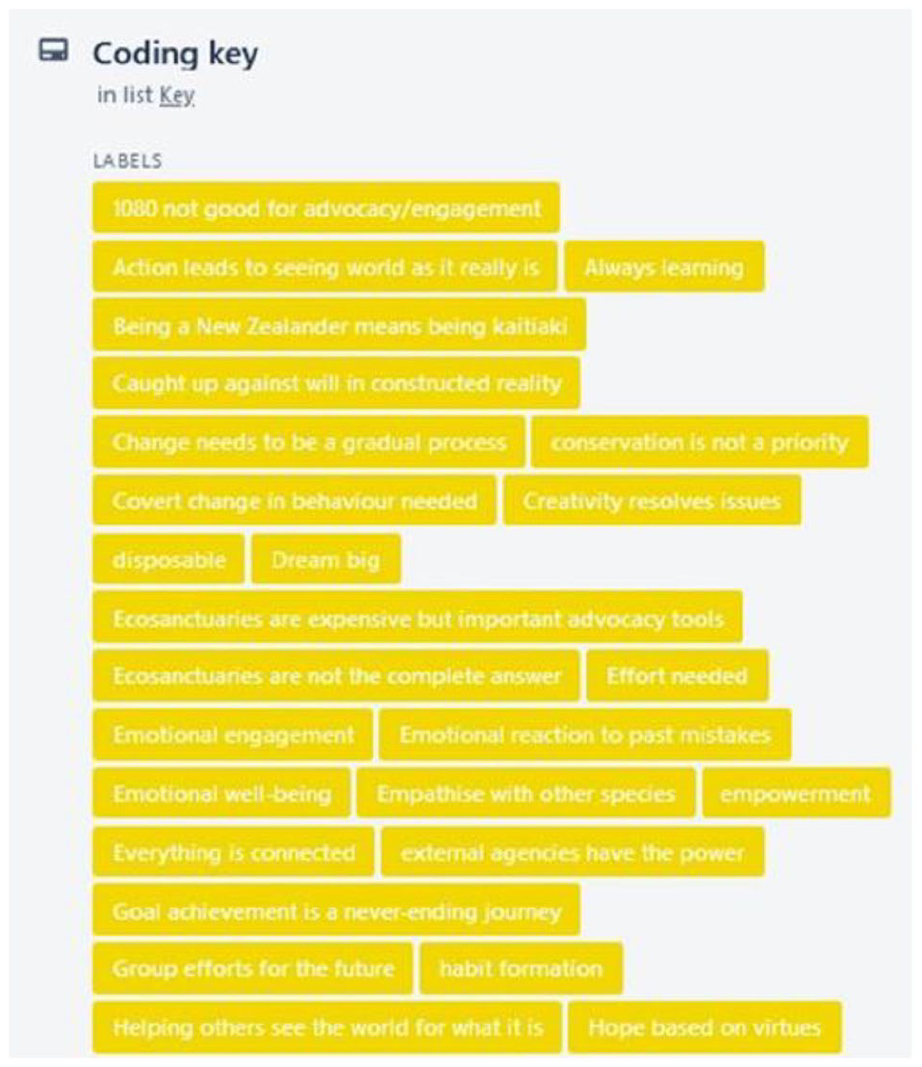
Screenshot example of the coding key in Trello.
Colour-coded labels identified participant groupings (Figure 5); dark blue labels provided the relevant category for each collage or collage transition transcript – present, transition, or future (Figure 6). Once all transcript extracts were coded, the lead author re-examined all coded extracts to check that all possible codes had been used.
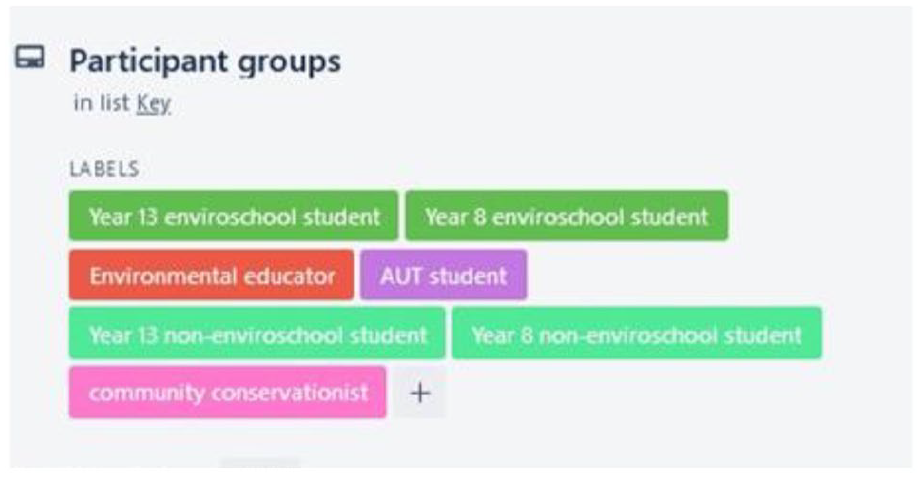
Screenshot of participant group labels in Trello.
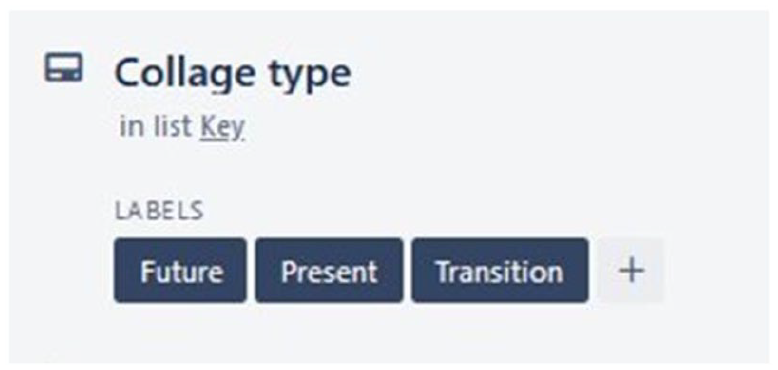
Screenshot of collage type labels in Trello.
Phase 3 – generating initial themes
The collage-elicitation interview process provided the following three distinct ‘broader patterns of meaning’ (potential themes) (Braun and Clarke, 2020) related to the collages: (1) present-day world, (2) future world and (3) the participant’s transition between the present and future worlds. The lead researcher created a second Trello board with the following three lists: (1) Present, (2) Transition and (3) Future (Figure 7). These lists reflected the two collages each participant produced (present-day and future world) and the verbal comments the participants made as they explained how they would move between the worlds portrayed in their collages.
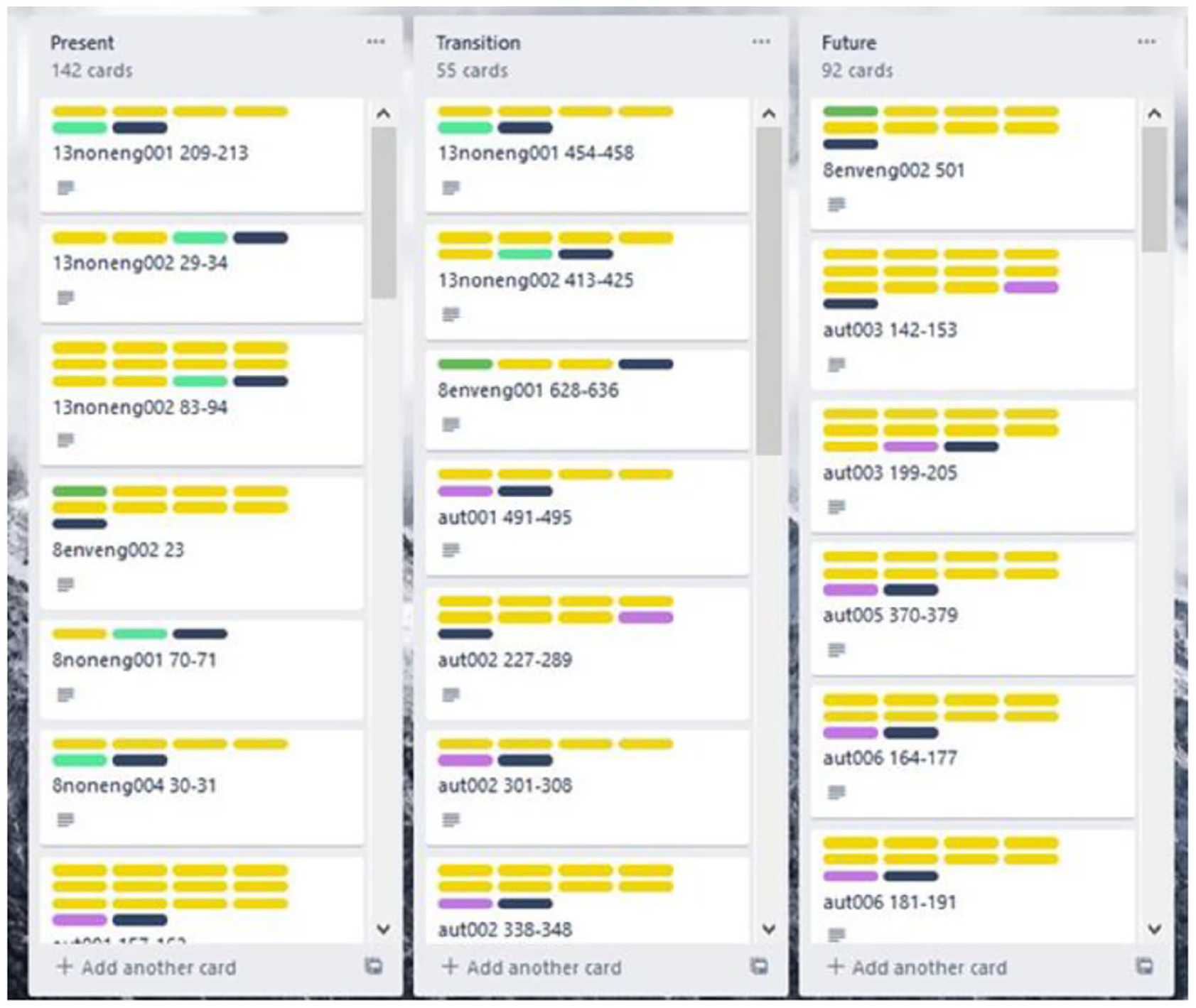
Screenshot in Trello of present, and transition and future lists.
Phase 4 – reviewing themes
Any cards with codes that appeared to group together, to complement the same story, were moved into lists within the appropriate Trello board. Related code labels in same list were coloured the same, for example, pink (Figure 8).
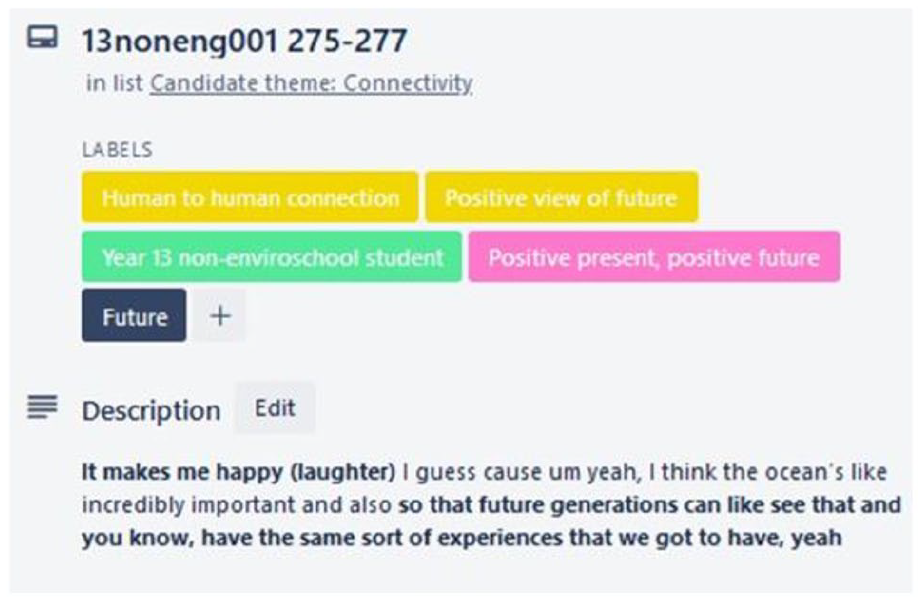
A screenshot of a participant’s coded data extract in Trello.
Where cards had multiple codes, the card was duplicated and inserted into the correct lists. In order to establish some physical and psychological distance from the coding process, the lead researcher wrote the codes onto sticky paper notes, coloured similarly to the Trello labels, and grouped these notes into candidate sub-themes (Figure 9).
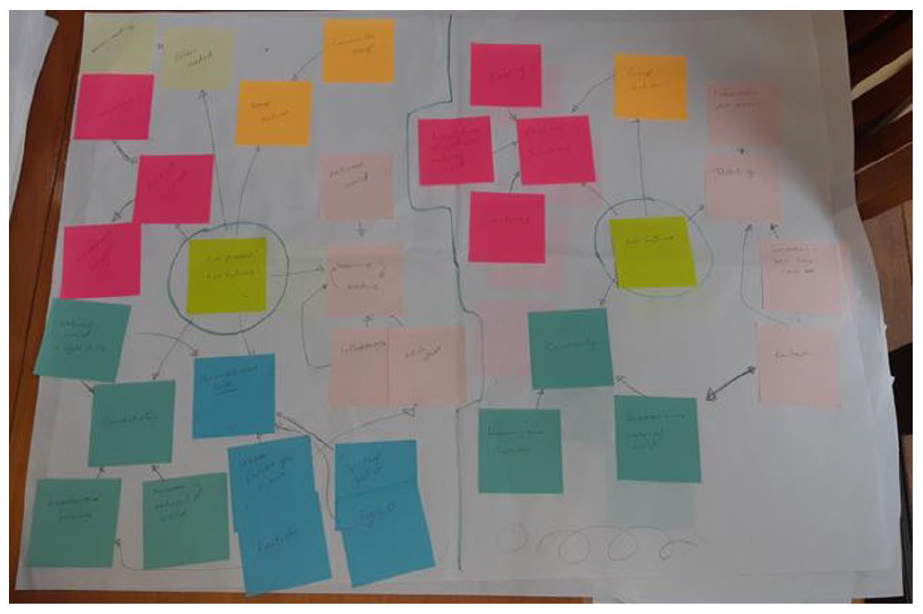
Coloured sticky paper notes facilitated the move from individual codes to candidate sub-themes. For example, mapping codes expressing positive feelings towards the present; positive feelings towards the future.
Participant comments about and descriptions of their present-day or future world collage or collage elements were couched in positive, negative or neutral terms. One means of approaching and understanding participants’ coded responses was to filter these comments using a positive view of the future filter. The rationale for this approach is linked to the primary research question ‘Who will be the community conservationists of the future?’ The researchers have assumed that people anticipating volunteering as community conservationists, will have a positive view of the future.
A range of positive or negative feelings about the present and the future were determined; these resulted in a number of filter combinations (Figure 10).
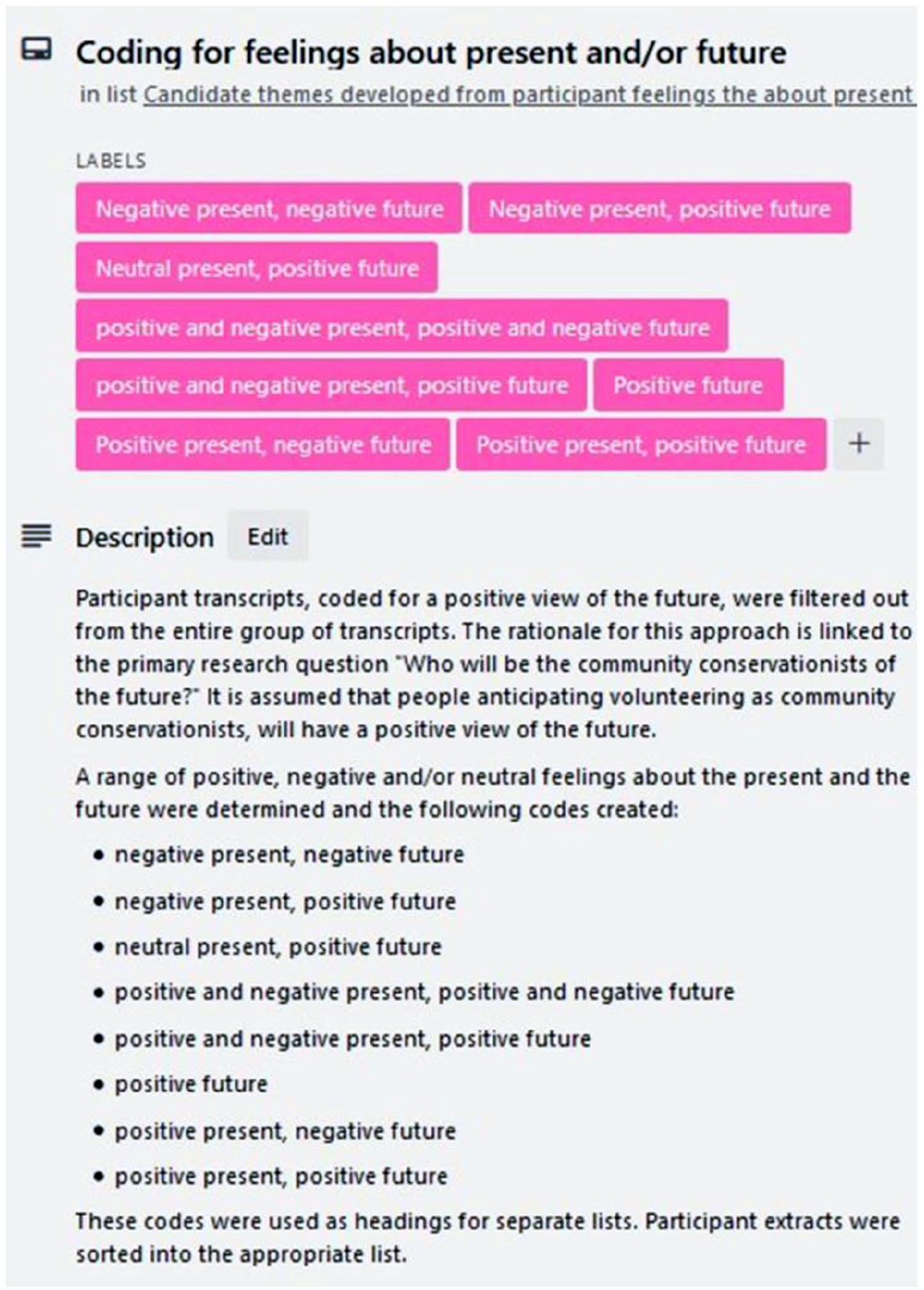
Screenshot of a Trello card providing descriptions of Phase 5 filters: positive, negative and/or neutral feelings about the present and the future related by collage-elicited interview participants.
Coded data extracts were separated into the appropriate lists based on these temporal affective filters (Figure 10). All previously developed codes were stripped out from the individual data extracts. Ideas coalescing from the extracts filtered by the Positive view of future code, for example, were then given codes. These codes were attached to each extract and recorded in the images attached to each list on this board. Once all extracts had been coded, the codes were mapped for each list. Candidate themes were developed from these hierarchical maps (Figure 11).
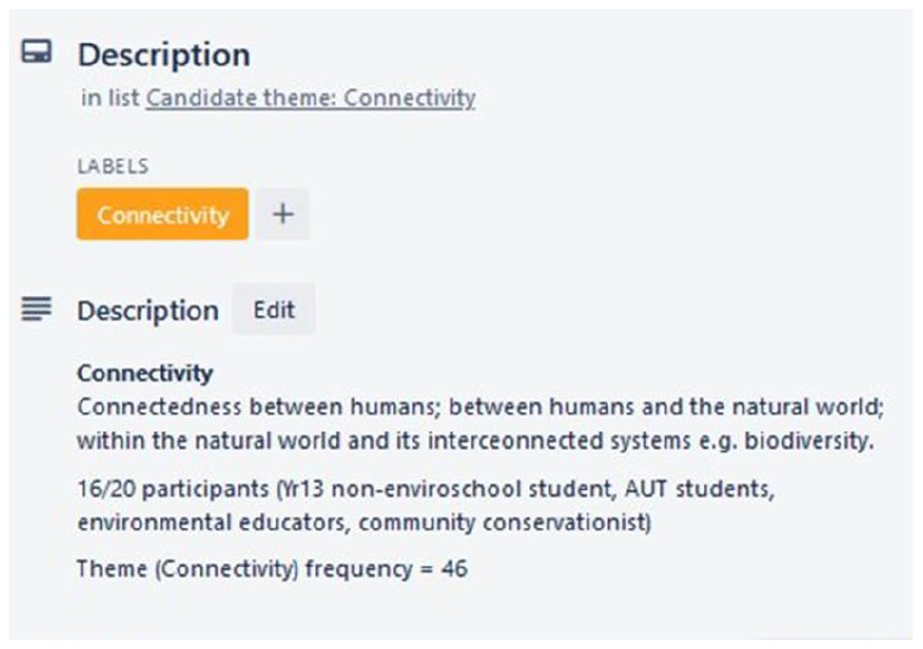
Screenshot in Trello of description, connectivity and participant data related to Connectivity – a candidate theme.
Phase 5 – defining and naming themes
Once candidate themes had been formed through the Phase 4 sorting and collating process, the lead researcher returned to the individual interview extracts. She read them in the context of the candidate theme to see whether they still related to that theme. If the data extract and candidate theme did not align, the extract was recoded. If they did align, the appropriate candidate theme was added as a label to that data extract card. Labelling interview extracts with candidate themes highlighted quotes suitable for writing-up.
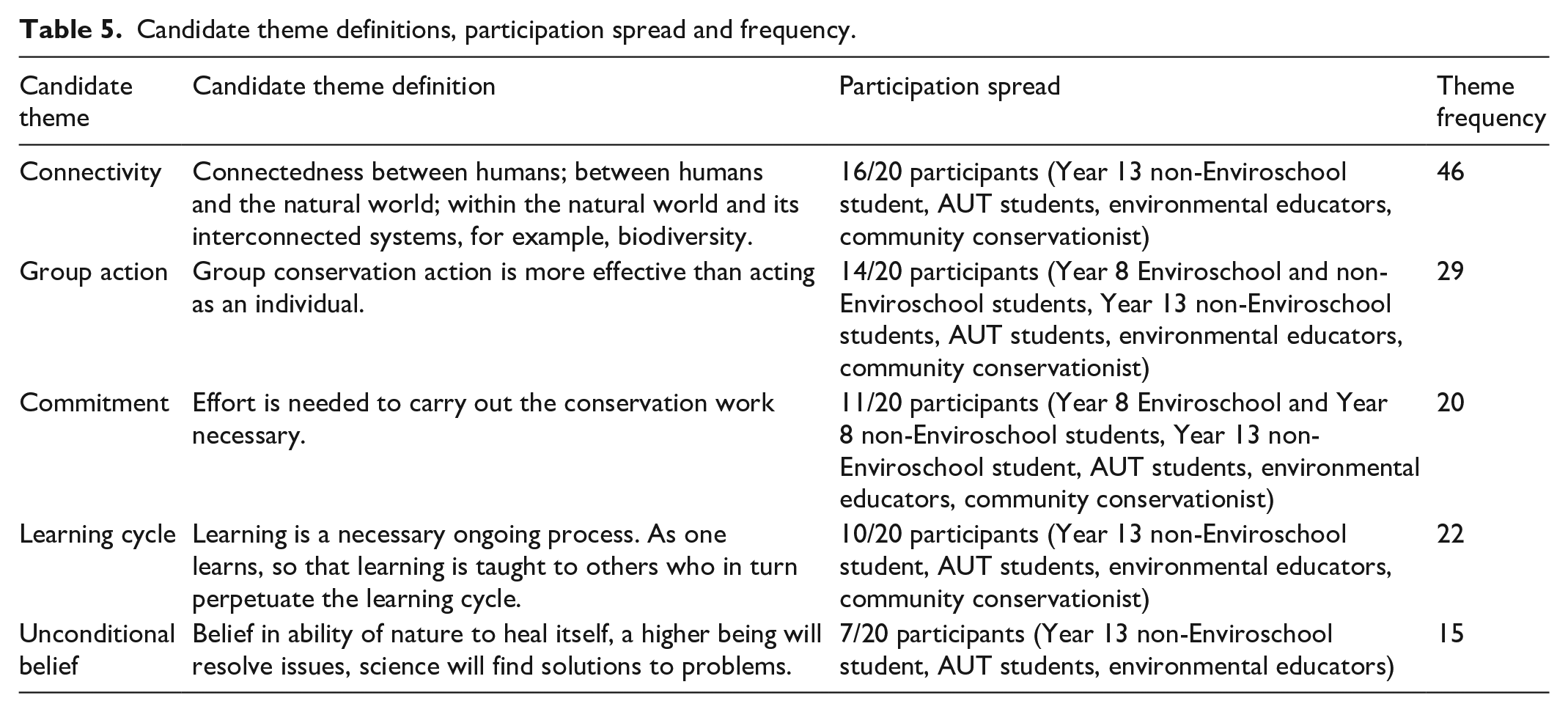
During Phase 5, the following two further analyses, a form of triangulation (Nowell et al., 2017), were carried out on the candidate themes: (1) participation spread and (2) theme frequency (Figure 11). Participation spread determined whether the candidate theme was supported by a range of participants; theme frequency or prevalence counted the number of times data extracts relating to the candidate theme were mentioned by participants (Braun and Clarke, 2006; Table 5).
Candidate theme definitions, participation spread and frequency.
Once the reflexive treatment of interview abstracts and candidate themes had been completed, the lead researcher created descriptive paragraph for each candidate theme based on codes and examples recorded (Figure 11).
Results/analysis (Phase 6 – writing up)
Collage-elicited interviews
All participants, both in the pilot and the full study created collages of themselves in the present-day and future world. Some participants created two separate collages (Figure 12(a) and (b)).
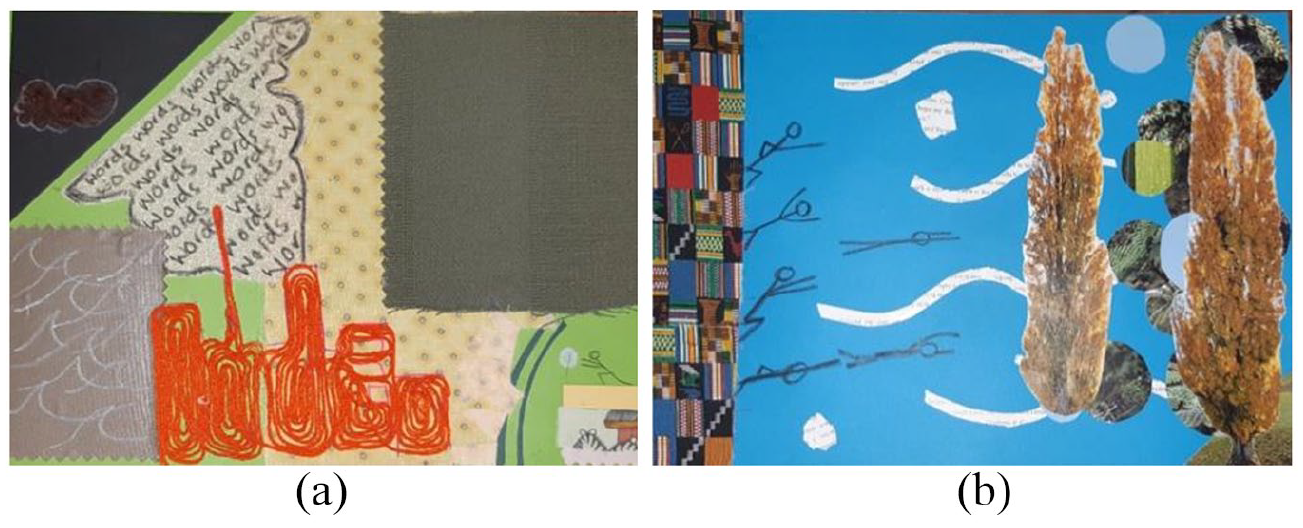
(a) Present-day collage created by P13non001. (b) Future collage created by P13non001.
Others combined the present-day and future worlds and their relationship to these worlds, within the same collage (Figure 13). Some created illustrations using felt-tip pens; others incorporated natural found items such as ponga (tree-fern) fronds (Figures 13 and 14).
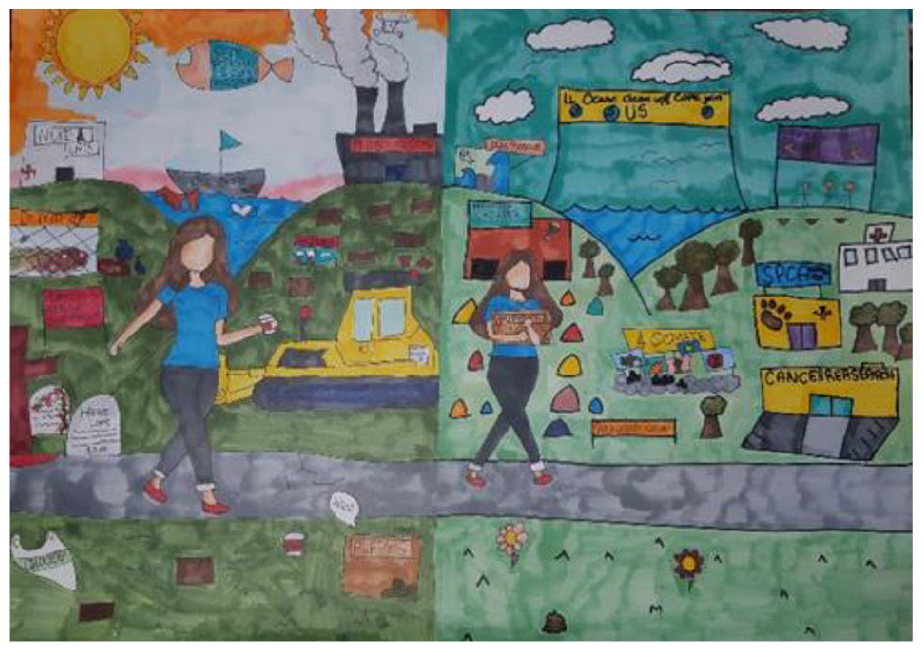
Combined present-day and future worlds collage. Created by 8env001.
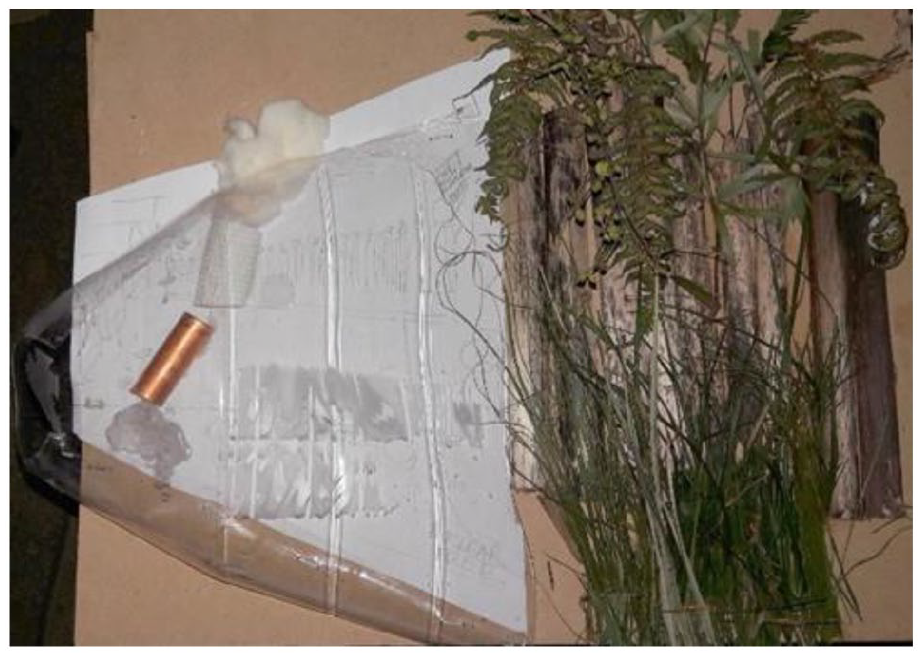
Combined present-day and future worlds collage. Created by Con001.
A further group incorporated movable elements within their collages which added a further level of meaning (Figure 15(a) and (b)).
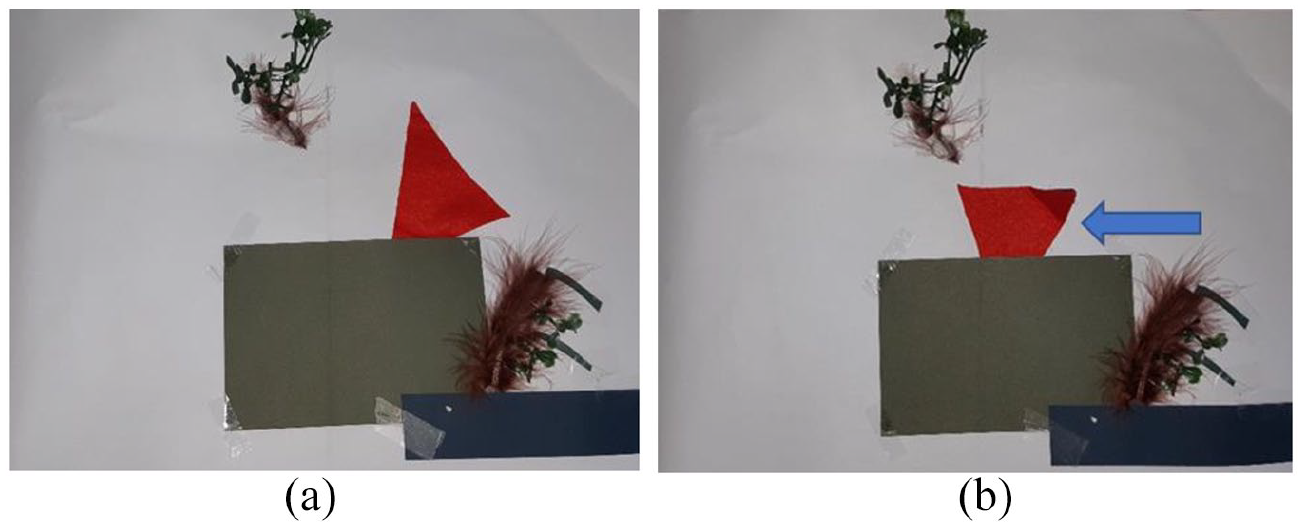
(a) Present-day collage. Created by Pcon001. (b) Future collage. Created by Pcon001.
Irrespective of age, artistic ability, cultural background, participants responded enthusiastically to creating collages (Figure 16(a) to (f)). with many demonstrating stylistic continuity over time by using the same materials in both present-day and future collages (Figure 16(c) to (f)).
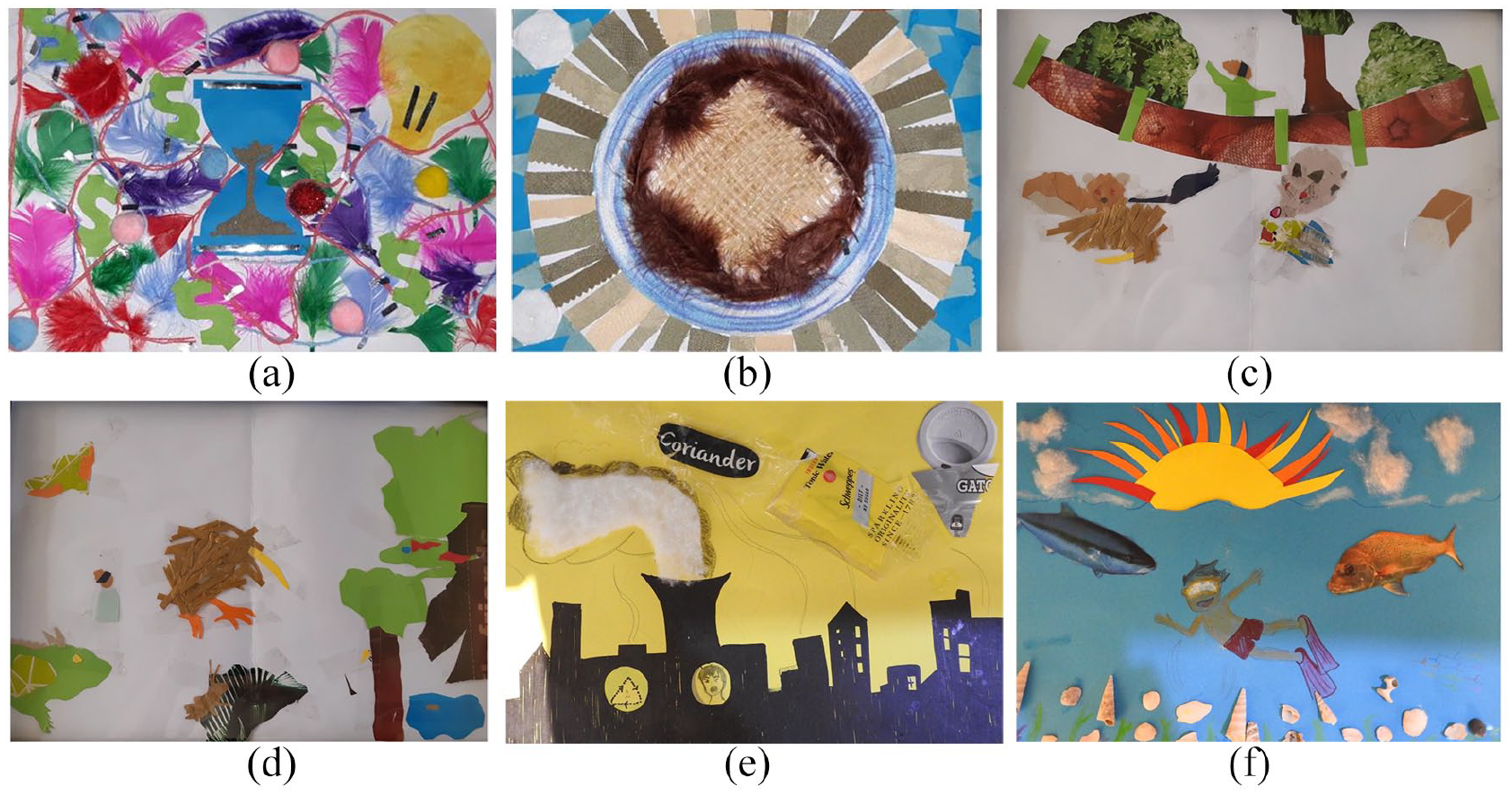
(a) Present-day collage. Created by Aut001. (b) Future collage. Created by Aut001. (c) Present-day collage. Created by Enved001. (d) Future collage. Created by Enved001. (e) Present-day collage. Created by 8nonenv005. (f) Future collage. Created by 8nonenv005.
Trello-assisted reflexive thematic analysis
Six candidate themes (Figure 17), based on codes derived from data extracts exhibiting feelings about present and/or future (Figure 18(a) to (f)) were assembled: Commitment, Connectivity, Group action, Learning cycle, Practical solutions, and Unconditional belief. The sixth candidate theme, ‘Practical solutions’ coalesced from examples of practical conservation action provided by the study participants, pest and pet control, planting natives, protected areas (ecosanctuaries, pest-free islands, mainland islands, private national parks).
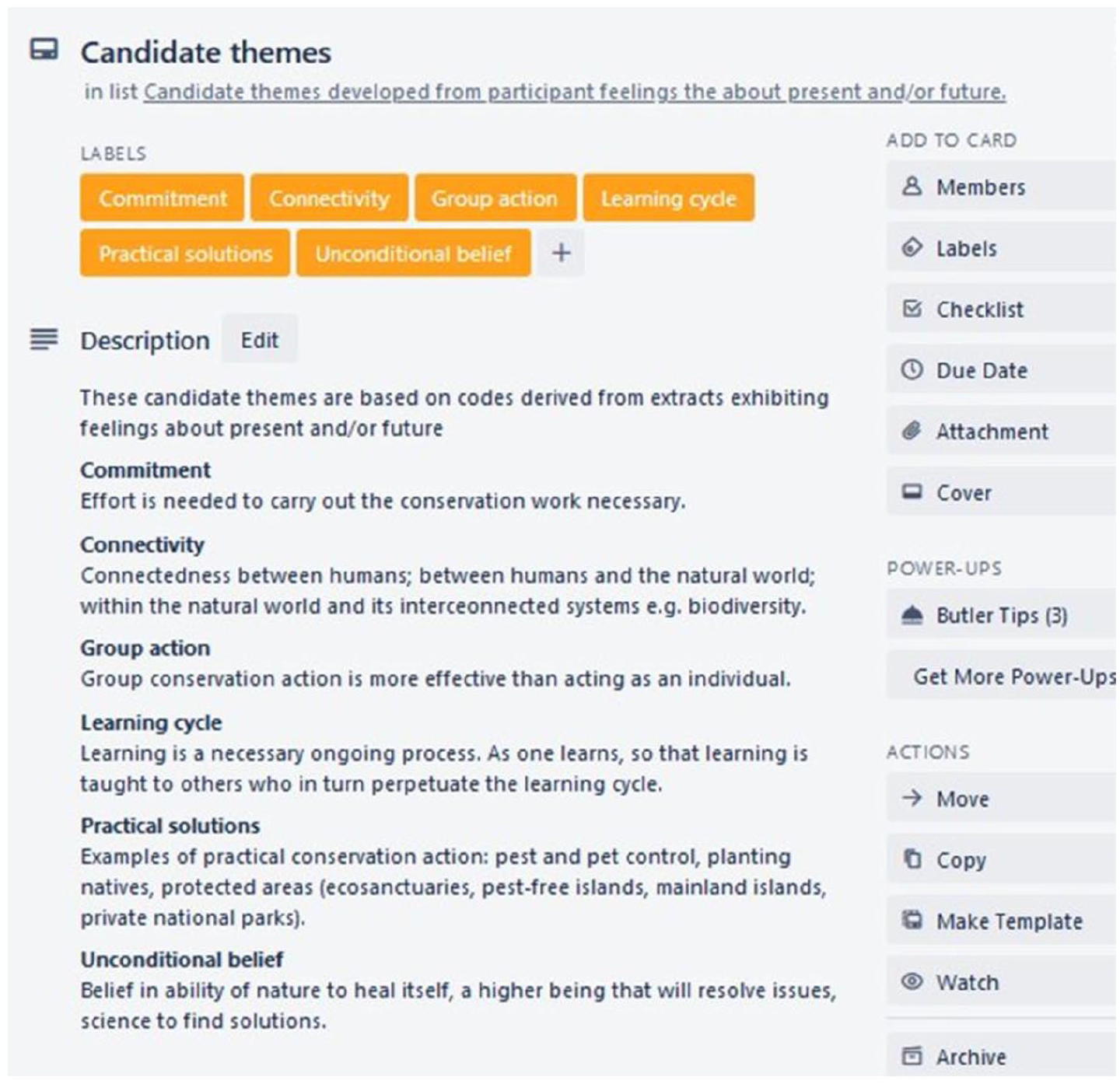
Screenshot of the six candidate themes described through Trello-based analysis of collage-elicited interviews.
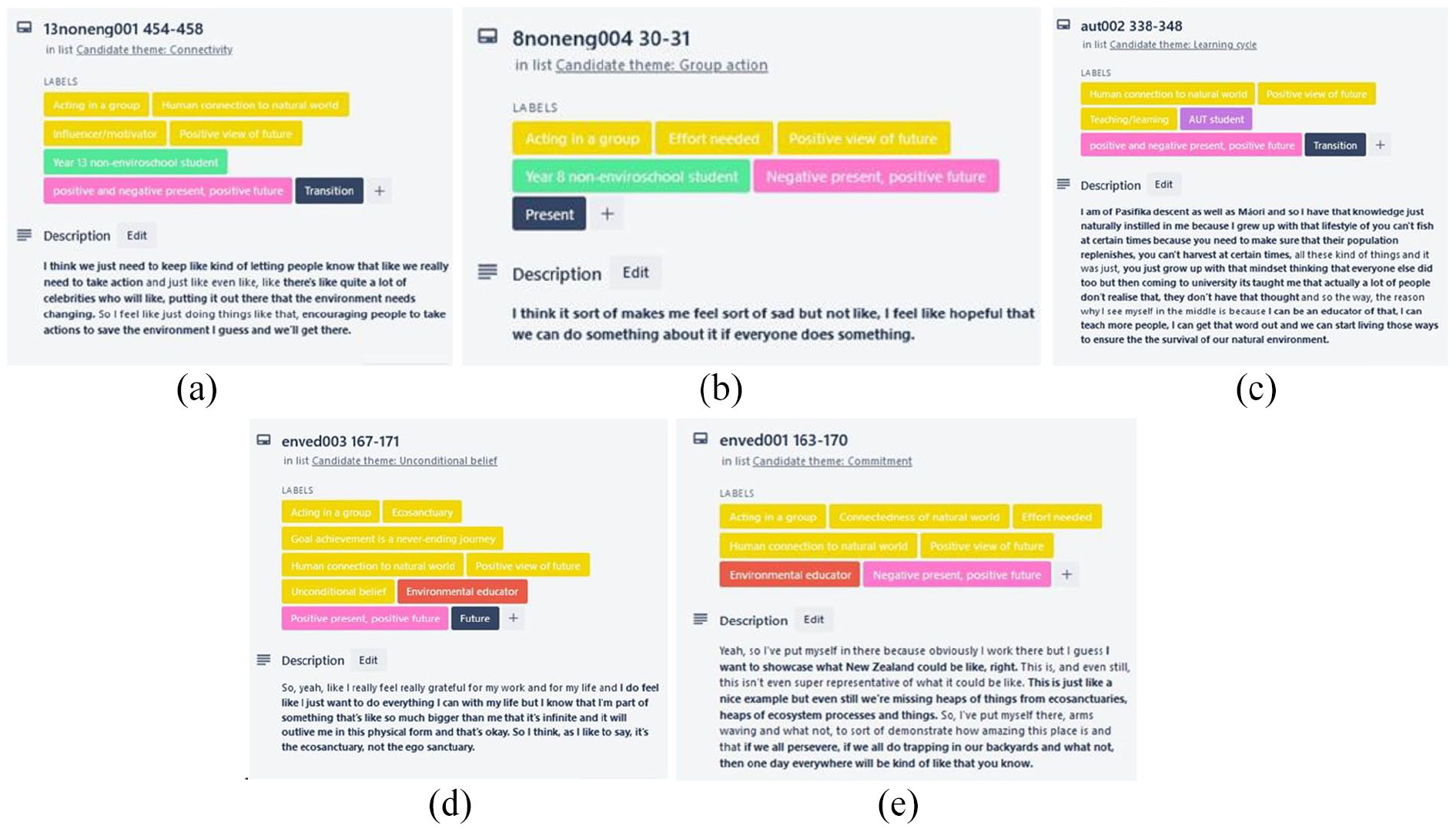
(a) Connectivity theme and supporting data extract from 13noneng001. (b) Group action theme and supporting data extract from 8noneng004. (c) Learning cycle theme and supporting data extract from Aut002. (d) Unconditional belief theme and supporting data extract from Enved003. (e) Commitment theme and supporting data extract from Enved001.
Statements, intended to test candidate theme resonance with a wider New Zealand public in the quantitative research phase, have been developed (Table 6).
Themes derived from collage-elicited interview transcripts reframed as statements.
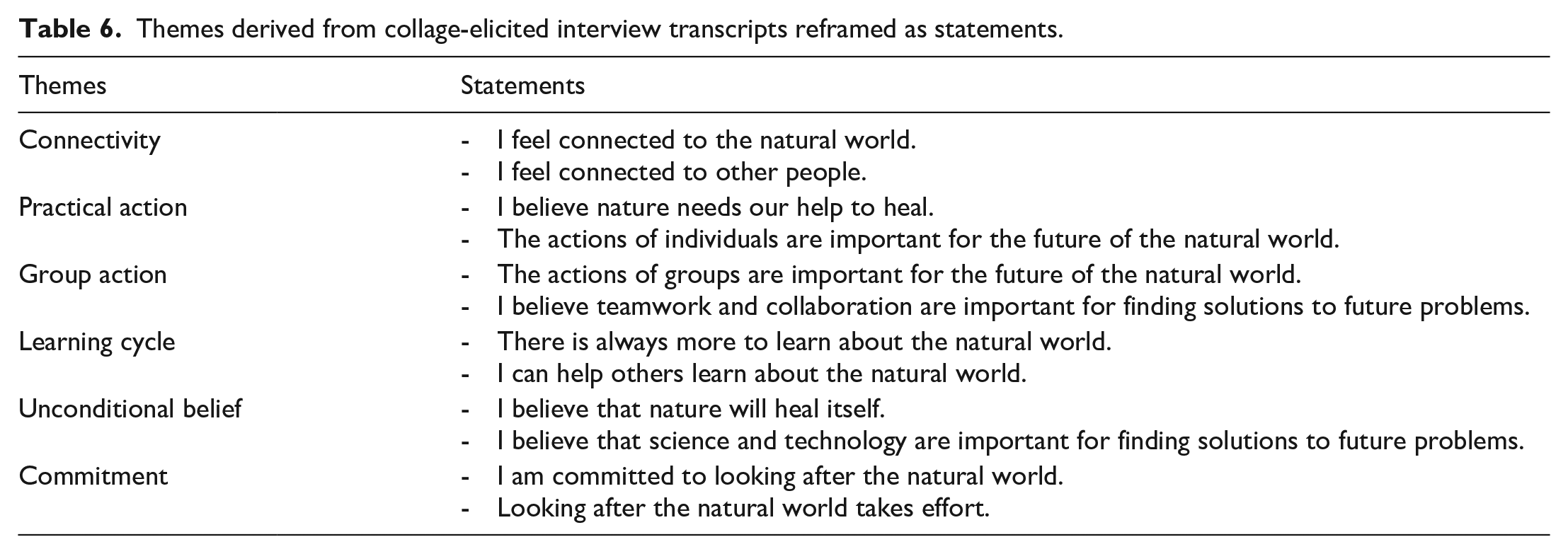
These statements will be presented as eight-point Likert-type-like scales (Figure 19) as part of a quantitative survey of New Zealand public conservation action and hopefulness levels. This survey will form part of the second phase of the mixed-method research into current conservation actions and future conservation intentions.

Example of statement derived from reflexive thematic analysis of collage-elicited interview transcripts. Adapted from Snyder et al. (1996).
Discussion and recommendations
Collage-elicited interviews and Trello-based reflexive thematic analysis are two approaches currently underutilised in qualitative research. In combination, these approaches elicited six themes relating the thoughts of these New Zealanders about their place in both their present and future worlds and the actions they might take to move from the former to the latter. The themes also provided, through the development of Likert-type-scale statements, a practical way of utilising qualitative research results in the quantitative phase of the intended mixed-method study (Figure 20). Thus, potentially supporting the study’s overarching research question and subsequent investigation into ‘Who will be the community conservationists of the future?’
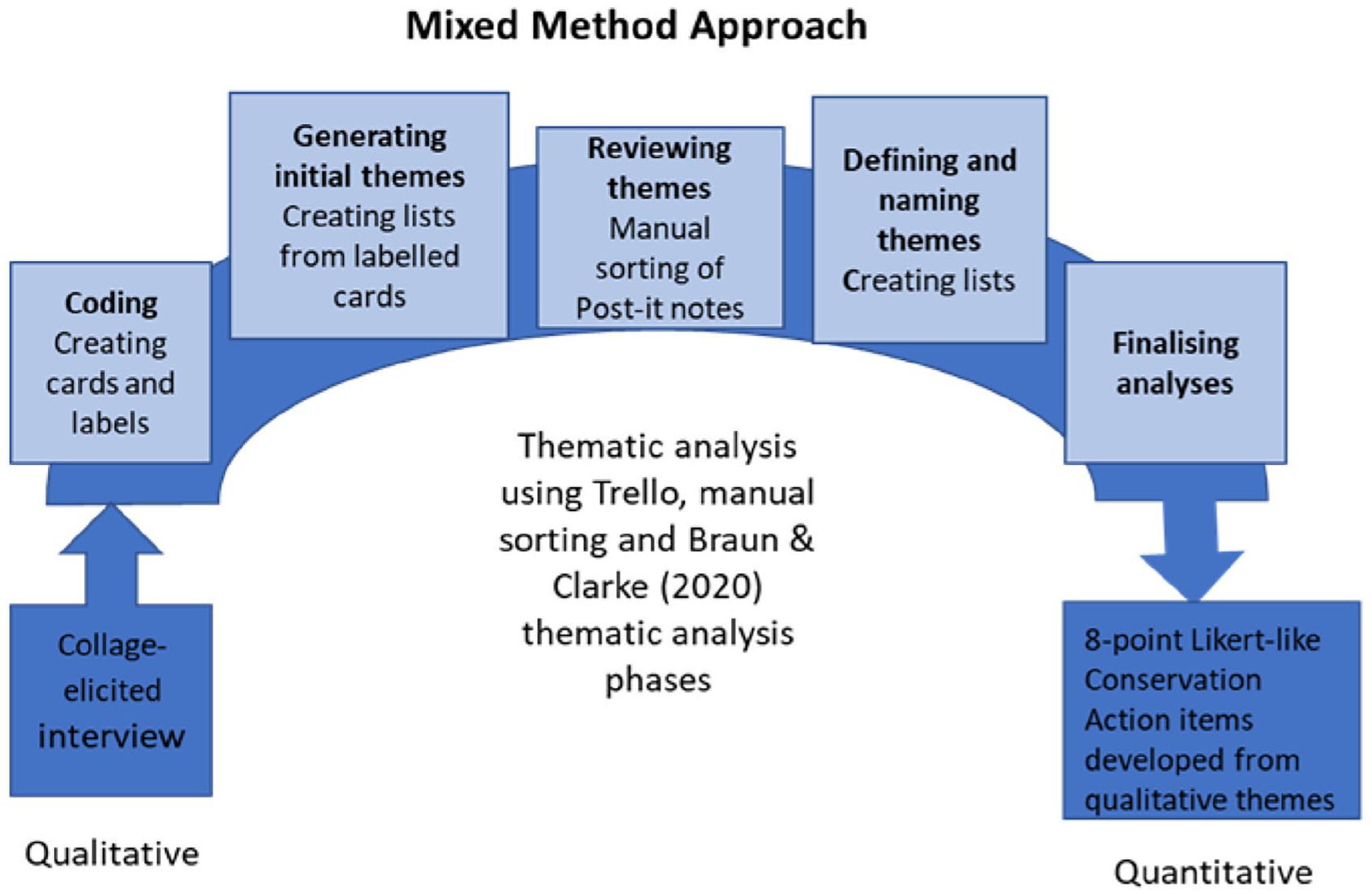
Bridging the gap between the qualitative and quantitative aspects of a mixed-method study. Themes from collage-elicited qualitative interviews analysed using Trello and manually-sorted sticky paper notes, contribute to the creation of Likert-type-like conservation action items. Adapted from Spector (2004). Reflexive thematic analysis phases adapted from Braun and Clarke (2020).
However, while there are many actual and potential benefits associated with these tools, there are some significant limitations, these are explored and possible solutions, suggested.
Collage-elicited interviews – actual and potential benefits
Collages are an underutilised arts based tool capable of eliciting rich data from a range of participant age groups, physical abilities, cultures, and backgrounds. Collage creation is inexpensive and readily accessible, and, in this study, participants enthusiastically engaged in collage-making, irrespective of their self-professed artistic ability. Some combined both worlds (today and future) in the same collage, others chose to present two worlds separated by 5 minutes to many years; while others created moving parts in their collages to express their ideas. Collage creation also reduces potential researcher influence by enabling participant creativity and individuality. In summary, collage creation enables participants’ own thoughts or ideas or emotions or concepts to be externalised, made visible to the researcher in a non-directed way. As Raffaelli and Hartzell (2016) state, ‘Collage did not seem to carry any expectations about what a piece should look like, or instil a fear of producing something that could be misunderstood or judged’ (p. 25).
Collage-elicited interviews may also help alleviate the tyranny of distance including cultural, pandemic-imposed, and physical. First, interviews between participants from differing cultures or higher and lower rank individuals may necessitate eye gaze avoidance; this may be achieved by focusing on the collage rather than making direct eye contact (Duranti, 1992). Second, in the time of COVID-19, where participants and researcher are necessarily physically distanced, online collage-elicited interviews may enable qualitative data collection to continue (Torrentira, 2020). Third, participants in remote locations could be more accessible to researchers without incurring travel time and expense. Shapka et al. (2016) suggest that irrespective of data collection mode (online vs face-to-face), data quality is unaffected. However, access to, and experience of, the necessary online technology would need to be taken into consideration when working with remotely located participants.
Collage-elicited interviews – limitations and solutions
Collage-elicited interviewing has a number of limitations, particularly with regard to participants with disabilities. These limitations can be resolved – visually impaired may benefit from texturally varied collage materials, while able-bodied assistance might help those with physical limitations by placing materials under the interviewee’s instruction.
While collage materials were selected and provided by the main researcher, study participants were encouraged to use as much or as little as they liked of the materials provided and invited to incorporate any found materials (by participant). This strategy enabled all participants to have the basic ‘building blocks’, they would need to construct a collage without having to incur any costs, either financial or time.
Reflexive thematic analysis
Reflexive thematic analysis, whether framed using NVivo or Trello, needs qualification. As a qualitative method, such data extract coding and analysis are contextual, it is about understanding meaning, describing ‘one story among many that could be told about the data’ (Braun and Clarke, 2013: 20) and requires researchers with ‘imaginative insight’ (Maher et al., 2018). Interestingly, during the pilot phase, it was researcher imaginative insights that identified a significant gap in participant responses. The laddering questions enabled the participants to talk about the present-day then the future collages. However, they did not identify nor verbalise their mechanisms enabling them to move between the two timeframes. The researchers identified the need for a bridging question ‘How did you get from the world of today to the world of tomorrow?’ This question helped participants frame their collage-elicited thoughts as potential actions.
Trello – benefits
Trello software is a free, easy-to-use, intuitive application. Trello users are well-supported with online tutorials, helplines and chatgroups. Working documents can be shared digitally enabling virtual teams to collaborate on projects and results can be readily copied into reports and other documentation. Trello provides an effective platform, particularly when based on the six-phase Braun and Clarke (2020) process, for data extract sorting, coding and eventually, theme development. Images and text can be easily attached to lists, but above all, Trello offers a reflexive functionality. Cards, labels, lists, and boards can be ‘dragged and dropped’ and filtered using several pieces of information, thus enhancing and refining the qualitative researcher experience. Potentially providing a more relational form of cognition (Douglas and Nil Gulari, 2015) than sequential. Manual methods, of which Trello is arguably a digital version, support the relational cognition necessary for coding practice.
Trello – limitations and solutions
In terms of reflexive thematic analysis, Trello does have some specific limitations. Labels are only available in a relatively restricted colour palette (Jones, 2020), potentially constraining the number of individual codes. Screen size restricts the visual space within which the researcher can work; this might be ameliorated by combining with traditional material methods such as sticky paper notes and large sheets of paper (Maher et al., 2018). A more serious limitation is the inability to view or retain the iterations a board goes through. However, this can be addressed by consecutively dating labelling board versions. Despite these limitations, the authors found Trello a relatively simple-to-use tool for data storage and management, coding and candidate theme development.
Conclusion
In summary, collage-elicited interviews and Trello-based reflexive thematic analysis contributed substantially to a study involving participants from a wide range of ages, educational stages, backgrounds and NZ locations. Present and future-located collages were created that were rich in personal meaning. Collage-elicited interviews enabled this personal meaning to become both audible and visible to the researcher and hence to a wider audience. As participant Aut004 said, I believe a collage does a much better job of drilling down that message into their conscience and motivating them to do better than well what they do basically. (lines 152–155, 175–179)
The current study also suggests that Trello offers, with readily achievable adaptation, an easy-to-use, economical, flexible yet robust means of qualitatively analysing text and assisting theme development for subsequent use in the quantitative phase of a mixed-method study.
Supplemental Material
sj-pdf-1-mio-10.1177_20597991211051452 – Supplemental material for Innovative ways of illustrating the present, imagining the future and analysing themes: A collage-elicited interview study
Supplemental material, sj-pdf-1-mio-10.1177_20597991211051452 for Innovative ways of illustrating the present, imagining the future and analysing themes: A collage-elicited interview study by Helen R Ough Dealy, Rebecca M Jarvis and Michael Petterson in Methodological Innovations
Footnotes
Declaration of conflicting interests
The author(s) declared no potential conflicts of interest with respect to the research, authorship and/or publication of this article.
Funding
The author(s) received no financial support for the research, authorship and/or publication of this article.

Supplemental material
Supplemental material for this article is available online.
Author biographies
References
Supplementary Material
Please find the following supplemental material available below.
For Open Access articles published under a Creative Commons License, all supplemental material carries the same license as the article it is associated with.
For non-Open Access articles published, all supplemental material carries a non-exclusive license, and permission requests for re-use of supplemental material or any part of supplemental material shall be sent directly to the copyright owner as specified in the copyright notice associated with the article.
