




Abstract
West Africa has a high burden of malnutrition and the drivers are often complex, highly context-specific, and cut across individual, social, political and environmental domains. Public health research most often considers immediate individual health and diet drivers, at the expense of wider considerations that may fall outside of a health agenda. The objective of this systematic mapping review is to map the broad drivers of malnutrition in West Africa, from public health and social science perspectives, and to evaluate the additional value of an interdisciplinary approach. Evidence was gathered from one public health (MEDLINE) and one social science (International Bibliography of Social Science) database using a detailed search syntax tailored to each disciplinary configuration. Literature was screened against pre-determined eligibility criteria and extracted from abstracts. Studies published in English or French between January 2010 and April 2018 were considered for inclusion. Driver categories (immediate, underlying and basic drivers) were coded against the UNICEF conceptual framework of malnutrition. A total of 358 studies were included; 237 were retrieved from the public health database and 124 from the social science database, 3 studies were included in both. The public health and social science literature document different drivers, with MEDLINE most often reporting immediate drivers of malnutrition and the International Bibliography of Social Science database reporting underlying and basic drivers. The combined literature offers more balanced representation across categories. An interdisciplinary approach proved successful in achieving complementarity in search results while upholding rigorous methods. We recommend that interdisciplinary approaches are utilised to bridge recognised gaps between defined disciplines.
Introduction
Methodological innovation is required to understand and overcome real-world challenges. West Africa faces multiple burdens of malnutrition that affect populations at many stages throughout their lifecycle (Global Nutrition Report, 2019). Malnutrition can impact health, well-being and productivity of individuals and nations. Therefore, it is essential to understand what the drivers of malnutrition are, how these differ across populations (depending on geographic, social, political context) and how they change across the lifecycle. Timely and accurate identification of such drivers ideally offer an evidence roadmap for appropriate policy and programme decisions to tackle issues of malnutrition. The answer to ‘what are the drivers of malnutrition in West Africa?’ may differ substantively depending on who asks the question and, consequently, how and from where the evidence is collected.
Obtaining contextually relevant evidence is essential – if not fundamental – in framing malnutrition issues, and, subsequently, finding appropriate solutions. In capturing the complexity and nuance of drivers of malnutrition in West Africa, we argue that information on various drivers can and should come from a suitable range of perspectives and disciplines, including empirical health studies as well as social studies. There are inherent challenges in developing methodologies that can accommodate such a broad range of perspectives, which is why we have seen deep divisions between disciplines.
Siloed research is a well-known challenge when attempting to answer complex questions. Bringing together fundamentally different epistemological perspectives in an inter- rather than simply a multi-disciplinary way requires that researchers understand the nature, strengths and challenges that each perspective brings. Methodologies in health research tends to focus on outcomes, whether that be effectiveness of treatment on outcomes, or prevalence and drivers of outcomes. In comparison, social science methodologies often seek to explain why, and how, such outcomes occur by exploring the root causes, including the way that problems are framed and communicated in policy and research. Applying the broader attention to causes and to problem framing from social sciences to the defined outcomes and targets preferred by health research creates a creative tension; it is this tension we seek to exploit and describe in this article in the context of globally agreed targets for the reduction of malnutrition and their application to countries in West Africa.
Agreed by health ministers from around the world countries in 2012, the World Health Assembly (WHA) nutrition targets aim to achieve significant reductions in, or arrest the growth in, multiple burdens of malnutrition by 2025 (WHO, 2020). Even though such goals and targets (including, for example, the Sustainable Development Goals) are useful in setting a global blueprint to prioritise health issues and create methods of tracking outcomes in measurable and comparable ways, these targets have been criticised from critical social scientific standpoints for their reductionist tendencies to focus on outcomes and because they may lead to universalist/homogenising understandings of the causes of poor health at the expense of more contextual and contingent understandings.
Evidence synthesis methodologies guided by communication across disciplinary settings offer a systemic way to identify complex drivers of malnutrition and thus guide appropriate policy and programme decisions. Methodologists working within evidence synthesis recommend harnessing mixed methods and disciplinary expertise in the form of systematic reviews (Noyes et al., 2019; Petticrew et al., 2013). Mixed methods informed by dialogue across disciplinary boundaries are particularly effective for complex questions (Petticrew et al., 2019) – that is, questions that move beyond estimates of effect or impact (Mallett et al., 2012), to broader questions of context, implementation and the political economy of health (Petticrew et al., 2019; Snilstveit, 2012). We believe there is a paucity of such research on our topic of interest, as well as well-described methodological decisions made while operating at the interface of interdisciplinary research. Therefore, the objective of this review is to illuminate the value of mixed-methods and an interdisciplinary approach through mapping the broad drivers of malnutrition in West Africa, from both public health and social science perspectives, and to evaluate the added value of this interdisciplinary approach.
Methodology
This review applied systematic mapping to better understand the drivers of malnutrition in West Africa using public health and social science perspectives to identify drivers of malnutrition and, then, to assess the enhanced value of combining these two different perspectives. This mapping methodology was chosen to provide both thematic and further methodological insights.
Identifying drivers from both public health and social science perspectives requires distinctly different conceptualisation and search approaches adapted to these perspectives and the nature of the corresponding databases. This approach recognises that mixed-methods systematic reviews typically require separate search strategies (Noyes et al., 2019). It also reflects the team’s own assumptions and biases, harnessed positively in helping to build the appropriate ‘disciplinary, methodological and perspective mix’ within the review team (Booth et al., 2016). Regular dialogue between the team on these different assumptions helped move the exercise between a solely multi-disciplinary effort to something inherently interdisciplinary.
Frameworks and conceptual models can be contributory in giving order and clarity to otherwise complex and disjointed concepts. Framework synthesis offers a structured approach to organising and analysing data, and generally involves the preliminary identification of priori themes against which to map data from included studies (Carroll et al., 2011). Identification of a suitable framework is key to the success of framework synthesis (Booth and Carroll, 2015). Where a topic is well theorised, as for drivers of malnutrition, then multiple candidate frameworks are available. A research team can select a single framework that explains the data best, one that most represents the worldview of stakeholders, or multiple frameworks that have the potential to be merged within a ‘meta-framework’ (Booth and Carroll, 2015).
The classic model for malnutrition derives from the UNICEF 1990 conceptual framework (updated in the Lancet 2013 series (Bhutta et al., 2013)). This framework recognises that immediate drivers (amenable to curative health and diet interventions) are rooted in underlying drivers (including household food insecurity (lack of availability of, access to and/or utilisation of a diverse diet), inadequate care and feeding practices for children, unhealthy household and surrounding environments, and inaccessible and often inadequate health care) and basic drivers (including societal structures and processes that neglect human rights and perpetuate poverty, limiting or denying the access of vulnerable populations to essential resources, and are amenable to preventive and broader societal/structural reform). The framework serves to guide consideration of the interconnections between social, political, environmental and health components making it highly relevant to the research objectives. The UNICEF framework was selected as the ‘best fit’ for methodological comparison between health and social science perspectives. Additional concepts documented in key literature were added to this framework to capture further detail on overweight/obesity, gender and the enabling environment (Bhutta and Black, 2013; Gillespie et al., 2013; Smith and Haddad, 2015; Swinburn et al., 2011) (Figure 1).
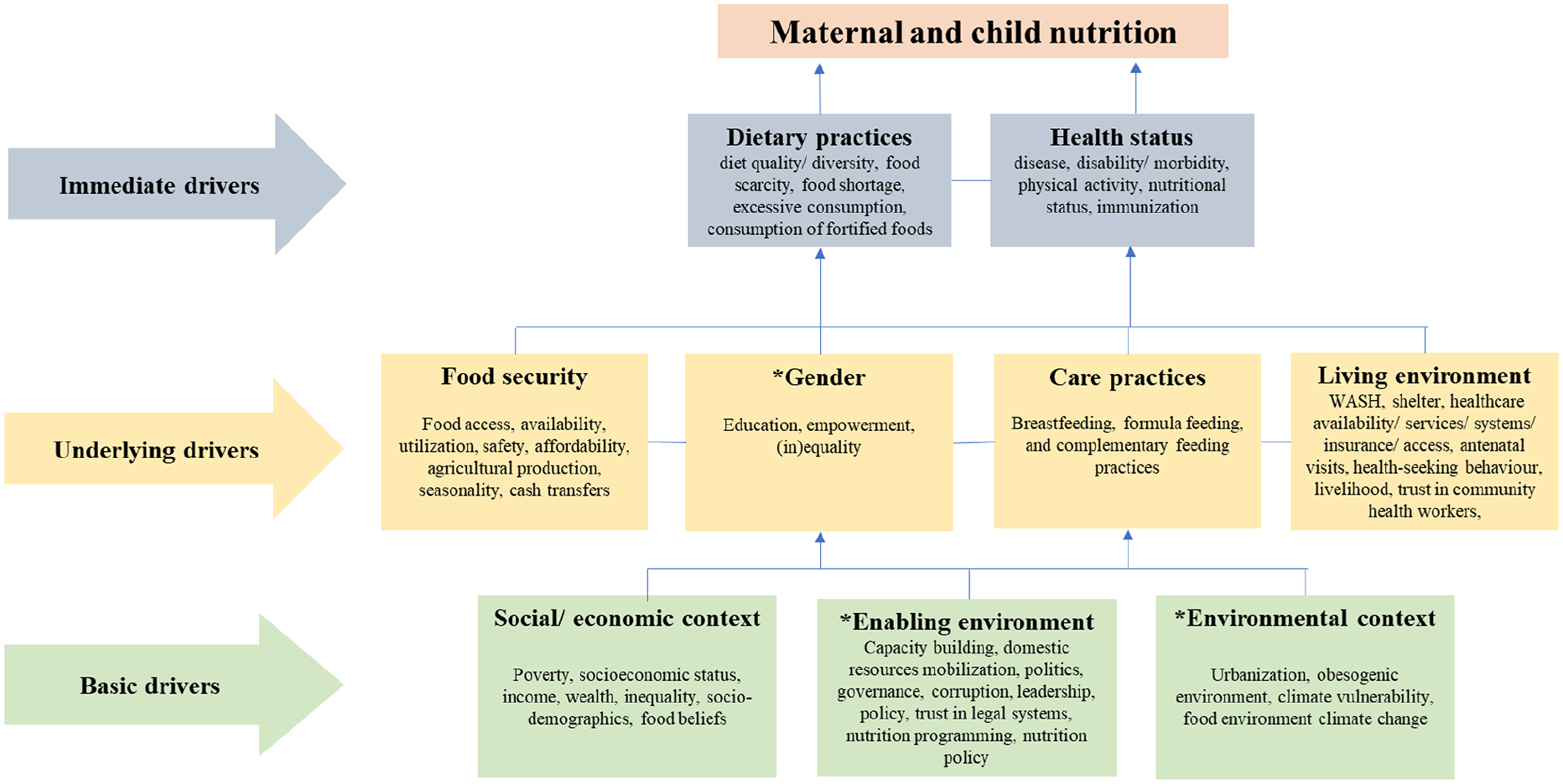
Drivers of malnutrition framework.
Search strategies
Public health database (MEDLINE)
Literature on the WHA targets in West Africa was mapped and analysed as part of a mapping review in order to identify trends and gaps across countries and nutrition outcomes. During this mapping, literature was captured relating to the prevalence, drivers, programmes and policies that report on WHA nutrition targets. The original literature search included materials from January 2010 to April 2018. This search was updated in February 2020. Results from this part of the study are being published in full, separately (publication forthcoming) although further details on the methodology are reported (Verstraeten et al., 2018). This comparative methodological review utilises the evidence reporting the drivers of WHA targets captured in the initial search (January 2010–April 2018). Utilising this evidence, we aim to answer ‘what are the drivers of the WHA indicators in West Africa?’
The MEDLINE bibliographic database comprises over 29 million citations for biomedical literature from MEDLINE, life science journals and online books. Citations and abstracts represent the fields of biomedicine and health, covering portions of the life sciences, behavioural sciences, chemical sciences and bioengineering. As of 2017 MEDLINE indexes 5617 journal titles (https://www.nlm.nih.gov/bsd/bsd_key.html). Free text words, synonyms and MeSH terms were utilised to capture relevant literature.
The search strategy in MEDLINE was defined in terms of population and outcomes according to the WHA indicators. Search terms were developed using the Population (women of reproductive age (WRA), children under 5 years (U5), infants less than 6 months), Intervention/Exposure (drivers/ risk factors), Comparison (no comparison needed) and Outcome (WHA indicators: U5 stunting, U5 wasting, low birth weight (LBW), U5 overweight, anaemia in WRA and exclusive breastfeeding (EBF)) (PICO) framework. Detailed reporting of the search syntax is available elsewhere (Verstraeten et al., 2018) with examples provided in Table 1.
Eligibility criteria and justification for search approaches.
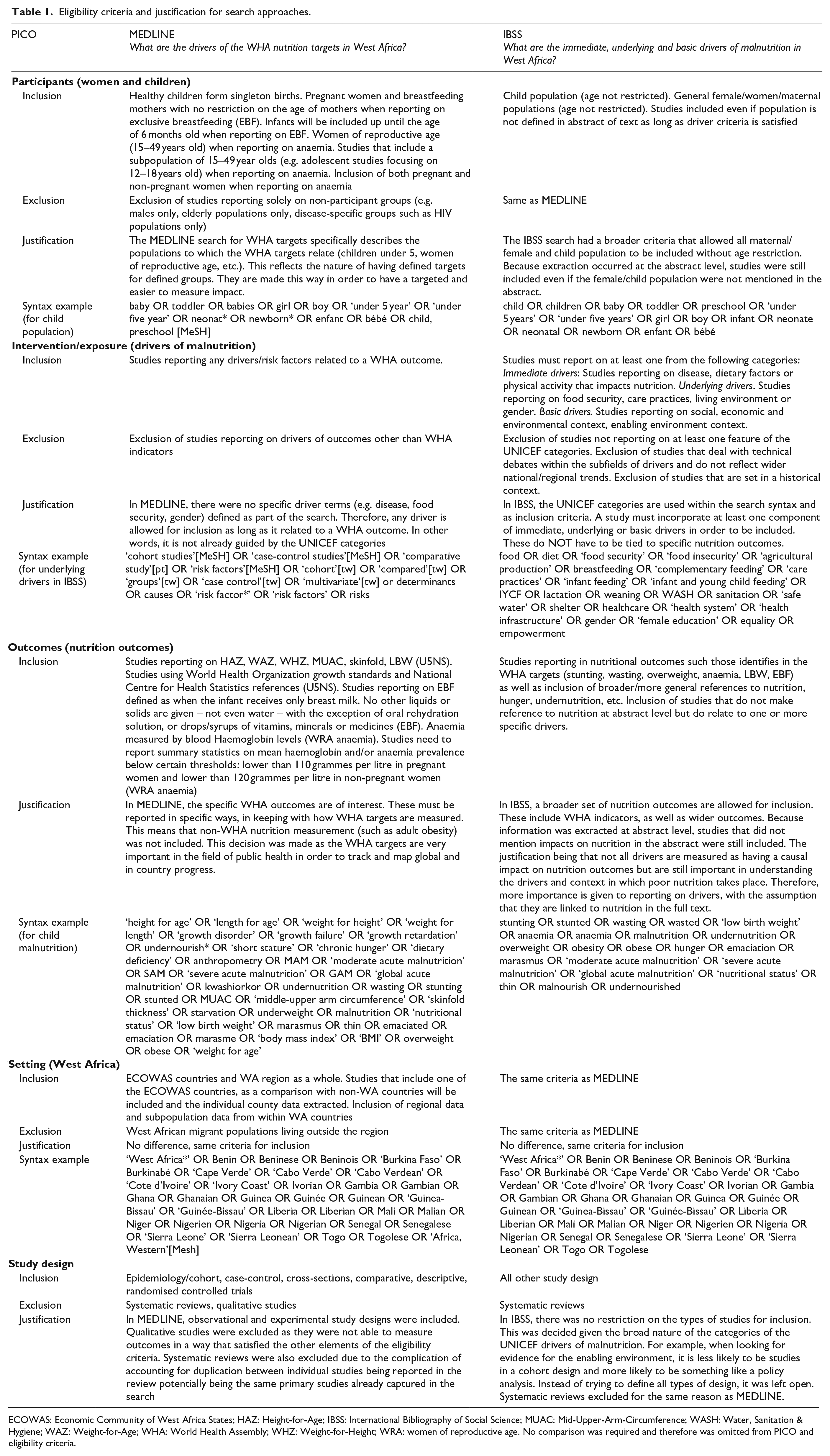
ECOWAS: Economic Community of West Africa States; HAZ: Height-for-Age; IBSS: International Bibliography of Social Science; MUAC: Mid-Upper-Arm-Circumference; WASH: Water, Sanitation & Hygiene; WAZ: Weight-for-Age; WHA: World Health Assembly; WHZ: Weight-for-Height; WRA: women of reproductive age. No comparison was required and therefore was omitted from PICO and eligibility criteria.
Social science database (The International Bibliography of Social Science)
The International Bibliography of Social Science (IBSS) was selected for the social science search. IBSS includes over 3 million bibliographic references to journal articles and to books, reviews and selected chapters dating back to 1951. Its unique broad coverage of international material incorporates over 100 languages and countries. It provides cross-disciplinary coverage across the social sciences, focused on four primary subject areas: anthropology, economics, political science and sociology. The service regularly covers around 2800 journals and indexes selected monograph and chapters (https://proquest.libguides.com/IBSS). Rather than being guided by specific nutrition outcomes (such as the WHA targets from the public health evidence search), the search strategy in IBSS was modelled on UNICEF’s conceptual framework for malnutrition, which identifies immediate, underlying and basic drivers of malnutrition (Figure 1).
Therefore, the specific research question guiding the social science search was ‘what are the immediate, underlying and basic drivers of malnutrition in West Africa?’ Search terms were developed using the PICO framework. Although alternatives exist for qualitative searches which place less stress on ‘intervention’ (Methley et al., 2014), the PICO framework was followed to show how comparable searches can be made between the two different (public health and social science) search strategies in the two databases. Detailed reporting of the search syntax is available elsewhere (Verstraeten et al., 2018) with examples highlighted in Table 1. Searches were restricted by date to studies published between January 2010 (the launch of the Scaling Up Nutrition movement) and April 2018. Searches were limited to studies published in English and French.
Screening
For both search strategies, the retrieved references were imported into separate EndNote bibliographic databases. Duplicates were removed and the remaining references were exported to Microsoft Excel for title and abstract screening (MEDLINE: n = 2961; IBSS: n = 767). Both search approaches utilised predefined eligibility criteria to guide title and abstract screening, reflecting the differences between the target disciplines (Table 1). If the relevance of a study was unclear from its title, then the abstract was also screened. Abstracts of selected studies for inclusion were double screened by a second researcher. Any disagreements were discussed, and if they could not be resolved, a third researcher made the final decision. Reasons for exclusion were recorded.
Extraction
Data were extracted from included abstracts within Microsoft Excel (MEDLINE: n = 237; IBSS: n = 124). Information extracted included language, nutrition outcome, study design, study setting, number of participants and drivers. Information on the drivers of malnutrition was extracted in a three-stage process. Information was first extracted in free text form (as it appeared in the abstract). A taxonomy was then created to group identified drivers within broad categories such as health status, food security, environmental context and so on. These broad categories were further grouped according to the UNICEF categories of immediate, underlying and basic drivers of malnutrition (Figure 1).
Where a country or nutritional outcome was not described in the MEDLINE abstract, then the full text was examined to confirm eligibility. For IBSS, the full text was retrieved when the country was not reported within the abstract. This full-text requirement was not applied to reporting of nutrition outcomes as reporting of nutritional status within abstracts was not required by the IBSS eligibility criteria (Table 1).
Quality assessment
In line with many mapping reviews, this review did not conduct a full quality appraisal of included studies but interpreted quality research more liberally in terms of limiting inclusion to peer-reviewed studies.
Protocol
This is a systematic mapping review and therefore is not eligible for registration with PROSPERO. An internal protocol was developed prior to commencing the review and published online (Verstraeten et al., 2018).
Findings
General characteristics
In total, 358 studies were captured that relate to drivers of malnutrition in West Africa. The public health search (MEDLINE) captured 237 studies and social science search (IBSS) captured 124 studies (Figure 2). Only three studies in total were captured in both databases. Figure 3 describes the coverage of publications across the West Africa region. Nigeria (n = 166) and Ghana (n = 102) collectively accounted for 70% of retrieved publications. The next most prolific countries are Burkina Faso (n = 25), Benin (n = 18) and Senegal (n = 12). Guinea-Bissau and Cape Verde are the least represented, supplying only one reference each.
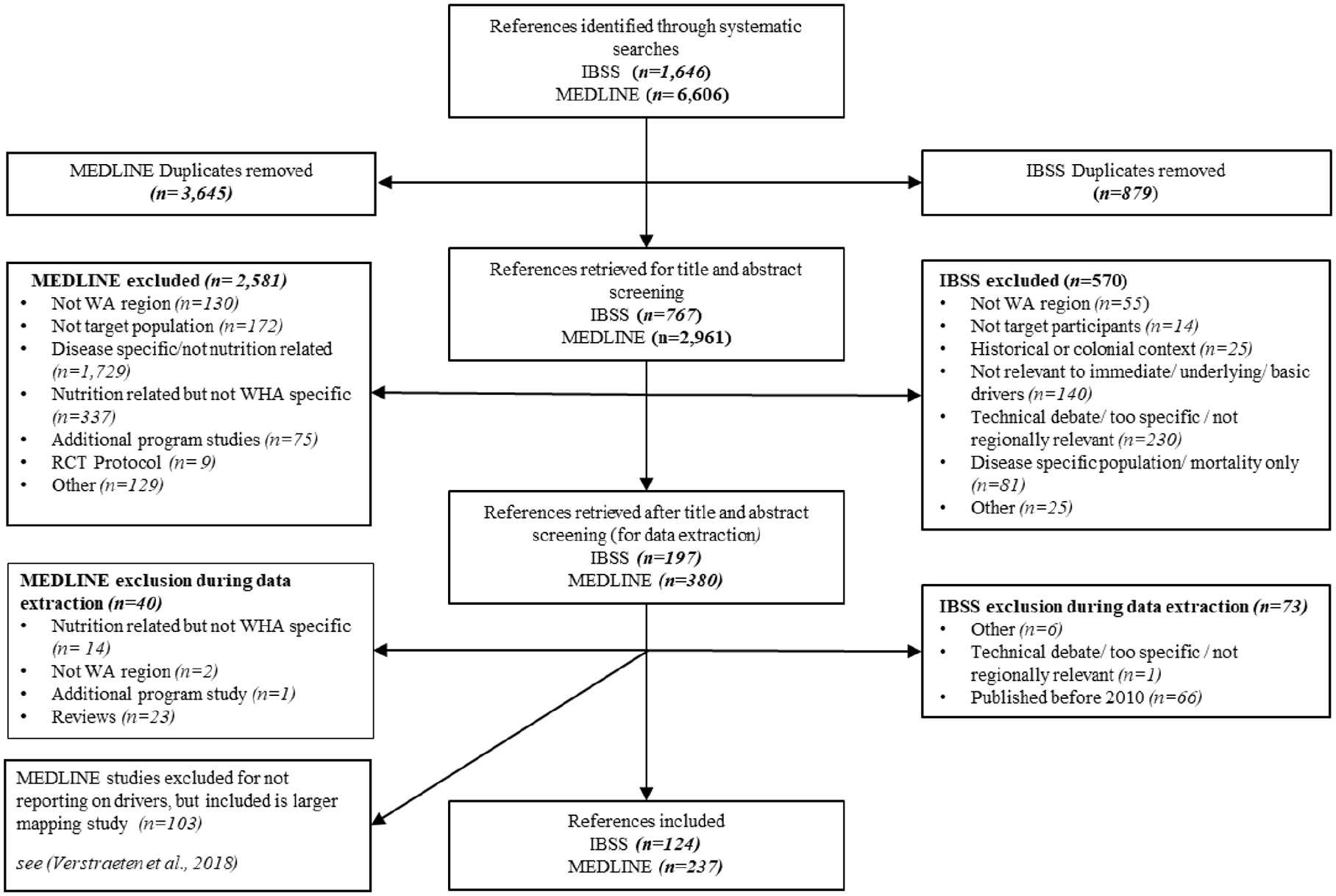
Flowchart of search results.
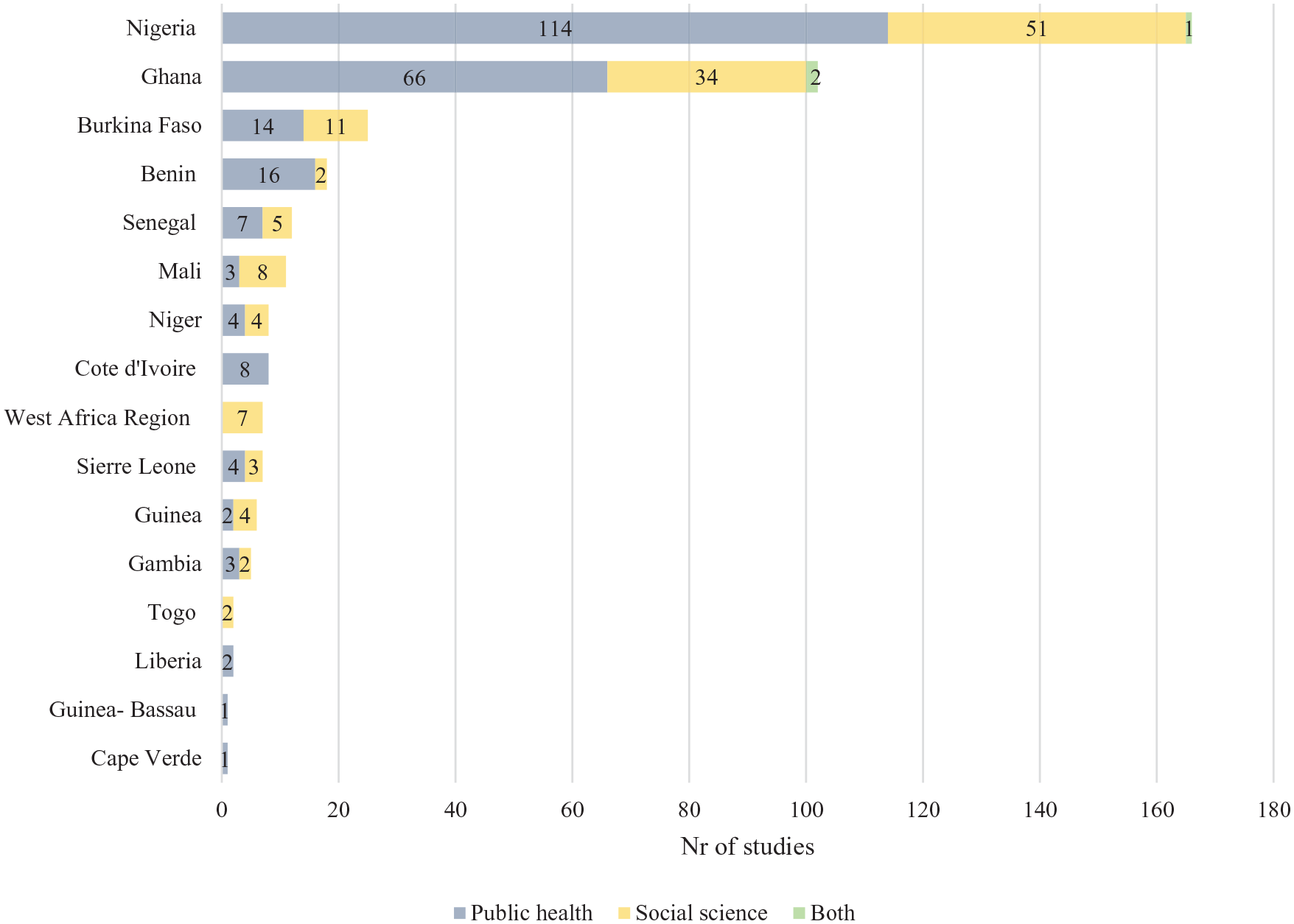
Number of studies per country in West Africa.
The nutrition outcomes studied in the public health research are undernutrition (stunting, wasting and LBW), followed by anaemia in WRA, EBF, and child overweight and obesity. Nutrition outcomes were frequently omitted from the abstracts of the social science literature. When outcomes were reported, undernutrition (including stunting, wasting, LBW, underweight, hunger) was most commonly studied, followed by overweight and obesity (both in women and children), general reporting of nutrition (without defined outcomes), diet quality/diversity, infant feeding (including EBF), anaemia (both child and WRA) and micronutrient deficiency. The three studies common to both databases reported on undernutrition (stunting and wasting) in children. Frequently, abstracts (147 studies out of 358) did not describe the study design. Typically, the health literature featured cross-sectional, cohort and case-control designs. For the social science literature, secondary data analysis, qualitative and mixed-methods designs were most frequently reported.
Drivers of malnutrition
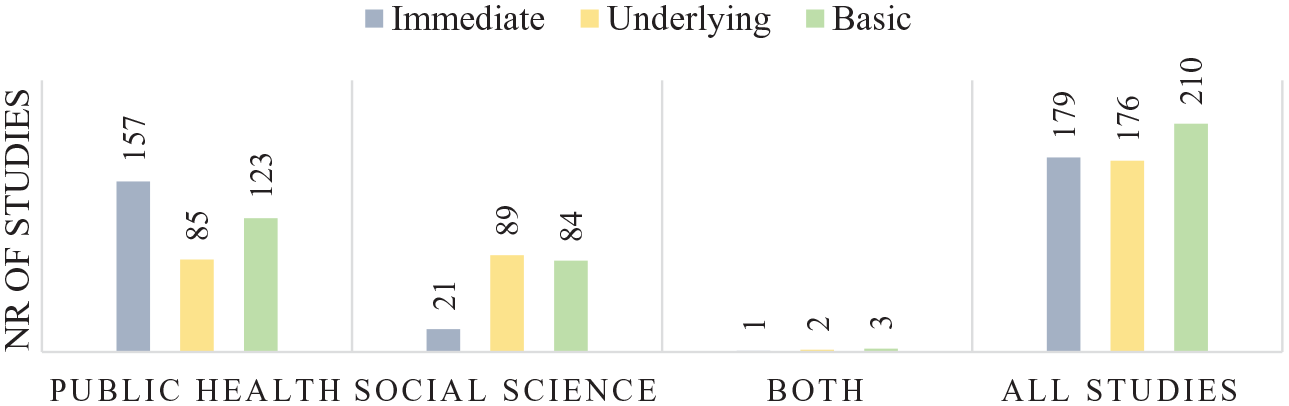
Within the health literature, the UNICEF categories were reported as follows: immediate drivers were the most widely reported (157, 43%), followed by basic (123, 34%) and underlying (85, 23%) (Figure 4).
Number of studies per UNICEF driver categories.
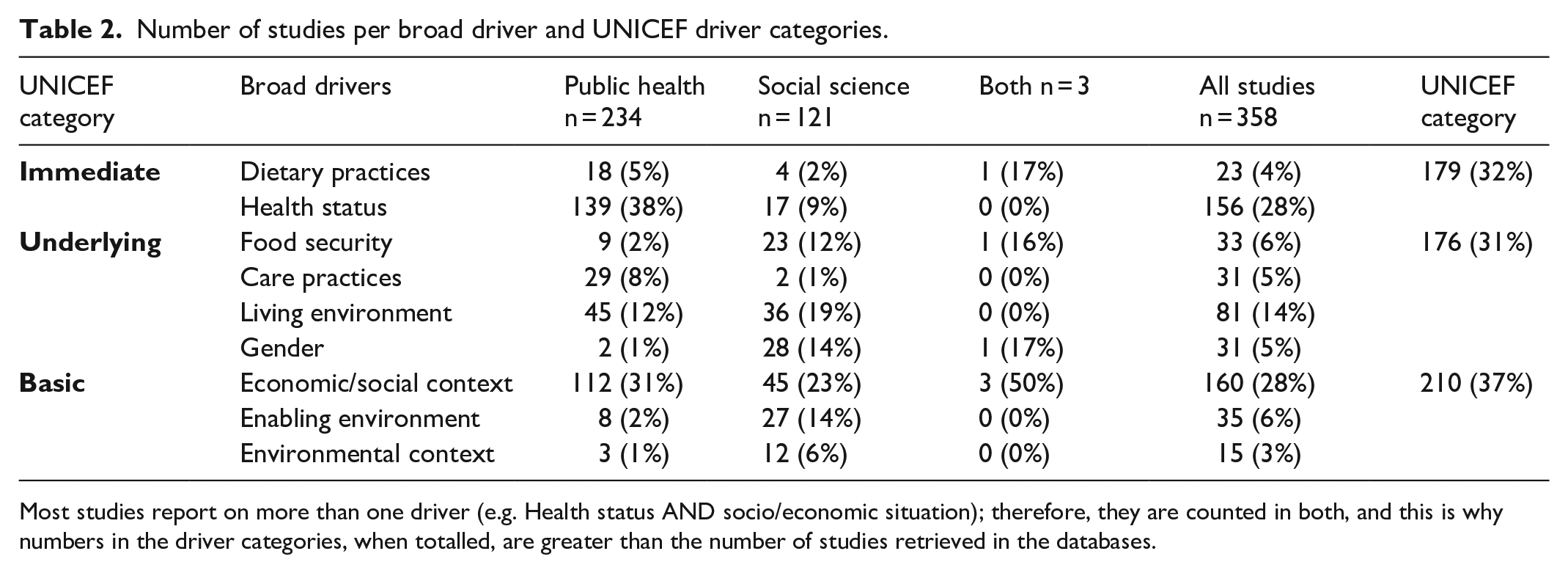
When the literature is broken down further into the broad driver categories, unsurprisingly, the immediate driver health status is the most widely reported (139 studies, 38%), followed by the basic driver economic/social context (121 studies, 31%). The least reported within the health literature are in the underlying and basic categories, and include gender (2, 1%), food security (9, 2%), enabling environment (8, 2%) and environmental context (3, 1%) (Table 2).
Number of studies per broad driver and UNICEF driver categories.
Most studies report on more than one driver (e.g. Health status AND socio/economic situation); therefore, they are counted in both, and this is why numbers in the driver categories, when totalled, are greater than the number of studies retrieved in the databases.
Within the social science literature, the UNICEF categories were reported as follows; underlying drivers were the most widely reported (89 studies, 46%), followed by basic drivers (84, 43%), and immediate drivers were the least reported (21, 11%) (Figure 4).
When the social science literature is broken down further into broad driver categories, the basic drivers economic/social context (45, 23%) as well as enabling environment (27, 14%) are widely reported, as are the underlying drivers living environment (26, 19%) and gender (27, 14%). The least reported drivers include the immediate driver dietary practices (4, 2%) the underlying driver care practices (2, 1%) (Table 2). There are three studies that appeared in both literatures. These report on dietary practices (1 study), food security (1 study), gender (1 study) and the social/economic context (3 studies), representing at least one example within all three of the UNICEF categories.
Similarities across databases include the frequent reporting of the basic driver social and economic context and when combined account for 28% of drivers identified (160 studies). This is largely attributable to frequent reporting of standard socio-demographic information (such as family size, head of household, place of residence). The underlying driver living environment is another example where both databases yield similar results (public health: 45, 12%; social science: 36, 19%). However, when considering the diverse components that this category includes (Figure 1), it may be oversimplistic to suggest that these are comparable without further analysis of the individual studies.
The greatest differences between categories is observed within the immediate driver health status; 139 studies (38%) in the public health literature compared to only 17 studies (9%) within the social science literature. Care practices are also more widely reported in the public health literature (29, 8%) compared to social science (2, 1%). The social science literature reports on the underlying drivers of food security (23, 12%) and gender (28, 14%) more extensively than the health-focused results (9, 2%) and (2, 1%), respectively. Furthermore, the basic driver enabling environment accounts for 14% of social science studies and only 2% of public health studies (Figure 4).
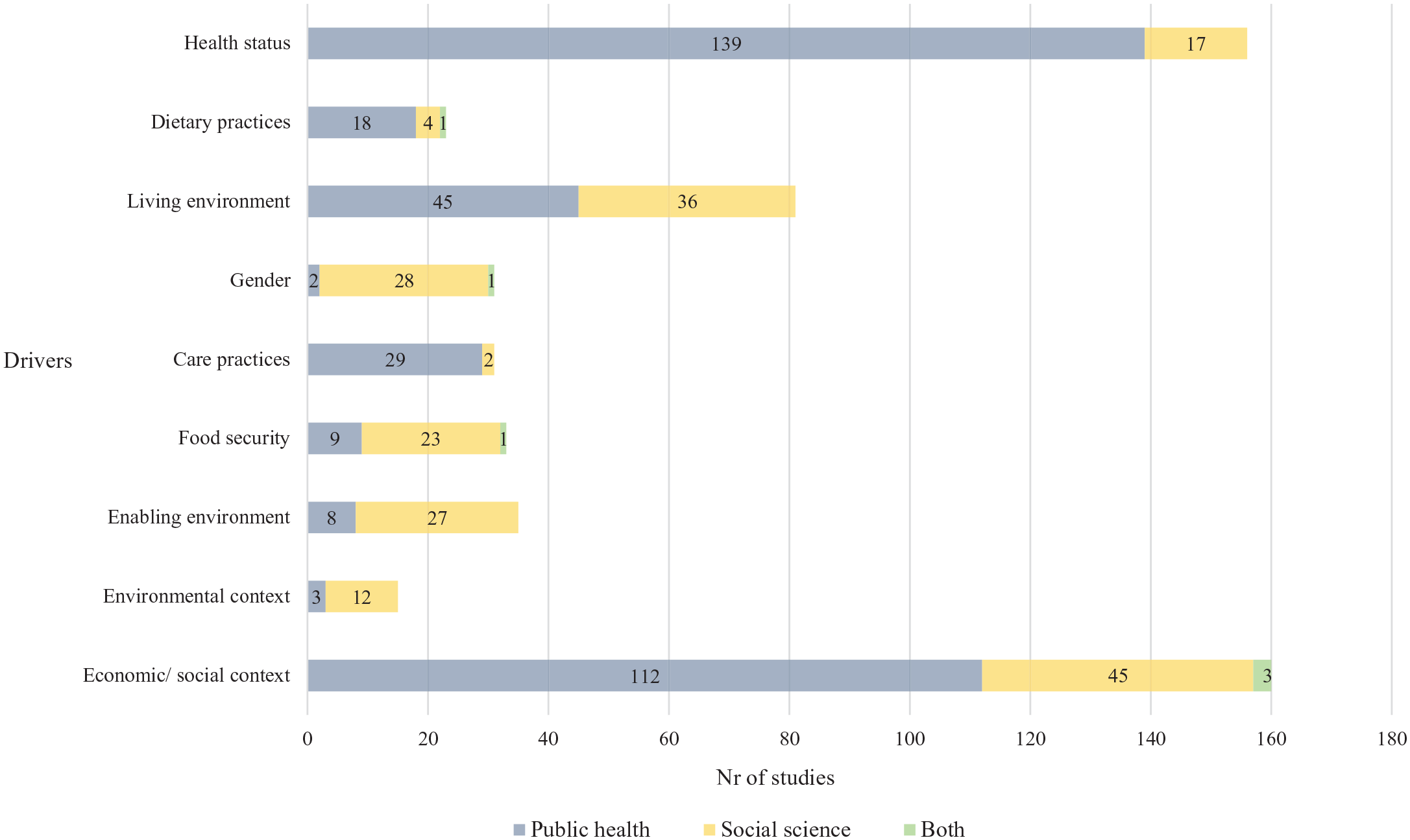
When databases are combined, studies are comparatively evenly distributed between immediate (179, 32%), underlying (176, 31%) and basic (210, 37%) drivers (Figure 5). While the health literature favours immediate drivers, and social science literature focused on underlying and basic, when combined, there is more equal representation throughout the three UNICEF categories, as well as within the broader driver categories (Figure 4).
Discussion
Systematic mapping across multiple disciplines offers complementarity in results, while upholding rigorous and transparent methodology. Moving from multidisciplinarity to interdisciplinarity requires appropriate recognition of epistemological perspectives together with familiarity with the included research. Simply transposing a public health approach focused on outcomes to a social science database does not retrieve relevant material. For example, many relevant social science papers did not report nutrition outcomes (and would therefore have been excluded), even though screening confirmed that they included relevant data or analysis for understanding the drivers of malnutrition in the region.
A valuable contribution of our work is the detailed justifications for an appropriate ‘perspective mix’ of evidence that speaks to both the highly targeted, outcome-focused health research and broader contextual social science research (Table 1). Through bringing together collective expertise, and clearly articulating the decisions in the process of this review, we can de-mystify some of the challenges in this type of research, or at least, begin a discussion on how one might make these decisions. In this case, we can also demonstrate this through the added value we receive in taking this novel interdisciplinary approach. We see that both health and social science disciples, collectively, offer a wide-angle view of the drivers of malnutrition in West Africa.
Loevinsohn et al. (2015), in a similar cross-discipline analysis, found a more realistic representation of Water, sanitation & hygiene (WASH) interventions when combining health and development perspectives. Ultimately, an interdisciplinary perspective can identify sustainable approaches and interventions that value local contexts and deliver lasting uptake within the community. Furthermore, because of the social scientific contribution, this collective approach recognises systemic issues affecting the broader social and political-economic drivers of disease and vulnerability.
A complementary approach distributes drivers evenly across immediate, underlying and basic categories (Figure 5). Unsurprisingly, the health search retrieved the most publications related to the immediate drivers (health statues and dietary intake) of malnutrition. Usually, these factors exert an immediate and measurable impact on nutritional outcomes. The social science search, on the contrary, revealed the largest share of studies relating to the underlying drivers, in particular, food security and gender. We observe more contextual and environmental components within the literature using a combined search approach when compared to searching health literature alone. An interesting target for further analysis (beyond the scope of this review) would be to compare literature that deals with the same drivers to see how the conceptualisation and methods are similar/differ and to test the value of incorporating both.
Number of studies per broad driver category.
The results on gender are interesting to examine further in this context. Empirical quantitative work has confirmed the strong association of gender variables with nutrition outcomes (e.g. the link between mothers’ education or intimate partner violence and stunting outcomes; Headey et al., 2017; Ziaei et al., 2014), but gender-oriented papers remained sparse in the public health search (1%) compared to the social science search (14%). The explanatory power of broader disciplinary perspectives is thus lost within searches that assume limited disciplinary perspectives. In this case, flexibility, reflection and consultation between authors proved essential in achieving a balanced retrieval of relevant literature that satisfies the requirements of not only rigour and relevance but validity in terms of disciplinary understandings of ‘what matters and why’.
Historically, systematic reviews became established within health and medicine as tools to analyse the effectiveness and impact of health interventions and treatments. Networks, such as the Cochrane and Campbell collaborations, have developed detailed reporting guidelines and methodologies to ensure high quality and standardisation. However, as several authors note, systematic reviews are often limited due to strict inclusion and exclusion criteria (Greenhalgh et al., 2018; Møller et al., 2018). The quest for highly comparable studies, reported in near identical ways, may result in exclusion of highly important contextual information and perspectives. This would include many studies that were mapped from our search of the social science database.
In some cases, so many studies might be excluded that the remaining studies and their findings (‘not enough high-quality studies in this area’) do not contribute anything useful for a policy decision (Snilstveit et al., 2012). Scholars have called for ‘appropriate’ use of evidence rather than evidence hierarchies particularly as a first stage of exploring ‘potential relationships’ for research and intervention/in theory building (Booth et al., 2016). Others have appealed for broader forms of evidence to be taken into consideration– including ‘thin’ research findings (Snilstveit et al., 2012) – for example, a broader range of ‘evidence’ (to include process evaluation documents and qualitative studies) when seeking to understand programmatic mechanisms (Snilstveit, 2012).
This review has demonstrated the feasibility of using systematic review methodologies to achieve complementarity, and greater diversity in study designs from combined approaches, with mixed-method and qualitative methods frequently utilised in the social science literature. We hope this can unlock further potential for those looking to expand their evidence base to make informed decisions. An important consideration is the particular challenge that arises from the fact that while highly developed qualitative appraisal tools exist within public health/health sciences, such tools are not widely accepted in other disciplines, including development studies (Mallett et al., 2012).
Researchers and policy makers alike recognise that complex health and social issues, such as malnutrition, require diagnoses and appropriate solutions which cut across individual, social and environmental dimensions. Systems thinking is increasingly being applied to malnutrition by encompassing not only the broader ecologies of production, processing, marketing, and purchase of food and related consumer behaviours, resources and institutions (Dangour et al., 2017), but also wider drivers from tackling gender and other inequalities relating to social identity, social protection policies and wider drivers that extend from labour rights through to housing policy (Friel and Ford, 2015; Marmot, 2007). In parallel, the concept of syndemic thinking has emerged to describe the biosocial (society and disease) interactions inherent in most human diseases (Singer et al., 2017): an approach that has been subsequently applied to understand the double burden of malnutrition and climate change (Swinburn et al., 2019). Such examples, and the evidence provided here, demonstrate an appetite for, and the value in, finding new methodologies to map complex influences of malnutrition. This will no doubt require a new generation of thinking to identify policy and programme solutions. By demonstrating here that there is complementarity in pursuing multiple and interdisciplinary search strategies when trying to understand the drivers of malnutrition in West Africa, and by making these data publicly available (https://westafrica.transformnutrition.org), we have contributed to the future evidence base that may be drawn upon for further research and policy intervention in the region.
Limitations
This study has sought to compare the respective yields and contributions of two research disciplines with the aim of widening understanding of the drivers of malnutrition in West Africa. It is important to note that underlying assumptions about the health and social science literature shaped the overarching search strategy, for example, by omitting qualitative literature from the health search but preserving it within the social science search. This would represent a limitation if our aim was to test differences between disciplines. However, the aim of this research was to explore complementarity, not unique yield. The extraction of information from abstracts limited the extent to which research could be evaluated. Although extracting information from abstracts instead of full texts inevitably means losing valuable detail, as we cannot determine the quality and detail of a given publication, it offers an appropriate method for literature mapping exercises (James et al., 2016).
The choice of databases may have influenced our results. We chose two of the most widely used databases for the respective disciplines, although it would be useful to conduct further research to test the sensitivity of alternative databases. Similarly, searching for evidence in predominantly English-orientated databases may have privileged the largest anglophone countries in West Africa. This study offers an initial roadmap for determining complementarity and for unearthing the potentially rich insights available. The next steps would require detailed analysis of quality, methods and content.
Conclusion
This review has taken a novel approach to demonstrate why an interdisciplinary approach to evidence synthesis methodologies is necessary to provide a more rigorous picture of available evidence across medical, social and other sciences. We have done this via a fully worked example of the case of drivers of malnutrition in West Africa. This approach accommodates the challenges of knowledge silos, the language and epistemology of different research traditions, and the inappropriateness of privileging particular forms of evidence at the expense of others when answering real-world problems. Interdisciplinarity has been operationalised through the review methodologies, with detailed justification and explanation, ensuring rigour and transparency, should others be motivated to mirror this innovative process. The results demonstrate the added value and complementarity of a genuinely interdisciplinary approach. Further research can build on this work through full-text evaluation of quality and content to highlight the finer nuances of this interdisciplinary methodology.
Footnotes
Declaration of conflicting interests
The author(s) declared no potential conflicts of interest with respect to the research, authorship and/or publication of this article.
Funding
The author(s) disclosed receipt of the following financial support for the research, authorship and/or publication of this article: Funding for this work was provided by the Bill & Melinda Gates Foundation. This publication has been prepared as an output of Transform Nutrition West Africa, which is led by the International Food Policy Research Institute (IFPRI). The funders had no role in study design, data collection and analysis, decision to publish, or preparation of the manuscript.
