



Abstract
Literature reviews stand as familiar and relevant tools within the research community, as mean to produce a state of knowledge to justify the relevance of a research question. Among the many methods that can be used, systematic approaches are developing in the Humanities and Social Sciences (HSS). These review methodologies employ rigorous techniques in the identification, retrieval, and analysis of data. The overarching objective is to uphold transparency and replicability in research endeavours, elevating the overall quality and credibility of scholarly work in these disciplines. By presenting the two main systematic approaches to literature reviews – Systematic Literature Reviews (SLRs) and Scoping Reviews (SRs) –, we intend to clarify their respective objectives and methods, so that interested researchers can make an informed choice between them. We thus show that an SR aims to characterise the extent (or scope) of research on a subject or field, whereas an SLR aims to answer a specific question with a view to guiding practices. We also show the interest of these approaches for the HSS. We use a case study – free or unpaid labour in agriculture – to illustrate the different stages of a systematic approach to a literature review. We begin by justifying the choice of an SR over an SLR, and then test the former’s methodology through its various stages. The aim is to provide guidelines for researchers wishing to undertake this type of work. We reflect on this methodology, illustrating its advantages and disadvantages in the light of our experience. We show that systematic approaches to literature reviews are non-linear and time-consuming processes which require constant back-and-forth and reflection between the various stages. Nevertheless, their contributions in helping us understand complex subjects, develop expertise and achieve transparency show that they are suitable approaches for the HSS.
Introduction
As researchers, we are familiar with literature reviews. They are a common tool we use to generate our scientific output (as a preliminary step and/or as a product in its own right) and form part of classic research approaches. A literature review is used to establish the state of knowledge on a given subject, and is therefore necessary for the undertaking of original research that can be used to identify gaps in knowledge and fill them. This means identifying what is already known about a subject, how it has been dealt with, in what contexts, and by what disciplines and epistemological and methodological approaches, in order to finally identify what has not been done (Dumez, 2011). A literature review makes it possible not only to identify an issue that is relevant to the current state of knowledge, but also to support practices and inform the drafting of evidence-based policy 1
In this article, we look at systematic approaches in literature reviews, and in particular at two types of reviews that are both the best known and the most widely used: Systematic Literature Reviews (SLRs) and Scoping Reviews (SRs). Initially developed in the biomedical sciences (where access to exhaustive and unbiased knowledge is fundamentally important), these types of reviews are now tending to be found in other disciplines, in particular the Humanities and Social Sciences (HSS). However, the HSS use research practices and epistemologies that differ from those of the biomedical sciences that formalised systematic approaches to literature reviews. For example, in our disciplines we often work with polysemic concepts; the same concept can take on a variety of meanings both between disciplines and within a discipline itself, depending on the different schools of thought that focus on it. We also often deal with qualitative data. This can pose a problem when applying methods that were initially designed for sciences that deal mainly with quantitative data, and in which currents of thought play a less determinant role. Few resources are available to adapt these methods to the HSS and to help choose between different types of reviews (apart from the guide by Pettigrew and Roberts (2006), which is specific to SLRs).
The aim of this article is to show the relevance of systematic approaches in literature reviews for the HSS, and more particularly as part of a PhD thesis. We hope to provide some insight for young researchers who are considering conducting a systematic review in the HSS. In particular, we guide the choice between an SLR and an SR in the HSS through testing on a concrete case: free labour in agriculture. We begin by comparing the objectives and methods of SLRs and SRs, so that readers can make an informed choice between these two types of reviews. In our case, we chose the Scoping Review, and we then provide a detailed illustration of how an SR is conducted using the example of free labour in agriculture. Finally, we discuss the limitations and advantages of systematic approaches to literature reviews, based on our experience, and more specifically in the context of a PhD thesis.
Systematic approaches in literature reviews
Although they are a common tool, literature reviews come in a variety of types: Grant and Booth (2009) propose a typology of 14 different types. Schematically, these types of reviews can be laid out along an axis ranging from so-called ‘narrative’ approaches to so-called ‘systematic’ ones. Narrative reviews are based on the researcher’s expertise, allowing to make well-informed choices (Greenhalgh et al., 2018). These narrative reviews are consequently designed for a qualified audience (Ibid.). Systematic reviews, on the other hand, rely on the transparency of the method to justify the choices made. In a context of a veritable explosion in scientific production and access to this production (Egret, 2021), there is a need for methods for navigating through the mass of information available. Systematic approaches are a solution, as they consist of codified and explicit processes for identifying, retrieving and analysing data. Reviews that adopt this type of approach can therefore guarantee the transparency and replicability of research, and limit the risk of bias in order to obtain the most objective information possible (Munn et al., 2018; Pham et al., 2014). These types of review are therefore especially used to support practices and inform public policies. Narrative and systematic approaches therefore have different objectives and audiences.
Moreover, we believe those types of review are particularly relevant for young researchers who are still building their expertise (or for any researcher discovering a new area), giving them a global vision of their objects by breaking down the barriers that may be created by disciplines, currents of thought, communities of authors, etc. This is especially true when the object is complex and/or has a polysemous nature.
For instance, in our case, as part of a social geography PhD thesis on free labour in agricultural set up, a review of the literature on the issue of free labour in agriculture was necessary in order to gain a better understanding of the subject and the issues involved. Given the diversity of disciplines and epistemologies interested in the subject of ‘free labour’, we decided to adopt a systematic approach to conduct this review. The question then arose as to the type of review we should use, i.e. a SRL or a SR. In this section, we give an overview of these two types of reviews, their relevance for the HSS, and the factors that finally led us to choose the Scoping Review.
Presentation of systematic literature reviews and scoping reviews: how to choose?
We focus here on the two main types of systematic approaches to literature reviews 2 : SLRs and SRs. SRs were initially conceived as a preliminary step for SLRs (Grant and Booth, 2009), but they are increasingly developing as projects in their own right. The expansion of these types of reviews has been accompanied by the creation and development of specialised institutions and communities, which have, over time, built up frameworks for conducting these reviews. These frameworks aim at providing a uniform, shared basis for conducting these types of reviews, making it possible both to guide authors and to easily check the quality of the output. PRISMA, for example, provides a list of elements to be included in an SLR (Page et al., 2021). With the increasing prevalence of these review approaches , tools are needed to assess the quality of the reviews produced, as they do not necessarily meet the methodological requirements (Shea et al., 2017). For example, a review of SLRs published between 2019 and 2020 in dentistry showed that less than 1% of the publications examined were of high methodological quality (Pauletto et al., 2022). Page et al. (2018) note a lack of precision in the drafting of selection criteria for the analysis of corpora. For SRs, an initial guide was published in 2005 (Arksey and O’Malley, 2005) and improved in 2010 (Levac et al., 2010). Despite the availability of these guides, several authors have noted a great deal of variability in the conduct and reporting of SRs, and have therefore called for a standardisation of methodology to guarantee the scientific soundness of these reviews (Colquhoun et al., 2014; Pham et al., 2014; Tricco et al., 2016). This observation has led several groups to adress the issue and devise frameworks tailored to SRs, adapting the approach taken for SLRs. The Johanna Briggs Institute (JBI) produced an implementation guide in 2017 (updated in 2020) and PRISMA published an extension of its guide specific to SRs in 2018 (Peters et al., 2020; Tricco et al., 2018).
These frameworks are therefore designed to ensure methodological rigour in the implementation of systematic approaches to literature reviews. Use of these frameworks therefore guarantees the quality of the reviews published, because the justifications for the choices made ensure research transparency and replicability. These frameworks are organised in several stages, specifically adapted to the objectives of SLRs and SRs.
An SLR is intended to answer a specific question of interest with the aim of guiding practices and/or informing decision-making, whereas an SR is meant to clarify concepts and definitions, or to review the state of research in a certain field (Munn et al., 2018). In both cases, a similar process has to be followed (Table 1). The first step is to justify the relevance of the review, formulate a research question, determine the eligibility criteria for studies to be included in the review, and develop a search strategy (Page et al., 2021; Peters et al., 2020). These elements should be set out in a protocol (that is, a purely methodological document describing the choices and procedures to be followed during the review), which should be published before the review is carried out. This protocol can be published on dedicated platforms 3 where it is necessary to register. It can also be published in more general databases (such as HAL or ResearchGate): the important point is that it should be accessible to the scientific community before the review itself, in order to allow for a quality appraisal. The protocol serves therefore to declare the forthcoming conduct of a review on a specific subject. This announcement allows the scientific community the opportunity to provide comments or critique the methodological choices if necessary, ensuring transparency and facilitating the replicability of the research. Once the protocol has been published, the review itself can begin, starting with the selection of the studies to be included in the corpus. This selection is based on previously defined eligibility criteria, and comprises several stages: identification of studies, screening and eligibility (Page et al., 2021; Peters et al., 2020). This process involves several people, as the selection of studies requires a double-blind approach to ensure the objectivity of the choices made. This selection results in a final corpus of studies to be included in the review. These studies are then analysed and the results reported. The exact steps of the process vary depending on the type of review
Comparison of SLR and SR methods
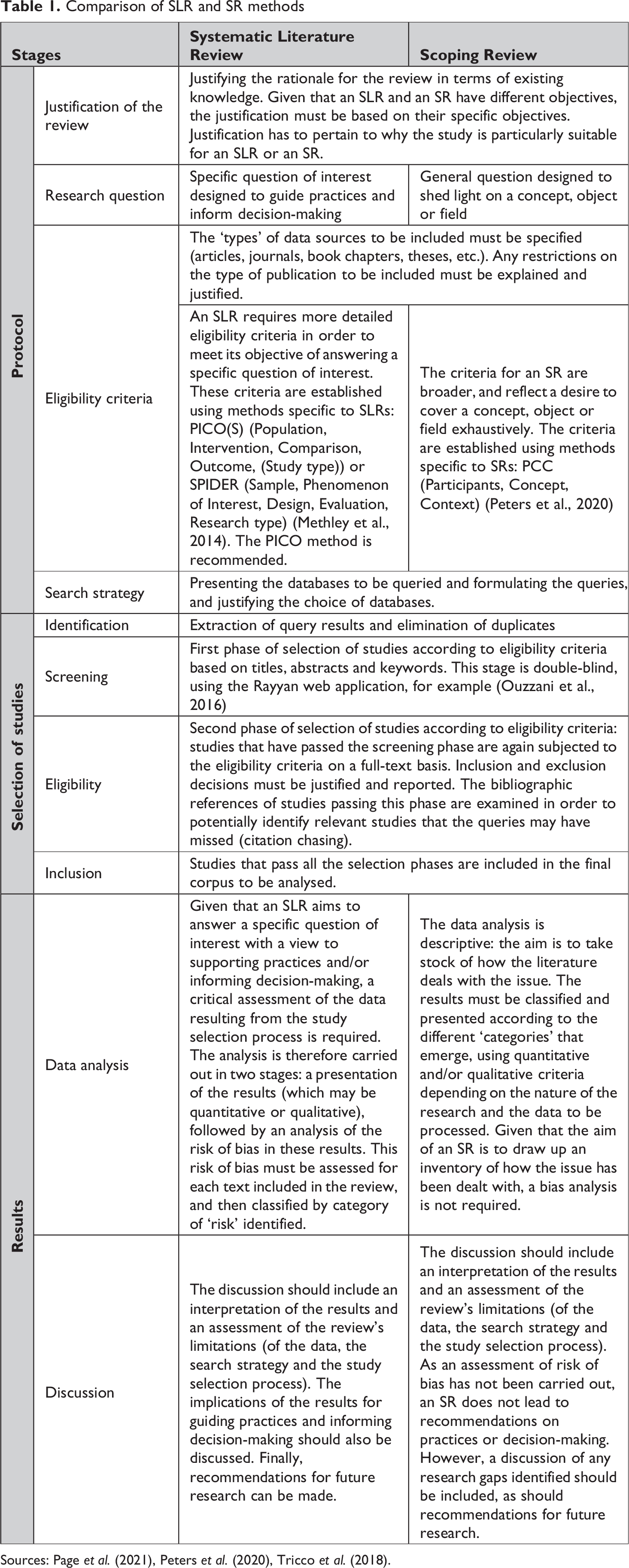
Therefore, the research objective guides the choice between an SLR or an SR, subsequently determining the methodology. The main principles, however, remain the same for both these types of reviews: transparency and replicability of the research. Even though these approaches originated in the biomedical sciences, they are relevant for all disciplines, and for the HSS. We will therefore demonstrate the usefulness of these approaches for the HSS, especially once the methods are adapted to the specific characteristics of these disciplines.
Systematic approaches in literature reviews: what place for the HSS?
The numerical breakdown of the reviews published by discipline (Figure 1) shows a strong predominance of the medical sciences, for both SLRs and SRs, as they were first developed and still predominantly produced in these disciplines. However, we note that other disciplines, most notably the HSS, do publish SLRs and SRs. More specifically, the HSS publish a higher proportion of SRs (around 11%) than SLRs (around 4%). This can be interpreted as a better alignement of SR objectives to the specific characteristics of the HSS.
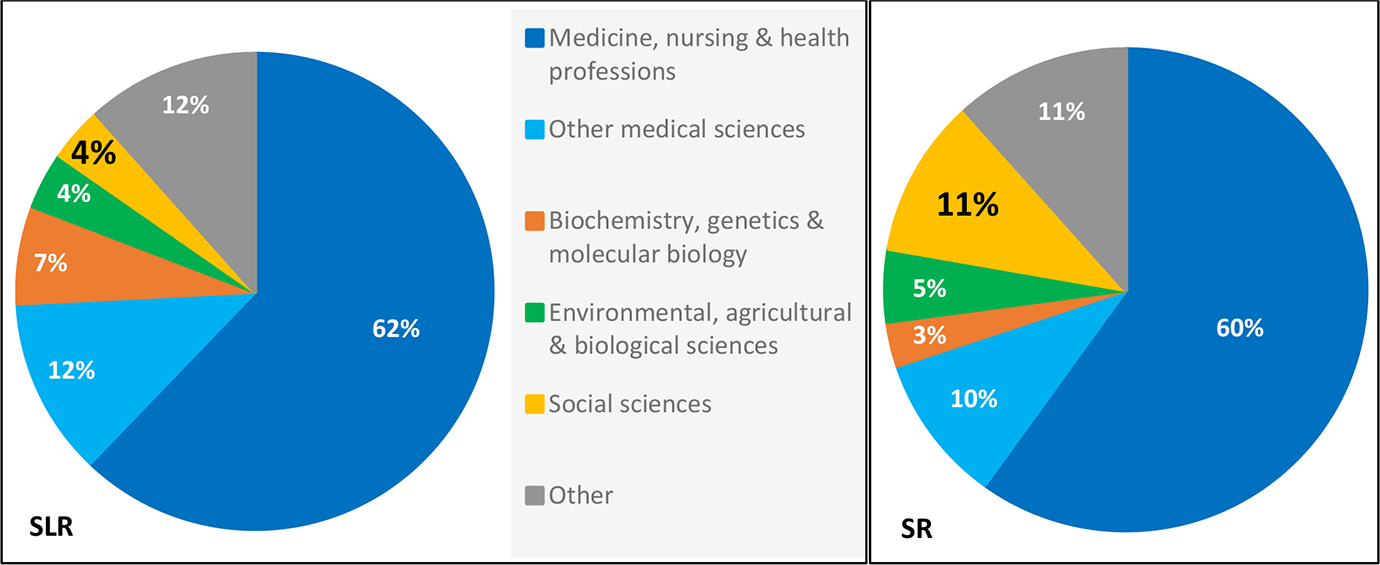
Breakdown by discipline of SLRs and SRs published - Source: Scopus
The HSS have a number of specific characteristics as compared to the so-called ‘hard’ sciences. This specificity stems first of all from the nature of the objects we study (individuals, societies and/or cultures), which can be considered complex because of their inherent subjectivity (Fusco et al., 2014). We thus have to deal with data that is predominantly qualitative. In addition, a plurality of viewpoints can be applied to the same object, originating not only from the diversity of disciplines that may each have a different viewpoint on an object, but also from a diversity of transdisciplinary currents of thought (Fusco et al., 2014). The HSS therefore have to contend with polysemous concepts. Systematic approaches in literature reviews can address these specificities in an effective manner by taking them into account in their methods. SRs appear to be especially relevant in the HSS since, as mentioned above, they aim to address the scope, nature and variety of ways of dealing with a concept, object or field. This leads them to explore results originating from a diversity of methods, disciplines or schools of thought. SRs can therefore be used to approach the polysemous concepts or objects that are frequently encountered in the HSS. Although SLRs are proportionately less commonly used in the HSS disciplines, we think that they are also highly relevant, especially if we consider the contribution that the social sciences should make to the drafting of public policy. However, the often qualitative nature of the data to be processed can lead to difficulties. While there do exist guides for using SLRs in the social sciences (Haddon et al., 2023; Pettigrew and Roberts, 2006), they do not indicate how these data should be processed. Through our review, we hope to help fill this lacuna.
What kind of review for free labour in agriculture?
Our literature review is part of a social geography PhD thesis on free labour in agricultural set up. One of the challenges of this thesis was to comprehend the concept of ‘free labour’ in the context of agricultural activity.
The concept of free labour originates from feminist work of the 1970s (Federici, 2012; Simonet, 2018). By analysing household work, these scientists constructed an analytical framework that was relevant and usable in other situations of free labour. They denounced the ‘naturalisation’ of women’s household work in a capitalist system in which the only work recognised as such was paid work (Federici, 2012). In this context, free labour corresponds to an economic devaluation of certain spheres of human activity that find themselves excluded from the field of institutionalised work: this is what Simonet (2018) calls a ‘denial of work’.
In this sense, free labour cannot be reduced to an absence of remuneration: it is a broader and more ambivalent concept than unpaid labour. Firstly, because it is not recognised by the institutions, free labour can be invisible. It isn’t generally accounted (or very little) in national statistics (Hirway, 2015). As a result, it is also invisible as an economic activity. Secondly, as free labour is not covered by labour law, it doesn’t benefit from social protection (Gardes, 2009). This can lead to confusion between free labour (voluntary labour, family labour) or compensated work (traineeships, civic services) and undeclared work. Conversely, the legal framework can create the conditions for underpaid labour with little or no social protection, as in the case of migrant work. Free labour also challenges the boundary between work and leisure (Stebbins, 2013), as it questions the meaning given to the activity performed. It may or may not be voluntary, in which case it is “unfree”. Finally, free labour can be seen in the context of the distinction between productive and reproductive work, which calls into question the confinement of free labour to some spheres of activity (Federici, 2018). Free labour is thus situated at the interface of different categories of human activity, where work extends beyond its instituted framework to penetrate other areas of social life. Free labour can thus be seen as encompassing all those areas of overlap where the category of ‘work’ as understood by institutions finds itself insufficient, in competition or in communion with other human activities and other social aspirations. In this sense, free labour is also a political concept, because it makes activities visible and removes them from a “natural” order that places them outside the field of institutionalised work. From this point of view, free labour adds to the understanding of work as a ‘category of thought’ (Dujarier, 2021).
‘Free labour’ is therefore an ambiguous and polysemous concept, which can be understood in a wide variety of ways depending on disciplinary and epistemological positioning, as well as on socio-historical and geographical contexts. As our aim for the review was to capture the diversity of the concept of free labour, we chose to approach it in a comprehensive way. We therefore decided to head for a systematic approach for the review, as a narrative approach seemed limited in its ability to cover the entire concept. Our final choice was the Scoping Review (SR), as it provides an overview of a broad topic with a wide conceptual range whereas the Systematic Review of Literature (SRL) focuses on precise questions and narrow parameters (Peterson et al., 2017). The SR therefore seemed particularly well-suited to comprehend the concept of free labour in agriculture.
In the next section, we test the SR methodology on a concrete case in order to provide a detailed guide for social science researchers interested in this approach.
Guide to conducting a Scoping Review using the example of free labour in agriculture
The methodological frameworks available for conducting Scoping Reviews often present the process as a linear sequence of separate stages, in which there are several steps to be carried out (see Figure 2). Those steps include first justifying the review, developing the research question, defining of the eligibility criteria and establishing a search strategy: those first four steps form the Scoping Review protocol. The following section is the study selection process which contains four other steps: studies identification, screening, eligibility and inclusion. Finally, the last stage is the data analysis and the presentation of results.
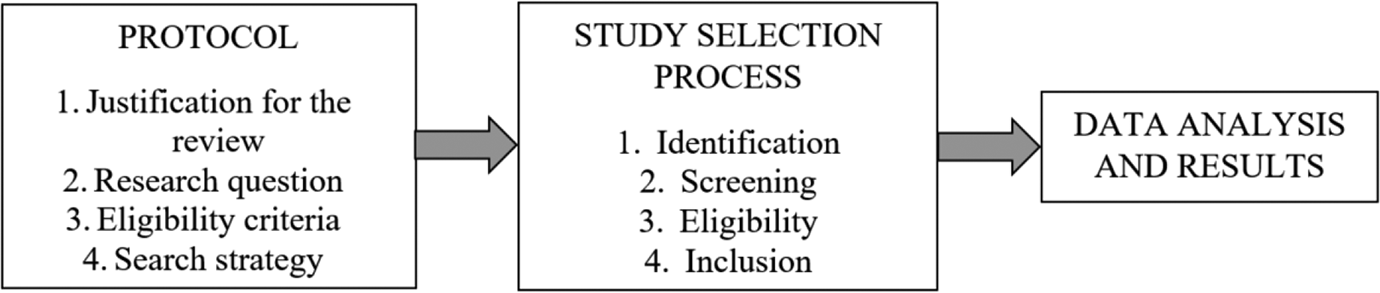
The linear sequence of steps to follow when conducting a Scoping Review, according to methodological frameworks - Sources : Peters et al. (2020), Tricco et al. (2018)
However, our experience has involved a dynamic process of navigating back and forth between these various stages. In this section, we describe, point by point, the methodological steps mentioned in Table 1, detailing their objectives and applying them to free labour in agriculture. We also seek to demonstrate the non-linearity of the process and the interdependence of these various stages and steps.
The methodological steps when conducting a Scoping Review
Justification for the Scoping Review
The first methodological element of the SR is the justification for choosing this particular type of review. We therefore need to specify the context of the review, explain why our subject is significant within this context, and justify why the objectives and methodology of the SR are suitable for addressing the subject (Peters et al., 2020). This justification is generally provided in the introduction to the SR. We therefore detail these different elements below, using the example of free labour in agriculture.
(i) Context and relevance of the subject
The issue of free or unpaid labour in agriculture is not new: several authors have already studied this topic, highlighting in particular the importance of unpaid work by farmers’ wives and children in a family organisation of the agricultural economy (Barthez, 1994) or illustrating the role of mutual aid in the organisation of agricultural work (Sabourin, 2011). However, the transformations underway in the agricultural world are opening the door to new configurations and new forms of free labour.
In Western countries, the number of people working on farms is falling sharply (Carlisle et al., 2019; Drouillard, 2018; Gambino et al., 2012; Hostiou et al., 2020). While still significantly in the majority, the two-worker family farming model is in decline, and forms of salaried employment are becoming more diversified, with pluri-activity 4 which is holding steady and outsourcing becoming more common (Forget et al., 2019). Moreover, a context of ‘agroecological transition’ is affecting forms of organisation of work and working conditions (Dumont and Baret, 2017), as well as the meaning of work (Timmermann and Félix, 2015) and job satisfaction (Mzoughi, 2014). Agroecology and the production models associated with it are also leading to specific forms of free labour, such as agricultural volunteering (Ekers and Levkoe, 2016) and WWOOFing 5 (Lans, 2016; Terry, 2014). In addition, the agricultural economy is specific in that it allows for a form of property ownership (land, buildings, equipment, livestock, etc.), which can be seen as a form of deferred remuneration. More generally, globalised production has encouraged cheap labour migration in the agricultural sector, leading to the exploitation of the domestic community: migrants and domestic workers can provide free labour monopolised by capital (Gerbeau and Avallone, 2016; Meillassoux, 1981).
Taking free labour into account is therefore fundamental to understanding agricultural activity.
(ii) Justification of the choice of Scoping Review
The issue of work in agriculture is of interest to a variety of scientific disciplines, such as ergonomics, agricultural economics, zootechnics, rural sociology, geography and political science (Malanski et al., 2019). This issue is part of several areas of research: social issues in rural areas, the labour market, household strategies for the division of labour, the organisation of work on livestock farms and occupational health (Malanski et al., 2021). Free or unpaid labour is conceptually diverse and applies to a wide variety of situations. The majority of studies dealing with free labour focus on domestic and care work (Delphy, 2003; Federici, 2012; Hirway, 2015; Krinsky and Simonet, 2012; Miranda, 2011; Shelton, 2006; Simonet, 2018, 2020), digital labour (Beverungen et al., 2015; Fast et al., 2016; Simonet, 2018; Terranova, 2013) and volunteering (Hély and Simonet, 2013; Overgaard, 2019; Simonet, 2004; Stebbins, 2013). The question of free labour in agriculture in particular is less addressed, and has never been dealt with comprehensively. Given that free labour in agriculture can involve a wide variety of forms of work, a review of the literature on this issue makes eminent sense. This process will allow us to establish what the scientific community has already produced on the subject, and how it has addressed it. The aim is therefore to provide an overview of what the scientific community considers as free labour in the agricultural sector. The objectives of the Scoping Review, namely the clarification of a concept, object or field, therefore lend themselves particularly well to our expectations (Peters et al., 2020; Tricco et al., 2018).The intention is to be as exhaustive as possible, and to adopt a comprehensive approach to literature that will be analysed in this study. We will therefore follow the framework as detailed by by Peters et al. (2020), Peterson et al. (2017) and Tricco et al. (2018).
A research question with a broad scope
Our research question is aligned with the objectives of an SR, and is therefore broad in scope. We formulate it as follows: how is free labour in agriculture defined, conceptualised and analysed in the scientific literature? To find an answer to this question, we need to define eligibility criteria so that we can select or exclude the publications that our queries of databases will return.
Defining eligibility criteria using the PCC method (Participants, Concept, Context)
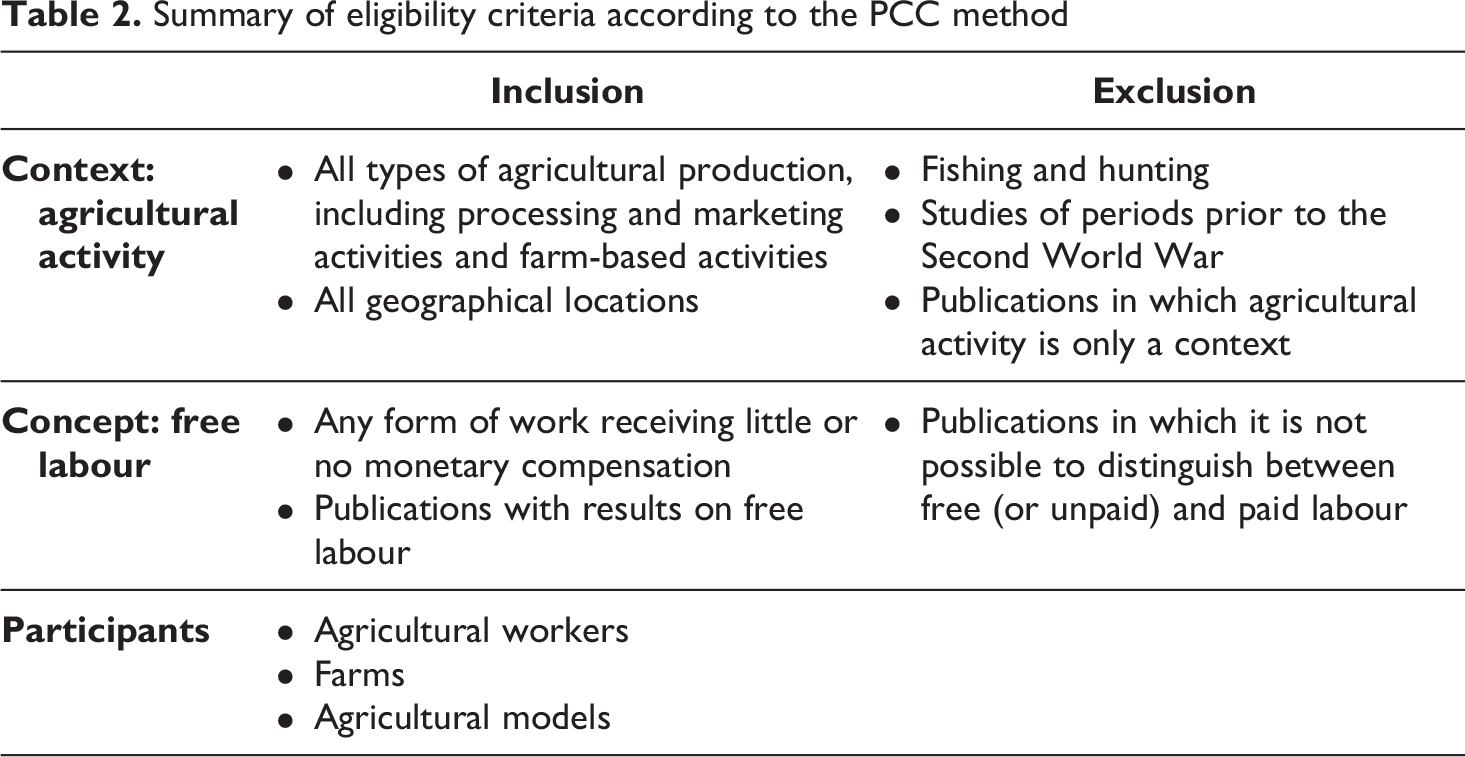
According to the methodological guide published by the Johanna Briggs Institute, the eligibility criteria for an SR can be broken down into three dimensions: the Participants, the Concept and the Context (PCC) studied (Peters et al., 2020). The aim is to clearly explain the choices that have been made, and why they have been made: ‘Important characteristics of participants should be detailed, including age and other qualifying criteria that make them appropriate for the objectives of the scoping review and for the review question. […] The core concept examined by the scoping review should be clearly articulated to guide the scope and breadth of the inquiry. This may include details that pertain to elements that would be detailed in a standard systematic review, such as the “interventions”, and/ or “phenomena of interest”, and/or “outcomes” (as relevant for the particular scoping review). […] The “Context” element of a scoping review will vary depending on the objective/s and question/s of the review. The context should be clearly defined and may include, but is not limited to, consideration of cultural factors, such as geographic location and/or specific social, cultural, or gender-based interests’ (Peters et al., 2020: 11.2.4).
For our SR, our Participants are agricultural workers, farms and agricultural models. Our Concept is free labour, and our Context is agricultural activity. We have no particular exclusion criteria for the type of study to be included, apart from the fact that they must be scientific publications (we therefore exclude grey literature, press articles or abstracts of scientific productions). Since, between us, we know French, English and Spanish, any publication not in any of these languages will also be excluded.
(i) Participants: agricultural workers, farms and agricultural models
Our participants fall into three categories: First of all, we consider the agricultural workers (all of them: farmers, family workers, volunteers…), whether permanent or temporary, who take part in agricultural activity on a farm. The focus is on those who work for free, and the influence of this free labour on other workers. We then look at types of farms where free labour is used. This second level makes it possible to take account of organisations of work that may differ depending on farm type, and thus to focus our attention on those that favour (or do not favour) free labour, and the associated forms of free labour. Finally, we add a third perspective in the form of agricultural models, which can be defined as either (i) the representation of a complex reality (modes of agriculture, agricultural worlds and/or agrarian systems (Gasselin, 2019)); (ii) the representation of a desired future; or (iii) a set of standardised practices (Gasselin et al., 2020). We will examine the influence of some of these models on the use of free labour.
To be included, a publication must concern at least one of these three categories. We have deliberately made this framework very broad; it allows us to take into account the various dimensions through which the issue of free labour in agriculture can be approached.
(ii) Concept: free labour
As is often the case in the social sciences, the definition of the concept – here free labour – shows its composite and polysemous nature, thus contributing to the choice of SR as the relevant approach for conducting a review.
For the purposes of this review, in which we intend to approach the polysemy of free labour in agriculture, we consider that any form of work receiving little or no monetary compensation falls within the scope of free labour. To be clear, publications will be included only if they have results on free labour, and not just make reference to it as a contextual element. Furthermore, these results must be dissociable from those concerning paid labour (if this is also addressed in the publication). We therefore exclude publications where it is not possible to distinguish between free and paid labour.
(iii) Context: agricultural activity
The context of our review is agricultural activity. The publications selected may therefore concern any type of agricultural production (plant or animal), as well as all the processes involved in production (e.g. mutual help farming), all processing and marketing activities, and all activities based on farming (e.g. agritourism). However, we do exclude fishing and hunting (although we retain aquaculture, which is a farming activity). The selected publications must arrive at results concerning free labour in agricultural activity, so we exclude studies conducted in an agricultural context, but whose results do not concern agricultural activities.
There is no geographical exclusion criterion; publications may focus on any region or country. However, we do have a temporal exclusion criterion: the period of study must be after the Second World War. In this way, we are interested in the contemporary period and recent history, which encompasses periods pertaining to agrarian reform, the arrival of wage labour, independence of countries and agricultural modernisation.
Summary of eligibility criteria according to the PCC method
Search strategy
In this section, we provide details on the choices we made, first of the databases that we have chosen to query, and second concerning the formulation of the query 6 . We specify and justify all the choices we have made. This includes not only specifying the databases which were queried and explaining why they were chosen, and providing details on the development of the thesaurus and justification for it, but also describing the construction of the queries (we present them in appendices 1 and 2). Below, we describe in detail the entire query construction process.
First of all, on the basis of literature reviews on the issue of work in agriculture (Duval et al., 2021; Hostiou et al., 2020; Malanski et al., 2019, 2021), we were able to identify two key elements that guided our choice of databases: Web of Science and Scopus are the databases most often used. The scientific communities most active on the issue of work in agriculture are based in the United States, the United Kingdom, France and China.
We therefore chose to formulate our queries in English and French, as these are the languages in which the scientific communities identified publish the most. Several databases were queried, most notably Web of Science and Scopus, as these are two reference databases with a wide coverage (temporal, disciplinary and geographical), and which are primarily used in literature reviews on issues of work in agricultural. In pursuit of exhaustiveness and to potentially identify papers not referenced in these two main databases, we also chose to formulate queries in HAL (the largest French-language database, covering all disciplines) and in Taylor & Francis online. Testing of some other databases (Cairn, JSTOR and Scielo) led to inconclusive results.
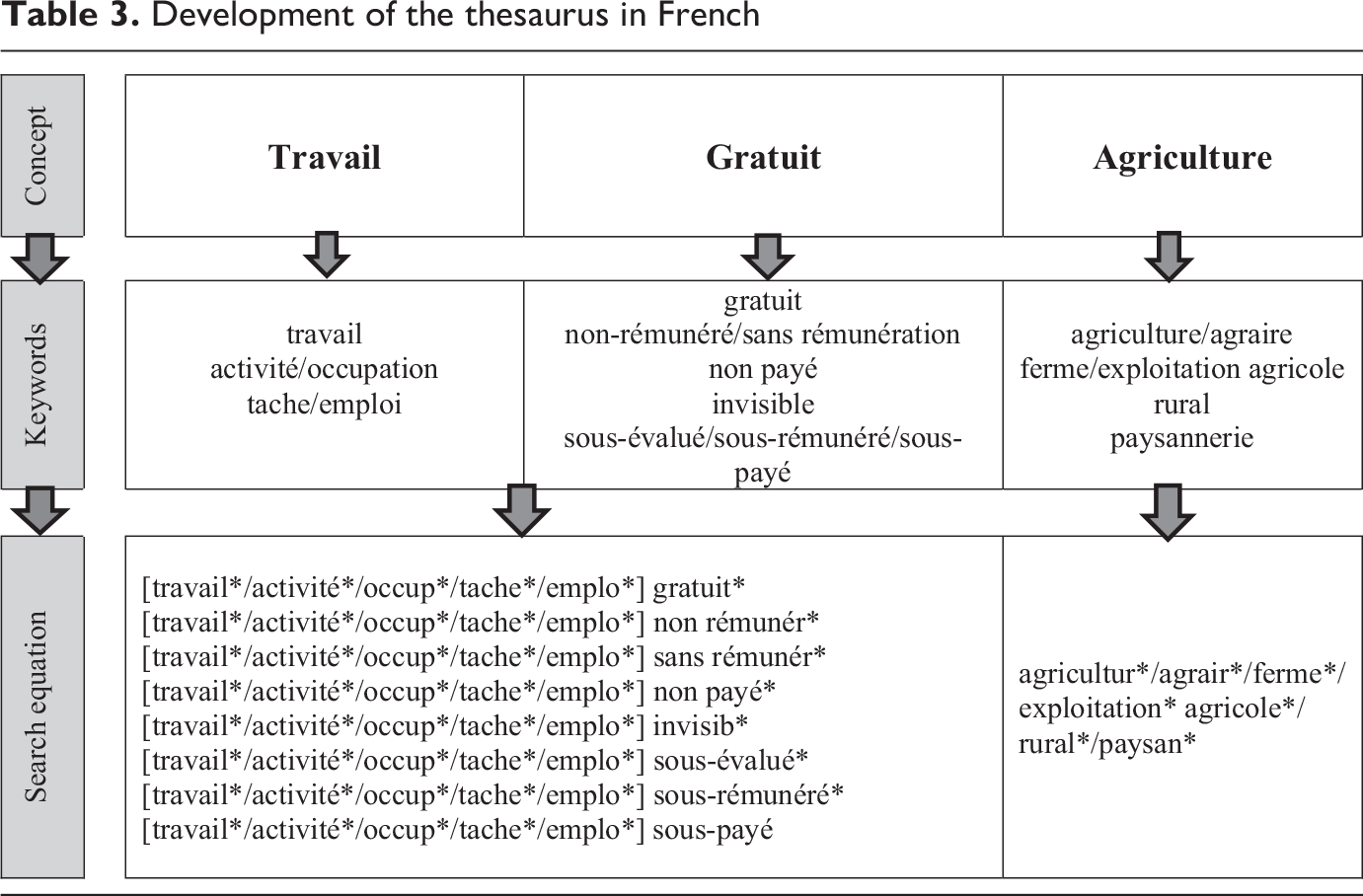
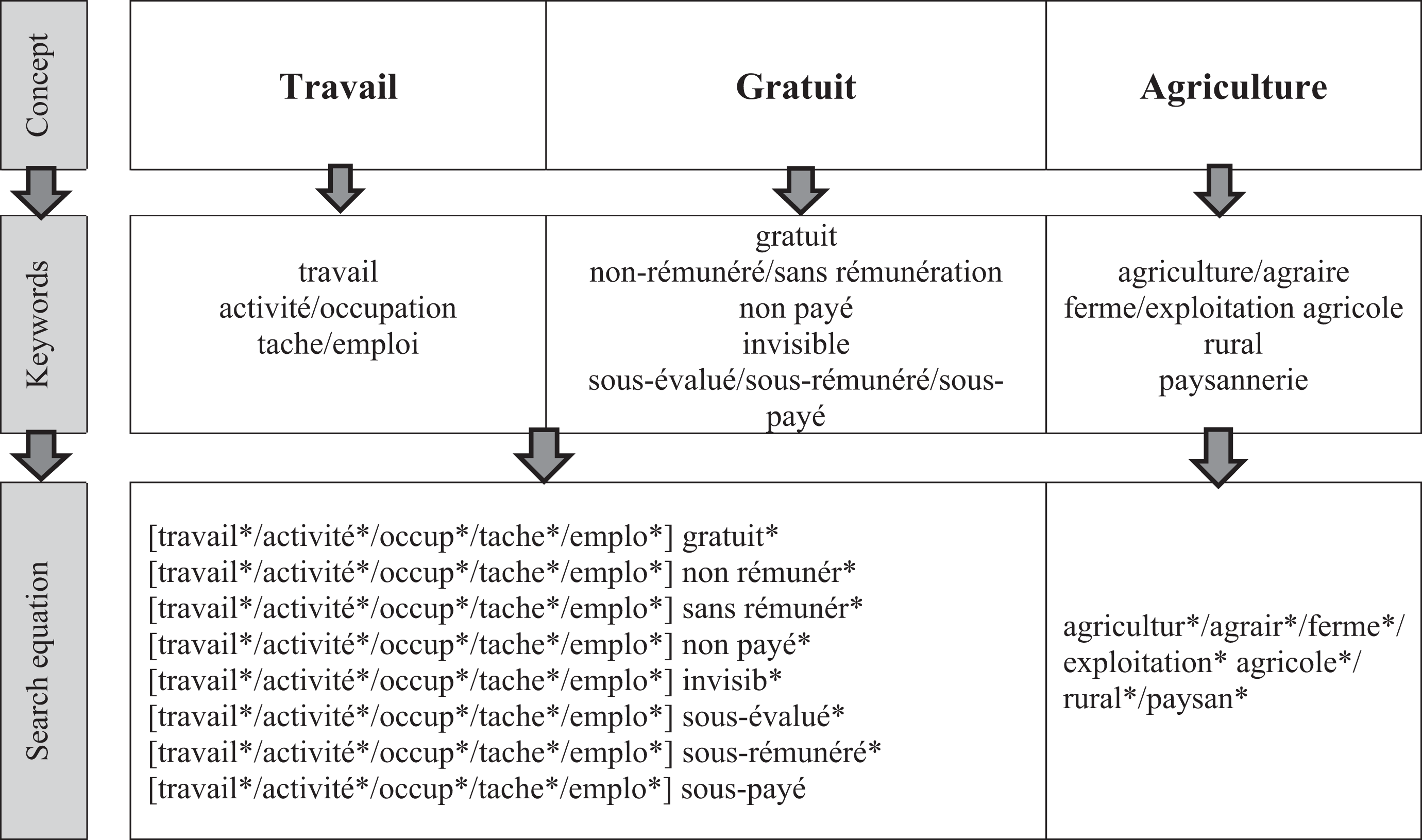
The thesaurus and queries were formulated by breaking down the key concepts of our question – i.e. free labour and agriculture – into keywords, in both English and French. Indeed, free labour can be characterised in several ways: By the lexical field associated with free labour: free labour, unpaid labour, unwaged labour, invisible work, underpaid labour, etc. By the actors who do free agricultural labour: women, children, retired people, migrants, etc. By social relationship of production: family labour, undeclared work, concealed work, insecure work, domestic work, slavery, bonded labour, forced labour, internship, voluntary work, mutual aid, WWOOFing, self-employment, etc. By periods during which free labour is more likely to take place: setting up of a farm, transfer of farm ownership, retirement, etc.
After running some tests with all the approaches listed just above we decided to focus on an approach based on the lexical field of free labour. We found that approaches based on actors and social relationships of production do not solely concern forms of free labour and therefore generate a lot of noise. Moreover, our review’s aim is to help us understand how the issue of free labour in agriculture is defined, conceptualised and analysed within the scientific community. We are therefore interested in studies that deal with free labour by naming it as such, thus justifying a query by lexical field. The other approaches would have required us to define ourselves what was free labour and what was not, whereas we are seeking to provide an overview of what is considered to be agricultural free labour in the scientific world. The keywords were chosen on the basis of the authors’ expertise on the issues of free labour and work in agriculture, as well as by going through the literature reviews already published on the same subjects. Tables 3 and 4 show the thesaurus construction process in detail (in French and English).
Development of the thesaurus in French
Development of the thesaurus in English
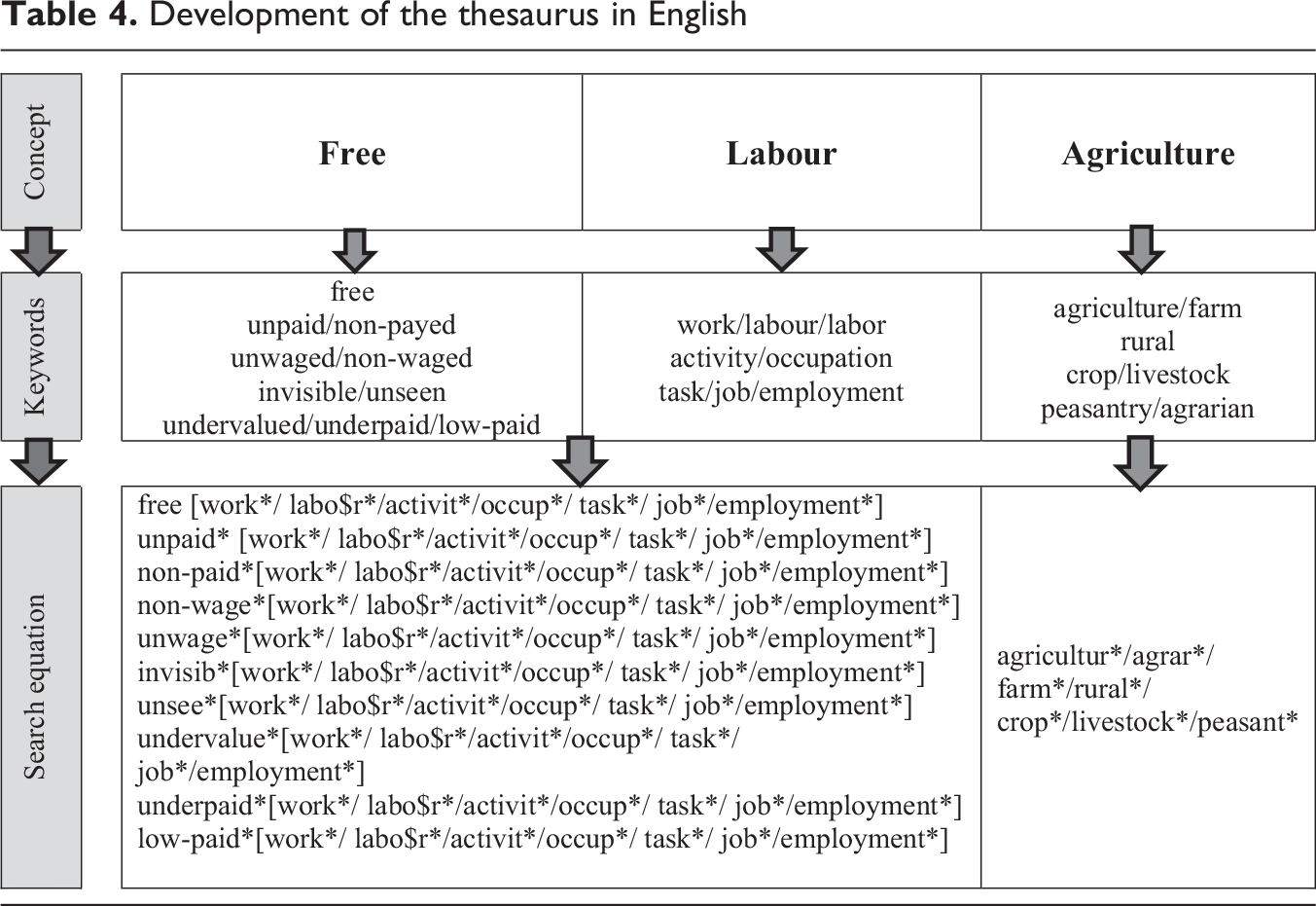
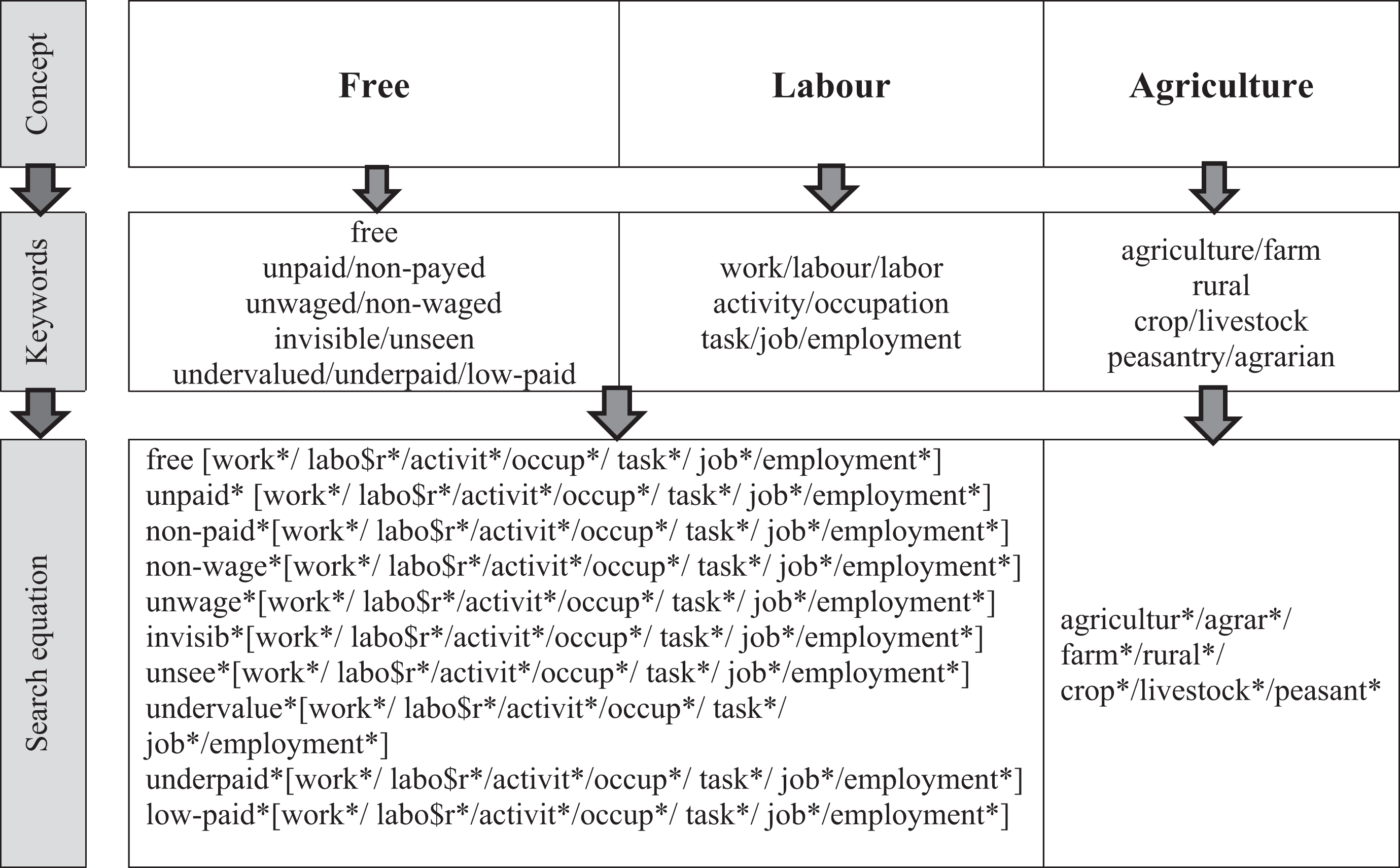
The final queries were formed using truncation and boolean operators. In particular, we decided to allow the presence of one word between ‘free’ and ‘labour’ (using the NEAR/1 operator for Web of Science and PRE/1 for Scopus), which made it possible, for example, to include publications referring to ‘free family labour’. Queries were formulated by looking for key words in the title, abstract and keywords. They are presented in Appendices 1 and 2 (for Web of Science and Scopus respectively).
Process of selection of studies
In this section, we detail the entire process of selecting the publications that were included and analysed in our SR. This process is divided into four parts. We started by extracting the results of our queries and removing any duplicate articles (since we were querying several databases, there were bound to be duplicates). Once this stage was completed, we could move on to the screening, which consisted of subjecting all the publications returned by the queries to our eligibility criteria, based on a reading of the title, abstract and keywords. This stage’s objective is to eliminate publications that are clearly outside our subject area. We could then move on to eligibility, which consists of submitting the publications that have passed the screening stage to the eligibility criteria, this time on the basis of the full texts. Publications that pass the eligibility stage are included in the analysis, and their bibliographic references are examined in order to identify other potentially relevant studies that the queries may not have identified (citation chasing). This entire process should be recorded in a flow diagram (ideally the PRISMA flow diagram 7 , see Figure 3).
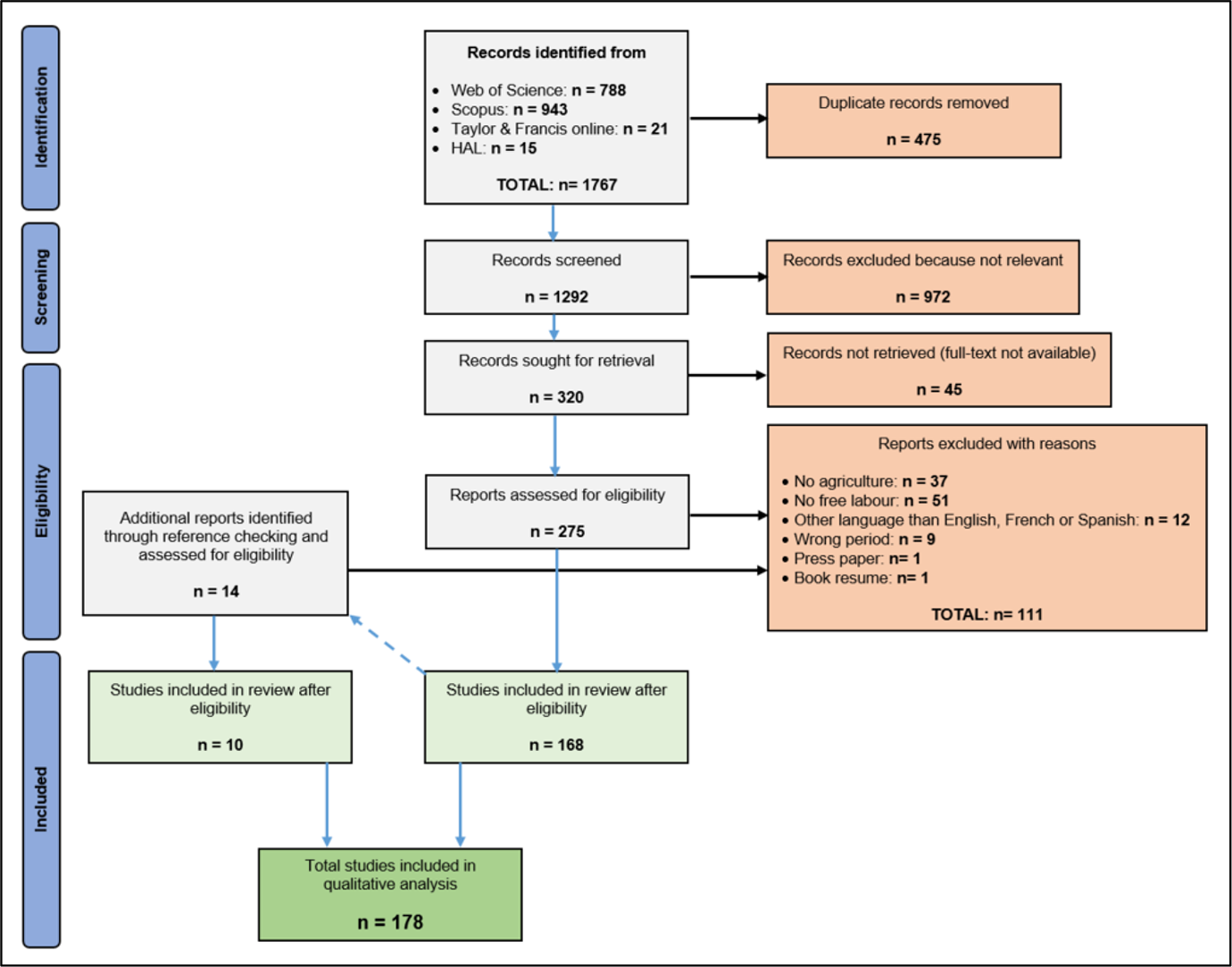
PRISMA flow diagram of the study selection process – January 2024
(i) Extraction of results and removal of duplicates
Once the queries had been formulated and executed on the selected databases, we could extract the results in RIS or BibTex format. We also set up alerts to monitor query results.
The query results can be imported into the Rayyan® web application, which facilitates the selection process (Ouzzani et al., 2016). This application also allows easy identification and deletion of duplicates. The number of results returned from queries and the number of duplicates deleted should be noted and reported in the PRISMA flowchart (see Figure 3). In our case, the queries returned 1767 results. After deleting the duplicates, we were left with 1292 articles.
(ii) Screening
The next phase is the screening phase. This consists of subjecting the publications returned by the queries to the eligibility criteria by reading only the title, abstract and keywords. This phase is carried out in a double-blind manner between those conducting the review: each individual makes his or her inclusion or exclusion choices without being able to see the others’ choices. Once all have made their choices for all the publications, the results are compared. At this point in the screening phase, if there are any conflicts, they have to be resolved through discussion. The final choice of inclusion or exclusion must be unanimous.
This process is greatly facilitated by the Rayyan® web application. Keywords can be entered for inclusion or exclusion, which are highlighted in green and red respectively. This makes it easier to read and find the items of interest more quickly. Rayyan® also has a ‘double-blind’ mode: when this mode is activated, those conducting the review can each work on their own screening without being able to see what the others are doing. They can then switch off this mode, allowing them to see the publications for which they have made different choices. They can then discuss the conflicts to better define the inclusion criteria.
Here too, it is necessary to keep a note of the number of publications that have gone through this screening phase, and how many have been excluded. These figures should be entered into the PRISMA flowchart (see Figure 3). At this stage, the SR methodology does not require the reporting of reasons for exclusion; the choices are usually relatively obvious. For example, in our case, some of the publications we excluded at this stage concerned the chemistry of agricultural soils and therefore referred in their abstracts to ionic ‘free activity’. These publications therefore corresponded to the keywords in our queries, but had absolutely nothing to do with free labour in agriculture as we had defined it.
In our case, the screening phase eliminated 972 publications. This left us with 320 publications for the eligibility phase.
(iii) Eligibility
The eligibility phase consists of subjecting the publications that have passed the screening to the predefined eligibility criteria, this time on the basis of the full texts. Therefore, the results have first to be extracted and the full texts located for the publications that have passed the screening phase (318 articles in our case).
Rayyan® allows the list of articles remaining after the screening phase to be exported in CSV format. The list can then be imported into Excel. A search for the full texts of the publications then has to be conducted. The links can be entered into the shared Excel file so that everyone involved in the review can access them easily.
In our case, of the 320 publications that passed the screening, the full text of 45 could not be found, which reduced our corpus for testing eligibility to 275 publications (see Figure 3).
In our case, we determined eligibility according to the hierarchy of our eligibility criteria. The most easily discriminating criterion was in fact our context: agriculture. Using the text search function, it was easy to determine rapidly whether the publication in question dealt with agricultural activity. If it did not, the article was excluded. If the article did deal with agricultural activity, we moved on to the next eligibility criterion: our concept of free labour. Since we have defined free labour as labour that is paid little or nothing, we used these keywords to search for free labour in the text. We also considered different forms of free labour, by looking for keywords such as ‘volunteering’, ‘mutual aid’ or ‘internship’, for example. If the article did indeed deal with free labour, we moved on to the next eligibility criterion: our participants, i.e. agricultural workers, farms and agricultural models. To be included, the publication had to involve at least one of these three participants. Given our context, which is agriculture, the participants are not really discriminating: if an article is indeed about agriculture, there is a high probability that it will mention at least one of our participants.
The publication was included if and only if our three eligibility criteria were met. We used an ‘IF’ type formula in Excel to facilitate this process. At this stage, we also excluded publications that were not written in English, French or Spanish, and those that covered periods prior to the Second World War.
Here too, it is necessary to keep track of how many publications pass this eligibility phase, and how many are excluded (see Figure 3). It is important to keep track of all the publications that are excluded, and record the reasons for their exclusion. In our case, we excluded 107 publications. Our corpus after this stage therefore comprised 168 publications.
Eligibility also includes a phase of examining the bibliographic references of the publications that pass, in order to potentially identify new publications that may have escaped the queries and which could be relevant to the study concerned. If such publications are identified, they too must satisfy the eligibility criteria before being included. We automated this task by using two tools: citations from Web of Science and citations from the Open Citations database, which identifies documents cited in the pre-selected corpus as well as cited publications (forward citations). In our case, citations from these different sources were noted in order to retain only those cited at least twice (to ensure that the references cited had a certain importance). These documents were then put to the test of our eligibility criteria. This process helped us identify 14 new publications, from which we retained 10. We therefore ended up with a final corpus of 178 publications included in the analysis (see Figure 3).
Analysis of results
The results of a Scoping Review should be categorised so that they can be ‘mapped’ (Peters et al., 2020; Tricco et al., 2018). It is therefore advisable to use tables and graphs to present the results in a clear and organised way. Indeed, some elements are easy to classify, for example the publication period or the country of the study.
In our case, the elements that seemed relevant to represent are the countries of study, the forms of free labour analysed, the definitions and approaches chosen to study free labour, the theoretical currents and the communities of actors.
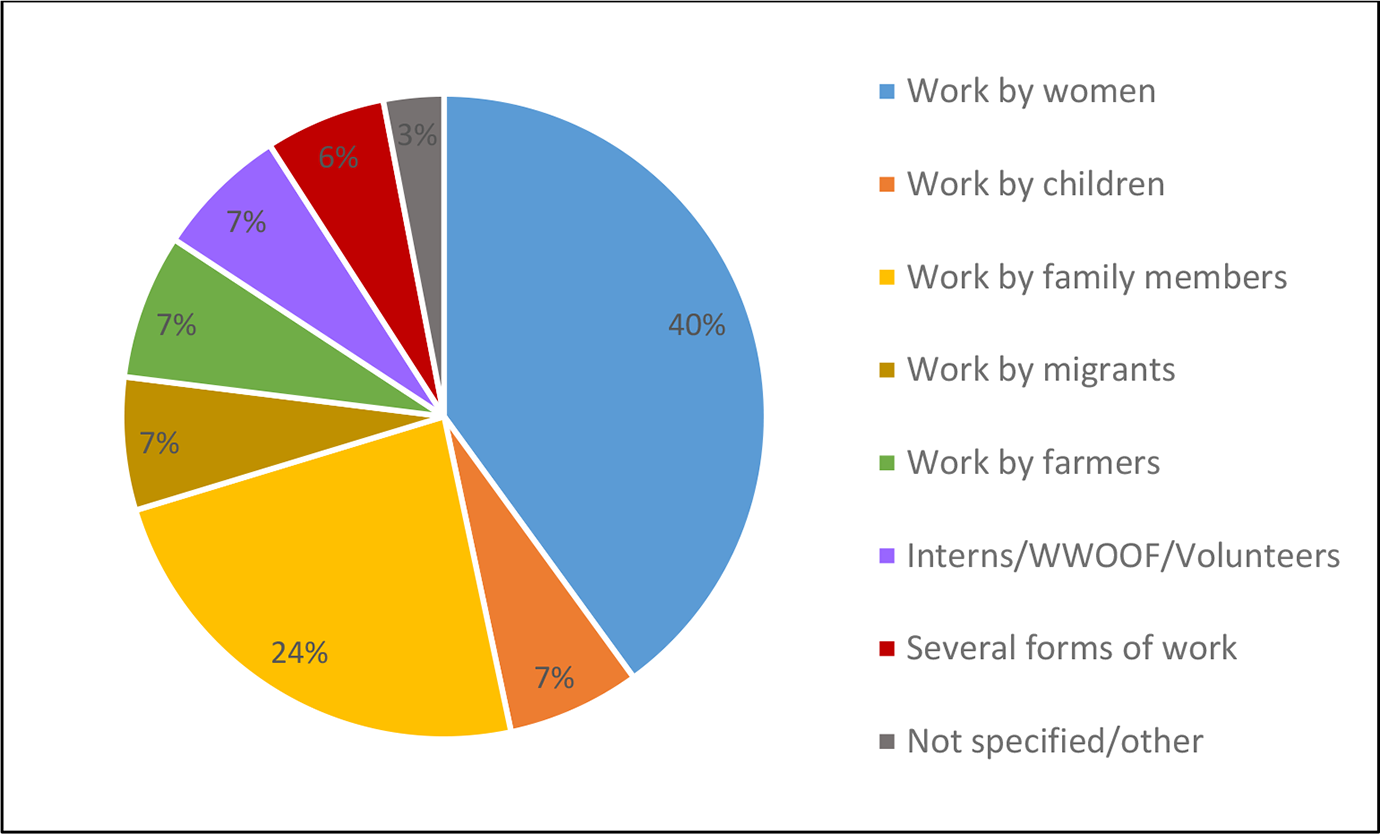
Example of a graphic representation of the data, here the distribution of the forms of free labour studied in the corpus
These representations involved processing the metadata already recorded when the results were extracted (in particular the year of publication and the authors), as well as coding the publications’ content according to the elements of interest to us. We did this coding in Excel, simply by adding columns for each category of interest.
Most of the publications included in our review deal with qualitative data, which we had to code in an effective manner. Because of the diversity of conceptions, methods and schools of thought used to address the issue of free labour in agriculture, the results cannot easily be categorised. We have therefore chosen to classify according to the different angles of analysis adopted in the publications selected for the final corpus. In the course of reading the articles, we identified five dimensions of free labour that are mainly explored in them: The meaning of free labour, i.e. the motivations behind free labour, the representations (individual and social) of this unpaid work and the satisfaction that can be derived from it; The economic value of free labour, i.e. the calculation or assignment of a monetary value to free agricultural labour; The structural aspects and/or causes of free agricultural labour, i.e. elements relating to the labour market, institutions, legal framework and social system in place; The organisation of free labour, i.e. the distribution of unpaid tasks within a group of workers; The social relationships of production established through free labour, i.e. the hierarchical organisation of relations between social groups, their control over resources and their participation in or exclusion from decision-making.
We therefore coded the various publications according to these different dimensions of work in an Excel file. The analysis is therefore based on these five dimensions, which allowed us to identify recurring elements of analysis by dimension. These results were recorded in our Excel spreadsheet. We then carried out a cross-analysis, linking these different results to the more transversal elements identified, in particular the forms of free labour studied, the country of study, the communities of authors, the currents of thought and the meaning assigned to free labour. In this way, we obtained a complete overview of the scientific literature on the issue of free labour in agriculture.
For example, the main results concerning the structural aspects and/or causes of free agricultural labour are the following: The majority of papers deal with women’s free labour, using national statistics. These papers note that this work is either not taken into account in these statistics, or is seriously underestimated. A second group of papers focuses on the labour market, and how it can create the conditions for unpaid work. Here again, the majority of papers focus on women’s work, based on the observation that the labour market is unfavourable to women (low job opportunities, pay well below that of men). Women may find themselves in “compulsory” free work, in the sense that the salaried labour market is closed to them. A third approach looks at how the legal framework and social system in place can enable workers to be exploited. This is particularly true for women’s work, migrant work, child labour, and the work of trainees and/or volunteers.
In this structural dimension of free labour, studies on women’s work are largely preponderant. We then realized that, even if the forms of unpaid work studied are more diverse according to the other dimensions of work we identified, the study of women’s unpaid work remains preponderant and is the only form of unpaid work to appear in all five dimensions. The study of agricultural free labour is also geographical: we realized, for example, that papers looking at agricultural free labour in India did so through the prism of women’s work, while papers dealing with the USA looked at a diversity of forms of free labour.
As this is a Scoping Review, we did not include an analysis of the risk of bias of the publications included in our corpus (as it would be the case in SLRs). Nevertheless, we noted a broad range in the quality of the papers we included in the review, which is one of the elements we discuss.
An SR is not a linear process
The different steps we presented just above are presented in methodological frameworks as a linear process, with a series of stages to be carried out in sequence (see Figure 2). This “linear” presentation is what is required in the construction of the protocol. However, our experience is that the process is not quite so straightforward; there is considerable back-and-forth required between phases. We then demonstrate the non-linearity of the process and the interdependence of these various stages and steps.
Construction of the query and definition of the eligibility are two intertwined processes
The construction of the query required a great deal of discussion, and it was stabilised only after screening had already begun. The focus was on how to approach the concept of free labour from a lexical point of view, while keeping noise (i.e. publications that the query would return, but which did not pertain to free labour) to a minimum. We had identified several ways of approaching the concept: semantically (which was finally the approach we adopted), by potential form of free labour (e.g. mutual aid, internships) or by potential occasion of free labour (e.g. starting off in farming). By combining these approaches, we arrived at a query that returned almost 8,000 results on Web of Science, and almost 12,500 on Scopus. We therefore chose to approach free labour only semantically. But the lexical field that we allocated to free labour grew richer as we read and reflected. For example, the keyword ‘invisible work’ was not initially present in our query, but we added it after reading articles in which the authors considered free work to be invisible work (Federici, 2012; Krinsky and Simonet, 2012).
The part of the query concerning agriculture also underwent several changes over time. We initially hesitated over whether or not to include the word ‘rural’ in the thesaurus, given that it is not directly associated with agriculture. We finally decided to include it, taking into account the fact that rural can potentially encompass agricultural activities. During the screening phase, we therefore included publications dealing with free labour in rural areas since we could not ascertain after a reading of just the abstract whether the article pertained to agriculture. This is why agriculture was the first discriminating criterion in the eligibility phase.
Ultimately, it was the fact that we had started screening that enabled us to improve and tweak the query. The screening phase’s results and their comparison led to a great deal of discussion, which helped us expand our thinking on the eligibility criteria. It was at this point that we decided to include ‘underpaid labour’ in the scope of free labour and in our queries. We therefore carried out a second screening phase with the additional results that emerged. In the same way, reading the summaries enabled us to identify a number of key words that frequently recurred and that we had missed; we finally included the words ‘agrarian’ and ‘peasant’ in the agricultural part of the query. It was also at this stage that we decided to allow for a word between ‘free’ and ‘labour’ (using the NEAR/1 operator for Web of Science and PRE/1 for Scopus), because we saw in the abstracts publications referring to ‘free family labour’. The final queries are presented in appendices 1 and 2.
This is therefore indeed non-linear process, in which the query was constructed and the eligibility criteria defined over several phases and were informed by the study selection process.
When does the analysis begin?
Similarly, the study selection phase and the analysis phase are not really distinct. Most notably, the way in which we defined our eligibility criteria enabled us to begin a pre-analysis and classification of the publications selected. For example, it was during the eligibility phase that we identified the five dimensions of labour according to which we classified the selected publications. We also designed our Excel© spreadsheet for eligibility criteria in order to obtain quantitative results, which we then cross-referenced with the qualitative results obtained from reading the publications. In this way, we were able to identify the ‘form’ of free labour involved and the ‘type’ of farming studied.
Analysis is therefore a phase of the review that needs to be thought out in advance, and which is carried out all throughout the review. In particular, modifying the Excel© files for eligibility and the analysis makes it easier to classify and cross-reference the results. Moreover, the methods used in systematic approaches to literature reviews require a record to be kept of all the choices made, and in particular of the reasons for excluding articles from the review. These spreadsheets therefore have a dual role of facilitating analysis and keeping track of the choices made.
When to publish the protocol?
The protocol is the document that records all the methodological choices made in the review. Its purpose is therefore to guarantee the replicability of the research. It is also intended to announce that a review is going to be carried out on a certain subject and to allow unsolicited reviewers to make suggestions for improvements. The protocol is supposed to be published before the review itself is carried out, i.e. before the queries are executed and the study selection process begins. However, we published our protocol 8 after this process had been completed and the analysis of publications had already begun. This was a direct consequence of the constant back-and-forth we did between constructing the queries, defining the eligibility criteria and undertaking the pre-analysis. Given that we regularly updated our methodological choices, the review was already well advanced when we published our protocol.
This raises the question of the relevance of publishing a protocol beforehand, especially as our methodological choices can also be reported in the review (although this would result in a much longer document). We believe that the protocol retains its usefulness as a methodological document that guarantees the transparency and replicability of the research, but that publishing it too far in advance is not necessarily useful because methodological choices can change.
Discussion
In the preceding section, we detailed all the methodological points required to carry out an SR by applying it to free labour in agriculture. In this section, we discuss these points in the light of our own experience.
The need for prior knowledge of the subject
As can be seen from the methodological process presented in the previous section, it is impossible to conduct an SR without prior knowledge of the subject under study. Indeed, defining the eligibility criteria requires relatively in-depth research and theoretical reflection.
For example, in our case the concept was free labour. Before we could make it a real eligibility criterion, we had to explore this subject in great depth, including undertaking bibliographical work not only on the origin of this concept, but also on the different disciplines and fields that are interested in it today. We were thus able to define what interested us in the context of this SR on free labour in agriculture. We had to do the same for our context (agriculture) and our participants (agricultural workers, farms, agricultural models). Each criterion requires a precise definition, which is part of what makes a review transparent and reproducible.
A time-consuming process
One should not underestimate the time needed to carry out an SR. Our SR was carried out as part of a PhD thesis on free labour in agricultural set up, and four people worked on it. We began work on this SR in January 2022 (including bibliographical work and tests of queries) but it is still a work in progress in September 2023. However, we note that this is not a full-time project, and the four authors were not all involved at every stage.
In addition to the issue of time necessary, there is also the question of updating of the review. Queries are executed on a specific date, and screening and eligibility are based on their results. However, a considerable amount of time may elapse between the execution of the queries and the end of the study selection process, when we arrive at our final corpus, and even longer until the final drafting of the SR. In the meantime, new publications may be published that had not been available when the request was executed. As we wanted to have the data up to date for the analysis and the publication of the review, constant updating was necessary. This can be done simply enough by creating alerts on Web of Science and on Scopus. We can therefore find out on a weekly basis whether any new publications have been released, in which case we subject them to the eligibility criteria. If they pass the criteria, they are then included in the final corpus and the analysis. We maintain an Excel spreadsheet to keep track of these various updates.
An unexpected difficulty in finding the full texts of the articles
We had difficulties in finding the full texts of all the publications selected for the eligibility phase. We first used INRAE’s institutional access credentials, which unfortunately did not allow us to access all the articles we had included. For these articles, we tried to obtain full texts using access credentials from the University of Montpellier 3, the EHESS, CIRAD and the CNRS that we had or that we requested from colleagues. We then searched on Sci Hub and Zlibrary. Finally, if we still hadn’t found the full texts, we sent requests to the authors on Researchgate and Academia, or contacted them by email when we could find their contact details. Despite all this, the full texts of 45 articles are still missing from our corpus and therefore these articles had to be excluded from the analysis by default.
This stage was therefore much more time-consuming than we initially expected. Conducting literature reviews, such as our SR, would be greatly facilitated by Open Science access.
Systematic approaches and the Humanities and Social Sciences
The non-linear process we have described in section 2.7 is, in our view, particularly likely in the case of the HSS. Dealing with objects that are polysemous and ambivalent – and therefore complex by nature (Fusco et al., 2014) – requires a constant back-and-forth in order to best define the object of study. This was especially true in our case on the concept of free labour where the approach was not necessarily clear from the outset. Should we have clearly defined free labour (at the risk of excluding articles that were relevant but which would not fit our definition) or should we have adopted a broad and more inclusive approach that would have generated a lot of noise? It was ultimately the objective of understanding this complexity of our concept that was retained for our review and that steered us towards a Scoping Review. We then decided to construct our query by approaching free labour through its lexical field. The Scoping Review therefore lends itself particularly well to the HSS, as it allows us to apprehend complex objects by taking into account the diversity of disciplines and schools of thought that are concerned by these objects and the methods by which they are approached. In the case of a Systematic Review of Literature (SRL), where the aim is to answer a specific question of interest, this complexity must be taken into account when drawing up the eligibility criteria, as well as in the analysis of bias to show the extent to which different disciplines and schools of thought can influence the results.
Furthermore, we often have to deal with qualitative data in the HSS. Methods different from those meant for numerical data are required. We therefore recommend the adoption of a coding system, which must take into account the complexity of the objects studied and which must be thought out before the data is processed. In our case, we coded the results according to five dimensions of work: this coding was carried out during the eligibility phase to enable more efficient data processing subsequently.
Despite some methodological adjustments required in the definition of the eligibility criteria and in the analysis of the results, systematic approaches in literature reviews are useful tools for thinking about the complexity of our subjects of study in the HSS.
Undertaking a SR as part of a thesis
Our SR on free labour in agriculture was carried out as part of a geography thesis on free labour in agricultural set up. Given that systematic approaches to literature reviews are time-consuming processes, the timeframe of the thesis must be kept in mind while undertaking such reviews.
Embarking on a systematic review involves a great deal of work on the part of not only the PhD student, but also on the part of his or her supervisors, who have to be involved in several stages of the review (in particular the selection of studies). Nevertheless, the benefits of carrying out an SR as part of the thesis outweigh this investment in time. First of all, undertaking an SR requires pre-knowledge of the subject: all the bibliographical work undertaken prior to the review therefore helped increase general knowledge on the subject of free labour in agriculture and clarify the concepts concerned. Second, the difficulties encountered in formulating the query and defining the eligibility criteria, as well as the examination of the results during the screening and eligibility phases led to enriching discussions between the authors, thus contributing to the progress of the thesis in general. There is therefore a definite theoretical and reflexive contribution due to the SR’s specific methodology.
This SR therefore proved to be very educational, and useful to us in the wider context of the thesis, something which would have been less the case in a ‘classic’ narrative literature review, as the latter does not require the formulation of eligibility criteria or the double-blind comparison of study selection results between those conducting the review. In the end, the SR, like any other systematic method for literature review, helped us gain considerable expertise in the subject analysed (and therefore legitimacy to talk about it). This new expertise in the subject led to a refinement of the thesis subject matter, not only by identifying gaps in knowledge on the subject, but also by the abandoning of certain approaches in a lucid manner (i.e. with cognisance of all the fundamental elements of addressing the issue).
The Scoping review also contributes to a comprehensive approach that we adopt throughout the PhD. As we have said before, free labour is a polysemous and ambivalent concept. In our opinion, dealing with it normatively leads to a reduced understanding of what free labour is or isn’t. The methodology of the Scoping review specifically allowed us to deal with this topic in a comprehensive way, and its results contribute to the way we conduct our fieldwork. For example, the results of the review show that the domestic and subsistence work (often done by women) are necessary to the economic viability of farms. This encouraged us to conduct interviews not only with farmers, but also with their spouses, in order to take into account an agricultural economy that is often reasoned on a family scale.
Finally, this SR led to results, which opens up the prospect of publication – a not inconsiderable element in a thesis – and will no doubt constitute one of the chapters of the thesis. Ultimately, we should not forget the educational potential of systematic approaches in general, which encourage the learning of a research approach that is as objective as possible, aimed at transparency of choice and the limiting of research bias.
Conclusion
Systematic approaches in literature reviews seem to include several elements that are relevant to the HSS. First of all, these approaches insist on the justification of choices and the transparency of methods. Even though these requirements originated from the medical sciences, they seem to us to make sense irrespective of the discipline concerned. Applying these methods to the subject of free labour in agriculture enabled us to conduct a rigorous process, in which we detailed and justified our choice of review (SR), our eligibility criteria, our search strategy, our selection of studies and the analysis of our results. The result is a reproducible and transparent research process. Second, systematic approaches make it possible to deal objectively with the complexity of the subjects studied in the HSS by taking into account the diversity of disciplines and schools of thought that can orient the way of thinking about a subject. Scoping Reviews lend themselves particularly well to this exercise, as was the case with our review, in which we sought to understand how free labour in agriculture is defined, conceptualised and analysed in the scientific literature.
We note several points of particular attention in the application of these approaches. It is a time-consuming process, requiring the work of several people. And even though the method is presented as a linear sequence of stages, we had to constantly go back and forth between these stages, which calls into question the relevance of publishing a protocol beforehand. Nevertheless, our experience shows that the SR is a rigorous method that allowed us to obtain an in-depth knowledge on our subject, and which also helped the thesis as a whole by informing our reflections. Systematic approaches in literature reviews also have a pedagogical purpose by encouraging the adoption of transparent approaches aimed at limiting the risks of bias while undertaking research. Although they are time-consuming, we can only encourage young researchers to consider these approaches when conducting literature reviews. We therefore hope that the guide we have provided with the example of a Scoping Review on free labour in agriculture will help future authors who wish to try out these approaches.
Footnotes
Acknowledgment
The authors are grateful to the anonymous reviewers for their detailed and thoughtful comments and critiques of an earlier draft of this paper. The authors extend their warm thanks to Kim Agrawal for the quality of his translation into English of this paper from the original French.
Declaration of Conflicting Interests
The authors declare no potential conflict of interest with respect to the research, authorship, and/or publication of this article.
Funding
The Scoping Review is part of Marie Barisaux’s PhD thesis work. This research is therefore funded by Marie Barisaux’s doctoral contract, supported by the Université Paul-Valéry Montpellier 3. The other authors are from INRAE (National Research Institute for Agriculture, Food and the Environment) and Université Paul-Valéry Montpellier 3. This work is therefore funded by the French Ministry of Higher Education, Research and Innovation and the French Ministry of Agriculture and Food.
Notes
Appendix 1. Search equation on the Web of Science
Appendix 2. Search equation on Scopus