




Abstract
Collaborative research offers an opportunity to access experiential knowledge, rooted in a process that aims to move beyond traditional research relationships and boundaries. Collaborative research does not always change the power differential; nonetheless, it has the potential to lead to ethical relationships and for partnership working that supports ‘change’. Working in this way aids in understanding and advancing ideas for change, grounded in the views and experiences of all involved. In this article, we share our experiences of carrying out two collaborative land-based prison-based evaluations. These programmes, delivered by third sector organisations, have both worked with men in prison but differed in relation to focus, approach, timescale and the specific group of men targeted within the prison population. This work highlights how working collaboratively lends itself to a way of engaging, through building a range of relationships with key stakeholders, men in prison, prison staff and practitioners, a channel to ‘knowing differently’ and potential for creating humanising spaces within the prison environment. This article details the rewards, tensions and challenges we have encountered when carrying out land-based studies, illuminating additional dimensions for consideration when adopting this approach.
Introduction
Brosens et al. (2015) highlight the potential benefits and challenges of conducting collaborative prison research, which they characterise as providing an opportunity for a range of stakeholders to work together, co-constructing research through partnership working and offering a unique opportunity for the researcher(s) to act as a facilitator throughout this process. Here our aim is to shed light on our research experiences of leading two prison land-based studies. Both studies were commissioned by third sector organisations (TSO) using land-based activities as a rehabilitative tool and a means of transforming outdoor prison spaces. Both were charitable organisations governed by a board of trustees, aiming to work positively with those they engaged in their work. A shared ambition was their commitment to delivering programmes/projects that allowed for meaningful participation, working holistically with those they engaged (Mazzei et al., 2019) with an aim of supporting ‘change’. This article is an opportunity for us to share reflections and key learning stemming from our research experiences and to put our collaborative approach to land-based prison-based research under scrutiny, to highlight the gains and limitations of working in this way. The intention is to provide insight about what collaboration entails when delivering land-based prison programmes, which we see as being of relevance for researchers and TSO delivering land-based interventions in carceral spaces. We start by setting out how we conceptualise land-based interventions, locate our approach within collaborative prison research literature, detail our methodological approach and share experiences of the rewards, tensions and challenges of these collaborative endeavours.
How we conceptualise land-based interventions
In order to understand what we mean when we use the term land-based it is useful to start with sharing undertakings leading to our conceptualisation. In 2015/2016, we carried out a pilot study examining the role of community and land-based interventions in supporting rehabilitation and the potential for those who access them (Bos et al., 2016). 1 The impetus for this study was heavily influenced and shaped by our research experiences, including findings from an evaluation of a horticultural intervention targeted at substance misusing prisoners (detailed later in this article). The decision to carry out this pilot study was also influenced by a number of conversations and meetings we had with organisations and individuals delivering land-based projects and working in the community, with groups of men and women who are often labelled as marginalised and/or ‘hard to reach’. In this work, we identify that the term ‘land-based interventions’ covers a wide spectrum of programmes/projects and is used to encompass activities linked to nature and/or the built environment. So, it is a term associated with horticultural and gardening programmes/projects (Elsey et al., 2014b; Grimshaw and King, 2002; Harris et al., 2014), social enterprise initiatives (Conahan, 2012; Cosgrove et al., 2011; Gilbert et al., 2013; Harley, 2014; Lysaght et al., 2012) and programmes connected to the land with a focus on offering social support and establishing therapeutic alliances (Dooris et al., 2013; Pettus-Davis et al., 2011). Key learning from this work has led us to conceptualise the term ‘land-based’ to capture a wide range of pursuits, such as activities connected to nature - gardening, food growing, landscaping, bee keeping, honey production, hive making and also activities which are connected but extend beyond the natural environment, such as building green houses, polytunnels, aviaries, composters, flower beds, foot paths and bee hives. However, alongside this, our usage of the term ‘land-based’ goes beyond engagement in the activities listed, for us the concept ‘land-based’ encompasses how these activities are utilised as a tool and an approach targeted at specific groups. Land-based programmes/projects are ways of using the land or wider land related activities to holistically support individuals, proactively build group relationships, offer a therapeutic alliance and bring people together to use and/or develop communal spaces. The land-based interventions examined in our research are partnership endeavours, encompassing the following features:
A Programme that works with individuals with life challenging issues (targeted at those involved in the criminal justice system), experiencing substance misuse or mental health issues or targeted at repeat offenders;
Projects that use the land, this includes activities such as working outside, working with nature, horticulture, construction;
A programme delivered by the public, voluntary and community sector;
Projects that focus on utilising a group or communal space.
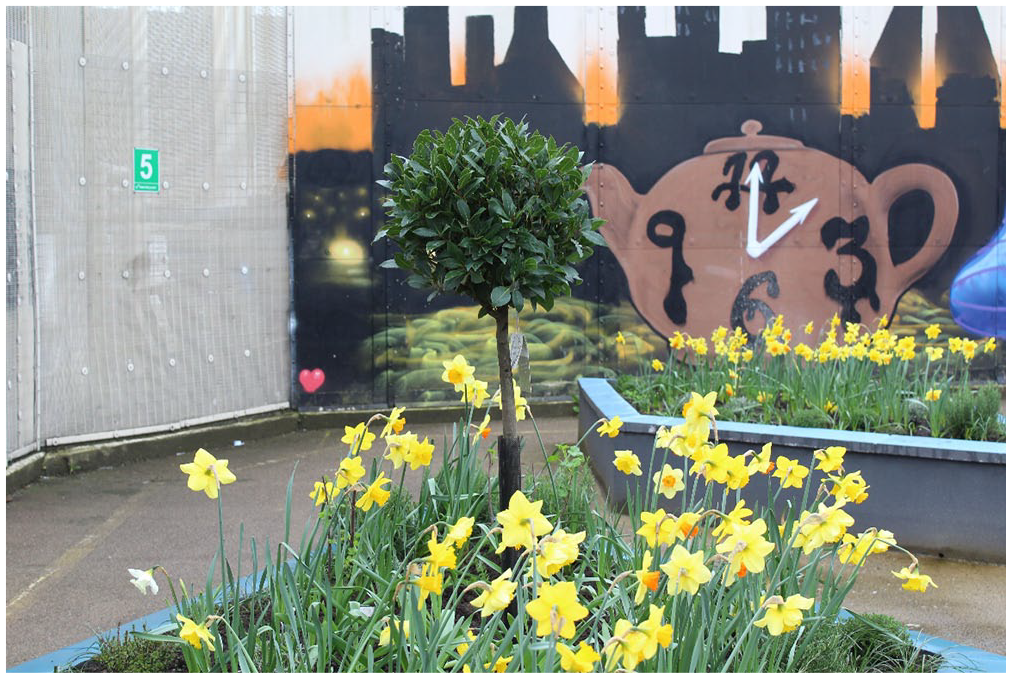
We suggest that the multi-dimensional aspects of land-based interventions place an additional onus on working collaboratively. We are mindful that our focus on how these interventions operate, within a carceral space in which maintaining the safe operation of the prison, security and regimes remains a priority, poses additional dimensions for collaborative relationships. It is for these reasons that we see the effective delivery of land-based programmes/projects as requiring good partnership working as they entail recruiting practitioners with relevant expertise, harnessing additional prison resources, such as staff and materials, and accessing outdoor space for a large proportion of the day often offering something new and different to what are normally very structured environments. Land-based prison programmes need to operate within existing prison management responsibilities and the imperative to ensure the safety of prisoners, prison staff and other key workers. Consequently, land-based interventions may require establishing additional security processes for around the use of certain tools and necessitate negotiating access to outdoor spaces, alongside buy-in from prison staff and prisoners. They may push prisons to consider new ways of working. Our research shows that collaborative working can aid the successful implementation and delivery of land-based programmes, working together makes possible a process of negotiation that aims to be inclusive, informs programme/project development, implementation and delivery, it also illuminates the tensions and challenges encountered in establishing and managing these relationships.
We recognise that our work is situated within a context in which there are ongoing and important debates about the role of prison (Scott, 2008; Scott and Codd, 2010) and the extent to which prisons can be rehabilitative spaces (Jewkes and Johnson, 2006). This is in conjunction with critical questions associated with the construction of a political and cultural hegemony in how a ‘green’ agenda is being positioned within the criminal justice arena and the dangers this poses (Jewkes and Moran, 2015). Our work operates in a context in which the criminal justice system and prisons are characterised as in crisis (Chamberlen, 2019; Garside, 2019). Indeed, our follow-up work (Brown et al., 2018a) has highlighted that, irrespective of the findings setting out the key features that contribute to the effectiveness of land-based programmes, these can be subject to change because of local and national penal policy and practice, negatively affecting those involved. Notwithstanding this, we see the potential for land-based programmes in carceral spaces as a way of addressing some immediate concerns and pressing needs. Land-based programmes, we believe, can serve not merely as a rehabilitative tool with the potential to contribute to environmental concerns, but offer a tool to engage with the increasing poor health and well-being of some of the most vulnerable men and women in our communities who disproportionately come to the attention of the criminal justice system. Indeed, there is a growing body of work with indigenous communities across the social sciences examining people’s connection to the land (see Mashford-Pringle and Stewart, 2019; Sherwood and Kendall, 2013; West et al., 2012). This work points to the significance of land and a role for land-based programmes in supporting the health and well-being of indigenous communities who often experience marginalisation and who too are subject to disproportionality within their respective criminal justice systems. We suggest that, for us in the United Kingdom, there remains much to learn about the implication for policy and practice in carceral settings in relation to land-based initiatives.
Situating our work within what researchers tell us about their collaborative research experiences
The value of collaborative research within carceral settings is increasingly acknowledged and literature in this area sets out the strengths and barriers when working in this way (Brosens et al., 2015; Johnson et al., 2003; Mattessich and Monsey, 1992). Mattessich and Monsey (1992) define collaboration as something that is mutually beneficial, demarked by relationships that are well defined and consist of two or more organisations working in partnership to achieve common goals. Johnson et al. (2003) describe collaborative working as a process, bringing parties with a mutual commitment to work together; they describe a key element in guiding this relationship is its construction of a shared and common vision. Consequently, evidence shows benefits in establishing positive relationships; characterised by openness, trust, good channels of communication and a preparedness to develop an understanding of each other’s culture. For Brosens et al. (2015), the added benefit of collaborative working in a prison context is that it has the potential for incarcerated men and women to be active participants in prison life, having a role in the design, development and delivery of prison interventions.
Research collaborations with TSO are not unusual, Meek et al. (2010) detail how TSO provide multiple services and play an important role in providing core rehabilitative and resettlement services, most prominently in drug and alcohol treatment, employment and training, housing aid and financial advice, but also in providing support and advice for offenders’ families (p. 3). Our approach aims to move beyond and extend traditional research boundaries, characterised by generating evidence and consciously working to have an impact (see Letherby and Bywaters, 2007). Our intention is to work with partners to embed evidence in order to support ‘change’. In a policy and practice culture dominated by calls for evidence-based research, it is widely accepted that there is mutual value and benefit for researchers to build and work in partnership with TSOs. Our research experiences would be very different if we did not see our work as a collaborative endeavour, characterised by working closely with the two organisations, prison staff and prisoners. Those we conceptualise as ‘stakeholders’ have performed different roles in terms of how the programmes are embedded within each prison. This approach allows us as researchers to act as facilitators bringing together key stakeholders (Mackenzie et al., 2012). In doing so, it encourages those involved to develop their own understanding of the research process, understanding of the programme being evaluated and measures to improve their practices (Clark et al., 2009). Consequently, it offers an in-depth insight about the process and the varying ways in which key actors experience it.
Our research, evaluation and development work
The two land-based programmes discussed here have differed in relation to focus, the approach partners have used, timescale and the specific groups targeted within the prison population (substance misusing men, men with poor recidivism rates, men coming to the end of their sentence).
Our research team is interdisciplinary (with disciplinary backgrounds of Sociology/Social Policy, Human Geography, Forensic Psychology and Criminology). As feminist researchers we work within a paradigm in which there is a commitment that requires explicit recognition of the relationship between the process and the product, the knowing and doing relationships (Letherby, 2003, 2013). We designed both studies within an interpretative framework and consistent across all our projects is our use of a Participatory Action Research (PAR) model. Meyer (2010) describes action research as an approach to research rather than a specific method of data collection. For Meyer, this approach is cyclical and goes through phases of planning, acting, observing, reflecting and re-planning. Action research is an ongoing and iterative process which Meyer suggests, ‘blurs the boundaries between education, practice and research’ (p. 258). As such, it opens the way for key stakeholders to work closely together to innovate, develop and manage changes as they occur in practice. We concur and our experience is that PAR offers an approach that allows us to engage with our partners throughout the process. An iterative process of ongoing learning informing the knowledge produced has enabled us to engage from the outset in a process of sharing ideas that has supported the development, implementation and delivery of the programmes. Moreover, it has allowed us to embed continuous reflection and in line with Brosens et al. (2015) encouraged us to engage in different ways in building participation, collaboration and inclusion into our way of working.
Research Methods.
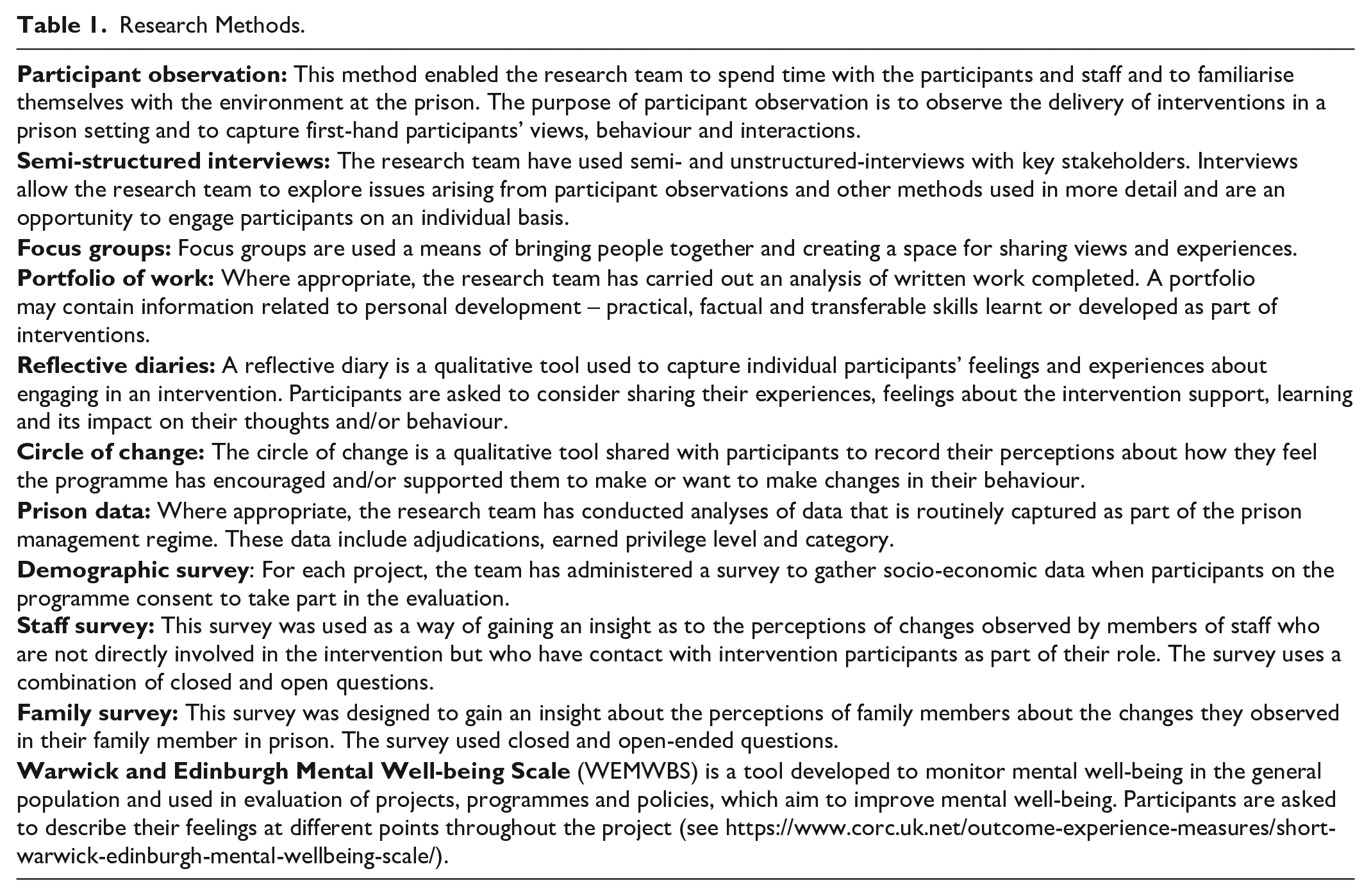
Research methods and tools
In conjunction with our endeavour to work collaboratively and in using PAR, we use a range of methods and take time to consider their adaptability and appropriateness for the task in hand and context we are working within.
Early stage the Master Gardener Programme (MGP).
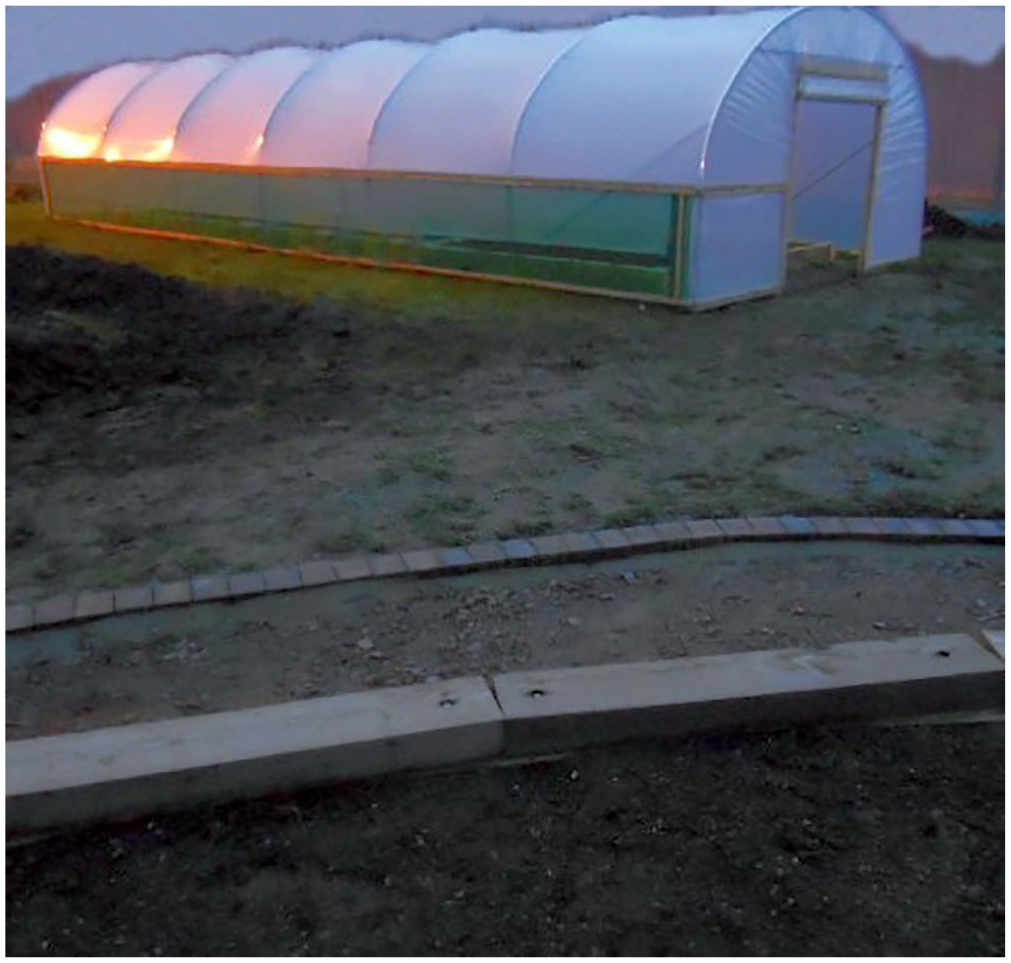
The increasing involvement of TSO in the criminal justice arena is an acknowledgement that the prison service cannot do everything by themselves (Mills et al., 2012). Hence, working collaboratively with university researchers in an attempt to identify what works, why and how has the potential to not only support the prison but to make a difference to incarcerated men and women both in custody, in the community on their release and contribute to evidence-based policy-making and practice. The section below introduces the two land-based projects and discusses three key themes arising from our collaborative research journey; partnership working, collaborative fieldwork and explaining and sharing findings.
Project 1: evaluation of the Master Gardener Programme: a horticultural intervention with substance misusing offenders
The evaluation of Garden Organic’s MGP was commissioned in 2013. 2 This was the first time GO had delivered a prison-based horticultural programme. Prior to this, their work had been conducted in local communities with the aim to ‘provide local support and advice for growing food’ (see Bos and Kneafsey, 2014). The research team commissioned to carry out GO’s prison-based evaluation had a range of experience; working in prisons, working with groups identified as marginalised and experiences of community food growing. Prior to the programme delivery, the team worked with GO, a representative from Public Health and the prison in developing the approach to the evaluation.
Project 2: evaluation of the Unlocking Nature programme
Our involvement in the Conservation Foundation’s 3 project was by invitation and as a result of CF’s appreciation of the work we had carried out with GO and our collaborative way of working. Unlike GO, CF had an ongoing relationship with the prison in which their intervention was delivered. CF had prior experience of delivering a land-based prison programme (albeit, a very different programme). Our work with CF started a little further into the process, this was largely due to University internal systems, delays in our application to National Offender Management System (NOMs) and security and safety concerns at the prison. In so saying, the initial approach proposed was the outcome of a process of negotiation, between CF, the research team, prison lead.
Our experience points to a conceptualisation of collaborative working as a continuum in which our relationships may start at different points, it may involve stakeholders choosing to have various levels of involvement and performing diverse roles. However, what is common is that all parties share a commitment to a common goal and work together to engage in a process that is person centred, underpinned by an ambition to lead to change:
. . . from a charity perspective, we help people and it spoke to our values, that is very important in terms of justifying our time and energy, so from a charity commission perspective we have to keep to our aim. Also GO need to bring in an income, it’s an extremely competitive and difficult market and a lot of charities are failing, GO must bring in more income from selling services and make a profit on them – profit is not a dirty word, surplus is re-invested in other new activities or programmes so this project speaks to our values and we are delivering a profitable programme. (TSO Project Lead)
Both organisations were keen to deliver a programme that reflected the ethos of their organisation and their values. However, they also recognised that they needed to bring their potential partners with them for their programmes to be effective:
Whether launching in a prison or a geographical area you still have to convince people that you are credible and that you can make a difference in their lives . . . I think it’s worth a thank you to G4S for that confidence to give it a go – [names senior management team] to have the confidence to give it a go and say we help people with substance misuse and one of the tools we will use is the GO MG programme And a particular note of thanks for the vision of the substance misuse team . . . from my perspective . . . The project has had, it’s challenges, but got through the initial hurdles and kept going and will be fine. [TSO Project Lead]
In each project, the time invested by the TSO in trying to build relationships meant there was support offered by prison management in terms of allocation of a named person with a level of seniority who was a key contact for the TSO, provided logistic support to the programme and aided communication and project delivery through attending meetings. As previously noted, prisons can be challenging places to conduct research; as such, efforts were also made to ensure that prison staff (involved and with no involvement) were kept informed about the work and that a research team would be carrying out an evaluation. However, this is not to suggest that raising awareness about the programme was always successful as during the fieldwork we encountered staff who had little or no knowledge about the programme being delivered. Land-based interventions set out with the direct intention to make a noticeable change to the prison outdoor environment, both programmes involved building flower beds, learning about and engaging in bee keeping so the legacy of these programmes are there for all to see. Developing outdoor spaces, keeping bees, building flowerbeds are things that often require support from a wide range of stakeholders so how you communicate and involve staff is important:
Hundred percent yeah. They [TSO] were spot on with the consultation with us. We had them in. They engaged well with us. So they said, what’s the best way to consult with the staff? And so we said come to the morning briefings and afternoon briefing and show your plans to the staff. Give them the opportunity to answer questions. You won’t always get all the stage so some staff felt they weren’t consulted with [Prison Staff]
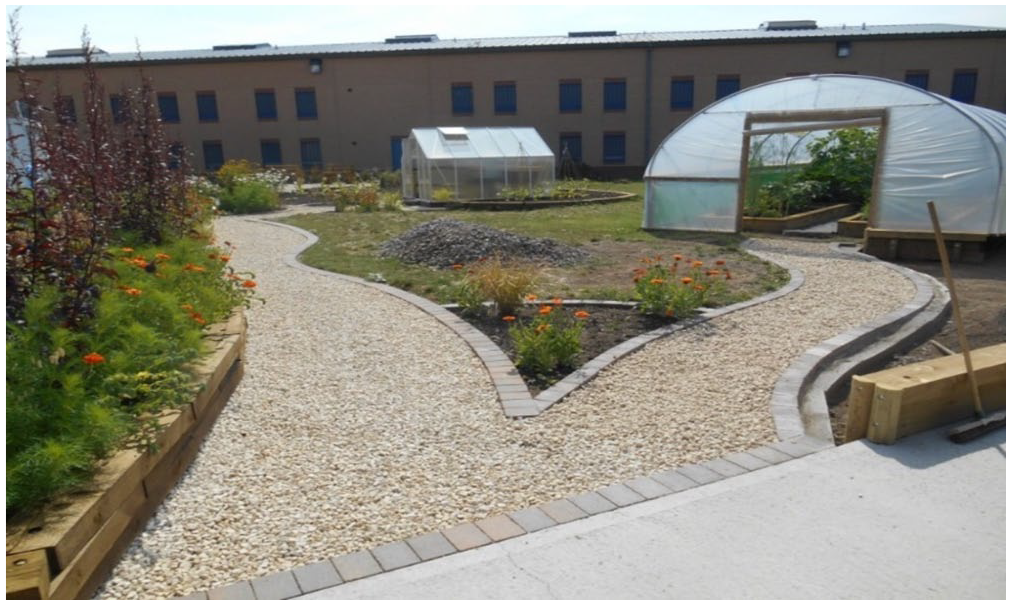
Image of MGP at the latter stages of the study.
Both organisations were keen to work with a local university. They wanted to carry out research that would detail their approach and the impact of their work, they also wanted the research to help to support their foray into working in a prison and development of a rehabilitative programme, but also to have evidence that they could share with future commissioners to access funding. As part of our ongoing relationship with the organisations, the research team recorded a series of podcasts
4
to capture factors implicated in our collaborative relationship: when asked what their expectation was when tendering for researchers and engaging with universities, our partner shared that
. . . when I am tendering for business opportunities whether I will build in a set amount for an evaluation, right back at the start. For me, where I can, I will offer a self-evaluation because it validates our work and have that external view. I know it works I can tell the commissioners that it works but having independent researchers that can tell the external commissioners that it works is far more powerful. (TSO, Coordinator)
Hence, when working in collaboration with TSO, we are conscious of the potential of our work to be used to influence practice and policy, access funding and support each organisations’ continued delivery. This places additional responsibility on us as researchers to communicate clearly our ethical research boundaries in order to build relationships of trust in which our role is clearly defined, supportive but also ensures the integrity, transparency, quality and validity of our work (Hammersley and Trainou, 2012). Our experience demonstrates the challenges that arise from working in this way, but key to our use of PAR is to share learning through identification of what works and areas for development. We return to the challenges of collaborative working later in this article.
Collaborative land-based fieldwork
As researchers who are carrying out fieldwork within a prison setting we are reliant on the good will and co-operation of stakeholders and staff at all levels; staff need to know what any new intervention entails as being uncertain can raise suspicion, leading to projects and those delivering them being regarded as a risk:
GO had very little influence in that area so we had to persuade people to join and in the prison they have an awful lot of politics and an awful lot of people to convince and in those early days Robin (GO Project Lead) and me, almost anybody we would bump into we told about it . . . regardless of their role, regardless of their responsibility, regardless of their involvement we told them about it because it starts to infiltrate the culture, ‘have you heard about this’? No, I didn’t know about that, ‘oh go and speak to him, he’s a really lovely guy’ and it begins
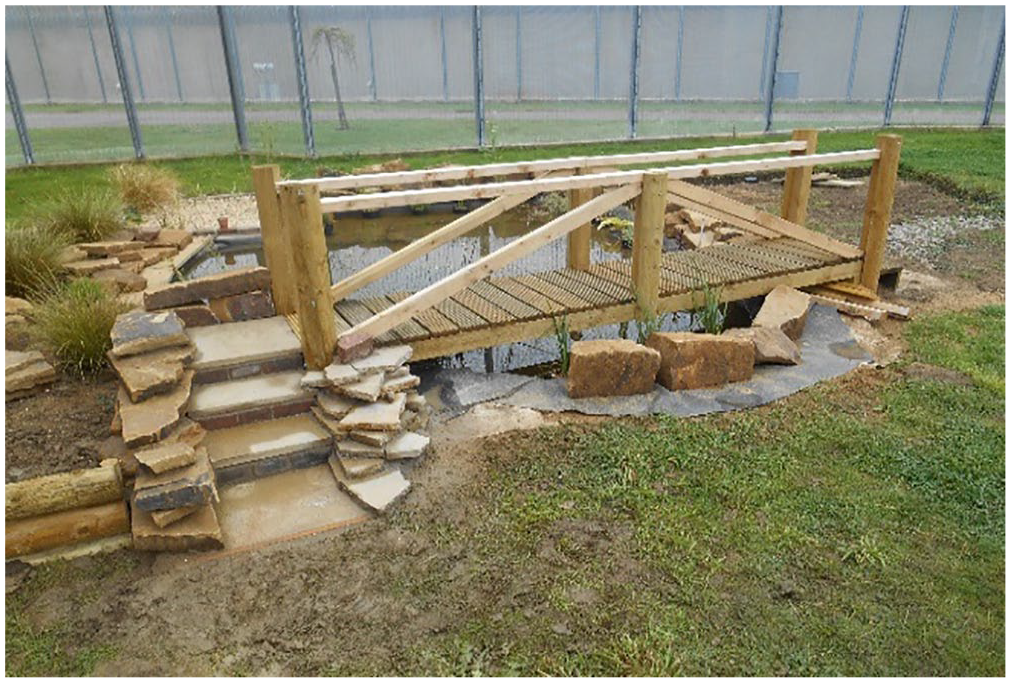
The quote above draws attention to a range factors for consideration when conducting both project work and fieldwork. Our experience is that land-based interventions require the buy-in from a diverse range of prison staff. While the GO project was delivered in a specific location in the prison, the work necessitated input from maintenance, security, healthcare, personal officers and managers. The image below is an example of an area developed as part of the MGP. In conjunction with the labour involved, it required a range of materials to be delivered to the prison, meet security clearance, for the material to be delivered to the relevant area in the prison and a range of tools to carry out the work.
MGP Bridge and pond area designed and built by participants
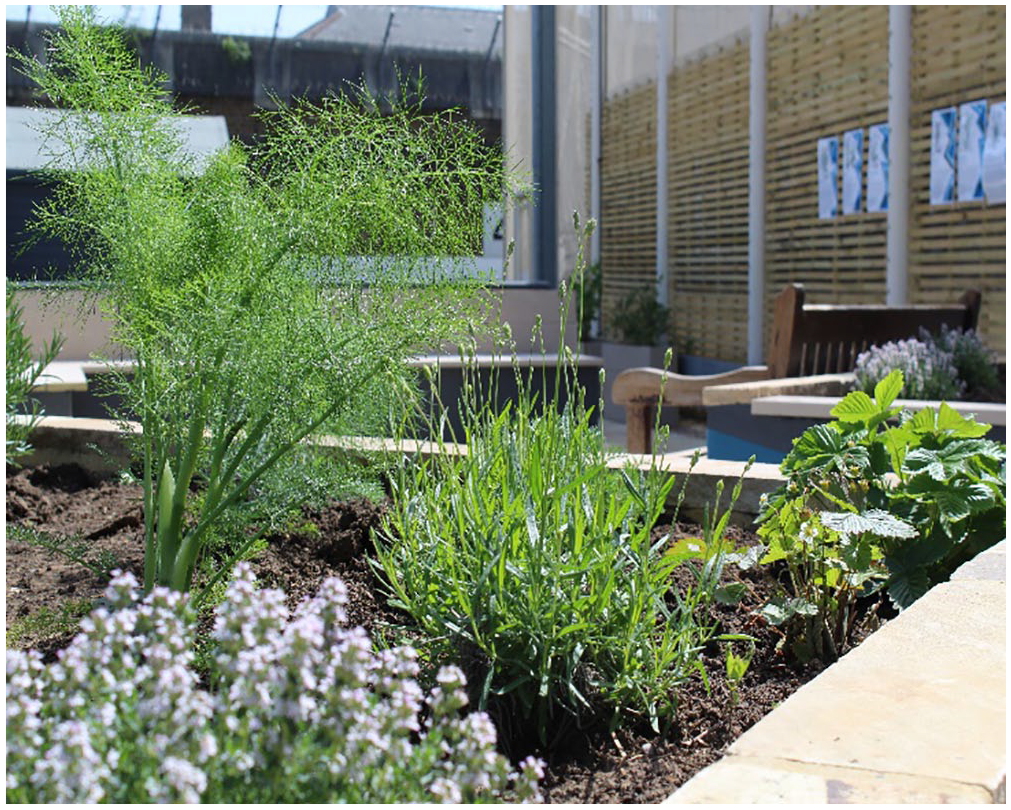
The aim of the Unlocking Nature CF programme was to green the communal areas of the prison. One area is normally only accessible to staff, the plan was to build an area that included an outdoor bar-b-que, herb bed and seating. For this work to be carried out required men working in a restricted part of the prison and time restraints meant that this work was carried out over lunchtime, so outside of the normal prison regime.
UN Staff outdoor area.
The fieldwork itself was the outcome of a process of ongoing negotiations with all stakeholders. In consultation with the project team, GO fieldwork was initially organised to take place on the last Thursday each month over a 12-month period. This gave prison staff an opportunity to support fieldwork activity, organise for the men to be available, arrange a room to conduct interviews when required and update the researchers about any issues that may affect fieldwork activity. The fieldwork for CF included six visits to the prison and resulted in being carried out over a longer period than originally anticipated, from June 2017 to July 2018. This extension was partly due to delays in starting the project relating to receiving NOMS approval and the cancellation of two fieldwork visits. However, the extension also provided an opportunity to collect data over a longer period, capturing seasonal changes and supporting our understanding of how this affected activities and the development of the outdoor space:
You have to understand that, particularly in prisons, things change, you go in with one expectation and you have to do another. (TSO Practitioner)
Consequently, the approach is a very fluid and iterative process, impacted by practical issues and specific issues related to working in prisons often reported by researchers conducting prison-based studies (security clearance, staffing, prisoner attendance, availability, prison regime, sentence requirement). However, land-based interventions are impacted by the time of year, weather, organisation of the regime, availability of material, security processes, staffing levels, access to outdoor spaces and seasonal factors. An illustration of this is the re rolling of the prison in the middle of the GO evaluation: Part way through the GO project staff and offenders became aware that there was a possibility that there would be changes at the prison, which would impact on them all. The potential changes were major rather than minor, affecting where the participants would serve the rest of their sentence. The uncertainty associated with the potential changes to the prison population influenced the mood of the participants their engagement in the programme and during our visits often came up in conversations and, therefore, the data collected. When talking about the potential changes, one participant said that he was ‘devastated’, another that it was ‘so disheartening’ to lose the chance to ‘see through what we started’. Another said that having been introduced to the idea of the gardening project, they waited a long time for it to start and that they ‘felt buzzing to be chosen’ and that it was like ‘a bombshell had been dropped’ to think that they would be moving on, not part of the project and that the ‘garden is going to be given to another group of prisoners’. They strongly felt that the garden that they had worked to create was being taken away and that ‘we’ve done all the hard work and they will get all the glory’. ‘All we will have is a folder’.
Similarly, in introducing interventions to prison, both GO and CF were implicitly changing the culture of the prisons. In a research interview with a senior member of prison management, she explained how concerns were raised by Security following an initial risk assessment of a potential participant. The participant was very anxious when he moved wings, ‘he felt like he couldn’t cope’. In order for him to be included in the programme, she was willing to ‘take on the risk’, as she felt the programme would be beneficial to his health and well-being; ‘it was worth a shot with him’. The officer noted how she saw him on the second day and ‘he looked like a different man, looked younger, just different, less stressed, and I can’t explain it. He’d been digging’. She had been having daily conversations with him and, after his involvement in the GO project, he started to feel more positive.
We have previously written about the factors which contribute to creating environments within prisons that are amenable to supporting men and women, who often present with a range of health and social issues. Working collaboratively with key stakeholders can be an opportunity to create humanising spaces that promote health, well-being and self-worth (Brown et al., 2015). A member of the prison staff described it as,
A good idea! . . . A way of getting people out of a bad environment [prison wings] where drugs are present. ‘If you’re out here, you’re not using drugs’. It takes your mind off things. It was mentioned a couple of times that fresh air also helps with sleep, and is important especially when ‘most of them have been putting toxins into their system’. The work is more varied than producing hair nets, as they do in the ‘industry’ workshop. ‘It’s fantastic . . .’. (Prison Staff)
Our experience is that partnership working can be creative, innovative and bring a fresh approach to responding to complex and multiple needs within prison populations (Brown et al., 2020). This kind of approach to research was explicitly sought by some of our partners and, by others, found to be not what they initially expected from ‘research’. For some it was imperative that we had the confidence and previous experience to work with individuals with complex needs and that we had experience of prison-based research, understanding some of the institutional limitations imposed by the structure of prison. For others, it was important that we had the ‘cultural competence’ to ‘convince men that their voices are important’ and could create a ‘safe space for sharing’ (CF). Charities also felt that ‘academic researchers can get to places in prisons that project deliverers can’t’ (GO) and gave examples of the research team being able to secure an ‘audience with decision makers’.
We identify many common features and differences in carrying out the fieldwork on these projects. Both projects worked in partnership with a range of key stakeholders, held regular meetings and developed a project in which all parties had an input. However, variations in the level of collaboration can be understood as being influenced by the duration of the project, the category of the prison and prisoners involved, the type of intervention being delivered and a range of factors associated with the prison regime and changes in management, staffing levels and access to outdoor areas. As such, our fieldwork experiences are an example of a collaborative continuum, which sees different levels of engagement:
So far, we’ve only been able to get twice into the yard since the timetable clashes with the exercise group: the yard has been used at the same time (
5
Participant) It’s getting the timescale basically, because I think 6-8 months or 10 or 12 months’ timescale for a project like this was never going to be realistic. (Prison staff)
In addition, the research team relied on the TSO and/or prison to collect photographic images, documenting the activities and the development of green spaces. During both projects, we encouraged the prisoners to share additional information, this could be in written or visual form, about their experiences of being involved that they felt was important to include but not captured by the research tools used.
A positive aspect of land-based intervention is that often the research team is able to speak on a one to one basis with participants in outdoor spaces. In both projects, we collected data while sitting outside in the sun in the areas in which the men were working. This appeared to aid confidentiality and being outside added something to these encounters:
I find the whole experience extremely positive and helpful in lots of ways. The most prominent factor is the freedom. It’s fantastic for me to get off the wing, it feels to me as though I’m working outside of jail. (Participant)
Across the data for both projects, there is evidence of the land-based programmes building the self- perception and confidence of those involved. The men made links between what they learnt in the gardens and their achievements in the garden and their personal development. Engaging in a programme in which they developed and/or gained new skills facilitated opportunities for co-learning and peer mentoring. Hence, the data show that sharing responsibilities in how the programme unfolded encouraged a sense of ownership and pride.
The management of this process fell to the prison, however it impacted significantly on the TSO; this was where the investment at the outset in building strong relationships with prison staff really became significant, the research team was also part of discussions relating to the implications for the project delivery and evaluation. We were all clear that we wished to hold onto the person-centred goal of the project, as it was clear that it was leading to positive and personal change.
Explaining and sharing findings
The analysis of the data is an ongoing process throughout the duration of each project. Applying a thematic analysis themes emerged from our interactions and the data collected and they were further explored informally with stakeholders and/or sometimes led to more formal data collection activities. This helped to support the research teams’ understanding of the issues raised and the inclusion of stakeholders in its interpretation. Alongside this, research meetings were also a valuable opportunity to gain further insight and clarification. Routine meetings were held with representatives from the TSO and the prison, which provided an ongoing opportunity for them to capture at the earliest opportunity ideas about what was and was not working, how each party felt about the work and areas for ongoing development. During our evaluation of the MGP, meetings were also held with the men on the programme on a monthly basis, this was a positive mechanism to ensure their continuous engagement, input and a means in which we shared preliminary findings.
The report writing phase created an opportunity for partners to feed back their views about recommendations and key learning points stemming from the work carried out. The process included producing a draft report that we shared with TSO and Prison representative and an opportunity to elicit observations and comments. The report was finalised and the research team worked with the TSO in designing the final output. The MGP also captured the views from the men involved about the most appropriate way to feed back the evaluation findings and the research team produced a short briefing paper. Our collaboration with both organisations has continued beyond the duration of the project to varying degrees. To date, we have collaborated on a range of sharing and cascading activities where we have presented our work and facilitated Impact Events in which learning stemming from the research has been shared with practitioners working in the criminal justice arena. These events have allowed us to present alongside our key stakeholders and created spaces for them to share their learning with others, which has been well-received by participants:
The day was informative stimulating and very thought provoking . . . It is apparent that there is a significant amount of work was done. Carried out by different agencies . . . Collaboration is a crucial element for the success of any project (TSO practitioner) Overall a great day to sway [gain] a lot of information that will help our clients. (TSO practitioner) Great event, has started to look at collective approach to join together and move the agenda forward. Thank you to the whole team. (Public Sector Participant)
As referred to above, we have also created a series of podcasts in which we have invited partners to share their experiences and perceptions of these collaborations. The podcasts included contributions from practitioners, coordinators and operation managers who candidly spoke about the rewards but also the challenges, such as recruitment and access, delays in project delivery time, working in secure settings, issues encountered at different stages of the collaborative process. Alongside this, we have collaborated on funding bids to examine a key finding arising from our work or to support the sustainability of being delivered. These activities are an important aspect of our collaborative endeavour, to recognise that our relationship goes beyond the duration of a project and the attempt to find ways to maximise the impact of our work. One important outcome has been that through maintaining collaboration, we have remained informed about how the research evidence is having an influence in the wider world.
Challenges and tensions and lessons learnt about land-based prison programmes and collaborative working
In their work, Brosens et al. (2015) detail a range of challenges encountered when engaged in collaborative prison-based research, pointing to the practical, methodological, emotional and ethical challenges that can arise when using this approach. They call for researchers to share their experience when engaged in this process too. Here, we share three key challenges that we have encountered, where we perceive that land-based programmes/projects add an additional dimension.
Our collaborative approach, which included working closely with a key member of prison staff, helped to mediate issues associated with access and gatekeeping, which are recognisable barriers to prison-based research (Field et al., 2019; Watson and Van Der Meulen, 2019). However, a key challenge identified in both studies was primarily related to ‘time’ and the repeated delays which impacted the work of each stakeholder at various stages of their work. For TSO, who receive funding based on applications that set out what, when and how they plan to deliver projects, delays led to challenges in setting up projects and in project delivery. While time was allocated for potential slippage, delays led to losing out on some of the growing season, having to accommodate poor weather and periods in which they had to find alternative activities for the participants. Land-based programmes/projects necessitate allowing time for programmes/projects to be integrated into the prison environment and this is subject to internal and external pressures and security needs. Delivery of both programmes/projects was impacted by the time taken to gain personnel security clearance to be able to access the individual prisons, a loss of time allocated to setting up and project delivery due to TSOs having to await clearance for required tools, access to specific outdoor areas, health and safety checks, prison staffing issues and recruitment of participants to the respective programme/project:
I was interviewed by [Named Manager] the first week in March and they offered me the job on the first day. I was absolutely over the moon because I really wanted it and I had done a lot of work on the run up to it. I had spoken to a lot of people . . .. They offered me the job but it was subject to my security clearance. I started going down, ad hoc, in March, April at the grace of the Director, walking in as a visitor because I was not cleared. And, it got to the point where I said ‘I’m not cleared yet but we needed to get cracking on and get this project started because we are going to leave the lads hanging’. (TSO Practitioner)
Programme/Project delivery delays also impacted the overall research and evaluation process. Prison-based studies necessitate not only making an institutional application for ethical approval but also, at the time of the study, gaining permission to carry out the study from the National Offender Management Service (NOMS), in conjunction with gaining clearance from individual prisons. This is alongside clearance for the wide range of research tools referred earlier, booked research visits, methods used to record the data collected, the security of data gathered and mechanisms for research staff to orientate to working in a prison and, ideally, capture data across the full growing season. Inevitably, delays led to revisiting the planned fieldwork activities. While understanding that using PAR requires flexibility this can be at odds with institutional systems, other work-related demands and expectations and the needs of the TSO to meet their own programme/project deadlines.
The body of literature examining participatory approaches comprehensively details power dynamics and the myriad of ways that power navigates throughout the research process (Cornwall and Jewkes, 1995; Krieger et al., 2002). Our collaborative approach sets out to build positive working relationships with a range of stakeholders and to work inclusively with all involved (TSOs, prison staff, participants). But, as stated by one of our TSO partners, ‘prison is not like any other institution’. Hence, irrespective of the shared values shaping and informing the collaborative approach, the way that ‘power’ mediated the process inevitably meant that contribution and engagement in the process varied among stakeholders. For example, during the early stages of our work, we experienced how, having not previously worked together, there existed some uncertainty and a suspicion of the unknown among the collaborators, uncertainty can invoke concerns and anxiety regarding a potential loss of control. Indeed, we have reflected and written about aspects of this (Brown and Bos, 2017). However, over time, we built a level of trust with partners and this has created supportive relationships in which we each feel open to discussing issues that may arise, concerns and frustrations. Notwithstanding this, the very nature of the context in which these collaborative relationships operate, in conjunction with the institutional or organisational goals, the respective parties have to achieve, can lead to frustrations and tensions between partners. For example, we noted tension in relation to who was permitted to participate in projects – in prison working outside is often highly regarded, there were situations in which participants were removed and prevented from participating, for reasons that it was felt by some to be unfair. As researchers and TSO, this meant having to acknowledge that ultimately the prison staff had the power, and working in a secure setting which is subject to security measures and guidelines took priority, governing who, where and how we were able to engage with the men on the respective programmes. Consequently, a challenge, which is not unique to land-based programmes, is how such constraints impact the agency and challenge the values underpinning PAR and our conceptualisation of partnership working and collaboration (see Brosens et al., 2015).
However, what is important to note, land-based programmes/projects can lead to establishing relationships of trust between those involved. Working outside, in close proximity with participants, opening up opportunities for participants to influence project development and the activities carried out offers a sense of agency and freedom. This opened up channels of communication in which participants who do not always have the opportunity to contribute their views and experiences on aspects of prison life raised prison related issues which lay outside the remit of the projects, raising concerns for the TSOs and the research team. As previously noted, these programmes are delivered at a time when prisons and prisoners are impacted by issues associated with levels of staffing, increase in the prison population, mental health and substance misuse issues and wider prison conditions, such issues arising from these factors were raised.
Both projects worked with small numbers of participants, so for those not involved, the need to prioritise areas in the prison they perceived to be more of a priority was raised:
I understand that, don’t get me wrong because it is good what you’ve done and I am not taking it away from it, but as a prisoner there is other things that could be done as well. My cell ain’t got a toilet seat for months, my cell ain’t got a fucking one of those windows for months. (Focus groups participant, not involved in the programme)
In addition, there is the potential for land-based programmes to create therapeutic alliances between TSO, researchers and participants. During one field trip, a participant shared his experience of attending a mandatory programme for men who have committed a sex related crime. He spoke about feeling traumatised by the stories that had been shared and being unable to talk about it with others as this was against the rules and he could be removed from the course, which would have serious ramifications for his consideration for parole. TSO practitioners and researchers are not divorced from the ethical and emotional labour that can ensue from hearing such accounts:
Yeah. It is very mentally draining, you are always thinking that you have got that invisible line where you don’t want to go too far. I guess it was starting to get like [programme participants] said, we can talk to you but then we can talk to you but we never see the [names worker], [names worker] never comes on the unit. I passed this information back to [names worker] and then the workers were seen on [the wing] for a week after . . . He said, ‘oh fucking hell’, they are only doing this because you told them to. So it was getting to the point where it was us and them and I was getting caught up in the middle of the prisoners, prison staff and I’m there in the middle. The lads are moaning and telling me things and I couldn’t really defend . . .! (TSO Practitioner)
Such instances where prisoners raise issues that fall outside the remit of the direct work of the TSO or research project raise ethical questions of what we should do with the information that is imparted. Issues which concern safeguarding of prisoners, shared because an affinity has been created, also raise questions of the limits of confidentiality and the adoption of an advocacy role if we overstep the ‘invisible line’ or get ‘caught up in the middle’. To reflect on such fundamental questions when collaborating in prison-based research is crucial when aiming to positively improve the lives of participants and to embed an approach that aims to create humanising spaces.
Doucet and Mauthner (2002) describe a wide and robust concept of reflexivity as considering and being accountable of the personal, interpersonal, institutional, pragmatic, emotional, theoretical, epistemological and ontological influences on our research and this lies at the very heart of our reflective practice as researchers. We see the learning we share here as a culmination of such factors and as having relevance far beyond our research team and those we have collaborated with. Our prison-based research, similarly to other areas of our work, has brought together people who have a common interest in wanting their work to have a direct impact on service provision, practice and policy making (see Letherby and Bywaters, 2007).
Conclusion
Our aim in this article is not to produce a blueprint for collaborative research, each partnership will be different; we hope that by reflecting on the process of collaborating on land-based prison programme/projects that we are able to share our experiences and learning. Our experience points to how working collaboratively can raise questions about the challenges of external and internal factors and how they are also implicated in rehabilitative programmes and, in so doing, influence programme/project delivery and effectiveness.
As two women who define themselves as feminists (one a Black feminist), we believe that research is inalienably and inevitably political. We see research as involving three intersecting interests; those of the researchers, of participants and those individual groups, institutions, organisations with the power to influence research priorities through funding, policy making and who are best placed to advocate and/or support change for the groups they work with. Our approach to researching in carceral spaces builds on a tradition we have adopted throughout our research careers. As we have highlighted, there exists a growing body of researchers sharing their experiences of working in collaborative and participatory ways of working. Liamputtong and Rumbold (2008) argue that even if collaborative research does not equate to change in the power differential, it has the potential for establishing ethical relationships based on trust and mutual respect. As such, our work examining land-based interventions sets out to ‘make a difference’ supporting ‘change’ and creating more humanising outdoor spaces rooted in the views and experiences of all involved. In prison, such spaces are able to offer some respite, we see collaboration as an effective mechanism to disrupt the status quo, create space for alternative ways of knowing and doing, build alliances and relationships based on mutual respect, shared goals, and desire to effect change that has longevity beyond the duration of projects. We see a much-needed role for collaborative research working from the outset and throughout each stage of the research process. Such collaboration aids programme/project development through generating a more holistic understanding grounded in the views and experiences of those involved.
Footnotes
Declaration of conflicting interests
The author(s) declared no potential conflicts of interest with respect to the research, authorship, and/or publication of this article.
Funding
The author(s) disclosed receipt of the following financial support for the research, authorship, and/or publication of this article: This paper is based on data collected from three research studies which were funded by: Garden Organic; Conservation Foundation; and Coventry University Pump Priming Fund.
