




Abstract
In this article, I discuss a performance arts–based visual methodology based on the use of the archaic wet collodion photography. The collaboration between Street Collodion Art photography collective and myself, as a researcher, had two aims: to generate a large scale photographic and narrative portrait of Lower Silesia in Poland, and to explore identities in the region where nearly all of its inhabitants represent recent migrant populations. Data generated through this project include collodion portraits, their interpretations and narratives collected through unstructured interviews. Initial data analysis has generated identity narratives linked to work, place and belonging and ethnicity/nationality. In addition, in 2016 and 2017, three exhibitions of the portraits and a selection of edited stories took place in Lubin, Legnica and Wrocław attended by local inhabitants, including project participants. The examination of the arts-based methodology finds that the ritual character of the wet collodion photographic encounter has acted as a form of artistic intervention which, in generating memory narratives, enabled an articulation of social identities in the climate dominated by nationalist discourses. Such symbolic work emerging out of the project reveals a critical potential in the collaboration between the arts and social research. Furthermore, the project has shown that despite different traditions of practice, a collaboration between the artists and social researchers can yield rich data and access participants in ways that conventional methodologies cannot.
Keywords
Introduction
In this article, I discuss the methodology involved in an arts-based research project based on a collaboration between two artist photographers and a researcher (myself). The aim of the project is to explore identities through memory narratives of contemporary inhabitants of Lower Silesia, a southwest region of Poland which, until 1945, had been a part of Germany. Following the Potsdam Conference in 1945, Lower Silesia and other parts of eastern Germany became Polish, and the vast majority of its pre-war German citizens, some 8 million, were subjected to expulsion or social cleansing (Thum, 2011). As a result, nearly all of the current inhabitants of Lower Silesia are first, second or third generation Polish migrants to the area. The project’s key aim is to produce a portrait of the current inhabitants of Lower Silesia in two ways: by taking photographs of the people and by recording stories about the participants’ links to the region. The photographic record bears witness to people’s presence (Barthes, 1984; Bourdieu, 1996; Sontag, 1977), and listening to their stories has aimed to give them a voice. In its photographic ambition, ‘A Portrait of Lower Silesia’ echoes the well-known works of August Sander, People of the Twentieth Century (Rubinfien, 2004), and that of Zofia Rydet, ‘Sociological Record 1978–1990’ (Mróz, 2018), both of which generated thousands of unique portraits of ordinary citizens of Germany and Poland, respectively, both valued for their artistic and documentary qualities. Their large-scale and longitudinal undertakings similarly aimed to create a collective portrait of the people (Mróz, 2018; Rubinfien, 2004; Wallace, 2002). However, our collaboration makes the character of this project interdisciplinary, and it occupies a space between performance art and research in combining the visual with the narrative. In its ethical commitment to giving ‘ordinary people’ a voice, it also constitutes artistic intervention (Sidorenko and Marusinska, 2017) by opening up a space for human encounter and articulation of memory narratives. Both the artistic and performance process and the product of the event have generated research data which relate to the following key questions:
Who are the people of Lower Silesia today?
How do they connect to the region?
What are their memories of their own or their families’ beginnings in Lower Silesia?
The conversations which took place during and after the photographic ritual encouraged participants to explore their relationship to the place they and their families now inhabit but also to share memories of the past. The outcome of such conversations has been to uncover a diversity of experience of place and ways in which identities are formed. Interestingly, these narratives contain many silences in the region, and coming against such silences has posed a challenge for the project, in how to reconsider ways of approaching such issues. Hence, here I explore the methodology and ethics and present some of the data generated. A full data analysis will be discussed in a separate paper.
Asking participants about memories of their own and their families’ or communities’ past has been informed by memory studies. The concept of memory used here understands it as something ‘we do, not something we have’ (Olick, 2010; 159). When memory is evoked it is not an exact copy of the past events but rather it is a newly constructed representation; according to Zelizer (1995 in Misztal, 2003), ‘remembering [is] a processual action by which people constantly transform the recollections that they produce’ (p. 70). Remembering does not take place in a social vacuum (Olick, 2010; Misztal, 2003) but is shaped by present social and political concerns, and is enacted socially though dialogical practices such as story-telling, reminiscing or commemorating, deploying symbols. Memory is also closely linked to collective identity in the various ways in which group identities are integrated by memory practices: ‘Where collective memory fits into the collective identity, the mnemonic practices serve as mechanisms for establishing and maintaining [group] unity’ (Gongaware, 2003: 488). The intention of this project has been to invite the participants to perform acts of memory: to (re-)construct memories and to link them to local and collective identities.
The rationale for looking at identities has been partly motivated by the recent resurgence of nationalist and populist discourses, and their dominant position within the Polish public sphere. The dominant nationalist narrative in Poland evokes a collective identity of the imagined (homogeneous) national community in which ethnic and cultural Polishness is dominant, and one which is resistant to diversity (Cervinkova, 2016; Jaskulowski and Surmiak, 2017; Sidorenko, 2008). It is against this hegemonic position of national identity and patriotism as dominant social categories that our project aimed to focus on people’s own narrative identity construction and their own links with place and region.
In thinking about identity, I draw on Heideggerian phenomenology which emphasises the interdependent character of being-in-the-world and the significance of experience in how we are in the world
The project, ‘A Portrait of Lower Silesia’, is a collaboration between the Street Collodion Art photographic collective (http://www.streetcollodionart.com/about/), Michał Sitkiewicz and Paweł Sokołowski and me, a sociologist. We first met in the context of another research project when I interviewed the artists about their collodion street art practice. Collodion photography, described in more detail in the following section, is a 19th-century photographic technique, known today mainly by historians of photography and artists who work in that medium. This archaic photographic technique involves an elaborate and highly skilled preparation process, and results in a photograph being produced within a few minutes of being shot. This can successfully be done outdoors. The use of a large vintage camera, enhanced by the use of an old-fashioned black cloak to cover the camera often attracts passers-by, and provokes spontaneous encounters with them. Intrigued by the unusual photography, people stop, chat, often engage in interesting conversations, have their portrait taken, and go. The photographers are left with their own memory of the encounter, fragments of people’s lives and often a digital copy of the collodion image.
Following our meeting, the photographers invited me to join a new project as part of European Capital of Culture (ECOC) 2016 in Wroclaw, , in which my role would be to collect stories from the participants. We jointly designed the project ‘A Portrait of Lower Silesia’ to include both the artistic and research components. The photographers aimed to make 2016 portraits to mark the occasion of the city of Wrocław holding the title of ECOC 2016.
As a result of our collaboration, the project has generated over 300 portraits 2 and some 80 interviews in Polish in several locations of Lower Silesia: Wrocław, Lubin, Nowa Ruda, Legnica, Bożków and others. The background for the photographic portraits and participants’ memory narratives were mostly contingent on where the collodion project met with the participants, for instance, next to a closed factory building, the redundant city port, inside the Seniors’ Club, the Russian Orthodox church attended by the Lemkos ethnic minority or a homeless project. Each of the participants’ visual identities and memory narratives were anchored somehow to the place. Communities involved in the project included retired inland navigation captains and mechanics who had worked on the river Oder in inland cargo transport of heavy industrial Silesian goods; active and retired copper miners; ex-employees of the now closed down major manufacturer of musical instruments; a group of Lemkos, a small ethnic minority, who had been forcefully resettled by the Polish communist government in 1947; an elderly German lady who has survived the expulsions of the indigenous German populations from the region and still lives in her family home; a number of homeless men, members of a seniors’ club and others. This article includes only some of them. In the next section, I provide a detailed outline of the research design followed by an examination of the role of the photographic encounter in the project, the specificity of the collodion technique and how its use as part of methodology has generated specific data and themes for analysis.
A general overview of methodology. Performance arts–based visual ethnography?
The approach to research design and data collection adopted for this project reflects some principles of ethnography. First, the starting point of the study was the location rather than a pre-determined sample. We did not seek out specific respondents using particular demographic criteria but rather, following the general ideas of ethnographic practice (Atkinson, 2015; O’Reilley, 2009), we arrived at a location, and using local contacts, we recruited our respondents by inviting them to take part in a photographic and research project, to be part of an exhibition in exchange for a story, a conversation. In some locations, we received organisational support from community leaders; in other places our arrival had little notice. Therefore, some of our respondents knew about the project in advance, and prepared for the event by wearing outfits meaningful to them and by specifying the location they wanted to be photographed in. Others were recruited by chance, after stopping, curious to see the unusual event taking place in their familiar location.
Second, the project began with no hypothesis (Atkinson, 2015); it set out to collect data without imposing specific concepts on the participants which could risk reducing the Other’s particular experience to a system of universal categories (Levinas, 1989). To that end, in order to explore issues of identity and memory, interviews took the form of naturally occurring conversations. However, a clear departure from classical ethnography was that instead of a slow, immersive getting-to-know the community while avoiding disruption of the everyday, data collection in this project was based on a relatively brief albeit intense artistic ritualised and performance-based encounter within the public sphere.
Photographic ritual: performance
Central to the project has been the deployment of collodion photography both as part of the process and its end product. Historically, photography has been a tool in ethnographic and other social science fieldwork in generating efficient data (a picture tells a thousand words) and documentary evidence (Phillips, 2009; Sontag, 1977) which once analysed, becomes ‘part of [its] ethnographic knowledge’ (Kharel, 2015: 148). For Pink (2008), visual ethnography is also about the process of research as it relies on ‘audio-visual media and methods throughout its processes of research, analysis and representation. It is inevitably collaborative and to varying extents participatory’ (p. 2). The key ethnographic element here, however, is the commitment to the character of the ethnographic encounter (Reed-Danahay, 2017) in the place which is meaningful to the participants and gives them, as experts in their own lives (Park, 2006), space to tell talk about their experiences. Drawing on Schechner (1990, 2013) and Turner (1974, 1982, 1986), the photographic encounter, seen here as a ritual, aimed to open up liminality, a momentary departure from social norms, a disruption of the everyday, creative chaos, a storehouse of possibilities (Turner, 1986), in which ‘an increase in the level of social arousal, however produced, is capable of unlocking energy sources in individual participants’ (Turner, 1986: 43), to enable reflection and articulation of narratives in order to ‘exploit (in the best sense) one’s full range of human capacities in order to make sense of a given social world’ (Atkinson, 2015: 35) and to perform memory acts by talking about own experiences and articulating identities as inhabitants of Lower Silesia. Finally, the way in which each portrait was co-designed and negotiated between the artists and the project participants suggests that in this project photography could be seen as ‘a participatory tool which as such equalises power relations in research’ (Vacchelli, 2018: 39).
To sum up, photography is central to the project design. It is more than a tool for visual data collection, and its role thus has gone beyond documentary photography (Phillips, 2009). The use of the wet collodion technique, outlined below in some detail, has served two inter-related aims. First, it has generated unique images of the residents of Lower Silesia as permanent material objects, visual aesthetic representations of the inhabitants (Wallace, 2002), displayed in a series of exhibitions. Second, the use of collodion photography has created an ethnographic encounter (Reed-Danahay, 2017) in which the photographic ritual provoked engagement with those who are photographed and others who were drawn to this unusual situation. In this way, our project shares elements of arts-based performance ethnography (Butler, 2008; Fierros, 2009; Landy and Montgomery, 2012), and the community arts intervention, HUG, which took place in Wrocław 2015, exploring experience of social exclusion through porcelain installation in which the participants were invited to tell their stories and leave a porcelain imprint in the region (Sidorenko and Marusinska, 2017).
Collodion photography performance art: the opening
Wet collodion photography is a 19th-century technique developed in 1851 by the English inventor Frederick Scott Archer. An advancement on previous photographic methods, wet collodion had only been used for about 50 years as it was then replaced by more modern and more practical techniques. Today this technique is only used by artist photographers. This highly skilled process involves covering (usually) a glass plate (with black varnish backing) with the collodion liquid solution of pyroxylin in ether and alcohol, and ensuring that the liquid covers the whole surface. This is done in the field by holding the glass plate with one hand and a bottle with the collodion solution in the other hand. Any excess of the liquid is poured back into the bottle. The plate is then taken into a (often portable) darkroom in order to immerse it in a silver nitrate bath to sensitise it to light. The plate is then put into a holder and then positioned into the camera. The exposure time depends on the light conditions. Immediately after the exposure, the plate needs to be placed into a tray with a developer, and after that into another tray with a fixer. The image appears first as a negative, and then immediately after that as a ‘collodion positive’ or an ambrotype (Harding, 2013). Finally, the plate is rinsed in water. The entire process needs to be done within minutes so the success depends on the skill of the photographers.
Alongside the quality of the image, the speed with which the whole process takes place was historically considered wet collodion technique’s main advantage. In 1857, in a short obituary following Frederick Archer’s death, the process was described as producing images with ‘unerring correctness, but [. . .] also transfixed almost as quick as the lightning’s flash. The collodion process has enabled skilful artists to take copies of shore scenes while passing along on board of a steamboat’ (Scientific American, 1857). One of its advantages was the ability to generate negatives, as well as the positives, as the ambrotype, outdoors. Collodion ambrotype technique was also quite inexpensive so temporary booths could be placed in holiday resorts, such as beaches (Harding, 2013). In addition, it was known to be grainless, and thus enabled high quality duplication. One drawback of the technology was that while the collodion photograph was essentially a negative turned positive with the black background, the image was laterally reversed, thus appearing like a mirror image (Harding, 2013). The process had other disadvantages, such as the challenge of handling highly reactive and dangerous chemicals, which were easily polluted, thus becoming ineffective, or, conversely, by other problems such as damage to the camera, the staining of clothes.
In our project, all these qualities (aesthetic and practical) add to the uniqueness of the event and its ritualised character inviting interaction. The process of collodion photography disrupts the everyday familiar public space and opens a possibility for a human encounter through an archaic yet recognisable event. In the age of mass digital photography, in which everyone who owns a mobile telephone can be a photographer, the wet collodion technique disrupts the familiar and returns photography to its historic role as being able to ‘solemnise and immortalise’ the occasion (Bourdieu, 1996). Writing in the 1960s about the social function of photography, Bourdieu observes how photographic events, particularly associated with family occasions, were, historically, an instrument of integration of extended families. Photography became an integral part of occasions such as weddings, first communions, and evolved its own traditional place within these rituals with built-in etiquette of its own performance (Bourdieu, 1996). In the age of digital photography, selfies and Instagram, it is not often that taking pictures can perform the solemnising role. It is now only the staged, ritualised group photos taken by professional photographers or at least by individuals acting as photographers using ‘proper’ cameras which bear the hallmarks of the ritualised, special photographic occasion. In the project reported here, the solemnising character of photography has been achieved through collodion’s unrepeatable, unfamiliar, archaic technique that has made the occasion special, and which has also elevated the photographers to the status of keepers of an art, a craft and figures of interest. In addition, the very act of including our project participants in the ‘Portrait of Lower Silesia’ could be seen, after Bourdieu (1996), as integrating them in the region as its visual representation.
The mask
The wet collodion technique as outlined earlier requires careful preparation; it begins with finding the right location for the subject, the camera then needs to be focused, the glass plate prepared, then placed inside the camera, and finally for the subject to stand motionlessly for the duration of exposure time from 2 to 20 seconds, depending on the light conditions. This whole process involved our project participants standing in the public space with a large and rather conspicuous camera pointing at them for around 10 minutes. That initial stage of our project is worth examining as the vast majority of participants were interviewed immediately after their photograph had been taken. Thus, the minutes of waiting and posing for the photograph put the participants through the emotionally challenging experience described by Barthes (1984) as the period of transformation. According to Barthes (1984), the experience of standing in front of the camera is characterised by anxious knowing that one is being observed and having a sense of pressure to perform to the camera. One feels compelled to pose, while knowing that the photographic image of themselves (the outcome of one’s pose) thus generated is beyond one’s control. The anxiety is also about whether the image will be a ‘true’ representation of what one thinks one’s self really is. Barthes (1984) refers to this experience as anguish, one in which posing for a photograph transforms us from subjects into objects, a ‘micro-version of death’ (p. 14): In front of the lens, I am at the same time: the one I think I am, the one I want others to think I am, the one the photographer thinks I am, and the one he makes use of to exhibit his art. (p. 13)
This process of objectification of the person being photographed is also noted by Sontag (1977) who reflects on the predatory, aggressive nature of photography enabling the photographer armed with a camera to see people as ‘they never see themselves, by having knowledge of themselves they can never have; it turns people into objects that can be symbolically processed’ (p. 14). She goes on to say, in terms stronger than those of Barthes that ‘to photograph someone is a sublimated murder’ (Sontag, 1977: 15).
Perhaps, in response to this photographically induced anxiety, there is some force that compels the subject being photographed to attempt to compose themselves into a desired public image, to ‘put on a mask’, a social role (Hirsch, 2012). It is possible then to think about this response as the first stage of the participants’ articulation of identities (see Photo 1).
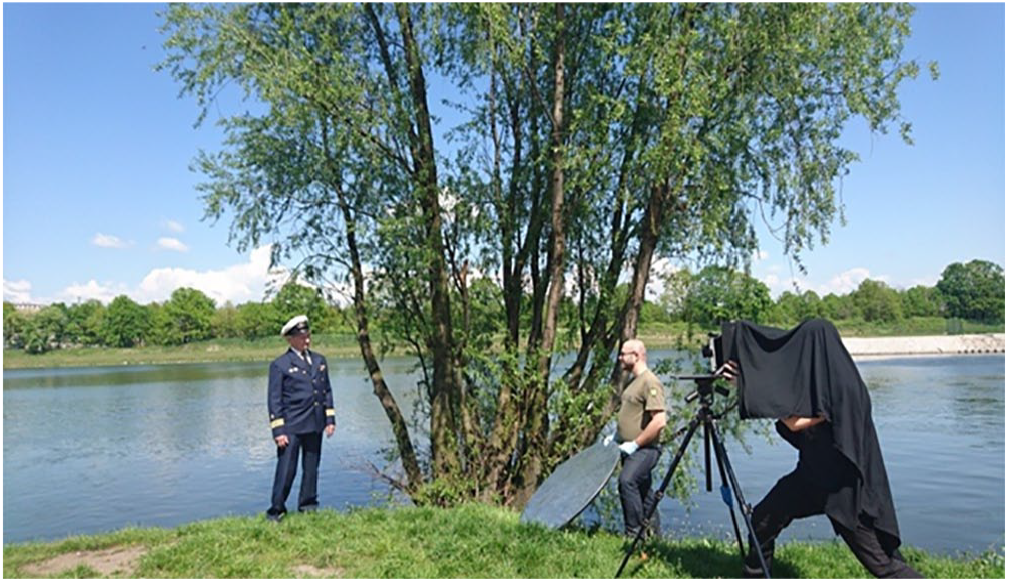
The ethically ambiguous collodion process: the careful scene construction, the performance of the old camera, the staging of the photograph appears to provoke anguish of the subject turning into an object as described by Barthes (1984). Here, the old captain whose portrait is to position him as the citizen of the region seems fragile, almost disempowered against the fast flowing yet empty river that used to feed him and his community while the photographers embodying the contemporary post-industrial, post-modern citizenship in Poland have active agency.
Thus, despite the predatory character of photography as described by Barthes (1984) and Sontag (1977), participants have/perform agency in the process of constructing a visual representation of the self in the participatory character of the photographic process (Vacchelli, 2018). For some, the visual self-construction of identity, the mask, has been the choice of attire. Those who knew in advance prepared by wearing clothes which communicated identity explicitly. That was the case with all the navigation officers, the miners and ex-miners, all of whom wore their professional uniform. An interesting example of that was a young copper miner/rock musician who manipulated his image by leaving the blazer of his gala uniform unbuttoned and wearing it with a pair of blue jeans while holding his electric guitar (Photo 2). Similarly, two retired mining specialists (husband and wife), both were wearing their winter coats but the husband wore a bowler hat, an unusual choice given it is never worn these days. The wife explained that she thought it would be ‘interesting’, exotic, for him to be photographed in the hat he never wears on this special occasion (Photo 3). The choice of the bowler hat, belonging to another time and place, signifies an attitude to the occasion as being outside of the everyday, being solemnised (Bourdieu, 1996) through archaic photography and through wearing the hat which is both smart and belonging to the past.
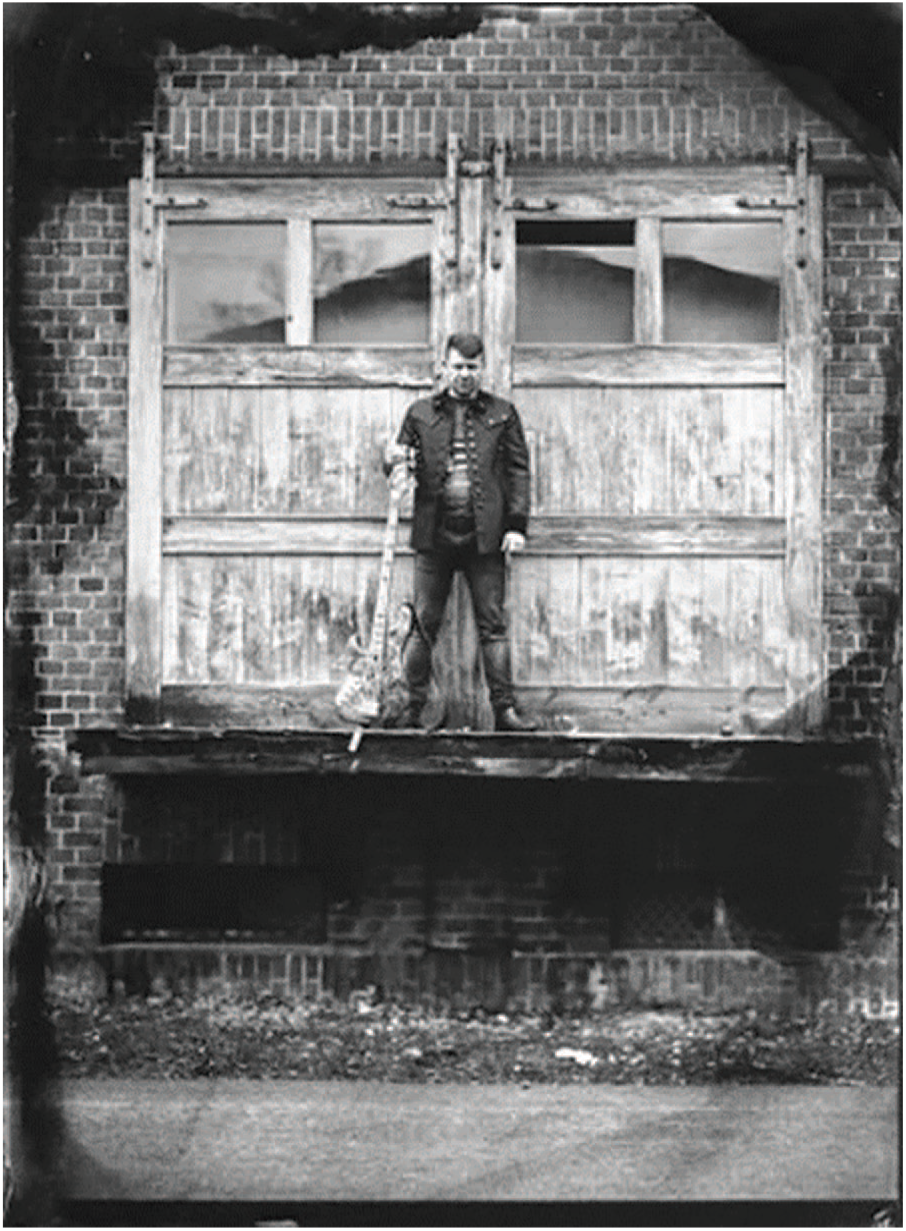
This young miner adopting an assertive stance on an elevated, stage-like platform in a disused factory building chose to present his identity as complex. Like his father, he is a miner, and he reveres his uniform inherited from his father. But he is also a rock musician who spends much of his time away from paid work developing his musical career. As he is half way through his 25-year commitment to mining, his blazer is unbuttoned and he is wearing it with jeans. He is also holding his electric guitar. His hard, demanding underground physical work is his security but his creative needs are fulfilled by music; he is a bridge between the generations and connects the industrial and post-industrial Poland.
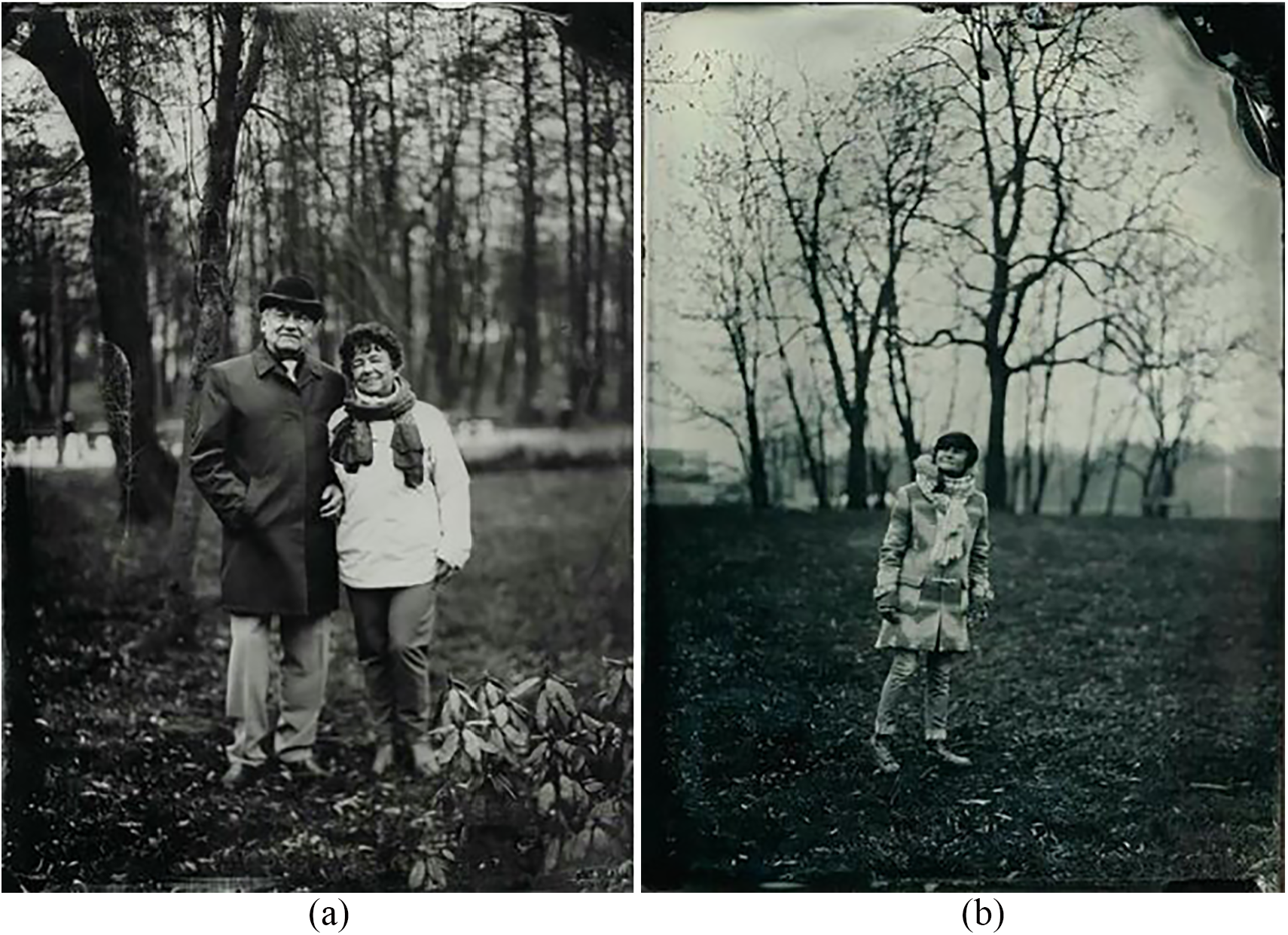
These participants knew about the project in advance and chose their attire for their portraits. (a) The bowler hat of the participant has been chosen by the wife as something special, that made her husband look more distinguished. Both were retired from professional jobs in copper mining. (b) The photo shows a woman who is active in environmental education in the region and part of an international community celebrating Native American culture. Her coat represents sacred pattern used by Native Americans for special occasions. She chose to look away from the camera (modern culture) and to gaze at the trees representing the natural world.
Looking at oneself in public
The collodion photograph is developed within minutes, in front of the subject, by placing the glass plate straight from the camera into the plastic tray with the developing chemical (Photo 4). Many participants refer to the moment of the image appearing in the tray as magical, a reflection echoing Barthes (1984: 88) who claims photography is not an art but magic and alchemy. Yet, it is also a shared moment because the participants watch their own image appear on the glass plate in public. Unlike contemporary control we tend to have over viewing, disclosing and enhancing of our own image on our mobile devices (as well as in the now disappearing age of paper photographs), here, the moment of the portrait appearing is shared with those gathered around. It is a moment of shared intimacy and at times vulnerability as something unique revealed through a new image about the person becomes public. This echoes Barthes’ reflections on the discomfort he felt if he were to look at his own image in public. ‘Photographs’ he writes ‘are looked at when one is alone. [. . .] I need to be alone with the photographs I am looking at’ (Barthes, 1984: 97). This refers to the collision between the private and the public in which ‘the age of photography corresponds precisely to the explosion of the private into the public, or rather, into the creation of a new social value, which is the publicity of the private’ (Barthes, 1984: 98). The emergence and proliferation of social media platforms in the last decade takes this phenomenon into another level. In this case, it is not the blurring of the private and public spheres through the circulation of photographic images but the collodion process itself which breaks the barrier between the private and the public, and arguably forces an intimacy, a sharing onto the participants. In that sense, the performance art aspect of the project lives up to its provocative character. In that way, it raises the issue of the limits to the research ethics requirement of a full ‘informed consent’. How much can anyone know, in advance of such an encounter, what emotional responses might be provoked by taking part, by letting others gaze at our own portrait as it emerges out of nothing? At the same time, the aim of the project has indeed been to provoke – to intervene, to disrupt the everyday in order to open up a liminal space for an articulation of identity narratives.
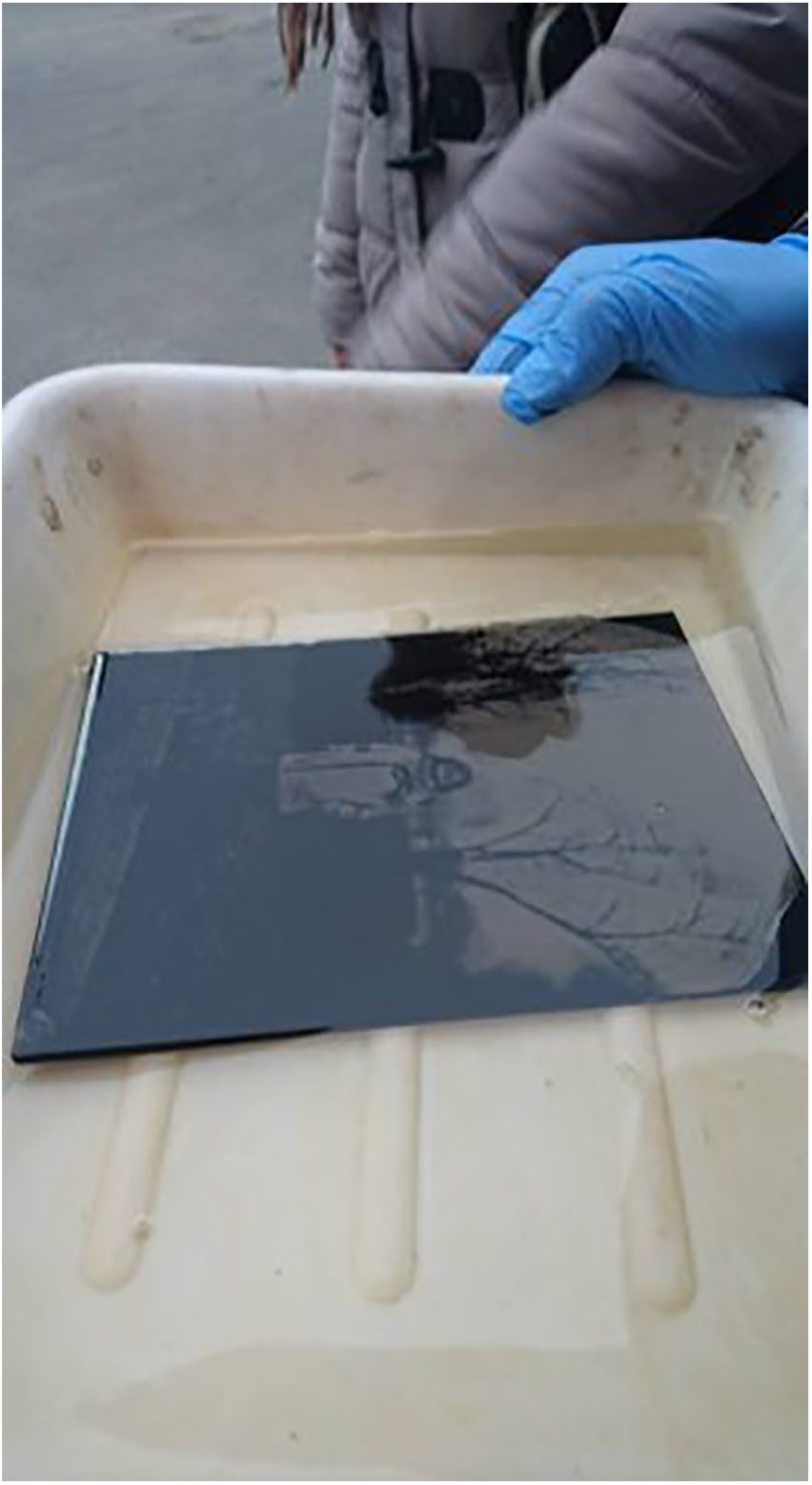
All of the portraits appear a few minutes after the exposure, thus in public, in front of anyone who happens to be around. The moment is often commented on as magical and special, but the public appearance of one’s image, altered by collodion process, can be experienced with unease.
Time travel/altering reality
The collodion image which appears in the tray is both familiar and strange, familiar because the referent is easily recognisable and strange because the photograph looks old, as if belonging to an old family album. Not only are the images black and white, but the technique produces a surprising depth and richness of colour in shades of black, grey and silver, which evoke memories and ideas about the past. Wet collodion technique is sensitive to cold (blue light) colours so warm colours remain dark on the image. This alters the everyday experience of reality, as does the mirror image effect which can create a surprise or shock to the viewers. The photos taken this way are also inevitably imperfect; much like an old gramophone sound full of scratches and jarring sounds, these photographs register the imperfect way in which the collodion liquid covers the glass plate. The effect is an image with scratches, dark or light spots, often the corner of the plate held by the photographer remains completely black as the liquid never touched it. The effect is a surprising richness of colour (of the seemingly black and white image) with unusual imperfections as part of the outcome. Any slight overexposure or a movement makes the subject look ghostly and adds a sense of mystery to the image.
Seeing one’s own image in the archaic form is like having one’s own portrait transported into a past aesthetic, and superimposed onto an album of one’s own ancestors. Drawing on Wallace’s (2002) discussion of the work of August Sander, it could be argued that the conflation of the familiar referent with the old form reverses the usual ontological temporal transition of photographs in which, with the passage of time, as the photographic referent becomes temporally remote, the photograph’s ability to signify dwindles. Soon [. . .] all that can be determined from the old photograph is the image preserved on the paper, which may appear as a completely foreign and obscure object to the contemporary viewer. (p. 154)
Yet with a collodion portrait, the present is transported into the past. Wallace (2002) further develops the theme of time travelling or a shift of meaning of photographic images in her reference to the Barthes’ Camera Lucida (1984) who acknowledges that the power of the old photograph lies in the fact that ‘a remnant of the photographic referent is carried into the present’ (p. 154).
Thus, seeing one’s own image in a new–old form is a blurring between the old and the current; it can conjure up a sense of own mortality as old family albums confront us with our dead ancestors. It can also be unsettling to see oneself as we see those who are long gone because ‘photographic images that [. . .] outlive their subjects and owners’ function as ghostly revenants from an irretrievably lost past world’ (Hirsch, 2012: 36). Thus, the use of archaic, evocative technique generating a sense of ghostliness in the image, collodion photographs bring us closer to our own future – mortality. Seeing oneself in a collodion portrait is like looking back at oneself from the future. The project photographers tell our participants that the ambrotypes of wet collodion do not fade like paper photographs, and that these images on glass, unless shattered, will last forever. It is, as argued by Barthes (1984), a transformation of the self from subject to object, yet it is also a form of immortalisation.
Finally, an unforeseen effect of the use of the collodion technique has been to observe how readily men had engaged in the project. Many of our participants have reacted strongly to the process of preparation and the emerging images. Conversations started immediately, and quickly turned to personal references to either own memories of photographs or own experiences of analogue photography, stories of darkrooms in bathrooms or school-based courses taken in the distant past. Interestingly, men in particular, often started talking about their own experience with photography and appeared to emphasise that they too were or once had been, ‘serious’ photographers. The focus on photography seems to have made the project men friendly. 3
Ethics
Each encounter began with information being given about the project. Both the photography collective and the researcher needed fully informed signed consent from the participants for the photographs to be taken and for the interviews to be recorded and used for our project. The consent form and the information sheet were drafted jointly, yet its research scope was much greater than one needed by the artists. The university research ethics requirements, following the BERA 4 guidelines (to inform the respondents, answer any questions arising and obtain their written consent, to explain anonymity and the voluntary character of participation, etc.), were adhered to, yet in the context of the photographic encounter, they felt like an interruption to the flow of the ritual as envisaged, particularly by the artists. At times, it was clear that the different approaches to the practices as originating from the arts (more immediate, informal in character and less regulated) and research (more rule based and formal) worlds generated some tension. While university research ethics advocate approaching research participants as interviewees with utmost sensitivity, and with awareness of local attitudes towards photography or video (Banks, 2007), the artists in the project, who regularly practise in public spaces, do so with a greater degree of confidence and appeared less inhibited. On a few occasions our practices were clearly at odds with each other, when one of the photographers would walk in on an interview and start chatting to the participant or me. Given how sensitive interviews can be, I felt some anxiety at the thought of subjecting the interviewee to discomfort. Interviews involved brief but deep and significant moments of human encounter (Levinas, 1989). It seemed important to give the participants full, undivided attention and to live up to promise that their presence in the region, and their stories were important. However brief, these relationships were based on trust and emotional investment, so it was important that such commitment is communicated (Atkinson, 2015). It took me a while to process and reflect on these couple of mishaps in a more culturally specific way. First, an interruption of a conversation, no matter how sensitive, is quite a mundane everyday occurrence, and the whole point of ethnographic inspired fieldwork is to aim for naturally occurring data. I needed to think of the interview situation more as a conversation than as a staged, extraordinary event, set aside from the everyday. Interruptions are part of that. Most of the interviews took place in everyday places, such as standing in the street, sitting in cars (trying to escape the cold), sitting in on a bench in a town market square or in a room of a town hall. Second, interrupting people’s conversation is more acceptable in Poland than it is in the United Kingdom. The above shows how the initial concern with research ethics turns into a reflection about fieldwork encounter generating what Tsing (2005) calls ‘zones of cultural friction’, in this case within the project team itself.
Another ethical issue worth noting is the impact of the camera on the participants. As discussed earlier, the very act of being photographed can create the experience of anguish, (Barthes, 1984), or a sense of objectification (Sontag, 1977). Thus, despite the inclusive and participatory intentions of the project (Vacchelli, 2018), particularly through the negotiation of the exact location and the background of the shot, the use of camera and even when full consent is obtained, photographing people is never free of power relations in which inequality is embedded in the process of the active skilled photographer instructing the participant to be passive and subjecting them at that point to anxiety (Barthes, 1984). On that last point, it is clear that the ethical aspect of the use of camera in a research project cannot be resolved beyond ensuring full, informed consent.
Given the region’s complex history, our interest has also been in memories of the post-war population exchange, in reflections on the material traces of the heritage and the absence of the German and Jewish populations. Most of our respondents did not say much or anything about such absences. In the few cases where the narratives included such memory, it happened without prompting. However, for ethical reasons, probing the topic was avoided because these are sensitive issues and the project aimed to position its subjects at the centre of the story. It would have been ethically problematic to push the participants away from their immediate experience, and outside of their comfort zone to probe for information on (politically) sensitive issues which was not forthcoming from the natural conversation. The project aimed at generating a portrait, and as such, we wanted to understand people who live here, not to challenge them. However, these absences and silences have been noted and need to be explored elsewhere.
Performing memory acts: visual and narrative identity construction
Here, I explore the links between the collodion photography arts-based methodology and the specific visual and interview data it has generated, as well as present some of the emerging themes for later analysis in order to document what kind of data has been generated by this research design. The visual data include portraits of project participants and photographs documenting the photography process. Interview data were collected through a voice-recorder and transcribed. What follows is a presentation of some of the data with the emerging themes for analysis. The full data analysis will be discussed elsewhere.
As indicated earlier, the role of photographs in this project has been neither purely documentary (Phillips, 2009) nor aesthetic (Herman, 2005). Their evidential status is possible because they do represent the real object (persons) in the sense that there exists ‘the indexical connection between the photograph and its referent’ as Phillips (2009: 56) argues after Barthes. Yet, their very ‘realism’ could also be understood, following Bourdieu’s (1996) characterisation of the use of photography as socially constructed. It is the social use of photography as evidential and objective that gives it that character. What is also significant here is that the visual data in the project was not collected by the researcher but generated jointly by the photographers and project participants through acts of performativity (Butler, 1990; Goffman, 1971; Schechner, 2013). It is possible thus to interrogate the images for representations of participants’ ‘identity [as] performatively constituted by the very “expressions” that are said to be its results’ (Butler, 1990: 25). In that sense, the construction of data happens in the space, both evidential and aesthetic, between the participants and the researcher. This epistemology clearly belongs to the interpretivist tradition in qualitative methodology as at all stages of data production and its subsequent analysis, the emphasis is on the intersubjective process: ‘Performance isn’t “in” anything but “between”’ (Schechner, 2013: 30). In addition, the ambiguous and polysemic character of photographs (Whalen, 2009) makes interpretation an open-ended and highly situated process. Therefore, the emerging and repeated interpretations of data (outlined in the section ‘Visual and narrative identities’), its claims and discourses, reflect my own biography, identity and emotionality: being a Polish-born UK left-leaning woman sociologist, who has lived as an immigrant in the United Kingdom all of my adult life, and who has a particular emotional relationship with Poland, its history and its current politics of memory.
Following the production of the collodion ambrotypes, the largely unstructured conversations began with photo-elicitation (Vacchelli, 2018) reflecting on the portraits, photography in general, then turning to current and past links to the region, and, whenever possible, memories of arrival (typically those of family members a generation or two ago) in the area. What emerged were personal narratives about the place, stories about work, local communities and their changing character. Photos 2, 3, 5, 6 and 7 represent a sample of the portraits with the initial interpretations of the visual data informed by the informal interviews; together, these two types of data generate visual and narrative identities.
Visual and narrative identities
The initial visual analysis is an outcome of several interpretations of the collodion portraits in the light of the transcribed interviews as performing participants’ identities, field notes and the researcher’s evolving ideas informed by the ongoing research. The intersubjective character of the interpretations cannot be overestimated, hence the importance for reflexivity acknowledging my own response to the images and stories: ‘To appropriately research an image, we need to allow it to affect us. We must be moved and somehow changed by the encounter’ (Herman, 2005: 472). Thus, my own reading and re-reading of the visual data is situated and framed by my particular engagement with the images and stories. Each of the portraits presented in this article includes a caption in the form of my interpretation informed by the image, its aesthetic, composition symbolism, the interview data as well as my own subjectivity.
The following initial interpretation of images draws on Bourdieu (1996), who argues that photographs do not represent individuals as such but their social roles, or more specifically, ‘the relationship between individuals’ (p. 24). The vast majority of the portraits were of individuals yet social roles can be read in images in relation to other social and cultural signifiers, such as clothes, posture, body language, background and others. Nevertheless, photographs resist intelligibility: Photographs become comprehensible as they employ recognizable conventions, communicated through framing and focus, composition and cropping, posture and pose. At the same time, they resist intelligibility because of their inescapable ambiguity; inevitably, aspects of what they purport to show within their frames, or imply lies beyond them, are unknown and unknowable. (Whalen, 2009: 78)
The interpretations sketched here are also presented in the captions corresponding to individual images. Together, they constitute some of the visual data.
Photo 3 shows two retired engineers who chose to present themselves as a married couple, and despite talking about their respective professional lives in copper mining, opted for civilian clothes, emphasising their private lives. The choice, by the wife, as outlined earlier, for the husband to wear a bowler hat, was justified by the reference of it being considered ‘interesting’ and ‘special’, echoing Bourdieu’s idea of the solemnising character of the photographic event. On the contrary, Photo 5 shows a retired copper miner in his full gala uniform standing next to a Catholic church where the miners’ male choir (of which he is a member) performed that day. The composition of the image, the uniform and the references to the traditional mining links to the Catholic Church as well as the man’s involvement with the mining community through the choir, communicate his strong sense of work-based identity, long after retirement. By contrast, the young miner in Photo 2 emphasises his complex identity through his mixing of his cherished yet unbuttoned gala mining uniform with casual jeans, and by holding his electric guitar thus representing flexible late-modern identity (Giddens, 1991). Photo 3(b) depicts an environmental community educator, a member of an international community sharing an interest in and celebrating Native American culture who meet in cultural conventions. Her coat represents sacred Native American pattern worn on special occasions, and her body language engages with the natural environment rather than with the camera representing civilisation; perhaps also suggesting her attention shifting towards a globalised community underpinned by the Native American philosophy. Photo 6 shows a retired inland navigation officer in his uniform standing in front of the abandoned Wrocław City Port, while Photo 1 documenting the collodion process, shows a navigation mechanic who is being photographed against the now empty river Oder symbolising the end of an era. The images connect their professional lives with the pre–Second World War German inland navigation and show a paradoxical continuity of lifeworlds between pre-war Germany and communist Poland, despite the political rupture of 1945. This community and its lifeworld have now all but disappeared as industrial transport has been shifted from the river Oder to roads. Finally, Photo 7 shows a Russian Orthodox priest and his family representing a small ethnic minority of Lemkos who were themselves victims of a brutal social cleansing from other regions of Poland, and forcefully resettled in Lower Silesia in 1947 (Lowe, 2012). For the priest, the collodion process–generated mirror image of the Russian Orthodox cross was problematic, and revealed a strong significance of the ‘correct’ representation of the cross for his ethnic identity. For him, the photo was more than an aesthetic artefact; it was an icon, a sign, and as such it had to have a true relationship to reality (Phillips, 2009).
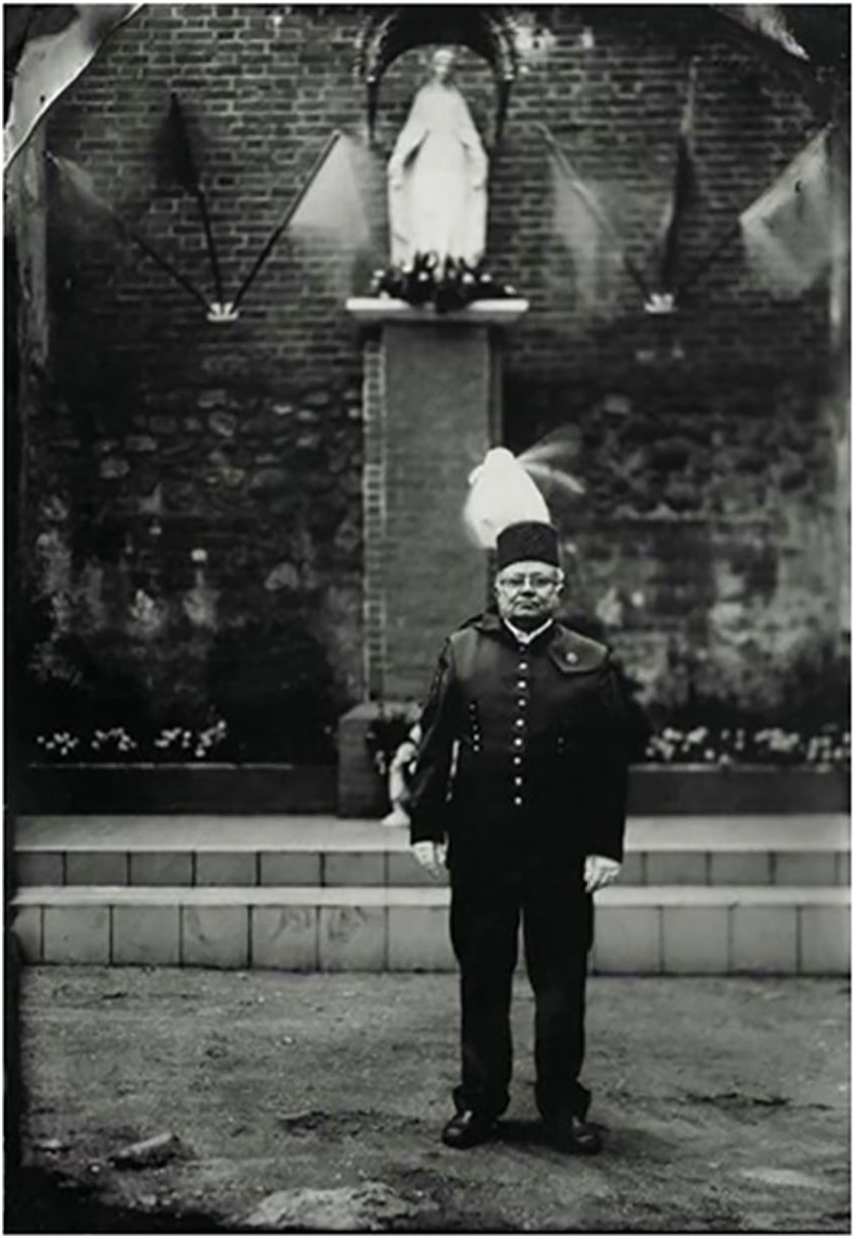
This retired miner active in the male mining choir chose to be photographed next to the church where the choir performed that day. At first, the symbolism of the image seems unambiguous. The steps behind the miner seem to be leading to an altar with the elevated figure of the Virgin Mary towering above the miner. This composition speaks of the traditional Polish mining community’s devotion to the Catholic Church. Yet, in the background, we see slightly blurred flags. As a ‘current-event photograph’ (Wallace, 2002: 153, after Kracauer, 1995), taken in 2016 we know the flags are those of Poland and of Vatican, both a familiar sight in Poland in which national and Church imagery often complement each other. Interestingly however, the blurred, black and white old photograph effect makes the flags impossible to identify. Without a caption, the photograph could be a pre–Second World War image taken in the same spot. That reminds us that Lower Silesia has changed hands many times, and the flags might have been German and Protestant. The only continuity in the place as shown in the image is Christianity and the mining itself. The key social identity is communicated through the man’s gala uniform. It links copper mining with the traditions of coal mining, an iconic image of the working class under communism celebrated by the authorities as (coal) mining was seen as central in the effort of ‘building socialism’. Yet, despite the region’s history of political change, this image emphasises continuity and tradition in the way in which both work and religion are central in the life of this community.
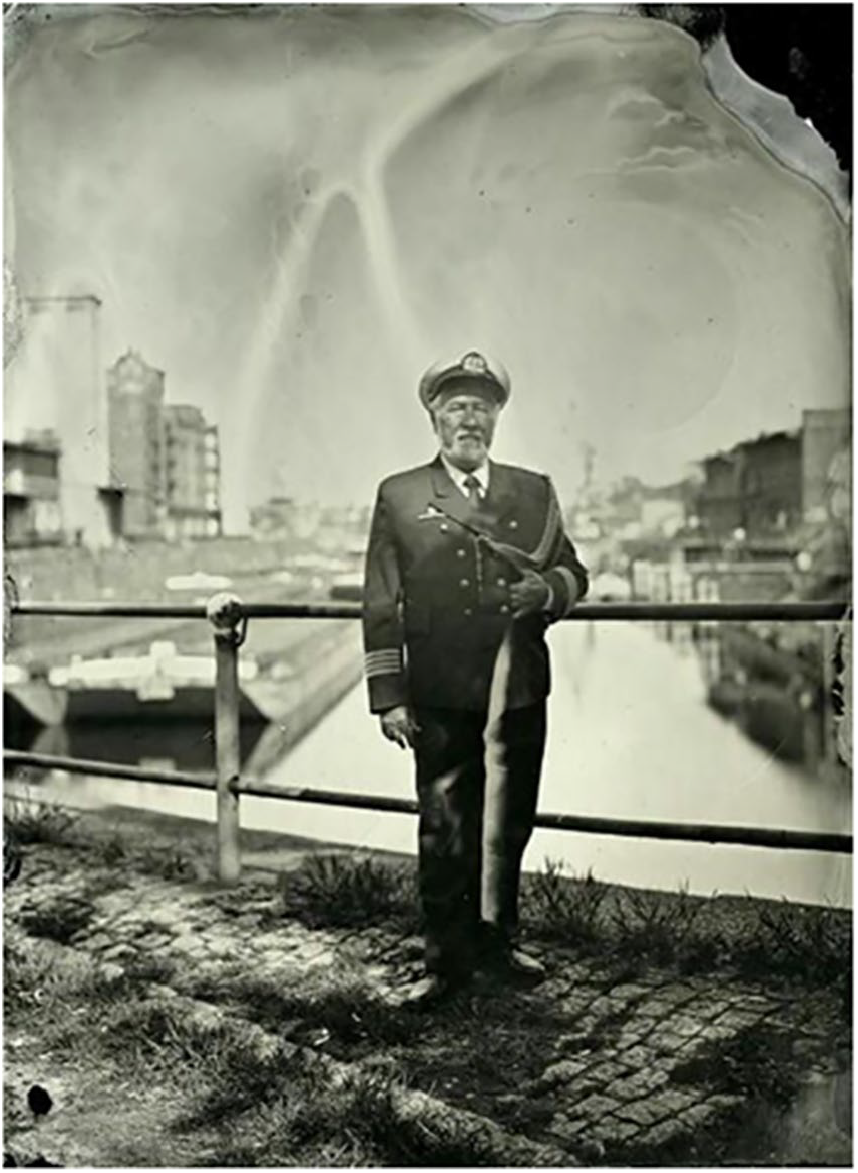
Retired inland navigation captain. Collodion photographs are necessarily characterised by a staged aesthetic; the scene is jointly negotiated by the participants and the photographers. Central in this image is the retired captain wearing his uniform and standing in front of the now disused and abandoned port basin. He is resting against a cast iron railing consisting of two parallel bannisters dividing the space in the image between near and far. The port buildings and barges are visible in the distance but are out of focus; we could be tricked into thinking the port is, when photographed, still open. The captain could be on his way to work, like thousands before him. There is no reference to the historical period of the image being taken, we cannot see anything contemporary suggesting the picture is recent. For an average viewer, he could be a German (i.e. pre–Second World War) captain, as the details of his uniform are not clearly identifiable. And the distortions of the collodion process: the cloudiness, the fluid shapes made by the chemical, the rupture of light in the image, all suggest the image is quite old. Yet, the captain’s feet standing on a cobblestone road disrupt the lived deception/impression of the image: the road is broken, devoured by mature grass and eroded by rain. It is that road which speaks of the passage of time and speaks of the stillness in the port. Thus here, the captain symbolises a way of life in Breslau-Wrocław now almost entirely extinct.
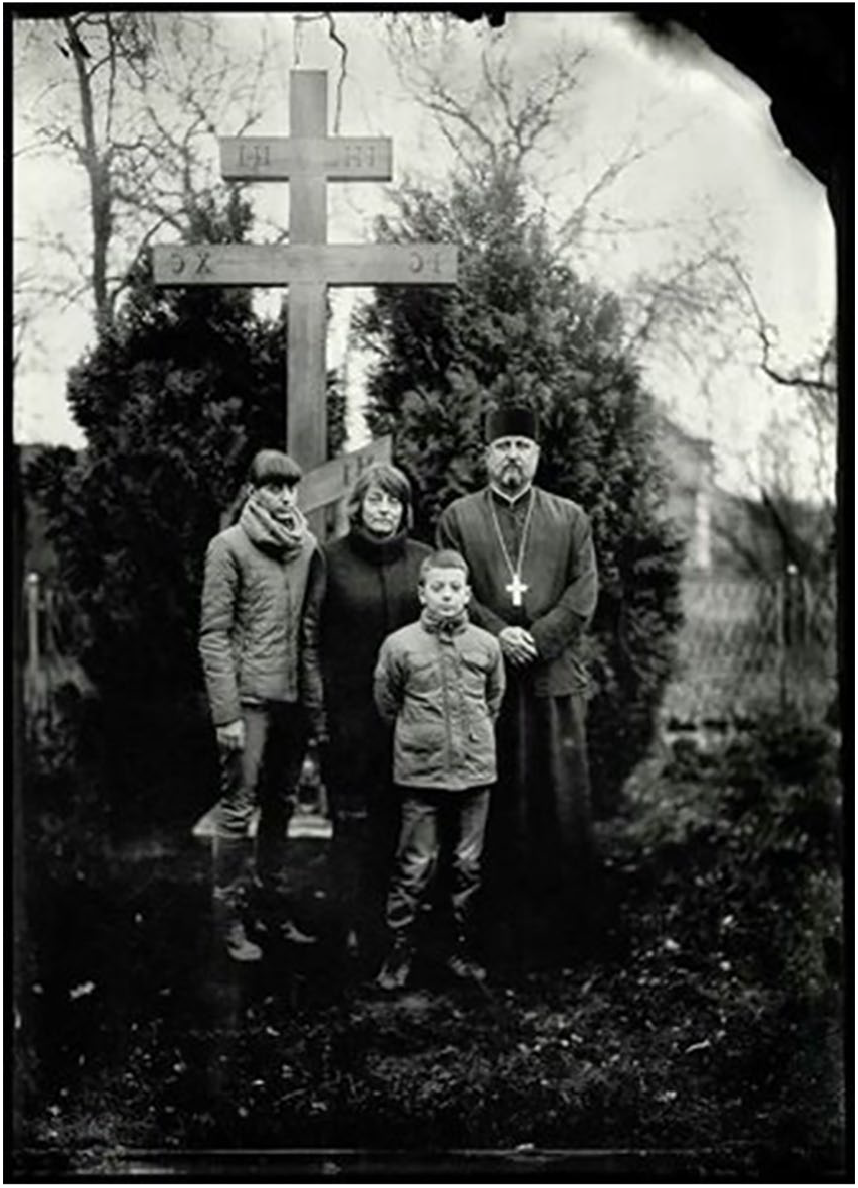
The Lemkos’ community Russian Orthodox priest with his family in the ground of their church. In this image, the family stands next to their community’s defining symbol, the characteristic Russian Orthodox cross. A key visible difference from a Polish (Catholic) priest could be that the priest is married with children. Yet, for the priest himself, after he sees the photograph, the collodion image of the cross has created a problem. It is a mirror image and the direction of slant of the lower beam of the cross, representing Jesus’ footrest, is ‘wrong’. It should point up on Christ’s right. Following the appearance of the image in the developing tray, the priest seemed visibly disappointed. For him, the correct representation of the sign the cross was important because the direction of the slant is theologically meaningful. As a public community figure, he needed to have the details right and with the image being incorrect he might not be able to display the photo. This discomfort with the incorrectness of the visual representation of the religious emblem shows the importance of symbols for identity.
The earlier section outlining just some of the images and the corresponding interviews represents initial interpretation of the visual and interview data generated by the project. Three themes have so far been identified in memory and identity narratives: those connected to place, nationality/ethnicity and work. These themes will be developed and discussed elsewhere as this article has focused primarily on the methodology and the types of data it has generated. What is unexpected in the data is the significance that older respondents have placed on their work-based identities and the way in which these connect them to the regional geography and its social history. Working lives linked to heavy industrial production during communism in Lower Silesia connected the Polish working class to the pre-war German way of life in the region in a way which has now been disrupted by the 21st-century shift to post-industrial, globalised capitalist economy in which young people are less likely to follow their parents’ footsteps, more likely to have no choice but to choose their identities (Giddens, 1991). The theme of work-based identities in the project highlights an ending of stable work-based communities expressed by the participants.
Conclusion
To sum up, the role of the archaic collodion photography in the project has been to stage the ritual encounter between the project authors and the participants for the performance of acts of memory. Importantly, in the age of the widespread digital photography, the use of the unique and expensive collodion ambrotype restores in ‘A Portrait of Lower Silesia’ the solemnising character of the photographic event as described by Bourdieu (1996). To photograph, ‘ordinary people’ is to make a social intervention (Sidorenko and Marusinska, 2017), and to position our project participants as central to the region. The very act of portrait-making invited the participants to define themselves, to articulate their identities and to exercise their agency in telling their own stories through performative memory acts. This intervention, then, part art, part research hoped to provoke a reflection among research participants on their own local social identity as acts of symbolic work affecting perception of the social world, which, in itself, ‘implies an act of construction’ (Bourdieu, 1985: 728) both in the conservative and the transformative sense. In other words, the project has attempted to open the liminal space for change as [k]nowledge of the social world and, more precisely, the categories that make it possible, at the stakes, part excellence, of political struggle for the power to conserve or transform the social world by conserving or transforming the categories through which it is perceived. (Bourdieu, 1985: 729)
Finally, the exhibitions that followed have symbolically returned the portraits and stories back to the communities of origin and had placed the ‘ordinary’ inhabitants of Lower Silesia in the public sphere. At the same time, the process has generated rich interview and visual data which will be used further to systematise the voice of the citizens. This way of combining performance art with academic research offers empirical data for analysis and a chance to explore an innovative methodology for qualitative research and the critical potential of arts-based methodology.
Footnotes
Acknowledgements
The author would like to thank the following colleagues and friends for their helpful feedback and support with the earlier versions of this article: Gayle Letherby, Ian McNay and Elena Vacchelli. A very special thanks goes to Michal Sitkiewicz and Paweł Sokołowski who invited the author to this collaboration and let her into their wonderful world of collodion photography. ‘A Portrait of Lower Silesia’ results from a collaboration between the author and the Street Collodion Art photography collective, Michal Sitkiewicz and Paweł Sokołowski.
Declaration of conflicting interests
The author(s) declared no potential conflicts of interest with respect to the research, authorship, and/or publication of this article.
Funding
The author(s) disclosed receipt of the following financial support for the research, authorship, and/or publication of this article: The project ‘A Portrait of Lower Silesia’ received financial and practical support from two local cultural centres in Poland: ‘Wzgórze Zamkowe’ in Lubin and ‘Miejski Osrodek Kultury’ in Nowa Ruda.
