




Abstract
In this article, we share our experience of navigating qualitative longitudinal research with a ‘hard to recruit’ population. To detail design conception, methodological challenges and insights, we draw on the case of a 1-year-long study on health behaviour in Olympic hopefuls. In order to accompany 12 athletes who aimed to qualify for either an Olympic Games (n = 10) or a World Championship (n = 2), we developed and implemented a career background questionnaire; semi-structured interviews; weekly web surveys; a training observation and a compilation of competition results. Based on the longitudinal research experience, we present project management and project data of the Paths-to-Rio study to discuss the challenges we faced, including gaining access to an elite population, their retention and anonymity. We further outline insights the prospective study gave us on the value of missing data as data and on the benefits participants described in terms of learning through research involvement. We conclude with recommendations for future qualitative longitudinal research.
Keywords
Since seminal publications in early 2000 (Neale and Flowerdew, 2003; Saldaña, 2003; Thomson and Holland, 2003), long-term research engagements are increasingly recognised as a distinctive methodology and commonly subsumed under the umbrella term ‘qualitative longitudinal research’ (QLR) (Corden and Millar, 2007; Thomson and McLeod, 2015). Today, qualitative longitudinal methods are well-established across social science disciplines (see for overview, Thomson and McLeod (2015)), however, less so in sociological research on elite sport. The lack in longitudinal perspective is to our understanding closely connected to methodological challenges that may emerge when conducting time-extensive research with ‘elites’ (Williams, 2012). Furthermore, engaging athletes in a prospective study spanning critical career events, such as major competitions, has been argued ethically problematic, difficult to realise and cost-intensive (Gould and Maynard, 2009; Haberl and Peterson, 2006; Jensen et al., 2014). While these problems indicate that researchers embarking on a longitudinal venture in elite sport will face methodological challenges (Corden and Millar, 2007; Taylor, 2015; Thomson and Holland, 2003), existing studies remain surprisingly silent about the navigation of the research process and the methodological insights gained.
Addressing this methodological paucity, the purpose of this article is to share our experience of bringing QLR methodology to social science elite sport research. Drawing on the case of a 1-year-long study on Olympic athletes’ health behaviour during a critical career phase, we aim to (a) introduce the prospective methodology we developed, including sampling, recruitment, data collection and analysis and (b) use project management and project data to describe methodological issues and insights we gained during the research engagement.
In what follows, we first provide background on health behaviour in Olympic sport. Second, we outline our prospective design and describe the data collection methods that we developed for the Paths-to-Rio study. We conclude by discussing methodological challenges we faced regarding access, participation, and anonymity as well as the insights we gained on the value of missing data and the experienced benefits of participation.
Background
Participation in the Olympic Games (OG) constitutes the ultimate career goal for many elite athletes. The uniqueness of the event derives partly from its size, global character and media coverage. Moreover, the quadrennial staging adds to the importance that athletes, coaches and sport federations accredit to the event. Consequently, participation in an OG has been described as ‘a once in a lifetime chance’ (Haberl and Peterson, 2006: 29) and a ‘career change event’ (Samuel et al., 2016: 38).
For athletes with a real chance to participate, the career phase spanning the event is marked by high demands, insecurities and an unpredictable outcome (Debois et al., 2012; Woodman and Hardy, 2001). Based on predominantly retrospective interview and survey studies, the research identifies an array of stressors Olympic hopefuls experience, including personal issues (e.g. injuries, lacking mistake management skills); team problems (e.g. lack of professional support, poor communication); shortcomings in leadership (e.g. coaching issues); environmental issues (e.g. problematic selection procedures, lack of financial support) and competitive stress, such as schedule, weather, media demands or inadequate accommodation (Gould and Maynard, 2009; Hanton et al., 2005; Mellalieu et al., 2009; Woodman and Hardy, 2001). Against this backdrop of evidence, we argue that OG hopefuls enter a career phase that requires high bodily, psycho-social and biographical investments while being very insecure in outcome. Even though insecurity and risk are paradigmatic for elite sport’s culture (Bette and Schimank, 2006; Lamont et al., 2014; Roderick, 2006), sociological research has identified these career/occupational conditions as toxic, encouraging athletes to adopt behaviours that may jeopardise their health, such as competing while injured, overtraining, weight making or doping (Berg et al., 2014; Bette and Schimank, 2006; Bloodworth and McNamee, 2010; Pettersson et al., 2013; Roderick and Waddington, 2000; Schubring and Thiel, 2014; Theberge, 2008). In this article, we relate the issues of a critical career phase, investment and insecurity to define elite sport risk behaviour (ESRB) as practices that athletes adopt in the pursuit of sporting goals, namely to maintain or increase their chances to train, perform, qualify, be selected or excel in competition, but which have the potential to harm athletes’ health and well-being as well as their sustained performance and career development.
Despite the dearth of research identifying ESRB as contextually situated and subject to change, prospective qualitative research on the topic is missing. Few scholars have accompanied elite athletes during a sensitive career phase, such as Olympic preparation (for exceptions, see Debois et al. (2012); Pensgaard and Duda (2002)) or studied changes in athletes’ health behaviour over time (Schubring et al., 2019). Thus, the purpose of this article is to address this gap in knowledge and methodology by sharing our experience of conducting a prospective, 1-year-long study with 12 elite athletes, who prepared to qualify for the OG (n = 10) or World Championship (WC; n = 2).
Study details
To research ESRB in Olympic hopefuls, we adopted a QLR approach (Saldaña, 2003). QLR has been found particularly useful for ‘the investigation and interpretation of change over time and process in social contexts’ (Holland et al., 2006: 1). Neale and Flowerdew (2003) argue that ‘it is through time that we begin to grasp … the mechanisms and strategies used by individuals to generate and manage change in their personal lives, and the ways in which structural change impacts on the lives of individuals’ (p. 190).
With regard to design, QLR studies vary considerably. Depending on the subject, purpose and available resources, researchers have used different models to capture and inquire temporality, such as retrospective, cross-sectional follow-up, or planned prospective studies (Neale et al., 2012; Saldaña, 2003). While retrospective designs ‘investigate social processes through recreations of past events and experiences’, prospective designs ‘involve tracking individuals or groups through changing life course or policy transitions as they occur’ (Neale et al., 2012: 5). It is the prospective strategy that best suited our aim to investigate how athletes’ health behaviour evolves and potentially changes during a critical career phase. In the set-up of the prospective design, we also followed Corden and Miller’s (2007) recommendation to focus on change and adopt an ‘iterative nature of data collection’ (p. 585). Alongside QLR, we used a case study approach (Yin, 2015). The strength of case studies is that they permit ‘an empirical inquiry that closely examines a contemporary phenomenon (the case) within its real-world context’ (Yin, 2015: 194). To reach this empirical ‘close-up’, two preconditions need to be met: (a) intensive data collection that involves ‘multiple sources of evidence’ and (b) accounting for the ‘actual setting and circumstances’ in which the case is situated (Yin, 2015). In line with this understanding, we developed a combination of quantitative and qualitative methods to gather close-up and longitudinal information on athletes’ horizons for health behaviour (embodied dispositions, relationships and social positions); the unfolding of their careers; the transitions they experienced and their decision-making with regard to ESRB. More specifically, we collected data via a background questionnaire; the compilation of competition results; a weekly web survey; three semi-structured interviews and a training observation. The study Paths-to-Rio obtained ethical approval from the Regional Ethical Vetting in Gothenburg (Dnr.: 954–13).
Sampling strategy
To investigate athletes’ health behaviour in the unfolding of a critical career phase, we used ‘purposeful sampling’ (Patton, 2015: 264). Based on the assumption that Olympic hopefuls can be more prone to ESRB in the lead-up to the event (Gould and Maynard, 2009; Mellalieu et al., 2009), we defined two core inclusion criteria: (1) athletes who in 2015 prepared for the 2016 OG and (2) athletes who were willing to participate in the 1-year-long study. We further aimed for (3) variation in sport disciplines and (4) equal gender distribution in the sample. We expected the inclusion of female and male athletes from different sports to increase the ‘heterogeneity of cases’, which according to Patton (2015) allows documenting diversity and identifying ‘important shared patterns that cut across cases’ (p. 283).
To establish not only a close and trustful relationship with each participant but also accommodate potential dropout – which in other prospective studies that required weekly self-reporting halved the initial sample (Hein et al., 2014) – we aimed to recruit at least 16 athletes into the Paths-to-Rio study. It is important to stress that non-qualification in the course of the study did not constitute an exclusion criteria. On the contrary, and in line with our aim to follow athletes in ‘real time’ and in their ‘real-world context’ (Yin, 2015), we wanted to accommodate the insecurity of selection and the repercussions unsuccessful qualification have for athletes’ career progression and health behaviour.
Recruitment of participants
Based on the outlined sampling strategy and the researchers’ awareness that elite athletes are ‘notoriously difficult to recruit’ (Bloodworth and McNamee, 2010: 277), we adopted a multi-channel recruitment procedure. First, we identified potential individual and team sport athletes for inclusion using national governing bodies (NGBs), and sport federations’ publicly accessible lists of national team or elite sport support programme members. Second, we contacted 17 Olympic summer sports federations and introduced them to the project providing details on aim of the study; benefit of participation; criteria for participation; handling of data and contact persons. Contacts with elite sport managers and coaches were followed-up via email and phone. However, recruitment via NGBs and federations was slow and inefficient, which led us to ask personal contacts to connect us with athletes. We also opened up our sampling criteria to include a non-Olympic sport in which the WC was scheduled in the same month as the OG in Rio. We estimated that preparation and qualification for this WC involved a similar critical career phase as for Olympic athletes 1 . We thus contacted the federations of this non-Olympic sport in three countries. Despite the opening up, recruitment took longer than expected and in late fall 2015, we decided to focus on the retention of the 12 athletes who had agreed to participate knowing the project aims, procedures and ethical safeguarding, such as the right to decline participation.
Participating athletes came from four different Olympic and one non-Olympic sports. Despite differences in age, most athletes were part of a national team (n = 10). However, only three were professional 2 athletes, seven held part-time jobs to finance their lives and two were competing on amateur conditions. While all invested significantly in weekly training, their training volumes and annual competitions differed greatly. This had repercussions on data collection, as we will discuss later.
Upon decision to participate, the first author matched each athlete with a member of the author team. Depending on authors’ availability, each author teamed up with two to five athletes. Establishing consistent researcher–participant pairs also served to coordinate data collection and manage the longitudinal research relationship with each participant (Thomson and Holland, 2003). It was in those pairs and in accordance with athletes’ training and competition schedules that a suitable time and place for a first individual meeting were arranged. For two athletes who trained abroad, a Skype session was scheduled.
Data collection tools and process
Data collection for QLR has been described as time-consuming and demanding for both researcher and researched (Farrall, 2006; Thomson and Holland, 2003). In order to minimise demands in time and effort for athletes, we strategically developed quantitative data instruments (questionnaire, weekly web survey, competition overview) in addition to qualitative ones (interview, observation) and included researcher-generated data (competition overview, observation protocol). Furthermore, we tried to align data collection with institutional time frames, such as end of winter season, selection phases and competition events, which we expected to impact athletes’ availability. We also avoided intensive data collection close to the OG/WC. Figure 1 provides an overview of the five methods and our timing of data collection intervals within the 12-month time frame of the Paths-to-Rio study.
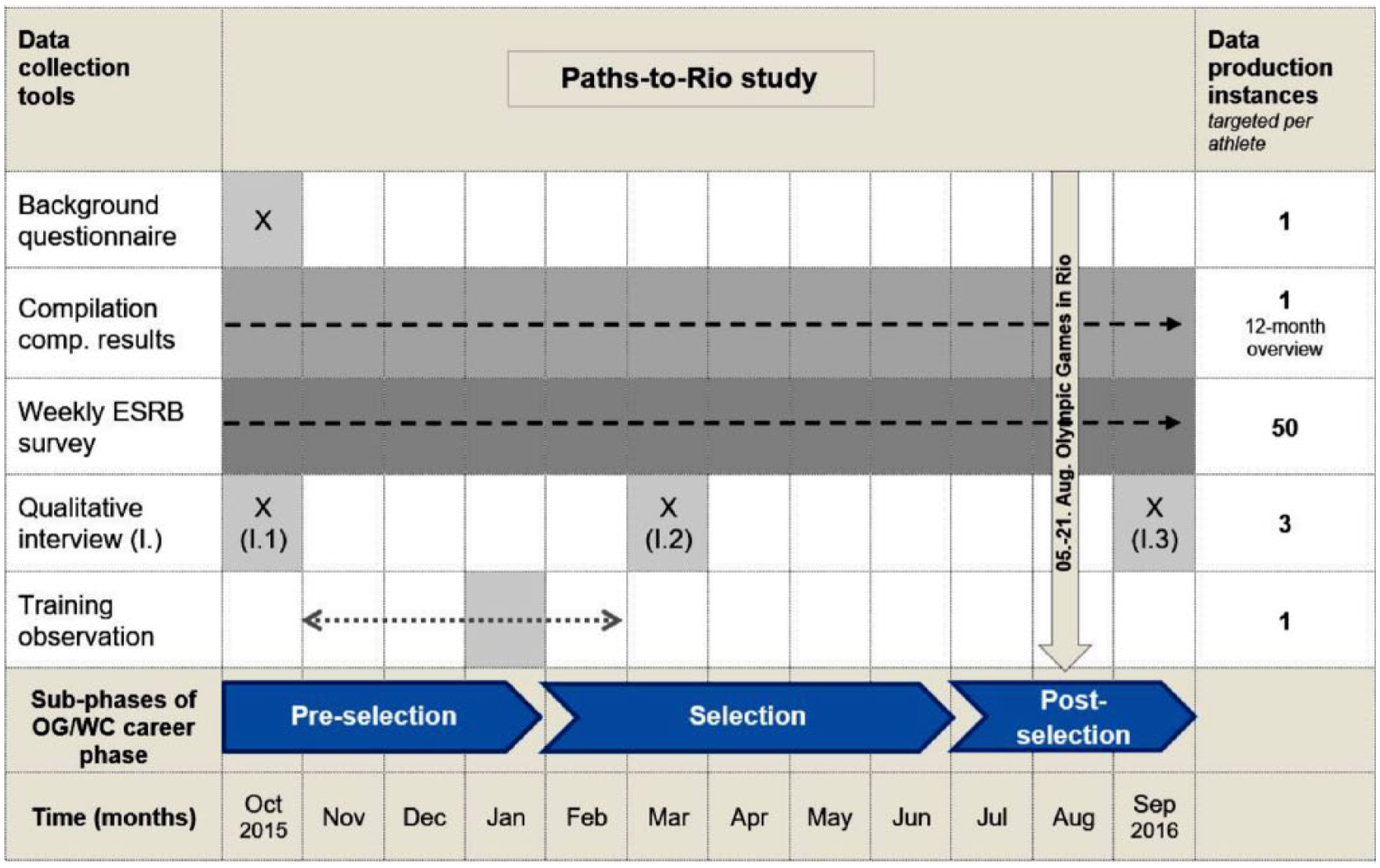
Timeline of data collection programme in the Paths-to-Rio study.
Background questionnaire
We considered background information on athletes’ life situation and career important to situate later meaning-making, decisions for or against risk taking, as well as to enrich case descriptions. Research participants may, however, experience personal questions as interrogative or stressful when asked in an interview situation, and factual questions are likely to block narration and disclosure (Helfferich, 2004). To avoid these pitfalls, we developed a two-page questionnaire on athletes’ personal and sporting backgrounds; living and working situation; career development; sporting success and health status (Supplementary file 1). We trialled the questionnaire with two athletes. At the first meeting, we asked participants to complete the background questionnaire making clear that they could leave questions blank if they are too personal.
Compilation of competition results
To follow-up on athletes’ performance development, we documented the competitions they participated in, the playing time (for team-sport athletes) and/or the achieved results. To disencumber the participants from reporting on results, we drew on national and international sport federation websites, media coverage or athletes’ public social media presentations. The compilation of this information helped us to stay informed on athletes’ career progression and together with the athletes contextualise their survey responses in the follow-up interviews.
Weekly web survey
To achieve the study’s aim to follow athletes through a critical career phase and to gain insight into their decisions for or against ESRB, we developed a short web survey, which the athletes could access online via a mobile device (smartphone, tablet or laptop) for weekly self-reporting. This method was inspired by studies that demonstrate that web applications and electronic forms can facilitate the access and prospective follow-up of athletes (Timpka et al., 2014).
The web survey contained 12 closed questions, which asked to report training amount, performance and competition participation, health state, stress level and ESRB for the past week (see Figure 2). For reasons of practicality and comparability, we used either ordinal scales (no/yes) or 5-point Likert-type scales as response possibilities (Arber, 1993). The survey ended up with an open question for further comments. Moreover, we integrated the option to display or hide a line chart that visualised reported responses over time (see Figure 2). This option was intended to make reporting more attractive for athletes as the graphs provided direct feedback on development and allowed greater ownership of the information they entrusted us with. In addition, the athlete-created line charts were integrated in the follow-up interviews (I.2 and I.3), where they served to probe on athletes’ reporting, and to ask for context information and reflections on their decision-making (see Supplementary file 2).
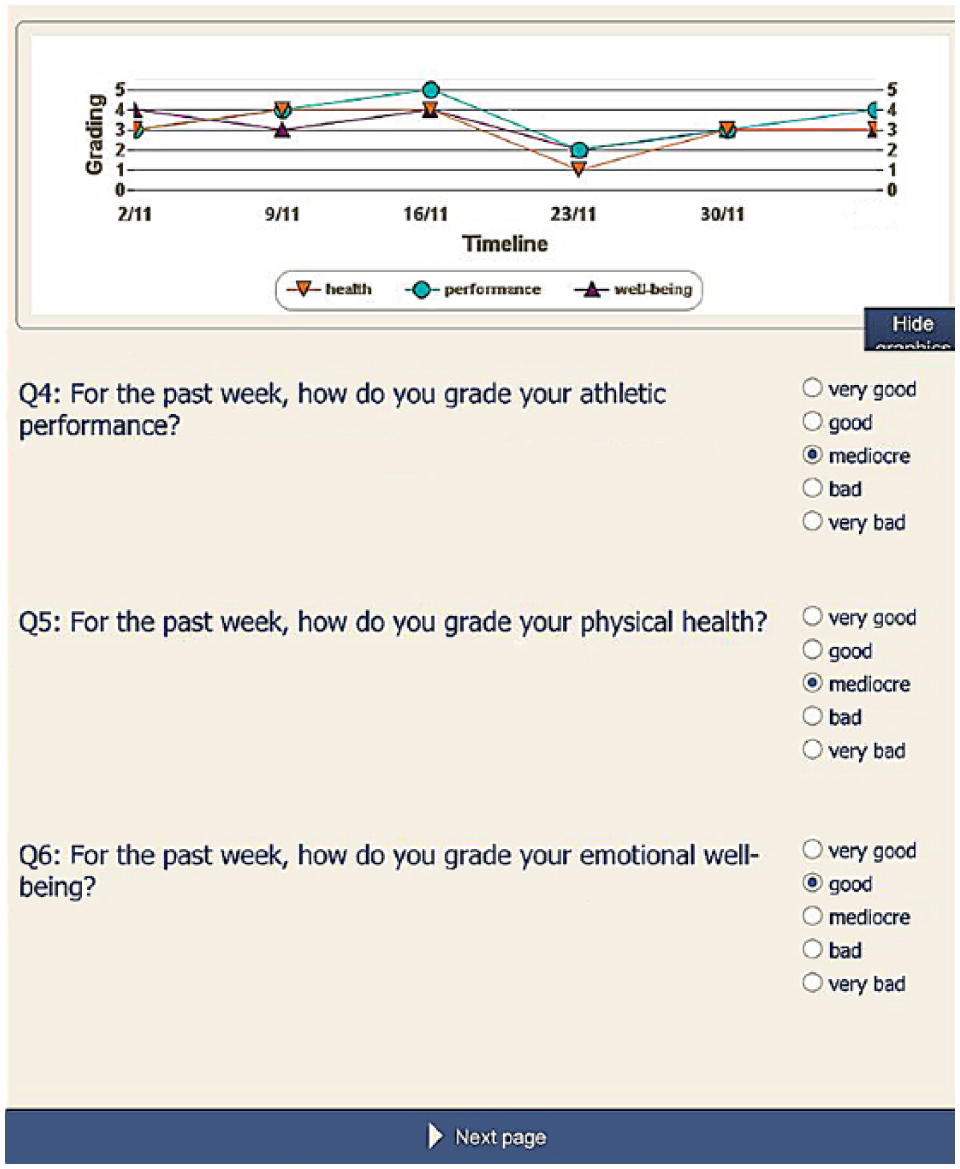
Weekly web survey (screenshot) Paths-to-Rio study.
At the first meeting, we introduced participants to the web survey, its function and usage. We gave each athlete an individual username and password for access. During 1 year, the athletes received an electronic message each Monday morning containing a link to the survey and contact details in case of problems. Reported answers were encrypted and saved in a database on a secured server. If athletes did not complete the survey within the course of the week, data for this week were considered missing. To minimise missing data, the athletes, who had not responded within 48 hours received an automatic reminder. Furthermore, we regularly checked entries and if an athlete did not respond two or more weeks in a row, we made contact via email or text message to clarify her or his reasons or encourage continuation. Sometimes participants also contacted us when encountering problems or having forgotten to answer the survey.
Semi-structured interviews
As outlined in Figure 1, we conducted three semi-structured interviews with each athlete over the course of a year. Semi-structured interviews have been found useful to elicit rich and detailed data on peoples’ attitudes and behaviours, to establish case histories or to gain insight in complex social phenomena not yet well-studied (Flick, 2012; Patton, 2015). By including open/thematic questions and probing questions, interview guides allow for consistency in themes covered in all interviews, but still leave openness for narrative flow and athletes’ own relevancies to emerge (Flick, 2012; Helfferich, 2004). We developed three interview guides focused on different phases of the 1-year-long career span. Interview 1 focused on the pre-qualification phase, interview 2 on the post-qualification and/or pre-competition time and interview 3 on the post-competition phase (Supplementary file 2).
Interview guide 1 was split into three sections: (a) sporting backgrounds; (b) assumptions about participating in the OG/WC; and (c) values, beliefs and understanding of ESRB. Acknowledging the sensitivity of the topic, we created three ‘vignettes’ to offer athletes a less personal way to talk about sporting risk behaviours. Vignettes are short stories of hypothetical or real events that aim to elicit talk in interview situations (Mercer, 2014). Our three vignettes drew on real case histories reported in media and each addressed a well-documented risk behaviour, covering: (a) training with pain and injuries, (b) taking painkillers in order to compete and (c) dieting and daily weight monitoring. Within the interview, the vignettes were ‘narrated’ by the researcher, and the athletes were first invited to comment on the case; then to compare the scenario with norms and common practice in their own sport, and finally to state possible own experiences.
In accordance with Hughes (1998), who argues that the vignette technique ‘can help unpackage individuals’ perceptions, beliefs, and attitudes to a wide range of social issues’, we experienced the vignettes to facilitate talking about risk behaviours for both participants and us as interviewers (p. 384). Some athletes identified directly with the athletes in the vignettes, sharing similar experiences, while others distanced themselves from, for example, using painkillers, explaining that their sport culture discouraged such behaviour. The vignettes also led athletes to reflect on the causes of others’/their own risk behaviour, and some shared pressures and ambiguous feelings. While all the athletes could connect to vignettes a and b, some team and technical sport athletes expressed that they did not experience weight to matter and felt they had little to say on vignette c. Overall, the vignettes provided a distance that allowed the interviewees to talk about risk taking in a less personal way and they also called forth interviewees’ own stories and experiences.
Interview guide 2 consisted of three sections. In the first, questions explored athletes’ experiences of the pre-selection period. In the second half of the interview, we presented the athletes with printouts of their weekly survey responses and the line charts showing self-reported development of (a) performance; (b) physical health and (c) psycho-social well-being between interviews 1 and 2. To create the line charts, we entered athletes weekly self-rating of performance, physical health and well-being prior to the interview into an excel sheet to transform the numeric survey response into visualisations (see Figure 3). Using the visual support of the line charts, we first asked athletes to comment and reflect on the past months before probing on decisions for or against ESRB. In the last section, we asked athletes to comment and reflect on the lead-up to the OG/WC.
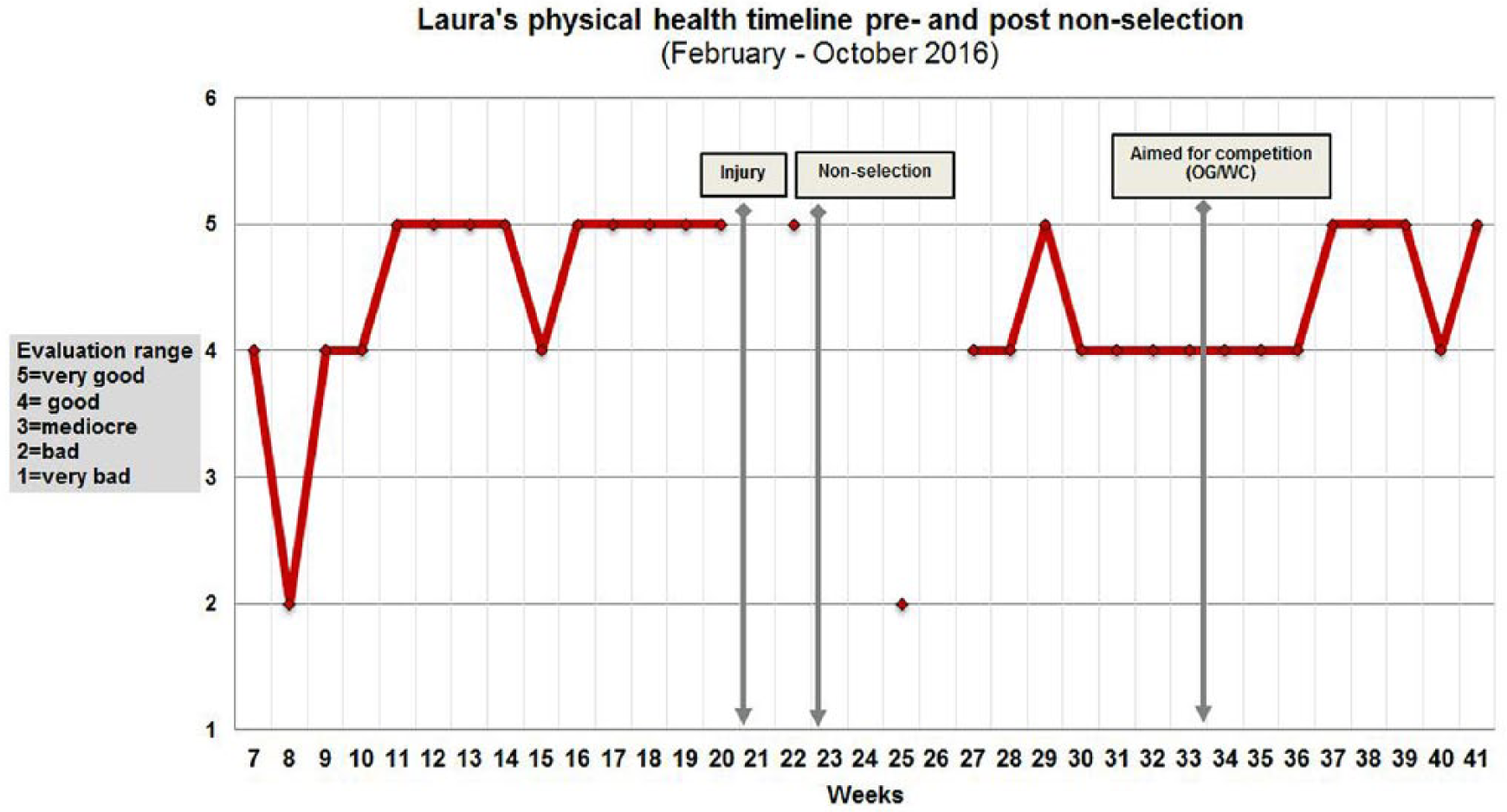
Laura’s physical health timeline created in Paths-to-Rio study.
Interview guide 3 was divided into five parts. In the first and second parts, open-ended questions invited athletes to review the time between the second and third interviews, including their participation (or non-participation) in the OG/WC and the time thereafter. In the third part, we again used printouts of athletes’ weekly self-reporting and line charts to support reflection and to probe decisions for or against ESRB. In parts 4 and 5, career progression, recommendations and research involvement were addressed.
We recorded all conducted interviews digitally and transcribed them verbatim. A project internal guide for transcription was used to guarantee consistency. As a step in the dialogic research approach, we shared interview transcripts and line charts with the participants to allow for ‘member reflection’ (Smith and McGannon, 2017) and commenting. The shared visualisations led to meaningful additional data in interviews 2 and 3, where reflection on prior generated line charts was an integrated part. Athletes commented, for example, on the course of the lines, turning points and interruptions, and the line flow related to what happened during the represented career phase. The sharing of interview transcripts, however, did not generate additional data, which is most likely related to interview transcripts being less accessible because of length, athletes’ priorities at the time and not specifically eliciting reflections in follow-up interviews.
Observation of training context
In order to contextualise athletes’ qualification phase, we aimed to observe athletes once during the preparation phase. To generate consistency between researchers, we developed an observation guide (Flick, 2012) that included the themes of training setting, content and atmosphere; training group; coach–athlete relationship and athlete health situation (Supplementary file 3). The guide further structured note taking during the observation. Where possible, we also took pictures of the training to help recall when extending observation notes into reports. Because of limited availability (e.g. training camps abroad) and timing problems, four athletes could not be observed during training.
The observations provided us with a better understanding of the different sporting contexts and helped to build relationships with the observed athletes. Given the single occasion and that some athletes could not be observed at all, the observational data mainly served as background information in the data collection process
Analysis of empirical findings
Analysis of longitudinal, multi-method data requires both synchronic (cross-sectional) and diachronic (over time) analysis to explore the complexity and temporality captured in the data (Saldaña, 2003; Weller, 2010). While descriptions of QLR analytical procedures exist (Debois et al., 2012; Thomson and Holland, 2003; Weller, 2010), direct application to other projects is rarely possible. This given, we developed an analytical procedure that combines different methods of analysis in four steps. First, we collated data of each athlete, considering each case as a unit of analysis, which captured individual realities, personal backgrounds and sociocultural specificities.
Second, we subjected the different data sources of each case to data-type-specific analytical approaches. We read interview transcripts and the field notes extensively in order to identify themes central to athletes’ attitudes and decisions for or against risky health behaviour (Flick, 2012). We used descriptive statistics to summarise the data from the weekly survey entries and to identify central tendencies and spread (Bors, 2017) for each athlete (diachrone) and for the entire group (synchrone). In order to identify the changes in athletes’ health behaviour and critical events that affect career development and decision-making we annotated timelines of athletes’ weekly self-reporting with relevant chronological information contained in the interviews (see Figure 3).
Third, for each athlete, the data-type-specific analysis was drawn together in a portfolio that provides a holistic overview of athletes’ background, their journeying through the studied career phase as well as the changes in health behaviour. Finally, we used comparisons between cases to identify career development patterns and sociocultural conditions that systematically influence ESRB. At present, we use this analytical procedure to generate empirical findings on different themes captured in the data.
Challenges and insights
In order to identify overarching methodological themes, we combined inductive and deductive procedures (Sparkes and Smith, 2014). For the former, the monthly research team meetings, which we documented in minutes (n = 24), were an important element. The meetings allowed us not only to reflect and decide on project progress, but also to continuously discuss the methodological issues that we faced, such as recruitment of elite athletes, researcher–participant relationship or ethical handling of entrusted information.
Building on this inductive identification of methodological challenges, the first author established an extended body of methodological data. This data encompassed project management data from the conception of study to initial analysis, including (a) email conversations with stakeholders and participants; (b) running notes on project development, methodological challenges and insights, and data generated through the prospective study, such as (c) interview conversations on athletes’ research experiences; (d) weekly survey entries and (e) line charts.
Following principles of thematic analysis (Flick, 2012), Astrid coded methodologically relevant chunks of data deductively under challenges or insights, before condensing and sorting the coded data into six themes: (a) access issues; (b) recruitment issues; (c) dropout; (d) anonymity; (e) benefits of missing data; and (f) benefits of participation (see below). Extended into descriptions with empirical evidence, the co-authors were asked for ‘member checking’ and critical discussion of the methodological findings (Lincoln and Guba, 1985). Amendments and reflections were integrated until we reached agreement on the above-named methodological themes and their presentation.
Access and recruitment
In the recruitment of Olympic hopefuls/elite athletes via NGBs, stakeholders in federations, or head coaches, we encountered a number of obstacles that slowed down the process and required us to use alternative strategies to gain access. While officials and coaches from four sport federations supported the study from the start, others used censorship and gatekeeping to withhold project information and invitations to athletes. More specifically, stakeholders from six federations did not respond to invitations and two federations declined participation as the following message illustrates: Hi Astrid First of all–sorry for my late answer. This time we have to say no to be a part of the study. Have a nice day. (Sports director)
Spokespersons from five federations feared a potential burden for their elite athletes (for similar argumentation, see, for example, Gould and Maynard (2009); Haberl and Peterson (2006)), saw conflicts with the competition schedule or other activities planned prior to the Olympics, which led to withdrawal: Hi Astrid! The […] national team in […] has now returned to me with an answer about our request. Unfortunately, they do not want to participate in the project. They found the project very interesting, but they are already involved in 4 research projects for the coming year. Due to that, they want to protect the [athletes] and find it too stressful to put more into their busy schedule. (Coach)
Besides, we understood that the sociological approach and the potential sensitivity of the topic (ESRB) further complicated access to elite athletes: Dear Natalie & Astrid, thanks for the info. We are just preparing for the European Championships (beginning of x) and World Championships (mid x). Both Championships are extremely important events for us. I will read and discuss this research with the athletes’ mental coaches in step 1. I am sure this is very important research project. On my side I need to reflect upon possible implications/triggers pros and cons affecting the athletes. We keep in touch, (National team coach – declined participation later).
In order to overcome stakeholders’ reluctance, we used personal contacts to insiders, recommendations from colleagues, who collaborated with clubs/teams of interests and did ‘relational groundwork’ (Adler and Adler, 2003: 164) in meeting gatekeepers or visiting competitions in the respective sport. This change in approach bore fruit and even if personal contacts were no guarantee for a positive response from the contacted elite athletes, they advanced the recruitment process considerably.
Once we connected with potential participants, we especially struggled with athletes’ non-responding, an issue scholars investigating sensitive topics in sport (e.g. doping, mental health, abuse) have described earlier (Bloodworth and McNamee, 2010; Kirby et al., 2011). The fact that elite athletes are a notoriously hard to recruit population has been explained by being ‘highly focused on self-chosen goals and are not typically pre-disposed to participate in research that does not directly contribute to performance enhancement’ (Bloodworth and McNamee, 2010: 277). This pre-disposition coupled with the long-term engagement required by our QLR study design undoubtedly affected athletes’ readiness to participate. Consequently, the final sample relied on participants’ self-selection and we needed to suspend the inclusion criteria of equal gender distribution.
Taken together, the reluctance issues we met in elite sport resonate with qualitative research describing how people in positions of power, ‘the elite’ or ‘the advantaged’, celebrities or people in the public eye, develop strategies to avoid intrusion, protect their privacy, control access or simply manage their busy schedule (Adler and Adler, 2003; Williams, 2012). Our experience further suggests that organisational cultures that prioritise short-term investments and direct turnover in performance outcomes may complicate QLR and as in our case NGBs’, coaches’ and athletes’ engagement in critical sociological studies. This has implications and may limit knowledge gains and learning available to research subjects and stakeholders – as we will outline below.
Participant retention and dropout
Participant attrition and missing data are frequently discussed problems in prospective research (Saldaña, 2003; Thomson and Holland, 2003). In this study, these issues were heightened, given that the participants were in a demanding career phase with, in some cases, little day-to-day routine due to training camps and competitions abroad. Retaining elite athletes thus demanded several adjustments, such as: (a) individualising the planned timeline for data collection (see Figure 1) to accommodate for sport-specific training and competition schedules, individual contexts and real life contingencies. This also resulted in stretching common data collection time points into time spans, and in two cases, we had to accept missing interview and observation data. Participant retention further required (b) flexibility from the research team to adjust to athletes’ availability in time and place often on short notice. In addition, we worked with (c) building rapport and keeping in contact with athletes by occasionally sending short messages, for example, before or after important competitions, for annual celebrations or to encourage athletes, who reported stress or ill health.
Managing the research relation with participants was not only always easy as we aimed at building close relationships but also wished to respect athletes’ privacy and their freedom of choice to keep researchers at arm’s length. Balancing closeness and distance was particularly challenging when athletes’ disengaged from answering the weekly survey and did not respond when we tried to get in contact to follow-up or offer support. On average, participating athletes responded 84% of the weekly occasions (standard deviation (SD): 10; range: 68%–100%). While most missed reporting relates to single weeks, two athletes did not respond for several weeks in a row during the end of year vacation.
However, maintaining a non-interventionist relationship and staying in contact without overtly controlling or pressuring athletes was an ethical premise for us (Flick, 2012; Haberl and Peterson, 2006). This approach appeared to be fruitful and even if compliance to the weekly reporting differed considerably between athletes, we were able to retain 10 out of 12 participants.
One athlete dropped out before the second interview and another after the OG. With regard to the latter, it is likely that her professional situation, numerous competitions abroad, a difficult athletic season and knowing early that she would not qualify for Rio, led her to withdraw. The following, last message conveys some of her tough career situation even if the athlete was at the time positive towards continued participation: Hi Astrid. Here good but struggle to find enough speed. Hope to be [verb] with more speed soon again. I will be in [country] now for about a month. Competing each weekend though. I have time to do a Skype whenever on normal weekdays as long as I’m not training that time. We will make it fit. Hope you are doing great too. (Ciao, x)
In the second case, reasons un-related to elite sport are likely to have caused the athlete to dropout.
Anonymity of participants
Guaranteeing anonymity and protection of privacy to informants are central pillars of ethical research practice (Flick, 2012), especially when researching persons of public interest, such as elite athletes (Adler and Adler, 2003; Woodman and Hardy, 2001) and/or on sensitive matters (Bloodworth and McNamee, 2010; Kirby et al., 2011). In QLR, safeguarding participants’ anonymity demands further data management measures as identifying details help to trace and situate participants in the different data waves (Taylor, 2015). In the case of the present study, the fact that data collection occurred through multiple sources and researchers, replacing identifying information (e.g. names, places, sports, competitions) in the entire data material with codes/ pseudonyms, was practically challenging and implied losing context. Except for the web survey for which each athlete had a code number, we thus decided to maintain identifiers during data collection, data analysis and data discussion in the research team. At the same time, measures were taken to limit access to the data; to guarantee safe physical and digital storage and to maintain secrecy in the research team.
When considering public presentation and publishing of study findings, we discussed at length, which information we could reveal given the size and exclusivity of the sample and the depth and detail of the longitudinal case material. While information on athletes’ personal backgrounds (e.g. age, gender), context (e.g. sport, country of origin) and health situation (e.g. type of injury) is central and meaningful to understand the interplay between career development and health behaviour, we decided to withhold or disguise most of this information. This is particularly important with regard to elite sport stakeholders with whom we wish to share our findings but who at the same time may have in-depth insights into OG/WC hopefuls’ preparation process, encountered health issues or any other change event that may be outlined in the timelines or discussed in interview quotations.
While the issue of anonymity has been addressed by other qualitative researchers (Kirby et al., 2011; Woodman and Hardy, 2001), our experience with the present data indicates that protecting anonymity of high-profile persons when presenting longitudinal career development and health information is only possible at the price of withholding or disguising a considerable amount of personal and contextual details, except if participants themselves agree/wish to be named (Taylor, 2015).
Missing data as data
As we have mentioned earlier, athletes’ compliance to respond to the weekly survey differed between participants and also within athletes over time. While non-responding is often described as problematic (Adler and Adler, 2003; Arber, 1993), we could in the course of the study identify non-responding as a form of athletes’ career situation and well-being data. For example, a number of athletes responded less regularly during stressful times, crises or when encountering serious health problems. Non-qualification for the OG/WC also impacted athletes’ response behaviour negatively.
Laura, an individual sport athlete, for example, incurred an injury close to the qualification trial, which led to her not being selected for the major competition. To deal with the disappointing situation, Laura decided to withdraw from training and ‘to do something else to get my mind off it’. Her temporary disengagement from elite sport affected her response behaviour. Following the non-qualification, Laura did for the first time not respond and left four of six weekly surveys unanswered.
Her non-responding resulted in gaps in her line charts (see Figure 3), an issue which the interviewer probed in interview 3:
Did you find it hard to continue with the filling in [of the web survey] when you knew you were injured?
Yes of course. It was a hard time during the injury part and that’s why I just – I was like okay, we go up to the North, then I, ah, it’s a little bit stupid that I didn’t do it.
yes, but I think in some ways it also represents – you know you tried to get away from it for a while, so that’s also.
yes, yes, yes.
it’s also okay, it in some way fits.
[laughs].
with the situation.
yes.
The example outlines not only the importance to respect participants’ temporal disengagement from QLR, but also the impact career situation and life contingencies can have on response behaviour and participation. On one hand, refraining from answering during critical moments can constitute a limitation for QLR on sensitive topics. In our case, the fact that an athlete disengaged from responding to the weekly web survey during an acute injury or the week prior to qualification trials, for example, means that we missed information on the athletes’ health behaviour and risk taking during this critical moment. On the other hand, the advantage of longitudinal research in this point is that the multiple data collection points somewhat buffered temporal non-responding. Furthermore, the triangulation of methods became important to compensate for missing data. In our case, athletes’ non-responding to the weekly web survey and the resulting interruptions in their timelines (e.g. Figure 3) became important cues in the qualitative follow-up interviews to probe how participants dealt with injury or non-selection, and to explore the interplay between career events and ESRB.
Athletes’ experienced benefits of participation
A common worry of elite sport stakeholders’ and scholars’ voice is that prospective data collection, such as conducting interviews and testing or administering surveys ‘to athletes before important competitions like the Olympics’, is ethically problematic and ‘might interfere with [athletes] forthcoming performance’ (Gould and Maynard, 2009: 1396). The substantiveness of this concern was indeed real in the previously outlined reactions of sport federations and coaches, who decided to shield their athletes from involvement in the study. Furthermore, we also had this concern, and thus, spent considerable time in developing data collection tools that would be efficient and minimally interfering.
Against the backdrop of these presuppositions, the athletes’ experiences with the longitudinal data collection were of methodological interest to us. While the participants described that they gained insight through continuous reporting and reflecting on their timelines within interviews 2 and 3, at the end of the study, we also asked athletes explicitly about their experience with the web survey. As the following quotes illustrate, most athletes not only experienced the web survey as easy and fast, but also named personal benefits from weekly reporting on their health and training status:
How did you experience the web survey and the weekly answering of questions?
It went very well. It was very easy and smooth. It was not at all tedious and it was also cool to see afterwards, like the graphs [timelines] and so on.
I thought it went very well, actually. And it did not take long, but it went fast to answer. It’s nearly like you wanted to have more … it would be great to have even more, some more questions maybe. So that you start reflecting over other things in your life as well.
Some athletes further described how they were able to actively use data collection events to reflect on their ongoing career phase, well-being and health behaviour:
When I take the questions directly I start to analyse: Okay, how was my week? How am I feeling? And so on … it has helped me start reflecting on myself and I think that is what I believe is the most important thing.
Taken together, the participants’ research experiences indicate that elite athletes may actually benefit from participation in prospective studies even during a critical career phase. We believe that the dialogic/interactive nature of our data collection tools contributed to this outcome as it allowed athletes to gain greater ownership of the information they entrusted us with, and to use data collection for self-reflection and self-regulation. Similar effects have been described by the users of health and fitness apps (Gowin et al., 2015). The athletes’ statements about their participation in the research, further point towards important learning processes. Such ‘learning benefits’ can be the assets for elite athletes and sport federations working towards holistic athlete development (Martindale et al., 2005). This finding leads us to argue that gatekeeping has not only implications for the academic community, but also repercussions on athletes’ possibilities to engage in research-facilitated learning processes and limits the research-based knowledge available to stakeholders in the elite sport.
Conclusion
The aim of this article was to share methodological knowledge that we gained by establishing and conducting a QLR project in elite sport. The methodological lessons we have learnt by researching Olympic hopefuls’ health behaviour in ‘real time’ are meaningful for future prospective research beyond elite sport. To conclude, we want to draw together three key lessons from the Paths-to-Rio study.
First, conducting QLR demands considerable time and funding resources to prepare the longitudinal study programme, recruit and maintain participants and collect, manage and analyse the prospective data gathered. This is even more so when researching elite or high-profile persons as additional methodological flexibility is required. Furthermore, we found that in performance- and outcome-focused cultures, longitudinal sociological/critical research can be met with reluctance as performance enhancement outcomes are less obvious. Consequently, self-selection of study participants is likely. Close cooperation with organisations or gatekeepers early in the design of studies may be one way to alter some of these challenges. Other options to overcome organisational and cultural barriers could be to use different social media channels to reach out to elite athletes (O’Connor et al., 2013) or to involve athletes to locate potential participants in their social networks for ‘chain referral’ (Penrod et al., 2003).
Second, the web survey that we developed for weekly data collection proved to be an efficient method to prospectively research elite athletes. It is likely that the format, timing and digital availabilities are also attractive for other research populations that demand flexible, efficient and mobile data collection methods. However, our experience with the web survey also shows that follow-up interviewing is important to make sense of participant responses, contextualise changes in health behaviour and probe missing values or disengagement.
While we experienced various benefits with the web survey, there are also shortcomings. Technical problems can interfere with data collection, such as incompatibilities with software used by participants or lack of Internet connection. The participants may also be reluctant to use digital devices for self-reporting and can prefer an analogue format. Furthermore, it is possible that the option to display prior reported responses influenced actual self-evaluation and increased participants’ wish for positive self-representation. Future research on best usage of web surveys in QLR will need to consider what other technical or methodological solutions exist to meet different users’ needs and how to moderate or control for possible side-effects of enhanced/visual feedback to respondents.
Third, we found elite athletes in this study to be more open not only to participate than the gatekeeping stakeholders, but also to draw benefits from the research experience. These included increased self- and career development awareness, possibilities to reflect on and moderate health behaviour and learning via interaction with data collection tools. These findings are of particular interest given the strong presupposition against research on elite athletes in the lead-up to the major competitions. More generally, knowledge on learning benefits of participation in research is limited. While we see a need for social scientist to more systematically research how participant learning relates to study design and specific data collection features, we also believe that it is time for researchers to make gatekeepers, such as managers, NGBs and other organisations aware of learning through research participation. This may be realised by providing examples from dialogic research and by giving voice to participants’ research experiences.
Supplemental Material
Supplementary_file_1_Background_questionnaire_Paths-to-Rio_study – Supplemental material for Researching health behaviour in ‘real time’: Methodological insights from a prospective study on Olympic hopefuls
Supplemental material, Supplementary_file_1_Background_questionnaire_Paths-to-Rio_study for Researching health behaviour in ‘real time’: Methodological insights from a prospective study on Olympic hopefuls by Astrid Schubring, Natalie Barker-Ruchti, Anna Post and Stefan Pettersson in Methodological Innovations
Supplemental Material
Supplementary_file_2_Interview_guides_Paths-to-Rio_study – Supplemental material for Researching health behaviour in ‘real time’: Methodological insights from a prospective study on Olympic hopefuls
Supplemental material, Supplementary_file_2_Interview_guides_Paths-to-Rio_study for Researching health behaviour in ‘real time’: Methodological insights from a prospective study on Olympic hopefuls by Astrid Schubring, Natalie Barker-Ruchti, Anna Post and Stefan Pettersson in Methodological Innovations
Supplemental Material
Supplementary_file_3_Observation_schedule_Paths-to-Rio_study – Supplemental material for Researching health behaviour in ‘real time’: Methodological insights from a prospective study on Olympic hopefuls
Supplemental material, Supplementary_file_3_Observation_schedule_Paths-to-Rio_study for Researching health behaviour in ‘real time’: Methodological insights from a prospective study on Olympic hopefuls by Astrid Schubring, Natalie Barker-Ruchti, Anna Post and Stefan Pettersson in Methodological Innovations
Footnotes
Acknowledgements
The authors thank the study participants for sharing their experience. They also thank the national governing bodies and coaches who helped with the recruitment of participants. They acknowledge Lars Malmsten for the support in the electronic artwork; Geraldine Zschocke and Erik Kjellberg for the transcription and translation works and Wolfgang Bandilla for the methodological consultancy.
Authors note
Natalie Barker-Ruchti is now affiliated with School of Health Sciences, Örebro University, Örebro, Sweden.
Funding
The author(s) disclosed receipt of the following financial support for the research, authorship, and/or publication of this article: This work was supported by the Swedish Research Council for Sport Science (CIF) under Grant (P2015-0081 and P2016-0056).
Declaration of conflicting interests
The author(s) declared no potential conflicts of interest with respect to the research, authorship and/or publication of this article.
Notes
Supplemental material
Supplemental material for this article is available online.

Author biographies
References
Supplementary Material
Please find the following supplemental material available below.
For Open Access articles published under a Creative Commons License, all supplemental material carries the same license as the article it is associated with.
For non-Open Access articles published, all supplemental material carries a non-exclusive license, and permission requests for re-use of supplemental material or any part of supplemental material shall be sent directly to the copyright owner as specified in the copyright notice associated with the article.
