




Abstract
Background:
Bromelain-based enzymatic debridement with Nexobrid® (Mediwound) is an alternative to traditional surgical tangential excision of deep dermal and full thickness burns. Early literature suggests that Nexobrid debridement could reduce the number of operations, infection rates, inpatient stay and the necessity for skin grafting to wounds by preserving viable tissue. To our knowledge there are no previous studies reporting the use of NexoBrid for treating burns in patients with established diabetic foot disease.
Case presentation:
We conducted a retrospective case series and identified four patients with diabetic foot burns that were treated with Nexobrid® debridement. All of these patients developed further eschar and deepening of their wounds a few days after NexoBrid was applied, requiring further surgery and skin grafting.
Conclusions:
We would recommend judicious use of this new product in patients with diabetic foot wounds.
Lay summary


Deep burns traditionally require surgery to remove the superficial dead tissue. Enzymatic debridement presents an alternative to this approach by using pharmaceutical products with the capacity to break down non-viable skin. This has the potential benefit of not affecting non-burned tissue and therefore reducing the number of surgical interventions, infection rates, inpatient stay and need of performing skin grafts in patients treated with these products. The aim of this study was to review the results of applying NexoBrid, a pineapple-based enzymatic preparation, for the treatment of diabetic foot burns in our unit. The four identified patients with this condition treated with NexoBrid resulted in deepening of their burns after applying this product. All of them then had to have surgery and skin grafts. We would recommend judicious use of this new product in patients suffering from diabetic foot burns.
Highlights:
Burns in patients with diabetic foot present a difficult clinical scenario In our hands, the use of bromelain-base enzymatic debridement has not shown any benefits compared to traditional surgical management in patients presenting with deep diabetic foot burns We believe that the zone of stasis is particularly liable in this patient group that can rapidly evolve to further necrosis Until further evidence is obtained, we would discourage the use of NexoBrid for this particular indication
Background
Bromelain-based enzymatic debridement (NexoBrid®) is an alternative treatment for deep dermal and full thickness burns. Application of this pineapple-derived agent results in a non-surgical selective escharectomy, with minimal damage to viable tissue. Early evidence suggests that this strategy results in a reduction in the number of wounds requiring surgical debridements, the necessity for skin grafting, infection rates and length of hospital stay.1,2
Since its introduction, several experiences with NexoBrid have been reported, mainly focusing on its use for hand and facial burns.3,4 However, there have been no reports of the use of NexoBrid on the feet of patients suffering from diabetic foot disease. Burns in patients with this condition and often difficult to manage burns, due to the co-existing loss of protective sensation along with microangiopathic changes that result in a reduced healing potential 5 and higher complication rates.6,7
The aim of this article is to report the results of our experience using NexoBrid for burns on the feet of patients with established diabetic foot disease.
Presentation of cases
A retrospective review of all the cases of patients presenting with diabetic foot burns to our unit was carried out. Patients treated since the introduction of NexoBrid in our centre from 1st September 2016 until the 1st April 2018 were included. Eligible cases were first identified in our burns database and their medical records were then reviewed to gather their previous medical history, nature of injury, time from injury to presentation and subsequent treatment.
In these 19 months, four male patients presented with deep burns in relation to pre-existent diabetic foot disease (Table 1). All of them were assessed in the first 72 h after injury in the burns service by our multidisciplinary team that includes burns surgeons, a consultant physician, a physiotherapist, a specialist diabetic nurse, a dietician and an occupational therapist. For these four patients, different treatment options were discussed and offered, with NexoBrid debridement was decided upon with a view to maximising dermal tissue preservation.
Patient demographic characteristics, type of injury and subsequent treatment after failed enzymatic debridement.

After successful enzymatic debridement of their wounds, these four cases evolved in a similar manner, presenting a new eschar in their first post-NexoBrid dressing change, two days later. This was interpreted as deepening of the burns, which all then required tangential debridement down to subcutaneous tissue and split skin graft (SSG). Three cases are presented below to illustrate our experience.
Case 1
A 44-year-old, male, type 2 diabetic patient with a previous diagnosis of diabetic foot disease, was referred to our unit after sustaining a 2.5% total body surface area (TBSA) deep dermal burn to his bilateral soles after falling asleep while resting his feet against a radiator (Figures 1 and 2). He presented one day after the injury and on that day the wounds were cleaned and dressed with chlorhexidine-soaked gauze. Routine blood testing demonstrated haemoglobin glycated levels (HbA1c) of 106 mmol/mol. Other comorbidities included peripheral vascular disease with an ABPI of 1.4 (right) and 0.8 (left).

Case 1: Bilateral burns caused by prolonged contact with radiator.

Case 1: Bilateral burns caused by prolonged contact with radiator.
The following day, NexoBrid was applied to the wounds, obtaining a satisfactory debridement (Figures 3 and 4). A spinal block was used to avoid any unexpected discomfort while enzymatic debridement took place. The area was then dressed for 2 hours with chlorhexidine-soaked gauze which was later replaced by lyophilised porcine skin (Xenoderm, Ideal Medical Solutions) and moist gauze. This patient was kept hospitalised with strict elevation of his lower extremities.

Case 1: Immediate post-NexoBrid photographs.

Case 1: Immediate post-NexoBrid photographs.
At his first dressing change three days later, the clinical team noticed that a new eschar had formed, suggesting a deepening of his previously viable debrided wounds (Figure 5 and 6). Over a period of four weeks, this patient underwent three surgical debridements along with the use of topical negative pressure dressings, until a suitable wound bed was obtained. Split skin grafting was performed at that stage with good results (Figure 7), achieving wound healing in 6 weeks post injury.
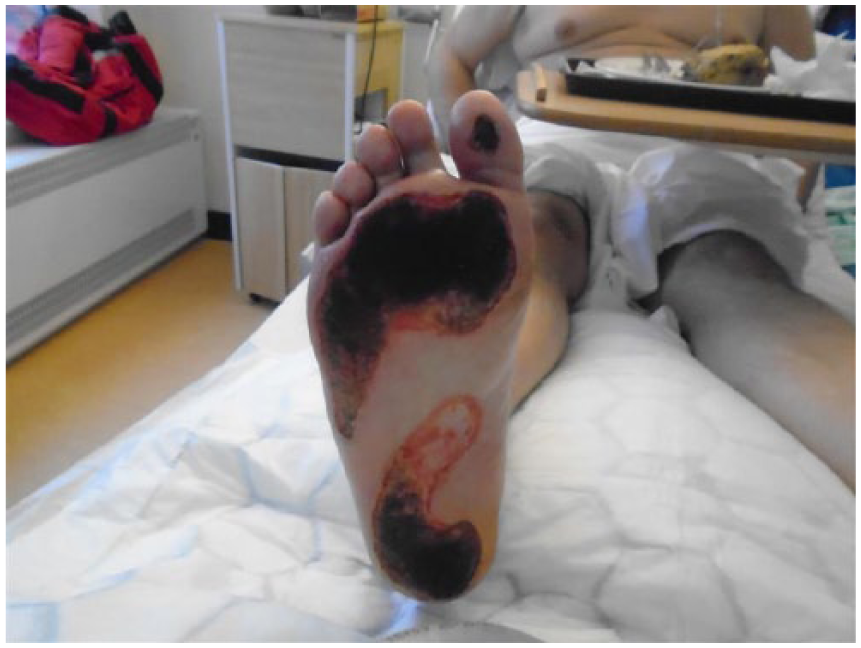
Case 1: State of wounds 72 h after NexoBrid debridement.
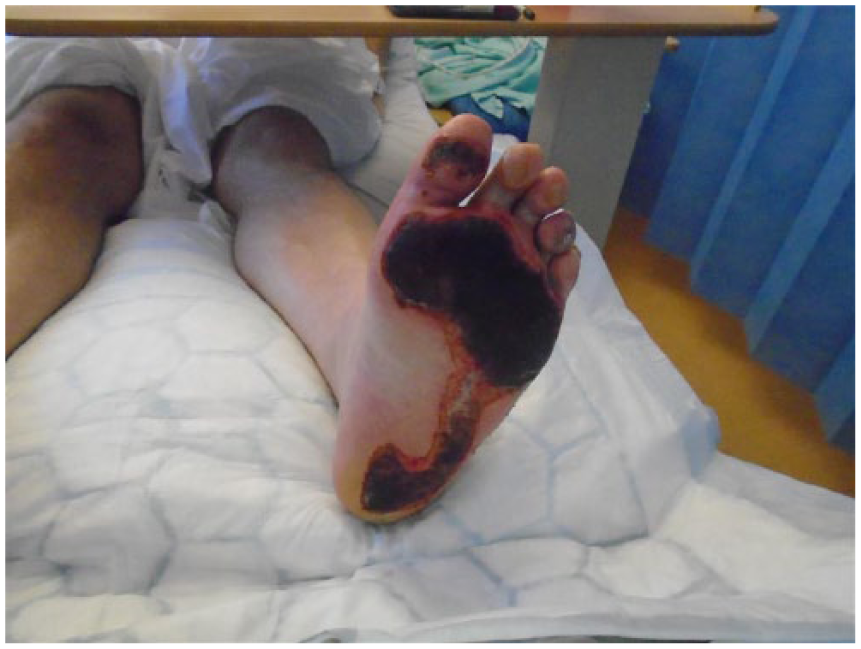
Case 1: State of wounds 72 h after NexoBrid debridement.

Case 1: Patient then required three further surgical debridements to obtain a wound bed suitable for grafting. This picture illustrates the state of his wound for his first graft check.
Case 2
A 56-year-old, male, diabetic type 1 patient, with a previous diagnosis of diabetic foot disease, presented to our unit after sustaining a deep dermal burn. His wounds extended on the lateral aspect of his ankle and foot, 1.5% TBSA, as the result of prolonged contact with a hot water bottle (Figure 8). The HbA1c levels for this patient were of 102 mmol/mol. The patient had a previous history of ischaemic heart disease and coronary stenting. Due to the suspicion of peripheral vessel disease, a computed tomography angiography (CTA) was organised pre-debridement, showing bilateral atherosclerotic disease on his lower extremities, but no signs of clinically significant lumen stenosis.
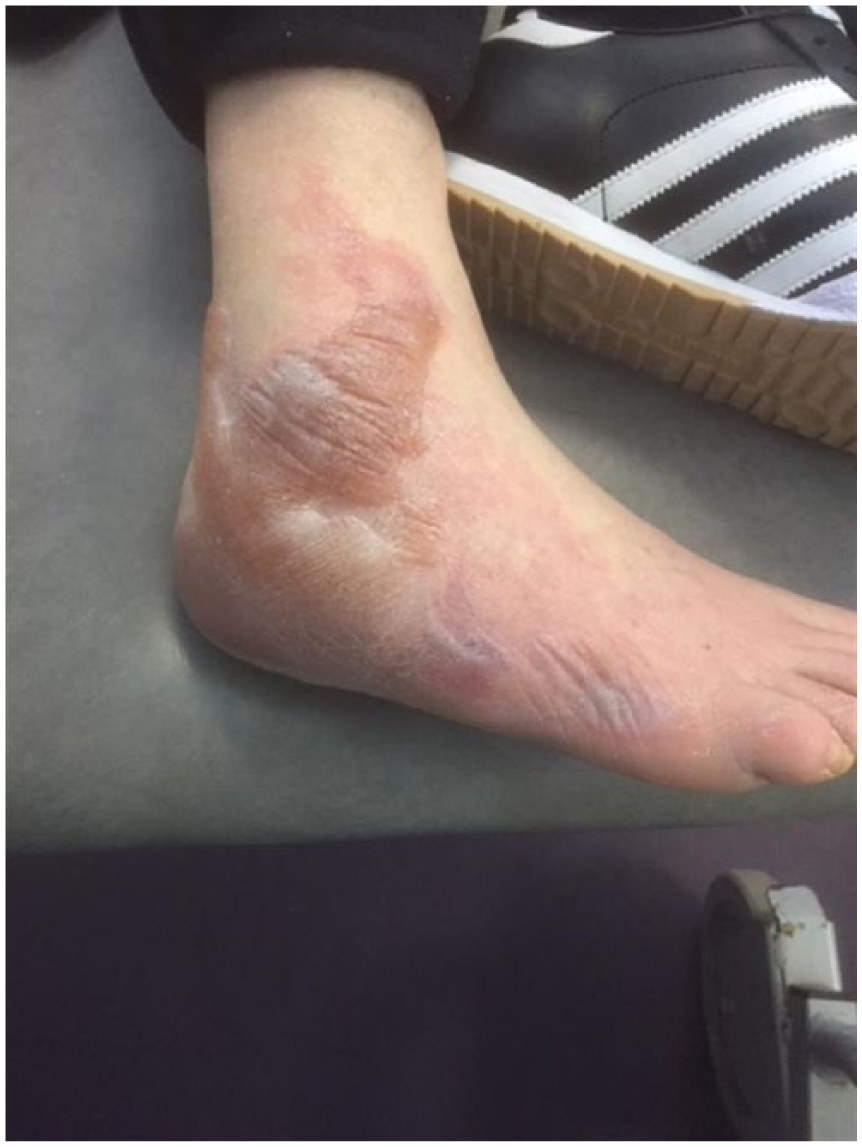
Case 2: Contact burn to right lateral foot from hot water bottle.
Chlorhexidine-soaked gauze was used to prepare the wounds for enzymatic debridement, which took place three days after the injury. After a successful NexoBrid debridement, under a spinal block, the patient requested to be discharged and advice on leg elevation and modifications to his insulin regime were given. Two days later he presented with desiccated wounds and a new eschar (Figure 9). He subsequently underwent wound excision and split skin grafting. Even though it was documented at one week postoperative a 70% graft take, during the following week the lateral portion of the sole and heel declared as necrotic. Three weeks after the first surgical debridement, a second debridement and skin grafting of the resulting wound was performed, achieving a healed wound 8 weeks after the injury.

Case 2: State of wounds two days after bromelain-based enzymatic debridement.
Case 3
A 54-year-old, male, type 2 diabetic patient, with a previous diagnosis of diabetic foot disease resulting in a right fifth toe amputation, was referred for contact burn sustained to his right foot after falling asleep close to a radiator (Figure 10). His latest HbA1c levels were of 54 mmol/mol the week before his injury. He had no other significant medical history.
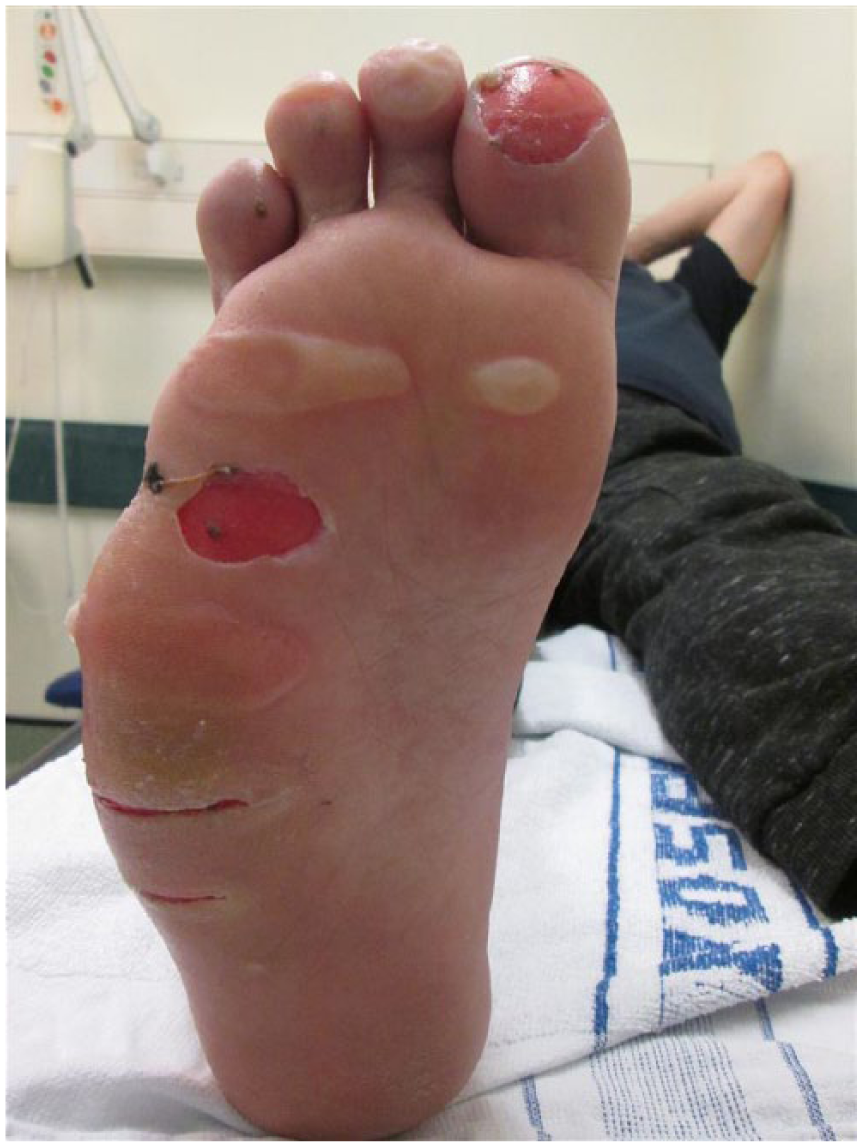
Case 3: Contact burn to right sole from prolonged exposition to radiator.
After preparation with chlorhexidine-soaked gauze, NexoBrid debridement was applied, under a spinal block, obtaining again a successful enzymatic debridement. He was kept as an inpatient due to difficult to manage oscillations in his blood sugar levels, despite specialist input. Three days post debridement his wounds were uncovered, noticing new eschar formation (Figure 11). He then required subsequent debridement and split skin grafting which resulted in adequate wound healing at 2 weeks.

Case 4: State of the wound three days after enzymatic debridement.
Discussion
The introduction of NexoBrid as a novel alternative to surgical debridement for deep and full thickness burns has been in general well received by the burns community and we have been an early adopter of this new product, changing our standard of care. As our experience has broadened, we have extended our indications for this product, keeping good record of our outcomes. This series of diabetic foot burns exposes the complexities of such injuries and highlighting a particular condition for which the use of NexoBrid could be controversial.
Following a multidisciplinary approach, we advocate optimisation of burns patients, whether enzymatic debridement is indicated or not. This involves direct input from dieticians, diabetes specialist nurses, physicians and burns surgeons. If Nexobrid is the treatment of choice, anaesthetists play a vital role in defining the pain management strategy for this procedure. In our unit, regional and local anaesthesia is preferred when possible, in order to avoid side-effects of sedation and opioids required to keep patients comfortable while enzymatic debridement takes place. In this case series, all patients were treated with spinal blocks following this principle.
Arguably, patients with peripheral neuropathy should not require any type of anaesthetic. Nonetheless, considering that it is difficult to predict the extent of the chronically numb area, we have opted for treating this cohort of patients the same way we treat patients without this comorbidity. Interestingly, it could be proposed that this could be confounding factor leading to poor results, we have not found a link between spinal blocks and this series of outcomes so far.
Previous to the introduction of Nexobrid, all these patients would have been treated surgically in a staged manner. On a first instance, excision of the burned tissue would have been done with or without concurrent split skin allograft. This accounts for the difficulty in treating these injuries, considering that the extent and depth of the burn is difficult to estimate by clinical means. For this reason, we tend to delay skin grafting until an adequate wound bed is established. In other burns, Nexobrid has shown the potential to provide a healthy wound bed and thereby reduce the number of required procedures to heal these wounds.
Since the introduction of enzymatic debridement in our unit, two years ago, we have had in general good results in other clinical scenarios. In the past we have reported how Nexobrid has been used for hand burns with good effect 8 suggesting good results on glabrous skin as well as non-glabrous areas. This study has the limitation of being a retrospective series looking at a limited number of cases. The Burns Unit at Queen Victoria Hospital has several protocols to standardise burns care, formulating criteria for the use of NexoBrid has presented challenges, particularly to the lack of evidence for conditions such as the one presented in this article. This is demonstrated in the slight variations on how these patients were treated, including preoperative investigations and postoperative care. Standardising the way patients with these injuries are treated, including admission for strict leg elevation, close monitoring of the wounds and physiological parameters, could allow a better comparison of the outcomes obtained.
It is difficult to propose an explanation for the treatment failure presented by the patients in our series. It could be argued that the reason for disappointing results could be related to the use of Nexobrid in a wound bed affected by microangiopathic changes and loss of protective sensation. This was the case for all of our patients included in this case series. However, it could also be attributed to the fact that diabetic foot burns should be respected as a different entity than burns in other territories where Nexobrid has proven efficacy.
The local physiological reserve of patients with diabetic foot burns should be addressed carefully, considering that the zone of stasis in this condition can evolve in to necrosis despite the treatments offered, taking longer to fully declare clinically. For these injuries that are progressively evolving from deep dermal to full thickness burns, it could be proposed that rapid debridement of such injuries may not confer any significant advantages. It is beyond the scope of this study to assess whether Nexobrid is less effective, of just as ineffective as surgical debridement for this group of patients.
For future studies it would be interesting to compare clinical outcomes between these two treatment modalities for this cohort of patients. This should include not only core outcomes such as length of hospital stay, number of required operations, need for skin grafting and time to get wounds healed, but also patient reported outcomes to address overall treatment satisfaction. Moreover, a cost-effectiveness analysis would provide useful information to demonstrate the benefits and expenses of introducing this innovation in health services under financial pressure.
Conclusion
Further research on the use of bromelain-based enzymatic debridement on a wider cohort of patients could help elucidate new applications or restrictions for its use. Until this issue is clarified, the authors of this article would recommend considering carefully the suitability of using NexoBrid in patients with diabetic foot burns due to the limited benefits it appears to offer. It is difficult to conclude whether enzymatic debridement is more or less effective than surgical debridement for this group, considering the limitations of the study hereby presented and the fact that there are no previous reports on the use of Nexobrid for these cases.
Footnotes
Declaration of conflicting interests
The authors declared no potential conflicts of interest with respect to the research, authorship, and/or publication of this article.
Funding
This research received no specific grant from any funding agency in the public, commercial, or not-for-profit sectors.
