



Abstract
Singing and playing musical instruments is seen as beneficial for parent–child relationships. Using longitudinal data from the German Panel Analysis of Intimate Relationships and Family Dynamics (Pairfam) we investigate the role of specific facets of parent–child relationships as predictors of family musical activity, namely Intimacy, that is, the degree of mutual sharing of thoughts and feelings, Admiration, that is, positive affirmative attitudes, and Prosocial Behavior, that is, showing empathy and consideration for others. Study 1 included responses from a total of N = 1,339 parents (71% mothers) and N = 1,783 children (52% male), and Study 2 differentiates between specific subsamples of parent–child relations. Data were submitted to a series of regression models. Study 1 showed that higher values of Intimacy were associated with greater music activities for both parent and child even when general levels of music activities decreased over time. Study 2 addressed cases in which mothers and fathers independently assessed the same child. The results showed similar patterns of association for both parents and children across studies. In addition, mothers perceived higher levels of family music activities than did fathers. Finally, high levels of Intimacy were associated with increased family music activity against the general trend of decline. Taken together, a strong and consistent pattern of a positive relationship between, on the one hand, mutual parent–child perceptions of trust and confidence, that is, Intimacy, and on the other hand, music activity, was found. These results confirm and extend earlier work to suggest a certain role of the quality of family relationships in pursuing musical activities from childhood to adolescence.
Introduction
Family leisure activities are known to influence family functioning and intrafamily relationships (e.g., Buswell et al., 2012; Melton, 2017). They were found to contribute to family cohesion and adaptability by providing opportunities to share thoughts and feelings with one another (Hornberger, Zabriskie, and Freeman, 2010).
Music is a candidate domain as a family leisure activity because it creates meaningful and sustainable links between generations (Mehr, 2014; Williams et al., 2015). Many parents recognize its potential to strengthen family bonding, and welcome support to realize musical interactions (Abad & Barrett, 2020). For example, Custodero, Rebello Britto, and Brooks-Gunn (2003) found that 60% of U.S. parents engaged musically with their infants, in which mothers took a greater part as compared to fathers. However, this engagement already began to decline when children were older than two years (Custodero et al., 2003). Indeed, musical elements in parent–child communication are believed to influence a range of developmental processes, including speech (Politimou et al., 2019) and social bonding (Bergeson & Trehub, 1999; Fancourt & Perkins, 2018; Trevarthen, 2020), throughout infancy and childhood. Specifically, musical child–parent interactions, including singing and synchronous movement, are thought to affect language acquisition (McMullen & Saffran, 2004) and prosocial behaviors (Cirelli et al., 2017; Kirschner & Tomasello, 2010; Trainor & Cirelli, 2015). Such observations support theories of musical interactions as manifestations of an embodied language (Dell’Anna et al., 2021), which suggest inextricable links that connect the domains of music, language, and social interaction.
Music learning and development have been considered agencies of social learning by shaping family and peer relationships since ancient times (Thompson, Malloch, et al., 2014; Trehub et al., 2015). On the one hand, socially disadvantaged parents may benefit from music therapeutic intervention in terms of significant improvement in parenting style and parent–child communication (Nicholson et al., 2008). On the other hand, a wealth of knowledge concerning the impact of music learning on child development has accumulated in recent decades (e.g., Dumont et al., 2017). For example, musical activities have a positive impact on gross motor skill development (Braun Janzen et al., 2014), academic self-concept and school readiness (Degé et al., 2014; Ritblatt et al., 2013), social competence and self-esteem (Rickard et al., 2013), reading skills and mathematics (Bergman Nutley et al., 2014; Rautenberg, 2015), educational attainment (Yang, 2015), and familial cohesion (Hornberger et al., 2010).
In line with previous work we argue that families play crucial roles in fostering musical development by engaging in music and arts activities (Barrett & Welch, 2021). Such engagement can also pay off when music is used as an adjuvant strategy in family therapy to enhance psychological well-being, for example, when members are affected by chronic illness (e.g., Ray & Mittelman, 2020; Thompson, Mcferran, et al., 2014). In Reeves’ terms, music is a “family thing”, which means that instead of a representational or symbolic value, family members seem to believe that music is meaningful to family life as a manifestation of how family members relate to each other (Reeves, 2015).
Following Reeves’ notion above, Kreutz and Feldhaus (2020; see also Feldhaus & Kreutz, 2021) examined data from the German family panel study pairfam (Brüderl et al., 2017; Huinink et al., 2011) to explore the interactions between musical and other leisure activities and facets of the child–parent relationship. Interviews were conducted annually and biannually at home with both parents and children on a range of aspects of their lives (Brüderl et al., 2017; Huinink et al., 2011).
Kreutz and Feldhaus (2020) found that family activities, including singing and playing instruments (here, music), book reading, and shopping, differentially affected facets of the parent–child relationship during later childhood and early adolescence, that is, when children were between 7 and 14 years old. Data entailed four waves of biannual measurements with a total of 839 children. Music predicted three psychological variables, including Intimacy, a psychological construct reflecting the level of confidentiality between parent and child, Admiration, a construct reflecting the level of positive affirmation, and, to a somewhat lesser degree, Prosocial Behavior, a construct related to how the child showed empathetic and/or helping behaviors towards others, across the four waves. Importantly, the responses were collected from the parents and, thus, indicate their perspectives of their child's behavior. Second, these associations prevailed over a period of time in which children gained more independence, resulting in a general decline in parent–child activities (with the exception of shopping; Kreutz & Feldhaus, 2020). Book reading showed effects similar to those of music. However, when children reach higher levels of literacy, there is clearly less need for parental reading, whereas musical engagement can apparently be seen more as a lifelong strategy of social interaction. In a follow-up study, Feldhaus and Kreutz (2021) found that book reading again showed similar benefits as music with respect to parent–child relationships when the children's perspectives were considered. However, they also showed that familial engagement with computers as a leisure activity was associated with higher levels of conflict and not with more positive indicators of parent–child relationships (Feldhaus & Kreutz, 2021).
Parental Roles and Perception of Children’s Leisure Activities
Parents influence children's leisure activities at a practical level by transporting children to particular activities, investing financial resources or doing particular activities together (Jeanes, 2010). Furthermore, parents contribute to children's beliefs and values regarding what type of leisure is important and therefore attempt to initiate their children's involvement in leisure activities that they regard as “worthwhile” (Shannon & Shaw, 2008). In this regard, leisure activities are seen as a mechanism of parenting with a specific goal orientation for improving children’s personal and social development (see also Lareau, 2003). Therefore, parental influence can be interpreted as “purposive leisure activities” (Shannon & Shaw, 2008).
Mothers appear more involved and influential in the nature, organization and level of their children's leisure activities than fathers (Shannon & Shaw, 2008). In addition, the sex of the child could play a role, as the relationships of mothers and daughters have been described by these authors as particularly close. Mothers also seemed to more often act as role models to guide their daughters’ activities (Shannon & Shaw, 2008). A gendered bias of leisure participation was also noted for boys, who were more prone to competitive team sports, whereas girls were found to be more engaged in individual sports, dance, music, and drama (Jacobs et al., 2005).
In summary, there is initial evidence to suggest that family activities, including music, contribute to shaping intrafamilial relationships. This work also revealed that (a) parent–child and child–parent perspectives, (b) socioeconomic status and education, and (c) the sex of the child should be considered moderating factors. It appears of note that the associations between family activities, including music, were often treated as predictors of family relationships. The underlying assumption was that the continued activities directly influenced how parents and their children perceived and interacted with each other (Feldhaus & Kreutz, 2021; Kreutz & Feldhaus, 2020). However, even if such an association exists, it does not preclude what is the cause and what is the effect. Therefore, it appears important to test this hypothesis also in the reverse direction, because it is equally likely that musical activities result from positive social relationships in the family. For example, it may be that joint cultural engagement can flourish best in a climate of mutual trust and confidence.
Finally, conceptualizing music activity as a dependent rather than independent measure adds one further motivation in the present approach to understanding the role of music in families.
Study Overview
We used previously collected data from the German Panel Analysis of Intimate Relationships and Family Dynamics (called pairfam; Huinink et al., 2011) to carry out two analyses that address three research questions, as explicated below. Data had been collected annually in several waves between 2008 and 2022 by means of face-to-face computer assisted interviews and additional paper and pencil questionnaires which were sent to the respondents for self-completion. The panel study is based on a multi-actor design and holds information from the so-called anchor person, the main respondent of the household, which could be either the father or the mother of the child or children in question. In addition, the second parent (if available) and their children were also interviewed to provide information of their own perspective. The child survey was conducted with children living in the household with the anchor person and who was 8 years of age or older (for more information of the datasets see, Brüderl et al., 2017). Since we want to limit ourselves to the phase of childhood, we have not included children older than 15 years.
Specifically, the data entailed parent and child responses to similar constructs to allow comparison between their viewpoints. However, the dependent measure, family musical activities, was assessed by parents only. As the child survey starts with the second wave, we include information from only four waves (2009, 2011, 2013, 2015). Unfortunately, family activities were no longer asked about in the follow-up waves after 2015. To test our hypotheses, we analyzed the pooled data from all four time points (waves) as well as the panel data for longitudinal analyses of the same variables. In Study 1, we first focus on the distinction between the parental and the child perspective. In Study 2 we extend the sample sizes by including answers of the second parent. This extension allowed us to compare mothers’ and fathers’ views on their relationships with their sons and daughters independently.
Study 1
Aims, Research Questions, and Hypotheses
The central aim of this study was to assess the degree to which parent–child relationships predicted family music activities. To this end, both parent and child responses were considered independent from each other. Therefore, two research questions were addressed:
RQ1: To what extent is the parent–child relationship regarding levels of a) Intimacy, b) Admiration and c) Prosocial Behavior associated with musical activities in the family? RQ2: To what extent are the above associations influenced by the respondent group, i.e., is the evaluation of the parent–child relationship performed by either the parent or the child?
We assume that there exists a significant association between all three independent measures (Intimacy, Prosocial Behavior, and Admiration) on the one hand and the main outcome variable, music, on the other (H1). This association will be found in the perspective of both the parent and child (H2).
A further interest was to ascertain the contributions of time (pooled data vs. longitudinal analysis with panel data), demographic (sex), and socioeconomic factors (household income, parent education) to the observed associations. Therefore, in extension of the above hypotheses, we assume that the associations will prevail irrespective of these variables.
Dataset and Sample Characteristics
Responses from the anchor person (one parent) and their children with respect to the independent and dependent measures were used for subsequent statistical analyses (Table 1). The sample included a total of N = 1,465 parents and N = 1,955 children. In several of cases, more than one child per family participated. Therefore, the number of children is higher than parents. After the removal of missing data (listwise deletion) the total number of parents was 1,339 and 1,783 children.
Means (and standard deviations) of variables for Study 1 (pooled data; N = 3,151 Observations).

Notes: The total number of observations is based on at least one up to four responses per anchor person (parent) and child (for number of cases, see main text). Parents and children participated in the study at least once and up to four times; “Musical activities” measures the frequency of family engagement in music; “Intimacy” and “Admiration” represent scales of the Network Relationship Inventory (NRI); “Prosocial Behavior” represents a scale of the Strengths and Difficulties Questionnaire (SDQ); “Financial problems” is a subjective measure of economic deprivation from the child perspective with lower values indicating lower financial pressure; Higher Educational represents the percentage of respondents’ achievement of highest school grade in Germany (“Fachhochschulreife” or “Abitur”); “Divorce rate” indicates the percentage of divorced anchor persons at the time of the interviewing; further details on all measures are provided in the Methods section.
The pooled sample of Study 1 consists of 3,151 observations of parent–child relations distributed over four waves. In 71.25% of the cases, the mother was the main respondent and participated in the survey together with the child (48.59% girls). The age range of the child was 8–15 years; M = 9.97; SD = 1.89. 76% of the parents are married and cohabiting with a partner, 9.8% are cohabiting without marriage, and 14.20% are single parents. 11.90% of the parents are divorced from a former partner. In total, 38.72% of the parents reached college level education (Abitur), and 75% had no migration background.
Dependent Measure
Parents’ responses to the question: “How often have you engaged in the following activities together with your child during the past 3 months?” were used. Specifically, we focused on the item “… Singing or Playing Musical Instruments”. The respondent indicated a value between “1 = never, 2 = less often, 3 = approximately once per month, 4 = approximately once per week, 5 = almost every day”.
Independent Measures
The independent variables contain information about the parent–child relationship from the perspectives of both parents and children. From the parental perspective, we include the scale Prosocial Behavior of the child, derived from parental responses to the Strengths and Difficulties Questionnaire (SDQ, Goodman, 1997; German version by Lohbeck et al., 2015). The scale includes five items, for example, “My child is considerate of other people's feelings” (see Appendix A for a complete list). The response format included three values, namely, 0 = “not true”, 1 = “somewhat true”, and 2 = “certainly true”. The remaining parental scales were adapted from the Network of Relationships Inventory (NRI, Furman & Buhrmester, 1985), namely, Intimacy, for example, “Your child tells you what he or she is thinking”, and Admiration, for example, “You show recognition for the things your child does”. Each of these scales included two items, and the response options ranged from 1 = “never” to 5 = “always”. Similar scales (Prosocial Behavior, Intimacy, Admiration) representing the children's perspectives were also included. The children's responses refer to the parent who is the target parent in this survey (see Appendix B for a complete list of all scales and items, see also Thönnissen et al., 2017). Furthermore, we included control variables, such as the sex of the parent and the child. Parental educational attainment is measured as a dummy variable for 1 = high educational attainment (otherwise = 0) if the respondents reached the highest school grade (“Fachhochschulreife” or “Abitur”). Parental divorce is a dummy variable if parents are separated (=1, otherwise = 0), and the subjective indicator of economic deprivation contains three items from the child perspective, for example, “We have enough money for everything we need.” (scale 1 = completely correct to 5 = not at all).
Data Analyses
We computed a multiple regression model with the pooled database and fixed and random effects models for the longitudinal panel dataset. Two main strategies were employed to test our hypotheses (Andreß et al., 2013). First, the associations between dependent and independent measures were assessed by means of a pooled ordinary least squares (OLS) regression. Second, fixed effects and random effects regression models were performed to accommodate the potential changes and their impact on musical activities over time (Allison, 2009). Fixed effects models represent the individual within-variation of a dependent variable between time points with respect to the included independent variables. These models control for all unobserved heterogeneity, stable characteristics of individuals under the exclusion of confounding effects from between-individual variation. Fixed and random effects analyses require at least two observations over time for each respondent to analyze whether a change in the independent variables occurs with changes in the dependent variable. This means that parents and their children must have participated in at least two survey waves. Usually this results in a smaller sample size compared to pooled regressions.
Fixed effects models are restricted to within-individual differences only after the exclusion of time constant variables (Allison, 2009). To accommodate this restriction, random effects models were also calculated. These models are applied under the assumption that the error term αi is a set of random variables, independent from all other variables in the model (as a general assumption), which also allows us to estimate time-invariance variables. “If the random effects assumption that αi is uncorrelated with all other variables is correct, both methods produce consistent (and therefore approximately unbiased estimates) of the coefficients” (Allison, 2009, p. 21). Finally, a Hausman test indicates “whether the biases inherent in the random effect model are small enough to ignore, or whether we need to move to the less restrictive fixed effects model” (Allison, 2009, p. 23). Therefore, such a test was employed for each regression to facilitate the interpretation of fixed and random effects. For Study 1 and Study 2, we compute similar fixed and random effects models using the statistical package STATA release 14. Therefore, Studies 1 and 2 only differ in regard to the sample used and with a focus on more specific parent–child dyads in Study 2.
Results
Table 2 shows the distribution of music activities across age groups and sex of the child, with N = 3,151 responses in total (N = 879 girls and N = 904 boys). Overall, a majority of 56.9% indicated that they either rarely (33.29%) or never (23.62%) engaged in family music activities. Of the remaining sample, 15.44% dedicated a certain amount of time approximately once per month, 19.61% dedicated approximately once per week, and 8.05% dedicated time almost daily to music. There is a greater engagement of girls than boys even when music as a family activity declines from approximately once per month on average (see Table 2).
Means (and standard deviations) of music activities across children's age groups and sex.

Note: Mean values for music activities were calculated on the basis of a 5-point scale indicating 1 = never; 2 = rarely; 3 = about once per month; 4 = about once per week; 5 = almost daily. The total number of observations is based on at least one up to four responses per anchor person (parent)(case numbers of children: N = 879 girls and N = 904 boys).
Table 3 summarizes responses to the three independent measures by showing overall stability with respect to Prosocial Behavior, and some decline in Intimacy and Admiration as children grow older. This pattern is overall similar in both parent and child responses. Taken together, these initial observations suggest some validity in the independent measures to reflect facets of the parent–child relationship and their development over the assessment period.
Means (and standard deviations) of parent and child responses to their mutual relationship across age groups (N = 3.151 Observations).

Note: “Intimacy” and “Admiration” represent scales of the Network Relationship Inventory (NRI; scale range from 1 to 5; higher values indicate more frequent engagement in respective behaviors.); “Prosocial Behavior” represents a scale of the Strengths and Difficulties Questionnaire (SDQ; scale range from 0 to 2; higher values indicate more agreement). The total number of observations is based on at least one up to four responses per anchor person (parent) and children; (parent respondents: |N = 1,339; child respondents: |N = 1,783).
Pooled Sample Models
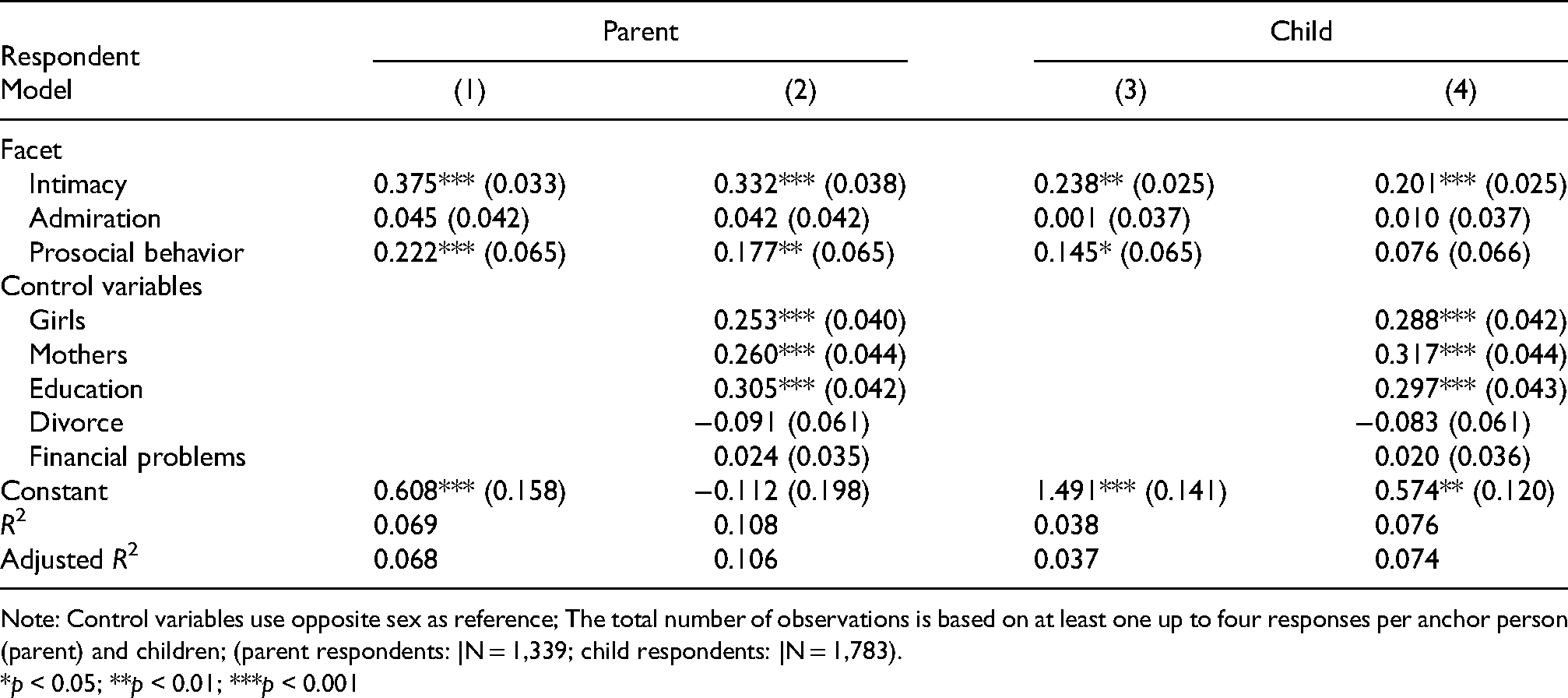
Table 4 presents four regression models of the pooled sample irrespective of waves. They represent the correlations between independent measures and outcome (music) for each respondent group. The patterns are similar by showing significant coefficients for Intimacy. In addition, Prosocial Behavior appears to have a positive influence from both the parent and child perspectives but more so from the former. These associations prevail only for Intimacy after the inclusion of control variables for both respondent groups. In contrast, the positive correlation for Prosocial Behavior disappears after the inclusion of the control variables according to the children's responses. Girls, mothers, and education positively influence family music activities, whereas divorce is a compromising factor. Finally, the subjective assessment of financial problems shows no significant association. These models explain between about 7–10% of variance with some improvement after the inclusion of the control variables.
Multiple regression of facets of the parent–child relationship on musical activities (pooled sample, robust standard errors, N = 3.151).
Note: Control variables use opposite sex as reference; The total number of observations is based on at least one up to four responses per anchor person (parent) and children; (parent respondents: |N = 1,339; child respondents: |N = 1,783).
*p < 0.05; **p < 0.01; ***p < 0.001
Fixed and Random Effects Models
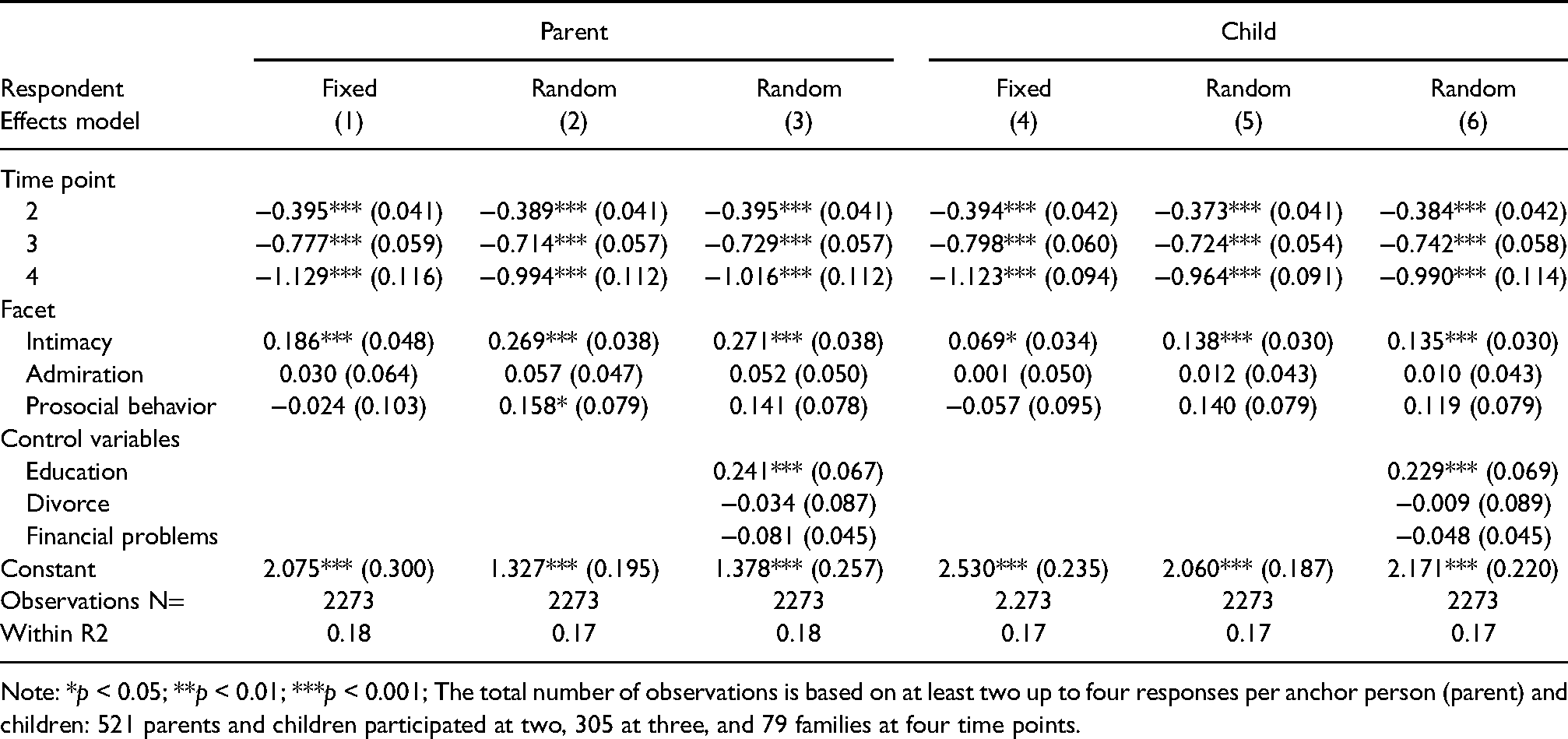
Table 5 presents the panel regression models for both respondent groups. There are negative coefficients for each time point, which indicate an overall decrease in family music activities as children grow older. With respect to Intimacy, parent or child responses both show positive associations, as noted in the pooled data above. In a statistical sense, increasing Intimacy over time in either group predicts greater engagement in family music activities. The Hausman test reveals a significant difference between fixed and random effects models, which suggests greater accuracy of the former model (see Andreß et al., 2013, p. 168, for details). The explained variance is almost constant across models and only varies between 17% and 18%. Again, a similar pattern of influences of control variables was noted for the panel regressions with education as a significantly positive influence. However, there was no increase in variance explained, as was seen in the former analysis.
Panel regression models of facets of the parent–child relationship on musical activities.
Note: *p < 0.05; **p < 0.01; ***p < 0.001; The total number of observations is based on at least two up to four responses per anchor person (parent) and children: 521 parents and children participated at two, 305 at three, and 79 families at four time points.
Discussion
We asked whether family music activities could be predicted by facets of parent–child relations and how these associations were influenced by the time course and respondent groups. To these ends, we conducted a series of regression analyses on pooled samples and across four waves of measurements under the assumption that Intimacy, Admiration, and Prosocial Behavior, represented by respective scales, were significantly associated with family music activities, as indicated by previous work (Kreutz & Feldhaus, 2020).
First, we found that Intimacy was the only variable that significantly predicted musical activity from both parental and child perspectives according to both pooled linear and panel regression analyses. We can answer RQ1 by suggesting that throughout the measurement period covering seven to eight years of child development, a confidential relationship between family members must be seen as one important aspect of continued musical activity. In addition, this association was positively influenced by the children's sex (favoring girls and mothers) and parental education (favoring higher education), whereas a divorce had a negative impact. Therefore, we interpret these findings as partial confirmation of H1 and conclude that at least one facet of parent–child relationships has explanatory value for engagement in family music activities.
Why did only Intimacy, but neither Admiration nor Prosocial Behavior, show any association with musical activity? One reason may be that sharing thoughts and feelings could pinpoint a level of trust between parents and children that is particularly parsimonious with the goal of playing music or singing together. According to Reeves (2015), familial music is a genuinely social activity and less driven by, for example, artistic or representative motivations. Indeed, Intimacy suggests a greater degree of manifested social bonding compared to both Admiration and Prosocial Behavior. However, previous work suggested an association between these variables and music when the statistical model reversed the roles of independent and dependent measures (Kreutz & Feldhaus, 2020). In other words, the dynamic that characterizes child–parent relationships and family music activities does not work in the reverse direction. Therefore, the prevailing association between music and Intimacy, irrespective of the statistical models, provides corroborating information in terms of the interaction between these variables as children grow older and become adolescents. In sum, active music engagement might both express and strengthen trustful relationships between family members.
With respect to RQ2, associations between facets of the parent–child relationship and musical activity in both fixed effects and random effects models and with respect to both parent and child perspectives were considered. Again, Intimacy was the only independent measure that consistently predicted musical activities irrespective of respondent group and model. In addition, a positive influence of parental education was noted, suggesting that higher education is generally associated with greater musical activity. Finally, Prosocial Behavior produced a significantly positive effect in the random effects model that was confirmed only from the parent's perspective but not the child's perspective. Taken together, these findings support the hypothesis that both parent and child perspectives offer veridical views on how their relationship impacts musical activities.
Previously, we observed in a similar set of data from the same panel study that different leisure activities, including music, predicted Prosocial Behavior, especially from a parental perspective (Kreutz & Feldhaus, 2020). However, as stated above, it was a mix of activities that contributed to this association. Therefore, the current findings are not necessarily in conflict with earlier work. In contrast, they show that exploring latent relationships among the variables under consideration in different directions can be informative to develop a deeper understanding of how the perceived relationship of family members interacts with leisure activities.
The suggested overall positive impact of musical activities on different facets in child development notwithstanding, it is unclear to what degree they also reflect social inequalities. For example, some families with young children face difficulties in fostering their child's talents by incorporating organized activities (Lareau, 2003). Indeed, family musical activities are influenced by socioeconomic (Andresen & Neumann, 2018; Feldhaus & Kreutz, 2021; Grgic, 2016), demographic, and other factors related to parent–child relationships (Grgic, 2016; Kreutz & Feldhaus, 2020). Hille and Schupp (2015) observed positive effects of long-term commitment to music learning as supported by the family. Specifically, these authors examined data from the German Socio-Economic Panel (SOEP, Wagner et al., 2007) and found that extracurricular learning to play a musical instrument in childhood was associated with better school grades and more conscientious, open, and ambitious personalities during the adolescence of the same children. Importantly, these effects were stronger among adolescents from lower socioeconomic families (Hille & Schupp, 2015). The present study also found a positive influence of education on predicting family music activity by facets of parent–child relationships (here: Intimacy). This finding mirrors our earlier work, which found an effect of education, but not income, when music predicted family relationship variables (Kreutz & Feldhaus, 2020).
Study 2
Aims, Research Questions, and Hypotheses
Study 2 was designed to study in more detail the patterns of associations between parent–child relationships and musical activities with respect to the sex of the parent and child. As explicated in the introduction, parenting styles and perceptions of sons and daughters vary between mothers and fathers. There is also an indication that these divergences extend to music activities. Therefore, a subsample needed to be constructed from the data in which mothers and fathers independently provided information about the same child to address the following research question.
RQ3: To what extent does the sex of the child and of the responding parent moderate the associations between the parent–child relationship and engagement in musical activities?
Again, it is of interest to assess the influence of familial socioeconomic status, in general, and level of parental education, in particular, as further moderator variables. We assumed that the same pattern of associations found in Study 1 could be replicated with a significant role of Intimacy and no significant influences of Prosocial Behavior and Admiration. However, based on the observation that mothers seemed to be more involved in daily routines with children, as suggested by previous research, we also assume that association patterns are stronger in mothers than in fathers.
Dataset and Sample Characteristics
We used again data from the German Panel Analysis of Intimate Relationships and Family Dynamics (called pairfam; Huinink et al., 2011), but now we extend the data with information from the other parent as a second respondent to compare each parent–child dyad, that is, mother–daughter, mother–son, father–daughter, and father–son. Again, we based our analyses on both a pooled data set and a longitudinal panel data set. After removing missing data the sample includes 1.289 mothers and 932 fathers with 1,832 children. It should be noted that in many cases only one parent answers the questions regarding musical activities and parent–child relations.
The pooled sample of Study 2 consists of 5,141 observations of parents and 5131 corresponding child data, distributed over four waves. The same set of variables as in Study 1 was included. The only difference was that in Study 2 we use the information of both parents if available, such that their responses to the dependent and independent measures could be analyzed separately. This, of course, increases the sample of observations from 3,151 in Study 1 to 5,141 in Study 2.
Dependent and Independent Measures
We use the same dependent variable as in Study I—the measurement of musical activities in the family. However, we now include the information from both parents, for each parent–child relation, which means, respectively, for mothers and fathers if both fill in the parenting questionnaire. We consider the same independent variables for assessing the facets of the parent–child relation: the Prosocial Behavior of the child scale, derived from a parental or child perspective (SDQ, Goodman, 1997; German version by Lohbeck et al., 2015). Furthermore, the scale of Intimacy and Admiration (Furman & Buhrmester, 1985) was included. In the child survey, children rate both scales, Intimacy and Admiration, for each parent in the household. This means that if both parents rate the parenting questionnaire, we include the corresponding information of the parent–child relation from the child’s perspective. Finally, we include the same control variables.
Data Analyses
Statistical analyses are the same as those used in Study I. Accordingly, an OLS regression of the pooled sample with robust standard errors was performed, but now for each parent–child constellation. Again, we compute a panel regression, fixed effects models, for the longitudinal database of each parent–child relation. We dispense the calculation of random effects models, as the Hausman test indicates a significant difference between fixed and random effects, which indicates the use of fixed effects models.
Results
Table 6 provides the descriptive information of variables across parent–child relations. Mothers consistently rated musical activities of their children higher than did fathers, while both parents perceived greater activity in daughters than in sons. Children rate facets of the parent–child relationship in a similar range compared to their parents.
Means (and standard deviations) of included variables across parent–child relationships (pooled data).

Note: Dependent measure collected from parents only (see Table 1 for further descriptions of variables).
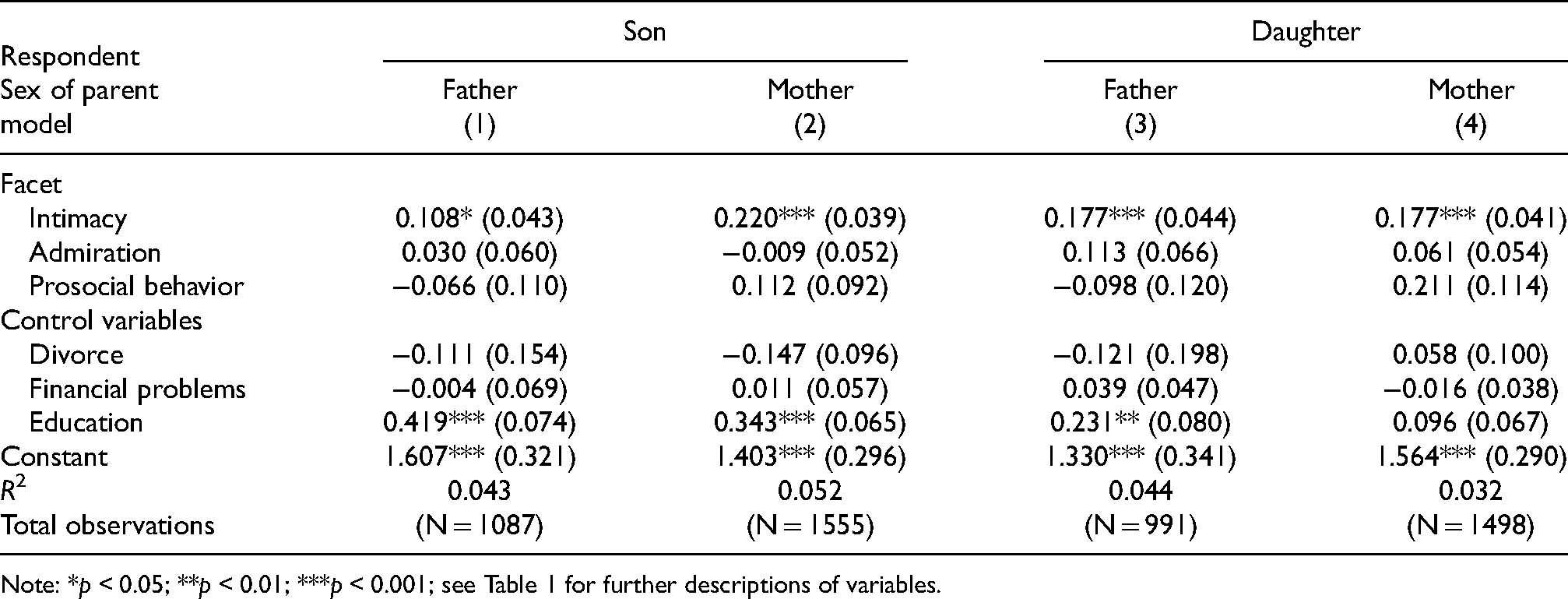
Table 7 presents four regression models on pooled data that differentiate between the sex of the respondent (parent) and of the child. Similar to Study I, a significant pattern of association across models was found for Intimacy. In addition, mothers perceived greater Prosocial Behavior in their sons and daughters as compared to their fathers. Finally, mothers attributed higher levels of Admiration to their daughters in association with musical activities but not to their sons. Concerning the control variables, similar to Study I, Education showed a significant positive correlation across models. The data on financial situations are again not statistically significant. Divorce showed a negative association for the mother–son dyad. Table 8 presents the same analytic strategy as above, but this time using the children as the respondent group. Overall, the findings mirror the parent responses when independent and control variables are considered.
Multiple regression of facets of the parent–child relationship on musical activities (parent responses, pooled sample).

Note: *p < 0.05; **p < 0.01; ***p < 0.001; see Table 1 for further descriptions of variables.
Multiple regression of facets of the parent–child relationship on musical activities (child responses, pooled sample).
Note: *p < 0.05; **p < 0.01; ***p < 0.001; see Table 1 for further descriptions of variables.
Tables 9 and 10 contain the panel regressions from both perspectives. Across the models, negative coefficients for time indicate that reduced activity is consistently perceived by parents and children almost equally, irrespective of sex. Furthermore, there is a significant positive effect of intimacy only for father– and mother–daughter relations, but this association is only present in the mother–daughter constellation when child responses are considered.
Panel regression of facets of the parent–child relationship on musical activities (parent responses).

Note: *p < 0.05; **p < 0.01; ***p < 0.001. A total of 187 Father—Son dyads responded at two, 101 at three, and 18 at four time points. 159 Father–Daughter dyads responded at two, 88 at three, and 21 at four time points; 262 Mother–Son dyads responded at two, 160 at three, and 36 at four time points; 249 Mother–Daughter dyads responded at two, 138 at three, and 38 at four time points.
Panel regression of facets of the parent–child relationship on musical activities (child responses).

Note: *p < 0.05; **p < 0.01; ***p < 0.001. Number of included parent–child dyads was marginally lower as compared to the pooled sample due to missing values.
Figure 1(a) and (b) depict the relationship between levels of Intimacy as indicated by parent responses and changes in family music activities over time. Changes are defined here as the average deviations (predicted values) from the individual mean in the calculated model. Note that there was an overall decline in activity across waves (see Table 1 for details). However, higher levels of Intimacy are consistently associated with increases in family music according to fathers’ and mothers’ responses, irrespective of the child's sex. Figure 1(a) and (b) now display that a value of Intimacy near 4 or higher comes along with a positive effect of musical activities over time. This means that parent—child relationships characterized by high Intimacy reduce and in part reverse the trend of decreasing musical activity in the family. No such association was present for the remaining constructs Admiration and Prosocial Behavior.

Scatter plots representing changes of musical activities (y-axis) and Intimacy scores (x-axis) for (a) fathers and (b) mothers. Here a fixed effects model is computed using wave and Intimacy as independent variables and predicted changes in musical activities over time as dependent variable. Negative values indicate decreases whereas positive values indicate increases of musical activities over time; csex = sex of the child. Each Figure displays regression lines and confidence intervals for parent-son and parent-daughter dyads. There are no significant differences between regression coefficients for the two dyads.
Discussion
We asked whether the associations found in Study 1 depended on the sex of the anchor person and/or that of the child addressed by the anchor person. A subsample of responses from Study I opened the opportunity to address this question (RQ3). Our previous work suggested that the sex of the child had a significant influence on music activity per se, with girls being more engaged than boys (Kreutz & Feldhaus, 2020). Moreover, the sex of the child also appeared to moderate the activity-relationship associations, indicating perhaps a somewhat greater role of music in family life for girls.
First, mothers gave higher ratings of Intimacy than fathers for their children, which was partially mirrored in the child responses. In this respect, girls indicated a particularly strong relationship with their mothers. These observations suggest that responses to this variable are nuanced by the sex of the respondent and target. Second, despite the different levels of ratings, the current findings reveal similar patterns across the individual parent–child constellations. Once again, Intimacy was consistently associated with enhanced family music activities across models for both respondent groups in the cross-sectional analyses. In addition, parent responses showed similar patterns in the panel regressions. However, when children's responses were considered longitudinally, a significant association between Intimacy and musical activities was only significant for the daughter-mother dyad but not for the remaining models.
One important, albeit exploratory, finding was that high levels of Intimacy and increases in family music over time were associated. This observation may have several implications. Family music could be seen as a behavioral indicator of a trustful and confidential relationship between parents and children. This is remarkable considering the time period of years in which children generally gain independence from their parents, particularly in terms of their leisure activities. In other words, children and parents find good reason to spend more time together rather than reducing joint activities (Orthner & Mancini, 1990), whether those entail music, or other high-quality engagement such as sports, games, or travels (Agate et al., 2009). However, it is not only the activity per se that raises questions but also its association with facets of the parent–child relationship. The present observation does not entail similar effects of Admiration or Prosocial Behavior. It seems worth noting that Intimacy among all of these facets appears most strongly related to social cohesion or social bonding, which is considered a driving force in the evolution of musical behaviors (Savage et al., 2020). Given that families can be seen as the primary hubs of musical development and learning (Reeves, 2015), sharing leisure time appears to be a natural consequence on the basis of mutual trust and confidentiality between family members.
In sum, Study 2 revealed nuances in the response patterns with respect to sex of respondent group and sex of targets, that is, children and parents of the same or opposite sex in parent–child dyads. Perceived Intimacy showed significant associations with family music activities. This association was weaker in the child responses than in the parent responses. In addition, high Intimacy apparently indicated increased family music activity as children grow older. These findings suggest that sex differences need to be considered when evaluating the associations between perceived facets of parent–child relationships and music activities as potential facilitators of social bonding within families.
General Discussion
We investigated whether and how facets of the parent–child relationship were associated with family music activities in German families by analyzing data from a longitudinal panel study. We sought answers to three research questions under the assumption that family music activity could be predicted by aspects of family relationships, including Intimacy, Admiration, and Prosocial Behavior. To these ends, we considered both parent and child responses to these facets separately. In addition, we examined the influence of socioeconomic control variables, including family income and education. The results from both linear and panel regression models partially confirmed our hypotheses by showing that Intimacy, a psychological construct that reflected mutual trust and confidence in family members, was a significant predictor of family music activity by explaining up to 18% of variance according to the panel regression model.
Study 1 also showed that none of the remaining facets entailed any significant or consistent association with family music behavior. There were significant positive correlations detected with respect to Prosocial Behavior when parent responses were considered only. Study 2 was designed to further investigate sex differences in the observed association patterns. The rationale was that mothers’ and fathers’ parental roles also differ with respect to the sex of their child. We found some differentiations by considering mother–daughter, mother–son, father–daughter, and father–son dyads to suggest that the mother–daughter dyad showed the strongest association between Intimacy and family music activity. These findings suggest that music activities in the family may contain information about family relationships and the role of gender and suggest that musical activity could be seen as a more feminine and less masculine prosocial behavior, thus supporting respective theories (Hastings et al., 2007).
Indeed, Hastings et al. (2007) argued that in their terms sex-typed prosocial behaviors in boys and girls result from diverging maternal and paternal parenting styles. In light of the present findings this could mean that mothers and fathers tend to perceive and evaluate their children's activities in accordance with their belief-systems and associated stereotypes. For example, it may be that mothers place more emphasis on the social value of musical activities as compared to fathers, whereas fathers are less likely to perceive such value in this activity. Clearly, there is more research needed to support such conclusions, but for the time being, we note a very clear differentiation in mothers’ and fathers’ perception of (musical) leisure activities and their association with emotional facets of family relationship.
Contrary to the general trend of a decline of family activity concerning music, which could be expected as children become adolescents over the four waves included in the dataset, family music activities increased in those families that showed high levels of Intimacy, but why? When families sing together or play instruments, it is likely that they are building trust in each other and strengthening their mutual bonds through mechanisms of synchronization (Rabinowitch & Meltzoff, 2017). Indeed, social bonding appears to dominate theories of the biological and cultural origins of music (Savage et al., 2020) that have also received some empirical support (Kreutz, 2014) with musical activities preceding bonding. Therefore, it may be that sharing thoughts and feelings could be enhanced by musical rituals that could start from birth, first as lullabies and playing songs, for example, as the children's musical responsiveness unfolds over the first years of life with some implications for their well-being (Mindell & Williamson, 2018). Alternatively, music in the family can be seen as affirming rather than establishing a positive relationship and bonding. Such an interpretation may reduce the value of music to some aesthetic embellishment with little further substantial value (Pinker, 1997). However, recent neuroscientific evidence suggests that aesthetic perception and cognition are strongly related to processes such as decision-making and, thus, emerge as a genuine topic in brain research and cognitive sciences (Skov & Nadal, 2020). Our findings suggest that familial musical activities either as agency (Kreutz & Feldhaus, 2020) or as a product of family relationship might contribute not only to child but also to family development with important implications for social interaction, in general, and quality leisure time, in particular (Feldhaus & Kreutz, 2021; Reeves, 2015). This interpretation, consequently, calls for a re-examination of established approaches such as the Core and Balances (Townsend et al., 2017) or Family Activity models (Melton, 2017). The former model rests on the assumption that family leisure activities serve two main purposes, namely to add stability and variation to family life, whereas the latter offers further differentiation of how leisure activities may have beneficial consequences. These models have been tested empirically in a wide range of studies (Townsend et al., 2017). However, they do not account for development and learning, which limits their applicability in the present research context. Moreover, when playing music is considered in these models at all, it is surprisingly lumped together with more consumptive activities, including watching TV, for example, in the widely used Family Leisure Activity Profile (FLAP; Melton & Ellis, 2019). It has been shown that watching TV can cause sleep disturbances in young children (Paavonen et al., 2006), whereas bedtime routines such as book reading or singing can promote better sleep and well-being in children of similar age (Hale et al., 2011). Moreover, Feldhaus and Kreutz (2021) observed that music was not associated with family conflict, whereas computer use was. Based on our findings, we suggest that more differentiated views on family leisure activities need to be considered to accommodate developmental effects with respect to both child and parent–child relationship development and to improve current models on the meaning and impact of family leisure.
Taken together, our findings corroborate and extend earlier research in which family music activities alongside other family activities predicted facets of family relationships, including Intimacy (Kreutz & Feldhaus, 2020). It seems unsurprising that associations were found in both directions; nevertheless, there are differences to be noted with respect to the underlying models and variables included. For example, family music predicted Intimacy (and Prosocial Behavior), even when other activities such as book reading and shopping were included. Furthermore, we considered child perspectives on family leisure activities to serve as predictors in previous studies, which showed that family music but not computer use was associated with Intimacy (Feldhaus & Kreutz, 2021). Although it would be beyond the scope of this paper to analyze in-depth the similarities and differences of findings with respect to the work just mentioned, they all speak to the importance of the sex of the child and the level of parental education in order to understand the mutual impact of parent–child relationships on and family activities including music. Finally, our findings suggest dynamically unfolding association patterns because it seems natural that in the course of child development, detachment from or reduction of parental interactions may also necessitate changes in the nature of the parent–child relationship. However, there is a continued need and affirmation of mutual trust and bonding in which leisure activities are attributed key roles (Agate et al., 2009).
Limitations
The interpretation of our findings is limited by various methodological restrictions that include but are not restricted to the following. First, musical activities are not differentiated to reflect their specific nature in terms of music listening, playing specific musical instruments, or at the individual level of musical proficiency or sophistication (Müllensiefen et al., 2014). Instead, our conclusions rest on one single outcome measure. Moreover, parental musical involvement and sophistication was not represented in the panel data. Second, time points for measurements of the dependent and independent variables were few in relation to the period of eight years in which biannual data collections took place. A more detailed account of the time course of developments is not possible under these circumstances. Finally, music was intentionally chosen as the main outcome of this study. This precludes comparisons to other family activities, as was the case in previous studies (Feldhaus & Kreutz, 2021; Kreutz & Feldhaus, 2020). We found that it was more important, however, to consider child–parent vs. parent–child perspectives instead, and we have also shown diverse implications of varying activities for family life (Feldhaus & Kreutz, 2021). Taken together, the obvious implication is that these limitations suggest different routes for future research and a need for new panel studies that seem to be the best option to facilitate better-informed analyses and interpretations, where the current study fails.
Conclusions
We conducted two studies to investigate the role of facets of family relationships as seen by parents and children to predict the amount of family music activities. Our findings reveal that Intimacy, a psychological construct that relates to trustful communication between family members, was positively associated with the amount of family music activity. This association was found to be influenced by education but not by respondent group (parent or child). Study 2 further corroborated and extended these findings by showing particularly strong associations for the mother–daughter dyad. Finally, we found evidence that increases in family music activity over the years were predicted by high levels of Intimacy. We conclude that investigating the development and time course of leisure activities can shed light on the concurrent development of the parent–child relationship.
Footnotes
Action Editor
Fabia Franco, Middlesex University, Department of Psychology.
Peer Review
Nina Politimou, University College London, Department of Psychology and Human Development.
Vicky Abad, University of Queensland, School of Music.
Author Contributions
GK and MF researched literature and conceived the study. MF conducted the data analysis. GK wrote the first draft of the manuscript. All authors reviewed and edited the manuscript and approved the final version of the manuscript.
Declaration of Conflicting Interests
The author(s) declared no potential conflicts of interest with respect to the research, authorship, and/or publication of this article.
Ethical Approval
Pairfam was approved by the ethics committee of the Faculty of Management, Economics and Social Sciences of the University of Cologne on 16th July 2019 (Reference: 19016KH).
Funding
The author(s) received financial support for the publication of this article from the open access funding program of the Carl von Ossietzky University Oldenburg.
