



Abstract
Musicians and music psychologists are acutely aware of the power of music and its ability to influence our emotions, moods, thoughts, wellbeing, identity, and behaviour towards others. Indeed, music is often used to help address specific problems, especially within health and wellbeing. The problem of climate change is becoming increasingly well-established in public discourse, and yet individuals frequently fail to act in an environmentally-friendly manner. Within the field of environmental psychology, several empirically-based theories have been developed to aid the understanding of why individuals behave in the ways that they do in relation to the environment. This article examines a selection of these theories, and makes an attempt to identify areas in which research in music psychology provides evidence to suggest that music could play a role in influencing environment-related beliefs and behaviours.
The Power of Music to Change Lives
For many people, music is immensely powerful. In the right circumstances, it can move people emotionally (Juslin, 2019; Juslin & Sloboda, 2010), sometimes in intense and memorable ways, through both listening (Gabrielsson, 2011) and performing (Lamont, 2012). Music is frequently used for mood regulation (Saarikallio, 2010; Saarikallio & Erkkilä, 2007) and to enhance individuals’ experiences of everyday tasks (Clarke et al., 2010); it can influence the content and valence of people's thoughts (Koelsch et al., 2019); and it can be effective in boosting wellbeing in everyday life (Västfjäll et al., 2012). Music often forms a crucial part of people's individual and collective identities (MacDonald et al., 2017), and provides opportunities for social bonding (Clarke et al., 2010). Fans of particular genres indicate or signify their musical taste through homologous visual means such as clothing and hairstyles (Hebdige, 1979); and use music as a metaphorical ‘badge’ to indicate certain values and beliefs (Frith, 1981; North & Hargreaves, 2008) which can be also identified by others (Mckinlay & McVititie, 2017). Evidence suggests that certain beliefs and behaviours are indeed more common amongst fans of particular genres (North & Hargreaves, 2007); and particular genres of music are used to target particular demographic groups in commercial settings (Clarke et al., 2010; North & Hargreaves, 2008). Music is frequently used to understand others and to make judgements about other people (North & Hargreaves, 2008), and adolescents often look up to musicians as role models (Ivaldi & O’Neill, 2008). Music has also been shown to encourage altruism (Fukui & Toyoshima, 2014) and increase empathy in some circumstances (Clarke et al., 2015).
While music can and should be enjoyed simply for its own sake, it also makes sense for us to harness the powerful nature of music for the benefits it can bring, and to try to help us solve the world's problems. One of the most serious threats to global health, wellbeing and security we currently face is climate change (IPCC, 2014). At first glance music might seem irrelevant to this problem, and the notion that music could be viewed as an important tool in addressing climate change might seem naïve or even ridiculous – after all, perhaps we should be leaving the study of the climate crisis to the climate scientists. While their role is essential, however, Oskamp (2000, p. 375) successfully argued twenty years ago that the behavioural sciences should be involved in climate research, simply because these problems are ‘all caused by human behaviour… and can be reversed by human behaviour.’ The field of environmental psychology has grown and does now tackle human behaviour in relation to climate change; and the importance of this is recognised by organisations such as the British Psychological Society (BPS News Team, 2019). Music psychology is a behavioural science, and could also embrace this challenge. In addition, the climate crisis is such a serious problem (IPCC, 2014; Romm, 2018) that we need to use everything at our disposal to try to find solutions. If we simply assume that music is irrelevant, then we might miss something helpful.
The research discussed in the opening paragraph of this paper relies on a wide range of examples of music from varied (albeit mostly Western) genres that are often, but not always, familiar to listeners. In this article, I will discuss the potential for music to influence individuals’ behaviour. I wish to define ‘music’ in a broad way, incorporating works from a wide range of cultures and genres. Indeed, the crucial factor in some of the suggested effects of music may be an individual's liking for and familiarity with the music being heard, as opposed to any intrinsic quality of the music itself. In other studies, the valence of the emotional effects of the music are important; the generation of such responses is not solely dependent on the musical structure, but on a complex relationship between the music, the listener and the situation (Juslin, 2019). It may be that in some instances, the listener, rather than a researcher, is best placed to choose both the situation in which they will use music, and the specific pieces of music that will support them in their environmental behaviours.
Like the other arts, however, music has been used to impart urgent and important messages about the environment (Inwood et al., 2017), sometimes explicitly within formal education settings (Shevock, 2018). The creation of new works has been encouraged in some cases by organisations such as Artists and Climate Change (Bilodeau, 2013) and Climate Music (ClimateMusic, 2019), who provide fora for artists to work together and share their ideas about climate-related projects. An exhaustive list of musical works written with this purpose would be beyond the scope of this article, but the selection shown in Table 1 reveals an encouraging breadth of purposes, approaches, musical styles, and localities. While some of these examples exploit lyrics, others do not, and rely on the music and any accompanying information to impart a message, idea, or experience to the listener (though no matter how explicit any message is, there is always variation in how this is received and understood by a listener). Wodak (2018) differentiates between musical works that ‘communicate’ climate change and those that ‘convey’ climate change, with the former involving more literal representations of climate change data and being associated with scientific culture; and the latter involving more ‘evocative and poetic representation’, and being associated with popular culture (Wodak, 2018, p. 63). A third category might encompass works within acoustic ecology, which use recorded sounds from a range of ecological settings to explore the relationship between people and their acoustic environment (Hill, 2014). Researchers have studied works within all three categories to some extent, both within the field of ecomusicology (sometimes known as ecocritical musicology, and encompassing acoustic ecology) (Allen, 2013; Allen & Dawe, 2016; Titon, 2020) and within more traditional musicology fields. St. George et al. (2017) outline the methods they used to create music based on sonified climate data; while Dibben (2017), for example, examines how Icelandic popular music has been used for the advocacy of environmental protection, highlighting the local and global perspectives it can provide for the listener.
Selected examples of musical works written to convey or communicate messages about climate change.
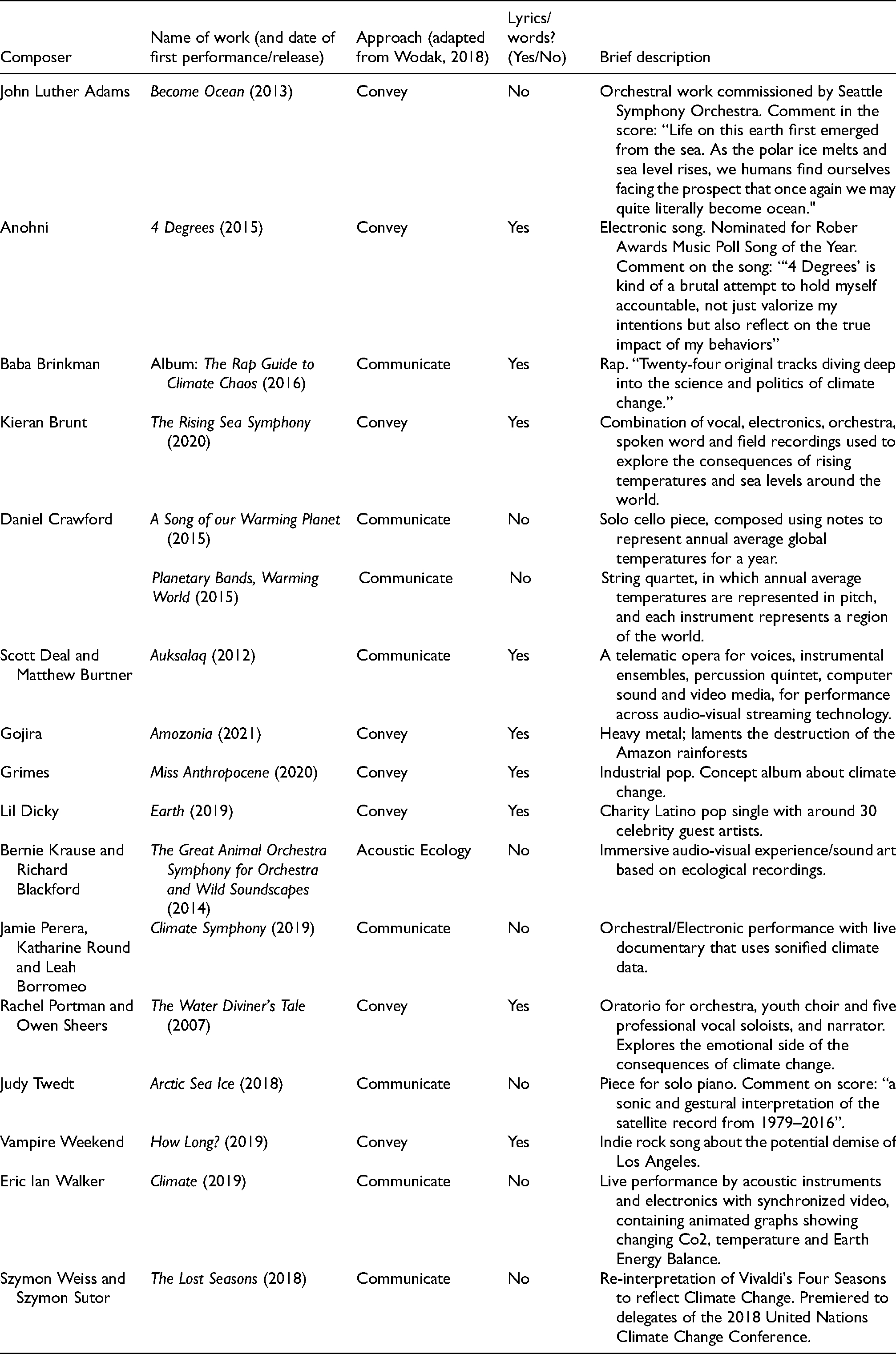
The intentions of musicians who use music to educate their listeners about climate change have also been examined (Publicover et al., 2018). While the authors note the unique nature of each of their participants’ approaches and outputs, they found that their participants had flexible, multivalent approaches to the task of using music for environmental education. Each composer had to find optimal positions for each work on a set of four continua: complexity (simple vs. complex); valence (a feel-good song vs. a non-feel-good song); inclusivity (inclusive vs. adversarial); and ambiguity (direct vs. ambiguous). In addition, five recommended quality dimensions were noted by composers: to make high quality art; to keep the music relevant to the audience; to recognize a diversity of possible ‘hooks’; to write from what you know and believe (first-person authenticity); and to avoid ‘preaching’. Avoiding ‘preaching’ is also highlighted by musicians elsewhere (Touzeau, 2010).
To maintain an authentic voice, musicians trying to educate listeners about environmental problems often try to reduce their own impact on the environment by avoiding plastic packaging, powering events with green energy where possible, and reducing air travel (Publicover et al., 2019). Examples from the UK include Opera North (Substrakt, 2020), Coldplay (Anonymous, 2019) and Massive Attack (Foster, 2019; Naja, 2019), all of whom have publicly committed to reducing their greenhouse gas emissions. Organisations such as Julie's Bicycle (https://juliesbicycle.com/) and Reverb (https://reverb.org/), exist to support musicians to make their musical activities as environmentally-friendly as possible; other groups are also providing support for this, including Making Music (https://www.makingmusic.org.uk/). On the other hand, musicians may adopt environmentally-friendly practices and play a role in environmental activism while maintaining a separation between this and their musical output. One example of this may be Radiohead (Clément, 2017), some of whose outputs only address climate change implicitly, rather than explicitly. Their views and actions relating to climate change, however, have been expressed in the media (Yorke, 2008), and may have influenced their fans.
The influence of these actions by musicians, or of the music they create, is rarely measured empirically, however, and the mechanisms through which music might help us to address the climate crisis are not examined. Current activity seems to assume that music has a positive effect on listeners’ environmental behaviour without trying to understand how that effect might come about. As Dibben (2017) advocates, empirical studies of the effects of such music on listeners are needed, but so is an examination of the theoretical studies surrounding environmental behaviour, to understand exactly how and when music may influence listeners, and to provide a foundation for future empirical work that could explore each mechanism systematically.
This article therefore explores selected empirically-grounded theories of environmental behaviour from the field of environmental psychology, and draws some parallels between aspects of these theories and research within the field of music psychology, paving the way for further empirical research to be undertaken in the future. First, however, a brief explanation of the problem of climate change will be given.
A Serious, Urgent Problem, and Some Solutions
Climate change is one of the most serious and urgent problems of our time (Romm, 2018). Concerns about anthropogenic, or human-caused, climate change began in the 1970s (Swim & Whitmarsh, 2019), and continue to be brought to the attention of the public by scientists and journalists now, after half a century (Boykoff et al., 2020).
According to the IPCC (2013), climate change will have a range of impacts. It will destabilize ecological and human systems at a rate that will outpace any possible adaptation of humans and animals. It will result in displacement, disease, death, and extinction. Climate change is a complex global problem, with interlinked geophysical, biological, and human consequences, but has varying local impacts (Swim & Whitmarsh, 2019). It will disproportionately affect non-industrialized countries and poorer groups, yet industrialized countries have more responsibility for emitting greenhouse gases, which adds a moral dimension to the problem (Swim & Whitmarsh, 2019). Parncutt (2019) has estimated that, on average, one premature death will occur for every thousand tonnes of carbon that are burned, which is roughly equal to four long-haul flights.
There are solutions to the climate crisis and these primarily involve a dramatic reduction of greenhouse gas emissions globally. The UN Paris Agreement (UNFCCC, 2015, 2021) commits signatory nations to nationally determined contributions (NDCs) that are intended to reduce their emissions and work towards the Agreement's goal of limiting global warming to 2 degrees Celsius, or preferably, 1.5 degrees Celsius. Governments are therefore committed to reducing greenhouse gas emissions in order to meet their nation's targets, and will need the co-operation of individuals within their populations to succeed. As Romm (2018) suggests, governments can encourage this co-operation by introducing carbon taxes or caps; regulating activities that have an impact on climate change, such as construction; investing in infrastructure that is more environmentally friendly, like low-carbon energy production such as wind and solar power, or rail and bus networks rather than roads; by encouraging home working and investing in technology infrastructure like broadband that reduces the need for travel; and by setting up schemes to encourage the preservation and development of woodland. Governments may also need to find ways of reducing the emissions of business corporations. Advisory bodies, such as the UK Committee on Climate Change (Averchenkova et al., 2021), and national legislation concerning the reduction of greenhouse gases (Eskander & Fankhauser, 2020) have been effective, though more still needs to be done to avert catastrophic warming. Crucially, though, in democracies, governments need to maintain their popularity. Climate policies have been observed to shift within political parties according to their current leadership, as a result of the influence of interest groups, and in response to the policies of rival parties (Carter & Little, 2021). Individual voters have an important role in determining the type of policies pursued and therefore the speed at which emissions are reduced.
While governmental actions are crucial in reducing greenhouse gas emissions, individuals can also make daily choices that reduce their greenhouse-gas footprint. These choices can have a significant impact if performed by many individuals, and the behaviour of individuals will be the main focus of the current article. The website ‘Our World in Data’ provides summary statistics for specific countries’ sources of greenhouse gas emissions (Ritchie & Roser, 2020). According to this source, transport is one of the highest contributors to the UK's greenhouse gas emissions, contributing 120.5 million tonnes of carbon dioxide-equivalents (CO2-e) in 2016: individuals can reduce this by choosing not to fly; by choosing to take public transport, cycle or walk rather than drive; or by choosing to work from home where possible (Romm, 2018). Electricity and heat (125.2 million t of CO2-e in 2016), and buildings (87.4 million t of CO2-e in 2016) also contribute large quantities of emissions; individuals can invest in insulation, renewable energy sources such as solar panels, or green energy suppliers for their home. Agriculture contributed 51.04 million tonnes of CO2-e in 2016; individuals can reduce the red meat and dairy produce in their diet and eat more plant-based foods. Manufacturing and construction (36.4 million t of CO2-e in 2016) and waste (18.16 million t of CO2-e in 2016) are also important: individuals can choose to buy less, re-use and recycle more (Turner et al., 2015), and waste less of everything.
These solutions are known to many people, and yet most of us continue to behave in ways that we know contribute to global warming. As Aramova and van Trijp (2013) suggest, there is a mismatch between individuals’ awareness of sustainable behaviours and their actual consumption behaviours: we have a tendency to ‘talk green’ but not ‘walk green’. There are many complex reasons for this. Some of those reasons are practical ones: it is sometimes difficult to avoid certain behaviours, and sometimes difficult to make the most environmentally sustainable choices. Jonge et al. (2013) highlight the need to make the sustainable choice easier for consumers, while Goldstein and Dinner (2013) explore ways in which our tendency to select a ‘default’ option when purchasing products might be used to encourage more sustainable choices. It may, however, be worth bearing in mind ways of increasing the social desirability of sustainable choices because of their potential for evolutionary signalling to others (Miller, 2013). Often, however, practicalities are not the main barrier to environmentally-friendly behaviour. Rather, some of the barriers relate to varying levels of understanding and concern about the problem of climate change, some of which are related to risk perception.
Risk perception is a complex behaviour, and involves three stages: first, the detection of a problem; second, the recognition of the problem as an emergency or a threat; and third, the acceptance of responsibility for actions relating to the problem (Swim & Whitmarsh, 2019). The risks of climate change are difficult to assess, not only because they are complex and uncertain, but also because various heuristics and cognitive biases influence our thinking in this area. Our ability to detect the problem of climate change is hampered by the availability heuristic, for instance, which is the tendency to overestimate the occurrence of an event if similar events are easier to recall, meaning, for example, that we find it harder to believe in rising global temperatures on a cold day than on a warm day (Swim & Whitmarsh, 2019, p. 17). The second stage of risk perception may be influenced by cognitive biases that reduce our tendency to perceive climate change as a threat: for example, unrealistic optimism makes individuals believe that they are more likely to experience positive events and less likely to experience negative events than others (Swim & Whitmarsh, 2019, p. 18). Geographical and temporal discounting (Swim & Whitmarsh, 2019, p. 19) also plays a role in the second and third stages of risk perception, with individuals placing less significance on outcomes that are physically and temporally more distant than those closer to home. As Swim and Whitmarsh state, ‘Climate change is global, multifaceted, difficult to detect, and causally ambiguous.’ (Swim & Whitmarsh, 2019, p. 33).
This paper focuses on the third stage of risk perception, and beyond: the acceptance of responsibility for actions relating to climate change, and resulting changes in environmental beliefs and behaviours. This in itself is a complex field of study that has explored a range of personal and social influences on environmental behaviour, and produced a number of relevant theories.
Theories of Environmental Behaviour
Numerous theories have been developed and tested empirically to explain individuals’ environmental behaviour. Steg and Norlund (2019) suggest that several of these can be nested within an over-arching Goal Framing Theory to provide a relatively comprehensive understanding of why we behave the way we do in relation to the environment (See Table 2).
Theories to explain environmental behaviour (Steg & Norlund, 2019).

Goal Framing Theory suggests that three overarching goals (the hedonic goal, the gain goal, and the normative goal) govern the way an individual processes information and acts upon it, and that the relative strength or salience of these goals will determine a person's behaviour at a given time. Usually, one goal will be focal, and this is known as the goal-frame, though other goals may still influence behaviour. The focal goal frame is usually an automatic reaction to a cue, rather than being selected consciously (Lindenberg & Steg, 2014). Lindenberg (2019, p. 146) defines goals as ‘mental representations of desired future states that are not purely cognitive, but … also mobilize certain kinds of motivations.’ Steg and Norlund (2019) suggest that normative goals provide the most stable basis for environmental actions, as acting pro-environmentally is the appropriate way to act. In contrast with this, they suggest that ‘If people act pro-environmentally based on gain or hedonic goals, they will only do so as long as doing so is profitable and comfortable’ (Steg & Norlund, 2019, p. 224). Nonetheless, each goal remains relevant for environmental behaviour, especially as the Normative Goal can be ‘very easily pushed aside by hedonic or gain goals unless it is chronically supported by social forces, such as significant others, prominent examples, sanctions, and values’ (Lindenberg & Steg, 2014, p. 43). The following sections will explore each of these goals more closely, examining the most pertinent of the theories listed above and considering the relevance of music psychology research for each one.
The Hedonic Goal
Lindenberg (2019, p. 146) defines the hedonic goal as ‘to maintain or improve the way one feels right now’. He gives examples of subgoals that include economizing on effort or having fun. The hedonic goal is often seen in opposition to environmentally friendly behaviour: for example, taking a shorter, cooler shower is likely to be less enjoyable than a longer, warmer shower; cycling to work or taking the bus instead of driving is often seen as less pleasant, particularly in the rain; flying to a holiday destination is seen as more pleasurable than travelling more slowly by train (Taufik & Venhoeven, 2019). In reality, however, the emotions experienced by an individual are more complex than this. First, an individual's anticipated emotional response to an environmentally-friendly action will influence the likelihood of them actually engaging in that behaviour (Taufik & Venhoeven, 2019). In other words, if someone thinks that they will feel energised and positive after cycling to work, then they are more likely to cycle to work than they are if they think they will feel soggy, tired and sad. Second, there are two components of the emotional response that are seen in people pursuing environmentally-friendly behaviours (Taufik & Venhoeven, 2019). The hedonic component is the pure pleasure component: cycling to work on a sunny day can be seen as inherently pleasurable, for example. The eudaimonic component is related to positive emotions that are triggered by meaningful experiences. Because environmental behaviour has a moral dimension, people who engage in environmentally-friendly behaviour perceive this behaviour as meaningful, and perhaps because of this, they tend to be more likely than others to anticipate that they will experience positive emotions as a result of engaging in that behaviour. The environmentally-friendly behaviour then elicits positive emotions for them.
Where might music fit with this? Empirical research suggests that music can be incredibly powerful emotionally (Gabrielsson, 2011; Juslin, 2019); that it can have important functions within listeners’ everyday lives (North et al., 2004; Sloboda & O’Neill, 2001; Västfjäll et al., 2012); and that listeners often choose their music carefully, with a range of motivations and results (Sloboda et al., 2009), sometimes to regulate their mood (Saarikallio, 2010; Saarikallio & Erkkilä, 2007). Three possible examples of the application of music to influence the emotions surrounding environmental behaviours will be briefly explored here.
First, are there ways of using music to enhance the positivity of people's anticipated emotions when they are considering whether or not to engage in pro-environmental behaviour? Juslin’s (2013) BRECVEMA model proposes eight mechanisms through which music elicits emotions in a listener (Brain-stem reflex, Rhythmic entrainment, Evaluative conditioning, Contagion, Visual imagery, Episodic memory, Musical expectancy, Aesthetic judgement). Several of these (BRCVMA) may be exploited in the above scenario of making environmentally-friendly choices more appealing. Interestingly, the mechanism of Evaluative conditioning works through the pairing of a neutral musical stimulus with a positively- or negatively-valenced non-musical stimulus. In the proposed scenario, music would be used as a positively-valenced emotional stimulus to increase the positivity of the perceived valence of an environmentally-friendly choice. The pairing of music that induces positive emotions with environmentally-friendly choices has the potential to help individuals who wish to be more environmentally friendly but who fail to make decisions that are consistent with that aim. This is particularly important during the decision-making process: one only has to think of the use of music in advertising to recognise its emotional power in this context, although this does need careful handling to avoid it becoming annoying to the listener. Jonge et al. (2013) advocate the use of social marketing for the promotion of environmentally-friendly behaviours and music could be usefully and carefully applied here. In particular, the music used would need to help present environmentally-friendly behaviour as something that can appeal to all and remain appealing over a relatively long period of time. The use of music within advertising is complex and has been studied from a range of musical and marketing perspectives (Deaville et al., 2021); this knowledge should be drawn upon if music is used to help promote environmentally-friendly behaviours.
Second, is it possible to enhance the actual experience of environmentally-friendly behaviours using music? For example, music has been shown to enhance people's experiences of exercise (Västfjäll et al., 2012): it would be straightforward to suggest that people use self-chosen music to accompany environmentally-beneficial actions such as cycling, walking, or using public transport (as long as listening does not endanger or inconvenience them or others); or even other activities such as cooking with or eating food that has a lower carbon footprint than average, to increase the positive emotions that are associated with that experience. As in the use of music to enhance anticipated emotions, several of the mechanisms of Juslin’s (2019) BRECVEMA model would be exploited in the pairing of music inducing a positive emotional response with an environmentally-friendly activity.
Third, might fruitful comparisons be made between the hedonic and eudaimonic emotions experienced in relation to environmental behaviours and those experienced by performing musicians (Lamont, 2012; Lamont & Ranaweera, 2020)? Both musical performance and environmental behaviours require sustained commitment over time; both domains may induce a range of hedonic and eudaimonic emotions; and both may be perceived as more difficult or less pleasurable than other activities. What can we learn from those who commit to these activities?
These are all questions that require empirical investigation to be answered.
The Gain Goal
The Gain Goal is defined as ‘to maintain or improve one's resources’ (Lindenberg, 2019), and has possible sub-goals of making money, gaining status, or saving money for later. Two theories are associated with the gain goal within Table 1: The Theory of Planned Behaviour and Protection Motivation Theory. Protection Motivation Theory suggests that people consider costs and benefits of environmental behaviour when making choices.
The main focus of this paper within the Gain Goal will be on the Theory of Planned Behaviour (TPB). The Theory of Planned Behaviour has been widely used to try to explain the links between beliefs, attitudes, behavioural intentions and actual behaviours. It focuses on reasoned, volitional behaviour, where the individual has full control over whether to perform the behaviour or not (in other words, there are no practical constraints on an individual's behaviour, such as time or money). As Staats (2003) notes, TPB is particularly relevant for the first time someone makes a decision to behave in a certain way, a situation in which one can assume that the individual is evaluating all the options available to them; it may not be quite as useful for repeated behaviours, unless a full reappraisal of the circumstances is made by the individual. A good example of this kind of behaviour might be an individual's first journey to a new workplace, or recycling behaviours after being presented with new information about recycling.
TPB (Ajzen, 1991; Staats, 2003; Steg & Norlund, 2019) consists of a number of interlinked components (see Figure 1). Behaviour (B) is defined as the performance of a certain act that is observable by others (people often behave differently depending on whether or not they are being observed). Behaviour is strongly related to an individual's Behavioural Intention (BI), the individual's deliberate plan to perform a specific behaviour. One of the influences on the Behavioural Intention (BI) is the Attitude Towards The Act (ATT), which consists of two sub-components: the individual's beliefs about the outcomes of a behaviour, and their evaluation of the outcomes of the behaviour, taking into account their value and likelihood of occurrence. A second influence on the Behavioural Intention (BI) is Perceived Behavioural Control (PBC), shown at the bottom of Figure 1. People, when forming an intention, will take into account whether or not they can execute the behaviour. Actual control may not be the same as perceived control. This results from a combination of control beliefs, which are cognitions about the estimated likelihood that each of a number of specific factors will facilitate or impede execution of the behaviour, and Perceived Power, which is a judgement of strength – i.e. the degree of facilitation or impediment that each specific control belief represents. A third influence, shown in the middle of Figure 1, is the Subjective Norm (SN). This is the perception of an individual that in general, other ‘important’ people want that individual to perform that behaviour. ‘Important people’ may vary across behaviours. This may include family, friends, neighbours, religion (if affiliated), political party, or the environment movement. The subjective norm is a combination of normative beliefs, which are the extent to which ‘a person thinks that a specific referent person or group wants him to perform a behaviour’ (Staats, 2003, p. 175) and their motivation to comply, which is ‘the degree to which an individual allows this referent person or group to exert influence on him’ (Staats, 2003, p. 175).
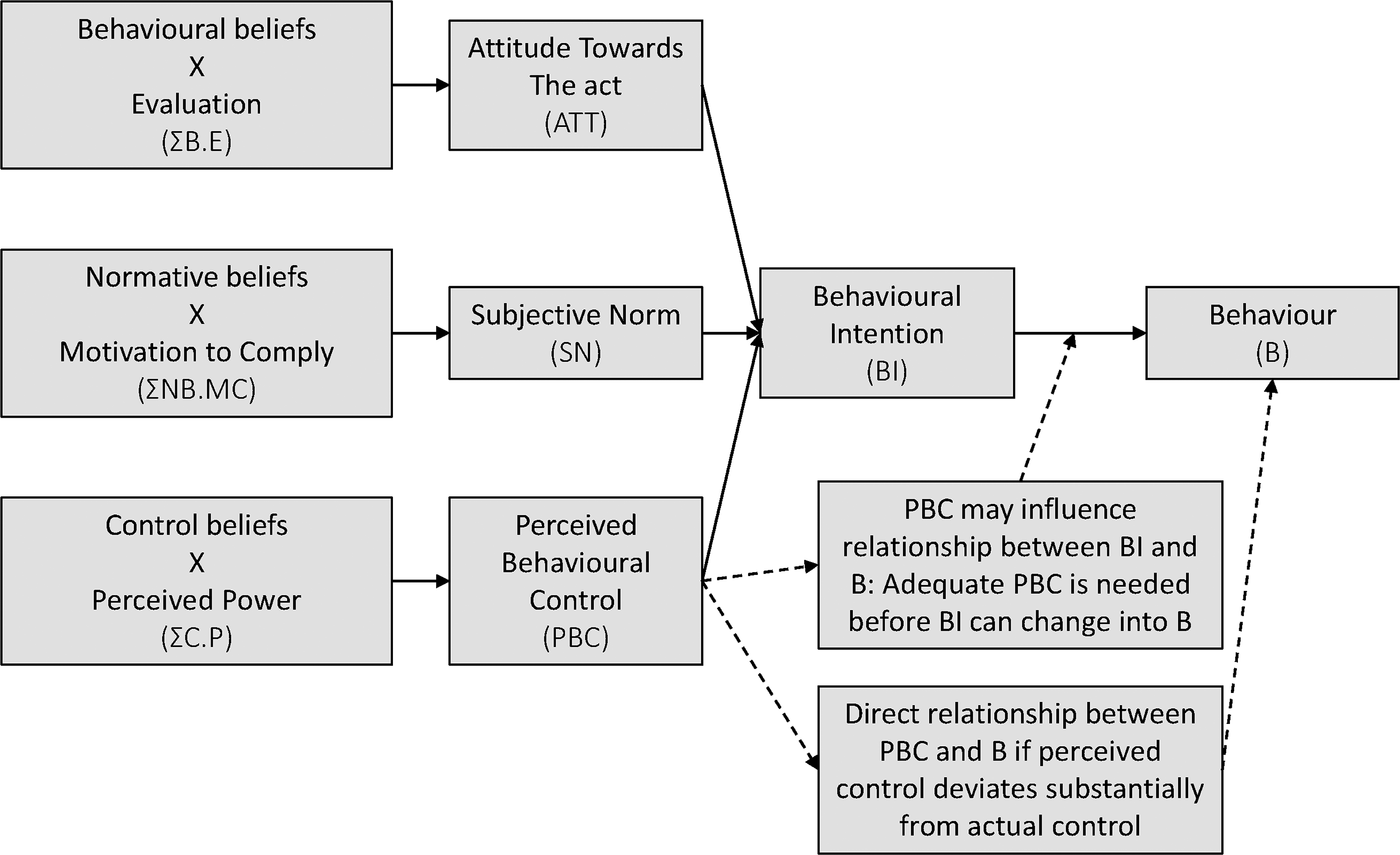
The theory of planned behaviour (adapted from Staats, 2003, p. 179).
Within the TPB model, the subjective norm variables seem, arguably, to have the greatest potential for alignment with music psychology research. Music plays an important role in social groups, particularly but not exclusively in adolescents. Research has also shown that musical tastes are correlated with a wide range of socio-demographic variables. North and Hargreaves (2007) highlight some of these. These authors examined associations between liking for different musical genres and a wide range of socio-demographic variables. Environmentally relevant findings are shown below:
- ‘fans of soul were most likely to be vegetarian/vegan, whereas fans of disco and DJ-based music were least likely to be’ (North & Hargreaves, 2007, p. 76). - ‘Fans of country and western, sixties pop, classical music, and opera were most likely to recycle whereas fans of DJ-based music, hiphop/rap, and R&B were least likely to recycle, contrary again to their liberal stereotype.’ (North & Hargreaves, 2007, p. 76) - ‘Fans of jazz, indie, classical music, blues, and opera agreed most strongly that the government should do more to exploit alternative energy sources, whereas fans of hip-hop/rap, R&B, and current chart pop disagreed most with this assertion.’ (North & Hargreaves, 2007, p. 80) - ‘Fans of indie, country and western, sixties pop, and rock were most likely to believe that the government should pay more attention to environmental issues, whereas fans of other pop music styles, hip-hop/rap, R&B, DJ-based music, and dance/house were least likely to.’ (North & Hargreaves, 2007, p. 80)
Other research has shown that people make judgements about others in relation to their musical tastes. Work on Social Identity Theory in relation to music (North & Hargreaves, 2008, p. 220) has highlighted the use of music to create in-group and out-group categories that result in discrimination in favour of in-group members and against outgroup members.
Might it be possible to use these musical stereotypes to strengthen individual's subjective social norms? How might perceived social norms be influenced in relation to musical taste? If an individual knows that other fans of music they like have positive environmental beliefs, take positive environmental actions, and would therefore approve of their own positive environmental behaviours, might this strengthen their motivation to comply, and therefore strengthen the subjective norm? Jonge et al. (2013) suggest that marketing strategies using the approval or compliance of others in a similar social situation, particularly when focusing on the actions taken by others, can increase an individual's tendency to purchase environmentally-friendly products instead of less sustainable products. It is only a side-step to use information about the habits of others with similar musical tastes to promote environmentally-friendly behaviours.
Might we also be able to use our knowledge of these stereotypes to target interventions towards groups with lower environmental awareness or lower levels of environmentally-friendly behaviour? Perhaps it might be possible to find artists from the genres of hip-hop/rap, DJ-based music, and dance/house who are concerned enough about the environment either to discuss their concerns in a way that their fans can relate to, or to compose music that addresses environmental issues? Indeed, artists such as Baba Brinkman are beginning to do this. We know that adolescents frequently have musical role models who are usually famous and whom they admire not only for their music but also for their whole personalities (Ivaldi & O’Neill, 2008); drawing fans in to listen to these role models’ music may also influence their environmental attitudes and behaviours, in the same way that role models in other domains are seen to influence people's goals and motivate them (Morgenroth et al., 2015).
Can we use research about Social Identity Theory and music to modify in-group and out-group distinctions and thereby promote positive environmental behaviours? Here, music is not necessarily expected to be a direct catalyst for behaviour change. Instead, the social groupings created through fans of different genres, and individuals’ perceptions of fellow fans, might be used to encourage positive environmental actions. This would have to be done very carefully, to avoid negative out-group effects, but if, for example, fans of soul and similar genres were told that other people with similar musical tastes to them enjoy eating vegetarian or vegan food, and were given some straightforward favourite recipes used by other fans, we could hypothesise that they would be more likely to try vegetarian or vegan food, and start to make more climate-friendly food choices. Similarly, we might hypothesise that recycling rates might be further increased within fans of country and western, sixties pop, classical music and opera with a targeted advertising campaign highlighting the relatively high achievement of others with similar musical tastes. Again, this would have to be executed carefully with clear, factual information, to avoid negative effects. All these hypotheses would need to be tested empirically, to ensure that target groups were affected positively and that non-targeted groups did not feel alienated and behave in less environmentally-friendly ways as a result. Though more difficult, it may also prove worthwhile to target fans of musical genres with fewer environmentally friendly tendencies, though this would seem more complex and again, would need testing empirically. Ultimately, it should be possible for environmentally-friendly behaviours to be associated with any musical genre, but the existing social tendencies of each genre's fans might be used to encourage such behaviours. Many of these social factors might be explored within the context of music festivals, which tend to relate to relatively broad genre categories and are seen by some as being ideally placed to influence music fans in relation to climate change, as they tend to attract a comparatively young audience who are ‘switched on’ and ‘receptive to the ethos’ of the event they are attending (Johnson, 2015, p. 9).
The TPB is not perfect: it has been criticised because of its assumption that all possible behavioural options are carefully considered every time they are executed. In reality, as Staats suggests, it is ‘very unlikely that these kinds of frequent behaviours are the subject of rather extensive consideration every time.’ (Staats, 2003, p. 181). Staats discusses two solutions for this. First, one can exclude repeated behaviours from the theory. Second, one can assume that ‘TPB is a valid model for these behaviours because, albeit a long time ago, originally this behaviour was the product of a set of behavioural, normative and control beliefs. These are not actively reconsidered before every exposure of the behaviour as they have remained unchanged. It is only when something in the social or physical environment is perceived to have changed (note that it is the perception of change that is crucial, not the factual change), that beliefs pertaining to those changes are evoked, reconsidered and changed, thus leading to changes in intention and behavior’ (Staats, 2003, p. 181).
TPB may be useful in evaluating what caused the decision to execute a particular behaviour the first time, but people depend on their earlier decisions to make subsequent similar decisions, rather than scrutinising relevant information repeatedly, even if that information is easily available (Staats, 2003, pp. 181–182). Thus the theory has been criticised for not taking into account past behaviour and habits, thought there is some suggestion that feedback loops can be added. Habits, though, have an interesting role to play in determining behaviour. Klöckner and Verplanken (2019, p. 239) define habits as ‘cognitive structures that automatically determine future behaviour by linking specific behavioural cues to (chains of) behavioural patterns’. Habits are behaviours that occur frequently, are successful, automatic, and stable in relation to the circumstances in which they are performed. Interventions to break habits are often quite unsuccessful in the long term, with people relapsing back into old habits after an intervention has stopped. There is some evidence, however, that music used as a counter-conditioning stimulus can in certain circumstances be an effective adjunct therapy for addiction therapy, which is in some ways related to habits (Stamou et al., 2016; Stamou et al., 2017), which may be related to the way in which both addictive behaviours and music can lead to dopaminergic release (Molnar-Szakacs, 2017). If music can be useful here in breaking old habits and strengthening new ones, might it be possible to develop music-based interventions that help break habits with a negative environmental impact and help to form and strengthen habits with a more positive environmental impact?
Other criticisms of TPB are that it fails to take into account personal norms or an individual's self-identity as an individual. These last two influences will be examined here, in relation to the normative goal.
The Normative Goal
Lindenberg (2019, p. 146) describes the Normative Goal as the goal to ‘behave appropriately, conform to social norms and rules’. Social Norms are informally enforced rules that have some consensus in society (Lindenberg & Steg, 2014), though they may also be enforced more formally. In general, people feel that they ‘ought’ to conform to social norms. In practice, a focus on the Normative Goal involves raising the importance of group goals over that of individual goals. Although important guides of behaviour, social norms are precarious, Lindenberg and Steg suggest: small numbers of people deviating from social norms can have a large impact on others, both directly, and by unconsciously encouraging other violations, both similar and different in nature to the original deviation. Norms are also flexible, meaning that individuals adapt them to a particular situation.
Steg and Norlund (2019) suggested two models that can be associated with the Normative Goal: the Norm-Activation Model (NAM) and the Value-Belief Norm Theory (VBN). These two models are related to each other: VBN was developed by Stern (2000) by combining the NAM with Schwartz’s (1992) value theory, and the new environmental paradigm perspective (NEP) (Dunlap et al., 2000).
The Norm-Activation Model (see Figure 2) suggests that pro-social intentions and behaviour, such as environmentally-friendly behaviour, are activated by personal norms, which are defined by Steg and Norlund (2019) as ‘reflecting feelings of moral obligation to perform or refrain from actions.’ (221). These norms are influenced by four variables. The first of these is ‘problem awareness’: personal norms are stronger when people are aware of environmental problems. Second, the ‘ascription of responsibility’ variable takes into account the fact that personal norms are stronger when an individual feels personally responsible for those problems, and does not attribute them to the actions of others. Third, ‘outcome efficacy’ represents the degree to which people feel their actions will reduce the relevant environmental problem, as well as the degree to which they feel others will take similar actions. If outcome efficacy is strong, personal norms are strengthened. The fourth and final contributing variable is ‘self-efficacy’, which is the degree to which people are able to engage in the actions needed to reduce environmental problems. All of these variables are influenced not only by an individual's personal circumstances, but also by the larger social influences on their life, such government policy, which can help to raise awareness of problems, encourage personal responsibility, make outcome efficacy more explicit, and facilitate individuals’ self-efficacy. The four variables are seen as occurring sequentially, and resulting in the activation of personal norms.

The norm-activation model.
An important variable that occurs within this model that is not considered elsewhere is outcome efficacy, the extent to which people feel that their actions will reduce the relevant environmental problem. There are occasions when individuals are prevented from behaving in an environmentally-friendly manner because of the idea that their small contribution will not make a significant impact on the overall outcome of climate change. This may not be an accurate perception, and while specific feedback on the reduced environmental impact of an individual's changed behaviour may be the most powerful means of increasing perceived behavioural control (Abrahamse, 2019), it may be possible that music could also play a role in helping an individual to feel empowered to behave in a more environmentally-friendly manner. Koelsch et al. (2019) explored the effects of ‘sad’ vs. ‘heroic’ music on mind-wandering, and found that those listening to the heroic music experienced thoughts that were more empowered than those listening to sad music. Gamble (2021), too, argues that music affords empowerment and can inspire social change. It might be possible, therefore, to bolster individuals’ feelings of empowerment in decision-making situations in order to encourage environmentally-friendly actions.
Two of the variables from the NAM, Awareness of Consequences and Ascription of Responsibility, can be seen within the Value-Belief Norm Theory (VBN), as seen in Figure 3. The Value-Belief Norm Theory (or VBN) suggests a chain of variables, from values and general environmental concern to specific beliefs about the negative consequences of certain actions and the individual's ability and responsibility to avert these negative consequences, which in turn activates sustainable personal norms for behaviour.
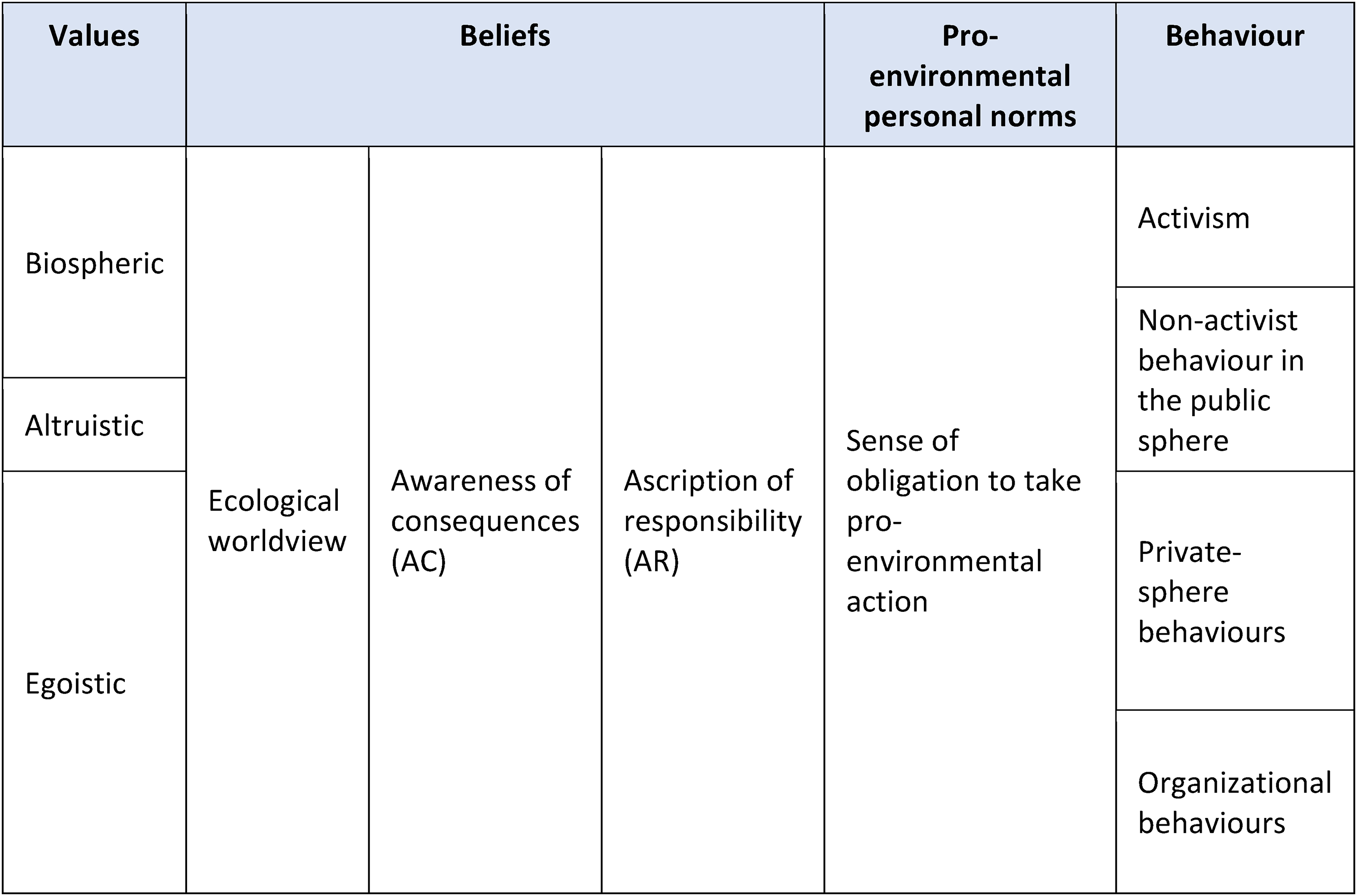
The value belief norm theory (VBN) (adapted from Steg & Norlund, 2019, p. 223).
Values are stable, over-arching goals that act as guiding principles in someone's life. They have an indirect relationship with behaviour, through attitudes and beliefs. There are various kinds of values. Biospheric values reflect a ‘concern with the quality of nature and the environment for its own sake’ (De Groot & Thøgersen, 2019, p. 177); Altruistic values reflect a ‘concern for society and other people’(De Groot & Thøgersen, 2019, p. 177). Both biospheric values and altruistic values are positively related to pro-environmental beliefs, attitudes, norms, and behaviours. Egoistic values reflect a ‘concern for the individual's own resources’ (De Groot & Thøgersen, 2019, p. 177). These values tend to be negatively associated with pro-environmental beliefs, attitudes, norms and behaviours.
Although values are stable, and transcend specific situations so that they influence an individual's behaviour over a relatively long period of time, they can be influenced, or made more salient. In a specific situation, an individual will make choices based on their perceived importance of one particular value in relation to another. If the individual's attention is drawn to one particular value over another, the most salient value (the one with the greatest perceived importance at the time) will have the largest influence on their behaviour. One way of promoting biospheric (or altruistic) values is to highlight an individual's self-concept: when an individual is encouraged to see themselves as someone who cares for the environment (or for other people), rather than someone who only cares for themselves, biospheric (or altruistic) values are made more salient and they therefore make more environmentally-friendly choices (De Groot & Thøgersen, 2019). Another means of increasing the salience of biospheric values is to provide cognitive support to enable people to provide reasons for their values, which encourages value-congruent behaviour (De Groot & Thøgersen, 2019).
These means of increasing the salience of values that are linked with environmentally-friendly behaviours are crucial when we are considering how music might be used to help with the climate crisis. In particular, existing research in music psychology may point to the possibility of increasing the salience of altruistic values. First, there is evidence that music can influence altruistic behaviour in a game setting. Fukui and Toyoshima (2014) explored the effects of music listening on the behaviour of participants playing a game in which they were acting as a dictator. Participants were allocated to one of three conditions for a five-minute period in between rounds of the game: participants in the first condition listened to their own choice of preferred music that induced emotional ‘chills’ or shivers; participants in the second condition listened to music they disliked; and participants in the third condition experienced silence. They found that preferred music which induced emotional chills increased participants’ altruistic behaviour (in this instance, the amount of money they gave to other players), whereas disliked music decreased altruistic behaviour, and silence had no effect on the amount given. If chill-inducing preferred music can increase altruistic behaviour (perhaps by making altruistic values more salient), perhaps this effect has the potential to be harnessed to encourage environmentally-friendly behaviours. On the other hand, care must be taken regarding the nature of the request: Ziv (2016) found that listening to music with a positive valence increased compliance even when the requested task would harm another person.
Second, there are well established links between altruism and empathy. As Stocks and Lishner (2018, webpage) state, ‘the empathy–altruism hypothesis claims that empathy (construed as an other-oriented emotional state) evokes altruism (construed as a motivational state)’. Empathy has been studied recently in relation to music, in relation to its role in musical performance and musical engagement (King & Waddington, 2017). Within King & Waddington's (2017) volume, a range of ideas are explored, from the complex etymology of empathy (Laurence, 2017) to studies exploring empathy in musical performance. Rabinowitch (2017) discusses empirical evidence suggesting that shared musical activities, particularly those that involve rhythmic synchronisation, may increase empathy between individuals; she also suggests that listeners may feel empathetic when merely listening to music. This seems to occur through the mechanism of mirror neurons, so called because they are activated not only when an individual is processing their own actions, sensations and emotions, but also when that individual perceives the actions, sensations and emotions of others (Molnar-Szakacs, 2017). Music may be interpreted by the listener as motion, and more specifically, physical gestures emanating from another person (Molnar-Szakacs, 2017), an idea closely related to embodied cognition (Leman & Maes, 2014). Through this interpretation, Molnar-Szakacs argues, the listener is able to ‘feel the emotion communicated by the performer, leading to emotional responses within them’ (Molnar-Szakacs, 2017, p. 104). Other research has highlighted the shared regions of the brain that are involved in performing socially-co-operative tasks and in listening to familiar and emotionally rewarding music (Harvey, 2017). Perhaps most relevant for this article, however, is work by Eric Clarke, Tia De Nora and Joanna Vuoskoski (Clarke et al., 2015), which, among other things, reports empirical evidence suggesting that passive listening to the music of an unfamiliar culture can significantly change the cultural attitudes of listeners with high dispositional empathy. If music and empathy can change cultural attitudes through music listening on a societal level, would it be possible to adapt this to investigate the possibility of empathy and altruism being made more salient through music, thereby influencing people's values and potentially, their environmental behaviours?
It might also be possible to increase the salience of biospheric values more directly by using music that references natural sounds. Examples of this may be found within a range of musical genres, but acoustic ecology perhaps represents the auditory landscape of the natural world most explicitly. Acoustic ecologists use sound recordings from a range of different ecological settings to create musical soundscapes (an example of which is given in Table 1). Hearing these works may allow listeners a new perspective of active engagement or active listening that enables them to recognise the blurred boundary between sound and music (Windsor, 2016), and raises their awareness of natural sounds (Østergaard, 2019). It could be hypothesised that this new perspective might potentially increase the salience of listeners’ biospheric values through the (conscious or unconscious) recognition of ecological sounds.
Values are only the first step of the VBN model. The Beliefs section of the model (see Figure 2) encompasses Ecological worldviews, as well as a person's Awareness of the Consequences of their actions and their Ascription of Responsibility, the latter two of which were discussed earlier. Ecological worldviews are fundamental beliefs about the relationship between humans and the environment. They are defined by De Groot and Thøgersen (2019, p. 177) as ‘Beliefs regarding humanity's ability to upset the balance of nature, the existence of limits to growth, and rejecting humanity's right to rule over the rest of nature.’ A person's ecological worldview will influence a person's awareness of the environmental consequences of their actions, and will, in turn, influence their beliefs about whether they can act to reduce the environmental threat. Taken as a whole, these beliefs will influence an individual's personal norms, or in other words, their sense of obligation to take pro-environmental action, which will influence their behaviour, examples of which can be seen in the final column of Figure 3.
Many of the musical works discussed earlier as being written with the explicit goal of conveying urgent and important messages about the environment would seem to have the potential to exploit the opportunity to influence an individual's beliefs, either in relation to their ecological worldview, their awareness of the environmental consequences of their actions, or their beliefs about whether they are able to act to reduce the environmental threat. While it is possible to hypothesise about the aspect of beliefs that these musical works might influence, few of their creators have documented their intentions in this level of detail. There also appears to be very little (if any) empirical research exploring the impact of these musical works on the beliefs of listeners or fans. As music psychologists, it seems possible for us to use empirical methods to investigate the influence of musicians’ musical outputs and non-musical actions on fans’ and listeners’ ecological worldview, their awareness of the environmental consequences of specific actions, their ascription of responsibility, their pro-environmental personal norms, and their day-to-day environmental behaviours. Any study design would, of course, need to take into account other influences on individuals’ environmental behaviours, and would need to recognise the complexity of even a single act of musical communication, recognising that it is not a simple or one-way process, for emotions or for a particular message (Juslin, 2019). In addition, even a single interaction with music involves multiple factors relating to the individual, the music (in the broadest sense, to include all performance variables as well as musical structure and any explicit or implicit messaging intended to be imparted with or through the music), and the situation (Hargreaves et al., 2016; Juslin, 2009). Longer term musical interactions would need to be considered in relation to an even more complex network of influences, akin perhaps to Bronfenbrenner's revised ecological model as discussed by Hargreaves and Lamont (2017) in relation to musical development. Nonetheless, this does seem a task worth pursuing.
Conclusions and Questions
The title of this article asks whether music can be used to help us to address the climate crisis. To some extent, music is already being written and performed with this purpose. As a field, however, music psychology research has not yet addressed this question directly. This article is intended to highlight some of the empirically-based theories of environmental behaviour used in environmental psychology to identify research questions that might be pursued by music psychologists, bearing in mind the strong evidence that exists within our field for the power of music to change listeners’ and performers’ emotions, moods, thoughts, levels of empathy, and beliefs. Some possible research questions are listed below:
In relation to the hedonic goal:
As an individual's anticipated emotional response is important in decision-making, can we use music's emotional effects to enhance the positivity of people's anticipated emotions when they are considering whether or not to engage in pro-environmental behaviour? Can we use music's emotional effects to enhance the experience of environmentally-friendly behaviours using music? What can we learn from those who commit to environmental behaviours and those to commit to musical performance activities, since both of these activities seem to prompt hedonic and eudaimonic emotional experiences? In relation to the gain goal and in particular, the subjective norm variable of the TPB:
Can we use musical genre stereotypes to strengthen individuals' subjective norms? Can we use musical role models to encourage fans to behave in environmentally-friendly ways? Can we use research about Social Identity Theory and music to modify in-group and out-group distinctions and thereby promote positive environmental behaviours? In relation to habits:
Is it possible to develop music-based interventions that help break habits with a negative environmental impact and help to form and strengthen habits with a more positive environmental impact? In relation to the normative goal:
Can heroic music be used to bolster individuals’ feelings concerning outcome efficacy, making them feel that their actions will make a difference to climate change outcomes and thereby encouraging them to take environmentally-friendly actions? Can music make empathy and altruism more salient, thereby influencing people's values and potentially, their environmental behaviours? Can musical works that reference sounds from the natural world (in particular, though not exclusively, those from within acoustic ecology) increase the salience of listeners’ biospheric values? If so, is this increase reflected in their environmental behaviours? What is the influence of musicians’ musical outputs (and specifically the musical content and the messaging communicated or conveyed through those outputs) on fans’ and listeners’ ecological worldview, their awareness of the environmental consequences of specific actions, their ascription of responsibility, their pro-environmental personal norms, and their day-to-day environmental behaviours? What is the influence of musicians’ non-musical actions on fans’ and listeners’ ecological worldview, their awareness of the environmental consequences of specific actions, their ascription of responsibility, their pro-environmental personal norms, and their day-to-day environmental behaviours?
The next step will be to explore appropriate research designs to answer some of these (in some cases, methodologically challenging) research questions. The choice of music within these research designs, and whether that choice is made by the listener, a researcher, or a musician, will be of paramount importance. By investigating these and other related research questions in a systematic manner, using knowledge that has already been gained within the established field of environmental psychology, we have the potential to use our knowledge of the power of music to try to change individuals’ behaviour in small ways that collectively address climate change and ultimately, save lives.
Footnotes
Acknowledgements
The author is grateful to Dr Elaine King, Dr Mark Slater, Dr Simon Desbruslais, Joel Swaine, Dr Timothy Prior, and two anonymous reviewers for providing comments on this manuscript.
Action Editors
Emily Payne and Karen Burland, University of Leeds, School of Music.
Peer Review
Edvin Østergaard, Norwegian University of Life Sciences, RealTek, Department of Teacher Education and Educational Sciences.
One anonymous reviewer.
Declaration of Conflicting Interests
The author(s) declared no potential conflicts of interest with respect to the research, authorship, and/or publication of this article.
Funding
The author(s) received no financial support for the research, authorship and/or publication of this article.
