



Abstract
The development of new technologies drives many aspects of socio-economic development, including the development of education. The behavioural intention of music teachers, particularly in relation to how technology is integrated into the classroom, needs to be understood since it has a direct effect on the pedagogical approach used in classroom learning. Existing theories (the Unified Theory of Acceptance and Use of Technology (UTAUT) and Technological Pedagogical and Content Knowledge (TPACK)) have explored aspects of teachers’ adoption of technologies; this article uses data from a pilot study to develop and test a model that combines the two theories in order to understand more fully the relationship between Individual Beliefs, Technological Competence and Behavioural Prediction of music teachers using technology in the context of the Chinese governmental policy: ‘Internet +’. The participants of this pilot study were 61 music teachers (12 male and 49 female); the proportion of participants in different provincial administrative regions covered more than half of mainland China (18 out of 34). Structural Equation Modelling (SEM) revealed that the overall fit of the model was above the recommended level of acceptable fit. The results showed that Technological Competence has a significant impact on Individual Beliefs; Individual Beliefs have a significant impact on Behavioural Prediction. However, Technological Competence was found to have no significant direct impact on Behavioural Prediction. This study is one of only a few studies that combine the UTAUT and TPACK models into the field of music pedagogy and uses SEM for analysis. This study attempts to fill the gap in the factors influencing the adoption of technology in music education in non-Western cultures and also provides a starting point for understanding Chinese music teachers’ technological beliefs and behavioural intentions.
Keywords
Introduction
With the rapid development of emerging technologies, the prevalence and application of various technological tools has become one of the main drivers of social progress. Technologies evolve and develop over time, but their value can only be realised when they are accepted and used consistently. For more than three decades, research related to the acceptance of technology has received attention from researchers in the field of information systems, such as the Technology Acceptance Model (TAM) proposed by Davis (1989). Other studies in this domain have incorporated social psychological theories such as the Unified Theory of Acceptance and Use of Technology (UTAUT) (Venkatesh et al., 2003), which is a more comprehensive theoretical model to predict and evaluate user acceptance of information technology.
UTAUT is relatively well designed and effective: tests of the model suggest that it can account for up to 70% of the variance in individuals’ or organisations’ technological acceptance and use behaviour. The authors established the basic theoretical framework of the UTAUT model by measuring and testing more than 20 variables in eight earlier models, including the TAM and the Innovation Diffusion Theory (Rogers, 2010). Four core variables were identified: Performance Expectancy (PE), Effort Expectancy (EE), Social Influence (SI) and Facilitating Conditions (FC). With the application of UTAUT in wider fields, various scholars have revalidated and expanded the model. For example, three additional constructs including Hedonic Motivation (HM), Price Value (PV), and Habit (Ha) were proposed and added to a new UTAUT2 model (Venkatesh et al., 2012). The definitions of these determinants are summarised in Table 1.
Definition of Determinants in UTAUT and UTAUT2 (Venkatesh et al., 2003, 2012).

Subsequently, Venkatesh et al. (2016) summarised the research on the UTAUT model in recent years and put forward a multilevel framework as the theoretical basis for future research (see Figure 1). They suggested that a user’s Behavioural Intention (BI) will be influenced FC, Ha and IB. Among them, IB includes the five factors of PE, EE, SI, HM and PV.
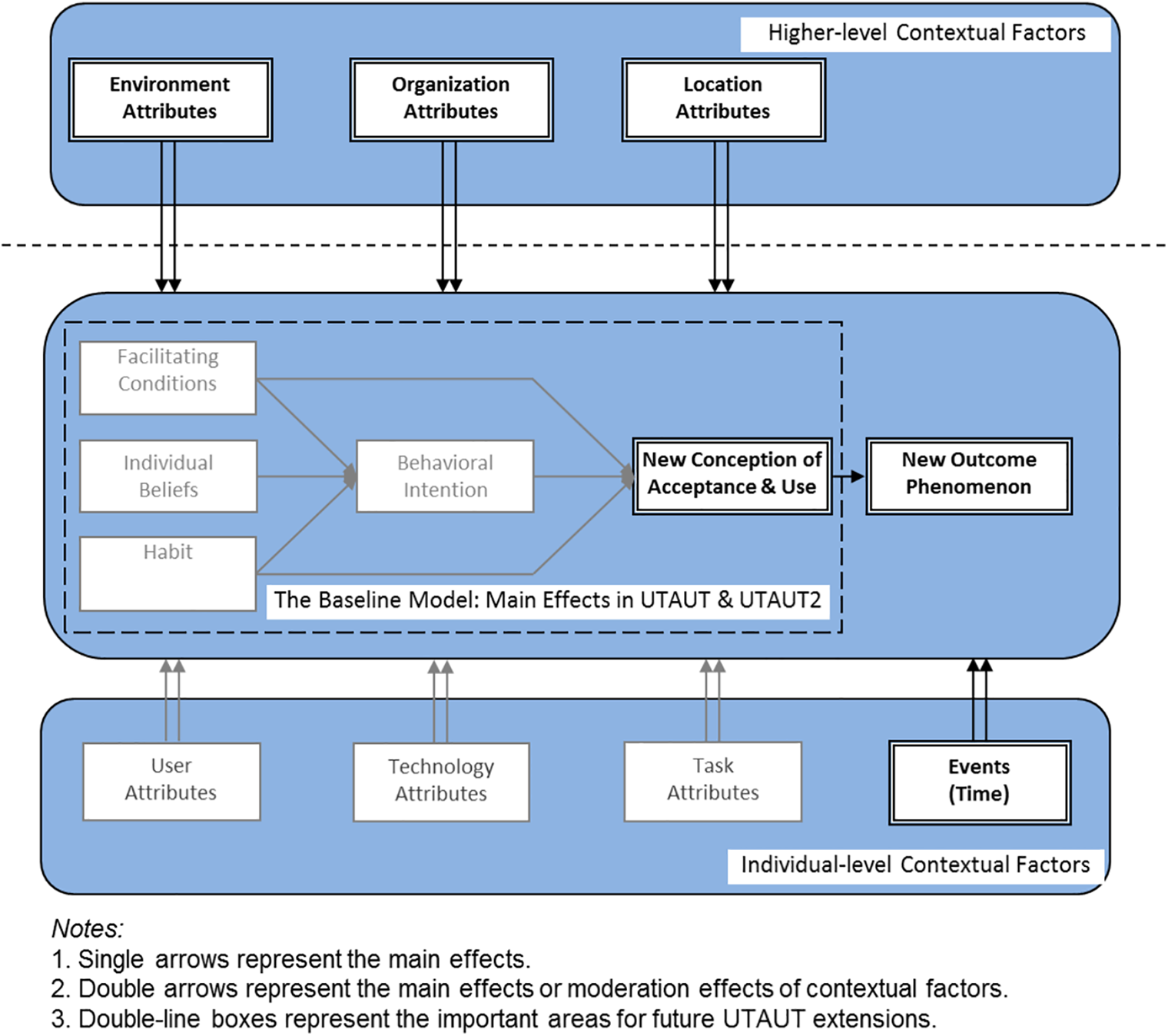
A Multilevel Framework of Technology Acceptance and Use. Reprinted from ‘Unified Theory of Acceptance and Use of Technology: A Synthesis and the Road Ahead' by Venkatesh et al., 2016, Journal of the Association for Information Systems, 17(5), pp. 328–376. Copyright 2016 by Association for Information Systems. Reprinted with permission.
The UTAUT models have been used in the field of education (Chiu & Wang, 2008; El-Gayar & Moran, 2007; Lu et al., 2013; Thomas et al., 2013) and also in the domain of music. Waddell and Williamon (2019) conducted a study based on the TAM theory, a subset of UTAUT. They investigated musicians’ technology use and attitudes in music learning and demonstrated that musicians generally held positive attitudes, thus validating the successful application of the TAM model in music. However, the UTAUT model has not been widely researched within music education, especially in non-Western countries.
Similarly, Triandis (1977, 1979) developed the Theory of Interpersonal Behaviour (TIB), which is a theoretical model of behaviour that incorporates further considerations such as cultural and social factors. Triandis pointed out that BI, FC and Ha will interact to potentially demonstrate an individual’s future behaviour. Interestingly, the determinants relating to behaviour in this psychological theory are similar to those in the UTAUT model mentioned earlier: both the theories of TIB and UTAUT suggest that behaviour can be determined by the variables of BI, FC and Ha. As shown in Figure 2, these factors are considered to be predictive of behaviour before the individual takes action, as these are variables that influence the individuals’ behavioural adoption (Danner et al., 2008). Therefore, these theoretical models can be combined to explain and predict music teachers’ acceptance and use of technology and to examine its determinants. This plays a useful role in promoting better use of technology in higher education.
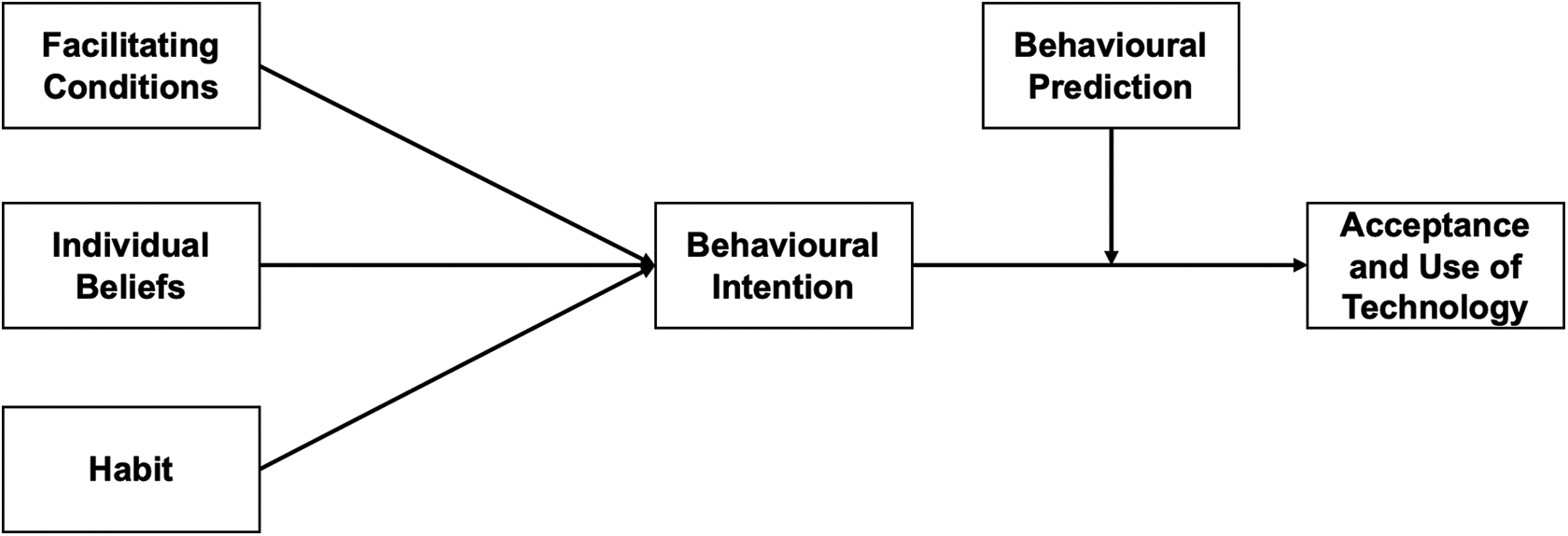
The Theoretical Framework.
However, the UTAUT theoretical model has its limitations. Dwivedi et al. (2019) attempted to further refine the model by re-examining it and adding the variable ‘attitude’. Specifically, they noted that the model may not be applicable in all settings and may omit variables that are critical to explaining technology acceptance and use, such as individual characteristics. Therefore, when using the theoretical model of UTAUT in an educational setting, it is worth exploring other potential factors that may influence the model’s structure. For example, the mere acceptance and use of new technologies do not directly guarantee effective instruction, while teachers still face many different barriers when integrating technological tools. Not only do teachers need to acquire knowledge of how to implement new teaching methods, but they also need to pay attention to the integration of various aspects of the curriculum, classroom management and teaching skills (Dexter et al., 1999; Ertmer, 1999). The multifaceted nature of teachers’ required knowledge is expressed within the Technological Pedagogical Content Knowledge (TPACK) theory (Mishra & Koehler, 2006), a conceptual framework that has been studied extensively (Benson & Ward, 2013; Hofer & Grandgenett, 2012; Marino et al., 2009). It is viewed as a knowledge framework of how teachers can integrate technology effectively into the classroom. TPACK consists of three main components: Technological Knowledge (TK), Pedagogical Knowledge (PK) and Content Knowledge (CK). As these factors can be overlapped, new sections emerge: Technological Pedagogical Knowledge (TPK); Technological Content Knowledge (TCK); Pedagogical Content Knowledge (PCK); and Technological Pedagogical Content Knowledge (TPACK) (see Figure 3). These seven components represent the different approaches that teachers plan to use in the classroom to enhance teaching and learning. CK refers to the teacher’s knowledge of the subject matter and content to be taught; PK refers to the teacher’s knowledge of the instructional methods and strategies used in teaching activities; TK refers to the teacher’s knowledge required to apply the relevant technology; TPK is the teacher’s ability to use technology in teaching and learning activities in the subject; TCK is a teacher’s ability to use technological knowledge to present subject matter knowledge in a way that enables teachers and students to achieve the best possible teaching and learning outcomes; and PCK focuses on the interplay between content knowledge and pedagogical knowledge (Mishra & Koehler, 2006).

The TPACK Framework. Adapted from http://tpack.org. Copyright 2012 by tpack.org.
Despite the trend towards the increasing popularity of new technologies, many music teachers still lack the necessary skills and understanding of how to use technology to facilitate their teaching. Music teachers need both an understanding of the technology itself and the ability to solve problems when they encounter uncertainties and difficulties in using technology in their daily practice. Research on music teachers’ knowledge of TPACK can be found in previous literature (see Benson & Ward, 2013; Dorfman, 2016; Mroziak & Bowman, 2016; Bauer et al., 2003). For example, Bauer (2010, 2013) investigated the ability of American music teachers’ TPACK and provided an example of TPACK’s application in music education.
The limitations of the application of the TPACK model have been mentioned frequently in the literature. For example, Koehler et al. (2014) pointed out that the TPACK framework is too neutral about the broad aims of education, without specifying what needs to be covered and how it should be taught; Brantley-Dias and Ertmer (2013) argued that the boundaries between the components of the TPACK framework are both blurred and complex; and Swallow and Olofson (2017) suggested that more could be done to study and understand TPACK in specific contexts. Therefore, the application of TPACK in Chinese music education in the specific ‘Internet + Music’ context is still limited.
Overall, the preceding theoretical models and frameworks have been validated individually in different countries and regions. However, combining the UTAUT model with the TPACK model to explore the relationship between different variables within the theoretical framework of TIB has never taken place in the field of higher education through the lens of music in China. Current developments in Chinese Music Education represent an invaluable opportunity to explore attitudes and aptitudes of music educators towards the use of technology through the validation of this model.
Technology, Education and Music
With the advent of the Fourth Industrial Revolution, new technological tools and methods are emerging, such as ubiquitous mobile Internet, artificial intelligence (AI), the Internet of Things (IoT), robotics, self-driving cars, 3D printing, nanotechnology and quantum computing (Schwab, 2017). Similarly, the concept of ‘Open Innovation’ proposed by Chesbrough (2003) and extended by the European Commission (2016) as ‘Open Innovation 2.0’, implies that a new era of more open and collaborative innovation has arrived. Emerging technologies are allowing a deep integration of different regions of the world, a continuing evolution of the global technological landscape driven by Open Innovation 2.0 and the fourth wave of the Industrial Revolution. As Chesbrough (2017) said: ‘the future of open innovation is more extensive, more collaborative, and more engaged with a wider variety of participants’ (p. 38). Curley (2016) mentioned that Open Innovation 2.0 blurs ‘the lines between universities, industry, governments, and communities’ (p. 314). Therefore, emerging technology holds enormous potential in the field of education as well. Some countries around the world have had research centres dedicated to using technology to improve the effectiveness of teaching and learning; for example, a Computers in Teaching Initiative (CTI) 1 centre was established in the UK in 1989, which covered many different subject domains from the sciences to arts and other professions. Notably, more and more individuals or organisations (such as the International Society for Music Education (ISME) or National Association for Music Education (NAfME)) are beginning to call for different actions to make better use of new technologies to promote equity, health and well-being goals in education.
Technological Innovation and ‘Internet +’
In China, the potential demand for the use of various technologies in different industries continues to grow in light of the ‘Internet Plus (+)’ action plan, which commenced in 2015 (Kang, 2015). This policy was designed to encourage the rapid growth of technology-based businesses on the one hand, and to promote continuous innovation in various industries on the other (Jianqiu & Mengke, 2015; Wang et al., 2016; Xiong et al., 2016). This has been described as the Internet plus of everything, which contains a variety of technology applications such as mobile Internet, cloud computing, big data and the IoT. Therefore, in response to the general trend of deep integration of technology and education, education in China has been moving in the direction of reform and innovation and is constantly striving to improve the quality of education for all. Since the 21st century, with the proliferation of higher education institutions (HEIs) and expansion of enrolment, China has seen the coexistence of various forms of HEIs, such as regular HEIs, independent institutions, higher vocational colleges, adult HEIs and private universities (Zhu & Lou, 2011). However, owing to China’s vast territory and uneven economic development, the distribution of educational resources appears to be uneven. 2 In response to this phenomenon, China is also exploring new models and paths to achieve progress in both educational technology innovation and balanced educational development.
Since 2015, an extensive literature has been developed in the field of education to put ‘Internet +’ policy into practice, exploring how different new technologies can be better applied to various aspects of higher education in China, especially those written in Chinese (e.g., Chen et al., 2016; Li et al., 2017; Ning, 2015; Y. Zhang, 2016). 3 In terms of English literature, for example, Zhang and Peng (2017) discussed the phenomenon of combining ‘Internet +’ with the development of college physical education in China. They collected relevant literature, conducted interviews and logic analysis to demonstrate that the approach of ‘Internet +’ is a way to promote educational reform and development by using internet technology as a carrier. This might help students to learn and communicate before and after classes, form college teaching alliances and facilitate the construction of high-quality courses. In addition, the use of open online resources can meet the needs of different students, improve the networked management and administrative efficiency of gymnasiums, and create a complete internet platform. They provided a reference for decision making in the development of college physical education. Xie and Xu (2018) proposed that massive open online course (MOOC) teaching is a product of internet information technology in the context of ‘Internet + Education’. The MOOC mixed teaching method in Chinese HEIs has three basic requirements: online teaching combined with local teaching; teacher-led and student-centred; and independent learning combined with collaborative learning. They used teaching practices and subsequent questionnaires to confirm the usefulness of this teaching model for faster feedback and greater interactivity, as well as the application of ‘Internet +’ technologies in China. Although the technological availability of ‘Internet +’ has increasingly attracted the attention of Chinese educational researchers, there is little empirical research has been conducted on how to implement ‘Internet +’ technologies for teaching in the field of tertiary music education in China. Undeniably, music education is no exception, and the use of technologies in this field opens up a wide variety of opportunities. An extensive field of literature is developing in Western contexts, focusing on putting different technologies into practice and exploring various aspects of technology in music education.
The Necessity of Using Music Technology
Technology is becoming increasingly indispensable in everyday life and education, and traditional teaching is facing the challenge of transformation and upgrading (Hunt, 2011; Peña-López, 2016). In current music education, there is an urgent need to strengthen the application and theoretical study of music technology to facilitate the development and reform of the classroom (Branscome, 2012; Leong, 2007), and ultimately to realise the digitisation and modernisation of education (Tømte et al., 2019). Increasingly, music teachers will choose to rely on technology for their teaching tasks by promoting their own digital continuing professional development. One of the more common of these applications is Information and Communication Technology (ICT), a topic that many music researchers have been keen to investigate. For example, Savage (2010) surveyed the resources available for ICT in secondary school music classrooms in the north west of England, alongside the timing and frequency of usage at different key stages, opportunities for music teachers to receive training in music technology and opportunities for continuing professional development; Wise et al. (2011) investigated the perceptions and use of digital technology by secondary school music teachers in New Zealand, demonstrating the transformative changes in teachers’ practice and students’ learning as a result of the use of digital technology; and Hernández-Bravo et al. (2016) investigated the impact of an ICT-based personalised music education programme on the musical abilities of Spanish primary school students. However, as time and technology have evolved, the technological tools included in ICT have now become much richer and more advanced. For music teachers, using technology within their music education practice involves not only gaining mastery of technological tools such as ICT, but also developing more general technological literacy (Dorfman, 2008; Ho, 2004; Webster, 2007). Putting this in the context of Chinese music teachers, they may need to learn and master more technological tools in the context of ‘Internet +’. As the importance of technology in the music classroom has increased, different voices have begun to emerge. Some have pondered the necessity of choosing the ‘essential conditions’ of technology-based learning to facilitate music education (Gilbert, 2016); and Crawford (2017) described in an online music education project in Australia, noting that today’s teaching and learning environment has changed and there is a need to reconsider the rationale for the presence of technology in 21st-century music education. By presenting examples of blended learning in formal music education, the author demonstrated that the technology facilitated collaborative and holistic music education, maximised its own effectiveness, and created opportunities to enhance quality music education experiences, leading to positive learning and teaching outcomes. Therefore, there is a demand for technology in Chinese music education, especially considering the uneven development of educational resources in the country.
The Benefits of Using Music Technology
Recent literature points to the pedagogical potential of combining technology and music education. In Music, Technology, and Education: Critical Perspectives, edited by King and Himonides (2016), many scholars have shared their perspectives on three major areas of music production, game technology and musical creation and their experience and understanding, and also provided valuable insights on how to effectively use technology in music education. As stated in the definition of music technology, one of its characteristics is the ability to integrate and fuse musical and technological knowledge and skills for educational purposes (NASM, 2021). Therefore, regardless of how digital and emerging technologies will change, this study considers whether their ultimate purpose is as a medium for music or music education. It appears that other studies have explored the benefits of using music technology from the perspective of using different technologies. Kim (2013), for example, found that using music technology-mediated methods of teaching enhanced Korean students’ potential for self-motivated participation and musical perception in music lessons, providing an effective pedagogical approach to music education that is in line with the technological development trends of modern society. Rowe et al. (2015) highlighted the use of music technology to improve pianists’ musical improvisation skills. Furthermore, specific recommendations and suggestions for the use of technology are also provided. Nijs (2018) used a system called the Music Paint Machine to aid instrumental music teaching, which, combined with the Dalcroze approach, suggests a viable way of using technology to create interconnections between traditional teaching methods and innovative tools. King et al. (2019) reaffirmed the feasibility of the technological approach to teaching instrumental music lessons in remote rural areas of the UK, and found few differences in teachers’ and pupils’ behaviour between face-to-face and digitally delivered instruction. Therefore, these examples of currently available music technology resources, as well as showing their benefits in music education, provide ideas for conducting music technology research in China.
Teachers’ Attitudes and Aptitudes in Music Technology, and Education
The use and implementation of music technology depends to a large extent on music teachers’ attitudes to and adoption of new technologies. Other studies have investigated the current state of music technology use among music teachers. Buonviri and Paney (2020) examined the current state of aural skills instruction in high schools in the United States, where teachers primarily use digital technologies such as websites, software programs, and mobile apps, both in and out of the classroom, both to meet the needs of their students and to consider instructional practices and music teacher training. On this point, it supports that music technology in both formal and informal settings can create opportunities to enhance music teaching and learning, and even the professional development of music teachers (Biasutti et al., 2019). Calderón-Garrido et al. (2020) examined the technological ability of music teachers by surveying music educators offering primary teacher training in Spanish HEIs, summarising their use of digital technology and pointing out some deficiencies in the current digital competence in the music educators’ community. In addition, the effectiveness of the music classrooms depends heavily on the individual attitudes and abilities of music teachers (Klassen & Tze, 2014; Salvador & Corbett, 2016), as well as their technological literacy (Dorfman, 2017). Earlier literature has demonstrated that music teachers’ attitudes towards technology and how to use it potentially influences the effectiveness of teaching and learning (Ghavifekr & Rosdy, 2015; McDermott & Murray, 2000; Nielsen, 2011). Attention has also been given to music teachers’ own technological competence (Bauer et al., 2003) through various theoretical models of the use of information technology or learners’ attitudes towards technology. However, there is relatively limited research in the field of music education that focuses on music teachers’ acceptance of technology and their behavioural intentions to use it, especially when considered from the perspective of China.
Method
The UTAUT and TPACK models have been validated and evaluated in a range of different fields and branches since their development. Through a review of the relevant literature, Venkatesh et al. (2016) confirmed that most studies on UTAUT have primarily used quantitative methods, as the UTAUT model may be better suited to the assessment and analysis of quantitative data. Quantitative methods have also often been used to measure teachers’ technological knowledge in the TPACK model. While it was also common to use qualitative or mixed research methods in studies of these two theoretical models, this pilot study was designed to provide sufficient evidence for a further main study so that researchers can examine the study protocol in the light of preliminary findings to determine the content validity of the instrument, as well as refine the study or alternatives (Creswell, 2014); in addition, this took place to test whether the instruction, wording and concepts can be understood in this initial survey (Williamon et al., 2021). Therefore, a quantitative approach was employed in this study, using an online survey to collect data. The advantage of using this method in this study is that it allows the researcher to capture demographic trends through a sample of the study population, validating the researcher’s assumptions and theories with reliable data (Creswell, 2014).
‘Internet + Music’ Technology
The target population of this study is music teachers who are able to use any technological tools for teaching in the context of ‘Internet +’ in Chinese HEIs. The ‘Internet +’ in China supports the use of the internet as a channel for disseminating information, taking advantage of digital resources and applying various technological tools. Therefore, contextualising ‘Internet +’ for music education settings in China, ‘Internet + Music’ should be any technology that enables music teachers to use it, and any technological approaches that allow teachers and students to interact or contribute to the teaching and learning. Specifically, it can be divided into three main categories (see Figure 4): any technological devices such as computers, mobile devices and musical equipment; any technological resources such as digital archives, media/multimedia applications, online materials/services/platforms, software applications and emerging technologies; and any technological environments such as ICT systems, iOS or Android systems, physical or virtual networks and the IoT (A. Brown, 2014; Redecker, 2017; Bauer, 2013). 4
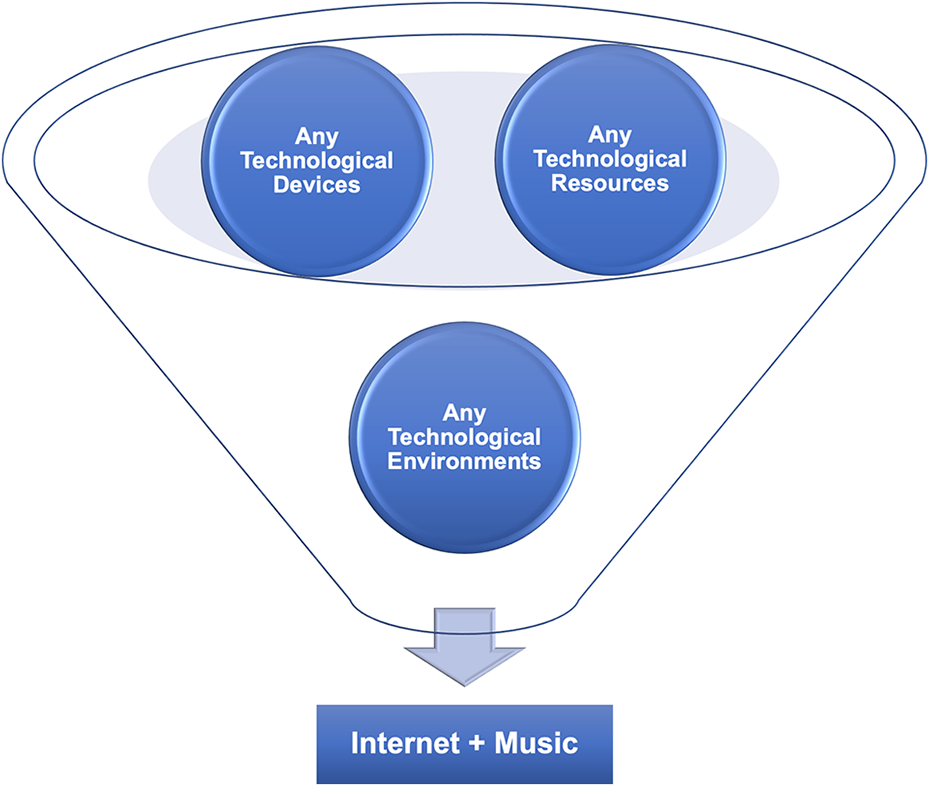
‘Internet + Music’ by Category.
Measurement
All survey items in the questionnaire were adapted and translated from previous research (see Appendix for details). The questionnaire comprised 54 items, of which 39 scale items were intended to relate directly to different variables of the UTAUT and the TPACK models. The scales of the UTAUT construct (i.e., PE, EE, SI, HM, BI and Ha) were adapted from Venkatesh et al. (2003, 2012, 2016). The scales for the TPACK construct (i.e., Technological Knowledge, Technological Content Knowledge, Technological Pedagogical Knowledge, and Technological Pedagogical and Content Knowledge) were adapted from Mishra and Koehler (2006), Schmidt et al. (2009) and Bauer (2013). Participants responded on a 5-point Likert scale, ranging from 1 (strongly disagree) to 5 (strongly agree). The other 15 items were designed to collect the situation of usage of ‘Internet + Music’ technologies and demographic information from participants. All data obtained were analysed in IBM SPSS Statistics (Version 26), and JASP (Version 0.11.1).
Several drafts of the questionnaire were inputted by each of the authors before the final version was finalised. The initial version of the English questionnaire was drafted after reading and analysing the relevant literature, and the content was reviewed and verified by the other peers and supervisors, respectively. As the survey needed to be conducted in Chinese in mainland China, the revised English questionnaire also needed to be translated into Chinese and rechecked by two bilinguals 5 to ensure translation equivalence (Prince & Mombour, 1967).
Participants and Data Collection Procedure
This study gained ethical approval as part of a doctoral study via the university ethics committees in both the UK and China. Music teachers working in Chinese HEIs were invited to complete the questionnaire. All 386 music teachers were recruited to complete the questionnaire in Chinese via the website link posted on WeChat (one of China’s most popular social media platforms). 6 A total of 71 responses were collected. According to the data from the website of WenJuanWang, 7 the total number of page views was 173, and the total completion rate was 41% (the total completion rate is equal to the total number of answers divided by the total page views, regardless of whether the data is valid or deleted). Upon examining the findings of the pilot study, it was ascertained that the questionnaire took an average of six minutes to complete. Participants were from more than 18 provinces/municipalities in China, 8 the proportion of sources covered more than half of mainland China. Finally, the detection of invalid responses was launched by data verification, repetition rate and missing values. There were 61 confirmed valid responses to the questionnaire. Typically, the sample size for a pilot study could range from 10 to 100 (Isaac & Michael, 1995; Van Belle, 2011). Given the vast territory of China, the final number of valid responses at this stage was considered acceptable.
Data collection took around three weeks (22 days) and was then analysed using Structural Equation Modelling (SEM) to answer the research questions. This is because SEM can handle more complex multivariate data analysis and achieves a high level of statistical power for small sample sizes using partial least squares SEM (J. F. Hair et al., 2016). During the data analysis, the measurement models were first examined and validated before testing the final structural model.
Research Questions, Research Model and Hypotheses
Following the developing trend of the application of various emerging technologies in education, it is possible to use ‘Internet +’ technologies to better facilitate the domain of music education in Chinese HEIs. The last two decades have also seen rapid development in the tools of global music technology, which also includes ongoing breakthroughs in AI and its applications on composition and performance (Baird et al., 1993; Miranda & Williams, 2015). These emerging technological applications will inevitably attract wider attention in the field of higher music education. Teachers often have access to and are in a position to use technology. This study focuses on the use of relevant technologies of ‘Internet + Music’ available in the field of music education. It focuses specifically on music teachers in Chinese HEIs, their competences in different technological ‘Internet + Music’ resources, their perceptions of using these technologies, and the potential motivation for using technologies. The research questions for this study are as follows: Do music teachers’ Individual Beliefs about technology have an impact on their Behavioural Prediction in the UTAUT model? Does music teachers’ Technological Competence, an external factor in the UTAUT model, have an impact on their Behavioural Prediction? Does music teachers’ Technological Competence have an impact on their Individual Beliefs when combining the UTAUT and TPACK models?
To analyse the above research questions, the focus of this study was to integrate the different factors obtained from the UTAUT and TPACK models to investigate whether relevant technological competences contribute to the determinants of UTAUT, and the relationship between these different internal and external factors. The proposed model (see Figure 5) aims to understand the relationship between Individual Beliefs (IB), Technological Competence (TC) and Behavioural Prediction (BP) when Chinese music teachers use ‘Internet + Music’ technologies. IB and TC will be used as two independent variables to influence the dependent variable BP, while the relationship between TC and IB will also be explored. The following paragraphs will explain the hypotheses developed for investigating the research questions in this study.
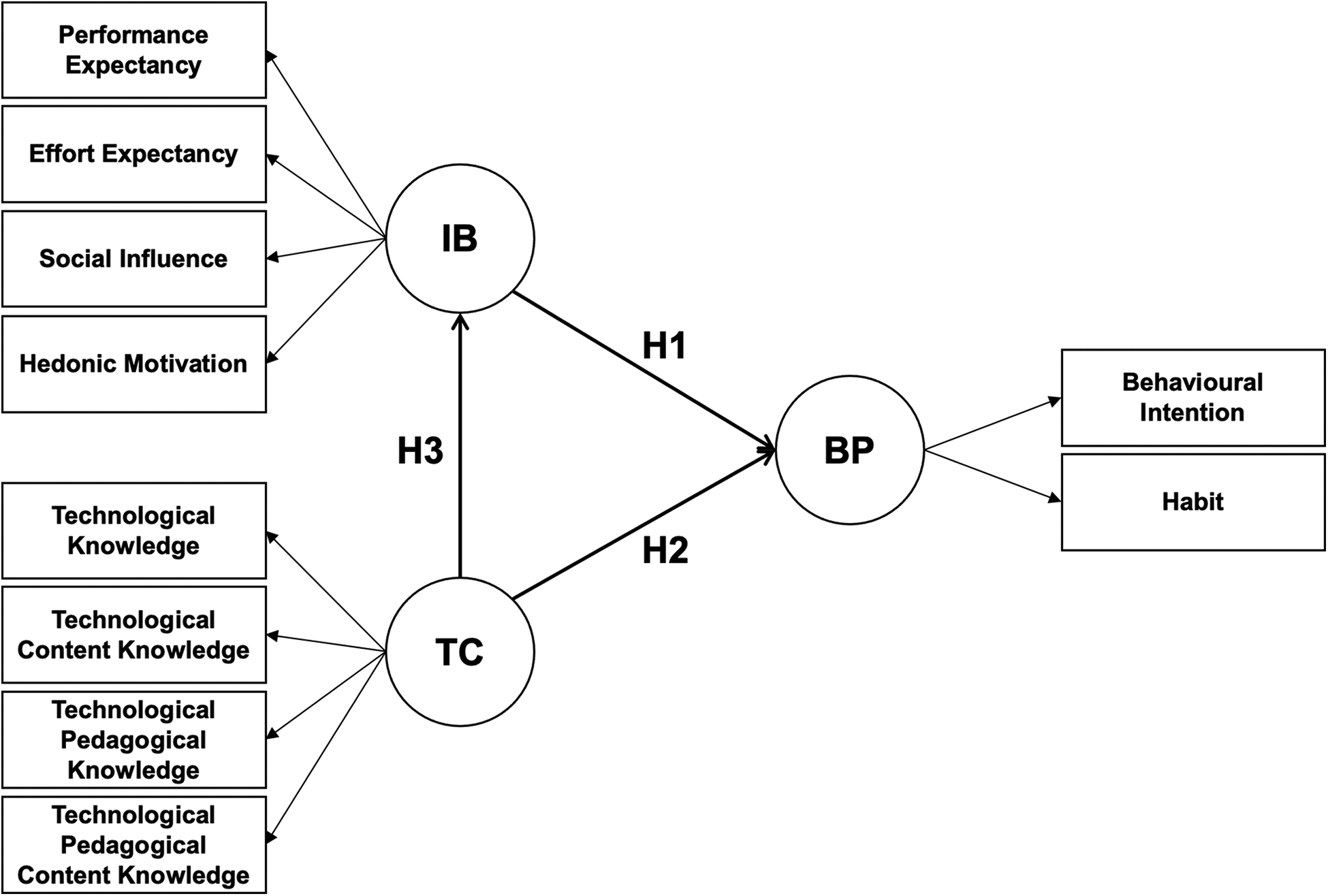
Proposed Model Adapted from UTAUT and TPACK Models. Note. IB = Individual Beliefs; TC = Technological Competence; BP = Behavioural Prediction.
It was not the intention within this pilot study to consider UTAUT in terms of measuring the individuals’ actual usage behaviour. Therefore, the variable FC was removed, as that can directly influence the individuals’ usage behaviour; and the focus was upon on the constructs measuring BP. The variable PV was also excluded, as technical equipment will be generally purchased by educational institutions rather than individuals. Therefore, the factor indicators from the UTAUT model measured in this study are IB and BP. Specifically, IB is measured by a set of beliefs that individuals’ adoption of technology: PE, EE, SI and HM (i.e., IB = PE + EE + SI + HM), and BP is measured by the indicators of BI and Ha
As a result, this study was designed to examine factors related to PE, EE, SI, HM, TK, TCK, TPK, TPCK, BI and Ha when music teachers use technologies of ‘Internet +Music’. The relationships among constructs are shown in Figure 5, and the hypotheses of this study are described as follows: IB would positively influence BP. TC would positively influence BP. TC would positively influence IB.
Results
Participant Demographics
Participants examined in the study included the following: gender, age, degree, academic titles, years of teaching and type of institutions (see Table 2).
Demographic Characteristics of Participants.

Note. N = 61.
Of the 61 total music teacher participants, the respondents were 19.7% male and 80.3% female. The majority of the participants were young teachers as 36.1% were aged between 24 and 34 years old. The results showed that most of the music teachers had a good level of education, with more than 57.4% of them having a bachelor’s or master’s degree, and most of them having the title of lecturer. Most participants had a lot of teaching experience and had been teaching for a long time. Among them, 57.4% of the music teachers were from higher vocational colleges with music degree programmes, followed by 26.2% from regular HEIs with music degree programmes.
Measurement Model
Confirmatory Factor Analysis (CFA) was used to test the outer measurement models of behavioural prediction structure (Anderson & Gerbing, 1988). The CFA of each set of indicators (IB, TC, BP) was conducted separately in the ‘lavaan’ programme (Rosseel, 2012) using the diagonally weighted least squares (WLSMV) estimator. Missing values were treated by the Full Information Maximum Likelihood (FIML). The WLSMV estimator is recommended by Brown (2015) for ordinal indicator variables (such as the Likert-type project), as it is more suitable for binary or ordered and small samples.
With regard to assessing the fit indices of CFA analysis and SEM, different researchers have given suggested cut-off points that indicate a good fit. For example, Fornell and Larcker (1981) suggested that the accepted value of factor loading should exceed 0.7. In addition, the reliability and validity of the measurement model can be assessed from the Composite Reliability (CR) and the Average Variance Extracted (AVE) values, which should be greater than 0.6 for CR and 0.5 for AVE (Bagozzi & Yi, 1988; Kline, 2015). The square root of each construct’s AVE should be greater than inter-construct correlation to support having discriminant validity (Fornell & Larcker, 1981). In addition, several goodness-of-fit indices were used to assess the model fit, such as Standardized Root Mean Square Residual (SRMR) values should be less than or equal to 0.08 (Hu & Bentler, 1998); comparative fit index (CFI) values above 0.9 (Bentler, 1990); and Root Mean Square of Error of Approximation (RMSEA) values of 0.08 or less (Browne & Cudeck, 1993).
The results of the different stages of CFA analysis are presented in Table 3. In terms of factor loadings, it was decided to keep both SI3 and SI4 indicators together, considering that removing them would result in a remaining value less than 0.65. According to the principle ‘round off to the nearest number’, both of them are approximately 0.7. Thereby, all factor loadings reached an acceptable threshold. Meanwhile, all CR and AVE values exceeded the recommended thresholds, confirming the reliability and convergent validity of the model. It should be noted that in the CFA analysis of TC and BP, some items were discarded because the factor loadings were less than 0.7, or the estimated factor correlation were too high (> 0.85) and exceeded the recommended values (J. Hair et al., 2010). Respectively, six items each remained in the final model to measure TC and BP. Therefore, discriminant validity was assessed for the TA measurement model only (see Table 4). By comparing the square root of AVEs and correlations between constructs, all constructs had greater variance with their indicators than the other constructs. Therefore, discriminant validity existed in the TA model.
Validity and Reliability of the Measurement Model.

Note. TPK = Technological Pedagogical Knowledge; TPCK = Technological Pedagogical Content Knowledge; Ha = Habit; BI = Behavioural Intention; CR = Composite Reliability; AVE = Average Variance Extracted.
The Square Root of the Average Variance Extracted (AVE) and Correlations Matrix.
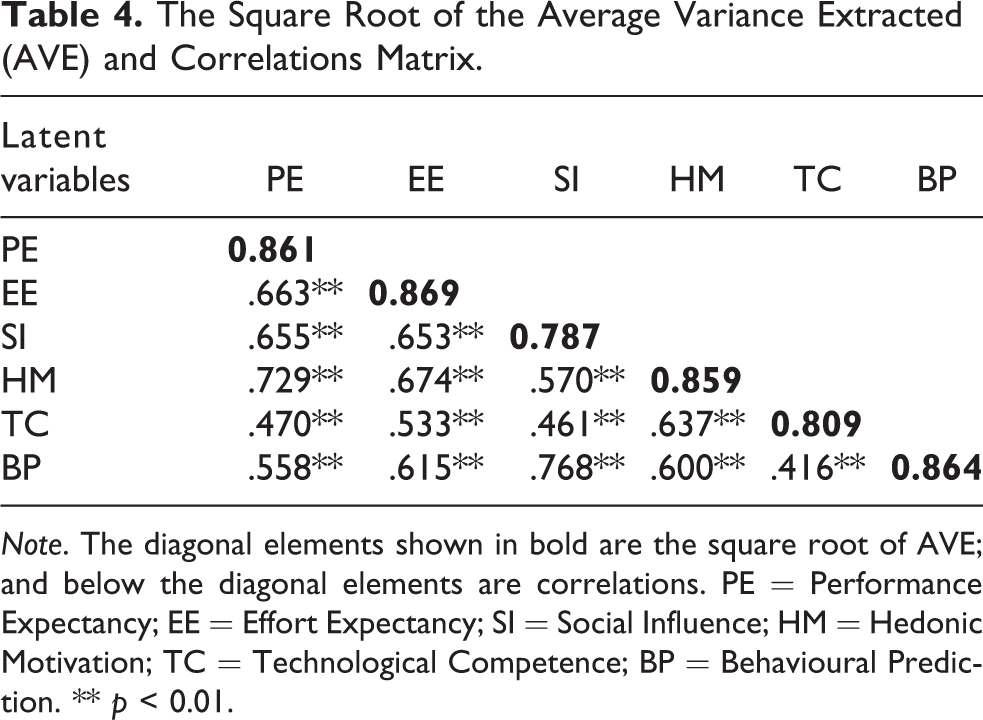
Note. The diagonal elements shown in bold are the square root of AVE; and below the diagonal elements are correlations. PE = Performance Expectancy; EE = Effort Expectancy; SI = Social Influence; HM = Hedonic Motivation; TC = Technological Competence; BP = Behavioural Prediction. ** p < 0.01.
Table 5 presents the goodness-of-fit indices for each of the four models. The results show that the fit indices of all the measured models in the table meet the recommended thresholds, thus indicating that the model fits the data.
Fit Indices and Results of Confirmatory Factor Analysis for Each Model.
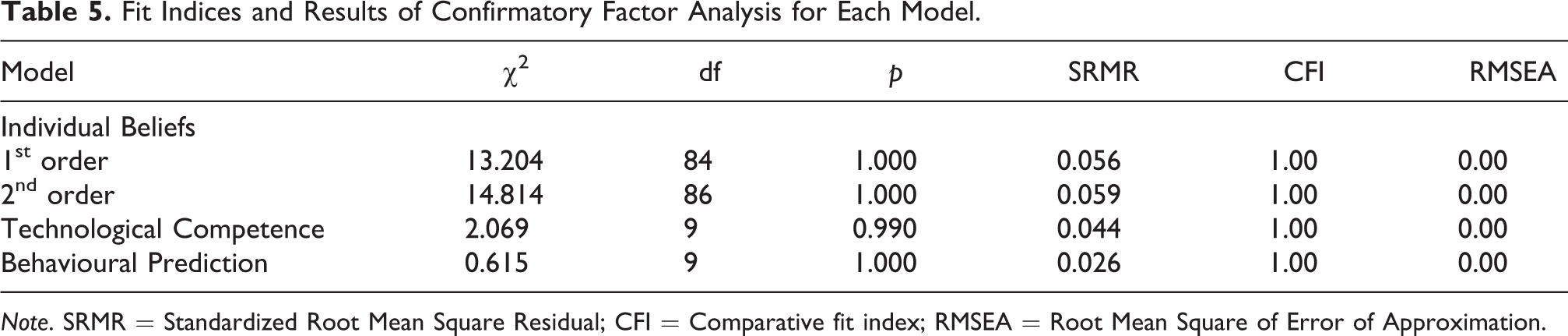
Note. SRMR = Standardized Root Mean Square Residual; CFI = Comparative fit index; RMSEA = Root Mean Square of Error of Approximation.
Overall Structural Model
Combined with each analysis of the preceding CFAs, the full structural model is discussed in the following. The fit index indicated this model does fit the data well (χ2 = 91.452; df = 316; p = 1; SRMR = 0.074; CFI = 1.000; RMSEA = 0.000). In addition to the fit statistics, the results of parameter estimates and hypotheses testing are also displayed in Table 6. In the JASP analysis, the result shows that two of three possible relationships were statistically significant (p < 0.001) and all statistically significant relationships were positive. That is, hypotheses 1 and 3 were supported, suggesting that music teachers’ behavioural predictions of using technology would be positively influenced by their individual beliefs, and these beliefs would be positively influenced by their technological competence. Unexpectedly, hypothesis 2 was not supported, showing that there is no direct impact of music teachers’ technological competence on their behavioural predictions. In addition, the final path diagram of an overall measurement model is displayed in Figure 6. The only negative value appeared between technological competence and behavioural prediction, further confirming the result that hypothesis 2 was not supported in this pilot study.
Result of Hypotheses Tests.

Note. SE = Standard Error; Std = Standard Estimation; IB = Individual Beliefs; TC = Technological Competence; BP = Behavioural Prediction. Determination Coefficients: BP = 54.3%; IB = 45.7%.
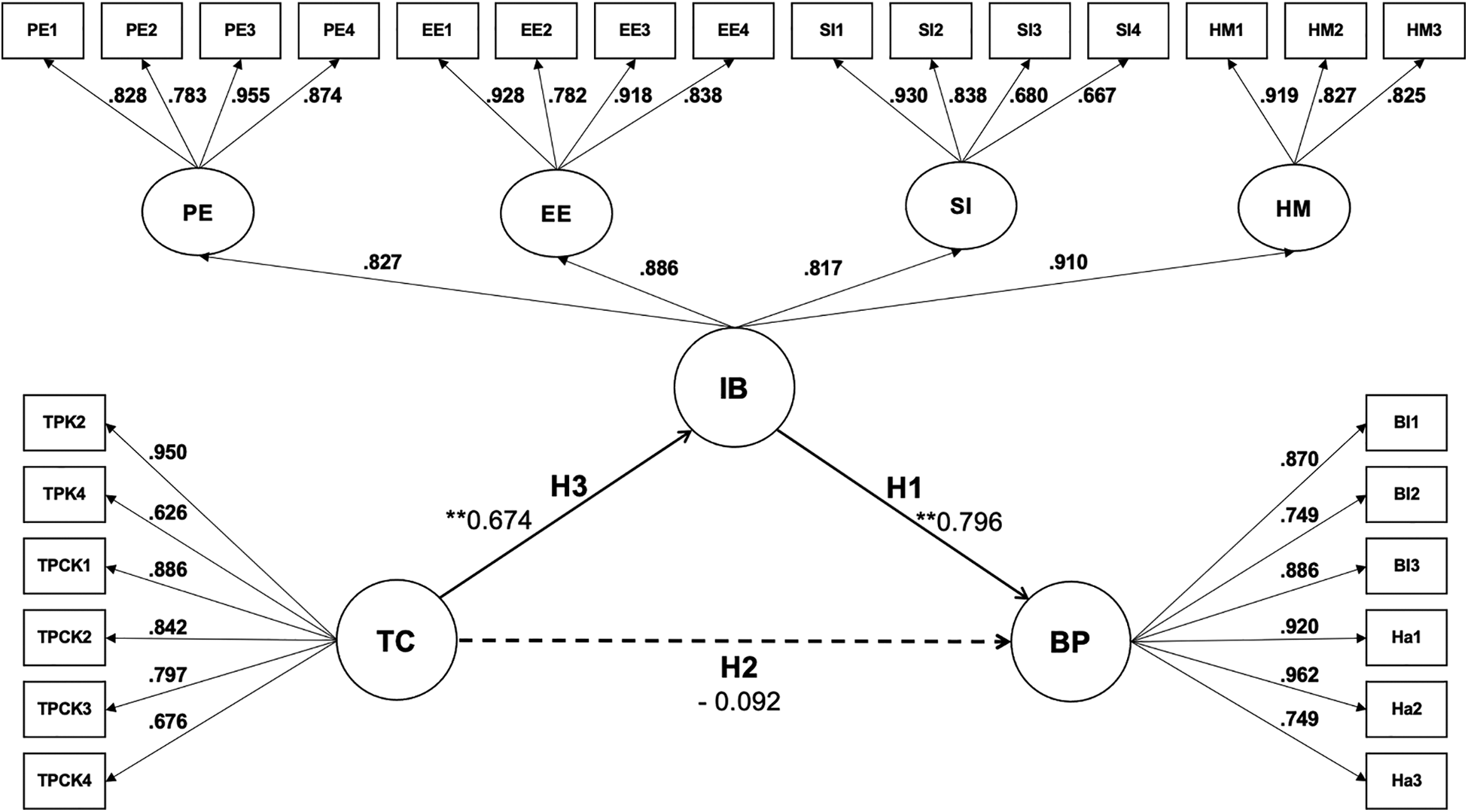
The Final Path Diagram of the Overall Measurement Model.
Discussion
This study provides an insight into music teachers’ behavioural intentions towards the use of ‘Internet + Music’ technologies in Chinese HEIs when applying the combined UTAUT and TPACK models. The theoretical model was developed and tested using SEM. The findings support the applicability of combining the two models in the domain of music education to help understand the factors that influence the adoption of technology by music teachers in Chinese HEIs. In addition, this study also suggests the relationship between music teachers’ technological competence and individual beliefs. As mentioned previously, two hypotheses in this study are supported, and one hypothesis is not supported. Specifically, the results indicate that Chinese music teachers’ technological competence could positively influence their individual beliefs and individual beliefs could positively influence their behavioural prediction. Interestingly, although technological competence seemed to have a direct impact on behavioural prediction in the bivariate SEM regression analysis, the final SEM mediation analysis indicated that there was no direct significant effect of technological competence on behavioural prediction. Instead, individual beliefs acted as a full mediator to explain the association between technological competence and behavioural prediction.
The Individual Beliefs and Behavioural Prediction
As suggested by previous research (Venkatesh et al., 2012), the theoretical model presented in this study confirms that IB in UTAUT have an impact on facilitating teachers’ BP, which might further drive their acceptance and use of technology. More specifically, the four internal factors of UTAUT in this study – PE, EE, SI and HM – might all work together to influence music teachers’ IB, and such beliefs might have an impact on predicting their technology acceptance and technology use behaviour. Although the reasons that shape music teachers’ behavioural intention may be complex and multifaceted, there were some key factors identified in this study when the context of Chinese HEIs was considered. This also suggested that if Chinese music teachers’ technology use of technology and behaviours are to be improved, efforts could be made in several ways based on four internal factors: increasing the benefits of technology for teaching performance; improving the ease of use of technology; enhancing favourable social influence; and promoting teachers’ enjoyment from technology tools. To achieve these goals, some future possibilities can also be taken: working with developers to prepare products that better meet the needs of the music discipline; emphasising technologies that are more accessible to music teachers; organising exchanges between teachers to foster a climate of technology use in HEIs; and increasing the integration of entertaining or game technologies into music teaching. This is considered an answer to the first research question in this study, which is whether music teachers’ IB will influence their BP to use technology.
The Technological Competence and Behavioural Prediction
Some studies not in the field of music education have indicated that key elements of TPACK can be combined with the UTAUT model to effectively explain teachers’ behaviour in adopting technologies (Mayer & Girwidz, 2019; Tosuntaş et al., 2021), but the results of the present study were not identical. The statistically non-significant results between music teachers’ TC and the BP that emerged in this study answers the second research question. That is, when focusing on the relationship between teachers’ technology-related factors in the TPACK and behavioural prediction in the UTAUT, it was not found that teachers’ TC could directly influence their BP of technology acceptance and use. This could be explained in light of the cultural context of music education in China as follows: through the review of the participating samples, it is found that 57.4% of the music teachers worked in higher vocational colleges (with music programmes). Given that vocational education in most of mainland China is still primarily work-oriented (Wu & Ye, 2018), most students in vocational colleges spend two years in school and their final year will be an internship with an employer. As a result, the general direction of music education in higher vocational institutions may be more focused on the acquisition of practical skills by students, such as their singing ability and piano performance. As a consequence, the teaching tasks of music teachers are more biased towards traditional practical skills, which makes it impossible to accurately predict whether music teachers will use technology based on their personal technological competence alone; no matter how good a music teacher’s personal technological competence is, they may not use technology in the classroom. In addition, in terms of participants’ teaching experience, only 3.3% of the teachers had less than three years of teaching experience. This means that other experienced teachers may have developed their fixed teaching methods and habits over a long time. Therefore, if these teachers are already accustomed to teaching without technology and are unable to change their habits, their technological competence has little to do with their behavioural predispositions to use technology. In other words, their technological competence alone does not facilitate their willingness to try to change their traditional teaching habits. This suggests that examining the role of teachers’ TC as a driver of technological behaviour may also need to be considered in a broader context and a holistic manner.
The Individual Beliefs, Technological Competence and Behavioural Prediction
As Venkatesh et al. (2016) stated, UTAUT-based research has flourished, either applied alongside other theories or extended to various technologies in different contexts. The findings of this study also supported the feasibility of adding external factors of the individual characteristics to the UTAUT model. A more comprehensive answer to the third research question and a complement to the second research question can be obtained from the results of the hypotheses set out in this paper. This study has highlighted that Chinese music teachers’ TC potentially has a significant impact on IB; and in addition their IB have a significant impact on their BP. In the context of China’s ‘Internet +’ policy, it is argued that the more technologically competent a music teacher is, the more likely the technology will be used within their teaching, which is facilitated by a combination of different factors (i.e., usefulness, ease of use, social impact and hedonism); the stronger their personal perceptions of technology, the more likely they will find the use of technology will improve the effectiveness of music instruction; and the more likely they are to use some technology to support their teaching, the higher the accuracy of predicting their technological behaviour. Therefore, IB play a full mediating role in predicting the TC and technological behaviour of music teachers in the music classroom. Although music teachers’ BP of technology acceptance and use cannot be directly influenced by their TC, their technology skills may indirectly influence whether they use technology tools through their IB.
In addition, these findings could be valuable for policymakers of Chinese HEIs to enable them to understand more fully various aspects of the characteristics of ‘Internet + Music’ and potentially create strategies to promote the development of music education with technology. Similar to the recommendations mentioned in the National Plan for Music Education in the UK (Henley, 2011), technology can not only help students access to music education, but also provide continuing professional development for teachers, facilitating the implementation of the music curriculum and pedagogical innovations. The application of technology will also potentially create more possibilities in the classrooms of music teachers in higher education, facilitating the co-transformation of students and teachers and the rise of innovative classrooms (Finney et al., 2007; McPherson & Welch, 2018; Ruthmann & Mantie, 2017). From the perspective of China, the Education Informatisation 2.0 Action Plan released by the Chinese Ministry of Education in 2018 suggested that integrating and connecting digital resources, platforms, applications and services will greatly reduce the difficulty of innovation in teaching and learning activities and help cultivate diverse and innovative talents (Education, 2018). It also proposed several implementation programmes to help improve the information literacy of teachers. Examples include universal access to and sharing of digital resources, bridging the digital divide, promoting equity in education, and innovating and developing smart education. The report highlighted that emerging technologies such as AI should be used to facilitate changes in teachers’ attitudes, reshape their roles and ensure effective training programmes.
Therefore, a better understanding of music teachers’ behavioural intention and attitudes towards the use of technology becomes increasingly important, as it will also support the overall development of teachers. Music teachers of different skill levels can manage their professional development and improve their daily teaching by learning different types of technology. Eventually, the approach could inform the integration of the technology available of ‘Internet + Music’ by music teachers, then finally utilise these affordances.
Limitations and Conclusions
Limitations of this study can be considered in different ways. First, the study is a pilot and will evolve and the variables may be modified and explored in the main empirical study. Although the initial UTAUT theory suggested that the effects between the independent variables and use behaviours would also be influenced by FC, the actual use of different types of ‘Internet + Music’ by Chinese music teachers and the extent to which their use technology was not explored in this pilot phase. Therefore, the FC factor at this stage was not examined in the presented theoretical model. More specifically, if Chinese HEIs could provide easier access to funding, more training opportunities and hardware/software support for music teachers, it has a high potential impact on music teachers’ integration and use of ‘Internet + Music’ tools. In addition, gender, age, experience and voluntariness are four moderators proposed by Venkatesh et al. (2003) in their original theory that has not yet been tested in this study, or analysed in group comparisons. This is simply because the variation between individuals in the samples is not significant enough and the sample size could be increased. These need to be further evaluated in a subsequent main study, and the relationship between these moderating variables and music teachers’ actual technological behaviour will be more fully understood.
Second, there is an opportunity to expand the data collection within the catchment of music teachers in Chinese HEIs. The data from this current study suggests that both in terms of geographical area and a more diversity of teacher groups, a broader sample would be welcome in further empirical evaluation. In addition, given the large population and geographical area of China, there might have some bias in the representativeness and homogeneity of the sample in this pilot phase. This bias may in turn lead to an overestimation of the determinants and their relationships in the presented model. Therefore, the impact of this possible bias could be further prevented in future studies by limiting it to a certain region in China. However, as far as the results of the current analysis are concerned, the results of this study were statistically significant.
Third, the current data is limited to the collection and analysis of quantitative data, and there is an opportunity to create a mixed-methods study to further understanding the position of music educators in Chinese HEIs. Qualitative data such as that gained from semi-structured interviews could be combined with these findings to provide an opportunity to triangulate datasets to enhance the outcomes of the study.
In summary, the main aim of this study was in validating an extended model to understand music teachers’ technology acceptance and behavioural intentions towards the use of ‘Internet + Music’ technologies in Chinese HEIs. The analysis of SEM resulted in an overall fit of the model above the suggested acceptable level of fit, thus supporting the application of the model combining UTAUT and TPACK theories in this pilot study. These findings not only indicated that music teachers’ IB may directly influence their BP of using technology (IB → BP), but also revealed the effect of music teachers’ TC on their IB (TC → IB), and the indirect effect of TC on BP through IB (TC → IB → BP), although no direct effect of TC on BP (TC → BP).
Therefore, researchers and practitioners should consider the importance of music teachers’ technological competence and their set of perceived beliefs about technology in implementing, evaluating and improving music technology education contexts, especially in the global context where technology is continuously updated and developed, and to influence music teachers’ acceptance of technology. The findings of this study may have theoretical implications for research in music technology, and education and inform the use of different technological tools of ‘Internet + Music’ in China. Furthermore, by validating the application of this integrated model in music education research, this study provides ideas on how to promote better adoption of technology in music education. In addition, this study suggests that the results obtained from integrated models may vary by domain and group in different cultural contexts. This study attempts to fill the gap in the factors influencing the adoption of technology in music education in non-Western cultures, and also provides a starting point for understanding the technological beliefs and behavioural intentions of Chinese music teachers.
Footnotes
Survey Items.

| The term ‘Internet + Music’ in this survey refers to any form of technology combined with music education. For example, multimedia or computer-assisted teaching, hardware or software-assisted teaching, information and communication technology assisted teaching, artificial intelligence and assisted teaching. For music teachers in higher education, this questionnaire might include an understanding and knowledge of various technological tools. | ||
|---|---|---|
| Constructs | Codes | Items |
|
|
PE1 | I would find the ‘Internet + Music’ useful in higher music education. |
| PE2 | Using the ‘Internet + Music’ in my job would enable me to accomplish tasks more quickly. | |
| PE3 | The use of the ‘Internet + Music’ can increase my productivity. | |
| PE4 | If I use the ‘Internet + Music’, I will increase my chances of becoming more competent in teaching. | |
|
|
EE1 | My interaction with the ‘Internet + Music’ is clear and understandable. |
| EE2 | It would be easy for me to become skilful at using the ‘Internet + Music’ in higher music education. | |
| EE3 | I believe that learning to utilise the ‘Internet + Music’ is easy to use. | |
| EE4 | I would find using the ‘Internet + Music’ for teaching is easy for me. | |
|
|
SI1 | People who influence my behaviour think that I should use the ‘Internet + Music’ in higher music education. |
| SI2 | People who are important to me think that I should use the ‘Internet + Music’ in higher music education. | |
| SI3 | I use the ‘Internet + Music’ because of the proportion of co-workers who use it. | |
| SI4 | In general, the administration of my organisation has been supportive of using the ‘Internet + Music’. | |
|
|
FC1 | I have the resources necessary to use the ‘Internet + Music’. |
| FC2 | I have the knowledge necessary to use the ‘Internet + Music’. | |
| FC3 | The ‘Internet + Music’ is compatible with other applications (teaching methods) I use. | |
| FC4 | A specific person (or group) would be available for assistance with difficulties when using the ‘Internet + Music’. | |
|
|
HM1 | Using the ‘Internet + Music’ is fun. |
| HM2 | Using the ‘Internet + Music’ is enjoyable. | |
| HM3 | Using the ‘Internet + Music’ is very entertaining. | |
|
|
Ha1 | The use of the ‘Internet + Music’ has become a habit for me. |
| Ha2 | I am addicted to using the ‘Internet + Music’. | |
| Ha3 | I must use the ‘Internet + Music’. | |
|
|
BI1 | I intend to continue using the ‘Internet + Music’ in the future. |
| BI2 | I predict I would use the ‘Internet + Music’ in the next/n month(s). | |
| BI3 | I would like to further recommend to other teachers to use the ‘Internet + Music’. | |
|
|
TK1 | I know how to solve my own technical problems. |
| TK2 | I keep up with important new technologies. | |
| TK3 | I frequently play around with technology. | |
| TK4 | I know about a lot of different technologies. | |
| TK5 | I have had sufficient opportunities to work with different technologies. | |
|
|
TCK1 | I know about technologies that I can use for music education (i.e., music performance, musical creativity, music listening, music theory, history, genre/styles and/or cultural contexts). |
|
|
TPK1 | I can choose technologies that enhance the teaching approaches for a lesson. |
| TPK2 | I can choose technologies that enhance students’ learning for a lesson. | |
| TPK3 | I have thought deeply about how technology could influence the teaching and learning strategies I use in my classroom. | |
| TPK4 | I can adapt the use of the technologies that I am learning about to different teaching activities. | |
|
|
TPCK1 | I can teach lessons that appropriately combine music education (i.e., music performance, musical creativity, music listening, music theory, history, genre/styles and/or cultural contexts), technologies and teaching approaches. |
| TPCK2 | I can select technologies to use in my classroom that enhance what I teach, how I teach and what students learn. | |
| TPCK3 | I can use strategies that combine content, technologies and teaching approaches that I learned about in my coursework in my classroom. | |
| TPCK4 | I can provide leadership in helping others to coordinate the use of the content, technologies and teaching approaches in my discipline. | |
Acknowledgements
We thank Dr Caroline Waddington-Jones (University of York), who was the first author’s second supervisor, for her help in designing the study. We thank Dr Elaine King for suggesting training opportunities in data analysis, Dr Hauke Egermann for organising the SEM Training Seminar at the University of York and Dr Steffen Lepa (Technische Universität Berlin) for providing course training and post-course guidance.
Author Contribution
AK and HP provided advice on researching the literature, conceiving the study and gaining ethical approval. XZ completed participant recruitment and data analysis and wrote the first draft of the manuscript. All authors reviewed and edited the manuscript and approved the final version of the manuscript.
Declaration of Conflicting Interests
The authors declared no potential conflicts of interest with respect to the research, authorship, and/or publication of this article.
Funding
The authors disclosed receipt of the following financial support for the research, authorship, and publication of this article: This work was supported by the China Scholarship Council (CSC) [grant number 201808330307].
Ethical Review Statement
The project An Exploration of the Music Teachers Behavioural Intention and Attitude Toward the Use of ‘Internet + Music’ at Post-secondary Institutions in China was approved by the FACE Ethics Committee of the University of Hull, UK, (Ref No.:1920PGR01).

Peer Review
Two anonymous reviewers.
Action Editor
Graham Welch, University College London, Institute of Education.