




Abstract
Some autistic children display an intuitive capacity to reproduce and restyle the musical stimuli that they encounter in their environments. Music also offers a safe space for the development of social competencies and, across the spectrum, musical interventions are regarded as an effective way of promoting engagement with others. Yet, there is a lack of empirically researched music programs for parents and carers of children with autism. In this study, 11 families with autistic children incorporated music making into everyday life, supported by researcher-practitioners and framed by resources outlining musical activities based on the Sounds of Intent in the Early Years framework. Assessment of video data and interviews revealed that the new resources were flexible enough to be adapted to each child and they helped parents to build confidence to engage with their children musically. It was found that children had an increased interest and engagement in music as well as in joint play, which impacted positively on their musical and social development. The interpersonal music spaces created by the parents provided opportunities for unlocking expressiveness and interactive behavior, which in turn supported verbal development, emotional regulation and social interaction. These findings have implications for arts-in-health research and highlight the potentially crucial role of parents as mentors for their child’s musical development. The study further demonstrates that specialist musical training is not a requirement to develop parent–child engagement in music making at home.
Introduction
The importance of music for children with autism has been widely acknowledged as a means of creative engagement and access to culture that promotes language, learning and social interaction (Geretsegger et al., 2014). Yet, the accessibility of music programs for parents, carers, teachers and children with autism are limited. Hence there is a need for scientific studies in this area and for the development of resources that promote the use of music more widely in day-to-day life. In the current study, families with autistic children were encouraged to incorporate interactive music making into their everyday routines, supported by researcher-practitioners and guided by a framework of activities, set out in the form of an especially designed set of cards. Based on the Sounds of Intent framework (Voyajolu & Ockelford, 2016; Welch et al., 2009), the project reported here, entitled “IMAGINE: Autism” (“Ideas for Musical Activities and Games in the Early Years: Autism”), explored (a) families’ experiences of using the new music resources to encourage their engagement in musical activities with their young child, and (b) how this engagement may support the musical and wider development of children in the early years on the autism spectrum.
Music and Autism
Autism affects over 1% of the population, impacting on the daily lives of 2.8 million people in the UK. They are commonly characterized by social and communication difficulties, repetitive behaviors, sensory sensitivities and strong interests (APA, 2013). Neurological differences are also regularly observed, which can lead to substantial motor and sensory difficulties (Donnellan et al., 2013; Nicolson & Szatmari, 2003). Many children with autism have a particular interest in their auditory worlds, and can demonstrate remarkable capacities to reproduce and restyle the musical stimuli that they encounter in their environments (Ockelford, 2008). From the use of musical social stories (Brownell, 2002; Pasiali, 2004) to developing musical strategies to encourage learning and neurodevelopment (Carnahan et al., 2009; LaGasse & Hardy, 2013; Osei, 2009; Simpson & Keen, 2010), and in creating musical dens in playgrounds to encourage peer interaction (Kern & Aldridge, 2006), music is regularly used as a tool to mediate the outside world for autistic children. Across the spectrum, music is regarded as an effective space for joint engagement and the development of social competencies (Geretsegger et al., 2014; Hernandez-Ruiz, 2020b; James et al., 2015; LaGasse, 2017; Simpson & Keen, 2011). This has been validated by a number of randomized control trials, which have indicated that music therapy can have a positive impact on a wide range of behaviors, including social interaction, joint attention, verbal development and non-verbal communication skills (Gattino et al., 2011; Kim et al., 2008; LaGasse, 2015; Thompson, 2012). As studies with neurotypical children have further shown, participatory music making can improve pro-social behaviors and interpersonal relatedness (Kirschner & Tomasello, 2010; Rabinowitch et al., 2013; Rabinowitch & Meltzoff, 2017). Wider research highlighting music’s potential to scaffold intersubjectivity, shared intentionality and meaning making further emphasize the potential of musical spaces as motivating platforms for interaction (Krueger, 2011; Trevarthen & Aitken, 2001). As families with autistic children frequently reflect, musical interaction can offer a particularly effective means of engaging their child, and many emphasize its importance as a positive outlet for expression in their children’s lives (Ockelford, 2016). Despite these widespread uses of music in improving the lives of children on the autism spectrum, much of the research has focused on specific, particularly behavioral, outcomes. This means that far less is known about the trajectories of musical development in children with autism and how music is used more widely in daily life for building resilience or regulating emotions. There have been calls, most recently by Janzen and Thaut (2018), to expand the remit of music and autism research, exploring what neurodiverse experiences and capacities for music are, and how these might be utilized to foster wider development.
Ecological Approaches in Autism and Music Research
Although the potential of music as a communicative and regulatory tool is often recognized in music therapy, it is less explored and operationalized in informal and educational contexts. Research is only beginning to acknowledge the importance of context in understanding the role that music can play in children’s lives, permeating as it does many of their everyday routines (DeNora, 2000). Both social and individual musical engagement can play a key role in regulating and promoting well-being (Bonde & Ole, 2012). Music can also be a powerful element in building resilience, a “tool for developing agency and empowerment…a way of providing meaning and coherence in life” (Ruud, 2010, p. 111). Others have highlighted music’s role as an “aesthetic technology,” through which regulatory, social and emotional behaviors are enacted and scaffolded within musical spaces (Krueger, 2011). Furthermore, the contexts in which music is implemented as an intervention are widening to move beyond the more traditional teaching or therapy room, utilizing the outdoors, for example, as both a space in which to make music and from which to derive natural music-making materials (Pfeifer, 2017).
In autism research, music’s scaffolding capacity is often utilized more practically as a motivational tool in everyday life (Finnigan & Starr, 2010). For example, a case study by Kern et al. (2007a) demonstrated that individualized songs could be an effective way to increase independence during self-care tasks such as hand washing, toilet training and cleaning. Further research by Kern et al. (2007b) explored use of music to facilitate the transition process of morning drop-off in a childcare setting, and was successful in improving the children’s independent functioning and engagement with peers. These applied contexts highlight the potential for wider applications of the benefits of music in everyday life. They are also emblematic of a growing momentum in research and education that recognizes the natural diversity of neurocognitive functioning, and that seeks support for these differences without stigma or attempts to “fix” autistic behaviors (Kapp, 2020). In early interventions, this has been incorporated by teaching those in a child’s environment such as professionals and family members how to adjust to their behaviors and needs in order to encourage development (Fletcher-Watson, 2018). There is also recognition of the need for new research centered on the everyday life of autistic people (Happé & Frith, 2020). In particular, studies that investigate how to foster improvements in autistic children’s quality of life are required, acknowledging environmental factors, potential stressors and special interests (Happé & Frith, 2020; Lai & Szatmari, 2019).
Musical interventions provide a unique way of incorporating approaches suited to neurodiversity. Musical play promotes interaction, helps in building relationships, fosters individual strengths and empowers individuals to express themselves creatively in non-threatening environments. Musical play throughout this article describes children’s play (in a solitary or social context) with sound and music as the object of manipulation, whether that be through the use of instruments, vocalization and song, or through natural materials and everyday objects. Musical play may well be child-initiated, spontaneous, intrinsically motivated and free of external rules (Marsh & Young, 2016). However, it may also be initiated by others, with adults, for example, acting as “partners in play” (Koutsoupidou, 2020) in order to gently scaffold development through playful interaction.
The importance of caregivers as musical mediators in early childhood is widely acknowledged (de Vries, 2009; Hallam, 2010). Mothers regularly report using music to scaffold routines with babies (Custodero & Johnson-Green, 2003), and there is a wealth of evidence that highlights the role of music in mother–infant bonding in the early years (de l’Etoile, 2006; Persico et al., 2017; Vlismas et al., 2013). Increasingly, some music therapists working with autistic children are advocating parental inclusion in the therapeutic process (Gottfried, 2016; Hernandez-Ruiz, 2020a; Thompson & McFerran, 2015; Williams et al., 2012). Evidence from research that actively incorporated caregivers as part of a music intervention showed positive behavioral and interpersonal outcomes for both parent and child (Hernandez-Ruiz, 2020b). This includes both adding musical elements to complement existing intervention programs, such as ABA or SCERTS (Ayson, 2011; Lim & Draper, 2011), and involving parents as participants during family-centered music therapy (Bakan et al., 2008; Gottfried, 2016; Thompson et al., 2014; Wimpory et al., 1995). Some recent studies further adopted parent-led models, whereby caregivers were the primary implementers of the program (Williams et al., 2012; Yang, 2016); however these are not specific to autism.
These naturalistic designs often incorporate mixed methodologies and go beyond simply functionalizing music to meet behavioral outcomes. For example, Allgood (2005) developed music programs that were introduced to families to be completed at home with a significant outcome: “the parents reported greater comfort in engaging in a musical relationship, and the children increased initiation of musical exchanges with their parents” (Allgood, 2005, p. 93). A further randomized control trial found that family-centered music therapy was effective in promoting behavioral change, but also had wider impacts in promoting parent–child relationships and encouraging the use of music in everyday life (Thompson, 2012). While both these examples use a model that implements parents as participators as part of family-wide music therapy, other approaches have further identified these benefits in contexts where parents provided the intervention strategies themselves, closely monitored by researchers. As reported by Yang (2016), a home-based music program (“Musical Bonds”), which involved parent coaching and implementation, also increased parent–child synchrony along with child-initiated communication and parental responsiveness during musical play. These preliminarily studies highlight how home-based interventions can be effective in promoting outcomes that prioritize well-being and environmental accommodations for autistic children and their families. In particular, integrating parents into the delivery of interventions encourages them to respond to and support their child’s musical interests and needs. As children and parents learn to communicate and play through a musical medium, it empowers families to realize the value of music as both a communicative tool and a medium of joint engagement and enjoyment. The inclusion of parents as a core part of music-intervention delivery is a small but growing field. As Hernandez-Ruiz’s (2020b) most recent systematic review highlighted, current research indicates that this model can be as effective as family-centered therapy, particularly where accessibility to community services may be limited. The educational disruption and growth in home-based learning caused by the COVID-19 pandemic has further highlighted the importance of developing strategies and resources for parents at home. Creating easily accessible and implementable resources for parents and families with autistic children is therefore an ongoing area of need in the field.
Sounds of Intent and IMAGINE: Autism
This project, “IMAGINE: Autism,” 1 sought to explore the development of musical capabilities and potential of autistic children in the early years when supported by parents, using a newly developed set of resources in the form of a set of cards. “Action cards” had been successfully used in the context of supporting early years practitioners and parents in their working with and caring for children on the autism spectrum before (for example, DeLoach, 2019; Kern & Wakeford, 2007), but the new materials are unique in being based on the Sounds of Intent in the Early Years (SoI-EY) framework of musical development, which focuses on children from birth to 7 years (Voyajolu & Ockelford, 2016). The SoI-EY framework is adapted from the Sounds of Intent (SoI) framework of musical development for children and young people (through to adulthood) (Welch et al., 2009). The original SoI framework covers the widest range of abilities, from those with profound and multiple learning difficulties to those with high-functioning autism (with or without exceptional musical abilities). It recognizes that even among pupils with the most profound disabilities, almost all are nonetheless responsive to music, which suggests that, in neurological terms, elements of musical processing may be discrete (Welch et al., 2009). The framework indicates that children develop musically on a path of six identifiable levels of musical development, extended across three domains: “reactive,” “R” (children’s responses to sound and music); “proactive,” “P” (children’s creation of sounds and music on their own); and “interactive,” “I” (children’s interaction with others through sound and music). Levels 1 and 6, while present in the original SoI framework, are absent in the early years iteration, as Level 1 refers to the developmental level that occurs before hearing starts to function, and Level 6 pertains to a mature response to music that usually evolves in adolescence. Therefore, the levels of the SoI-EY framework applied within this study are 2–5.
Figure 1 illustrates the SoI-EY framework of musical development. The framework is depicted as a set of concentric circles starting at Level 2 and moving outwards towards Level 5, with each circle divided into sections by domain (R, P, I). Each level within its respective domain is further subdivided into four segments, labelled as A, B, C and D. These segments are descriptors which break down the main “headlines” of musical engagement into more detail.
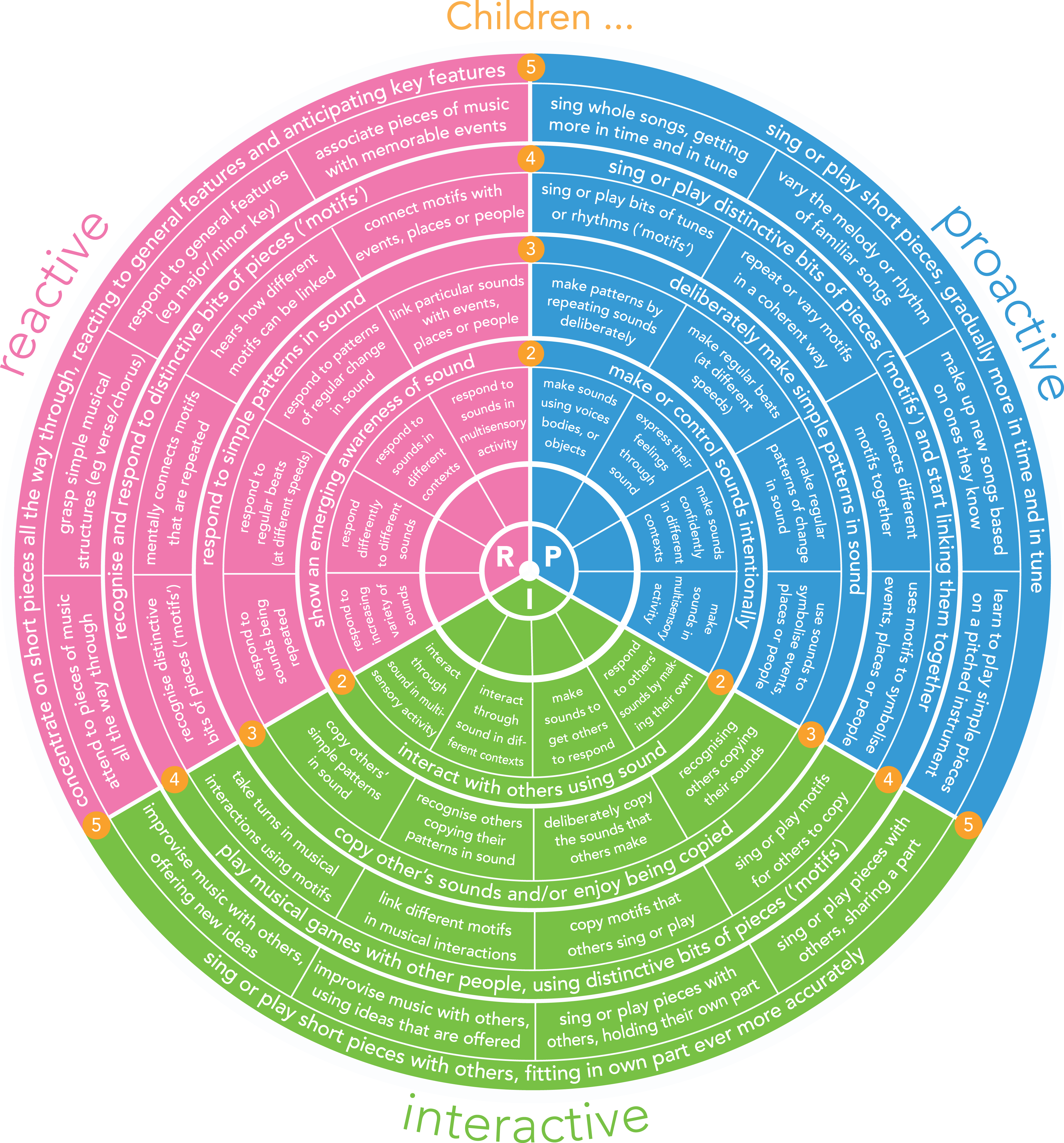
The Sounds of Intent in the early years framework as set out in Voyajolu & Ockelford, 2016.
The SoI-EY model is applicable to all children in the early years, including those with and without additional support needs. Its strength and applicability to this study lies in its derivation from a model which was built upon researching and observing the musical development of children with learning difficulties, including those with autism. Using the SoI-EY framework, two sets of home-based resources were previously developed for families with young visually impaired children as well as families who have children with profound and multiple learning difficulties (
The need for musical resources specifically designed for autistic children and parents echoes the findings of an exploratory study by Van Tongerloo et al. (2015), who found that parents of children on the autism spectrum want more practical advice about what they can do to support their child in the home and community. Therefore, a key aspect of the IMAGINE: Autism project was to work with families to create and refine a set of resources to encourage the integration of music into children’s daily lives (see Materials section below, and Appendix I). This approach was adopted in order to incorporate the ecological principles of environmental accommodation into music-based interventions. It focuses on the development of musical skills and musical strengths, providing opportunities for families to move away from deficit-driven narratives that so frequently characterize their experiences with both their children and practitioners and instead focus on positive and enjoyable ways of interacting in family life. This project sought to explore the experiences of the parents and the feasibility of the resources, rather than establish the efficacy of the parent-led intervention, which will be an area for future research. More specifically, this research addressed the following research questions: What are the experiences of families using the new music-based resources? Were these new resources effective in promoting musical engagement and development?
Method
Participants
Eleven families were recruited to the research, with 12 children taking part (one family had two children with autism), and all had a formal diagnosis of an Autism Spectrum Disorder. Participants were recruited through multiple channels, including speaking directly to national UK autism parents’ groups and circulating the recruitment advert through local autism charities in London. Participant children were aged 4–9 years (M = 5.9), and the majority of the participant children had one or more siblings (n = 10). Over half of the participants were either White British (n = 4) or another White background (n = 3), along with Asian British (n = 4) and Black British (n = 1). Seven families reported receiving therapeutic interventions in the past; however, the regularity of these was not consistent across the sample and only four received other therapies during the course of the research (see Table 1). The majority of the parents had no formal musical training (10 out of 11). Table 1 shows further details of age, sex, expressive language, previous musical education, schooling and therapies during the project. University ethical approval for the project was sought and approved. The parents all gave informed written consent and where possible, verbal assent was also gained from the children.
Participants’ characteristics. Abbreviations refer to occupational therapy (OT), speech and language therapy (SLT), applied behavior analysis (ABA).

Materials
Each family was provided with a set of 24 cards that detailed simple musical activities based on the developmental phases set out in the SoI-EY framework. Full details of the resource cards and the corresponding SoI-EY levels can be found in Appendix 1. The tasks on the resource cards were designed to be simple, short, and aimed at integrating music as part of everyday routine—for example, the “hello” and “goodbye” songs, giving ideas for how to use music to mediate joint play (e.g., “Help me make sounds with everyday objects and musical instruments”), or engaging with their child’s musical interests (e.g., “Sing songs with me that I love over and over again!”). At each level, two cards were produced for each domain: Reactive, Proactive and Interactive. Figure 2 shows examples of one of each of the double-sided cards from the three domains.

Examples of a proactive, interactive and reactive card.
The cards detail activities that were thought to be particularly appropriate for young autistic children—for example, explaining how to encourage multisensory and multimodal experiences and with specific guidance on factors such as sensory difficulties and echolalia, both of which are common in autism (Leekam et al., 2007; Roberts, 1989). Socially interactive games such as imitation and call and response were given prominence. Other factors included appealing to the affinity for visual stimuli that is observed in autism (Ganz & Flores, 2008; Schopler et al., 1995) in suggestions such as “Record what I do so I can watch back later.” Other additions, such as “Sing short, everyday phrases to me,” were added on the evidence that sung-word processing can be preserved in autism when spoken-word perception can be disrupted (Lai et al., 2012; Sharda et al., 2015). Updates also reflected the likely technological literacy of children and included activities involving watching recordings on YouTube and playing musical games on tablets (Mawson, 2013).
The activities set out on the cards get progressively more complex as they move through the four levels of the SoI-EY framework. For example, Card 4, entitled “Help me make sounds with everyday objects and musical instruments,” corresponds to Proactive, SoI Level 2 (Descriptor—makes or controls sounds intentionally), and Card 17, entitled “Play call and response games with me using your voice,” corresponds to Interactive, SoI Level 4 (Descriptor—engages in dialogues using distinctive groups of musical sounds/motifs). Space was given on the back of the cards for parents’ feedback, which was also collected aurally during the researcher’s home visits.
Design and Procedure
As the use of parent-mediated musical interventions for families with autistic children becomes more established, the need for clearer procedures and the wider accessibility of resources has been highlighted (Hernandez-Ruiz, 2020b). Since the aim of the project was to explore the practicality and efficacy of the resources outlined above, and recognizing the diverse nature of individuals’ and families’ experiences with autism, the project used an exploratory qualitative design that situated families’ thinking at its heart. Each family was visited three separate times over a 12-week period, and in between was encouraged to upload videos of their own home music making to a secure ethnographic cloud-based app (Salari, 2018). At the first visit, families were given a set of small percussion instruments and a keyboard, and a set of 24 activity cards. The materials on the cards were developed from the strategies for practitioners and parents in working with children and young people with special educational needs (including autism) that are set out on the Sounds of Intent website (www.soundsofintent.org) and are outlined above. The researcher showed parents how to use the music cards, and their attention was directed to the levels that appeared to be best suited to their child’s abilities. After the nature and purpose of the cards had been explained, the parents observed the researcher engaging in a play session with their child in order to model the activities detailed in the resources. During each visit, the researcher conducted musical play sessions with the children and received updates from the parents on their experiences with the instruments and cards, providing further guidance where necessary.
Semi-structured interviews were conducted at the first and last sessions of the study. The first interview served to set the context for each family’s participation in the study—that is, parents and carers reported on their experiences of having a child on the autism spectrum, their particular strengths, challenges and potential areas of learning, and their engagement in music to date (see also Table 1). The final interviews focused on the parent’s experiences of the IMAGINE: Autism resource cards (see Appendix I)—in particular, whether they found the cards helpful and if so, how the children engaged with the proposed activities and what differences (if any) they noticed in their child’s musical engagement, as well as observations about their general development during the 12 weeks and potential improvements in the materials that could be made. This article will focus on these last sessions’ interview data.
The interviews were audio recorded, fully transcribed, and analyzed using an Interpretative Phenomenological Analytical (IPA) approach (Smith & Osborn, 2003), which allows for in-depth study of each case and implies a double hermeneutic: studying the way the participants make sense of their experiences with the child and capturing the essence of the children’s experiences (Eatough & Smith, 2008; Smith et al., 2009). Themes emerged inductively through an analytical process involving five steps: (a) the transcribed interviews were read several times for familiarity; (b) emergent meaning units for each transcript were recorded in NVivo12 qualitative analysis software; (c) the meaning units were grouped to extract emergent sub-themes that indicated the children’s reaction to the musical activities and possible impacts on their daily life and areas of development; (d) the sub-themes were integrated into a table of overarching themes and sub-themes for each individual participant; (e) after each transcript had been closely scrutinized, individual tables were integrated into one general table capturing the study’s overarching themes and sub-themes. The analysis was conducted separately by two researchers, meaning units and groupings were cross-checked and discussed to ensure agreement and a valid interpretation of the data. Final themes and sub-themes were also discussed with the broader team.
Quantitative measures, in the form of SoI-EY scores, were taken in order to assess the children’s musical development. This procedure assisted the researchers’ interpretation of the qualitative findings by providing support for parental reports of improvement or development. Videos of children’s musical play were taken during all the visits. These data were used to undertake SoI-EY measurements at the beginning and at the end of the 12-week program, which were in turn employed to inform the interpretation of the qualitative outcomes reported by the parents. The SoI-EY framework has previously been validated for its efficacy to assess musical play in Voyajolu (2021). These measures were converted to numeric scores that combined four levels of SoI-EY (2–5) with a five-stage scale of regularity—“rarely,” “occasionally,” “regularly,” “frequently,” “consistently”—within each level. This created a sensitive, cumulative scoring system that was aligned with the SoI-EY levels, and which had a minimum score of 1 for those who were interacting “rarely” at SoI-EY Level 2 to a potential highest score of 20 for those that were “consistently” interacting at SoI-EY Level 5. Each observation was given a score that corresponds with the SoI-EY domains assigned by the researchers. To establish inter-rater reliability, 40% of the videos were viewed and assessed by two researchers, who blind-coded the musical engagement of the children according to SoI-EY level (2–5) and domain (Reactive, Proactive, Interactive). Where any disagreements were found, a third researcher made the final coded assessment. The percentage of absolute agreement was used (Altman, 1991) to determine inter-rater agreement. Inter-rater agreement was 86%, exceeding the 75% recommended by Bajpaj and Chaturvedi (2015).
Results
In this section, the analysis of the interviews focusing on feedback on the resources, as well as observations of musical and functional behaviors, where appropriate linked to the SoI-EY framework, will be reported. SoI-EY assessments of the recordings will also be reported to contextualize the development observed in the participant children and provide some support for the qualitative data reported.
Sounds of Intent Measures
The SoI-EY measures taken at the beginning and at the end of the 12-week program show that the majority of children demonstrated some progress according to the SoI-EY framework, indicating development in their musical abilities. Figure 3 shows the scores in musical development (as measured by the SoI-EY assessments) and it illustrates that these generally grew between Week 1 and Week 12, although four participants showed little or no improvement across the program. As these are developmental scores, there is no outcome measure; rather the scores reflect the children’s abilities at the time of assessment. Figure 4 shows how the SoI-EY scores improved over time.

SoI-EY assessment scores at Week 1 and Week 12 by participant.
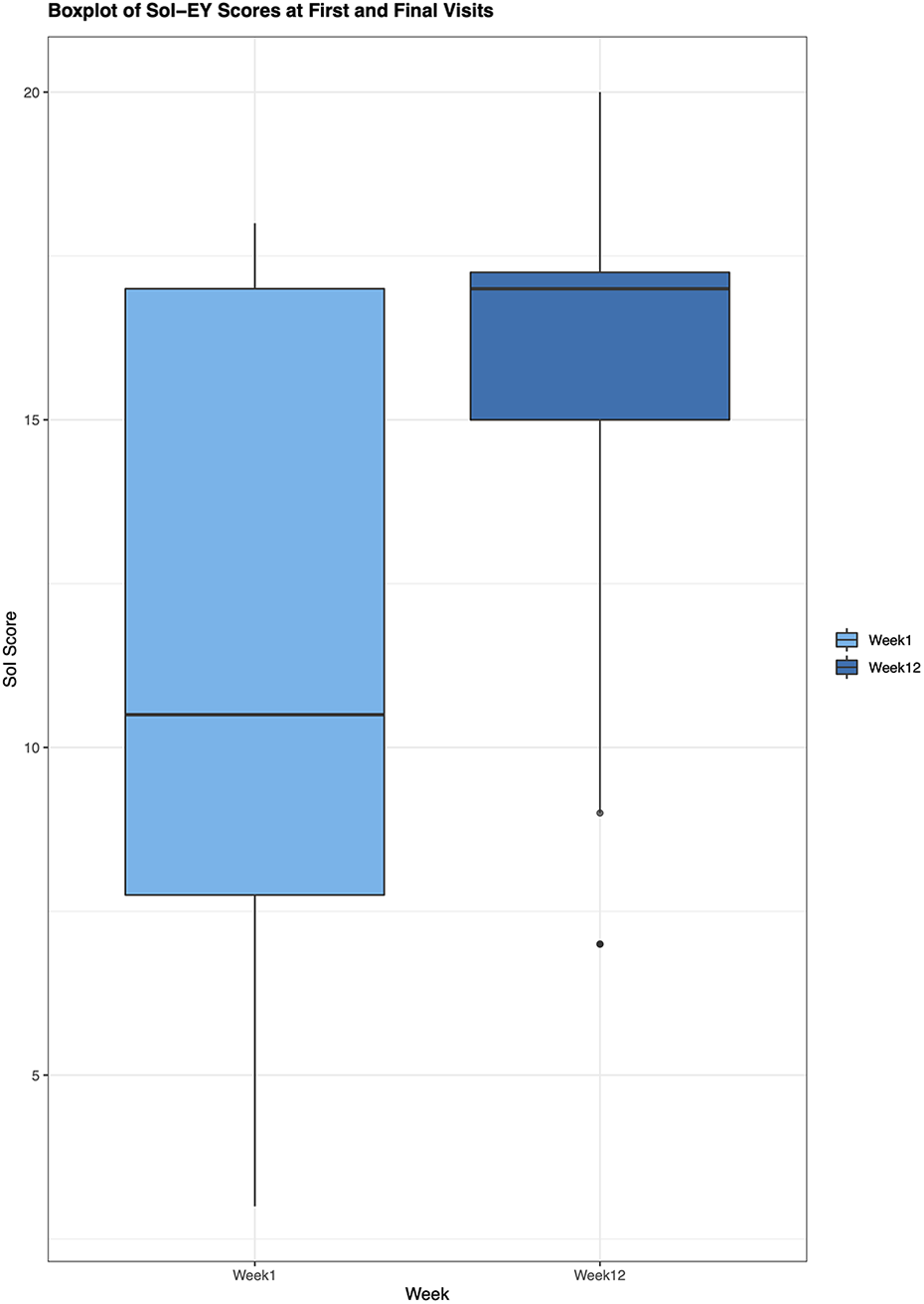
Mean SoI-EY scores for the whole cohort at Week 1 and Week 12.
Interviews
The analysis of the interviews revealed four overarching themes from the families’ reflections and experiences of making music together: (a) Environmental Adaptation (using IMAGINE cards); (b) Musical Engagement; (c) Social and Behavioral Changes; and (d) Self-regulation. Within each of these themes, several sub-themes emerged that further clarify the direct experiences of the families and detail particular domains of observed changes. Table 2 outlines the themes and sub-themes identified in the IPA analysis with verbatim illustrative quotations for each. The implications of these results are discussed below.
Themes, sub-themes and example quotations emerging from the final interview analysis.

Environmental Adaptation (Using IMAGINE Cards)
The families’ feedback on the new resources was positive and it highlighted both their general reactions and observations of the resources as a whole, as well as their opinions of specific activities that needed to be adapted to each child’s challenges and styles of learning. Sub-themes that emerged included parental confidence in using the resources, the usefulness of the direction that the cards provided, and the opportunity for individual adaptations according to individual children’s needs.
They would start playing on their own, not wanting me to join in. But as I gained their tolerance, I could repeat their sounds and they would copy back sometimes…he liked especially going up and down on the scales and let me join in sometimes. (P9 and P12 parent)
The card that required rhythm is not something that they got yet. But, yeah, the ones that would encourage to repeat sounds, he really liked that…with another one shaping that interaction. Then asking for, like if we did something he would indicate that he would like to do this again another day. (Parent of P9)
Musical Engagement
Parents reported an increased interest and engagement in their child’s musical play. This was observed both in their joint play with others, including the researcher and family members, as well as in their child’s individual musical explorations and musical preferences. The interviews revealed how the children became more empowered in their musical interactions, further increasing their independence and skills in musical spaces. From the wider musical engagement theme, experiences grouped into sub-themes include increased interest, skill development, child empowerment and interactive play.
He enjoys it, he likes music, a lot more than before…He never used to really respond before, never. Whereas now he will happily sing along. He will even do the actions…whereas previously he wouldn’t…You wouldn’t get nothing at all. (Parent of P4)
He is very good in music class in the school. When they are showing the screen and the notes, he tried to play and tried to play in time, in the beginning he couldn’t, but recently he started doing it in time…In three months, it has significantly developed. He’s listening…he copies the same music, the proper tunes, and sings that and tries to focus on the words. (Parent of P6) He finds this Just Dance thing on YouTube “Johnny, Johnny,” and he copies and he dances with the music. He wanted his grandparents to be there and to watch him—non-stop he seems to do this…he started following Postman Pat and other things with the track. He did it by himself, he knows…he practiced it to himself. (Parent of P6)
But she’s definitely engaging with it more and tolerating you in the same space with it, although she still wants to direct you what to do. But that’s still including you, isn’t it? Yeah even if it’s not like totally co-operative, she’s letting you in. (Parent of P3)
Social and Behavioral Changes
Parents regarded the musical activities as a pathway for unlocking their child’s expressiveness, which in turn had a wider impact on their interactive behavior. They also emphasized how music’s regulatory function could help divert children from overstimulating or stressful contexts.
Week 1: Trying to get him to respond to “Hello” and “Goodbye” in speech is still an emerging skill. Can respond with prompts but not in song [The good morning song is introduced]. Week 4: We sing the morning song every day, he begins to point to the sky for the night-time section. Week 8: This week I see that he is able to sing the ending to the morning song introduced over the last two months. When it’s time to say goodbye he then waves “goodbye” “goodbye” “goodbye” three times over. He looks pleased to have achieved this. He likes the sound of his voice!—so do I! (Parent of P11)
Sometimes he can be grumpy or his ear’s hurting but when he hears or plays the piano he totally changes…he talks more, he’s more interactive, I think that’s the main point…it makes him talk more. (Parent of P2)
But in terms of him being around people and communicating, he got so much better. He’s seeking out contact. He’s really looking people in the eye and he wants to play with other people like even if he doesn’t know them very well. (Parent of P9)
Self-regulation
Within the cohort, there was a reported improvement in self-regulatory abilities, including children’s capacity to control their behavior, to adjust and modulate their emotions and to focus their attention.
I thought this was really good today! It was for such a long time that she stayed with it…So I think we’ve seen a bit more of that as well. (Parent of P3)
He is quite emotional. And he does get upset, especially if he’s told things at a certain time. But like I said, you can switch it around, make it into a little song he will still do it. If you go and tell him to go and pick up something but do it in a, you know, musical fun singing way. And he’ll do it without crying or getting upset. (Parent of P4)
Discussion
This project explored the feasibility of using new resources to encourage musical engagement and development for families with autistic children in naturalistic settings. As evident in the analysis of the interview data and supported by the SoI-EY assessments, families were successful in using the new resources as prompts to engage musically with children, and all were able to support their musical development and engagement in some way. The narratives from the parents indicate that the new resources are appropriate for promoting musical engagement and, significantly, contribute to the growing literature of parents effectively implementing a musical program at home that could be integrated into daily life without specific and specialized training (Nicholson et al. 2008; Osei, 2009; Yang, 2016). The activities on the cards, grounded in the SoI-EY framework, allowed parents to draw on their child’s musical interests in order to encourage further engagement and development. Examples of parents employing musical phrases in everyday life to scaffold language, building on a child’s ability to engage through memorable musical motifs, is indicative of their capacity to engage at the higher levels of the SoI-EY framework, particularly Levels 4 and 5. The parents’ reflections of the program highlight how the provision of the musical instruments and activities provided the children and families with a distinct outlet for empowered expression, creativity and skill development. Their interactions and behaviors were consistent with previous approaches that have noted the importance of musical play in the early years (Marsh & Young, 2016). Notable also was the growing control that the children took of the musical situations, highlighting how musical spaces may provide an environment in which autistic children can feel safe, in control, and interact on their own terms. The quantitative developmental measures collected further support these findings. Although some showed little or no improvement over the course of the program, it was notable that these children were already able to interact at developmentally appropriate levels with music, as indicated by their high SoI-EY scores. The narrowing distribution of the scores at the final visit further indicates a differential benefit, whereby those children who were least advanced musically improved the most.
This study highlighted the important role of parents as mentors for their child’s musical development, and how music can be utilized as a communicative and social tool in everyday life for families with young autistic children. Preserving the aspect of positive collaboration and play to this approach was essential to its success, as the broad potential benefits of musical engagement that are frequently advocated (including personal and social developmental outcomes) can only occur if it is an enjoyable experience for those participating (Hallam, 2010).The impact of the resources on stimulating the wide range of musical and non-musical behaviors that have been presented above suggest that a naturalistic musical program could affect children’s self-esteem, socio-cognitive development and family well-being. This project represents a promising development into how parents can incorporate the principles and values of arts-in-health research into day-to-day life, and further expands the scope of the values of parent-implemented musical programs for children with autism (Hernandez-Ruiz, 2020b). The results also highlight the extensive impact of the resources in having a positive effect on everyday musical behaviors and are indicative of the strengths of the project to empower families to utilize music for their own interactive, communicative and regulatory needs. Unlike the highly structured nature of other home interventions, the notion that the cards were “freeing” demonstrates the playful aspect of activities. It underlines the ecological validity of the cards, and their effectiveness in promoting musical interaction without the need for musical training. Significantly, it enabled families to promote behavioral change in non-clinical settings and provided a contrast to deficit-driven behavioral and developmental narratives that often perpetuate the early years after diagnosis.
The current project demonstrates the importance of considering music’s wider affordances in the design of intervention strategies. The role of music as a scaffolding function is not altogether new, as during the early years it is common for mothers to use music as way of scaffolding the environment in the early months, to provide routines and structure for the infant (Custodero & Johnson-Green, 2003). These results demonstrate similar ecological practices, with parents’ use of the resources corresponding with established patterns of music making in the home, albeit with more specific outcomes. The themes that emerged from the interviews also resonate with health musicking narratives that explore the function of music in everyday life, as families began to incorporate music as an enjoyable and playful part of their daily routines. The adaptive naturalistic design further aligns with the growing recognition of how music is fashioned by individuals as a medium for building emotional well-being. As the reports of both the children’s individual behavior and engagement with parents reflected, music became a space in which micro-regulatory practices were enacted as well as an “aesthetic technology” of the self (Krueger, 2011; Ruud, 2010). For the participants who previously seemed unaware of musical stimulus, this could be conceived as a process of empowerment. Children became more aware and gained confidence in how sonic stimuli in their environment can become or are musical and used this as a resource for self-regulation and cognitive development. These findings resonate with neurodiversity principles—in particular, the importance of adapting a child’s environment to support their own development and flourishing (Fletcher-Watson, 2018). The growing use of music in the families’ lives as a medium through which children could interact, regulate and explore on their own terms is significant. It highlights the possibility of musical spaces as shared meeting points which provide opportunities for relationship building and positive, playful interaction.
The prominence of self-directed and regulatory behaviors was an unexpected theme to emerge from the results and it raises some potential future research directions that are as yet relatively understudied, particularly in regard to individual musical empowerment. In the current study, the proactive engagement of the children themselves to the materials and the incorporation of music as an emotional and interactive tool is suggestive of a process of empowerment (Haslbeck, 2014). In providing the child and their families with the skills, combined with the physical resources (keyboard and instruments), to engage and express themselves musically, both parties were able to begin to take control and reorientate themselves in their environment. While the social and behavioral change domains observed here match general patterns in other music-intervention studies in clinical settings (see Geretsegger et al., 2014; Hernandez-Ruiz, 2020b; James et al., 2015; LaGasse, 2017; Simpson & Keen, 2011 for comprehensive reviews), other outcomes of change in self-regulatory domains are less explored. These additional findings are supported by Janzen and Thaut’s (2018) argument that the clinical scope of the outcomes for music therapy in autism needs to be broadened. The results here support their suggestion that musical spaces have wider potential for development in attentional, motor-control and emotional domains. The amount of self-directed learning and engagement that was evident in the data also has implications for future research into the role of music as a place of imaginative and self-regulated play for autistic children. It was notable that once parents began to use the resources to engage musically, the children’s responses frequently occurred outside these joint play occasions, and they began to show more awareness of the musical capacities of their surrounding environment. This would suggest that during the initial joint play sessions (both with the parents and the researchers) the musical skills and techniques that the children observed and imitated were then being adopted and developed independently during their own musical explorations.
Limitations
While the small participant cohort and limited time frame of the project means that the conclusions here are limited in their scope, the evidence supports the need for more in-depth music-developmental research with the families of young children on the autism spectrum. A deeper analysis of parents’ uses of the cards, combined with clinical measures of behavioral change, will further elucidate the nature of change from these interventions. Furthermore, more systematic, observational analysis of the dimensions of musical engagement is required to ascertain what specific interactive and social behaviors musical play is targeting.
Conclusion
Although only exploratory, the findings from this project are supported by a considerable amount of research within music psychology and developmental science that emphasize the wide-reaching and learning transfer effects that musical engagement can have. Nevertheless, this research clearly demonstrates that the social benefits of musical interaction that are reported with neurotypical children are equally applicable in neurodiverse contexts. The findings of this study suggest that musical spaces can be equally supportive of the play-based behaviors that are essential for child development of emotional regulation, social cognition and communication. The major contribution of this study is that parent-directed resources based on the SoI-EY framework can have an impact on young autistic children’s musical and wider development. There are also important implications for practice which go beyond the creation and evaluation of tools for caregivers and parents for musically therapeutic purposes. The development of these materials highlights their potential for wider use in educational settings and in everyday life. Within the educational contexts of the current COVID-19 pandemic, as parents and caregivers look for accessible and implementable educational tools, these findings can further assist with the curriculum design for educational spaces—in particular, how parent-directed materials can support musical education for autistic children without the need for specialized training.
Footnotes
Contributorship
All authors worked together on conceiving the study and on gaining ethical approval. AO created the first iteration of the resources that were used.TL, AV and CS worked on participant recruitment and gathered the data. All authors worked on different aspects of data analysis. TL and CS wrote the first draft of the manuscript, which was amended, edited and approved by all authors.
Declaration of conflicting interests
The author(s) declared no potential conflicts of interest with respect to the research, authorship, and/or publication of this article.
Funding
The author(s) disclosed receipt of the following financial support for the research, authorship, and/or publication of this article: This research was in part financed by an Economical and Social Council (ESRC) PhD studentship to the second author. An additional grant from the Society for Education, Music and Psychology Research provided the instrumental resources to the participants.

Action Editor
Orii McDermott, University of Nottingham, Institute of Mental Health, School of Medicine.
Peer Review
One anonymous reviewer.
Beatriz Ilari, University of Southern California, Department of Music Teaching and Learning.