



Abstract
Endometriosis is a chronic disease associated with severe, life-impacting pain symptoms and impaired fertility that can affect relationships, sexuality, family life, social relationships, and working life. The aim of the present study was to describe endometriosis patients’ experiences of the counseling they need from the nurses through the digital care pathway. A qualitative descriptive study was conducted; 14 Finnish women with endometriosis were interviewed. Content analysis revealed four main categories related to counseling provided through the digital care pathway: counseling on endometriosis and its role in life; counseling on how to live with endometriosis; comprehensive support for self-care; and patient-oriented counseling. Nurses should provide counseling at different stages of the disease, because the symptoms of endometriosis can change rapidly in a short period of time, and these are the moments when the patient needs support and advice from the nurses. The digital care pathway can provide reliable information to patients at the right time of disease progression. The study was planned and reported using the Consolidated Criteria for Reporting Qualitative Research Checklist.
Introduction
Endometriosis is a common disease among fertile women, affecting approximately 10%–15%, or as many as 190 million women of reproductive age around the world. 1 In this disease, tissue similar to the lining of the uterus grows outside of the uterus, a condition that is characterized by chronic pain that can significantly impact a woman's quality of life. 2 Several common symptoms of endometriosis include painful menstruation, pain during intercourse, chronic pelvic pain, irregular uterine bleeding, and possible infertility.3,4 In addition, endometriosis may present with intestinal symptoms and fecal pain, as well as pain associated with urination. 5 Endometriosis is often challenging to diagnose because the symptoms are non-specific and overlap with other gynecological, urological, and gastrointestinal problems; this leads to significant diagnostic delays. 6
Women with endometriosis experience a reduced quality of life, increased depression, adverse effects on close relationships, restrictions on daily activities, decreased social activity, loss of productivity and related income, increased risk of chronic illness, and significant direct and indirect healthcare costs. 7 Many girls aged 15–19 years report being absent from school at times due to severe menstrual cramps. 8 In addition to individual suffering, the disease also has social significance, as it may not allow couples to have as many children as they would have desired. 9 Therefore, it is important that women with endometriosis receive adequate, high-quality counseling and support from nurses, in living with a chronic illness; the digitalization of healthcare may open certain avenues for providing this type of support. 10
The constant development of information technology is reflected in recent changes in the healthcare sector and nurses work picture, with novel societal needs, requirements, and expectations acting as a driving force for change. 11 As such, eHealth holds great promise to improve human health, health services, and the well-being of society and individuals. 12 A specific type of eHealth service is the digital care pathway, which are electronic transaction services that facilitate self-care, mostly developed by nursing personnel; more specifically, the patient receives timely information about their illness and its treatment. For instance, the patient may answer treatment-related queries to receive feedback and detailed instructions from the nursing personnel. 13 eHealth has been found to strengthen patients’ self-direction, self-care, and participation in their own care. 14 As such, eHealth can be considered a viable option for patients with complex medical problems that can only be identified and treated by specialists. These types of solutions have the potential to improve access to primary and specialist care by reducing the time necessary for care and removing geographical barriers. In addition, the remote monitoring of patients can help nursing personnel detect health problems earlier, which can subsequently reduce the length of hospitalization. All of these factors can decrease medical costs for both patients and the healthcare system. 15
On an international level, the increased number of patients has been a primary factor in necessitating the development of digital care pathways for patients with endometriosis. It is important for nurses to consider patients’ involvement during the development of the digital care pathway to provide a customer-oriented and high-quality service. This involvement in the development process can empower patients to feel as though they have a chance to influence things. 16 The aim of the present study was to describe the endometriosis patients’ experiences of the counseling they need from nurses through the digital care pathway.
Methods and design
A descriptive qualitative design was chosen to capture the experiences of patients with endometriosis regarding their counseling needs from nurses through the digital care pathway. This approach was selected to gain a deeper understanding of a topic that has received limited research attention. The use of individual thematic interviews allowed the participants to describe and share their experiences and perspectives related to their personal lives in a more in-depth manner. 17 The interviews were subjected to inductive content analysis. 18 The study is reported using the Consolidated Criteria for Reporting Qualitative Research (COREQ) checklist. 17
Recruitment and sample
A total of 14 patients from a gynecological outpatient clinic at a university hospital in Finland were recruited for the study. 19 At the outpatient clinic visit, the nurse inquired about the patient's interest in hearing about endometriosis-related research and escorted the patient to a separate room to meet with the first author (AR). The participants received oral and written information about the research, including its voluntary nature, from the first author. Before being interviewed, the participants provided written informed consent. Recruitment and analysis were conducted concurrently, and data collection ceased once saturation was achieved. 19
Data collection
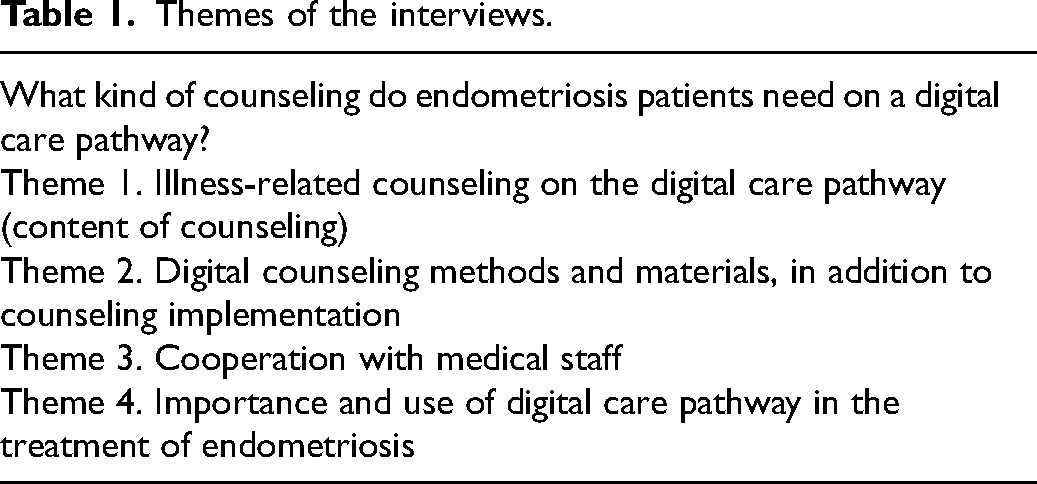
The data were collected by the first author (AR) through individual thematic interviews via Teams during the spring of 2022. Interviews were conducted with only the first author and the patient present. A theory-based interview framework, with the aim of finding topics that would highlight endometriosis patients’ needs and expectations for counseling, was created (Table 1). Each interview was recorded, both with the Teams application and a recording device to minimize any technical problems. The interviews lasted 30–70 min, with an average duration of about 50 min.
Themes of the interviews.
The interview data were transcribed into written form, by the first author, using Microsoft Word. This generated 118 pages of text (Times New Roman, font 12, single line spacing). Data about the participants could not be accessed without a key code that only the first author had access to. The audio recordings from the Teams application and recording device were destroyed after the interview data had been transcribed into written form.
Data analysis
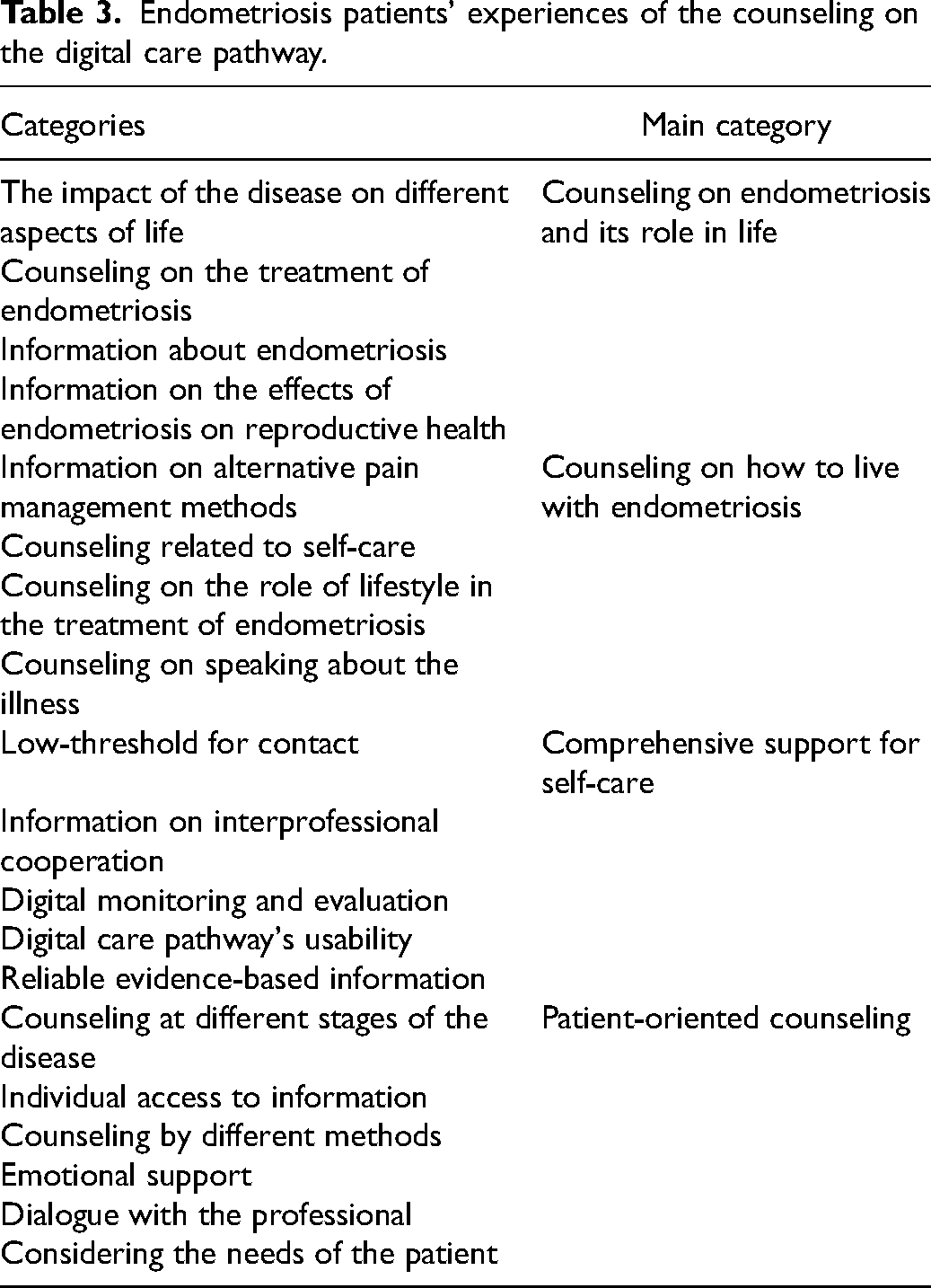
The material was analyzed by inductive content analysis. 18 The material was searched for concepts and expressions that answered the research question. The original expressions were tabulated by the first author, and then reduced and developed. Similar expressions were grouped into subcategories that were named based on their respective contents. Subcategories with the same contents were then combined into 19 categories, which were combined into four main categories. 20 All authors were involved in the evaluation and development of the analysis and results. The authors used these findings to develop proposals, which formed the basis for the final results.
Ethical considerations
The research process was conducted in accordance with good scientific practice. 21 The study examined three principles based on the norms of ethical research: altruism; justice; and respect for human dignity. 19 Participants were allowed to volunteer to participate in the study, had the opportunity to ask questions throughout the study process, and had the right to withdraw from the study at any time without providing any explanation. The study complied with the European Union's General Data Protection Regulation. 22 The participants’ personal information was kept confidential, and their anonymity was secured when reporting the findings. 19 The research permission and an approval from an ethics review committee of the local hospital district (reference no. EETTMK:79/2021) was obtained.
Results
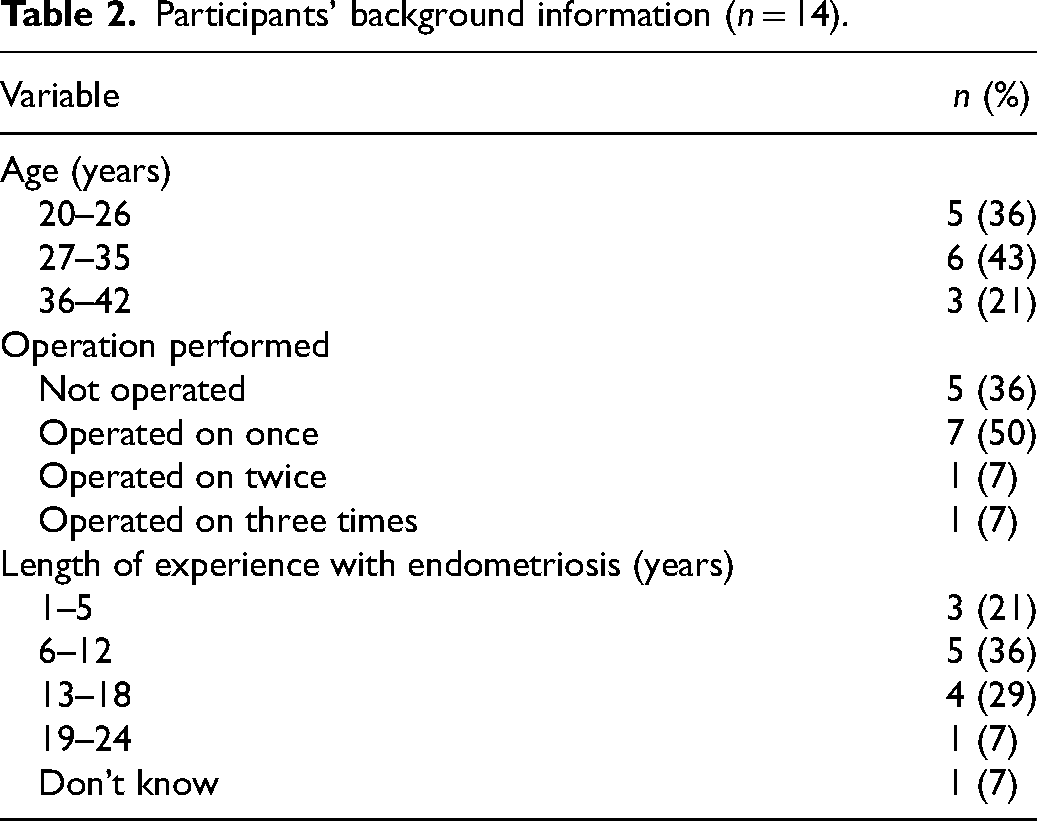
A total of 14 endometriosis patients participated the study (Table 2). Participants were aged 20–42 years (mean age = 29 years). Of the participants, 13 were able to estimate how long they had been experiencing endometriosis, with a range of 1–24 years. The participants had been affected by the conditions for an average of 11 years.
Participants’ background information (n = 14).
Four main categories were identified: 1) counseling on endometriosis and its role in life; 2) counseling on how to live with endometriosis; 3) comprehensive support for self-care; and 4) patient-oriented counseling. Relevant quotations from the interviews for each main category are included in Table 3.
Endometriosis patients’ experiences of the counseling on the digital care pathway.
Counseling on endometriosis and its role in life
The participants highlighted that endometriosis affects various aspects of their lives. The disease was found to affect studying, working, everyday life, relationships, social relationships, mental health, mobility, self-image as well as future planning: “I am currently more sore and in worse shape than ever before. I have not been able to walk, I have not been able to move, I have not been able to go to the store, I have not seen friends. I cannot practically do anything, and I do not have any kind of normal life.” (Participant 2)
“After all [of this], I looked like I was pregnant all the time when I was so swollen, and got pregnancy queries about when I will be on maternity leave again.” (Participant 15)
Participants highlighted the need for information on endometriosis, i.e. what it means as a disease, what is the pathogenesis of endometriosis, and whether it can recur. The participants showed interest about the prevalence and heredity of endometriosis, as well as how endometriosis affects other diseases. Some participants in the older age group felt that there is limited information about endometriosis after menopause available on the Internet. Moreover, the participants felt that it was important to point out what is so-called “normal” and what is not in endometriosis, i.e. information available on the digital care pathway could emphasize that severe menstrual cramps are not a part of normal life. “However, because it is a chronic disease, it can be associated with so much of the so-called vagueness that you may not think of yourself or even be able to combine as symptoms until the diagnosis has been made …(-)… if we would get extensive information about the symptoms then we could connect things.” (Participant 5)
Participants expressed a need for counseling on the treatment of endometriosis, more specifically, what the treatments for the disease are and which benefits they provide. The participants also felt that it would be important for the available information to highlight the range of possible medical treatment options. As such, women should be informed about hormone medication, including its effects on endometriosis and any possible side effects. The participants also felt that there was a need for counseling about other therapies, such as medical pain management. Participants had several unclear issues about the surgical treatment of endometriosis, i.e. what types of surgeries exist, in what situations surgery is performed, and what can happen as a result of surgery. The patients desired counseling on postoperative issues, including self-care, and how the treatment of endometriosis progresses after surgery: “Of all the information I have found, it is stated almost everywhere that endometriosis will be treated with hormone medication or with surgery, but it was unclear when these surgeries will be performed. When I talked to a relative about the disease, they said ‘so you will be operated on right now’ and I was like ‘no, that has not been said’.” (Participant 4)
A need for information on how endometriosis affects reproductive health was also identified from the interviews, with a particular emphasis on how the disease affects infertility. The participants felt that issues related to infertility should be reported as gently as possible. In addition, participants felt that counseling concerning the effects of endometriosis on pregnancy, along with information on pregnancy-related issues after endometriosis surgery, would be of value.
Counseling on how to live with endometriosis
Participants noted a need for self-care counseling; in other words, which means provide endometriosis patients with relief at home. Participants felt that it would be important to receive self-care instructions from a variety of professionals through the digital care pathway. A need for information on alternative pain management methods also emerged from the interviews, with the utilization of heat, showers, relaxation, transcutaneous electrical nerve stimulation (TENS), acupuncture, and various breathing exercises mentioned by participants. Counseling on pelvic floor physiotherapy was also considered necessary.
A need for counseling on the importance of lifestyle in the treatment of endometriosis was also noted. Participants reported empirical knowledge about how lifestyle affects endometriosis symptoms, but they felt that only limited research was available on the Internet. As such, the participants expressed a need for further counseling on how diet, vitamins, exercise, and other lifestyle factors affect endometriosis.
Participants had a difficult time talking about the disease in different situations. As such, they felt that they needed more counseling on how to speak about their disease to loved ones, work colleagues, and friends; this was emphasized because the disease has such a great impact on women's daily lives. Some participants felt that it would be important for their spouse to be educated about the disease via the digital care pathway. “For such support or some kind of ticket tags that could be distributed to loved ones, and especially to the husband. Even though he says he understands, and will surely understand, it is hard for him to look at his wife crawling and vomiting; this takes great strength from him too.” (Participant 10)
Comprehensive support for self-care
The importance of a low threshold for contact was noted in many of the responses. Participants hoped that they would be afforded various contact methods for asking questions and obtaining clear information from endometriosis professionals. In addition to the traditional telephone connection, the possibility of leaving an electronic message or communicating in a chat room was especially desired in digital care pathways. The participants felt that electronic contact methods held the advantage of being independent of the time of day. The interview responses revealed that participants felt that digital contact methods could enable, for example, making an appointment or renewing drug prescriptions. These discussions aroused a desire for virtual visits to a physician, especially among patients who lived far away from the health center. Nevertheless, a few participants felt that digital communication tools could not serve as a substitute for face-to-face discussions and counseling with a professional.
Opportunities for digital monitoring and evaluation of care also emerged from the interviews. Certain means of monitoring self-care, such as a symptom diary, split opinions among respondents. Most participants found the symptom diary to be useful as it gives the healthcare professional a broad overview of the patient's condition. However, some participants found it difficult to use a symptom diary. “I have tried to keep those symptom diaries, but because I have symptoms every single day it becomes so terribly busy to fill in that I cannot stand it. If the symptoms would last a few days to a month, then it would be nice to write it down. I would find it hard to put the same notes every day, but if it was somehow easy – in the way that you can copy things from the previous day – then it could work.” (Participant 10)
Counseling from the nurses was also needed when assessing the need for treatment. Instead of going to the hospital, the patient could contact an endometriosis specialist in the event of severe endometriosis pain symptoms via the digital care pathway; this dynamic would make the assessment of need for treatment and provision of self-care instructions more rapid. “If necessary, it would be good to have an opportunity to speak with a nurse who has expertise in endometriosis. It cannot be assumed that all healthcare providers have knowledge of endometriosis, but at least one nurse with such expertise should always be available.” (Participant 3)
Knowledge of interprofessional collaboration, i.e. which professionals can participate in patient care, was also considered important. For example, the participants felt that physiotherapists, sex therapists, and nutritionists are all important in the treatment of endometriosis, and that these professionals should immediately become involved in the treatment of a patient. The respondents were also uncertain about social security issues, and thus desired information about the role of the social worker.
There was also debate about the usability of the digital care pathway service. For example, participants felt that the digital care pathway should be accessible from both a mobile device and via a browser. A secure login solution, along with the use of secure and trusted links, would increase users’ sense of security. One participant also questioned how the service would function in the case of possible disconnection or accidental disregard for a message sent by a professional. Most importantly, the participants wished that the digital care pathway would be clear, simple, and easy to use. Some participants also wanted counseling on how to use the digital care pathway, while others pointed out that the digital care pathway should be so clear that it would not require a lot of time and energy to learn to use. “When I am in the middle of all the milling, I do not have the capacity to think about how this works. I do not want to read instructions on how to use the digital care pathway when the principle does not interest me at all. It should be so simple that you do not have to study how to use the digital care pathway, but rather get help for your disease – which is the reason it was created.” (Participant 11)
The participants highlighted that information provided via the digital care pathway should be reliable and evidence-based. This means that the provided information should be reliable, relatively recent, and of high scientific quality. Participants also wanted advice for how to find reliable information.
Patient-oriented counseling
The participants reported having independently searched for information on the Internet because they had not received adequate counseling regarding endometriosis. Some of the participants had asked acquaintances for information or prior experiences of endometriosis. All of the participants felt that counseling should be scheduled immediately at the time of diagnosis, or as early as the first suspicion of endometriosis. Moreover, the participants shared that counseling should be provided at different stages of the disease, as the symptoms of endometriosis can change and bring about an increased need for information. “You should get there (digital care pathway) as soon as a person is diagnosed with it [endometriosis] or even suspects and starts investigating the matter; then it should be available immediately, and not only after the person has been wrestling with the matter for many years and is already going to have major surgeries.” (Participant 9)
When asked to describe the digital care pathway, the participants most commonly shared the following: enables non-binding access to information; freedom of choice; allows multiple visits to the same page; and gaining understanding. For this reason, information provided via the digital care pathway should be comprehensive and easy to find, as well as accessible to all users in terms of content, i.e. not full of medical vocabulary. The participants reported having retrieved information about endometriosis from various Internet sites, as well as Instagram via accounts focusing on endometriosis. When asked more about this topic, the participants pointed out that excessive googling can result in frightening finds that will cause unnecessary worrying and anxiety; this is the value of providing comprehensive information via a digital care pathway.
The participants noted that counseling materials on the digital care pathway should be offered in a versatile and visual way, i.e. in the form of text, videos, images, links, and research. A good addition would be a “frequently asked questions” section that a patient could consult for information on their question before contacting a professional. The fact that relevant information would be in electronic form on the digital care pathway was considered a positive thing, as the patients felt this form of information was superior to written and printed materials, which could get lost or be misplaced.
The participants stressed the need for emotional support by stating that they wanted more information about peer support, adequate mental support, and the ability to discuss their situation during different stages of the disease. Sharing experiences of endometriosis with others was found to increase feelings of support and encourage patients to adhere to their therapy, both of which the participants felt were an important part of living with the disease. Patients should be reminded that the disease is not self-inflicted and that women can live with endometriosis when the right treatment is found. The participants also felt that a patient's coping should be taken into consideration. “It feels like you can do so little and influence the outcome, so there is little encouragement to do anything, and it is easier to just take it easy. This situation will not be under your control, even if you rest for a couple of days.” (Participant 9)
The participants also hoped that awareness of the disease would be increased among both professionals and young people. Professionals working with endometriosis patients should be knowledgeable and specialized in the treatment of endometriosis. As such, the participants shared that they expected the professionals to be understanding and humane towards patients, e.g. symptoms should be addressed and pain should never be underestimated. Some of the participants continued to discuss this topic by stating that the constant replacement of staff during appointment visits was a hindrance. “That the medical staff would remain relatively the same, so you would not always have to start over, then it would be easier to do things quickly …(-)… that you know this person has already examined me, she knows.” (Participant 15)
The participants felt that healthcare professionals can support a patient's self-direction by involving them in treatment. The individuality of patients should also be considered when choosing an appropriate treatment. In this way, the participants felt that it would be useful to get to know the endometriosis outpatient clinic and its operation before the actual visit. Moreover, the participants wanted a certain extent of counseling to prepare themselves for the physician's appointment. The digital care pathway was seen as a complementary part of treatment, and the importance of developing a digital care pathway was illustrated by the fact that each participant was willing to be a trial user of the digital care pathway. The following quotation demonstrates how patients feel that counseling via a digital care pathway provides a sense of security. “Of course, it brings a certain kind of security, and I would say that it saves everyone time and money when you don’t have to be around all the time looking for help, that it is also centralized in a way that you can get in touch when needed.” (Participant 10)
Discussion
The results of this study indicate that endometriosis patients need versatile counseling via the digital care pathway, including counseling on endometriosis and its role in life, counseling on how to live with endometriosis, comprehensive support for self-care, and patient-oriented counseling.
The participants identified counseling on treatments for endometriosis, particularly hormone medication, as important. The counseling provided by nurses should include information about the safety and efficacy of hormone medication in the treatment of endometriosis. A previous study found that only 36% of adult women believed that the pill was mostly safe for women's health in general. 23 Given that lack of confidence in a contraceptive method's safety can be a barrier to its use, it is important to address these perceptions to encourage more effective use of hormonal methods. This, in turn, can help ensure the proper treatment of endometriosis and alleviate its life-changing symptoms.
The participants highlighted the importance of self-care and the instructions provided by nurses through the digital care pathway, which could help patients with endometriosis find relief at home and learn to live with the disease. A previous study found that developing the ability to self-care significantly impacted the way participants experienced the disease, viewed themselves, and their future. When providing education on self-care, it is important for healthcare professionals to conduct a holistic assessment that takes into account the wider context of patients’ lives, following the primary healthcare principle. 24 Nurses and other healthcare professionals can play a critical role in counseling and supporting patients to live with the disease, and it is crucial to emphasize the importance of such counseling during their training. Furthermore, self-care instructions provided by nurses can also help prevent patients from having to seek hospital treatment due to their symptoms.
The participants in this study felt that the digital care pathway complements the treatment of endometriosis. It has already been stated that eHealth is a viable option for patients with complex medical problems that can only be identified and treated by specialists. 15 The digital care pathway can serve as the primary source of reliable information so patients with endometriosis do not have to search vague websites for further information about their disease. The digital care pathway can provide patients with reliable, evidence-based, and time-bound access to information, along with high-quality and individual guidance. These factors can increase patients’ sense of safety and involvement, both of which promote commitment and satisfaction with care. 25 The study highlighted the importance of the healthcare professional's role in the digital care pathway. Although this digital solution means that the professional and the patient do not always meet face-to-face, the digital care pathway offers many ways to interact in the form of low-threshold communication, comprehensive guidance, and follow-up for the assessment of care. A few respondents felt that digital solutions cannot be a substitute for face-to-face encounters and counseling with a professional. Therefore, any counseling approach must have the option to be individualized to the needs of a specific patient. 26
The participants noted that endometriosis patients should receive counseling immediately after a diagnosis. Endometriosis is characterized by uncertainty, and this uncertainty is not only a key feature of diagnostic delays, but also of living with and making sense of endometriosis. 27 As such, early counseling would allow patients to better cope with the disease, and – in the long run – could improve the patients’ abilities to work in order to reduce the amount of sick leave. It is also important to note that counseling is also available at different stages of the illness; the symptom of endometriosis can change rapidly in a short period of time when the patient needs support and advice from professionals. 1
Participants felt that they had not received adequate counseling regarding endometriosis. A previous study also reported that patients representing different specialties felt that they had received inadequate counseling, and that more counseling material on diseases, examinations, and treatment in both written and audiovisual form (video and computer programs) was needed. 26 When discussing these tools, the availability of information technology and Internet resources was considered important. Participants who discussed the digital care pathway considered the use of diverse and visual counseling methods to be an important part of finding the most appropriate counseling material for various patients. This is supported by previous studies, which have shown that patients value the use of information technology in counseling and that electronic counseling materials can be modified to meet patient needs.28,29 This approach is cost-effective, as it allows for information to be communicated to a large group regardless of time and place.28,29 Digital care pathways also increase equality among patients, as people with reading difficulties can access information through computer-assisted Internet patient counseling such as video counseling. 30
The participants highlighted that the general public needs to be more aware of endometriosis. Even though there is presently no known way to prevent endometriosis, enhanced awareness along with early diagnosis and management may slow or halt the natural progression of the disease and reduce the long-term burden of its symptoms, including the possibility of central nervous system pain and sensitization.1,27 In this way, both society and medical professionals must have a better understanding of endometriosis, its treatment, and “normal” menstrual experiences to ease suffering among women with endometriosis. Such education should start before the age of menarche and would ideally be delivered through the school health education system, where attitudes towards menstruation could be discussed openly. 31 This could potentially promote both women's reproductive health and access to the right care. 1 Enhanced patient involvement is needed in modern healthcare to better respond to changing service needs caused by globalization, demographic change, and individual needs. 25 Increasing patient involvement can improve the quality and effectiveness of services and clarify the discrepancy between the resources necessary for, and the requirements of, new services. 32 Involving patients in the further development of eHealth services can widely benefit both the patient and the service provider. 33
Strengths and limitations
The trustworthiness of the presented research was evaluated through the aspects of transferability, confirmability, credibility, and dependability 18 The use of actual participant quotations throughout the study helped to maintain the voice of the participants, which improved credibility and also authenticity. 19 The researcher returned to the study material several times to ensure that the results accurately reflected the participants’ responses. To increase the credibility of the study, the researcher focused on analyzing only the data, i.e. not adding their own interpretations, throughout the analytical process. 34 The presented research results can be transferred to other similar situations.34,35 The assessment of portability is limited due to the scarce description of participants’ backgrounds, which was done for ethical reasons, i.e. there would be a larger chance that certain participants from the small sample could be identified if too much background information was collected and reported. In terms of study limitations, the present study included a certain degree of selection bias because it focused on patients who had been admitted to the university hospital; this excluded patients who had visited primary care. The research process identified certain gaps in the literature concerning endometriosis patients’, general gynecological patients, and experiences of counseling; this means that there is a need to further develop this research area. The interviewer has a professional background as a nurse. Still, the researcher could bracket these preconceptions and maintain self-reflexivity to avoid affecting the results and reporting. 18
Conclusion
Counseling from nurses for women with endometriosis should cover different aspects of the disease, such as treatment options and their effects on reproductive health, as well as support for self-care and managing the disease in the context of their overall life. The counseling should also be tailored to the individual patient's needs. Women with endometriosis need counseling on setailed self-care instructions, such as alternative pain management methods, and how lifestyle choices can impact the treatment of endometriosis. Nurses should also provide information about how to influence care and advocate for oneself. By empowering patients with knowledge and resources to manage their symptoms and make informed decisions about their treatment, they can have greater control over their health and well-being.
The digital care pathway can improve the quality of care for endometriosis patients by providing a platform for effective monitoring and evaluation of the disease, while also offering a convenient and accessible way for patients to connect with nurses. This can help patients feel heard and supported, which can promote adherence to treatment and increase overall satisfaction with their care. In addition, the use of digital tools can improve communication and coordination among healthcare professionals, ensuring that all members of the care team are informed about the patient's health status and treatment plan.
Footnotes
Author contributions
AR, AO and MH made substantial contributions to the conception and design, or acquisition of data, or analysis and interpretation of data. AR, AO, and MH were involved in drafting the manuscript or revising it critically for important intellectual content. AR, AO, and MH gave final approval of the version to be published. AR, AO, and MH participated sufficiently in the work to take public responsibility for appropriate portions of the content. AR, AO, and MH agreed to be accountable for all aspects of the work in ensuring that questions related to the accuracy or integrity of any part of the work are appropriately investigated and resolved.
Acknowledgements
The authors would like to thank all the patients who participated in this study.
Funding
This research received no specific grant from any funding agency in the public, commercial, or not-for-profit sectors.
Declaration of conflicting interests
The authors declare that there is no conflict of interest.
