




Abstract
Knowledge about mothers’ perceptions of the quality of Finnish maternity services is limited. The aim of this cross-sectional study was to describe mothers’ perceptions of the quality of Finnish maternity services, and to identify background factors associated with them. The data were collected from 1,760 mothers in autumn 2016. Descriptive statistics were used. This study is reported in accordance with STROBE. Most mothers (84%) considered the quality of the maternity services good. The mean response values for the quality of patient education (3.9), staff knowledge and skills (4.3), and hospital environment (4.3) were good. Parity and mode of childbirth were associated with perceptions of the quality of maternity services. Based on the results, development of midwifery and nursing practices should focus on sufficient pain relief, adequate duration of skin-to-skin contact, breastfeeding counselling and opportunities for mothers to reflect on their birth experience afterwards. Moreover, the study results can be used for education. Challenges for future research are presented.
Keywords
Introduction
The patient experience is one of the most important indicators of healthcare quality, 1 and the significance of measuring it should be considered by every healthcare professional, administrator and policy maker. 2 Likewise, mothers’ experiences with childbirth should be evaluated when assessing the quality of maternity services2–6 because the childbirth experience influences the health of the mother and the whole family.7–8
According to the Finnish Action plan on sexual and reproductive health for the years 2014–2020, 9 the aims of high-quality childbirth care are: to ensure the best possible health of the birthing woman and the infant, to ensure a holistic and empowering childbirth experience for the family, and to support the mother in breastfeeding. The staff is responsible for providing sufficient patient education for the woman so that she can participate in decision-making regarding childbirth care. Adequate support assures a positive childbirth experience. Also, the family of the childbearing woman should be considered. Patient safety is a part of high-quality childbirth care. 9
Previous studies demonstrate that although most mothers are generally satisfied with the quality of maternity services, all their expectations are not completely met.10–18 Based on their experiences, mothers reported that the content of patient education offered as part of maternity services was inconsistent,4,12,19,20 and that breastfeeding counselling in particular was inadequate.13,20–24 They considered the maternity services staff friendly and polite,12,15 but also reported unprofessional behavior from the staff.4,20,23 Moreover, mothers reported that the hospital environment is inappropriate.4,19,20
Mothers’ perceptions of maternity services should be evaluated as part of quality measurement of maternity services. 25 Intended improvements of mothers’ childbirth experiences can comprise continuous support by, a pleasant relationship with, and frequent communication between mother and maternity services staff.19,26–28 Mothers who rated their childbirth experience as very positive had higher postnatal psychological functioning capability, 29 but those who had negative experiences may have developed mental health problems and fear as a result.26,28,30 Dissatisfaction with the childbirth experience can influence choices regarding future pregnancies and mode of childbirth.19,31,32 Understanding the background factors associated with the mother’s childbirth experience can lead to satisfactorily improved quality of maternity services.17,27
In 2016, almost 53,000 pregnant women gave birth in Finnish maternity units (99.5% of all childbirths), and 42% of them were first-time mothers. 33 Maternal and perinatal mortality rates in Finland are among the lowest in the world. 33 However, there are knowledge gaps regarding whether the quality of services at hospital maternity units in Finland meet mothers’ expectations. In this study, mothers’ perceptions of the quality of Finnish maternity services were described as one part of the quality of the maternity services. This topic is important from the point of view of midwifery and nursing practice, education, and research.
Aim
This study aimed to explore and describe mothers’ perceptions of the quality of the maternity services offered in Finnish maternity units. Another aim was to explore associations between mothers’ perceptions of service quality and different background variables. The study addresses the following research questions:
What are mothers’ perceptions of the quality of maternity services in Finnish maternity units? What background factors are associated with mothers’ perceptions of the quality of maternity services?
Method and design
The study used a cross-sectional study design in which the data were collected using a questionnaire and analyzed using descriptive statistics. This study is reported in accordance with the Strengthening the Reporting of Observational Studies in Epidemiology (STROBE) statement: guidelines for reporting observational studies. 34
Setting
In 2016, there were 26 maternity units in Finland, located in larger university hospitals, central hospitals or other hospitals with a birthing unit. 33 Normal practice in Finnish hospital birth units involves midwives autonomously attending normal births and consulting obstetricians when medical advice or treatment is needed. The target population consisted of all the mothers (N = 8,913) who gave birth at all 26 Finnish hospital maternity units between September and November 2016.
Participants
The maternity unit staff were instructed to invite all mothers to participate in the survey used for data collection. The inclusion criteria were that the mother had to: be able to answer the questionnaire by using the Finnish, Swedish or English language, and give birth during the data collection period. In total, 2,125 mothers completed the questionnaire. Responses from three maternity units (364 forms) were excluded from the analysis because the number of responses was greater than the number of births that occurred at each of those units, and one form was excluded because only 50% of the questions were answered. The final study sample consisted of 23 maternity units and 1,760 mothers. The response rate varied by unit and ranged from 12% to 69%.
Variables
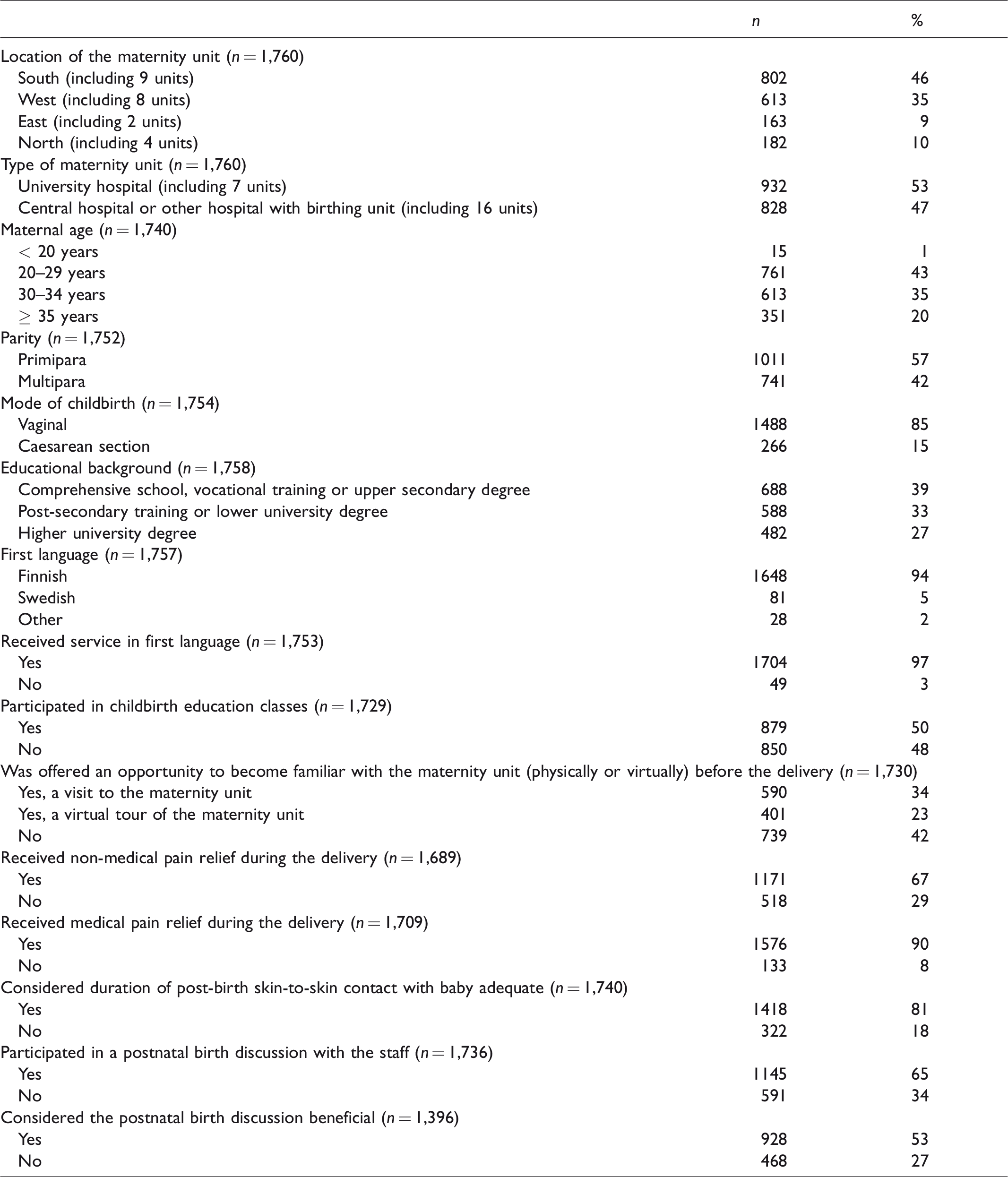
The study variables consisted of the 38 questions (or items) on the questionnaire used in the study (see Measurement, below): 15 background variables (Table 1), 22 items concerning the quality of maternity services at the maternity unit (Table 2), and one open-ended question. The responses were measured using a five-point Likert scale (1 = totally disagree, 5 = totally agree). Responses to the open-ended question were not analyzed as part of this study. The background variables were as follows: location and type of the unit, maternal age, parity, mode of childbirth, education, first language, whether service was received in the mother’s first language, participation in childbirth education classes, whether the mother was offered an opportunity to become familiar with the maternity unit before the delivery, non-medical and medical pain relief, adequate duration of post-birth skin-to-skin contact with baby, participation in a postnatal birth discussion, and whether the postnatal birth discussion was beneficial. Out of 21 items measuring quality of maternity services, three sum variables were created: ‘Quality of the patient education’, ‘Quality of the staff’s knowledge and skills’ and ‘Quality of the hospital environment’. The 22nd item measured the mothers’ overall opinion about the maternity unit, thus, it was not included in the sum variables. Relationships between the sum and background variables were assessed using different statistical tests (see Data analysis).
Background information and elements of maternity services received by mothers in 2016 in Finland.
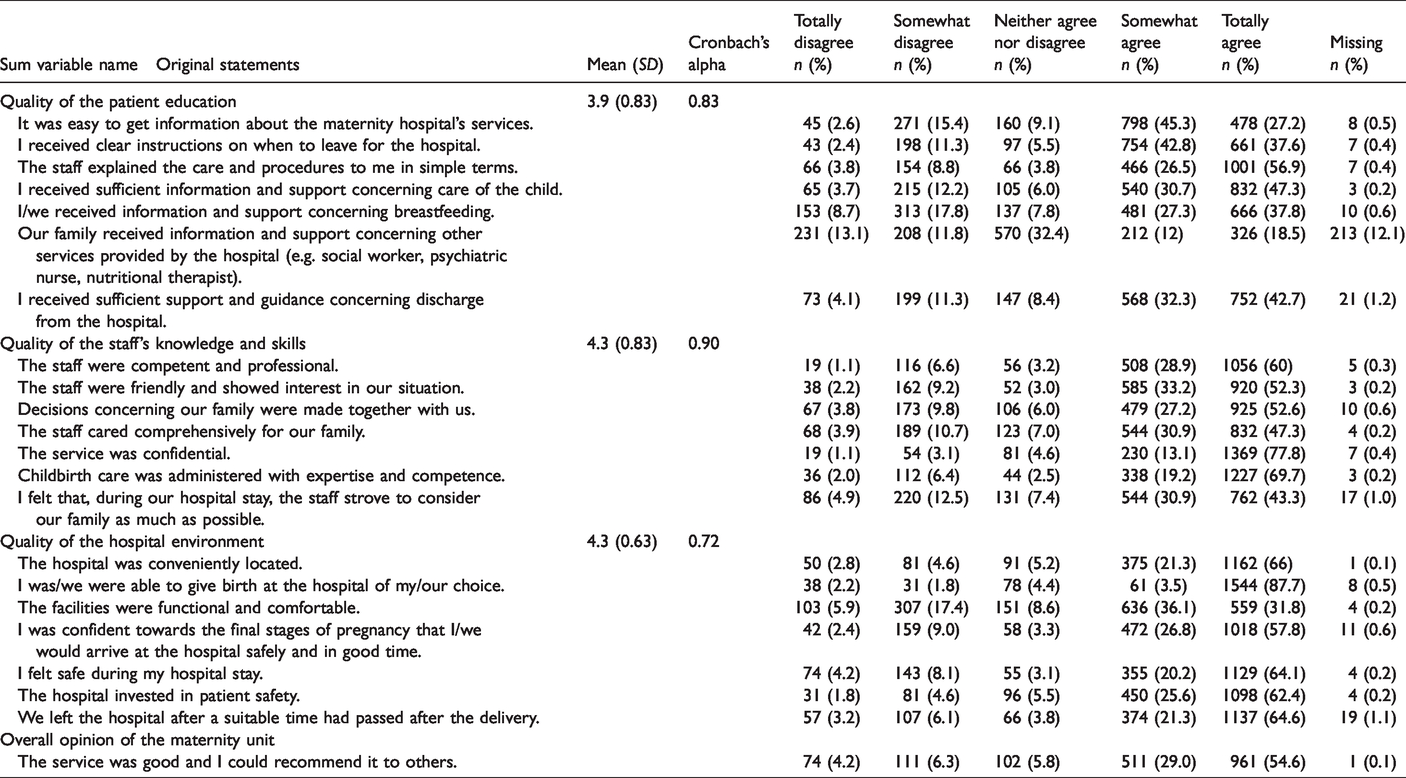
Mothers’ perceptions of the quality of maternity services (n = 1,760), sum variables, means and Cronbach’s alpha values.
Measurement
The questionnaire regarding the mothers’ perspectives of quality of maternity services was developed for this study based on research literature. In Finland there was no previously existing instrument suitable. 25 The questionnaire was developed by a group of four experts from the THL (Finnish Institute for Health and Welfare), six midwifery leaders from maternity units, and six midwifery teachers from universities of applied sciences. Usability of the first 11 statements in the questionnaire was evaluated by a software consultant. For content validity, the questionnaire was pilot tested (n = 15) in one hospital’s maternity unit. Based on the results of the evaluation and the pilot, five questions on the questionnaire were clarified. The survey was made available to both parents; however, in this study, only the mothers’ responses were analyzed.
The data were collected by the THL using an electronic version of the questionnaire. The third author (RK) was responsible for data collection procedures. Each maternity unit provided a contact person who instructed the staff to share information with mothers about the study verbally and/or in written form. The questionnaire was available in Finnish, Swedish and English, and mothers completed the questionnaire with their own mobile device either at the postnatal ward before being discharged or at home.
This study has potential sources of bias, including a short data collection period, low response rates in some units and an inability to ensure that all birthing women were recruited to the study. For example, first-time mothers were over-represented. However, these potential sources of bias have been accounted for and are discussed in the Discussion section.
Data analysis
The data were analyzed using IBM® SPSS® Statistics for Windows, version 24. The background variables were examined using descriptive statistics (frequencies, percentages, averages and standard deviations). The Likert variables were categorized under three sum variables based on the content of the items: ‘Quality of the patient education’ (7 items), ‘Quality of the staff’s knowledge and skills’ (7 items), and ‘Quality of the hospital environment’ (7 items; Table 2). Missing data are presented in the Results section.
The Cronbach’s alpha values 35 for this study varied between 0.72 and 0.90 (Table 2). Responses were categorized into three groups based on means and histograms: means ranging from 1 to 2.99 represented poor quality, means of 3 represented mixed opinions about quality, and means ranging from 4 to 5 represented good quality of maternity services. Relationships between the background variables and the three sum variables were examined using the Mann–Whitney U and the Kruskal–Wallis tests, according to the distribution of the variables which was explored using the Kolmogorov–Smirnov test. Statistically significant results of the Kruskal–Wallis test were determined through pairwise comparisons with the Bonferroni correction. 36 Statistically significant (p < 0.05) results are presented.
Ethical considerations
In Finland, according to the Medical Research Act (488/1999), and associated amendments (295/2004), this kind of survey does not require approval from a Research Ethics Committee.37–38 Approval was obtained from all maternity units before the survey was conducted, and the contact person at each maternity unit was informed about the study via a cover letter from the THL. Staff at the maternity units informed mothers about the study verbally and/or in written form. The questionnaire was anonymous, participation was voluntary, and refusal was permitted at any stage of the research without affecting the participating mother’s care. Completion of the questionnaire was considered informed consent to participate in the study. 39 The main author (SK), who analyzed the data, signed a non-disclosure agreement and received the data from the THL. The data were securely kept in electronic storage at the THL. Good, careful scientific practices were followed when handling and analyzing the data, which helped ensure the reliability and credibility of the study. 39
Results
In total, 1,760 mothers (20% of those eligible for inclusion) participated in the study. Their ages ranged from 17 to 50 years, with a mean age of 30 years (Table 1). Most mothers (94%) were native Finnish-speakers. Mothers’ parity ranged from 1 to 12. Fifty-seven percent (57%) of participants were first-time mothers, and 85% of all mothers had delivered vaginally. More than half of mothers (53%) delivered their babies in a university hospital, and nearly half (46%) received services in Southern Finland. Overall, most mothers (84%) evaluated the quality of maternity services as good, but every tenth mother (11%) evaluated the quality as poor.
Since this was a cross-sectional study and the mothers responded anonymously, it was not possible to ask reasons for non-participation or to remind eligible participants about answering.
The quality of the patient education
Mothers considered the quality of patient education rather good based on their perceptions (mean 3.9; SD 0.83; Table 2). Seventy-three percent (73%) of mothers received information on the maternity hospital services prior to admission, and 80% received clear instructions on when to leave for the hospital to give birth. Most mothers (83%) felt that the staff explained the care and procedures to them in simple terms. Most mothers also believed they received sufficient information and support concerning care of the child (78%), breastfeeding (65%), and hospital discharge (75%). Thirty-one percent (31%) of mothers received information about other services provided by the hospital.
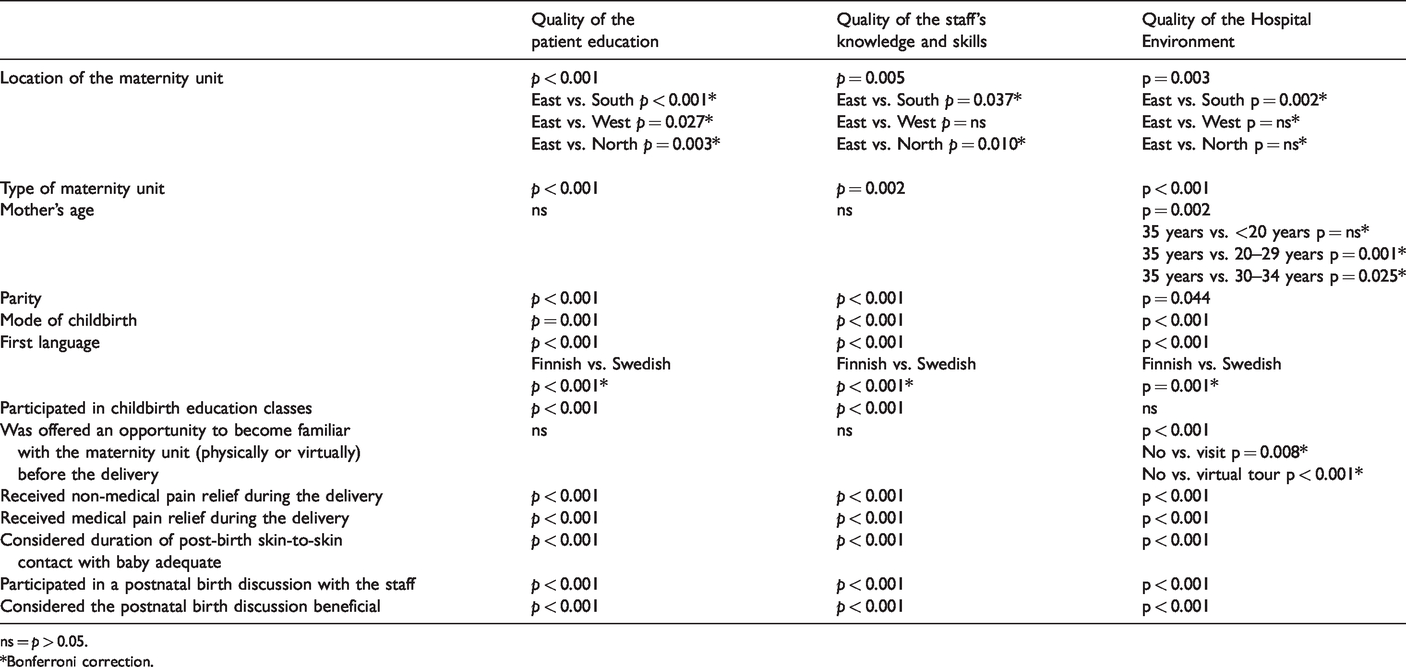
Mothers who gave birth at central hospitals or at other hospitals with a birthing unit were significantly more satisfied with the quality of patient education than mothers who gave birth at university hospitals (p < 0.001; Table 3). Mothers who delivered a baby at maternity units in Eastern Finland rated the patient education as higher quality compared to mothers who delivered a baby at maternity units in the Southern (p < 0.001), Western (p = 0.027) and Northern (p = 0.003) parts of Finland. Multiparous, Swedish-speaking mothers, and mothers who delivered vaginally were significantly more satisfied with the quality of patient education than primiparous (p < 0.001), Finnish-speaking mothers (p < 0.001) or mothers who had delivered by caesarean section (p = 0.001). Mothers who had not participated in childbirth education classes gave significantly higher ratings for the quality of patient education than mothers who had participated in them (p < 0.001). Mothers who were offered pain relief during childbirth, who considered the duration of skin-to-skin contact with her baby after birth adequate, and who had a postnatal birth discussion with the staff were significantly more satisfied with the quality of patient education compared with other mothers (p < 0.001).
Background factors associated with mothers’ perceptions of the quality of maternity services.
ns = p > 0.05.
*Bonferroni correction.
The quality of the staff’s knowledge and skills
Mothers considered the quality of the staff’s knowledge and skills good based on their perceptions (mean 4.3; SD 0.83; Table 2). Almost every mother thought that: the service was confidential (91%), childbirth care was administered competently (89%), and the staff were professional (89%). Eighty percent (80%) of mothers agreed that they were included in decisions concerning their family. Most mothers (86%) felt that the staff were friendly and showed interest in their situation. Seventy-eight percent (78%) of mothers agreed that the staff cared comprehensively about her family, and 74% believed the staff considered her family as much as possible.
Mothers who gave birth at central hospitals or other hospitals with a birthing unit were significantly more satisfied with the quality of staff’s knowledge and skills than those who gave birth at a university hospital (p = 0.002; Table 3). More mothers who delivered a baby at maternity units in Eastern Finland believed the staff were qualified, compared to mothers who delivered a baby at maternity units in the Southern (p = 0.037) and Northern (p = 0.010) parts of Finland. Multiparous, Swedish-speaking mothers and mothers who delivered vaginally gave better ratings to the quality of staff’s knowledge and skills than primiparous (p < 0.001), Finnish-speaking mothers (p < 0.001) and mothers who delivered by caesarean section (p < 0.001). Mothers who had not participated in childbirth education classes were significantly more satisfied with the quality of staff knowledge and skills than mothers who had participated in them (p < 0.001). Mothers who were offered pain relief during childbirth, who considered the duration of skin-to-skin contact with her baby after birth adequate, and who had a postnatal birth discussion with the staff gave significantly higher ratings to the quality of staff knowledge and skills compared to other mothers (p < 0.001).
The quality of the hospital environment
Mothers were generally satisfied with the quality of the hospital environment (mean 4.3; SD 0.63; Table 2). Eighty-five percent (85%) of mothers felt confident that they would arrive at the hospital safely and at the right time, and nearly all mothers (91%) were able to give birth at the maternity unit of their choice. Eighty-seven percent (87%) of mothers thought the maternity unit was conveniently located, and 68% agreed that the facilities were functional and comfortable. Most mothers (88%) thought that the maternity unit invested in comprehensive patient safety and 84% also felt safe during their hospital stay. Eighty-six percent (86%) of mothers felt that they left the hospital when a suitable time had passed after childbirth.
Mothers who gave birth at central hospitals or other hospitals with a birthing unit were significantly more satisfied with the quality of the hospital environment than mothers who gave birth at a university hospital (p < 0.001; Table 3). Mothers aged between 20 and 34 years at time of delivery, multiparous mothers, Swedish-speaking mothers, mothers who delivered vaginally, and mothers who delivered at a maternity unit in Eastern Finland were significantly more satisfied with the quality of the hospital environment than older (p = 0.002), primiparous (p = 0.044) or Finnish-speaking mothers (p = 0.001), mothers who delivered at maternity units in Southern Finland (p = 0.002), and mothers who delivered by caesarean section (p < 0.001). Mothers who had been offered an opportunity to become familiar with the maternity unit before the delivery, mothers who were offered pain relief during it, mothers who considered the duration of skin-to-skin contact with their babies after birth to be sufficient, and mothers who had a postnatal birth discussion with the staff rated the quality of the hospital environment significantly higher than other mothers (p < 0.001).
Discussion
The first research question was related to mothers’ perceptions of the quality of maternity services in Finnish maternity units. Mothers who participated in this study considered the maternity service quality in Finnish hospital maternity units good, and nearly every mother would recommend her maternity unit to others. However, mothers considered the quality of patient education, especially breastfeeding counselling, inadequate. Mothers were satisfied with the quality of staff’s knowledge and skills, and considered the quality of the hospital environment, excluding the physical environment, good.
While the quality of patient education was evaluated positively by the mothers, patient education received the lowest mean rating values for quality compared to other aspects of maternity services. Unlike the findings of previous studies,4,12–14,19,20,23,24 mothers in this study were generally satisfied with the amount of information and patient education they received from the maternity staff. However, mothers in this study found breastfeeding counselling inadequate, as in the findings of previous studies.13,20–24
Participating mothers were dissatisfied with the maternity unit’s physical environment. In earlier studies, mothers have appreciated a home-like environment that offers space for other family members to visit, but currently implemented hospital environments lack these features.4,20,23,42 Designs for new maternity units in Finland should account for families’ preferences as much as possible because family-centeredness should be the leading principle of maternity units.
Mothers who participated in this and previous studies felt that the maternity staff were friendly and professional, and that childbirth care was given with expertise and confidentiality.15,40 Investment in a positive relationship between mother and maternity staff is essential because mothers expect a caring attitude and empathy from the staff. As seen in previous studies,12,14 mothers in this study felt they were allowed to participate in decision-making concerning their care and felt that they were discharged from the hospital at a suitable time after childbirth. 22 In 2016, Finnish mothers stayed in the postpartum units at the maternity hospital for approximately 2.7 days, 33 which is near the average published by the Organization for Economic Cooperation and Development. 41 Finnish mothers are allowed to determine their individual hospital discharge time together with the staff, and it seems that mothers in this study did not feel that they were pushed to leave the hospital too early, as was the feeling of the mothers in the study by Zadoroznyj et al. 23
The second research question was associated with the relationships between the background factors and mothers’ perceptions of the quality of Finnish maternity services. One major factor affecting mothers’ perceptions of hospital maternity service quality was receipt of sufficient information.7,22 Therefore, maternity staff should provide sufficient patient education in general, and should particularly focus on breastfeeding counselling, which mothers of our study deemed inadequate. Besides adequate patient education, skin-to-skin contact between mother and newborn is crucial to breastfeeding success. 21 Like Hinic, 7 this study found that mothers who believed the duration of skin-to-skin contact with her baby was sufficient were significantly more satisfied with the quality of the maternity services. This finding suggests that maternity staff should ensure adequate skin-to-skin contact between mother and newborn to improve mothers’ perceptions of maternity services.
Prior familiarization with the maternity unit may reduce mothers’ possible fears. This study found that mothers who had been offered an opportunity to familiarize themselves with the maternity unit before childbirth, especially those who took a virtual tour of the maternity unit, were more satisfied with the quality of the hospital environment. Since millennial mothers are familiar with virtual technology, this technology should be a natural characteristic of the available maternity services. A recent study by Pflugeisen and Mou 15 corroborates this suggestion, which also aligns with the goal of the Finnish government to digitize the healthcare sector. 43
Mode of childbirth affects the whole postpartum period and the future health of mother and child. Hodnett 2 found that the more interventions there are during childbirth, the less satisfied the mother is with the childbirth experience. A mother who has a negative experience with her first childbirth may choose not to have any more children. The total fertility rate, which currently stands at 1.5 children per woman, 44 has been declining in Finland. Although several factors affect the birth rate in Finland, the impact of the childbirth experience should not be underestimated. Thus, care of primiparas and care of mothers who deliver by caesarean section should be special areas of focus for maternity services and for future research, as these mothers were significantly more dissatisfied with the quality of the maternity services.7,12,18,28,31 The childbirth experience should be evaluated by every mother, and special care should also be given to mothers who have traumatic childbirth experiences or an unexpected birth outcome. This study found that a postnatal birth discussion with the staff was significantly associated with the mothers’ satisfaction with the maternity services. Maternity staff should provide opportunities for mothers to reflect on their birth experiences before discharge, and afterwards, if necessary.
Giving birth is a major life event that the mother will remember for her entire life. Since practically every birth in Finland occurs in a hospital maternity unit, identification of and respect for mothers’ needs and experiences are important when making quality improvements to the maternity services at maternity units. The main goal of maternity units should be to ensure that every birthing woman is satisfied with the quality of the maternity services and has a positive childbirth experience. Mothers should be more actively encouraged to provide feedback about the maternity services they receive.
Mothers’ childbirth perceptions have been considered at the national level in Finland, as this first nationwide survey for postnatal mothers was launched. The same survey instrument was used across organizations so that the results among maternity units can be more easily compared, and so that benchmarking mothers’ satisfaction with maternity services is more straightforward. Understanding the background factors associated with mothers’ perceptions of hospital maternity services is crucial for fulfilment of mothers’ expectations of the childbirth experience, and thus for improvement of their satisfaction with the quality of hospital maternity services. Future research should more deeply explore mothers’ experiences with the maternity service quality in Finnish maternity units using mixed methods and should focus specifically on mothers who consider the quality poor based on their experience.
The results of this study add to the knowledge base of midwifery and nursing, since we identified some practices which should be developed. As for midwifery and nursing research globally, this study is an example of national measurement of quality of maternity services in one country from mothers’ points of view. Moreover, midwifery and nursing students can learn from these study results. Methodologically, this is an example of an instrument measuring quality of maternity services.
Methodological limitations and strengths
This research was performed according to a cross-sectional study design. The data were collected in autumn 2016, and represent the perceptions of those mothers who were invited to participate at that time. Thus, generalizability of the findings is limited. The questionnaire was used nationwide for the first time in this study, and no statistical testing was conducted to prove the reliability and validity of the entire questionnaire.
The data were collected from every maternity unit in Finland and, while staff were advised to invite every mother to participate in the study, we cannot be confident that all mothers who gave birth during the recruitment period were indeed invited to participate. Response rates may be underestimated because they were calculated based on the total number of mothers that gave birth during the data collection period according to the Finnish Medical Birth Register only. 33 First-time mothers were overrepresented in the study population sample, compared to the total number of mothers who gave birth in 2016 (58% versus 42%). 33
The reliability and generalizability of the findings of this study suffer from the low response rates; only two maternity units had an excellent response rate of over 65%. However, as noted above, the response rates may be underestimated. Also, the response rates for online surveys in general tend to be low, with an average of 33%. 46 Mothers who participated in the study completed the form soundly, suggesting that they consider these kinds of surveys important. Still, the low number of respondents may cause bias, and a significant group of mothers may have been excluded from the study. Since mothers participated in the study anonymously, subsequent reminders about the study, or maintenance of records from those who refused to participate was impossible.
As for the strengths of this study, the questionnaire was based on research literature and was developed with a group of experts. It was also pilot-tested, and based on the results, further developed. Internal consistency of the three newly formed sum variables was explored using the Cronbach’s alpha coefficient and the values were admirable (0.72–0.90), indicating strong internal consistency. 45 However, Cronbach’s alpha values tended to increase as the number of items in the questionnaire subscales became larger. Study findings pertaining to mothers’ background information aligned well with Finnish national statistics33 for characteristics such as mean age (30 years versus 31 years), mode of childbirth (caesarean section rate of 15% versus 16%), and the type of maternity unit (university hospital 53% versus 54%). Although three maternity units were excluded due to the lack of data reliability, the resulting sample size (n = 1,760) was satisfactory. Comparisons of the study data were performed, and the findings provide suggestions for improving the quality of maternity services. However, generalizations and international comparisons should be made with caution.
Conclusion and implications for practice
The study identified several different background factors that are associated with a mother’s perceptions of the quality of maternity services at a hospital maternity unit. Based on the results, development of midwifery and nursing practice should focus on breastfeeding counselling, sufficient pain relief, adequate duration of skin-to-skin contact and opportunities for mothers to reflect on their birth experience afterwards. In designing new maternity units, families’ preferences should be considered when possible. Giving birth is such a unique and astonishing experience that mothers should be given an opportunity to reflect on it with the staff afterwards. Maternity unit staff should also give special attention to the care and patient education of first-time mothers and mothers who deliver by caesarean section. These study results can also be used in midwifery and nursing education. Future research should more deeply explore mothers’ experiences with the quality of maternity services in Finnish maternity units using mixed methods, and should focus specifically on mothers who consider the service quality poor based on their experience.
Footnotes
Ethical approval
In Finland, according to the Medical Research Act (488/1999), associated amendments (295/2004), this kind of survey does not require approval from a Research Ethics Committee. Approval was obtained from all participating maternity hospitals before the survey was conducted.
Acknowledgements
The authors warmly thank all mothers who kindly participated in this study, and the Finnish Institute for Health and Welfare (THL), for the possibility to use the data collected by THL.
Funding
This work was supported by the Federation of Finnish Midwives.
Conflict of interest
The main author (SK) was working at one of the maternity units during the study recruitment period but was later assigned to perform data analyses. The other authors declare no conflicts of interest.
