




Abstract
The European Nursing Module was designed to enable nursing students to benefit from a short-term exchange, offering the opportunity to experience different societies, their culture and nursing culture. Cultural learning is essential in preparing students to co-work with patients and relatives who come from other cultural backgrounds. This descriptive study aimed to identify the situations and strategies valued by students and that contribute to professional and cultural learning during a short-term exchange programme. A online survey questionnaire was answered by 329 students attending a cross-European module. From their experience students valued highest: time to observe and understand, awareness of their own culture, a positive attitude, opportunities to compare differences and similarities, sharing and communicating. Valued stepping-stones were, to realise and respect differences and a chance to reflect. More studies are needed on the role of the observer and the impact of reflection on a short-term programme.
Introduction
The European Nursing Module (ENM), was founded in 1994 and today consists of 33 educational institutions which offer nurse education bachelor programmes across 16 countries: Belgium, Bulgaria, Denmark, Finland, France, Italy, the Republic of Macedonia, the Netherlands, Norway, Romania, the Russian Federation, Serbia, Spain, Sweden, Switzerland and the United Kingdom. The member institutions have an annual management meeting to sustain and develop the programme. The primary stated aim is to develop a student's awareness of and respect for a client's individual culture. To this end, the network offers exchanges, two-week placements three times a year, with approximately 200 exchanges annually. The students participating must be at least one year into their programme and have clinical experience from their home institution before applying for an ENM exchange. As the language of the ENM is English, the students have to be comfortable applying in that language. A central coordinator allocates the students to available placements according to the choices the students have made. The ENM was designed to allow students unable to commit to a long exchange visit to benefit from a short exchange programme where they would meet students from different countries and, during their stay, experience a different culture with the opportunity to discuss the country's nursing culture. 1
Cultural learning is seen as essential in nursing programmes across Europe; it prepares students for the growing social and cultural diversity in nursing, and toward a multicultural practice.2,3 Students need to experience different cultural perspectives in order to understand ‘otherness’ in communication and interactions with their patients. 4 Students can gain these cultural experiences through an exchange programme and studies confirm the impact these exchanges have on a student's cultural learning process. They indicate that students grow and develop personally,5–10 and gain both personal and professional competence and maturity.8,11 This personal growth is identified as taking the form of heightened self-awareness,6,12 independence, confidence and autonomy. 11
Most research on cultural learning outcomes has focused on exchange periods longer than just a few weeks, but a few studies have challenged this. An old study, exploring the long-term impact of a study period abroad for nursing students, found that they developed an enhanced international perspective, and higher personal and intellectual development. Although this article credited these benefits as being greater following long-term programmes (12–16 weeks) it also acknowledged the value of shorter-term programmes (2–4 weeks). 13 Recent studies on students’ cultural adaptability, showed significant change after just such a short-term exchange.14–16 A study using a pre and post-test based on Campinha-Bacote's Cultural Competence Model showed increased cultural competence after a short exchange programme. 5 Caffrey et al. found that a short exchange of five weeks changed students’ values and attitudes, which had an effect on their cultural competence, when compared with students who did not have clinical experience in another country. 17 Fry et al. conclude that short-term exchanges can have significant impact on the cultural learning of students. 18
Research has identified the following key aspects as having a positive effect on students' cultural learning and experience:
A well-planned programme, offering support, the opportunity to discuss and meet students' expectations and aspirations
19
with time to reflect on the experience.20,21 A student's preparations prior to exchange, their previous experience, personal resilience, and their desire to understand culture,
21
as well as a willingness to take risks.
6
Motivation, engagement in the learning process and an effort to develop cultural competence.10,22 Travelling in pairs, as this seems to reduce cultural shock.
6
Interpersonal connections during an exchange and a social network in which to socialise are seen as important.
9
Having the ability to cope with being an outsider and to adapt to an unknown environment, to deal with communication in a foreign tongue are all-important skills.19,21
We do not know if these benefits apply to shorter programmes such as the two weeks offered by the ENM. The information we do have on ENM students' cultural development arises from their self-evaluations collected for the last 12 years, using a format which asked students to self-report their experiences against the aims of the module. The results confirm that experience abroad affects cultural learning as respondents always scored highly the following questions:
To what extend did the module develop your understanding of cultural issues? To what extend did the module develop your understanding of professional culture?
What we do not know is what key aspects the students perceive as important for their cultural leaning in a short exchange programme. The aim of the study was therefore to explore what situations and strategies, according to ENM exchange students, contribute toward cultural learning in a short exchange programme.
Gaining more knowledge from students themselves enables the research team of the ENM Network to provide information to the member institutions, and others working with the cultural learning process, in order to improve the level of coaching and the format of an ENM exchange.
Method
Intervention and participants
The format of the ENM includes a two-week exchange at a host institution, with time for preparation and a period of debriefing and reflection at the home institution – the whole period awards the student 6 ECTS points (ECTS = European Credit Transfer and Accumulation Score). During the exchange, the students visit clinical practice for a minimum of 30 hours over the two weeks, write a reflective diary, attend reflective sessions with in-depth analysis, and attend cultural activities, and the visit ends with a face-to-face evaluation with the host coordinator. Participants are allocated by the central coordinator in a way that ensures a cultural mix, e.g. students from Spain, Norway and the UK are placed at a host institution in Romania in order to enhance their cultural insight and reflection. During the preparation period, students are encouraged to learn about the country they are about to visit, its history, healthcare system, language and food etc., as well as the aims and outcomes of the ENM, and how to participate as an observer. When they return home, the students attend a session where they reflect even further on their experiences. All 457 ENM exchange students in the study period were invited to participate in this study.
Developing the questionnaire
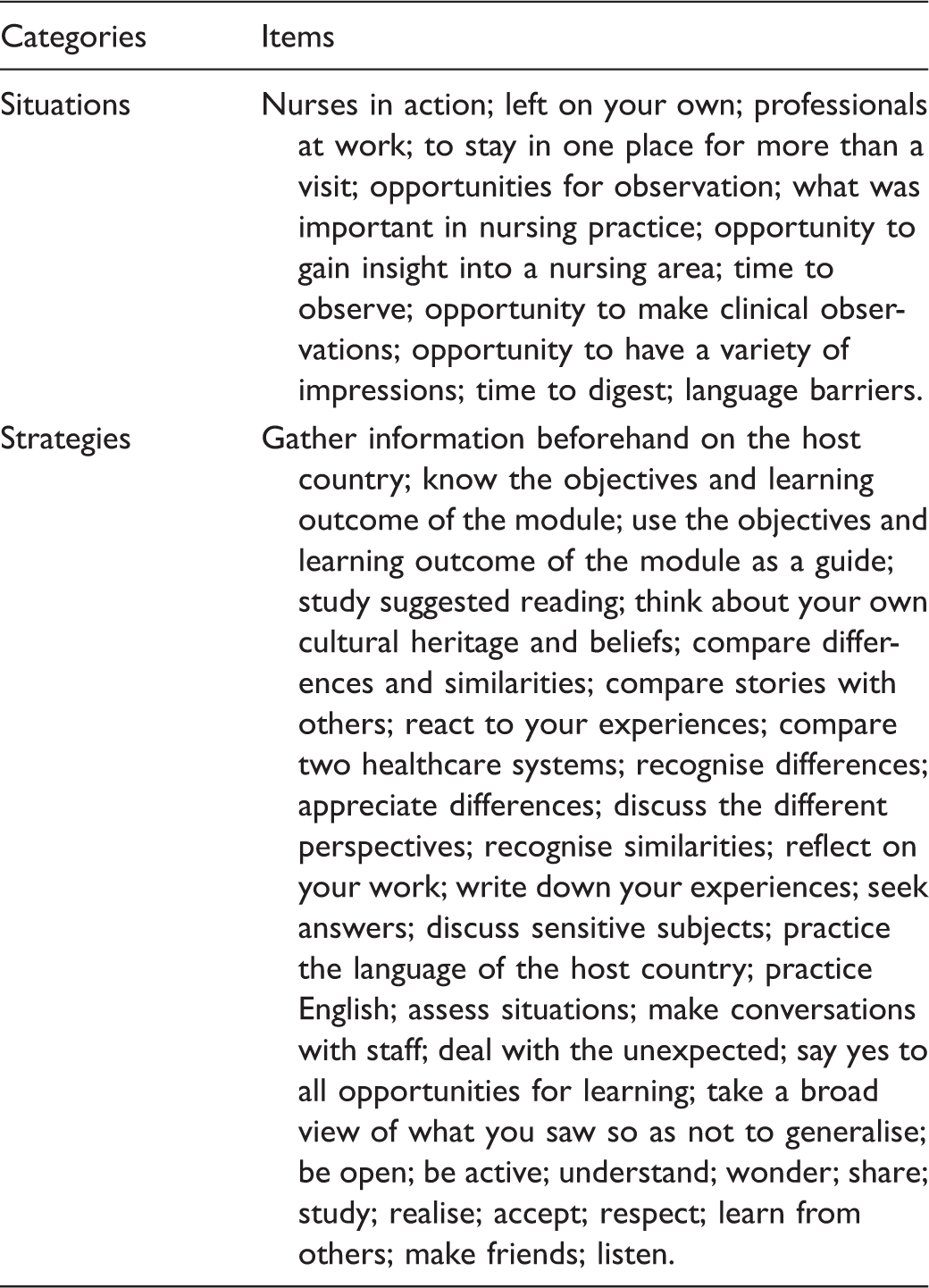
The categories and items associated with intercultural learning identified from qualitative analysis and utilised in developing the questionnaire.
Responses on understanding of cultural issues and professional culture.
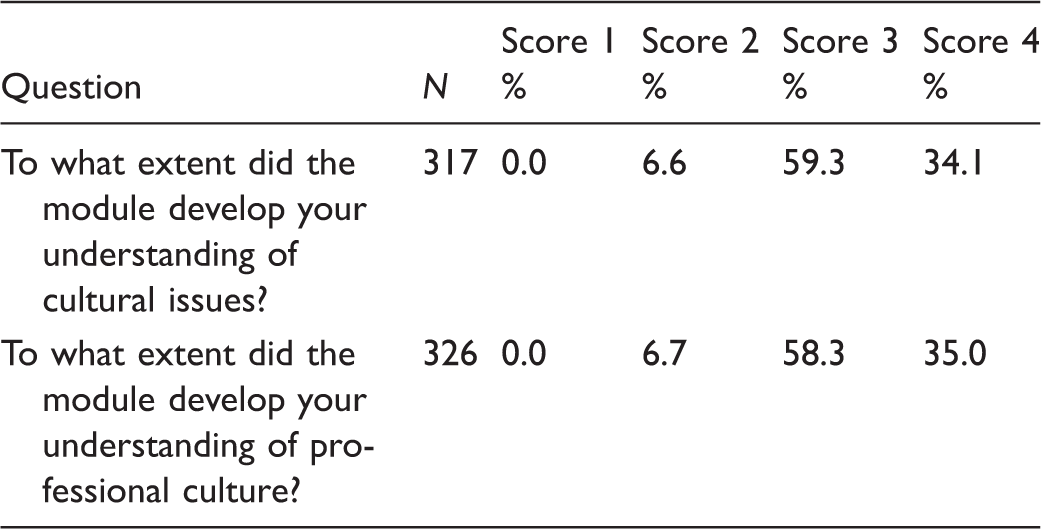
Note: Score 1 indicates lowest score (not at all), Score 4 indicates highest score (completely)
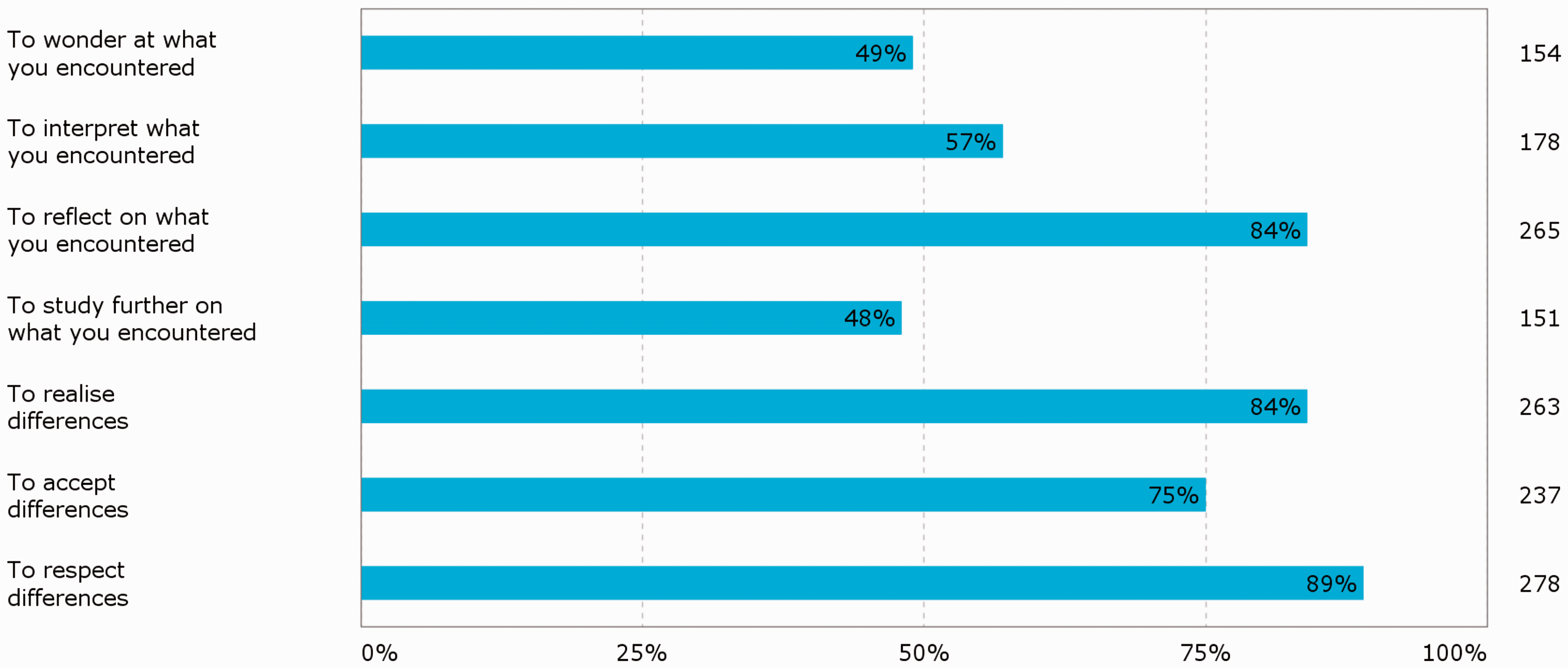
Which of the following processes went on in your mind during your exchange that you can recognise as ‘stepping-stones’ to your understanding of cultural issues? Mark the five that were the most important for you.
Analysis
The descriptive study included eight exchange periods from October 2012 until March 2015. The students responded online using SurveyXact, after completing their ENM visits. The questionnaire was available for all students participating in the ENM exchange programme. Three hundred and twenty nine completed questionnaires were included in the analysis (72% of possible respondents). Data were analysed using SurveyXact for the descriptive analysis.
Ethics
In accordance with the Committee Law Section 14, Part 2 The National Committee on Health Research Ethics, Denmark, 25 this study did not have to be approved by the committee. All students answered the questionnaire voluntarily. Data were analysed anonymously.
Results
The results are presented according to the structure of the questionnaire. In describing the results, we refer directly to the phrasing in the questions. We dichotomised the responses into ‘disagree’ (‘strongly disagree’ and ‘disagree’) and ‘agree’ (‘agree’ and ‘strongly agree’) to show a clearer picture of the results.
Of all the responding students, 91% were female. Six per cent of the students were under 20 years old, the majority of the students (77%) were 20–25 years old, 10% were 25–30 years old and 7% were over 30 years old. The students exchanged from 13 different European countries (Belgium, Bulgaria, Denmark, Italy, the Republic of Macedonia, the Netherlands, Norway, Romania, Serbia, Spain, Sweden, Switzerland and the UK) and 26 different nursing institutions to 14 different European countries (Belgium, Bulgaria, Denmark, Italy, the Republic of Macedonia, the Netherlands, Norway, Romania, the Russian Federation, Serbia, Spain, Sweden, Switzerland and the UK) and 29 different nursing institutions.
Understanding cultural issues and professional culture
Of the students, 93% scored 3 or 4 in response to the two main questions on to what extent the module developed their understanding of cultural issues and professional culture (Table 2).
Situations that helped you to acquire professional cultural learning
Which of the following situations helped you to acquire professional cultural learning?
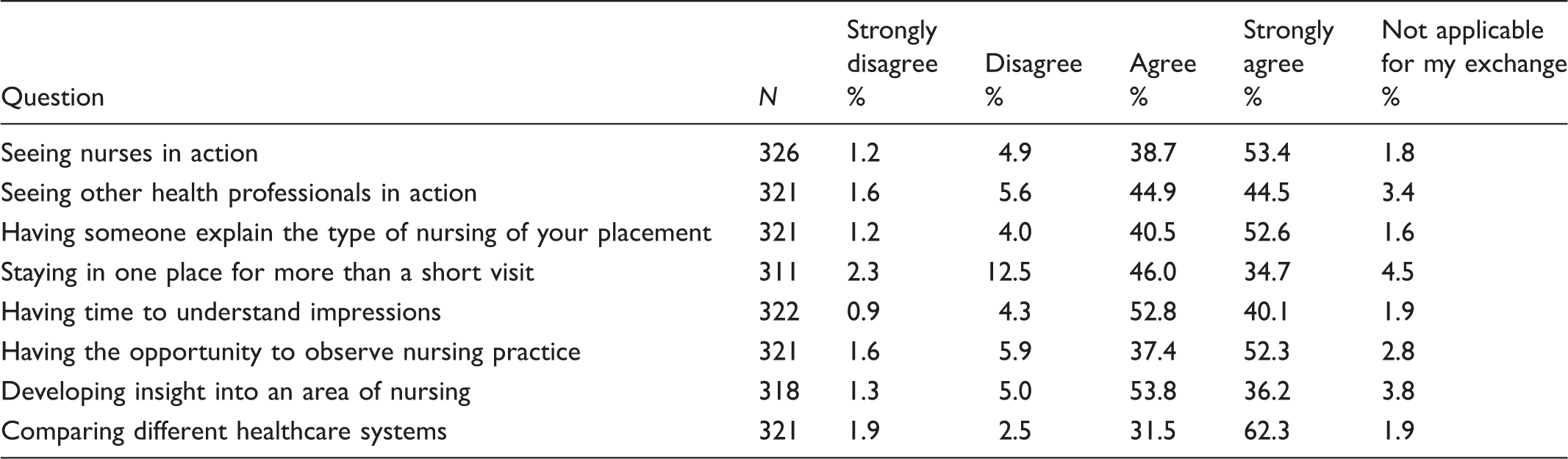
Situations that helped you to acquire cultural learning
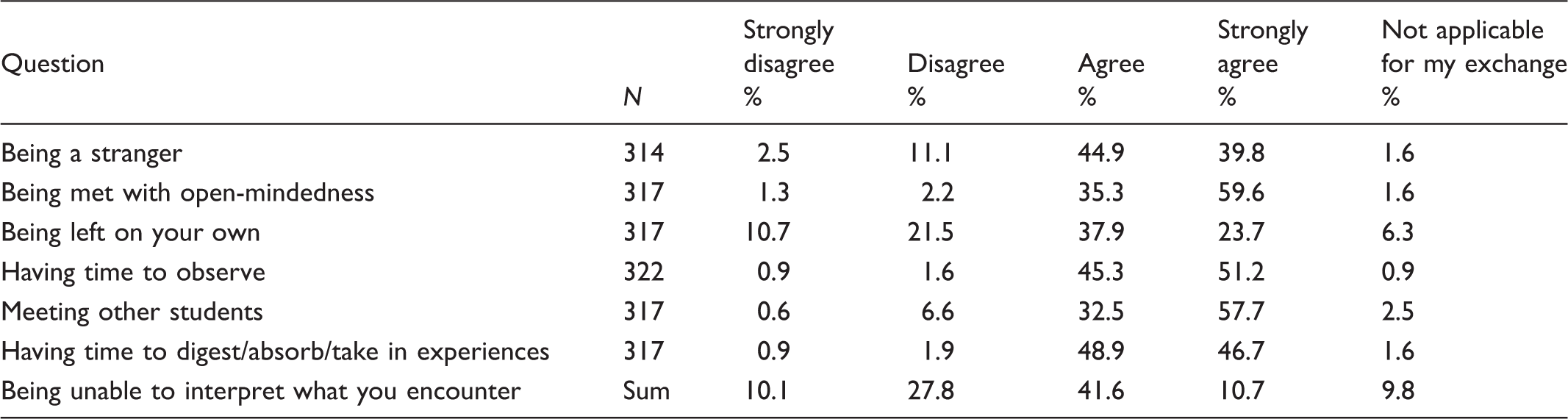
Which of the following situations helped you to acquire cultural learning?
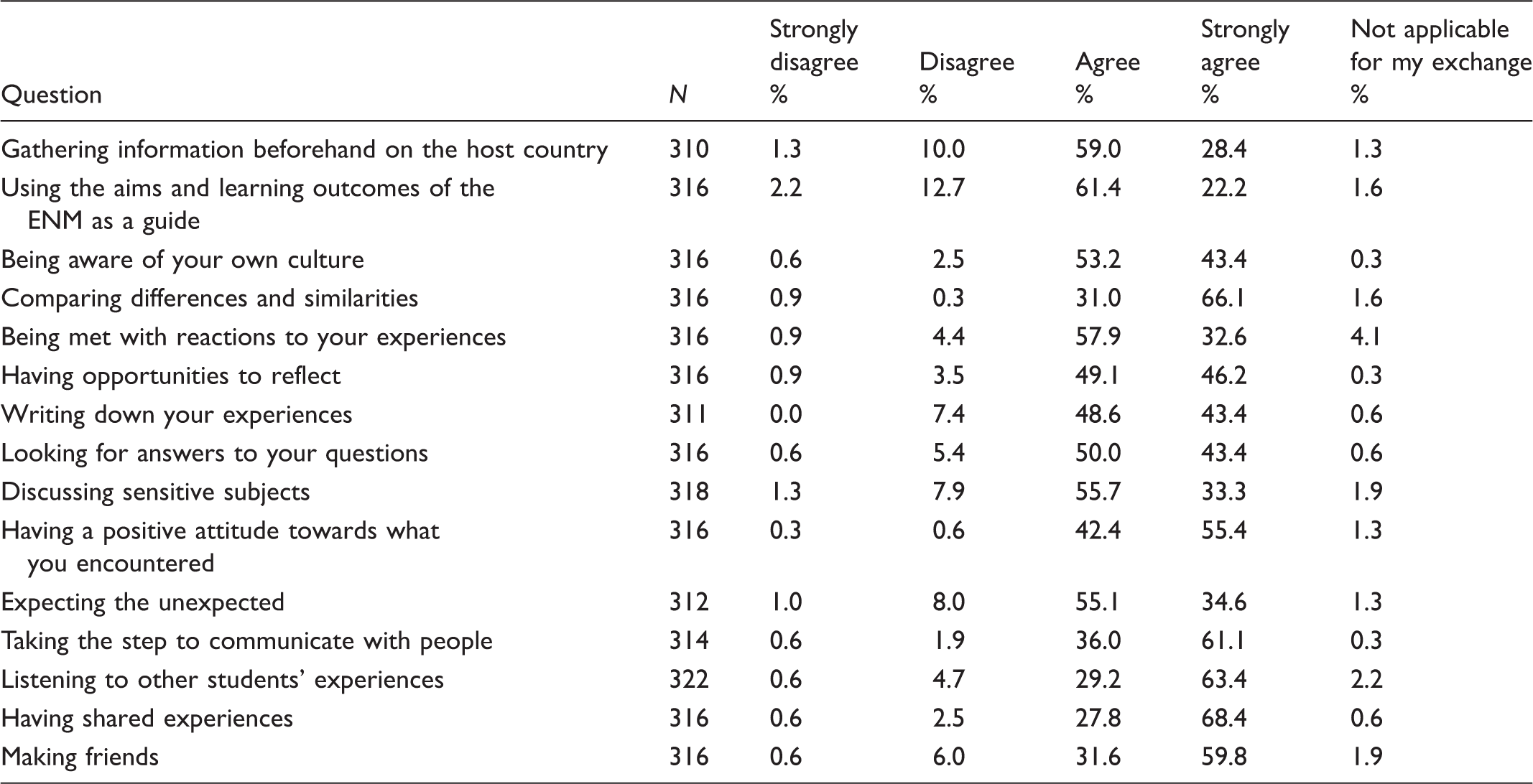
Which of the following strategies helped you to acquire cultural learning?
ENM: European Nursing Module.
Strategies that helped to acquire cultural learning
Strategies that were especially helpful for acquiring cultural learning were ‘comparing differences and similarities’ (97%), ‘having a positive attitude towards what you encountered’ (98%), ‘being aware of your own culture’ (97%), ‘taking the step to communicate with people’ (97%) and ‘having shared experiences’ (96%) (Table 5). Also very positive were ‘having opportunities to reflect’ (95%), ‘listening to other students’ experiences’ (93%), ‘looking for answers to your questions’ (93%), ‘writing down your experiences’ (92%) and ‘making friends’ (92%). Less helpful were preparation strategies, e.g. ‘gathering information beforehand’ (87%) and ‘using the aims and learning outcomes of the ENM as a guide’ (84%). The same applies for ‘discussing sensitive subjects’ (89%).
Mental processes toward understanding cultural issues
The five most important internal mental processes or ‘stepping-stones’ for the students in order to understand cultural issues were: ‘to respect differences’, ‘to reflect on what you encountered’, ‘to realise differences’, ‘to accept differences’ and ‘to interpret what you encountered’ (Figure 1). The processes recognised as less helpful ‘stepping-stones’, by less than 50% of the students were: ‘to wonder at what you encountered’ and ‘to study further on what you encountered’.
Discussion
The response rate should be sufficient to give an overview of how students value the various strategies available to them in developing their cultural learning, and identifying specific situations that have an impact on the learning process.
There are, however, some limitations to this study. The questionnaire was in English, which, as a second language for most students is a common limitation when evaluating a trans-European project. The questionnaire was pilot tested on students from several member countries. However, in the main study the language difference might have affected understanding of the questions. Students were expected to complete the questionnaire no more than two weeks after finishing their exchange, however, some students might have done it considerably later, which could also have had an influence on the answers they gave. The questionnaire was designed around the topics that came up from a qualitative analysis of the available literature and from studies on intercultural learning as well as responses from previous ENM exchange students. In the transformation of situations and strategies into the questions, some questions might be interpreted more like a strategy than a situation and vice-versa. However, the definitions do not affect the results of the study as the students' answers still produce a picture of how they value each aspect.
From previous evaluations of the module, we knew that students valued the exchanges highly, and considered the module a help in developing their understanding of cultural issues and of professional culture. In this study, we wanted to find out what was important to this learning process. What external situations or actions would the students identify as contributing to their learning, and how did they rate the different strategies? The aim of the study was therefore to explore what situations and strategies, according to ENM exchange students, contribute toward cultural learning in a short exchange programme.
Most students scored the two general questions highly: ‘to what extent did the module develop your understanding of cultural issues?’ and ‘to what extent did the module develop your understanding of professional culture?’ This result is consistent with the findings of the ongoing evaluation of the ENM programme. This is also consistent with other studies, where students identified that an exchange added to their understanding of other cultures and, as a result, of their own.8,10,11
We found that almost all participants were satisfied with the situations offered by the programme and the strategies used by the students. The opportunity to experience nursing in another country as an observer is an integral part of the experience in this short exchange programme and is highly valued by the students. Research shows that exchanges enrich and enlighten6,7,10 and develop students both personally and professionally, but in those studies the exchanges allowed the students to practice and provide nursing care. What was most likely helpful to the learning process was the universal nature of nursing; the role was both familiar and safe to them. 26 Some observations might have been difficult for the students to interpret because of ethical or intercultural differences. Language could make it even more difficult between the student and the explaining nurse as English was not always their first language. Finer nuances may have been lost.6,7,12 The learning outcomes of exchanges where students have the status of an observer require further study.
Experience of cultural difference seems to be key for students’ learning in this study, and from other studies. It seems to increase the exchange students’ tolerance towards others.8,10 This experience and learning process can lead to transformed beliefs. 12 Students’ awareness of differences allows them more easily to accept and adapt culturally.7,8 To be aware of their own culture and able to discuss sensitive subjects also seemed to help the students to acquire cultural learning. How this came about during the ENM exchanges we cannot tell from this study, but during the exchange the students might have had difficulty reconciling a culturally defined behaviour in the host country they considered unethical from their own cultural perspective. 27 Recognising our own assumptions is the first step towards dealing with them. 28 Theories of cultural learning describe how addressing cultural difference and discussing the challenges, allow us to examine our own cultural and professional values, and identifying where they differ improves our cultural understanding.29,30 Awareness of our own culture and cultural differences experienced during an exchange visit seems not in itself enough to develop cultural understanding or competence. The process ‘involves increased self-reflection in which one is able to experience others as both different from oneself yet equally human’.27(p.123) This process is supported by interaction with people from different cultures.(27,31)
Most students agreed on the importance of reflection as a strategy. However, less than half of the students ‘strongly agreed’ and some disagreed. Theories on cultural learning32–34 and a number of studies have found reflection to be essential in the cultural learning process.7,9,14,22,27,35 Through guided reflection students should be challenged about their experiences, attitude and values in their interactions with local colleagues and patients.14,27,35,36 In the ENM exchange, reflection consists of reflective sessions and keeping a reflective diary, but in this study, apparently these activities do not appear to be fully appreciated by the students.
Research indicates that intercultural learning is difficult to achieve when students are left on their own. 36 This was not confirmed by our study, and this result needs to be explored further, as well as the results showing that students agree on ‘being a stranger’ and ‘being unable to interpret what you encounter’. Edgecombe says, for example, that ‘socialisation is known to be more difficult for international nursing students who experience isolation, loneliness, discrimination, communication and cultural adjustment problems’.19(p.139) This study confirms the importance of interaction between students. Studies on exchanges of longer duration found that both learning experiences and outcomes were enhanced by interpersonal connections 9 and many students were found to have developed lasting friendships after an exchange placement.7,37 The fact that the central coordinator arranges placements for ENM students allowing them to meet students from the host country and from other participating countries may account for some of the positive effect of this short exchange.
The questions on students' preparation were graded the lowest score of the strategic items. Other research highlights that preparation has an impact on the learning outcome of an exchange21,27 and so these results seem problematic. As Hammer emphasises, a structured preparation helps students to get the most from an exchange, and from the learning process. 27 Campbell and Walta discussed the fact that studying the country students are to visit can bring them a long way in their effort to get to know what they are going to meet culturally and professionally, but it will not prepare them for the emotional impact of the experience. 35 A meeting with a supporting tutor to reflect on specific issues, such as exploring preconceptions and ideas about respecting differences both culturally and professionally, 35 can lead to an openness for the visit and what they encounter, and to a reflective process of deeper learning. 38 In the preparation week for the ENM, a meeting was scheduled but this study does not cover the impact of this and interpreting the value placed by students on preparation is therefore difficult.
Conclusion
To conclude, after participating in the ENM – a structured short-term exchange programme – almost all students were satisfied with most situations offered by the programme and by the strategies they used during the exchange. For the cultural learning process, they rated highly situations such as having time to take in an experience, to observe, and strategies concerning awareness of one's own culture, comparing differences and similarities, sharing experiences, communicating with people and having a positive attitude towards what you find. This study indicates that more information is needed on how reflection is incorporated into a short-term exchange programme for students to value this as the highly potent learning strategy research suggests that it is. The status of the exchange student as an observer, the impact on the student's learning process when left to their own devices and when they experience being a stranger, also need further research.
Footnotes
Funding
This research received no specific grant from any funding agency in the public, commercial, or not-for-profit sectors.
Conflict of interest
The authors declare that there is no conflict of interest.