



Abstract
Boys’ love (BL) fiction has flourished in China since the beginning of the twenty-first century. It primarily focuses on the romance between men, while most authors and readers of BL fiction are heterosexual women; thus it is paradoxically patriarchal and feminist. This study aims to explore two main questions: (1) What topics do Chinese BL fiction authors prefer? (2) How do the gender concepts of Chinese culture affect the topics and contents of BL fiction? Adopting machine learning methods––the Latent Dirichlet Allocation (LDA) topic model and word vector technology—this study presents the typical topics and specific contents of 72,548 original BL fiction pieces from synchronic and diachronic dimensions. The findings reveal that Chinese BL fiction extensively uses Chinese myths and history to create heterosexually structured fantasies. Furthermore, under the Chinese patriarchal culture, primarily the clan concept, BL authors attach great importance to marriage and reproduction issues. Such discourses eventually limit Chinese BL women authors’ awakening of a feminist consciousness.
Introduction
There is no other field of literature that reflects the current ethos in China like constantly updated and edited online fiction. For women, the open online space brings together individuals with different interests, providing them with the chance to express their thoughts and even forge a form of digital feminism (Chang and Tian, 2021). Among the various genres of women's literature, boys’ love (BL) fiction is an unconventional one, primarily focusing on the romance between men but typically created by and for heterosexual women. That is, BL fiction does not always reflect the reality of gay men, and the opposite gender of its authors and protagonists produces an imaginary male–male love (Zhou et al., 2018). In contemporary China, BL fiction's rapid development as an important form of women's culture makes it relevant to understanding Chinese women's consciousness (Tian, 2020).
Although it originated in Japan, BL fiction shares similar features to slash fiction 1 in the West. BL fiction is influenced by European literary aestheticism; therefore, it is also referred to as “tanbi”, meaning “to indulge in beauty” (Kurihara and Kakinuma, 1993: 325–335). During the 1990s, Japanese BL fiction became known in the Chinese mainland through translations from the Taiwan region. Inspired by them, Chinese women authors began to create original BL works online. The high number of Internet users in China facilitated an exponential increase in these stories and the creation of several influential communities and websites devoted to BL fiction. The most well-known BL website is Jinjiang Literature City (JLC) (http://www.jjwxc.net), established in 2003. As of December 2021, JLC had hosted over 80,000 BL fiction stories and had 50.95 million registered users, with female users accounting for 91% of the total. 2
Existing studies have discussed BL works from Europe, America, China, Thailand, and Japan (Pagliassotti, 2008; Feng, 2013; Mizoguchi, 2015; Chiang, 2016; Zhang and Dedman, 2021), including BL comics, novels, movies, and TV dramas (Martin, 2012; Wong, 2020; Ng and Li, 2020; Xu and Tan, 2021). When discussing the cultural attributes of Chinese BL fiction, researchers have mostly regarded it as a modern or postmodern counterculture against Confucianist cultural norms (Chang and Tian, 2021), while paying less attention to the possible remnants of the patriarchal traditional culture and clan system. In addition, the relevant literature has primarily adopted qualitative methods, such as interviews, questionnaires, and textual analyses of representative works. Although their conclusions have greatly enriched our understanding of gender perspectives in BL novels, their research objects were always limited to those within their visible range, causing them to fail to grasp the whole picture and to overlook works that, while not popular, have a certain impact on authors and readers.
Tracing the origins of Chinese BL fiction, Japanese BL fiction (yaoi) had two principal characteristics, namely Western contexts and tragic plots (Mizoguchi, 2015: 26–27). These aligned with the pursuit of supreme beauty and sensory pleasure under aestheticism. Following two decades of growth, Chinese BL fiction has already departed from its Japanese forebear and developed its own tastes. As an article in The New York Times stated, BL fiction in China is too large to be considered a subculture in comparison with its Japanese counterpart (Tatlow, 2014). Besides, owing to the Chinese government's anti-pornography campaign, nowadays, no sexual scenarios appear on legal websites (Yang and Xu, 2017). The resulting unique and implicit depiction of love is like “slow-burn heat” (Luskey, 2019), making BL stories close to mainstream popular culture. In this study, we aimed to map the topics of Chinese BL fiction, analyzing whether they were defined by China's cultural features.
As BL fiction has become a burgeoning women-centered culture in China that involves millions of women authors, we are interested in understanding their consciousness through such literary works. Although there do exist male authors and readers of BL fiction, the data show that its authors and audience have primarily been heterosexual women (Pagliassotti, 2008). This phenomenon produces a contradiction: the market for BL fiction belongs to women, but the main protagonists are men, thus encompassing both feminist and patriarchal ideas. Therefore, we further explored contents of Chinese BL fiction from women authors’ perspectives, specifically the paradoxical gender consequences brought by Chinese traditional ethics.
We adopted unsupervised machine learning text analysis methods to analyze the titles and introductions of 72,548 of JLC's original BL fiction pieces from 2003 to 2019. To ensure the robustness of the results, we further repeated the modeling process using the top quarter and the top half of all pieces according to the JLC website’s internal ranking system (see the following). Text analysis methods can scan extensive amounts of text macroscopically, finding objective and universal patterns (Grimmer and Stewart, 2013; Cui, 2018; Eads et al., 2021). In this study, we applied the Latent Dirichlet Allocation (LDA) topic model to classify the topics of BL fiction works and word vector technology to analyze the context of keywords related to gender synchronically and diachronically. These analyses were designed to answer two questions: (1) What topics and contents do Chinese women BL authors prefer? (2) How do the gender concepts of Chinese culture affect the topics and contents of BL fiction?
Literature review: Gendered perspectives
Elaine Baruch (1991: 9) stated in her work Women, Love, and Power that great love literature could help us look for the transcendence of gender polarization and disrupt the hierarchically structured male/female binary system. In a sense, BL fiction is “great love literature” from its readers’ and authors’ perspectives. This genre, which constructs a “female gaze” through consuming male erotica, can be considered a dismantling of the “male gaze” (Meyer, 2013).
Although one of the drawbacks of using online fiction data is that self-reported gender is potentially inconsistent with biological sex due to the anonymity of users, studies have shown that BL authors and audiences are mainly heterosexual women, often called “fujoshi” (“rotten girls”) in Japanese (Pagliassotti, 2008). Additionally, the majority of studies about male–male romance focus on women authors and readers (Feng, 2009; Zheng, 2016; Chiang, 2016; Zhou et al., 2018; Chang and Tian, 2021). Considering the significant proportion of women users reported by JLC, it is reasonable to approach the analysis of its data through a gendered perspective with a focus on feminism. The studies of gender in BL fiction have focused on the impact of gender descriptions on readers’ intentions and their identities (Yi, 2012; Nagaike and Suganuma, 2013). For the former, scholars such as Pagliassotti (2008) found that the “pure love” gender-absent dimension of the stories, which avoided one-dimensional female characters and “boring” heterosexual narratives, was the primary attraction for the audience. Furthermore, Zsila et al. (2018), using an online survey, found that sexual titillation, visual imagery, and aesthetics explained readers’ preference for BL fiction.
Other researchers have focused on the authors’ intentions, as conveyed in the text of a work of fiction. When Jenkins (1992: 191) researched slash fiction (which is similar to BL fiction) in China, he considered that the transition in these stories from male homosocial desire to homoerotic passion to be an exploration of alternatives to traditional masculinity. Since BL fiction belongs to women's literature, Takemiya (1993), a Japanese BL manga artist, believed that BL works negated the subservient gender role imposed on women, helped women liberate themselves from the oppression of male power, and facilitated feminism. One Chinese scholar went further by invoking Michel Foucault's constructivism to argue that women created a “heterotopia” through BL to compete for discursive space and resist patriarchy (Zheng, 2016).
The studies discussed above presented the feminist significance of BL fiction. However, recently, an increasing number of studies have analyzed the anti-feminist features of BL stories. For example, Zhou et al. (2018) studied the heterosexual romantic ideal in BL fiction and found that power differences are still present in the relationships between the male characters. In particular, the fixed coupling of “seme” (the attacker in Japanese, referring to the penetrator in sex) and “uke” (the receiver in Japanese, referring to the penetrated in sex) 3 imitates the typical male–female relationship that produces unequal power. Han (2020) also highlighted that Chinese BL authors often allow male protagonists to behave like heterosexual women in the male–male relationship, while women are absent in these relationships. This phenomenon suggests that the burden of sexual objectification cannot disappear easily. “The male gaze would not be simply inverted to produce a straightforward female gaze” (Burston and Richardson, 1995: 32), which means the female gaze cannot consume the other gender as completely as the male gaze can. Therefore, it is unreasonable to assume that feminist ideals completely dominate the female gaze.
Although there are controversies regarding BL fiction's feminist features, it is undeniable that power-related issues remain crucial in the study of gender in BL fiction, not only reflected in anti-patriarchal gender power, but also manifested in the resistance to the mainstream culture. As Foucault (1979: 48) points out in The History of Sexuality, pleasure and power are linked by complex mechanisms and devices of excitation and incitement while they seek, overlap, and reinforce each other. When women BL authors enjoy their erotic desire through the two male protagonists, their pleasure is also associated with power (Bai, 2021). However, to interpret any narrative about imbalanced power relationships as only a social-structural innuendo is unfounded. It is likewise reasonable and theoretically justifiable to hypothesize that, given China's rich ancient history, systematic ethics, and literary heritage, the traditional culture has greatly influenced women's writing. Some longstanding patriarchal values—including the importance of marriage and maintaining the continuity of one's clan through reproduction—may help to explain the content of BL fiction. Therefore, the context of Chinese traditional culture should be explored when analyzing gender power in Chinese BL fiction.
Methods: Machine learning
We implemented text mining methods to explore unstructured textual data drawn from the corpus of BL fiction. This methodology was chosen for the following three reasons: (1) We planned to obtain a complete picture of Chinese women BL authors’ literary production, which could only be achieved with large-scale text analysis; further, any part of the data can enable further representative studies. (2) Compared with questionnaire surveys and qualitative thematic analyses, text mining of Chinese BL fiction is a more objective method by which to explore topics and gendered expressions. (3) Different from quantitative methods that use computer programs to search texts for keywords, the LDA topic model and word vector technology of text mining methods explore the meaning of the text by fully considering the relations between terms (DiMaggio et al., 2013).
Data source
We selected JLC as the data source, which is the largest and most well-known online platform for BL fiction in China and globally. Various studies have used JLC for a case study and have analyzed data from JLC. Several have focused on the site's business model (Jiang and Kuang, 2016), whereas others have examined its feminist implications for Chinese women's literature (Feng, 2009). The website has a feature of strong interactivity. Since its fiction is mostly serialized, readers’ preferences strongly influence the story's completion. Like sponsors, online reading communities give emotional and financial incentives to authors through comments and rewards (Tian and Adorjan, 2016). Their support even forms a “gift economy” that provides authors with the opportunity to contract with JLC and publish commercially, thus earning both popularity and commercial benefits (Wei, 2014).
To deal with the sample-selection problems that may exist in previous studies and include works with lower visibility in the study, we analyzed the titles and introductions of all 72,548 BL fiction pieces published since the foundation of JLC in 2003. To make our corpus more focused, we excluded fan fiction, so only original and standalone stories entered the database. We counted the number of original BL fictional works on JLC by year, as shown in Figure 1. This number increased every year, save for a slight decrease between 2014 and 2016, probably due to the Chinese government's anti-pornography campaign reaching its peak in this period.
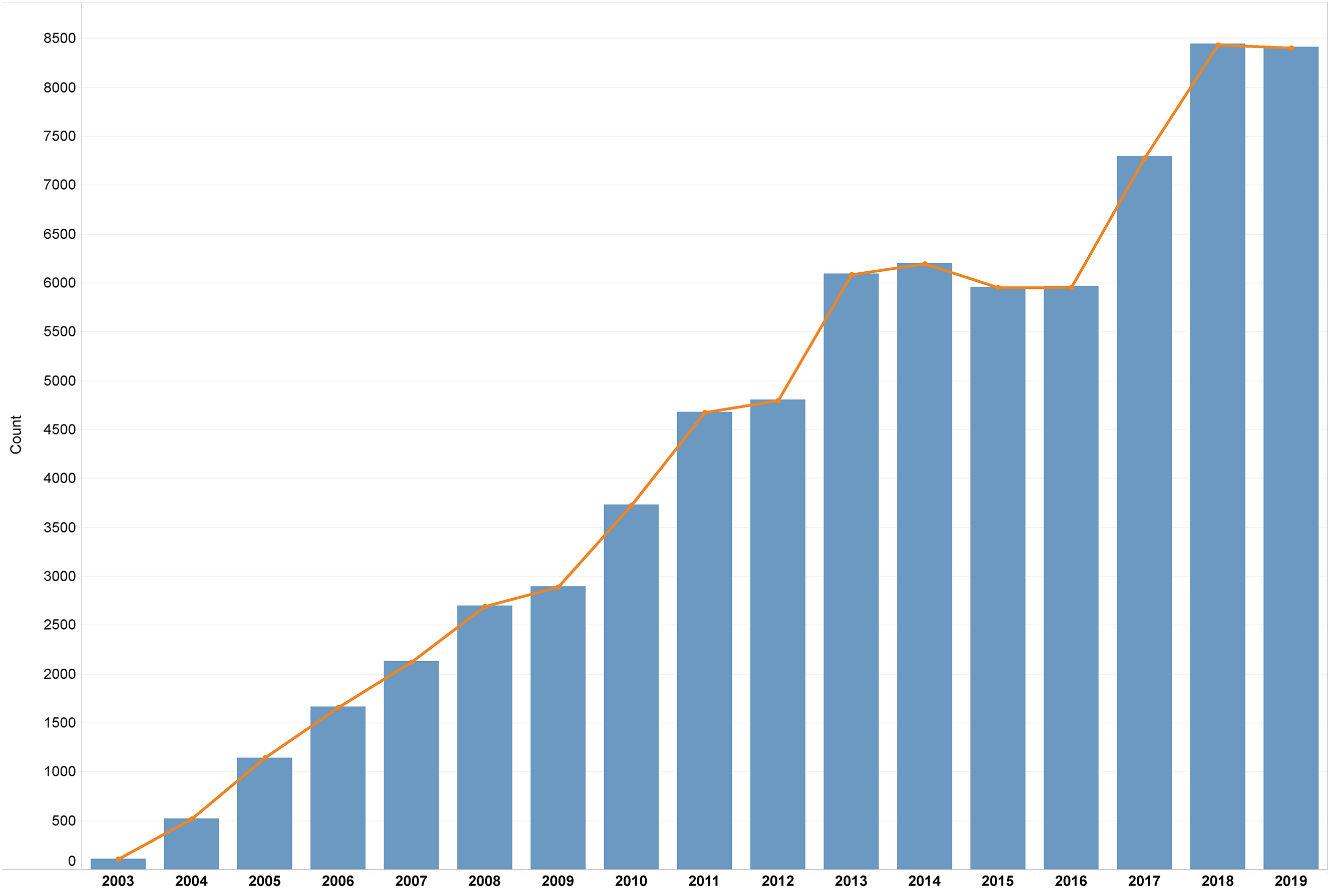
Total number of BL fictional works on JLC by year.
Due to the data-protection and paywall protocols governing access to the full texts of stories on JLC, we could not extract and archive complete texts of all 72,548 BL fiction pieces. Rather, we explored the information-rich titles and introductions (written by the author and containing a blurb and a plot synopsis) to explore specific content. According to the French literary critic Gérard Genette (1997: 1–2), the title and the introduction are the work's paratexts. Similar to a “vestibule”, they provide the reader with the choice of either stepping inside or abandoning the text. The representativeness of titles and introductions can be demonstrated by the following aspects: First, online fiction is typically mass-produced and formulaic. When readers search for fiction, titles and introductions are essential in attracting readers engaged in quick scanning and picking. They reach the reader even before the main body text does, thus exerting a considerable influence on the reader's reception to the main body text (Koş, 2007). Second, when attempting to discover authors’ views on gender, titles and introductions written by them can capture what they most intend to express more efficiently and precisely than the complete texts. That is, in titles and introductions authors have already presented the plot points and story highlights that they consider the most important. Third, there have been several machine learning studies exploring texts of book titles and blurbs, for example using their emotional terms to engage in classification (Franzoni et al., 2014).
While we acknowledge that book titles and introductions cannot fully capture the richness of a story's full content, this study focuses on analyzing selected typical and representative topics and contents. To ensure the robustness of the results and explore the characteristics of more representative works, we also selected the works in the top quarter (18,137 pieces) and the top half (36,274 pieces) of the total corpus of 72,548 BL fiction pieces on JLC, according to their ranking on JLC using the site's internal scoring mechanism. 4 We also adopted machine learning methods to analyze their topics and gender-related content. Given that an accurate and engaging blurb and plot synopsis will help a work achieve a higher ranking, the JLC scoring mechanism further demonstrates the importance of these two sections and their connections to fields of cultural creation, production, and acceptance (Childress, 2017).
LDA topic model
The topics of works of BL fiction reflect the authors’ preferences and interests on a macroscopic level. We applied the LDA topic model to cluster the topics using titles and introductions. LDA is a three-level hierarchical Bayesian model for document topic generation using unsupervised learning techniques (Blei et al., 2003). The application of LDA is based on three nested concepts: the text set to be modeled (the “corpus”), an item in the corpus (a “document”), and a word in the document (a “term”). Thus, documents are nested in the corpus, and the terms are nested in the document. This model assumes that there are several topics in the corpus. Each topic is defined as the probability distribution of fixed words, whereas each document selects a topic with a certain probability, and a certain word is selected from this topic with a particular probability. A corpus is described as a probability distribution of potential topics, whereas each topic is a probability distribution of terms. Subsequently, data analysis is performed by using the joint distribution to calculate the conditional distribution (a posteriori distribution) of the hidden variable (subject structure) under a given observed variable (word in the document). The formula is expressed as follows:

Word embedding technology
We adopted the Word2Vec model of word embedding techniques to predict specific contexts of keywords related to gender. Word2Vec is Google's open-source algorithm toolkit, designed to convert unstructured text data into continuous and computable high-dimensional vector data (Yao et al., 2017). The underlying mechanism of this toolkit involves capturing the distances between words to generate vectors. As a shallow neural network model, Word2Vec is trained using a certain keyword as an input and the contextual words of the keyword as an output. During this process, words that share similar contexts are more closely positioned in the high-dimensional vector space, while words with different contexts are more distant. The cosine value of the angle between two vectors is commonly used to measure the distance between words in an embedded space.
In this study, we selected the Skip-gram algorithm in the Word2Vec model, which helped calculate and normalize the cosine value between the input vector of the input word (the current word) and the output vector of the target word (the context of the current word). Specifically, after word segmentation, stemming, and removal of stop words, the Skip-gram algorithm transformed each word into a 256-dimensional vector. On this basis, the keywords were taken as central words, and the cosine distance was calculated between other words and central words to measure contexts. The Skip-gram algorithm is shown in Figure 2.
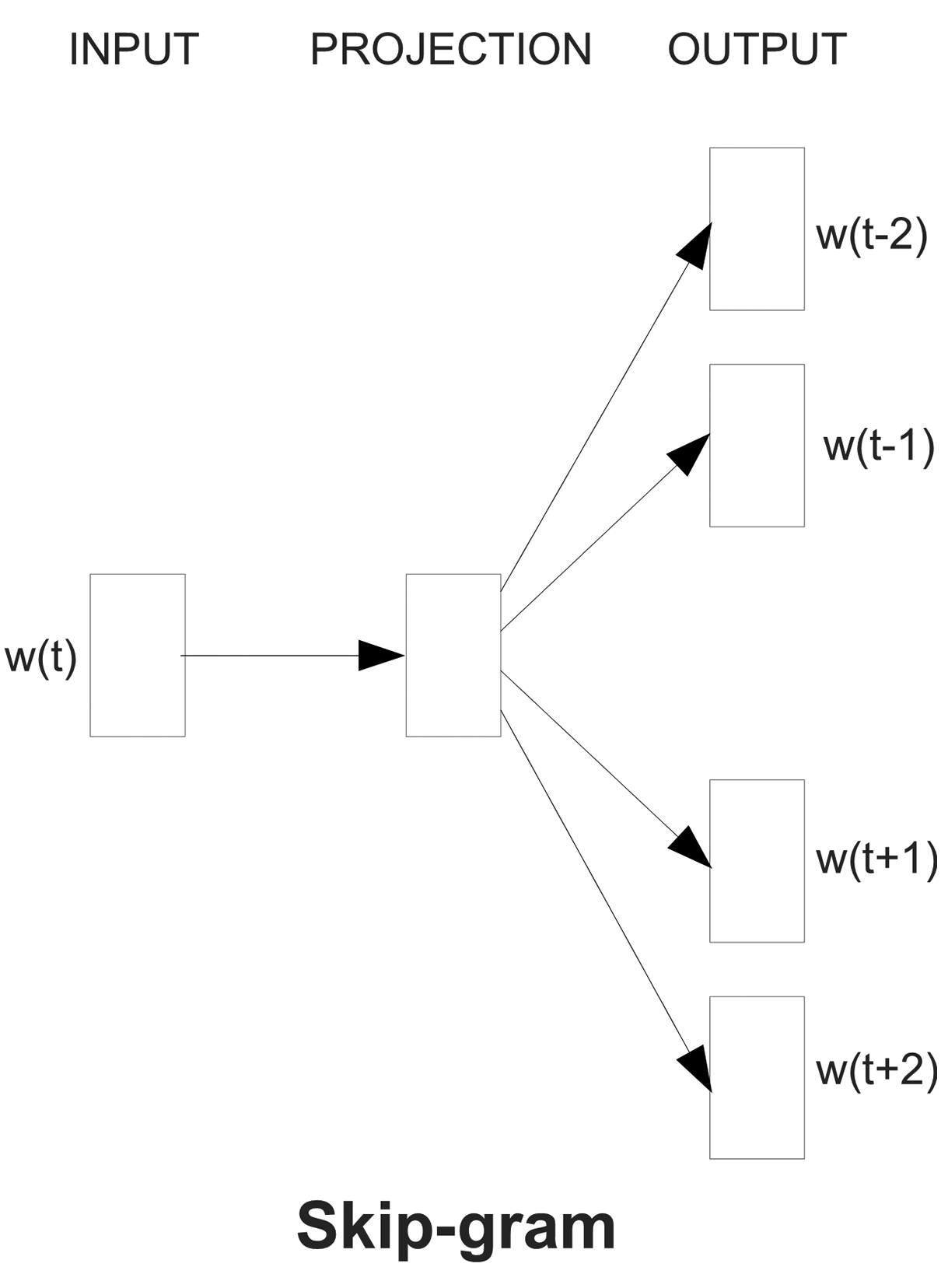
Skip-gram algorithm of Word2Vec.
Typical topics in Chinese BL fiction
Synchronic analysis of typical topics
To explore the typical topics within BL fiction and the associated cultural information, we applied the LDA topic model for unsupervised clustering analysis of story titles and introductions. We trained 12 models, each with a different even number of topics ranging from 6 to 50. To select the most appropriate model, we combined objective and subjective evaluations. We applied the cross-validated coherence (c_v coherence) index, which measures the correlation and consistency between words across models with various numbers of topics (Röder et al., 2015). The c_v coherence value ranges from 0 to 1, where a value closer to 1 indicates a better-performing model. As shown in Figure 3, the models with 10 and 26 topics demonstrated greater consistency. To further evaluate the quality of these two models, we assessed the degree of differentiation between the topics and the uniformity of the meanings expressed by the contextual words. Ultimately, we selected the ten-topic model since it displayed better differentiation between topics and more consistent meanings within each topic. We summarized the features of ten topics and named them.
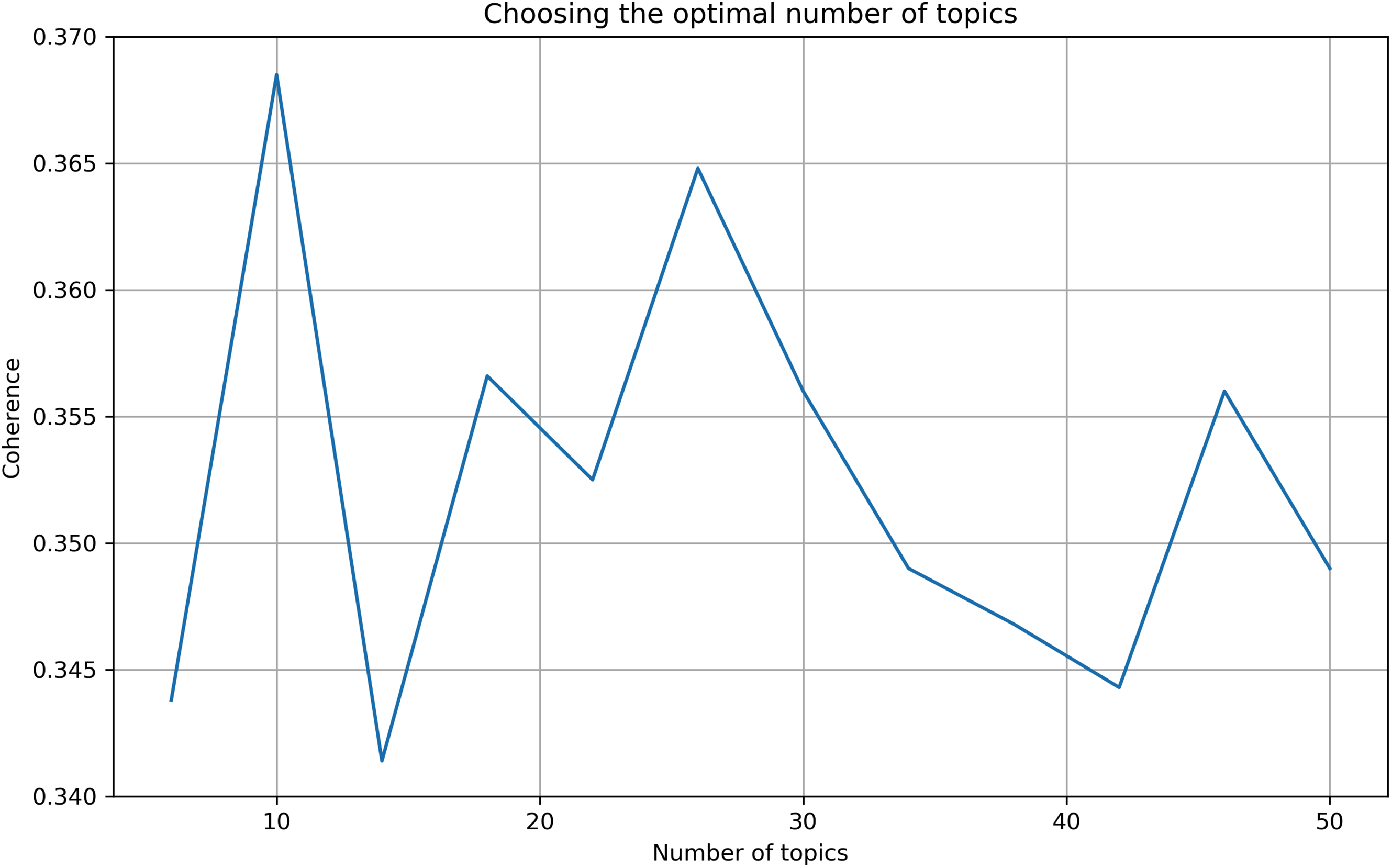
The c_v coherence values of models with 6–50 topics.
Table 1 highlights the ten topics and words with the highest values under each topic analyzed by the LDA topic model. The higher the value assigned to a word, the more frequently it appears and the more relevant it is to the topic. Furthermore, we eliminated words without substantive semantic meaning, such as hehe (an onomatopoeia of laughter) and liangzhi (two). Since the introduction contains both the blurb and the synopsis, the ten topics are not entirely about plots. Among them, Topic 10 contains story tags and is a function topic through which authors mark their works and categorize them into various types to allow readers to find them easily. Considering that our aim is to study the plot features of BL fiction, we will not discuss Topic 10 in detail below.
LDA topic analysis of the complete corpus of BL fiction works on JLC.
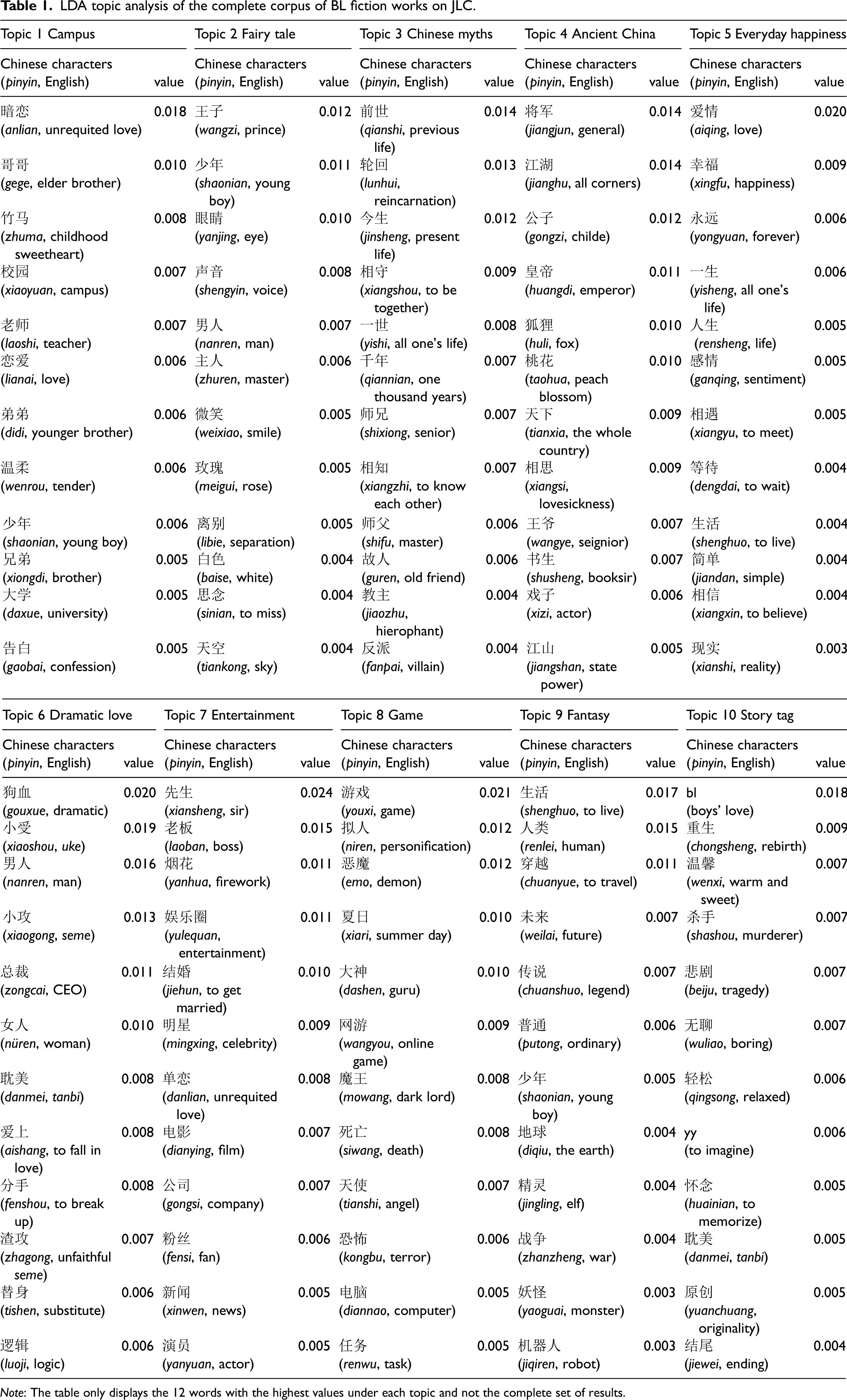
Note: The table only displays the 12 words with the highest values under each topic and not the complete set of results.
Among topics about plots, Topic 1 and Topic 2 are both about “sweet love”. Topic 1 is termed “campus”. The words “xiaoyuan” (campus) and “laoshi” (teacher) clearly indicate that a school campus is the setting of these stories. Other words highlight that the love experienced in such stories is pure and dreamlike, such as “zhuma” (childhood sweetheart) and “wenrou” (tender). Similar features also apply to Topic 2. It is named “fairy tale” since it has words such as “wangzi” (prince), which appears as an appellation of Westerners, as well as “meigui” (rose) and “baise” (white) that describe love in a Western cultural context. These two topics construct imagined romances based on realistic scenarios.
Topic 3, “Chinese myths”, is about monogamous love and Chinese myths, which further situate imagined romances within heterosexual patterns. According to Radway's (1991) research, a successful heterosexual story should focus on the love between two protagonists only. Similarly, Mizoguchi (2015) noted that BL protagonists only love one another and foils never really intervene in their relationships, which is different from ordinary homosexual relationships in reality. In this case, it is hard to argue that BL authors have completely broken from heterosexual norms. Moreover, Chinese legends, such as reincarnation, a Buddhist concept representing the repetition of birth, life, and death, can add to the fatalism of the BL relationship. The reincarnation-related words “qianshi” (previous life), “jinsheng” (present life), and “qiannian” (one thousand years) indicate that the protagonist's soul incarnates into another person, who will fall in love with his former lover again, achieving an eternal “love myth”. While still within a similar framework to heterosexuality, Buddhist karma adds new excitement to the love story. Also, the ability to “become a god” in Taoism, a Chinese indigenous religion, helps form a unique aesthetic rooted in Chinese religious culture.
BL fiction involving Chinese myths predominantly contains ancient scenes, similar to Topic 4, which is based on the Chinese feudal dynasties, narrating the fight for the throne and the defense of the frontier. Words such as “jiangjun” (general), “huangdi” (emperor), and “jiangshan” (state power) reflect these topics, echoing Chinese history and tradition. Compared with the “spiritualism” of Topic 3, Topic 4 reveals more about Confucianism, advocating the realistic ideals of the “human” world, but not directly describing contemporary China. Besides the influence of China's long history, it appears that women authors’ preference for this topic is rooted in their desire to participate in male-dominated fields, such as war and leadership. Women authors depict power as a topic in addition to romance here, which embodies the close relationship between sexual pleasure and power pointed out by Foucault (1979: 48). One possible explanation for why authors do not directly incorporate women's participation in power, however, is that this proves unrealistic in China's patriarchal history. A ruling woman, for example, is rarely found in China's actual history, so women authors choose to describe power from a feminist perspective in the relatively equal love between men. However, in this case, the existing gender division of labor remains unbroken. By projecting their power ideal onto men, women authors harvest both career and love without overturning established power relations.
Topic 5 also includes the ideal of love, and to some extent is a variation of the fantastic Chinese myth topic in reality. This topic portrays the happiness within reach in everyday life; therefore, it is named “everyday happiness”. Words under this topic such as “rensheng” (life), “shenghuo” (to live), and “xianshi” (reality) refer to reality; “xingfu” (happiness), “yongyuan” (forever), and “yisheng” (all one's life) represent authors’ views on happiness, that is, having love and only one lover forever.
Topic 6 and Topic 7 continue to tell stories in reality. Topic 6 includes words on dramatic love, such as “gouxue” (dramatic), “zhagong” (unfaithful seme), and “tishen” (substitute). The financial disputes that involve CEOs, the messy relationships between both sexes, and the disloyalty related to unfaithful seme all result in conflicts and thus form dramatic stories. Topic 7 occurs in the entertainment industry. “Laoban” (boss), “mingxing” (celebrity), “dianying” (film), and “yanyuan” (actor) present romantic stories among entertainment stars, highlighting women authors’ preference for celebrity. Money, beauty, and fame entangled with sensory stimulations are the fundamental concepts in this topic, which allow authors to break through everyday heterosexual norms and to pursue extraordinary lives.
Topic 8 is about games, involving words such as “youxi” (game), “wangyou” (online game), “mowang” (dark lord), and “siwang” (death), where the protagonists must survive in life-or-death games. Topic 9 encompasses stories that describe fantastical otherworlds. Words such as “weilai” (future), “diqiu” (the earth), and “jiqiren” (robot) belong to science fiction; “jingling” (elf) and “yaoguai” (monster) depict mysterious creatures. As Ni (2020) has noted, following the prohibition of pornographic content, many BL authors in China hybridized BL with science fiction and other related genres and achieved great commercial success. This topic indicated that Chinese BL writers have acquired a revolutionary consciousness by engaging in dialogue with the wider social world and its future. The otherworlds they create are utopias of gender relations, where same-sex relationships can be more reasonable and equal love between protagonists naturally emerges as they fight together.
We checked robustness through the same modeling processes, but using the top quarter and top half of BL fiction pieces on JLC according to the site's rankings. In the top quarter sample, several topics change, as shown in Table 2. In the top half sample, the topics are very similar to those for the total sample, so they are shown in Table A1 in the appendix, which reflects that the ten topics assigned to the total sample have strong robustness.
LDA topic analysis of the top quarter of BL fiction works on JLC.
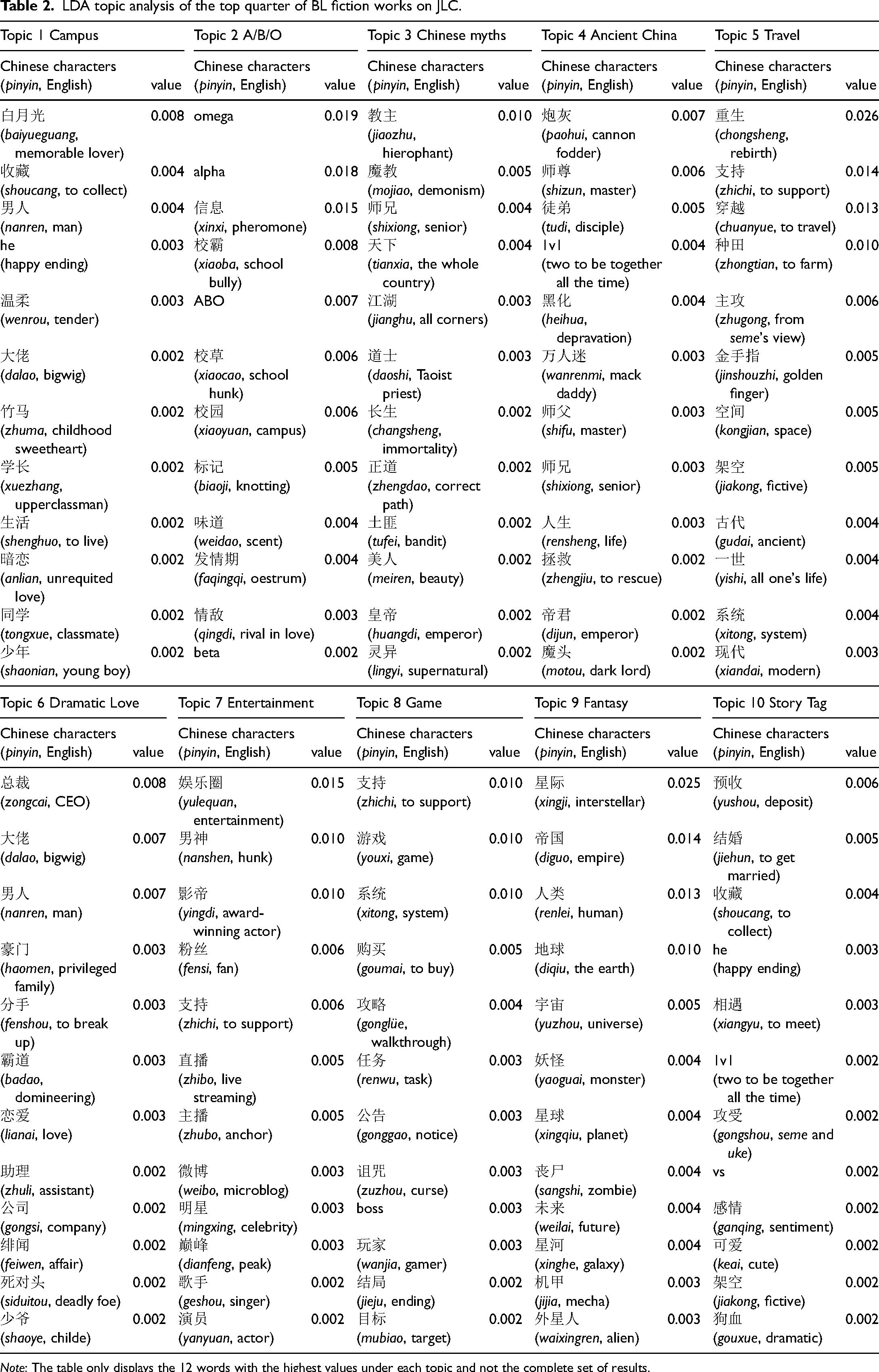
Note: The table only displays the 12 words with the highest values under each topic and not the complete set of results.
The ten existing topics of the total sample change slightly compared with those of the top quarter. First, the fairy tale topic and Western elements in the fantasy topic such as “jingling” (elf) disappear, showing that Western backgrounds have not entered the mainstream in the most popular Chinese BL fiction. Second, in the Chinese myths topic, the keywords related to reincarnation are no longer present, but overall the relationship to Chinese Taoist culture is evident. Third, the travel topic contains “jiakong” (fictive) and “gudai” (ancient), so it still has a connection with ancient China and fantasy topics.
More importantly, a new subject derived from Western slash fiction, “A/B/O” (alpha/beta/omega), appears in Topic 2. Its concepts are introduced from ethology, dividing a hierarchy of alpha, beta, and omega within human society. In particular, in such stories male “omegas” have both male and female reproductive organs, so they can reproduce sexually (Alter, 2020). The fatalistic attraction between the protagonists may be the reason for their popularity among Chinese BL women authors. Although borrowed from the West, Chinese authors have endowed this new topic with Chinese characteristics—setting it in a wider range of scenarios such as campus love and science fiction and applying the concept of reproduction within a same-sex relationship to the traditional clan concept. We will continue our discussion of reproduction in the next section on male-related contexts.
Diachronic analysis of typical topics
After analyzing each topic, we studied the proportions of BL fiction works under specific topics from 2003 to 2019, as shown in Figure 4. As we planned to analyze how the plots changed over time, the story tag topic (Topic 10) was excluded from this analysis.
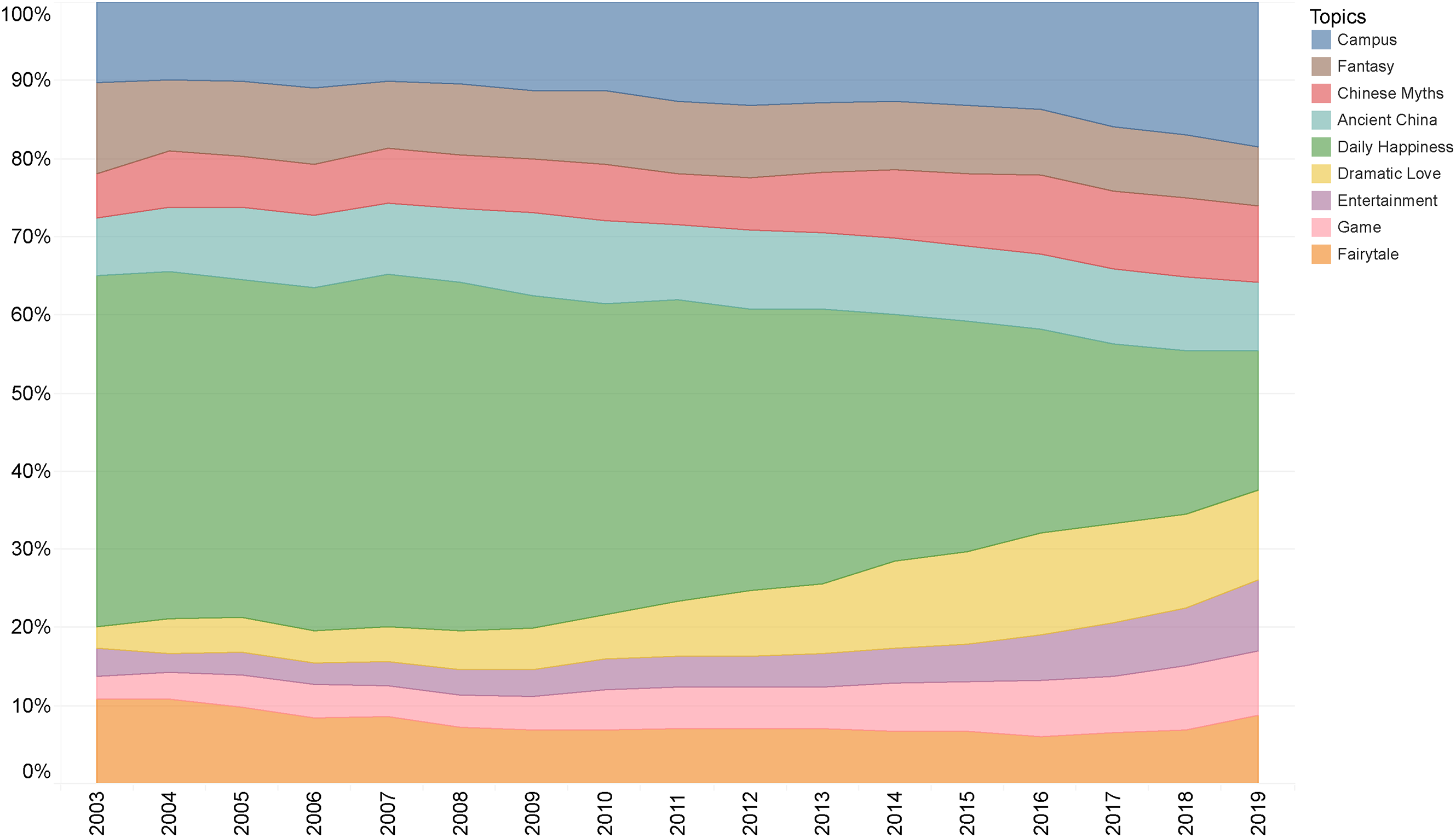
Proportions of topics by year for the complete corpus of BL fiction works on JLC.
The fairy tale, everyday happiness, and fantasy topics had a downward trend. The everyday happiness topic accounted for about 45% of the total in 2003, before falling to nearly 18% in 2019. Its decline was related to the rise of other topics. Compared with everyday happiness, the fairy tale topic accounted for just 11% of the total in 2003. After a decline of over 2 percentage points, its proportion was under 9% in 2019. In addition, the fantasy topic declined from approximately 12% to 8%. Since the fairy tale topic is traditionally Western and the fantasy topic also contains certain Western elements, their loss in popularity suggests that authors’ preference for Western settings is declining.
In contrast, the campus, Chinese myths, dramatic love, entertainment, and game topics increased in prevalence. Among them, the campus topic had the largest proportion, increasing from 10% to nearly 20% of the total. This suggests that young love had increasingly become a favored topic for BL authors. Furthermore, the shares of the game, dramatic love, Chinese myths, and entertainment topics all increased from approximately 2% to 10%. Lastly, the ancient China topic retained a proportion of over 8% between 2005 and 2019. Its share, along with the rise of the Chinese myths topic, indicates the ongoing popularity of China's native stories.
In the robustness test using the top quarter of stories, the fluctuation of topic trends was far more obvious than for all pieces, as shown in Figure 5. The topics with the largest proportions in 2003 were travel and fantasy, accounting for 66.7% of the total collectively, but this had dropped to 14.2% in 2019, while other topics closely related to fantasy such as A/B/O (0% in 2003 and 7.9% in 2019) and game (0% in 2011 and 5.4% in 2019) experienced considerable rises, indicating that BL fantasy is becoming increasingly diversified. The A/B/O topic, in particular, reflects women authors’ increasing preference for the topic of men's reproduction. In addition, the topics of the most popular fiction pieces reflect again the indigenization tendency in Chinese BL fiction: Western elements disappeared, while two Chinese topics, Chinese myths and ancient China, rose from nearly zero in 2003 to 28.4% in 2019 and replaced travel and fantasy as the most popular topics. Since the robustness test of the top half of the sample produced very similar results to the trends in Figure 4, we present them as Figure A1 in the appendix without providing further explanation.
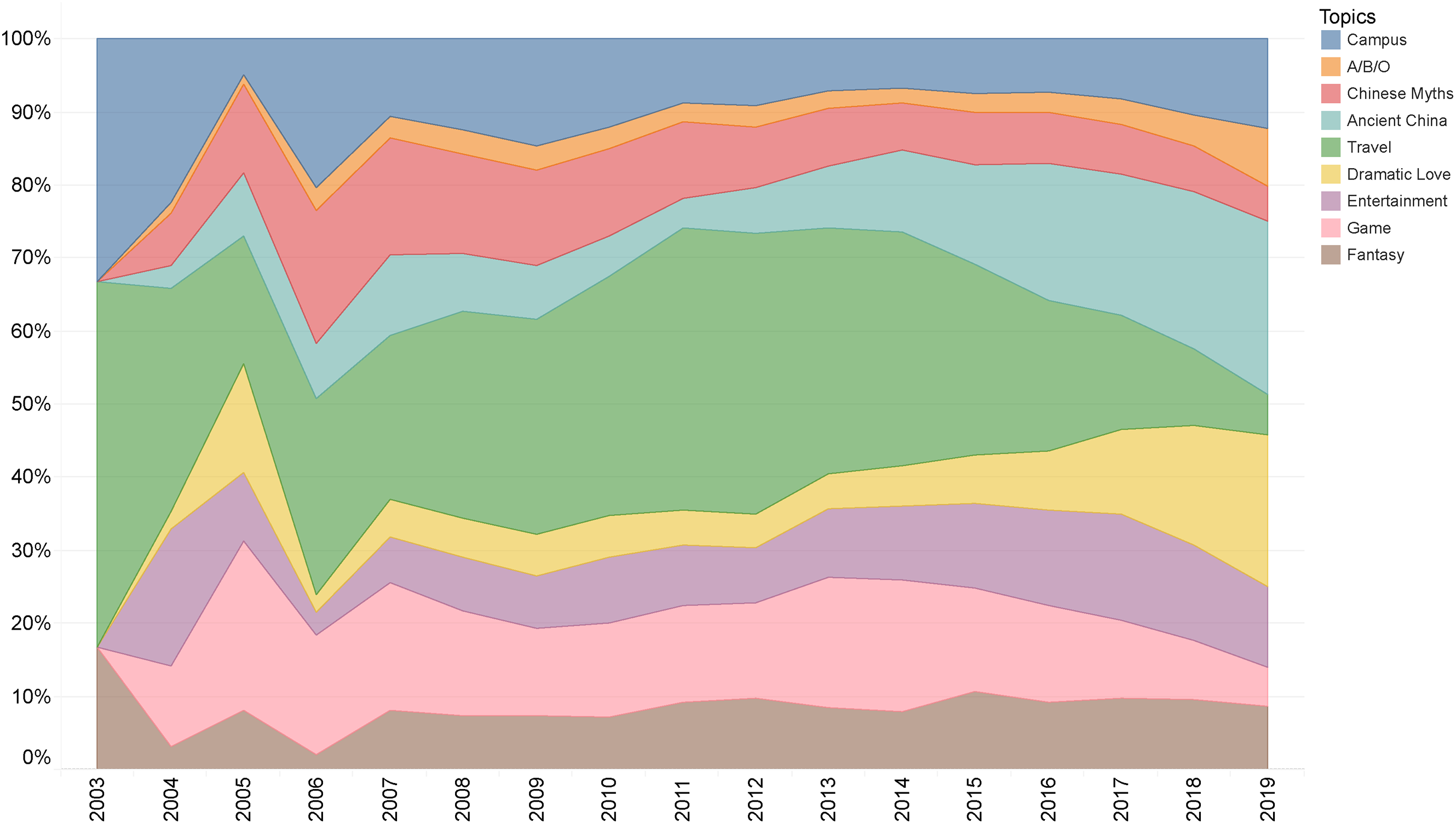
Proportions of topics by year for the top quarter of BL fiction works on JLC.
The above topic analysis encapsulates the panorama of Chinese BL fiction. With the disappearance of Western elements in the top quarter of BL fiction, Chinese BL fiction has also departed from Japanese works. Unlike in early Japanese BL fiction, where tragic elements were mandatory, Chinese authors prefer relaxed stories. For instance, “wenxin” (warm and sweet) and “HE” (happy ending) both rank highly in the synchronic analysis of the story tag topics. Therefore, Chinese BL novels have gained a strong cultural subjectivity. Comparing the topics of the overall sample and the top quarter of BL fiction on JLC, we found that the topics are very similar, except for the presence of the A/B/O and travel topics in the top quarter, which to some extent illustrates the mutual influence between popular and niche fiction. In terms of their common features, these are plots involving aspects of Chinese culture and certain norms of heterosexuality.
Chinese women authors prefer surreal BL stories since past or future fantasy worlds allow for the elimination of obstacles to love, creating a paradise of love and freedom for gay men and for themselves. However, while gaining freedom in fantasy, Chinese women are bound by the “love myth”. The formation of a myth indicates the separation of Chinese women BL authors from reality. They choose to describe the fictional relationship between men as similar to heterosexuality rather than engaging with their real heterosexual identities, in doing so escaping from their gender roles. In addition, although conveying the desire for power, they only tend to project such ideals onto the male roles, not daring to overturn the existing patriarchy. To further examine those ideas, in the following section we will analyze women authors’ perceptions of gender.
Typical gender-related contexts in Chinese BL fiction
Synchronic analysis of typical contexts
Following the analysis of typical topics in Chinese BL fiction, we proceeded to examine contexts related to gender keywords through word vector technology, totaling 39,619 discrete words, which reflect how related concepts are discussed. We removed words that lack semantic significance, like zhende (really) and jiju (very), and character names, listing hanzi (Chinese characters), pinyin (Romanized spellings of Chinese characters), and English translations. As in the previous section, we conducted robustness tests using the top quarter and the top half of BL fiction pieces on JLC.
The words directly related to gender are woman/women and man/men. In Chinese, two pairs of words can represent women and men; these words are “nüren” (the common term for woman) and “nanren” (the common term for man), as well as “nüxing” (the biological term or the term used in written language for woman) and “nanxing” (the biological term or the term used in written language for man). We analyzed the two pairs of Chinese gender terms, respectively.
Table 3 presents keywords with the shortest vector distance to nüren and nüxing. For nüren, “tongqi” ranks first. This untranslatable term connotes heterosexual women who marry gay men. For their male partners, tongqi create the possibility for reproduction and acceptance by Chinese society (Bie and Tang, 2016). However, their husbands deprive the marriage of love, exposing them to severe mental-, physical-, health-, and life-related harms (Wang et al., 2020). Based on our personal engagement with these texts, in Chinese BL fiction tongqi predominantly appear as shadowy presences in the story background. Instead of empathizing with their suffering, authors use them as a tool for gay men to realize their sexual orientation (“he realized that he was gay after marring a woman, so his wife became a tongqi”) or as a child-bearer (“even though he was marring a woman and having a child, he could not forget the man he loved most”). Authors sacrifice tongqi to alleviate the moral pressure, social stress, and the pressure to continue the clan borne by Chinese gay men.
Distance of words most closely related to “woman” in the complete corpus of BL fiction works on JLC.
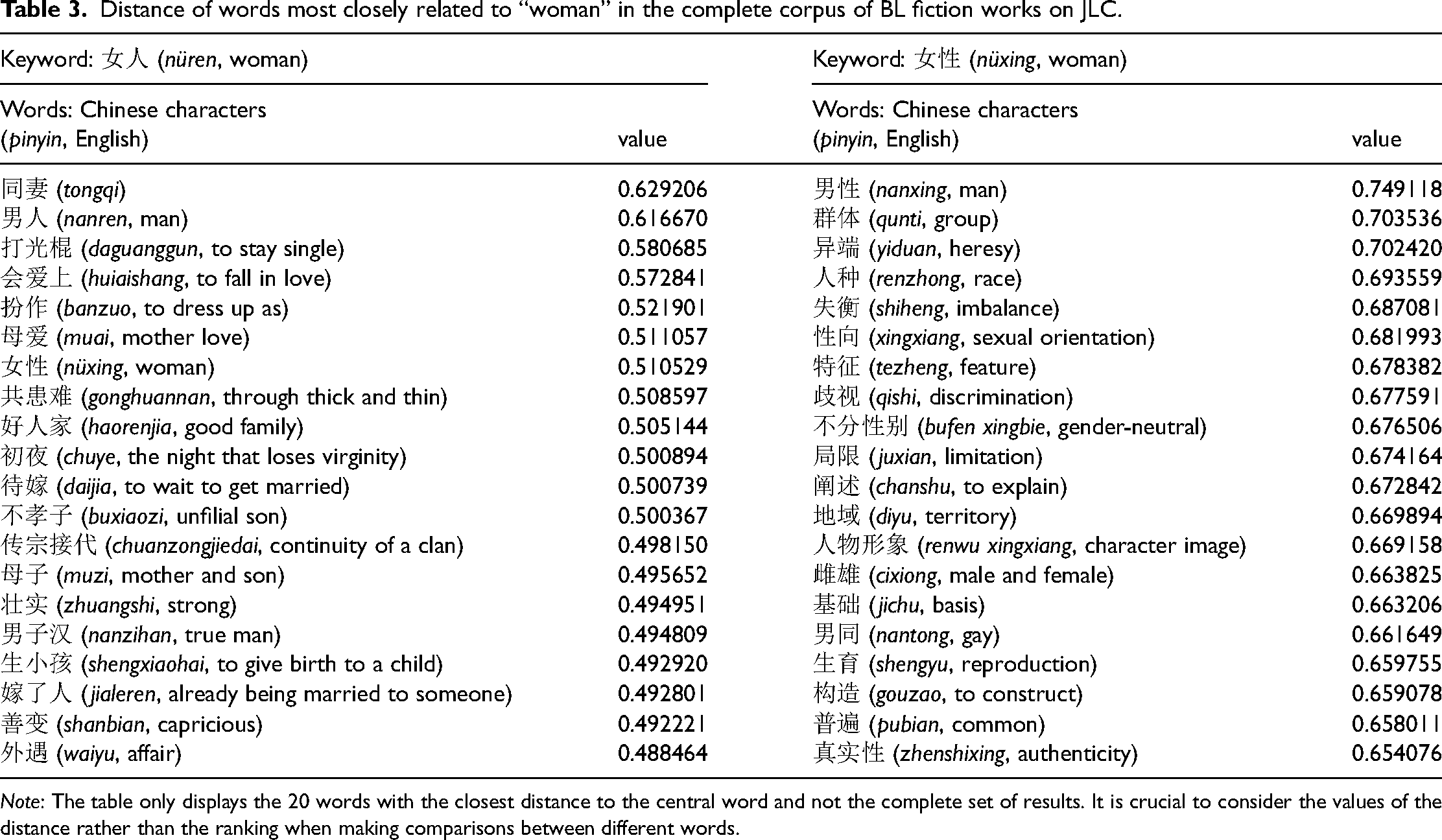
Note: The table only displays the 20 words with the closest distance to the central word and not the complete set of results. It is crucial to consider the values of the distance rather than the ranking when making comparisons between different words.
The majority of the following words are close to tongqi, showing that in BL fiction, women are associated with marriage and reproduction. “Muai” (mother love) and “muzi” (mother and son) bind women to the role of mother. Furthermore, “haorenjia” (good family) indicates the expectation for women to marry into a worthy family and have a successful marriage; “chuye” (the night on which one loses one's virginity) reflects the importance of chastity to women; “chuanzong jiedai” (continuity of the clan) and “shengxiaohai” (to give birth to a child) highlight women's instrumental reproductive function in BL fiction. Although the word “waiyu” (affair) reveals the desire of Chinese women to escape from the patriarchal marriage system, this plot's function in BL fiction is to provide gay men's love with a reasonable excuse, such as when cheating by their wife/girlfriend causes the protagonist to seek a male partner. In further exploration, we found that when the above words appeared in the original texts, in few cases were these standard functions critiqued. Marriage and reproduction have already become stereotypical roles for women in Chinese BL novels.
Compared to nüren, words close to nüxing reflect the coexistence of negative and positive attitudes. Based on our personal engagement with these texts, the relationship between “yiduan” (heresy) and women is that “not marrying a woman is a heresy”, revealing the rejection of same-sex relationships in mainstream Chinese society. In contrast, “qishi” (discrimination) was predominantly used in sentences like “do not discriminate against women”, representing kindness to women. The above analysis reveals Chinese BL authors’ strong reliance on heterosexual marriage. Although they describe unconventional gay men, they still regard marriage as the most standard and accepted criteria for them, which can be interpreted as a reflection of the thousands of years of patriarchy in China.
Table 4 shows the results of the robustness test using only the top quarter of BL fiction pieces on JLC. For nüren, words representing marriage and procreation remain, such as “daijia” (to wait to get married), “daduzi” (to get pregnant), and “jiabuchuqu” (to find it hard to get married). “Sancong side” (wifely submission and virtue), a representative norm of ancient Chinese ethics holding that women should obey their fathers, husbands, and sons, demonstrates that patriarchy greatly influences contemporary Chinese society. More importantly, the word tongqi disappears. Though this indicates that in the mainstream of Chinese BL fiction women are no longer a tool for gay men to abide by traditional moral requirements and produce offspring, considering that the tongqi group is one of the social issues that must be discussed when studying China's LGBTQ community, we tend to believe that authors avoid talking about tongqi in the most popular pieces. Since feminism is becoming increasingly developed in today's China, this practice not only prevents engagement with related feminist disputes, but also focuses on the relationship between the two male protagonists. The results of the robustness test using the top half of stories on JLC are in Table A2 in the appendix, and are similar to the results in Table 3.
Distance of words to most closely related to “woman” in the top quarter of BL fiction works on JLC.
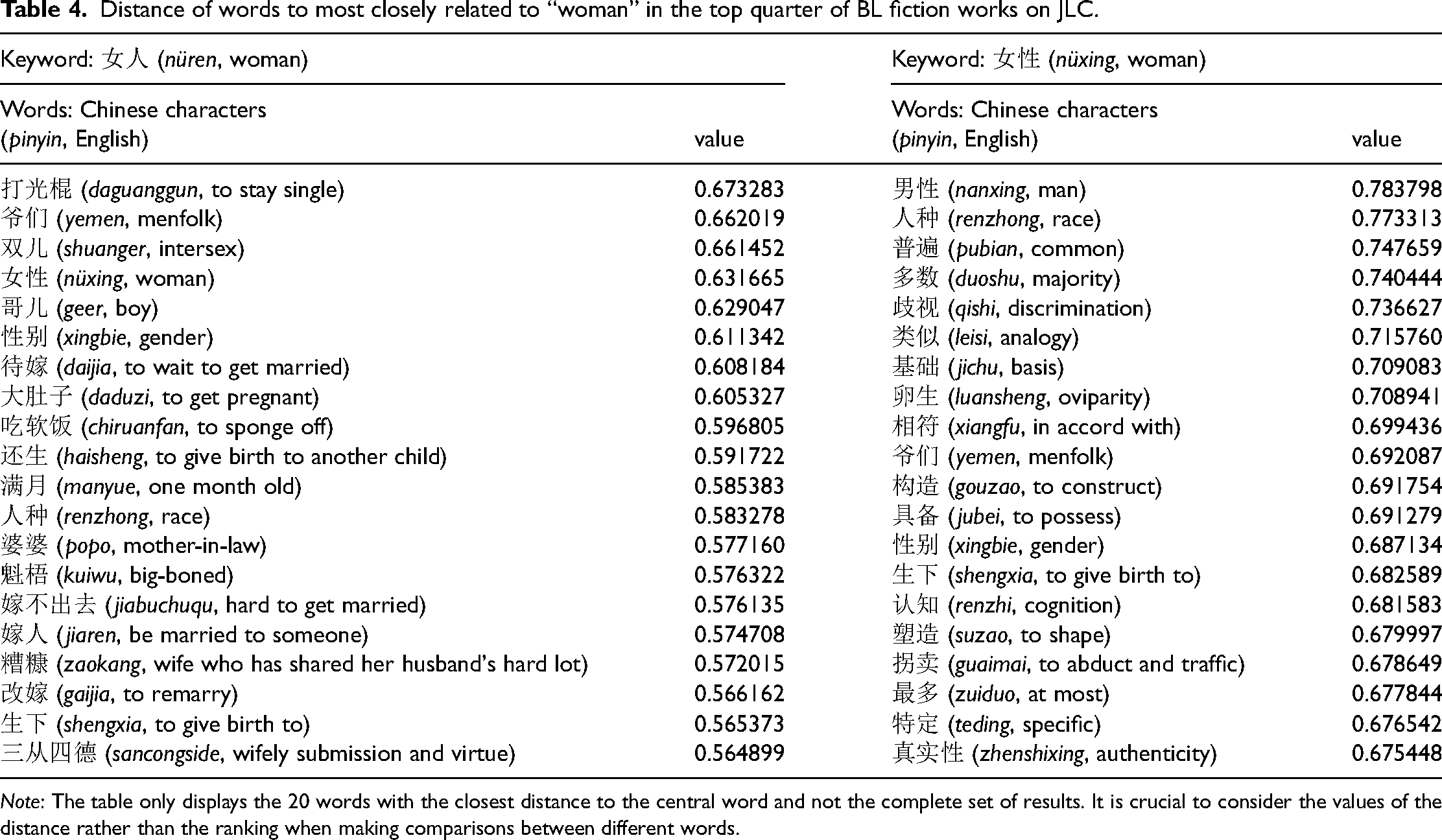
Note: The table only displays the 20 words with the closest distance to the central word and not the complete set of results. It is crucial to consider the values of the distance rather than the ranking when making comparisons between different words.
Among the words that are close to nanren, shown in Table 5, some have occurred in the list of words that are close to nüren, such as tongqi, “daguanggun” (to stay single), and muzi (mother and son). This finding indicates a high degree of correlation between women and men. Along with the term “hunsha” (wedding dress), 5 these words also show that marriage is the primary task for characters in BL fiction.
Distance of words most closely related to “man” in the complete corpus of BL fiction works on JLC.
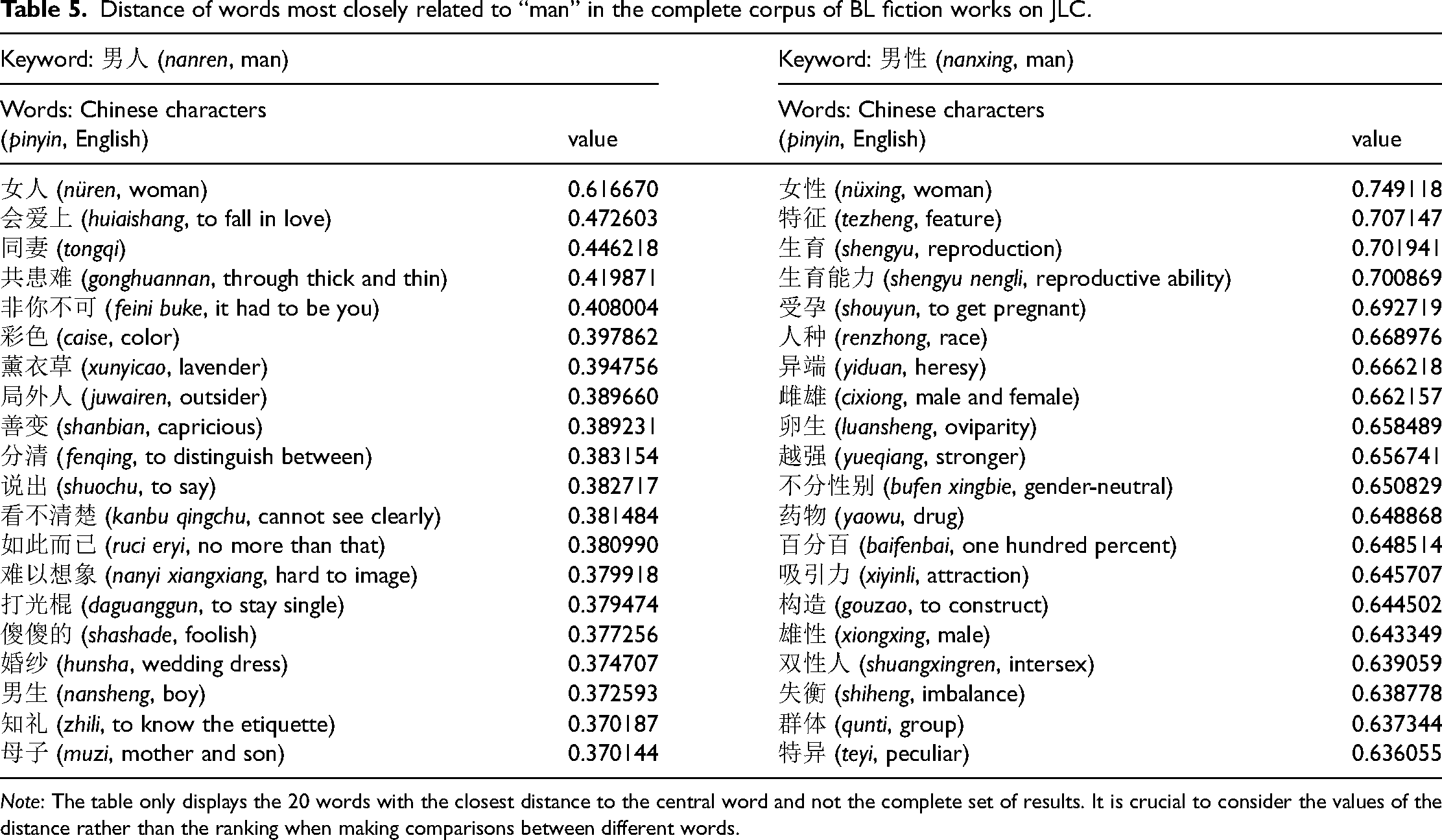
Note: The table only displays the 20 words with the closest distance to the central word and not the complete set of results. It is crucial to consider the values of the distance rather than the ranking when making comparisons between different words.
In the list for nanxing, an interesting phenomenon occurs: nanxing, the biological term for men, is associated with traditionally feminine words, such as “shengyu” (reproduction), “shenyu nengli” (reproductive ability), and “shouyun” (to get pregnant). Although women have shengxiaohai (to give birth to a child) and shengyu in their list, “shengyu nengli” and shouyun appear for the first time in relation to nanxing. In addition, the word shouyun specifically refers to the development of a fetus inside a woman's uterus, but based on our personal engagement with these texts the term is used in BL fiction to refer to men, indicating that males are able to have an intersex body in many such stories. To make such a counterfactual intersex pregnancy feasible, authors display bold imagination with words like “luansheng” (oviparity) and “yaowu” (drug). Such intersex people have the physiological features of women, while they have the gender role of men in society, which has the same effect as the male omega in the A/B/O topic. Pregnancy brings almost all elements of heterosexuality to the male–male relationship, including unequal power.
The clan concept rooted within Chinese traditional culture mainly explains Chinese women authors’ intentions. Reproduction has always been essential in maintaining the prosperity of the clan, as well as a vital way to maintain filial piety, while having no descendant is the gravest offense against filial piety (Luo, 2008). Therefore, motherhood is considered the major role for women and the clan concept is closely entangled with patriarchy, and men can never be certain of their masculinity until they become fathers (Webb and Daniluk, 1999). The patriarchal value of “mandatory childbearing” explains why Chinese BL authors are interested in marriage and reproduction issues, despite gay men being unable to conceive children naturally. Considering that same-sex marriage and surrogacy is illegal in China, BL authors either use women as tongqi to bear children, which sustains the imprisonment of women's gender roles in the patriarchy, or empower gay men with the ability to conceive. When gay couples are able to bear children and carry forward their clan, the idea of same-sex love becomes plausible and socially acceptable.
Paradoxically, stories of pregnant gay men also result in feminist awareness. These authors could have written heterosexual love stories, but only a very heterosexual-like pattern of same-sex relationship, where women do not exist, would free them from patriarchal constraints. When women endow men with their own physiological features, they can reexamine the ability to get pregnant and other features (without being oppressed by the patriarchy) and escape objectification through the male identity. This can be the first step toward feminism; as Kaja Silverman (1992: 389) put it, “for a female subject to re-encounter femininity from within a male body is clearly to experience it under different terms––to live it no longer as disenfranchisement and subordination, but rather as phallic divestiture, as a way of saying ‘no’ to power”. However, although transferring women's characteristics to men frees women, it results in their absence. Women become more dispensable after the reproductive function is no longer exclusive to them. This phenomenon reflects the passive resistance by women in a patriarchal society: avoiding discussing the root of their oppression, which is their physiological capacity to get pregnant.
Table 6 reveals the results of the robustness check using only the top quarter of BL fiction pieces on JLC. For nanxing, words related to reproduction are still present, proving the robustness of the results. That is, both popular and niche BL fiction emphasize men's ability to get pregnant. Similar robustness appears in the results using the top half of BL fiction pieces, shown in Table A3 in the appendix.
Distance of words most closely related to man in the top quarter of BL fiction works on JLC.
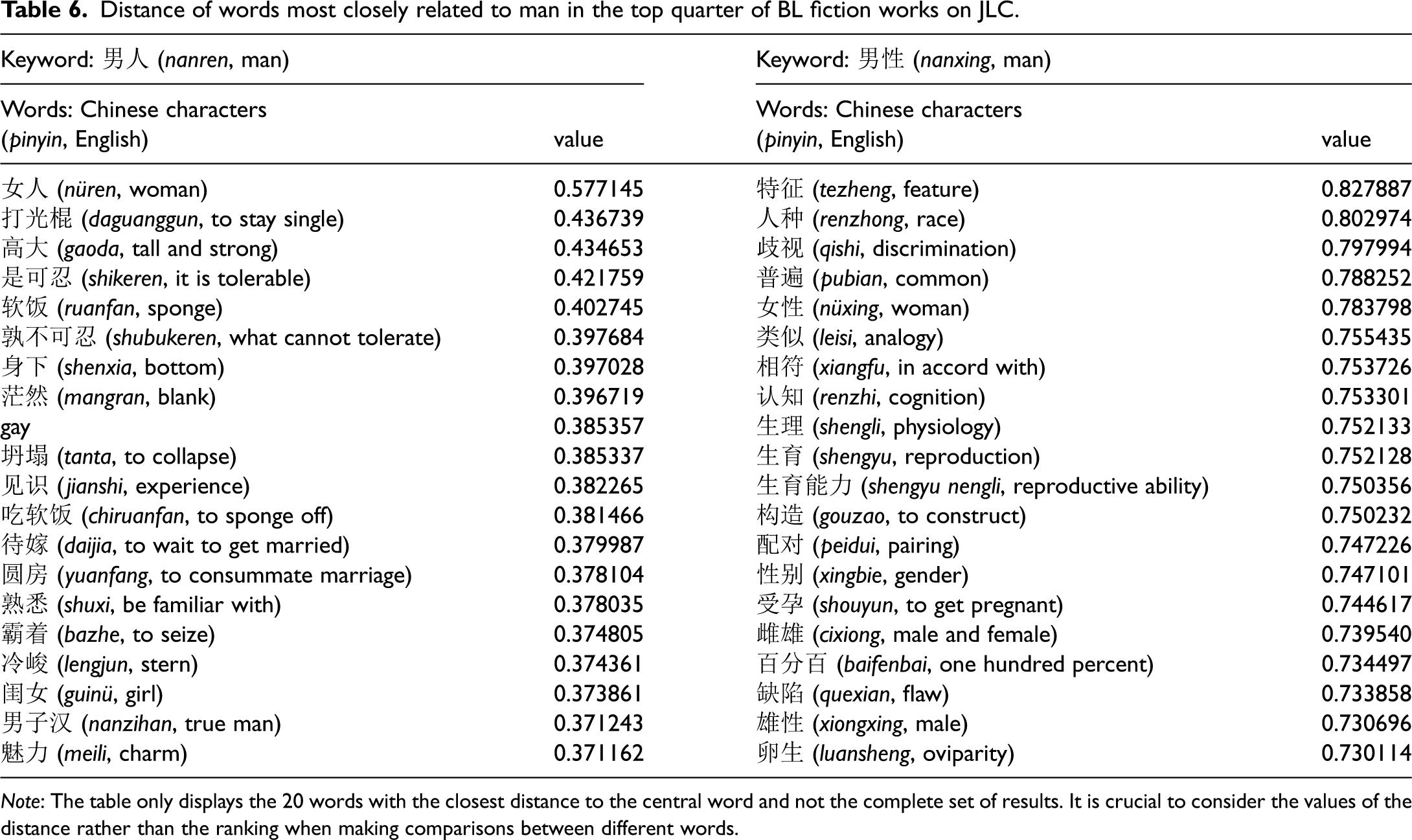
Note: The table only displays the 20 words with the closest distance to the central word and not the complete set of results. It is crucial to consider the values of the distance rather than the ranking when making comparisons between different words.
Diachronic analysis of typical contexts
After the overall analysis of related terms for each keyword, we selected four words related to marriage and reproduction from Table 3 and Table 5 and tracked their frequencies from 2003 to 2019. As it reflects dilemmas in gay male marriage in reality, the word tongqi connecting women and gay men merits closer inspection. Chuanzong jiedai (continuity of the clan) relates to fertility, and thus reflects the shackles of patriarchal ethics on Chinese women. As for men, “shuangxingren” (intersex person) is an important term, connoting the transfer of women's physiological features to men. Also, Shengyu nengli (reproductive ability) can describe men's ability to get pregnant. We divided the word frequency of a given term in a certain year by the total word frequency of the year to achieve a specific value, as shown in Figure 6.
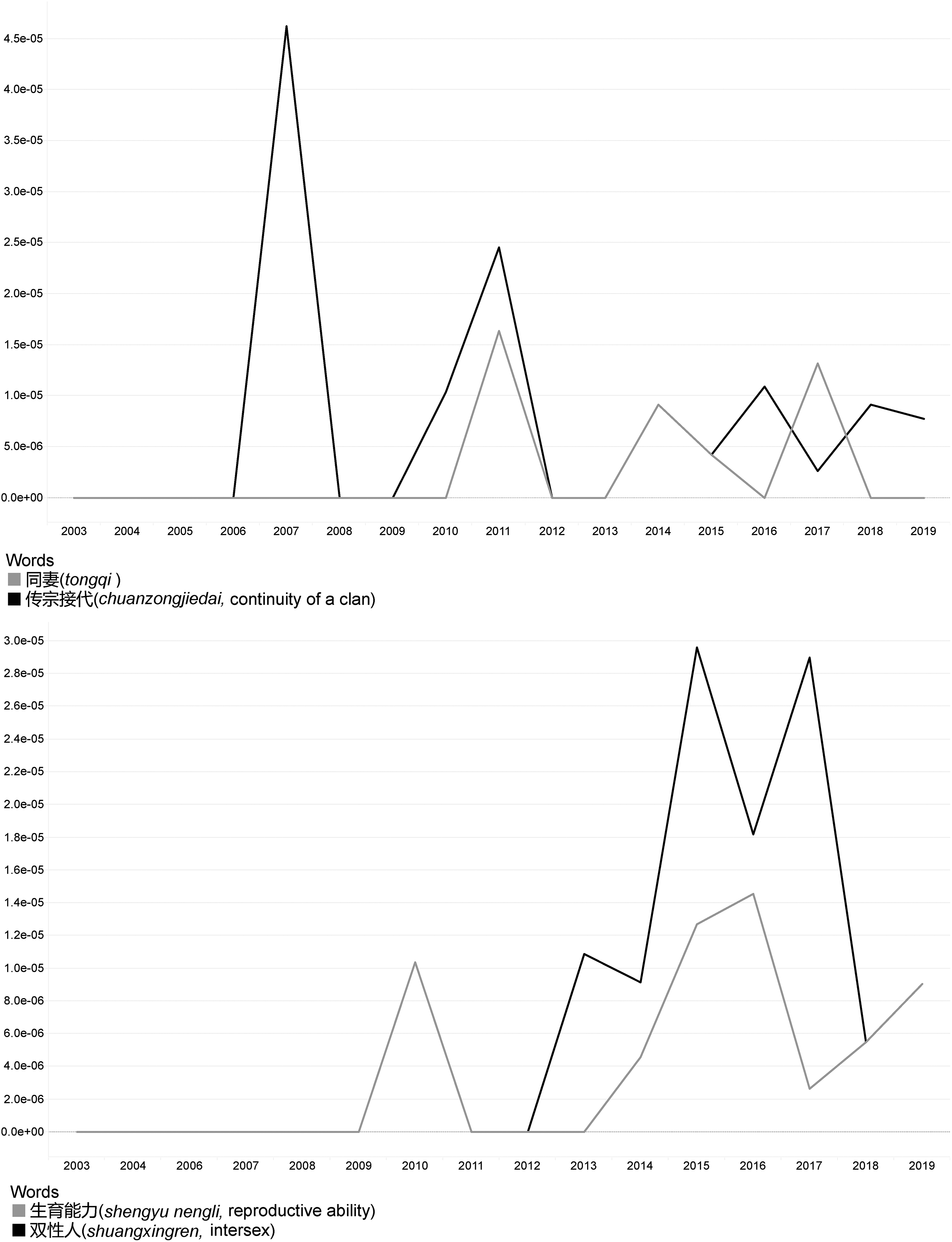
Word frequencies by year for the complete corpus of BL fiction works on JLC.
The upper panel of Figure 6 shows the frequencies of two words link to women. In this panel we see that tongqi only occurred after 2010, meaning that BL authors have only recently began addressing this topic. In contrast, the word frequency of chuanzong jiedai declined from 2003 to 2019, indicating that the stereotypical ideas of women have become less prevalent. The lower panel of Figure 6 shows the frequencies of two words link to men. Shengyu nengli first appeared in 2009 and increased rapidly after 2013. The trend of shuangxingren is very similar to that of shengyu nengli from 2012 to 2018, implying that the topics of male reproduction and intersex people are linked in BL stories.
Figure 7 shows the robustness test results for the trends of the four words using the top quarter of BL fiction pieces on JLC. The upper panel shows an inverse trend to that in the upper panel of Figure 6: the word tongqi does not appear, while there are two peaks of chuanzong jiedai after 2015. On this basis, it might be argued that patriarchal constraints are more prevalent in the most popular stories, and thus that the commercial market for BL fiction still favors marriage- and reproduction-related topics. The trends of the two words related to men are similar to those in Figure 6, reflecting the same preference for men's pregnancy scenarios in both popular and niche works.
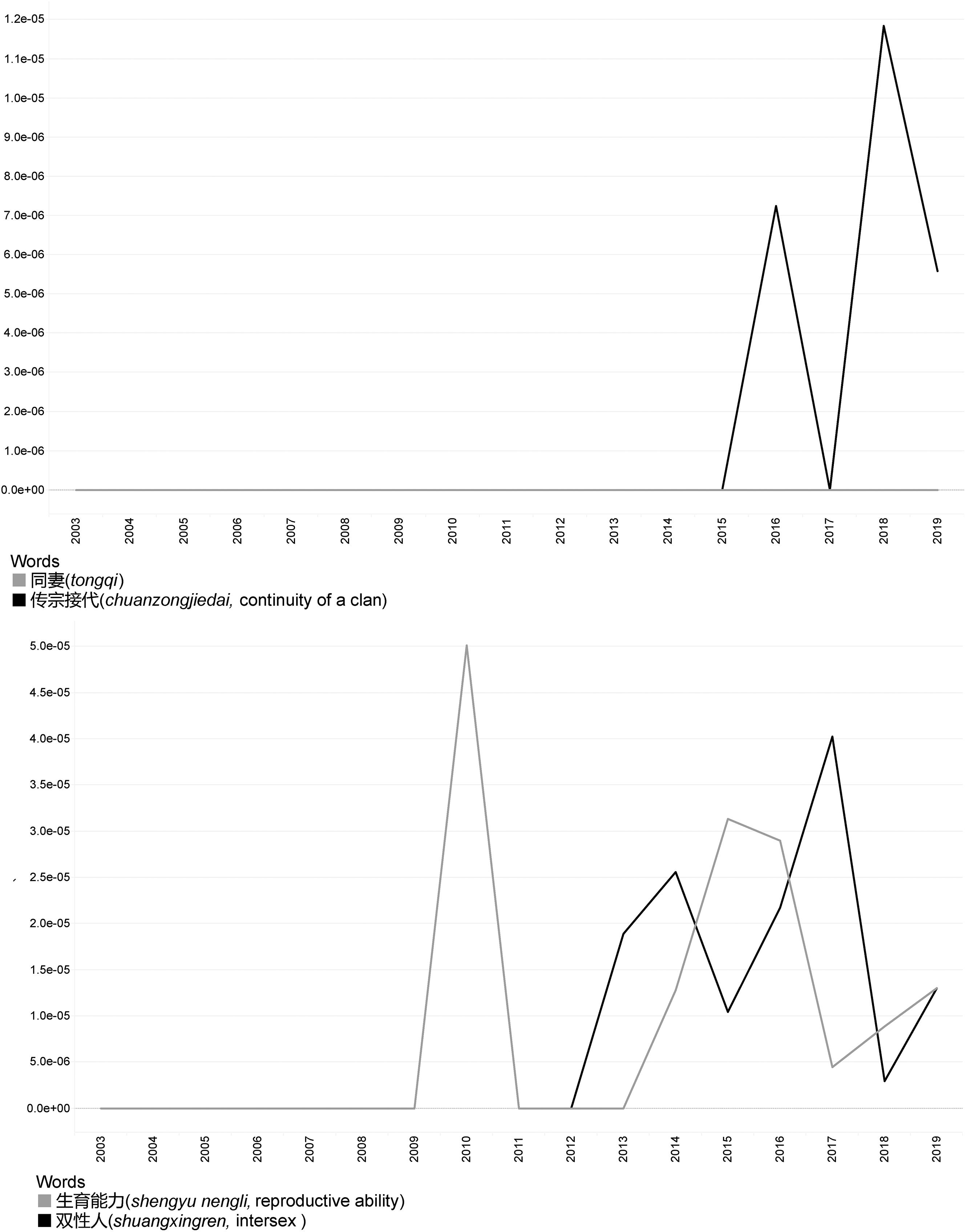
Word frequencies by year for the top quarter of BL fiction works on JLC.
This section illustrates the impact of Chinese culture, which both inspires BL fiction plots and influences the gender perspectives of women authors. BL fiction authors are contradictory when discussing gender issues. They allow gay men to become pregnant, hoping to shatter traditional gender ideologies, but patriarchal ethics cause them to deliberately ignore women's roles. Hence, in BL fiction Chinese women fail to break out of the shackles of the clan concept, and the extreme emphasis on reproduction brought about by thousands of years of Chinese patriarchy still influences Chinese women's cultural creation.
Conclusion and discussion
In the previous two decades, the number of Chinese online BL fiction pieces has increased rapidly. Through the LDA topic model and word vector technology, we drew three main conclusions on the typical content of BL fiction. (1) Chinese women BL authors prefer surreal topics set in history and the future, as well as the dreamy “love myth”, which have more heterosexual features compared to the reality of LGBTQ people. (2) Chinese traditional culture powerfully influences BL fiction, creating a distinct aesthetic style and echoing Chinese history. Besides the inspiration from Chinese history and myths, the patriarchal clan concept also makes BL authors focus on marriage and reproduction issues. (3) Chinese BL fiction reveals the paradoxical nature of women authors’ gender perspectives. They want to feel power through the male protagonists’ “equal love”, and even transfer pregnancy to the intersex group. However, they avoid discussing their own gender, which means that they are still unable to escape the shackles of patriarchy.
BL fiction is produced within a specific social and historical context. In today's Chinese society, BL fiction remains in a contradictory state: women authors create male–male romances but are disconnected from the realities of gay life; such stories express women's erotic desire but lack women’s roles; women authors awake a certain feminist consciousness but still have patriarchal views on marriage and reproduction. Eve Sedgwick (1985) pointed out that male homosocial desire and homosexual desire both have a necessary relationship to misogyny, and we found that even within the fictional male–male romances written by women, misogyny remained. As Toril Moi (2008: 268), who emphasized the significance of women's writing, stated, “to turn women into second-class citizens in the realm of literature is to say that women's experiences of existence and of the world are less important than men's”. Though Chinese women authors try to resist the patriarchy through cultural subjectivity, the patriarchy remains an invisible barrier to their transformative efforts.
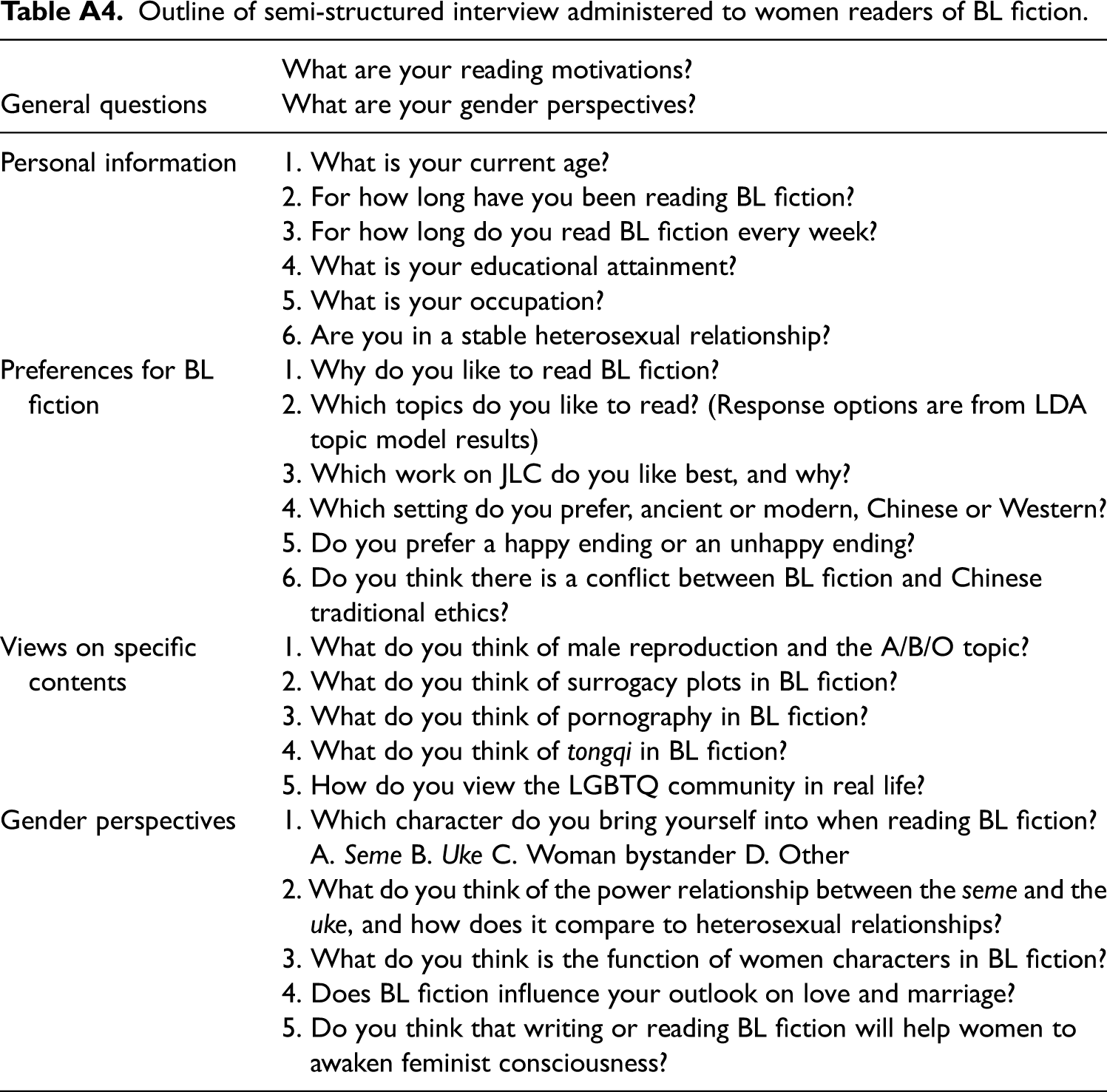
The above conclusions are obtained from the content of BL fiction; therefore, they primarily reflect the authors’ intentions. To further prove these results from the readers’ side, we conducted semi-structured telephone interviews with 15 heterosexual women readers of BL fiction between the ages of 22 and 32 on their reading motivations, preferences, and gender perspectives. The interview outline is shown in Table A4 in the appendix.
Consistent with the conclusions drawn in this study, almost all interviewees expressed their preference for surreal works in Chinese settings. They believed that fantastic plots had the same function as male–male romance, which is pulling them out of the familiar patriarchal reality and creating a utopia in which to enjoy consuming men. Furthermore, they acknowledged the marginalization of women's roles in BL fiction. Even though some popular works, such as Heaven Official's Blessing (2018), which ranks first on JLC, successfully shape some powerful women, they are still ornaments in men's stories, not the main subjects.
In contrast to the conclusions of this paper, 12 of the interviewees expressed antipathy to men's reproduction and the A/B/O topic: “It makes men the same as women, so why don’t I read heterosexual stories?” (30 years old, lawyer). Another interviewee answered her question: “[Women's childbirth] would make me feel like I am going through it myself, and it's too painful” (21 years old, college student). Given the robust results on male reproduction in this study, there may exist a relatively silent group of people who prefer such plots. In addition, nearly all interviewees considered reading BL fiction only as a pastime, nothing to do with their outlook on love and marriage.
However, even though BL fiction does not greatly impact readers’ lives and carries various patriarchal values, it still helps awaken a certain feminist consciousness. This perspective came from a 26-year-old editor who was both an author and a reader and believed that the author's feminist awakening is greater than the reader's: “Being able to control men's love and destiny through writing has given me an unprecedented sense of power. I know it is illusory, but it really cheers me up”. As such, BL fiction is able to engender a feminist consciousness for some Chinese women.
In postmodern narratives, the boundary between fact and fiction is blurred (Brinkmann, 2009). BL fiction seems to remove women's existence, but even the most fantastic and bizarre plots cannot escape their life experiences. By discussing Chinese women BL authors’ literary creations, this study has made two main contributions: (1) Theoretically, this study opens up a new perspective on Chinese traditional culture and ethics via the feminist study of BL fiction. The discovery of heterosexual relationship patterns and male reproduction both reinforce the conclusion that BL women authors are still bound by patriarchy. (2) Methodologically, machine learning methods enable a comprehensive and robust examination of the JLC corpus, helping to understand this form of cultural creation without thoroughly reading all of the texts. The method also avoids the omission of niche works. Since writing can give the author a valuable experience, niche works also allow us to explore the perspectives and preferences of consumers with obscure tastes. However, this study has certain limitations. We were unable to incorporate the full texts of BL fiction in the model, which limited the comprehensiveness and complexity of the resulting topics and content. Additionally, the potential disparity between self-reported gender and biological gender among JLC users has resulted in an insufficient analysis of male authors and readers. We hope to further address these limitations in future research.
Footnotes
Declaration of conflicting interests
The authors declared no potential conflicts of interest with respect to the research, authorship, and/or publication of this article.
Funding
The authors disclosed receipt of the following financial support for the research, authorship, and/or publication of this article: This work was supported by the the Major Project of the National Social Science Fund of China (grant no. 19ZDA149).
Contributorship
Wen Ma devised the research plan, conducted interviews, and authored the manuscript. Zhuo Chen organized the literature and carried out the data analysis. Ying Li and Guodong Ju provided support for the interviews and data analysis. Yunsong Chen provided financial support for the manuscript and supervised the entire research process.

Data availability
All data generated or analyzed during this study are included in this article.
Notes
Appendix
Outline of semi-structured interview administered to women readers of BL fiction.
| General questions | What are your reading motivations? |
|---|---|
| What are your gender perspectives? | |
| Personal information | 1. What is your current age? |
| 2. For how long have you been reading BL fiction? | |
| 3. For how long do you read BL fiction every week? | |
| 4. What is your educational attainment? | |
| 5. What is your occupation? | |
| 6. Are you in a stable heterosexual relationship? | |
| Preferences for BL fiction | 1. Why do you like to read BL fiction? |
| 2. Which topics do you like to read? (Response options are from LDA topic model results) | |
| 3. Which work on JLC do you like best, and why? | |
| 4. Which setting do you prefer, ancient or modern, Chinese or Western? | |
| 5. Do you prefer a happy ending or an unhappy ending? | |
| 6. Do you think there is a conflict between BL fiction and Chinese traditional ethics? | |
| Views on specific contents | 1. What do you think of male reproduction and the A/B/O topic? |
| 2. What do you think of surrogacy plots in BL fiction? | |
| 3. What do you think of pornography in BL fiction? | |
| 4. What do you think of tongqi in BL fiction? | |
| 5. How do you view the LGBTQ community in real life? | |
| Gender perspectives | 1. Which character do you bring yourself into when reading BL fiction? A. Seme B. Uke C. Woman bystander D. Other |
| 2. What do you think of the power relationship between the seme and the uke, and how does it compare to heterosexual relationships? | |
| 3. What do you think is the function of women characters in BL fiction? | |
| 4. Does BL fiction influence your outlook on love and marriage? | |
| 5. Do you think that writing or reading BL fiction will help women to awaken feminist consciousness? |