



Abstract
China's large and diverse population exhibits interethnic variations in fertility, socioeconomic status, and culture. This study comprehensively analyzes data from multiple population censuses and qualitative interviews to identify fertility transition dynamics among ethnic groups in China. Taken together, the quantitative and qualitative results reveal a rapid decline in total fertility rates among both Han and ethnic minorities and a trend of convergence across different ethnic groups over the past few decades; in addition, the findings also show significant heterogeneity within ethnic minority populations. Our analysis sheds further light on the crucial role of social context and macro-level factors in shaping individuals’ reproductive behaviors. The results offer insights into how policies may address low fertility rates in China.
Introduction
China is home to not only a Han Chinese majority population but also 55 nationally recognized ethnic minority groups. Although the population of ethnic minorities in China in 2020 comprised 125.47 million individuals—representing 8.89% of China's total population—little research has been done on the fertility transition in these groups. Previous research on ethnic minorities in China has primarily comprised regional or small-scale case studies or focused on one or several ethnic minority groups. National-level analyses tend to treat ethnic minorities as a single category, which limits our understanding of their unique experiences. Considering the varying experiences of ethnic minorities, it is necessary to closely explore their fertility transition experiences.
Understanding the dynamics of China's fertility transition across diverse ethnic groups has important theoretical and policy implications. From a theoretical perspective, previous studies have attempted to understand the driving forces behind fertility differentials across racial and ethnic groups (Goldscheider and Uhlenberg, 1969; Sly, 1970; Tiena and Forste, 1996). However, most prior studies have focused on US and European experiences, with a few exceptions (Poston et al., 2006; Sahu et al., 2012; Yang et al., 2023). China provides a unique case for this inquiry because it has a large and diverse population with significant interethnic variations in fertility patterns, socioeconomic status, and cultural practices. Studying the fertility transition experiences of ethnic minorities in China can refine existing theories on fertility transitions for ethnic minority groups in non-Western contexts. From a policymaking perspective, scholars in China have advocated for more supportive fertility and family policies in response to the nation's persistently low fertility rate (Ji and Zheng, 2018; Song, 2023; Zhai and Li, 2022). Ethnic minority groups in China have been subjected to less restrictive fertility policies for decades. Studying the processes and patterns of the fertility transition can also shed light on how fertility may change in China in the future.
We contend that close analyses of temporal trends in the fertility patterns of various ethnic groups and how such trends are impacted by the compositional changes of demographic structures can offer valuable insights into fertility differentials among ethnic minority groups and between ethnic majority and minority groups. Therefore, this study was guided by three objectives. Firstly, we aimed to comprehensively identify the fertility transition patterns of the Han population and a wide range of ethnic minority groups. Although the demographics of ethnic minorities in China are notably diverse, few studies have addressed these heterogeneities. In response to this gap in the literature, we drew from multiple population censuses in China to study the fertility trends of both high and low fertility groups. Secondly, we performed regression and decomposition analyses to further confirm the common driving forces of fertility changes and responded to the two competing hypotheses—socioeconomic characteristics and minority status. Thirdly, we analyzed interview data to identify emerging cultural norms that shape fertility behaviors among ethnic minorities. Overall, we aimed to paint a complex picture of the convergence and diversity of the fertility transition of Han and ethnic minority groups in China.
Background and literature
Ethnic minorities in China
To fully understand the fertility transition experiences of ethnic minorities in China, it is crucial to grasp the background of the country's ethnic diversity. Ethnic minorities have historically played a significant role in shaping China's demographics. Since the founding of the People's Republic of China (PRC), the total population of ethnic minorities in the nation has exhibited a continuous upward trend. According to the first PRC population census, conducted in 1953, 35.32 million people living in China—6.1% of the nation's total population—identified as ethnic minorities. According to the 2020 population census, 125.47 million people living in China—8.89% of the total population—identified as ethnic minorities. Therefore, China's ethnic minority population has demonstrated a nearly four-fold increase over the last 70 years.
Notably, this population growth has been characterized by large between-group variations. While there are 55 ethnic minority groups in China, the most populous ethnic minority groups include the Zhuang, Uyghur, Hui, Miao, and Manchu, and the least populous ethnic minority groups include the Oroqen, Derung, Hezhen, Lhoba, Tatars, and Gaoshan. Meanwhile, differences in place of residence, economic development level, culture, language, religion, and social norms can be observed across China's ethnic minority groups. In terms of place of residence, ethnic minorities live across the country, but also heavily concentrate in particular locations. For example, in Southwest China, many Tibetans, Yi, and Zhuang live in mountainous regions. Further, the high-altitude regions of Northwest China are home to several minority groups, including Uyghurs, Kazakhs, and Mongolians. By contrast, ethnic minority populations are less geographically concentrated in China's eastern and coastal regions, in which there are relatively high concentrations of Han people. Furthermore, economic development levels vary significantly across ethnic minority groups. Some minorities, such as the Hui and Manchu, have integrated into mainstream society and enjoy better economic prospects, whereas others, including the Miao and Yao, have generally remained economically disadvantaged. In addition, each ethnic minority group has its own culture, language, and religion, which contribute to its distinct identity. For instance, the Tibetan language and Buddhism are integral parts of Tibetan culture, while the Yi language and animistic beliefs are central to the Yi culture. Social norms also differ among ethnic groups; for example, some groups have preserved traditional marital and family structures, while others have adopted more modern practices.
Despite the known heterogeneity of China's ethnic minorities, studies examining their demographic behaviors must face the empirical challenge of clearly and comprehensively summarizing the varied behaviors of all 55 groups. To facilitate between-group comparisons, previous studies have attempted to categorize these 55 ethnic minority groups into several larger groups. Among the existing groupings, Ma's (2008) categorization is the most widely accepted. Specifically, Ma grouped the 55 ethnic minority groups into eight larger groups based on the five criteria of demographic characteristics (e.g., population size and degree of population aggregation, intermarriage rates between ethnic groups, languages and religions, historical relationships with the central government, and whether a separate independent country has been established by the same ethnic groups overseas). In our analysis, we have generally adopted Ma's categorization (unless otherwise indicated).
The fertility transition of ethnic minorities
The fertility transition of ethnic minority groups conforms to that of the Han Chinese in some ways and deviates from it in others. Similar to the Han people, many ethnic groups have demonstrated a transition from high to low fertility rates over the past several decades, with most ethnic groups completing the fertility transition in the 1990s. Specifically, while the overall fertility rate for all ethnic groups in China was 6.66 in 1969, it fell below the replacement level in 1994 (Zhang, 2013). During the transition period, ethnic minorities demonstrated patterns similar to those of the Han Chinese. For example, similar to the Han Chinese, ethnic minorities have exhibited an increased sex ratio at birth—according to the 1990 census, the sex ratio at birth among ethnic minorities was 107.11 boys per 100 girls; this figure climbed to 111.93 in the 2000 census (Zhang, 2006). Similar to the Han Chinese, ethnic minorities have also delayed their first marriages, as noted by Yuan et al. (2019).
Although the Han and ethnic minority populations demonstrate generally similar fertility transition trends, they differ in two important ways. Firstly, the fertility transition of ethnic minorities was slower than that of the Han. Although the fertility rates of ethnic minorities have declined over the past few decades, they have generally remained higher than those of the Han. For example, a close examination of age-specific fertility rates (ASFRs) reveals earlier childbirths and higher birth rates across all age levels among ethnic minorities (Li and Qiu, 2022). Secondly, fertility transition patterns significantly vary across ethnic minorities. For example, although ethnic minority groups demonstrate higher fertility rates than the majority of Han people, large differences exist within ethnic minority groups. In particular, Koreans and Manchus have had relatively low fertility rates since the 1980s; notably, their fertility rates have fallen below the replacement level and those of the Han (Wang et al., 2022; Zhang and Xue, 2022).
Despite abundant research findings, prior studies describing ethnic minority fertility patterns are limited in two important ways. Firstly, past studies have primarily focused on the differences between the Han and ethnic minorities without considering inter-group heterogeneities. Secondly, most studies have relied on a single population census, thereby failing to describe the changes in and evolution of fertility patterns over time among these groups. Ethnic minority populations exhibit differential levels of fertility, with some demonstrating high and others low fertility rates compared with the majority population. However, scholars have not yet clarified how the fertility transition of ethnic minorities has unfolded over time. These limitations have resulted in an incomplete and oversimplified understanding of the fertility patterns of ethnic minorities in China. In response to these gaps in existing research, the first objective of our study was to comprehensively describe the trends in the fertility transition of multiple ethnic groups in China using multiple population censuses.
Theories on ethnic fertility transitions
In addition to describing fertility patterns in ethnic minority groups, previous studies have investigated the mechanisms underlying changes in fertility among different ethnic groups. Two distinct areas of research have emerged in this field. One seeks to explain majority–minority fertility differentials. The other aims to identify the fertility differentials among ethnic minority groups. Notwithstanding the differences in these research agendas, these avenues of study have advanced three explanations for differences in fertility across racial and ethnic lines. Below, we take up these explanations alongside relevant hypotheses to establish a background understanding of existing knowledge on ethnic fertility patterns in China.
Socioeconomic characteristics
Scholars have observed an intriguing worldwide pattern of higher fertility rates among racial and ethnic minority groups compared to majority populations (Coleman and Dubuc, 2010; Goldscheider and Uhlenberg, 1969; Ritchey, 1975; Sly, 1970). Early studies attributed majority–minority fertility differentials to differences in socioeconomic characteristics between the two groups (Johnson, 1979; Kollehlon, 1989; Lee and Lee, 1952, 1959). These studies adhere to the classic demographic transition theory and posit that modernization forces that shape the fertility behaviors of the majority group, such as mass education, industrialization, and migration, also shape the fertility behaviors of the minority group. This theory suggests that fertility behaviors will converge with the mitigation of social and economic gaps among ethnic groups. In other words, fertility differentials across ethnic groups reflect a compositional effect. Although there are distributional differences in social and economic characteristics among ethnic groups, no fertility differentials across ethnic groups are observed after adjusting for these differences.
Among the various socioeconomic factors that shape minority fertility behavior, education is notable. Higher education levels among ethnic minorities can lead to a decline in fertility rates, as women tend to prioritize their education and professional careers over having children (Ritchey, 1975; Yang and Morgan, 2003). Furthermore, education leads to greater access to family planning information and services, enabling individuals to make informed decisions regarding their reproductive choices. Education can also lead to greater knowledge and use of modern contraceptive methods, which can reduce unintended pregnancies and promote positive maternal and child health (Finer and Zolna, 2011; Jin and Hu, 2023; Piccinino and Mosher, 1998).
The social characteristics hypothesis can be applied to more closely explore fertility differentials among ethnic minorities in China. This hypothesis states that the fertility behavior of a specific minority group is related to its relative socioeconomic advantage or disadvantage within the larger society. In other words, the hypothesis describes the structural assimilation of ethnic minorities. For instance, some ethnic minorities in China, such as Manchus and Mongolians, have higher levels of education and greater access to healthcare and modern contraceptive methods; as suggested above, education can lead to lower fertility rates, especially when accompanied by access to family planning information and services. However, other ethnic minority groups in China, such as the Zhuang and Miao, may have less access to education and healthcare, which can result in higher fertility rates.
Minority status
The socioeconomic characteristics hypothesis posits that fertility differences observed between minority and majority populations should be attenuated after controlling for pertinent social, economic, and demographic variables. However, numerous analyses have revealed that this gap persists despite adjusting for various structural covariates (Goldscheider, 1967; Rosenthal, 1961; Zimmer and Goldscheider, 1966). These findings have led to the minority status hypothesis, which was first formulated by Goldscheider and Uhlenberg (1969) and has spawned many studies (Coleman and Dubuc, 2010; Gurak, 1978; Poston et al., 2006; Ritchey, 1975; Sly, 1970; Tiena and Forste, 1996; Yang et al., 2023). Overall, the hypothesis postulates that minority status plays an independent role in influencing fertility behaviors beyond socioeconomic characteristics. In other words, the minority status hypothesis predicts the rate effect of fertility behaviors among ethnic minority groups. Ethnic minority group membership is considered a unique factor affecting fertility differentials, even among individuals at similar socioeconomic levels.
It is worth noting that scholars have emphasized that the effect of the minority status on fertility is context-specific. For example, Goldscheider and Uhlenberg (1969) posited that membership in a minority group may lead to increased fertility, but only in settings characterized by a pronatalist culture and an advanced economy. They highlighted the example of Roman Catholics, who tend to have higher fertility rates compared to other ethnic groups due to the influence of pronatalist cultural beliefs associated with Catholic doctrine. Conversely, in different contexts, minority status is expected to dampen fertility rates, particularly within the most highly educated groups. This is because minority groups are often acutely aware of social constraints and may deliberately suppress fertility to pursue upward mobility. Subsequent empirical analyses have reinforced this argument, illustrating the interaction between education and fertility rates. In particular, studies find that better-educated women from minority backgrounds typically display lower fertility rates compared to their counterparts in the majority population (Chabé-Ferret and Melindi Ghidi, 2013; Sly, 1970).
The multi-ethnic context of China allows us to examine the validity of the ethnic minority hypothesis. For one thing, we expect to see that minority status demonstrates an independent, positive effect among most ethnic groups in China, for two reasons. Firstly, most ethnic minority groups have a pronatalist culture that is deeply intertwined with their religious practices or historical background, aligning with the classic minority group status hypothesis argument. Secondly, what sets China apart is that ethnic minority groups have been granted exceptions to the nation's restrictive fertility policies (Poston et al., 2006). These two factors helped explain why most ethnic minorities still exhibit higher fertility rates compared with Han people, even after controlling for their socioeconomic characteristics.
For another, we expect to see an interactive effect between minority status and educational attainment. In particular, for certain ethnic groups lower fertility levels will be found among their most educated individuals. It could be the case that for ethnic groups that lack a pronatalist tradition, individuals may consciously suppress their fertility to achieve upward mobility. In summary, the theoretical richness of the minority status hypothesis helps us understand the heterogeneity of ethnic minority fertility differentials in China.
The role of culture
Both the socioeconomic characteristics hypothesis and the minority status hypothesis acknowledge the importance of culture in shaping fertility behavior, albeit with different emphases. The socioeconomic characteristics hypothesis underscores the role of cultural assimilation in the childbearing norms and values of ethnic minority groups. As an ethnic minority group becomes more economically and socially similar to the majority group, it will adopt the fertility values and norms of the majority group. By contrast, the minority status hypothesis highlights the significance of subcultures in fertility. Although minority groups are structurally assimilated, the extent to which they share the same fertility values remains debatable. Distinctive subcultures may continue to shape fertility behaviors despite structural assimilation.
Culture should be studied to identify ethnic fertility behaviors in China for two reasons. Firstly, rapid changes in China's social, economic, and demographic landscapes are interconnected with transformations in cultural values and practices. For example, scholars are increasingly applying the second demographic transition (SDT) framework to understand China's low fertility regime (Gao, 2022; Yu, 2022; Yu and Xie, 2019, 2022; Zhou, 2022). The core of the SDT framework argues that a shift toward individualism and personal autonomy leads to a delay in the timing of marriage and childbearing and a decrease in overall fertility rates (Lesthaeghe, 1995, 2014; Surkyn and Lesthaeghe, 2004). However, the extent to which these new norms have been disseminated among ethnic minorities remains unclear.
Secondly, while fertility subcultures clearly vary across ethnic groups, little is known about how cultural values differ between high and low fertility groups. Specifically, studies of multi-ethnic societies have predominantly focused on the cultural norms and practices of high fertility groups; those of low fertility groups accordingly remain poorly understood (Gurak, 1978). This knowledge gap is particularly evident in China.
Summary
Previous studies have provided valuable insights into the driving forces behind ethnic fertility transition patterns. However, many existing analyses use a “residual approach”, which involves adjusting for various socioeconomic covariates in the regression analysis and attributing the residual effects to the minority status or cultural influences. Our study moves beyond extant studies by using a combination of quantitative and qualitative data and adopting multiple analytical tools. We proceed with our analysis in three steps. Firstly, we compile multiple population censuses and describe the trends in fertility levels across ethnic groups in China. Secondly, we perform decomposition analysis and regression analysis to examine the factors that shape ethnic fertility transition. For decomposition analysis, we investigate the role of education—one of the most important determinants of fertility behaviors—on fertility differentials between Han and ethnic minorities. We further conduct regression analysis to examine other factors besides education in shaping fertility behaviors. In our final analytical step, we analyze qualitative data to further explore the cultural aspects of the fertility transition among ethnic minorities.
Data and methods
Data
The data used in this study were obtained from various sources. The total fertility rate (TFR), age specific fertility rate (ASFR), and age at first birth (AFB) were derived from the 1982, 1990, 2000, 2010, and 2020 national population censuses and 2005 and 2015 one-percent population surveys conducted by the National Bureau of Statistics of China. In addition, we used qualitative interviews from a social survey named the Marriage and Fertility Survey among Han and Ethnic Minorities conducted by the authors in 2022 to reveal the cultural aspects of fertility transition for ethnic minorities.
Descriptive analysis
We examined the trends and patterns of the TFR, ASFR, and AFB using census data. To summarize the differences between ethnic groups, we employed various classifications. However, owing to the limited population sizes of most ethnic minorities, it was impractical to individually calculate the statistics for each of the 56 groups. Therefore, we initially considered the 55 ethnic minorities as a collective group and compared them to the Han population.
To yield more comprehensive results, we then adopted Ma's (2008) classification mentioned above, which groups China's 55 ethnic minorities into the following eight larger categories:
Tibetan Ethnic Group: This group includes the Tibetan, Yugur, Menba (Monba), Lhoba, and Tu ethnicities, with Tibetans accounting for 95.77% of the group.
Hui Ethnic Group: This group comprises the Hui, Salar, Dongxiang, and Baoan (Bonan) ethnicities, with Hui representing 92.19% of the group.
Manchu Ethnic Group: This group encompasses the Manchu, Hezhen, and Xibe ethnicities, with Manchus constituting 98.14% of the group.
Mongolian Ethnic Group: This group includes the Mongolian, Oroqen, Ewenki (Evenki), and Daur ethnicities, with Mongolians representing 97.28% of the group.
Kazakh Ethnic Group: This group comprises the Kazakh, Uzbek, Tajik, Kyrgyz, Tatars, and Russian ethnicities, with Kazakhs accounting for 84.45% of the group.
Korean Ethnic Group: This group represents the Korean ethnic group.
Uyghur Ethnic Group: This group represents the Uyghur ethnic group.
Ethnic Minorities from the Southern Regions: This group encompasses the remaining ethnic minorities residing in southern provinces, such as Yunnan, Guizhou, and Guangxi.
We applied a third classification strategy to analyze the top 15 individual ethnic minorities in terms of population size, including the Zhuang, Uyghur, Hui, Miao, Manchu, Yi, Tujia, Tibetan, Mongolian, Bouyei, Dong, Yao, Bai, Hani, and Koreans. Our preliminary analysis revealed that it was only viable to calculate fertility indicators for ethnic groups with a population of more than 1 million. Therefore, we only present results for ethnic groups with larger sample sizes.
By employing the above classifications, we aimed to provide a more nuanced analysis of fertility trends and patterns among different ethnic groups.
Decomposition analysis
Next, we employed a decomposition approach to model the effects of educational composition on fertility changes. Following Das Gupta (1991), we decomposed the TFR into two components. The TFR can be expressed as follows:

Equation (1) can be re-expressed as follows:

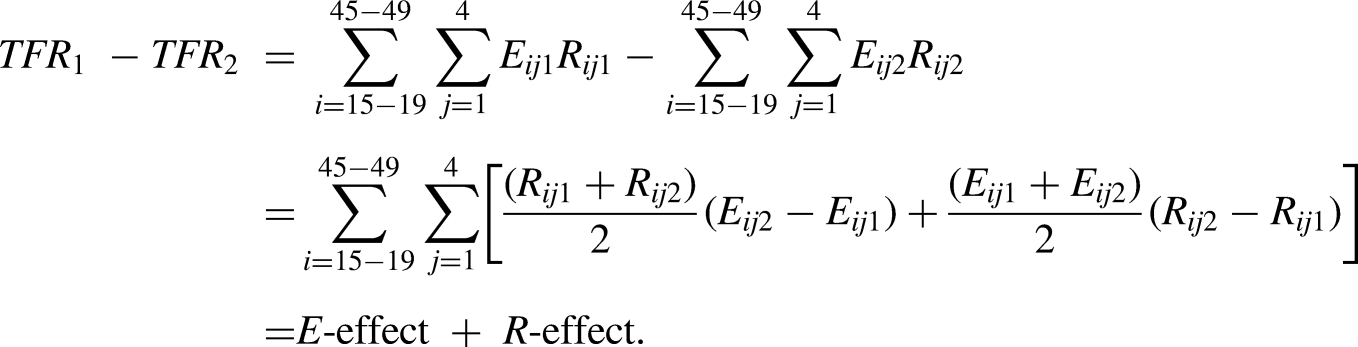
We conducted decomposition analysis in two distinct ways. Firstly, we performed the decomposition separately for the Han population and the ethnic minority population, using 1982 as the baseline year. Secondly, we decomposed the difference in the TFR between the Han population and the ethnic minority population over time. The decomposition method allowed us to explore how compositional changes and demographic processes contributed to the evolving trends and persistent disparities in fertility rates between the Han population and the ethnic minority population.
Regression analysis
We also analyzed data from the 2015 one-percent population survey to examine how fertility differentials between ethnic groups vary according to women's socioeconomic characteristics. Specifically, we analyzed variations in the number of children born to women across different ethnic groups by education level, hukou (household registration) type, and migration status based on regression models. For the regression models, the dependent variable is the number of births that a woman had up until 1 November 2015, and independent variables include the woman's age, age squared, migration status, education, hukou type, birth cohort, marital status, and ethnicity. Through this analysis, we seek to uncover the influence of socioeconomic characteristics on disparities in fertility rates across different ethnic groups.
Qualitative analysis
To assess whether individuals identified as ethnic minorities were embracing new individualistic family norms or whether their ethnic subcultures were continuing to influence fertility behaviors, we conducted semi-structured interviews with 211 individuals from 28 different ethnic minorities during the 2022 winter break. Interviewees were recruited through personal connections and snowball sampling. In the interviews, we asked open-ended questions about participants’ experiences, attitudes, intentions, and behaviors in marriage, family, childbearing, and childrearing. Interviews lasted around 90 minutes for each participant. All interviews followed standard consent and confidentiality protocols, as approved by the research ethics board at the authors’ institution.
Among the 211 interviewees, the gender distribution was 63.5% women and 36.5% men. Geographically, 56.9% were from urban areas while 43.1% were from rural regions. Interviewees’ ages ranged from 19 to 66 years, with a mean age of 36.1 years. The marital status breakdown revealed that 83.4% were married, while 16.6% were unmarried. Education levels encompassed a spectrum from primary school or below to a bachelor's degree or above. In this study, we drew upon 12 interviewees’ narratives to exemplify ethnic minorities’ attitudes and behaviors toward marriage and fertility.
Results
Fertility trends among the Han and ethnic minorities
Total fertility rate
Figure 1 displays the trends in the TFR for the Han and ethnic minority populations from 1982 to 2020. During the initial period from 1982 to 2000, we observed a rapid decline in the TFRs of both populations. In 1982, the TFRs of the Han and ethnic minority populations were 2.44 and 4.18, respectively; however, by 2000, both these TFRs had dropped significantly to below-replacement levels. Since then, the TFR for ethnic minorities has continued to gradually decline, while that for the Han has fluctuated at a relatively low level. In 2020, the TFRs of the Han and ethnic minority populations slightly increased to 1.27 and 1.54, respectively.
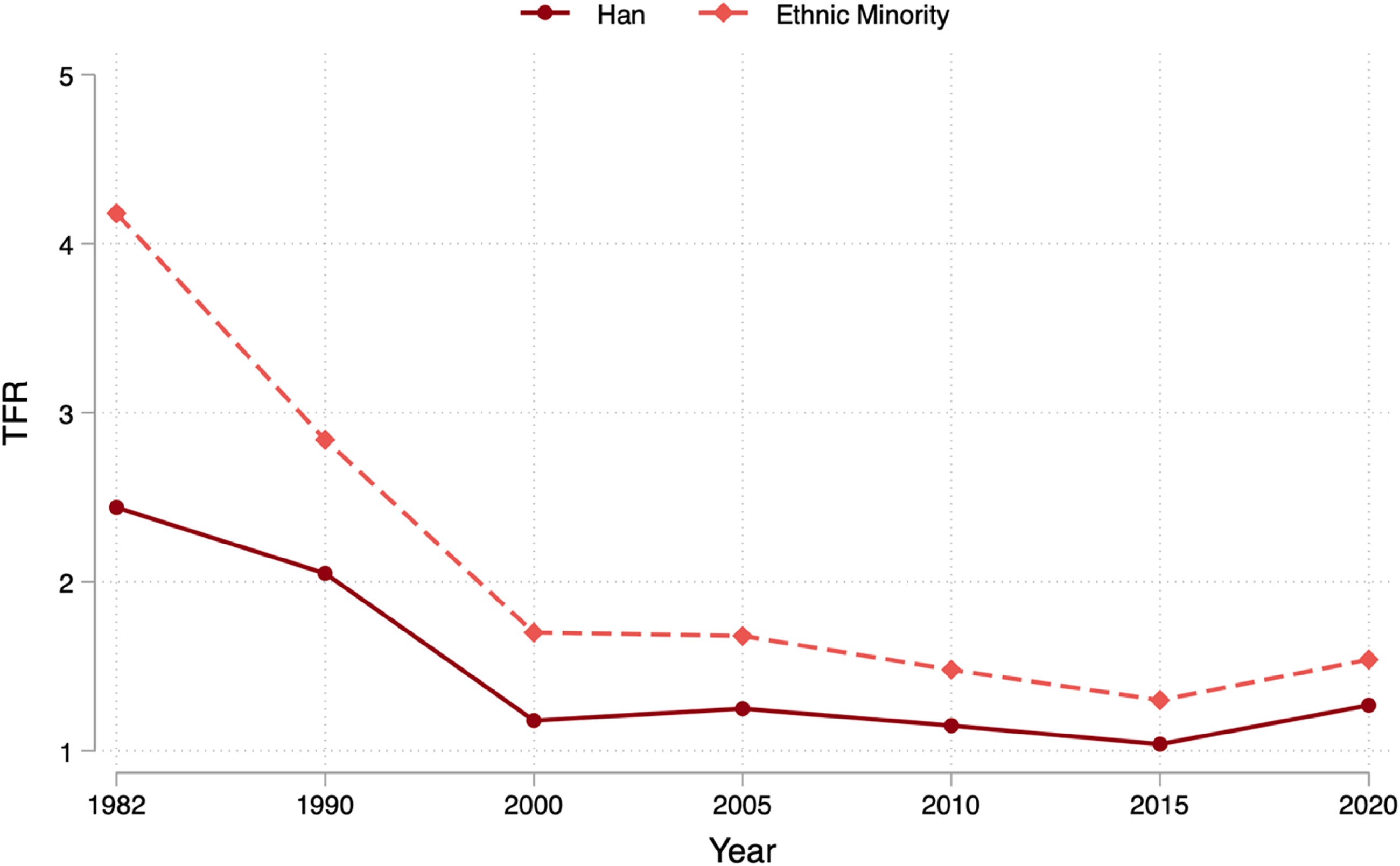
The total fertility rates (TFRs) of the Han and ethnic minority populations from 1982 to 2020.
Caution should be exercised when interpreting the slightly increasing trend from 2015 to 2020; previous studies have highlighted the issue of underreporting, which may lead to the underestimation of the TFR calculated from census data (Goodkind, 2011; Zhang and Zhao, 2006). However, the implementation of new information collection strategies for the 2020 census significantly improved data quality; specifically, these new strategies included the use of identification card numbers, adoption of digital technology, provision of online registration channels, and use of administrative records from various sources to verify information (Zhai and Liu, 2021). Therefore, the slight increase in the TFRs observed in 2020 can be primarily attributed to a reduction in underreporting, rather than a genuine rise in fertility levels.
In summary, both the Han and ethnic minority populations transitioned from high to low fertility levels between 1982 and 2020. During this period, the ethnic minority population's fertility rate remained higher than that of the Han population. However, the gap between the fertility rates of the Han and ethnic minority populations has narrowed over the past few decades.
We divided the 55 ethnic minorities into eight larger groups according to Ma's (2008) practice and observed their distinct characteristics. Overall, all groups completed the fertility transition, albeit at varying rates. For instance, the Kazakh ethnic group had the highest TFR among the eight groups in 1982 at 6.91, but by 2000 its TFR had rapidly declined to 1.86. Since then, this group's TFR has continued to decline at a faster pace than the TFRs of other groups. In 2020, the Kazakh ethnic group's TFR dropped to a significantly low level of 1.12, which is lower than even that of the Han population. Similarly, although the Uyghur ethnic group started with a high TFR of 6.2 in 1982, its TFR had also quickly declined by 2000. While the group's TFR subsequently continued to decline faster than the TFRs of the other groups, the pace of its decline slowed after 2000. Meanwhile, the Hui ethnic group displayed a moderate fertility level and rate of decline compared to other groups before 2000 and maintained a stable TFR of around 1.6 from 2000 to 2020. In contrast, the Tibetan ethnic group exhibited a unique transition process: its TFR declined between 1990 and 2010 instead of between 1982 and 2000. In 2020, this group's TFR was close to 2—the highest among the eight ethnic minority groups. The Manchu and Korean ethnic groups have consistently maintained low fertility levels. In 1982, the Manchu group had a TFR of 2.11 and the Korean group had a TFR of 1.91. After falling from 1982 to 2000, their TFRs remained low until 2020, when the Manchu group had a TFR of 1.05 and the Korean group had a TFR of 0.94—these are the lowest rates of all groups, including the Han population. The 1982 TFR for the Mongolian ethnic group was similar to that of the Hui ethnic group, but demonstrated a more rapid decline into 2020, when it fell below the TFR of the Han population. Lastly, the ethnic minorities from the southern regions of China group had a high fertility level in 1982, with a TFR of 4.64; however, their TFR has since rapidly declined. Currently, they are maintaining relatively high fertility levels (Figure 2).
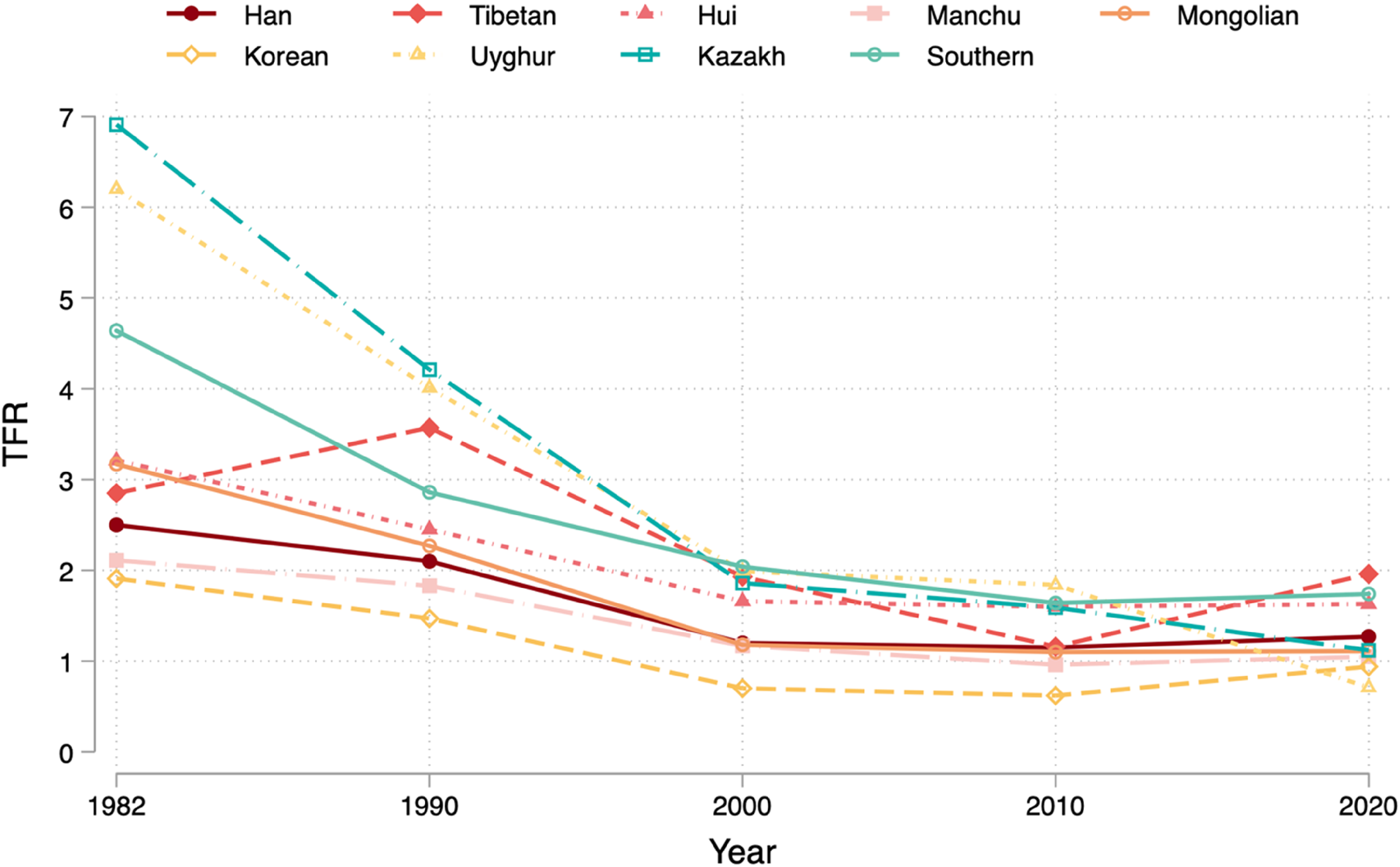
The total fertility rates (TFRs) for the Han and eight ethnic groups from 1982 to 2020. Notes: Ethnic minority groups are based on those in Ma (2008); “Southern” refers to the group “ethnic minorities from the southern regions”.
Figure 3 illustrates the TFR trends for the Han and the 15 most populous ethnic minorities (not grouped) based on population size. These ethnic populations, with the exception of the Koreans and Tujia, did not transition from a high fertility level to a below-replacement level by 1990. However, by 2000, the TFRs of all ethnic minorities had dropped below the replacement levels, except for that of the Bouyei. It is worth noting that, unlike other ethnic minorities, the TFR of the Tibetan population increased from 2.77 in 1982 to 3.61 in 1990 before declining. In 2020, the Tibetan, Yi, and Bouyei populations recorded TFRs of 1.95, 1.97, and 1.95, respectively—the highest fertility rates among the 15 most populous ethnic minorities. Conversely, the Manchus and Mongolians exhibited the lowest fertility rates, with TFRs below 1.1—even lower than those of the Han population (1.27).
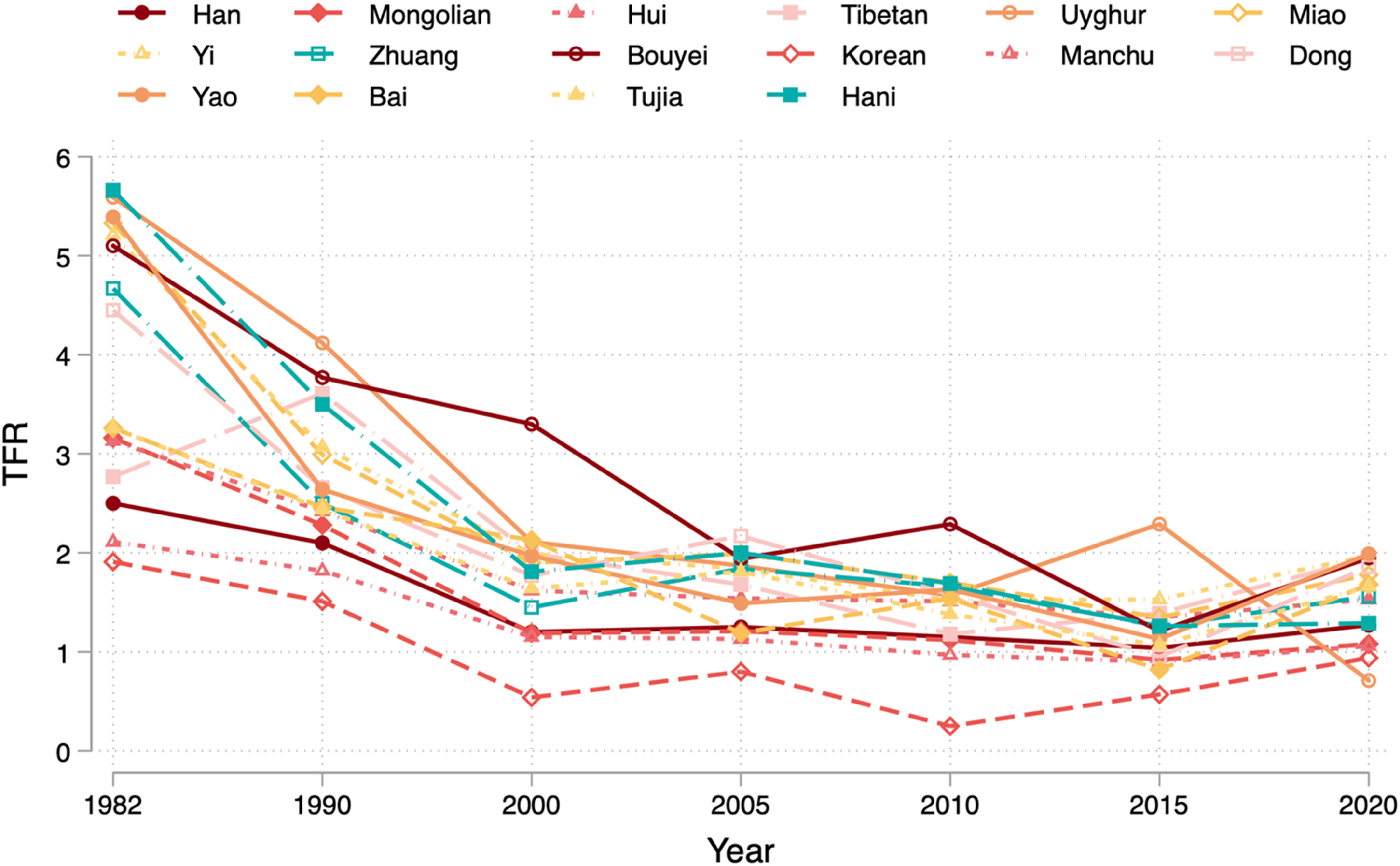
The total fertility rates (TFRs) for Han and the 15 most populous ethnic minorities from 1982 to 2020.
In summary, fertility levels among all ethnic minorities had declined to below the replacement level of 2.1 in 2020, but significant variations persist. Among the 15 ethnic minorities examined in this study, the TFRs for the Yao, Dong, Bouyei, Yi, and Tibetans were above 1.8, in which the Tibetan, Yi, and Bouyei ethnic minorities recorded TFRs of 1.95, 1.97, and 1.95, respectively, indicating relatively higher fertility levels. The TFRs for the Miao, Zhuang, Bai, Tujia, and Hui ranged from 1.5 to 1.8. The Mongolian, Manchu, and Korean populations exhibited the lowest fertility, with TFRs below 1.1—again, these rates were even lower than that of the Han population (1.27). The Hani displayed a fertility level similar to that of the Han people. In conclusion, ethnic minorities from the southern regions, Tibetans, and the Hui have higher fertility levels, while Koreans, Mongolians, and Manchus have lower fertility levels.
Understanding the persistent low fertility levels within certain ethnic minority groups, such as the Korean, Mongolian, and Manchu minority groups, is undeniably invaluable. On average, these three ethnic groups exhibit substantial levels of urbanization, industrialization, education, and migration. To illustrate, as of 2020, their urbanization rates stood at 70.6%, 61.0%, and 60.3%, respectively, in comparison to the Han population's rate of 65.3%. Average years of schooling for the Korean, Mongolian, Manchu, and Han groups were 10.8, 10.1, 9.8, and 9.6, respectively. Correspondingly, migration rates were recorded at 31.3%, 33.5%, 28%, and 26.6%. Furthermore, the tertiary sector's contributions to their economies were 70.8%, 48.1%, 47.2%, and 49.1%, respectively (Duan et al., 2023). These numerical insights lend support to the socioeconomic characteristics hypothesis. Broadly speaking, ethnic minority groups with elevated modernization levels tend to exhibit reduced fertility rates, whereas those with lesser modernization exhibit higher fertility rates. However, it is important to acknowledge that group-level socioeconomic status does not comprehensively account for fertility variations among distinct groups. Consider the example of the Hani ethnicity: in 2020, its urbanization rate stood at 36%, the tertiary sector's contribution was 24.6%, and the average years of schooling was 7.4. These metrics were notably lower than those of the Han. However, the TFR for the Hani remained comparably low, akin to that of the Han population. This implies that subcultural elements within ethnicity also play a role in the dynamics of fertility transition.
Age-specific fertility rate
The ASFR was used to describe detailed fertility patterns within different age groups. Some variations were observed across ethnic groups. Four ethnic groups—the Tibetan, Kazakh, and Mongolian ethnic groups, as well as the ethnic minorities from the southern regions group—exhibited a unimodal pattern, with the highest fertility rate concentrated among those aged 25–29 years. Notably, the Tibetan ethnic group displayed a high fertility level, whereas the Kazakh ethnic group demonstrated a lower fertility level. The Hui and Uyghur ethnic groups displayed a bimodal pattern, with the fertility rate peaking among those aged 20–24 and 25–29 years. Similarly, the Korean and Manchu ethnic groups also exhibited a bimodal fertility curve with the fertility rate peaking among those aged 25–29 and 30–34 years, suggesting delayed age at childbirth (Figures 4–6).
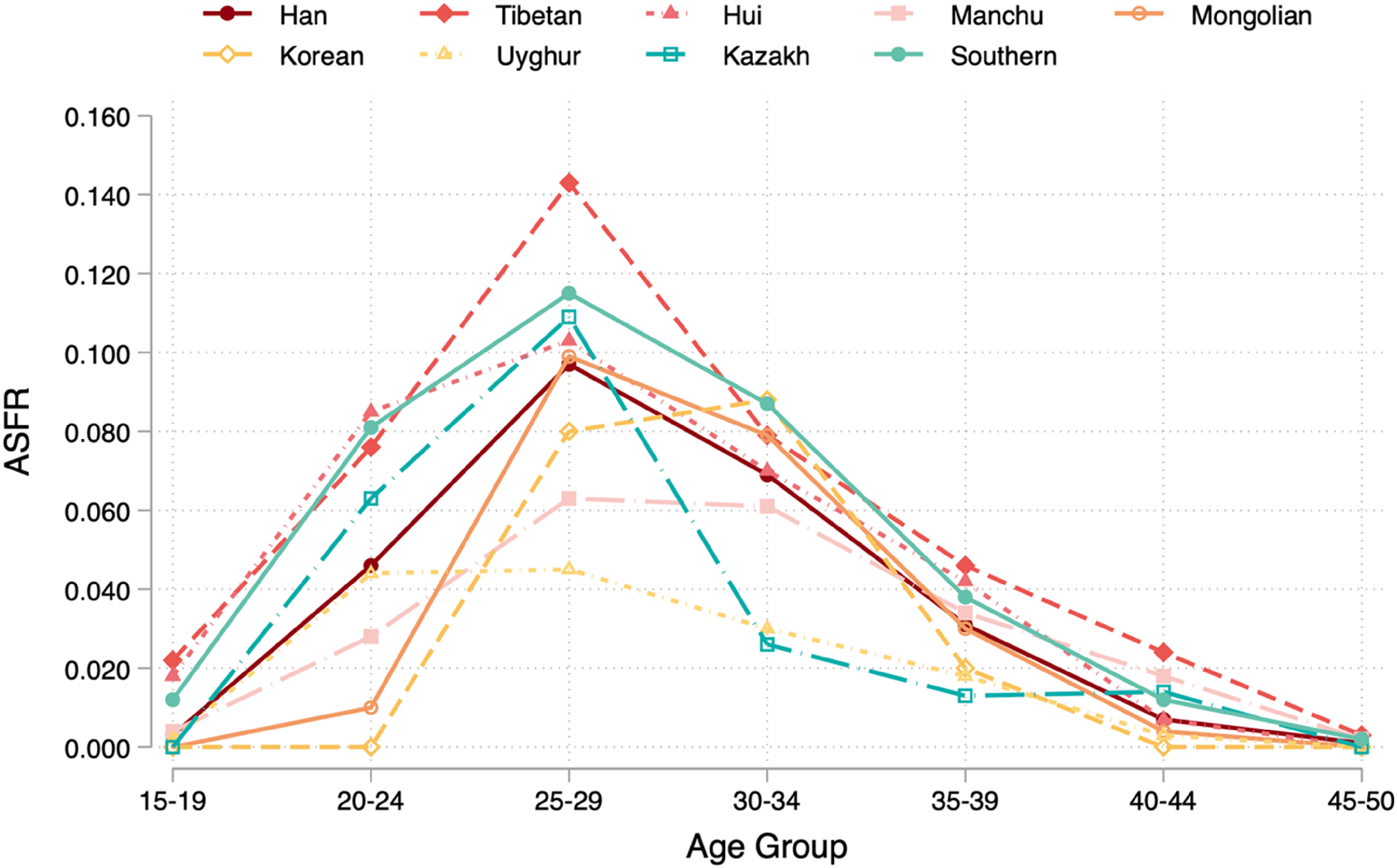
The age-specific fertility rates (ASFRs) for the Han and eight ethnic groups in 2020. Notes: Ethnic minority groups are based on those in Ma (2008); “Southern” refers to the group “ethnic minorities from the southern regions”.
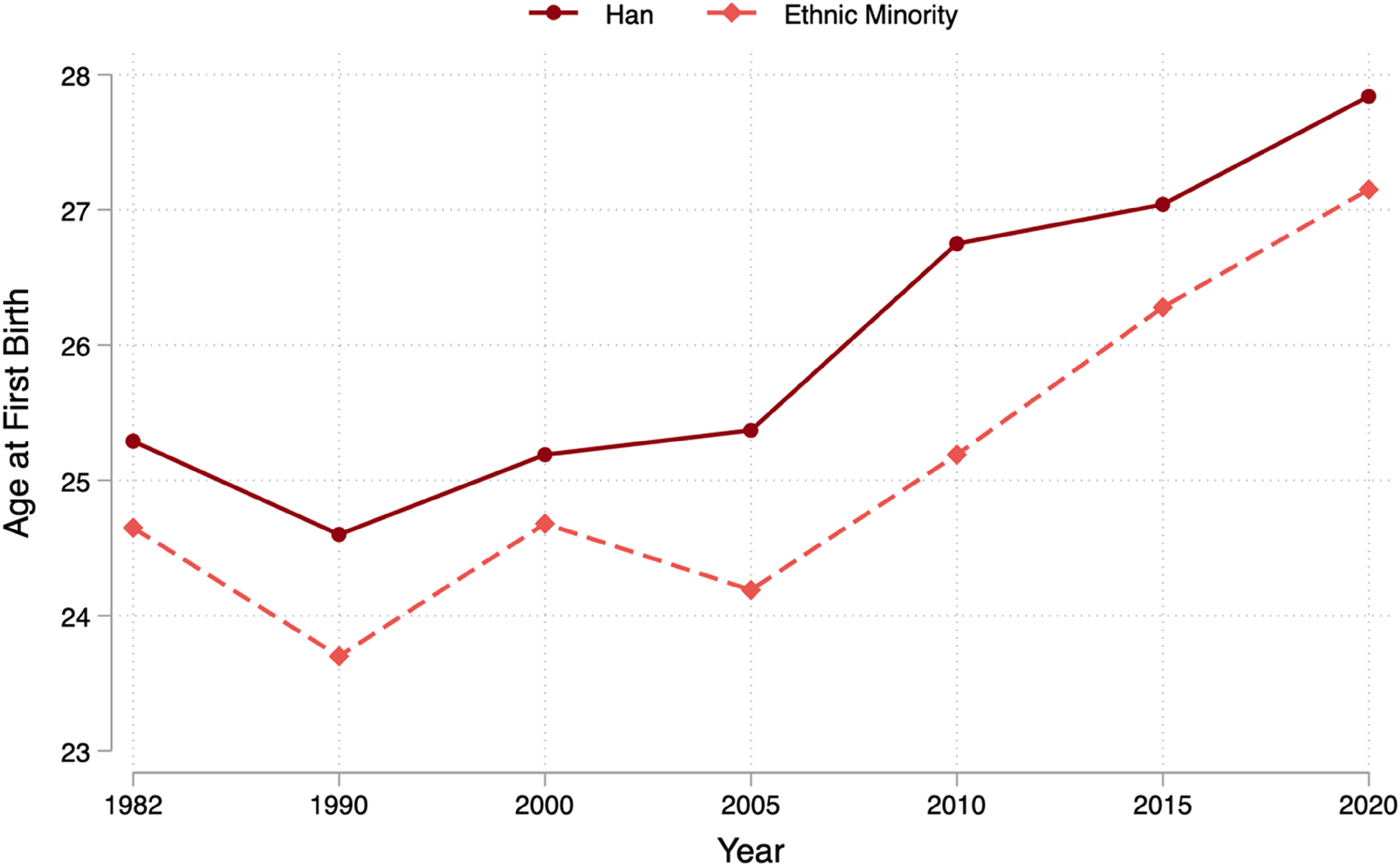
Age at first birth for the Han and ethnic minority populations from 1982 to 2020.
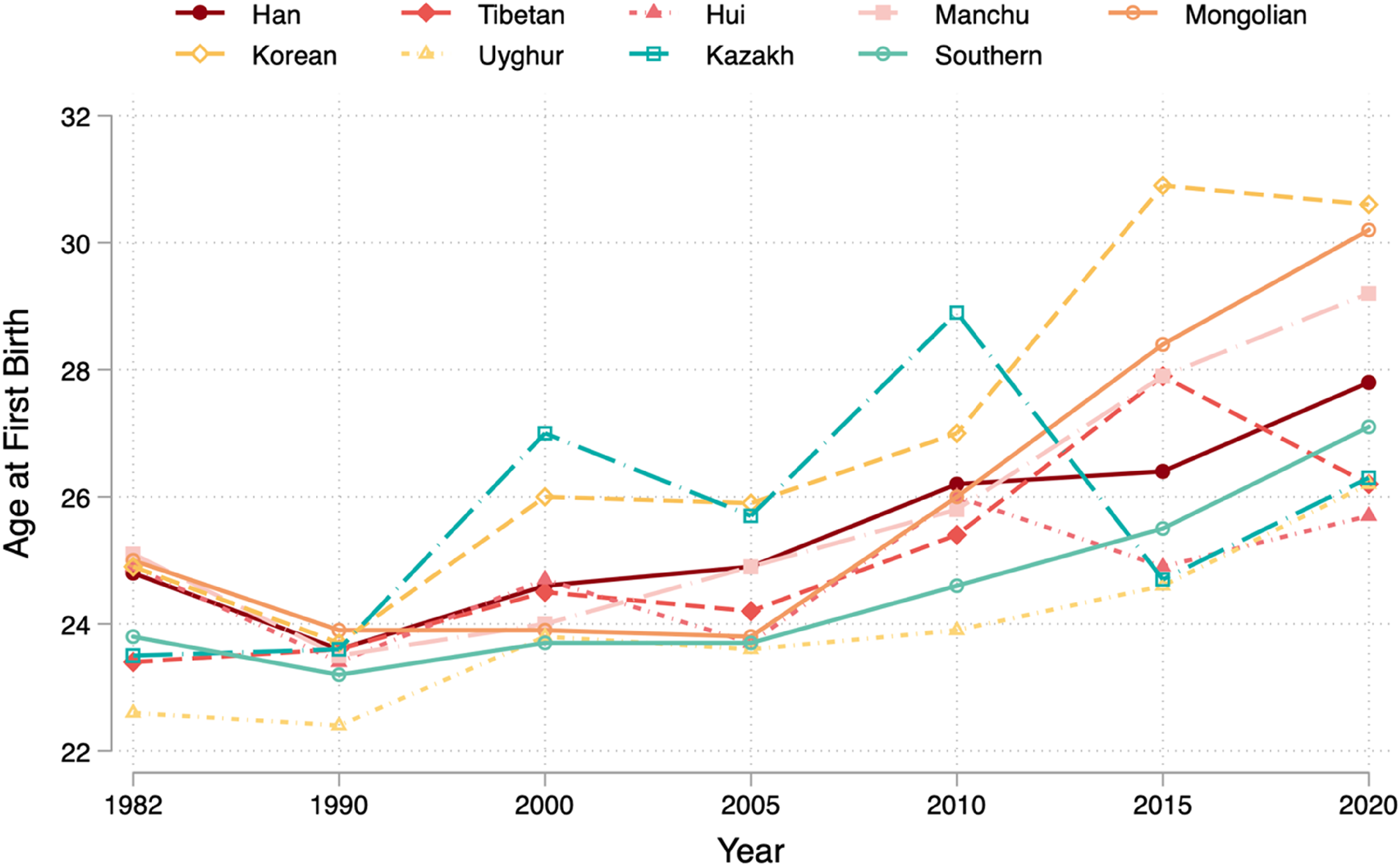
Age at first birth for the Han and eight ethnic minority groups from 1982 to 2020. Notes: Ethnic minority groups are based on those in Ma (2008); “Southern” refers to the group “ethnic minorities from the southern regions”.
Age at first birth
AFB is a direct indicator of childbirth timing. Since 1982, the average AFB for both the Han and ethnic minority populations has exhibited two distinct phases. The first phase occurred from 1982 to 2005, during which the TFR remained stable, albeit with fluctuations. The second phase took place from 2005 to 2020 and was characterized by a continuous and rapid increase in the average AFB. Over time, the gap between the average AFB among the Han and ethnic minority populations has narrowed. In 2010, ethnic minorities lagged behind the Han population by 1.56 years in terms of AFB. This gap decreased to 0.76 years in 2015 and further narrowed to 0.69 years in 2020.
Regarding variations among ethnic groups, there was a universal rise in the average AFB from 2005 to 2020. Notably, three ethnic groups—the Manchu, Mongolian, and Korean groups—demonstrated the most significant increase in average AFB, which corresponds with their relatively low fertility levels. By 2020, both the Mongolian and Korean ethnic groups surpassed an average AFB of 30 years, while the Manchu ethnic group reached 29.2 years, surpassing the average AFB of the Han Chinese, at 27.8 years. Conversely, the Uyghur, Kazakh, and minorities from the southern region groups exhibited relatively lower average AFBs. Ultimately, there is a correlation between AFB and fertility rates among ethnic groups: ethnic groups with a higher average AFB tended to have lower fertility rates, whereas those with a lower average AFB tended to have higher fertility rates.
Figure 7 presents the trends in AFBs by individual ethnic minorities from 1982 to 2020. Among the 15 most populous ethnic minorities, Mongolians, Koreans, and Manchus exhibited the most significant increases—ranging from 3 to 4 years—in AFB since 2010. These ethnic groups also demonstrated rapidly declining fertility rates, which reached the lowest level of fertility yet recorded at <1.1. This indicates that delayed childbearing age plays a crucial role in the decline in fertility in these groups. Some ethnic minorities from the southern regions, such as the Miao, Tujia, Bai, Zhuang, and Bouyei, have also demonstrated a substantial increase—ranging from 2 to 6 years—in average AFB since 2010. Notably, these ethnic minorities maintained relatively high fertility levels until 2020.
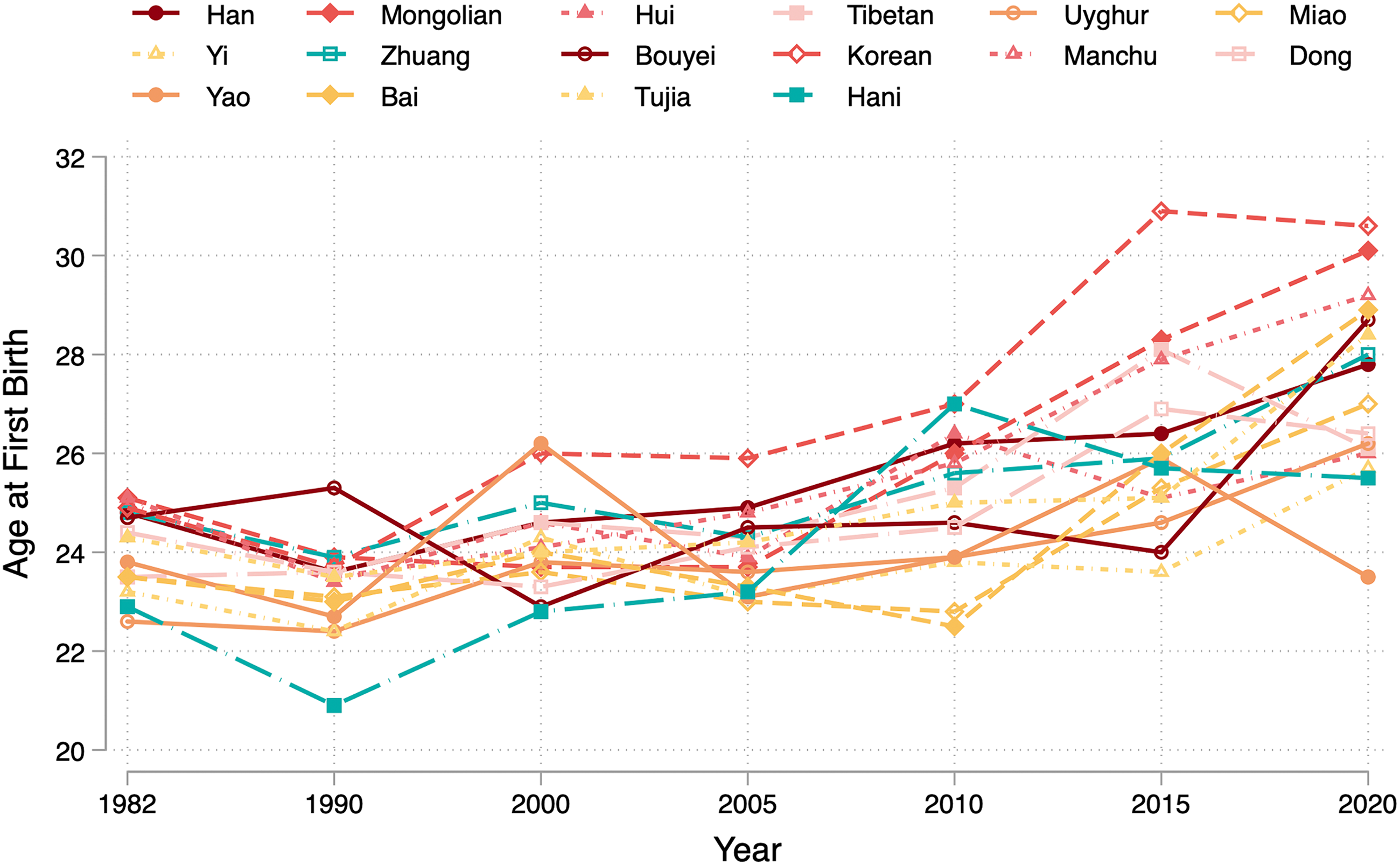
Age at first birth for Han and the 15 most populous ethnic minorities from 1982 to 2020.
Certain individual ethnic minorities, such as the Hui, Tibetan, Yao, and Dong, have not demonstrated a consistent upward trend in AFB; instead, among these groups, AFB was approximately 23–26 years in 2020. Correspondingly, these ethnic groups have relatively high fertility levels compared to other ethnic minorities. For instance, the Tibetan TFR was approximately 2 in 2020. The Uyghurs had an average AFB of 26.2 years in 2020. The Hani had a low average AFB of 25.5 years and a low TFR of 1.29 in 2020. The coexistence of low AFB and fertility in the Hani group calls for further data collection and in-depth studies.
Contribution of education to fertility trends: A decomposition analysis
Above, we established that the fertility rates of both the Han and ethnic minority populations in China have rapidly declined over the past few decades, indicating a widespread fertility transition. Furthermore, fertility levels and patterns have converged across ethnic groups. To further understand the dynamics of these declines in fertility and the fertility disparities between the Han and ethnic minority populations, we employed a decomposition analysis. Specifically, we used the decomposition analysis to examine the two main components that contribute to the fertility decline. The first component is educational structure, which reflects how women's educational advancements have influenced the decline in fertility. By analyzing changes in educational composition, we can assess the impact of improved education on the decline in fertility. Here, it is important to emphasize the rationale behind our emphasis on education. Numerous studies have consistently affirmed the pivotal role of education in driving fertility decline as part of the modernization process. As noted by Inkeles (1973), the increase in educational attainment stands as a central driving force behind the overarching concept of modernization. Moreover, education is widely recognized as a fundamental pillar in determining social status. The second component is the rate effect, which captures the observed decline in fertility regardless of educational attainment. This effect represents the overall social changes, including economic development, urbanization, globalization, and other factors that can reduce fertility rates, such as the implementation of fertility policies in China. Through this decomposition analysis, we aimed to better understand the specific contributions of educational structure and the rate effect to the decline in TFRs among both the Han and ethnic minority populations.
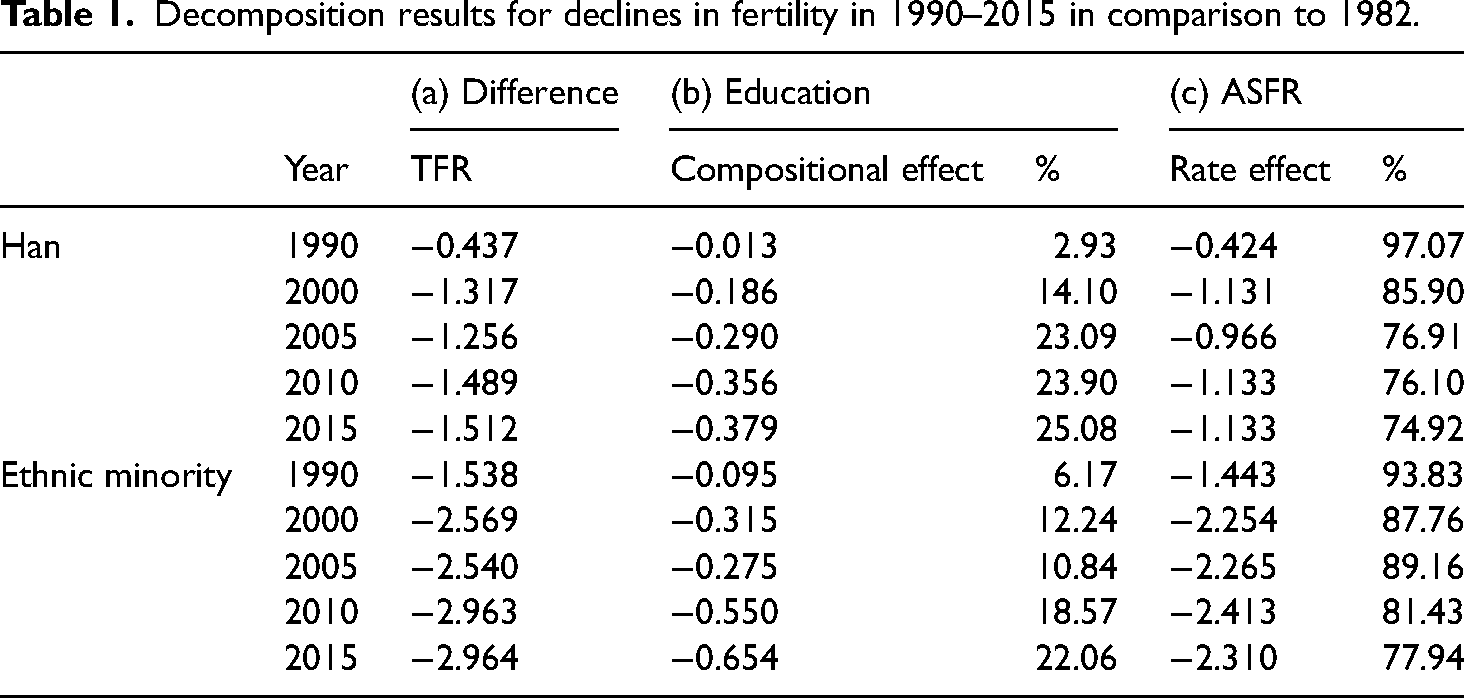
We used the 1982 TFRs of the Han and ethnic minority populations as the reference levels. In Table 1, Panels (a)–(c) present the change in TFR, compositional effect of education on TFR, and rate effect on TFR, respectively. Both the Han and ethnic minority populations exhibited similar patterns. Here, we focused on ethnic minority populations. Our analysis revealed that the rate effect consistently played a significant role in the decline in the TFR. For ethnic minorities, the TFR decreased between 1982 and 1990, when it reached 1.538; 93.83% of this decline was attributed to the rate effect and only 6.17% to the compositional effect. These findings suggest that the systematic rate changes in every educational level have significantly driven the decline in the TFR and are evidence that the decline in the TFR was a universal phenomenon; therefore, the factors mentioned above, such as economic development, urbanization, globalization, and fertility policies, affected all women, regardless of their socioeconomic status. Furthermore, the compositional effect of education increased over time, reaching 22.06% in 2015. This finding suggests that the educational composition of the population played an increasingly important role in the decline in fertility. Given that higher education is typically associated with lower fertility rates (Martin, 1995) and in light of the ongoing improvement of education in China, we can expect the impact of educational composition on the decline in the TFR to decline and to observe a continuing converging trend driven by education between the Han and ethnic minority populations in the future.
Decomposition results for declines in fertility in 1990–2015 in comparison to 1982.
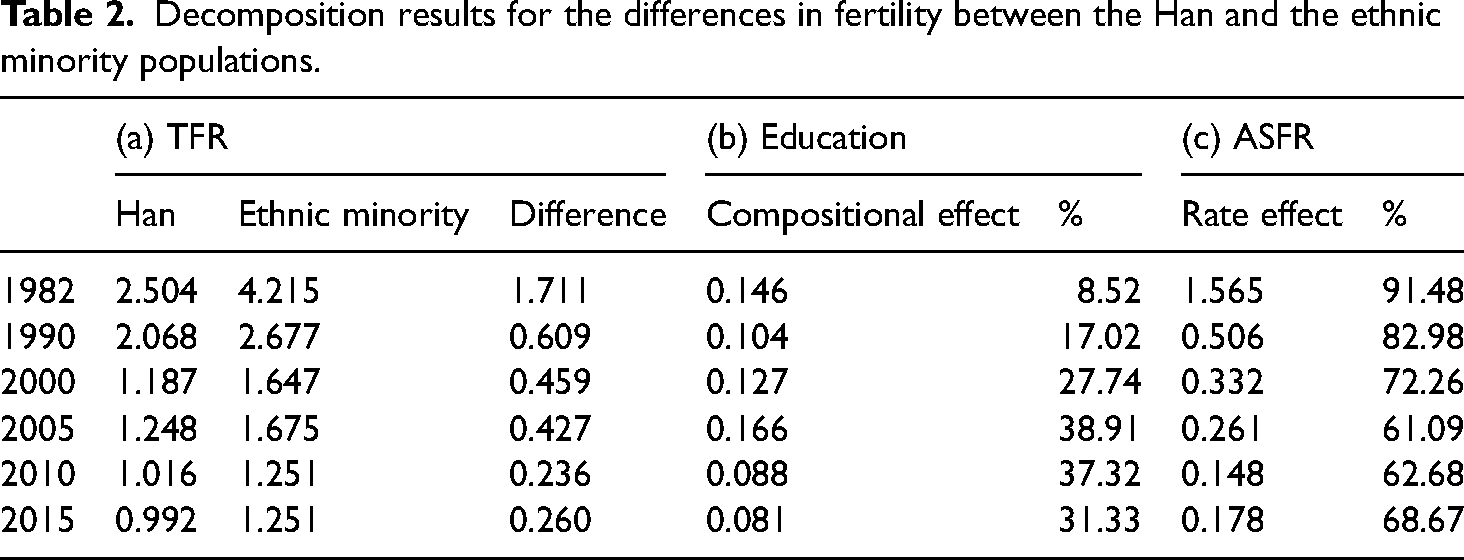
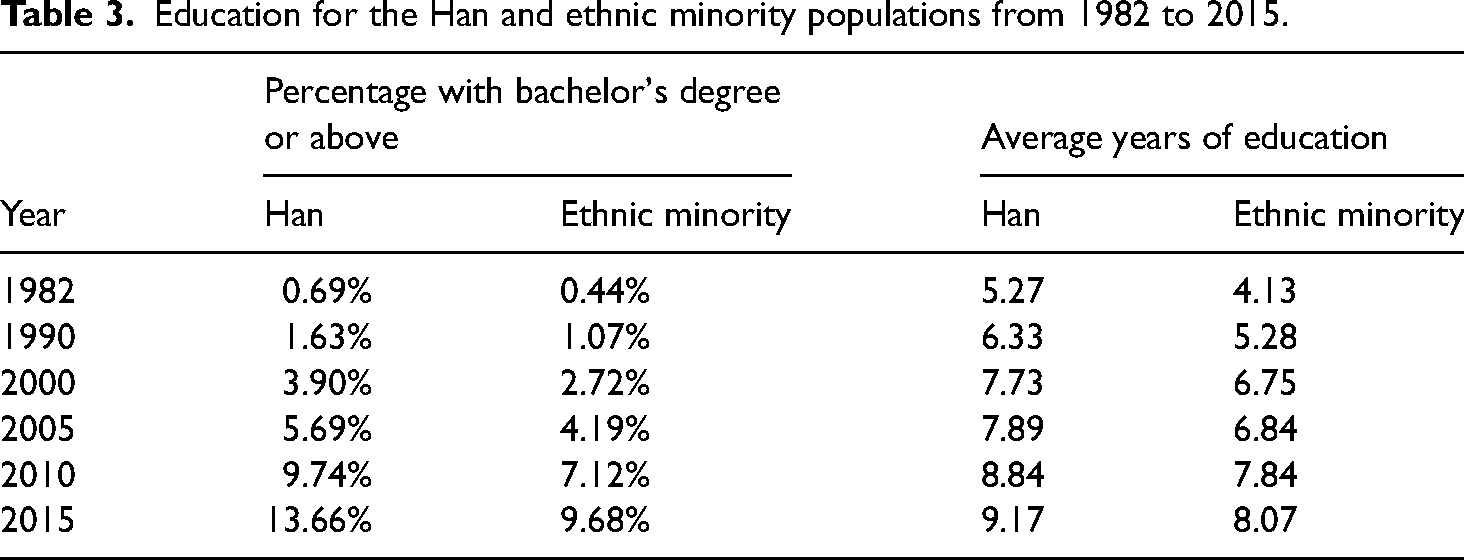
We further conducted decomposition analysis to analyze the TFR differentials between Han and ethnic minority populations. This analysis was carried out for each census and one-percent population survey year spanning 1990–2015. The results presented in Table 2 indicate that the majority of the TFR difference between the Han and ethnic minority populations can be primarily attributed to the rate effect, which accounted for 61.09–91.48% of the difference. In comparison, the compositional effect of education ranged from 8.52% to 38.91%. This suggests that the main driver of the TFR gap lies within each age group rather than the differences in educational attainment between the two groups. Notably, the contribution of educational composition increased in the 2000s and the 2010s compared to the 1980s and the 1990s. This can be attributed to the slight widening of the educational gap in terms of years of schooling and the percentage of individuals with a bachelor's degree or above between the Han and ethnic minority populations (Table 3). For instance, in 1982, 0.69% of the Han population and 0.44% of the ethnic minority population held a bachelor's degree or above; in 2015, these figures had increased to 13.66% and 9.68%, respectively. The education level of the ethnic minority population is likely to continue to increase and approach that of the Han population; therefore, we can expect a continued reduction in the TFR differential between the two groups.
Decomposition results for the differences in fertility between the Han and the ethnic minority populations.
Education for the Han and ethnic minority populations from 1982 to 2015.
In conclusion, the decomposition analysis provides empirical support for both the socioeconomic characteristics and minority status hypotheses. Regarding the socioeconomic characteristics hypothesis, our findings demonstrated that education plays a significant role in driving the declines in fertility among both the Han and ethnic minority populations; this is evident in the increasing contribution of education distributions to the declines in fertility. Education also contributes to fertility disparities between the Han and ethnic minority populations. Regarding the minority status hypothesis, our analysis revealed that differences in ASFRs between the Han and ethnic minority populations, that is, the rate effect, played a dominant role; this highlights the influence of minority membership in fertility behaviors. In addition, our results indicate that declines in fertility occurred across all age groups regardless of women's levels of education. This underscores the importance of considering a broader social context, including factors such as economic development, urbanization, globalization, and fertility policies, which can drive universal declines in fertility. Moreover, these forces may contribute to the convergence of reproductive behaviors across ethnic groups. Overall, our findings offer empirical evidence that socioeconomic characteristics and minority status impact fertility trends among the Han and ethnic minority populations. By shedding light on the various factors at play, our analysis deepens existing understandings of the complex dynamics of the fertility transition in China.
Fertility by socioeconomic characteristics and ethnicity: Results from regressions
In this section, we investigate how women's socioeconomic characteristics influence their fertility by comparing differences in the numbers of births per woman across ethnic groups. By doing so, we can further examine the two hypotheses related to socioeconomic characteristics and minority status. Our analysis used the most recent census dataset available to the public: the 2015 one-percent population survey. To clearly present the findings, we created visualizations of the predicted number of births based on regression models stratified by nine ethnic groups (Han and the eight other ethnic groups introduced by Ma (2008) and socioeconomic characteristics.
Figure 8 illustrates variations in the number of births per woman based on education and ethnicity. A higher level of education was associated with a lower number of births across all ethnic groups. Intriguingly, the differences in the number of births per woman across ethnic groups are more pronounced at lower education levels and become smaller at higher education levels. For instance, women with an education at the primary school level or below from the Manchu, Mongolian, Han, and Uyghur ethnic groups had an average of 1.318, 1.326, 1.619, and 2.202 children, respectively; notably, women from the Uyghur group (who have the highest fertility rate) have 0.884 more children than women from the Manchu group (who have the lowest fertility rate) on average. However, women holding a bachelor's degree or above from the Manchu, Mongolian, Han, and Uyghur ethnic groups had an average of 1.023, 1.064, 1.073, and 1.524 children, respectively; therefore, the gap in the number of births per woman among ethnic minorities narrowed as women's education increased. These results held when we compared the rates for the ethnic minority population with those of the Han population (Figure 8(a)). Thus, modernization factors such as education play a role in promoting convergence in reproductive behaviors. These findings offer supporting evidence for the socioeconomic characteristics hypothesis.
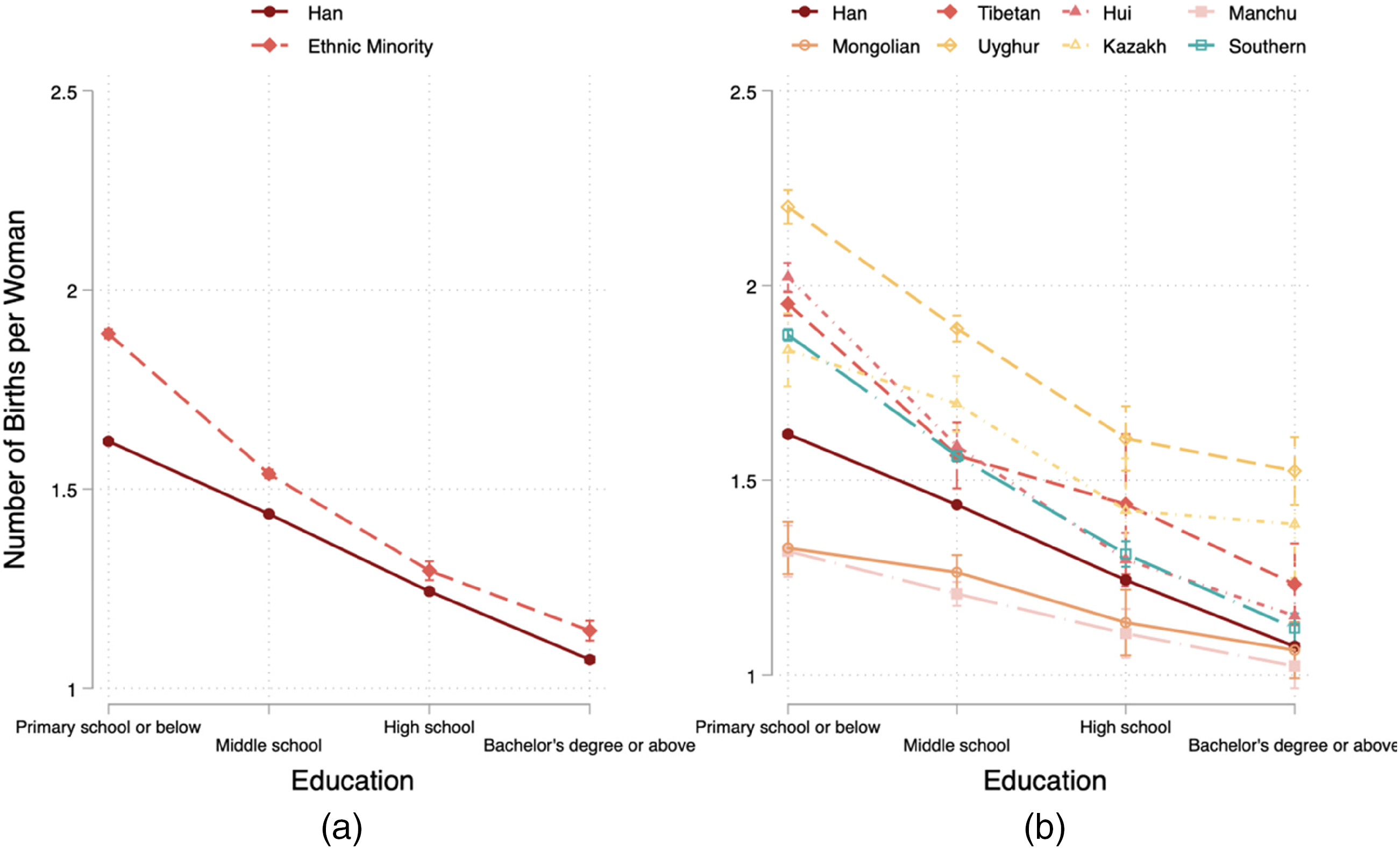
Predicted number of births per woman by education and ethnicity/ethnic group. Notes: In (b), ethnic minority groups are based on those in Ma (2008); “Southern” refers to the group “ethnic minorities from the southern regions”.
We also noted that significant differences persisted across the ethnic groups. Certain ethnic groups, such as the Uyghur, Tibetan, Hui, and Kazakh groups, consistently exhibited higher fertility levels, while others, including the Manchu, Mongolian, and Korean groups, consistently demonstrated lower fertility levels, irrespective of education. These findings suggest that factors associated with ethnic characteristics, cultural influences, and geographical factors continue to play crucial roles in shaping women's fertility behaviors; therefore, the minority status hypothesis was also supported.
Similar patterns were observed when examining the impact of hukou type and migration on fertility (see Figures 9 and 10). Specifically, individuals with non-migrant status and rural hukou tended to have higher fertility rates than migrants and those with urban hukou. Furthermore, the difference in the number of births per woman among the ethnic groups was smaller among migrants and individuals with urban hukou status than among non-migrants and those with rural hukou. These findings suggest that both hukou type and migration status impact fertility disparities across different ethnic groups.
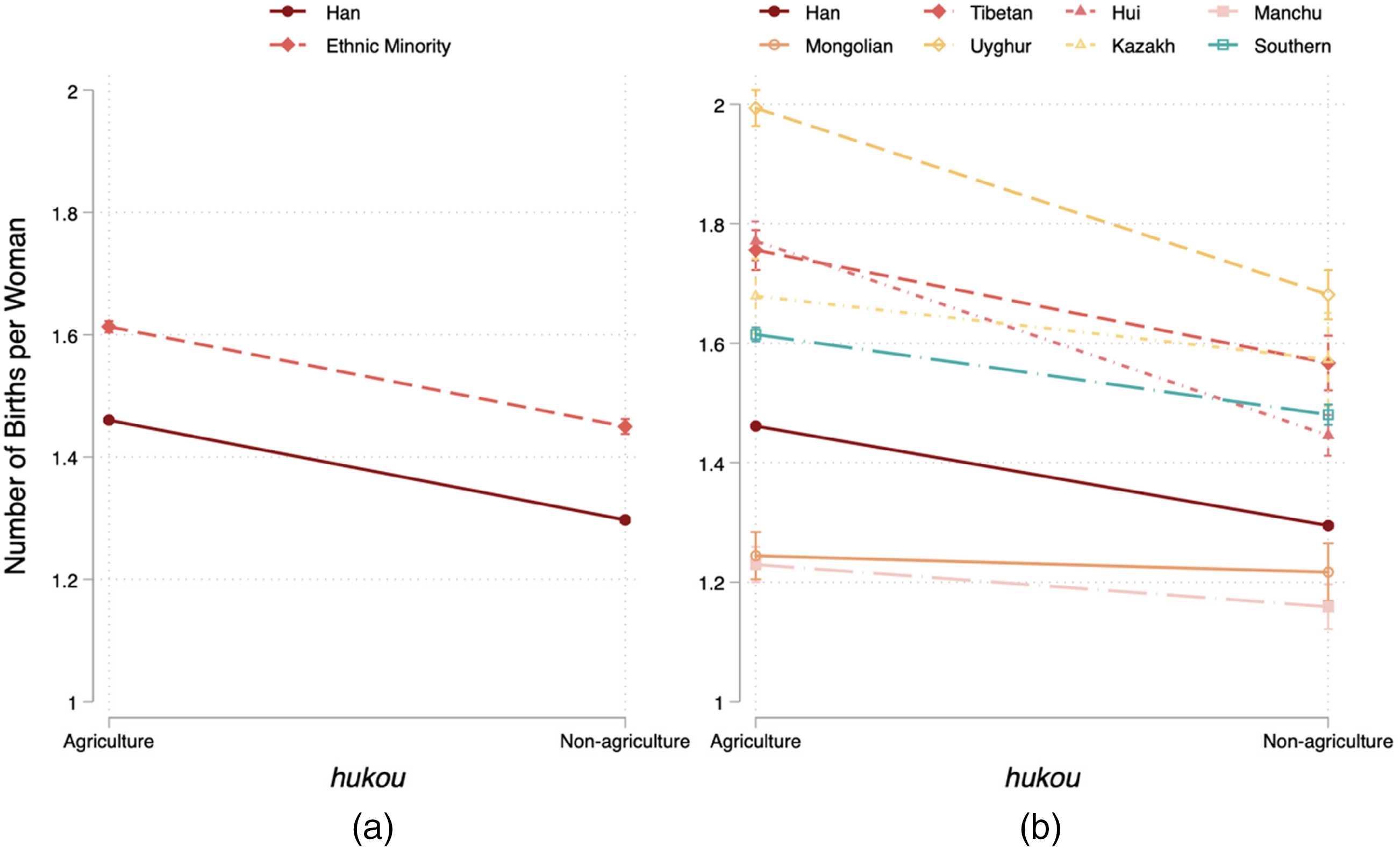
Predicted number of births per woman by hukou and ethnicity/ethnic group. Notes: In (b), ethnic minority groups are based on those in Ma (2008); “Southern” refers to the group “ethnic minorities from the southern regions”.
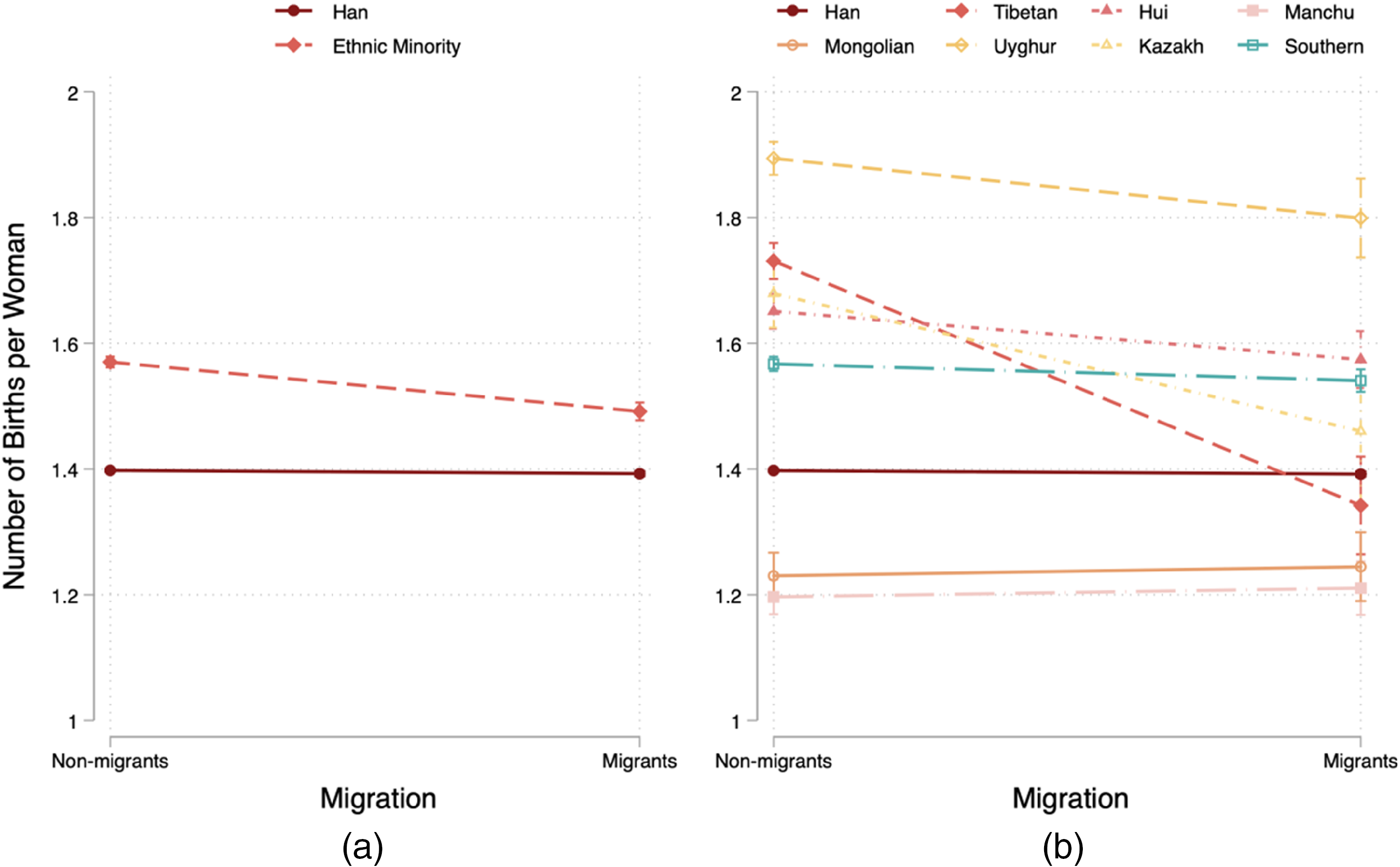
Predicted number of births per woman by migration and ethnicity/ethnic group. Notes: In (b), ethnic minority groups are based on those in Ma (2008); “Southern” refers to the group “ethnic minorities from the southern regions”.
In summary, ethnic minority individuals whose reproductive choices are notably influenced by factors associated with modernization, such as education, urbanization, and migration, tend to adopt reproductive behaviors that are more akin to those of both the Han majority and their fellow ethnic minorities. However, disparities in reproductive behaviors, whether between the Han and ethnic minority populations or among different ethnic groups, become more pronounced when considering individuals with lower educational attainment, rural hukou, and no migration experience. Our findings also underscore that these disparities persist across various ethnic groups, even when they are situated at the same socioeconomic level. This suggests that elements tied to socioeconomic attributes and minority status exert substantial influence on the shaping of fertility among ethnic groups, lending strong support to both the socioeconomic characteristics and minority status hypotheses.
Convergence and divergence of attitudes toward marriage and childbearing: Evidence from qualitative interviews
Prior research has demonstrated that new family norms and practices resulting from the SDT have exerted a universal impact on young adults in China, as highlighted by Yu and Xie (2022). By delving into the perspectives of young individuals from ethnic minority groups on matters of marriage, childbearing, and childrearing, our qualitative findings serve to augment our quantitative results, which explore both the convergent and divergent fertility patterns between the Han majority and ethnic minorities, as well as variations across different ethnic groups.
Regarding attitudes toward marriage, the interviewees frequently mentioned marital autonomy. They emphasized the significance of personal attributes, such as personality, health, education, and socioeconomic status, when seeking a potential spouse in the marriage market. Interestingly, religion and parental opinions were no longer regarded as primary factors in marriage decisions for most interviewees. The findings of the interviews suggest that education and migration have played instrumental roles in these ideological shifts. The widespread availability of education and increased mobility have enabled more interethnic marriages, thereby contributing to changes in attitudes toward marriage and partner selection. Two female interviewees (one of Yi descent, the other of Zhuang descent), both born in the 1970s and hailing from Wenshan Zhuang and Miao Autonomous Prefecture in Yunnan province, shared their experiences of interethnic marriages. They emphasized that factors such as personality, love, and the autonomy to make decisions, rather than parental influence, played pivotal roles in the process.
In terms of childbearing, the traditional normative ideal that “Having more children leads to increased security” has gradually diminished among the majority of ethnic minorities. Instead, having two children, one boy and one girl, is the ideal family size and structure, on average. Along these lines, there has been a notable shift in focus from the quantity to the quality of children. The primary point of childbearing has shifted from having children to provide support in old age to expressing and enjoying the innate love of children. Moreover, in contrast to the traditional belief that childbearing is of the utmost importance to the family, people have become more accepting and tolerant of childless families. Indeed, some individuals actively choose to remain childless to pursue personal achievements. They may prioritize their quality of life and personal development over having children. Sa, a 26-year-old unmarried woman of Mongolian descent, provides insight into this perspective, stating: I feel that my life is quite good, and I don’t need other things, such as having a child, to make it better. Having a child may decrease my quality of life. For example, if I want to go out and have fun, I would have to consider how to accommodate the child. Moreover, there are physical concerns as well. Having a child will certainly mean sleepless nights and an increased psychological burden. I would constantly worry about the child's health, and it feels like there would be too many things to consider.
Sa's account clearly illustrates how ideational factors shape the reproductive attitudes and behaviors of individuals who belong to ethnic minority groups. These ideational changes are part of the broader global phenomenon known as the SDT (Yu and Xie, 2022). The influence of the SDT on young people in China, including both the Han and ethnic minority populations, has become evident in recent years.
In addition to ideational factors, economic costs are frequently cited as a significant factor constraining fertility intentions. When discussing the reasons behind her intention not to have many children, Bai (of Mongolian descent, female, 38 years old) shared her personal experiences with childrearing: My husband and I have been working for nearly 14 years. We started out with a monthly income of 1300 yuan, which gradually increased to over 2000 yuan, and is now around 4000 yuan. In reality, it is extremely challenging to raise a child on a monthly income of only 4000 yuan. The educational costs for children nowadays, even in kindergarten, are extremely high. I pay over 14,000 yuan per year for my daughter's kindergarten tuition alone. Meanwhile, the fees for after-school tutoring classes, such as classes for art, English, dance, swimming, and music, are quite expensive. The expenses for other activities, such as eating out, visiting amusement parks, and traveling with children, are also high.
The economic pressure associated with raising children is further exacerbated by a popular emphasis on the importance of their education in China (Lyu et al., 2019). Bai's account illustrates that individuals often allocate significant resources to their children's education.
Ultimately, the above examples evidence the similarities of norms, values, and changes in marriage and childbearing between the Han and ethnic minority populations. Taken together, these examples provide compelling evidence of convergence in reproductive behaviors among young people from ethnic minority groups and the Han population.
While there is a general trend toward convergence, both between the Han and ethnic minorities and among different ethnic minorities, with the shift toward smaller family sizes and a focus on the quality rather than the quantity of children, certain cultural traits specific to ethnic minorities still exert significant influence. Along these lines, our qualitative results included divergent examples that highlight some notable cultural traits of different ethnic minorities. For example, Ren (of Uyghur descent, female, 24 years old, married), stated that she wanted to have two sons and two daughters who could provide support in the future and highlighted the cultural value placed on sons as the family's financial support and heirs. Specifically, she stated, “Boys are seen as the pillar of the family, capable of shouldering the financial burdens and fulfilling the role of continuing the family lineage in the local context”. Similarly, Mr Ma, a 32-year-old married man of Hui descent, emphasized the distinct roles of sons and daughters in providing financial and emotional support to their parents in a way that reflected traditional assumptions about gender roles within the family: “It is believed that sons, when they grow up, can take care of their elderly parents and provide financial support to the family. Daughters, on the other hand, are seen as providing emotional support to their parents”. Moreover, the preference for sons and the preservation of ancestral rituals plays a pivotal role in ethnic minority cultures, such as that of A Shi (a 21-year-old unmarried man of Yi descent), who explained that having a son is seen as essential for the family's lineage and participation in ancestral rituals and therefore to the perpetuation of these traditions: “The Yi have a long tradition of valuing family. In our family lineage, only sons are allowed to be recorded in the genealogy, while daughters are not. Moreover, only sons can participate in ancestral rituals. Therefore, it is necessary to have a son”. Traditional concepts favoring large extended families and son preference have led to high fertility rates in some ethnic minorities.
In addition, religion continues to play a significant role in marital decisions for certain ethnic minorities. To illustrate, within the Bonan ethnic group, religious beliefs stand as a pivotal criterion in decisions pertaining to marriage and relationships. Bonan participants concurred that “the absence of shared religious beliefs would undoubtedly jeopardize the endurance of a marriage”. This principle also holds true for other ethnicities, such as the Hui and Mongolians.
Certain interviewees expressed their inclination toward marrying within their own ethnic group to uphold their ethnicity, language, and cultural customs. For instance, Wu, a 33-year-old married woman of Mongolian descent, stated, “I insist on my children finding someone from the Mongolian ethnic group, or even someone from the Han ethnic group who can speak Mongolian, as I don’t want the next generation to lose the ability to speak Mongolian”. Similarly, Ma, a 50-year-old married man of Hui descent, emphasized the indispensability of both religion and ethnicity in the pursuit of a suitable life partner. He stated, “When it comes to selecting a life partner, factors of religion and ethnicity hold utmost significance”.
In summary, these qualitative examples demonstrate that cultural factors, including the preference for a son, preferences relating to the extended family, and religious considerations, still have a profound influence on family norms and reproductive behaviors within ethnic minority groups. Accordingly, these findings support the minority status hypothesis, suggesting that ethnic cultures continue to shape individuals’ attitudes and behaviors related to family and reproduction.
Discussion
The relationship between ethnicity and fertility has been a longstanding subject of academic inquiry, giving rise to two prevailing hypotheses, the “social characteristics” hypothesis and the “minority status” hypothesis. The social characteristics hypothesis asserts that disparities in fertility rates between minority and majority populations can be attributed to variations in social, economic, and demographic attributes. Conversely, the minority status hypothesis posits that ethnicity itself exerts a distinct influence on fertility independent of factors such as education, income, occupation, and residence (Goldscheider and Uhlenberg, 1969; Roberts and Lee, 1974; Sly, 1970). By examining the fertility transition processes of the Han and ethnic minority populations in China, our study makes a valuable contribution to the existing literature. By examining the impact of minority status on fertility and exploring the role of socioeconomic characteristics in a non-Western context, this analysis notably advances existing understanding of the complex interplay among ethnicity, fertility, and societal changes, providing insights that extend beyond the Western context commonly examined in previous studies.
More specifically, this study presents the following findings regarding fertility trends and their underlying mechanisms. Firstly, we observed a consistent and rapid decline in the TFRs of the Han and ethnic minority populations over the past few decades. Remarkably, the TFRs of all ethnic groups fell below the replacement level before 2000 and have since continued to decline to extremely low levels. Furthermore, in comparison to the Han, certain ethnic minority groups and the ethnic minority population as a whole have demonstrated more accelerated declines in their TFRs, resulting in the convergence of TFRs across ethnic groups. In addition, our analyses identified substantial heterogeneity within the ethnic minority population. For instance, certain ethnic minority groups, such as the Mongolian, Korean, and Manchu groups, exhibited very low fertility rates, whereas others, such as the Uyghur and Hui groups, maintained comparatively high fertility rates. These variations in fertility within the ethnic minority population can be attributed to diverse socioeconomic characteristics and cultural traits that shape reproductive decisions.
Secondly, this study presents compelling evidence showcasing the convergence in fertility rates and patterns between the Han and ethnic minority populations over the past several decades. By applying Das Gupta's (1993) decomposition method, we found that education plays a crucial role in declines in fertility and in reducing fertility disparities across ethnic groups. We anticipate that the TFR will continue to decline and that the fertility gap between the Han and ethnic minority populations will narrow in the future as educational opportunities for ethnic minorities are likely to continue to improve. Moreover, the rate effect, as indicated by ASFRs, significantly contributed to both declines in fertility of majority and ethnic minority populations separately, as well as the fertility differentials between the two groups. We observed that the TFRs of ethnic minorities universally declined, regardless of educational attainment, and that this trend caused them to converge with the TFR of the Han population. In addition, the results of our qualitative interviews suggested that the SDT has given rise to new family norms among ethnic minority populations. Akin to those of the Han group, young adults from ethnic minority groups have adopted new family behaviors, such as cohabitation, delayed marriage, choosing not to have children, and pursuing individualism within marriage. Similarities in fertility intentions and constraints on childbearing and childrearing were also observed among young people from both Han and ethnic minority backgrounds, including intense economic pressure, limited childcare resources, and the pursuit of individual achievement.
Thirdly, when comparing the fertility rates of the Han and ethnic minority populations by women's socioeconomic characteristics, such as education, hukou type, and migration, our study revealed that the disparity in fertility rates across different ethnic groups diminishes among individuals with higher levels of education, urban hukou, and migration experience. Conversely, the discrepancy in fertility rates increases among those with lower levels of education, rural hukou, and no migration experience. Consequently, we can infer that individuals who are more influenced by modernization tend to exhibit similar reproductive behaviors. In other words, the socioeconomic characteristics of ethnic minority groups may largely account for the divergences in fertility rates between the Han and ethnic minority populations and across ethnic minority groups. It is noteworthy that improved socioeconomic status can reduce disparities across ethnic groups but not eliminate them; this indicates the important role of ethnic subculture in determining reproductive behaviors.
Taken together, our findings uncover a significant correlation between socioeconomic status and fertility, both at the individual level and the group level. As an illustration, ethnic minorities with higher levels of education and urbanization, such as Koreans, Manchus, and Mongolians, generally manifest lower fertility rates. In addition, individuals possessing higher socioeconomic status exhibit more uniform reproductive behaviors across various ethnic groups. In contrast, ethnic minorities such as the Tibetans, Uyghurs, and Yi, characterized by lower levels of education and urbanization, tend to display higher fertility rates. Furthermore, individuals with lower socioeconomic standing exhibit more pronounced disparities in fertility based on ethnicity. These empirical results provide support for the socioeconomic characteristics hypothesis. Simultaneously, our research also supports the minority status hypothesis, illuminating the enduring impact of distinct traits within ethnic minority communities on shaping reproductive behaviors. The discernible disparities between ethnic minority groups and the Han population, coupled with the internal variations within these ethnic minorities irrespective of their socioeconomic status, serve as compelling evidence for the minority status hypothesis. The qualitative insights also offer support for the enduring impact of subcultural traits on fertility dynamics. Consider, for example, the case of the Zhuang ethnicity, known for its high fertility rates, which can be traced back to a longstanding cultural tradition that esteems a larger number of offspring and demonstrates a preference for male children.
Given that China's fertility transition occurred in the midst of rapid economic development, urbanization, the expansion of globalization, and the strict enforcement of fertility policies, it has become imperative to move beyond the two prevailing hypotheses and gain a comprehensive understanding of the dynamics of the fertility transition among both the Han and ethnic minority populations in recent decades. It is important to note that the significant decline in fertility rates among both the Han and ethnic minority populations can largely be attributed to the universal decline in ASFRs, regardless of educational attainment. This emphasizes the profound impact of China's macro-level social contexts on the decline in fertility. It is worth mentioning that Entwisle's (2007) presidential address to the Population Association of America, titled “Putting People into Place”, underscored the significance of considering the evolving local social and spatial context in understanding individual behaviors and outcomes. The concept of social learning processes is commonly used to interpret contextual effects. Derose and Kravdal (2007) highlighted the importance of knowledge diffusion at the community level, suggesting that women may acquire contraceptive knowledge from others and feel compelled to imitate the timing of childbearing common to their environment. Consequently, we can assume that women with lower socioeconomic status may opt to have fewer children owing to the influence of their social context, independent of their socioeconomic characteristics and minority group status. In our study, the universal decline in fertility rates among ethnic minorities reflects the significant impact of the social context, encompassing factors such as economic development, urbanization, fertility policy, and globalization. Therefore, our analysis further highlights the crucial role of social contexts in the fertility decline among ethnic minorities and the narrowing gap between the TFRs of the Han majority and ethnic minorities. We argue that a comprehensive framework that connects macro-level, society-wide factors and individual factors at the micro level should be introduced in the field of fertility research.
Although identifying and evaluating specific policies is beyond the scope of this study, our analyses provide valuable insights into potential policies and programs to address low fertility rates and foster a more childbearing-friendly society. Our findings indicate that all ethnic groups in China have entered a phase of low fertility. Recognizing the convergence of fertility rates between ethnic groups, policy efforts should focus on providing comprehensive support and resources to both Han and ethnic minority populations. In the present landscape of diminished fertility intentions, younger generations across all ethnic groups are articulating similar reasons for wanting to have few or no children, such as economic pressures (e.g., the high costs associated with childbearing and childrearing), limited childcare resources, demanding work environments, and an emphasis on individualism and autonomy. Consequently, it is imperative that policies focus on reducing the substantial fixed costs—including the opportunity costs—associated with raising children. Also, particular attention should be paid to the cultural perspectives on childbearing held by certain ethnic minorities, which are conducive to larger family sizes. Exploring strategies to preserve and protect cultural values in response to low fertility rates is crucial.
This study has several limitations. Firstly, owing to the small sample sizes available for most of the 55 ethnic minorities, we were unable to capture complete fertility trends and variations among all groups. To address this, we employed the classification proposed by Ma (2008) and focused our analysis on eight ethnic groups and the 15 most populous ethnic minorities in China. Although this approach is practical, it limits the generalizability of our findings. Secondly, our study primarily focused on presenting the trends and patterns of fertility among ethnic groups. To fully understand the substantive heterogeneity within ethnic minority groups, underlying mechanisms must be explored. Therefore, future scholars should probe deeper into the factors that contribute to fertility variations among ethnic minorities.
Despite these limitations, our research remains significant in that it is among the first to display how the fertility trends and patterns of both the Han majority and ethnic minorities in China have been changing over time, and how the social and demographic processes contributed to these changes. Our findings emphasize the need for increased scholarly and policy attention to upstream social factors, including further improvements in family planning programs and the provision of support for young couples.
Footnotes
Acknowledgments
The authors are thankful to Tao Liu, Xiwei Wu, and Xianling Zhang for their contributions to designing and monitoring the survey and in-depth interviews. Appreciation is also extended to the student participants who conducted the interviews during the winter of 2022. The authors would also like to acknowledge the anonymous reviewers for the valuable suggestions.
Author's note
Yongai Jin and Donghui Wang, Research Institute for Consolidating Sense of Community for the Chinese Nation.
Contributorship
Yongai Jin designed the research. Wenbo Hu performed the analysis. Yongai Jin, Wenbo Hu, and Donghui Wang wrote and revised the manuscript.
Declaration of conflicting interests
The authors have no conflicts of interest to declare.
Funding
The authors disclosed receipt of the following financial support for the research, authorship, and/or publication of this article: This work was supported by the National Social Science Foundation of China (No. 21CRK001).
