



Abstract
Due to the immense population pressure and rapid population growth, the government of the People's Republic of China introduced the family planning policy in the 1950s and 1960s. It was fully implemented in the 1970s and tightened further into the one-child policy in the early 1980s. The implementation of the family planning policy played a significant role in China's fertility transition, with the total fertility rate shifting from approximately six to below the replacement level in around two decades. Facing the long-term low fertility rate and changes in the socioeconomic environment, the government implemented a selective two-child policy and a universal two-child policy in 2013 and 2015, respectively; consequently, the fertility rate rebounded temporarily. However, the two-child policy's effects have gradually diminished, and the fertility rate has declined dramatically since 2017. In 2021, China announced a three-child policy and supporting measures, followed by steps to improve the country's fertility support system, signifying a shift in China's family planning policy from a restrictive to an inclusive approach. Currently, there still exists potential for improvements in China's fertility level, and the key to tapping this potential lies in establishing a comprehensive, systematic, and sustainable fertility support policy system as soon as possible.
Introduction
Since its founding in 1949, the People's Republic of China (PRC) has maintained the status of the world's largest population, accounting for approximately 20% of the global population (United Nations, 2022). Therefore, China's population dynamics have played a significant role in shaping the global demographic landscape, making population change in China a focal point of international attention. A crucial aspect of China's demographic evolution is its fertility transition. In 1949, China's total fertility rate (TFR) stood at 6.14, and remained high for nearly two decades thereafter. However, since 1970, the TFR in China has gradually fallen, from 5.81 in 1970 to 2.0 in 1992, when it first fell below the replacement level, and further declined to around 1.08 in 2022. This rapid fertility transition is a remarkable phenomenon in global history. Notably, China's distinctive family planning policy (FPP) has played a significant role in facilitating the swift fertility transition.
China's FPP was initially proposed in the 1950s, piloted in some regions in the 1960s, and fully implemented nationwide in the early 1970s. The strict one-child policy was introduced in the early 1980s. With the continuous decline in the fertility rate alongside economic and social changes, the Chinese government has in recent years begun to relax birth restrictions. In 2013, the selective two-child policy was implemented that allowed couples to have two children under certain circumstances. In 2015, the universal two-child policy was introduced, which further expanded the allowance for two children. Subsequently, in 2021, China implemented a three-child policy along with supporting measures, symbolizing the transition from a restrictive birth policy to a more inclusive one.
A systematic review of the background and development of the FPP and examination of its impact on fertility levels can help us better understand the rationale and effects of China's FPP. It also serves as a reference for developing countries formulating appropriate family planning policies.
Proposal of China's FPP (1950s–1960s)
The proposal of any policy stems from a well-established foundation, and the introduction of China's FPP was influenced by its unique historical context. The formulation of the policy was largely driven by prominent contradictions between the huge population and resource scarcity in China. Around the time that the PRC was established, the country's exact total population remained uncertain. People relied on the well-known figure of 400 million (Lu and Zhai, 2009). This understanding influenced major government leaders at the time. To grasp China's basic national conditions, the first national population census was conducted on 1 July 1953. Census data revealed that China's population had already reached 602 million in 1953. Undoubtedly, this census outcome differed significantly from general population estimates at the time. The total population, the fertility level, and the rate of natural population growth were surprising.
Owing to the results of the population census in 1953, people began to take note of the issue of rapid population growth. The undeniable consequences of this rapid expansion would be significant social and economic challenges in various aspects of life, such as education, employment, and food supply. The burden of having numerous children in a short period undoubtedly affected people's ability to work, study, maintain a satisfactory quality of life, and effectively raise their children. The Chinese government recognized that a high fertility rate among women and swift population growth would impede socioeconomic development and lower living standards. Consequently, the government initiated birth control policies, allowing for conditional abortions and promoting the use of contraception. However, during this period, there was a lack of consensus among the people regarding population issues and the FPP, and the government failed to establish a consistent guiding ideology (Lu and Zhai, 2009). Additionally, the initial birth control policies faced challenges in terms of consistent implementation. For instance, criticism of Yinchu Ma (a Chinese demographer who advocated for family planning), as well as the Great Leap Forward (1957–1960), the Great Famine (1959–1961), and the Cultural Revolution (1966–1976), repeatedly interrupted the nationwide promotion and dissemination of birth control campaigns (Chen and Huang, 2020; Tian, 2009; Zhang, 2017).
Figure 1 shows the TFR, crude birth rate, crude death rate, and the rate of natural population increase between 1949 and 1969. Apart from during the Great Famine, the fertility level of Chinese women remained consistently high during these two decades. The population exhibited a birth rate of over 30 per 1000, with the TFR averaging around 6 children. Although there was a decline in fertility levels among some urban women (Yao, 1995), most women were experiencing uncontrolled and unplanned childbirths. Conversely, owing to improved healthcare conditions, the death rate showed a falling trend during this time. Except for during the period of the Great Famine, the death rate in China declined continuously from 20 per 1000 in 1949 to 8.06 per 1000 in 1969. Consequently, the population witnessed rapid natural growth. Between 1949 and 1969, apart from a few exceptional years, China consistently recorded an annual natural population growth rate exceeding 20 per 1000. By 1969, the total population surpassed 800 million, representing a net increase of approximately 260 million since the founding of the PRC.
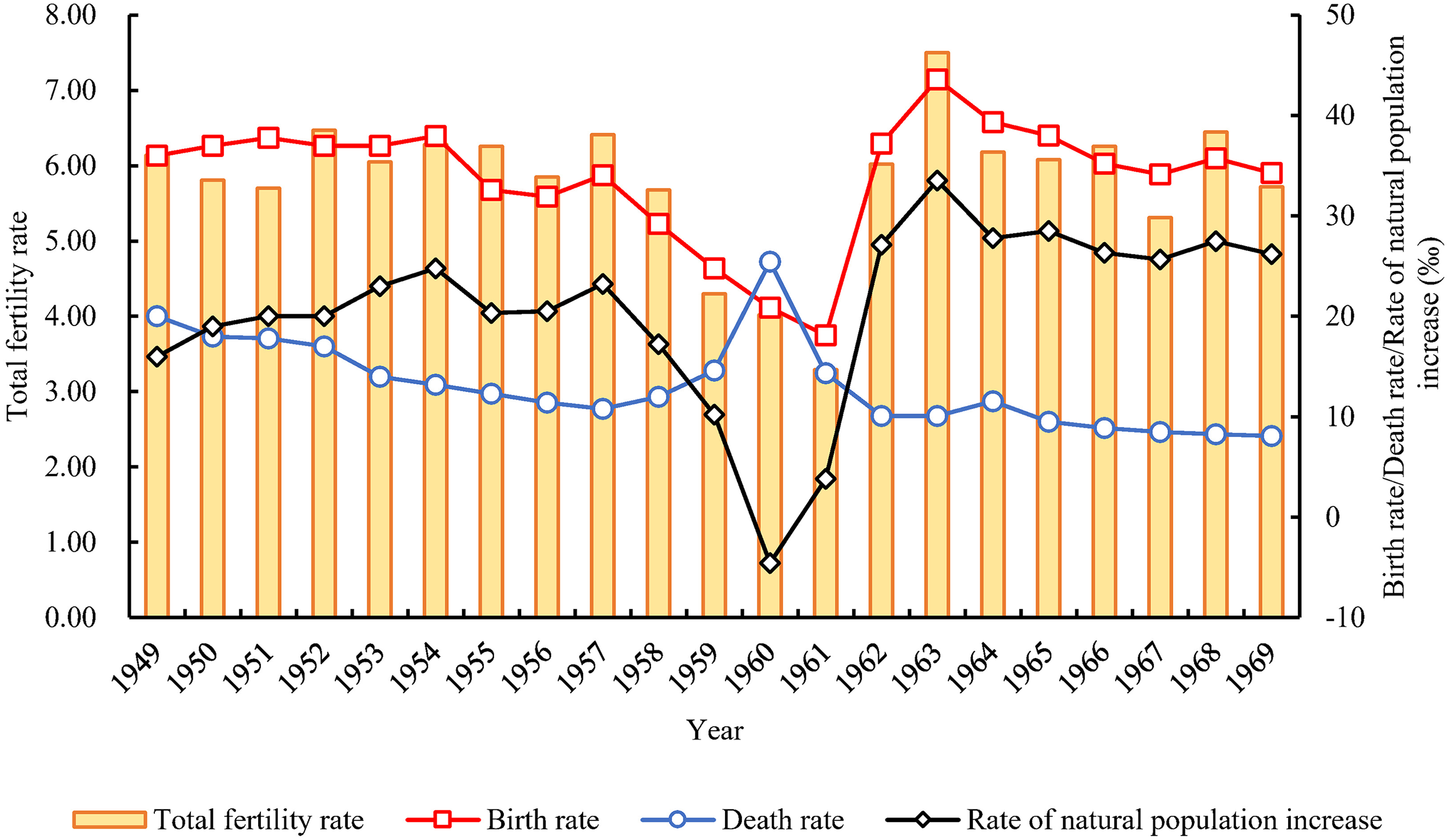
Changes in the total fertility rate, birth rate, death rate, and the rate of natural population increase in China, 1949–1969.
Nevertheless, during the 1950s and the 1960s, several policies and measures promulgated by the Central Committee of the Communist Party of China (CPC) and the State Council inhibited women's fertility. Two crucial documents issued in 1955 and 1962 played a vital role during this period and in the subsequent birth control movement launched in the early 1970s.
In March 1955, the CPC Central Committee released Instructions on the Report of the Party Group of the Ministry of Health on Birth Control, explicitly stating that under the conditions at the time, the CPC supported suitable control of the birth rate (National Population and Family Planning Commission of China (NPFPC), 2007). This document represents the first decisive policy document on birth control issued by the Chinese government after 1949 (Liang and Li, 2003; Lu and Zhai, 2009). It embodies the official start of the birth control movement in China and positioned China as one of the pioneering countries worldwide in the implementation of family planning, just three years after India (Ledbetter, 1984). The immediate impact of this document was evident, as the birth rate dropped swiftly from over 37 per 1000 in previous years to 32.6 per 1000 in 1955 (Figure 1).
In December 1962, the CPC Central Committee and the State Council issued an official document titled Instructions on Seriously Promoting Family Planning. The document advocated for birth control measures in cities and densely populated rural areas, emphasizing the need to control the natural population increase and transition from an unplanned to a planned state regarding births (Chen and Huang, 2020; NPFPC, 2007). Subsequently, in 1964, the State Council established the Family Planning Commission (Lu and Zhai, 2009). Notably, several family planning organizations were successively established in urban areas, representing China's endeavor to establish corresponding institutions to promote birth control. Starting in 1964, the national TFR began to decline to a certain extent (Figure 1). Concurrently, the TFR among urban women fell below four in 1965 and has not risen above four since then (Yao, 1995).
From the perspective of historical development, although the implementation of family planning in China faced obstacles in the 1950s and the 1960s, the birth control ideology slowly formed. This period witnessed the promotion of contraceptive methods and the encouragement of voluntary participation in family planning in urban and rural areas. Consequently, when comprehensive and directive family planning initiatives were launched in the early 1970s, they were supported by favorable public opinion and the necessary technological capabilities.
Comprehensive implementation of China's FPP (1970s)
During the two decades following the founding of the PRC, the net population increase was 260 million, and the two peaks of population growth (1949–1957 and 1962–1970) caused enormous pressure on China's social and economic development as well as people's living standards. Recognizing the need to address the challenges posed by rapid population growth and harmonize them with economic expansion in the short term, the Chinese government resolutely decided to implement a nationwide FPP. The objective was to control population growth effectively and promote socioeconomic growth in the short term.
In July 1971, the State Council forwarded a report from the Military Regulatory Commission of the Ministry of Health, the Ministry of Commerce, and the Ministry of Fuel and Chemical Industry titled Report on Successful Implementation of Family Planning Work (Guanyu zuohao jihua shengyu gongzuo de baogao). The report emphasized the importance of promoting late marriage and family planning as voluntary actions among the general population in urban and rural areas (NPFPC, 2007). This marked the first explicit call for the nationwide implementation of an FPP and symbolized the beginning of the Chinese government's vigorous efforts to promote an FPP with Chinese characteristics.
In 1973, the State Council formally separated the family planning office from the health sector (Yang et al., 2001), a change that signaled formal recognition and prioritization of China's family planning efforts. Concurrently, indicators of population control were incorporated into the national economic development plan (Lu and Zhai, 2009), reflecting the government's strong emphasis on family planning. Local governments also established family planning organizations to enhance their leadership and coordination (Yang et al., 2001). These initiatives demonstrated a unified understanding within the government regarding the need to curb population growth.
In December 1973, the National Family Planning Report Meeting was held in Beijing, where the slogan of “later [marriage and first birth], longer [intervals between births], fewer [children]” was introduced (Attané, 2002; Banister, 1987). The guidelines for “later [marriage and first birth]” were set as men marrying after the age of 25, women marrying after the age of 23, and women first giving birth after the age of 24. “Longer [intervals between births]” indicated the need to increase the intervals between births, with a minimum of three years between children. “Fewer [children]” meant having at most two children (Chen and Huang, 2020; Zhang, 2017). In October 1978, the CPC Central Committee approved a report from the first meeting of the State Council's leading group, which stipulated that couples should have at most two children with a minimum three-year gap between births. These policy measures, along with the deployment of “barefoot doctors” 1 in rural areas to promote contraception and birth control services, contributed to a significant decline in the fertility level among Chinese women in the 1970s.
As depicted in Figure 2, the birth rate in China fell from 33.59 per 1000 in 1970 to 17.82 per 1000 in 1979, and the TFR dropped from 5.81 to 2.75 during the same period. Correspondingly, the natural population growth rate declined from 25.95 per 1000 in 1970 to 11.61 per 1000 in 1979. Throughout the 1970s, Chinese women's fertility levels showed a consistent and significant downward trend without significant fluctuations.
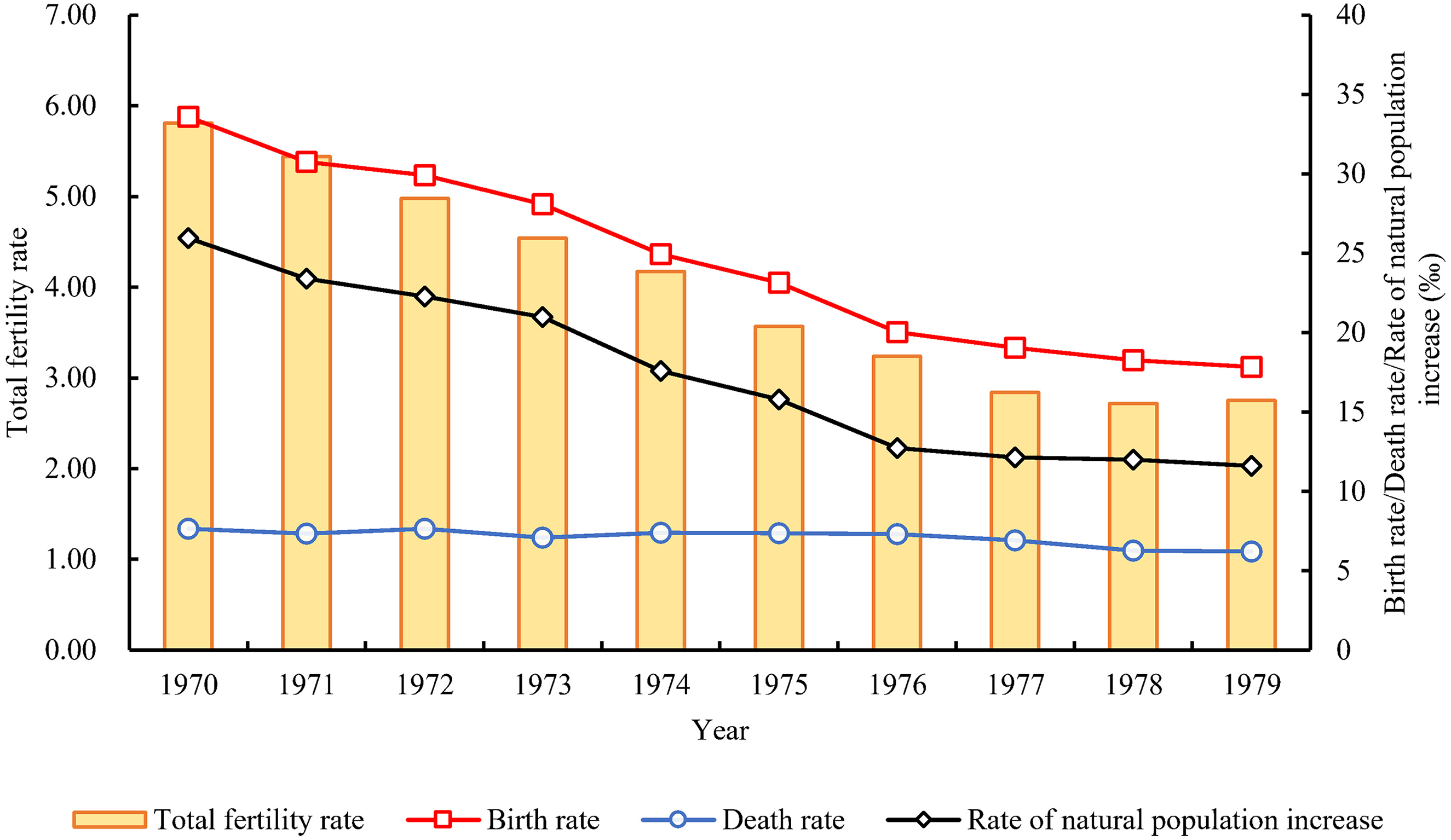
Changes in the total fertility rate, birth rate, death rate, and the rate of natural population increase in China, 1970–1979.
In addition to the comprehensive implementation of the FPP, the dramatic decline in fertility levels within such a short period can be attributed to China's unique social context at the time. Although there may have been a gap between the number of births required by official policy and ordinary families’ desire to have children, particularly among families in rural areas, this gap was within an acceptable range. In addition, this period coincided with the Cultural Revolution, characterized by a political atmosphere in which politics held sway and Mao Zedong was revered. This exerted significant pressures on most rural families and impacted their desire to have children and their corresponding behavior (Liang and Li, 2003).
Implementation and adjustment of the one-child policy (1980–2010)
In the early 1980s, China encountered challenges in its ongoing efforts to decrease its fertility rate further. Moreover, owing to China's large population base, the scale of population growth remained considerable. By 1979, China's population had reached 975 million. At the time, China had just launched its reform and opening-up policy, and its level of socioeconomic development could not adequately support such a large population, making population issues a significant factor constraining China's socioeconomic growth.
Therefore, in September 1980, the CPC Central Committee issued an open letter titled Open Letter of the Central Committee [of the CPC] to the General Membership of the Communist Party and the Membership of the Chinese Communist Youth League on the Problem of Controlling Population Growth in Our Country (hereafter Open Letter), advocating for couples to have only one child, which became known as the one-child policy. In 1982, “family planning” was determined to be a basic state policy. In December 1982, “family planning” was incorporated into the PRC constitution (Lu and Zhai, 2009; NPFPC, 2007).
Nevertheless, the implementation of the one-child policy encountered challenges, particularly in rural areas. During that time, the reform of the rural economic system weakened the collective economy and distribution while strengthening the family economy and individual distribution. Consequently, there was an increased emphasis on the role of men in economic production within rural families, leading to a preference for male children and hindering the implementation of the one-child policy. As such, significant adjustments were made to the FPP after 1984, primarily by relaxing the conditions for allowing a second child in most rural areas and ethnic minority regions (Attané, 2016; Greenhalgh, 1986). For instance, the households for whom their first-born child was a girl in rural areas and rural families in ethnic minority regions were permitted to have a second child. Throughout the implementation of family planning measures, local governments adapted their policies to the specific conditions of their regions. This resulted in a combination of policies, including the so-called “one-child”, “one-and-a-half-child”, “two-child”, and “three or more children” policies (Table 1). These policy adjustments reflected the understanding that interventions in population reproduction should be forward-looking and cautious considering the complexities of the situation.
China's family planning policy system.
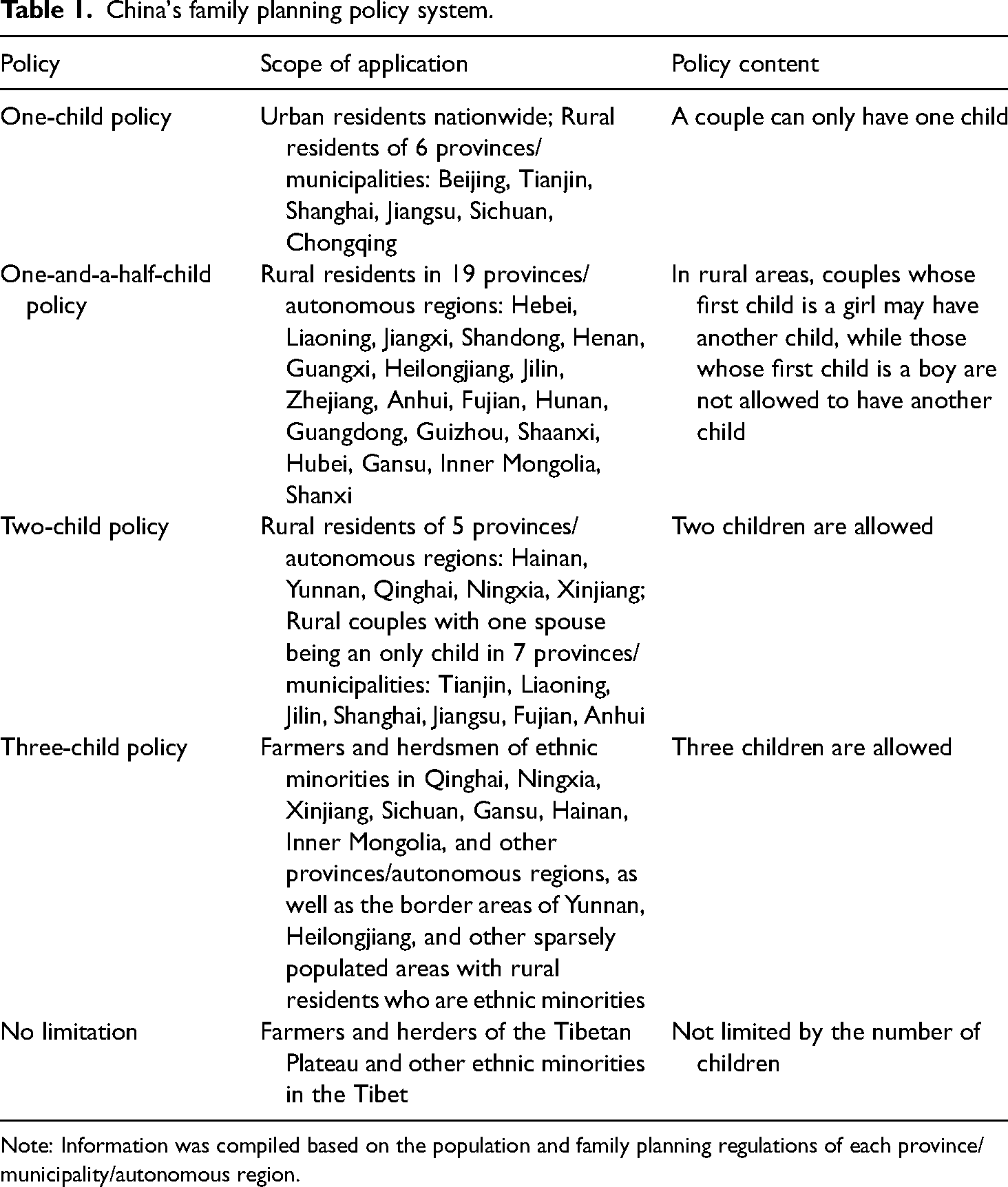
Note: Information was compiled based on the population and family planning regulations of each province/municipality/autonomous region.
In 2001, the Law on Population and Family Planning was deliberated on and passed during the 25th meeting of the Standing Committee of the Ninth National People's Congress (NPFPC, 2007). This law established regulations on the number of births, childbearing age, birth intervals, and birth approval.
As presented in Figure 3, in the 1980s, the TFR among women fluctuated. The TFR was 2.24 in 1980, rose to 2.86 in 1982, fell to 2.20 in 1985, and rose again to 2.59 in 1987. After two brief periods of increase, it declined to 2.35 in 1989. The first rise in the TFR was related to the implementation of the New Marriage Law in November 1980, which included provisions to lower the legal age for marriage (Tien, 1983). The second increase was influenced by adjustments to the one-child policy. The birth rate showed a trend similar to that of the TFR throughout the 1980s. Consequently, the natural rate of population growth exhibited minor fluctuations corresponding to fluctuations in the birth rate.
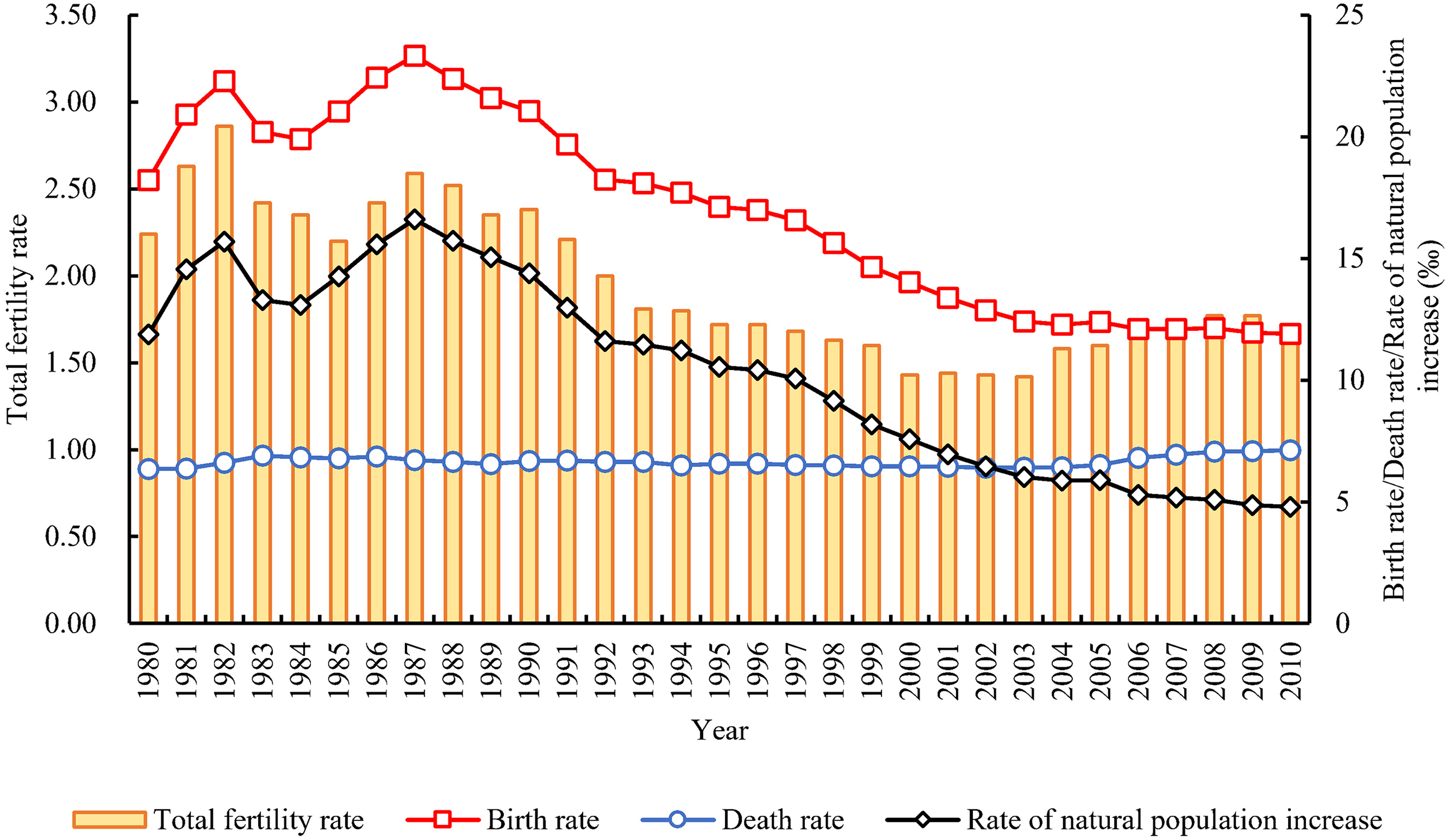
Changes in the total fertility rate (TFR), birth rate, death rate, and the rate of natural population increase in China, 1980–2010.
China's FPP achieved significant results in the early 1990s. Despite its relatively underdeveloped economy, China successfully curbed the momentum of its rapid population growth. In 1992, the TFR began to decline to below replacement level, marking a shift from a mode of population reproduction characterized by high birth and low death rates to one of low birth and low death rates. After the TFR fell to 2.0 in 1992, it fluctuated between 1.6 and 1.8 before 2010. From 1990 to 2010, China's birth rate displayed a stable downward trend, decreasing from 21.06 per 1000 in 1990 to 11.9 per 1000 in 2010. The rate of natural population increase also declined from 14.39 per 1000 in 1990 to 10.06 per 1000 in 1997, remaining below 10 per 1000 subsequently and reaching 4.79 per 1000 in 2010. Undoubtedly, the FPP has significantly alleviated the pressure of the population on resources and the environment, promoted economic development, and improved people's living standards and population quality.
Implementation of the two-child policy (2011–2020)
As the Open Letter issued in 1980 stated, “Thirty years hence, the particularly tense issue of population growth can be alleviated, and different population policies can be adopted.” Approximately 30 years after implementing the one-child policy, the internal driving force and external environment of China's population development have undergone significant changes. Excessively rapid population growth has been effectively controlled. However, new population issues have gradually emerged.
First, China's population is continually aging (Basten and Jiang, 2015). According to data from the National Bureau of Statistics (NBS), the proportion of older adults aged 60 years and above in China reached 10% in 2000 and continued to rise to 13.3% in 2010. Second, China is facing the risk of a labor shortage (Zeng and Hesketh, 2016). In 2011, the working-age population (aged 16–59) in China began to shrink. Given China's high dependence on labor for economic growth at the time, a decrease in the labor force had the potential to adversely affect economic development. Third, there is a gender imbalance in births (Goodkind, 2011). Since the implementation of the one-child policy, China has had a long-standing high sex ratio at birth, reaching 1.18 male births per female births in 2010. Fourth, there have been changes in the family structure in China (Cai and Wang, 2021). In 2010, the average household size in China was 3.1 individuals, and the “421” family structure (a family comprising four older adults, a couple, and one child) emerged, which has reduced families’ capacity to provide care for elderly people and withstand life risks.
The strict FPP had fulfilled its historical mission by around 2010. In this context, the Chinese government made several adjustments to the policy. The focus of this round of adjustments was to relax birth restrictions gradually and implement a universal two-child policy. In November 2013, during the Third Plenary Session of the 18th Central Committee, it was decided to put into practice a selective two-child policy that allowed couples in which one spouse was an only child to have two children (Basten and Jiang, 2015; Xinhua, 2013). In December 2013, during the sixth session of the Standing Committee of the 12th National People's Congress (NPC), a resolution to adjust the FPP was voted upon and passed, and the selective two-child policy was officially launched.
Following the selective two-child policy, the Chinese government initiated a universal two-child policy — all couples could now have two children. In October 2015, during the Fifth Plenary Session of the 18th Central Committee, a policy was passed that allowed this (Zhang and Yang, 2019). On 2 December 2015, the State Council Executive Meeting passed a draft amendment to the Law on Population and Family Planning and decided to submit a draft for review by the Standing Committee of the NPC. On 27 December 2015, the Standing Committee of the NPC voted on and passed the amendment to the Law on Population and Family Planning. On 1 January 2016, the universal two-child policy was officially implemented, ending the over 30-year one-child policy (Zeng and Hesketh, 2016).
The key focus of the selective two-child policy was still the adjustment of birth restrictions. However, alongside the universal two-child policy, a relevant supporting document titled Decision of the Central Committee [of the CPC] and the State Council on Implementing the Universal Two-Child Policy, Reforming and Improving the Management of Family Planning Services, announced on 5 January 2016, was issued. It emphasized the need to greatly enhance the management level of family planning services and establish a support system for family development. This indicated that the key focus of China’s family planning policy had gradually shifted from population quantity control to providing high-quality reproductive services and establishing a comprehensive system of socioeconomic policies supporting childbirth.
Statistical data indicate that China's fertility level experienced three rebounds from 2011 to 2020 (Figure 4). The first rebound occurred in 2012, with a TFR of 1.89 (compared to 1.74 in 2011) and a birth rate of 14.57 per 1000 (compared to 13.27 per 1000 in 2011), resulting in a rise in the rate of natural population increase to 7.43 per 1000 (compared to 6.13 per 1000 in 2011). This fluctuation was, however, largely influenced by the Chinese fertility preference for children born in the Year of the Dragon (Chen, 2019; He et al., 2019). Following the selective two-child policy, fertility levels rebounded in 2014. The TFR was 1.82 in 2014 (compared to 1.76 in 2013), with a birth rate of 13.83 per 1000 (compared to 13.03 per 1000 in 2013), resulting in a corresponding natural increase of 6.71 per 1000 (compared to 5.9 per 1000 in 2013). Nonetheless, in 2015, the TFR declined, reaching 1.63, with a birth rate of 11.99 per 1000 and a rate of natural increase of 4.93 per 1000. This was partly influenced by the gradual exhaustion of the effects of the selective two-child policy and by the Chinese fertility preference for children not born in the Year of the Sheep (Chen, 2019; He et al., 2019).
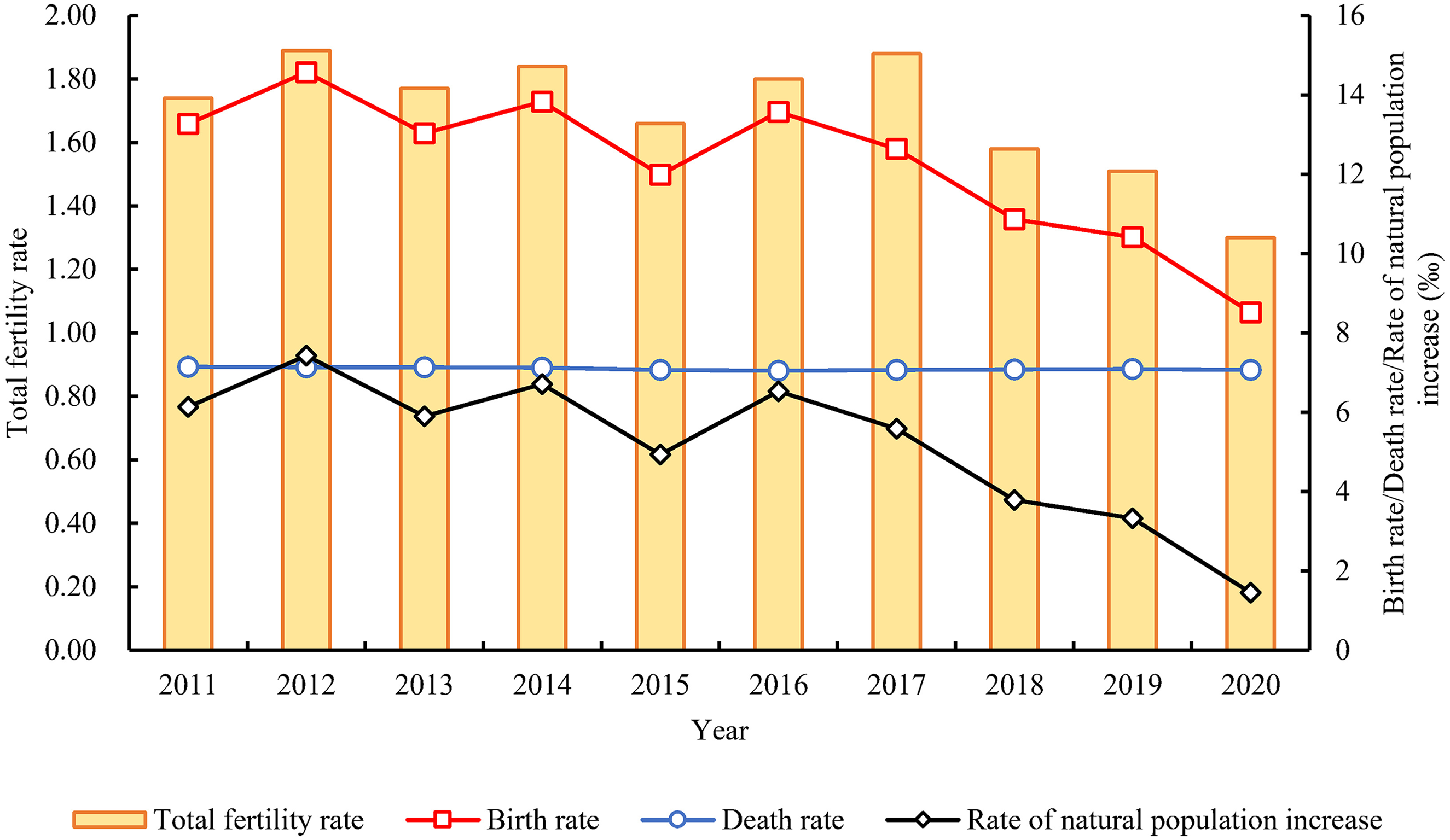
Changes in the total fertility rate (TFR), birth rate, death rate, and the rate of natural population increase in China, 2011–2020.
Following the universal two-child policy, China has experienced a final rebound in its fertility level over the past decade. The TFR rose to 1.79 and 1.88 in 2016 and 2017, respectively, with birth rates reaching 13.57 per 1000 and 12.64 per 1000 and rates of natural increase of 6.53 per 1000 and 5.58 per 1000. However, with the gradual disappearance of the effects of the universal two-child policy, the TFR fell dramatically, from 1.88 in 2017 to 1.58 in 2018, and dropped even further to the lowest-low fertility level of 1.3 in 2020. Simultaneously, the birth rate declined from 12.64 per 1000 in 2017 to 8.52 per 1000 in 2020, and the rate of natural population increase fell from 5.58 per 1000 in 2017 to 1.45 per 1000 in 2020.
After the implementation of the selective two-child policy and the universal two-child policy, although there were brief rebounds in the fertility level, they did not last long. Such a phenomenon showed that a total of two children has been able to effectively meet Chinese families’ desires with regard to having children, and further policy changes in terms of quantitative restrictions will have little impact on fertility.
Implementation of the three-child policy and supporting measures (2021–present)
Figure 4 shows that if we exclude the years affected by the selective and universal two-child policies, China's fertility level has been continuously declining since 2013. The long-term maintenance of a low fertility rate and its recent further decline are not solely determined by the FPP but are largely influenced by socioeconomic development. One study found that in the 1970s, family planning played a dominant role in reducing fertility rates. In the 1980s, the roles of family planning and socioeconomic growth were essentially the same. However, during the 1990s, socioeconomic expansion became the predominant factor shaping fertility rates (Chen, 2005). Cai (2010) also found that China's rapid fertility transition was jump-started and accelerated by its heavy-handed FPP, but socioeconomic growth played a decisive role in the transition to below-replacement fertility. Nevertheless, the FPP has also impacted the process by which socioeconomic factors influence the fertility level. The FPP has reduced the number of children born in families, thereby contributing to increasing the educational investment in children and elevating the educational level of the population (Huang, 2021; Jiang, 2020). This has raised the cost of child-rearing, promoting the postponement of marriage and childbirth, as well as the popularization of gender equality awareness, which ultimately diminished the population's fertility desire (Becker, 1965; Chen, 2005; Sohn and Lee, 2019).
In recent years, the rapid decline and persistently low fertility levels in China have been influenced by some new socioeconomic factors. These include rapidly rising housing costs, increasing costs of raising and educating children, growing employment pressures on young people, increasingly apparent work–family conflicts among women, an inadequate supply of childcare services, the spread of educational anxiety, and the rapid spread of negative attitudes toward marriage and childbirth (Attané, 2022; Zhai and Li, 2023). Additionally, COVID-19 has negatively impacted China's recent fertility level (Chu et al., 2022).
According to data from the NBS, the birth rate in China was 7.52 per 1000 in 2021, with a rate of natural population increase of 0.34 per 1000. Based on the number of births in 2021 (10.62 million), we estimate that the TFR in 2021 was 1.16. By 2022, the birth rate in China had dropped to 6.77 per 1000, and the rate of natural increase declined to −0.6 per 1000. This marked the first time that negative population growth in China was caused by low fertility level. Based on the number of births in 2022 (9.56 million, the first time it had fallen below 10 million since the founding of the PRC), it is estimated that the TFR in 2022 was only 1.08.
Faced with low fertility rates, the Chinese government has further adjusted its FPP. On 31 May 2021, the Political Bureau of the CPC Central Committee held a meeting to review the Decision on Optimizing the Fertility Policy to Promote the Long-term Balanced Development of the Population (Xinhua, 2021). It was decided to implement a three-child policy and supporting measures, signifying a shift in China's FPP from a restrictive to an inclusive approach. On 20 August 2021, the NPC Standing Committee passed a decision to amend the Law on Population and Family Planning, allowing couples to have up to three children. Since having two children can well satisfy the fertility desires of most Chinese families, the lifting of restrictions on three-child births would have a limited impact on raising the fertility rate. The implementation of the three-child policy and supporting measures is mainly a signal that the Chinese government will begin to focus on building a childbearing-friendly environment that helps fully satisfy women's desire to have children.
In March 2022, the State Council issued the Notice Regarding the Special Additional Deduction of Individual Income Tax for the Care of Children Under Three Years of Age (State Council, 2022). It stipulates that starting 1 January 2022, taxpayers can deduct a fixed amount of 1000 yuan per month for each child under the age of three for whom they provide care-related expenses.
In July 2022, 17 ministries, including the National Health Commission and the Ministry of Human Resources and Social Security, jointly issued Guiding Opinions on Further Improving and Implementing Active Fertility Supporting Measures (hereafter Guiding Opinions) (National Health Commission, 2022). This required thorough implementation of the three-child policy and supporting measures addressing marriage, childbirth, child-rearing, and education. The Guiding Opinions set forth the following supporting measures: raising the level of pre-natal and post-natal care services; developing an inclusive childcare service system; improving safeguarding mechanisms for maternity leave and benefits; strengthening supporting measures such as housing and taxation; strengthening the supply of high-quality educational resources; building a birth-friendly employment environment; strengthening publicity, guidance, and service management.
In October 2022, the report of the 20th National Congress of the CPC further emphasized the need to “establish a policy system to boost birth rates and reduce the costs of pregnancy, childbirth, child-rearing, and schooling” (Xinhua, 2022). In May 2023, during the first meeting of the Central Commission for Financial and Economic Affairs under the 20th Central Committee, President Xi Jinping proposed the following: reforming education and health services; establishing a sound policy system to support childbearing; developing inclusive childcare services; reducing the burden on families of childbearing, child-rearing, and education; promoting a childbearing-friendly society; safeguarding long-term and balanced population development (Xinhua, 2023).
China's fertility support system (FSS) is in its early stages of construction, and its effectiveness has yet to be determined. However, there is considerable potential for China's fertility rate to rebound. Generally, there is a negative relationship between socioeconomic growth and the fertility rate (Bryant, 2007; Myrskyla et al., 2009). Given China's current socioeconomic development, the fertility rate should not have fallen to such a low level. According to World Bank data, in 2022, the per capita gross domestic products (GDPs) (constant USD in 2015) of the US, the UK, Germany, and France reached $62,867, $47,232, $43,032, and $38,914, respectively. Their urbanization rates were 83.08%, 84.40%, 77.65%, and 81.51%, respectively. In East Asia, Japan's per capita GDP and urbanization rate in 2022 reached $36,032 and 91.96%, respectively. According to World Population Prospects 2022 (United Nations, 2022), in 2022, the TFRs of the US, the UK, Germany, France, and Japan were 1.66, 1.57, 1.53, 1.79, and 1.30, respectively. China has a significant gap in terms of its per capita GDP ($11,560 in 2022) and urbanization rate (63.56% in 2022) compared with developed countries. Nevertheless, the fertility rate in China has already dropped far below the level of the developed countries mentioned above, which partially reflects an unusually low fertility rate in the country, considering its current circumstances. Data from the National Health Commission's surveys show that the average number of children planned by families in China reached 1.64 in 2021 (Party Group of the National Health Commission of the CPC, 2022), which is significantly higher than the current fertility rate, indicating that there is ample room for the fertility rate to rebound. If an effective FSS can be established, China's fertility rate may increase in the future.
Discussion
China was one of the first countries to implement family planning. The proposal, implementation, and adjustments to China's FPP are closely linked to socioeconomic and population development. In the 1950s and 1960s, China's enormous population size and rapid population growth exerted immense pressure on its economic and social expansion, leading to the introduction of family planning. By the early 1970s, the FPP had been comprehensively implemented nationwide, covering both urban and rural areas. In the 1980s, the FPP was tightened further, and, through trial, a comprehensive system for the FPP was developed that considered China's rural conditions, cultural factors, and ethnic factors. With the stabilization of the low fertility rate and socioeconomic changes between 2013 and 2015, the Chinese government gradually relaxed the FPP, aiming to transition from the one-child policy to the two-child policy. As the fertility rate continued to decline, in 2021 the Chinese government decided to implement a policy that allowed couples to have up to three children, along with supporting measures. Subsequently, efforts have been made to improve the FSS, promoting the adaptation of the FPP to the new circumstances of socioeconomic and population development.
Despite encountering setbacks during its implementation, China's FPP achieved significant success in reducing fertility. This helped lower the TFR from a high level of approximately 6 children to a below replacement level of 2.1 within nearly 20 years. The FPP effectively curbed China's rapid population growth, alleviated the pressure that arose from the friction between the population and resources/the environment, and created favorable conditions for socioeconomic growth. For example, China's demographic dividend largely benefited from the implementation of the FPP (Cai, 2018). During this period, the number of births declined significantly, and the gradual entry of the population born during the baby boom into the labor market created a large labor force, resulting in a lower dependency ratio and promoting favorable demographic conditions for economic expansion. Nevertheless, the decline in China's fertility rate is not solely attributable to the FPP. Since the 1990s, socioeconomic development has played a dominant role in driving the decline in fertility (Chen, 2005). Therefore, it is necessary to evaluate the role of China's FPP objectively and consider the influence of socioeconomic growth when determining the factors affecting the decline in fertility.
The principal issue facing Chinese population development has shifted from rapid population growth to low fertility and aging. In recent years, the dramatic decline in China's fertility level has been influenced by several new socioeconomic factors, including the following: rapidly rising housing costs; increasing costs of child-rearing and education; mounting employment pressure among young people; noticeable work–family conflicts for women; a significant gap between supply and demand for childcare services; pervasive educational anxiety; the rapid dissemination of negative attitudes toward marriage and childbearing. However, there are rebound opportunities in the fertility rate due to the gap between people's desire to have children and the TFR. The key to achieving such a rebound is to solve new fertility-inhibiting factors effectively, and the approach to doing so lies in the establishment and improvement of the FSS. Empirical evidence from low-fertility countries demonstrates that the implementation of fertility support policies, including economic support policies (e.g. family allowances, maternity- and paternity-leave benefits, and tax breaks), service support policies (e.g. childcare services, maternal health care services, and educational input), and time support policies (e.g. maternity leave, paternity leave, and parental leave), can effectively elevate TFRs (Kalwij, 2010; Wesolowski and Ferrarini, 2018; Zhang and Li, 2023). Therefore, if China establishes an effective FSS, there is a promising potential for a significant resurgence in its fertility rate.
Based on the practical experiences of other low-fertility countries and the specific circumstances in China, there are several key aspects to consider when constructing a comprehensive, systematic, and sustainable fertility support policy. First, the economic burden on families must be reduced. This includes continuing to develop policies on employment, taxation, healthcare, and family consumption that are conducive to lowering the costs of childbirth and child-rearing. Efforts should be made to alleviate the burden of housing for childbearing individuals/couples, increase investments in public education, and address the issue of excessive competition in the workplace. Second, gender equality should be improved through institutional mechanisms. This includes eliminating the unfair treatment of women in the workplace, actively implementing paternity and childcare leave for men, and establishing a multilevel and multi-provider system for childcare services. Third, it is essential to create a social and cultural environment friendly for childbirth. This includes effectively implementing a double reduction policy (i.e. a policy aimed at easing the burden of excessive homework and off-campus tutoring for students undergoing compulsory education, which was implemented in July 2021) and enhancing the prestige of vocational education to mitigate educational anxiety. It is also crucial to utilize new media platforms actively to promote positive attitudes toward marriage, childbearing, and related aspects.
Footnotes
Acknowledgments
The authors thank the anonymous reviewers of Chinese Journal of Sociology for their comments.
Contributorship
Zhenwu Zhai and Guangzhao Jin designed the study and supervised the data analysis. Guangzhao Jin performed the data analysis and wrote the manuscript. Both reviewed and edited the manuscript.
Declaration of conflicting interests
The authors declared no potential conflicts of interest with respect to the research, authorship, and/or publication of this article.
Funding
The authors disclosed receipt of the following financial support for the research, authorship, and/or publication of this article: This work was supported by the Fundamental Research Funds for the Central Universities, and Research Funds of Renmin University of China (grant number: 22XNH152).
