



Abstract
Sexual harassment is a global issue threatening individuals’ safety and rights, especially for women. Previous studies mainly focused on the negative impact of sexual harassment on women's health, work, and education. Using data from the Chinese Private Life Survey, this article examines the effect of sexual harassment in both physical and non-physical forms and probes the effect of the perpetrator's relationship to the victim on women's sexual behaviors, sexual and marital well-being, and desires for marriage and childbearing. The results indicate that both physical and non-physical sexual harassment lowered married or cohabitating women's sexual satisfaction and functioning. Sexual harassment by a family member/relative, an intimate partner or an acquaintance produced a larger negative effect on women's sexual well-being than that by others. Married women's marital satisfaction and stability were also undermined if they experienced sexual harassment. A family member/relative, an intimate partner and a stranger as the perpetrator had a larger effect on women's marital well-being than other perpetrators. For unmarried women, sexual harassment was not associated with the desire for marriage. However, those who were physically harassed by an acquaintance were unlikely to have a desire for childbearing. Comparing with non-physical sexual harassment, physical sexual harassment was found to have a larger negative impact on women's private lives.
Keywords
Introduction
In recent years, sexual harassment has become a global issue that poses a significant threat to women's rights and safety. Sexual harassment is defined as any unwelcome conduct of a sexual nature that might reasonably be expected or be perceived to cause offence or humiliation to another. The misconduct can be verbal, non-verbal or physical, and can include harassment through written and electronic communications (United Nations, 2019). Although men can also be victims of sexual harassment, women are more often targets because of their socially disadvantaged position in a male-dominated world. A nationally representative survey in the United States in 2019 conducted by the University of California San Diego Center on Gender Equity and Health (GEH) and Stop Street Harassment (SSH) reported that as many as 81% of women have experienced some form of sexual harassment in their lifetimes, whereas only 43% of men reported such experiences (Kearl et al., 2019). Typical forms of sexual harassment women face include verbal sexual harassment (76%), unwelcome sexual touching (49%), cyber sexual harassment (40%), unwanted genital flashing (30%), being physically followed (27%), and sexual assault (23%) (Kearl et al., 2019). Given how prevalent the sexual harassment of women is, the internet has gained popularity as a forum for raising public awareness about sexual harassment and generating participation in collective action. The #MeToo movement, originating in the United States, has spread widely throughout the rest of the world. By sharing women's experiences of sexual victimization, the movement reveals the widespread nature of sexual harassment and offers victims and survivors emotional and other support. In recent years, the issue of sexual harassment of women has also generated public attention in China (e.g. Aybek, 2020; Xinhua, 2016; Zhao, 2021). In response to rising public concerns and to protect women's safety and rights, the Chinese government has taken actions to fight sexual harassment. The 2005 Amendment to China's Law on Women's Rights Protection, which prohibits sexual harassment of women and entitles female victims to seek help from the authorities, was one such action. China's new Civil Code, implemented in early 2021, provides a more detailed definition of sexual harassment. As defined by Article 1010, sexual harassment can take the form of verbal or written language, images and physical acts. The definition is applicable to both sexes, rather than being limited to sexual harassment of women by men. With this definition, China has taken a significant step towards protecting both men and women from sexual harassment through legislation, which clarifies the legal obligation of government agencies, employers, schools and other institutions to prevent and stop any acts of sexual harassment. With public opinion and legislation relating to sexual harassment in China becoming increasingly prominent, the subject deserves more research attention.
Women face sexual harassment in various settings, among which the workplace is one of the most common (Kearl et al., 2019). A woman who is sexually harassed by a supervisor, client or co-worker in the workplace is likely to suffer psychological trauma (Fitzgerald, 1993; Gale et al., 2019; Houle et al., 2011; Willness et al., 2007) and leave her job (Antecol and Cobb-Clark, 2006; Chan et al., 1999; Laband and Lentz, 1998; Pina and Gannon, 2012). Sexual harassment also frequently occurs in schools (Wolff et al., 2017). High school and college students who have been sexually harassed are also likely to develop psychological distress symptoms, take risks with their health and perform poorly at school or leave school altogether (Baker et al., 2016; Bendixen et al., 2018; Bondestam and Lundqvist, 2020; Van Roosmalen and McDaniel, 1999; Wolff et al., 2017). The family is another setting in which women can be sexually harassed. Girls are especially vulnerable to childhood sexual contact by an adult family member, a relative or a caregiver. Childhood sexual contact and abuse have long-term negative consequences. Survivors are at risk of serious health problems, delinquent behaviors and low achievement in adulthood (Freyd et al., 2005; Noll et al., 2009).
While most studies focus on the negative effects of sexual harassment on women's physical and mental health, work and studies, the consequences of sexual harassment go far beyond these aspects. In the private sphere, sexuality is often related to intimacy, love, and childbearing. Early sexual contact between a child and an adult may affect the child's understanding of sexual interaction and behaviors in intimate relationships in later life (Browning and Laumann, 1997). Sexual harassment, as a negative sexual experience, may also disrupt a victim's private life, such as his or her sexual and marital behaviors. However, little is known about how female victims’ private lives are affected by sexual harassment. Unlike health, work, and study outcomes, which are more easily observable in the public sphere, sexual and marital behaviors seem to be too private and sensitive to be investigated. Even less is known about women's experiences of sexual harassment and the consequences for their private lives on the Chinese mainland. To fill this gap, our study examines how sexual harassment affects the sexual behavior of women in couples, women's sexual and marital well-being, and single women's desire for marriage and children. With the aid of a recent internet survey, we are able to provide insights into the consequences of sexual harassment for women's private lives in China.
Literature review
Sexual harassment harms a person. The effects of sexual harassment vary with the outcome, the form of sexual harassment (i.e. visual, verbal/written, and physical) and the victim's relationship to the perpetrator(s) or harasser(s) (e.g. strangers, supervisors, clients, colleagues, teachers, partners, or family members). In this section, we briefly review the findings of studies that have investigated the consequences of sexual harassment on women's health, work, education, and private life. Most of these findings were based on studies of western societies, with only a few from China.
Many studies have documented the negative impact of sexual harassment on women's psychological and physical health. Sexual harassment, as an act against the will of the victim, usually makes women feel uncomfortable and disgusted. Physically aggressive sexual harassment or assault may cause serious psychological problems for women, such as anger/hostility, fear, nervousness, anxiety, depression, stress disorders, and suicidal tendencies (Fitzgerald, 1993; Gale et al., 2019; Houle et al., 2011; Van Roosmalen and McDaniel, 1999; Willness et al., 2007; Wolff et al., 2017). Physical responses to psychological problems arising from sexual harassment include sleep disorders, nightmares, and eating disorders (Gale et al., 2019; Harned, 2000; Sarkar and Sarkar, 2005; Van Roosmalen and McDaniel, 1999). Violent sexual assault or sexual abuse may directly cause musculoskeletal injuries (Gale et al., 2019). If the unwanted sexual intercourse is unprotected, the female victim is at great risk of sexually transmitted infections and unwanted pregnancy (Holmes et al., 1996; Jenny et al., 1990). Childhood sexual abuse has devastating long-term effects on girls’ health and development (Freyd et al., 2005; Luo et al., 2008; Mullen et al., 1993; Sarkar and Sarkar, 2005). Aside from psychological distress and disorders, survivors of childhood sexual abuse are more likely than others to engage in substance abuse, sexually risky behaviors, and suicidal behaviors (Browning and Laumann, 1997; Howard and Wang, 2005; Mullen et al., 1993; Sarkar and Sarkar, 2005; Steel and Herlitz, 2005). Moreover, a recent study of five diverse prospective cohorts in the United States and Brazil report that severe sexual abuse in childhood and adolescence is associated with shorter telomeres, which are markers of accelerated biological aging (Warner et al., 2020).
With the increase in female labor market participation, women face increased sexual harassment in the workplace (McDonald, 2012). Workplace sexual harassment has disruptive effects on women's work and careers. Women who have been sexually harassed in the workplace become less productive and less satisfied with their jobs (Chan et al., 1999; Choi et al., 2016; Gettman and Gelfand, 2007; Laband and Lentz, 1998). Consequently, they may frequently ask for leave, change their jobs or even withdraw from the labor market permanently (Antecol and Cobb-Clark, 2006; Fasting et al., 2002; Pina and Gannon, 2012; Willness et al., 2007). Loss of employment may entail further economic and financial disadvantages for female victims (McLaughlin et al., 2017).
Similar to sexual harassment in the workplace, sexual harassment at school is likely to interrupt women's study and education. Women who have survived childhood sexual abuse or experienced sexual harassment at school are likely to have difficulty in concentrating, exhibit delinquent behaviors, perform less well in school and even drop out from school or college (Baker et al., 2016; Wolff et al., 2017).
The sexual harassment of women in the workplace and at school often occurs in a setting characterized by power differentials. Employers or supervisors, or teachers or professors, are in positions of power over employees or students and may abuse their power to engage in sexual harassment (Uggen and Blackstone, 2004). The power asymmetry between the perpetrator and the victim often discourages the harassment victim from complaining about or reporting their experience to the company or school to pursue justice. Their silence and fear may, to some extent, encourage the perpetrator's harassment behaviors. At the macro level, Cassino and Besen-Cassino (2019) find that the economic threat represented by higher unemployment rates is associated with increased sexual harassment of African American women in the workplace, and with a decline in workplace sexual harassment complaints. At the micro level, victims’ fears that their complaints may not be believed are not groundless. A national survey by Hart (2019) reveals a promotion penalty for women who self-report cases of sexual harassment: the participants perceived a female employee who self-reported sexual harassment as less moral, warm or socially skilled, and thus as unlikely to be recommended for promotion. Other evidence shows that women who experience workplace sexual harassment by men of higher status suffer more severe consequences from that harassment than do women who experience harassment by men of equal or lower status (Clarke et al., 2016; O’Connell and Korabik, 2000). With respect to sexual harassment by a teacher in a school setting, student victims, especially girls, report stronger discomfort and more psychosomatic health problems if they have been harassed by a teacher than if harassed by a peer (Huerta et al., 2006; Timmerman, 2003).
Female victims of sexual harassment may experience a deterioration in their private lives, although there is less research evidence on the sexual and marital consequences of sexual harassment of women than on the consequences for their health, work, and education. A few studies have explored the effects of sexual assault or childhood sexual abuse on women's subsequent sexual well-being. Many scholars adopting the post-traumatic stress disorder (PTSD) perspective claim that sexual assault or childhood sexual contact may result in victims developing an aversion towards or avoidance of sexual activities in later life, because sexual stimuli or contact may evoke intrusive memories and anxiety for them. According to a review of studies on sexual functioning after sexual assault by Van Berlo and Ensink (2000), most studies report a decline in sexual contact, diminished sexual satisfaction and the emergence of sexual response inhibition problems after sexual assault. However, Browning and Laumann’s (1997) study based on the National Health and Social Life Survey in the United States offers a different perspective and evidence. They found that women who experienced adult–child sexual contact became more sexually active in general and were likely to engage in risky sexual behaviors, such as sexual activity in early adolescence and multiple sexual partners, and consequently were more likely to contract sexually transmitted infections and experience teenage pregnancy. From a life-course perspective, female survivors’ sexual dysfunction and low emotional satisfaction with partners are attributable to their risky sexual behaviors, rather than to adult–child contact. Luo et al.’s (2008) study of Chinese urbanites confirmed these points, indicating that childhood sexual contact is associated with hyper-sexuality (e.g. highly frequent masturbation, partner turnover, thoughts about sex, and a wide variety of sexual practices), sexual victimization, extramarital affairs and sexual problems (e.g. sexually transmitted infections, sexual dysfunction, and genitourinary symptoms) in later life. However, research is still lacking on the sexual consequences of non-physical sexual harassment and less severe physical sexual harassment, and on marital outcomes after sexual harassment.
We believe it is particularly important to probe the consequences of sexual harassment for the private lives of Chinese women. As with other East Asian societies, China's sexual culture remains conservative, and there is a gender asymmetry of power in the private sphere (Chen, 2017). In traditional Chinese culture, a woman's virginity signaled her morality, which was expected to be preserved for her husband (Gao, 2003). Although the importance of virginity in mate preference has declined dramatically, it is still perceived as a desirable characteristic, even among young urbanites in Shanghai, the most modern metropolis in China (Chang et al., 2011). Under these circumstances, it is not uncommon for female harassment victims to be blamed for their experiences, and for their families to feel humiliated by them. In addition, social pressures make it even more difficult for female victims to pursue justice through legal approaches. (Hu et al., 2021).
Given that the issue of sexual harassment of women in China has little visibility, scant effort has been made to research its prevalence and consequences. Most studies in China have focused on sexual victimization experiences among women from specific occupational groups, such as nurses, college students, and female employees in certain industries, and mainly on the consequences of these experiences for women's psychological health and work (Chan et al., 1999; Choi et al., 2016; Liu et al., 2014; Zeng et al., 2020). These studies are of limited scope and involve small-scale samples. The work of Parish and his collaborators is an exception. They collected a national stratified probability sample through the 1999–2000 Chinese Health and Family Life Survey (CHFLS). On the basis of that sample, they analyzed the prevalence of and risk factors for heterosexual sexual harassment in China in 2000 (Parish et al., 2006) and examined the association between childhood sexual contact and adult sexual well-being and psychological distress (Luo et al., 2008). However, they did not investigate how the sexual harassment experiences that may occur at any stage of a woman's life (not only in childhood) affect her subsequent sexual and marital well-being and desire for marriage and children.
Following the work of Parish and his collaborators, our study aimed to analyze the association between women's sexual harassment experiences and their sexual behaviors, sexual and marital well-being, and desire for marriage and children on the Chinese mainland. In China, childbearing usually happens within wedlock (Raymo et al., 2015). For unmarried women, a desire for children could be viewed as indicating positive attitudes towards marriage. We tested Browning and Laumann's earlier argument that a negative sexual contact (e.g. adult–child sexual contact in their study) may lead women to engage in later risky sexual activities that entail long-term risks. Moreover, we examined many sexual and marital outcomes and the heterogeneity of sexual harassment effects according to their characteristics, such as physical versus non-physical, and the perpetrators involved.
Data and methods
In this study, we used the data from the Chinese Private Life Survey (CPLS), an internet survey conducted in 2020. The CPLS collected unique information from Chinese adults aged 18 and above on sexual harassment experiences, sexual behaviors and attitudes, and marriage and children, subjects which are rarely included in other surveys. The survey was administered using a commercial survey platform named SurveyPlus. Respondents were recruited to fill out a survey questionnaire on their smartphones through the WeChat app, the most popular smartphone-based social media app in China. To protect respondents’ privacy, respect the voluntary nature of their participation and reduce social desirability bias, the CPLS informed respondents about the purpose of the research, the benefits and potential harms from participation, and the confidentiality protocols, and obtained their consent for participation at the beginning of the survey. The survey was fully anonymous and self-administered, and all data were encrypted during transmission. All of the data-collection procedures were reviewed and approved by the institutional review board (IRB) at Peking University Health Science Center. Ultimately, 6828 individuals participated in the survey and provided valid information. Among them, 3663 were women. To adjust for a disproportionate share of university-educated and younger cohorts in the web-survey sample, we weighted the analytical sample using the sex–age–education distribution of the Chinese population from the China 1% Micro-census of 2015.
Respondents’ experience of sexual harassment is the key independent variable of this study. Respondents were asked to report which unwelcome behaviors they had experienced from a list including: (a) unwanted sexual teasing or innuendo; (b) unwanted sexual jokes or stories; (c) unwanted deliberate touching or caressing; (d) intentional exposure of another's genitals; and (e) unwanted sex, such as rape, sexual assault, or other forms of coercive sex. Among them, we distinguished two forms of sexual harassment experiences. One consisted of physical harassment, including unwanted deliberate touching or caressing and unwanted sex (categories c and e). The other consisted of non-physical harassment, including verbal harassment (categories a and b) and visual harassment (category d). Because women may experience multiple forms of sexual harassment, we further classified their experiences into three categories: never experienced any sexual harassment (“Never”), experienced physical harassment (“Physical harassment”) and experienced non-physical harassment but not physical harassment (“Non-physical harassment only”). We treated the “Never” group as the reference category.
Those who reported having suffered any form of sexual harassment then described their relationship with the perpetrator who had harassed them most severely. Seven relationship categories were offered: (a) (workplace) superior; (b) teacher; (c) colleague/schoolmate/neighbor/friend/client; (d) spouse/ex-spouse/romantic partner; (e) family member/relative; (f) other acquaintance; and (g) stranger. We grouped the relationships into five categories: supervisor/teacher (categories a and b), intimate partner (category d), family member/relative (category e), acquaintance (categories c and f), and stranger (category g). Among these categories, “superior/teacher” indicates a power differential between the harasser and the victim in the workplace or school. Parish et al. (2006) proposed the “vulnerable victim” and “power threat” hypotheses as mechanisms for why women are more likely to be victimized when they have less power than the perpetrator (Parish et al., 2006). We were interested in whether sexual harassment under conditions of power asymmetry has a larger negative impact on women than other forms of harassment. “Family member/relative” indicates a power differential in a family or kinship network. Moreover, sexual harassment by a family member or a relative might involve adult–child sexual contact, in which the woman engaged in coercive sexual behaviors with an older family member or relative. Browning and Laumann (1997) found that adult–child sex increases a woman's likelihood of engaging in risky sexual activities, which is linked to sexual dysfunction in adulthood. Based on their study, we expected that having a family member/relative as the perpetrator should be strongly associated with risky sexual behaviors. Sexual harassment by an intimate partner is also notable. Although the Chinese public has tended to consider sexual violence in marriage or other intimate relationships as a domestic affair and something that can be overlooked (Lin et al., 2016; Xu et al., 2001, 2005), it may directly undermine the quality of the intimate relationship and therefore deserves our attention.
The dependent variables were women's sexual behaviors, sexual well-being, marital well-being and their desire for marriage and children. Regarding sexual behaviors, we examined the history of sexually transmitted disease, and frequency of sexual intercourse and masturbation. Following Luo et al. (2008), we mainly focused on hyper-sexuality. Within this category, the frequency of sexual intercourse was originally ascertained by asking the question “Including with your partner and non-partners, how often have you had sexual intercourse during the past 12 months?” Ordinal response categories were offered: never, once a month or less, 2–3 times a month, 1–2 times a week, 3–6 times a week, and once a day or more. As the median frequency of sexual intercourse for sexually experienced women was “1–2 times a week”, we classified those whose frequency of sexual intercourse was higher as “highly frequent” and others as “normative/less frequent”. The frequency of masturbation was ascertained by asking the question “On average, how often have you masturbated in the past 12 months?” The response categories were exactly the same as those for sexual intercourse. Again, those who masturbated more frequently than the median (“once a month or less”) were classified as “highly frequent” and others as “normative/less frequent”. The history of sexually transmitted disease was measured using a dichotomous variable, coded 1 if the respondent had ever been diagnosed with a sexually transmitted disease and coded 0 if they had had no such disease. We examined sexual behaviors in the full sample of women. There were a few unmarried women with no sexual experience (7.71%). We classified them as having less frequent sexual activities (“normative/less frequent”).
Sexual well-being was measured using two variables. One was sexual dissatisfaction with one's spouse/cohabiting partner. The respondents were asked to evaluate the quality of their sex life with their current spouse or partner of cohabitation according to six dimensions: the frequency of sexual intercourse, duration of sexual intercourse, foreplay, physical satisfaction, psychological satisfaction, and orgasm. For each dimension, we coded 1 for dissatisfaction and 0 for satisfaction. Scores on the six dimensions were summed to produce a score ranging from 0 to 6. A higher score indicated that a woman had stronger dissatisfaction with the sexual performance of her husband or cohabiting partner. The other variable for measuring sexual well-being was the sexual dysfunction score. It was a summed 7-item scale about sexual dysfunction symptoms over the previous 12 months: lack of sexual interest, lack of orgasm, pain during sex, no pleasure, erectile difficulties and premature ejaculation for men, vaginal dryness for women, and performance anxiety. For each item, the response categories were “never”, “yes, but only sometimes”, and “yes and persistent for 2 or more months”, which were respectively coded 0, 1, and 3. A higher score indicated a higher level of sexual dysfunction. We examined the effect of sexual harassment on sexual satisfaction with the spouse/cohabitating partner for women in couples (in marriage or cohabitation) and on sexual dysfunction for all women with sexual experience.
Women's marital well-being was measured by their levels of marital satisfaction and divorce proneness. The respondent was asked to rate how satisfied she was with her current marriage and the likelihood of her current marriage ultimately ending in divorce. The response scale of both questions ranged from 1 to 5. For marital satisfaction, a higher score indicated a higher level of satisfaction, whereas for divorce proneness, a higher score indicated lower perceived marital stability. We examined the effect of sexual harassment experience on marital well-being for a subsample of women who were married at the time of the survey.
For unmarried women, including single women both with and without non-marital cohabitation,1 we explored the association between sexual victimization and their desire for marriage and children. The former was measured by asking the question “Do you intend to get married?” with the response options “yes” (= 1) or “no” (= 0). The latter was measured by the question “Do you intend to have children?” We coded 1 for those who reported a desire for children and 0 for those who reported no intention to have children.
We controlled for two sets of covariates, which were expected to affect both the experience of sexual harassment and women's sexual or marital outcomes. The first set of variables consisted of women's socio-demographic characteristics, including age, marital status (single, married or cohabitating), years of schooling (0–18 years), self-assessed social status (0–10 from lowest to highest), individual income in logarithm, hukou (household registration) and residence status (rural non-migrant, urban non-migrant, rural migrant, and urban migrant), employment status (unemployed, employed, and student), years of schooling of mother, and whether they had children. The other set of covariates measured women's physical and mental health. Research has documented the direct effect of sexual harassment on women's physical and mental health (Fitzgerald, 1993; Gale et al., 2019; Houle et al., 2011; Stock and Tissot, 2012; Van Roosmalen and McDaniel, 1999; Willness et al., 2007). Sexual harassment may have negative sexual and marital consequences for women because of its detrimental effects on women's physical or mental health. Physical health was measured by the self-reported health (SRH) scale, whereby respondents were asked to classify their current health status as excellent, very good, good, fair, or poor. Mental health was measured by the Kessler Psychological Distress Scale (K6), which has been widely used as a screener for mental health problems.
Table 1 summarizes the descriptive statistics of all control variables for all women, a subsample of women who had experienced sexual harassment and a subsample of women without such experience. Missing values on covariates were assumed to be missing at random and were imputed using multiple imputation methods. As shown in Table 1, women who had experienced sexual harassment were younger and more educated than women without such experience. Moreover, the proportions of students, urban migrants and those from better-educated families were higher among women who had experienced sexual harassment than among women who had not. However, this was probably not because socioeconomic status (SES) increased the likelihood of sexual harassment but because women with higher SES are more aware of sexual harassment and are more likely to speak out about their victimization than women with lower SES (Uggen and Shinohara, 2009).
Descriptive statistics of covariates, for all women, female victims, and female non-victims (n = 3631).
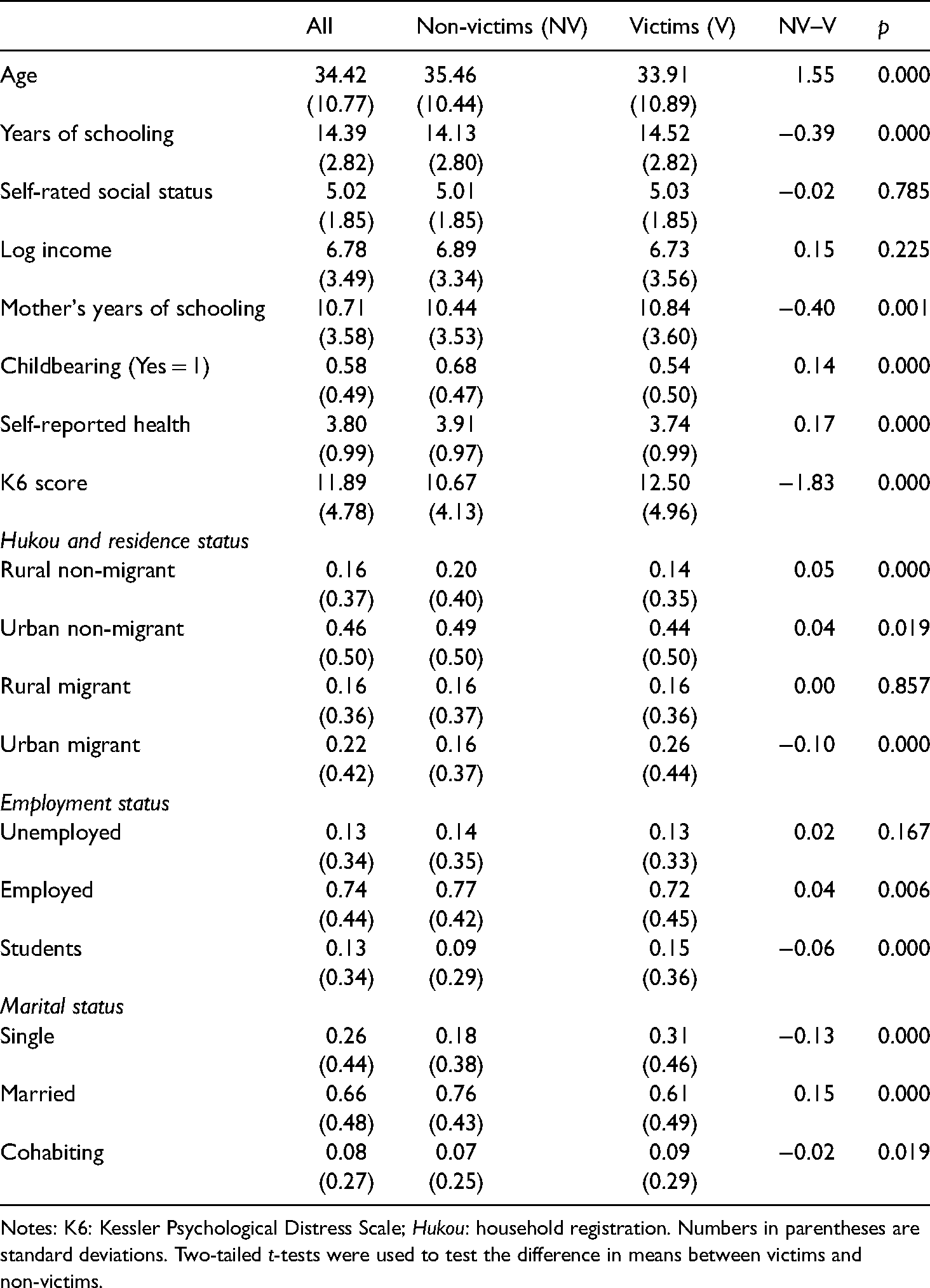
Notes: K6: Kessler Psychological Distress Scale; Hukou: household registration. Numbers in parentheses are standard deviations. Two-tailed t-tests were used to test the difference in means between victims and non-victims.
We used ordinary least squares (OLS) regression analysis to estimate the effect of sexual harassment experience on women's sexual and marital well-being. For the dichotomous outcomes, such as sexual behaviors, desire for marriage and desire for children, we used logistic regression models. For each outcome, we constructed a series of nested models. First, a baseline model was constructed without controlling for any covariates to compare group differences on the outcome between women with and without sexual harassment experience. Second, we extended the baseline model with the first set of covariates, controlled for individual socio-demographic characteristics. Third, the second set of covariates was added to the model to see whether the association between sexual harassment experience and the outcome could be explained by the victims’ worsening physical and mental health conditions. Finally, for models with sexual well-being as the outcome, we further added the sexual behavior variables to test whether the effect of sexual harassment on sexual well-being was mediated by victims’ risky sexual activities. For models with marital outcomes, we added sexual well-being to the final models to see whether sexual well-being played a major role in the association between sexual harassment and subsequent marital outcomes.
Results
The prevalence of sexual harassment among Chinese women
We first consider the prevalence of the experience of sexual harassment among women before we probe the sexual and marital consequences of such experience. Table 2 displays the distribution of various forms of sexual harassment experience in the female sample of the CPLS. Approximately two-thirds of women reported some form of sexual harassment in their life. More specifically, slightly over 50% of women had experienced verbal harassment at some point, such as unwanted sexual teasing or innuendo (37.8%) and/or sexual jokes/stories (37.8%). About 19.1% of women reported visual harassment or someone intentionally exposing his/her genitals to them in an unwelcome sexual manner. Thirty-four percent of women reported unwanted touching or caressing, and 13.1% of women reported experiencing coercive sex, both of which are typical forms of physical harassment. However, as mentioned previously, there was an overlap between physical and non-physical sexual harassment, and verbal or visual harassment usually accompanies physical sexual harassment. Therefore, we distinguished those who were non-physically harassed from those who were physically harassed. As shown in the last column of Table 2, women who only experienced verbal or visual harassment accounted for 25.2% of respondents, in contrast to 39.1% who had experienced physical harassment. That left 35.7% of women who had not experienced any sexual harassment.
Type of sexual harassment (n = 3631).
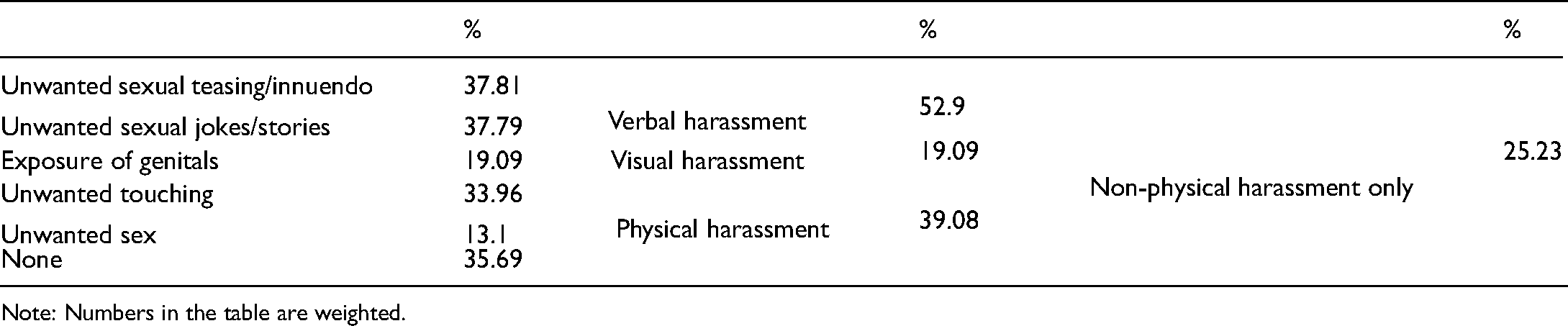
Note: Numbers in the table are weighted.
Table 3 shows the relationships of sexual harassers to their female victims in the most severe cases of physical harassment. As Table 3 shows, the most common form of severe physical sexual harassment was by someone whom the female victim knew. Around 47.4% of female victims reported that they had been physically harassed by an acquaintance, who might be a colleague, client, schoolmate, neighbor or friend of the female victim. Approximately 22.7% of female victims of physical harassment reported being harassed by an intimate partner, such as a husband/ex-husband or boyfriend/ex-boyfriend. In comparison, superiors/teachers and family members/relatives were minor sources of physical harassment. Of all women, 10.5% reported that they had been physically and severely harassed by a supervisor in the workplace, and 0.4% of them by a teacher. Only 4.1% of women had been harassed by a family member or relative. Sexual harassment by a stranger was also not as common as by an acquaintance. Less than 15% of women reported that the most severe physical harassment they had suffered was at the hands of a stranger.
The perpetrator's relationship to the victim in the most severe cases of physical harassment.
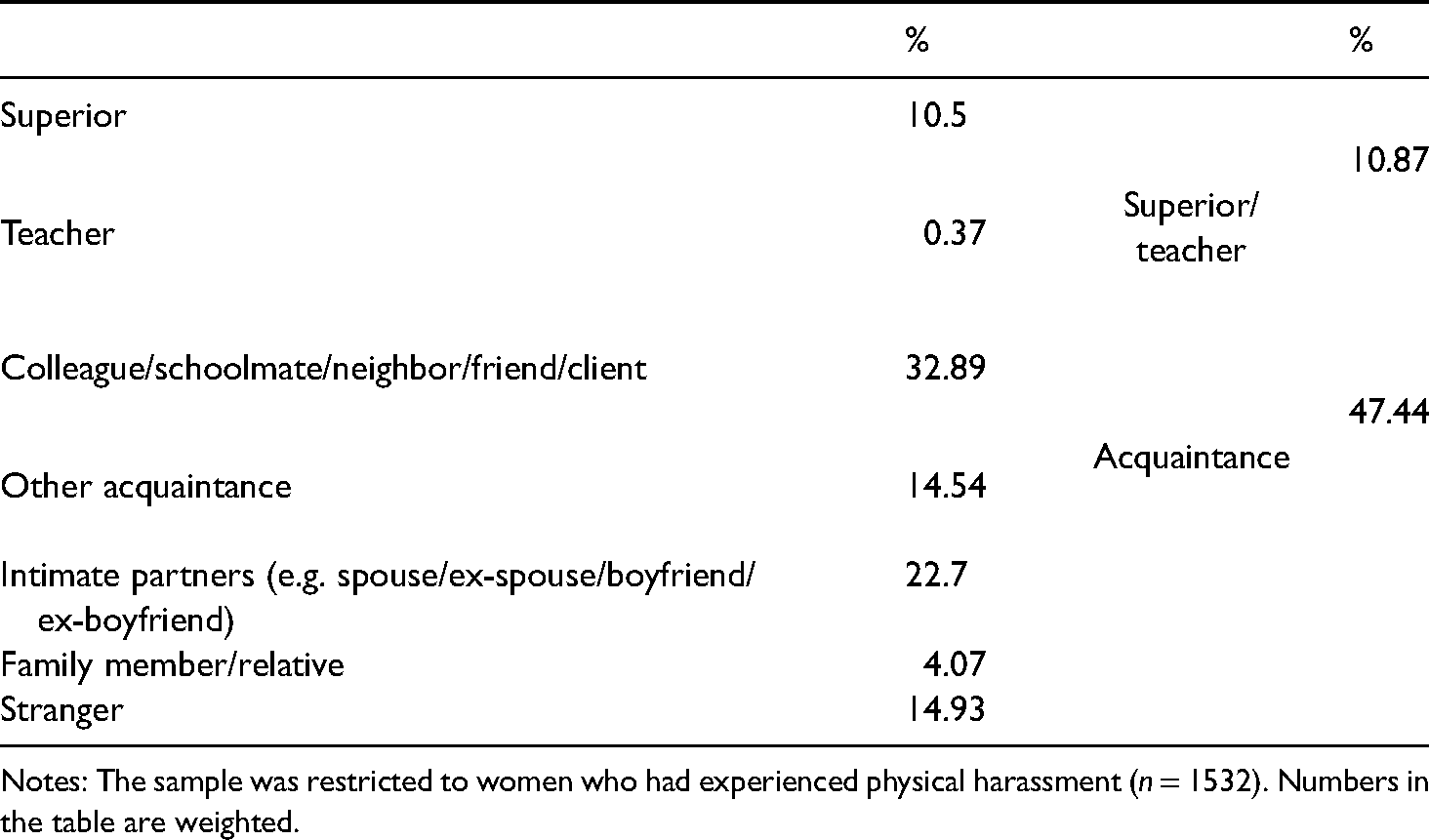
Notes: The sample was restricted to women who had experienced physical harassment (n = 1532). Numbers in the table are weighted.
Sexual harassment and women's sexual behaviors and sexual well-being
Table 4 reports the logistic regression estimates for the effect of sexual harassment on women's sexual behaviors according to whether it took physical or non-physical form, and Table 5 reports the effects by type of perpetrator. Similar to the findings of Browning and Laumann (1997) and Luo et al. (2008), unwanted sexual contacts, especially physical sexual harassment, were mainly associated with subsequent hyper-sexuality. Compared with women who had not experienced sexual harassment, women whose sexual harassment had been physical in nature were more likely to engage in sexual intercourse and masturbation frequently. Their sexual behaviors also seemed to be risky, given that they were more likely to have been diagnosed with a sexually transmitted disease. The experience of non-physical harassment was significantly associated with a high frequency of masturbation and diagnosis of a sexually transmitted disease. The effect size was smaller than that of physical harassment. Regarding the perpetrator effect, we found that physical harassment by a family member/relative had the strongest effect on hyper-sexual behaviors, but had no effect on the frequency of sexual intercourse. This finding was in line with that of Luo et al. (2008) in their study of childhood sexual abuse. Apart from this, however, our results indicated that not only childhood sexual abuse, but also sexual harassment taking place in other settings (e.g. workplaces, intimate relationships) or in non-physical form, could result in risky sexual activities, with the potential to carry long-term risks for female victims.
Logistic regression models estimating the effects of physical and non-physical sexual harassment on women's sexual behaviors.
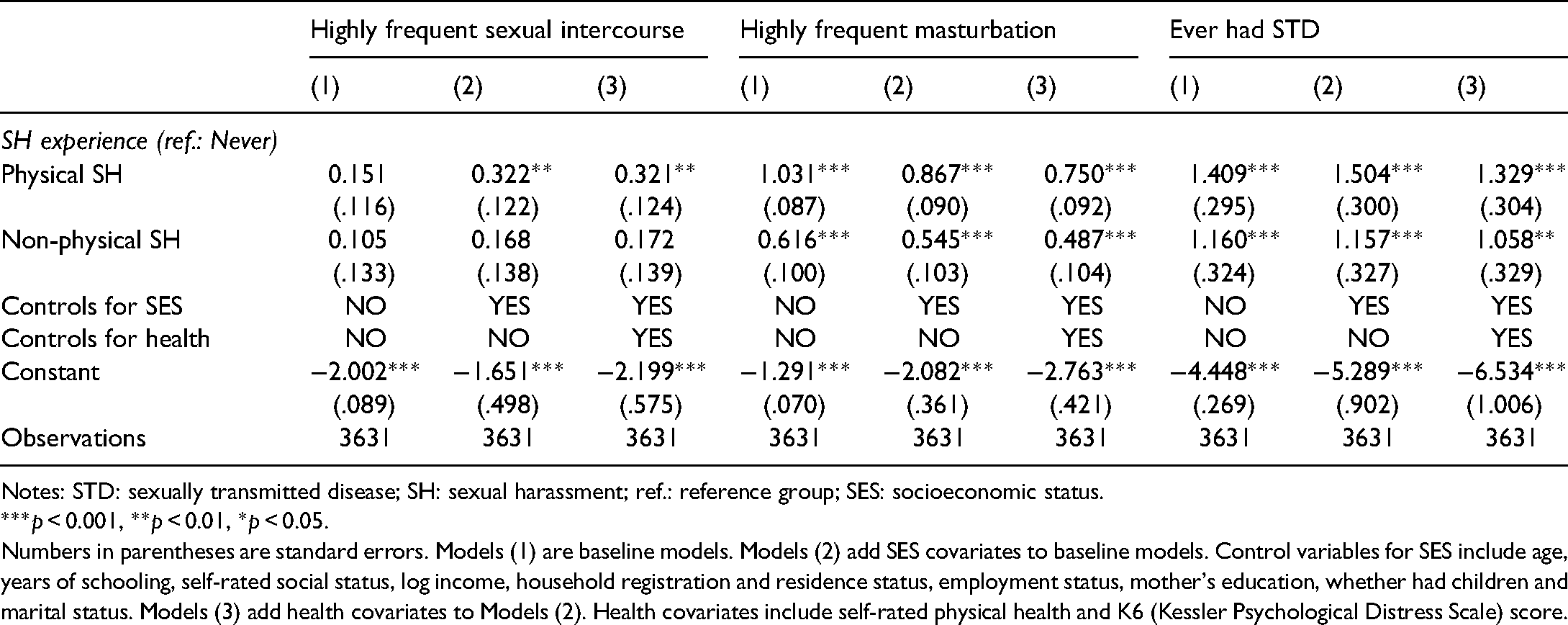
Notes: STD: sexually transmitted disease; SH: sexual harassment; ref.: reference group; SES: socioeconomic status.
***p < 0.001, **p < 0.01, *p < 0.05.
Numbers in parentheses are standard errors. Models (1) are baseline models. Models (2) add SES covariates to baseline models. Control variables for SES include age, years of schooling, self-rated social status, log income, household registration and residence status, employment status, mother's education, whether had children and marital status. Models (3) add health covariates to Models (2). Health covariates include self-rated physical health and K6 (Kessler Psychological Distress Scale) score.
Logistic regression models estimating the effects of the nature of the perpetrator on women's sexual behaviors.
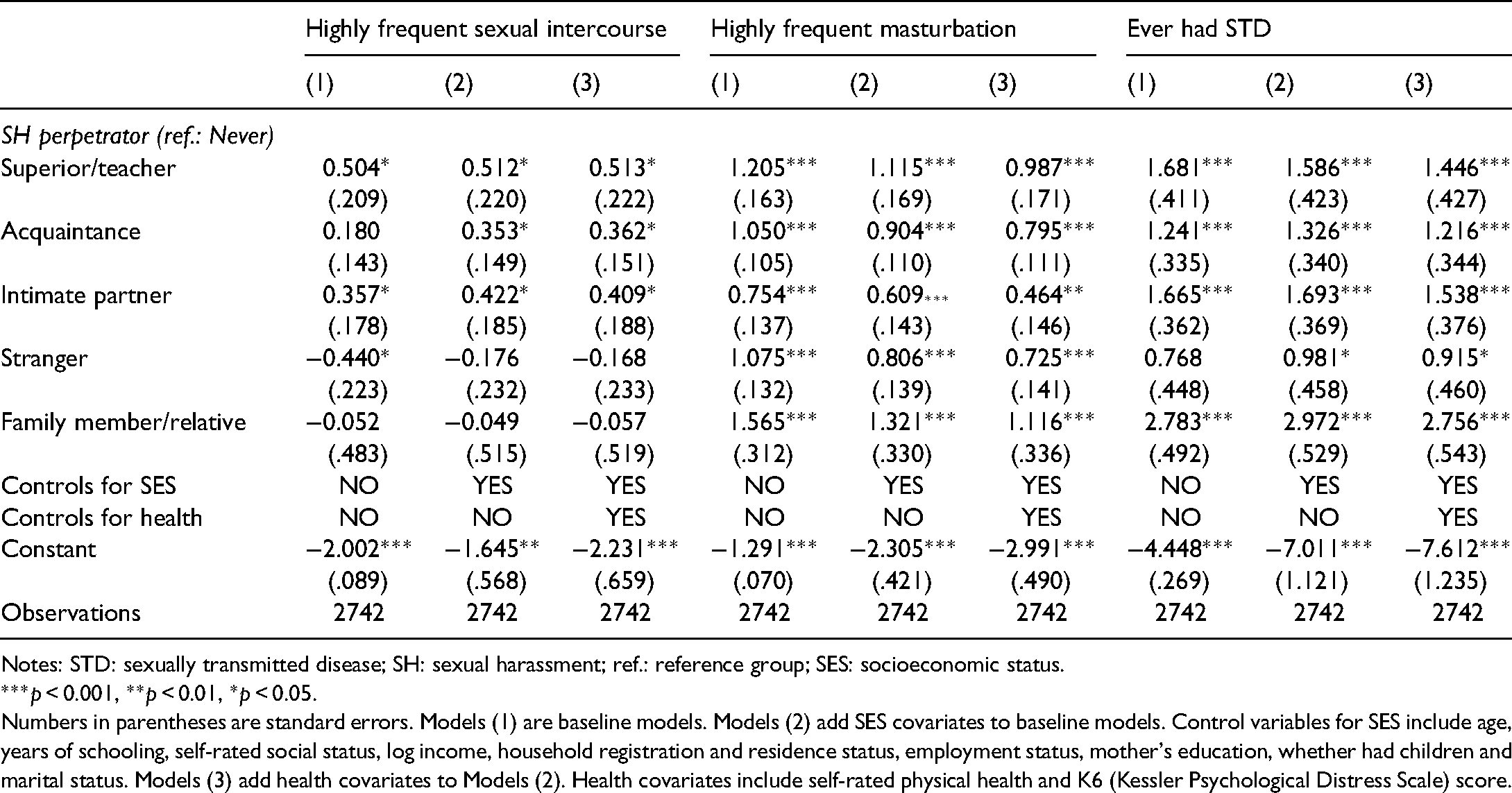
Notes: STD: sexually transmitted disease; SH: sexual harassment; ref.: reference group; SES: socioeconomic status.
***p < 0.001, **p < 0.01, *p < 0.05.
Numbers in parentheses are standard errors. Models (1) are baseline models. Models (2) add SES covariates to baseline models. Control variables for SES include age, years of schooling, self-rated social status, log income, household registration and residence status, employment status, mother's education, whether had children and marital status. Models (3) add health covariates to Models (2). Health covariates include self-rated physical health and K6 (Kessler Psychological Distress Scale) score.
Table 6 reports the regression estimates for the effect of physical and non-physical sexual harassment on women's sexual well-being, both without and with statistical controls for covariates. Compared with women who had not experienced sexual harassment, physical harassment victims were significantly less satisfied with their sexual relationships with their husbands/cohabitating partners and suffered significantly higher levels of sexual dysfunction. Non-physical harassment was also significantly associated with both sexual dissatisfaction and sexual dysfunction, but its negative effects on sexual well-being were smaller than those of physical sexual harassment. Regarding the covariates, socioeconomic characteristics explained very little about the associations between sexual harassment and sexual well-being, while physical and mental health conditions accounted for a substantial portion of the effects of sexual harassment experience on sexual well-being. However, even when we controlled for the mediation effect of health conditions as well as sexual behaviors, sexual harassment still had a direct negative effect on women's sexual well-being. The evidence suggests that sexual harassment had a detrimental effect on women's sexual function and satisfaction.
Ordinary least squares (OLS) regression models estimating the effects of physical and non-physical sexual harassment on women's sexual well-being.
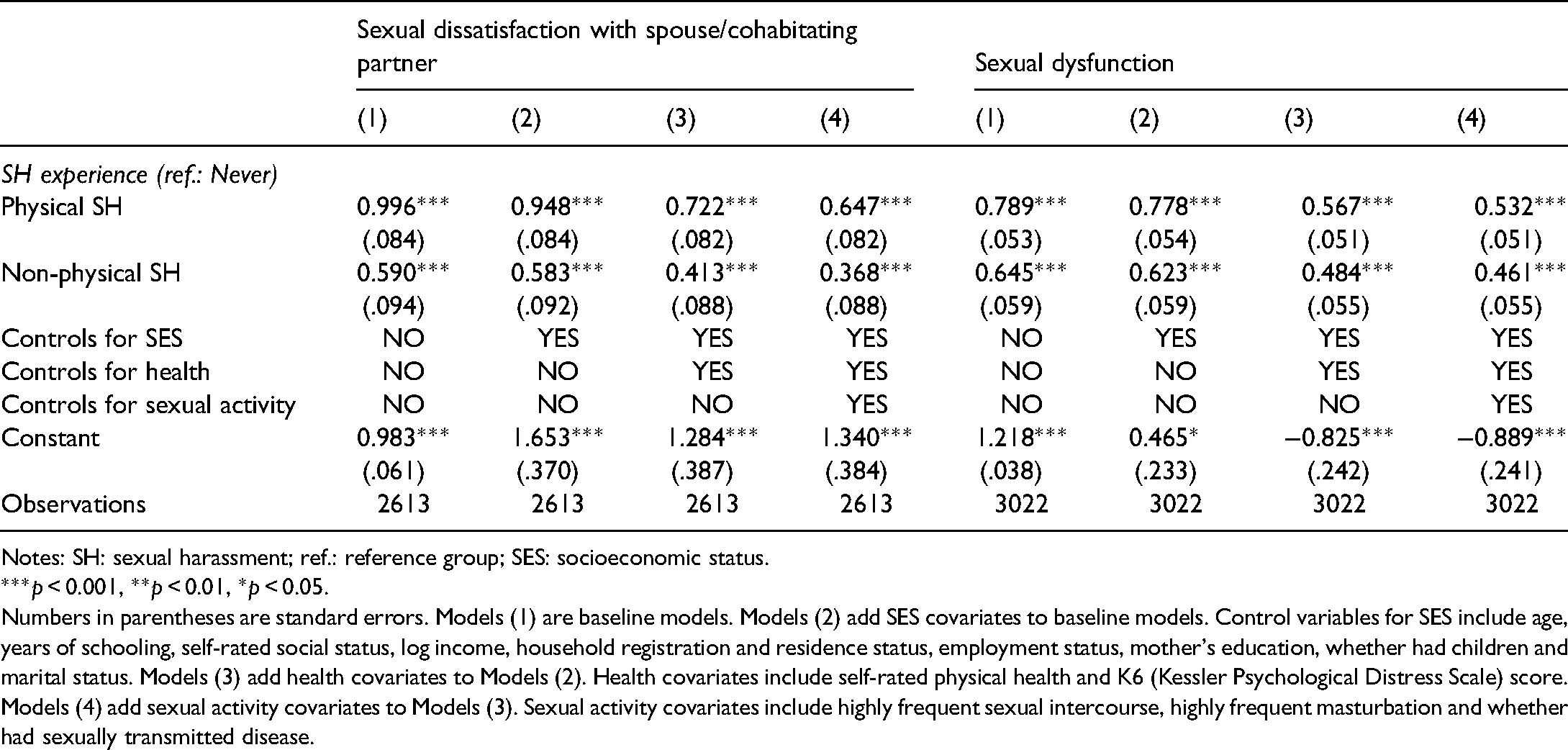
Notes: SH: sexual harassment; ref.: reference group; SES: socioeconomic status.
***p < 0.001, **p < 0.01, *p < 0.05.
Numbers in parentheses are standard errors. Models (1) are baseline models. Models (2) add SES covariates to baseline models. Control variables for SES include age, years of schooling, self-rated social status, log income, household registration and residence status, employment status, mother's education, whether had children and marital status. Models (3) add health covariates to Models (2). Health covariates include self-rated physical health and K6 (Kessler Psychological Distress Scale) score. Models (4) add sexual activity covariates to Models (3). Sexual activity covariates include highly frequent sexual intercourse, highly frequent masturbation and whether had sexually transmitted disease.
Physical harassment had a larger negative effect on women's sexual well-being than did non-physical harassment. The nature of the person who engaged in the physical harassment also affected women's sexual well-being. Here, we restricted the sample to women who had experienced physical harassment and those who had not experienced any form of sexual harassment. As Table 7 shows, being physically harassed by a family member or relative had the largest negative effect on women's sexual well-being. Compared with women who had not experienced any sexual harassment, physical harassment by a family member/relative increased sexual dissatisfaction by 1.1 points and sexual dysfunction by 0.8 points, even after controlling for the effects of socioeconomic background and health conditions. Sexual behaviors also explained a part of the association between physical harassment by a family member/relative and sexual dissatisfaction, as shown in Model 4. Physical harassment by an acquaintance or an intimate partner resulted in the second-largest negative effect on the sexual satisfaction of women in couples. The effect of having an acquaintance as the perpetrator was not significantly different from that of an intimate partner (p = 0.549). Harassment by an intimate partner, an acquaintance or a superior/teacher also had a strong effect on women's sexual dysfunction. The effect of having a stranger as the perpetrator on women's sexual well-being was smaller than that of the other effects.
Ordinary least squares (OLS) regression models estimating the effects of the perpetrator on women's sexual well-being.
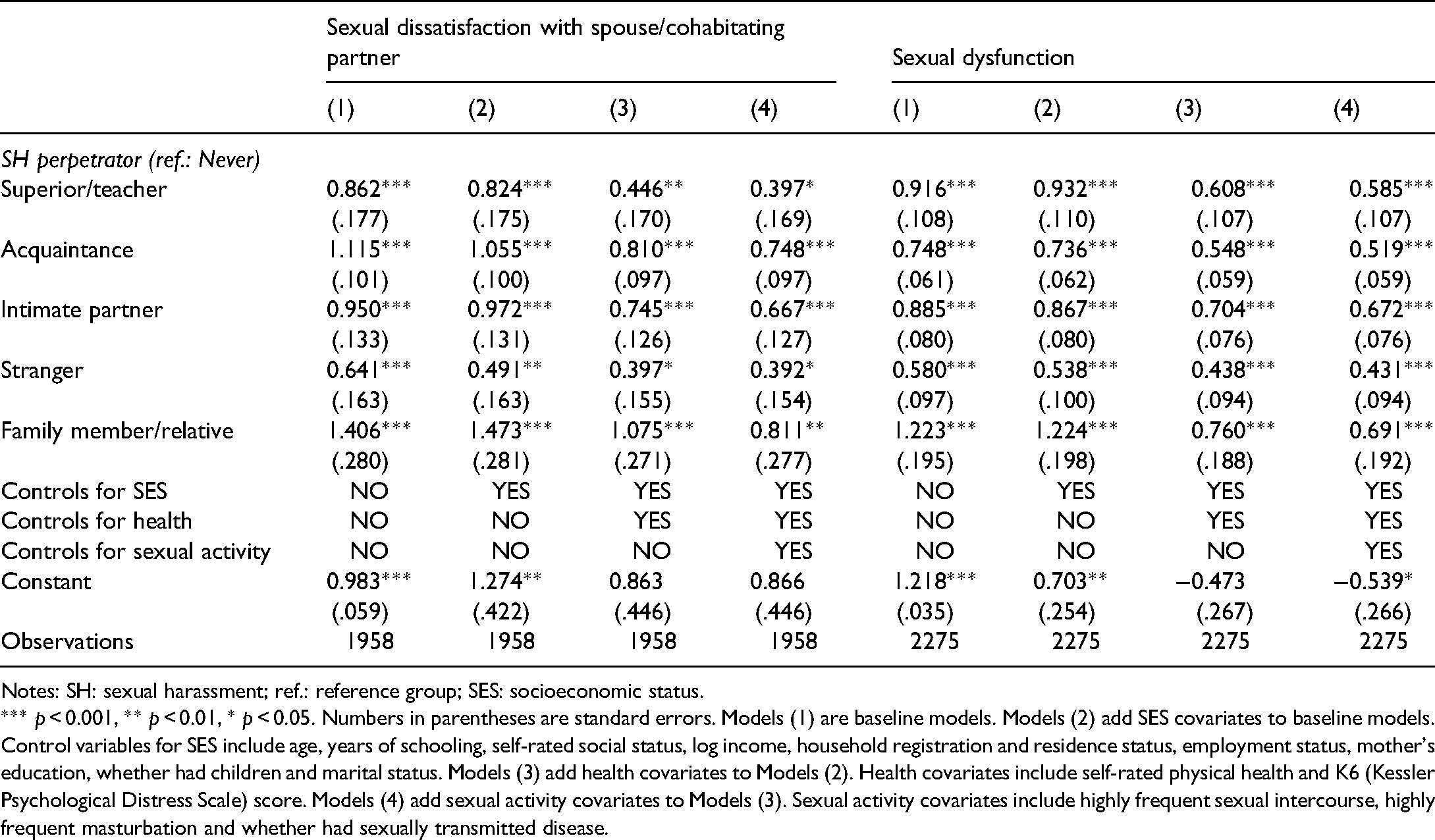
Notes: SH: sexual harassment; ref.: reference group; SES: socioeconomic status.
*** p < 0.001, ** p < 0.01, * p < 0.05. Numbers in parentheses are standard errors. Models (1) are baseline models. Models (2) add SES covariates to baseline models. Control variables for SES include age, years of schooling, self-rated social status, log income, household registration and residence status, employment status, mother's education, whether had children and marital status. Models (3) add health covariates to Models (2). Health covariates include self-rated physical health and K6 (Kessler Psychological Distress Scale) score. Models (4) add sexual activity covariates to Models (3). Sexual activity covariates include highly frequent sexual intercourse, highly frequent masturbation and whether had sexually transmitted disease.
Sexual harassment and women's marital well-being
In accordance with the findings on sexual well-being, Table 8 shows that sexual victimization also lowered women's marital satisfaction and stability. Compared with women who had never experienced sexual harassment, women who had been physically harassed were significantly less satisfied with their current marriage and were more pessimistic about the future of their marriage. The effects of non-physical sexual harassment on marital well-being were also significantly negative, but those effect sizes were smaller than those for physical sexual harassment. After controlling for women's socioeconomic characteristics and health conditions, the negative effects of sexual harassment on marital well-being remained significant. However, we also noted that marital well-being, especially marital satisfaction, was closely related to sexual well-being. When we controlled for married women's sexual well-being, the effect of sexual harassment on marital satisfaction almost disappeared, and its effect on divorce proneness reduced greatly but remained significant. In other words, the marital well-being of harassment victims was largely undermined by the negative effect of sexual harassment on sexual well-being.
Ordinary least squares (OLS) regression models estimating the effects of physical and non-physical sexual harassment on women's marital well-being.
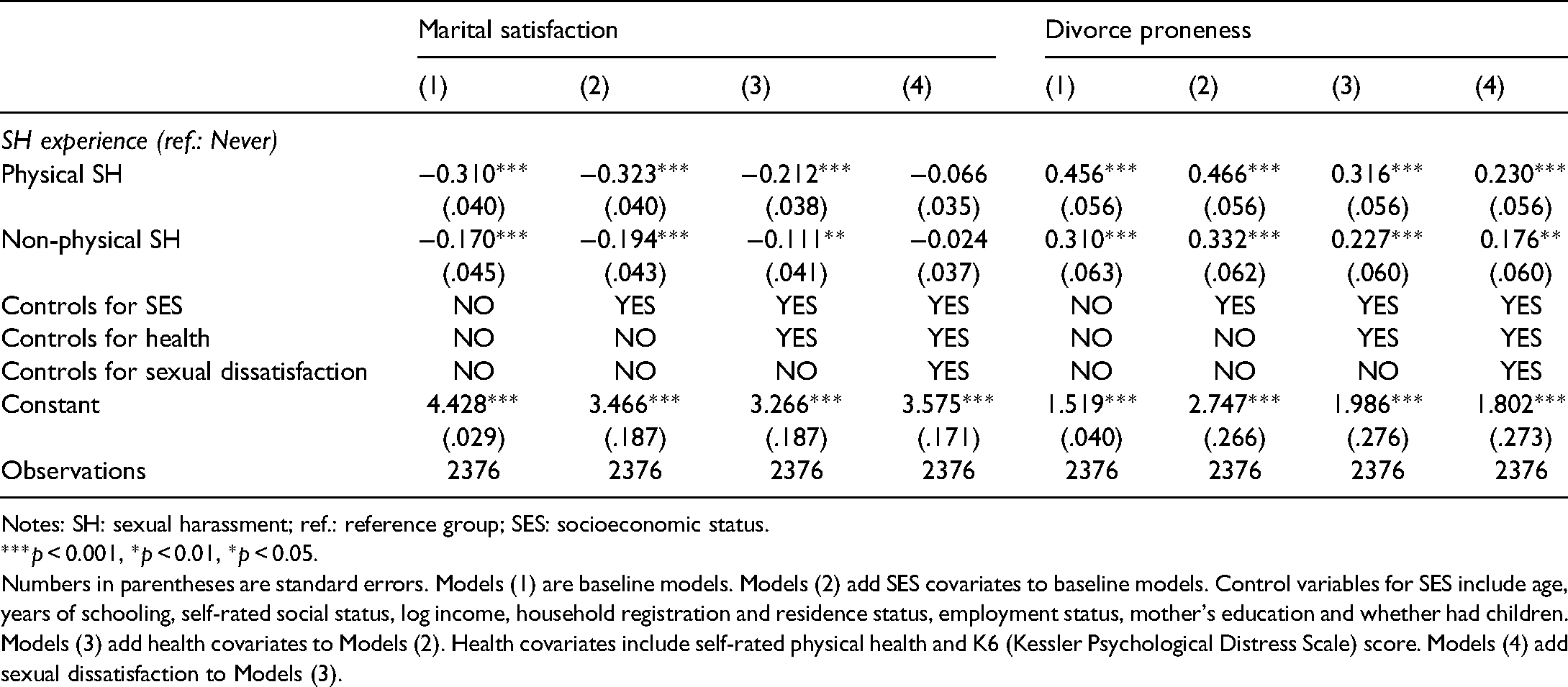
Notes: SH: sexual harassment; ref.: reference group; SES: socioeconomic status.
***p < 0.001, *p < 0.01, *p < 0.05.
Numbers in parentheses are standard errors. Models (1) are baseline models. Models (2) add SES covariates to baseline models. Control variables for SES include age, years of schooling, self-rated social status, log income, household registration and residence status, employment status, mother's education and whether had children. Models (3) add health covariates to Models (2). Health covariates include self-rated physical health and K6 (Kessler Psychological Distress Scale) score. Models (4) add sexual dissatisfaction to Models (3).
For women who had suffered physical harassment, the estimates of the perpetrator's effects on their marital well-being are summarized in Table 9. Among the diversity of relationships between perpetrators and female victims, stranger-perpetrators had the largest negative effect on marital satisfaction, and a family/relative-perpetrator had the largest negative effect on divorce proneness. When an intimate partner was the physical harasser, it had the second-largest negative effect on both women's marital satisfaction and divorce proneness. Even after controlling for sexual well-being, the effect of intimate partner harassment continued to have a significant effect on marital well-being. As 46% of physical harassment cases by intimate partners involved coercive sex within a marital relationship, it makes sense that women could not enjoy sex with their husbands if they were forced to do so, and they might develop a strong proneness to end their marriage via divorce. In comparison, the effects of physical harassment by an acquaintance or superior/teacher were moderate.
Ordinary least squares (OLS) regression models estimating effects of the perpetrator on women's marital well-being.
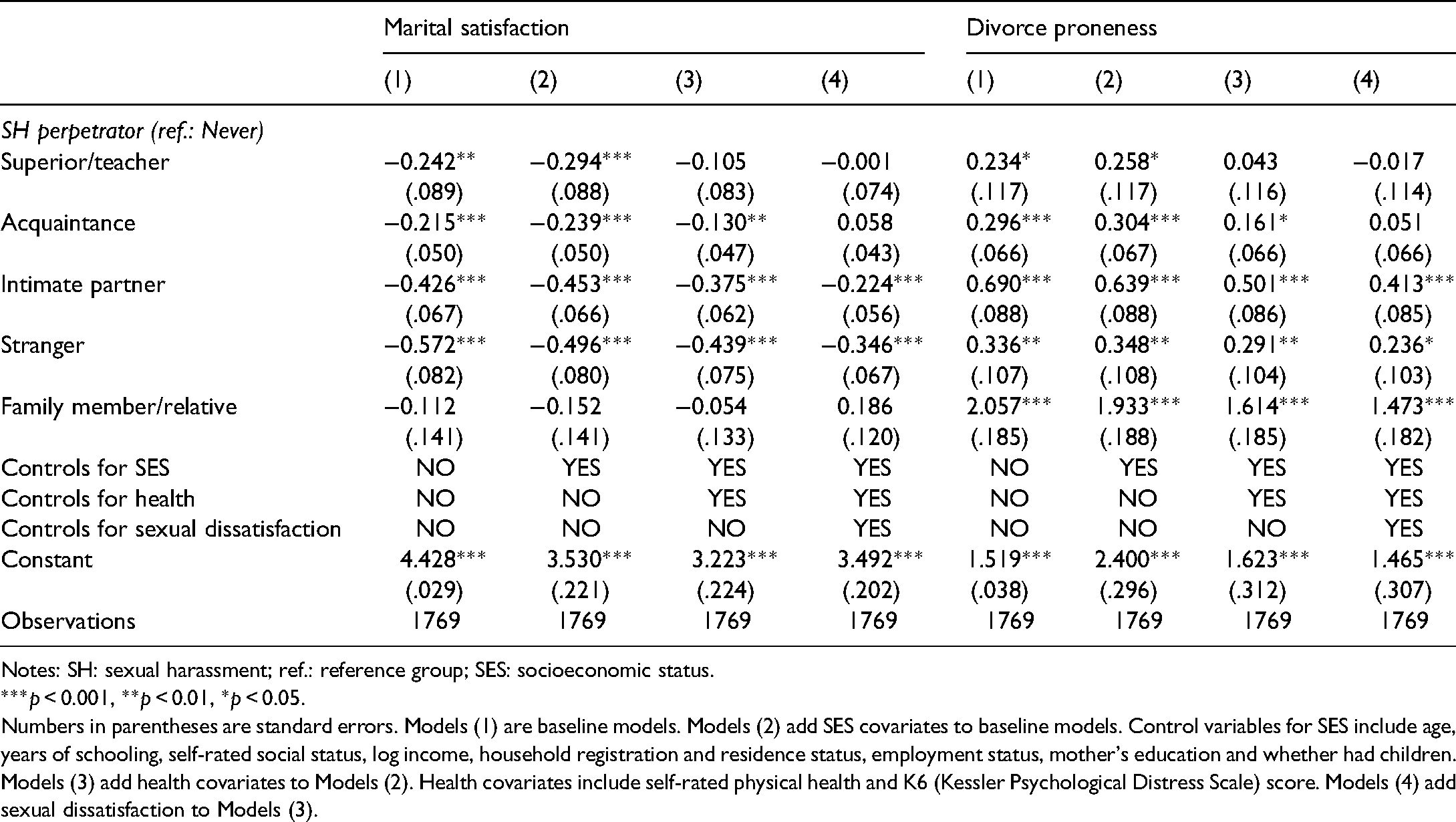
Notes: SH: sexual harassment; ref.: reference group; SES: socioeconomic status.
***p < 0.001, **p < 0.01, *p < 0.05.
Numbers in parentheses are standard errors. Models (1) are baseline models. Models (2) add SES covariates to baseline models. Control variables for SES include age, years of schooling, self-rated social status, log income, household registration and residence status, employment status, mother's education and whether had children. Models (3) add health covariates to Models (2). Health covariates include self-rated physical health and K6 (Kessler Psychological Distress Scale) score. Models (4) add sexual dissatisfaction to Models (3).
Sexual harassment and unmarried women's desire for marriage and children
We have examined the relationship between sexual victimization and women's sexual and marital well-being, which was mainly applicable to married women. Unmarried women, however, could also be victims of sexual harassment. Next, we examined the effects of sexual harassment on unmarried women's desire for marriage and children.
We used logistic regression models to analyze the desire for marriage and the desire for children, as these were dichotomous outcomes. As the baseline model in Table 10 shows, unmarried women's desire for marriage was lower among women who had suffered physical harassment than among those who had no such experience. However, the effect diminished and became non-significant when we gradually controlled for women's socioeconomic background and health condition. Regarding the desire for children, unmarried women who had suffered physical sexual harassment were more likely to report no desire for children than women who had not experienced sexual harassment. The negative effect of physical harassment on the desire for children decreased when controlling for women's socioeconomic background and became marginally significant (t = -1.81; p = 0.071) when women's physical and mental health conditions were controlled for in the model. This suggests that the low desire for marriage and children observed among unmarried women who were physically harassed can be partly explained by their SES and substantially mediated by their physical and mental health conditions. In addition, women who had only experienced non-physical sexual harassment did not differ from those without such experience in terms of the desire for marriage and children.
Logistic regression models estimating the effects of physical and non-physical harassment on unmarried women's desire for marriage and children.
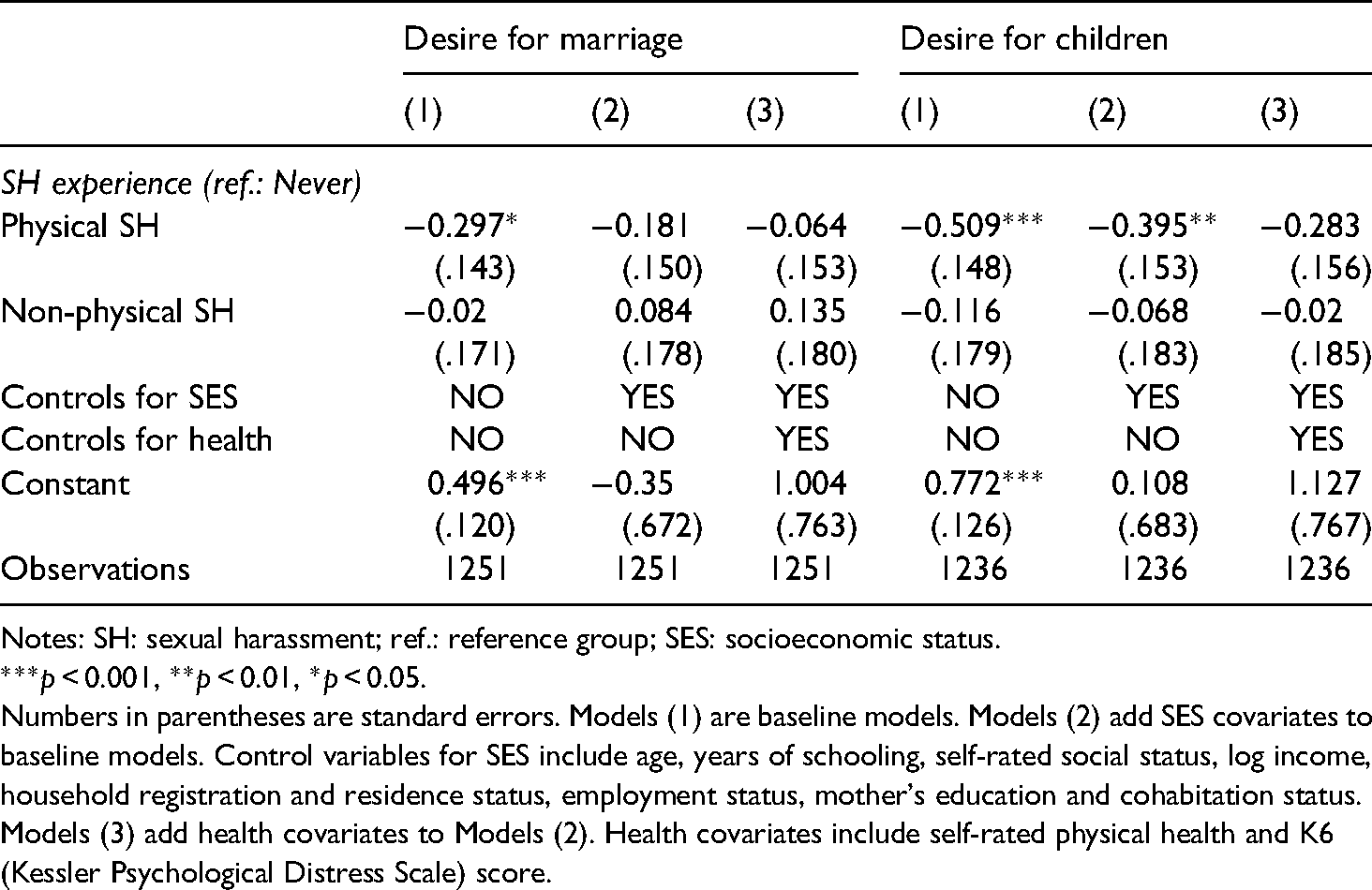
Notes: SH: sexual harassment; ref.: reference group; SES: socioeconomic status.
***p < 0.001, **p < 0.01, *p < 0.05.
Numbers in parentheses are standard errors. Models (1) are baseline models. Models (2) add SES covariates to baseline models. Control variables for SES include age, years of schooling, self-rated social status, log income, household registration and residence status, employment status, mother's education and cohabitation status. Models (3) add health covariates to Models (2). Health covariates include self-rated physical health and K6 (Kessler Psychological Distress Scale) score.
With respect to the effect of the nature of the perpetrator, Table 11 shows that unmarried women who had been physically harassed by a stranger had a lower likelihood of expectation of marriage, but the effect was marginally significant (t = −1.84, p = 0.066) and became non-significant after controlling for the covariates. Women who had suffered physical harassment by a stranger, an acquaintance or a family member/relative were less likely to want children. Unmarried women who had been harassed by a stranger, an acquaintance or a family member/relative were only 58%, 54% and 36% as likely to want children as unmarried women who had not experienced sexual harassment, respectively. However, the negative effect of the perpetrator being a stranger became non-significant after controlling for covariates, whereas the negative effect of the perpetrator being an acquaintance was still significant, and that of a family member/relative was marginally significant (t = −1.82, p = 0.069).
Logistic regression models estimating the effects of the perpetrator on unmarried women's desire for marriage and children.
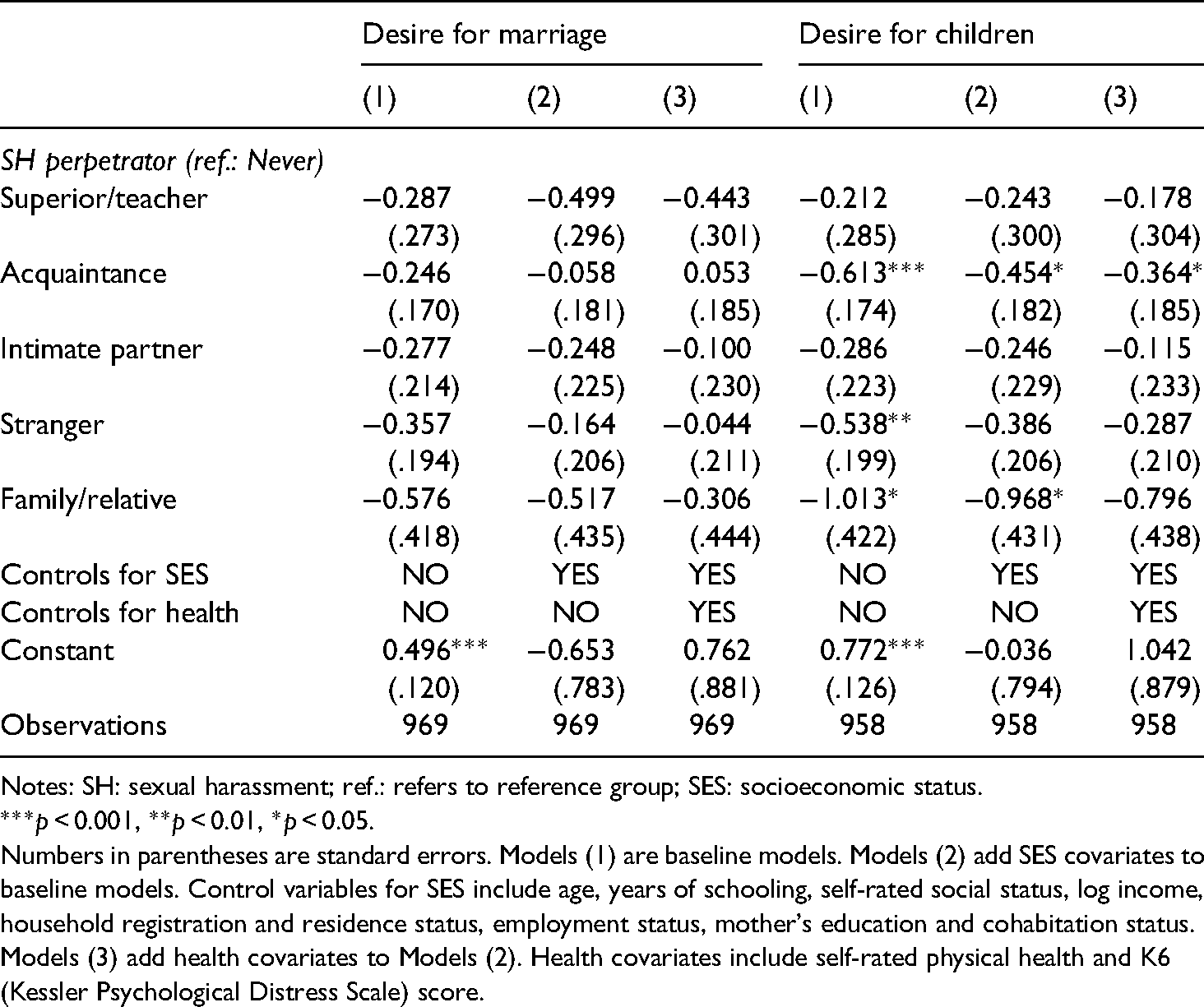
Notes: SH: sexual harassment; ref.: refers to reference group; SES: socioeconomic status.
***p < 0.001, **p < 0.01, *p < 0.05. Numbers in parentheses are standard errors. Models (1) are baseline models. Models (2) add SES covariates to baseline models. Control variables for SES include age, years of schooling, self-rated social status, log income, household registration and residence status, employment status, mother's education and cohabitation status. Models (3) add health covariates to Models (2). Health covariates include self-rated physical health and K6 (Kessler Psychological Distress Scale) score.
Conclusion
This study examined women's sexual harassment experiences and the consequences thereof for women's private lives in China. With the insights from the CPLS, we found that approximately two-thirds of surveyed women had experienced some form of sexual harassment at some point in their lives. Among these women, approximately 60% had experienced physical harassment and 40% had experienced only visual or verbal harassment. Consistent with the study by Parish et al. (2006), the CPLS also indicated that most physical harassment incidents were not at the hands of a more powerful person, such as a supervisor in a workplace or a teacher in the school (10.9%), but were more likely to have involved acquaintances or peers (47.4%) or intimate partners (22.7%). Physical harassment by a stranger was also not very common (about 15%).
Sexual harassment, especially physical harassment, was negatively associated with women's sexual and marital well-being. Women who had been sexually harassed experienced lower sexual satisfaction with their husbands or cohabitating partners, suffered greater sexual dysfunction and reported lower marital satisfaction and higher divorce proneness than women who had not experienced any sexual harassment. In addition, the effect of physical harassment on women's sexual and marital well-being could not be explained by their SES or their physical and mental health conditions. This suggests that sexual harassment is a traumatic event for women that has long-term adverse impacts on their sexual and marital life.
This study also confirmed a possible pathway from sexual harassment to hyper-sexuality and risky sexual behaviors and then to low sexual satisfaction and high sexual dysfunction, as suggested by Browning and Laumann (1997) and their successors. Moreover, sexual well-being was found to be fundamental to marital well-being. Sexual harassment probably undermined marital well-being mainly through its negative effect on victims’ sexual well-being. However, as we found, hyper-sexuality and a risky sexual trajectory could not fully explain the negative effect of sexual harassment on women's sexual well-being.
Physical harassment was also negatively associated with no desire for marriage or children among unmarried women. However, the evidence was not strong. After controlling for women's SES and health conditions, the effect of physical harassment on women's desire for marriage almost disappeared. We only found that those who had been physically harassed by an acquaintance were unlikely to have a desire for children.
The effect of physical harassment on women's sexual well-being, marital well-being and desire for children was heterogenous depending on the perpetrator's relationship to the victim. Contrary to our earlier expectation, physical harassment related to power differentials in the workplace or school had a moderately negative impact on women's sexual and marital well-being. In contrast, physical harassment by a family member or relative had a very strong effect on women's sexual and marital well-being. As we mentioned previously, sexual harassment by a family member or relative might have occurred when the victim was young, such as in her childhood or adolescence. Sexual contact between a child and an adult is highly stigmatized. The adult perpetrator must hide the sexual relationship with the child so that their relationship cannot be disclosed or interfered with. As a result, with few alternative sources of sexual knowledge, the child in a socially isolated sexual relationship may develop an inappropriate sexual “script” that shapes their future sexual relationships (Browning and Laumann, 1997). As Browning and Laumann (1997) and Luo et al. (2008) found, an adult–child sexual experience might lead adolescent women to engage in risky sexual activities, which are associated with high rates of sexual dysfunction and low well-being in adulthood (Browning and Laumann, 1997; Luo et al., 2008). Although very few women surveyed for this study had been physically harassed by a family member or relative, the adverse consequences deserve attention. Physical harassment by an intimate partner was not uncommon. According to a recently published article in The Lancet, in East Asia about 19% of currently or formerly partnered women aged 15–49 have experienced physical or sexual, or both physical and sexual, intimate partner violence in their lifetime (Sardinha et al., 2022). This study found that sexual harassment by an intimate partner was also significantly associated with low sexual and marital well-being for partnered women. Unfortunately, many Chinese people today still tend to overlook sexual violence between partners and consider it a domestic affair that is less harmful (Lin et al., 2016; Xu et al., 2001, 2005). Physical harassment by a peer was not only prevalent, but also harmed women's sexual and marital well-being. In cases of physical harassment, having an acquaintance as the perpetrator was more detrimental to women's sexual well-being than having a stranger as the perpetrator, but the latter scenario was more detrimental to women's marital well-being than the former. The mechanism was not clear here, because we had no more information on the setting in which the harassment took place. However, the findings suggest that whoever physically harassed the women, the long-term impact on their private lives was adverse. Further efforts are needed to create a safe environment to protect women from all forms of sexual harassment in China.
Our data and analyses had several limitations. First, the CPLS sample was drawn by probability sampling methods, although we tried to recruit respondents from various socio-demographic backgrounds. As in many other internet surveys, elderly people, rural residents and poorly educated people were difficult to reach in the CPLS. With this caveat in mind, the prevalence of female sexual harassment cases reported in this study should not be generalized to the broader population without caution. Second, we relied on self-reporting of sexual harassment experiences. The quality of the measurement therefore depends on the respondents’ knowledge and awareness of sexual harassment. Chinese has no standard survey instrument to properly measure the experience of sexual harassment. Perhaps more research efforts are needed in the future to validate our questions on various forms of sexual harassment. Third, to avoid being too sensitive, the survey neither asked how many times the respondent had been sexually harassed in their life nor for details about when and how the event(s) had happened. If a woman had experienced many incidents of sexual harassment, we could not tell if she had been repeatedly harassed by the same perpetrator or by different perpetrators. Regarding our finding on the positive association between sexual harassment and diagnosed sexually transmitted disease, we cannot exclude the possibility of reverse causality because we did not know which of them came first. The severity of harassment was not measured either. In the absence of the setting in which the sexual harassment took place, it was difficult to investigate the possible mechanisms by which sexual harassment adversely affected women's private lives. Left unanswered in this study was why having an acquaintance as the perpetrator had a large adverse effect on women's sexual well-being, whereas having a stranger as the perpetrator had a large effect on women's marital well-being. It is worth conducting future studies to explore the role of the abuse of power and social stigmatization on women's experience of and recovery from sexual victimization.
Research on female sexual harassment in China is rare. This study provides empirical evidence on the effect of sexual harassment on a variety of private life outcomes among women in China. It shows that sexual harassment is not only disruptive to women's work, education or physical and psychological health in the short run, as many studies have documented, but it also affects women's sexual and marital well-being in the long run. Resources and support need to be made available for female victims of sexual harassment to seek justice and recover from the trauma. More importantly, the government, society and families should take actions to protect women from sexual harassment and to create a safe and friendly social environment for women in China.
Footnotes
Acknowledgements
The authors thank the Beijing Kang Zhi Le Si Network Technology Company for helping to promote the web survey via its public WeChat account, Da Yi Ma. The authors also thank Tom Marling for his editorial assistance.
Contributorship
Jiashu Xu analyzed the data and drafted the manuscript. Chunni Zhang designed the research and helped to analyze the data and draft the manuscript. Both authors read and approved the final manuscript.
Declaration of conflicting interests
The authors declared no potential conflicts of interest with respect to the research, authorship and/or publication of this article.
Funding
The research was supported by a grant from Philosophy and Social Science Foundation of Ministry of Education of China (Grant No. 20JZD032).
Note
1. We excluded divorced and widowed women because the cases were too few in the sample.
