



Abstract
Over the past few decades, the increasing divorce rate has been one of the most prominent behavioral changes influencing Chinese families and the nurturing and socialization of children. Research has found that parental divorce exerts only a limited negative impact on children's socioeconomic achievement in China relative to that in Western societies. However, few studies have explored the long-term consequences of parental divorce on children's demographic outcomes in China. Therefore, how parental divorce influences the timing of offspring's first sexual intercourse and marriage, as well as its impact on their sexual and marital well-being, were investigated in this study. Based on findings obtained using data from the Chinese Private Life Survey, children from divorced families were more likely to initiate sexual intercourse at younger ages than those from intact families, although the two groups entered their first marriage at similar ages. Regarding sexual and marital well-being, married men and women who experienced parental divorce during childhood were less satisfied with their current marriage and marital sex and exhibited a higher level of divorce proneness and more sexual dysfunction symptoms than those from intact families. The effect of parental divorce on marital well-being was also largely mediated by the onset of sexual intercourse at a younger age. Having more years of premarital sexual experience was associated with lower sexual satisfaction, more sexual dysfunction symptoms, and more liberal sexual attitudes and behaviors. The worsening of sexual life also further undermined marital well-being.
Introduction
The increasing divorce rate is among the most prominent behavioral changes to affect the Chinese family over the past few decades. The crude divorce rate in China began to climb in the early 1980s from a very low level before rising dramatically after the turn of the 21st century. According to recent data from the Ministry of Civil Affairs, the crude divorce rate in China has reached 3 per 1000 (Ministry of Civil Affairs of the People's Republic of China, 2021), which exceeds the level of most countries in the world. Although some scholars have argued that the lifetime divorce rate among Chinese couples married for the first time remains low (Yu and Xie, 2021), the rising number of divorces has undoubtedly resulted in increasing numbers of children experiencing family disruption. A recent study estimated that parental divorce has overtaken parental death as the primary reason for single parenthood in China and found that over 8 million Chinese children under the age of 18 are living in single-parent families or step-families due to parental divorce (Zhang, 2019). This increase in divorce has major implications for the settings in which children are nurtured and socialized, and thus it deserves great social attention.
The consequences of parental divorce on child outcomes have been extensively examined in the USA and Europe, including how it affects the socioeconomic and psycho-emotional well-being of children. As a stressful, adverse transition, parental divorce often results in declines in household income, living standards, and parental support (Amato, 2000). As a result, children and adolescents who experience parental divorce are disadvantaged in terms of a variety of outcomes, including academic performance, cognitive development, social competence, psychological adjustment, and self-concept, compared with those from intact families (Amato and Cheadle, 2008; Anthony et al., 2014; Kim, 2011; Steele et al., 2009; for reviews, see Amato, 2001; Amato and Keith, 1991). Furthermore, the negative impact of parental divorce on offspring has the potential to develop into various problems in adulthood, such as lower long-term socioeconomic achievement (Bernardi and Radl, 2014; Bhrolcháin et al., 2000; Fischer, 2007; Sigle-Rushton et al., 2005). Given that parental divorce and single parenthood are disproportionately concentrated in lower-class or Black families in most Western societies, the overlap of parental divorce, single parenthood, and low income can further lead to the intergenerational transmission of poverty or other socioeconomic disadvantages resulting from a disrupted family structure.
Not only are children of divorce vulnerable to downward social mobility, but their demographic behaviors also differ from those of children from intact families. Researchers have reported that those who experienced parental divorce during childhood tend to initiate sexual intercourse and partnership earlier, and are more likely to cohabitate without a marriage and to cohabitate early (Bhrolcháin et al., 2000; Cherlin et al., 1995). Their marriages also tend to be less stable and more likely to end in divorce (Diekmann and Schmidheiny, 2013; Dronkers and Härkönen, 2008; Wolfinger, 1999, 2005). To some extent, the family demographic behaviors exhibited by children of divorce could be understood as a byproduct of socioeconomic disadvantage, as poverty and stresses in family life often accompany one another. However, marital problems typically arise from more than merely socioeconomic factors. By witnessing the dissolution of marriage and post-divorce dating/marital behaviors of parents, children of divorce are likely to simulate the nonmarital sexual activities of their divorced parents (Cherlin et al., 1995) and are socialized with the ideas that wedlock is fragile and that divorce is an acceptable solution to marital problems (Axinn and Thornton, 1996). As a result, they are more likely to start their own partnerships and initiate sexual activities at a younger age than children of non-divorce, which may begin a demographic trajectory that could be destructive to their family life. Given that family life is a separate but equally important domain as socioeconomic achievement for individual well-being, it is worthwhile to better understand the unique family demographic patterns among children of divorce and to explore the consequences of their demographic behaviors.
Although most studies in Western societies have concluded that parental divorce is detrimental to children's well-being, few studies have examined its consequences in China. Unlike in Western societies, divorced couples in China are less frequently from economically disadvantaged groups, and they often receive extensive support from their natal families or kinship networks if they must raise children after divorce (Zhang, 2019, 2020a). The relatively higher socioeconomic status of divorced families and the availability of intergenerational support could buffer some negative effects of parental divorce on children's socioeconomic well-being. In a prior study, I examined the effect of parental divorce on adolescents’ academic performance, psychological development, and deviant behaviors using data from two nationally representative surveys (Zhang, 2020a). Adolescents from divorced families in China differed little from their peers from intact families. Disadvantages were only found in a very few developmental aspects among children of divorced single-father families and of post-divorce step-families, but not among children of divorced single-mother families (Zhang, 2020a). With respect to long-term outcomes, in another study, I compared socioeconomic achievement between adults who had previously experienced parental divorce or parental death before the age of 18 and those without such experiences. Other than lower educational attainment among the sons of divorced parents compared with those from similar socioeconomic origin, parental divorce was not associated with lower social status among children from divorced families. Moreover, because divorce was more common among urbanites and more educated couples, compensation effects from relatively higher social origin prevented children of divorce from falling lower in society (Zhang, 2020b).
However, it cannot be immediately concluded that children in China are safe from any detrimental effects of parental divorce. Other than socioeconomic achievements, family life is also fundamental to individual well-being, particularly as Chinese people ordinarily consider happiness in family life (e.g. getting married, maintaining a marriage, and childbearing) as a personal achievement and an obligation to fulfill their filial responsibility. Accordingly, it is not uncommon for divorce to be viewed as a personal failure and a disgrace to families. Single parenting is viewed unfavorably in Chinese society and the majority of Chinese people still agree statements such as “When there are children in the family, parents should stay together even if they don't get along” and “One parent cannot bring up a child as well as two parents together” (Zhang, 2019). This discriminatory social attitude toward divorce can hurt both divorced parents and their children in both subtle and obvious ways. Parental economic resources may compensate for the detrimental effects of parental divorce on children's living standards and educational investments (Zhang, 2020b), but it cannot compensate for the lack of parental love and care, which are essential for the development of healthy and stable intimate relationships. Nevertheless, few studies have examined the effects of parental divorce on subsequent demographic behaviors of offspring in China.
Therefore, this study investigated the long-term consequences of parental divorce on offspring's demographic outcomes on the Chinese mainland. As a person's family demographic transition usually starts from the onset of sexual activities, I focused on the effect of parental divorce on the timing of offspring's first sexual intercourse, and then the role of sexual debut at younger age in later sexual and marital well-being. Data from the Chinese Private Life Survey (CPLS) were used to demonstrate how sexual behaviors and attitudes link the early experience of parental divorce to offspring's marital well-being in later life.
Parental divorce, early sexual debut, and their consequences
Considerable evidence in the USA and other Western countries has shown that children who experience parental divorce often exhibit a distinct pattern of demographic transitions relative to those who do not. Children of divorce are more likely to leave home early or to commence a heterosexual relationship at younger age than children of non-divorce, which may be due to an unpleasant home situation resulting from divorce or remarriage or a lack of supervision and monitoring from divorced single parents. Early partnerships also more likely develop into early cohabitation, premarital pregnancy or childbearing, and subsequent early marriage (Bhrolcháin et al., 2000; Cherlin et al., 1995). Alternatively, children of divorce may postpone or even forgo marriage (Wolfinger, 2003). In some European countries, the marital rates of children of divorce are lower than those of children from intact families, and children of divorce are often “family forerunners” who prefer unmarried cohabitation to marriage (Härkönen et al., 2021).
Why do children of divorce exhibit an unusual pattern of demographic transitions? From the life-course perspective, an early life transition influences later life outcomes. The nature of the developmental impact of a life transition depends on when it occurs in a person's life, such that premature or delayed transitions are often unfavorable (Elder, 1998). In the case of the demographic behavior of children of divorce, the timing of first sexual intercourse is an important indicator for the occurrence of later life events, as young-adulthood demographic transitions usually begin from the onset of sexual activities. A number of studies have found that those who experience parental divorce during childhood are more likely to commence sexual activities earlier than those whose parents remained married (Kiernan and Hobcraft, 1997; Wolfinger, 2005; for a review, see Tasker and Richards, 1994). There are several possible reasons why this might be the case. Firstly, as divorced parents are often sexually active while forming new partnerships after divorce, their children may simulate the nonmarital sexual activity of their divorced parents, who in turn may take a more permissive attitude toward their children's early nonmarital sexual activities. Secondly, forming a sexual relationship could constitute a rebellious reaction to an unwelcome parental divorce or a remarriage after divorce (Pryor and Rodgers, 2001). Thirdly, growing up in a single-parent family or experiencing parental divorce can foster early maturity (Weiss, 1979) and an inner desire to seek out romantic relationships (Wolfinger, 2003). After parental divorce, children are likely to become more independent and define themselves as adults (or the younger peers of the parents) for whom sexual activities are appropriate. In a study of parental divorce in childhood and demographic outcomes in young adulthood in a British cohort, Cherlin et al. (1995) speculated that early nonmarital sexual activity may be central to the mechanism by which parental divorce leads to early departure from the home, premarital childbirth, and cohabitation. However, their study contained no information to test this hypothesis. Kiernan and Hobcraft (1997) revisited this issue using data from the British National Surveys of Sexual Attitudes and Lifestyles (NSSAL) and found that, particularly for girls, an excess risk of teenage first partnership among children of divorced parents was closely linked to their early sexual debut.
Sexual debut at younger age not only accelerates subsequent demographic transitions, but it also eventually produces negative impacts on individuals’ marital and sexual well-being. Starting from early sexual intercourse and partnership, children of divorce are more likely to cohabitate or marry before the age of 20 and subsequently enter early parenthood (Bhrolcháin et al., 2000). As premarital sex, cohabitation, early marriage, and premarital childbearing are often associated with a greater risk of marital dissolution (Martin and Bumpass, 1989), children of divorce are more likely to end their marriages in divorce than those whose parents had a stable marriage. This phenomenon is called “intergenerational transmission of divorce” or “the divorce cycle” (Glenn and Kramer, 1987). Numerous studies have asserted that unusually premature demographic behaviors (e.g. early cohabitation, early marriage, and early childbearing) observed among children of divorce are a key mechanism through which the divorce cycle occurs (Amato, 1996; Amato and Booth, 2001; Feldhaus and Heintz-Martin, 2015; Gager et al., 2016; Wolfinger, 2005).
Relative to cohabitation, early marriage, and premarital childbearing, early sexual debut and premarital sex remain less well studied as mechanisms of intergenerational transmission of divorce or marital discord. However, some evidence has suggested that in certain circumstances, premarital sex and adolescent sex could be determinants of divorce (Larson and Holman, 1994; Paik, 2011; Teachman, 2003). Premarital sexual experiences early in life may undermine one's commitment to a permanent marital relationship with one individual and reduce the appeal of marriage to one spouse (Paik, 2011).
The accumulation of premarital sexual experience is also associated with having multiple sexual partners and extramarital sex, which also weakens marital bonds (Larson and Holman, 1994; Legkauskas and Stankevičienė, 2009; Teachman, 2003). Teachman (2003) found that American women who have premarital sex have an increased risk of marital dissolution, although the effect was only applicable to women who had intimate premarital relationships with men other than their eventual husbands. Paik (2011) found that unwanted sexual debut in later adolescence increased the risk of divorce, whereas wanted sexual debut did not. Some evidence also supports that adolescent and premarital sex in negative contexts undermine sexual well-being. For example, Browning and Laumann (1997) found that women who first had intercourse before the age of 16 were significantly more likely to experience teen childbirth, have at least one sexually transmitted infection, and have more sexual partners than those who initiated sexual intercourse at older ages. Else-Quest et al. (2005) found that first sexual experiences that were prepubertal, were forced, or occurred in other negative contexts (e.g. with a relative or stranger, under peer pressure, or under the effects of drugs or alcohol) caused severe negative consequences for later sexual functioning, sexual health, and life well-being. Sandfort et al. (2008) also found associations between early sexual initiation and the risk of sexually transmitted infections, as well as links between both relatively early and late sexual initiation and a higher likelihood of experiencing sexual problems.
In summary, the literature has separately examined the association between parental divorce during childhood and early sexual debut, and the association between the early onset of sexual activities or premarital sexual behaviors and marital or sexual well-being. However, empirical evidence on how the experience of parental divorce affects sexual and marital well-being through its effect on premarital sexual history remains scant. Therefore, this study investigated the role of premarital sexual experiences in linking parental divorce to offspring's sexual and marital problems in the context of Chinese society. This issue has seldom been explored in China due to a lack of data; however, a recent online survey offers rare insights into this topic and is briefly introduced in the next section.
Data and variables
The data for this study came from the CPLS, a web survey conducted in 2020, in which detailed information on sexual life, partnership, marriage, and childbearing was collected from Chinese people aged 18 and above. It was carried out through the Survey Plus platform, an online survey platform based on the WeChat phone application. WeChat is the most popular social media app in China and has 1.241 billion monthly active users as of March 2021, accounting for 88% of the Chinese population (Ministry of Civil Affairs of People's Republic of China, 2021). Given the large population coverage among WeChat users, respondents from various sociodemographic backgrounds could potentially be reached. The survey was initially posted on the public WeChat account Da Yi Ma as well as some personal accounts and chat groups to recruit respondents via snowball sampling. People who were interested in the survey could participate and/or forward it to other WeChat users. The first round of promotion attracted approximately 3000 individuals to answer our self-administrated questionnaire on their smartphone. However, a disproportionate share of these respondents were university educated and women. In the second round of promotion, the Survey Plus sample pool with quota sampling was used to reach more respondents, particularly those who were low-educated and men. Ultimately, 6828 individuals participated in the survey and provided valid information.
To protect the respondents’ privacy and improve reports on real attitudes and sensitive behaviors, the survey was self-administrated and fully anonymous, and all data were encrypted during transmission. To protect the respondents from any potential harm, an electronic informed consent form was presented at the beginning of the survey, which described the purpose of the research, the benefits and foreseeable risks and discomforts, the confidentiality protocols, and the voluntary nature of their participation. Only respondents who claimed that they had reached 18 years of age and checked the box “I am informed and wish to participate” were then allowed to answer the questionnaire. The institutional review board (IRB) at Peking University Health Science Center reviewed and approved the research proposal and the survey questionnaire.
The experience of parental divorce during childhood was the main explanatory variable of this study. In the CPLS, the respondents were asked whether they had experienced parental divorce or parental death by the age of 17. Given that few of the respondents reported parental death in younger cohorts, the study focused exclusively on the experience of parental divorce and excluded cases of parental death. As shown in Figure 1, the proportion of respondents experiencing parental divorce increased with the birth cohort. As the pre-1970 cohorts were under-represented in the sample and the divorce level in China had not begun to rise until the 1980s (Zeng and Wu, 2000), I restricted the sample to men and women born in or after 1970. After listwise deletion of missing values, I obtained a sample with 5789 individuals. Among them, 3042 individuals were married at the time of survey.
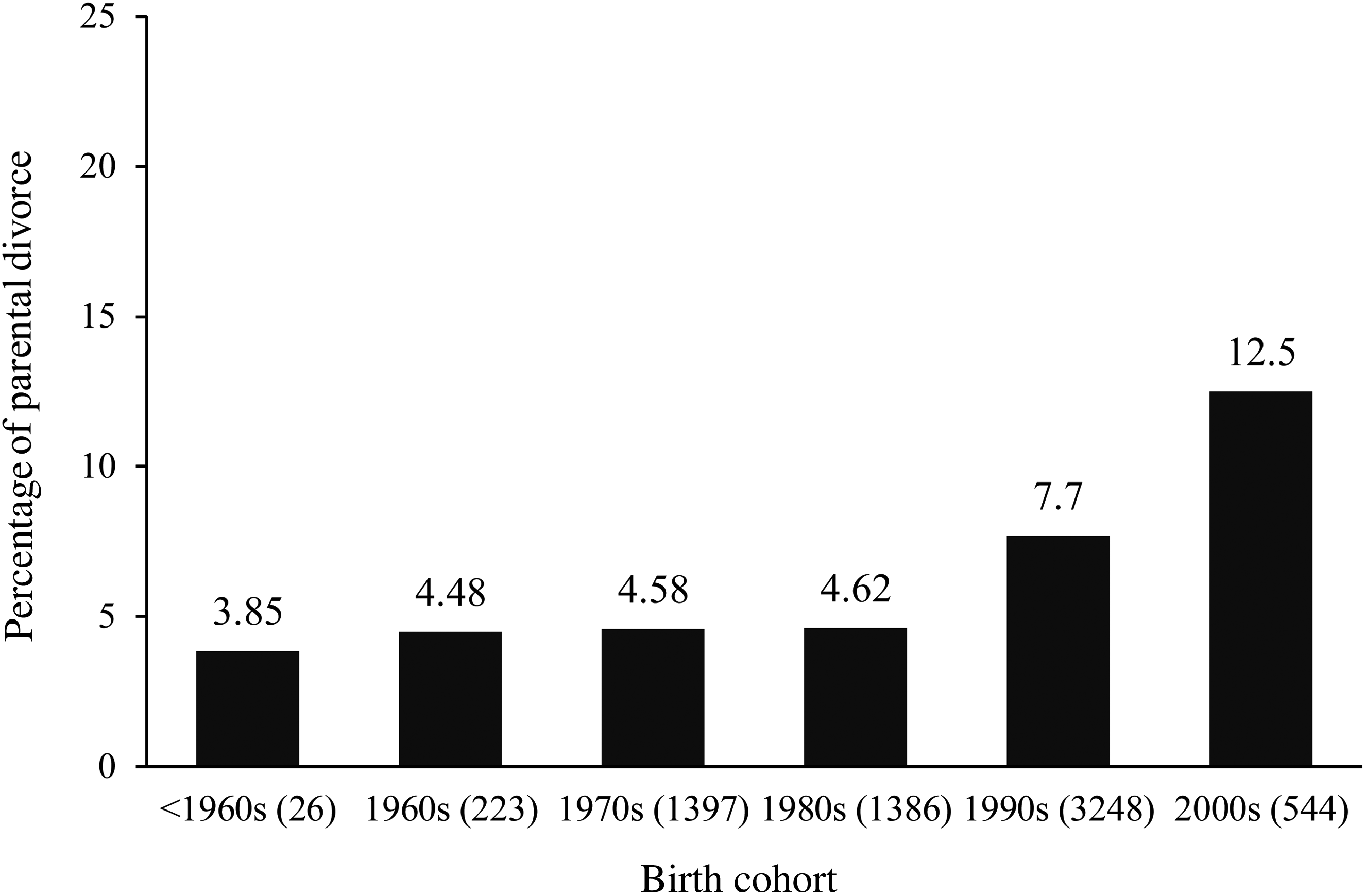
The percentage of the sample who had experienced parental divorce before the age of 17 by offspring's birth cohort. Numbers in parentheses are the sample size for each cohort.
Event history analysis on the timing of sexual debut and first marriage.
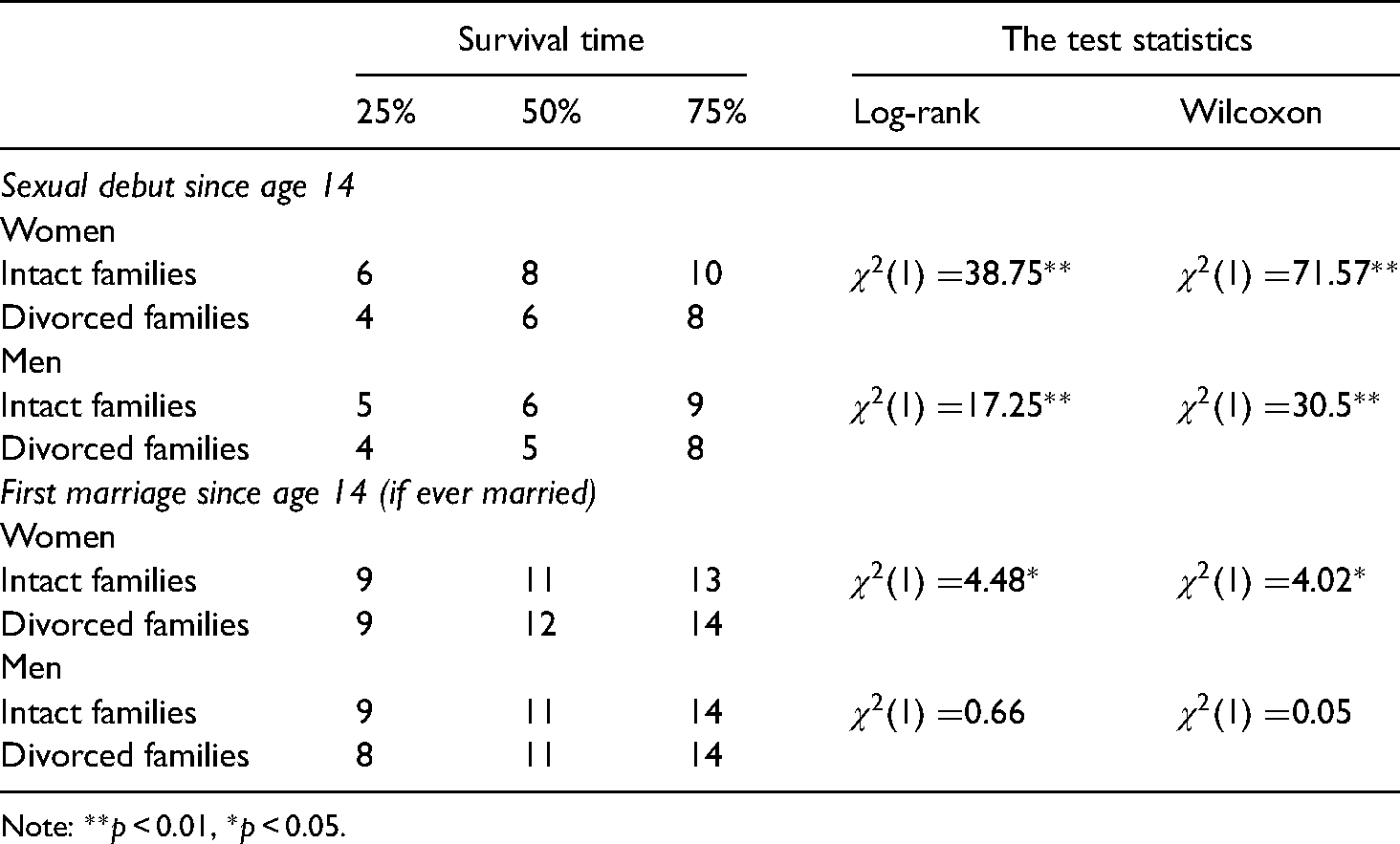
Note: **p < 0.01, *p < 0.05.
The aim of this study was to explore the demographic consequences of parental divorce on adult children. The first set of outcome variables included the timing of the respondents’ first sexual intercourse and that of their first marriage. The respondents reported their age at first sexual intercourse if they already had sexual experience and their age at first marriage if they were married or had ever married. I started by examining the process of initiating sexual intercourse from the age of 14 to the age at the time of the interview. For men and women, I separately estimated the survival function of sexual debut, or the proportion of respondents who had not initiated sexual intercourse up to the time of the survey. The nonparametric estimation method was applied to examine how parental divorce affected the timing of sexual debut. I then examined the timing of the marital formation process. For individuals who were married or had ever married, the timing of entry into their first marriage from the age of 14 was examined with respect to sex and family origin (i.e. divorced or non-divorced families).
The second question of this study pertained to whether experiencing parental divorce during childhood affected adult children's own marital well-being. These analyses were only applied to those who were married at the time of interview. Marital well-being, as the dependent variable, was measured by marital satisfaction and perceived marital instability. The respondents were asked to rate “How satisfied are you with your current marriage?” on a scale ranging from 1 (very unsatisfied) to 5 (very satisfied). Perceived marital instability was measured by a hypothetical question about divorce proneness: “The future of a marriage is sometimes unpredictable. How do you rate the likelihood of your current marriage ultimately ending in divorce?” Again, the response scale ranged from 1 (very unlikely) to 5 (very likely), with higher scores indicating less perceived marital stability.
The third and the most important question of this study explored how parental divorce affected offspring's marital well-being through its effect on their sexual experiences, sexual well-being, and sexual attitudes. The CPLS offered rare insights into sexual behaviors and attitudes. Premarital sexual experience was measured by the age at first marriage subtracting the age at first sexual intercourse. More years from sexual debut to first marriage indicated that someone had more sexual experiences before their first marriage. Sexual well-being was assessed via two sets of questions in the CPLS. One assessed the satisfaction of the respondents with the sexual relationship with their current spouse from six dimensions: frequency of sexual intercourse, average duration of sexual intercourse, physical satisfaction of having sex with their spouse, psychological satisfaction of having sex with their spouse, frequency of foreplay, and frequency of orgasm. I focused on negative evaluations of each dimension and summed the number of dimensions for which the respondent responded “unsatisfied”. For the frequency and duration of sexual intercourse, dissatisfaction could arise from being either “too frequent”/“too long” or “too few”/“too quick”. The variable of sexual dissatisfaction with spouse was scored from 1 to 6. A higher score indicated a higher level of dissatisfaction with marital sex. The other set of questions on the quality of sexual life was a self-assessment of sexual dysfunction, following that of Parish et al. (2007). The respondents were asked whether they had experienced each of seven sexual dysfunction symptoms in the past 12 months: lack of interest in sex, pain during sex, no pleasure, premature ejaculation, performance anxiety, lack of orgasm, erectile difficulties for men, and dryness for women. The response categories were “never”, “yes, but only sometimes”, and “yes and persistent for 2 or more months”, which were respectively scored 0, 1, and 2. I then constructed a seven-item summated scale measuring the level of sexual dysfunction of a respondent. Unlike the variable of sexual dissatisfaction with their spouse, which mainly focused on evaluating the sexual performance of a respondent's current spouse or the sexual relationship between the respondent and his/her spouse, the variable of sexual dysfunction more so assessed the sexual health problems of a respondent during sex with anyone. The CPLS also asked about sexual attitudes toward premarital sex (“How do you feel about premarital sex?”) and extramarital sex (“How do you feel about extramarital sex?”). The response categories for both questions were “It's always wrong” (=1), “It's wrong most of the time” (=2), “It's hard to tell if it is right or wrong” (=3), “Sometimes it's acceptable” (=4), and “It's always acceptable” (=5). I finally constructed a single variable of sexual attitudes with primary factor analysis. The higher the score, the more liberal a respondent's sexual attitudes.
The experiences of parental divorce, marital well-being, and sexual variables were all associated with one's socioeconomic characteristics. The sociodemographic covariates for statistical control included birth cohorts, the respondent's education percentile score, their spouse's education percentile score, hukou (household registration) origin (rural = 1, urban = 0), and their mother's years of schooling. The education percentile score measured a person's relative position in terms of his/her highest educational attainment in comparison to that of others of the same sex and age. The score was separately calculated for men and women in each birth year using the tabulation data from the censuses in 1982, 2000, and 2010, and the 1% micro-census sample in 2015. The score ranged from 0 to 100, which indicated the percentile rank of an individual's educational attainment in his/her age cohort.
The following section begins by comparing the timing of first sexual intercourse and first marriage between children of divorce and those from intact families. Secondly, I examine the effect of parental divorce on offspring's sexual and marital well-being. Thirdly, I explore how premarital sexual experience mediates the effects between parental divorce and offspring's sexual and marital well-being. I hypothesize that the onset of sexual activity at younger age among children of divorce engenders more liberal sexual attitudes and undermines later sexual well-being, both of which negatively influence marital satisfaction and stability.
Results
Parental divorce and the timing of sexual debut and entry into marriage
I began by comparing the survival function of first sexual intercourse estimated for men and women who had experienced parental divorce and who had not. Table 1 shows that those who experienced parental divorce during childhood were more likely to engage in sexual activities at younger ages than those who had no family disruption. The test statistics show that the survivor function between the two groups is significantly different both at the beginning of the duration (log-rank test) and at the end of the process time (Wilcoxon test). For women from divorced families, the function estimated an approximately 25% chance of starting sexual intercourse by the age of 18 (or within 4 years of the age of 14) and a 50% chance by the age of 20 (within 6 years). Conversely, the function for women from intact families showed that 25% had started sexual intercourse by the age of 20 (within 6 years) and 50% by the age of 22 (or within 8 years), which was almost 2 years older than their peers from divorced families. The men typically became sexually active earlier than women, but those from divorced families differed from those from intact families in the timing of sexual debut. About 25% of the men from divorced families had initiated sexual activities by the age of 18 (or within 4 years after age 14) compared with 19 (or within 5 years) for those from intact families. Approximately 50% of the men from divorced families had engaged in sexual activities by the age of 19 (or within 5 years), whereas this occurred by the age of 20 (or within 6 years) among those from intact families. Notably, the legal age for marriage in China is 20 for females and 22 for males, and the mean age at first marriage in 2010 was 23.9 for females and 26 for males (Raymo et al., 2015). This implies that children from divorced families are more likely to have premarital sex and to have more years of sexual experience before they enter marriage than children from non-divorced families. In accordance with research findings in Western countries, engagement in sexual activities by teenagers and young adults in China was also accelerated by parental divorce, although the teenage sex was not quite prevalent among children of divorce, the majority of whom started sexual intercourse after age 18 but at relatively younger age than children from intact families.
Research from Western societies has indicated that there is a pathway from the early onset of sexual intercourse to early marriage and subsequently to marital problems among children from divorced families (Amato, 1996; Amato and Booth, 2001; Wolfinger, 2003). However, no evidence suggested that children of divorce married significantly earlier than those from intact families in China, although the former began sexual intercourse at a younger age than the latter. As shown in Table 1, the women from both divorced and intact families had a 25% chance of marrying for the first time within 9 years of the age of 14 (or by the age of 23). Moreover, a portion of women from divorced families even delayed the first marriage slightly. Women from divorced families had a 50% chance of marrying for the first time at the age of 26 (or within 12 years) and a 75% chance at the age of 28 (within 14 years), whereas women from intact families had a 50% chance at the age of 25 and a 75% chance at the age of 27. However, this was probably because there was a larger proportion of women from divorced families (49.4%) that had not married yet at the time of survey than those from intact families (27.4%). If we only looked at those who had married, the two groups did not differ significantly in the mean age at the first marriage, 24.5 for women from divorced families and 24.7 for women from intact families. The median age at the first marriage was 25 for both groups. The men from both divorced and intact families had a 50% chance of marrying for the first time within 11 years of the age of 14 (or by the age of 25), and a 75% chance of marrying for the first time within 14 years (or by the age of 28). The test statistics shows that the survival function of entry into first marriage for men from divorced families did not significantly differ from those of intact families.
Given that the children of divorce entered their first marriages at a similar age as their peers from intact families but started sexual intercourse earlier, it was assumed that they would have accumulated more years of premarital sexual experience by the time they married for the first time. Indeed, the average years of premarital sexual experience were respectively 4.1 and 3.3 for married men and women from divorced families, whereas it was 2.9 and 2.3 for married men and women from intact families. Moreover, not only did children of divorce initiate sexual activities at a younger age, but they were also more likely to have their first sexual intercourse with someone other than their current spouse/cohabitating partner. As shown in Table 2, 39.2% of the men and 55.7% of the women from intact families had their first sexual intercourse with their current spouse or cohabitating partner, whereas these percentages for men and women from divorced families were only 23.8% and 37.4%, respectively. Table 2 also shows that a higher percentage of children of divorce had their first sexual intercourse with a sex worker. According to research in the USA, premarital sexual experience with a person other than one's spouse is linked to a higher risk of divorce (Teachman, 2003). The expectation that the marital relationships of children of divorce is worse than those of children from intact families is discussed in the next section.
With whom the respondent had first sexual intercourse.
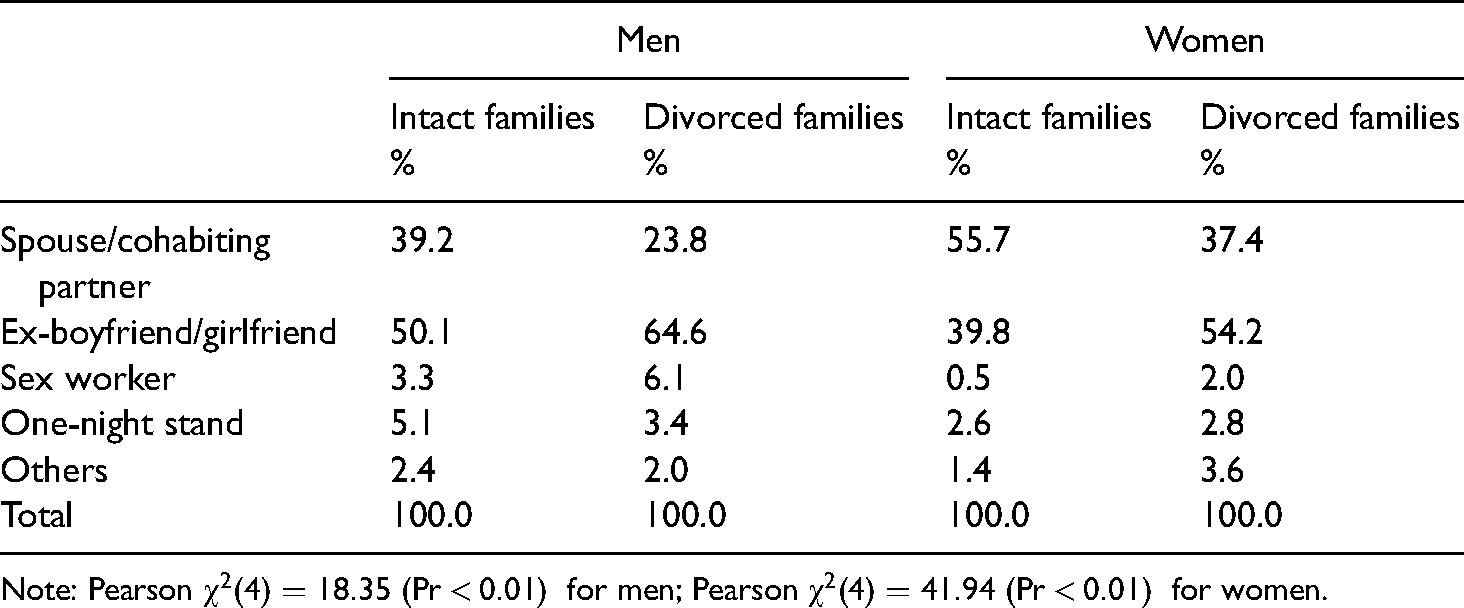
Note: Pearson
Parental divorce and offspring's marital and sexual well-being
Research on the intergenerational transmission of divorce has implied that children with divorced parents have worse and less stable marital relationships than those of children whose parents remain married. Similar results were found in the social context of China. Table 3 shows separate baseline models (M1) for men and women that regressed marital satisfaction and marital instability with parental divorce as well as an extension of these models (M2) that added socioeconomic covariates. The analysis was based on currently married men and women. As shown in Table 3, men and women who experienced parental divorce were less satisfied with their marriages and perceived a higher level of marital instability in both the baseline models and those controlling for covariates.
The effect of parental divorce on offspring's marital well-being.
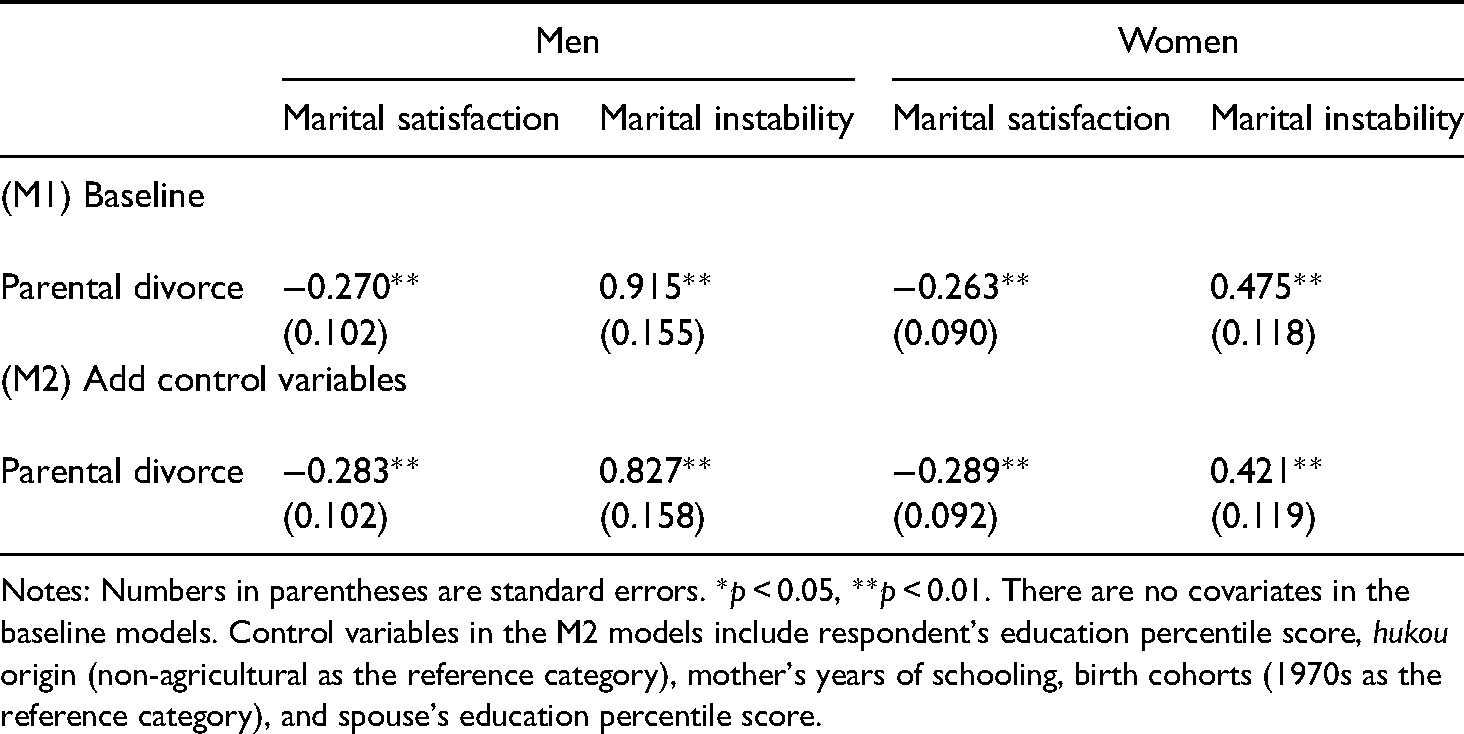
Notes: Numbers in parentheses are standard errors. *p < 0.05, **p < 0.01. There are no covariates in the baseline models. Control variables in the M2 models include respondent's education percentile score, hukou origin (non-agricultural as the reference category), mother's years of schooling, birth cohorts (1970s as the reference category), and spouse's education percentile score.
Sexuality plays an important role in marriage and couples who maintain a satisfying sex life tend to have happier and more stable marriages (McNulty et al., 2016; Yeh et al., 2006). Table 4 displays the effect of parental divorce on sexual well-being and sexual attitudes for married men and women. Regression coefficients were estimated in both the baseline models and models with the same set of covariates as in Table 3. Compared with the children from intact families, the children of divorce reported a significantly higher level of sexual dissatisfaction with their spouse and a significantly higher level of sexual dysfunction, thus indicating a negative effect of parental divorce on children's later sexual well-being. In addition, the association between parental divorce and sexual well-being did not substantially change by adding covariates. With regard to sexual attitudes, the children of divorce were more tolerant of premarital and extramarital sex. However, the effect of parental divorce on offspring's sexual attitudes was not significant for the men and only marginally significant for the women.
The effect of parental divorce on offspring's sexual well-being and sexual attitudes.
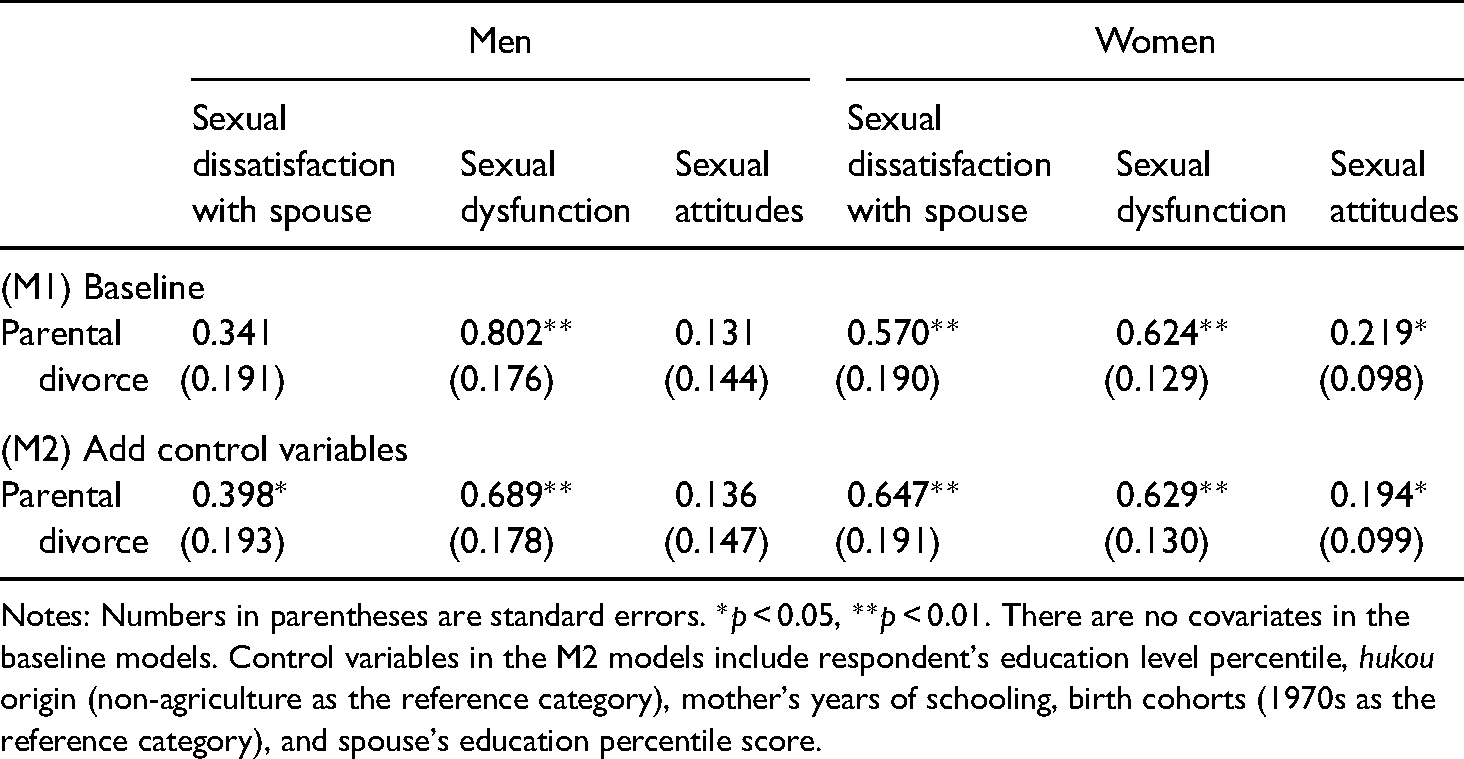
Notes: Numbers in parentheses are standard errors. *p < 0.05, **p < 0.01. There are no covariates in the baseline models. Control variables in the M2 models include respondent's education level percentile, hukou origin (non-agriculture as the reference category), mother's years of schooling, birth cohorts (1970s as the reference category), and spouse's education percentile score.
Mediating role of premarital sex, sexual attitudes, and sexual well-being
The above results suggest that children of divorce tend to have more years of premarital sexual experience than children from intact families and that their sexual and marital well-being are worse compared to those of children from intact families. In this section, I thus explore the possible links between the experience of parental divorce, premarital sexual experience, and later sexual and marital well-being.
There are three possible pathways by which an experience of parental divorce leads to lower marital well-being through premarital sexual experience. Firstly, premarital sexual behaviors are positively associated with liberal sexual attitudes. Children of divorce either learn liberal sexual attitudes from their parents, leading to their later premarital sexual behaviors, or they develop open sexual attitudes through their own premarital sexual experience. Regardless of the direction of causality, people who are more open to premarital and extramarital sex are less likely to find permanent marital relationships attractive and thus become less devoted to marriage. As Amato and Previti (2003) found, infidelity is the most commonly reported reason for divorce. Secondly, some evidence has supported that premarital sex and early sexual engagement are associated with more sexual problems (Else-Quest et al., 2005; Sandfort et al., 2008). In the present study, it is shown that children of divorce initiate first sexual intercourse at a younger age and often with a partner other than their current spouse, which can have potentially detrimental effects on their later sexual well-being. As sexual well-being is fundamental to marital well-being, I examined whether premarital sexual experience undermined marital satisfaction and stability through its negative effects on sexual satisfaction and functioning. Thirdly, the role of socioeconomic status must be considered. Research from Western societies has shown a lower educational achievement among children of divorce (Brand et al., 2019; Keith and Finlay, 1988) and a disadvantage in ultimately marrying a spouse with preferred characteristics (e.g. higher education; Erola et al., 2012). As a couple's education level is associated with their marital outcomes as well as their sexual attitudes (Martin, 2006; Twenge et al., 2015), the links between parental divorce to couple's education and then to sexual attitudes and marital outcomes had to be controlled. Finally, parental divorce may directly affect marital well-being or affect marital outcomes through unobserved variables other than sexual experiences. The above hypothesized paths are illustrated in Figure 2.
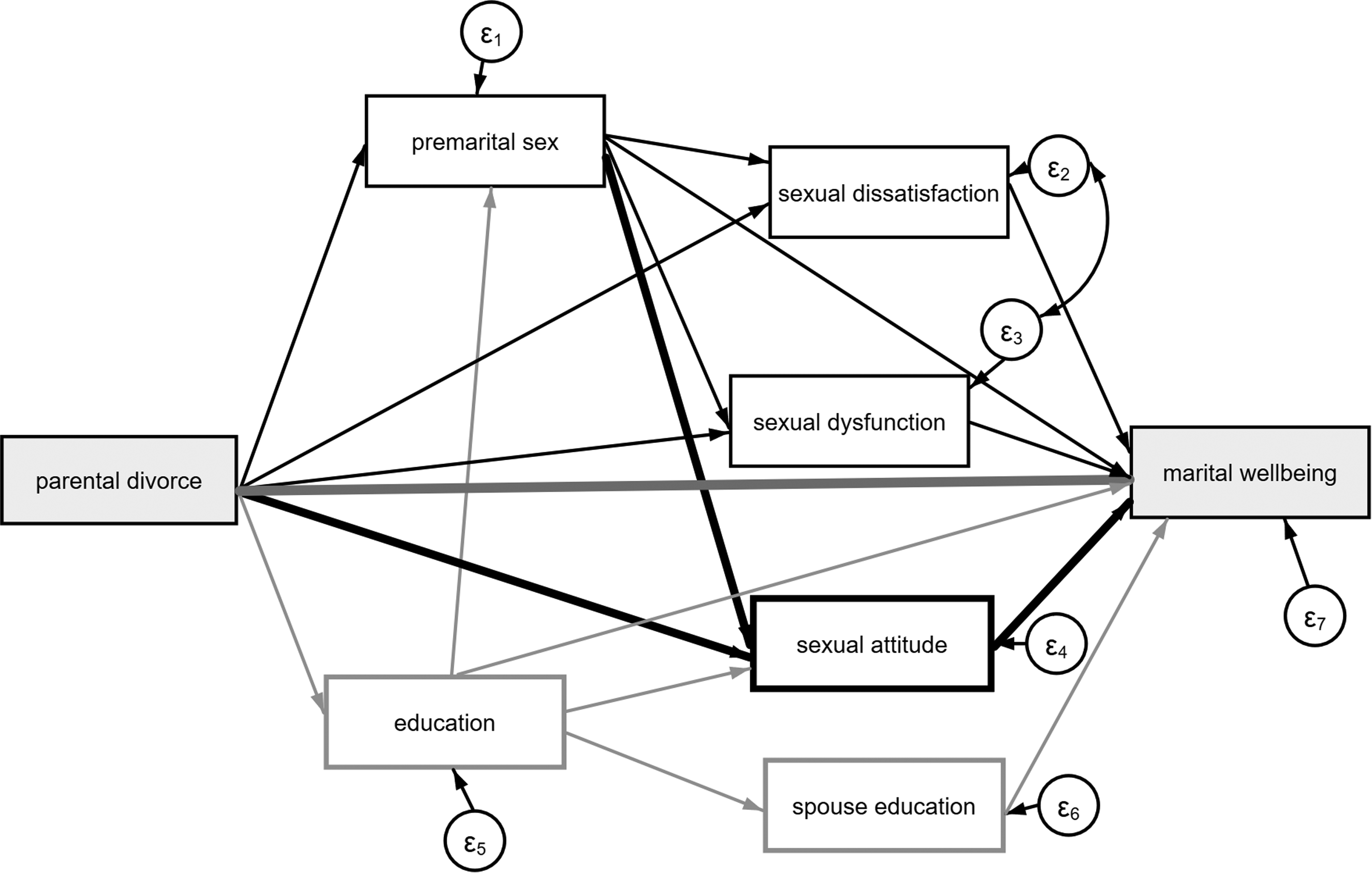
Diagram showing the paths between the experience of parental divorce during childhood and marital well-being. Different hypothesized paths are illustrated by lines in different colors and thicknesses.
I applied structural equation modeling separately to both the men and women to estimate the path effects from parental divorce on marital satisfaction or perceived marital instability as displayed in Figure 2. Figures 3–6 display paths with significant estimated coefficients at p < 0.05. Figures 3 and 5, respectively, display models of marital satisfaction and perceived marital instability outcomes for men, and Figures 4 and 6 do so for women.
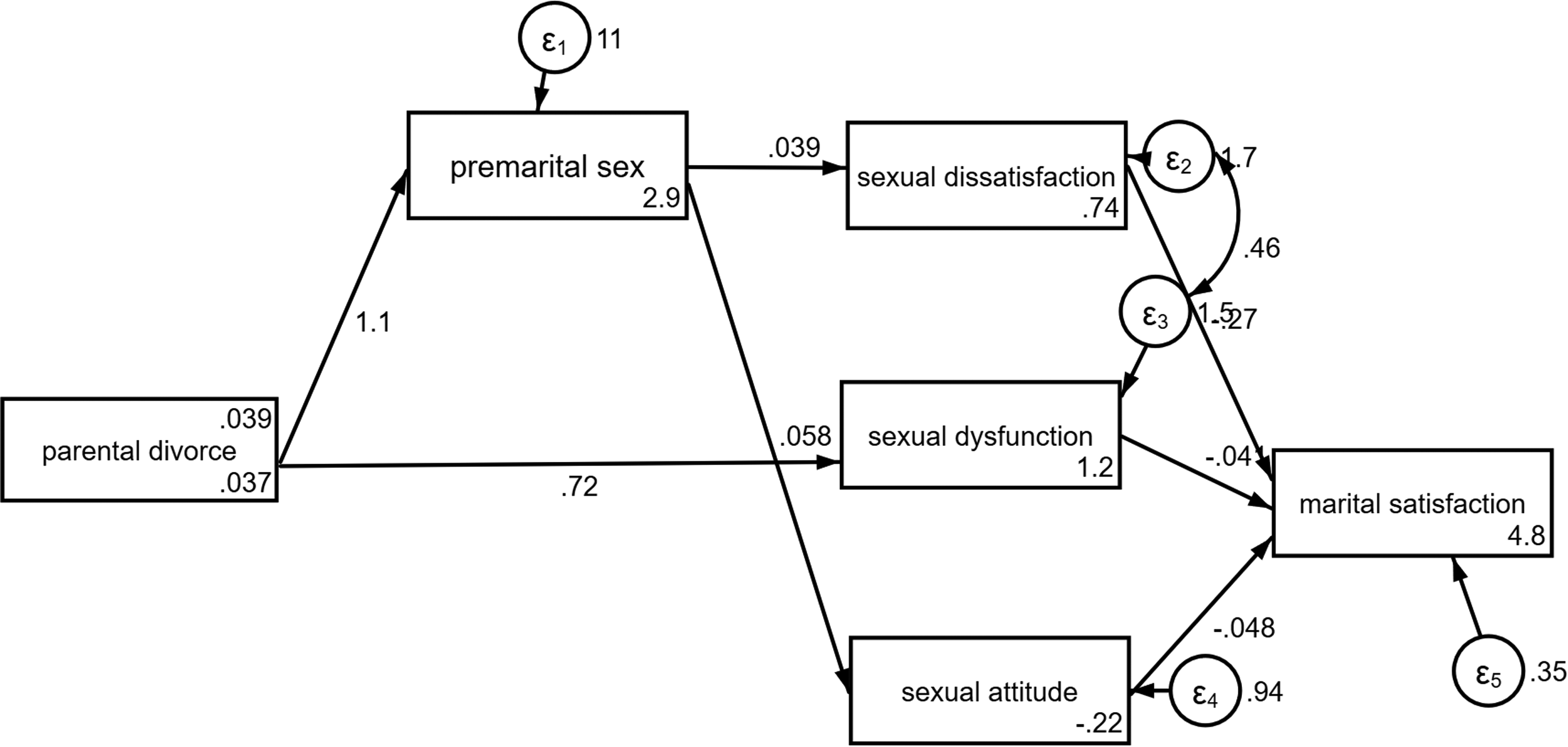
Structural equation model showing the paths between the experience of parental divorce during childhood and men's marital satisfaction. Only path coefficients significant at p < 0.05 are presented. Numbers inside boxes are intercepts and numbers adjacent to the lines are unstandardized path coefficients.
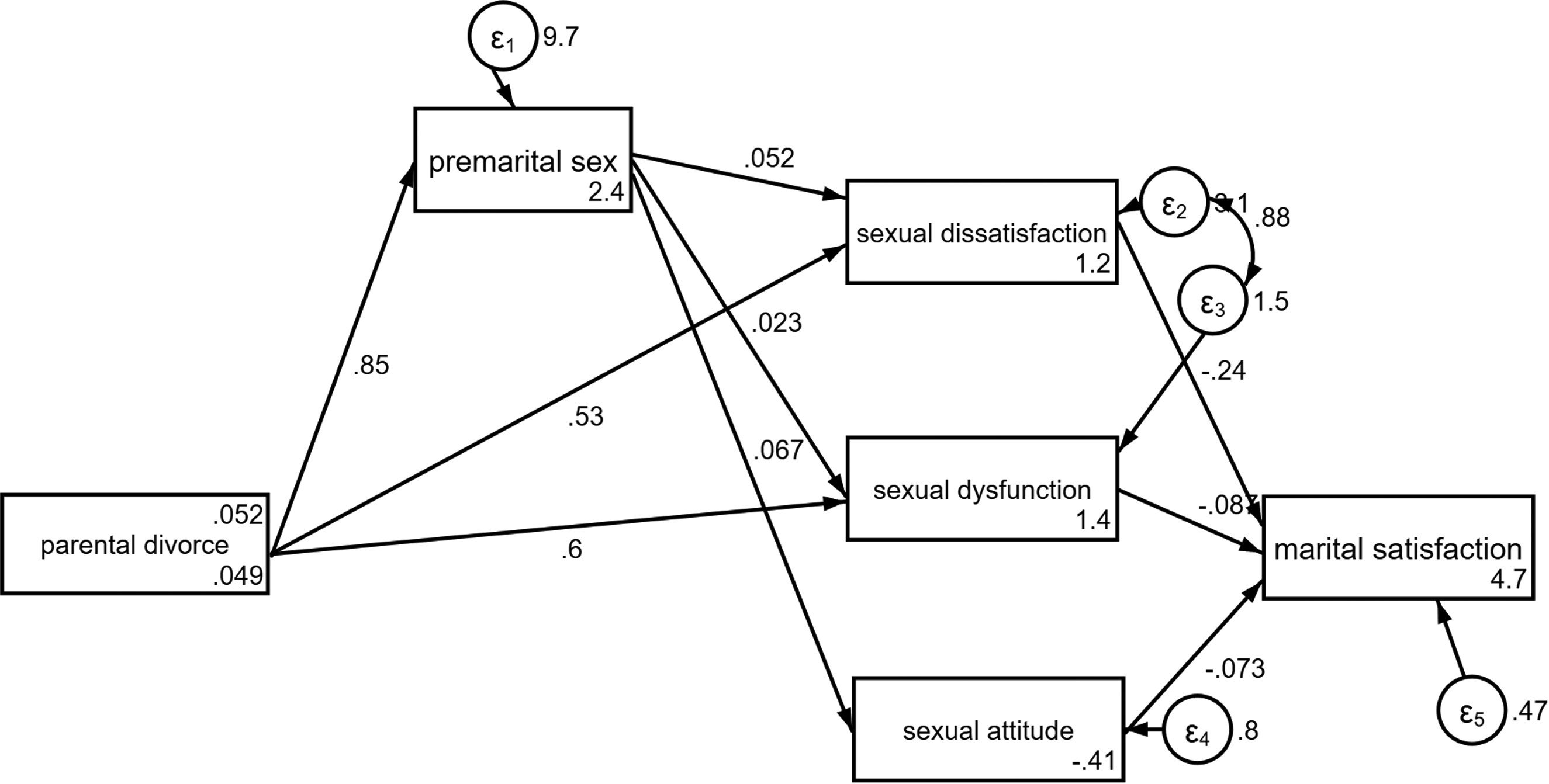
Structural equation model showing the paths between the experience of parental divorce during childhood and women's marital satisfaction. Only path coefficients significant at p < 0.05 are presented. Numbers inside boxes are intercepts and numbers adjacent to the lines are unstandardized path coefficients.
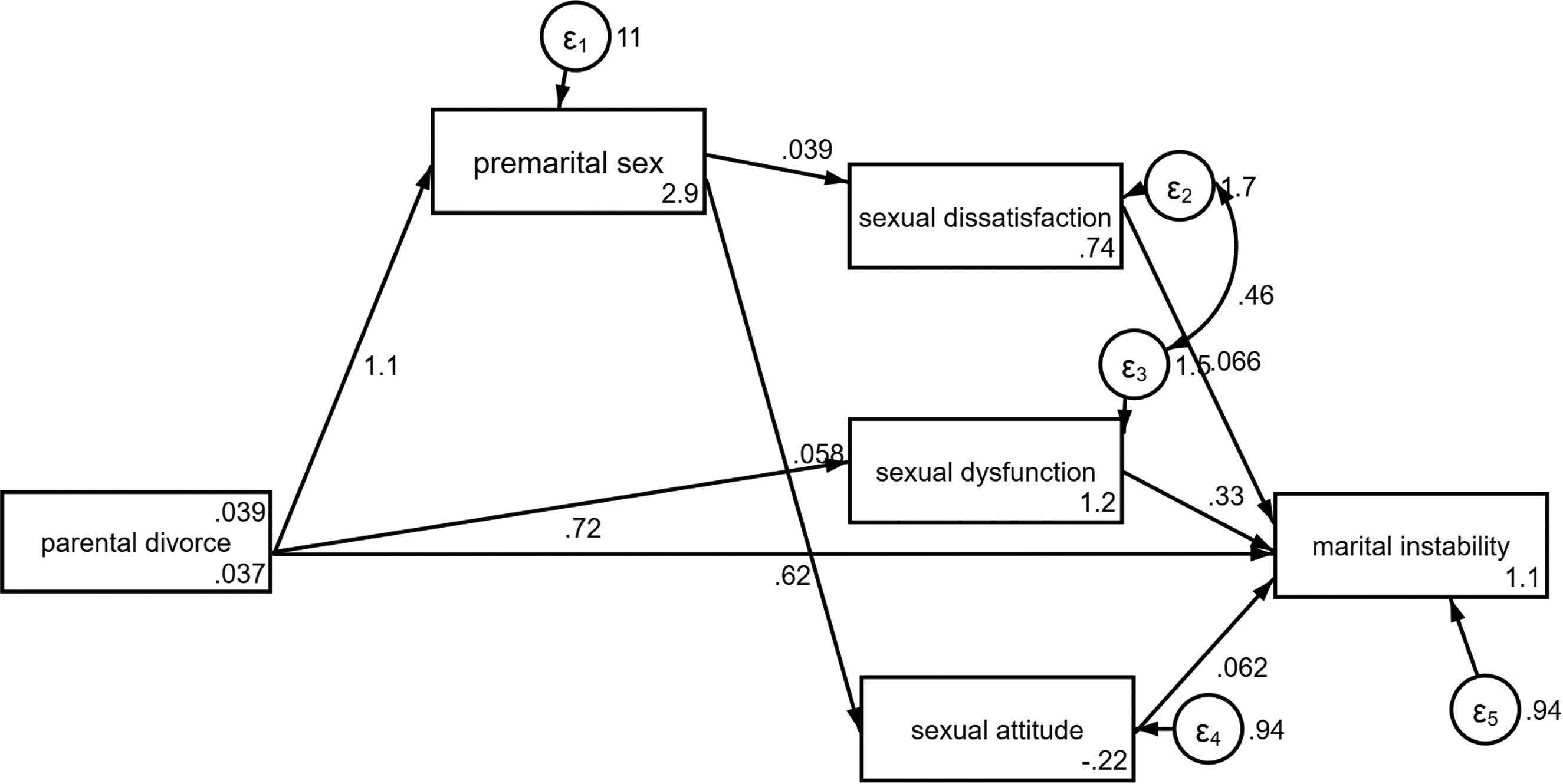
Structural equation model showing the paths between the experience of parental divorce during childhood and men's marital instability. Only path coefficients significant at p < 0.05 are presented. Numbers inside boxes are intercepts and numbers adjacent to the lines are unstandardized path coefficients.
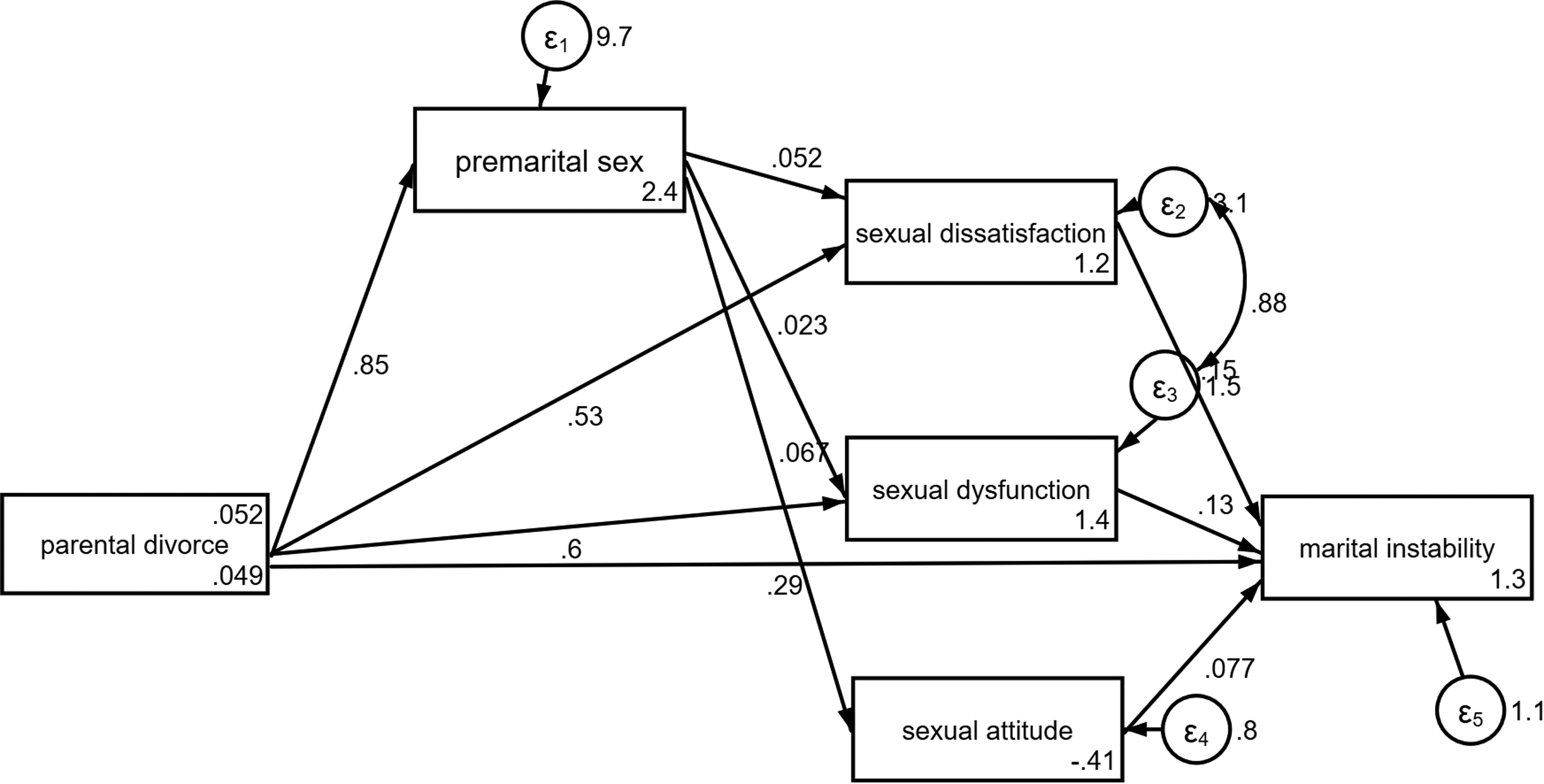
Structural equation model showing the paths between the experience of parental divorce during childhood and women's marital instability. Only path coefficients significant at p < 0.05 are presented. Numbers inside boxes are intercepts and numbers adjacent to the lines are unstandardized path coefficients.
Firstly, Figures 3–6 show that the paths of couples’ education are not significant in all models. In accordance with the findings of my previous studies, parental divorce did not significantly lower individuals’ educational achievement in China (Zhang, 2020b). Moreover, neither the respondents’ education nor their spouse's education directly affected their marital well-being. It is also important to note that controlling for the respondents’ and their spouse's education and other socioeconomic covariates seldom changed the effect of parental divorce on sexual well-being (Tables 3 and 4), suggesting that socioeconomic factors less likely confounded the relationship between parental divorce and offspring's sexual or marital outcomes.
Secondly, after controlling for premarital sexual experience, sexual well-being, and sexual attitudes, the experience of parental divorce had no direct effect on marital satisfaction (Figures 3 and 4) regardless of the respondents’ gender, but it still had a considerable effect on perceived marital instability (see Figures 5 and 6). In order words, offspring's sexual factors entirely mediated the effect of parental divorce on marital satisfaction, whereas sexual factors only partially explained the higher divorce proneness found among children of divorce. For men, 28.2% of the total effect of parental divorce on perceived marital instability was mediated by sexual factors, including premarital sexual experience, sexual well-being, and sexual attitudes. For women, 36.9% of the total effect of parental divorce on perceived marital instability was mediated by these sexual factors.
Thirdly, controlling for premarital sexual experience, parental divorce did not directly affect sexual attitudes in all models. This suggested that the effect of sexual attitudes on marital well-being was transmitted only through premarital sexual experience. Notably, the experience of parental divorce did not significantly affect the men's sexual attitudes and only had a marginally significant effect on those of women. I therefore speculate that not all children from divorced families are open to premarital and extramarital sex, but rather only those who had an early sexual debut. Although I cannot exclude the possibility of reverse causality that some children of divorce acquire liberal attitudes very early from their parents and later conduct premarital sexual behaviors, it seems more likely that children of divorce become sexually active before developing liberal sexual attitudes.
Fourthly, there were some differences between men and women with regard to the mediating effects of premarital sex, sexual well-being, and sexual attitudes on marital well-being. More years of premarital sexual experience in women directly increased their dissatisfaction with their husband's sexual performance, their sexual dysfunction levels, and supportive attitudes toward premarital and extramarital sex. Aside from premarital sexual experience, parental divorce also had direct effects on women's sexual satisfaction and functioning. For men, however, premarital sexual experience directly affected their sexual dissatisfaction with their wives but did not affect their sexual dysfunction level, whereas their experience of parental divorce directly affected their sexual dysfunction level but not their sexual dissatisfaction with their wives.
The estimates from the structural equation models indicated that sexual factors played an important role in mediating the effect of parental divorce on offspring's marital outcomes. Among the sexual factors considered in this study, premarital sexual experience was central to the mechanism linking the experience of parental divorce to lower sexual well-being and liberal sexual attitudes. It seems that the sexual debut of children of divorce at younger age puts them at risk of having sexual problems later in life or holding liberal sexual attitudes that are not accepted by mainstream social norms in China. However, those from intact families who become sexually active at a younger age and thus accumulate more years of premarital sexual experience are also more likely to have liberal sexual attitudes and suffer from lower sexual well-being. As an extension of this topic, it is worthwhile to examine in what aspects premarital sexual experience undermines sexual relationships and functioning. Both assessments of sexual dysfunction and sexual dissatisfaction with one's spouse were composite scores constructed from multiple items. I subsequently regressed each item with years of premarital sexual experience to explore how premarital sex was associated with each dimension of sexual well-being.
As shown in Table 5, not all sexual problems were associated with premarital sexual experience. The men with more years of premarital sexual experience were more likely to have problems, such as lack of sexual interest, but not other sexual dysfunction symptoms. They were also more likely to complain about insufficient frequency and duration of sex, lack of foreplay, and lack of physical and psychological pleasure with their wife. The sexual problems and complaints of the women were similar to but more substantial than those of the men. In addition to lack of sexual interest, the women with more years of premarital sexual experience were more likely to complain of insufficient frequency and duration of marital sex, lack of foreplay, sexual pleasure, and orgasm, performance anxiety, and pain during sex. To some extent, the sexual problems and complaints found among the men and women with more years of premarital sex were related to their higher demands for sexual skills and pleasures that could not be met in sexual life after marriage. Consequently, they were more likely to seek extramarital sex (see Table 5). This also elucidates that individuals with more premarital sexual experience take a permissive view of premarital and extramarital sex because they themselves have engaged in such behaviors.
The effect of premarital sexual experience on sexual outcomes.
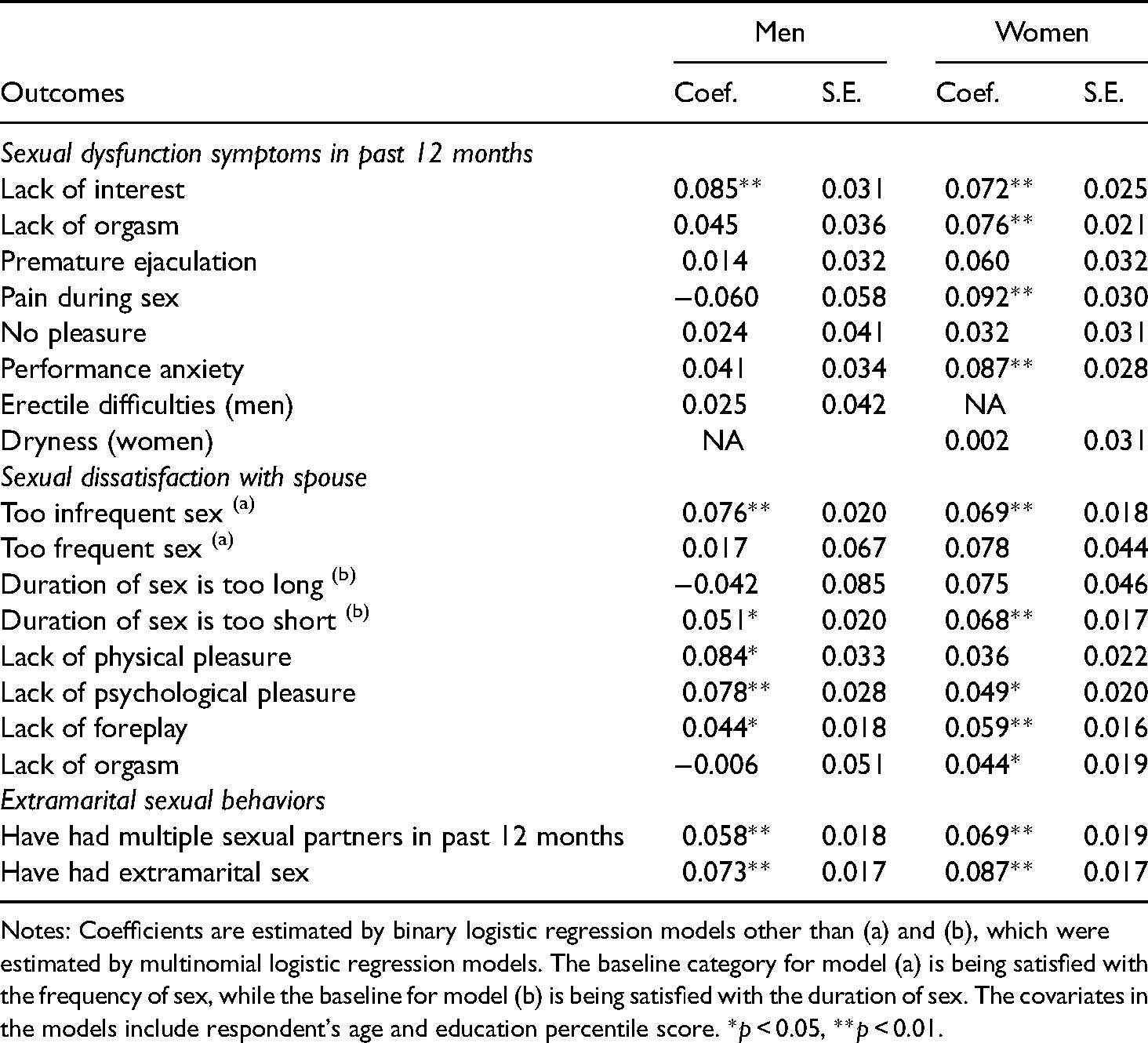
Notes: Coefficients are estimated by binary logistic regression models other than (a) and (b), which were estimated by multinomial logistic regression models. The baseline category for model (a) is being satisfied with the frequency of sex, while the baseline for model (b) is being satisfied with the duration of sex. The covariates in the models include respondent's age and education percentile score. *p < 0.05, **p < 0.01.
Conclusion
Parental divorce is a disruptive life event for children that may alter their subsequent life trajectories and impose barriers to long-term social achievement and family well-being. Thus, in this study, the influence of parental divorce on children's demographic behaviors and outcomes, including their sexual debut, entry into marriage, sexual well-being, and marital well-being, which have not been previously studied in China, was examined.
With the aid of the CPLS, the timing of first sexual intercourse and first marriage as well as the sexual and marital well-being of children of divorced and intact families were compared. This was also the first study to explore the mediating roles of sexual experience, sexual functioning, and sexual attitudes in the effect of parental divorce on offspring's marital well-being in the context of China. The findings show that children of divorce tend to have more years of premarital sexual experience than children from intact families because the former are more likely to engage in sexual activities at a younger age. The accumulation of premarital sexual experience was positively associated with a higher level of sexual dissatisfaction during marriage, a higher level of sexual dysfunction, and liberal sexual attitudes toward premarital and extramarital sex. These sexual factors almost entirely explained the negative effect of parental divorce on offspring's marital satisfaction and partially explained the higher level of divorce proneness found among adult children of divorce.
Consistent with research in the USA and other Western countries, low marital well-being was also found among children of divorce in China. However, unlike in Western societies, the lower marital well-being observed among children of divorce resulted neither from early marriage nor from socioeconomic disadvantage. Conversely, little evidence supported that children of divorce enter marriage at a younger age or are universally disadvantaged in socioeconomic achievement in China. Rather, sexual factors were found to be the primary explanation. Premarital sexual experience, which is often accompanied by a more complex sexual life with multiple partners, may raise an individual's demands and expectations for a better sexual life or a greater diversity of sexual behaviors, 1 as well as liberalize attitudes toward extramarital sexual relationships. Subsequently, an individual may be less satisfied with the sexual and marital life with their spouse and thus have lower confidence in the permanence of their marriage.
The finding that sexual life plays a role in linking parental divorce and offspring's marital well-being also expands the understanding of the mechanisms of the intergenerational transmission of divorce. Other than socioeconomic explanations, socialization and life dependency are two broad explanations for the divorce cycle from parents to children that have been frequently supported in prior research. From the socialization perspective, children learn their family roles primarily from observing how their parents act and think. Growing up without the presence of both parents can leave children without role models for appropriate behavior as a husband or wife. Subsequently, children of divorce are often socialized with problematic interpersonal skills and behavioral patterns or low marital commitment (Axinn and Thornton, 1996). The life dependency perspective instead emphasizes demographic behaviors that result from parental divorce, which direct children toward an atypical trajectory in their private life or unwise life decisions that inhibit their ability to build healthy and stable marital relationships. Following the life dependency argument, in this study, premarital sex is highlighted as a critical event with potential marital consequences later in life. Furthermore, new evidence connecting premarital sexual experience to sexual attitudes and sexual well-being and subsequently to marital satisfaction and stability is found. This does not, however, imply that other mechanisms do not contribute to the phenomenon of intergenerational transmission of divorce in China. For example, sexual behaviors and attitudes only partially explained the positive association between parental divorce and the perceived marital instability of offspring. The socialization argument may therefore play a large part in the unexplained direct effect of parental divorce on children's divorce proneness, but the CPLS unfortunately contains no information on marital commitment or interpersonal skills to test this argument.
The results of this study must be considered in light of some study limitations. Firstly, the sample was drawn from the CPLS using non-probability methods. Thus, the conclusions should be generalized to the broader population with caution. Although quota sampling was applied to adjust for low coverage of poorly educated, elderly, and male demographics, high-educated and young individuals remained overrepresented. Future research should thus repeat the analysis in this study in a more nationally representative sample. Secondly, the lack of detailed information on the respondents’ experience of parental divorce, sexual experience, and other sociodemographic characteristics prevented exploration of the heterogenous effects of parental divorce by the age at which this occurred for the respondent or by their social position. Without information regarding spouses’ family structure and sexual attitudes, it was also impossible to determine how they perceived the respondents’ experiences of parental divorce and premarital sex. This prevented the investigation of social stigmas attached to children of divorce or to those (especially women) whose first sexual intercourse was with a partner other than their eventual husband. Thirdly, a biological or genetic interpretation, by which parents and children share similar genetic attributes related to sexual functioning and the subsequent marital problems of both generations, cannot be ignored. However, this study had no data to test such biological explanations.
In summary, although parental divorce was not as detrimental to children's socioeconomic achievement in China as it is in Western countries, it still had negative implications for demographic transitions and marital outcomes. More research is required to investigate the settings in which children of divorce make demographic transitions during early adulthood in China, to better understand and improve the private life of children of divorce and to break the intergenerational transmission of divorce from parents to children.
Footnotes
Acknowledgments
The author thanks the Beijing Kang Zhi Le Si Network Technology Company for helping to promote the web survey via its public WeChat account, Da Yi Ma.
Declaration of conflicting interests
The author declared no potential conflicts of interest with respect to the research, authorship and/or publication of this article.
Funding
This research was supported by the National Social Science Foundation of China (grant number: 15CRK021).
