




Abstract
Mindset, growth or fixed, refers to two different beliefs people hold about the underlying nature of ability, and was first put forward by the psychologist Carol Dweck. The central role of mindset in motivation, self-regulation and interpersonal processes has been the subject of growing research interest, but there are few discussions of mindset in the context of China. Using the China Family Panel Studies, this study aims to offer a comprehensive understanding of social-demographic correlates of mindset in China. Following the psychological literature, we construct a binary status of mindset via exploratory factor analysis. We find that place of origin (rural or urban), educational level, employment status and life-course events are correlated to mindset. It is also determined that mindset acts as a fundamental psychological factor strongly associated with multiple outcomes, including educational attainment, cognitive skills, attitudes and subject well-being.
Introduction
In recent decades, a large number of social scientists have begun to recognize and verify the importance of noncognitive skills (Farkas, 2003). Noncognitive skills have been hypothesized to be crucial determinants of a multiplicity of outcomes, ranging from educational attainment (Anger and Heineck, 2010; Xie et al., 2020) to income and labor market performance (Cunha and Heckman, 2009) and incarceration and teenage childbearing (Heckman, 2006), as well as a variety of economic outcomes (Almlund et al., 2011; Heckman et al., 2013). Therefore, a comprehensive understanding of the sources and consequences of noncognitive skills among the Chinese population will offer valuable insights for numerous research questions about social inequality and stratification in China. In this paper, we focus on one specific kind of noncognitive skill: mindset. Mindset, also known as the implicit or incremental theory of intelligence, refers to the beliefs people hold on how their abilities develop. A series of influential works by the psychologist Carol Dweck (Dweck, 2007; Dweck and Leggett, 1988; Nussbaum and Dweck, 2008; Plaks et al., 2005) established two mindsets that people use to structure the self, guide their behavior and navigate their life: growth mindset and fixed mindset. Individuals who hold a fixed mindset believe that intellectual abilities are innate and unchangeable, no matter what happens in later life. In their views, inborn talent or external family endowment determines how successful they will be. Experiences which may undermine their sense of their own intelligence should be avoided. By contrast, individuals who hold a growth mindset see difficult tasks, including failures and mistakes, as opportunities to enhance skills and abilities. To individuals with a growth mindset, innate skills and resources are just the starting point of a long-term developmental process. Growth-mindset individuals believe that their basic qualities can be cultivated through their own efforts, leading to greater investment in personal development and education.
The central role of mindset in motivation and self-regulation, and its impact on achievement and interpersonal processes, has been discussed in a growing strand of studies (see, for example, Claro et al., 2016; Dweck, 2007; Nussbaum and Dweck, 2008; Plaks et al., 2005). However, previous research on mindset has exclusively centered on the context of western societies, and the dominant empirical assessments are restricted to laboratory research. Whether the theory of mindset fits in the context of China and how various social-demographic correlates are associated with mindset remain unclear. This study aims to answer these questions by capitalizing on data from the China Family Panel Studies (CFPS), a unique, nationally representative dataset from China that provides detailed socioeconomic and sociopsychological measures across time and lifespans.
This study has two main purposes. First, by taking advantage of a unique module in the CFPS data, we attempt to validate the applicability of Dweck’s two-mindset theory to China. We conduct an exploratory factor analysis for the battery of questions related to mindset in the CFPS, and separate out two latent factors corresponding to two mindsets. Based on these two factors, we construct a binary measure indicating mindset status among a representative sample. Second, via a descriptive approach, we document the associations between social-demographic origins and mindset, and those between mindset and social-demographic outcomes. We find that place of origin (rural or urban), educational level, employment status and life-course events are correlated to mindset, and mindset also acts as a fundamental psychological factor strongly associated with multiple outcomes, including educational attainment, cognitive skills, attitudes and subject well-being.
Theoretical background
Social-psychological importance of mindset
The theory of mindset reflects two basic characteristics of how people face success and failure, how they respond to achievements and challenges, and how they invest energy in order to grow and succeed. In her notable book Mindset: The New Psychology of Success, Dweck (2007) argued that mindset plays a powerful role in the process of personality development and motivation. She emphasized that the effect of mindset is more important than innate abilities and talent for achieving various goals. Different mindsets can bring about contrasting outcomes. For example, in the context of educational competition, children with a growth mindset are less likely to be defeated by setbacks, more inclined to seek help and rarely give up in face of difficulties. In terms of childrearing, parents who have a growth mindset are more likely to adopt moderate parenting styles such as encouragement and praise. In terms of social relationships, individuals who possess a growth mindset have a higher tendency to take the initiative in talking and discussing with others; they view complicated social relations as opportunities, rather than something from which to escape. In workplaces, employees with a growth mindset are more willing to accept and finish challenging tasks, while organizations or teams with a growth mindset are more tolerant and have a greater appreciation for an open and “free” style of communication.
Social-demographic correlates and mindset
Age group and gender gap
We start our analysis by showing how respondents with a growth mindset are stratified by age group and gender. Individuals of different ages are probably not the same in terms of mindset. There could be both age differences and cohort differences. From the perspective of age differences, young people may have greater incentive to expend effort and invest in education in order to gain opportunities over the course of a relative longer life journey. From the perspective of cohort differences, following China’s transition from state socialism to a market economy, the market-led principle of resource allocation has brought higher returns to education in the market sector, and incentivized individuals’ emphasis on the expenditure of effort and investment in education. Furthermore, following the advent of the market sector in China, later cohorts of individuals making the transition from the state sector to the market sector enjoyed advantages in terms of earnings and educational returns when compared to early cohorts (Wu and Xie, 2003). We thus hypothesize a higher proportion of growth-mindset individuals among younger groups. With a narrowing gender gap in terms of educational attainment and labor market performance (Zeng et al., 2014), an increasing number of females holding growth mindset relative to males in younger age groups is also hypothesized.
Rural–urban gap
The rural–urban gap is possibly correlated to mindset as well. China’s rapid economic growth has been accompanied by a sharp increase in income inequality in the past three decades; and more than 10% of China’s total inequality is attributed to the rural–urban gap (Xie and Zhou, 2014). People in urban areas have more access to high-quality educational resources and good job opportunities. We therefore hypothesize an urban advantage in terms of growth-mindedness.
Education
We then turn to the association between education and mindset. Despite large-scale educational expansion — average years of schooling in China increased from about 5.5 in 1950 to 11 in 1990 (Treiman, 2013) — educational inequality has also increased (Gruijters, 2019). A highly educated person — a self-conscious “winner” in the educational competition — is more likely to hold a growth mindset; that is, attributing their success to their education and effort rather than to other innate and external factors. We thus expect a positive association between educational attainment and a growth mindset.
Employment
Furthermore, employment status can correlate to mindset. Bowles and Gintis (1976) argued for the prominent role of personality and noncognitive skill in occupational status attainment. But little is known about the correlation between employment status and mindset in China. We focus on three distinct categories of employment in the context of modern China: agricultural workers, non-agricultural workers in the private sector (i.e. those without the proverbial “iron rice bowl”: guaranteed job security, as well as steady income and benefits) and non-agricultural workers in the state sector (i.e. those with the “iron rice bowl”). Following Wang and Xie (2015), we use ownership of firm/work unit to distinguish between the private and state sectors: the state sector includes the Communist Party of China and government agencies, public institutions, state-owned enterprises (SOEs), and collective enterprises; the private sector includes cooperative or jointly run enterprises, individual or private enterprises, foreign enterprises, Sino-foreign joint ventures, township and village enterprises, and others.
China’s economic growth has been characterized by massive industrialization, in which large numbers of people have moved from the agricultural sector to the non-agricultural sector (Zhou and Xie, 2019). In general, earnings are higher and opportunities for career advancement are greater in the non-agricultural sector. Another noteworthy characteristic of China’s economy is the co-existence of a large state sector and a large private sector (Zhao and Zhou, 2016). The nature of “iron rice bowl” employment in the state sector is structurally dissimilar to that of employment in the private sector (Zhao, 2012; Zhao and Zhou, 2016). Workers in the private sector in China enjoy significantly fewer fringe benefits and a subjective inferiority in well-being when compared to their counterparts in the state sector, especially those working in government agencies and public institutions (Tang and Parish, 2000; Wu, 2013; Wang and Xie, 2015). Job stability and fringe benefits make jobs in the state sector extremely popular among job seekers. This leads to a highly selective group of workers in the state sector in terms of education and personality traits. As a result, we hypothesize that non-agricultural workers in the state sector are most likely to possess a growth mindset, followed by non-agricultural workers in the private sector, followed by agricultural workers, who are least likely to possess a growth mindset.
Life-course events
We explore two life-course events that can correlate to mindset. First, in China, military service is an important channel for men’s upward mobility (Zhang, 2015). Military experience may not guarantee good life prospects, but it still provides opportunities that might otherwise be unavailable, especially to men from disadvantaged backgrounds. We therefore hypothesize that military veterans are more likely to possesses a growth mindset. Second, the sent-down experience has been widely studied as a particularly determinative life-course event in terms of socioeconomic consequences, such as educational attainment and career development (Deng and Treiman, 1997; Walder et al., 2000; Xie et al., 2007). From 1966 to 1976, a large proportion of urban youth was relocated to rural areas as a result of the state’s “sent-down policy”. There was ample evidence that most “sent-down youths” who were relocated at the time tried very hard to return after arriving at their destinations (Bernstein, 1977; Chen and Cheng, 1999; Gold, 1980; Rosen, 1981; Unger, 1979; Zhou and Hou, 1999). Relative to others in their cohorts, the sent-down youths endured more life hardship and experienced more unexpected challenges, and potentially are more likely to possess a growth mindset.
Mindset and social-demographic outcomes
A large and still-growing body of scholarship suggests that noncognitive skills may be as important as cognitive skills in predicting educational attainment (Anger and Heineck, 2010; Xie et al., 2020). By using a nationwide sample of high school students from Chile, Claro et al. (2016) found that a growth mindset is a strong predictor of academic achievement. The positive relationship between a growth mindset and academic scores is clear across all of the socioeconomic strata in the country. Based on this, we hypothesize that in China students with a growth mindset will be more likely to progress to a higher level of education.
Besides socioeconomic outcomes, a previous study by Huang et al. (2021) has shown that mindset also plays a central role in the process of personality development and motivation. We further explore potential heterogeneity in the association between mindset and other social-psychological factors by age. We hypothesize a persistent gap between growth mindset and fixed mindset in explaining personalities and subject well-being across two age groups (those below the age of 45 and those aged 45 and above).
Data and methods
We draw on data from the 2010–2018 waves of the CFPS, which is a nationally representative longitudinal household survey in China. Via a stratified multi-stage sampling strategy at the level of Chinese communities, families and individuals, the baseline survey was successfully implemented in 2010, and interviewed 33,600 adults and 8990 children from 14,960 households in 635 communities, across 25 designated provinces (excluding Tibet, Xinjiang, Qinghai, Ningxia, Inner Mongolia and Hainan), representing 95% of the total population in China in 2010 (Xie, 2012). All interviewees were tracked throughout their lives. From 2012 to 2018, the CFPS followed up with all of the family members from the baseline sample every other year. The response rates at the individual level in the five waves from 2010 to 2018 were about 80%, and the successful tracking rates at the individual level between any two rounds of the survey were above 80%.
The CFPS collects detailed information on each respondent. Moreover, it contains a module which asks each respondent to evaluate the importance of seven different factors — education, effort, talent, family social status, family wealth, family relationships and good luck — for an individual’s socioeconomic success, making it possible to determine respondents’ mindset. It is worth noting that the mindset module was not implemented with every respondent or during every wave of the survey. First, responses to the questions were determined by respondents’ self-report rather than by a proxy-report. Second, the module was only surveyed in the 2010, 2012 and 2014 waves of the CFPS, and not everyone was asked to complete the mindset module. Specifically, children at ages 12 and 14, and respondents at ages 15 and above were asked to complete the mindset module in 2010. In 2012, respondents at ages 10 to 15 were asked again the mindset questions. Respondents at ages 10 to 15 in 2014 who had never been asked the mindset questions were asked to complete the mindset module. We first select respondents aged 12 and above in the 2010 CFPS baseline survey and then supplement this sample with children aged 10 to 15 in the 2012 and 2014 follow-up surveys. The final sample include only a snapshot information of mindset module of 33,187 individuals at ages 10 and above, rather than a time-varying measure.
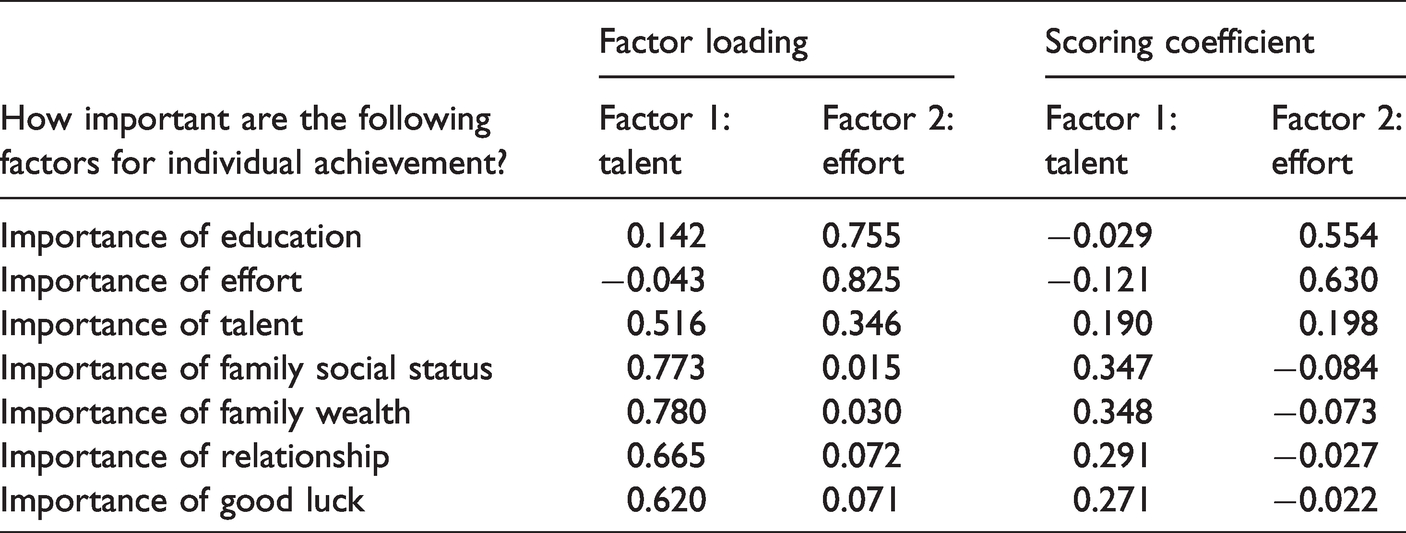
To generate the mindset composite, we conduct an exploratory factor analysis for the battery of questions about mindset. 1 Table 1 shows the factor loadings and scoring coefficients of the factor analysis. It yields two latent factors, one consisting of two items that correspond to effort as a determinant of success and thus a growth mindset (i.e. the effort factor), and the other consisting of five items that correspond to innate ability as a determinant of success and thus a fixed mindset (i.e. the talent factor). Consistent with Dweck’s two-mindset theory, we find that people who think education and effort are much more important than other factors for determining success hold a growth mindset, while those who think external factors such as talent, family conditions and good luck are more essential for success than education and effort retain a fixed mindset. Based on this, we adopt a binary definition of mindset: an individual is determined to have a growth mindset if their “effort factor” is larger than their “talent factor”, and a fixed mindset if their effort factor is equal to or smaller than their talent factor. 2 Under this binary measure, 21,875 (65.91%) respondents hold a growth mindset and 11,312 (34.09%) hold a fixed mindset. Therefore, respondents in our representative sample are more likely to hold a growth mindset.
Factor loadings and scoring coefficients in factor analysis.
Our descriptive approach progresses in two steps. First, we investigate the associations between an array of social-demographic correlates and mindset, including age, gender, rural or urban origin, education level, employment status and life-course events. In this step, both social-demographic correlates and mindset status are drawn from the baseline survey; that is, CFPS 2010. Second, we document the correlations between mindset and an array of outcomes, ranging from educational attainment, cognitive skills, subject well-being and attitudes. Again, the mindset status is drawn from the baseline survey, while multiple measures of other outcome variables are drawn from different waves of the CFPS survey. For each outcome measure, we pool all observations of different years into a panel, and run a pooled regression after controlling for year fixed effect. The year fixed effect ensures that the correlations between mindset and personalities, attitudes and skills are not confounded by age or life stages.
Results
Age, gender and mindset
Age and gender are two fundamental socio-demographic correlates. Figure 1 plots the proportion of people with a growth mindset for several age groups, also stratified by gender. We find that younger age groups are more likely to have a growth mindset than older age groups. Over 70% of respondents younger than 25 have a growth mindset. This proportion decreases for people at older ages, and less than 60% of people at ages over 55 hold a growth mindset. Gender difference displays a reverse pattern: more females possess a growth mindset than males at younger ages, while fewer females possess a growth mindset than males at older ages.
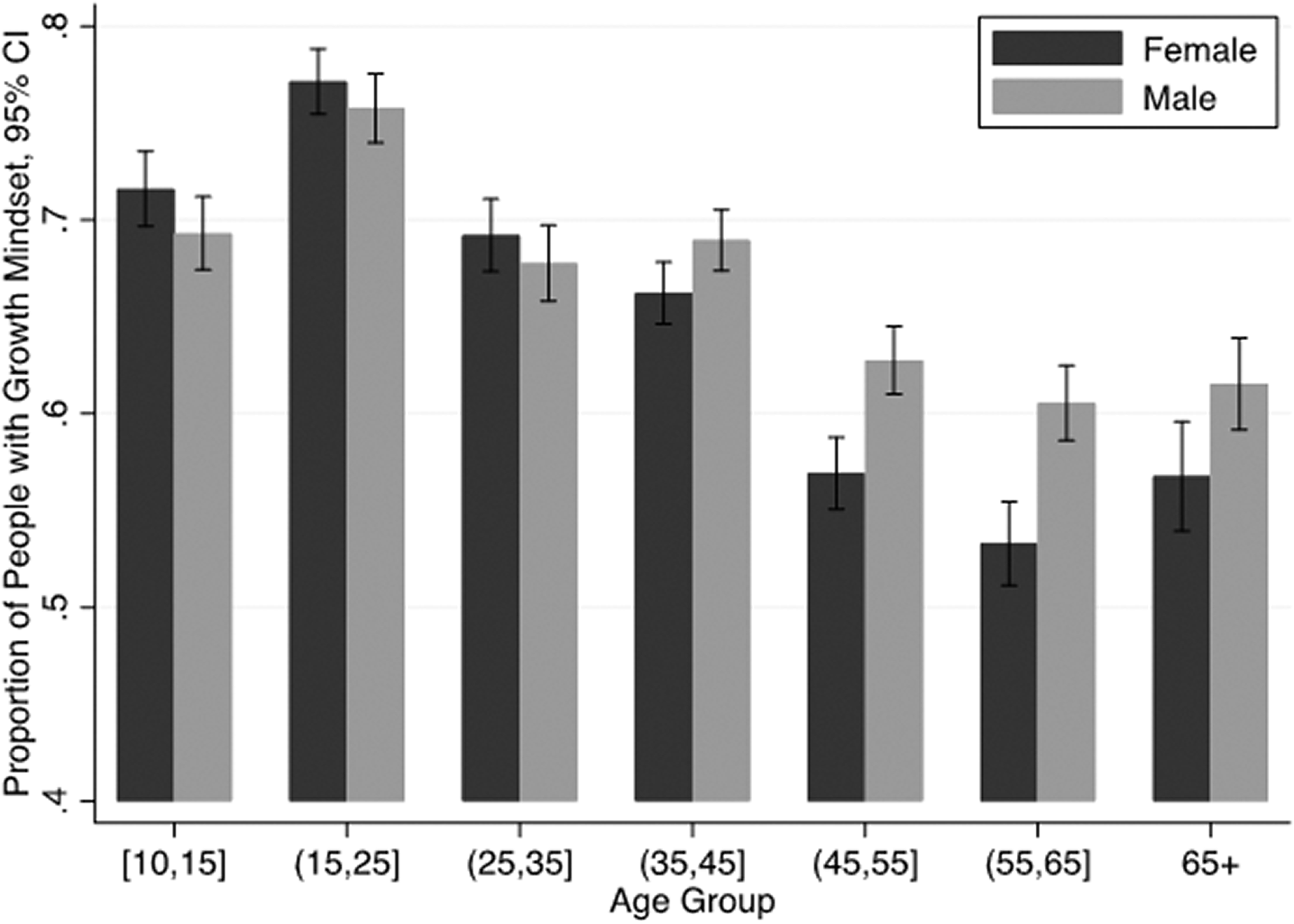
Social-demographic factors and mindset: Age and gender.
It is worth noting that Figure 1 only displays the distribution of the two mindsets across age group and gender, but we do not necessarily attribute the age pattern to the effects of age rather than cohort. We may interpret the observed age gradients as cohort differences if mindsets are stable across individuals’ lifetimes, as previous studies have suggested that psychosocial personalities are formed before occupational careers begin (Kohn and Schooler, 1978). We cannot adjudicate between these two explanations due to data limitations, as the data do not contain longitudinal measures of mindset at different ages. Future studies with repeated measures of mindset will help further our understanding from the perspective of life-cycle trajectory.
Rural or urban origin, education, employment and mindset
Table 2 takes rural or urban origin, education level and employment status into consideration. First, we roughly classify all individuals in our sample into “rural origin” and “urban origin” groups according to their hukou (household registration) status. As shown in Table 2, we find that the proportion of respondents with a growth mindset is lower for the rural-origin group than for the urban-origin group, but the gap is slight. Second, in terms of education level, only 57.8% of respondents with an elementary school and lower education hold a growth mindset, while the proportion is around 70% for the three higher-educated groups (those with a middle school, high school, and junior college and above education). The third part of Table 2 compares between the three employment categories discussed earlier. We restrict the sample to individuals aged 16–55 in the labor force at the time of the survey. We find that the category of (non-agricultural) state-sector workers has the highest proportion of members with a growth mindset, compared to the other two categories (agricultural workers and private-sector workers). Agricultural workers have the lower proportion of participants who hold a growth mindset.
Social-demographic factors and mindset: Rural/urban, education and employment status.
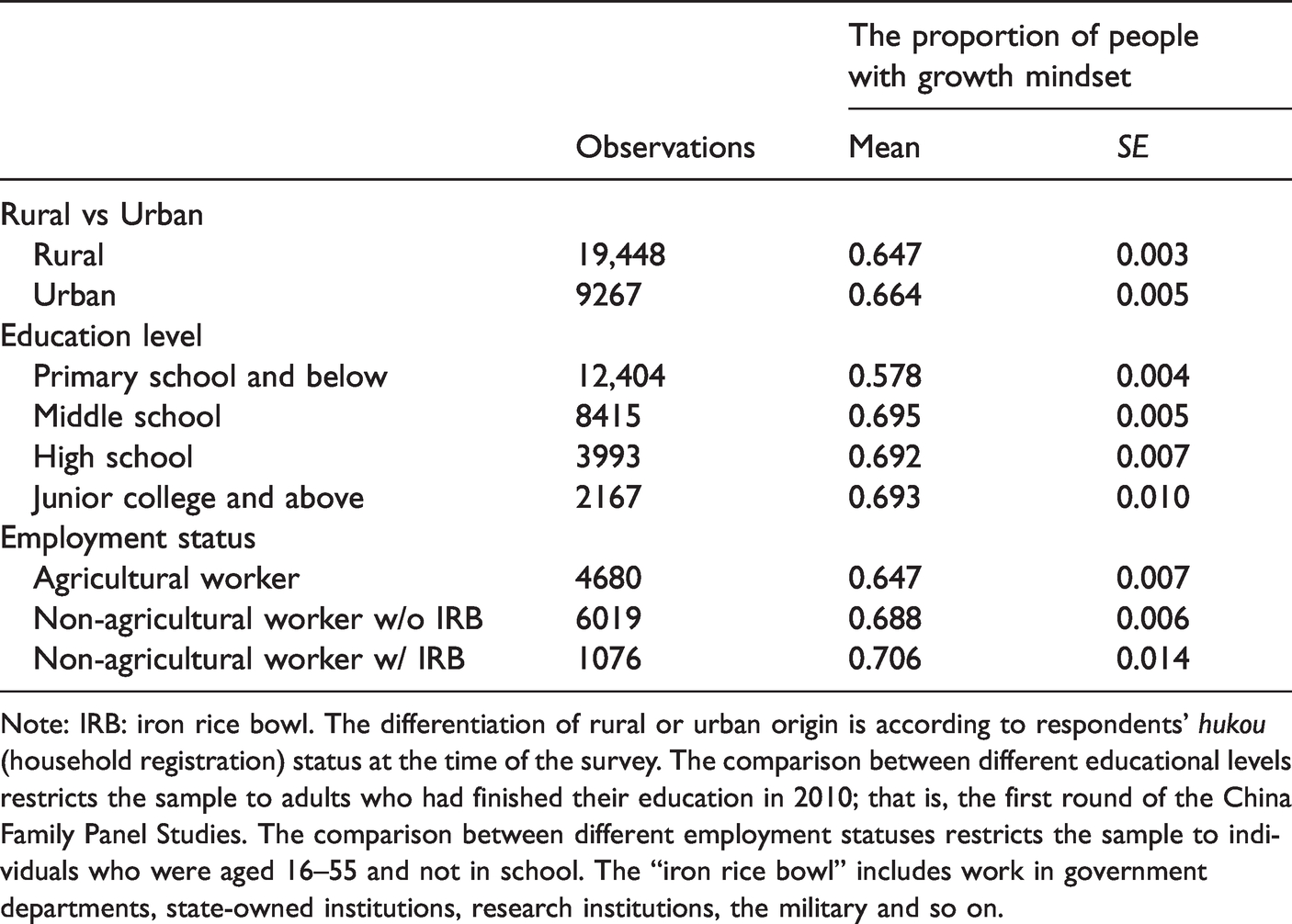
Note: IRB: iron rice bowl. The differentiation of rural or urban origin is according to respondents’ hukou (household registration) status at the time of the survey. The comparison between different educational levels restricts the sample to adults who had finished their education in 2010; that is, the first round of the China Family Panel Studies. The comparison between different employment statuses restricts the sample to individuals who were aged 16–55 and not in school. The “iron rice bowl” includes work in government departments, state-owned institutions, research institutions, the military and so on.
Life-course events and mindset
Table 3 explores the relationships between two life-course events and mindset. First, we restrict the sample to males born before 1978, and compare between veterans and non-veterans. We find a higher proportion of men holding a growth mindset in the veteran group. Second, we conduct a comparison between respondents with sent-down experiences and those without sent-down experiences among respondents who faced the risk of being sent down: born between 1952 and 1962 and who possessed an urban hukou at 12 years of age. Table 3 shows that a higher proportion of respondents with sent-down experiences hold a growth mindset when compared to those without sent-down experiences.
Social-demographic factors and mindset: Life-course events.
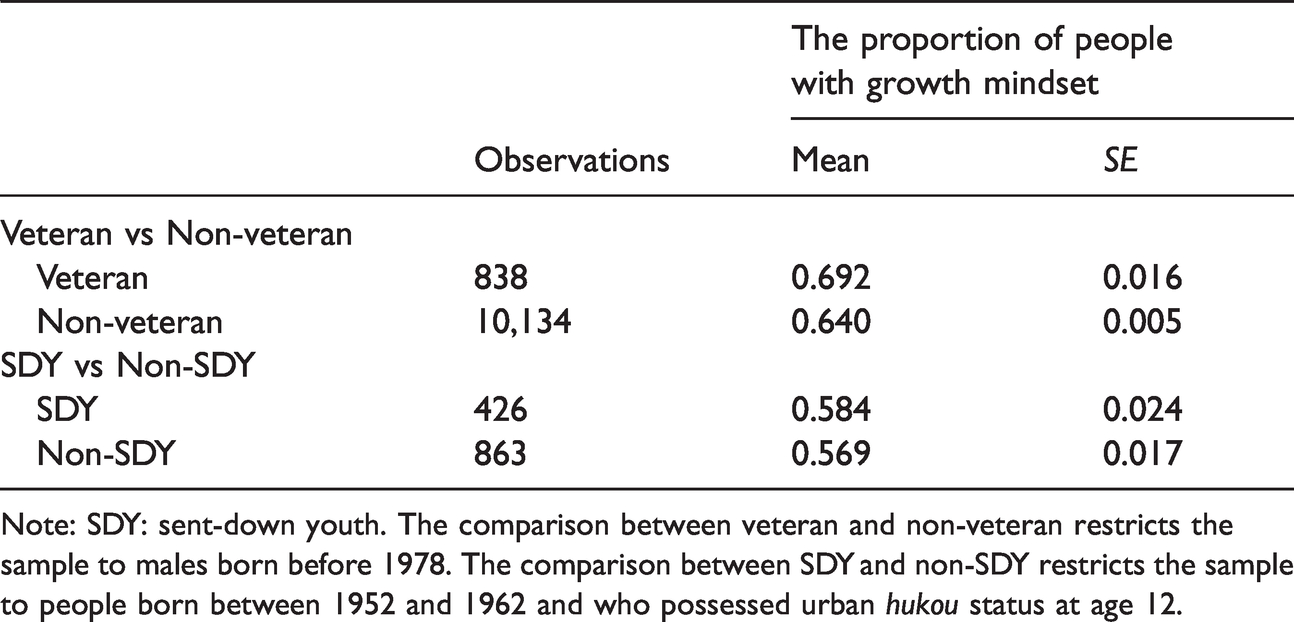
Note: SDY: sent-down youth. The comparison between veteran and non-veteran restricts the sample to males born before 1978. The comparison between SDY and non-SDY restricts the sample to people born between 1952 and 1962 and who possessed urban hukou status at age 12.
Mindset and educational attainment
Table 4 shows the relationship between mindset and educational progress, utilizing a sample of adolescents in schooling at the time they were surveyed. Most of them had not finished their education at the time when information about their mindsets was collected. We restrict the sample to adolescents born between 1996 and 2000, and record their highest level of education obtained as of 2018. Our focus is how mindset affects subsequent educational progress for students, but students’ educational progression in the future depends on their educational level at present. For instance, students who are currently in middle school are different from students who are already in high school. The former may stop schooling after completing middle school. Hence, we calculate the ratio of completed education level in 2018 conditional on the education level at the baseline (i.e. when their mindset was measured). As shown in Table 4, for students starting at different educational levels, those who hold a growth mindset reach a higher educational level later than their peers with a fixed mindset. Confirming prior research, a growth mindset predicts higher educational attainment; that is, a growth-mindset student is more likely reach a higher level of education.
Mindset and social-demographic outcomes: Educational attainment.
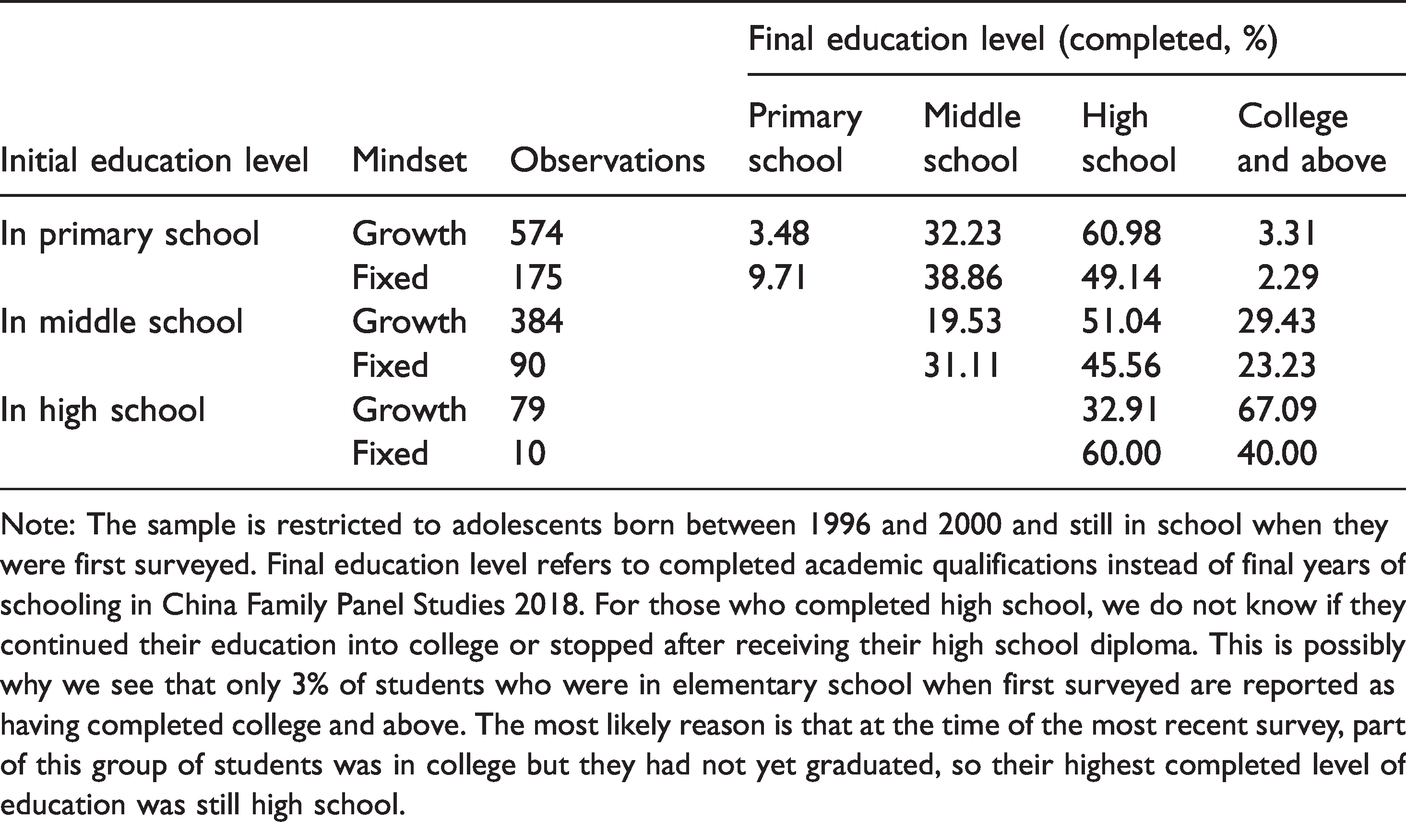
Note: The sample is restricted to adolescents born between 1996 and 2000 and still in school when they were first surveyed. Final education level refers to completed academic qualifications instead of final years of schooling in China Family Panel Studies 2018. For those who completed high school, we do not know if they continued their education into college or stopped after receiving their high school diploma. This is possibly why we see that only 3% of students who were in elementary school when first surveyed are reported as having completed college and above. The most likely reason is that at the time of the most recent survey, part of this group of students was in college but they had not yet graduated, so their highest completed level of education was still high school.
Mindset and cognitive skills
Cognitive skills are measured with different cognitive-skill modules. CFPS 2010, 2014 and 2018 included 24 standardized mathematics questions and 34 word-recognition questions, while CFPS 2012 and 2016 used a word-memory test and a maths-sequence test. For the verbal test and the maths test, we obtain measures for three survey years. For the memory test and the word-sequence test, we have information for two of the survey years. As displayed in Table 5, we run the regression by using the mindset status as determined from the baseline survey as the explanatory variable and the respondent’s cognitive-skill score as the outcome variable. The reference group is respondents below the age of 45 and with a growth mindset.
Mindset and social-demographic outcomes: Cognitive skills.
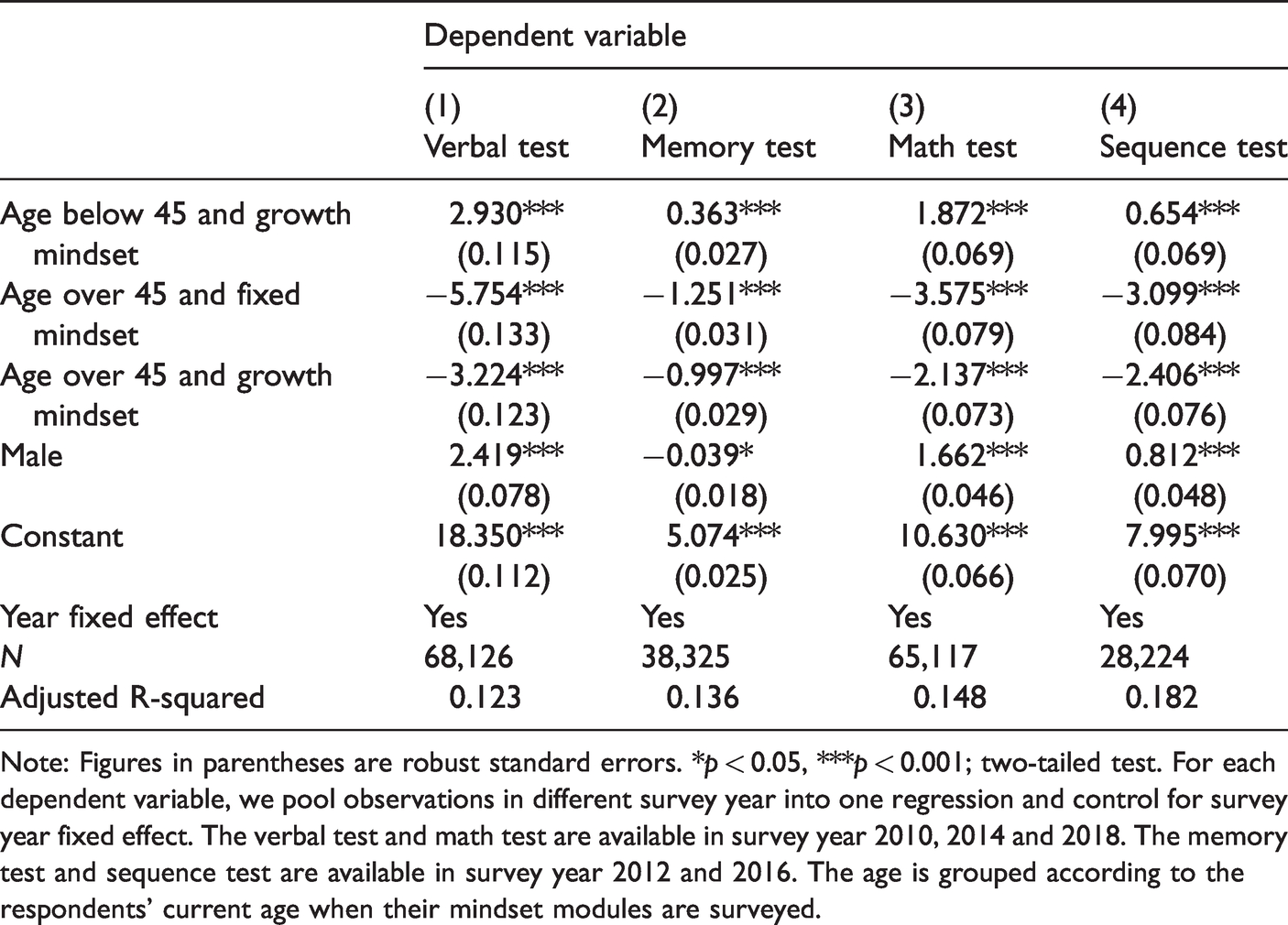
Note: Figures in parentheses are robust standard errors. *p < 0.05, ***p < 0.001; two-tailed test. For each dependent variable, we pool observations in different survey year into one regression and control for survey year fixed effect. The verbal test and math test are available in survey year 2010, 2014 and 2018. The memory test and sequence test are available in survey year 2012 and 2016. The age is grouped according to the respondents’ current age when their mindset modules are surveyed.
Within each age group, individuals with a growth mindset perform significantly better than those with a fixed mindset. The results are robust across different cognitive-skill modules. That mindset is strongly predictive of cognitive skills is consistent with the argument that noncognitive skills can foster cognitive skills, because emotionally nurturing environments produce more capable learners (Cunha and Heckman, 2007). We also find a persistent gap between individuals with a growth mindset and those with a fixed mindset for both the younger age group and older age group.
Mindset and subject well-being/attitudes
The outcome indicators of subjective well-being and attitudes include level of happiness, life satisfaction, self-confidence, mental wellness, emphasis on positive aspects of life, and an individual’s general level of trust toward other people. The results are presented in Table 6.
Mindset and social-demographic outcomes: Subjective well-being and attitudes.
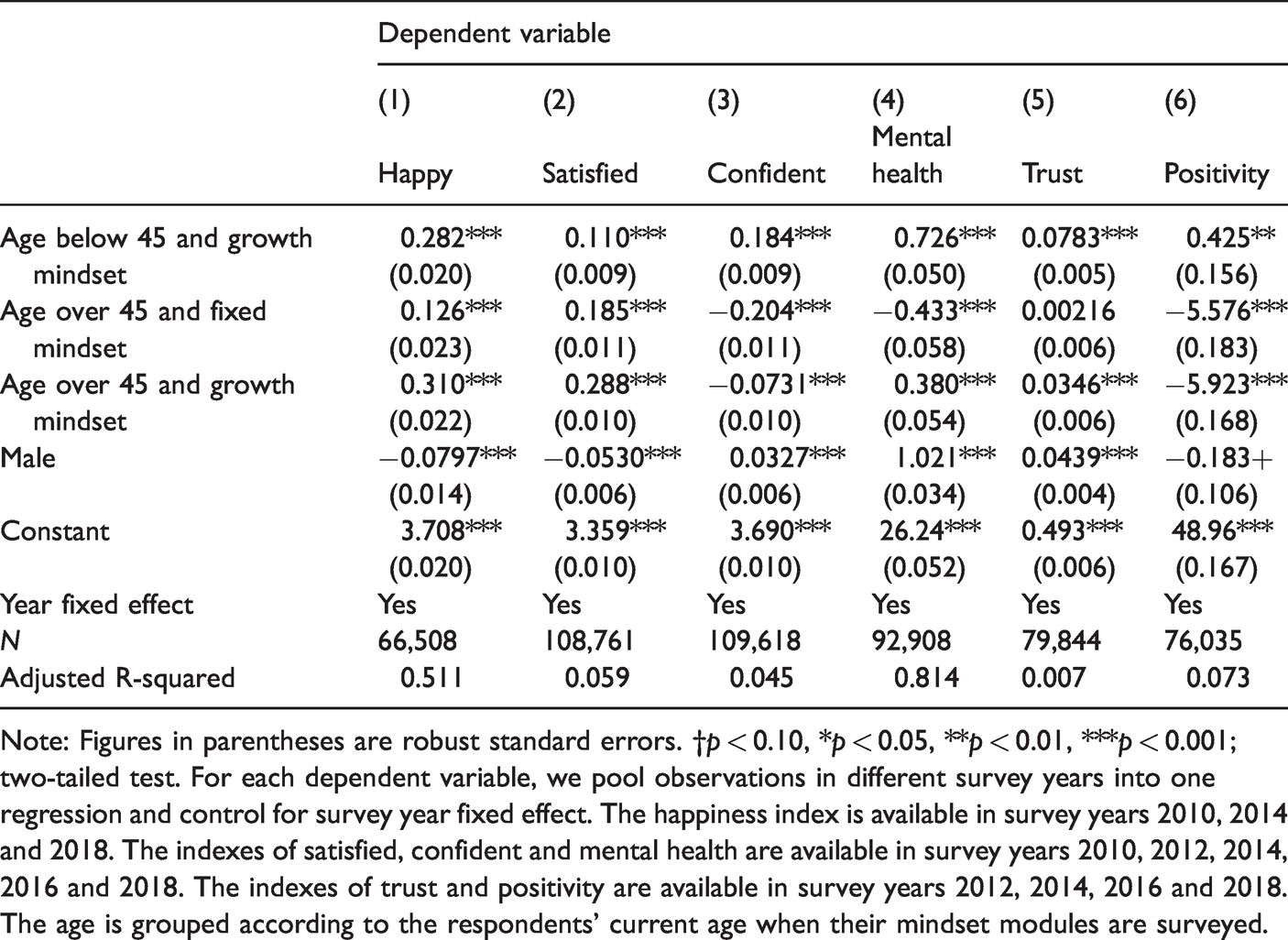
Note: Figures in parentheses are robust standard errors. †p < 0.10, *p < 0.05, **p < 0.01, ***p < 0.001; two-tailed test. For each dependent variable, we pool observations in different survey years into one regression and control for survey year fixed effect. The happiness index is available in survey years 2010, 2014 and 2018. The indexes of satisfied, confident and mental health are available in survey years 2010, 2012, 2014, 2016 and 2018. The indexes of trust and positivity are available in survey years 2012, 2014, 2016 and 2018. The age is grouped according to the respondents’ current age when their mindset modules are surveyed.
Happiness level is measured by the question “How happy do you think you are? Score from low to high”. Participants who possess a growth mindset self-reported a higher level of happiness. Satisfaction is measured by the response to the question “To what extent are you satisfied with your life at present?”, while self-confidence is measured based on the value assigned to the question “To what extent are you confident about the future?”. Respondents with a growth mindset express higher satisfaction with the current situation and higher confidence about the future.
Mental wellness was measured using the Center for Epidemiological Studies-Depression (CES-D) scale fielded in CFPS 2010, 2014 and 2018, and the Kessler Psychological Distress Scale (K6) scale in CFPS 2012 and 2016, both of which are standard measures of symptoms associated with depression, such as loneliness, poor sleep quality and loss of appetite (Kessler et al., 2003; Radloff, 1977). Higher scores indicate fewer feelings of depression. Respondents who subscribe to a growth mindset are mentally healthier. They view failures and struggles in life as opportunities for improvement. They stay more optimistic when faced with setbacks and challenges and thus have less depression.
Respondents with a growth mindset exhibit a higher level of trust toward others. By contrast, respondents with a fixed mindset are more likely to form stereotypes of others, distort information in terms of stereotypes and show less compassion or empathy for others.
Positivity, i.e., positive thinking, is a type of mental and emotional attitude that focuses on the bright side of life and expects good results. When a bad situation develops, it involves making the most out of it, trying to see the best in other people, and viewing oneself and one’s abilities in a positive light. We measure people’s positive thinking by their attitudes towards a few social problems in China. CFPS surveyed the interviewees’ attitudes on the severity of a range of social problems in China: government corruption, environment degradation, the gap between rich and poor, employment issues, education issues, medical problems, housing problems and social security problems. We use the average score of the eight questions to measure positivity. The higher the score is, the more positive the respondent is in their thinking. The results show that for people at ages below 45, respondents with a growth mindset display more positive thinking. Growth-mindedness is associated with viewing social problems and other people with a positive outlook. The pattern is reversed for the 45-and-above age group.
For measures of happiness, satisfaction, confidence, mental health and trust, we find that across both the below-45 age group and the 45-and-above age group, respondents with a growth mindset have better subjective well-being than those with a fixed mindset.
Discussion and conclusion
The present paper has introduced and analyzed the theory of mindset in the context of China. Following a growing strand of psychological research by Dweck and her colleagues (e.g., Dweck and Leggett, 1988; Nussbaum and Dweck, 2008; Plaks et al., 2005), we constructed a binary measure indicating individuals’ mindset status, by utilizing a representative dataset from China. We then examined a wide range of socio-demographic correlates of mindset.
We document the associations between social-demographic origins and mindset descriptively. We find the proportion of respondents with a growth mindset to be higher among the young than among the old. The gender gap favors women at young ages but is reversed for men at old ages. Urban hukou and higher education level are positively associated with a growth mindset. There is also a variation by employment status, with the proportion of individuals with a growth mindset being highest among non-agricultural state-sector workers, and lowest among agricultural workers. Experiences of military service and of being sent down are also correlated to mindset.
Mindset also acts as a fundamental predictor for multiple personal-level outcomes, including cognitive skills, subject well-being and attitudes. Specifically, individuals who subscribe to a growth mindset score higher on various tests of cognitive skills. They perceive a higher level of happiness related to their present life, are more satisfied with their current situation and are more confident about the future. Moreover, respondents with a growth mindset are mentally healthier and display more positive thinking. Meanwhile, they show a higher level of trust toward others.
Several limitations of this study are worth noting. Due to lack of longitudinal measures of mindset, we overlook the life-cycle trajectory of mindset. We cannot adjudicate age differences or cohort differences, due to data constraints. Moreover, we only demonstrate the correlation, but not casual relationships, between social-demographic factors and mindset, with only a cross-sectional measure of mindset at hand. Future studies with repeated measures of mindset can improve our findings and shed new light on mindset research.
Despite these limitations, the present study provides a range of heuristic evidence helpful for deepening our understanding of China from a sociopsychological perspective. Over the past four decades, China has experienced rapid economic development and dramatic social changes. Previous studies have focused on explaining socioeconomic achievement with little attention paid to understanding the sociopsychological situation and its impact on the country’s economic growth. The CFPS contains bountiful information enabling us to investigate people’s self-conceptions, motivation and self-regulation. In particular, CFPS is positioned to provide detailed socioeconomic and sociopsychological measures across time and lifespans. With richer data in future follow-up surveys, we hope future research to further explore and move the field forward to new frontiers.
Footnotes
Declaration of conflicting interests
The authors declared no potential conflicts of interest with respect to the research, authorship and/or publication of this article.
Funding
The authors received no financial support for the research, authorship and/or publication of this article.
