




Abstract
Individuals in China are much more likely than Europeans to live with their adult children during later life. In this paper, we examine the extent to which this holds true across the diverse contexts and circumstances faced by Europeans and Chinese. We use comparative data from the Survey for Health, Ageing and Retirement in Europe and the China Family Panel Studies to examine cross-national differences in whom adults in later life choose to live with. We find that in rural China and among urban migrants there is a tendency to live with higher-educated children, whilst among urban Chinese and Europeans, individuals live with those with lower education levels. We also find that in Europe there is only a small preference for living with male adult children, whilst across China this preference is much stronger. However, we also note that this preference is weakest in urban China. These findings indicate strong differences in co-residence patterns between China and Europe, but also some similarities between specific subpopulations. We explain these differences and similarities using a social policy framework.
Introduction
One of the most marked differences in family dynamics between China and Europe is the prevalence of intergenerational co-residence. A high proportion of individuals live with their adult children during later life in China compared with their European counterparts (Ruggles, 2014). Familialism and filial piety are regularly cited as causes of the fundamentally distinct co-residence patterns found in Europe and China (Chu et al., 2011; Hamilton, 1990; Whyte, 1997; Whyte and Xu, 2003; Yasuda et al., 2011). Similarly, southern Europeans and northern Europeans are often demarcated in terms of their familial values and the resulting prevalence of intergenerational co-residence (Reher, 1998). However, these cultural explanations are challenged by research findings from both Europe and China, which place emphasis on individuals' needs and capacities (Chen, 2005; Chu et al., 2011; Isengard and Szydlik, 2012; Kalmijn and Saraceno, 2008; Sun, 2002).
We attempt to integrate findings from Europe and China in this paper. We argue that the fundamental differences in contemporary co-residence levels are attributable to welfare-state arrangements and the degree to which they shape the needs and capacities of both parents and children (Szydlik, 2008). This position follows the tradition of European Comparative Welfare State literature by placing micro-level dynamics within the context of welfare-state support mechanisms (Albertini and Kohli, 2013). In doing so, it brings together the findings from existing micro-level findings on intergenerational co-residence in both China and Europe with macro-level structural factors that differ between China and Europe.
We provide evidence in support of this by examining patterns of co-residence between parents and their adult children in Europe and China. We analyze parent–child dyads from the Survey for Health, Ageing and Retirement in Europe (SHARE) alongside data from the China Family Panel Studies (CFPS) in a multi-level framework that encapsulates dynamics at the family level and subregional level. Our findings demonstrate
Existing research
In this paper, we extend European theories of co-residence to the context of Chinese society in order to explore and examine intergenerational co-residence in China and Europe. The predominant difference between European and Chinese research on intergenerational co-residence has been the emphasis placed on the welfare state. The comparative nature of research in Europe has allowed for considerable study of the macro, institutional factors that shape individual living arrangements. The comparative emphasis in this research tradition makes it an ideal basis for reflecting on differences in intergenerational co-residence.
In conservative welfare states, there remains the primacy of the wage earner and strong familialization tendencies by which family members, and women in particular, are implicitly assumed to adopt caring roles (Kohli, 2007). This has softened in recent years in certain countries, with the extension of policies such as childcare subsidies, but the core dynamics of highly gendered caregiving remain (Pelikh and Tyndik, 2014; Ray et al., 2010). In such instances, the role of the welfare state is to support rather than replace the caregiving role of women (Keck and Saraceno, 2013; Saraceno and Keck, 2008). These welfare-state arrangements are typically attributed to countries of western and central Europe, such as Germany, the Netherlands, and Austria. But the tradition of familialization is even more intense in southern and eastern Europe, where public care provision is very limited and state support for care-providers in the form of well-paid leave is also weaker (Albertini and Kohli, 2013).
In Nordic countries, welfare-state arrangements adopt a contrasting logic, by which the wage-earning role of all individuals is supported. This is referred to as de-familialization, in that the care of both children and elderly relatives is largely individualized through the welfare state. These welfare-state arrangements are marked by short but well-paid leave for both mothers and fathers, extensive and accessible childcare provision, a generous state pension, and extensive and high-quality care provision for elderly people in need of care (Esping-Andersen, 2010). This high level of support and decommodification allows familial support to be concentrated on tasks in which individuals are best placed to help, rather than undertaking all tasks in the absence of alternatives (Igel et al., 2009). There is a large body of evidence, however, that European welfare-state constellations have a substantial effect on the configuration of intergenerational relationships, including co-residence (Albertini et al., 2007).
These welfare-state theories have been extended to East Asian societies including China. In particular, on numerous occasions East Asian welfare states have been identified as productivist welfare states with strong familialistic tendencies (Gough, 2001; Holliday, 2000). Within such welfare states, the primary aim is economic and political stability rather than the protection of individual rights. So, whilst European welfare states have aimed to ensure that individuals receive care and support either through the family (familialization) or through public provision (de-familialization), East Asian welfare states have been primarily concerned with the stabilizing effects of the welfare state in political and economic terms. Their active support of family values has been limited to ensuring that familial obligations are supported by legal obligations (Saraceno, 2016).
In practice, this has limited the creation of welfare arrangements primarily to sectors identified as being of specific economic or political concern. For example, state employees have access to relatively generous pension arrangements to ensure a degree of political stability (Kim, 2015). Similarly, certain sectors have specific social security arrangements to insulate the economy from large economic shocks such as the Asian Financial Crisis of 1997 or the Global Economic Crisis of 2008 (Aspalter, 2006). The result is a sharp ‘insider-outsider’ dynamic by which some sectors of society are able to access state-supported pension arrangements and facilities and others are not. In China, this arrangement also encompasses the hukou household registration system, which effectively demarcates the urban population into ‘urban residents’ and ‘migrant workers’, with the latter group receiving different, and almost always worse, welfare arrangements (Afridi et al., 2015; Liu, 2005; Whalley and Zhang, 2004; Wu and Treiman, 2007). This system ensures that urban governments and their welfare systems are not overwhelmed by the demand brought about by an influx of migrants, but they can still benefit from the increase in labor supply.
The result of productivist welfare-state policies is that ‘urban residents’, ‘migrants’, and ‘rural residents’ face very different welfare arrangements and, subsequently, different family dynamics with regards to care provision. Urban Chinese have access to public facilities that their compatriots do not, in particular to childcare, schools, hospitals, and care facilities (Fu and Ren, 2010; Nelson, 2016). The growing middle class within China has led to increasing demands for improved childcare facilities, and the result has been a relative explosion in the number of such facilities in urban areas over the past 20 years (Qi and Melhuish, 2017). Similarly, pension provision among urban Chinese is far more established and developed, which reduces dependency in old age (Cai and Cheng, 2014; Liu and Sun, 2016; Wang, 2016). Nevertheless, urban Chinese are not better off in every way, and care-related leave remains limited.
The situation of migrants is distinct from that of urban residents despite their geographic proximity. Not only are they regularly denied the access to schools, childcare, hospitals, and care facilities that is available to urban residents, they are also excluded from public programs that can help negate the need for care; programs such as public-housing and adequate pension schemes (Fu and Ren, 2010; Huang et al., 2014, 2017; Nelson, 2016). Yet the primary rationale for migration is to seek better wage employment, and thus there is a strong emphasis on full employment within migrant households (Cheng et al., 2014). Strong gender roles would undermine this rationale, and this leaves a care deficit within migrant families, as neither the state nor women are able or willing to provide care. Therefore, despite being dislocated from their rural roots, migrants have been found to be highly dependent on their families for welfare support, either by having them co-reside in the urban area or through complex care arrangements which span their physical divide, such as children residing with their rural grandparents (Goh, 2009; Silverstein et al., 2006).
In rural areas, public provisions are also exceptionally limited in terms of both public facilities and broader social policies such as pensions, parental-leave arrangements, and public housing. The family unit is, however, far more active and central in care provision (Silverstein et al., 2006). Around 320 million Chinese are still involved in agricultural production. Care provision, therefore, is a more integral part of the household economy in rural areas, as is the case in more traditional societies (Zhang and Kanbur, 2005). The result is that all welfare needs are met by the family within a single household (Cong and Silverstein, 2015). These three circumstances for urban residents, migrants, and rural residents in China lead to differing family dynamics in terms of care provision and co-residence, and it is this situation that provides the hypotheses for this paper.
Research on urban China, and on urban migrants specifically, has examined the way in which migrants' lives are shaped by institutional and policy contexts (Zhang, 2004). They leave intergenerational co-residences in rural areas to pursue economic opportunities in urban areas, maintaining intergenerational relations through remittances to elderly parents rather than co-residence (Chen et al., 2017). However, the pull of economic opportunity and modernity are not always detrimental to filial piety and intergenerational support (Whyte, 1997). Intergenerational co-residence is seen to be associated with female labor supply rather than counter to it (Goh, 2009; Shen et al., 2016), and co-residing parents often elect to live with the most-educated child rather than the least-educated so as to facilitate labor market participation (Wen and Hanley, 2015). The child's needs appear to require co-residence for economic success rather than it be an impingement of it.
These findings indicate a complex interaction between the needs and capacities of both parent and child that potentially undermines the rationale that modernization is counter to intergenerational co-residence. Instead, it is argued that economic development and social change shift the needs and capacities of both parent and child and, subsequently, the co-residence patterns we observe (Xu et al., 2014). For example, it has been shown that the child's needs tend to override parental needs in determining whether a child co-resides with his or her parent in urban China (Gruijters and Ermisch, 2018; Zhu and Xie, 2017). This appears to contradict studies conducted in more rural, traditional parts of China (Gruijters and Ermisch, 2018; Logan and Bian, 1999; Zhang, 2004). Following this line of argument suggests that explaining differences between European and Chinese intergenerational co-residence requires an understanding of how needs and capacities are shaped by structural, macro-level context.
Theory and hypothesis
We supplement these welfare-state theories with a basic rational choice perspective on intergenerational relations, which sees intergenerational support as being shaped by the needs and capacities of individuals (Altonji et al., 1997; Szydlik, 2008). From this we suggest that, in the absence of public provision of welfare, parents choose to co-reside with those they think will be best able to support them in later life. This means that they are more likely to co-reside with sons, as they believe that sons will be better placed to take care of them later in life regarding housing and income. The less public support there is, the greater the incentive for investing in an adult son's family unit during the formative years of later life. Parents will also invest more heavily in those who are high achievers. The better a child's labor market returns are, the more likely that the child will be in a position to support his or her parents in later life. Given this, we suggest that parents without access to welfare-state arrangements, such as pensions, housing, and care facilities, will engage in exchange-based behavior by which they co-reside with whichever child they believe will be best placed to care for them, providing support to that child so as to both maximize his or her success and develop a reciprocal obligation with the child. Based on this theory, we therefore anticipate that: H1a: Parents in southern and eastern Europe will be more likely to co-reside with a child than central and western European and Scandinavian parents. H1b: Migrant parents in China will be more likely to co-reside with a child than urban and rural parents. H2a: Migrant and rural parents in China will be more likely to co-reside with their higher-educated children than with their lower-educated children. H2b: Parents in Europe and urban China will be as likely to co-reside with their lower-educated children as with their higher-educated children. H3: Parents in China and Europe are more likely to reside with their sons than with their daughters. H4a: Parents in central, southern, and eastern Europe will be relatively more likely to co-reside with their sons than western Europeans and Scandinavians. H4b: Parents in rural China and migrant parents will be relatively more likely to co-reside with their sons than urban Chinese parents.
Data and methods
The data used in our analysis is from SHARE and CFPS. The data from SHARE is taken from the fifth wave, with fieldwork completed in 2012, and the data from the CFPS is taken from the first wave, which was fielded in 2010. The data from both countries was then restricted to respondents aged over 60 at the time of interview, as the CFPS questions used for the analysis were only fielded to this subpopulation. In both surveys, respondents were asked a series of questions about each of their living children. These responses were then used to reshape the data into a file of parent–child dyads. Throughout the analysis we adopt a multi-level framework with these dyads (Level 1) nested within individual respondents (Level 2). To this end, childless respondents are excluded from the analysis.
The main dependent variable is a dichotomous indicator of whether the respondent co-resides with the specific child to which the dyad corresponds at the time of the interview. Co-residence was taken to be inclusive of parents and children who lived in the same physical building but excluded ‘financial households’ as defined in the CFPS, in which family members shared financial arrangements but lived in physically separate spaces. A set of controls in the form of age, sex, marital status, and education level were then created for both parent and child. The total number of children of the respondent was also included as a control at the parental level and birth order at the dyadic level. Education was coded based on ISCED classifications, in which anything below completion of secondary education (ISCED 0, 1, 2) is considered ‘Low Education’, the completion of secondary education is considered ‘Medium Education’ (ISCED 3 and 4), and completion of any education beyond secondary education is considered ‘High Education’ (ISCED 5, 6, 7). This scale was maintained for the parental generation in the CFPS despite the distribution being wholly uneven and dominated by the ‘Low Educated’ (59.32%).
In addition to these, indicators of two vectors of intergenerational care and exchange were included: The giving of grandparental childcare and the receipt of personal care. These indicators are constructed differently across the two surveys. In SHARE the indicator is a composite of SP005_ and SP021d_, which measure care received from individuals outside the household and care received from individuals inside the household respectively. If a respondent indicated that he or she either received care from these individuals at least once a month or was co-resident with someone the respondent identified as a caregiver, then he or she was coded as being in receipt of care. The distinction between residents and non-residents does not exist for the variables regarding care for grandchildren, and thus variable SP016_ was used. For the CFPS, the variable qf3_s_41 – qf3_s_60 were used and enabled respondents to simply indicate whether they had received personal care from a specific child in the past six months or not, and whether they had provided childcare to the children of this child in the last six months.
There are serious issues regarding whether these indicators are directly comparable, and given the difference in wording and construction, we are skeptical as to whether they measure precisely the same concepts of care and childcare. However, we decided to include these indicators for the following reasons.
First, the two datasets are analyzed separately with distinct coefficients and thus do not contribute to the same statistical estimates. Second, we use caregiving only as a control which allows for a better understanding of some of the underlying dynamics of co-residence rather than as the main independent variable.
Nevertheless, it is important to note the differences between these variables in order to dissuade direct comparisons between these indicators in the models.
In order to capture the key concept of welfare-state variations, we adopted differing strategies in Europe and China which reflect common research practices and traditions. In Europe, we split the sample into welfare regimes representing the aforementioned clustering of social policies around specific typologies. Austria, Germany, and Switzerland are considered central European; France, the Netherlands, and Belgium are considered western European; Denmark and Sweden represent Scandinavia; Italy, Greece, Spain, and Portugal represent southern Europe; and Croatia, the Czech Republic, Hungary, Slovenia, Poland, and Estonia represent eastern Europe. Israel and Ireland are omitted from the analysis as they fit into welfare-state typologies that are not part of our analysis. In China, the population is segregated not geographically but by their hukou status. Those respondents who were residing in a rural area were considered rural, those with a rural hukou but living in an urban area were considered migrants, and those with an urban hukou were considered as urban residents distinct from migrants. These categories broadly reflect the position of respondents relative to welfare services available to them.
After removing observations with missing values and the aforementioned sample constraints, we were left with a workable sample of 5020 in China and 33,879 in Europe, with 14,089 and 81,169 parent–child dyads respectively. Calibrated cross-sectional design weights were applied to both samples to ensure national representativeness. In the Chinese data, it should be noted that only 30 of 36 provinces were covered by the sampling due to logistical and political constraints, but this still covers more than 95% of the Chinese population. In order to examine co-residence dynamics in China and Europe, three separate iterations of a multi-level logistic regression model were constructed for both the SHARE and CFPS data. The first models represent a basic model of co-residence between parent and children, with the key independent variables of the child's gender and education included. The second and third models are then interacted with welfare regime categorization in SHARE and the respondent's hukou status in the CFPS in order to test the remaining hypotheses.
Results
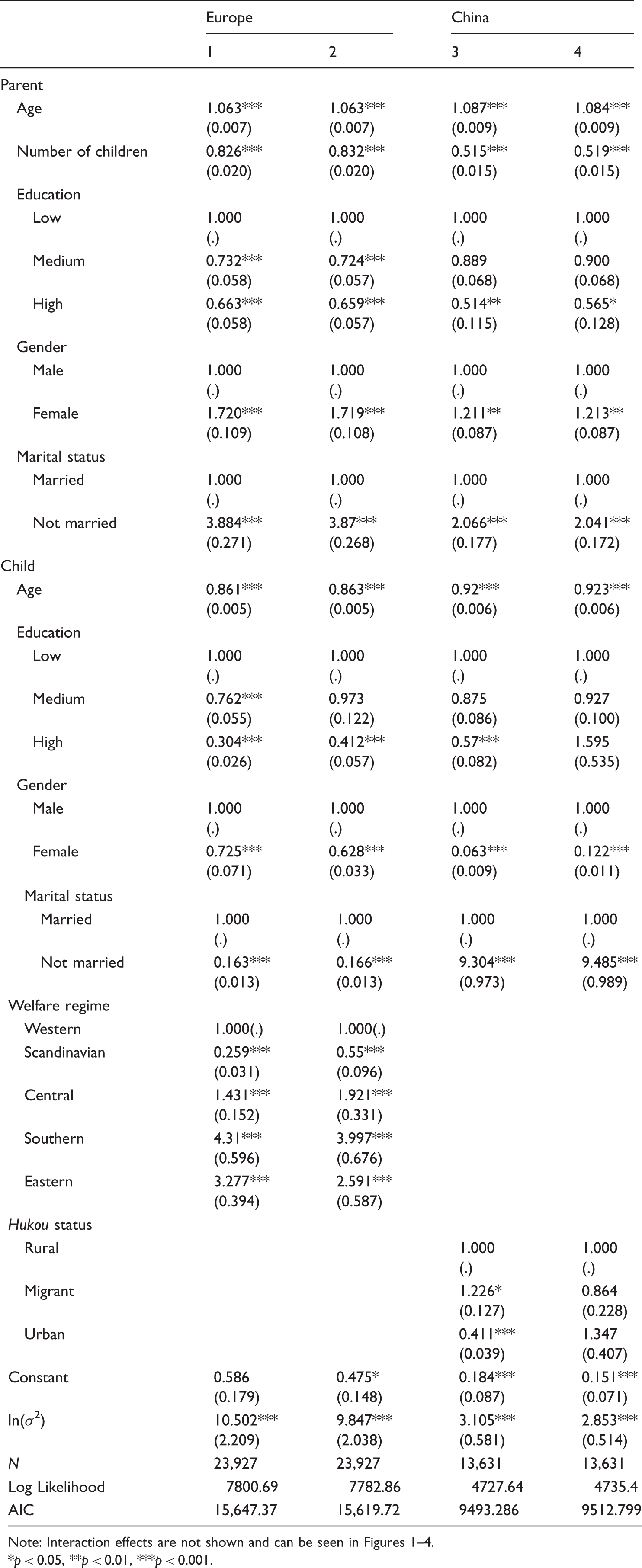
The initial results of our analysis are very supportive of what is found in the existing literature from both Europe and China. This is best illustrated by the findings regarding our first hypothesis, which suggests that parents in Scandinavia and central and western Europe are less likely to co-reside with a child than in southern and eastern Europe. The findings show that 4.5% of parents over 60 in Scandinavia, 7.5% of those in central Europe and 6.4% of those in western Europe reside with their children. This contrasts strongly, however, with the 13.8% of parents in southern Europe who choose to co-reside with their adult children. In China, we see that 26.0% of migrant parents over 60 are living with their adult children. This is higher than both the 21.3% of rural parents and the 17.1% of urban parents who do so, supporting the assertion of Hypothesis 1b, and indicating that the levels of co-residence are not uniform across China.
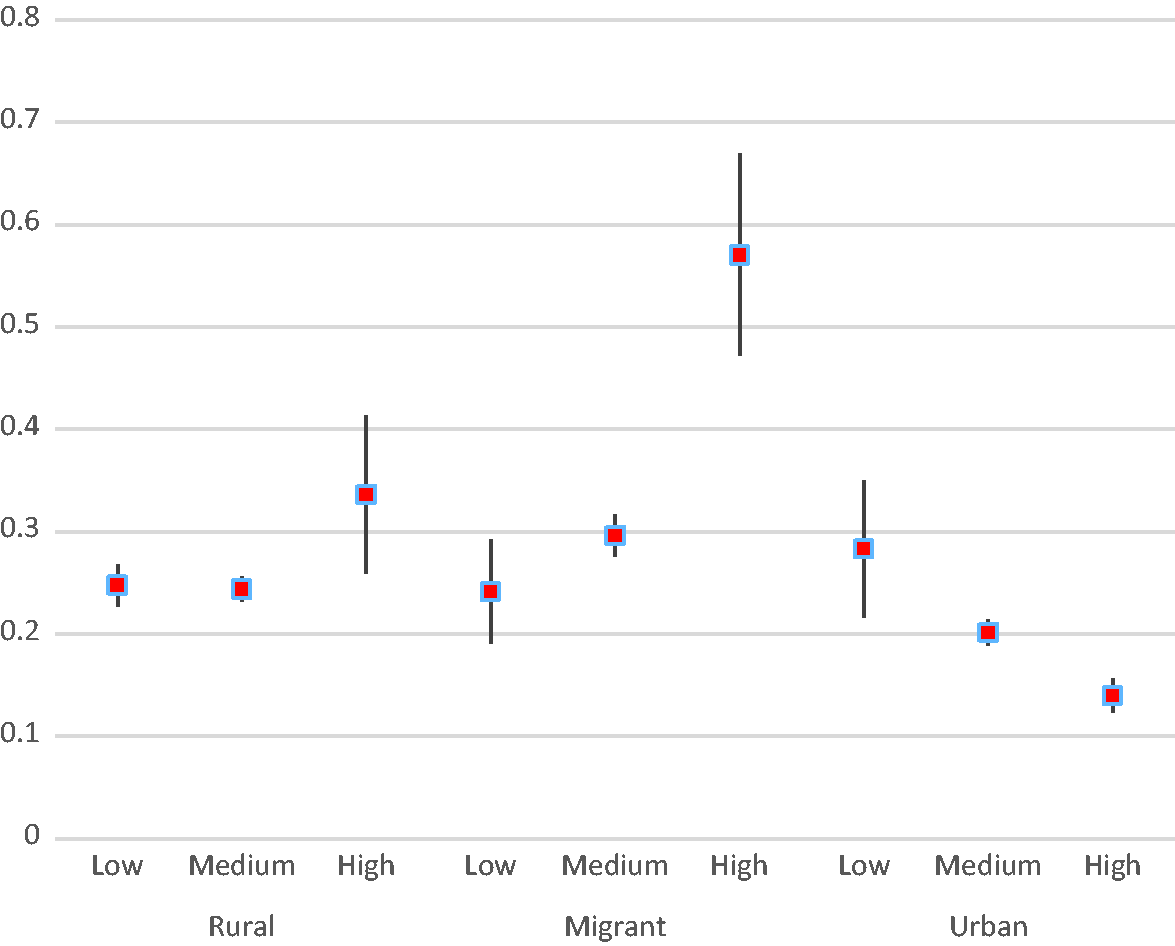
In Figures 1 and 2, we see the interaction between child's educational level and the welfare regime or hukou status. Among rural and migrant parents in China, we can see that in support of Hypothesis 2a, parents do tend to co-reside with higher-educated children. There is a clear and distinct positive gradient in these two subpopulations that contrasts strongly with the urban population. However, among the urban Chinese population, we do not see a null gradient of the child's educational level but instead a clear and consistent negative gradient, which would appear to indicate that parents are opting to co-reside with lower-educated children. However, whilst this is not in line with the hypothesis, it is worth noting that it is consistent across Europe and urban China, suggesting a potential commonality in co-residence dynamics.
Co-residence and child's education level in European welfare-state regimes. Co-residence and child's education level among Chinese elderly.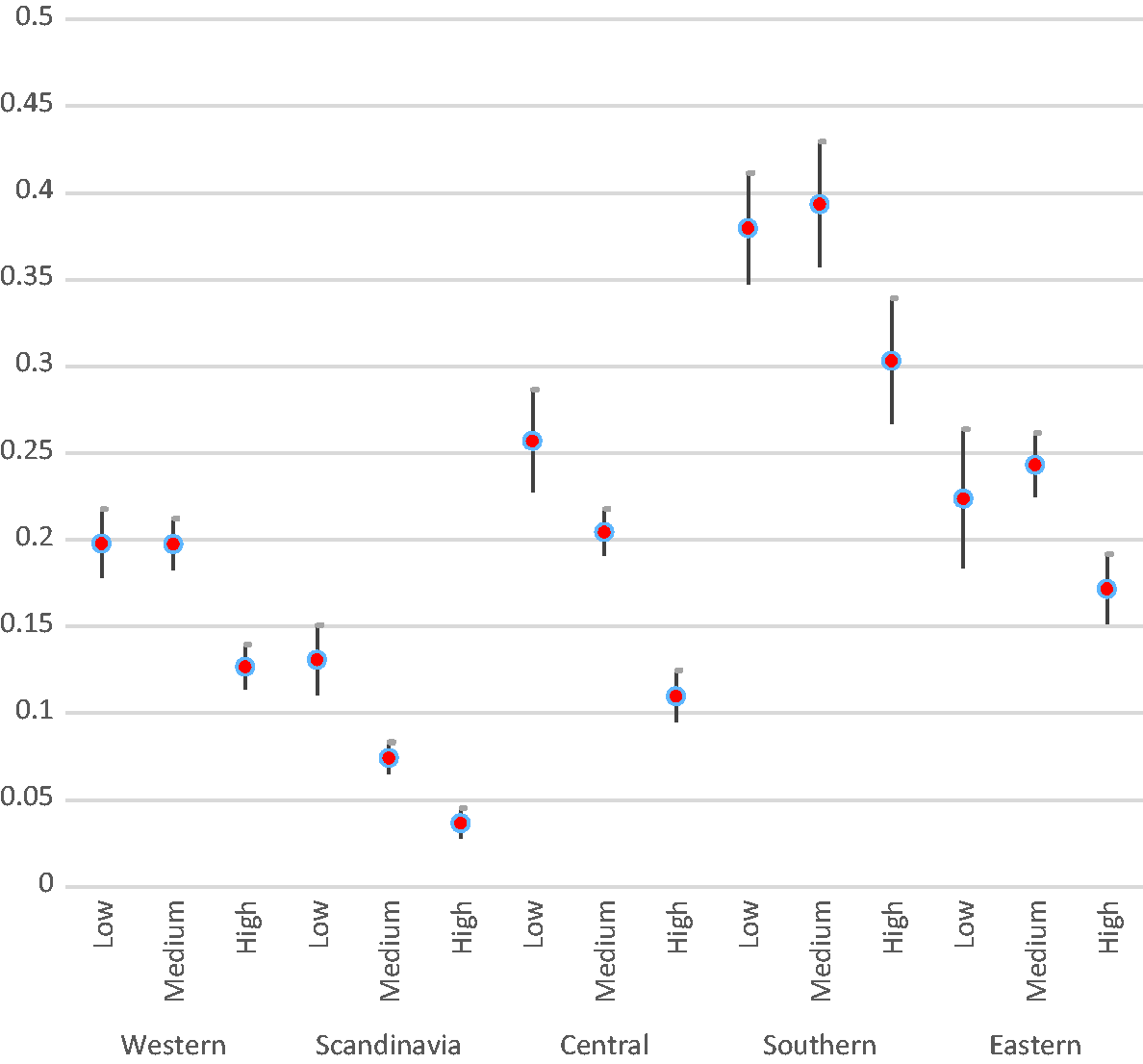
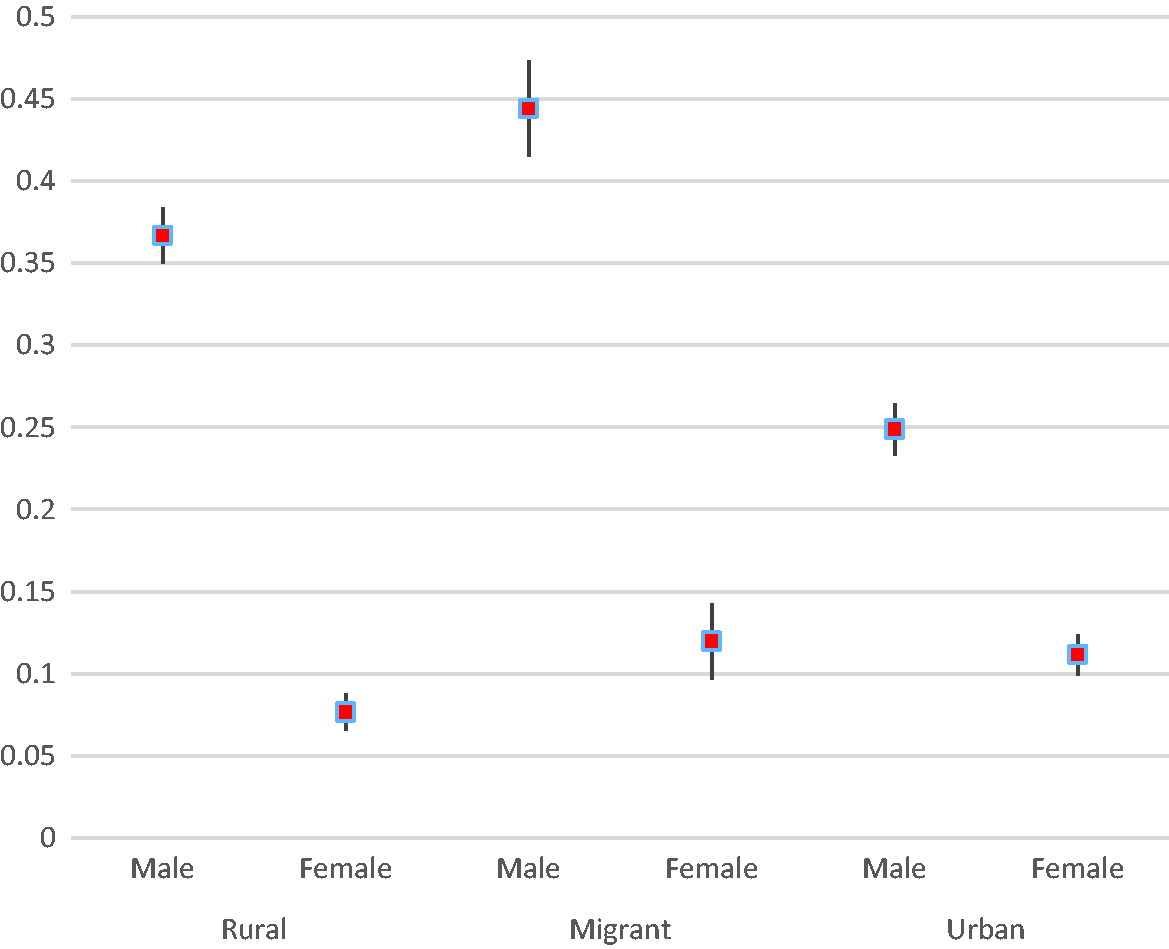
In Model 3, we see the interaction between child's gender and welfare regime or hukou status. The results from Model 1 had indicated that Hypothesis 3 was indeed correct in the preference for co-residence with sons being universal. However, as Figures 3 and 4 indicate, there is a great deal of variation in the differential across the various subpopulations. In Europe, the gradient is significantly larger in the central and southern regions than elsewhere. However, this is not the case for eastern Europe. Hypothesis 4a is therefore partially supported in that two of the three most genderized welfare states had the highest gender differentials in co-residence. In China, we see from Figure 4 that there is a very large gender differential in co-residence, as is found in the existing literature. However, this gender differential is significantly smaller in urban China, and thus we find strong evidence in support of Hypothesis 4b.
Co-residence and child's gender in European welfare regimes. Co-residence and child's gender among Chinese elderly.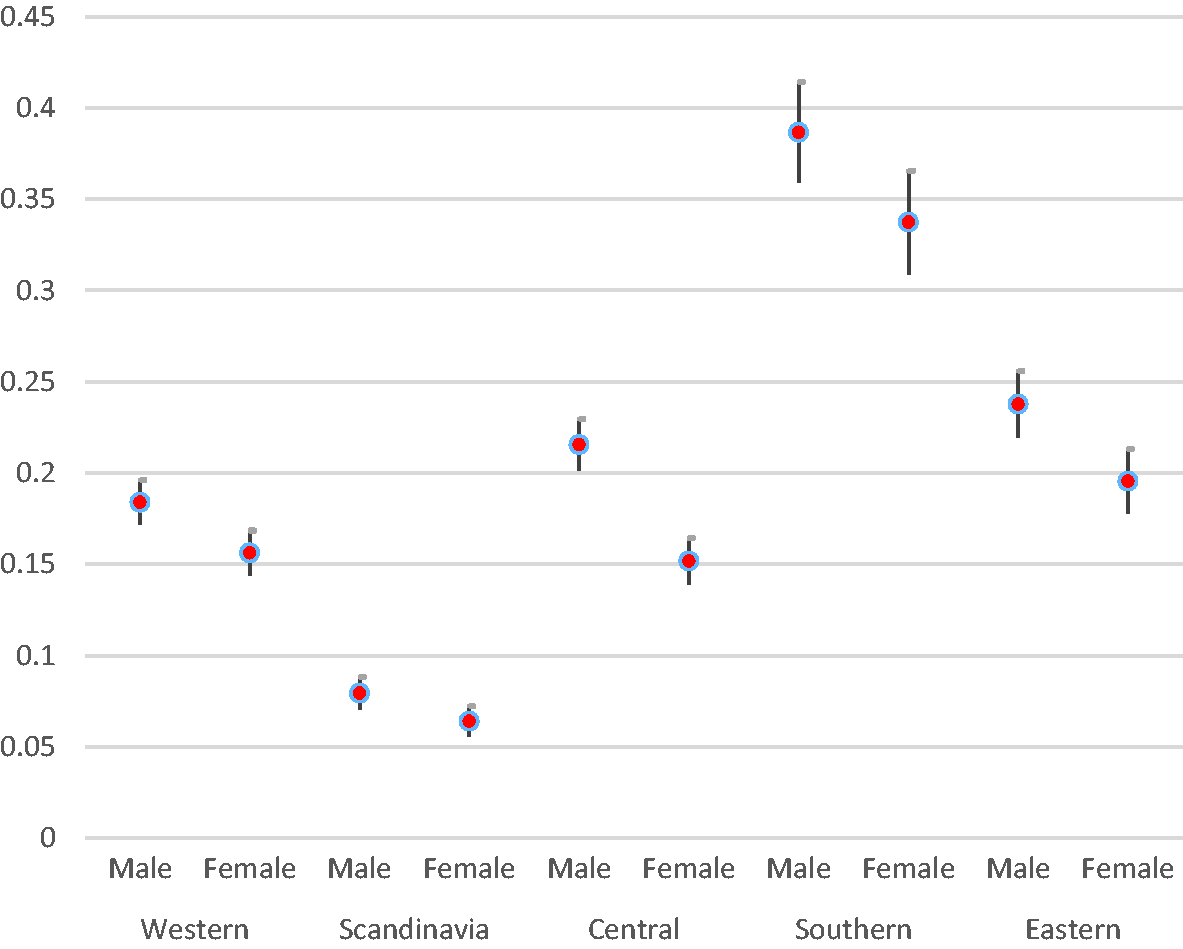
Discussion and conclusions
Our results provide strong support for our hypotheses, with two notable exceptions. First, the gender differential for co-residence in eastern Europe is not statistically significantly different from that observed in western Europe. This could indicate that our conceptualizations of either eastern Europe as a gender inegalitarian labor market or western Europe as a gender egalitarian labor market are wrong. Indeed, part of the legacy of socialism in eastern Europe is that there is a degree of gender equality in labor market outcomes that is not found in more conservative parts of Europe, such as the center and south. Similarly, gender egalitarianism in western Europe is still short of that in the Nordic welfare state. For example, in the Netherlands, female employment is largely driven by part-time employment (Plantenga, 2002), and maternal employment remains relatively low in France (Gornick et al., 1997). Conversely, it could simply be that there are other factors beyond labor market gender inequality driving the preference for sons. For example, cultural values are highly associated with but lagged from welfare-state arrangements, and it is highly plausible that the welfare state is only one vector through which these cultural values shape the co-residence patterns of Europeans. However, we find similar patterns in China, and they appear to suggest that areas where there is greater support for female employment have lower preferences for son co-residence.
The second exception is the observation that the educational gradient of co-residence is, in fact, negative and not nil in Europe and urban China. This is somewhat perplexing as it is unclear why parents may opt to live with the least-educated child. The obvious answer is that these children have fewer resources and, therefore, greater needs than their more educated siblings. This suggests that the intergenerational dynamics switch from being a case of exchange and intergenerational exchange to one of altruism and downward support, as the welfare state develops to provide for those in later life. One potential complication to this theory is that the development of a welfare state usually occurs across policy areas, and thus increases in pension provision are usually coupled with increases in support for younger generations, such as employment insurance, social housing, and health insurance, which would serve to alleviate the need for co-residence. We remain unconvinced by the evidence that we have looked at given the limited information on the child within the data. Future research could investigate this further by examining such co-residence from a child perspective.
Beyond these two exceptions, we found strong evidence for welfare states shaping the co-residence patterns of Chinese and European parents aged over 60. The results not only support welfare state-based theories but also indicate that alternatives are unlikely to explain the findings equally well. For example, we found that not only is there a gender preference for residing with sons in China, but that this preference weakened among elderly parents and was highest among migrants. Cultural theories of co-residence which suggest that this is driven by norms of filial piety are poor in explaining why those Chinese who move to cities might be more inclined to follow such norms when compared with those in rural areas. This pattern is therefore supportive of a welfare-state narrative rather than a cultural description, as migrant populations become trapped between urban and rural welfare arrangements. Furthermore, if cultural norms are driving the preference for sons, then this mechanism should be assumed to be weak, as the preference is much smaller among urban populations.
In Europe, we also see complex patterning that is not supported by simple cultural narratives. Welfare-state theories suggest that pension and care provisions for the elderly within a country should drive the base level of co-residence, whereas gender inequality in the labor market drives the gender differential. This is supported by what we find in central Europe when compared with western Europe. In both we have strong pensions and thus see a low level of co-residence with adult children. However, in central Europe, the labor market is less gender egalitarian and thus we see a more pronounced gender differential in co-residence, as parents tend to opt for living with a son when they do look to co-reside with children. Theories of economic development and modernization would similarly indicate that co-residence among urban individuals would be lower than among those in rural areas, but these fail to account for the unique position of migrants in China. Cultural norms or theories of economic development, to the best of our knowledge, cannot explain both the similar base level of co-residence and the contrasting gender differentials for these areas.
We therefore conclude that the difference in co-residence rates between China and Europe is not largely cultural or economic but instead is driven by differing welfare-state contexts, as has been argued in the existing European literature. Indeed, when we look at urban China, where the Chinese welfare state is most developed, we see strong parallels with European societies and comparable rates of co-residence. We would therefore anticipate that recent reforms in China which soften the boundaries between urban and rural hukou and increase welfare provisions in rural areas will lead to further convergence in rates of co-residence. This has serious implications in a country that is ageing rapidly and will soon have a population structure similar to that in Europe, as it should not be assumed that intergenerational co-residence will remain the norm.
Multi-level logit models of co-residence in Europe and China.
Footnotes
Declaration of Conflicting Interests
The author(s) declared no potential conflicts of interest with respect to the research, authorship, and/or publication of this article.
Funding
The author(s) disclosed receipt of the following financial support for the research, authorship, and/or publication of this article: This research received funding from the Netherlands Research Council NWO, award number: 467-14-152.