




Abstract
It is well known that children’s academic performances are affected by both their family backgrounds and contextual or structural factors such as the urban–rural difference and regional variation. This article evaluates the relative importance of family background versus structural factors in determining children’s academic achievements across three different societies: China, the United States of America, and Germany, analyzing data from five large-scale, high-quality, and nationally representative data sets. The results reveal two main findings: (a) family socioeconomic status exerts much stronger positive effects on children’s academic achievement in the USA and Germany than in China; and (b) structural factors (such as those measured by location and urban/rural residence) play much smaller roles in the USA and Germany than in China.
Introduction
Education is, arguably, the most important social institution in any modern society. It holds the key to a society’s technological development and economic growth (Goldin and Katz, 2008), and for individuals, education is a major social determinant of almost all aspects of life (Fischer and Hout, 2006). Hence, the unequal distribution of education across different members in a society remains one of the most consequential sources of social inequality—indeed it is the main mechanism through which parents transmit their social advantages or disadvantages to children intergenerationally (Blau and Duncan, 1967).
Inequality of education begins early in life, arising in early childhood and extending into adolescence and young adulthood. Academic performance of school-age children is highly predictive of educational attainment, economic well-being, health, and subjective well-being in later life (Carneiro and Heckman, 2003; Cunha and Heckman, 2009). In the USA, for example, it has been estimated that approximately 50% of earnings inequality is attributable to social and family factors at the age of 18 (Cunha and Heckman, 2007).
Decades of social science research on educational inequality have well established the importance of two main dimensions of social determinants in affecting the distribution of education. On the one hand, macro-level social forces, such as economic cycles (Kuznets, 1955) and the level of industrialization (Blau and Duncan, 1967; Treiman, 1970), affect both the overall level and the distribution of education, as well as other desirable goods, services, and socioeconomic status. On the other hand, family socioeconomic status (SES) exerts strong influences on a person’s educational attainment (Blau and Duncan, 1967; Sewell et al., 1969) through two main potential mechanisms: first, a family’s economic position determines how much parents can invest in their children’s education and development (Becker, 1991; Duncan et al., 1994; Kaushal et al., 2011); and second, middle-class parents are more likely than working-class parents to engage in parenting practices conducive to children’s educational achievement (Lareau, 2011; Mayer, 1997).
A very large body of literature, which is concerned with US international competitiveness in science and technology, has long documented persistent and large gaps in mathematics and science achievements between East Asian countries and the USA (Xie and Killewald, 2012), based on results of standardized tests such as the Program of International Student Assessment (PISA), the Trends in International Mathematics and Science Study (TIMSS), and the Progress in International Reading Literacy Study (PIRLS). Specifically, students from East Asian societies, such as South Korea, Japan, Singapore, Hong Kong, Taiwan, and Chinese mainland, consistently take leading places in the tests. Of note is that Shanghai, the only city in Chinese mainland participating in PISA 2009 and 2012, has achieved the highest student average test scores.
In the USA, Asian American students usually achieve higher test scores and better grades than their white peers (Caplan et al., 1991; Fejgin, 1995; Hsia, 1988; Hsin and Xie, 2014; Kao, 1995; Liu and Xie, 2016; Sanchirico, 1991; Schneider and Lee, 1990; Zhou and Bankston, 1998). One natural question concerns whether or not the East–West country-level gap in academic achievement can be attributed to the same factors as the Asian–white gap in the USA. That is, if genetic differences are not an acceptable explanation, is there a cultural explanation that simultaneously explains both the East–West country-level gap and the Asian–white racial gap in the USA?
An attempt to find a cultural explanation was recently undertaken by Liu and Xie (2016). Their cultural model extends Stevenson and Stigler’s (1992) work in emphasizing the strong influence of Confucianism in Asia. This highlights the importance not only of education per se but also of universal access to education through effort rather than birthright. One consequence of this influence is that even low SES Asian students have higher educational expectations. They also practice work ethics that are similar to those of students, Asian or white, from middle-class families (Liu and Xie, 2016). In other words, Liu and Xie’s (2016) cultural model posits, in regression language, flatter slopes of family SES and higher intercepts for Asians than for whites.
In this article, we first extend the standard literature on educational inequality in Western society to the case of China. Thus, we will show how family SES and structural factors affect children’s academic achievement. Further, and more importantly, we compare the relative importance of family SES versus structural factors in determining children’s academic achievement across three societies: China, the USA and Germany. In doing so, we hope to evaluate Liu and Xie’s (2016) cultural hypothesis that family SES matters less for Chinese children than for children in Western societies. We use large-scale, high-quality, and nationally representative data from China, the USA, and Germany for our research. An international comparative study such as this one will not only enhance our knowledge on education stratification and children’s development, but also provide us with clues as to the education gap between East and West.
Theoretical motivation and research model
Family background and children’s education
The central role of the family in affecting children’s educational attainment is well documented. This was shown, for example, in the classic Blau–Duncan model of status attainment (Blau and Duncan, 1967). A growing number of later studies confirmed that family background, especially in early childhood, exerts strong influences on children’s educational outcomes, with children from higher SES families academically outperforming those from families with a lower SES (Carneiro and Heckman, 2003; Duncan et al., 1994; Duncan et al., 1998; Duncan et al., 2010). Moreover, early childhood educational inequality is predictive of inequalities in other domains in later life.
How does family SES actually affect children’s outcomes? One perspective emphasizes family economic resources. A family’s economic condition determines how much parents can invest in their children’s education and development (Becker, 1991; Blau, 1999; Brooks-Gunn and Duncan, 1997; Coleman, 1988; Dahl and Lochner, 2012; Duncan et al., 1994; Duncan et al., 1998; Kaushal et al., 2011). Families with higher levels of income can provide material advantages, such as more learning opportunities and resources, that is, high-quality private tutoring (Zhang and Xie, 2015). Another perspective emphasizes families’ non-monetary resources, such as parenting attitudes and practices, and family environments (Alexander et al., 1994; Baharudin and Luster, 1998; Cheadle and Amato, 2011; Chen et al., 2000; Davidov and Grusec, 2006; Davis-Kean, 2005; Garrett et al., 1994; Heckman, 2006; Lareau, 2011; Mayer, 1997). Parents with a higher SES tend to have higher expectations of their child and to foster their child’s talents by incorporating organized activities. These class-based cultural and social factors could be viewed as a family’s social and cultural capital (Coleman, 1988). Thus, it has been observed that many early child development programs such as the Early Head Start program 1 and the Nurse–Family Partnership 2 not only provide children with direct interventions but also give their parents training in parenting skills (e.g. Gertler et al., 2014).
Most of the past studies examining the relationship between family SES and children’s academic achievement have focused on Western countries, mainly the USA. Recent studies have revealed that in East Asian families, non-monetary resources, particularly parenting attitudes and practices, are much more important than monetary resources for children’s achievement (Liu and Xie, 2015). Given the very different societal contexts in East and West, we will examine how family background affects the academic achievement gap in China, the USA, and Germany.
Structural factors and children’s education
A number of empirical studies have also established the role of structural factors at the macro level, such as region, province, or state, in affecting children’s education and development. Early in the Coleman Report, for example, the differences in students’ achievements by race and region were found to be very large in the USA (Coleman, 1966). Some recent studies have shown that students in states with strong accountability systems score a lot higher in math tests than students in other states (Carnoy and Loeb, 2002), and that increased federal education funding for poor areas could narrow the test score gaps between students from advantaged and disadvantaged families (Card and Payne, 2002). However, little is known about the relationship between structural factors and education in European societies. One cross-national comparative study (the USA, Germany, and Norway) in the 1970s posits small differences in educational opportunities and upward educational mobility across all regions in Europe where education systems are managed by the state (Schwarzweller, 1973).
In China, social and economic inequality are heavily driven by structural forces attributable to the Chinese political system. For example, earlier research has found that the high income inequality in China is significantly driven by regional variation and the urban–rural divide (Wu and Treiman, 2004; Xie, 2016; Xie and Hannum, 1996). We infer that region and the urban–rural divide play similarly important roles for educational inequality in China.
Regional disparities in education in China
In China, the state maintains public education, with private schools playing a peripheral role in serving children with special needs. Even after an exponential growth in the number of private institutions (minban) since the 1980s, private primary schools constituted merely 3% of the total in 2015. 3 Since the educational reforms in the 1980s, China has established a decentralized administrative and financial system that empowers the local and especially the county governments to be responsible for local schools (Hannum and Wang, 2006; Heckman, 2005; Heckman and Yi, 2012). For example, 95% of the total education budget in 2017 was financed locally (CNY 2860 billion). 4 This local funding model leads directly to a large regional variation in education, with wealthy areas spending more on educational resources than poorer ones. Recent statistics reveal an increasing positive correlation between provincial GDP per capita and educational spending per student (Hannum and Wang, 2006). Across the provinces, the highest educational spending per student at the lower secondary level is in Beijing, 6.4 times that in Henan Province, where educational spending per student is the lowest. 5 A 1% increase in educational spending per student is associated with a 0.06 standard deviation change in university entrance exam scores as well as a 3% increase in admission rate to first-tier universities (Wu et al., 2017).
Similarly, resources for higher education are also distributed unequally by region. Almost half of first-tier (Project 985 6 and Project 211 7 ) universities are located in Beijing, Shanghai, Jiangsu, and Guangdong. 8 A 66.7% majority of their students are local (Li and Wu, 2012), giving students in these privileged regions more tertiary educational opportunities.
The urban–rural gap in education in China
Educational inequality between urban and rural areas in China is one of the most pronounced in the world, with urban children attaining higher levels of education than their rural counterparts. Recent studies show that more than 90% of students in large cities attend senior high school, whereas the cumulative dropout rate for secondary education in poor rural areas is 59–63% (Shi et al., 2015). Even after controlling for demographic and regional factors, the net odds of transition from junior high to high school in rural areas were only a fraction of those in urban areas, 14% according to an estimate for 2005 (Wu and Zhang, 2010). For college education, the admission rate of pupils in poor rural areas was only about a tenth that of their urban counterparts in 2003 (Li et al., 2015).
There are material foundations for urban–rural disparities in children’s education, such as educational funding, teacher quality, teaching materials, and parenting attitudes and practices (Card and Krueger, 1992; Chu et al., 2015; Kleiman-Weiner et al., 2013; Lai et al., 2015; Loyalka et al., 2013; Luo et al., 2012; Shi et al., 2015; Zhou et al., 2014). In 1999, the urban and rural ratios of education spending per student for primary and lower secondary education were 1.84 and 1.69, respectively (Tsang and Ding, 2005). If we look at more recent statistics, we find that the ratios have increased to 2.24 and 2.41, respectively, for primary and high school education.
Clearly, the very large urban–rural disparities in educational resources and outcomes are deeply rooted in China’s household registration system, hukou, which, institutionally, favors urban residents over those who live in rural areas (Wu and Treiman, 2004). Of note here is that urban areas in China enjoy better and more abundant educational resources than rural areas (Hannum, 1999). The large regional variation reflects China’s development model, which favors coastal regions over western inland regions (Xie and Hannum, 1996). We borrow from Xie and Zhou (2014) and consider regional variation and the urban–rural divide to be structural forces attributable to the Chinese political and economic system. In this article, we explore the relative importance of structural factors for children’s education in China, the USA, and Germany.
Theoretical model and research hypotheses
In this article, we examine the social determinants of children’s education and development. As shown in Figure 1, we present a stylized causal diagram for two types of social determinants—family background and structural factors—that affect children’s academic achievements (see also Buchmann and Hannum, 2001; Fuller and Rubinson, 1992). As discussed earlier, on the one hand, families have strong and enduring influences on children’s education and development. On the other hand, children’s education is heavily shaped by structural forces attributable to the education and political system.
The influences of family background and structural factors on children’s education and development.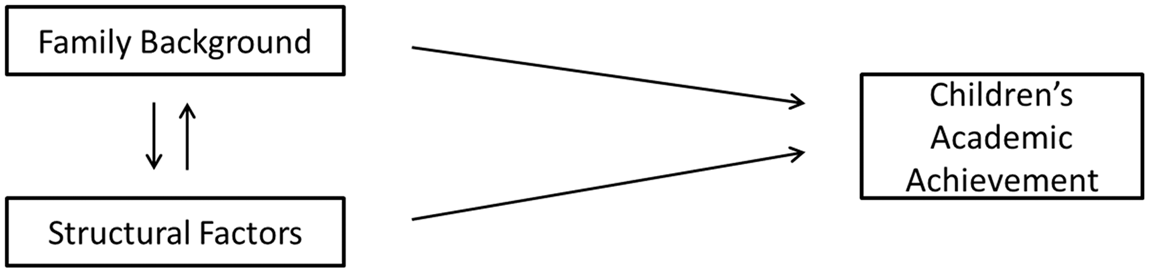
A large literature on the social determinants of education already exists, most of which focuses on Western countries. However, East Asian societies differ from Western societies culturally and institutionally (Stevenson and Stigler, 1992). Thus, it is vital to consider carefully how family background and structural factors affect children’s academic outcomes differently in different social contexts.
East Asian culture centers on Confucianism, with its emphasis on education, consistent effort, and practices for individual well-being and development (Stevenson and Stigler, 1992). For example, there is a famous Chinese proverb that says, ‘Learning will bring you money’ (shuzhong zi you huangjinwu). That is to say, education is a means for all to attain high social status. Families and parents in East Asia tend to hold high educational expectations for their children, and even those with low family SES in poor rural areas hope that their children will have great educational attainments. This was true, for example, in an early childhood development survey conducted by the China Development Research Foundation and the Center for Social Research at Peking University in 2015 in Huachi County, a national-level poor county in Gansu Province. Results showed that 96% of parents with children under the age of two, that is, too young for parents to be able to observe any signs of their children’s educational potential, expect their children to get bachelor’s degrees, and 53% expect them to achieve PhDs. Such high educational expectations should exert strong influences on all parents’ investments in children’s education and also on children’s education-related behaviors (Liu and Xie, 2016). We expect parents’ expectations with regard to children’s education and investment in children to be more dependent on family SES in the USA and Germany, as has been found in the long-standing social stratification literature (Sewell et al., 1969). Hence, we propose a hypothesis that compared with family background in the USA and Germany, family background in China has a relatively weak importance for children’s academic outcomes.
As we discussed earlier, compared with the USA, education in China is heavily structured by regional variation and the urban–rural divide. In this regard, China is similar to some other developing countries, such as India and Brazil, in having large regional variations (Milanovic, 2005). Thus, we test a hypothesis that children’s academic outcomes in China are heavily driven by structural forces, most notably the urban–rural gap and the regional variation in economic well-being, compared with children’s academic outcomes in the USA and Germany.
Data and measures
Data
For our main analyses in this article, we analyze data from the following five high-quality and nationally representative surveys in China, the USA and Germany: the 2014 survey of the China Family Panel Studies (CFPS) and the 2013–2014 baseline survey of the China Education Panel Studies (CEPS) for China; the 2007 survey of the Early Childhood Longitudinal Study (ECLS) and the 2002 survey of the Education Longitudinal Study (ELS) for the USA; and the 2013 survey of the German National Education Panel Study (NEPS) for Germany.
Summary description of datasets in China, the USA, and Germany.
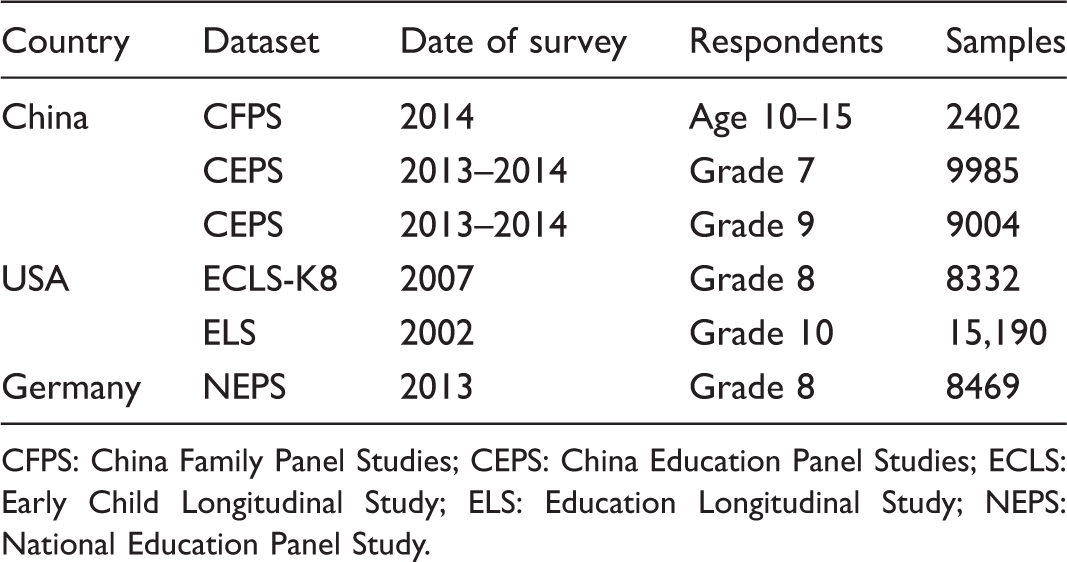
CFPS: China Family Panel Studies; CEPS: China Education Panel Studies; ECLS: Early Child Longitudinal Study; ELS: Education Longitudinal Study; NEPS: National Education Panel Study.
Variables
We use the math and word assessment scores for the children who took part in the surveys to capture their academic achievement. For example, in the CFPS survey, the math test asked the child respondents to solve the mathematical problems presented to them, ranging from 0 to 24. The word test asked the child respondents to read out the characters, ranging from 0 to 34. Giving consideration to the different measurements used in these five surveys, we standardize the assessment scores with a zero mean and a unity standard deviation as the dependent variables.
For each country, we examine the extent to which academic achievement is mediated by four groups of explanatory variables: (a) region; (b) area type; (c) race/ethnicity; and (d) parents’ education. We rescaled the variables so they were comparable across the countries. Specifically, provinces are grouped into broad geographic regions in China to be comparable with regions in the USA and Germany. Area type distinguishes urban versus rural areas, but this variable is inapplicable to Germany, as it is almost all urban. In addition, race/ethnicity is a dichotomous variable, with the majority group as 1, otherwise 0, but it is not available in the German data. The majority group is defined as Han in China and whites in the USA. Parents’ education is the most common measure of family SES. For parents’ education, we use the higher self-reported years of each parent’s schooling. If this information is missing for one parent, we use years of schooling for the other parent.
The basic control variables in our analysis are gender, age, and grade. For gender, female is coded as 1, with male as 0. Grade is a student’s current grade level.
Methods
To assess the relative importance of different factors for academic achievement, we first construct a simple linear regression model, with children’s standardized test scores as the dependent variable and the four explanatory variables described above.

Next, we use the method of variance reduction in the outcome variable to evaluate and compare the relative explanatory powers of each independent variable. To begin with, for each country, we include only one factor at a time as the independent variable in predicting children’s test scores and compare the corresponding R2. We denote this R2 as bivariate R2. Of note is that the bivariate R2 may be confounded because we only consider one factor at a time knowing that different social factors are correlated. To account for this, we also estimate a full model with all four explanatory variables and then alternately exclude one of the four independent variables in order to calculate the proportion of the remaining variation that can be explained by variable K when all the other factors are taken into account, yielding partial R2.

Results
Math test
Regression of children’s math test scores on family background.
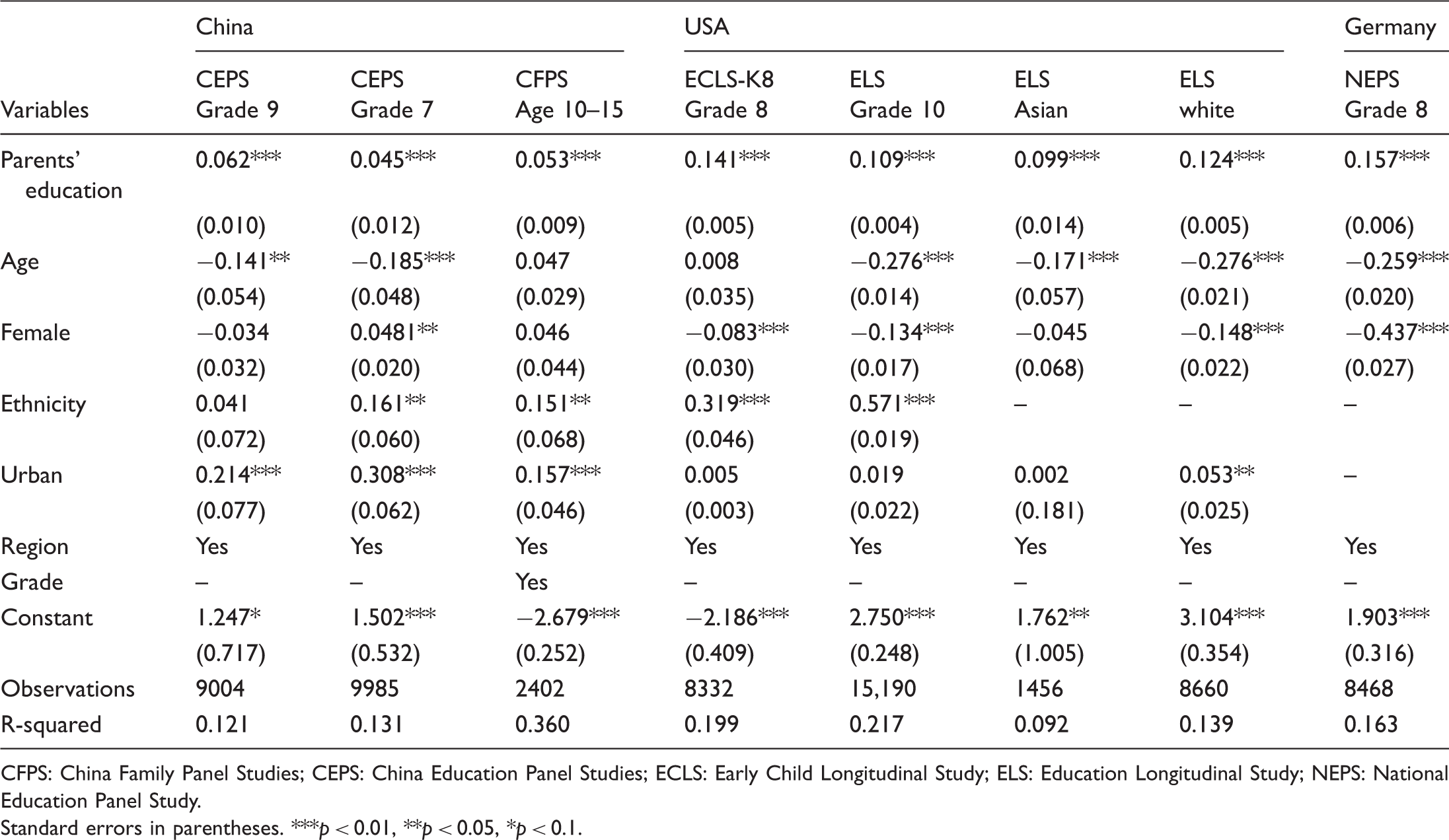
CFPS: China Family Panel Studies; CEPS: China Education Panel Studies; ECLS: Early Child Longitudinal Study; ELS: Education Longitudinal Study; NEPS: National Education Panel Study.
Standard errors in parentheses. ***p < 0.01, **p < 0.05, *p < 0.1.
Turning now to structural factors, we note that coefficients for area type are highly significant in China, although insignificant and near zero in the USA and Germany, suggesting greater importance of the urban–rural divide in China than in the USA and Germany. For instance, in the CEPS results, Chinese urban children’s math scores have a standard deviation of 0.21–0.31, which is significantly greater than that of their rural counterparts’ scores. Our evidence indicates that a substantial part of Chinese children’s educational achievement is due to a large gap between urban and rural children.
Next, we compare the effects of race/ethnicity on children’s word test scores in China and the USA. Clearly, white students’ math scores are significantly higher than those of minority groups in the USA. Moreover, the effect size of race/ethnicity in the USA is twice as high as the effect of race/ethnicity for Chinese children. Results from the CEPS 7th graders even show no significant difference between Chinese Han and other ethnic groups. Thus, we can conclude that, overall, race/ethnicity matters more in the USA than in China.
To compare the relative contributions of explanatory variables across the countries, we now examine the levels of variance reduction, shown in Figure 2. First of all, we compare bivariate R2 results, using solid squares and dashed lines for China, hollow squares and solid lines for the USA, and hollow diamond and dotted lines for Germany. Compared with the USA and Germany, educational achievement in China can be explained far better by the urban–rural divide and regional disparities. Specifically, about 4% of Chinese children’s math scores can be attributed to the urban–rural divide, whereas in the USA the percentage is virtually zero. Similarly, the differences across provinces account for approximately 3% of children’s math test scores in China, whereas there is almost no overall variation across states in the USA and Germany. As argued in past literature, the contributions of these two structural forces to social life are stronger particularly in China, compared with the Western societies (e.g. Xie and Zhou, 2014).
Bivariate and partial R2 for different predictors of children’s math test scores in China, the USA, and Germany.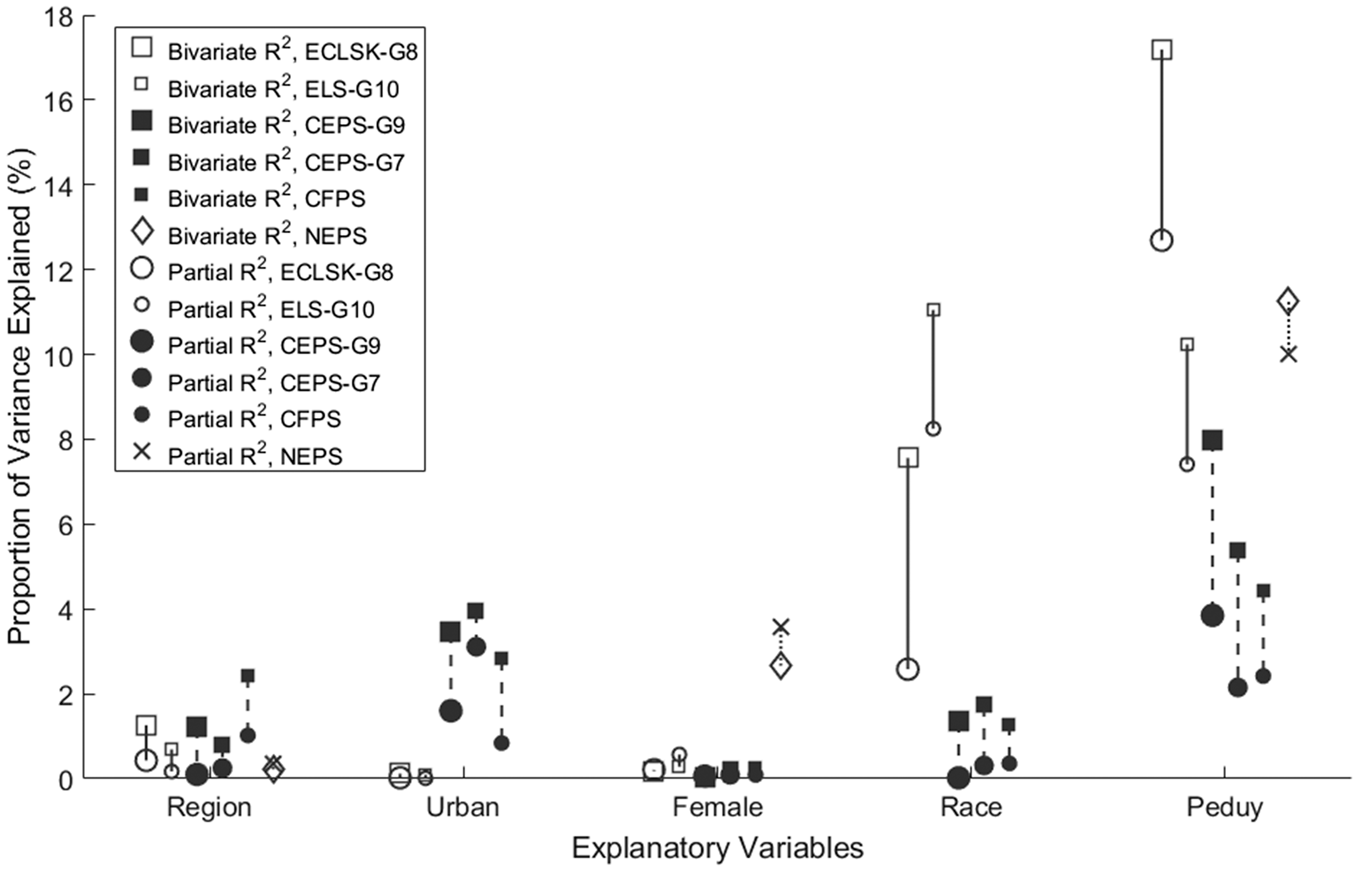
Figure 2 also shows a notable difference across the three countries in how family- and individual-level determinants affect children’s math test scores. Parents’ education is far more important in the USA and Germany, contributing more than 10% of effect on scores, compared with roughly 5% in China. In addition, the role of race/ethnicity is more significant in the USA, where it explains between 8–10% of the scores. In China, the proportion is merely 1%.
Secondly, we compare partial R2 results, using solid circles for China, hollow circles for the USA, and crosses for Germany. Most partial R2s are markedly smaller than the corresponding bivariate R2s, indicating shared explanatory power across different explanatory variables. Nevertheless, the differences between West and East hold true: (a) the influences of the urban–rural divide and regional variations on math test scores are much stronger in China than in the USA and Germany; (b) parents’ education and race/ethnicity are less important in China than in the USA and Germany.
Word test
We further conduct the comparative analysis with children’s word test scores as the outcome variable. Unfortunately, the German survey did not field a word test. Our analysis in this section is, therefore, limited to comparison between China and the USA. First, we examine whether or not the effects of family SES and structural forces on verbal ability differ between China and the USA. For this, we estimate regression models predicting word test scores and compare estimated coefficients across the two societies. Second, we are interested in the relative importance of different determinants, using bivariate and partial R2s. To obtain partial R2, we examine the reduction in residual variance for a set of nested regression models as we remove region, area type, race/ethnicity, and parents’ education one at a time by rotation from the full regression model.
Regression of children’s word test scores on family background.
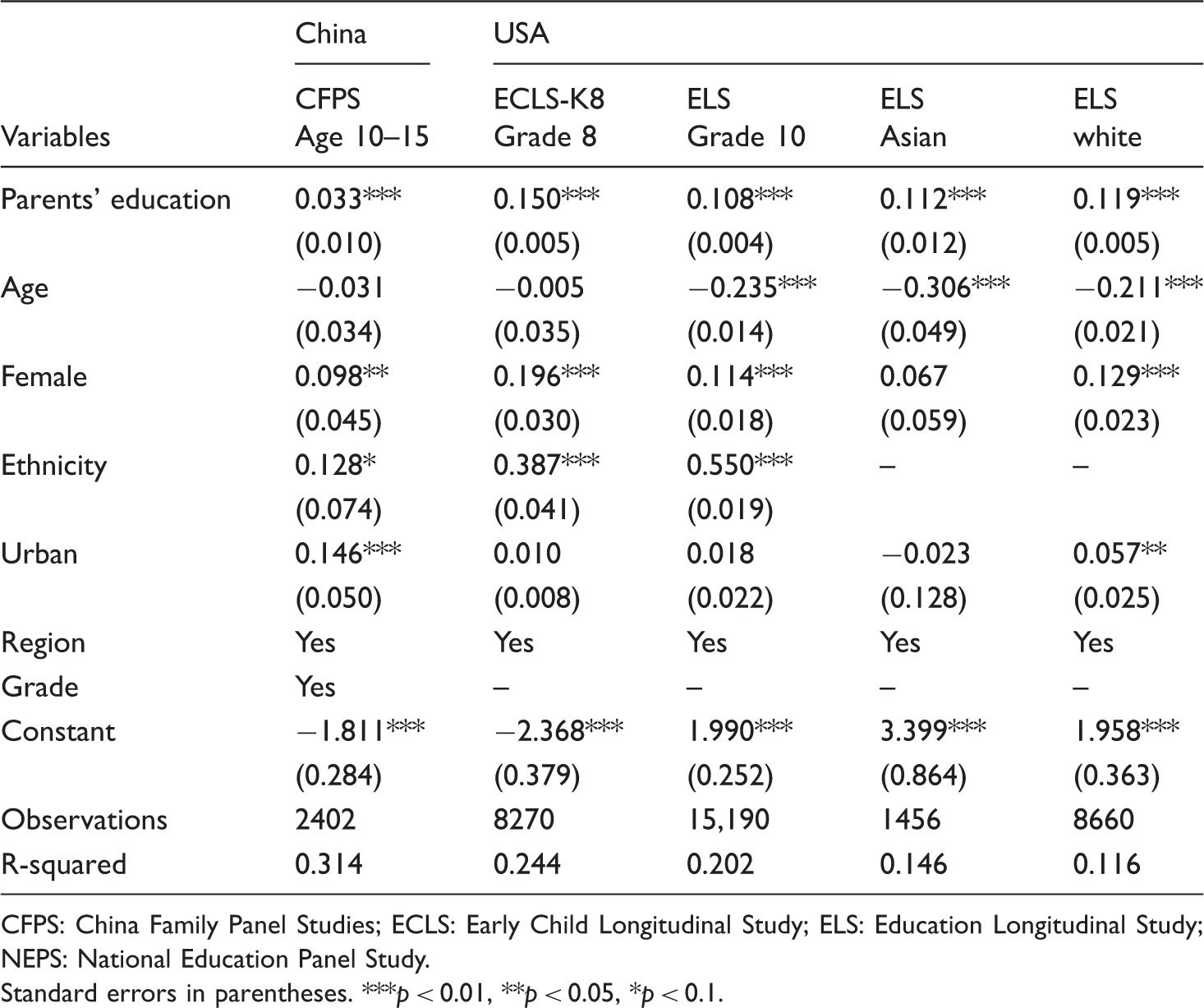
CFPS: China Family Panel Studies; ECLS: Early Child Longitudinal Study; ELS: Education Longitudinal Study; NEPS: National Education Panel Study.
Standard errors in parentheses. ***p < 0.01, **p < 0.05, *p < 0.1.
Figure 3 depicts the relative explanatory powers of different determinants, using dashed and solid lines for China and the USA, respectively. We observe a notable difference between China and the USA in how word test score is affected by parents’ education and race/ethnicity. For instance, as shown in ECLS-K8, approximately 14% of word test scores in the USA can be attributed to parents’ education, whereas parents’ education in China accounts for no more than 3%. In addition, the explanatory power of regional variations and the urban–rural divide is slightly larger in China than in the USA.
Bivariate and partial R2 for different predictors of children’s word test scores in China, the USA and Germany.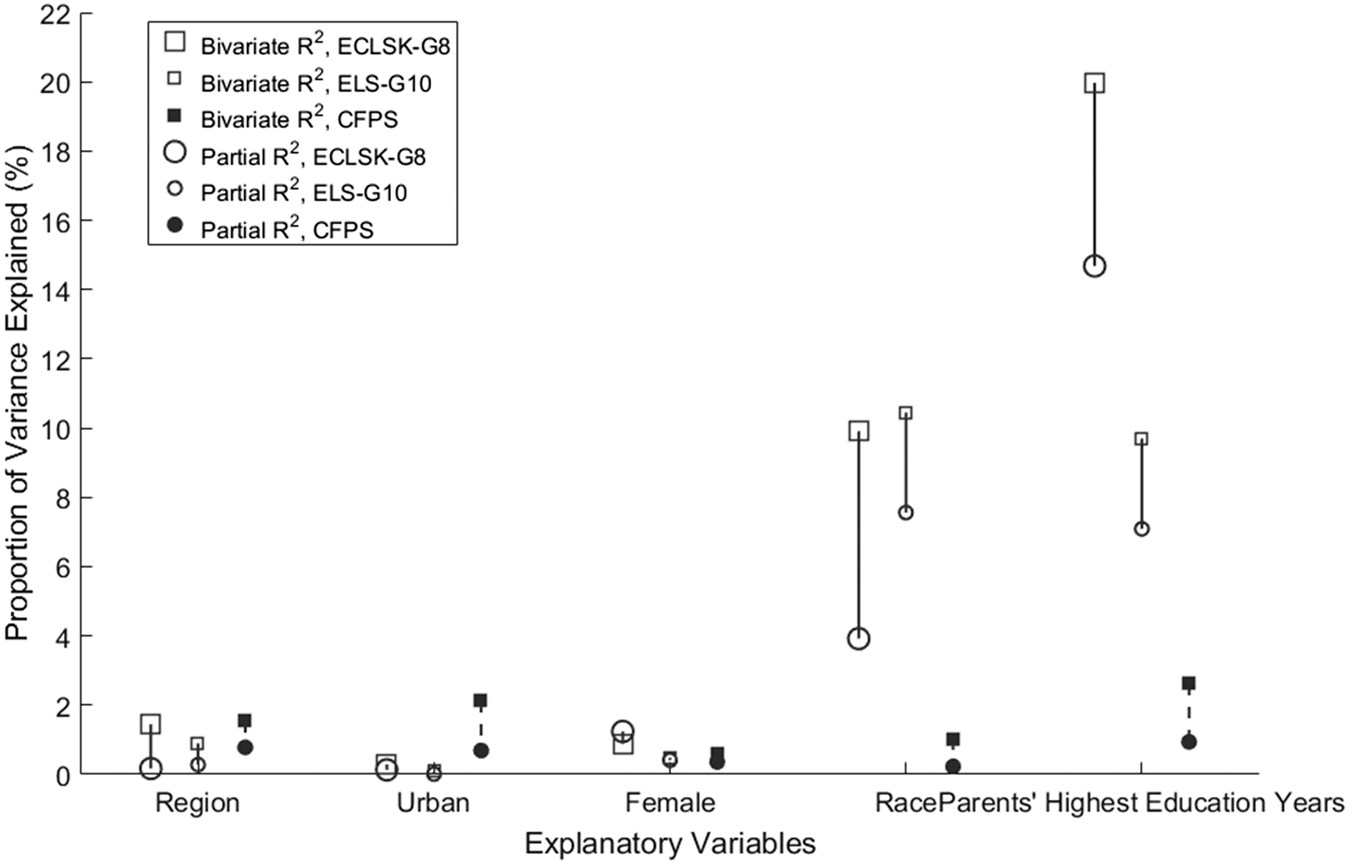
In general, the results support our hypothesis that: (a) family SES affects educational achievement less strongly among Chinese students than among those in the USA; and (b) structural forces, including the urban–rural divide and regional variations, play a more important role in children’s word test scores in China than in the USA.
Discussion and conclusion
Children’s academic achievement is important, not only because it is highly predictive of later labor market outcomes, economic well-being, family behaviors, health, and subjective well-being, but also because it serves as a concrete mechanism for parents to transmit their social advantages or disadvantages intergenerationally. In a globalized, technologically driven world, education is particularly important for a country’s economic growth and competitiveness. Past research has shown that China and other East Asian countries may have an advantage in their populations being well educated (Stevenson and Stigler, 1992; Xie and Killewald, 2012; Xie et al., 2014), but the question is, why?
Answering this highly significant question satisfactorily would go beyond the scope of this article. We propose here that education distribution patterns differ between China and Western countries in that family SES is less important, whereas structural factors (measured by region and urban–rural divide) are more important in the former than in the latter. To test this hypothesis, we analyzed five nationally representative datasets with information on children’s academic achievement and key social determinants in China, the USA, and Germany.
We find evidence in support of our argument. Children’s academic performance is affected by family SES in China as in other countries, but the extent of family SES influence is much smaller in China than in the USA and Germany. In contrast, education in China is highly differentiated by structural factors attributable to the political and economic system, whereas these factors play almost no role in the USA and Germany. In other words, in China, demand for, and influence of, education is less differentiated by family SES but limited by the supply of education by the government. This partly explains why China, through the enlarged provision of educational resources since the economic reform that began in 1978, now enjoys a very large, well-trained engineering and scientific labor force that compares favorably to that in the USA (Xie et al., 2014).
By no means is our idea new. Previous researchers have noted the importance of cultural traditions for education. For example, it has been shown that East Asian societies view the self as being more malleable than do Western societies (Heine, 2001; Markus and Kitayama, 1991). This cultural difference shapes Asians’ educational behaviors and attitudes, benefiting their academic achievement. Researchers have also long observed unique social institutions in China and how they may have shaped education processes in significantly different ways. Most notable are a large urban–rural divide and a large regional variation. More importantly, the reason these social and structural barriers are so strong is that they are institutionally based and cannot be easily overcome through individual efforts and practices (Chen et al., 2014; Heckman, 2005; Heckman and Yi, 2012; Knight and Song, 1999).
Understanding the differing roles of social determinants of academic success in East and West not only gives us better clues about how family and structural forces work in the social attainment process, it also provides deeper insights into the inequality in the development and educational achievements of children as well as their social inequality. Further research is needed to understand how causal processes operate differently across different social contexts, including the roles of schools, teachers, and peers. Although our results are consistent with implications of Stevenson and Stigler’s (1992) cultural model of education in East Asia being rooted in Confucianism, we do not have a direct way to test this hypothesis. In other words, although we have uncovered different distribution patterns of academic achievement in China as compared to the USA and Germany, we will wait for future research to confirm whether or not this difference is indeed attributable to Confucian traditional culture in China.
Footnotes
Acknowledgments
The ideas expressed herein are those of the authors.
Declaration of Conflicting Interests
The author(s) declared no potential conflicts of interest with respect to the research, authorship, and/or publication of this article.
Funding
The author(s) disclosed receipt of the following financial support for the research, authorship and/or publication of this article: The research was partially supported by the Center for Social Research at Peking University, the Paul and Marcia Wythes Center on Contemporary China at Princeton University, the National Natural Science Foundation of China (grant no. 71461137001), and the Eunice Kennedy Shriver National Institute of Child Health & Human Development (National Institutes of Health) under award no. P2CHD047879.