




Abstract
After the massive commodification of urban housing in the 1990s, housing inequality is now a major source of wealth inequality in urban China. Previous studies of housing inequality have rarely explored the extent and mechanisms of intergenerational housing inequality reproduction. This study fills this gap and examines how intergenerational housing asset transfer affects housing status in contemporary urban China. An analysis of data from the 2006 Chinese General Social Survey yields two important findings. First, ascribed factors such as parental social status have a greater influence than individuals’ own social status on their housing status. Second, intergenerational housing asset transfer has become an important mechanism of housing inequality reproduction. Elite parents are more likely to provide transferred assets, which prevents their downward-mobilised children from changing their relative housing status. Against the backdrop of rising wealth inequality in China, this study illustrates how the intergenerational transmission of economic resources is becoming an increasingly important mechanism of inequality reproduction.
Keywords
Introduction
Housing inequality has always been a serious problem and a focal point for studies of social stratification in urban China (e.g. Bian, 2002; Bian and Lu, 2014; Fu et al., 2015; Jin, 2018; Logan et al., 1999, 2009, 2010; Ren and Hu, 2016; Song and Xie, 2014; Szelenyi, 1983; Walder and He, 2014; Walder and Hu, 2009; Xie and Jin, 2015; Zhou and Logan, 1996; Zhou and Suhomlinova, 2001). In the literature on housing stratification and inequality in urban China, the prevailing wisdom is that individuals’ housing statuses result from their own achievement, and the impact of parental characteristics and housing inheritance is rarely explored (Jin, 2018). However, in the context of China’s housing reform, which led to large-scale commodification and privatisation of urban housing (Bian, 1997; Chen and Gao, 1993; Walder and He, 2014), housing inheritance and parental financial assistance in housing acquisition have become increasingly prevalent. Thus, overlooking intergenerational factors may result in misleading conclusions about the status quo of China’s housing stratification, because an individual’s housing status may result from inheritance rather than from his or her own achievements.
Previous studies have shown, albeit in an indirect way, that housing inheritance has become a common phenomenon in urban China. As a result of housing reform, ownership of the majority of China’s urban housing units quickly changed from public to private (Davis, 2000; Li J, 2009; Ren and Hu, 2016); as of the end of 2005, the percentage of private housing in cities and towns had reached more than 80% (Li J, 2009). The rapid growth in private home ownership has resulted in considerable private housing wealth accumulation over this period. In 2012, 79% of urban household wealth was stored in the form of private housing assets (Xie and Jin, 2015). These housing assets could be transferred from parents to children as gifts or bequests. According to an analysis based on the 2005 Chinese General Social Survey (CGSS, 2006), 65% of China’s urban households owned homes, of which nearly 30% were inherited (Li J, 2009). With deepening housing marketisation and skyrocketing housing prices over the past decade, the proportion of inherited housing units is likely to be even higher today.
Therefore, it is important to study housing inheritance in contemporary urban China and to clarify its impact on an individual’s housing status. Not only can parents offer their children housing units as an inheritance or gift, but they can also provide them with financial assistance to purchase housing units from the market. Thus, this study focusses on intergenerational housing asset transfer and the reproduction of housing inequality in contemporary China. Specifically, it focusses on whether parental housing asset transfer has become an important mechanism of housing inequality reproduction. If it has, how large has the impact been?
To address this question, a typology is developed of individuals based on their experience of intergenerational social mobility, and their differences are examined in getting parental transferred housing assets and housing status. In particular, it focusses on the comparison of intergenerational upward-mobilised with downward-mobilised individuals. The analyses are based on an urban sample of the CGSS 2006 and yield two important findings: first, ascribed factors such as parental social status have a much larger influence on housing value than individuals’ own social status; and second, elite parents are more likely to transfer housing assets, which successfully prevents their downward-mobilised children from changing their relative housing status. Therefore, intergenerational housing asset transfer acts as an important mechanism of housing inequality reproduction in contemporary China. Against the backdrop of deepening marketisation and rising wealth inequality in contemporary China (Xie and Jin, 2015), this study also illustrates how intergenerational transmission of economic resources is becoming an increasingly important mechanism of housing inequality reproduction.
Literature review
Inheritance and inequality
Usually, we characterise a society as equal or unequal depending on how advantages and disadvantages are passed from one generation to the next (Hout, 1988). In other words, the extent of ascribed factors in determining individuals’ social status reflects the extent of social inequality. An individual’s social status can be evaluated by his/her dominance over three types of capital: economic, social and cultural (Bourdieu, 1984). Hence, ascribed factors can affect one’s social status in three ways: transmission of economic resources, education reproduction and social network expansion (Devine, 2004). Inheritance is an important type of economic resource transmission within families, and it enables people to exert direct influence on their offspring’s economic status.
Szydlik (2004) discussed inheritance and inequality extensively. He argued that inheritance had, and would continue to have, immense effects on current and future social inequality. He pointed out that the greater the amount of privately inheritable wealth in a country, the greater the extent to which social differences are based upon bequests rather than individual achievement. This is because inheritances are often associated with substantial increases in personal wealth, and such wealth accumulation requires no effort. Moreover, inheritance happens mainly among specific subsets of the population: bequests do not compensate for disadvantages, but they do contribute to the wealthy’s persistent status. Furthermore, inheritance taxes – if there are any at all – are very modest. Therefore, inheritance strengthens social inequality by enlarging the influence of family background.
Intergenerational housing asset transfer and housing inequality
As a crucial component of household wealth, housing inequality and intergenerational housing asset transfer have attracted broad scholarly attention in Western societies. Home ownership is a crucial component of household wealth (Hamnett, 1992). Private housing units provide physical shelter, privacy and living stability to individuals (Rosenbaum, 1996). Therefore, home ownership is usually regarded as a symbol of achievement and an obvious signal of social status (Mulder and Smits, 1999). Disparity in home ownership and living conditions is thus an important aspect of social inequality (Hamnett, 1992).
To obtain a housing unit, individuals rely not only on their own incomes and capital, but also on two other important factors: inheritance and intergenerational transmission of wealth (Mulder and Smits, 1999). Just as Szydlik (2004) proposed, such inheritance and asset transfers had large influences on housing stratification, and often they favoured individuals with high socioeconomic status rather than the disadvantaged. First, parents with high socioeconomic status, high levels of education, the self-employed and, particularly, home owners are more likely than others to provide financial assistance to their children in housing acquisition (Mulder and Smits, 1999). Second, because of assortative mating (i.e. people tending to marry those who have similar social backgrounds), the advantaged households may inherit double the wealth (Szydlik, 2004). Therefore, intergenerational housing asset transfer constitutes an important mechanism of housing inequality reproduction.
Moreover, the likelihood of intergenerational housing asset transfer is also influenced by macro-level factors. Hamnett (1992) found that regional differences in housing prices and rates of inflation may affect housing inheritance, and high housing prices were associated with a high likelihood of housing inheritance. Holdsworth and Solda (2002) pointed out that the ratio of owner occupancy had a positive influence on the ratio of housing inheritance, and the near-saturation of owner occupancy led to uniformity of housing tenure. Lee and Xu (2009) discovered that in developed countries, the ratio of owner-occupied dwellings is lower due to better financial markets and social security. In addition, in countries with greater labour mobility, people prefer to rent houses instead of purchasing them, which implies that in developed jurisdictions with higher labour mobility, people are less likely to live in inherited housing units.
Housing inequality in China
Urban housing in China has been widely studied as an important dimension of ‘socialist inequalities’ under the redistributive system (e.g. Logan et al., 1999; Szelenyi, 1983; Zhou and Logan, 1996). Prior to China’s housing commodification in the late 1990s, urban housing was constructed, owned or allocated by work units (Logan and Bian, 1993; Logan et al., 1999; Whyte and Parish, 1984). Work units’ ability to provide housing varied among state and collective sectors and was associated with bureaucratic rank (Walder, 1986, 1992). People assigned to well-endowed work units could easily get a comfortably spacious apartment, whereas those assigned to work in poorly endowed work units lived in near slum-like conditions (Lee, 1988). Moreover, although housing units allocated by work units were a type of social welfare to satisfy basic needs, spacious and high-quality units were a work unit’s resources and served as incentives to reward political and managerial authority, seniority, professional expertise and social connections (Logan et al., 1999; Tang and Parish, 2000; Zhou and Suhomlinova, 2001). In addition, cadres, professionals and employees from high-ranking work units tended to live in neighborhoods with proximity to leading public schools, piped gas fuel, street parks and other community resources (Logan and Bian, 1993).
China’s housing reform, which began in 1988, gradually dismantled the previous redistributive housing system. It detached urban housing from work units and gradually transformed it from a form of welfare into a commodity (Bian, 1997; Davis, 2000). This reform resulted in several major changes: rapid growth in homeownership (Li J, 2009), soaring housing prices (Li Q, 2009), improvements in average housing conditions (Zeng and Wang, 2004) and widening housing inequality (Bian and Liu, 2005; Li, 2002).
Scholars have also examined the impact of housing marketisation on housing stratification in the post-reform era. Bian and Liu (2005) pointed out that because the market reform benefited both authority and professionality, managerial and professional elites were more likely to own larger, higher-quality housing units compared with other social groups. Wang and Zhang (2008) found that housing monetisation increased the importance of household income and financing ability in housing acquisition, which were affected by one’s hukou (household registration), occupation and parental financial support.
In particular, scholars confirmed the persistence of pre-reform housing inequality into the post-reform era. Li (2002) highlighted the inequality of China’s housing reform policies and proposed that the biggest beneficiaries would be those with higher socioeconomic status in the previous, redistributive system. This perspective has gained wide empirical support from later studies (Fu et al., 2015; Logan et al., 2010; Walder and He, 2014). Using the 2000 Chinese Census data, Logan et al. (2010) found that those who were favoured in the previous socialist housing allocation system (i.e. older persons with more seniority, those with higher education, work unit leaders and administrative staff or professional workers) gained the most in the housing privatisation. Because they were more likely to obtain larger and higher-quality public rental housing units, which they could purchase at deeply discounted prices during the period of housing reform, they spent less than others to own the best housing units in the initial stage after the reform. Using the urban sample of the Chinese Household Income Project 2002, Walder and He (2014) substantiated this proposition of the ‘incumbency advantage’. They found that state sector workers, particularly cadres and professional elites, were more likely to purchase subsidised public housing units during the period of housing reform. Consequently, they had a higher rate of home ownership, more housing assets and total household wealth after the reform. Fu et al. (2015) used the 2005 National Population Sample Survey and obtained similar conclusions.
Intergenerational housing asset transfers and housing inequality reproduction in urban China: Proposition and hypotheses
Intergenerational housing asset transfer and the reproduction of housing inequality in urban China
The previous literature did not discuss intergenerational housing asset transfer and its impact on the reproduction of housing inequality in contemporary China. Now, two decades have passed since the start of housing reform, and considerable private housing assets have been accumulated. The transfer of housing assets across generations is likely to have become ubiquitous and to have exerted a substantial influence on housing inequality. It is therefore crucial to examine the extent to which intergenerational housing transfer perpetuates or even reproduces housing inequality.
Prior studies have provided, albeit in an indirect way, two important insights into this issue. First, the likelihood of obtaining intergenerationally transferred housing assets varies according to one’s family background. Parents with higher socioeconomic status are more likely to provide transferrable housing assets to their offspring. Therefore, their children, even if they have low socioeconomic status, can easily become home owners with the support of their parents. On the contrary, for those with high socioeconomic status but whose parents have comparatively low socioeconomic status, such support would be limited and would contribute little to elevating their housing status.
Second, China’s housing reforms have been unequal. The biggest winners of housing privatisation are those who were favoured in the pre-reform housing allocation system. Because the public housing units were sold to the incumbents at deeply discounted prices during the reform, inhabitants of spacious and high-quality apartments accumulated the greatest housing assets from the housing privatisation. Therefore, cadres and professional elites in state-sector work units and with higher bureaucratic ranks have been the biggest winners, and they are more likely to transfer these housing assets to their children in the post-reform era.
The housing reform policies created wealth inequality not only within the generation that experienced the housing reform, but for later generations. As suggested by Logan et al. (2010), ‘For potential beneficiaries the opportunity to take advantage of these deals is time-limited’. Those who started to work after the housing reform no longer have access to subsidised welfare housing from their work units, and therefore they can only purchase their apartments from the market. Consequently, young people who started to work after 1998 were put in a disadvantageous position compared with the earlier generation. Moreover, the market price of housing units has increased drastically in the past two decades, with an annual rate of increase of 20% (Jin, 2018). This skyrocketing market price of housing units has further widened the disparity in household wealth across generations due to the acquisition of subsidised housing units. In other words, members of the older generation who had a high social status under the previous redistributive regime would be in a more advantageous position in the contemporary housing market than members of the younger generation with the same social status.
In fact, housing prices have increased so rapidly that purchasing a home is now beyond the financial power of the majority of young Chinese people. In 2010, the housing-price-to-income ratio reached as high as 7.07 in urban China (Man et al., 2011). This figure suggests that today, few young Chinese couples can rely solely on their household incomes to purchase housing units from the market. A recent study by Jin (2018) illustrated that as of 2003, while household income still positively contributed to home ownership, this effect had disappeared by 2013. Instead, family background and parental characteristics became a more crucial factor in home ownership than individuals’ own characteristics.
Based on this finding, I further propose that the most important mechanism of parental effect on housing status is intergenerational housing asset transfer, whether in the form of housing inheritance or financial assistance. Because the housing price greatly exceeds the household income of most Chinese families, young people rely heavily on parental wealth for housing acquisition, particularly if their parents have accumulated considerable housing assets from the housing reform. Therefore, this study’s primary proposition regarding intergenerational housing asset transfer and the reproduction of housing inequality in contemporary China is as follows:
Hypotheses
Typology of individuals
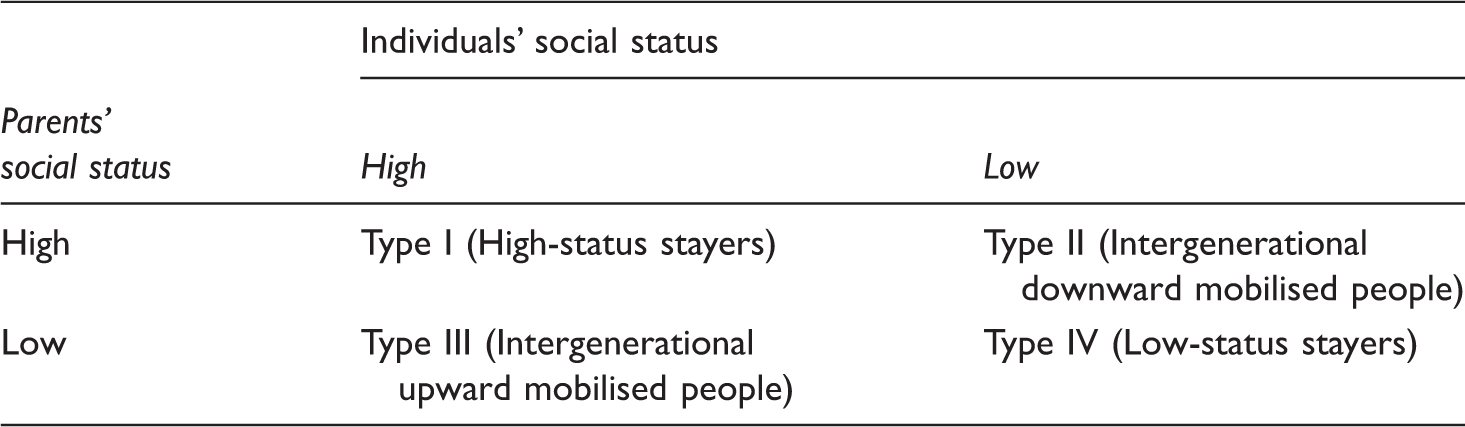
The first type (Type I) includes individuals with high social status, as well as parents with high social status. These are referred to as high status stayers. They are most likely to obtain high housing status not only because their parents can provide them with financial assistance in housing acquisition, but also because they themselves may have high purchasing power, which allows them to improve their own housing status.
The second type (Type II) includes individuals with low social status but whose parents have high social status. These are intergenerational downward-mobilised people. Despite their low social status, individuals of this type are likely to obtain high housing status as well, because they are most likely to obtain intergenerationally transferred housing assets, which can help sustain their housing status.
The third type (Type III) includes those with high social status but whose parents have low social status. These are intergenerational upward-mobilised people. Even though they have achieved high social status based on their own efforts, their housing status, if not lower, may be similar to that of Type-II individuals. They are the least likely to receive any assistance from their parents in housing acquisition. In contrast, they may even need to contribute to improving their parents’ living conditions. Intergenerational housing asset transfer plays the smallest role in this type of individual’s housing status.
The last type (Type IV) includes those who retain the same low social status as that of their parents. They are referred to as low status stayers. Obviously, the housing status of these people would be the lowest because neither their parents nor the individuals themselves can afford to purchase a high-quality housing unit.
The difference between these four types of individuals’ likelihoods of receiving parental transferred housing assets can further affect their housing status. Although it is obvious that social status stayers would also be housing status stayers, the proposition, as specified above, suggests that intergenerational housing asset transfer prevents socially mobilised people from changing their housing status, and thus reproduces inequality.
Intergenerational housing asset transfer and housing status
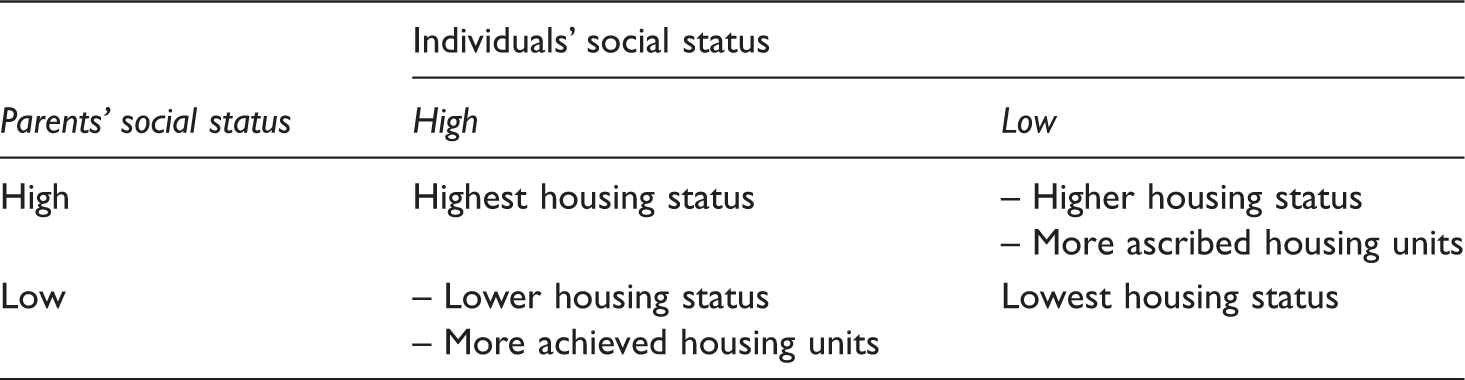
For intergenerational downward-mobilised individuals (Type II), parental asset transfers can help them reach a higher housing status, and thus compensate for their decline in social ranking. But intergenerational upward-mobilised individuals (Type III) can only rely on themselves and may even need to spend their own money to help improve their parents’ living conditions. This assertion can be tested by the following hypothesis:
Moreover, if ascribed factors and intergenerational housing asset transfer play a more crucial role than achieved factors in determining an individual’s housing status, as this study proposes, the housing status of upwardly mobilised individuals will nonetheless be lower than that of downwardly mobilised people. As a consequence, intergenerational mobility in housing stratification is inhibited and housing inequality is reproduced across generations.
Data, variables, and method
Data
This study uses the urban sample of the CGSS 2006 to test the proposed hypotheses. Several advantages make this data suitable for this research.
First, the CGSS is nationally representative. It was carried out in 2006 among 125 counties within 28 provinces in China. Because different questionnaires were designed for the urban and rural samples, the urban sample of CGSS 2006 provides reliable information about urban China in 2006, when housing privatisation had finished and the market price of commodity housing units had risen drastically.
Second, this data provides essential information for this study, namely:
Ownership of the housing unit. It explicitly identifies who owns the housing unit, and therefore it is easy to select households living in housing units they own. Housing sources. It differentiates inherited/self-built housing units from purchased units. The occupation, education and income of both respondents and their fathers (when the respondents were 18 years old). Housing conditions, such as housing area, structure and current market prices.
Here, the information about housing source (i.e. whether the self-owned housing units are inherited from parents or purchased from the market) can be used to measure intergenerational asset transfer.
Concept operationalisation
Social status and intergenerational mobility
Usually, individuals’ socioeconomic status would be measured by their occupation, education and income. However, China’s rapid transition in recent decades makes it inappropriate to identify intergenerational mobility by comparing parents’ education and income with those of their children (Bian, 2002). Therefore, I would use occupational status as an indicator of one’s social status.
Based on occupational position, people can be divided into two categories: elites and non-elites. Because in China social stratification mechanisms have changed with the marketisation process, this study uses different criteria to differentiate elites from non-elites for parents and children in CGSS 2006.
For respondents, elites include managerial authorities and professionals, such as Communist Party cadres, officials from government or other organisations, managers in enterprises, professors, engineers, etc. Non-elites include members of the working class and farmers.
For parents, however, elites include only managerial authorities, such as party cadres, officials from government or other public institutions, managers in enterprises, etc. Non-elites include those with no managerial authority. In particular, parental social status is measured by the occupational status of the respondent’s father when the respondent was 18 years old.
According to this classification, fathers who were professional elites may be classified as non-elites. However, this would be justified in this case because during the pre-reform era, managerial authority was the most indicative factor of one’s housing status. Bian and Liu (2005) pointed out that prior to the start of the housing reform, spacious apartments were allocated by work units as a form of social welfare under the redistributive economy, and thus redistributive elites with managerial power were more likely to obtain these apartments. In contrast, after the housing reform began, housing units became commodities in the market, and therefore both managerial and professional elites could acquire the more spacious and higher-quality apartments. This perspective was also corroborated by other studies (e.g. Li, 2002).
With the operationalisation of ‘social status’, the concept of ‘intergenerational social mobility’ can be operationalised as well. High status stayers are the elites whose fathers are also elites; low status stayers are the non-elites whose fathers are also non-elites; intergenerational upward-mobilised people are the elites whose fathers are non-elites; and intergenerational downward-mobilised people are the non-elites whose fathers are elites.
Intergenerational housing asset transfer
To measure the concept of intergenerational housing asset transfer, I differentiate between two types of housing units based on housing sources: ascribed housing units and achieved housing units.
Ascribed housing units are units given to children by parents as an inheritance or gift, thus requiring no personal effort on the part of the children. In CGSS 2006, two types of housing units are coded as ascribed housing units: (1) self-own housing units (inherited/self-built), and (2) purchased housing units owned by respondents’ parents. Because inherited and self-built housing units are not differentiable in CGSS 2006, all of them are coded as ascribed housing units. Although self-built housing units cannot be directly regarded as having been inherited from parents, inheritance nonetheless plays a strong role in individuals’ access to this type of housing in urban China. These housing units are often built by villagers living on the lands inherited from their parents in old towns or urban villages. Moreover, He et al. (2010) found that self-built housing was strongly associated with more floor space and better housing conditions in urban villages, which also indicated higher housing status.
Achieved housing units are those earned by individuals themselves, whether directly purchased from the market or acquired from one’s work unit at subsidised prices. In CGSS 2006, two types of housing units are coded as achieved housing units: (1) purchased housing units owned by respondents, and (2) purchased housing units jointly owned by respondents and their spouses. Purchased housing units owned by respondents’ spouses are not treated as achieved housing units because they are more likely to be obtained from marriage, which is a very different mechanism from self-achievement.
It is obvious that ascribed housing units are used to measure intergenerationally transferred housing assets. A limitation of this measure is that it cannot capture financial assistance from parents when individuals purchase apartments from the market. To overcome this limitation, in the analysis section a measure of potential transferred assets is developed based on father’s social status and individual’s housing source to provide further evidence.
Housing status
This concept is measured by current market price of the housing unit. Although prior studies have used housing space, housing conditions or home ownership to measure housing status (e.g. Bian and Liu, 2005; Jin, 2018; Logan et al., 2010; Song and Xie, 2014), this study proposes that the current market price of the housing unit should be the most suitable measure of one’s housing status. There are two reasons for this. First, Li Q (2009) showed that the housing reform raised housing prices drastically in a short period of time. As such, the household wealth of homeowners immediately grew far more than that of tenants because of the accrued housing wealth. Thus, compared with other measures, home ownership and the current market price of self-owned housing units are better indicators of an owner’s housing status in the context of China’s housing commodification. Second, the purpose of this study is to demonstrate that intergenerational housing asset transfer acts as a crucial mechanism for reproducing housing inequality. Because intergenerationally transferred housing assets could not be measured for those without home ownership, the housing value, rather than home ownership, is used as the measure of housing status.
Sample and Variables
Sample
CGSS 2006 includes 10,151 cases in total, of which 59.2% (6013) make up the urban sample. This analysis covers only respondents living in housing units with ownership, because the ascribed housing assets of those without home ownership could not be evaluated. Furthermore, respondents are not included whose home ownership is held by their spouse or parents-in-law, because their housing status was obtained through marriage, which is a very different mechanism from inheritance and achievement. This selection criterion leaves 3554 cases in the sample. After those cases that are missing some of the required information are excluded, the final size of the analytical sample is 2606 (urban households living in housing units that are owned by the respondent, the respondent’s spouse, or the respondent’s parents).
Variables
Summary statistics of variables (N = 2606)
SD: standard deviation.
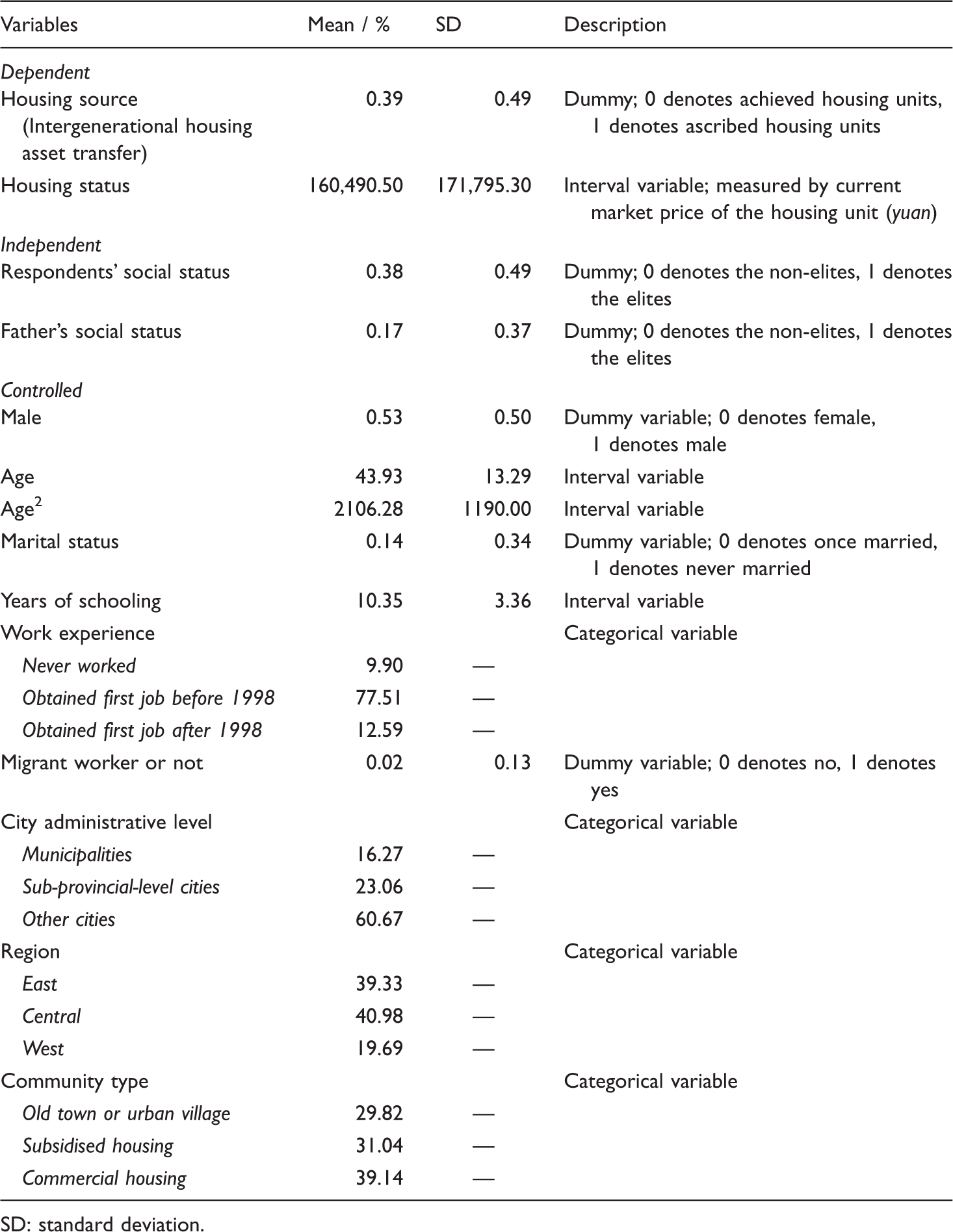
In order to avoid some potentially confounding biases, 10 demographic and geographic variables are included as control variables. For demographic variables, in addition to gender, age, age squared, marital status and years of schooling, work experience and migrant worker status are also controlled. Work experience is a categorical variable that differentiates between three situations: (1) has never worked, (2) obtained the first job before 1998 and (3) obtained the first job after 1998. This variable is controlled because the massive housing reform and housing commodification was completed in July 1998 (Li Q, 2009; Lee and Xu, 2009). Therefore, it is more likely that those who started to work before 1998 obtained housing units, because housing units were still a form of public welfare allocated by work units and were not transferable at that time. Those who obtained their first job after 1998, however, were more likely to have ascribed housing units. Migrant worker status is also controlled because migrant workers are more likely to be self-dependent in purchasing a housing unit outside their hometown.
At the macro level, city administrative level, region and community type are controlled. The inclusion of city administrative level and region was intended to parse out the influence of locality on housing sources and housing status, because it acts as a ‘structural barrier’ of resource distribution in China (Bian et al., 2006). Scholars (e.g. Xie and Hannum, 1996) have pointed out that resource distribution and economic growth have been highly uneven in China, and the difficulty of purchasing housing units has increased with economic growth and urbanisation (Bian and Liu, 2005). Therefore, these two variables must be included in the regression model. In addition, community type is controlled, which differentiates among (1) old towns or urban villages, (2) subsidised housing communities and (3) commercial housing communities, in that it indicates different means of housing acquisition. The detailed information about these variables is summarised in Table 3.
Models
As mentioned above, there are two dependent variables in this study: housing source and housing status. Whereas one is a binary variable, the other is a continuous variable. Therefore, when housing source is the dependent variable, a binary logistic regression model is used; when housing status (current market price of the housing unit) is the dependent variable, a linear regression model is used.
Findings
Descriptive analysis
In the analytical sample, 39% of households (1017) live in ascribed housing units and the remainder (61%) live in achieved housing units, as shown in panel (a) of Figure 1. This illustrates that inheriting housing units from parents is no longer a rare phenomenon in urban China. With deepening housing marketisation and surging housing prices, intergenerational housing asset transfer should play a more crucial role in housing stratification in the future.
Distribution of housing source and intergenerational mobility, (a) Housing Source and (b) Intergenerational Mobility.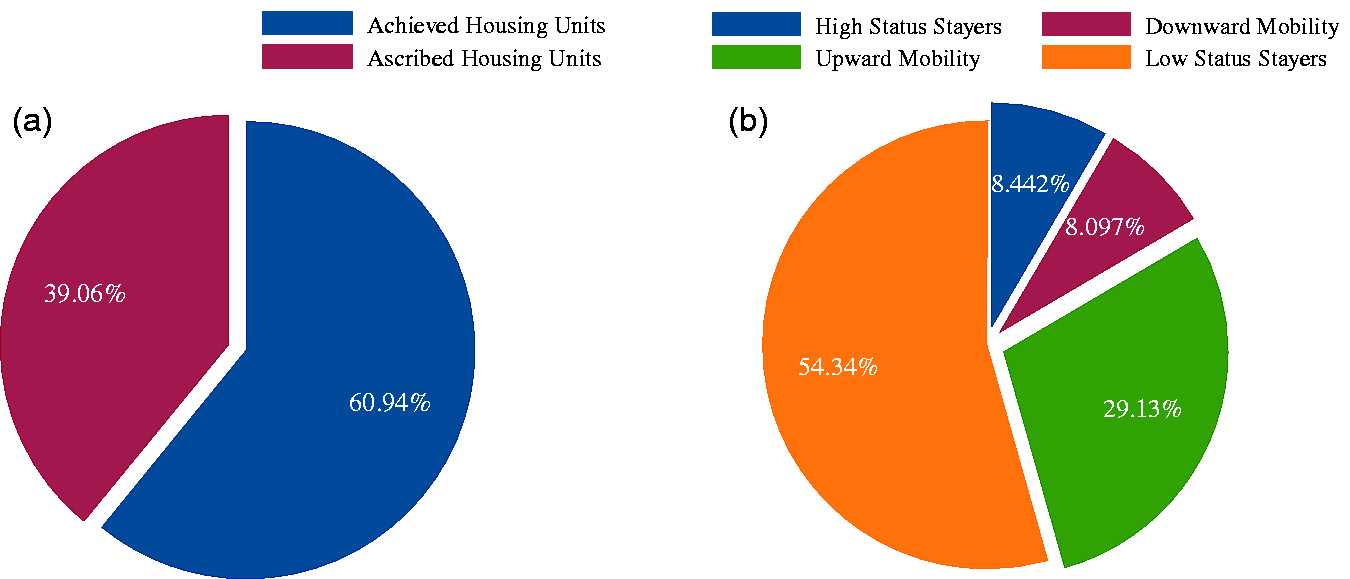
Panel (b) of Figure 1 shows the distribution of individuals with different experiences of intergenerational social mobility. Among the 2606 respondents, 3.44 % are high-status stayers (Type I), 8.10% are intergenerational downward-mobilised people (Type II), 29.13% are intergenerational upward-mobilised people (Type III) and 54.34% are low-status stayers (Type IV). These four types of individuals have different likelihoods of getting ascribed housing units, which may further influence their housing status.
The black bars in Figure 2 represent the proportion of individuals living in ascribed housing units, and the grey bars represent the average market price of housing units for each type of individual with a different experience of intergenerational mobility. From the black bars, we can see that the possibility of living in ascribed housing units depends not only on one’s father’s social status, but also on one’s own social status. Specifically, because elite fathers are more likely to transfer housing assets to their children, elite children are less likely to live in ascribed housing units. Therefore, intergenerational downward-mobilised people have a higher likelihood of living in ascribed housing units (51.18%), compared to low-status stayers (44.99%) and high-status stayers (33.18%). Intergenerational upward-mobilised people have the lowest likelihood (26.35%) of living in ascribed housing units. In other words, intergenerational upward-mobilised people are far less likely to inherit housing assets from parents than are intergenerational downward-mobilised people, just as the first hypothesis predicts.
Housing source and housing status by intergenerational mobility.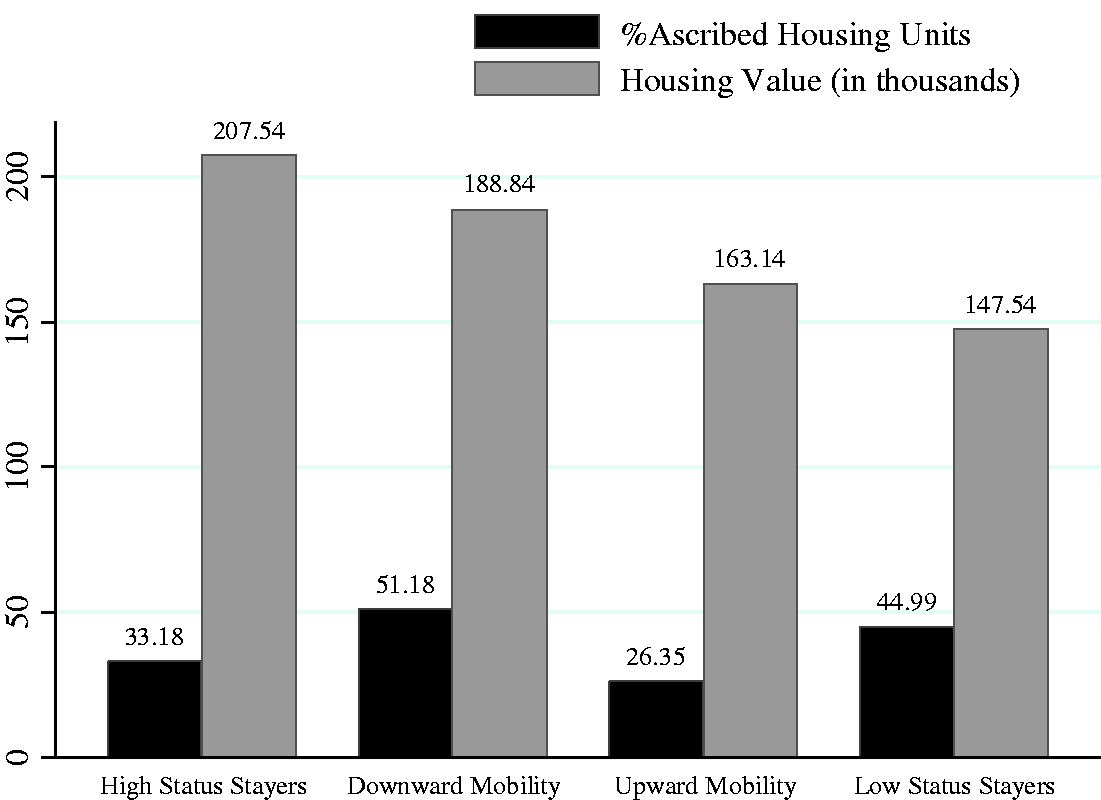
Moreover, from the grey bars, which indicate the average housing value for each type of individual, we can see that fathers’ elite status plays a greater role than children’s elite status on the latter’s housing status in contemporary China. The transferred housing assets from elite fathers can help individuals to improve their own housing status. Therefore, even for intergenerational downward-mobilised people, the average market price of their housing units (188,840 yuan) is higher than that for upward-mobilised people (163,140 yuan), which is consistent with the Housing Status Hypothesis. But for individuals with non-elite fathers, living in ascribed housing units is more likely to be their last option. Although 44.99% of low-status stayers live in ascribed housing units, their average value is the lowest (147,540 yuan). These people cannot rely on their own efforts to get higher-quality apartments, nor can their parents help in this regard.
In brief, these descriptive analyses show that ascribed factors have played a more crucial role than achieved factors in individuals’ housing status in contemporary China, and intergenerational housing asset transfer acts as an important mechanism of inequality reproduction. Of course, these observations are confounded by various demographic and geographic factors. In the following section, more rigorous quantitative evidence of regression analysis is provided for this study’s proposition.
Regression analysis
Analysis on intergenerational housing asset transfer
Logistic regressions on obtaining intergenerationally transferred housing asset
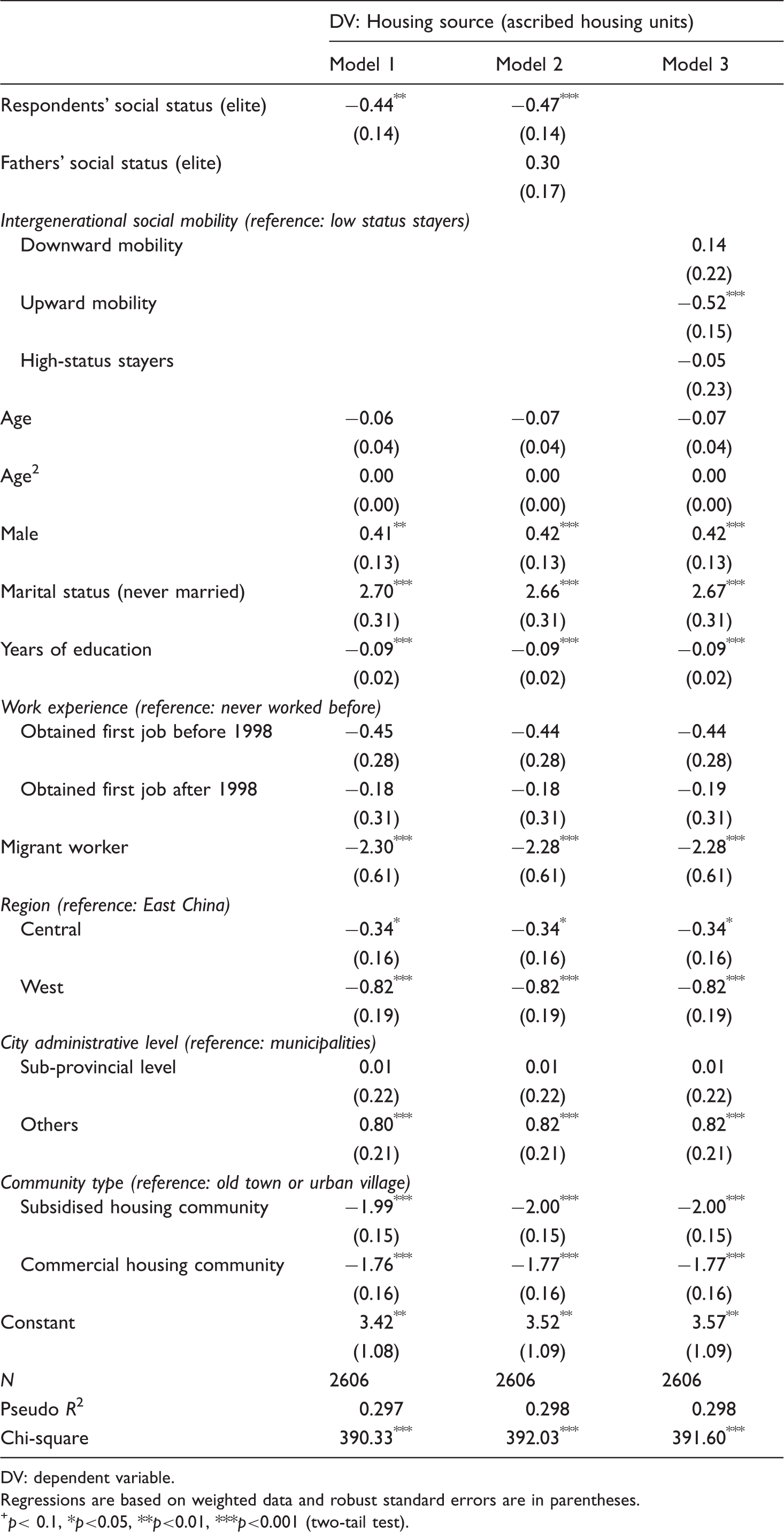
DV: dependent variable. Regressions are based on weighted data and robust standard errors are in parentheses. +p< 0.1, *p<0.05, **p<0.01, ***p<0.001 (two-tail test).
Linear regressions on housing status
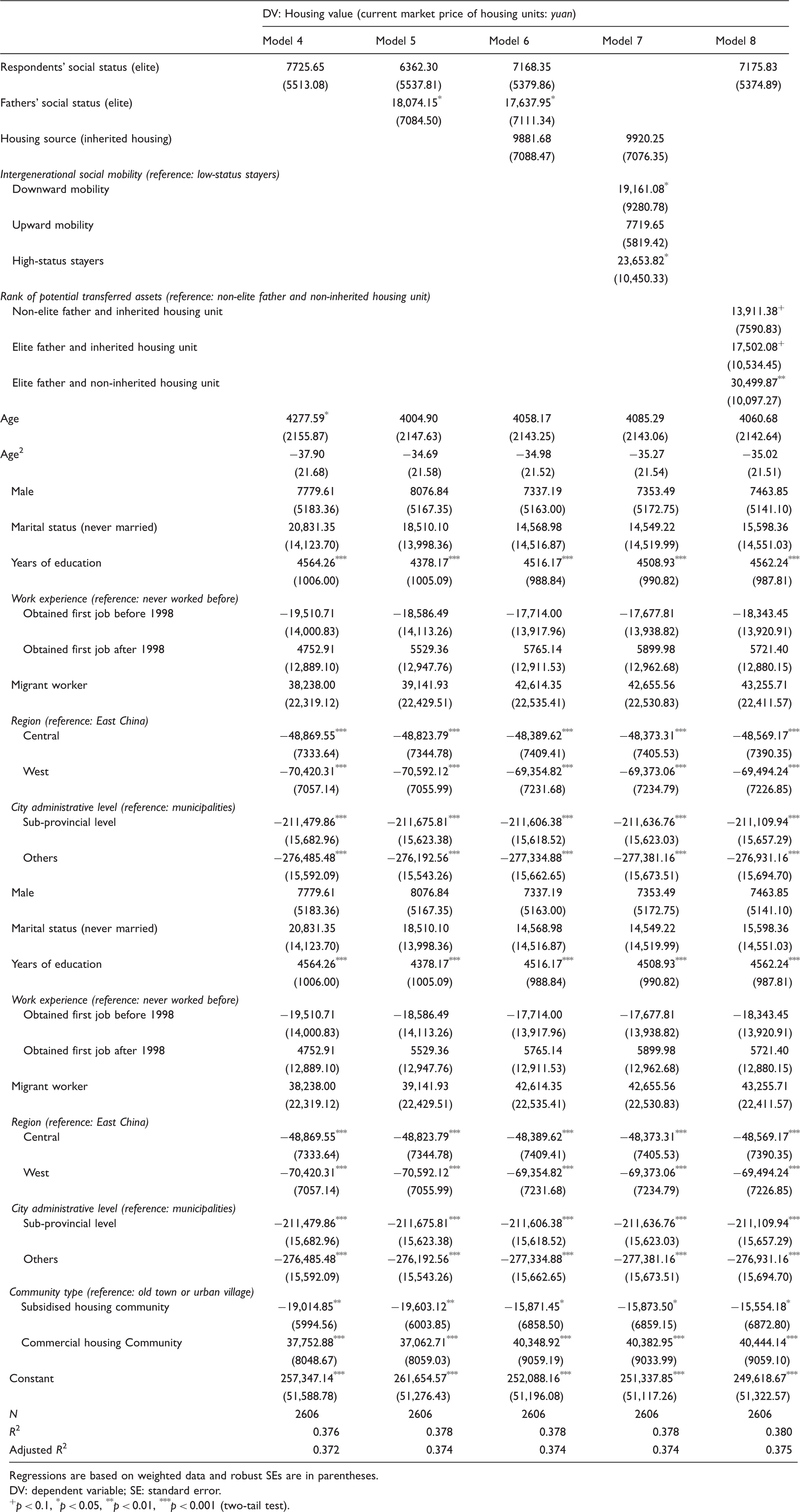
Regressions are based on weighted data and robust SEs are in parentheses.
DV: dependent variable; SE: standard error.
p < 0.1, *p < 0.05, **p < 0.01, ***p < 0.001 (two-tail test).
The models in Table 4 aim to test the first hypothesis, the intergenerational housing asset transfer hypothesis. I hypothesise that intergenerational downward-mobilised people are more likely than those who experience upward mobility to receive transferred housing assets and live in ascribed housing units. The dependent variable here is housing source (whether one lives in an ascribed housing unit or not). A binary logistic regression is used to construct three nested models. In Model 1, only respondents’ own social status and control variables are included; in Model 2, father’s social status is added based on Model 1; and in Model 3, a further interaction term is added between a respondent’s social status and his or her father’s social status. To facilitate the contrast among categories and the interpretation of the coefficients in Model 3, the conventional interaction method is not used, but rather a four-category variable, ‘intergenerational mobility’, is constructed based on the information about the respondent’s and his or her father’s social status, making low-status stayers (if both respondents and their fathers are non-elites) the reference group.
As shown in Table 4, in Model 1 a respondent’s elite status has a negative effect on the possibility of living in an ascribed housing unit, net of the effects of all other control variables, being statistically significant at the 0.01 level. The coefficient is −0.44, meaning that with all other variables being controlled, the likelihood of elites living in an ascribed housing unit is only 64.4% (e−0.44) that of non-elites. This is consistent with the findings of the descriptive analysis. On average, higher-status people are less likely to receive transferred housing assets.
What, then, are the effects of parental social status? The results in Model 2 show that net of respondents’ elite status and other control variables, the main effect of a father’s social status is positive – having an elite father increases respondents’ chances of getting ascribed housing units by 35.0% (e0.30 − 1). This is also consistent with the findings of the descriptive analysis. However, because the coefficient is insignificant at the 0.05 level, there is no strong evidence to assert that a father’s elite status matters.
The results given in Model 3 provide direct evidence for Hypothesis 1 about intergenerational housing asset transfer. Among the four types of individuals with different experiences of intergenerational mobility, there is almost no difference between low-status stayers’ and high-status stayers’ likelihood of living in ascribed housing units. However, the likelihood of intergenerational downward-mobilised people living in ascribed housing units is 15% (e0.14 − 1), higher than that of low-status stayers. For upward-mobilised people, the odds are 41% lower (e−0.52 − 1). When we directly compare upward- and downward-mobilised people, the likelihood of the former getting ascribed housing units is only 50% that of the latter (e0.14+0.52 − 1), and this difference is significant at the 0.001 level.
In short, the regression results in Table 4 show that upward-mobilised people receive limited financial support from their parents in terms of housing acquisition; in fact, they may even need to devote part of their wealth to improving their parents’ living conditions. In contrast, elite parents provide strong financial assistance to their downward-mobilised children, which allows the latter to sustain their living conditions. These results provide very strong evidence for the first hypothesis – intergenerational upward-mobilised people are far less likely to receive transferred housing assets and live in ascribed housing units compared with intergenerational downward-mobilised ones.
Analysis of housing status
The models in Table 5 provide evidence for the housing status hypothesis, which emphasises the role of intergenerational housing asset transfer in reproducing housing inequality. As shown in Table 5, the dependent variable is housing status, which is measured by the current market price of the housing unit. In addition to control variables, which are included in all models, in Model 4, only respondents’ social status is included; based on Model 4, in Model 5, fathers’ social status is added, and Model 6 includes housing source. Models 7 and 8 are both built on Model 6. In Model 7, a four-category variable – intergenerational social mobility – is added that is constructed by cross-classifying respondents’ social status and their fathers’ social status. In Model 8, a four-category variable – ranking of potential transferred assets – is added that is constructed by cross-classifying fathers’ social status and housing source. While Model 7 gives direct evidence for the housing status hypothesis, the explanation for constructing Model 8 will be discussed in the next session.
As we can see from Table 5, in Model 4, which only includes respondents’ social status, its coefficient is insignificant, indicating weak evidence of any relationship between elite status and housing status, net of the effects of other controlled variables. In Model 5, which also includes fathers’ elite status, the results show that a father’s elite status has a large and significant effect on an individual’s housing status. Although the individuals’ own elite status has a premium of only 6362.30 yuan, the premium from their fathers’ elite status triples that. Having an elite father indicates that the market price of an individual’s housing unit will be, on average, 18,074.15 higher than others, net of the effects of his or her own elite status and other control variables. The positive effect of fathers’ elite status is statistically significant at the 0.05 level. The result is very telling and provides strong support for this study’s proposition. With the housing prices soaring, individuals can hardly depend on themselves to obtain a better housing unit, and their parents’ financial support plays a more substantial role.
How, then, does intergenerational housing asset transfer reproduce housing inequality? The results of Model 7 shed some light on this question. In Model 7, the effect of the experience of intergenerational mobility on individuals’ housing status is examined, controlling for housing source and other variables. The result is astonishing: those who have experienced intergenerational social mobility do not change their relative status in the housing stratification system. Compared with low-status stayers, intergenerational upward-mobilised people, although they achieve elite status, do not have significant advantages in their housing status (7719.65 yuan). In contrast, intergenerational downward-mobilised people, although they become non-elites, have a significantly higher average housing value, with a premium whose size almost triples that of upward-mobilised people (19,161.08 yuan). Although the advantage of downward-mobilised people is not statistically significant compared with that of upward-mobilised people, it at least shows that the housing status of the former is not lower than that of the latter. Combining this evidence and the results given in Table 4, which shows that downward-mobilised people are more likely to get ascribed housing units than upward-mobilised people, we can clearly observe the substantial role of intergenerational housing asset transfer on inequality reproduction. Considering that housing assets constitute the largest portion of household wealth in contemporary China, intergenerational housing asset transfer has probably become the most important mechanism of economic inequality reproduction.
Potential transferred assets and housing status
A qualification is in order. In the research design, housing source was used to measure intergenerational housing asset transfer. Housing source (i.e. owning ascribed housing units) appears to be a direct indicator of the receipt of parental housing assets. However, this measure only captures limited or even biased information about intergenerational housing asset transfer. There are two reasons for this; first, parents often transfer housing assets to their children by providing them with monetary assistance when purchasing a new housing unit, and this monetary assistance is not captured by the data and cannot be differentiated; and second, children live in ascribed housing units only when they cannot afford to buy a better unit, even with the support of their parents.
The limitation of housing source as a measure of intergenerational housing asset transfer is reflected in Model 6. In Model 6, the inclusion of housing source does not change the coefficients of the respondents’ elite status and their fathers’ elite status significantly, and the coefficient of housing source is of modest size and not significant. The average market price of ascribed housing units is 9882 higher than achieved housing units net of the effects of status variables and other control variables. Although positive, this effect is insignificant and cannot explain the significant premium of having an elite father. Therefore, further analysis is required to explore the impact of intergenerational housing asset transfer on an individual’s housing status.
To provide more information on intergenerational housing asset transfer, a second measure was developed, rank of potential transferred assets. Rather than this measure being treated as a continuous measure, a typology is again used to rank the potential received amount of parental assistance regarding housing acquisition. The ranking is generated from the information on parental social status and housing source. Because few individuals can purchase a high-quality housing unit by themselves, many live in inherited housing units because they cannot afford a higher quality unit, even with financial support from their parents. Thus, whether housing source indicates a large amount of asset transfer also depends on parental social status.
Potential amount of transferred housing assets
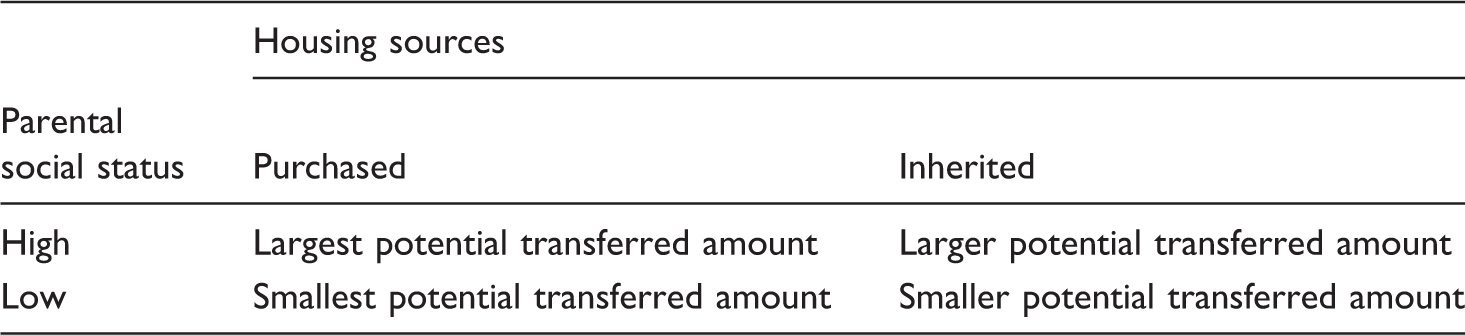
With this second measure of intergenerational housing asset transfer, Model 8 is constructed in Table 5. This model examines the effect of rank of potential transferred assets on one’s housing status, controlling for respondents’ own social status and other demographic and geographic variables. The result is very telling. The reference group is the one with the lowest rank (non-elite father and non-inherited housing unit), and the other three groups are in ascending order according to their rank. The larger the potential amount of intergenerational transferred housing assets, the higher the housing status of the respondent. Compared with the lowest rank, the average housing price for those with non-elite fathers and inherited housing units is 13,911 yuan higher; for those with elite fathers and inherited housing units, it is 17,502 yuan higher; and for those with elite fathers and non-inherited housing units, it is 30,500 yuan higher, net of the effects of the respondents’ own elite status and other control variables. The coefficients of the former two are significant at the 0.1 level, and the last one is significant at the 0.01 level. These results provide strong evidence of the crucial role of intergenerational asset transfer on one’s housing status, irrespective of a respondent’s own social status and the effects of other control variables.
In short, these analyses inform us that ascribed factors (e.g. parental status) play a more crucial role than achieved factors (e.g. individuals’ own social status) in individuals’ housing status in contemporary China. In particular, intergenerational housing asset transfer prevents intergenerational mobilised people from changing their relative housing status. Thus, the act of parents transferring their social advantages to their children becomes an important mechanism for reproducing housing inequality.
Conclusion
Very little of the previous work on housing stratification in transitional China has explored the extent and mechanisms of intergenerational housing inequality reproduction. This study fills this gap and examines how intergenerational housing asset transfer affects housing status in contemporary urban China. Using the urban sample of the CGSS 2006, a typology is developed of individuals based on their experiences of intergenerational mobility and their differences are examined in obtaining ascribed housing units and housing status. In particular, this study focusses on the comparison of intergenerational upward-mobilised and downward-mobilised individuals to evaluate the extent to which intergenerational housing asset transfer reproduces housing inequality.
The statistical results show that ascribed factors such as fathers’ elite status play a much greater role than individuals’ own elite status in determining their housing status. Moreover, both of this study’s research hypotheses are verified. First, intergenerational downward-mobilised people are most likely to get transferred housing assets from their parents. Second, though downward-mobilised people are non-elites and of lower social status, their housing status is even higher than that of upward-mobilised people (i.e. elites with non-elite parents). These findings suggest that intergenerational housing asset transfer exerts a strong influence on individuals’ housing status. It inhibits intergenerational mobilised people from changing their relative housing status in the context of housing privatisation. It has thus become an important mechanism of inequality reproduction in contemporary China.
The major shortcoming of this study is that the measure of intergenerational asset transfer is not entirely satisfactory due to the limitations of the data. In fact, this information is rare in all available surveys. To overcome this liability, a four-category variable was designed to rank the potential amount of intergenerational transferred housing assets based on the information about housing source and fathers’ elite status. Consistent with other findings, the results show that the higher the potential amount of intergenerational transferred housing assets, the higher the respondents’ housing status.
In sum, intergenerational housing asset transfer has become an important mechanism of housing inequality reproduction in contemporary China. With deepening marketisation and rising wealth inequality (Xie and Jin, 2015), intergenerational transmission of economic resources is likely to be increasingly crucial in reproducing social and economic inequality.
Footnotes
Declaration of Conflicting Interests
The author(s) declared no potential conflicts of interest with respect to the research, authorship, and/or publication of this article.
Funding
The author(s) received no financial support for the research, authorship, and/or publication of this article.