




Abstract
Research on China’s internal migration has mostly focused on moving rather than staying. Urban destinations of migrants are often seen as discrete points of economic opportunity in space, exerting a magnetic force on the rural population from the countryside. But after commencing their urban lives, rural migrants start to perceive their host cities and towns as places that entail value and meaning, which may encourage them to settle. This paper examines how the settlement intentions of rural migrants vary across urban destinations and socioeconomic backgrounds. A questionnaire survey dataset of 10,896 rural migrants in cities of different tiers in Jiangsu Province is used to unravel the factors that predict rural migrants’ settlement intentions. In addition, interviews with rural migrants and their family members are examined to explore the personal experiences and subjective perceptions that may contribute to their inclinations to settle in the city. Results indicate that the factors which encourage rural migrants to settle differ significantly from those which drive them to migrate. Economic and social resources and a resultant sense of (in)security are the prominent factors affecting rural migrants’ intentions to settle in cities.
Introduction
Research on China’s internal migration has focused on moving rather than staying. Urban destinations are often seen as discrete points of economic opportunity in space, exerting a magnetic force on the rural population from the countryside (Shen, 2017; Yang et al., 2017). The magnetic force has mobilized surplus rural laborers into urban industrial and service sectors, propelling the economy to boom. It also offers rural citizens alternative pathways for upward social mobility and greater wellbeing. A direct consequence of the process is the creation of a ‘floating population’ of three hundred million rural migrants across cities and towns in China (National Bureau of Statistics of China, 2017).
In the first two decades of the reform era (i.e., 1980s and 1990s), going to the city to work (jin cheng da gong) and returning to the countryside was the prevailing practice. Migration was temporary and/or circular, and the ultimate goal of a migrant worker was to make money in the city and send remittances home. Cities were merely job centers where more opportunities were available and cash incomes could be made (Chang, 2009; Fan, 2007, 2011). Other aspects of urban life, such as high living standards, better infrastructure and services, and a glamorous urban lifestyle were almost irrelevant to the decision to migrate. Settling in the city was rarely a part of rural migrants’ life aspirations. However, the situation has been changing in the past decade, with more and more rural migrants gaining the ability to earn long-term livelihoods in cities and benefiting from the amenities provided there (Gu and Ma, 2013; Hao and Tang, 2015; Zhu and Chen, 2010).
Working and living in a city provide a context in which rural migrants can experience the city through a variety of socioeconomic activities. Through such personal experiences, rural migrants come to understand the city more deeply. In other words, they get to know the city through place (Tuan, 1977). The city, which was an abstract space for jobs, has become meaningful through a narrative understanding of place (Nicholas, 1991). Such an understanding involves two types of links between an individual and the city—a sense of dependence, which is utilitarian, and a sense of attachment, which is emotional. These links are the primary drivers that encourage rural migrants to make a long-term commitment to living in the city. At the same time, rural migrants are also influenced by their links to their rural homes—by the rural livelihood, the agricultural way of life, the rural homestead and house, and the close-knit, clan-based community—all of which imply utility and sentimental values as well. These encourage dependence on and attachment to the rural home, which may deter rural migrants from settling in the city.
An intention to settle involves at least two factors. It hinges on one’s dependence on and attachment to both his/her urban destination and his/her rural birthplace. Effective extrapolation of the settlement intentions of rural migrants requires a conceptual framework that includes the utilitarian and sentimental links to the host city and rural home simultaneously. In this paper, we apply such a conceptual framework to modeling using a questionnaire survey dataset of 10,896 rural migrants in cities and towns of different tiers in Jiangsu Province. In addition, interviews with rural migrants and their family members are examined to help interpret the determinants of and deterrents to their inclinations to settle in the city. Findings from this research are instrumental for developing more inclusive urban policies to better integrate and assimilate rural migrants into urban societies, which facilitates the goal of the people-oriented urbanization (China Daily, 2017).
The paper is organized as follows: the second section reviews the literature on the settlement intentions of migrants and their motivators; the third section introduces our methods and data; the fourth section reports the results of the analysis; and the final section concludes the paper by offering some policy and social implications.
Literature review
Explanations of migration are often attributed to income differentials and a relative abundance of employment opportunities across different regions. Ravenstein’s (1885) laws of migration suggest that people move for economic reasons. He also notes that the majority of moves take place over short distances, and as the distance between two places increases, the frequency of moves decreases. In this view, migration is a response to regional development disparities and to the friction of distance. Similarly, neoclassical theory views migration as the consequence of an imbalance between labor demand and supply across regions and of individuals’ rational calculations of costs and benefits (Sjaastad, 1962). Consequently, migration functions as an equilibrating tool that drives labor movement from low-wage to high-wage areas, which will eventually even out regional wage differences. As a logical consequence of this economic rationality, a reason to settle in the migration destination is to benefit from the better livelihood and living standards provided by the host city rather than by the home place.
Following the economic rationality, the development status and industrial structure of a host city may affect rural migrants’ settlement intentions because these determine the size and composition of the job market in a city (Garasky, 2002), hence the prospects for employment opportunities. Given migrants’ insecure employment statuses, whether it is always possible to find a job immensely influences their decisions about settling in the host city. In addition, the cost of living in the host city and area-specific amenities and disamenities are important factors (Mills and Hazarika, 2001). In China, living standards (Hare, 1999; Liu and Xu, 2017), language and cultural barriers (Cai and Wang, 2008), and the degree of institutional constraints (Chan, 2009) vary across regions and cities. In general, large cities provide better employment opportunities and living environments, but unequal treatment of rural migrants in terms of housing and basic social welfare is more serious in these cities (Feng et al., 2002; Li et al., 2010; Wu, 2004). These factors may lead to different settlement intentions for rural migrants in larger and smaller cities (Wang and Fan, 2006; Zhu, 2003).
While explanations for migration primarily come from economic perspectives, explanations for settlement are more often offered from social and anthropological perspectives. The pursuit of a better quality of life assumes great importance in permanent migration (Hugo and Smailes, 1985). For more committed migrants, lifestyle and residential preferences are important contributors to settlement intentions. For example, rural migrants typically take the amenities provided in the host city (Henning et al., 2012), public infrastructure, and lifestyle choices (Beauchemin, 2011) into consideration. In addition, migrants tend to settle in places where local people share their language and ethnic backgrounds (Fafchamps and Shilpi, 2013). Geographers also attempt to analyze migration and its relationship to place across different scales (Gilmartin, 2008). Tuan (1977) sees space as an open arena of movement while place is about stopping and getting involved. Place is amenable to the senses of value and belonging. Memories of and familiarity with the host place as well as involvement in local social networks and communities are seen as important contributors to place attachment and sense of belonging, which tend to encourage permanent settlement (Brettell, 2000). In the meantime, place attachment and sense of belonging to the home origin tend to discourage migrants from settling in the destination. For understanding the settlement intentions of rural migrants, place provides an important theoretical lens.
Place is understood as a location with both physical and symbolic features (Phillips and Robinson, 2015). It is also a site of meaning and subjectivity on various scales (Massey, 1994). Altman and Low (1992) suggest that place attachment includes the physical setting, human activities, and social processes rooted in a setting. It signifies affective and cognitive bonds between people and places (Altman and Low, 1992), illustrates a sense of belonging to one place (Livingston et al., 2010), and links individual identity and identification processes (Twigger-Ross and Uzzell, 1996). When related to migration, the focus of place attachment research has recently been on changes in permanent residence (Gustafson, 2001) or on new ways of forming attachment without depending on long-term residence in a specific place (Feldman, 1990). Migrants built their sense of ‘settlement-identity’ by experiencing continuity in various places rather than a long-term residence in a specific location (Feldman, 1990). ‘Belonging’ represents the relationship between migration and identity, highlighting the means to exclusionary practices that migrants use on a range of scales (Gilmartin, 2008).
Explanations of the relations between place attachment/belonging and migration involve multiple perspectives. One perspective emphasizes the social, cultural, psychological, and emotional ties between a place and its residents, associating these residents with a sense of place attachment (Ralph and Staeheli, 2011). Migration is regarded as a deviation from such ties (Altman and Low, 1992; Relph, 1976). Nevertheless, the analytical focus may shift from a fixed, enclosed site to an extending connection between people and places across time and space (Brettell, 2006). In particular, for international migration, the concept of transnationalism offers a new perspective from which to analyze migrants’ relations to place that is grounded in both the place of origin and the place of destination (Al-Ali and Koser, 2003), shaping their identities, senses of belonging and everyday practices (Phillips and Robinson, 2015).
Scholars have also investigated the determinants of migrants’ place attachment, sense of belonging and strategies of place making. At the macro-level, political and material aspects of place affect place attachment. For instance, in Switzerland, the shift in state discourses concerning immigrants from taking a positive attitude to taking a defensive one that excludes immigrants from access to citizenship rights significantly reduces immigrants’ sense of belonging (Riaño and Wastl-Walter, 2006). A similar situation exists in Denmark with the new upsurge of nationalism (Koefoed and Simonsen, 2007). In comparing the experiences of immigrants from Latin America between two towns in the USA, Nelson and Hiemstra (2008) found that social capital, including grassroots political networks, organizing knowledge, and political networks, is important for low-paid and racialized immigrants to develop place attachment in Woodburn, whereas the local organization of space that separates immigrants from non-immigrants prevents the formation of a sense of place in Leadville. In London, UK, available opportunities and resources, local politics, and social mobility increase migrants’ place satisfaction and sense of belonging (Hickman and Mai, 2015). In addition to economic advantages, migrants enhance their sense of belonging and settlement intention for social, material and affective reasons such as good community interactions, proper amenities, and promising life prospects (Raffaetà and Duff, 2013).
At the micro-level, the importance of the social environment is often highlighted for forming place attachment (Mesch and Manor, 1998). The presence of family and relatives, social networks, and familiar physical environments helps develop place attachment for migrants (Heleniak, 2009), while discrimination and elite privilege of native residents often hinder migrants from developing a sense of belonging (Lawson, 1999). Social ties, including everyday communication in a neighborhood and spatial integration of local and migrant residents, increase the place attachment of migrants (Kohlbacher et al., 2015). Additionally, having children may also increase the place attachment of migrants. For instance, Arab-Americans who decide to raise children in the USA tend to consider the USA as their home (Staeheli and Nagel, 2006). Rose et al. (1998) found that immigrant women with small children tend to establish more social contact with neighbors, which increases their sense of place attachment.
Age or life stage is identified as another important determinant of place attachment. Older people have higher levels of place attachment because of their lower levels of mobility (Hidalgo and Hernández, 2001). Similarly, length of residence is associated with place attachment because of the development of familiarity, safety, and social ties and the establishment of routines in spatial activities (Altman and Low, 1992). For instance, in three urban settings in Vienna, older age and longer length of residence increase place attachment of both natives and migrants (Kohlbacher et al., 2015). Education can influence migrants’ sense of belonging in the host society through extending social networks. For instance, in Germany, higher educational attainments of immigrants increase inter-ethnic friendships and mitigate the effect of ethnic residential segregation (Schlueter, 2012). In the Netherlands, highly educated ethnic immigrants tend to have fewer close friends and family members in their neighborhoods, hence a weaker sense of belonging to their ethnic communities (Dekker and Bolt, 2005).
In the meantime, migrants adopt various strategies to create or enhance their sense of belonging. For instance, in Germany, Turkish immigrants tend to behave more ‘German’ or more ‘Turkish’ to reinforce their identities and sense of belonging (Ehrkamp, 2006). Another strategy is to form ‘ethnic enclaves’ and be voluntarily segregated from the host society (Massey and Denton, 1988). In Germany, Turkish immigrants transform some neighborhoods into Turkish spaces with Turkish businesses, religious communities and communal centers, which helps create a place of belonging for the ethnic community (Ehrkamp, 2005). In the UK, certain public places, including Polish shops, internet cafés, restaurants, libraries, and churches function as meeting places, which facilitates the building of Polish communities and their sense of belonging (Gill, 2010). In London, Milan, and other western cities, ‘Chinatown’ functions as a specific urban place to support Chinese immigrants. This phenomenon is not only reproduced across different settings but also carries a historical weight (Hatziprokopiou and Montagna, 2012). In the US state of Washington, large localized Polish communities offer new immigrants more assistance, such as employment opportunities and social resources, than small, non-localized Polish communities (Aroian, 1992). In China’s larger cities, peasant enclaves and native-place communities facilitate the establishment of social ties among migrants and enhance their sense of belonging to the place of origin (Ma and Xiang, 1998).
In China, despite the incomplete rural property rights—farmers may lease their land but cannot sell it except to the government—landholders tend to maximize the utility of their land to capture its potential value. As investment capital frenetically gathers rural land for development and centralized agricultural production, the value of rural land has appreciated tremendously. Rural landholdings have turned from a means of livelihood into a fixed asset the value of which varies according to the type, quantity and location of the land (Hao and Tang, 2015; Tang et al., 2016). The revenues generated from rural land instantaneously improve the lives and social statuses of their holders. Differentiated values of rural land tend to affect the life chances of rural migrants who then tend to develop a stronger utilitarian tie to their rural homes if their land is more valuable. In addition, having rural land or a home in the countryside implies stronger sentimental links with the rural livelihood, lifestyle, and community. These utilitarian and sentimental links with the rural origin have been found to influence rural citizens’ major life choices, including migration (Zhao, 1999), destination choice (Hao and Tang, 2017), hukou conversion (Hao and Tang, 2015), and return migration (Wang and Fan, 2006).
Methods and data
Settlement intention can be understood as resulting from a combination of multiple concerns related to place. These concerns are formed in two dimensions—a set of factors that represent a sense of place dependence and a set of factors that represent a sense of place attachment. Place dependence, on the one hand, assumes a functional link to a place, involving factors such as employment opportunities, job security, amenity provisions, and standard of living. Place attachment, on the other hand, is a sentimental link to a place, including a sense of belonging, social ties, and an emotional attachment to a place. For China’s rural migrants, settling in the host city is a departure from the rural home. Given their relevance to both destination and origin, the two types of links should be evaluated for both places to understand the settlement intention, which reflects a trade-off in place dependence and place attachment between the place-of-origin and destination.
Jiangsu, located in the Yangtze River Delta, is one of the most affluent provinces in China (Figure 1). It is often considered to be ‘two provinces in one’ (Veeck, 1995) because of profound socioeconomic disparities between its less developed North (Subei) and its prosperous South (Sunan) (Figure 2) (Wei and Fan, 2000). Throughout China’s imperial history, the natural barrier of the Yangtze not only separated South Jiangsu from the North China Plain, which suffered from frequent flooding and droughts in the lower reaches of the Yellow River (Zhang, 1993), it also shielded south China from invasions by northern nomads and from successive internal wars prior to the Ming Dynasty (Shan et al., 1986; Zhang, 1993). The so-called Jiang Nan (south of the Yangtze) region has enjoyed undisturbed growth in population and agricultural production, driving surplus rural laborers to handicrafts, commerce, and trade (Zhang, 1993). As a result, a high level of market economy was established in the Song Dynasty in Jiang Nan, where cities and urban regions have overtaken the North China Plain to become China’s new epicenter of economy and culture. In the mid-nineteenth century, the establishment of treaty ports gave rise to international trading and the development of modern industries in the cities of South Jiangsu, including Wuxi, Suzhou, and Changzhou (Shan et al., 1986; Zhang, 1993). In spite of the devastation during the Japanese invasion, and other social upheavals (Zhang, 1993), South Jiangsu has maintained its entrepreneurial culture and economic superiority over North Jiangsu (Long and Ng, 2001).
Jiangsu in China. The two sub-regions of Jiangsu.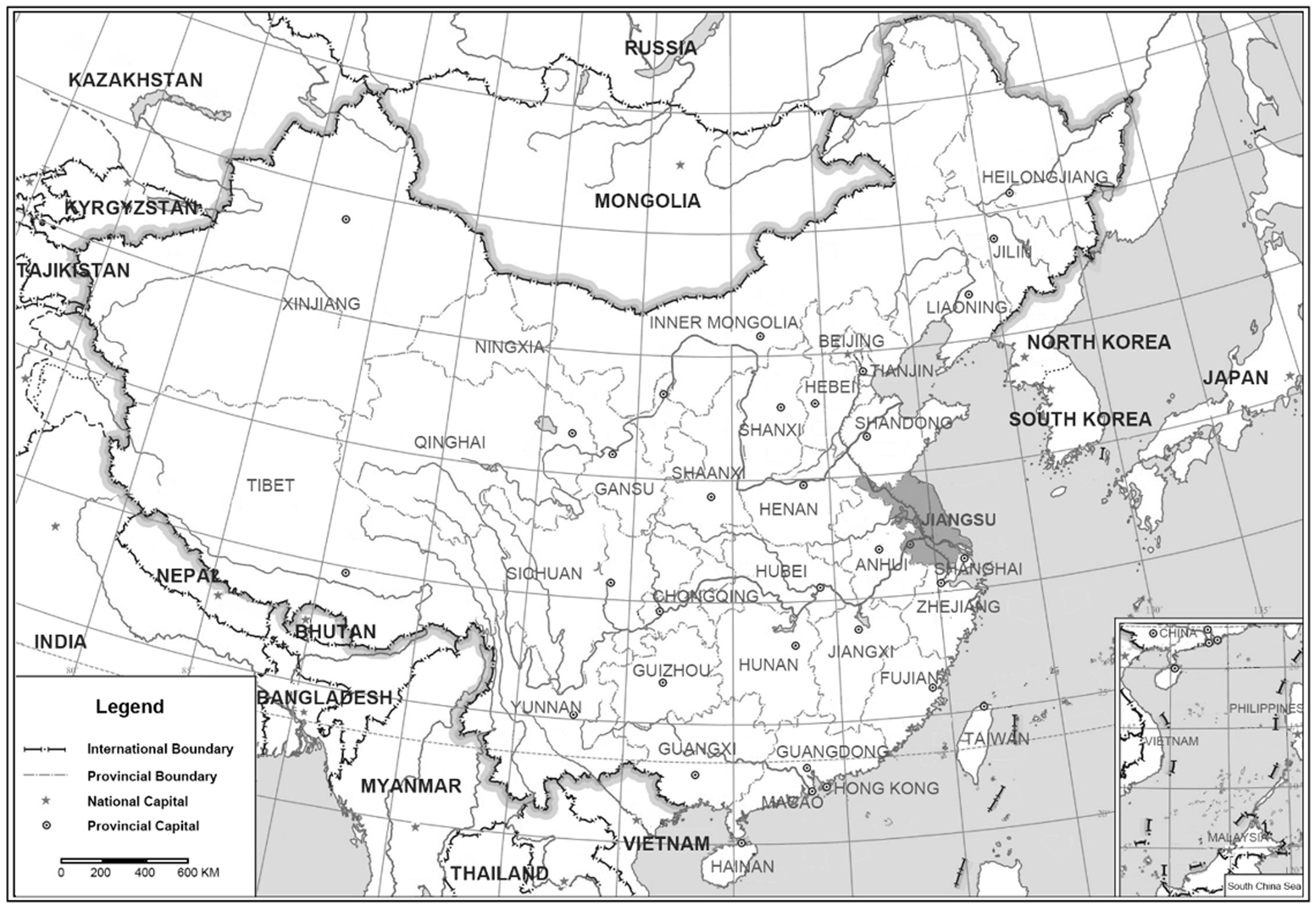
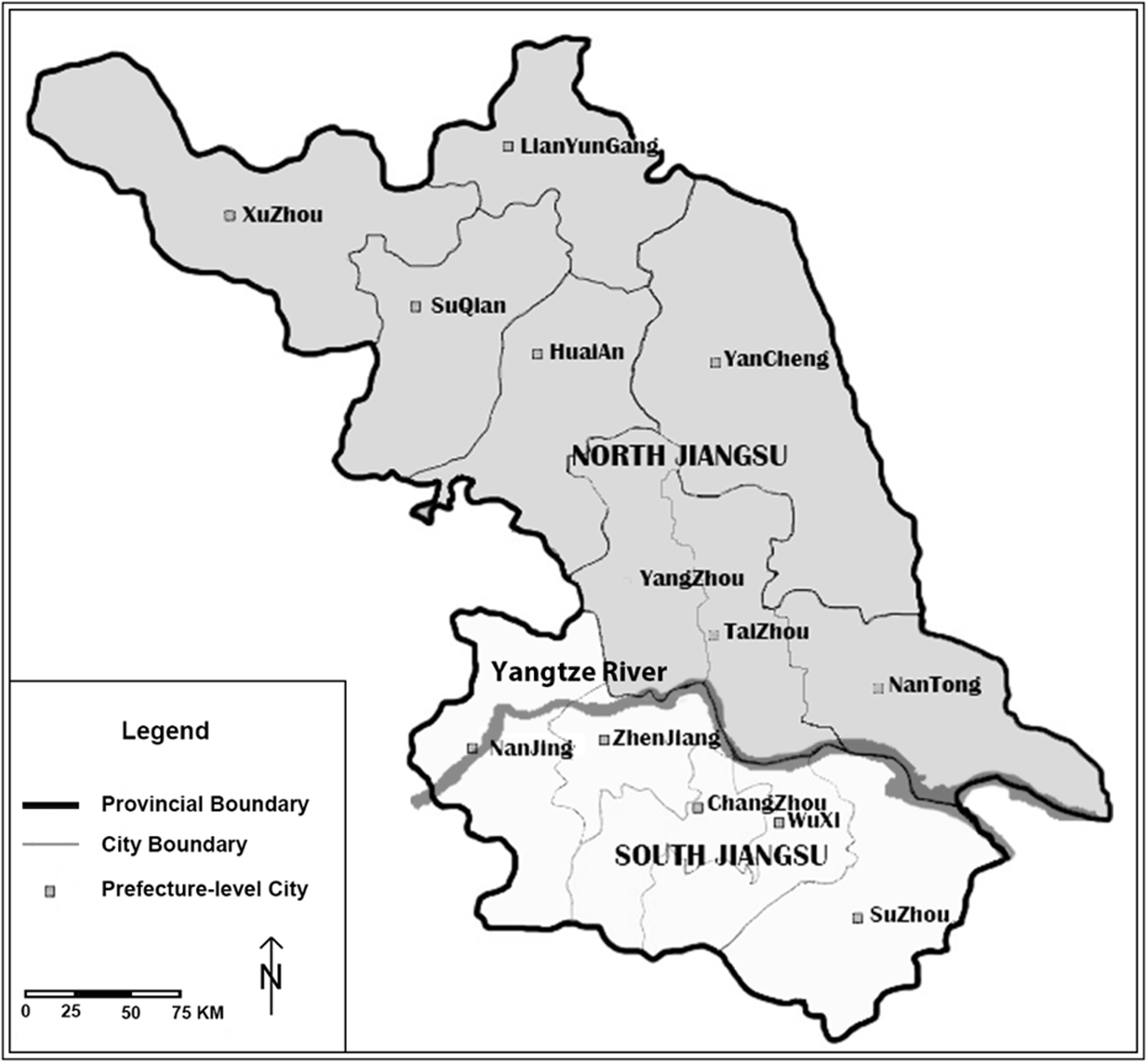
The historical disparities between North and South Jiangsu have been reinforced since China’s 1978 reforms, when cities in South Jiangsu enjoyed early implementations of reform measures of decentralization and privatization (Wei and Fan, 2000). In addition to state-owned enterprises (SOEs), township and village enterprises emerged as new growth engines (Ho, 1994). In contrast, North Jiangsu retained a large agricultural sector, and the urban economy remains dependent on SOEs (Wei and Fan, 2000). It is generally perceived that people from South Jiangsu are more open-minded and progressive, while people from North Jiangsu are more conservative (Long and Ng, 2001). In recent decades, development in South Jiangsu has continued to outpace that in North Jiangsu. In 2010, the per capita gross domestic products of North Jiangsu and South Jiangsu were RMB 60,055 and RMB 117,477, respectively (Jiangsu Provincial Bureau of Statistics, 2015). Given this intra-provincial disparity, the predominant migration flow is not only from rural to urban areas, but also from the less developed North to the more affluent South. Jiangsu’s economic development disparities and status as both a big sender and a receiver of rural migrants foster a large and diverse dataset of rural migrants with high degrees of variation in socioeconomic backgrounds and migration patterns, which has allowed this research to be conducted at the individual level without compromising the size and diversity of the sample.
Data were obtained from a migrant questionnaire survey conducted by the Farmer–Laborer Office of the Jiangsu Provincial Committee in 2010. The survey included 10,896 valid responses of rural migrants in 13 prefecture-level cities, 52 county-level cities, and 27 townships in Jiangsu. The survey collected information on rural migrants’ demographic characteristics, socioeconomic statuses, life experiences, future plans, and the availability and quantity of their rural landholdings. The questionnaire also explicitly inquired about the intention of the rural migrant to settle in the host city. Interviews with rural migrants and their family members were used to interpret the results of the statistical analysis and examine the subjective factors that influence rural migrants’ settlement intentions. In South Jiangsu, interviews were conducted in Nanjing and Suzhou as part of a smaller migrant survey (sample size 1065) conducted by the authors in 2015 and 2016. A total of 40 rural migrant respondents (18 in Nanjing, 22 in Suzhou) were identified from the survey sample for in-depth interviews according to their personal attributes (20 males and 20 females between ages 16 and 65) and occupations (20 in manufacturing or construction sectors, 16 in service sectors, and 4 in other sectors). In North Jiangsu, interviews were conducted in a larger number of cities and towns without a sampling frame. Respondents were identified in urban areas (i.e., industrial parks, migrant neighborhoods, and clusters of commercial and service outlets) where a high concentration of rural migrants were found. A total of 30 interviews were carried out in North Jiangsu in 2015 and 2016. In both sub-regions, each interview lasted about 45 to 60 min, recorded by taking notes.
In the questionnaire survey, respondents were required to select an answer from two options: (a) I am willing to settle down in this city; or (b) I am not willing to settle down in this city. No time frame was set for the question, which was designed to capture rural migrants’ current intentions regarding permanent settlement. Here settlement intention is purely about personal preference and is distinguished from hukou conversion, which was included as a separate question in the questionnaire and examined in another paper (Hao and Tang, 2015). To determine what encourages or discourages urban settling by rural migrants, settlement intention is regressed on a number of variables that represent the functional and sentimental factors. Some of the variables measure the socioeconomic status of the migrants directly. These include: gender; age; marital status; education; income; occupation; job duration; and housing status. Some of the variables, in fact, indicate place dependence on the host city and imply place attachment; thus, these variables reflect utilitarian and sentimental links at the same time. For instance, income earned in the host city may indicate the respondent’s level of utilitarian dependence on the host city. Marital status distinguishes among migrants who are single, those who are married and migrate with their spouses, and those who are married but migrate alone. Cohabitation with a spouse in the host city may exert both utilitarian and sentimental effects on settlement intention. For the factor of age, we classify the sample into two cohort groups—the generation born after 1980 (i.e., aged 30 or below in 2010), and their older counterparts—and examine the cohort difference. Our purpose is to detect not only effect of age or life-course stage on settlement intention but also the cohort effect between the two generations who were born and raised in dramatically different social environments before and after the reform.
Other variables are included to measure the effects of the rural origin and urban destination. Respondents are categorized by home region to identify the possible influences of regional differences across migration origins. To measure the influence of the rural home more precisely, the availability of rural farmland and the homestead of each migrant are considered. The landholdings not only reflect the utilitarian values of the rural farmland and housing to migrants, they also serve as proxy variables for place attachment to the rural home—if an individual migrant has farmland and/or a house at the rural home, he/she is more likely to develop an emotional attachment to the place of origin. In addition, rural migrants are distinguished according to their place of destination. The tiers of urban destinations—prefecture-level city, county-level city, and townships—are used to reflect the variation in utility provision and intangible glamor offered in different tiers of urban destinations.
Profile of the sample (%).
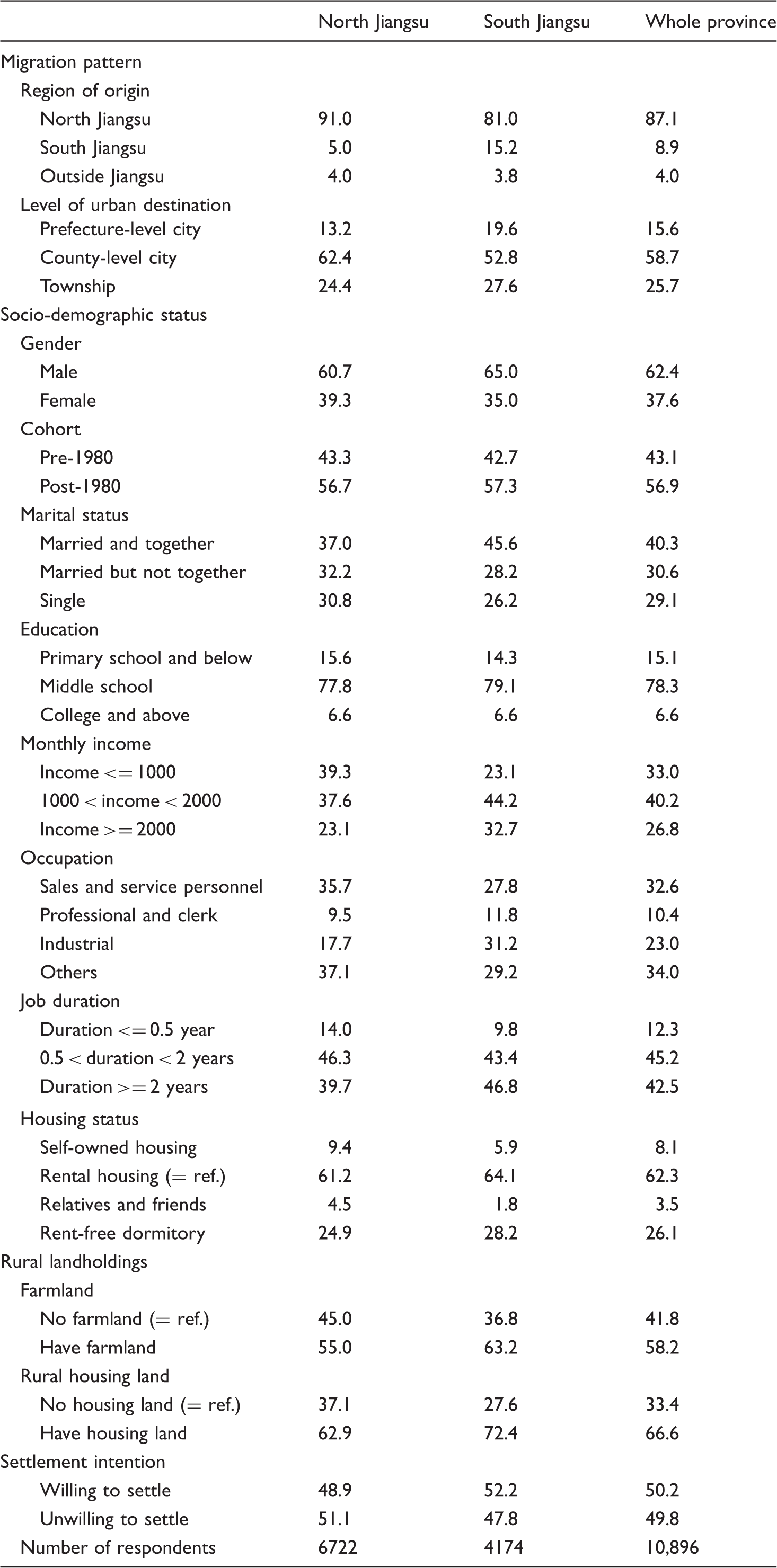
As for the socio-demographic attributes, 62.4% of the migrants were male, reflecting the gendered pattern of the urban labor market. The generation born after 1980 already made up more than half of the migrant population. Most of the migrants were married (70.9%), but almost half of the married migrants had left their spouses at home. Due to the overall improvement in education in the past decade, rural migrants had higher educational attainment than their older counterparts—78.3% had obtained secondary educations and 6.6% were college graduates, while in the 1980s and 1990s a much smaller proportion of rural migrants had such educational attainments (Chan et al., 1999). However, the income levels of rural migrants remained low. Two-thirds of the migrants had monthly incomes of less than 2000 RMB, which is considerably lower than the average monthly salary of 3375 RMB for Jiangsu’s working population in 2010 (Jiangsu Provincial Bureau of Statistics, 2011). More than half of the migrants worked in labor-intensive sectors, such as service and manufacturing industries, while one-third of the migrants indicated no specific occupation. This was primarily due to the fact that frequent job changes and temporary jobs are common among rural migrants. For the same reason, job duration was generally short—12.3% of the migrants had been working in their current employment for less than half a year, while 45.2% had been working in their current employment for more than half a year but less than two years. Due to their employment and social status, most rural migrants (62.3%) rented a place to live, while 26.1% were provided with rent-free dormitory housing. Homeowners accounted for 8.1% of the migrants and the percentage in the more expensive South Jiangsu (5.9%) was lower than in North Jiangsu (9.4%).
In terms of rural landholdings, 58.2% and 66.6% of rural migrants had farmland and rural housing land, respectively. Comparing migrants in the two sub-regions, larger proportions of migrants in South Jiangsu had farmland (63.2%) and housing land (72.4%) than migrants in North Jiangsu (55.0% and 62.9 %, respectively). This difference can be explained by the fact that urban areas in South Jiangsu attract and receive rural migrants from a larger radius, including rural areas where land is more abundant. In contrast, urban areas in North Jiangsu have smaller catchment areas, and hence absorb more migrants from nearby villages where land is scarce. Even though larger proportions of rural migrants have farmland and housing land at home, more than half of the respondents (50.2%) were willing to settle down in the cities and towns where they currently resided. The percentage was slightly higher for rural migrants in South Jiangsu than for those in North Jiangsu, reflecting the comparative advantage of more affluent regions for attracting migrants to settle.
Results
Given the regional development disparities between North Jiangsu and South Jiangsu, rural migrants in the two sub-regions are likely subject to different sets of factors when considering settlement in the city. In particular, South Jiangsu is commonly considered superior to North Jiangsu as a natural and cultural environment. Migrants to the two sub-regions are likely to hold different aspirations for settling in the first place, which may function as a filter in the migration process. To facilitate this structural difference, logistic regression models were built for rural migrants in the two sub-regions separately. To some extent, urban areas in South Jiangsu could represent cities and towns in the more affluent coastal regions of China, while urban areas in North Jiangsu are comparable to the cities and towns in China’s less developed inland regions. To complement our statistical analysis, interview data are examined and quoted to support our interpretation of the results.
When asked about their reasons for moving to the city, almost all interviewees indicated that the lack of job opportunities at home was their primary reason. Nevertheless, rural migrants from less developed regions tended to report difficulty surviving in their hometown. Mr Meng (age 45, from Huaibei, Anhui Province to Xuzhou) said, ‘Very few people in my village rely only on farming; if I had not moved to the city to work, I would have starved to death already.’ Rural migrants from more affluent regions tended to emphasize job opportunities in the city offering more options and alternative ways to succeed. For instance, Mr Liu (age 19, from Jining, Shandong Province to Wuxi) said that there were many more employment opportunities in Wuxi than in his hometown. Not only was it easier to find a job in Wuxi, it was also easier to get the proper training to enter an industry because most private businesses welcome interns and apprentices who accept a minimum wage. Mr Liu attended an internship program when he was still a student in a professional middle school in his hometown and then stayed with the company after graduation. However, when asked about their reasons for their settlement intentions, our interviewees responded with a large variety of answers, which suggests that settling in a host city is a more complex and situated decision than migration to the city.
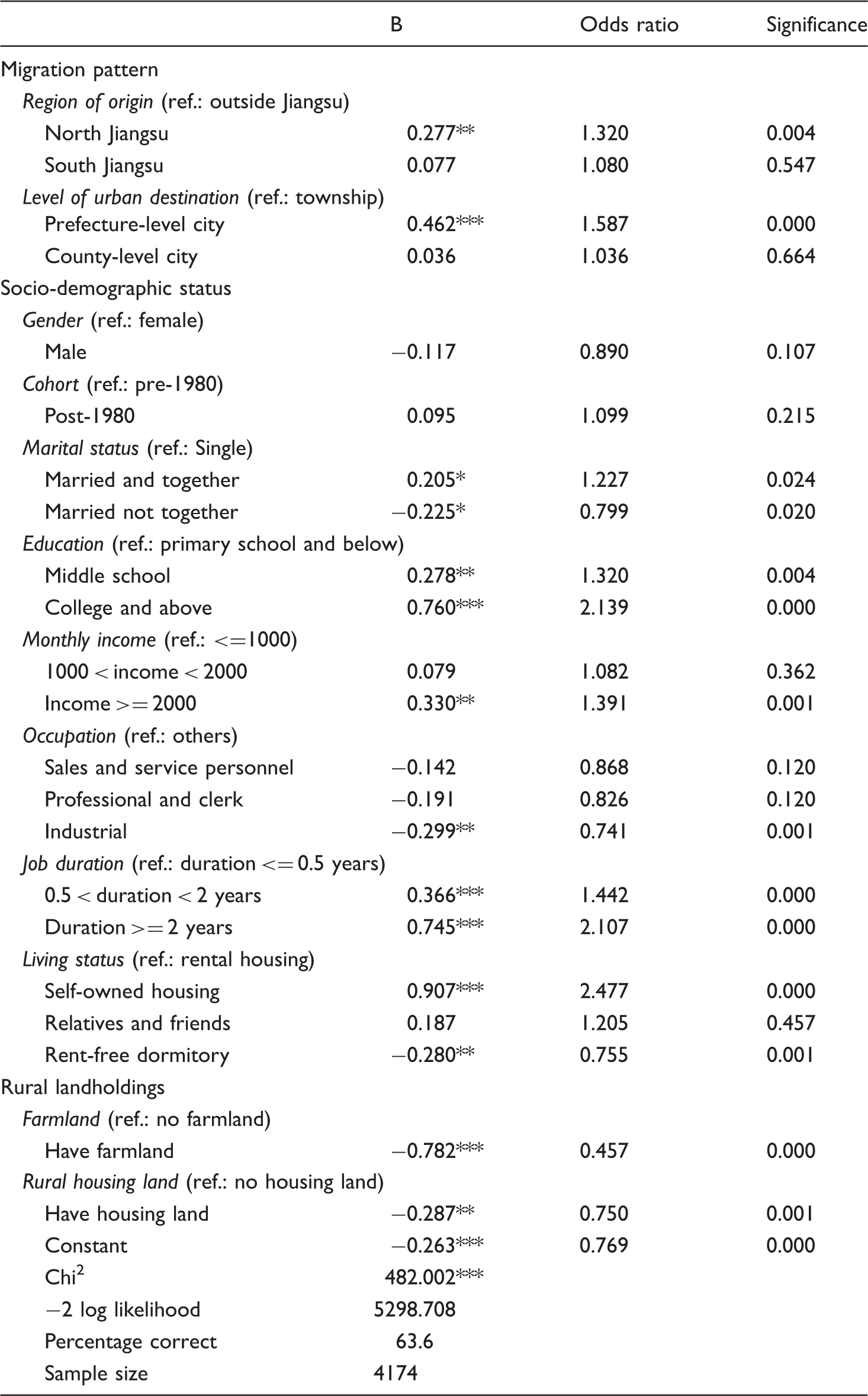
Logistic regression of settlement intentions for rural–urban migrants in South Jiangsu.
Note: ***p < 0.001; **p < 0.01; *p < 0.05.
Migration studies suggest that males are generally more likely to migrate (Hare, 1999). First, the booming urban sectors comprise labor-intensive manufacturing and construction jobs, for which employers favor male workers. Second, rural households usually take a family split strategy—one or more (often male) household members migrate to work in the city while other (often female) household members stay in the home village to do farm work and care for children and the elderly (Fan, 2007). However, when it comes to the settlement intentions of those who have already migrated to the city, gender does not make a difference. It is very likely that the migration decision works as a filter that prevents those who resist leaving home or taking urban jobs from moving to the city, leading to an insignificant effect of gender on settlement intention. Compared with migrants who are single, married migrants who migrate and live with their spouses are more inclined to settle. However, married migrants who have left their spouses in the village or whose spouses migrated to another city are significantly less inclined to settle than single migrants. Clearly, family migration and the cohabitation of a couple increase settlement intentions while the separation of a couple discourages the migrant from settling in the city. Other common reasons for being unwilling to settle in the host city include the obligation to take care of family members at home. Mrs Yang (age 44, from Lingbi, Anhui Province to Xuzhou) wanted to go back home because she needed to look after her parents-in-law. Her husband was an only son, so he and his wife had the responsibility of taking care of his parents, whom his sister was then looking after.
Education is another prominent motivator. The results from the model indicate that higher educational attainment significantly encourages rural migrants to settle, and the effect is stronger when the level of education increases. College graduates are more than twice as inclined to settle as migrants with a primary education or below. However, the effect of income, though positive, is significant only for the highest income group. Given the considerably lower income levels of the migrant population, the highest income group is slightly comparable to the income level of urban citizens. The lower income levels place migrants at the bottom of urban society; thus, it is difficult for them to survive given the high cost of living, and settlement intention is naturally discouraged. Likewise, occupation directly affects migrants’ capacity to survive in the city. Compared to other sectors, industrial workers show a significantly lower degree of settlement intention, reflecting the lower social status and life satisfaction of such employees. Mr Shen (age 24, from Xingxiang, Henan Province to Nanjing) complained about his life in Nanjing: ‘I am bored with my life. I work long hours every day … no entertainment. I go out to buy my breakfast or a pack of cigarettes, that’s all … I play with mobile phone when I have time to spare.’
Duration of living in a place increases settlement intention (Fan, 2011). For China’s rural migrants, we found that duration of the current employment is a more significant factor. Working in the same company for a long period of time implies a stronger commitment mutually between a migrant worker and his/her employer. It is reasonable for such migrants to regard their employment as more stable, and hence, their settlement intention is likely to increase. In addition, the type of urban housing in which migrants currently reside reflects not only their capacity to live in the city but also their financial commitment to settling down. Compared to migrants who rent, homeowners are twice as inclined to settle. Mrs Zhou (age 42, from Xixia, suburban Nanjing to Nanjing) said, ‘I want to settle because my life in Nanjing is easy and comfortable.’ When asked why, she said that she and her husband had made money in a restaurant business and bought their house ten years earlier. In contrast, migrants who live in rent-free dormitories provided by their employers are significantly less inclined to settle. Such dormitories—usually provided by relatively larger companies—are often a constituent part of their working compounds or industrial parks. Consequently, migrants living in such dormitories are physically confined within a certain area; thus, their chance to explore the city is limited. Such migrants are not only less capable financially, they are also less attached to the city emotionally. Migrants who live with relatives and friends do not differ significantly from migrants who rent, which means they are more likely to settle than those living in dormitories. This is because they have already established social ties in the city, which may be linked to either migrant or native friends/relatives. Having relatives or friends provides them with a sense of security and further increases their attachment to the city even when their inability to afford a house largely limits their settlement intentions. In big cities, the most significant reason for being unwilling to settle in the city is the high housing prices. Mrs Qin (age 46, from a village in Sichuan Province to Nanjing) said that she planned to return to her hometown after retiring from her current employment. Her employer provided rent-free dormitory housing for her, and she believed she would be unable to survive the high living cost in Nanjing if housing were not provided.
For rural migrants, settlement intention in the city is a multi-faceted question. It relates to their resources and aspirations for the urban destination, including the many aspects (i.e., employment, income, housing, etc.) discussed above. It also relates to their resources in and attachment to the rural home. For this reason, possession of farmland and the homestead are used as proxies for not only rural assets but also social and emotional ties to the rural roots. The results suggest that farmland and rural housing land have similar effects. Having farmland as part of the rural home significantly discourages rural migrants from settling in the city. This is probably due to the fact that farmland holders may still see working their rural land as a livelihood option or at least an alternative to urban employment. Landless migrants, however, do not have such options and hence are more inclined to settle in the city. Likewise, rural housing land also exerts a strong negative effect on the settlement intention in the city. If farmland guarantees a backup plan for livelihood, the rural homestead would be a safe haven to which rural migrants can return if city life does not work out.
Logistic regression of settlement intentions for rural–urban migrants in North Jiangsu.
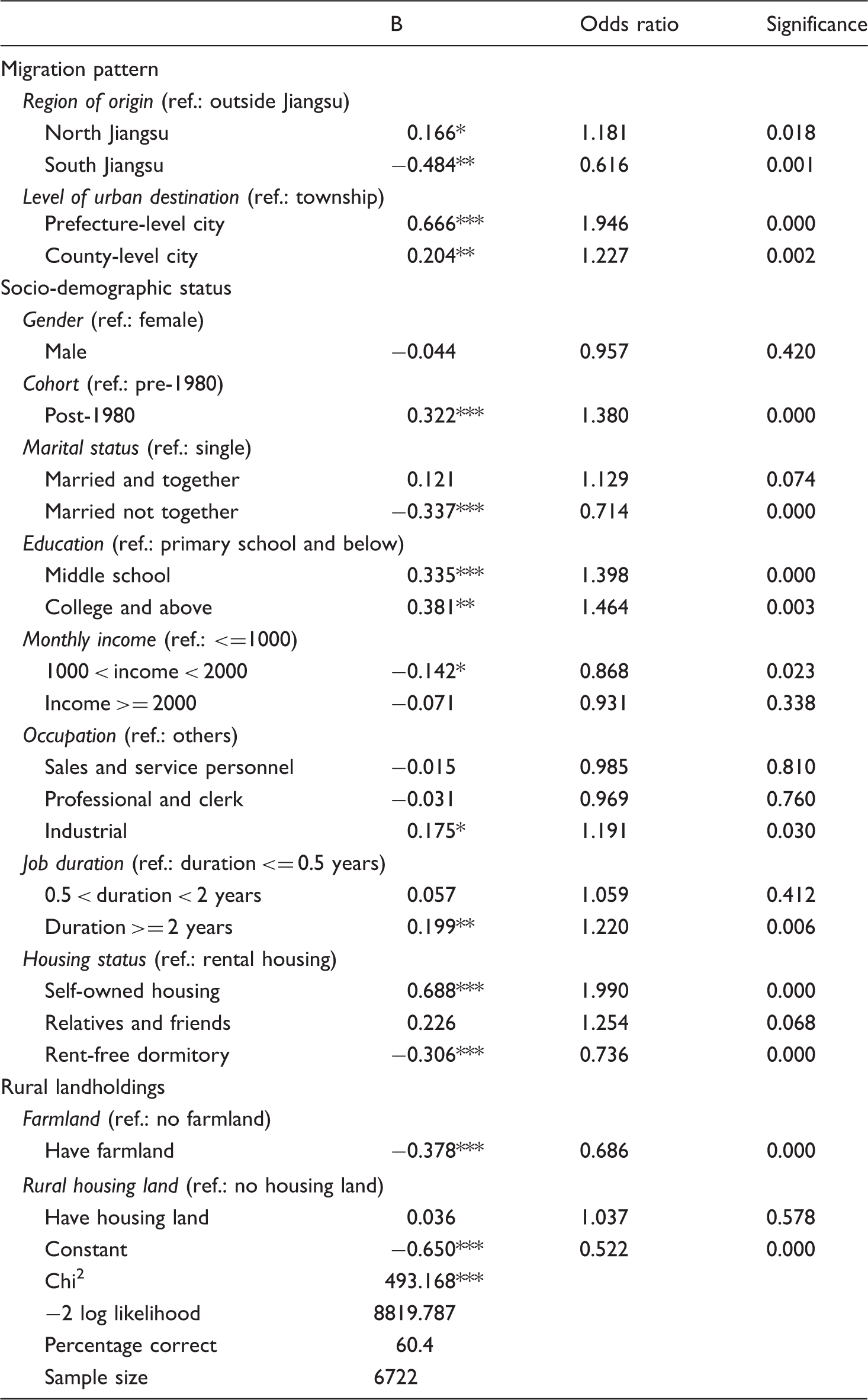
Note: ***p < 0.001; **p < 0.01; *p < 0.05.
However, in some other respects, rural migrants in North Jiangsu behave differently from their counterparts in South Jiangsu. First, migrants from South Jiangsu to North Jiangsu generally do not intend to settle. This clearly demonstrates that the regional development disparity between the two sub-regions strongly discourages those who move from the more affluent South to the less developed North to settle. In addition, compared with intra-provincial migrants, rural migrants within North Jiangsu are generally more inclined to settle, while, as we have seen previously, their counterparts in South Jiangsu do not show such intentions. This contrast may reflect the less balanced development between rural areas and urban areas in North Jiangsu.
The cohort effect, which is absent among migrants in South Jiangsu, is prominent for migrants in North Jiangsu. Rural migrants of the generation born after 1980 are more inclined to settle in the city than their older counterparts. This again might reflect the different regional development statuses between North Jiangsu and South Jiangsu. Rural areas in North Jiangsu maintain a large agricultural sector, and farming is still the main source of rural livelihood. Consequently, the younger generation of migrant workers, with limited or no farming experience but a high aspiration for urban life, are more willing to settle in the city. In particular, many young migrants were brought to the city when they were little by their migrating parents and were subsequently raised in the city. Many of the migrants we interviewed shared the same experience as Mrs Dai (age 52, rural migrant from Feng County, Xuzhou to Nanjing), who said her son was unwilling to go to their hometown because he grew up in Nanjing. In contrast, rural areas in South Jiangsu are considerably more developed and industrialized, and the younger generation of migrants generally do not see returning home as equivalent to adopting a rural livelihood. The innate cohort difference (i.e., lack of farming experience and being more attracted to the glamourous urban life), though present for migrants in both sub-regions, is not fully translated into an attitude against returning home for rural migrants from South Jiangsu.
For rural migrants in North Jiangsu, income is a mild deterrent. A possible explanation may be that cities and towns in North Jiangsu, unlike those in South Jiangsu, are not generally considered ideal places to settle. Migrants with higher financial capabilities are more inclined to move to other places in Jiangsu or return to their home provinces. In North Jiangsu, industrial workers are more inclined to settle than workers in other sectors, which contrasts with the situation in South Jiangsu. Private and foreign-owned industrial enterprises prevail in South Jiangsu. These enterprises operate and hire flexibly based on the market situation. In North Jiangsu, where the industrial sector is dominated by state-owned enterprises, rural migrant workers in such enterprises, though unlikely to secure a permanent post, may feel a relatively stronger sense of security. Consequently, being industrial workers in North Jiangsu contributes to settlement intentions while it has the opposite effect for those in South Jiangsu. With respect to rural landholdings, the discouraging effect of rural farmland is present for rural migrants in North Jiangsu; however, the effect of rural housing land is absent. This is probably due to the less developed condition and much lower living quality in rural areas in North Jiangsu in contrast to rural areas in South Jiangsu, and having a home in rural North Jiangsu does not significantly deter migrants’ intention to settle in the city.
In sum, this analysis confirms that the decision to settle in the city is complex for rural migrants. It is a multi-faceted decision that considers links to both the host city and the rural home. The links to both places involve a utilitarian dimension entailed by economic and social resources that may benefit an individual migrant’s long-term livelihood and wellbeing. The links also involve a sentimental dimension entailed by the sense of attachment and belonging to the two places. The settlement intention of an individual may constantly change as the utilitarian and sentimental values of the origin and destination are re-evaluated in new circumstances. The trade-offs in multiple aspects may shift sides, leading to new attitudes and settlement intentions. This analysis confirms that the factors which encourage rural migrants to settle largely differ from the factors which drive them to migrate. Economic and social resources and the resultant sense of (in)security are prominent factors affecting rural migrants’ settlement intentions in the city.
Conclusions
China’s internal migration has been understood primarily from an economic perspective, in which development disparities between coastal and inland regions and between urban and rural areas exert a pull–push effect on the rural population. This perspective has effectively explained the migration flows (Li, 2004), the resultant distribution patterns of rural migrants (Shen, 2012), and the role of social institutions in shaping the patterns (Chan et al., 1999; Zhao and Howden-Chapman, 2010). It also establishes a link between rural–urban migration and social stratification (Meng and Zhang, 2001). Urban jobs indeed attract rural migrants to cities; however, when these migrants choose to settle in the cities, there are additional and varied reasons. Therefore, the focus on the pursuit of urban jobs does not provide a sufficient explanation for rural migrants’ settlement intentions in cities. Given that the settling of rural migrants directly determines China’s urbanization and population distribution, a better understanding of the factors that motivate rural migrants to move or stay is instrumental for policy-making that facilitates migration and urbanization.
Urban jobs are indispensable for rural migrants who want to settle in the city, but more important is the availability of urban resources that can provide a sense of security. Such resources typically create a more secure occupation that guarantees a long-term livelihood, higher educational attainments that yield good career prospects, a higher income that compensates for the high cost of living, and more secure housing that generates a stronger sense of home. While these resources on the urban side encourage settlement in the city, resources on the rural side—rural landholdings and a rural home—discourage permanent settlement in the city. Sentimental attachment to the host city and the rural home, though represented by proxy variables, are also important for the formation of settlement intentions. All these concerns impose a major challenge on city governments to facilitate rural migrants and integrate them into the local society.
In addition, the difference between North Jiangsu and South Jiangsu demonstrates that China’s regional disparities affect rural migrants’ settlement intentions in several respects. First, the economic development status of the rural home determines the value of rural assets and the situation of rural livelihoods, which influence rural migrants’ dependence on the rural home and hence their intentions to settle in the city. Second, more affluent regions are generally more attractive for rural migrants to settle in because prospective settlers are concerned not only with job opportunities but also with the quality of life and socio-cultural environment. Cities and towns in less affluent regions may provide jobs to lure migrant workers, but those urban destinations are relatively inadequate in picturing promising life prospects. Third, resource distribution in less developed regions tends to be more concentrated in larger cities, while in affluent regions, resources are more evenly distributed across different tiers of cities and towns. Consequently, population distribution tends to follow a pattern of creating constellations of large and small urban areas in more affluent regions but fewer large cities in less developed regions.
Within the urban population of China, almost half are without formal urban residential status. As the hukou system persists, rural migrants are institutionally discriminated against in cities, and their rural hukou carries numerous disadvantages for them and their progeny (Fu and Ren, 2010; Wang and Wu, 2010). Compared to urban hukou holders, rural migrants are typically in an inferior position in the labor and housing markets and have limited access to urban welfare, all of which directly discourage rural migrants from settling in cities. The hukou system, though having been relaxed enough to allow rural migrants to move, still exists as a major barrier that limits rural migrants’ life chances and aspirations. The economic restructuring and social development goals continue to urge the central government to introduce new reform measures to allow cities and towns to provide a larger proportion of their rural migrants with entitlement to urban rights and benefits.
It is worth emphasizing that this study examines rural migrants’ subjective inclinations to settle in cities rather than their actual likelihood of settling. Even when a migrant is determined to settle, his/her settlement intention may still not be realized because of various hurdles and uncertainties. In addition to institutional discriminations against rural migrants, certain negative labels and biased attitudes—largely a consequence of the long-standing hukou system and its cultural and political roots—still associate rural migrants with certain inferior categories in terms of personal qualities and entitlement and have implications for employment, housing, and welfare. For this situation to change, not only must deep policy reforms be enacted at the national level, city governments, employers, and communities also need to create a fairer and more inclusive environment for rural migrants.
Footnotes
Acknowledgments
We thank the anonymous reviewers and the editor for their constructive comments.
Funding
This research is supported by the National Natural Science Foundation of China (41401167, 41401175), the Natural Science Foundation of Jiangsu Province (BK20141325), Hong Kong Baptist University (FRGII/15-16/026), and the Fundamental Research Funds for the Central Universities (020914380032).