




Abstract
Professor R. S. Zaharna is a leading scholar in international communication and public diplomacy. She has witnessed the rapid development of public diplomacy since 2001 and has been committed to researching different communication logics in public diplomacy. In recent years, she has begun to explore the boundaries of public diplomacy theory, aiming to expand the conceptual scope of public diplomacy, advocating a relational shift in conventional public diplomacy studies, and reflecting on the limitations of the actor-centered approach in international communication. In this interview, Professor Zaharna shared her definition of public diplomacy and discussed how relations, connectivity, and interactivity will be indispensable in public diplomacy research and practice. She also analyzed the limitations of the actor-centered public diplomacy research and explained three communication logics in humanity-centered diplomacy. For her, humanity-centered public diplomacy responds to the needs of human societies, harnessing our capacity to collaborate in collective decision-making and problem-solving. In this case, communication is not about agency or control but about navigating the connectivity and interactivity made possible by digitalization, emphasizing horizontal social collaboration, and observing relational constellations and dynamics.
Biography of R. S. Zaharna
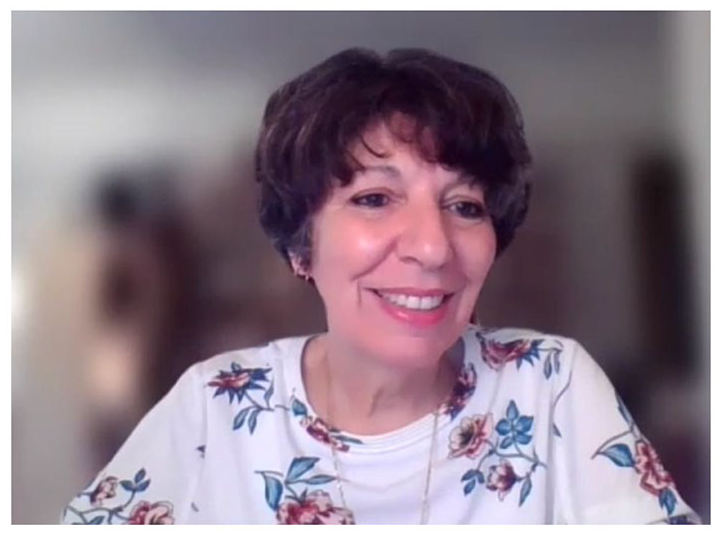
Academic dialogue with R. S. Zaharna
Revisiting public diplomacy in a postpandemic world: the need for a humanity-centered communication logic
R.S.Z: R. S. Zaharna
Z.A.H: Zhao Alexandre Huang
I think being born into intercultural communication: my parents were from different parts of the world. It was fascinating how I could look at the same event and object and see very different images. It was like a classic optical illusion: one person sees a vase, and the other sees two faces. I started studying languages because I thought that international and intercultural communications referred to a problem of words. I studied international relations because of Palestine. I wanted to understand the relations of nations and people. Finally, I thought the problems of the world were about communication. At the time, communication was a new topic in the social sciences. As an emerging concept, intercultural communication took off in the 1970s. Then, when 9/11 occurred, the field of international communication research did not have many leap-forward studies on how people from different territories and cultures have communication problems, how countries have intercultural problems, and how people solve communication problems. Thus, I wrote one of the early pieces on public diplomacy and was called to testify before Congress to explain “public diplomacy” in the Islamic world. The experience of testifying before Congress spurred me to think about communication globally.
Let me rephrase that from “what public diplomacy is now” to “what public diplomacy can be tomorrow,” especially in a world dealing with a global pandemic, environmental crisis, and social and economic strife.
Public diplomacy has a global mandate to respond to humanity’s needs, interests, and goals and to focus on collaborative problem-solving. Traditional definitions of public diplomacy originated with the U.S. State Department, which used public diplomacy as a tool for informing, influencing, and creating mutual understanding with foreign publics. Engagement was added to this concept. Although newer definitions of public diplomacy pay more attention to the participation of target publics, national image promotion, defense of state’s interests, the organic complement to traditional diplomacy, and national soft power deployment, they tend to retain (1) the idea of “actorness”—either state actors or non-state actors—and (2) “foreign public” or “target public.” Actorness, which is an observation Brian Hocking made about traditional diplomacy, focuses on individual actors. It is about achieving the interests, needs, and goals of individual actors. This individual level is inherently competitive and strategy-oriented.
Therefore, one limitation of the current public diplomacy definitions is that they are primarily state-centric or actor-centric. As other countries engaged in public diplomacy practice, such as China, France, and Russia, public diplomacy could be more about people. For example, Yiwei Wang’s early piece on China’s public diplomacy and global communication studies mentioned a people-oriented communication practice for wielding Beijing’s soft power and cultural influence on the international stage. I realized public diplomacy was not just about state actors.
Moreover, the focus on “public” was not just foreign publics. For some or many countries, the foreign audience is not always the primary audience, but the domestic public is. Nation branding campaigns such as Indonesia’s 100 years of national awakening or “Colombia es Pasión” were about inspiring the domestic public.
Over the years, I have come closer to Noe Cornago’s idea that many different understandings of diplomacy or diplomacies exist. The most exciting and promising “diplomacies” are humanity-centered public diplomacies. These are diplomacies focused on humanity’s broader needs, general interests, and goals. These public diplomacies are not about informing, influencing, or promoting the goals of individual actors but are focused on collective problem-solving. How can we or the international community actively solve problems collectively to address sophisticated issues such as global warming, water scarcity, hunger—and yes, a pandemic—that threaten our humanity?
Therefore, I believe that public diplomacy needs to be extended to humanitarian and sustainable human development levels to stress how communication and interaction can promote human community-building and settle various globalized problems at the grassroots level. It does not replace the state-centric approach of existing public diplomacy but focuses on humanity’s needs and the common good.
Again, let us go back to 9/11. In the aftermath of 9/11, U.S. public diplomacy began a very aggressive campaign “to inform and influence” publics in the Arab and Islamic world. It was a one-way campaign about delivering political and ideological messages or shooting information into a target public.
Many scholars criticized the one-way approach. Then, engagement was added to the U.S. conceptualization of public diplomacy because scholars figured out that the global communication problem was more than a lack of information. The public in the Arab world was very familiar with the United States. The United States is, after all, a superpower. They read about the United States every day, even if people in the United States do not read about them. Many of these target audiences have family in the United States. There is also a long history of U.S. activity in the region. We see the information focus in terms of “message.” Thus, what is the public diplomacy message? It is called stories or narratives. Public diplomacy scholars and practitioners learned and mobilized rhetoric, expression, or discourse for an extended period. In other words, the traditional focus of public diplomacy is the verbal text.
In my recent research on public diplomacy during this rapidly globalized and digitalized time, I intended to expand thinking beyond information-based practices and highlight the relational dimension. Like Yaqing Qin argued in the relational theory of world politics, many public diplomacy actors think that they are “creating relations.” However, Qin reminds us that states and actors are already in a world of relations. Instead of “communicators,” he suggests the term relators.
Thus, in my recent research, I tried to expand visions beyond text-based—look at actions, activities, relations. The relational logic highlights contact points, co-presence and nonverbal behaviors, reciprocity, perspective taking, symbolism, and the all-important relational glue: emotions. Emotions are the connective tissue of relations.
This is a fascinating question. We first think of digital or social media tools when we talk about digitalization. In other words, we consider how these digital tools and devices affect and change people’s lives. However, when we look at the genesis of digital communication, we will find that the basis of this network communication is dialogue, connectivity, and interactivity.
Nevertheless, don’t these elements always run through the history of human social life? Imagine when we end a zoom call during this pandemic and go over and talk to our housemates or family members about what happened in the meeting that we have just finished. This situation shows that our daily face-to-face communication at home is about dialogue, interactivity, and connectivity.
Therefore, human communication has always been about these three elements. We did not always have the tools—the technical affordances of digital technologies—to come close to human communication.
If we go back to the history of contemporary communication, its model is based on machines, which reminds us of Shannon and Weaver’s work at Bell Telephone laboratories. Based on telecommunication technology, Norbert Wiener developed cybernetics and information theory. The above communication model is about the mediation of information—the message’s transmission and diffusion through a medium between the sender and the receiver. Such a model implies the role of “drive or control” in the communication process and it also corresponds to what I call “individual logic of communication.” In other words, it is about the agency that it is somehow possible to drive or control a global dynamic. I think this may be a limited, if not frustrating, view, especially in an interconnected global dynamic.
Let us look at human communication during this COVID-19 pandemic. Information is only one small aspect of the human communication experience. During the lockdown, people mobilized digital devices and tools to work together, share each other’s lives, encourage and support reciprocally. This phenomenon allows us to reexamine human communication in the digital context. It is not only the transmission of information but also the establishment of interpersonal relationships, emotions, empathy, and security. The second communication logic that I argued for in public diplomacy refers to the relational lens that underlines the role of emotion in the dynamic of human connectivity.
Thus, digital tools can help us understand or mirror back human communication about “dialogue, interactivity, and connection.”
We need to pay attention to the third communication logic that I advocate: the holistic communication logic. Suppose the individual logic (the first communication logic) is based on the premise of no relationship or autonomy, and its focus is on the communicator’s individual attributes and efforts to build agency connections with others. In that case, the relational logic (the second communication logic) founded on a reciprocal emotional identity pays attention to inherent dualistic and paired relations. As you mentioned, in the context of digitalization, everything is interconnected. If we explain the above sentence, it represents a sophisticated and preexisting dynamic and integrated relational universe provided by digitalization. At this time, information no longer plays a decisive role, and the “relations-as-communication” has become the trend of this logic.
According to this logic, communication is not about agency or control but about navigating digitalization’s connectivity and interactivity. It is about observing and learning the relational constellations and dynamics and reflecting the assumption of diversity. In other words, change is constant and diverse elements are connected and interacting. Based on this communication logic, the vitality and continuity of the relational universe concentrate on mobilizing different communication methods to integrate and accommodate diversity, thereby transforming the diversity of human society into a source of innovation in public diplomacy. The holistic logic of communication in public diplomacy emphasizes horizontal social collaborations and aims to understand the dynamics of human cooperation and coordination in the digitalized world.
I studied network as an effective form of information dissemination and persuasion. If we reexamine the network model or perspective, it has to solve the problem of clarifying how actors affect the public. Such a viewpoint refers to a linear and information-centric approach to public diplomacy. Its limitation lies in a kind of mindset of separateness; that is, somehow, public diplomacy actors can influence the public without being affected by the public. It implies a considerable fallacy of one-way communication based on media campaigns and mass persuasion. However, if we refocus on public diplomacy from the perspective of connectivity, interactivity, and diversity, the relationship between actors and the public is interconnected, interactive, and interdependent. It has gone beyond the network scope but is based on a community where people communicate through an interactive band and mutual sharable understandings.
Therefore, it is time to expand and transcend the “network communication model” and move forward from the limitations of investigating public diplomacy actors. We need to place public diplomacy in the more extensive construction of human community relations to revisit international communication. COVID-19, digitalization, and internationalization have forced us to look at public diplomacy from a more realistic point of view; that is, both public diplomacy actors and the public are part of the online human community.
Humanity-centered public diplomacies refer and respond to the needs of human societies, centering our capacity to collaborate for collective decision-making and problem-solving. I used “diplomacies” instead of “diplomacy” to highlight a mindset of connectivity and diversity. In other words, this kind of public diplomacy is conducted through the shared needs, visions, and goals for the common good of human beings. It advocates a need for international and intercultural communication studies on interactive processes of collaboration that focus on rapport-building, problem-solving, collective information gathering, and action to address the wicked problems facing humanity and the planet.
In recent years, I have deliberately tried to avoid using the “public-centric” idea. I did use that term in an earlier 2016 piece with Nur Uysal and realized that “public-centric” tends to be used as the relationship with the state or “state-centric.” The public is another actor like the state. Moreover, the public can partner with the state or oppose the government.
“Public-centric” is also sometimes used to suggest “people diplomacy.” However, on a closer look, “people diplomacy” usually refers to the people of a specific country, group, society, place, or entity. It makes “people” an actor again like the state.
Since actorness puts a spotlight on the “who” of public diplomacy and keeps public diplomacy at the individual level, I wanted to move away from “actorness.” Furthermore, the movement from “who” to “what” or to the issues will underline the global humanity-level vision of public diplomacy that focuses on humanity’s problems on the global stage.
The three communication logics are mutually enhancing. They are not in opposition to each other but work with each other to provide a broader view of the totality of the human communication experience.
The idea of the three distinctive logics working together is a significant distinguishing feature. The intercultural and international communication models are based on distinctive categories, such as individualism/collectivism, high context/low context, direct/indirect, and national (Chinese, French, or American). These categories are assumed to be separate and mutually exclusive. For example, you are either individualist or collectivist, or somewhere along a spectrum. Nevertheless, if you analyze accurately, most societies have both of these elements, either with the geo-cultural or national models. There is Chinese communication, which is distinct from American. Looking closer, you will see that humans and societies are much more complex and even have contradictions within their cultures.
There is an exception for nearly every rule. For example, many common American expressions have their exact opposite. “Haste makes waste” means that if you go fast, you will make mistakes. However, “a rolling stone gathers no moss” and “the early bird catches the worm” or “first come, first served” mean to get there fast and first!
Unlike the cultural, geo-cultural, or national models of communication that are “mutually exclusive,” individual logic, relational logic, and holistic logic are mutually enhancing. Taken together, the three logics help provide a broader view of the totality of the human communication experience.
Footnotes
Declaration of conflicting interests
The author(s) declared no potential conflicts of interest with respect to the research, authorship, and/or publication of this article.
Funding
The author(s) received no financial support for the research, authorship, and/or publication of this article.
