




Abstract
In this article, we explore the social construction of geomedia in relation to mobile photo-taking. The article draws from a study of location-sensitive mobile social networking and search and recommendation service Foursquare in Melbourne and New York City. The study utilized photo elicitation techniques, with each participant asked to provide photographs they associated with their own Foursquare check-ins, accompanied by written responses to questions designed to encourage them to reflect upon their motivations for recording and uploading each image. What emerged from our analysis of how participants discussed the construction of their Foursquare check-ins, were certain consistencies with the findings of prior work on Foursquare (e.g. to register a new venue or a nice meal, as part of exercises in self-expression, and to record memory traces). Strikingly, though, we also noticed something subtly yet significantly different in relation to photo use. Many of the submitted images and accompanying explanations revealed a particular sensitivity toward the local and the familiar, and a desire to capture “a mood, a feeling”—an “ordinary affect.” In light of this, in this article we are interested in the tension that exists between designed or intended uses of Foursquare, the social appropriation and shaping that is undertaken by Foursquare’s end-users, and the technological and strategic business adjustments that are undertaken by Foursquare in response.
One eye sees, the other feels. (Klee, 1964, p. 310) The ordinary con-fuses thought and feeling as ideas and sensation, remembrances and hope, and myriad somatic perceptions, rise and fall in pressing their attention on us. (Highmore, 2011, p. 2)
Since the early 2000s, location-based mobile social networking (LMSN) service Foursquare has been the subject of extensive critical examination (e.g. Burns, 2013; de Souza e Silva & Frith, 2012; Evans, 2015; Frith, 2015). These pioneering studies have detailed the “connecting, coordinating, and cataloguing” (Humphreys, 2012) functions that Foursquare fulfills, the nuanced ways that it has been used to record daily routines and rhythms, and the complicated role it plays in the construction and performance of identity, and the formation of what Schwartz and Halegoua (2015) refer to as a “spatial self.”
Since that time newer research has come to study other mobile platforms and their relationship to space. For example, research on gaming apps Pokémon Go or Ingress has drawn on some of this earlier research on Foursquare and other LMSNs (Evans & Saker, 2018; Karpashevich, Hornecker, Dankwa, Hanafy, & Fietkau, 2016). Rather than just moving on to the next new platform to study geomedia, we want to revisit Foursquare. In particular, looking back at how it was socially constructed by users and contrasting it with the ways the company describes itself now contributes to our broader understanding of shifting notions of geomedia. This article draws from a 2013–2014 study of the use of the location-sensitive mobile social networking, search and recommendation service, Foursquare, in Melbourne and New York City. As a part of this study, we used photo elicitation techniques, with participants providing us with photographs associated with their own Foursquare check-ins, and short written responses to a series of questions designed to encourage them to reflect upon their motivations for recording each image. Our analysis of these participant-supplied image-text combinations suggests points of consistency with the findings of prior work on Foursquare. For instance, we found that our participants did use images at times to register the “extraordinary” (a new venue, a particularly nice meal, etc.) and as part of overt displays of a “spatial self,” as well as for expressing the “infra-ordinary” (Perec, 1999, p. 210)—the mundane, the habitual, everyday routines and rhythms.
Our analysis, however, also reveals clear points of departure from prior work, with a key reported engagement with Foursquare photos occurring around the expression of everyday intensities and ordinary affects. Ordinary affects, as understood and explored here, are clearly embedded within everyday rhythms and routines, yet are not synonymous with them. Affect, Kathleen Stewart (2010, p. 340) writes, is “the commonplace, labor-intensive process of sensing modes of living as they come into being.” Affect thus involves certain modes of “attunement” (Stewart, 2010, p. 340) to eruptions within the everyday, and a “sharpening of attention” to “affective atmospheres” (Bissell, 2010) and to “the expressivity of something coming into existence” (Stewart, 2010, p. 340). In these affective encounters, “everything depends on the feel of an atmosphere and the angle of arrival” (p. 340).
Our examination of these efforts to register ordinary affects photographically, we argue, contributes valuable new knowledge to existing critical understanding of end-user engagement with Foursquare. In particular, we juxtapose the affective engagement with Foursquare as reflected in the photo elicitation data with responses regarding corporate data practices, which given Foursquare’s recent shift to enterprise solutions become particularly relevant. What also becomes apparent in light of these findings, and is of particular interest to us in this article, is the tension that exists between designed or intended uses of Foursquare, the social appropriation and shaping that is undertaken by Foursquare’s end-users, and the technological and strategic business adjustments that are undertaken by Foursquare in response.
Foursquare’s evolving construction of the check-in
The check-in can be understood as a part of the growing trend of geomedia over the past 10 years. We define geomedia according to Fast et al.’s (2018) description as “the fundamental role of media in organizing and giving meaning to processes and activities in space” (p. 4). In the late 2000s and early 2010s, the advent of global positioning system (GPS)-enabled smartphones gave rise to a proliferation of LMSN services, including (among others) Brightkite, Whrrl, Gowalla, and, most notably, Foursquare. Of these, Foursquare, the only one in this list that continues to operate, quickly came to be regarded as an important mobile smartphone application for connecting socially, and for mediating and communicating how we navigate and engage with urban space and place (Frith, 2015).
Foursquare Labs Inc. was co-founded by Dennis Crowley. Its signature application, Foursquare, an LMSN service for smartphones, was launched in 2009. Foursquare rose from the ashes of Dodgeball, an SMS-based mobile social networking service that Crowley co-created, and which Google purchased in 2005 and subsequently closed. By the early 2010s, Foursquare Labs Inc. was the darling of New York City’s so-called “Silicon Alley” (Neff, 2012). From its launch, Foursquare enjoyed a rapid rise to become the market-leader in LMSN. This success was largely built around Foursquare’s gameplay elements, where users could check-in to venues. In addition to signaling their presence at these locations to other users within their social network, Foursquare users could also collect a variety of merit-style badges, compete on a constantly updating leader board for most check-in points over a 7-day period, and compete for most check-ins over a more extended period to earn the honorary title of “Mayor” of a venue. By 2013, Foursquare claimed to have attracted in excess of 40 million users internationally, with over 4.5 billion total check-ins. That year, Crowley describes Foursquare as building the “location layer of the Internet” (Disrupt, 2013). Using consumer check-ins, Foursquare was constructing one of the world’s most extensive databases of locations. However, as a result of changed market conditions, by early 2014 Foursquare unbundled its services into two interconnected smartphone applications—a rebranded Foursquare (for local search, discovery, and venue recommendations) and Swarm (for social networking, check-ins, and game play)—as well as a web-portal primarily aimed at commercial clients and the monetization of its rich places database.
The monetization of Foursquare’s technology and databases is attributed to Jeff Glueck, who joined the executive team of Foursquare in 2014 as Chief Operations Officer (COO), and, at the start of 2016, became the Chief Executive Officer (CEO). In this role, Glueck guided Foursquare to become “a leading location technology platform with a suite of enterprise, developer and marketer tools” (Foursquare, 2018, para. 3). The core technology that they have utilized in shifting from a consumer-facing brand to a business-facing brand, however, is their places database, which was developed through user check-ins. “We’ve taken billions of signals, called check-ins, and we’ve provided these wonderful apps for people, but in the process of checking-in at 100 million places, they’ve mapped the world for us” (Gurdus, 2017, para 5). CNBC’s Mad Money host, Jim Cramer, describes Foursquare as shifting their business model to monetize their data:
This privately held company had a real smart idea. They could leverage their big data to turn about their business. While Foursquare users were checking in at locations all over the world, they were rapidly putting together a treasure trove of data that’s helped the company create a map of interesting locations. That realization has allowed them to create a new business model that is more focused on providing services for advertisers, retailers, investors, technology developers including Apple and Snap among others. And I think it’s safe to say the new model works. (Mad Money, 2017)
By 2018, after successfully securing another US$33 million dollars in venture funding, Glueck heavily promoted the company as a key competitor to Google, Facebook, and Amazon in the future of retail and locational data (CNBC, 2018). In this move to enterprise business solutions, Foursquare has shifted its construction of check-ins from places as destinations for consumers and friends to places as data for clients and partners.
The social constructions of place
While place has long been understood as socially constructed (Lefebvre, 1991), the social construction of place as data follows a trend in business and media (Mayer-Schönberger & Cukier, 2013). Datafication represents what Couldry and Hepp (2017) argue is the most recent phase in the mediated construction of reality. In particular, databases play a vital role in identifying, organizing, and classifying information (Gandy, 1993; Poster, 1990). The database of check-ins that Foursquare utilizes in both its enterprise software and its consumer-facing apps has been carefully constructed by users’ socio-cartographic work. As Foursquare CEO Glueck describes:
Every one of these 65 million public businesses and almost 100 million private businesses or residences has been mapped by a real user. And other users verify the identity. And we have 40,000 super users who police the communities as volunteers. And so this wikipedia-style crowdsourced community is the reason why we know when a new coffeeshop opens within 24 hours and it might take Google or Facebook months to realize that because they’re just crawling the web. And so it’s this living, breathing community. And so keeping that audience and that community alive is critical to all the solutions we’ve built on top of it, but we don’t need 300 million people to map the world. We’ve already done it with the size audience we have. (Inside Bloomberg, 2016)
As a crowdsourced technology, Foursquare users actively construct the database as they use the app to explore the world around them. Foursquare then uses the database to construct and build enterprise solutions to understand locational trends and ad effectiveness for their partners and clients.
The datafication of places is important to critically examine given the various actors and technologies involved in its material and social construction. As Jansson (2013) argues, in a mediated society, the material and infrastructural elements of place are perceived through media. However, the media also construct how we think about space: “The media not only shape our expectations and anticipations of future events and experiences, but also generate particular forms of action and interaction that are performed, or staged, in order to become mediated within a certain representational register” (Jansson, 2013, pp. 284–285). In this way, the check-in itself is a particular mediated form of action, which represents the ways that Foursquare conceives of place as destinations or venues. Their database of check-ins therefore becomes the representational register that is used to shape expectations of future events through their enterprise solutions. Given the crowdsourced nature of Foursquare, and the importance of the community of users and super users who actively contribute to and shape Foursquare’s locational database, it is essential to understand how and why they construct the check-in.
This study
Given this recent shift of Foursquare as providing enterprise solutions, we returned to data from the height of Foursquare operating as a consumer-facing business to further explore potential tensions regarding how the locational data points that made up Foursquare’s initial data trove (i.e. the check-ins) were affectively constructed by those creating them, that is, Foursquare users. The study we conducted was completed between 2013 and 2014, just prior to the unbundling of Foursquare services. In retrospect, this timing proved fortuitous, forming a valuable moment—a turning point—in Foursquare’s history to be asking questions of its user-base, with the platform well-established after 4 years of operation, yet still evidently unstable. Given the time that has elapsed since the completion of our study, and the significant changes that Foursquare’s operations have undergone during this period, this article ought to be approached as an instance of contemporary media history, a key aim of which, as we see it, is to understand (and historicize) “media in transition” (Uricchio, 2003). The proposition that drives this article is that while Foursquare has changed dramatically over the past decade, looking back to photo use within Foursquare when it functioned as an LMSN is valuable for what it reveals about the affective construction of check-ins at a particularly important formative period, and what these practices might reveal about contemporary smartphone and smartphone app use—especially given that the location aspects of key photo-centered social media apps either were once powered by Foursquare (Instagram) or continue to be (Snap).
Our original study involved semi-structured interviews with 31 Foursquare end-users: 11 in Melbourne and 20 in New York City. Of the 11 Australian participants, 10 lived in Melbourne and the surrounding suburbs and 1 lived in a regional center but spent a lot of time in Melbourne; they were recruited via social media posts, a university website advertisement, and via snowball sampling (with an expectation that all were actively engaged with Foursquare). The adoption rates of Foursquare were substantially lower in Australia than in the United States, thus we thought snowball sampling may be a helpful means of finding active users. Of these 11 Melbourne-based participants, 6 were women and 5 were men, and the average age was 31, with a range of 22–60. The 20 US participants all lived in and around New York City, and were recruited through online forums where people discussed Foursquare (and so likely all active members of the Foursquare community). Of these 20, 13 were women and 7 were men, the average age was 33, with a range of 27–59. These interviews included a “show-and-tell” (Møller Jørgensen, 2016; Sheridan & Chamberlain, 2011) component, where participants were asked to run us through their profile settings, check-in histories, and in-app rewards (i.e., badges, mayorships). For the purposes of this analysis, we focus on responses to interview questions regarding corporate locational-data practices. While participants’ opinions regarding these topics may have changed since the time of data collection, given broader trends in social media and privacy (e.g. Adams, 2019), we believe the sentiments that we collected likely reflect similar kinds of concerns that continue to circulate around social media platforms. Moreover, their thoughts and expressions become helpful against which to compare the corporate decisions that led Foursquare CEO Gueck to shift the company to be more client-facing with their enterprise solutions.
In addition to semi-structured interviews, with ethics board approval we also employed photo elicitation techniques to examine tacit aspects of how users construct and make meaning through Foursquare. One of the benefits of photo elicitation, as Richard Harper (2002, p. 15) explains, is that it “thrust[s] images into the center of the research agenda.” However, rather than insert photographs into our research interviews for discussion, as was a feature of early manifestations of photo elicitation (Harper, 2002, p. 13), we sought photographs that were created by our participants (p. 16). The value of this approach was twofold: it sought to foster a “dialogue based on the authority of the subject rather than the researcher” (p. 15), and it offered a means of grounding our examination of LMSN in “the mundane interpretations” (p. 19) and social constructions of users of these services.
Specifically, each participant in our study was asked to take five photographs of “things or places that make you think about Foursquare or things that make you think about checking in.” We were strategically broad in our directions so that participants could take photos which they may have shared on Foursquare or Instagram, but also photos they wouldn’t necessarily share as part of their Foursquare check-ins. This enabled a more creative but easy way for participants to share moments with us that conveyed their understandings of Foursquare and check-ins. For privacy reasons, we asked participants to avoid taking pictures of people. As a part of our photo elicitation protocol, we asked participants a series of questions for each photograph designed to encourage them to reflect upon (a) the motivations for taking the photo, (b) the particular contexts within which each photo was taken (what was happening immediately before and after taking the photo), (c) their thoughts on the personal significance of each image, and (d) how they thought these photos related to their use and understanding of LMSN services.
This textual elicitation further enabled our interpretation of the photos as meaningful textual objects. Thus, in considering end-user engagement, we followed the approach advocated by Katharina Lobinger (2016) of considering photographs as “doubly articulated artefacts” (p. 476) that serve, quite literally in our case, as “objects and texts” (p. 475). These photo-text “artefacts” were supplied in the 2 weeks following face-to-face interviews and represent a reflective construction of the check-in and Foursquare by active users. Because we were asking participants to use their camera phones to take photos for a study on LMSNs, it is helpful to situate this intervention within scholarly research on camera phones to enable more in-depth interpretations of participants’ photo-text artifacts as multilayered reflections of everyday affect and esthetics.
Camera phones, smartphones, and the everyday
Camera phones—that is, pre-smartphone camera-equipped mobile phones—have been regarded as distinct from cameras and distinct from phones in two key ways. First, with camera phones, “it became possible to transmit images directly from the point of capture” (Chesher, 2012, p. 105), giving rise to a new phenomenon—that of “visual mobile communication” (Villi, 2013, p. 214)—whereby these devices were used for connecting and communicating, including by visual means (Gómez Cruz, 2016a, p. 183). Second, camera phones, it has been argued, led to “changes in typical image genres” (Chesher, 2012, p. 105), with the camera phone becoming a “life recorder” (Palmer, 2012, p. 85), where “any random moment could be captured” (Chesher, 2012, p. 105) and with the phone’s lens increasingly trained on the ephemerality of the everyday (Gómez Cruz, 2016a, p. 185).
The issue of the pictorial representation of the everyday features quite prominently in the available literature on early camera phone practice. For instance, Daisuke Okabe and Mizuko Ito (2004) report on a 2002 Japanese study that found that, of those surveyed who use a mobile phone camera in Japan, 69% did so to record and commemorate “interesting and unusual things in everyday life.” As Okabe and Ito note, “in comparison to the traditional camera, which gets trotted out for special excursions and events—noteworthy moments bracketed off from the mundane—camera phones capture the more fleeting and unexpected moments of surprise, beauty and adoration in the everyday” (p. 1). With the mobile phone (keitai) camera, “the mundane is elevated to a photographic object” (Kato, Okabe, Ito, & Uemoto, 2005, p. 305).
In addition to the fugitive and unexpected moments of surprise and beauty in the everyday, Ilpo Koskinen and Lisa Gye have both argued that camera phones also participate in the development of an “aesthetics of banality” (Gye, 2008, p. 140), insofar as “images captured with these [camera phone] devices tend to focus on the mundane, trivial aspects of everyday life” (p. 140; see also Koskinen, 2005). And, as Martin Hand (2012, p. 91) notes, the photographs generated through camera phones also “seem to be positioned as necessarily ephemeral and fleeting, perhaps as glances rather than considered reflections” on the mundane.
The arrival of the smartphone camera—especially the iPhone—is said to have further transformed the whole image-taking experience by fostering a “transmission-oriented” ecology of image-making (Palmer, 2012, pp. 85–90), through the innovation of the touchscreen interface, supporting apps, and app markets, which made it possible to share images with a much wider audience of fellow app-users (Villi, 2013, p. 215); GPS-enabled geocoding of images; and an accompanying shift from thinking of photographs as representation to thinking of them as information or (geocoded) data (Palmer, 2012, pp. 85–90).
What has persisted through these changes, though, is an ongoing attunement to the everyday. In her study of the photo-sharing site Flickr, Susan Murray (2008) argues that the photos she studied were predominately about “the small and mundane” (p. 151), and that they served to construct “autobiographical narratives of sorts” that rest on the representation of “collections of objects and experiences encountered in everyday life” (p. 156). Murray refers to this as an “everyday aesthetics [of] ephemera” (p. 155). And, for Chris Peters and Stuart Allan (2018), mobile smartphone users deploy their cameras “affectively and self-consciously […] to try and arrest the ephemerality of daily life, however fleetingly” (p. 358).
Shelley Rice (1997, pp. 31–32) notes that photography “is the ultimate transcriber of the mundane, the unparalleled recorder of the stream of time in its transience and banality.” Given the ubiquity of digital photography (Hand, 2012), a key challenge is in understanding how people perceive photographic value or significance in these visual documentations of the everyday that place such value in “the ordinary and the mundane” (Hand, 2012, p. 149). As Hand puts it, “If every aspect of daily life has been made visual, then what kind of value can an individual’s photos have?” (p. 91). In the context of our study, the provision of textual explanations to accompany the five photographic images submitted by each participant has proven invaluable. With these written explanations, we are able to test our own interpretations and readings of photographs against participants’ own explanations of the motivations for and meanings behind these images in constructing Foursquare check-ins. This has aided in developing a fuller appreciation of the meaning and importance of the check-in to participants, and, as we will argue later, to developing a larger understanding of the evolving nature of the Foursquare platform itself in response to user engagement with it.
Registering the everyday through the Foursquare check-in
What emerged from our study, were a range of photographic responses in using the check-in for registering the everyday. Some of these responses mirrored earlier scholarship on the identity, and memory work of quotidian Foursquare end-use (Evans, 2015; Evans & Saker, 2017; Frith, 2014; Saker, 2017). In some cases in our study, however, the images constructed by Foursquare users seemed to speak of the everyday, somewhat pejoratively understood, as “a place of perdition” (Sheringham, 2006, p. 22), or, at very least, as concerned with recording those moments in which “life is at its least interesting” (p. 23) (see Figure 1). These check-in-related photos speak of moments of stasis, where boredom—that close companion of the everyday (Highmore, 2002, pp. 5–12; Gardiner, 2012)—reigns (see Figure 2).

Recording everyday life when it is seemingly at its least interesting.

“Waiting [i]n line at Fairway—there was a long line and since I was bored and by myself, I was playing with my phone and decided to check in.”
Representing the routines of everyday life, as Figures 1 and 2 do, is still valuable within the Foursquare database, not only because they represent commercial venues, but also because they reveal the temporal nature of these ordinary, yet valuable commercial outings. Boredom is also not without merit in this context, as we shall return to later, insofar as it provides an important (if fleeting) condition for registering one’s daily routines.
In other cases, the images submitted operated across a range of registers, and, while embedded in the mundanities of everyday life, were deceptively dense in social meaning. Take the following image, for instance (see Figure 3).
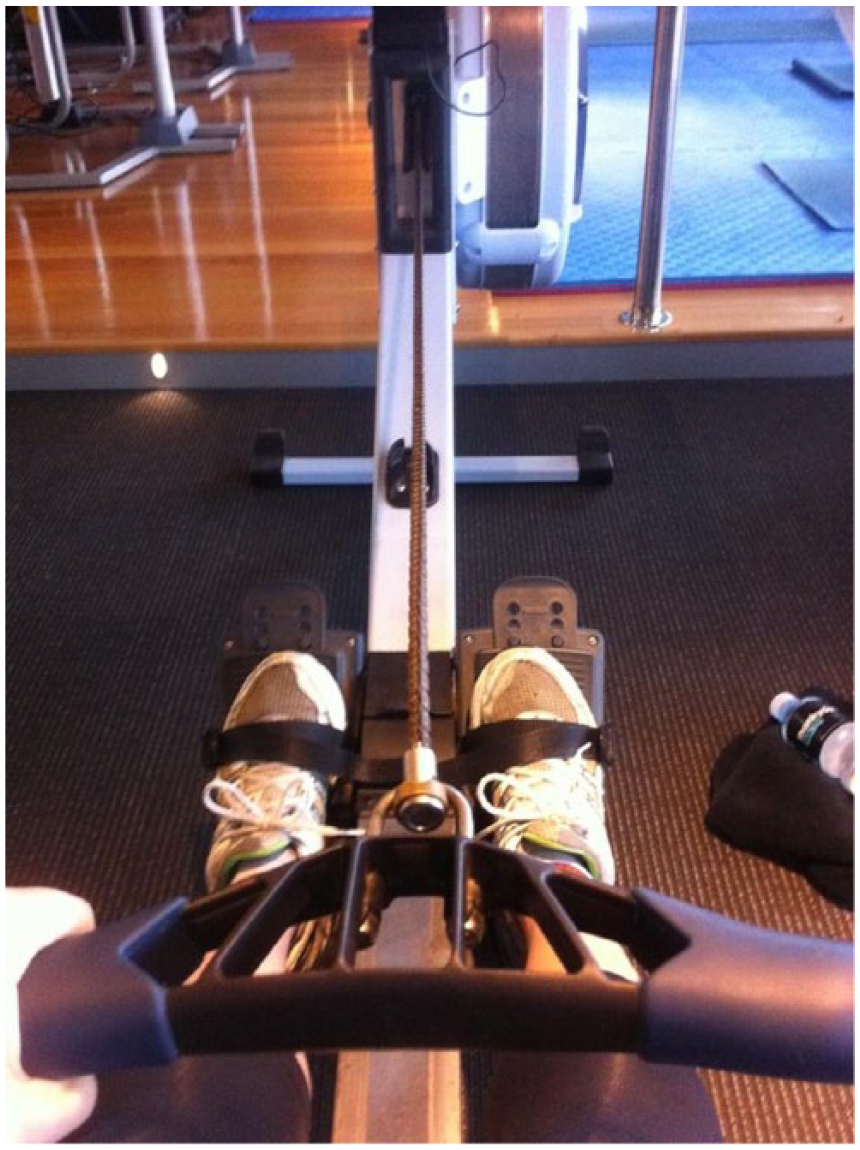
Conveying rich layers of social meaning through Foursquare check-ins of routine activities.
Figure 3 can be said to fulfill a number of subtly complicated functions. It signals, in a self-presentational sense: “I’m a gym-goer!” It evidences: “See, I went to the gym—this image and my geolocation data prove it!” It motivates: “This check-in is a reward for coming,” as is the feedback the gym-goer may get for checking-in. And, it serves as an aide-memoire, or “archive of the everyday” (Frith & Kalin, 2016, p. 46): “I went to the gym on this day/date/time.” Such a check-in further represents the gym as a venue for Foursquare enterprise solutions, and repeated registering of one’s presence at this venue has the effect of marking it as a potential place of note within Foursquare’s places database.
Everyday esthetics, ordinary affects
What we found especially striking, though, was that many of the photos submitted by our participants conveyed something subtly yet significantly different from what has been in the available literature on everyday Foursquare use (and perhaps closer to the earlier literature on camera phone use). These images displayed a clear attentiveness to the esthetic and affective dimensions of the everyday (Hjorth & Pink, 2014). These images draw our attention to “what’s going on when nothing much is happening” (Highmore, 2011, p. 3) (see Figure 4).
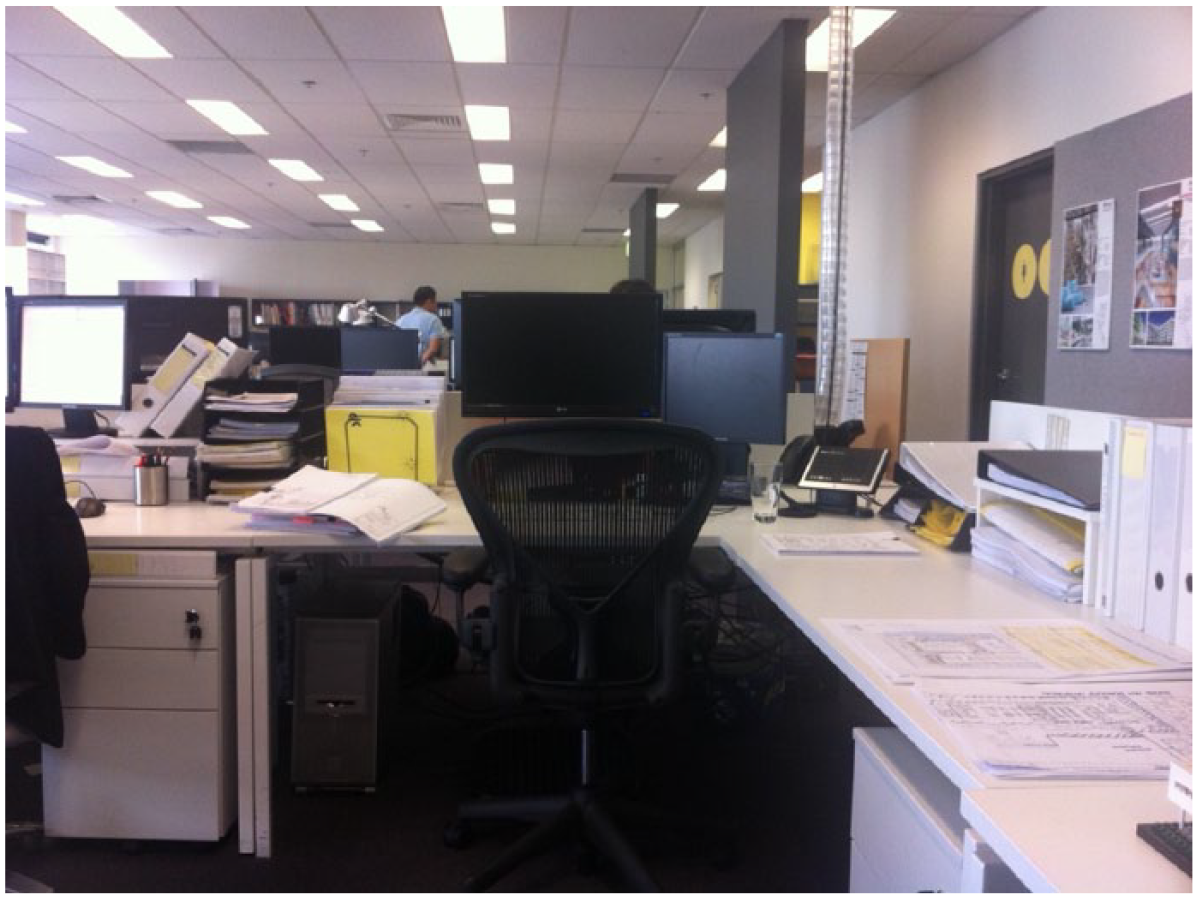
“Pic taken of my office in Foursquare. Was checking in the Friday of the long weekend, the office was quite empty. Some[one] got into the view just as I took the photo.”
The ordinary, Highmore (2011) notes, is fluid and fluctuating; it is processual:
Ordinariness is a process (like habit) where things (practices, feeling, conditions and so on) pass from unusual to usual, from irregular to regular, and can move the other way (what was an ordinary part of my life, is no more). There is always the “being ordinary” but there is also the “becoming ordinary.” (p. 6)
Or, as Kathleen Stewart (2007) puts it, “the ordinary is a circuit that’s always tuned into some little something somewhere” (p. 12); it’s “a process of going on until something happens, and then back to the going on” (p. 10).
The processual quality of the everyday, as highlighted by Highmore and Stewart, is something that has also figured prominently in scholarship on mobile image-making (Hjorth & Pink, 2014; Pink & Hjorth, 2013). For instance, Edgar Gómez Cruz (2016b) promotes the concept of the “trajectory” as a key (visual) methodological orientation when examining everyday mobile media use. In addition, we understand our photo elicitation intervention using smartphone cameras reflecting mobile media “not just as a set of captured and shared moments but as communicative visualities consistent with the sensorial experience of moving through life” (Peters & Allan, 2018, p. 360).
The sensorial experiences associated with everyday mobilities also proved significant in the design of our study. One of the questions we posed to participants was: “What was happening immediately before and immediately after you took the image?” The literalness with which participants took this question and responded to it proved quite revealing, not least for the light these responses shed on the frequently mundane nature of the Foursquare check-in as “a process of going on until something happens, and then back to the going on” (Stewart, 2007, p. 10). The following two examples, for instance, are striking for the way that they construct the check-in’s embeddedness in media res, within the middle of the flows and processes of the “ordinary” (see Figures 5 and 6).

Q. “What happened right before and after you took this photo?”A. “Trying to get Mr 5 into the pool, stripping clothes and attended to by the teacher; afterwards, I just started sorting through personal emails.”
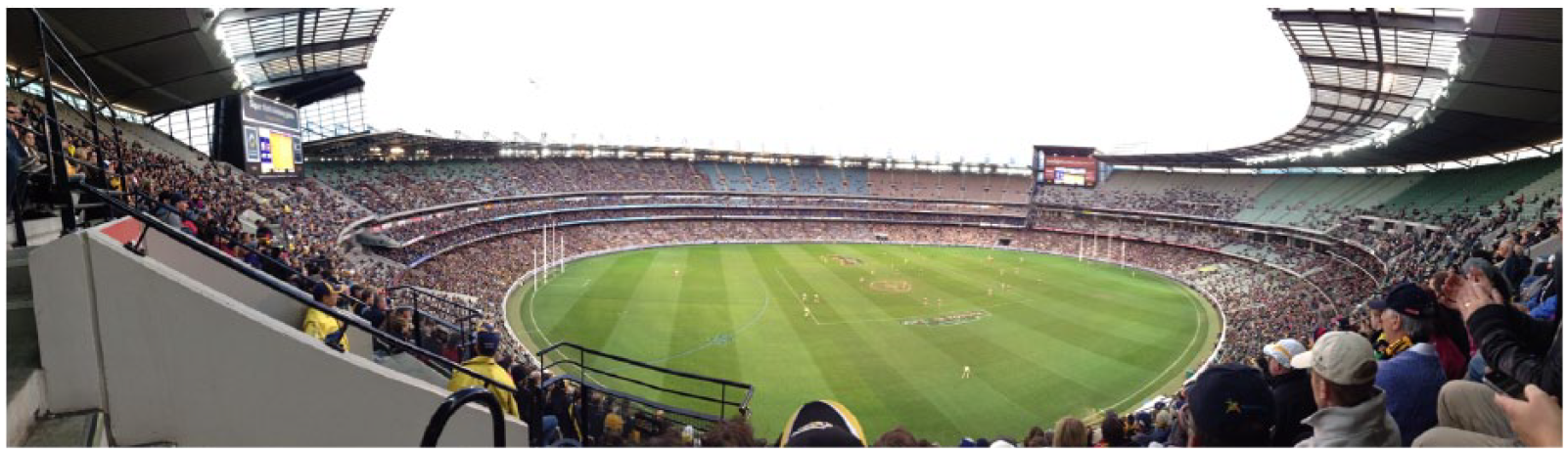
Q. “What happened right before and right after you took this photo?”A. “The [Melbourne] Demons were losing to the [Richmond] Tigers [in this Australian Rules Football game]; the game was pretty terrible. The old guy behind me kept yelling abuse and I was eating chips.”
Figures 5 and 6 construct check-ins very differently. The football stadium in Figure 6 represents an important and popular venue in the database and yet the pool where the parent sat checking email while their kid took swim lessons in Figure 5 represents a routinized place of semi-parental involvement. Nevertheless, as with the gym visit earlier, the regularity of going to this place represents an important consumer demographic and insight.
Larissa Hjorth and Sarah Pink (2014) also make the point that, within these everyday trajectories, we temporarily occupy “in-between places”—or what they refer to (pace Tim Ingold, 2011) as “wayfarer spaces”—which foster “new forms of visuality” (p. 42) and which become “places for active creativity” (p. 51). Or, as Kristin Ross (1997, p. 20) has put it, “in the poverty and tedium of the routine lay the potential for creative energy.” One way in which this occurs, is via the registering of “a mood, a rhythm, a feeling” (Highmore, 2011, p. 1) (see Figure 7).
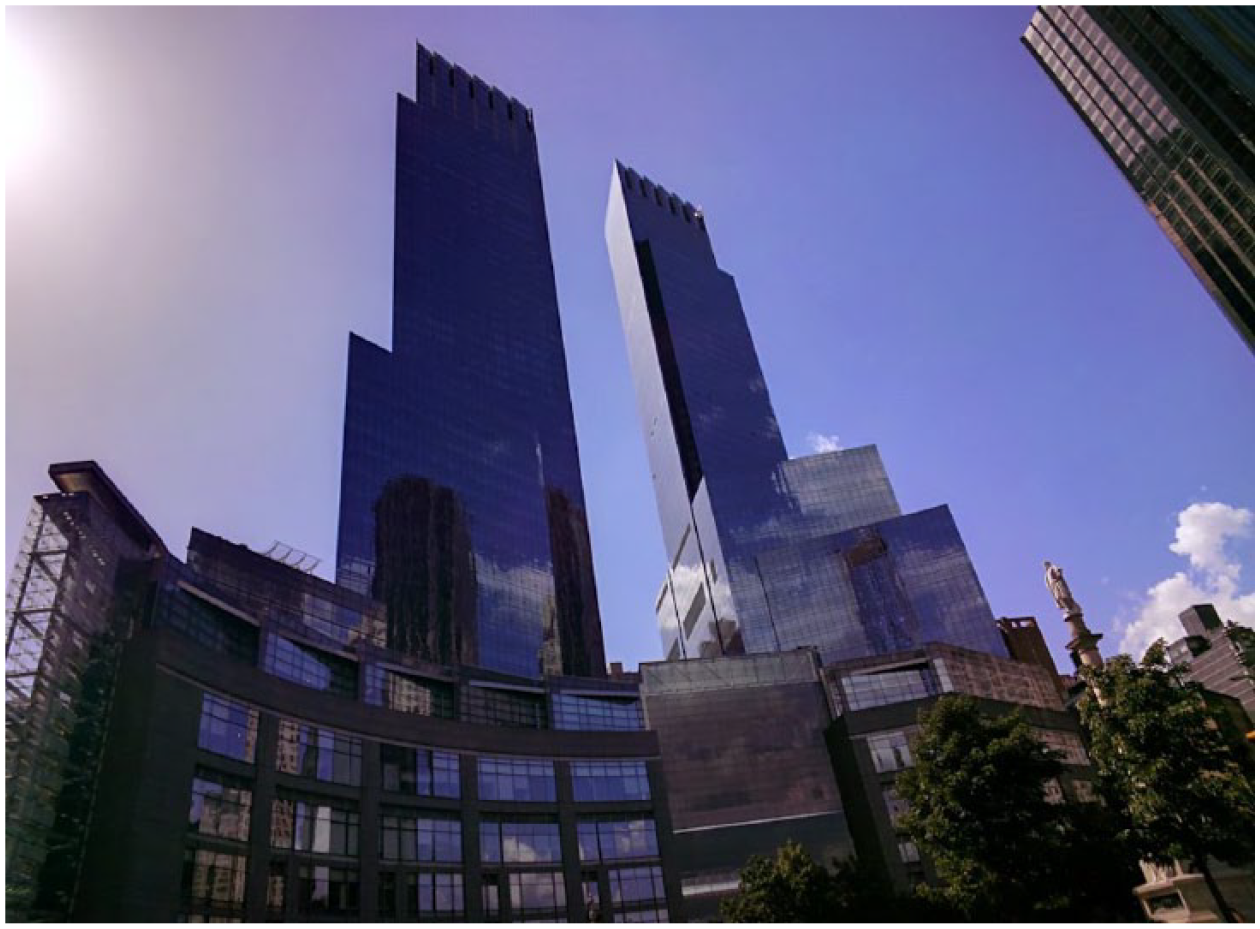
“Was walking home and the sun out was beautiful against NYC’s Time Warner Building.”
Thus, while the ordinary consists, in part, of “routine, habit, and familiarity” (Highmore, 2011, p. 2), it also involves affective expressions of joy and surprise (Figure 7), as well as “the intermingling of emotions and sensual experience” (p. 140), as is drawn out in Figure 8 and the further textual examples that follow.

“The carrots were so pretty! And so many of them!”
The carrots that were spotted at the greenmarket and captured in Figure 8, gave this Foursquare user brief pause. In the midst of the hustle and bustle of the market, the carrots provided this individual with a moment of joy and surprise, and the opportunity to record a moment of sensory delight, amidst the flows of her day. Similar sentiments are echoed in the following textual descriptions offered by our participants, one describing a Melbourne café, the second some temporary street art, and the third a NYC food truck:
St Kilda Dispensary [Melbourne] is a really cool little oddly placed cafe where St Kilda Road turns into Brighton Road. I love the way the light falls in there & was trying to capture the warm yet sterile atmosphere of the place. * * * Cool looking color chalk on the ground, it just looked interesting. * * * The love truck [in NYC] makes my favorite chai and I frequently get it on Saturdays, it makes me super happy
* * *
Sara Ahmed (2010, p. 29) suggests that happiness involves affect in that “to be happy is to be affected by something.” While for Kathleen Stewart (2007) responses of the sort presented above constitute forms of “ordinary affects.” In addition to registering “a mood, a rhythm, a feeling” (Highmore, 2011, p. 1), “their significance,” she writes, “lies in the intensities they build up and in what thoughts and feelings they make possible” (p. 3—emphasis added). What Stewart is gesturing toward in her understanding of intensities can be drawn out via the following two examples, submitted by the one participant. In the first, she gives an account of her reasons for taking a photo of a black cat lounging, stretched out, in a garden bed:
I took a photo of the cat that hangs around the yoga studio […] while he was sun bathing on my way home. I think it is nice that there is a non-human presence I associate w[ith] the studio that is calming for me. In terms of social media everyone loves cats.
In the second (Figure 9), she describes what lay behind her decision to photograph her friends within their rental share house:
I was feeling very warm & loved & there is a beautiful way the light is subdued as it reflects off the burgundy wall. I wanted to try & capture the intimacy of the moment as I enjoy 20th century art by photographers who made their careers by documenting their friends.
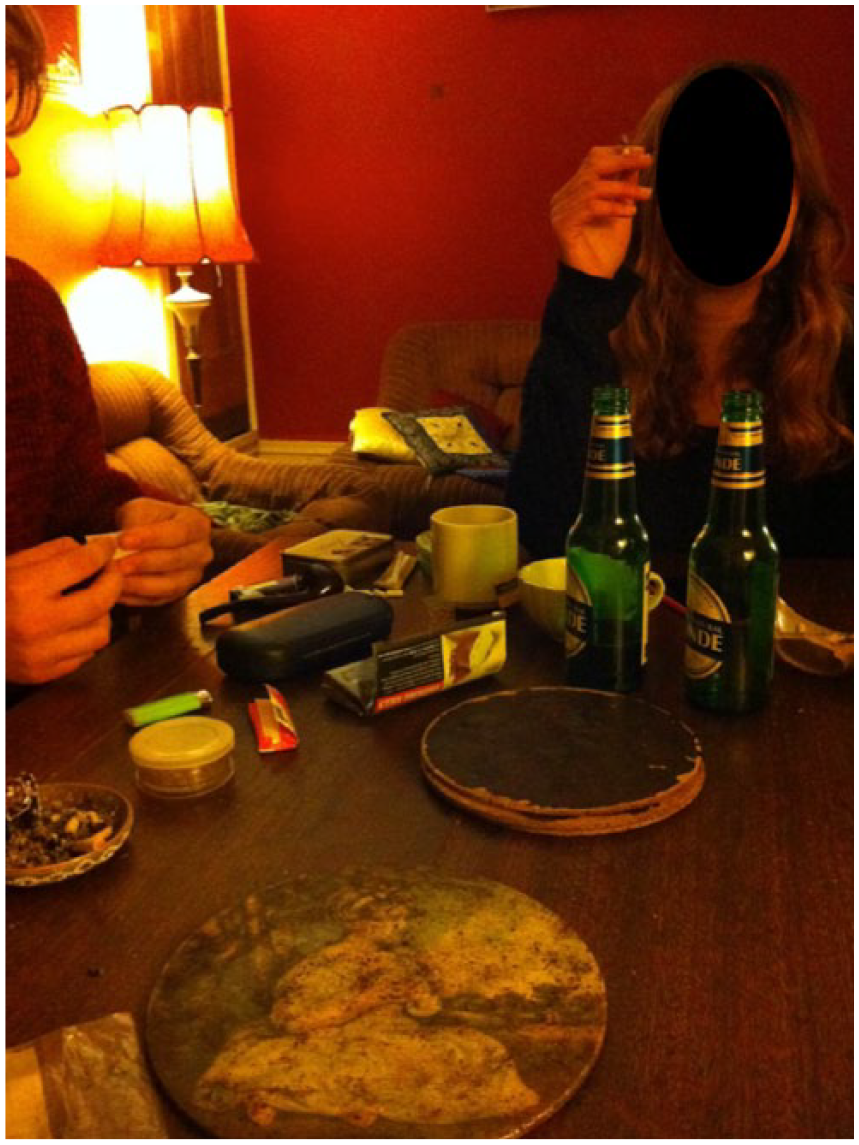
“A picture of my house”: capturing relational intimacy and ordinary affects.
The textual explanation accompanying the second of these two images draws out nicely both Highmore’s suggestion that ordinary affects are formed around and through the “intermingling of emotions and sensual experience” (2011, p. 140), and how the images that accompany LMSN check-ins can work to sustain what Mikko Villi (2013, p. 217) refers to as forms of “visual intimacy” (see also, Hjorth & Pink, 2014, p. 51).
The above examples draw out how, for these individuals, the construction of the Foursquare check-in was concerned less with the overt display of a “spatial self,” and more with registering and recording the subtle and fleeting ambiances of the everyday. What is more, while these photographic responses occur as a part of everyday Foursquare use, they are not simply recording routines or rhythms. Rather, they are attempts at coming to grips with and of recording everyday “intensities” and “ordinary affects.” In the following, final section, we explore further some the implications and significance of this focus in relation to the construction of the Foursquare check-in.
Foursquare, affective intensities, and the datafication of everyday life
Within the social shaping of technology literature, it has been readily acknowledged that, historically, there is often a disconnection between how “new information and communication technologies may be designed and intended from the outset to fulfill particular needs or purposes,” and the often “open and unanticipated uses” that end-users subsequently find for them (Lievrouw, 2010, p. 247). Or, as David Noble (1984) has put it:
Close inspection of technological development reveals that technology leads a double life, one which conforms to the intentions of designers and interests of power and another which contradicts them—proceeding behind the backs of their architects to yield unintended consequences and unanticipated possibilities. (pp. 324–325)
Some of the photographs associated with check-ins in our study were in keeping with the broad aims and intentions of Foursquare end-use in that they were used to register key events at particular venues, to broadcast new or fashionable venues, to convey certain idealized performances of oneself through association with certain venues, and to record everyday routines and rhythms. This, however, was not the only, nor was it the main, use of the check-in. Rather, a striking feature of many of the check-in-related images and accompanying explanations provided by our study participants was a particular sensitivity toward “ordinary aesthetics” (Highmore, 2011), toward the local and the familiar, and to capturing “a mood, a rhythm, a feeling” (p. 1), an “ordinary affect” (Stewart, 2007).
This orientation or sensitivity toward the expression of ordinary affects among the people we spoke with, we would suggest, carries important implications for understanding end-user engagement with Foursquare, in the first instance, and the ongoing evolution of the Foursquare platform and others like it, in the second instance. With respect to the first of these things, it suggests that one’s preparedness to register a check-in on Foursquare may well be motivated by a rather different set of concerns and expressions than those of principal interest to Foursquare’s engineers or client solutions team.
The twentieth-century French writer Georges Perec (1999), in a now famous passage from an essay entitled “Approaches to What?,” once called on us to be more attentive to the everyday, to the ordinary, and to question what we see around us. He wrote,
What we need to question is bricks, concrete, glass, our table manners, our utensils, our tools, the way we spend our time, our rhythms. To question that which seems to have ceased forever to astonish us. We live, true, we breathe, true; we walk, we open doors, we go down staircases, we sit at a table in order to eat, we lie down on a bed to go to sleep. How? Where? When? Why? (p. 210)
A little over a decade later, cultural critic Ben Highmore (2011, p. 2) returned to these concerns to prompt us, once more, to ask questions of our own “ordinary lives.” “How would we characterise the moods […] and affects of the day-to-day? What are its orchestrations and intensities?” (Highmore, 2010, p. 119). Highmore suggests that by asking these questions we might be better prepared to develop forms of “critically entangled contact with affective experience” (p. 119).
What became clear to us over the course of our study was the extent to which participants were already very well attuned to the various intensities and affects of the everyday. These individuals seemed to use their smartphones to take photos for Foursquare, as the artist Paul Klee (1964, p. 310) once put it, with one eye that sees and another that feels.
In addition and importantly, as John Berger (2013, p. 25) notes, a “photograph bears witness to a human choice being exercised.” For many of our study participants, the photographic choices they exercised in registering check-ins thus formed patterns of engagement with Foursquare that did not necessarily accord with how the platform was intended to be used at that time. This is to say that their fascination with everyday esthetics and ordinary affects could be regarded as constituting a subtle form of “off-label” or unintended use (Bercovici, 2014).
It would be a mistake, though, to think that Foursquare Labs Inc. is not interested in these “off-label” uses to register the esthetic and affective dimensions of everyday life, or that it has been impervious to the subtle social shaping that has occurred at the hands of its end-users. As we have noted throughout, all engagements with the Foursquare service still contribute vital venue-related data that feed into its places database and its enterprise solutions. Capturing the routines and rhythms of everyday life—such as visits to the gym, the pool, or the local café—is valuable not only for what it reveals about specific commercial venues, but also for what it reveals about the spatio-temporal nature of routine, everyday mobilities. Boredom (and its cousin, distraction) is a component part of everyday mobilities (Gardiner, 2012) and thus a valued state for LMSN firms (Hand, 2017; Paasonen, 2016), especially when it becomes “attentive boredom” (Phillips, 1993, p. 78), in that it provides opportunities (even if only fleeting ones) for engagement with applications like Foursquare. Through this engagement, valuable interactional information can be generated that offers insight into what occurs when, as Anderson (2004) puts it, time is stilled and space is slowed. Affective intensities are, of course, also of great interest to Foursquare, albeit arguably more difficult to register and interpret than other check-in-related behaviors.
That said, Foursquare has taken significant steps toward devising means and mechanisms for capturing the “affective intensities of datafied space” (Sumartojo, Pink, Lupton, & LaBond, 2016) as registered by end-users of its service. These processes have taken a variety of forms. For instance, Foursquare’s engineers have developed an interest in tracking what they term “off-trending” (spikes and/or drop-offs in activity around particular venues) (Sklar, Shaw, & Hogue, 2012). Their engineers are also interested in building predictive analytics capabilities that might determine where one might go next, or what they might like, based on where they are and where they have been—prediction that draws on analyses of the points of intersection between the firm’s social graph (the social interactions that occur within the service) and its places graph (the venue-related interactions that occur within the service) (Shaw, 2012). Foursquare has also sought to encourage users to activate passive location logging within the app on their phones. It has sent out subtle prompts, in the form of mini surveys, to encourage users to provide information about a venue’s less tangible attributes (does it have mood lighting? is it a good place for a date?, etc.). And, in a 2017 piece for Quora, Jeff Glueck (2017) described how the Foursquare engineers used machine learning techniques to interpret the data gathered by the aforementioned surveying of users, and other check-in information, including photos, and recommendations and tips, asking: “What is the sentiment in the tip? Does this tip have a photo? How long ago was it written? How many upvotes has it received?” (Glueck, 2017). Machine learning was also applied in interpreting and grouping user-generated photographs for each venue: “[A]ll photos of that burrito will appear together, all indoor photos, photos of people, et cetera” (Glueck, 2017).
And, yet, there is a sense in which the end-user motivations driving engagement with Foursquare—and whether they constitute on- or off-label use—become increasingly immaterial insofar as all place-based interactions are meaningful and contribute to Foursquare’s ambitions of becoming the location under layer of the Internet. Making sense of these drivers is also less crucial due to the changing nature of geodemographic profiling (Barreneche, 2012; Smith, 2017)—where, “rather than reveal universal characteristics of populations,” what is of increasing interest are the “tendencies, trends, interests, tastes, preferences and other items of life moving from share-moment to share-moment” (McCosker, 2017, sec. 5, para. 2)—and due to the fact that Foursquare is increasingly able to further enrich its places database, beyond what is contributed by its own users, through extensive partnerships with a host of social media and other firms, including Apple, Instacart, Mapbox, Microsoft, Snap, Tinder, Twitter, and Uber, among others.
Foursquare users, data and commodification
We juxtapose the photo elicitation data with participants’ responses to interview questions regarding their attitudes and opinions regarding locational data retention, data sharing and the sale of user data to third parties. This line of questioning enables us to articulate some of the ideas that users had about how platforms like Foursquare should use their data.
Even in 2013, there was a sharp difference in participants’ affect between the photos they sent us to describe Foursquare and the ways they describe Foursquare’s data practices. Many participants reflected a kind of ambivalence toward platforms that use customer data in ways that seemed at odds with why customers have signed up for the service. Like other research regarding user data and social media platforms (Fuchs & Trottier, 2017; Trottier, 2014), our participants were often conflicted, recognizing the needs for these companies to make money but also feeling taken advantage of:
I just feel like a bit of a pawn, you know, I’m doing this for my own reasons and that data is just—I don’t know how to say it, just for their own—for someone else’s larger benefit.—Lucy, Melbourne * * * Not that I like it, but let’s be honest, let’s be reasonable, that’s what happens.—Cristine, NYC * * * It’s like the boiling frog theory, the water sort of heats up slowly around you and you don’t even notice that they’re doing these things for you.—Allen, Melbourne
For many of our participants, there was a stark difference between how they used and wanted to use Foursquare and how they felt the company used it. In particular, they expressed concerns regarding the commodification of their socio-locational information. This suggests the datafication of ordinary affective experiences raised subtle, but nevertheless felt, inequities of power.
Moreover, these quotes and discussions regarding data practices offer important insight into the evolution of locative data, corporate entities, and privacy. This analytical comparison between the images and the data practice discussions are generative in their juxtaposition, revealing significantly different affective elements. While the image-text artifacts reveal the ordinary esthetics and mundanity of the everyday, the discussions of the data practices revealed resignation and powerlessness.
Attempts to capture the affective intensities of datafied space arguably fail to fully account for the subtle, everyday esthetic engagements and ordinary affects associated with check-ins as registered by participants in this study. What datafication efforts perhaps miss, in other words, are the complicated ways that the check-in is utilized as a means of sensing the ordinary—intended here, in Highmore’s (2011) expansive understanding of this word, as involving sensuality, sensibility, and sensitivity. Thus, while Foursquare’s points-of-interest database continues to be enriched through the conversion of end-user data, including geocoded pictorial data, this study would suggest that there are significant, yet less tangible and harder to capture, gaps in this database.
Moreover, the affective resignation that many of our participants felt regarding the commodification of their Foursquare use is likely part of a larger story regarding the conflictual nature of social media and privacy more broadly. Eszter Hargittai and Alice Marwick (2016) argue that apathy is a common response to privacy concerns online, due both to a lack of control but also institutional opacity regarding data practices. Our examination reveals the affective component to locational “data,” which is experienced in stark difference between the ordinary esthetics and affects revealed in the photo elicitation data and the affective resignation and powerlessness in the interview data. This affective juxtaposition becomes all the more relevant with Foursquare’s recent shift toward more enterprise solutions.
Conclusion
The business model of Foursquare has changed substantially since its beginning as a location-based mobile social network. What began as a consumer platform for communication and sharing has become one of the infrastructural systems for major technology brands today. In constructing check-ins as data, Foursquare has leveraged billions of data points to identify particular commercial trends for its clients and partners, which seemingly represents a substantial is disconnect with the experiential and sensorial construction of check-ins by users. Despite this difference, however, Foursquare has nevertheless been able to commodify the work of its early users and superusers. Referring to itself as the “Switzerland” of locational data (CNBC, 2018), Foursquare has positioned itself as the friendly partner in industry to fight against the data monopolies of Google and Facebook. Drawing on the validity of “crowdsourced” data while simultaneously evoking the moral legitimacy of a “community-based” network, Foursquare continues to benefit from the brand trust of its origin story while following contemporary pressures and trends to commodify geomedia.
This article reinforces the tensions in the social construction and datafication of the check-in. By drawing on historical data, we explore differences between the role of affect in how Foursquare users understand the service itself and its data practices. These stark differences and insights become relevant given the recent changing nature of Foursquare. As the company has dramatically shifted its business model from a user-oriented LMSN and toward a corporate client-facing company enabling locational datafication, with tension arising regarding what the places network was based on and how its economic datafication processes have moved it in a different direction.
Geomedia are continually changing and morphing as the industry settles and defines its role more broadly in the mobile networked ecosystem. Foursquare continues to play an important economic and institutional role in defining that industry, despite not being on the radar of user-facing social networks. As it partners with various platforms, we continue to need to understand the various intermediaries and socio-technical actors who shape geomedia today based on their continued work from before.
