



Abstract
This empirical study focuses on the factors of school parents’ school choice whose children just started to attend one of the Piarist (Catholic) Schools in Hungary. 270 parents completed an online questionnaire where the groups of questions concerned several facets of their beliefs and values. The results show how parental expectations and beliefs are organized, and how they related to the values manifested in the ‘Piarist spirit’. Both the transfer of religious values and secularized goals are very important for parents. Parents’ educational level and the type of settlement they live in have almost negligible role in explaining differences in answer patterns.
Introduction
The public educational systems face great challenges in the 21st century. Besides the well-known debates on the acquisition of so-called 21st-century skills, both educators and parents emphasize the importance of transmitting values between generations. Public education has a crucial and sometimes leading role in this transmission process. In countries that regard the freedom of worldview as a basic value, it is natural that there can be various schools run by various agents, such as churches or foundations. Therefore, in these countries, the pluralism in values and the transmission of these values can largely depend on the school types.
According to Archer’s (2013) seminal work on the expansion of school systems, in European countries, the hegemony of the church as school operators terminated more than a century ago, however, the traditional – primarily Christian – churches still run a relevant portion of the schools. In Hungary, where the current investigation took place, there were relevant changes in the last decades concerning church involvement in the maintenance of schools. Different churches, including the Catholic Church and especially the Piarist Order, are seeking their involvement and position in the public education system. In general, churches that undertake the task of school maintenance would like to increase their social presence by means of introducing the church’s teachings and religious values. These values may be attractive even for those whose religious practice is limited to the celebration of major church holidays. Furthermore, as Catt and Rhinesmith (2016) pointed out, it is the lack of religious environment or instruction in other schools that motivated many parents to choose a school providing religious education. As Trivitt and Wolf (2011: 204) emphasize, Catholic schools have a relevant advantage due to a kind of ‘well-known brand identity’. There are exciting questions to raise concerning how the parents of the students attending Piarist schools formed their expectations and what are the factors of decision in their school selection. Decision-makers of the Piarist Order consider it important to obtain information and empirical research results on this crucial question. Hopefully, our findings will be useful and instructive for other school operators and policymakers as well.
Contexts
Church-run schools in the current Hungarian educational system
Due to the historical circumstances after World War II, Hungary became a country under the governance of a monolithic political system, and from 1950, the allowed number of church-run schools was very limited as compared to the school system in the first half of the century. There were only four Catholic orders that received permission to run two schools (eight schools altogether), and this allowance was limited to the grammar school type of upper secondary education. One of the Catholic orders that could run two schools (one in the capitol, and one in a county-seat town) was the Piarist Order. After the political changes in 1990, churches became free to run their schools, and due to the Vatican-Hungary financial concordat signed in 1997, the Catholic Church, and later other historical churches received fairly favourable financial support from the Hungarian state. In the last decades, a new renaissance of church-run schools can be observed indicated by a massive increase in both the number of institutions and the number of students in these schools. Although two decades ago church schools were already strongly represented in upper secondary education (Halász, 1999), by now it has been changed in a way that they are strongly present in kindergarten; in primary, lower secondary, and vocational education as well (Lukács, 2013). Furthermore, there is a tendency for a systematic turning of church-run schools towards the more disadvantaged groups of students (Pusztai, 2014).
Several studies (published mostly in Hungarian) analysed the factors behind the rise of church schools. There are political, religious, and social factors behind the tendency. According to Péteri and Szilágyi (2023), changes can partially be explained by new financial rules and regulations that made it possible for the churches to be more effective financially with limited transparency and accountability. We should mention among the purely religious aspects that churches themselves saw school development as a serious opportunity to increase social presence and religious activity. From the individuals’ points of view, it is worth noting that about half of the population declared themselves belonging to a church.
A brief comparison of church and state schools in Hungary
Data published by the Central Statistics Office show tendencies about the role of church schools. Both the rate of church schools and the rate of students attending are 15%. Two decades ago these numbers were around 4%. The increase in the number of church schools was due to the Hungary-Vatican Financial Concordat first agreed upon in 1997 and then amended in 2013. This concordat guarantees secure financing of the church schools. There are several dozens of church and religious order school operators. The Catholic schools are operated by either diocesan and/or monastic operators, among the latter the Piarist order is historically one of the dominant ones. Traditionally, the Piarist order has operated upper secondary level schools in the second half of the 20th century, but now they also operate three primary schools as well.
From a purely educational perspective, the Act on National Public Education and the National Core Curriculum 1 provide the same curricular frameworks for each type of school, while explicitly stating some very different features church schools may possess. Section 32 of Act CXC of 2011 on National Public Education guarantees – among other things – that these schools may apply religious criteria in employing teachers. The church may prescribe for the school the use of a specific general curriculum and may freely determine the textbooks to be used. Religious education may be incorporated into the curriculum. (The majority of the schools do incorporate such a school subject.) In its regulations, the school may prescribe rules and standards of behaviour and appearance (including uniforms) and religious activities. These special rights of the church schools are widely known in society, and they surely have their impact on school choice.
Piarist schools in Hungary
Piarist schools have some general features introduced and promoted worldwide. The characteristics originate in Joseph Calasanz’s thoughts and are summarized in a document published by General Secretariat of Ministry (2020). In this document entitled ‘Piarist identity: Share our precious treasure’, there are several features strongly related to the topic of parental views and the quality of teaching. The multi-faceted Piarist identity has complex connections to the training programs. Different starting points of different personalities offer very different modalities of participation in school activities. Wilfulness, that is, the free and personal motivation to take part in school activities, is a vital component. This wilfulness is accompanied by personal life stories and narratives from elder people of the communities thus contributing to a rising awareness of the developmental steps that must have been taken. Consequently, each subject has a ‘clear awareness of being active subject of the Piarist Mission’ (Scolopi, 2020: 9). Although being a unique person trained according to individual needs, students are linked to the Piarist community in several ways. Piarist schools in Hungary, and worldwide, are run and act according to the spirit of the Piarist fraternity. Further characteristics of Piarist schools are discussed by Lukeš Rybanská and Spalová (2021), who emphasized the family character of the schools, that is, close collaboration between the school and the family, and securing family atmosphere. Besides the compulsory religious lessons, there are optional spiritual services provided like praying and spiritual guidance. Traditionally, the Piarist education is dedicated to the poor, and the spirit of personal care based on individual needs has remained a defining characteristic of teaching.
Parental choice in the Hungarian educational system
Legal factors of school choice
When aiming to explore parents’ values and views on school choice, we first summarize the legal basis for school choice. According to Section 72 of Act CXC of 2011 on National Public Education (2011) in Hungary:
Parents have the right to freely choose a pre-school, school, or a hall of residence in compliance with their children’s abilities, skills and interests and their own religious, and ideological convictions and their nationality. After the child reaches the age of fourteen and does not lack legal capacity, parents may exercise this right jointly with their children.
The school starting age is flexible within certain limits (see Altwicker-Hámori and Köllő, 2008) which resulted in children starting school later and later on average within the 6–7 years of age interval. More than 90% of the children attend the eight-year-long general school. Afterwards, families must make a decision about which type of secondary school their children will attend. Parents’ voices in exercising school choice is, therefore, vital. Using ISCED concepts, the eight-year-long general school covers the primary and lower secondary levels of schooling, and both these levels and the upper secondary schooling are tuition-free (with the exception of schools operated by foundations which include roughly 1% of the students). Although compulsory education lasts until the age of 16, thanks to the tuition fee exemption, the majority of students attend upper secondary level institutions until the age of 18.
Government offices publish geographical descriptions of dwelling places belonging to a given school. Students from the assigned catchment areas must be admitted to the school even if it is a church-run school and there is no alternative institution nearby. School choice, therefore, becomes a crucial issue in urban areas only where there are real alternative solutions according to parents’ religious or ideological convictions. Free school choice applies in its entirety at the beginning of upper secondary levels of education where there are no obligatory geographical neighbourhoods defined anymore.
The possibility of branding of Piarist schools with respect to parental choice and needs
There are large differences among educational systems in the extent to which parents are free to choose the school for their children. Freedom refers not only to legal freedom, but the availability of choices within physical reach, and whether parents feel it important to put some effort into finding ‘the best school’. In educational systems where schools provide more or less the same (and high) quality of education, parents may be far less inclined to consider various options. As Goodall and Ghent (2014) revealed, Christian parents feel themselves more involved in their children’s schooling.
Since maintaining the educational system has basically been a state task since the 19th century (Archer, 2013), Piarist schools are now looking for their place under the sun in a fairly competitive environment. Competitiveness is especially true for the upper secondary level of schooling where there exist different types of schools (vocational schools, grammar schools, and their combinations). Pelz and Den Dulk (2018) raised the dilemma of whether religious-based schools focus mainly on the transmission of religious social identity, or focus on secular goals in the context of religious-based education. According to their analysis, both aims are intended to be fulfilled. Furthermore, Lukeš Rybanská and Spalová (2021) emphasized that Catholic schools are somewhat like laboratories of how to merge secular and religious values. In Hungary, according to Pusztai’s (2020) research, both goal-oriented and value-oriented tendencies are present in parents’ school choices. For about half of the population, religious affiliation or at least religious values are important (value orientation), and besides this, the church-run school yielded a good reputation throughout the previous decades with good chances and indicators in terms of further education (goal orientation).
In order to attract students and parents, schools use different branding techniques. With increasing competition among schools, the importance of branding techniques increases, so the effectiveness of different branding methods needs some consideration. According to DiMartino and Jessen (2016), parents do not really judge the school brochures and books since these show the picture the school wants to reveal or wants to achieve. However, external and objective sources like the chance of admission or test scores needed for the school form an effective basis for decision-making, especially for low-income families. It is low-income families that seem to be inclined to choose Catholic schools for their children (Cheng 2019; Cheng et al., 2016). According to their analysis, parents who have certain preferences and expectations tend to choose the schools that express those values and expected characteristics in their branding. Even many non-Catholic parents tend to choose a Catholic school (see Trivitt and Wolf, 2011), indicating that their decision may have been influenced by factors besides religious values or expectations (see Ter Avest et al., 2015).
Research questions
What are the key factors of Piarist school choice in parents’ views?
Based on the legal factors of school choice, we formulated dichotomous (yes-or-no) questions concerning whether some objective or personal factors played a determining role.
Which educational goals are considered the most important, and how do parents see their realization in Piarist schools?
For each and every educational goal, we asked parents to judge how important that goal was (as a factor of school choice) and to what extent they saw the realization in the school – only after half a year of studies. The system of instructional goals reflects the main subject areas of the Hungarian National Core Curriculum, and additionally, we included further educationally relevant activities highlighted in the NCC and in the Act on National Public Education. In this part of the questionnaire, the main features of education in the Piarist spirit were collected primarily based on the Scolopi document.
How do parents judge the importance of different aspects of religious education?
When operationalizing the goals and means of religious education, the already existing and/or declared best practices were collected.
How do socio-economic background factors influence school choice?
We anticipated that there could be differences in judging the importance of the factors of school choice and the different instructional and religious education goals. Parents’ level of education and the type of settlement they live in can be such background factors explaining the significant differences that might occur.
Methods
Participants
Sampling units were students who just started attending a Piarist secondary school in 2021 and who started either 7th or 9th grade, or some of them a so-called ‘orientation grade’ which lies in between 8th and 9th grade of schooling. The number of students in this population was 769 in the academic year. For each participating student, one and only one questionnaire was assigned, but the questionnaire itself could have been filled in by any of the parents or even by both of them (one of the background questions in the questionnaire concerned which of the parents answered the question). The URL of the questionnaire was distributed by the school principals; in some cases, the process was mediated by the class teachers. Altogether 270 students’ parents participated voluntarily in this survey. The response rate at the institutional level ranged from 18% to 57%.
Measure
A questionnaire consisting of several parts was developed and administered (see the respective tables in the Results part for the complete list of items). Experiences with similar school choice questionnaires yielded by Pusztai (2009, 2020) in Protestant schools have also been used and incorporated. The five main parts of the questionnaire consisted of the following items. (1) Four objective factors of school choice were measured on a dichotomous scale (yes or no). For example, ‘The school is close to home’. Further factors addressing personal aims and beliefs were also measured on a dichotomous scale. For example, ‘We wanted to send the child to a strong and famous school’. (2) The importance and realization of educational goals were measured on a five-point Likert scale. Eleven items concerned different school subjects and knowledge domains. For example, ‘Mathematics is taught at a high level’. For each item, firstly, the importance for parents, then the realization in the school was to be judged on a five-point scale (5 = utmost importance or realization at a very high level). (3) The importance and realization of further educational goals were measured in the same way. In this part, the principles of Piarist Schools and education were listed. For example, ‘Proclamation of the gospels is a component of the educational process’. Ten such items were developed. (4) Ten items on a five-point Likert scale comprised the next sub-scale of the questionnaire. These items covered different aspects of religious education. Parents were asked how important are those ten tasks of religious education in their views. For example, ‘Students get to know the content of religious holidays’. (5) Background variables enabled us to compare different groups of parents according to their educational levels, their type of settlement, and different features of the religious life of the family.
Procedure
The questionnaire was administered online in December 2021 and January 2022. Having received an allowance from the governing board of Piarist schools, the school principals were asked to forward the link to the online questionnaire to the parents. The overall response rate proved to be 31%, and at the school level, it varied in the range from 18% to 57%. One possible reason for the variation in the response rate may be the leadership and/or communication style of the principals which is in part based on their beliefs about the relevance or importance of a quantitative research survey.
Analysis
Quantitative research methodology was applied throughout the data analyses adopting the usual threshold of p = .05 for hypothesis testing.
Results
The results are presented according to the research questions, starting with primarily descriptive analyses, and then hypothesis testing and multivariate analyses take place.
Key factors of school choice
Factors of school choice (% of agreement as being the factor determining, yes-or-no options were provided).
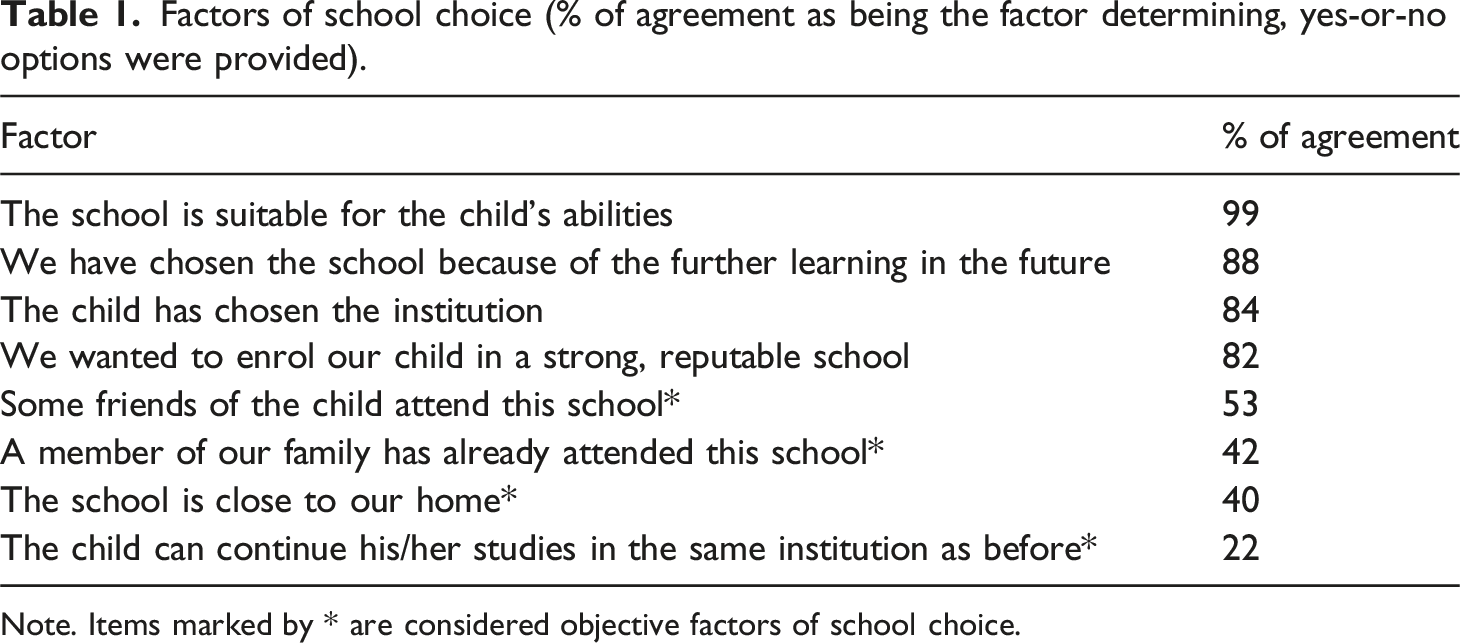
Note. Items marked by * are considered objective factors of school choice.
The school choice factors indicate a high level of agreement among parents that the Piarist school the child has just started would be suitable for the child’s capabilities, and since the school is considered to be reputable, it will bring good options for further learning later. It is remarkable that according to 84% of the parents, it was the child who chose the school. According to the legal background, under the age of 14, it is solely the parents who choose any school for the child, and between the ages of 14 and 18 both the parents and the child have a veto on school choice. Among the objective factors, distance from the school and previous experiences with family members or friends can also be considered important factors. In 22% of the cases, the child simply continued his/her studies in the same institution.
The importance and realization of instructional goals
The judged importance and the realization of instructional goals in Piarist schools (1 = not important at all; … 5 = very important).
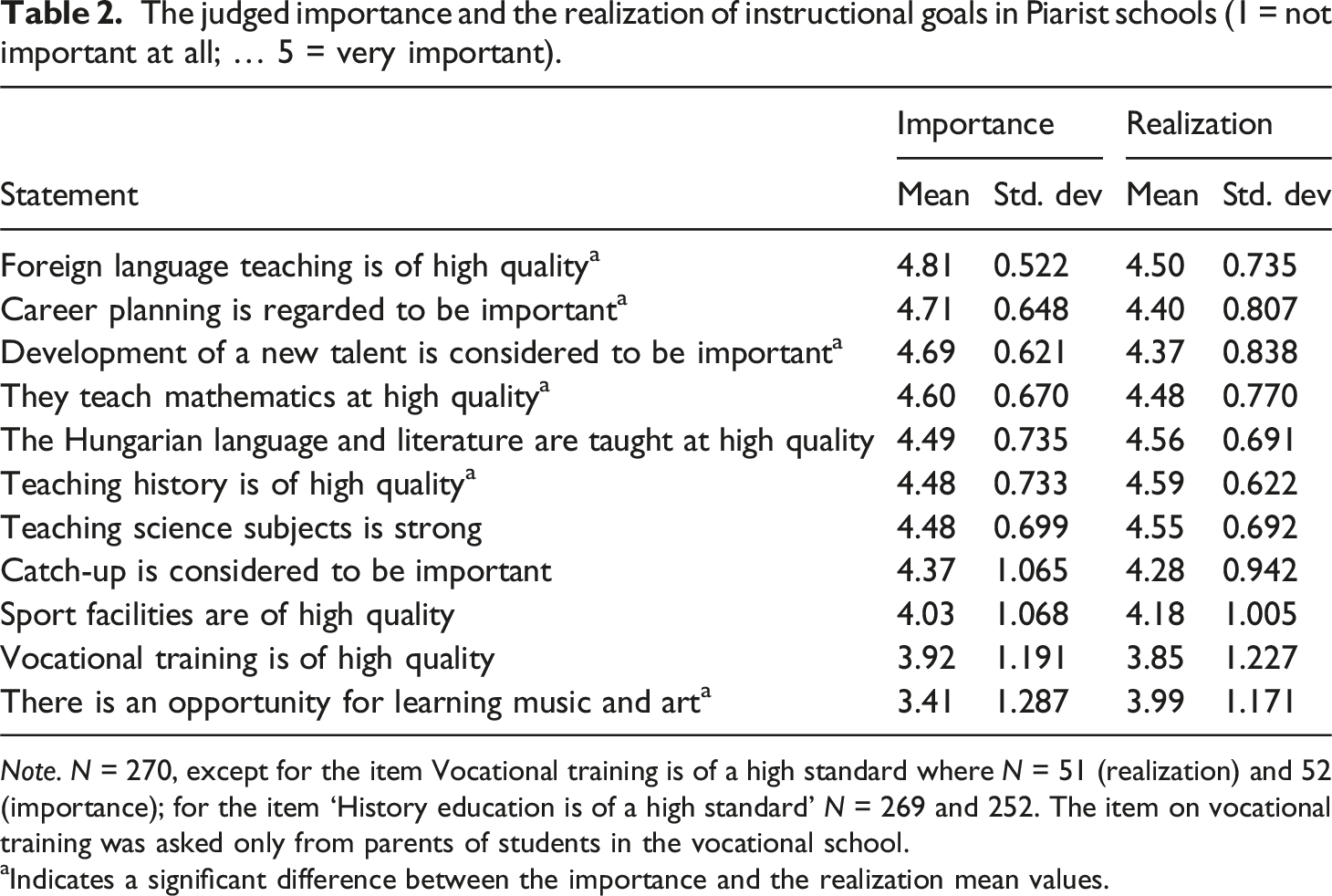
Note. N = 270, except for the item Vocational training is of a high standard where N = 51 (realization) and 52 (importance); for the item ‘History education is of a high standard’ N = 269 and 252. The item on vocational training was asked only from parents of students in the vocational school.
aIndicates a significant difference between the importance and the realization mean values.
The overwhelming majority of the factors received mean values above 4.00 indicating positive judgments on both the importance and the realization of those factors. Some factors yielded average values under 4.00.
In most of the cases, the judged importance and realization of the different factors were close to each other. In some exceptional cases, parents judged the importance of a factor higher than its realization in the institutions. With this large sample size, the differences between the averages of importance and realization prove to be significant when the difference is larger than 0.06. On the Likert scale used, there were five options given, and even though some hesitancy can be taken into account, the meaningful or relevant difference between the averages of two values should be around 0.5. Consequently, without presenting the exact p values for statistical comparisons, our analysis focuses on the absolute magnitude of the averages, especially comparing them to three threshold values: 3.5, 4.0, and 4.5. Hence, there are four instructional goals of outstanding importance: learning a foreign language, mathematics, talent development, and career planning. Learning music and art is considered of moderate importance by parents. As for the realization of these goals in the schools (after one semester only), we can claim that as opposed to the expectations, parents are less content with the realization of the most important instructional goals. The difference is most remarkable in the case of foreign language learning. On the contrary, although learning music and art were not considered as being of too much importance, the realization is considered appropriate.
The importance and realization of educational goals according to the ‘Piarist spirit’
The judged importance and the realization of different facets of the ‘Piarist spirit’ (N = 207, 1 = not important at all; … 5 = very important).
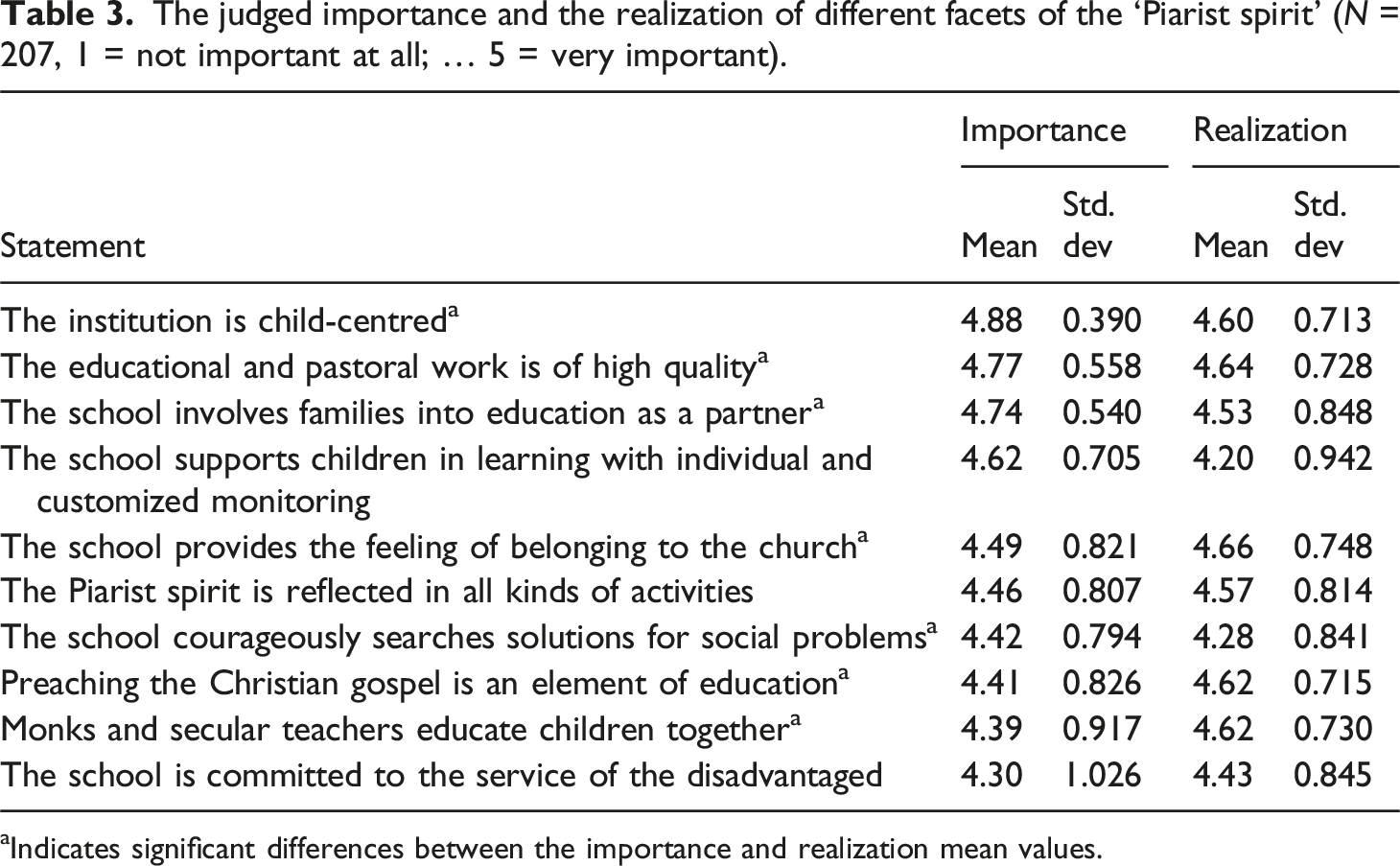
aIndicates significant differences between the importance and realization mean values.
The lowest mean value proved to be 4.30 (service of the disadvantaged), thus, the results indicate a very high level of agreement among parents on the importance of different facets of the Piarist spirit. As for the actual realization of these facets in the selected schools, parents could distinguish among them fairly well, and some relatively low mean values express that there is much potential in improving for example, individual and customized monitoring and in searching for solutions for social problems. In sum, parents do agree with the significance and power of the Piarist spirit and they do observe the schools’ intention to realize different facets of it.
Although every aspect of the Piarist spirit is much valued and appreciated by parents, a cluster analysis conducted on the ten variables revealed three similarity groups as shown in Figure 1. Structure of the variables on the aspects of the Piarist spirit (cluster analysis, furthest neighbour method with Pearson-correlations).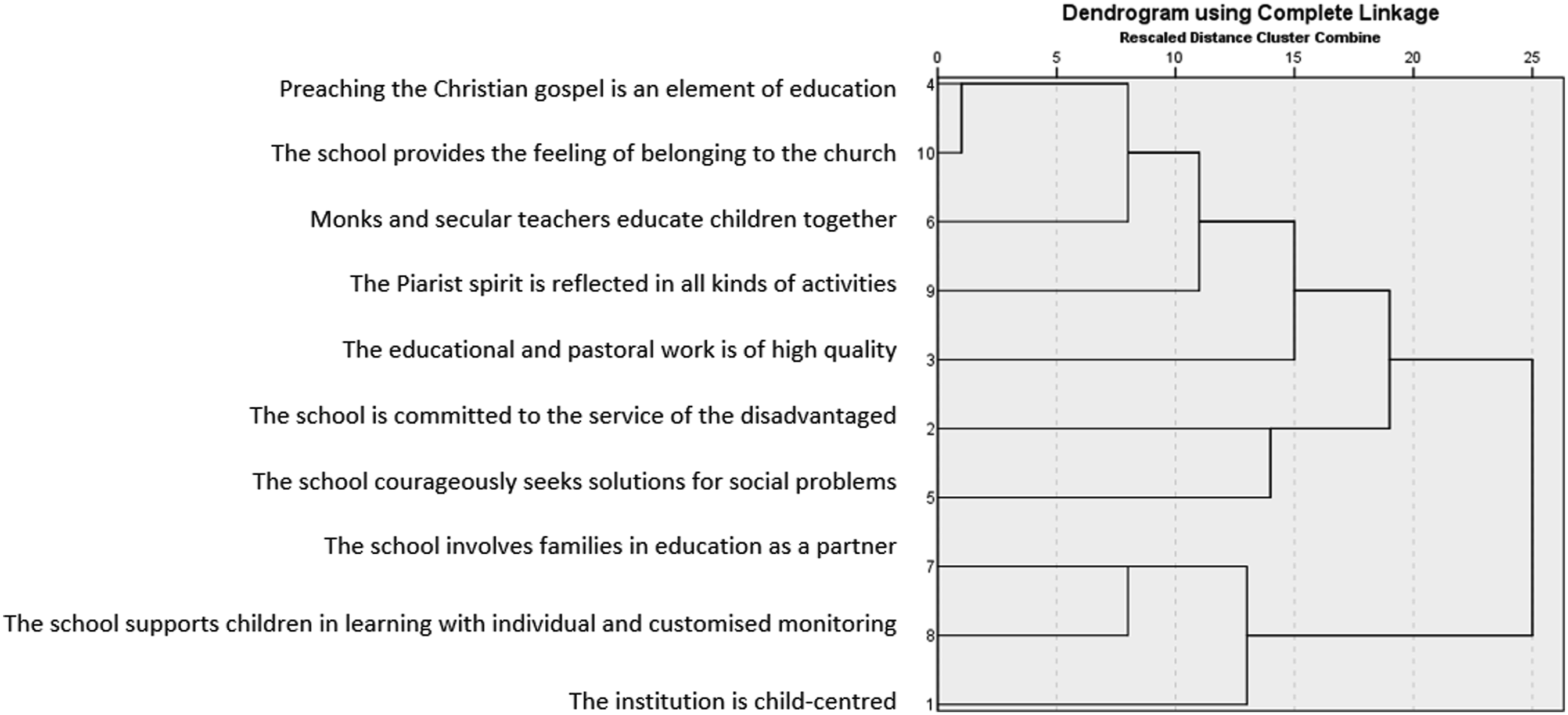
The method of hierarchical cluster analysis is conducted according to the following algorithm. The most closely correlated variables (Evangelization and Belonging to the Church) are depicted as the first cluster at the scale point 1. Then the next variable connected to these is the one where the weakest possible correlation with any of the two previous variables is the strongest (Monks and secular teachers educate children together). The horizontal scale from 1 to 25 helps visualization and indicates that the level of correlation between the Monks-teachers variable and the first two variables is at the same level as the correlation between Family involvement and Individual support (level 8 on the 1–25 scale). The exact wording of each variable can be seen in Table 3.
Even though the very last connection represented by the vertical line at scale point 25 proved to be significant (Pearson correlation 0.19), there seem to be three main groups of variables revealed. The bottom three variables concern individual characteristics. The upper seven variables can be further divided into two similarity groups: one for the institutional responsibilities of the Piarist order, and the other is mainly about the personalities working for children under the auspices of the Piarist order. Consequently, the empirical similarity groups of the variables on the aspects of the Piarist spirit reflect a kind of logically constructed system of values based on the Scolopi document.
Parental views on different aspects of religious education
How do you see the role of the Piarist school in the field of religious education? (1 = not important at all; … 5 = very important).
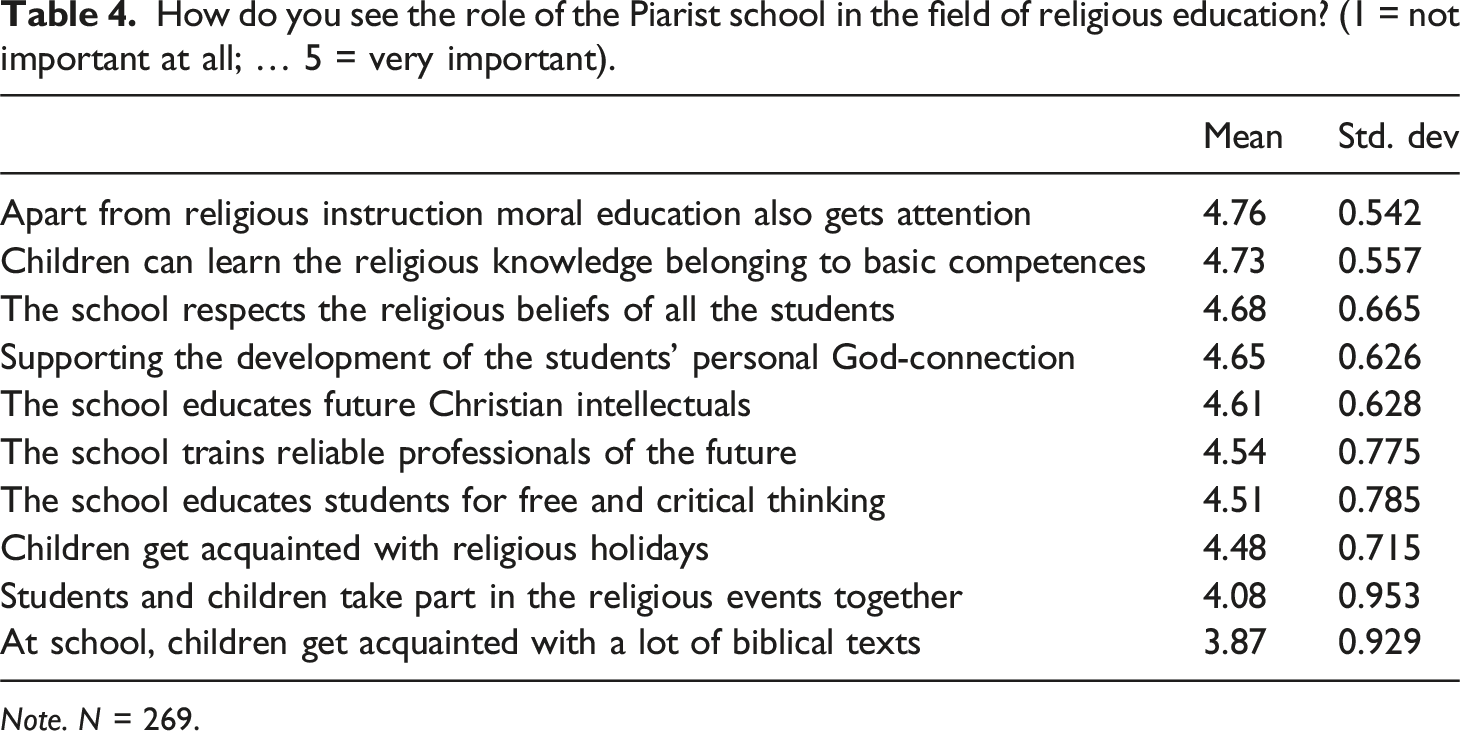
Note. N = 269.
There are two items for which parents’ views express a positive, albeit moderate level of agreement: getting acquainted with biblical texts and taking part in religious events together with the children. All the other aspects were considered very important. The standard deviation values indicate that besides the two items in question, education for free and critical thinking was not uniformly judged as very important.
Parental views on the sources of school success
A question of the constant sum type was raised on the sources of school success. We utilized a behavioural task: questionees were asked to assign 10 tokens to six possible sources. They could allocate the tokens almost evenly, or they could put them on one or two sources only. From these combinatorically abundant possibilities, we aimed to reveal the ‘wisdom of the crowd’, that is, the cumulative sums provide information about the relative importance of the sources as judged by the parents. Instead of the exact statistical values, we present the results in Figure 2, representing the relative weight of the sources of school success by pie-shaped parts of a circle. Parental views on the sources of school success.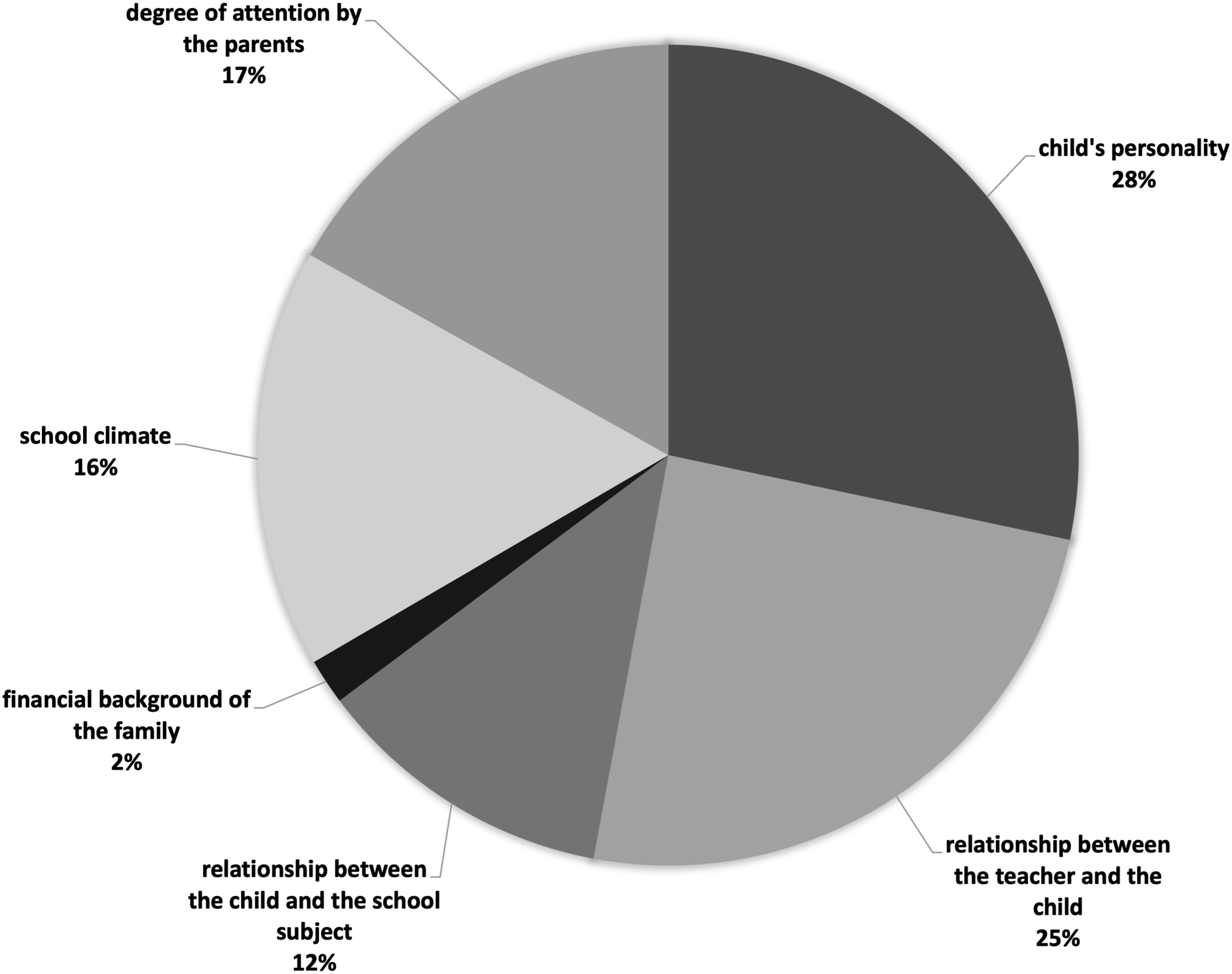
The pie chart is a visualization tool for showing the relative importance of each factor. The least important factor among the six options is the financial background of the family (2% of the cumulative score). In parents’ opinion, the two most outstanding factors are the child’s personality (28%) and the relationship between the teacher and the child (25%).
The structure of the instructional goals
In order to reveal the structure of variables, we conducted a hierarchical cluster analysis on several groups of items. First, the structure of the instructional goals is displayed in a dendrogram, in Figure 3. Structure of the variables on the importance of ten instructional goals (cluster analysis, furthest neighbour method with Pearson-correlations).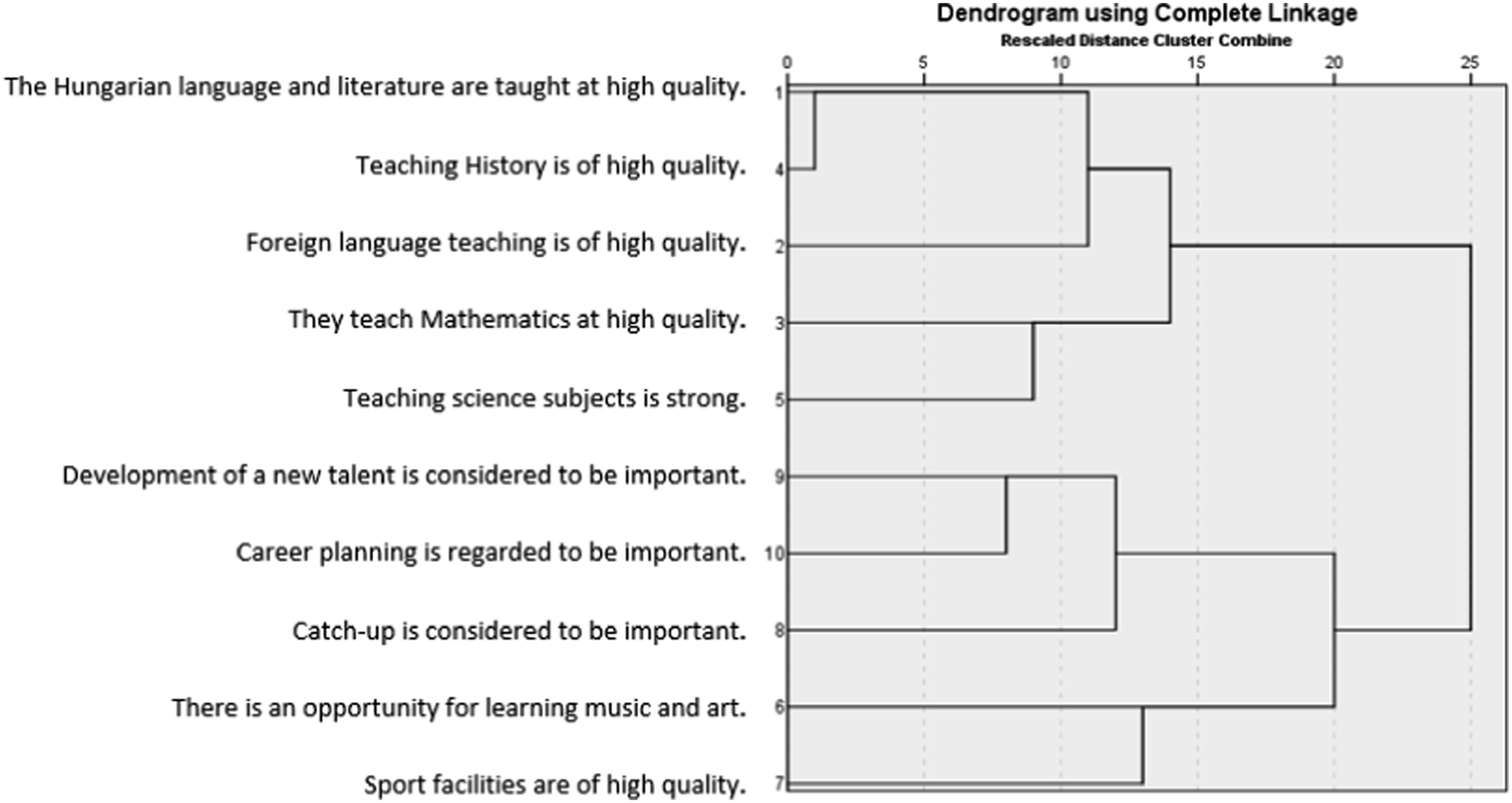
Since all the connections represented by vertical lines are significant at the p = .05 level except for the last one, there are two big similarity groups of variables. The upper five represent the school subjects usually labelled as the subjects of academic performance. Within this group, a clear dividing line exists between two subjects of the natural sciences and the group of so-called human subjects. The lower similarity group comprises two sub-groups: Music and Arts and Sports can also be considered as school subjects, and their importance is judged similarly among parents. The other three variables of catch-up, talent development, and career planning were judged similarly in their importance. Based on all this, the specifically academic subjects belong to one similarity group, while the so-called skill subjects fall under a similar assessment with the more general, broader categories of instructional goals. Consequently, for example, the judged importance of talent development or catch-up is less strongly connected in parents’ judgements with academic subjects like Mathematics.
Differences between groups of parents
Parents’ highest level of education plays an important part in children’s schooling. Educational research has revealed its important role in both academic performance and in the affective sphere of personality (motivation, academic self-concept, etc.) In our sample, a question concerned parents’ educational level on a six-point scale. The parents’ highest attained educational level is above the country average since 80% of the mothers and 71% of the fathers have at least high school graduation. We examined whether the parents’ level of education has some effect on their views expressed in the questionnaire. Correlation with the judged importance of the instructional goals shows that parents’ educational levels have a significant negative correlation with catch-up activities and have significant positive correlations with talent development.
As for the aspects of the Piarist spirit, both mothers’ and fathers’ educational levels have a significant positive correlation with the judged importance of evangelization, while other correlations are more neutral or non-significant.
The constant sum type question on the sources of success revealed only non-significant correlations indicating the lack of connection between parents’ educational level and the supposed reasons why the child can be successful in school.
Further analyses involved the type of settlement the family lives in, and there were some significant differences revealed. Parents living in the capital city of the country significantly undervalued the importance of Hungarian literature and grammar (ANOVA, p = .003). The very same pattern was found with History, Music, and Arts (p = 0.018 and p = 0.008).
Finally, the questionnaire asked parents about the family’s religious life. Since the sample is not representative of the country’s population, here we focus on the internal connections of the questionnaire revealing correlations between the family’s religious life and the judged importance of religious education. Albeit correlations do not confirm causal relations, we may rightly claim that both directions may occur, that is, religious activities bound to school life may affect the family’s religious life, and vice versa, the family’s religious life may affect the expectations towards religious education in school.
Discussion
The main findings
Parents’ expectations about different educational goals are strongly related to what they have already experienced during the first several months of schooling. This strong correlation of expectations and experiences indicates a kind of satisfaction on their part. However, there were some remarkable and statistically significant differences between the judged importance and the perceived realization of some factors.
Piarist schools have long been recognized as putting special emphasis on education according to the ‘Piarist spirit’. How parents judge the importance and realization of these factors showed some interesting patterns. On one hand, parents experienced a higher level of realization of some goals (preaching the Christian gospel); on the other hand, they felt that the school did not meet their expectations in supporting children’s learning by individual and customized monitoring.
As in all other schools run by the Catholics, religious education comprises an important aspect of school life. Different facets of religious education were judged almost equally important, reinforcing the dual nature of school choice: both the transfer of religious values and the secularized goals are very important for parents. As De Ruyter (2002) argued, parents do have their right to raise and educate their children with the condition that they have a moral conception of what is good.
The constant sum type question revealed parents’ views on the factors of school success. Besides the child’s personality, they considered the student-teacher relationship very important, whereas they almost neglected the role of the family’s financial background. This is an important finding from at least two aspects. It indicates that according to parents’ expectations, Piarist schools should ensure equal opportunities. Furthermore, according to the PISA studies (OECD, 2019), Hungary is among those countries where the performance gap related to socio-economic status is higher (although decreasing) than the OECD average.
The almost complete absence of large differences between parents’ groups (according to the type of settlement and educational level) points to the universally held nature of views and values measured by the questionnaire. This is in line with what Erickson (2017) stated about the lack of consistent patterns regarding differences between lower and higher-income families’ school choice factors since parents’ education level and the family income are highly correlated in general.
The questionnaire itself proved to be reliable and seems to be suitable for use in other educational systems and by other school operators as well.
Novelty and limitation
There have been several investigations on parental views and school choice both in Hungary and worldwide. The main novelty of our research lies in two aspects. First, the parallel items concerning the importance and the realization of different choice factors enabled comparisons that gave insights into the parents’ initial judgments and their satisfaction. Second, the separation of purely instructional and more general educational goals provided information on what was relatively more important for parents when selecting the Piarist schools.
Although each sampling unit has the same chance to be involved in this research, about half of the parents omitted the questionnaire. Consequently, there is a chance of the sample being biased giving an overrepresentation for those parents who care more about their children’s school career.
The possibility of branding of Piarist schools
For school principals and decision-makers, the results give several possible insights about parents’ choices which allow some kind of branding of Piarist schools. From this aspect, the results suggest that several educational goals may be intertwined in parents’ views. This ensemble of educational goals is in relation to the so-called Piarist spirit.
The importance of academic values seems to be consensual in parents’ expectations when choosing private schools (Erickson, 2017). In our study, we gathered detailed information about the importance of school subjects in parents’ views. Parents’ expectations are high about those school subjects that comprise the compulsory set of subjects at the Matura exam at the end of the high school years. Hungarian literature and grammar, Mathematics, Foreign Language, Science, and History teaching are all expected to be taught at a high level, and parents agree that these subjects are indeed taught well. Other subjects seem less important in their expectations but seem to be well taught as well.
As for the religious educational aspects of school life, stakeholders have now empirical evidence of parents’ especially high expectations concerning moral education (as embedded in or added to religion class), while they consider it less important for their children to become acquainted with many biblical texts.
Today, as families’ access to exercising school choice increases, Piarist schools need to pay greater attention to communicating what they offer. Our research may help them to better know how the ‘consumer-driven choice of assertive parents’ (Kay, 2002: 225) can positively be confirmed and possibly affected.
Footnotes
Declaration of conflicting interests
The author(s) declared no potential conflicts of interest with respect to the research, authorship, and/or publication of this article.
Funding
The author(s) disclosed receipt of the following financial support for the research, authorship, and/or publication of this article: This work was supported by the ‘Kilátó’ Piarist Career Guidance and Labor Market Development and Methodological Centre.
