



Abstract
At the growing intersections of social media and critical disability studies, limited empirical research exists on the role of digital platforms in expressing and constructing neurodivergent identity among subpopulations that additionally belong to other minoritized groups. This study critically intervenes by mapping how what we term “marginalized neurodivergence” is digitally constructed, using the case of young neurodivergent members of the global South Asian (SA) diaspora on TikTok (SANT). We conducted a thematic analysis of 100 TikTok videos posted by SANT from 2020 to 2024 about their lived experiences of autism and/or ADHD, employing dual theoretical and conceptual lenses: the psychosocialcultural framework from counseling psychology and platform affordances from digital studies. Findings indicate that TikTok serves as a forum for SANT to explore overlapping psychological, social, and cultural concerns that may otherwise not be discussed within SA or neurodivergent communities. Although these issues exist outside of TikTok for SANT, the platform’s affordances allow for social, communicative, and expressive possibilities that in turn shape the creation, consumption, and circulation of such content. This study has direct implications for informing clinical support around mental health and disability among marginalized communities, as well as understandings of how digital platforms potentially serve as a mediating factor.
Introduction
Social media and content creation platforms (e.g. YouTube, TikTok) offer important spaces for activism, community building, information sharing, and creative expression, especially among disabled people (Bitman, 2023; Ellis et al., 2020). This population, however, also experiences heightened online privacy and safety vulnerabilities (e.g. Chiner et al., 2017), as well as digital and social inequalities (Goggin, 2017), that broadly impact their political, societal, and economic participation. One disability subgroup whose relationship to social media is particularly complex and who experience both significant harms and benefits is individuals on the autism spectrum and/or who have attention-deficit/hyperactivity disorder (ADHD) (i.e. neurodivergent). 1 The neurodiversity paradigm recognizes that autistic individuals and/or those with ADHD may possess certain cognitive strengths (e.g. pattern recognition, problem-solving), while also experiencing challenges in other developmental areas (e.g. executive functioning) relative to neurotypical people (i.e. those whose intellectual and cognitive development is considered normative) (Kapp et al., 2013). 2 Neurodivergent individuals additionally have an increased risk of developing mental health conditions such as anxiety and depression (Accardo et al., 2024). Social networking sites can enable neurodivergent individuals to connect with those with shared interests and initiate relationships in ways that are inaccessible offline (e.g. by reducing immediate social pressures of face-to-face interactions and communication), while also creating participation barriers through limited user control options, challenges interpreting user tone and intent, and ableist online harassment (Barros Pena et al., 2023).
At the intersections of critical disability studies and social media research, and work on neurodivergence and online communities specifically, several notable literature gaps exist. There is a lack of work, for example, on intersectional aspects of the disabled experience online and variations across race, ethnicity, gender, and sexuality (Kaur & Saukko, 2022). This exclusion ultimately reinforces stereotypes about autism and ADHD as primarily occurring among White cisgender boys and men (Jack, 2014). Limited research in disability, technology, and society incorporates multicultural perspectives, especially from the Global South and associated diasporic communities (Aziz, 2022; Yang & Lin, 2022). Such an omission is notable considering vast global differences in terms of cultural acceptance, political agency, and social inclusion for disabled people. Almost no empirical research exists on the role that digital platforms play in expressing and constructing neurodivergent identity among subpopulations additionally belonging to other minoritized groups (Harper-Nichols, 2023; Le, 2024). One such population is the South Asian (SA) immigrant diaspora, who have migrated from the subcontinent (e.g. India, Bangladesh) due to several economic, social, and political factors (Sahoo & Shome, 2024). SAs use social media as a “third space” or site of resistance (Bhabha, 1994; Pennington, 2018) to challenge dominant narratives of stigmatization, discrimination, and exclusion (El Sayed & Hotait, 2024). Accounts of SA disability experiences and neurodivergent identity online, however, remain unexplored.
This study critically intervenes in social media and disability research by mapping how what we term “marginalized neurodivergence” is digitally constructed, doing so through the case of young neurodivergent members of the global SA diaspora on TikTok (SANT). Our conceptualization of marginalized neurodivergence builds upon understandings of marginality in social media that attend to the risks and benefits that networked spaces present for those systematically excluded from resources necessary for meaningful societal participation based on their demographic identity and/or circumstances (Pearce et al., 2020). Although marginality influences the extent to which neurodivergent people access opportunities and resources compared to neurotypical individuals (e.g. education, employment), marginalized neurodivergence involves specific biases and multilayered forms of discrimination, as well as novel and agentic arrangements of social solidarity. Those who experience marginalized neurodivergence may encounter exclusion from online and offline spaces that primarily serve their minoritized demographic communities due to those environments centering neurotypicality, be it implicitly or explicitly; for example, through social and communicative norms. We argue that platforms such as TikTok provide alternative spaces beyond pathologization and stigmatization for expressions of marginalized neurodivergence, particularly for young people whose lives are innately entwined with the digital. Concurrently, multiply marginalized neurodivergent individuals encounter risks by virtue of their social media engagement, and especially on TikTok, considering the spread of medical and health misinformation on the app (Milton et al., 2023), networked ableism (Heung et al., 2024; Skafle et al., 2024), and possible algorithmic biases against marginalized creators (Rauchberg, 2025). 2
We conducted a thematic analysis of 100 TikTok videos posted by SANT from 2020 to 2024 to understand digital expressions of marginalized neurodivergence, employing dual theoretical and conceptual lenses. From the field of counseling psychology, we draw upon the psychosocialcultural (PSC) framework (Gloria & Rodriguez, 2000), which has been used to focus on the personal well-being of underrepresented youth populations, to identify how SANT experiences of neurodivergence are enacted through the platform and across multiple contexts. From digital studies, we use a platform affordance lens (Bucher & Helmond, 2017) to identify sociotechnical factors that contribute to constructing a neurodivergent SA diaspora on TikTok. Incorporating both perspectives allows us to address the materiality of the platform and the psychological processes and meanings underpinning the content. This study has direct implications for informing clinical support around mental health and disability among marginalized communities, as well as understandings of how digital platforms potentially serve as a mediating factor.
Literature Review
We begin by briefly reviewing key literatures in three relevant areas: the psychological, social, and cultural dimensions of well-being among youth and neurodivergent individuals within the SA diaspora; how SA and neurodivergent populations navigate marginality and intersectionality in online spaces; and the specific platform affordances of TikTok and their influence on sociotechnical constructions of health, disability, and identity.
Psychosocialcultural Approaches to South Asian Diasporic Youth Well-Being
Given their rich linguistic and religious differences, SAs are often characterized as a “superdiverse diaspora” (Jones, 2020). Despite SAs forming one of the largest global populations (Pew Research Center, 2022), there exists a dearth of discourse pertaining to the experiences and knowledge of diverse youth in the SA diaspora and their psychological well-being (DeVitre et al., in press; DeVitre et al., 2022; Inman et al., 2014). Of the limited literature, scholars have identified one’s ability to cope, social connectivity, and cultural congruity as predictors of well-being (DeVitre et al., 2022). Moreso, racialized social constructs (e.g. the “model minority myth”) and cultural stigmatization have been found to detract from SA well-being and one’s ability to seek mental health services (DeVitre & Gloria, 2025; DeVitre & Gloria, in press; Goel et al., 2023). Although the mental health needs of SA diasporic youth are consistently under researched, studies across countries (e.g. US, Canada, UK) have highlighted experiences of racism, lack of trust toward mental health systems, cultural stigma, cultural conflict, and balancing of identities as areas of consideration (DeVitre et al., in press; DeVitre & Pan, 2020; Inman et al., 2014; Meherali et al., 2024; Mustafa et al., 2017; Prajapati & Liebling, 2022).
Within the literature on SA youth mental health and well-being, intersections with neurodivergence are largely missing. In addition, how autism and ADHD are understood within diasporic SA communities and across generations of SA parents and children is not well studied. 3 Even in cultures where mental health concepts are more prevalent (e.g. Eurocentric), stigmatization of neurodivergence exists in and outside of psychological spheres (Hirota et al., 2024). Misunderstandings are more likely to be perpetuated culturally when neurodivergence is rendered largely invisible; for example, in India, where autism prevalence was largely unknown until 2015 (Hossain et al., 2017). Western and Eastern cultural differences in how immediate and extended families discuss stigmatized topics and express emotions (e.g. Wick et al., 2024) can also impact openness, disclosure, and communication regarding neurodivergence. As such, understanding youth experiences of autism and ADHD in the SA diaspora is warranted.
The field of counseling psychology offers a grounded approach to examining marginalized youth experiences that may be helpful in contextualizing SANT digital narratives. Originally developed to study Latinx college students in the United States (Gloria & Rodriguez, 2000), the PSC framework has been used to explore young people’s well-being (e.g. mental health seeking, belongingness) across cultural diasporas (e.g. South Asian, Latinx, East Asian) (DeVitre & Gloria, 2025; Gloria & Rodriguez, 2000; Guan et al., 2020). Using three distinct yet interconnected dimensions (psychological, social, and cultural) to capture the independent yet collectively informed nature of a construct of interest, the PSC framework has proven useful in promoting nuance when analyzing day-to-day experiences of under-represented groups. The PSC framework enables insights into internalized constructs (i.e. psychological), interpersonal interactions (i.e. social), and emic processes (i.e. cultural). With digital spaces fully embedded in everyday youth practices and psychological language becoming more commonplace online, this study utilizes the PSC framework to better understand the networked experiences of neurodivergent SA youth.
Intersectional Approaches to Marginalized Identities Online
Rooted in the specificity of SANT, we propose the broader concept of marginalized neurodivergence to challenge hegemonic normative worldviews and to emphasize counternarratives that address misconceptions. While there is growing interest among researchers to explore SA diasporic groups and their relationships with social media and content creation platforms (Pinch et al., 2022; Srinivasan & Shilton, 2006), research has yet to uncover how neurodivergent SA youth use digital platforms for self-expression and identity negotiation, and particularly how culture intersects with neurodiversity online. Culture and neurodiversity are reciprocal; they collectively inform an understanding of a community’s system of meanings that influence how neurodivergence is identified, managed, or experienced (Grinker, 2015), and reshape practices by creating healing subcultures where societal stigma is mitigated (Fein, 2015). Our advancement of marginalized neurodivergence, and its substantiation on TikTok, builds upon two key streams of relevant work on marginality, social media, and society – the “digital diaspora” (Brinkerhoff, 2009) and how “intersectional invisibility” (Purdie-Vaughns & Eibach, 2008) relates to neurodiversity as a psychosociocultural paradigm.
Existing scholarship suggests that SAs employ networked technologies as key sites of self-expression and identity curation (Karim, 2003; Mitra, 2001). In this way, they function as “digital diasporas,” expressing identity as a “sense of self that is neither wholly of the homeland nor exclusively reflective of the host land” (Brinkerhoff, 2009, p. 2). Yet in engaging with the digital diaspora, SAs may encounter stigma, or a deeply discrediting attribute (Goffman, 1963) amplified when individuals hold multiple marginalized identities (Pyle et al., 2023). The latter concept, grounded in intersectionality, is a function of socially embedded forms of discrimination (e.g. racism, sexism) that merge to create challenges for marginalized peoples (Collins, 1998; Crenshaw, 1991). Intersectional stigma captures compounding effects of stigma across dimensions of identity and inequality (Azhar & Gunn, 2021). Further, research illustrates that SAs with intersecting stigmas self-disclose their identities and experiences online to receive communal benefits (e.g. support) even when it attracts multiple and overlapping sources of discrimination (Pinch et al., 2024). While emerging scholarship recognizes that neurodiversity expression on TikTok leads to building community through connection and inclusion (Alper et al., 2025; Leveille, 2024), there is an apparent lack of understanding of how SANT seek out such spaces to perform labor that reaffirms their identities and helps them build community support.
Research on the cross-cultural circulation of neurodiversity concepts across non-Western societies recognizes that socially and culturally informed understandings of neurodivergence are crucial to providing appropriate and effective care to autistic individuals and those with ADHD (Hirota et al., 2024). Reaffirming these perspectives, we understand neurodiversity as a psychosociocultural paradigm through an inclusive and decolonial lens. Recognizing the voices, perspectives, and advocacy work of neurodivergent diasporic communities, we draw from the genealogy of intersectional invisibility, or “how people with multiply marginalized identities are often not recognized as members of their constituencies and, consequently, face larger challenges associated with misrepresentation, marginalization, and disempowerment” (Purdie-Vaughns & Eibach, 2008, p. 383). How the Global South diaspora with disabilities experiences intersectional invisibility remains largely understudied, especially how they utilize networked spaces that offer specialized and community-driven mental health resources (Eagle, 2022). To address this gap, we explore how SANT provide a digital snapshot of neurodiversity as a psychosociocultural paradigm, highlighting how context (e.g. collectivist cultures) may shape individual and collective intersectional neurodivergent experiences.
Platform Affordances of TikTok
We additionally employ an affordances perspective to understand how SANT may perceive and utilize the unique digital capabilities enabled by TikTok. Affordances are not synonymous with the material features of a technology or object, but rather highlight where functional possibilities meet potential practices and interactions (Davis, 2020). Social media affordances should be considered through a platform-specific lens (Bucher & Helmond, 2017) and contextualized historically relative to older forms of online content creation and consumption (e.g. blogs) (Shamayleh & Arsel, 2023). There are multiple useful frames for considering contemporary social media platform affordances (e.g. imagined affordances; value affordances, vernacular affordances) (Ellison & Vitak, 2015; McVeigh-Schultz & Baym, 2015; Nagy & Neff, 2015; Scharlach & Hallinan, 2023). We focus here on three main types with respect to TikTok: social affordances (defined as how digital features/functions enable social support, connection, and relation), communicative affordances (how digital features/functions enable information sharing and seeking), and expressive affordances (how digital features/functions enable self, identity, political, affective, and creative expression).
The platform affordances of TikTok may appeal to SA and neurodivergent youth for various reasons, including how they enable the ease of viewing autoplay content, potential for fun and creative uses, typical short length of videos, algorithmic adaption to mood, perceptions of “authentic” content on the app, and clustering of users around shared interests (Barta & Andalibi, 2021; Kaye et al., 2022; Radesky et al., 2023; Schellewald, 2023). Neurodivergent people can find the affordances of social media platforms such as TikTok to both aid and limit their communication, well-being, safety, and identity development (Cullen et al., 2024; Eagle & Ringland, 2023; Kender & Spiel, 2023; Koteyko et al., 2022; Leveille, 2024; Page et al., 2022; Van Driel et al., 2023). Given the unmet mental health needs of and stigmatization experienced by SA neurodivergent youth; the complexities of managing intersectional identities in online spaces; and the unique stage provided by TikTok for crafting content appealing to marginalized young people, our research questions (RQs) are as follows:
RQ1. How are psychosocialcultural (PSC) dimensions expressed through South Asian Neurodivergent TikTok creators’ (SANT) content regarding neurodivergence?
RQ2. How do SANT employ the social, communicative, and expressive platform affordances of TikTok to convey their experiences of neurodivergence?
Methods
We received approval from Northeastern University (IRB #22-08-32) to conduct this work, after which the first author created a new TikTok account to view posts. Data sampling occurred in two stages from late 2024 through early 2025. In Stage 1, we filtered a sample of TikTok videos from a broader project on autistic TikTok (or #autistiktok) (Alper et al., 2025) to identify public posts by SA creators. We identified 7 posts from 2 creators, posted from February 2021 to April 2022. Neither creator used hashtags specific to being both SA and neurodivergent. In Stage 2, we employed purposive sampling, creating a list of SA neurodivergent creators by searching SA neurodivergent-specific hashtags on TikTok. Though SA neurodivergent-specific hashtag use was limited (#autisticpunjabi, 29 posts; #southasianneurodivergent, 6 posts; #southasianautistic, 0 posts), searching with these terms did generate relevant video search results. 4 We identified 21 SANT creators; some produced content primarily related to neurodivergence, while others had made only one or two relevant videos and had accounts centered on other topics (e.g. beauty products, fashion).
In terms of sample inclusion criteria, videos were required to be in spoken or written English and produced by SANT living in any country outside the Global South (verified by SA members of our research team) discussing their lived neurodivergent experiences. Our sampling strategy involved collecting up to 10 videos from each creator whose videos met the inclusion criteria, until 100 videos were identified in total across Stages 1 and 2. If a SANT had posted more than 10 videos about neurodivergence, we prioritized those concerning being SA and neurodivergent, followed by the creator’s most-viewed videos. We employed a combination of automated tools (e.g. video exporter) and manual data entry (e.g. short descriptions of each video), led by SA researchers to ensure cultural accuracy. All data were securely stored on an institutional account. While usernames are redacted, we employ direct quotes and refer to individuals using their preferred identity labels when available (e.g. gender pronouns in user profiles). 5
Data analysis combined quantitative descriptive analysis (e.g. SA country of origin) and qualitative reflective analysis (Braun & Clarke, 2022). This iterative process enabled patterns of meaning to emerge in a grounded manner (Glaser & Strauss, 1967; Strauss & Corbin, 1998) while recognizing researchers’ active roles and biases in knowledge production. Coding occurred in two rounds. In Round 1, three researchers conducted an initial series of thematic coding, generating a combination of inductive and deductive codes (Charmaz, 1983). For RQ1, researchers coded each video as either primarily P, S, or C and created a list of PSC themes. For RQ2, researchers reviewed each video and generated a list of social, communicative, and expressive affordances employed in the sample. In Round 2, team members met to reconcile any PSC coding discrepancies (RQ1) and to collectively discuss, review, define, and name themes (RQ1 and RQ2). For RQ1, having achieved 50% agreement on PSC designation after Round 1, 100% coding agreement was reached after three discussion rounds. With respect to researcher positionality, three out of four co-authors are members of the SA diaspora, which allowed for greater interpretive validity of PSC dimensions (e.g. SANT discussion of specific cultural traditions), though none identify as neurodivergent. As such, as a form of stakeholder review, two neurodivergent graduate students (with lived experiences of autism and ADHD, and one of whom also identifies as Asian) reviewed the results and offered meaningful feedback (e.g. validating the conceptual novelty of marginalized neurodivergence), which was incorporated into the final manuscript.
Results
We first offer several descriptive statistics of SANT in our sample and their videos, based on information provided in TikTok user bios and/or video content. Primarily, we looked at country of residence, country of cultural origin, gender, and explicit identification as SA or neurodivergent. In our sample, 43% (N = 9) live in the United States, 33% (N = 7) in the United Kingdom, 19% (N = 4) in Canada, and 5% (N = 1) in Australia. With respect to SA country of cultural origin, over half (57%; N = 12) originate from India, followed by Bangladesh, Pakistan, and Sri Lanka, each accounting for slightly less than 10% (N = 2). We could not identify country of cultural origin in 14% (N = 3). SANT in the sample are primarily young women (67%, N = 14), but also include young men (19%, N = 4) and gender non-binary youth (14%, N = 3). User bios in the sample express SA and/or neurodivergent identity in varied respects; 38% (N = 8) make explicit mention (via text or emoji) of being neurodivergent (e.g. “Just an Autistic Person existing Out here  ”), 14% (N = 3) of being SA (e.g. “she/they|PK
 ”), and only 5% (N = 1) as being both (e.g. “Oversharing my Au-DHD life for my people ”). As of Fall 2024, SANT in the sample had an average of 51,517 followers (range = 33–672,200; median = 1832). Videos were posted from February 2020 through October 2024, ranging from 5 s to 4 min 35 s in length (M = 1 min 10 s), and averaging 12,402 likes (range = 10–262,400), 335 comments (range = 0–7296), and 174,307 views (range = 134–5.9 million). Data in our findings for RQ1 and RQ2 below are presented via deidentified numbers for creators and their respective videos (with data from 14 out 21 creators explicitly mentioned and/or quoted).
Psychosocialcultural Dimensions
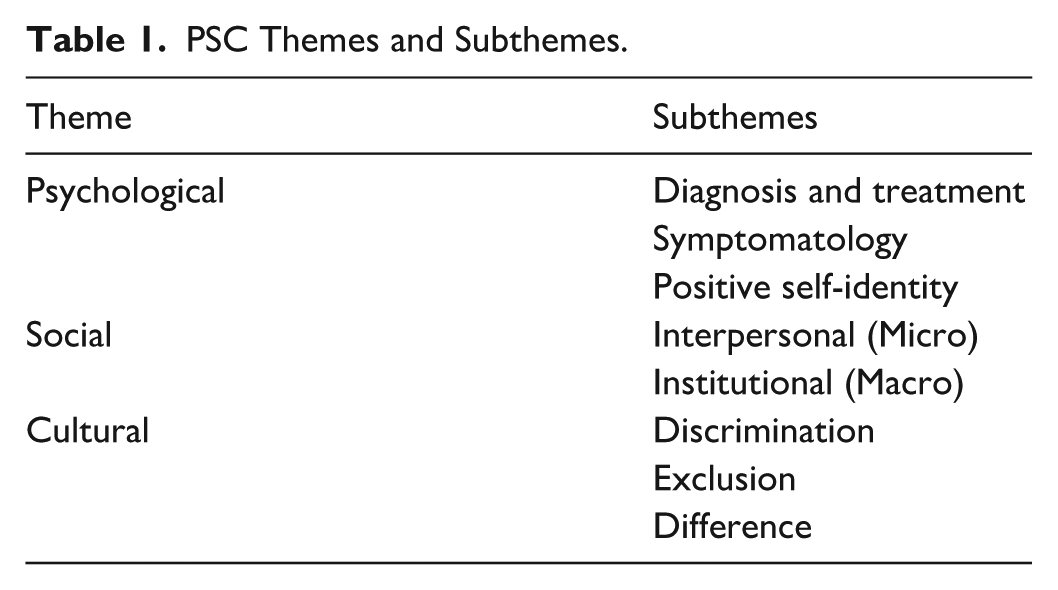
We identified a relatively even mix of videos with either a primary psychological (41%, N = 41), social (27%, N = 27), or cultural (32%, N = 32) theme, and found eight PSC subthemes in total (Table 1). Below, we discuss these themes and offer specific examples from SANT videos.
PSC Themes and Subthemes.
Psychological
Psychological posts clustered around three subthemes: (1) Diagnosis and Treatment, (2) Symptomatology, and (3) Positive Self-Identity.
Diagnosis and Treatment
SANT presented information about varied characteristics of neurodivergent diagnoses and challenged misinformation about functioning labels (i.e. informal terms describing the perceived level of support needed by a neurodivergent person; for example, “high functioning”). They also discussed diagnosis as a complex process, including getting a formal diagnosis, receiving misdiagnoses, and the validity of self-diagnosis (e.g. Creator #2/Video #13: “Self diagnosis in the Autism community is really [widely] accepted it seems / . . . but I still feel like a fraud”). SANT discussed challenges and changes related to neurodivergence over the lifespan (e.g. Creator #9/Video #44: “POV: You were diagnosed with Autism and it gets harder the older you get”), as well as the intricacies of medication in managing challenging symptoms. For example, in Creator #8/Video #34, a SANT gives advice on preventing dry mouth from ADHD medication by taking it before brushing one’s teeth.
Symptomatology
Videos touched upon various symptoms associated with neurodivergent conditions, and how they manifested in SANT’s day-to-day experiences. Symptoms discussed included challenges pertaining to executive functioning, attention, and distraction (e.g. Creator #18/Video #88: “Just me and my ADHD brain going grocery shopping during lunch break at work because we couldn’t manage to pack lunch for the 100th time.”). Co-occurring mental health difficulties were explored; for example, in Creator #3/Video #15, one SANT describes wanting to make content about cooking a traditional Sri Lankan dish but being unable to due to difficulties with her depression that day. Additional neurodivergent symptomatology that SANT delved into included sensory dysregulation; difficulties with emotional expression and experience; issues with food and eating preferences; and challenges interpreting neurotypical social rules, cues, and norms.
Positive Self-Identity
Psychological well-being and positive self-identity also appeared topically in our sample, including themes of self-acceptance and the benefits and strengths of neurodivergence. For instance, in Creator #20/Video #98, a SANT suggests a book to viewers called Self-Care for People with ADHD—written by Dr Sasha Hamdani, a neurodivergent psychiatrist who is also a member of the SA diaspora—that discusses how to approach neurodivergence from a place of compassion instead of one of self-hatred.
Social
Videos coded as primarily discussing social elements fell into two subthemes: (1) Interpersonal (i.e. micro-level of individual social interactions) and (2) Institutional (i.e. macro-level of social structures).
Interpersonal
Discussions of interpersonal issues by SANT related to both positive and negative social interactions, such as both receiving social support and challenges seeking such support. In Creator #4/Video #25, a SANT life coach tells viewers that for his “ADHD in particular, I’ve learned to talk to more people about it [. . .] The more you seek out support, the easier it will become.” Videos mentioned negative interpersonal experiences of social isolation and harassment. Creator #9/Video #43, for example, features a SANT filming himself immediately after being reportedly harassed on the street by two young women who recognized him from his public TikTok content about autism. In terms of small-scale social phenomena, SANT also brought up hiding or “masking” neurodivergent characteristics to neurotypical others, and the stress engendered by such strategies (e.g. Creator #13/Video #62: “It’s like a custom pizza for every situation ”).
Institutional
On an institutional level, SANT discussed societal challenges as well as the potential for positive social change. Systemic issues mentioned included various forms of ableism (i.e. discrimination and social prejudice against disabled people) and the role of healthcare institutions in impacting neurodivergent individuals’ well-being. For example, in Creator #3/Video #23, a SANT young woman uses a short audio clip that says “How hard can it be? Boys do it” in reference to receiving an ADHD diagnosis and commenting on gendered healthcare biases in the diagnostic process. SANT also created videos that served as a form of social resistance on topics including the societal visibility of neurodivergent people, challenging misinformation about disability, expressing intersectional disability pride, and different forms of disability activism and advocacy (e.g. Creator #15/Video #73: “this Autism Acceptance month I stand with my community vibrant autistic people of color”).
Cultural
SANT videos that focused on cultural issues related to three subthemes: (1) Discrimination, (2) Exclusion, and (3) Difference.
Discrimination
Several videos highlighted experiences of cultural stigmatization surrounding neurodivergence within and beyond different SA communities. For example, Creator #3/Video #21, a SANT shares her experience being raised Buddhist, how some members of her religious community view neurodivergence and depression as signs of weakness, and how she feels that her treatment is inconsistent with the values of the religion. Some also discussed discrimination at the intersections of race, culture, and disability. In Creator #1/Video #54, a SANT vents his frustration regarding his perception that online activists take advantage of BIPOC autistic creators (e.g. plagiarism) and only advocate on their behalf as a form of performative activism.
Exclusion
Outside of explicit discrimination, SANT created content around experiences of cultural exclusion in their families and broader communities. This included a lack of support and insensitivity from family members, shaped by South Asian cultural norms as well as broader ableism in the Global North. In a video (#49/Creator #11) titled “things i hate about having undiagnosed ADHD in a south asian family,” one SANT lists reasons including insensitive quotes from family members such as “you don’t need meds. just power through it.” For some SANT, South Asian cultural expectations of achievement were similarly exclusionary (e.g. #Creator #11/Video #50: “when my therapist hears about my undiagnosed adhd causing bad grades in my south asian family obsessed with perfect grades”). They also described challenges participating in cultural and religious traditions that felt inaccessible as neurodivergent individuals with sensory processing differences, such as large overstimulating Indian weddings and fasting during Ramadan.
Difference
SANT videos touched upon cultural difference in multiple respects. One video highlighted gendered aspects of cultural challenges of being both SA and neurodivergent, including social exhaustion from pre-wedding activities traditionally occurring at the bride’s house and sensory discomfort from formal women’s Indian clothing with heavy beading and scratchy fabric (e.g. Creator #17/Video #83: “imagine if there was like sensory friendly Desi clothing like that would be amazing”). Another topic pertained to cultural differences in approaches to neurodivergence. In Creator #6/Video #27, for instance, a SANT argues that it may be easier for neurodivergent people to interact socially in collectivist cultures (with South Asian culture as one example) compared to individualist Western cultures. They explain that there is greater pressure placed on a neurodivergent person in an individualist culture to pick up on social cues, whereas “in collectivist cultures, the conversation is more collaborative, and people tend to find understanding together,” taking some of the social pressure off of neurodivergent SA people.
Platform Affordances
As already suggested above, SANT conveyed PSC themes through their content by taking advantage of the social, communicative, and expressive platform affordances of TikTok. We detail below the specific digital features and functions (identified by their primary social, communicative, or expressive roles relative to the contextual information provided by creators), as well as types of hashtags (Table 2), associated with each affordance in the sample.
Platform Affordances, Associated SANT Hashtag Types, and Examples.

Social Affordances
Technological features of TikTok enabled SANT to foster social connectivity and relationality. The diary-style mobile intimacy of TikTok videos allowed SANT to share personal experiences with audiences in a POV (point of view) style, including from resting positions in one’s bed during bouts of mental and physical health challenges. SANT built audience relationships by providing social support, expressing gratitude, and cultivating on-going conversations across posts (e.g. Creator #5/Video #26: “I wasn’t even sure if I should make this video. But maybe I thought that, hey, if it could help even one person relate to this video, then they would know that they’re not alone.”) SANT drew upon socially interactive features of TikTok (e.g. comments, messaging) to engage audiences by surveying their personal experiences (e.g. Creator #17/Video #79: “Anybody else struggle to socialize on Eid/Christmas and special occasions?”) and soliciting feedback on content creation directions (e.g. Creator #3/Video #14: “Would you guys like to see more daily or in the life of type content? Let me know  ”). SANT were also socially strategic in their use of the platform. They shared tips, advice, and resources and sought to shift audience behavior, including “calls to action” (e.g. Creator #15/Video #70: “Boycott Autism Speaks [. . .] Spread the word”). SANT employed hashtags that emphasized the social affordances of TikTok, specifically those that were community-oriented (e.g. #adhdtok, #desitok) and social support-oriented (e.g. #adhdcheck, #askingforhelp).
Communicative Affordances
TikTok’s digital functions facilitated information sharing and seeking among SANT and their audiences. SANT made their videos more accessible by captioning their videos (manually and automated) and indicating video length through large on-screen text. SANT who posted regularly also employed information organization strategies including using title screens on videos of various topics to index their profile pages, creating serial/multi-part videos, and using on-screen lists (e.g. Creator #3/Video #21: “POV: Being neurodivergent while being brown part 2”). Other communicative strategies involved cross-platform and remixed content including stitching (i.e. commenting upon another video embedded within the post), pinning user comments to videos and responding through content, reposting neurodivergence-related video content from other platforms, the use of green screens to project relevant images behind SANT, and redirecting viewers to content on other digital platforms (e.g. YouTube). Hashtags reflecting communicative platform affordances included information-oriented hashtags (e.g. #adhdtips, #medicationhacks) and algorithmic visibility-oriented hashtags (e.g. #fyp, #trending, #viral).
Expressive Affordances
SANT were afforded various forms of expression through TikTok. They drew upon established creative TikTok genre conventions to discuss neurodivergence (e.g. “Get Ready with Me” [GRWM], “Let’s Talk About . . .”) (e.g. Creator #17/Video #80: “GRWM Whilst I Tell You Why I Hated My Indian Wedding”). Stylistically, SANT used humor to discuss neurodivergent/SAN challenges, engaged in role play through skits (i.e. taking on characters, posting on-screen imagined dialogue), and posted emotionally raw and unedited stream-of-consciousness handheld recordings. For example, in Creator #3/Video #21, a SANT describes how laundry is one of the most daunting tasks in her daily life. She videos herself doing washing and drying, walking viewers through how she has to mentally navigate the associated stress and panic. Sound was an important element of several videos, particularly the use of brief audio clips (i.e. music, recorded dialogue) to succinctly express neurodivergent/SA experiences and narration (audio or on-screen text) over video of activities to provide insight into thought processes and experiences. More visually static digital elements were also featured, including stickers and GIFs expressing autistic identity and photo slide shows with commentary. SANT used a range of hashtags highlighting the expressive affordances of TikTok. These included identity-based hashtags (e.g. #brownwomenadhd, #autisticpoc), in/visibility-oriented hashtags (e.g. #actuallyautistic, #autisticwomenexist), and playful hashtags (e.g. #neurospicy, #cantfocusforshit).
Discussion
Our study of South Asian diasporic neurodivergent youth creating content about autism and/or ADHD on TikTok makes empirical, conceptual, and applied contributions to research on digital platforms, disability, and mental health at the social margins. Empirically, our study results are twofold. We found that TikTok serves as a forum for SANT to explore overlapping psychological, social, and cultural concerns that may otherwise not be discussed within either South Asian or neurodivergent communities, online and offline. Although these issues exist outside of TikTok for SANT, the platform’s affordances allow for interrelated and interconnected social, communicative, and expressive possibilities that in turn shape the creation, consumption, and circulation of such content for multiple audiences. Moreover, the case of SANT highlights the potential of what we term “marginalized neurodivergence” to counter narrow perceptions of neurodivergent individuals, build coalitions and community that meet specific mental health needs, and draw attention to culturally specific lived experiences of disability. Marginalized neurodivergence highlights the intersectionality of the neurodivergent experience, which in turn may be shaped by digital platforms that cultivate audiences and hold user attention through personalized and algorithmically driven recommendation systems. Our findings also illuminate South Asian neurodivergent youth experiences, which may inform various aspects of treatment (e.g. approach, rapport) (Wampold & Imel, 2015) and improve client/patient care.
Our findings support the growing need for a psychosociocultural paradigm of neurodivergence that centers decolonial disability narratives, emphasizes accessible yet accurate mental health information, and counters the medical model of autism. Evidenced in the psychological finding subthemes, SANT narratives heavily pertained to diagnostic categorization, which tied into sharing of symptomatology and self-identity. Findings provide evidence for the importance of relational and community support for SA youth well-being beyond an individualist cultural framing (DeVitre & Gloria, 2025). Though outside the scope of our analysis, study team members also noticed misinformation relating to autism and ADHD shared by SANT, a phenomenon reflected in prior work on TikTok and disability discourse (Yeung et al., 2022). This included (but was not limited to) conflating symptomatology with diagnostic categorization/diagnoses and framing common experience as pathological (e.g. normative anxiety versus clinically elevated anxiety). With increases in mental health awareness and access to information online, our findings highlight the nuanced balance between the benefit of said accessibility and concerns regarding incorrect information/misappropriation of mental health struggles. When imbalanced, these concerns may ultimately disproportionately negatively impact neurodivergent youth populations who are multiply marginalized.
SANT self-reported social experiences of “intersectional invisibility” that further misrepresented and marginalized them, both at interpersonal and institutional levels. In their video posts, SANT broadly expressed that social isolation and harassment from their immediate family and/or community led them to explore TikTok as a cathartic space, which provided comfort by helping them resist hegemonic narratives of neurodivergence while simultaneously questioning culture-specific (mis)understandings. In this sense, TikTok serves as a third space of resistance for members of the SA diaspora with intersectional stigmas. Similarly, our analysis revealed that SANT experience intersectional stigma when they disclose their neurodivergent identities to others, often making such revelations in the initial hopes of finding connection, community, and support. While this is also true for other English-speaking neurodivergent populations on TikTok (Leveille, 2024), this finding may assist clinical practitioners and researchers in understanding how neurodivergence is experienced globally, particularly in non-Western contexts.
Culture was a prominent theme in SANT posts, where they affirm the reciprocal relationship between neurodivergence and culture (Grinker, 2015). by reflecting on their lived experiences of stigmatization within their own communities that perpetuate feelings of exclusion and discrimination. A handful of SANT spoke about how neurodivergence is understood differently across cultures, often highlighting how their parents did not understand their diagnosis and symptomatology, resulting in childhood trauma. Such South Asian parents of SANT were likely raised in a collectivist culture which values social harmony and conformity, and where individual uniqueness is threatening to relationships and interpersonal harmony with the community (Kim & Gillespie-Lynch, 2022). These SANT accounts further highlight that the existing neurodiversity paradigm has a Western-centric status that does not translate well into diasporic contexts online and offline, thus carving a path for a psychosociocultural paradigm of neurodivergence that recognizes such intricacies.
With respect to the digital dimensions of marginalized neurodivergence, we found that content produced by SANT about autism and ADHD is not radically different topically from TikTok videos produced generally by neurodivergent youth (e.g. discussing the diagnosis process), and that SANT similarly employ social, communicative, and expressive platform affordances of TikTok (e.g. use of humor and role play to share stigmatizing experiences) (Alper et al., 2025). SANT also drew upon digital accessibility norms shared and popularized by disabled creators (Simpson et al., 2023). However, SANT discussion of the cultural specificity of their neurodivergent experiences (e.g. the sensory challenges of Ramadan fasting) and the possibility of connecting with other SANT served to challenge “algorithmic identity compression” (Lutz & Aragon, 2024), or the simplification, flattening, and conflation of intersectional identities by sociotechnical systems, such as the TikTok recommendation algorithm. Notably though, we found limited use of SANT-specific hashtags, which was consistent with discussion within the sample about there being a lack of SA community on TikTok. This may differ from other multiply marginalized neurodivergent populations, such as the Black autistic community on TikTok, for example, who commonly employ the #autizzy hashtag as an intersectional identifier (though there has not been an in-depth study of that content to date; Gilmore et al., 2024).
Finally, several limitations of our study are important to mention. We collected up to 100 comments on each video in our sample (N = 2545) but did not include them in our analysis. Several comments explicitly addressed the intersection of SA identity and neurodivergence (e.g. “DID THE ALGORITHM JUST CONNECT ME TO A BANGLADESHI WOMAN WITH ADHD OMG HI”; “i’m a south asian autistic person and i know so many other brown autistics!! but somehow we’re still ghosts to everyone!”), suggesting a need for further research on SANT community formation beyond creators and the comments section as a site for support provision (Barta & Andalibi, 2021). We did not incorporate live video content from SANT into our analysis, which may be a fruitful area for future work. We were not able to interview SANT to understand their imagined affordances of TikTok. And though there are notable institutional barriers toward obtaining mental health diagnoses (e.g. cost, time), our findings were limited to self-reported diagnoses of neurodivergence. In closing, our case study of South Asian diasporic autism and ADHD communities on TikTok illustrates the digital construction of marginalized neurodivergence, and points to future research directions for the SA community and neurodivergent youth from other multiply marginalized backgrounds, as well as expressions of intersectional stigma related to neurodivergence on additional digital platforms.
Footnotes
Acknowledgements
The authors wish to acknowledge the institutional support of Sari Altschuler and Northeastern University’s Health, Humanities, and Society Program.

Consent to participate
Not applicable.
Funding
The authors disclosed receipt of the following financial support for the research, authorship, and/or publication of this article: This study was partially funded by Northeastern University’s Health, Humanities, and Society Program Student Research Funding Initiative.
Declaration of conflicting interests
The authors declared no potential conflicts of interest with respect to the research, authorship, and/or publication of this article.