




Abstract
Social media platforms, such as Facebook, Instagram, and Twitter (now X), play a crucial role in facilitating connections between politicians and citizens, particularly during a crisis like the COVID-19 pandemic. This article examines the characteristics of viral social media posts in Norway and Sweden during the initial wave of the pandemic. Despite their geographical proximity and cultural similarities, Norway and Sweden adopted different approaches to the pandemic, providing a compelling basis for comparative analysis. Employing a visual computational approach, this study maps viral posts by analyzing engagement metrics such as likes, reactions, shares, and comments. A close reading of popular posts investigates the communication strategies employed across platforms and national contexts. The findings reveal that political criticism on Twitter attracted substantial engagement, while Instagram posts leaned toward self-promotion. On Facebook, popular posts exhibited a more varied use of communication strategies, reflecting a nuanced approach to engagement across different social media environments.
Introduction
The use of social media platforms has become essential for politicians in maintaining relationships with citizens (Boulianne & Larsson, 2023). Platforms like Facebook, Instagram, and Twitter (now X) allow politicians to disseminate news and political information through networked nodes, where connections amplify message visibility via likes, reactions, shares, and comments (Fletcher & Nielsen, 2017; Newman et al., 2023). Both popular and scholarly literature have examined the influence of social media on political knowledge (Castro et al., 2022), recognizing these platforms as key sources of political information (Bode, 2016; Newman et al., 2019). Social media enables politicians to communicate directly with citizens (Stier et al., 2018), marking a shift in communication patterns and technologies. These platforms facilitate dialogical (Kent & Taylor, 2021) and informal (Enli & Rosenberg, 2018) exchanges.
The COVID-19 pandemic presented political parties and politicians with challenges that go beyond electoral concerns, requiring consistent, accurate, and timely dissemination of information related to virus transmission. As Coombs (2010) notes, crises demand the collection, processing, and dissemination of critical information, emphasizing the priority of content over the prominence of those delivering it. Crises have the potential to disrupt goals and cause harm to individuals and organizations alike (Sellnow & Seeger, 2020). Despite these challenges, certain messages go viral during crises, and studying these instances can improve our understanding of public engagement and provide valuable insights for planning information campaigns (Larsson, 2020b; Rufai & Bunce, 2020). Furthermore, examining online popularity during crises offers insight into the flow of information from political actors to citizens, a dynamic rarely studied outside of electoral contexts (Jacobs et al., 2020; Larsson, 2016).
This study investigates the engagement dynamics of Facebook, Instagram, and Twitter posts that received significant attention during Norway’s first COVID-19 lockdown. Specifically, we focus on posts that went “viral” or experienced high amplification due to a large number of likes, shares, and comments. Klinger et al. (2023) argue that a message is “successful” when it achieves high popularity, as this enhances its visibility. By examining amplified or viral posts, we can identify what type of content is more likely to reach broad audiences, often through algorithmic boosts that position these posts at the top of users’ feeds (Sahly et al., 2019). Thus, to comprehend which types of content generate substantial popularity, it is essential to analyze outlier posts—those that attract far more engagement than average (Zhang et al., 2018).
In terms of comparative studies, numerous scholars have emphasized the need for cross-platform and cross-national analyses of social media to assess whether different platforms shape messages in distinct ways (Boulianne & Larsson, 2023; Lukito, 2020). This study addresses two key research questions:
RQ1. What characteristics define popular posts from political figures on Facebook, Instagram, and Twitter during the first lockdown period?
RQ2. How do the differences between Norway and Sweden shape the nature of these messages?
Considering the two research questions, our study explores the type of communication being used during special events and whether communication during events, such as the COVID-19 public health crisis, is overshadowed by routine communication. The distinction between routine and event-specific information is becoming increasingly unclear as politicians continually strive to engage in political discussions or self-promotion (Peeters et al., 2023). If this trend persists during a crisis, the prevalence of political messaging could hinder public access to information, affecting democratic decision-making and eroding trust in the political leadership. Moreover, the nature of a crisis underscores the role social media plays as dynamic and influential communication platforms (Lwin et al., 2018). By examining popular messages on three different social media platforms from two different countries, we contribute to the existing literature on communication and integrate perspectives from two interconnected fields—political and crisis communication—that are becoming increasingly relevant as politicians around the world face a crisis.
Literature Review
Early research into online platforms primarily focused on technological aspects, such as web metrics (Thelwall et al., 2005), rather than content (Larsson, 2020a, 2020b). Notably, web metrics continue to play a crucial role in driving content visibility, with algorithms boosting content that receives high levels of engagement. The following section focuses on two aspects that shape the message: the characteristics of the platforms and the source of the message.
The Unique Architectural Features of Platforms
Different social media platforms have distinct user bases. Previous literature has consistently found that social media messages should be tailored to specific platforms to ensure engagement (Bossetta, 2018). For example, Twitter users are generally urban, well-educated, and involved in public debates (Enjolras et al., 2013), while Instagram users are often younger, university-educated, and female (Kocak et al., 2020). This indicates that social media platforms cater to different audience segments. Therefore, messages should be tailored to each social media platform and its users to encourage engagement, a concept known as platformization (Bossetta & Schmøkel, 2023). The failure to adapt messages to different platforms contradicts best practices in platformization and effective message adaptation (Kreiss & Mcgregor, 2018).
In theory, the sender tailors their message to the platform and audience characteristics, allowing for “amplification” (Zhang et al., 2018)—the process by which a message reaches a larger audience through increased engagement. Amplification occurs through user interactions, such as likes, comments, and shares, which increase a post’s visibility. However, for a message to gain popularity or go viral, it must be attractive to the audience. A crisis, such as the COVID-19 pandemic, introduces a heightened demand for information due to the uncertainty surrounding the situation. This dynamic has been labeled a “demand-side perspective,” typically associated with a politically engaged public that participates in societal decision-making, such as electing political leaders (Jungherr, 2016; Larsson, 2020b). During a crisis, we assume that people seek to stay informed by following the news, especially when the crisis is a large-scale public health emergency that requires staying on top of preventive measures.
During a crisis, social media platforms are used to disseminate sought-after information to a broad audience. Disseminating the information across platforms poses a challenge for politicians mainly due to the lack of information quality on social media compared to traditional media—a tendency that can escalate the crisis (Wang, 2017). If the crisis escalates, misinformation may spread from less trustworthy sources, leading to misinterpretations. The abundance of information circulating creates what is often labeled an infodemic (Diers-Lawson, 2019). Since most social media platforms rely on subscriptions and followers, content is shared among those who “already trust the messenger” (Seo et al., 2009, p. 125). By providing information from a reputable source, politicians can direct their followers’ attention to issues related to the crisis, politics, or both.
In this study, we focus on three platforms: Facebook, Instagram, and Twitter. Facebook, the largest social media platform in Norway and Sweden, reports daily usage of around 64% among Norwegians (Ipsos, 2023) and nearly 68% among Swedes (Internetstiftelsen, 2023). Its significance extends to election campaigns, where it provides parties with an effective tool to connect with voters (Bossetta, 2018). Notably, the right-wing populist Norwegian Progress Party utilizes Facebook to engage voters through interactive functions such as commenting, sharing, and liking posts (Larsson & Kalsnes, 2014). According to Larsson (2020a, 2020b), content considered populist tends to attract more attention on Facebook, thereby generating higher engagement than other types of content.
Populism can be defined in many ways. We follow what is often described as a communication-centered approach (as described by Jagers & Walgrave, 2007; Reinemann et al., 2017). We therefore differentiate between what are referred to as the “three core elements” (Tønnesen et al., 2023) of a populist communication style: people-centrism (referring to the will of “the people”), anti-elitism (placing blame on various elites for societal flaws and problems), and the exclusion of outgroups (e.g., blaming immigrants for societal flaws and problems). Using this definition, populist communication, like populism itself, is not bound to any specific communication style but can be adapted to the issue agendas of political actors from across the ideological spectrum. Populist actors, such as the Norwegian Progress Party and the Swedish Sweden Democrats, have been found to garner significant attention during elections, especially on platforms like Facebook.
Instagram provides an image-centric platform where the focus is often on providing backstage glimpses into the lives of political actors (Kreiss & Mcgregor, 2018; Larsson, 2019). The visual center of Instagram is a space where images and values mutually shape and influence one another (Trillò et al., 2021, p. 2). Studies from Norway (Larsson, 2016) and Sweden (Filimonov et al., 2016) indicate that this approach humanizes politicians by highlighting their unique characteristics and personal lives (Van Aelst et al., 2012). On Instagram, images themselves convey the message (Muñoz & Towner, 2017), making the platform a powerful tool for showcasing victories and fostering a personal connection with followers. Here, politicians display their faces, emphasize their presence, and express emotion, all of which have been shown to capture followers’ attention (Peng, 2021).
Finally, Twitter originated as a microblogging service with messages limited to 140 characters (Margaretten & Gaber, 2014). Although the platform has relatively few users in Norway (10%) and Sweden (18%) compared to Facebook and Instagram, it attracts a specific type of user. Previous analyses of Twitter have shown that the platform fosters a digital and open dialogue between users (Vliet et al., 2020). Furthermore, Twitter has been found to encourage citizen engagement, closely connected to maintaining an open dialogue (Gil de Zúñiga et al., 2012). Discussion and public debate have been critical areas of Twitter use, with the tone and language becoming harsher over time as more extreme political actors have started using—and sometimes dominating—the platform (Klinger et al., 2023).
The differences in the characteristics of these three platforms generate distinct expectations for the messages disseminated across them, relevant to RQ1. The expectation regarding content on Facebook is based on the platform’s tendency to favor populist content more than other platforms. Therefore, on Facebook, we anticipate that content from populist actors will be more popular than that from non-populist actors. On Instagram, we expect popular posts to include images depicting backstage views of politicians’ lives. Finally, for Twitter—as the platform has served as a venue for public discussion for over a decade, where these discussions frequently involve criticisms of politicians and the media (Enjolras et al., 2013)—we expect that popular messages will be characterized by polemics and criticism.
Social Media Platforms During a Public Health Crisis
In today’s digital age, individuals are increasingly turning to platforms such as Facebook, Instagram, and Twitter for information (e.g., Castro et al., 2022; van Erkel & Van Aelst, 2021). Notably, government officials are leveraging these platforms to disseminate information to their followers, particularly during times of crisis (DePaula et al., 2018). This underscores the vital role of social media in rapidly and effectively reaching a broad audience, making these platforms indispensable for public communication and crisis management.
Social media platforms have played a crucial role for politicians and public health agencies in communicating with the public during public health crises. For example, the platforms examined in this study were instrumental in reaching the public during the Ebola (Guidry et al., 2017), Zika (Lwin et al., 2018), and COVID-19 (Nagahawatta et al., 2022) outbreaks. In the context of the COVID-19 pandemic, several empirical studies have investigated how politicians used social media to communicate, focusing on their communication goals (Lindholm et al., 2023) or the specific topics they addressed (Reyes Bernard et al., 2021). These studies have shown that politicians frequently use social media to share public health information, provide updates on government measures, and address constituents’ concerns. In addition, social media enabled politicians to combat misinformation, promote health guidelines, and maintain visibility while upholding physical distancing measures. Analyses of their posts have revealed a strategic blend of crisis communication, political messaging, and public engagement (Rufai & Bunce, 2020).
Research examining crisis communication on social media platforms has highlighted the need for more cross-platform comparisons (Lwin et al., 2018; Nagahawatta et al., 2022). A similar argument has been made regarding examinations of popular social media posts from political leaders, such as presidents and prime ministers, but a limitation of these studies is their lack of cross-platform or cross-national comparisons (Rufai & Bunce, 2020). This study aims to provide insights into both types of comparisons, illustrating how different platforms and national contexts influence the effectiveness of crisis communication. By addressing these gaps, we seek to enhance the understanding of strategic communication in diverse digital environments.
Cross-National Differences Between Norway and Sweden
The neighboring countries of Norway and Sweden both have multiparty systems with politicians battling for the public’s attention (Knudsen, 2021). Although there are many similarities between the two countries, they chose different paths to address the COVID-19 pandemic. These discrepancies could be understood as relating to differences in leadership during the pandemic, distinguishing approaches where politicians either maintained a central role in the decision-making or delegated the decision-making and public communication to experts while offering public support for the experts’ decisions (Coman et al., 2021).
In Norway, politicians were the main initiators of preventive measures against the spread of COVID-19. Drawing on information from the public health agency, Norwegian politicians established what can be seen as a middle ground between political and expert leadership approaches (Almlund et al., 2023). During press conferences, politicians and representatives from public health agencies presented a united front in implementing preventive measures, such as social distancing, school closures, and travel restrictions. This cooperation conveyed that these decisions were grounded in knowledge from leading sources of expertise. Although press conferences were significant sources of information, social media provided vital channels for politicians to reach citizens. Platforms such as those examined in this study were used to disseminate information about the virus, including details about restrictions on public gatherings and other measures aimed at curbing the spread (Lindholm et al., 2023).
In Sweden, political actors intervened only to a limited extent and delegated the responsibility of handling the pandemic to the Swedish National Health Agency (Nord, 2022). The public health agency’s role as a primary knowledge provider was central to managing the pandemic, initially leading to the strategy of achieving herd immunity (Liste et al., 2024; Nygren & Olofsson, 2020). Although the Swedish strategy surprised neighboring countries, Sweden managed relatively well during the second wave of the pandemic (Habib, 2020).
Regarding RQ2, we anticipate uncovering differences in amplified posts based on the source of the message. Due to Sweden’s reliance on an expert-led approach, politicians had less need to discuss the pandemic explicitly and could focus more on political matters. Conversely, we expect the opposite scenario in Norway, where politicians were required to address the ongoing pandemic and uphold their public image.
Data and Analysis
Data were collected via CrowdTangle (for Facebook and Instagram) and the Twitter API in December 2022. Focusing on the official accounts of political parties and individual politicians, we included 3,041 Facebook posts, 1,218 Instagram posts, and 1,389 tweets from the initial lockdown period (March 12, 2020, to May 12, 2020) in Norway and Sweden. A limitation in data collection arose due to the Swedish Prime Minister’s Twitter account being deleted and later reinstated following a government change. To address this, we included tweets from then-Finance Minister and later Prime Minister Magdalena Andersson as a substitute for posts by then-Prime Minister Stefan Löfven.
We applied a visual computational approach to identify social media posts that gained significant engagement, measured through likes, reactions, shares, and comments (Rogers, 2019). The algorithmic structure of social media platforms means that popular posts are more likely to reach a larger audience, making these posts especially pertinent for evaluation in this study (Zhang et al., 2023). This method allows for the visual mapping and summary of the top 7 to 10 most engaging posts, providing an opportunity to “freeze the flow” and examine the content that attracted the highest levels of attention (Karlsson & Strömbäck, 2010). Posts featuring an image or video were summarized based on the image content or the first 2 min of video footage.
While a fixed threshold for popularity, as seen in approaches by Rufai and Bunce (2020), could be used, we recognize that popularity varies by context, individual or organization, and follower count. By using a visual computational approach, we avoid a rigid engagement threshold, aligning our methodology with established traditions for identifying patterns in online communication (Rogers, 2019).
Through visual mapping and post summaries, we focused on the characteristics of the most popular posts to discern what drew user engagement. Analyzing patterns and strategies in these posts, we identified key attributes that resonated with audiences. Drawing on similar research (e.g., Bruns et al., 2017; Geise et al., 2024), we conducted a detailed analysis of the most engaging posts across platforms and countries. This approach enabled us to refine categories and themes, providing insight into the communication strategies that most effectively captured public interest.
Results
Norway
Popular posts are identified as nodes for Facebook (Figure 1), Instagram (Figure 2), and Twitter (Figure 3). A summary of each identified post is shown beside the node and is based on a close reading of the posts. Visible posts must be viewed as a series of “snapshots” of online content (Karlsson & Sjøvaag, 2016; Karpf, 2012), where the number of likes, reactions, shares, and comments may change over time. However, to describe developmental trends, as we aim to do here, it is necessary to “freeze the flow” (Karlsson & Strömbäck, 2010) of online activity to analyze it.
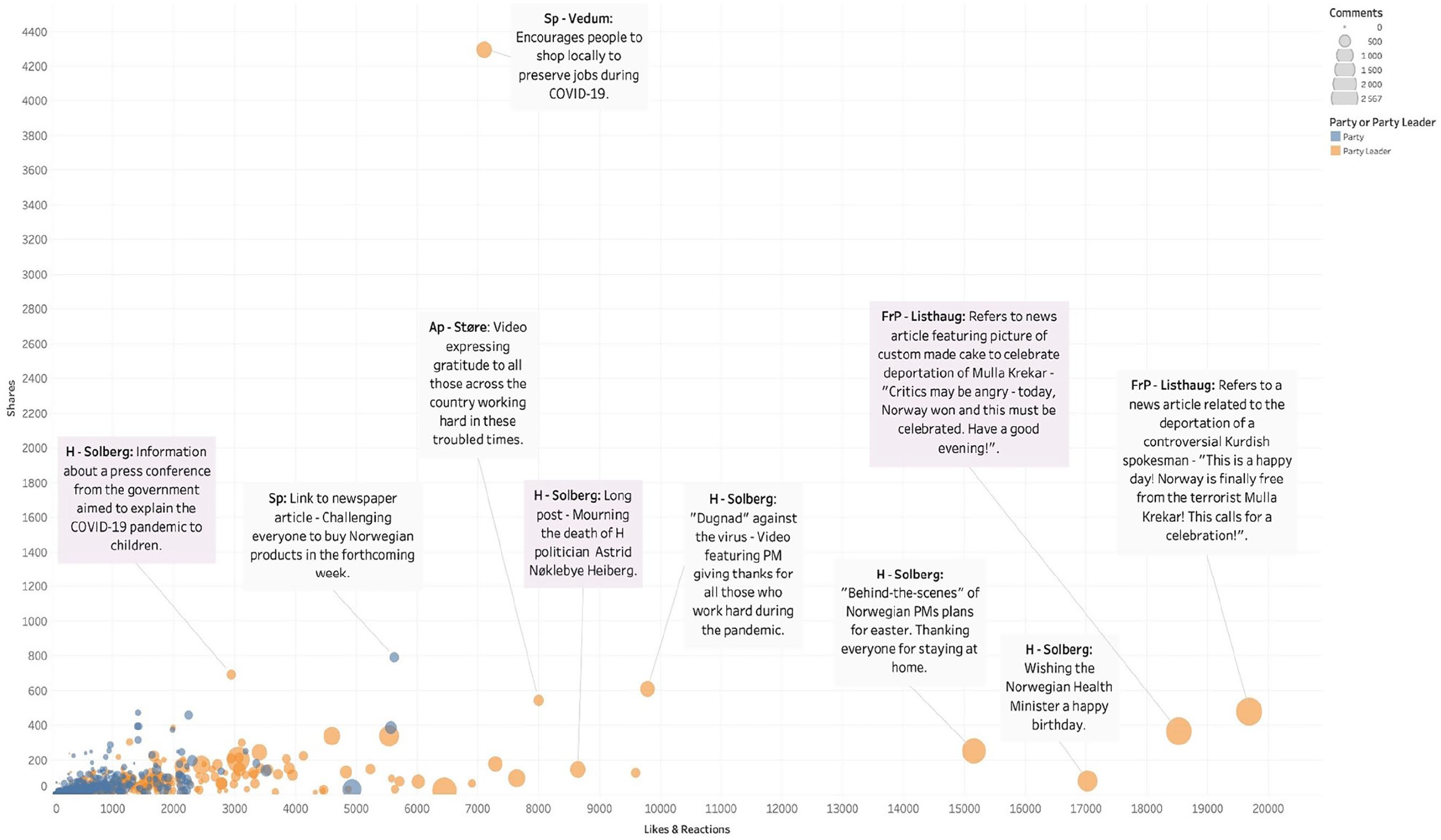
Norway—Facebook.

Norway—Instagram.

Norway—Twitter.
In exploring online engagement, our study presents a snapshot of posts that gained a large number of likes and a noteworthy number of shares. Evidently, within the first 2 months of the pandemic, posts from representatives of the three largest political parties in Norway experienced a notable surge in virality. A post by the far-right Norwegian Progress Party is particularly noteworthy as it attracted a high level of engagement despite being unrelated to the ongoing pandemic. The posts exhibit populist traits, emphasizing the exclusion of certain outgroups, such as immigrants, and celebrating the deportation of a Kurdish spokesperson. This marks a political triumph for the Norwegian Progress Party, reflecting a decade of advocacy for deportation. However, the emergence of such content as popular during a global pandemic is surprising. Regardless of the content type, our findings highlight distinct inclinations toward “business-as-usual” politics, even in a time of crisis. Sharing a political victory through a business-as-usual approach can be interpreted as what Peeters et al. (2023) referred to as routine communication—that is, communication that is present in times without any special events. While this tactic has been extensively studied in the literature, especially in campaign reporting, an increasing amount of research is now focusing on routine communication (Peeters et al., 2023).
We find that during the first 2 months of the pandemic, posts from Prime Minister Erna Solberg attracted attention by showing behind-the-scenes glimpses of her life during lockdown, wishing the Norwegian Minister of Health a happy birthday, mentioning the death of a former politician, and providing information about a press conference. Only two of these posts contain content related to the COVID-19 pandemic. The first post concerns strict travel restrictions during the Easter holiday when people were forced to stay home. A travel restriction during Easter was burdensome as there is a deeply rooted tradition of Norwegians traveling to their cabins to go skiing at this time of year. The second post contains information about a press conference explaining the pandemic to children wondering why they could not see their friends or attend school as usual. Congratulations and behind-the-scenes glimpses are self-enhancement strategies that can be used to rebuild and strengthen the party leader’s reputation by showing themselves as authentic. The use of information is a way of framing a crisis by providing necessary information or showing the seriousness of the crisis.
One of the most popular posts from the leader of the Norwegian Labour Party, Jonas Gahr Støre, features a video of him expressing gratitude to health care workers during the crisis. Although the Norwegian Labour Party was the largest political party at the time, Støre’s COVID-19 posts share similar themes with those of Trygve Slagsvold Vedum of the Norwegian Centre Party. Vedum’s posts also promote community support, urging people to buy local food to prevent unemployment and support Norwegian food production. These messages reveal various strategies employed by politicians, including showing appreciation for workers, providing information, and delivering political messages.
Posts from Prime Minister Erna Solberg dominated Instagram, occasionally accompanied by posts from Olaug Bollestad, the leader of the Christian Democratic Party. These Instagram posts offer a behind-the-scenes look at politicians’ activities and concerns. For instance, Erna Solberg’s posts share moments of dancing with a nurse, visiting the hairdresser, or recording vocals for a pop song. Olaug Bollestad’s posts feature her and her husband, humorously self-identifying as Mr. and Mrs. Larkins, a nod to the British television series The Darling Buds of May. The popularity of these posts in Norway suggests that Instagram is a promotional tool for politicians, relying on self-enhancement strategies to rebuild and strengthen their reputation.
By focusing on posts that received substantial engagement, we identify three instances of cross-posting between Facebook and Instagram. However, only two were prominent enough to be shown in Figure 1. Cross-posting suggests politicians’ active engagement on both platforms but that the content must be tailored to each platform. Two out of three cross-postings are “behind the scenes,” with a spokesperson considering deportation and the prime minister eating traditional food at home.
On Twitter (Figure 3), popular posts from Solberg contain COVID-19-related content, either in the form of information or behind-the-scenes glimpses into her or her colleagues’ lives. There are also posts showing gratitude for the help in fighting the virus.
The trends observed on Twitter encompass a combination of criticism, behind-the-scenes glimpses, and accommodative messages, including congratulations or displays of support. Criticism within the posts emanates from the leaders of the Red Party and Socialist Left Party, both expressing skepticism regarding the government’s support scheme for businesses. They highlight concerns about businesses continuing to award financial bonuses while applying for government support. These parties have been active in the welfare state debate in Norway, advocating for preserving government-owned businesses, particularly in areas such as hospitals, kindergartens, and schools. The attention received by these messages was likely rooted in their alignment with a core political message, reflecting routine communication that resonates with the parties’ political stance.
Former Prime Minister Solberg offers a behind-the-scenes glimpse by extending congratulations and empathetic messages to former British Prime Minister Boris Johnson. In doing so, Solberg is aiming to present herself as relatable to the public. In addition, her posts include images of colleagues working from home during the lockdown, serving as a visual representation that even politicians were adhering to the social distancing rules. This approach underscores Solberg’s efforts to connect with the public, humanize political figures, and highlight shared experiences during challenging times.
Sweden
In Figure 4, we show popular posts on Facebook from Swedish political parties and politicians. The figure shows a blend of posts from parties and politicians and three cross-postings on other platforms.

Sweden—Facebook.
The results from Sweden show that a notable trend among parties and politicians was to criticize the governments managing the COVID-19 pandemic. Key figures, such as Jimmie Åkesson from the right-wing Sweden Democrats, leader of the Swedish Social Democratic Party Magdalena Andersson, and former Prime Minister Stefan Löfven, shared content addressing the pandemic. Early in the outbreak, Prime Minister Löfven informed the public about a period marked by stringent measures, even though Sweden opted for a more relaxed approach (see Nord, 2022). Nevertheless, government representatives strived to mobilize the public. Stefan Löfven’s public address demonstrated a mobilization and accommodative strategy during this period.
The right-wing leader Jimmie Åkesson expressed support for the government’s actions when a journalist inquired about his whereabouts following a pause in public debates and in response to the relative silence of a party leader holding the government accountable. Åkesson responded that this was not the appropriate time for debate, demonstrating his backing of the government’s measures and emphasizing a collective stance against the virus.
Then Finance Minister Magdalena Andersson of the Swedish Social Democratic Party shared a supportive message encouraging individuals to sign up for unemployment insurance. The message addressed aspects of the ongoing COVID-19 pandemic. Andersson also reached out to her followers after a segment from the public broadcaster informed the people that the government’s economic support was insufficient to fight the pandemic. She claimed that this message was wrong and mobilized her followers to enlist help to spread the message. This message was among the most shared in Sweden during the first 2 months of the COVID-19 pandemic.
Multiple messages from various political parties were among the most shared and liked posts, notably those from the Conservative Party, Sweden Democrats, and the Swedish Social Democratic Party. These posts effectively convey the views championed by their respective politicians. Notably, several party posts closely mirror the content articulated by their leaders, contributing to both types of posts garnering substantial engagement. This alignment underscores the consistency and resonance of the parties’ messaging across social media platforms.
On Instagram (Figure 5), posts that generate a substantial number of reactions and shares often feature behind-the-scenes glimpses or backstage views into politicians’ personal lives. Notably, selfies taken at home, either of the politicians alone or with family members, stand out among the most popular posts. For instance, a post by Centre Party leader Annie Lööf holding her newborn child received the highest number of likes in the first 2 months of the pandemic, showing a preference among Instagram followers for personal glimpses rather than strict party politics. This pattern is further evidenced in other posts by Lööf, such as one showcasing her baby’s feet, which also received significant engagement.
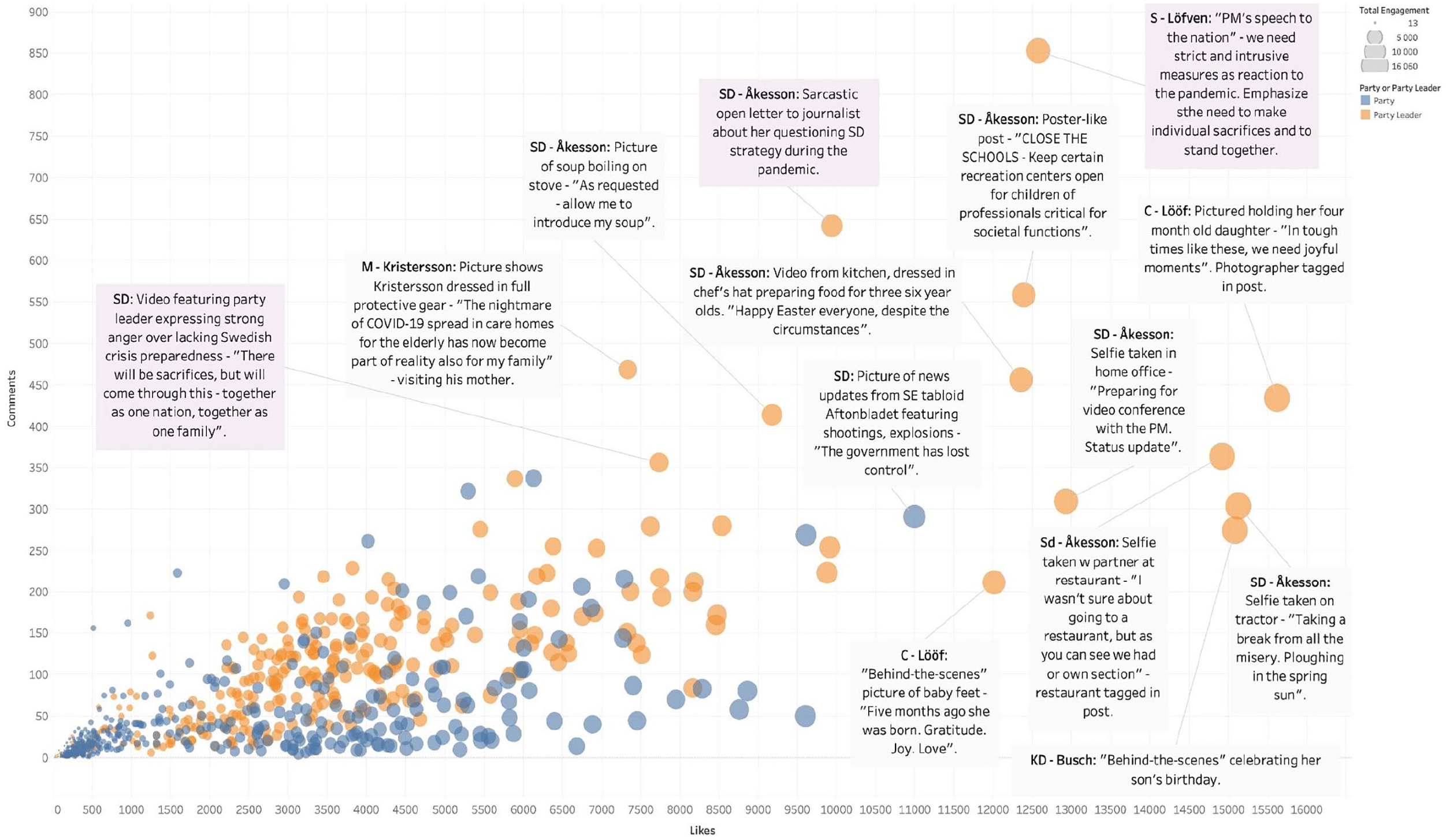
Sweden—Instagram.
Åkesson is a politician who gained significant attention for his Instagram posts. Nearly half the most popular posts feature content directly from Åkesson. Furthermore, posts affiliated with his party received many reactions and shares. In addition, a notable cross-posting of a sarcastic reply to a journalist was observed on Instagram, highlighting a significant overlap between different posts on the two platforms. This cross-platform consistency underscores the coherence and impact of Åkesson’s communication strategy.
Specific attention-grabbing posts from Lööf, Buch, and Åkesson are unrelated to the COVID-19 pandemic (See Figure 5). Instead, they appear to be part of a consistent self-enhancement strategy, possibly aimed at preparing for a future election or bolstering their image as relatable beyond their political roles. However, countless messages also incorporate COVID-19-related content, featuring pictures or videos of activities, like cooking at home, to emphasize social distancing from others. This dual approach suggests a calculated blend of personal and pandemic-related content in their communication strategies. In contrast, criticism of the government on Instagram remained relatively low. Only three posts, originating from the right-wing Sweden Democrats, exhibit some level of criticism of the government’s preparedness. These posts specifically criticize the perceived lack of readiness before the pandemic and highlight concerns about the government losing control in southern Sweden following a series of shootings and explosions.
The platform dynamics observed on Twitter show that most posts involve criticism regarding political issues, encompassing matters related to the COVID-19 pandemic. Notably, the post with the highest engagement originated from the Left Party, expressing criticism about seniors’ care. This prevalence of critical discussions on Twitter underscores the platform’s role as a space where political issues, especially those tied to the pandemic, are scrutinized and debated.
On Twitter, there was a subset of posts adopting an accommodating style by expressing admiration for the work capacity and calm demeanor of Swedish state epidemiologist Anders Tegnell (Figure 6). This stands out as the sole instance of an accommodative strategy, diverging from the predominant trend of criticism observed in other posts on the platform. In contrast to the critical tone prevalent in many tweets, Lööf shows support for the experts’ efforts rather than holding the government accountable. Lööf’s distinctive approach underscores a strategic variation in communication—namely, emphasizing positive reinforcement and acknowledging expertise amid a landscape primarily marked by criticism.
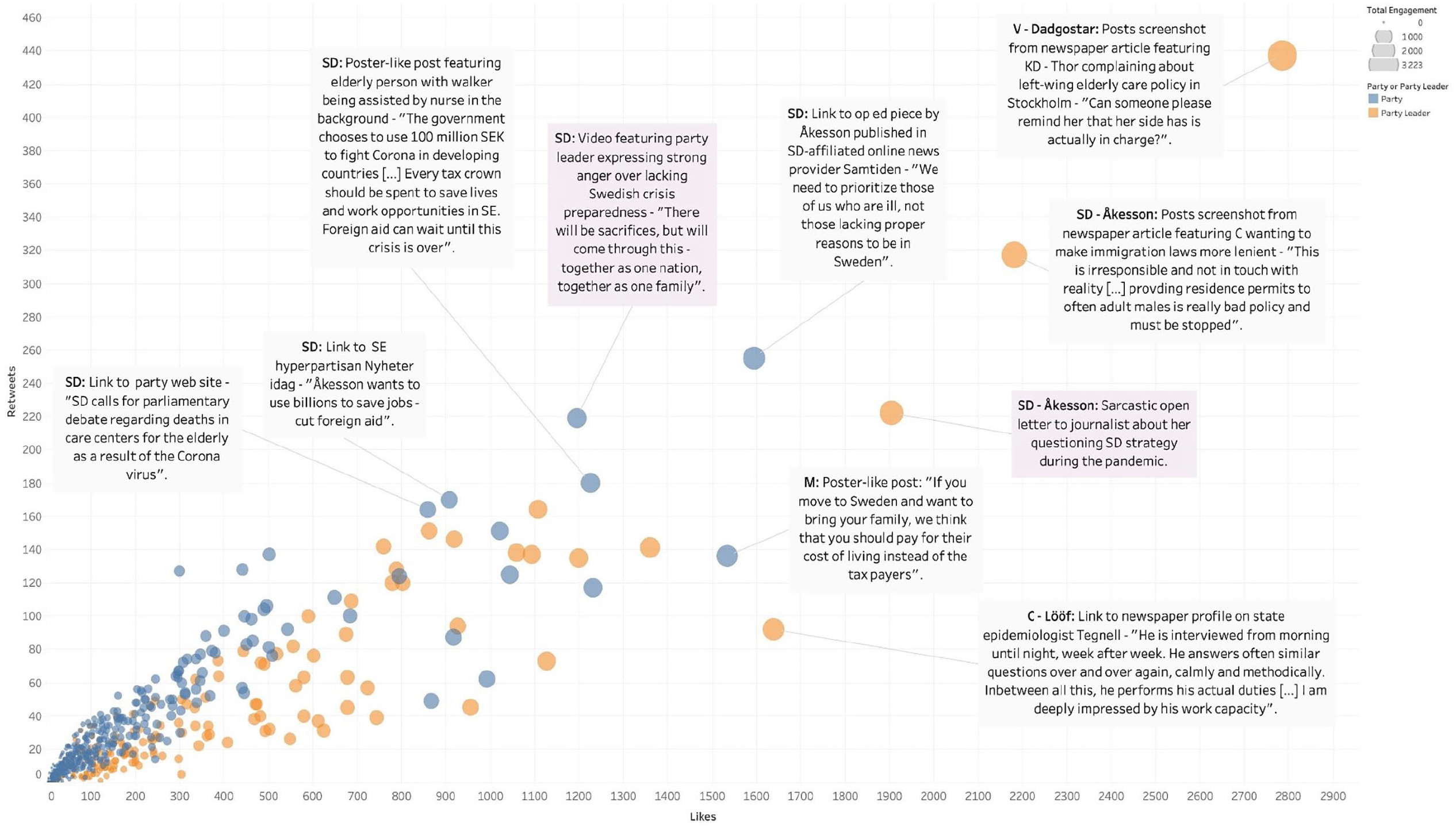
Sweden—Twitter.
Posts from the right-wing Sweden Democrats often reference messages from the party leader, thus amplifying these posts and increasing their visibility across the platform, potentially leading to more interactions. While some posts directly pertain to the party leader, this is only sometimes the case. There are also posts related to the party’s political agenda, urging action and proposing specific measures for addressing particular political issues. A comparable type of post from the Conservative Party is evident, focusing on its stance on immigration policies.
A post containing a sarcastic letter directed at a journalist’s request for more debate maintained a consistent presence across Facebook, Instagram, and Twitter, attracting substantial user engagement (Figure 6). This post’s widespread visibility and continuous resonance underscore its effectiveness in capturing the audience’s attention on diverse social media platforms. The engagement levels across these platforms indicate a shared resonance with the humor or perspective conveyed in the letter. The results suggest that the post successfully transcended platform-specific boundaries to become notable and widely shared content.
Discussion and Conclusion
In this study, we examined popular posts during the first 2 months of the pandemic—that is, posts that were “amplified” (Rufai & Bunce, 2020) due to their popularity. As expected, our findings largely align with previous research on Facebook (Larsson, 2020b), Instagram (Pineda et al., 2022), and Twitter (Zheng & Shahin, 2020). Each platform’s unique characteristics and audience contributed to variations in the types of messages that gained popularity.
On Facebook, messages with populist features received higher levels of engagement. For example, a post from the leader of the Norwegian Progress Party celebrating the deportation of a Kurdish spokesperson illustrates Jagers and Walgrave’s (2007) concept of exclusion of outgroups, invoking the marginalization of “dangerous others.” On Instagram, posts containing self-promotional content, such as behind-the-scenes glimpses into politicians’ lives, achieved relatively higher engagement.
Less expected was perhaps our identification of several cross-postings among the three platforms in both countries. According to previous research, posts should be customized to fit the specific characteristics of each platform. Cross-posting suggests a need to coordinate efforts across platforms during a crisis. While some may interpret cross-posting as a move toward professionalizing communication, it may alternatively signify a trend toward standardization, where content and messages are made uniform across different platforms or channels. This standardization can streamline communication processes, ensuring consistency in information dissemination and presentation, regardless of where it is shared. Irrespective, cross-posting contradicts the advice to tailor content to each platform (Bene et al., 2022). Therefore, platform affordances, or characteristics, are not taken into account when politicians cross-post. Regardless, such posts appear highly popular—metrics that are sure to play a part when political actors plan their future communicative efforts.
In Norway, the cross-postings mostly showcased behind-the-scenes glimpses, with only one mentioning the ongoing pandemic. In Sweden, the cross-postings mainly criticized the handling of the pandemic and preparedness for it. These findings align with our expectations of country differences, suggesting coordinated communication in Norway and more individualized perspectives in Sweden. Such cross-postings serve several purposes in terms of communication. As mentioned, cross-postings synchronize the information across platforms and contribute to delivering a clear, consistent message to a broader electorate. In addition, cross-postings reach a diverse audience on each of the platforms, a finding that contracts with existing advice on tailoring content to the platforms to reach a larger audience. Through cross-postings, actors create general posts rather than specifically focusing on existing followers. The reach of a general post is more significant because the message resonates with a more extensive user base. Finally, the time pressure of posting encourages the creation of universally applicable content across platforms, which is more cost-effective and efficient than crafting platform-specific messages, especially during a crisis, like the COVID-19 pandemic (Bossetta & Schmøkel, 2023).
From a platformization perspective, our findings shed light on Norwegian and Swedish politicians’ and political parties’ use of social media platforms for public communication. These platforms serve as intermediaries between politicians and the public, allowing for informing and mobilizing citizens. The observed trends on the three platforms illustrate how messages can be adjusted to the features and user demands of each platform. This finding aligns with the adaptability of political communication on Facebook, highlighting the need for cross-platform studies (Boulianne & Larsson, 2024). In summary, the trends identified in this study suggest that politicians and political parties maintain a business-as-usual approach even during a global pandemic—at least, this appears to be the case when looking into popular or amplified posts.
The pandemic was evident in popular posts, but given the severity of the situation, we expected it to be even more prominent. Despite several of the most popular posts containing COVID-19-related information, our results suggest continuous image rebuilding and strengthening, indicative of a perpetual campaigning mindset (Larsson, 2016). These observed patterns align with the professionalization of campaigning (Strömbäck, 2007) as politicians navigate a situation that demands a crisis management strategy.
This study offers insights into message types that resonate with social media audiences during crises but have certain limitations. First, while our findings reflect the characteristics of the most popular posts, they do not provide definitive conclusions about all posts. Future research could benefit from applying quantitative content analysis to a broader dataset. We hope the insights presented here serve as a foundation for further work. Second, our analysis focused on the eight to ten posts displayed per platform, a relatively low number, albeit the most impactful posts across each of the three platforms.
Another limitation is our reliance on engagement metrics, which capture only surface-level interaction. Although these metrics are widely used for their accessibility and reliability (Larsson, 2020b), they do not capture user intent behind interactions with specific posts, leading to a descriptive approach that measures only whether posts achieved high or low engagement levels. An improved approach could involve analyzing post comments, but current API limitations make such data challenging to access. Furthermore, ethical guidelines may prevent this level of analysis in certain contexts.
As political communication continues to evolve in response to technological advancements, we see several opportunities for future research to build on aspects of this study. We believe the results presented here can be useful for future scholarship seeking to study the types of posts that receive engagement or the content of popular posts during a crisis, perhaps as part of developing hypotheses for future studies. In this way, future studies can move beyond providing a snapshot of posts that received the most attention across different platforms. We also recognize that visual communication is still an underdeveloped field of study, even though platforms like Instagram have gained popularity over the last decade. Therefore, future research should go beyond merely describing the content of posts and focus on including composition, emotion, perspective, and how these elements guide viewer interpretation. Another possibility is to examine how visual communication structures power relations, with an emphasis on marginalized groups and whose perspectives are prioritized.
Footnotes
Declaration of Conflicting Interests
The author(s) declared no potential conflicts of interest with respect to the research, authorship, and/or publication of this article.
Funding
The author(s) received no financial support for the research, authorship, and/or publication of this article.
