




Abstract
Early childhood digital environments play a critical role in shaping children’s learning, sleep, and wellbeing, all of which underpin school readiness and adjustment to formal schooling. This study identified patterns of home device availability and bedroom access among young Australian children and examined sociodemographic associations. A cross-sectional online survey was conducted with 275 Australian parents of 1-to-5-year-olds. Participants reported sociodemographic characteristics, home device availability, and bedroom access. Devices were categorised as handheld (e.g., smartphones, tablets) or fixed (e.g., televisions, computers). Latent class analysis examined patterns of home device availability and bedroom access. All children had devices in the home, while 21% had access to one or more devices in their bedroom. Four classes were identified: (1) moderate availability, low bedroom access (55.3%); (2) high availability, high bedroom access (5.1%); (3) high availability, no bedroom access (16.0%); and (4) low availability, low bedroom access (23.6%). Significant demographic differences were observed by employment status and household structure. High prevalence of home device availability in early childhood underscores the need for supportive environments promoting balanced technology use as children transition to school. Highlighting considerations for school staff in addressing screen-related challenges may support children’s healthy development and school readiness.
Introduction
Over recent decades, children’s engagement with screen-based devices has risen exponentially (LeBlanc et al., 2017). Current Australian guidelines recommend that children aged under two years have no screen use, and children aged 2-to-5 years have less than 1 hr of screen use per day (Department of Health, 2017). Yet, results from a national poll indicated that infants and toddlers under 2 years in Australia have, on average, 2 hr of screen use per day, and pre-school children aged 2-to-5 years have 3-to-4 hr per day (Rhodes, 2017). This is concerning because young children’s screen use experiences are formative for later childhood and beyond (Biddle et al., 2010), and early childhood is a critical time during which healthy lifestyle habits and routines are established (Lioret et al., 2020).
Parents (Rhodes, 2021) and educators (Baker et al., 2024) have expressed concern about the effects of excessive screen use on children’s health and wellbeing. Some evidence suggests that high levels of sedentary screen use in early childhood can displace developmentally important behaviours, including active play, parent–child interactions, and sleep (Beyens & Nathanson, 2019; Kuzik et al., 2017). However, the effects of prolonged engagement with screens may be more complex than previously recognised (Orben, 2020). In a recent review of evidence concerning cognitive and psychosocial outcomes in pre-school children, it was found that negative outcomes were highly dependent on the context of screen use, rather than the amount of time spent on screens alone (S. Mallawaarachchi et al., 2024). For example, learning outcomes were negatively associated with program viewing and background television (TV) but positively associated with co-use of screens (S. Mallawaarachchi et al., 2024). Such findings underscore the importance of examining the context of early digital environments and their potential relevance for wellbeing and learning-related behaviours in the early years of schooling.
The focus of this paper is on digital home environments for young Australian children aged 1 to 5 years. This age range represents a critical developmental period that leads into the transition to formal schooling. During this period, children move from home- and early childhood-based learning environments into formal education, bringing with them established routines and expectations, including patterns of digital play and learning that are embedded in everyday family life (Kervin et al., 2018; Ozturk & Ohi, 2025). Young children’s early digital engagement in the years leading to formal schooling is influenced by their home environments (Veldman et al., 2023) and can influence readiness to learn upon school entry. For instance, available evidence from Canada indicates that higher screen use at age 4 is associated with increased vulnerability in school readiness at age 6, particularly in language and cognitive domains (Vanderloo et al., 2022). Similarly, findings from a study focusing on 3- to 6-year-old Chinese children suggest that excessive screen time and early screen exposure are associated with children’s behavioural problems (e.g., conduct problems, learning problems, psychosomatic problems) (Xiang et al., 2022). These findings highlight the broader importance of understanding early digital environments as a foundation for later school engagement and wellbeing (Caballero-Julia et al., 2024; Vasconcellos et al., 2025). They also highlight an increased role for school psychologists, counsellors, and educators to support families navigate digital media and promote balanced screen use as part of whole-of-school wellbeing programmes (Leslie & Oberg, 2025; Savina et al., 2017). Indeed, Australian parents request more support from schools to help manage digital engagement at home (Graham & Sahlberg, 2021) and this type of support may be particularly beneficial during the transition to school (Cavanagh et al., 2024).
The home digital environment, including the number, type, and location of screens, may provide insights into the broader context of how, where, and with whom young children engage with screens. Indeed, the availability of devices in the home, and particularly in children’s bedrooms, has emerged as a consistent correlate of screen engagement in children under 5 years (Veldman et al., 2023). Early research in this area focused primarily on fixed devices such as televisions (Carson & Janssen, 2012); however, the widespread adoption of handheld technologies, including smartphones and tablet computers, means that screens are no longer confined to communal living spaces (S. R. Mallawaarachchi et al., 2025). Their mobility enables children to access devices throughout the home, often with less parental oversight (Houghton et al., 2015), intensifying challenges for parents in managing when, where, and how much screens are used. The presence of devices in private spaces, such as bedrooms, may further shape children’s screen use and reduce opportunities for co-viewing and shared interactions, which are associated with benefits such as greater literacy skills and increased family connectedness (Connell et al., 2015; S. Mallawaarachchi et al., 2024). This highlights the importance of considering not only the availability but also the type and location of devices within the home environment.
In an attempt to help guide family home screen environments, the Australian eSafety Commissioner has provided families with a set of boundaries for device use in the home (eSafety Commissioner, 2025). This includes no devices in bedrooms for younger children, all screens switched off at least 1 hr before bedtime, and devices charged overnight in a place where children cannot access them. However, it is unclear how practical these strategies are for families and if these boundaries can be consistently enforced within different family contexts. Indeed, structural and social factors, such as housing arrangements, parental workload, and socioeconomic circumstances, are likely to shape how feasible these practices are (Rodrigues et al., 2021). As such, understanding how household digital environments differ by sociodemographic characteristics is essential to ensure that policy and guidance are grounded in the lived realities of Australian families. Moreover, awareness of sociodemographic differences in household digital environments may help schools interpret variability in student wellbeing and engagement, and tailor equitable support during the transition to school (Australian Institute of Health and Welfare, 2022; Centre for Equity and Innovation in Early Childhood, 2008).
Despite the value of understanding contemporary household digital environments, there is a lack of relevant research focusing on Australian children under 5 years (Arundell et al., 2020; Hayes et al., 2025). In a review of correlates of mobile screen media use among children aged 0-to-8 years, Paudel et al. (2017) synthesised data from 13 studies. However, only one study, in the UK, examined the presence of handheld devices (smartphones and handheld games console) in the home and bedroom (Jago et al., 2013), while the review was limited to studies published in or before 2017. This highlights a dearth of contemporary, context-specific evidence on the modern digital landscape of young children prior to school entry (Hoyos Cillero & Jago, 2010; Veldman et al., 2023). Accordingly, this study aimed to identify distinct patterns of digital environments within the home and bedroom of children aged 1 to 5 years living in Australia and to examine associations with sociodemographic characteristics. Identifying patterns of household digital environments can provide a more nuanced understanding than single indicators alone and may better inform coordinated, whole-of-school wellbeing efforts to support healthy and productive screen use during school transitions.
Methods
Participants and Recruitment
Parents and carers aged 18 years or older, residing in Australia with at least one child between 1 and 5 years of age, were eligible to participate. For this study, the term parents refers to all primary caregivers. Recruitment was undertaken through social media advertising, crowdsourcing, professional networks, local childcare centres, flyers, and word of mouth. Recruitment materials contained a QR code that linked potential participants directly to the online study information sheet, consent form, and survey. Informed consent was obtained electronically prior to survey completion. Participants could opt into a gift voucher draw upon survey completion. The study was approved by The University of Queensland’s Human Research Ethics Committee (HE001805).
Data Collection
Data were collected through an online survey between May and September 2024, as part of a larger project investigating young children’s screen use. The survey took approximately 15 min to complete. This study analysed items related to device availability in the home and in children’s bedrooms, and parental and household sociodemographic characteristics. When parents reported having more than one child under 5 years, they were instructed to answer in relation to their youngest child aged 1-to-5 years. Families with only an infant less than 12 months were excluded due to differences in screen exposure patterns during infancy (Rideout & Robb, 2020).
Measures
Survey items were informed by the literature, refined through parent interviews, and reviewed by experts in child health, screen use, and survey design. Pilot surveys with 10 parents led to minor adjustments to wording, response options, and order of items/questions. This process ensured content validity and parent-centred relevance (Boateng et al., 2018).
Sociodemographic and Household Characteristics
Parents reported their child’s age and gender, as well as information about themselves, including relationship to the child, age, highest education level, employment status, country of birth, language spoken at home, and Aboriginal or Torres Strait Islander (ATSI) background. Household composition information was also captured, including number of parents and sibling. In this study, siblings refer to all children under 18 years living in the home, regardless of biological, step, foster, or other family arrangements. Participants provided their residential postcode, which was used to determine area-level socioeconomic status based on the Index of Relative Socioeconomic Advantage and Disadvantage (IRSAD) (Australian Bureau of Statistics, 2016). IRSAD deciles were grouped into high (1–3), mid-range (4–7), and low (8–10) disadvantage.
Device Availability in the Home and Bedroom
Device availability in the home and bedroom was assessed using the questions: “What sort of screen-based device/s does your family have access to in your family home?” and “Does your youngest child aged one year or above have any of the following screens in their bedroom?,” respectively. Respondents were asked to select all devices that applied from a multiple-choice list, which also included a “no devices” option. Additionally, an open-text option was provided to allow parents to report any other devices not included in the predefined list. Responses were categorised into “handheld” (smartphone, tablet computer, handheld gaming device, wearable smartwatch) or “fixed” (television, laptop computer, desktop computer). Laptop computers were categorised as “fixed” because they are less likely to be used as a mobile device during young children’s screen engagement (e.g., in transit or without a fixed setup). The number of unique “handheld” and “fixed” devices in the home and whether a child had a “handheld” or “fixed” device in their bedroom were recorded.
Data Analysis
Descriptive statistics were computed for all variables. The primary analyses were conducted in Mplus (v8.4) using latent class analysis (LCA). The models were estimated with the number of fixed (range = 0–3) and handheld (range = 0–4) device types in the home, and whether a child had a fixed or handheld device in their bedroom (yes/no) as indicator variables. Solutions with increasing numbers of classes were tested. Model selection was guided by the Bayesian sample size adjusted BIC (SSBIC) and the bootstrap likelihood ratio test (BLRT). These indices were used rather than a simple BIC, which tends to underestimate the true number of latent classes when sample sizes are moderate, especially when group sizes are uneven (Nylund et al., 2007). A smaller SSBIC and a significant BLRT p-value indicate improving model fit with an increasing number of latent classes. Entropy was reported as an indicator of classification accuracy, although it was not used as a selection criterion. Once the optimal model was identified, differences in demographic variables between classes were estimated using the automated DCATEGORICAL function for categorical variables (Lanza et al., 2013), and the automated BCH function of continuous variables (Bakk & Vermunt, 2016). Statistical significance was set at p < .05.
Results
Of 480 survey responses received, 120 were removed because they were determined to be automated responses using Qualtrics’ reCAPTCHA system and manual inspection. An additional 95 responses were removed due to missing data regarding device availability, resulting in a final analytical sample of 275 participants.
Sample Characteristics
Table 1 summarises participant sociodemographic characteristics. Children were evenly distributed by gender (51.3% girls), with a mean age of 2.6 years (SD = 1.2). Participating parents had a mean age of 37.4 years (SD = 5.0). Most respondents were mothers (90.5%), employed full-time or part-time (84.3%), university educated (81.1%), born in Australia (79.6%), and identified as non-ATSI (84.4%). Most families spoke English at home (86.9%), lived in two-parent households (89.5%), had more than one child (59.6%), and resided in areas of low and mid socioeconomic disadvantage (81.4%).
Sample Characteristics.
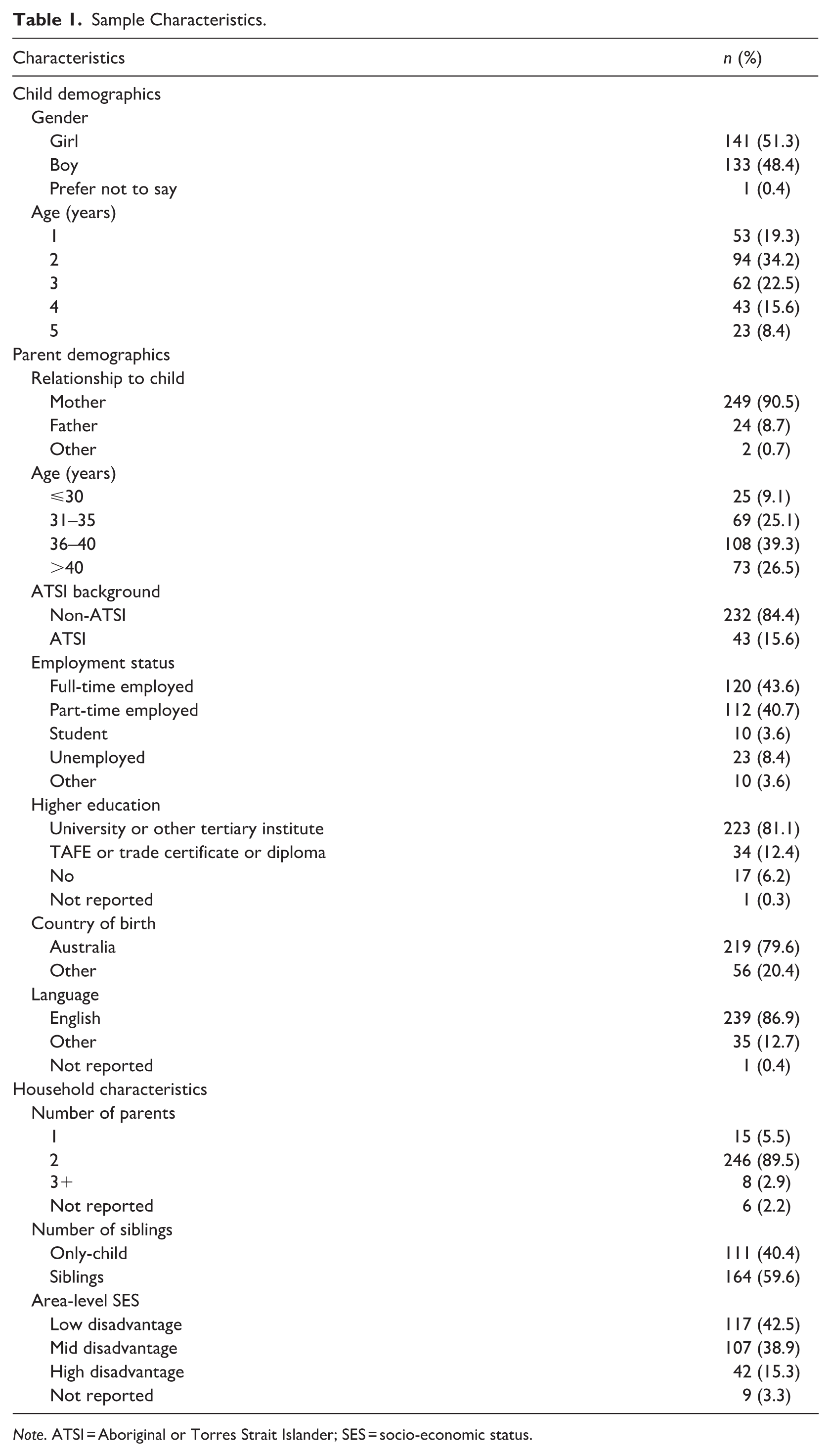
Note. ATSI = Aboriginal or Torres Strait Islander; SES = socio-economic status.
Digital Landscapes in the Home and Bedroom
Device availability results are presented in Table 2. Among the 275 homes, all had at least one type of screen-based device. Participants most commonly reported having between three and five device types in the home (n = 190; 58.9%). The most common devices found in the home were a TV, smartphone, laptop, and tablet computer. Most children (79.0%) had no devices in their bedroom. However, of the 58 (21.0%) who had at least one device type in the bedroom, most had one or two device types (n = 50; 18.2%). The most common devices found in the bedroom were a TV, tablet computer, or smartphone.
Availability of Fixed and Handheld Devices in the Home and Children’s Bedrooms.
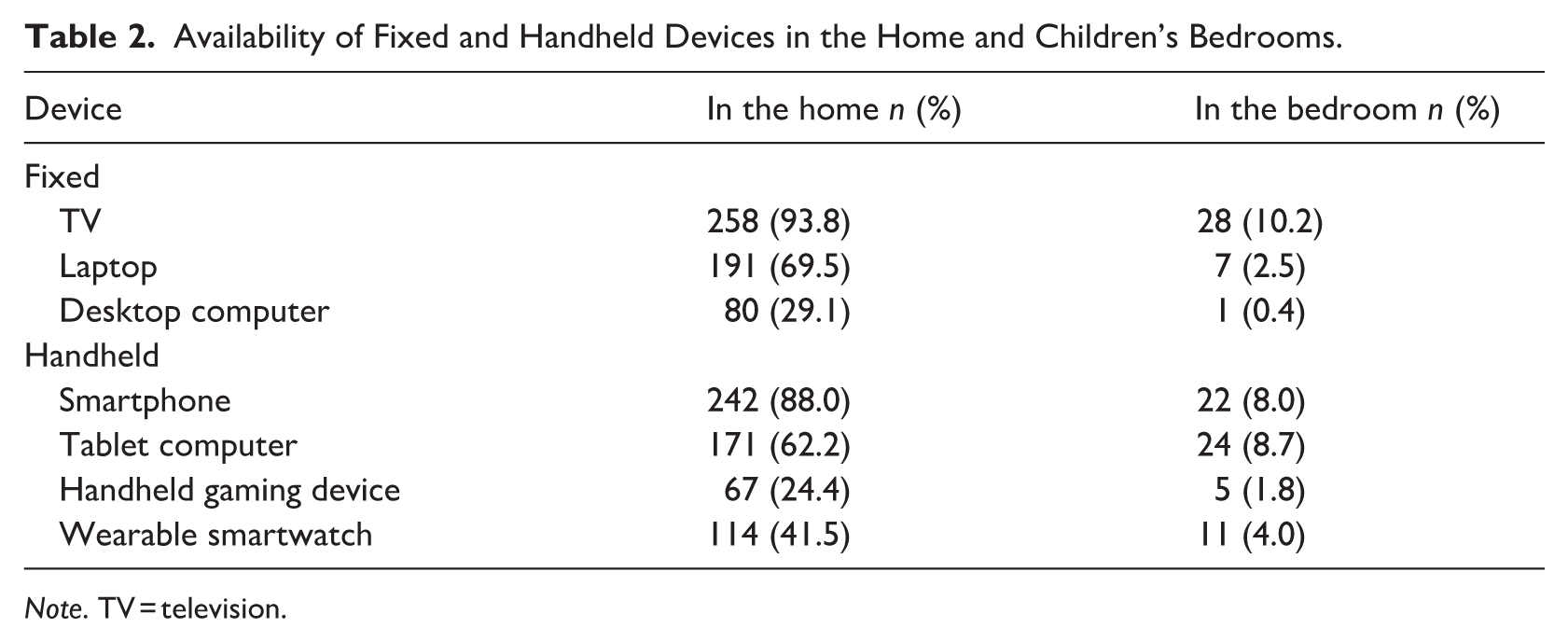
Note. TV = television.
Latent Class Analysis
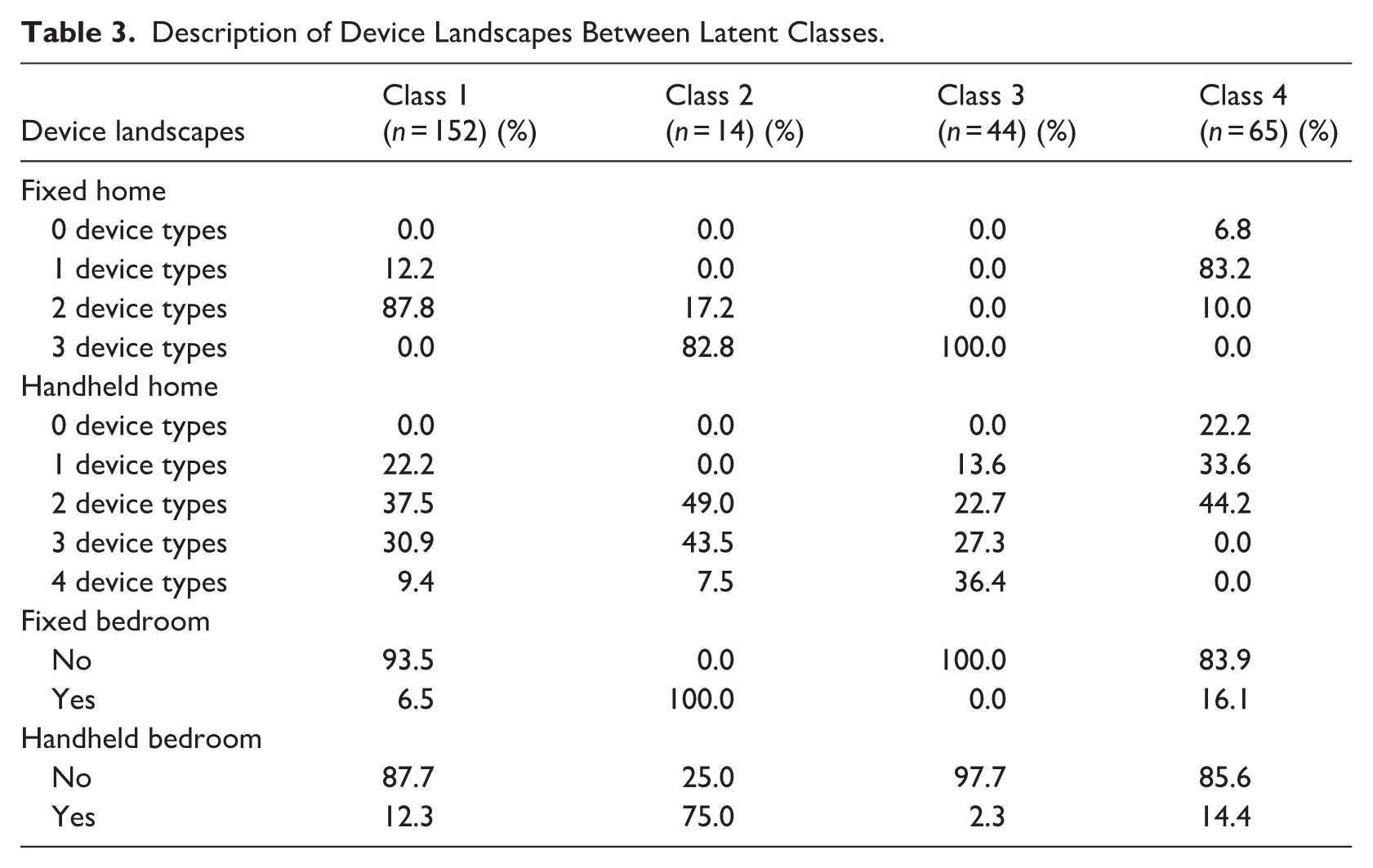
Model fit statistics from the LCA are displayed in Supplementary Table 1. The SSBIC indicated improving model fit up to three latent classes, while the BLRT indicated improving model fit up to four latent classes. The four-class solution was selected as it provided a balance between model fit and theoretical interpretability. The digital landscape for each of the identified latent classes are displayed in Table 3. Class 1 (55.3% of the sample) was characterised by moderate device availability in the home and low access in the bedroom. Class 2 (5.1%) was characterised by high device availability in the home and high access in the bedroom. Class 3 (16.0%) was characterised by high device availability in the home and no access in the bedroom. Class 4 (23.6%) was characterised by low device availability in the home and low access in the bedroom.
Description of Device Landscapes Between Latent Classes.
Some significant demographic differences were observed across the latent classes (Table 4). Parents in Class 2 were more likely to be employed full-time than those in Class 1 (X2(2) = 18.02, p < .001) and Class 3 (X2(2) = 12.05, p = .002). Significant differences were also evident by ATSI background (p < .001), with higher representation in Class 4 compared with Classes 1–3 (X2(2) = 5.47, p = .019; X2(2) = 3.95, p = .047; X2(2) = 6.72, p = .010, respectively) and in Class 2 compared with Class 1 (X2(2) = 38.07, p < .001) and Class 3 (X2(2) = 39.57, p < .001). Finally, single-parent households were more common in Class 4 than in Classes 1 and 2 (X2(2 )= 6.08, p = .014; X2 = 13.83, p < .001, respectively).
Sociodemographic Characteristics Across Classes.
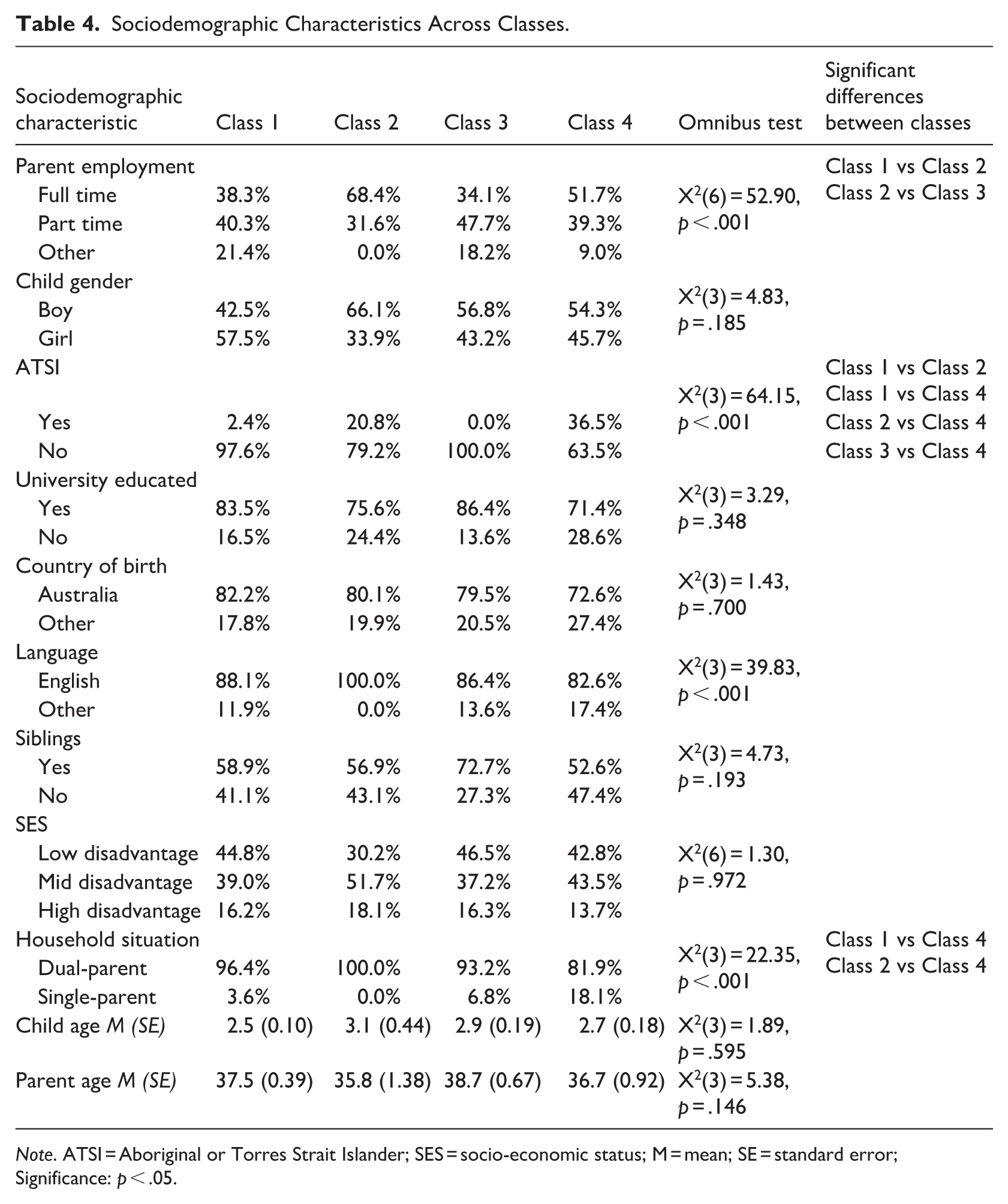
Note. ATSI = Aboriginal or Torres Strait Islander; SES = socio-economic status; M = mean; SE = standard error; Significance: p < .05.
Discussion
This study examined patterns of digital environments within the homes and bedrooms of children aged 1 to 5 years living in Australia and examined their associations with sociodemographic characteristics. Consistent with results from a national poll (Rhodes, 2017), devices were ubiquitous in homes, though bedroom access was less common, with around one in five children having access to a device in their bedroom. Televisions were the most common device overall, while smartphones and tablets were frequently accessible in bedrooms, highlighting the need to better understand contemporary device use. Four distinct digital environment classes were identified, with most homes characterised by moderate to high device availability, including low bedroom access. Sociodemographic differences were identified by parental employment, and household structure, and ATSI background. For school psychologists and counsellors, understanding early patterns of device availability and bedroom access may help contextualise presenting concerns related to behavioural problems, sleep, language, and cognitive development, and inform early engagement with families during the early years of schooling.
Consistent with previous evidence among Australian parents of children aged 4-to-7 years (Hayes et al., 2025), we found that device access in bedrooms was limited. This may reflect emerging parental screen management practices that restrict bedroom access and enforce household rules (Pyper et al., 2016). This is a promising outcome for sleep health promotion and national advocacy, which warn against device use in bedrooms (Sleep Foundation, 2025). However, despite lower rates of bedroom access compared with previous cross-sectional studies involving children aged 2-to-5 years in the UK (Jago et al., 2013) and USA (Emond et al., 2018), the finding that one in five children have access to a device in their bedroom remains concerning. Device use in the bedroom has been associated with poorer sleep hygiene, which may lead to poorer sleep quality and quantity (Hale et al., 2018) and negatively impact cognitive, emotional, and physical development (Chaput et al., 2017). As such, tailored sleep health guidance for families with greater bedroom device access may be warranted.
Beyond overall device availability, the LCA identified four distinct profiles of digital home environments with clear sociodemographic patterns. Class 2 (5.1%), characterised by high device availability and high bedroom access, included a greater proportion of parents in full-time employment. This may reflect higher disposable income and time pressures, which can contribute to fewer boundaries around device use and greater reliance on “screen-assisted parenting” (Elias & Sulkin, 2019). This includes using devices as a “babysitter” or emotional regulation tool (Brauchli et al., 2023), a strategy known to produce short-term calming effects (Elias & Sulkin, 2019). In contrast, Class 4 (23.6%), characterised by low device availability and low bedroom access, was more common in single-parent households and parents identifying as ATSI. This may be indicative of financial constraints limiting the number of devices in the home (Thomas et al., 2023), while greater time pressures and reduced caregiving support may make bedroom access a pragmatic strategy for managing routines and competing demands (Thomson & McLanahan, 2012). Families across both contexts may benefit from practical strategies that support balanced screen access while acknowledging the time and resource constraints shaping daily routines.
Implications for School Psychologists, Counsellors, and Educators
Although this study focuses on children prior to school entry, the findings are relevant for school psychologists, counsellors, and educators who are increasingly called to support families navigate digital media as part of whole-of-school wellbeing programmes (Leslie & Oberg, 2025; Savina et al., 2017). Recognising distinct patterns of device availability can help school staff anticipate varied digital experiences children bring to school and respond in equitable, developmentally appropriate ways. Whole-of-school approaches that engage both parents and school staff in promoting balanced screen use may be particularly beneficial during the transition to school (Cavanagh et al., 2024). Evidence from a large Canadian prospective study indicates that higher screen exposure at age 4 predicts greater vulnerability in school readiness at age six, particularly in language and cognitive domains (Vanderloo et al., 2022). However, the impact of screens depends on quality as well as quantity. A meta-analysis of 42 studies found that greater overall screen time was associated with poorer language development, whereas educational and co-viewed content was linked to stronger language skills (Madigan et al., 2020). Supporting parents to prioritise high-quality, interactive, and co-viewed digital experiences, while limiting solitary (non-interactional) or bedtime device use, may reinforce early learning skills (Vasconcellos et al., 2025), with school staff playing a key role in supporting and modelling these practices.
Limitations
To our knowledge, this is the first study to identify distinct patterns of contemporary digital home and bedroom environments among Australian children under 5 and examine their sociodemographic correlates. However, several limitations should be acknowledged. Firstly, findings for the smaller latent classes should be interpreted cautiously due to limited subgroup sizes. Secondly, the cross-sectional design does not allow for causal inferences, and the parent-reported measures may be subject to social desirability bias. Finally, this survey is not nationally representative with a relatively high proportion of tertiary-educated parents and few families from areas of high socioeconomic disadvantage, limiting the generalisability of findings to the broader Australian population. Future research should aim to include parents from broader socioeconomic backgrounds and capture income and time pressure data to better understand the mechanisms linking employment and household structure with digital environments.
Conclusion
This study provides new evidence on the digital environments of families with young children in Australia, identifying distinct household patterns of device availability and their sociodemographic correlates. Although bedroom device access was relatively limited, its presence in one in five children’s bedrooms remains concerning given links to sleep and limited opportunities for shared interactions; skills essential for early learning. The findings underscore the importance of supporting parents to establish balanced digital routines before school entry and equipping educators and school counsellors to respond to screen-related challenges. Strengthening coordination between families and schools offers an important opportunity to promote children’s healthy development and school readiness in an increasingly digital world.
Supplemental Material
sj-docx-1-spc-10.1177_20556365261422013 – Supplemental material for The Digital Home in Early Childhood: Classifications of Digital Landscapes among Young Australian Children
Supplemental material, sj-docx-1-spc-10.1177_20556365261422013 for The Digital Home in Early Childhood: Classifications of Digital Landscapes among Young Australian Children by George Thomas, Matthew Bourke, Stephanie L. Duncombe, Cassandra L. Pattinson, Ineke Vergeer, Stuart J.H. Biddle, Sjaan Gomersall and Michalis Stylianou in Journal of Psychologists and Counsellors in Schools
Footnotes
ORCID iDs

Ethical Considerations
Ethics approval was obtained from The University of Queensland’s Low Risk Human Research Ethics Committee (2023/HE001805).
Funding
The authors disclosed receipt of the following financial support for the research, authorship, and/or publication of this article: GT and SRG are supported by the Health and Wellbeing Centre for Research Innovation (HWCRI), co-funded by The University of Queensland (UQ) and the Queensland Government through Health and Wellbeing Queensland. MB is supported by The University of Queensland Strategic Funding for the 360-Kids Community Network Health Research Accelerator (HERA) program. This project was supported by a UQ HMNS Small Research Grant.
Declaration of Conflicting Interests
The authors declared no potential conflicts of interest with respect to the research, authorship, and/or publication of this article.
Supplemental Material
Supplemental material for this article is available online.
References
Supplementary Material
Please find the following supplemental material available below.
For Open Access articles published under a Creative Commons License, all supplemental material carries the same license as the article it is associated with.
For non-Open Access articles published, all supplemental material carries a non-exclusive license, and permission requests for re-use of supplemental material or any part of supplemental material shall be sent directly to the copyright owner as specified in the copyright notice associated with the article.
