



Abstract
School counsellors are the main drivers of change in creating a multicultural environment for all students. This study used structural equation modelling to investigate directional relationships among self-efficacy, self-advocacy and multicultural counselling competence in a sample of school counsellors (N = 306). The data were collected from 306 practising school counsellors in the US. The results suggested that self-advocacy was statistically related to self-efficacy, in turn self-efficacy was associated with multicultural counselling competence. Structural model indicated that self-advocacy had a strong indirect effect on multicultural counselling competence mediated by self-efficacy. Accordingly, the findings implicate that school counsellors could start with smaller and realistic projects in working with diverse school populations as their positive experiences in this area could increase their ability to advocate for multicultural school environments.
Keywords
School counsellors are certified/licensed professionals who help all students reach their academic, career and social potentials by implementing comprehensive school counselling programmes (American School Counselor Association [ASCA], 2019). In terms of demographics, school counsellors in the US are predominantly European descent (White) females (Erford, 2019; Goldring et al., 2013). A report by ASCA suggested that 76% of its members (N = 36,000) are White, and 85% are female (American School Counselor Association [ASCA], 2020). While the profession lacks gender, racial and ethnic diversity in school counsellors, their students have become more diverse. For example, in 1996, 33% of the US schools were students of colour (Hispanic, Black, Asian/Pacific Islander, American Indian/Native American and two or more races; National Center for Education Statistics [NCES], 2022). This ratio reached 54% in 2020, and the NCES projected it to be 57% by the end of 2030 (NCES, 2022). Hence, majority-White-female school counsellors’ responsibility to provide culture-sensitive services is greater than any other time in the history of school counselling in the US.
School counsellors’ multicultural counselling competence
Assisting school counsellors to serve diverse student bodies has been a focus of the counselling literature for more than 40 years (Sue et al., 1982). In a position statement, American School Counsellor Association (ASCA, 2019) stated: ‘School counsellors demonstrate cultural responsiveness by collaborating with stakeholders to create a school and community climate that embraces cultural diversity and helps to promote the academic, career and social/emotional success for all students’ (p. 24). School counsellors’ ability to demonstrate cultural responsiveness has been defined as multicultural counselling competence (MCC; Holcomb-McCoy, 2004). The concept of MCC has been widely accepted as a threefold concept: knowledge, awareness and skills (Arredondo et al., 1996). Multicultural knowledge refers to the counsellors’ understandings of their worldview and their specific knowledge about the cultural groups with whom they work (Arredondo et al., 1996). Additionally, multicultural awareness is related to the counsellor’s own ability to recognize their attitudes and beliefs about minority groups and to recognize the need for self-reflection on values, stereotypes and biases. Finally, multicultural skill is related to the counsellors’ ability to utilize appropriate intervention skills that are culture-sensitive and effective working with diverse populations (Cook et al., 2019). Ethnic background has been consistently found to have a strong connection with counsellors multicultural counselling competence (Choi et al., 2015). For instance, in their study of 344 graduate students in clinical psychology and counselling psychology, Pope-Davis et al. (1995) found that ‘being a student of colour was related to having a higher level of self-perceived multicultural competence’ (p. 327). Researchers have also looked at gender, MCC training, exposure to diversity, multicultural self-efficacy and White racial identity development in predicting MCC. Although there has been some research examining the relationships between MCC and various variables, there seems to be a scarcity in comprehensive study designs including MCC, self-advocacy and self-efficacy of school counsellors.
Self-efficacy
Self-efficacy is one’s belief about their own capacity to accomplish a given task (Bandura, 1982, 1993). Therefore, school counsellor self-efficacy (SCSE) is defined as the beliefs a school counsellor holds in their ability to perform any school-related task (Ooi et al., 2019; Sutton & Fall, 1995). Counselling researchers have investigated the concept of self-efficacy as a predictor of school counsellors’ awareness of achievement gap (Bodenhorn et al., 2010), ethnic identity development (Matthews et al., 2018), school climate (Sutton & Fall, 1995) and multicultural counselling competence (Barden & Greene, 2015). Barden and Greene (2015) found that counselling students with higher self-efficacy levels were also more likely to have higher MCC. Matthews et al. (2018) also supported this finding in a sample of practising school and mental health counsellors (N = 172). Their results suggested that multicultural self-efficacy explained 50% of the variance in MCC. Although various factors are related to the connection between self-efficacy and MCC such as ethnicity and years of experience (Holcomb-McCoy et al., 2008), gender (Bodenhorn & Skaggs, 2005) and support of school staff and administrators (Sutton & Fall, 1995), there is no studies exploring a mediation model of the directional relationships among self-efficacy, self-advocacy and MCC.
Self-advocacy
Self-advocacy as a term was associated with individuals with disabilities during the civil rights movement (Test et al., 2005). Individuals with disabilities historically struggled with advocating for their unique needs. Therefore, self-advocacy is one’s ability to effectively assert and negotiate their interests, desires, needs and rights (Astramovich & Harris, 2007). Similarly, school counsellors’ self-advocacy is defined as ‘the ability to effectively and appropriately communicate, convey, negotiate, or assert information about ideal school counsellors’ roles to those with the ability to change the circumstances that contribute to the problem or inequity’ (Clemens et al., 2011, p. 34). School counsellors’ self-advocacy has been suggested in closing the discrepancy between the ideal job requirements and the irrelevant school activities school counsellors oftentimes find themselves being obligated (Clemens et al., 2011).
Although, to our knowledge, there is no research linking multicultural counselling literature to self-advocacy, Trusty and Brown (2005) pointed out that advocacy is included in many multicultural counselling competencies. Therefore, it may be crucial to understand the connections between self-advocacy and MCC as well as self-advocacy and self-efficacy to understand how such attitudes impact school counsellors’ work with culturally diverse students, and, in turn, the results of this study may help school counsellor educators advance their multicultural training quality by including pedagogical strategies to boost training students’ self-efficacy and self-advocacy skills.
Purpose of the study
Although there have been several research studies investigating the relationship between self-efficacy and MCC (Holcomb-McCoy, 2008; Tang, 2020), there is limited research on school counsellor self-advocacy. Considering the role confusions and unclear role definitions of school counsellors (Bemak & Chung, 2008), self-advocacy could be a key concept to understand about self-efficacy and MCC. Additionally, the explicit role and influence of self-advocacy in the intertwined dynamic with self-efficacy and MCC is unexplored. This study aimed to fill this gap by examining the concepts of self-efficacy and self-advocacy as the indicators of school counsellor MCC. As depicted by Figure 1, SEM analysis was utilized to test the proposed structural model and the directional connections among these latent and observed variables (Bollen, 1989). Our study was guided by the following research questions:
(a) What are the direct and indirect influences of school counsellor self-efficacy on multicultural counselling competence?
(b) Is the relationship between self-efficacy and multicultural counselling competence mediated by self-advocacy for school counsellors?
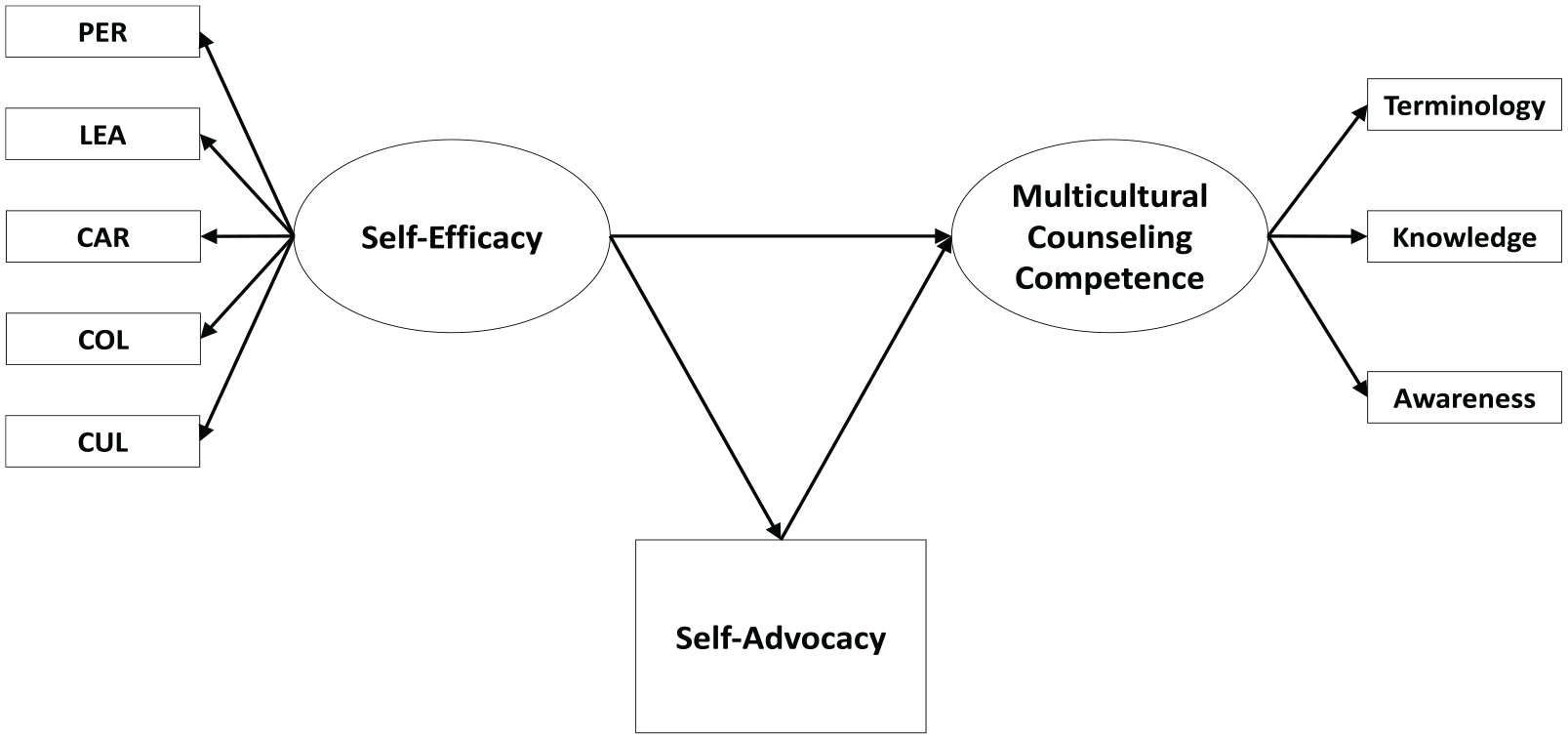
Proposed structural equation model.
Method
Participants
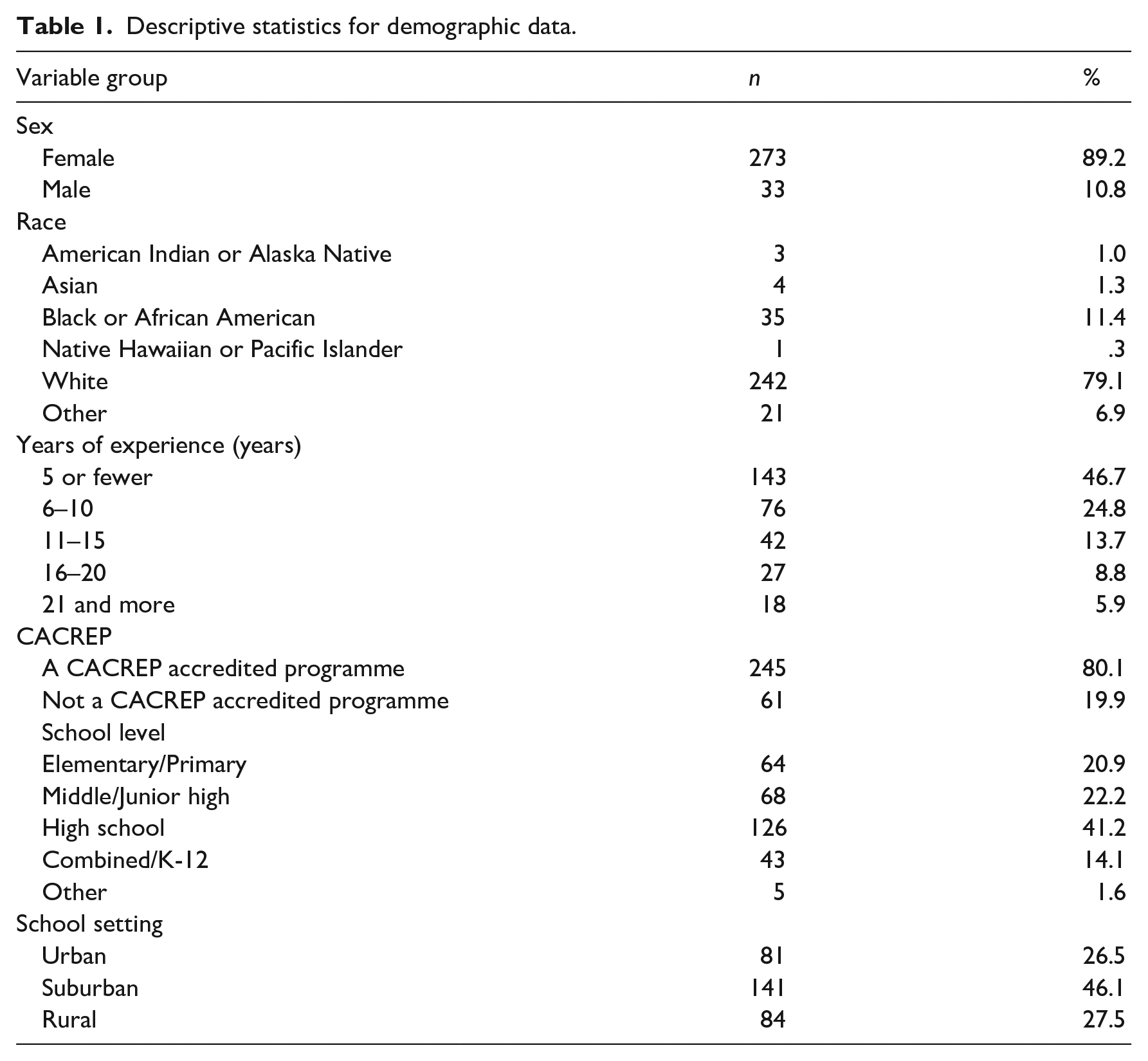
A total of 306 practising school counsellors from across the United States took part in the study. Details of the participant demographics are presented in Tables 1 and 2. Additionally, Little’s Missing Completely at Random Test (MCAR; Little, 1988) was computed on the data file. The result indicated that the data are missing randomly (0% and 1% missing data for each variable). Therefore, as Sterner (2011) suggested, the missing data points in the current study were imputed by using the Linear Trend at Point SPSS function.
Descriptive statistics for demographic data.
Descriptive statistics for age and caseload.

Procedure
After institutional review board approval of the study, an invitation email was delivered to school counsellors across the country via various methods including ASCA Scene, direct e-mails and organizational social media, if available. Upon survey completion, participants were given a chance to provide their emails if they wished to enter a lottery-style drawing to win 1 of the 15 $20 Amazon gift cards.
Instruments
To serve the purpose of this study, three self-report scales were used to measure school counsellor self-efficacy, school counsellor self-advocacy and school counsellor multicultural counselling competence. The scales were elaborated below. In addition, information of participant demographics and school settings were also collected.
School counsellor self-efficacy
The School Counsellor Self-Efficacy Scale (SCSE; Bodenhorn & Skaggs, 2005) was designed to measure school counsellor self-efficacy in relation to school counsellor roles and responsibilities. The SCSE scale consists of 43 items to which participants respond with a 5-point Likert scale ranging from Not Confident (coded as 1) to Highly Confident (coded as 5; Bodenhorn & Skaggs, 2005) with higher scores indicating higher levels of school counsellor self-efficacy skill. The measure had five factors: (a) Personal and Social Development (12), (b) Leadership and Assessment (9), (c) Career and Academic Development (7), (d) Collaboration (11) and (e) Cultural Acceptance (4). Bodenhorn and Skaggs (2005) reported the overall scale Cronbach’s alphas to be .95, was .96 for the current study sample.
School counsellor self-advocacy
School Counsellor Self-Advocacy Questionnaire (SCSAQ) was developed by Clemens et al., 2011. The purpose of their questionnaire was ‘to measure school counsellors’ use of self-advocacy skills in the context of advocating for their roles within a school’ (Clemens et al. (2011), p. 35). The SCSAQ scale consists of nine items to which participants respond on a 4-point Likert scale ranging from Strongly Disagree (coded as 1) to Strongly Agree (coded as 4; Clemens et al., 2011) with higher scores indicating higher levels of school counsellor self-advocacy. This unidimensional scale sample item included: ‘I use problem-solving skills to find solutions to role challenges.’ Clemens et al. (2011) reported the overall scale Cronbach’s alpha of .87, was .82 for the current study sample.
School counsellor multicultural counselling competence
Multicultural Counselling Competence and Training Survey-Revised (MCCTS-R; Holcomb-McCoy & Day-Vines, 2004) was designed to measure counsellors self-reported multicultural counselling competence. The scale included 32 items and 3 factors: (a) Multicultural Knowledge (19), (b) Multicultural Terminology (4) and (c) Multicultural Awareness (9). Participants rated the items on a 4-point Likert scale ranging from Not Competent (coded as 1) to Extremely Competent (coded as 4). Holcomb-McCoy and Day-Vines (2004) reported higher levels of internal reliability scores ranging from .85 to .97. The overall scale Cronbach’s alphas was .96 for the current study.
Data analysis
We managed and analysed the study data on SPSS (V. 27; IBM Corp., 2020) and AMOS (V. 26; Arbuckle, 2006). Structural Equation Model (SEM) was used to investigate the relationships among the study variables. SEM is a statistical procedure to test complex theoretical models with observed and unobserved variables (Bollen, 1989). The analysis of SEM in the current study included: (a) testing the measurement model and (b) testing the structural model. As Anderson and Gerbing (1984) suggested for testing the measurement model, a confirmatory factor analysis (CFA) was run to illustrate that chosen latent constructs (school counsellor self-efficacy and multicultural counselling competence) were adequality measured by their associated observed variables (i.e. factors of the latent variables). Testing the structural model was also achieved to observe whether the hypothesized model had statistical merits through multiple fit indices. In addition, the significance of the relationships among the structural model variables is tested by bootstrapping method, a highly regarded statistical procedure to produce random samples based on the N of a study (Preacher & Hayes, 2004). In the current study, we utilized the steps offered by Crockett (2012). In detaching multivariate outliers in the study, Mahalanobis distance was utilized. In the current sample, 49 responses were found to be outside of the acceptable distance at the p-value of .05. Therefore, the 49 participant responses were omitted from the dataset leaving 306 usable responses.
Results
Descriptive statistics for the scales used in the study (i.e. SCSE, SCSA and MCCTS-R) were analysed. Among the SCSE subscales, Personal and Social Development had the highest mean score 4.36 (SD = 0.48) and Leadership and Assessment had the lowest mean score of 3.98 (SD = 0.65). Additionally, among the MCCTS-R subscales, Cultural Acceptance had the highest mean score of 4.44 (SD = 0.52) and the Multicultural Knowledge subscale had the lowest mean score of 2.80 (SD = 0.63). Finally, the unidimensional SCSA scale had a mean of 4.39 (SD = 0.47). Additionally, the Pearson product-moment correlation coefficient values among the study variables are summarized in Table 3.
Correlations across variables included in the final structural model (N = 306).
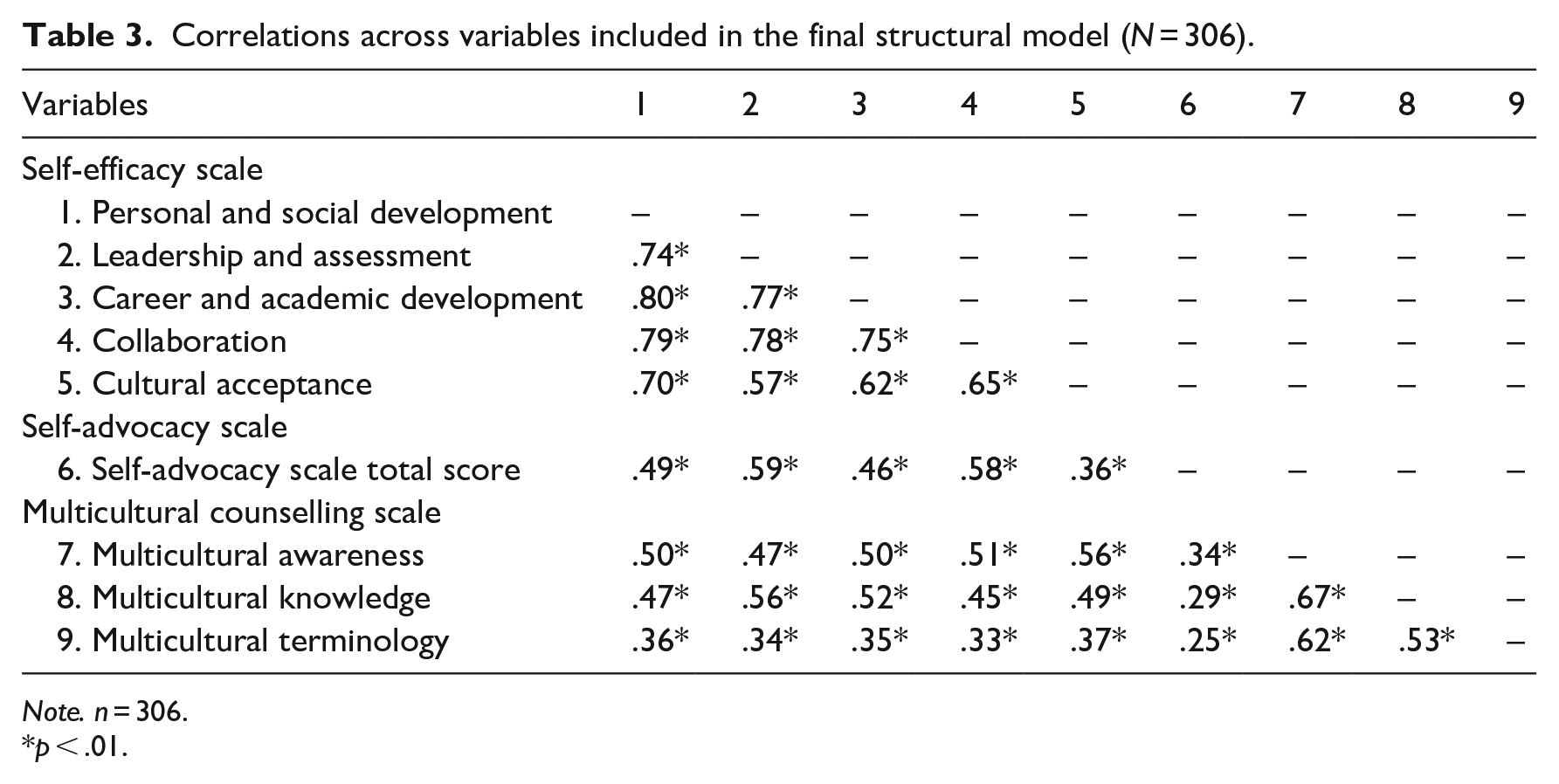
Note. n = 306.
p < .01.
To have a more in-depth understanding of the measurements used in the study, we ran CFA on SCSE and MCCTS-R. The SCSE loaded on the previously identified five factors. The parameters were estimated by using the maximum likelihood technique. Model fit indices are as follows: χ2 = 1,600.011; df = 843; χ2/df = 1.898; RMSEA = 0.054; CFI = 0.900; GFI = 0.798 and SRMR = 0.0582. The CFA results for the MCCTS-R provided strong evidence for a three-factor structure as previously suggested by the tool’s creators. The model fitness was evaluated, and the indices are as follows: χ2 = 1,013.382; df = 454; χ2/df = 2.232; RMSEA = 0.064; CFI = 0.925; GFI = 0.820 and SRMR = 0.0623. We did not run CFA on the SCSA because in the SEM analysis SCSA was treated as an observed variable using the overall scale mean score only.
As suggested by Anderson and Gerbing (1984), we tested whether the structural model could determine the mediating role of school counsellor self-advocacy and if there is a better model to explain the web of relationships among the study variables. We also evaluated the extent to which the mediation model was a predictive of the sample data (i.e. model fitness).
Structural model
Results of the SEM analysis revealed that self-advocacy was statistically related to self-efficacy (β = .59); however, it was not statistically related to MCC (β = –.02). Additionally, self-efficacy was a strong predictor of MCC (β = .68). Based on these initial results, previously proposed SEM model was not supported by the data due to the lacking statistically significant relationship between self-advocacy and multicultural counselling competence. However, after examining possible models and consulting with the theory, as visualized in Figure 2, the researchers identified self-efficacy as the moderator latent variable between self-advocacy and MCC in the sample data. The emerged alternative model (referred as final model henceforward) produced an acceptable model fit to the data (i.e. χ2 = 89.424; df = 23; p < .001; CFI = 0.965; GFI = 0.41; RMSEA = 0.097 and SRMR = 0.0432). The final model produced direct and indirect effects among the model variables. Results of the bootstrapping process (5,000 random samples) suggested that standardized mediation effect was statistically significant (p < .001). Additionally, based on the final model, self-efficacy mediated 91% of the total effect of self-advocacy on MCC.
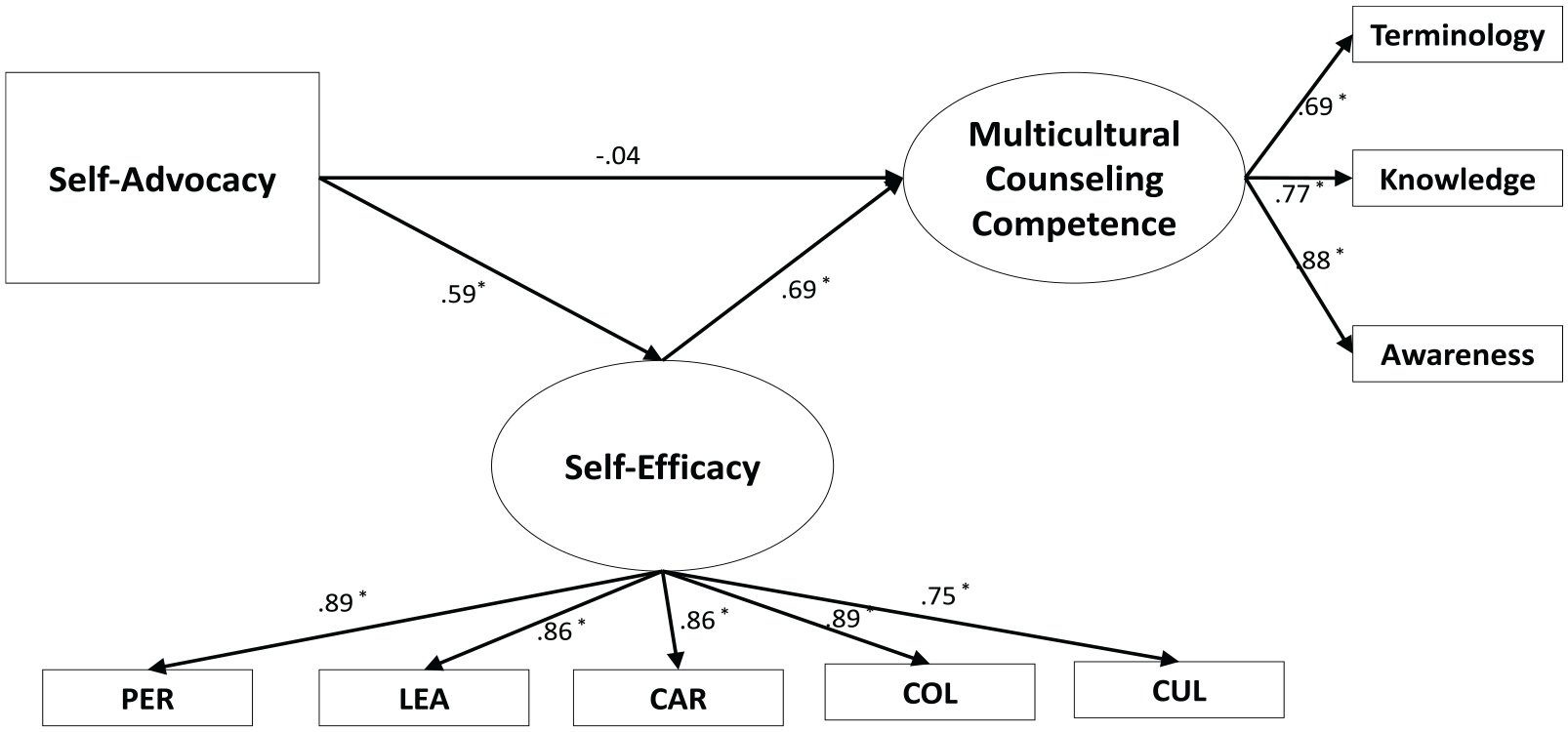
Final model with standardized estimates.
Discussion
The study’s purpose was to utilize SEM to test a mediation model describing the hypothesized relationships among self-efficacy, self-advocacy and MCC in a sample of practising school counsellors in the US. To date, no other studies like ours have explored the mediating effect of self-efficacy on the relationship between self-advocacy and MCC. Our attempt to fill the gap, contributing to the growing literature on school counselling and school counsellor education, has led to three major findings.
The first major finding of the study is that the alternative mediation model was a better fit to the sample data than the hypothesized model. Explicitly, instead of the hypothesized model, the study revealed that self-efficacy mediated the relationship between self-advocacy and MCC. Based on the final model, school counsellors who effectively negotiate ideal school counsellor roles and responsibilities have stronger self-perceived ability and belief to accomplish school counselling related activities (i.e. self-efficacy). The strong self-efficacy beliefs then lead to increased self-perceived ability to effectively work with diverse students.
However, self-efficacy has been repeatedly found to be a key mechanism that helps counsellors apply their skills to counselling related tasks (Larson & Daniels, 1998). In a sample of school counselling interns, for instance, Gilbert (2016) found that self-efficacy was a strong indicator of ASCA programme implementation. The level of the ASCA national model implementation in schools could be a key factor in explaining the positive relationship between self-advocacy and self-efficacy. School counsellors who communicate and negotiate the ideal school counsellor job duties are likely to generate mechanisms (i.e. self-efficacy) through which they can integrate and apply their existing knowledge to work towards a plan to meet the needs of historically oppressed students (i.e. MCC).
As Bandura (1977) suggested people with strong beliefs in their own capacity are likely to see the misfunctioning systems around them as the source of their determination and resilience as opposed to disinclination and helplessness. Holcomb-McCoy (2008) further offered that when school counsellors believed in their capacity to meet the unique needs of diverse students, they act deliberately in the direction of inclusion of those who were marginalized in school environments. Therefore, the results of the structural model provide a strong argument that how well a school counsellor can advocate for the ideal job duties is indirectly related to multicultural counselling competence through their beliefs in their own capacity to succeed in applying those ideal school counselling roles to support their diverse students.
The second major finding of the study is the strong direct effect of self-efficacy on MCC. Our finding is consistent with the priori literature (Gilbert, 2016). For example, in a study of school counsellors, Na (2012) found that self-efficacy was significantly related to their cultural competency in working with recent immigrant students. Bodenhorn et al. (2010) suggested all school counsellors want to pay attention to the achievement gap, diversity issues and meeting the needs of diverse students in their schools; however, only those with strong beliefs and skills (i.e. self-efficacy) with the support of other involved stakeholders can act on their plans to close the achievement gap in their schools. Thus, school counsellors with strong collegial relationships and self-perceived ability to accomplish school counselling duties are likely to best serve the students with diverse backgrounds.
The third major finding is the lacking direct statistical connection between self-advocacy and MCC. This finding has important implications for school counselling researchers. One assumption to explain this phenomenon could be that when school counsellors are negotiating their roles and job duties with other stakeholders, they only focus on the activities that are unrelated to school counselling, instead of advocating for the ideal school counsellor roles. Bemak and Chung (2008) called this phenomenon as ‘nice counsellor syndrome’ (p. 372). They suggested school counsellors to advocate for what is needed by the students they serve as opposed to always negotiating to be socially accepted by the members of their school environments.
Implications for practising school counsellors
Our study findings indicated that school counsellors with higher self-advocacy are more likely to have higher self-efficacy, and in turn, strong self-efficacy beliefs are related to higher levels of MCC. However, there was no direct relationship between self-advocacy and MCC. These significant and insignificant relationships among the study variables have implications for practising school counsellors. The study findings suggested that higher degrees of confidence school counsellors demonstrate in their professional work increases their ability to provide multicultural school counselling services. Consequently, school counsellors should identify areas where they lack confidence and seek professional support. One way of increasing confidence in work-related skills is performance outcomes (Bandura, 1977). Specifically, positive school counselling experiences are likely to increase self-efficacy, which will encourage school counsellors to believe in their capacity to accomplish even more in their school counselling programmes (Lee et al., 2007). Therefore, based on the current study findings, school counsellors should start with smaller and realistic projects in working with diverse school populations.
Given the strong indirect effect of self-advocacy on MCC mediated by the self-efficacy, practising school counsellors should pay attention to their relationships with other teachers, administrative staff, parents and other school counsellors colleagues (Clemens et al., 2011). Stronger social and professional relationships are associated with more support in creating a collaborative atmosphere for culturally diverse students with all the parties’ involvement (Scarborough & Culbreth, 2008). Therefore, indirectly, as supported by the current study findings, school counsellors may advocate for the ideal school counselling duties with an attitude that they are competent to accomplish their tasks, which, in turn, increases their ability to serve diverse students.
School counsellors should also participate in districtwide school counselling group activities to gain exposure to how other school counsellors advocate for their school counselling programmes and diverse student groups in their own schools. This is particularly important in being in an environment that can provide vicarious learning experiences and social persuasion for best practises (Bandura, 1977; Kozan, 2022). Veteran school counsellors should mentor the novice school counsellors with an emphasis on the ways of advocating for their school counselling programmes, creative ideas to improve administrative support and interventions to support all students under their responsibly.
Implications for school counsellor educators and supervisors
School counsellors participated in the current study reported lower scores of self-efficacy in the Leadership and Assessment subscale. This subscale is concerned with school wide assessment, presenting data and transforming assessment results into prevention-based school counselling programmes. Consequently, counsellor educators should encourage school counselling trainees to focus on assessment and data-based interventions during their practicum and internship experiences. This way, while receiving supervision, counselling trainees could collect and analyse data on the needs of the students and present their results/suggestions to the schools and their peers in their graduate programmes. Through these projects, counsellor educators can model and teach their school counselling students specific ways of implementing ASCA national model with an emphasis on data driven school counselling.
Although further investigation is required, the insignificant direct relationship between self-advocacy and MCC found in this current study might indicate school counsellors’ excluding cultural components from their self-advocacy efforts. Priori literature suggested that although school counsellors have higher awareness of the issues of culture, they have lower confidence in their reported skills and actions. The current study also supported this pattern by the lacking statistical relationship between self-advocacy and MCC. Counsellor educators and supervisors should focus on teaching skill-based interventions in their multicultural counselling classes (Aydoğan et al., 2022). In such classes, skill building activities may include role-plays, immersion experiences, real life scenarios and/or culture-focussed interviews with real clients.
The current study findings suggest that self-efficacy play a crucial role between self-advocacy and MCC and is not directly related to MCC. Given these findings, supervisors could incorporate self-efficacy building activities into the process of supervision. For instance, supervisors could invite their school counsellor supervisees to focus on specific populations in their work environments as a part of the supervision process. Such strategy could assist them to build strong relationships with diverse students, parents and other community members.
Limitations and directions for future research
Future researchers focussing on the change of the variables over time could use latent growth modelling (LGM; Schumacker & Lomax, 2010) to examine the growth trajectory of the web of the relationships among self-advocacy, self-advocacy and MCC (and perhaps other variables). Although LGM requires much larger data sets and more sophisticated statistical knowledge, such research could provide counselling literature with more precise and detailed understanding of the variables.
The data were collected through self-reporting surveys. Self-reported data collection methods could provide researchers with a skewed picture of reality, which could be connected to a well-known phenomenon in social sciences, social desirability (Sodowsky et al., 1994). Participants of the current study may have felt obligated to provide the ‘politically correct answers’ to some of the survey questions. Although Sodowsky et al. (1994) reported strong correlations between social desirability and MCC, Constantine and Ladany (2000) found no effect of social desirability on MCC. Therefore, to confirm the study results, counselling researchers should diversify data collection methods by utilizing observer rating scales, and client/student perception of counsellor performance.
In conclusion, the results from this study indicated that school counsellors with higher self-advocacy skill and beliefs are also likely to have stronger self-efficacy beliefs in their school counselling-related activities. Higher self-efficacy is, in turn, positively related to higher school counsellor multicultural counselling competence. Although further research is warranted to validate and advance the findings of the current study, there now is strong evidence that suggests school counsellors’ advocacy beliefs have an indirect effect on their ability to work with diverse student populations through their beliefs in their potential to successfully perform school counselling related tasks.
Footnotes
Compliance with ethical standards
All procedures performed in studies involving human participants were in accordance with the ethical standards of the institutional and/or national research committee and with the 1964 Helsinki Declaration and its later amendments or comparable ethical standards. Informed consent was obtained from all individual participants included in the study.
Declaration of conflicting interests
The author(s) declared no potential conflicts of interest with respect to the research, authorship, and/or publication of this article.
Funding
The author(s) disclosed receipt of the following financial support for the research, authorship, and/or publication of this article: This study was financially supported by Kent State University Graduate Student Senate (GSS) and by the EHHS Graduate Student Grant Programme at Kent State University.