




Abstract
Literature suggests that interdependencies may expose construction contractors to payment risks. However, prior research has tended to assume a disconnected perspective, which ignores the interdependence effect. To bridge this gap, a network of incompatible practices was built using judgments from subject matter experts in payment dispute cases in Kenya. After that, social network analysis (SNA) techniques such as Eigenvector and Lambda partitioning were used to analyze it. Ten interdependencies that expose contractors to payment risk were identified. The interdependence between the payment upon verified performance and the failure to match the work done with the amounts paid initiates and transmits most of these risks. In line with the power-law principle, fewer than 20% initiate and transmit more than 80% of the risks. This study demonstrates how economizing strategies can influence the choice of practices, complement blockchain decentralization measures, and improve the analysis of payment dispute cases.
Introduction
Despite its drawbacks, such as payment risks (Ruparathna and Hewage, 2015), the design-bid-build (D-B-B) system continues to be favored by project sponsors/owners and their consultants (Chang and Ive, 2002). Its dominance derives from its capacity to provide price certainty to the owner while presenting uncertainty for contractors (Malatesta and Smith, 2011). For example, the dominance of fixed-price practices implies that certainty can be achieved prior to construction, implying a link between vulnerability and incompatibilities. Guo et al. (2020) demonstrate how incompatibility between certainty and uncertainty can reveal vulnerability. Similarly, Fidan et al. (2011) demonstrate that vulnerability is measured by the degree to which the causes of cost variation risks are interdependent. These examples suggest that interdependence should be studied to better understand contractor payment risk.
Guo et al. (2020) and Zhu and Mostafavi (2017) demonstrate that vulnerability can be better comprehended by focusing on interdependencies between variables. The current payment literature, however, assumes independence. As a result, the effect of interdependence between procurement practices, and thus associated strategies, is not fully understood. Thus, in Abdul-Rahman et al. (2014), it is unclear how the owner's inadequate funding contributed to the contractor's cash flow constraints. Because contractors are not involved in the design process under the D-B-B (Ruparathna and Hewage, 2015), the disconnect implies less knowledge of the owner's financial information. So, the impact of certain practices and the owner's strategy on contractor payment risks is not fully understood (Chang and Ive, 2002).
In payment dispute scenarios, the failure to fully account for interdependence can also lead to a lack of clarity in the analysis of cause and effect. In Abdul-Malak et al. (2019), for instance, the contribution of interactions between contractual conditions and their role holders to disputed payments is less apparent. Due to this ambiguity, decisions rendered are sometimes open to a variety of interpretations (Schenck and Goss, 2015). This ambiguity is further illustrated by the fact that disputes escalate from arbitration to the courts (Barman and Charoenngam, 2017). Nonetheless, such escalations can be mitigated by establishing interdependence between variables.
Inability to fully grasp the nature of interdependence can also lead to mismatched roles and suboptimal mitigation measures. For instance, Hamledari and Fischer (2021) argue that decentralizing ineffective roles from the center to the periphery can reduce payment risk. However, they assumed sequential interdependence while ignoring the impact of pooled and reciprocal typologies (Fellows and Liu, 2012). By recognizing the effect of a network of practices on payments, it is possible to illustrate a method for determining which interdependencies should be decentralized.
Consequently, this study analyzes the effects of incompatible practices on construction contractor payment risks.
To achieve the stated goal, the following objectives will be addressed:
Assess the compatibility of the existing practices with their mediating assumptions. Demonstrate that the construction contractor payment risks can be depicted as a network of incompatible practices. Identify and analyze which of the interdependencies initiate and transmits most of the payment risks. Profile the involved interdependencies and their patterns.
By addressing the objectives, this study promises at least three contributions. First, it demonstrates how to link practices and strategies by combining various theoretical concepts. Although Wu et al. (2011) made an effort in this direction, their framework is limited to linear conceptualizations. By enlarging it, it is possible to expose an entire networked system, which explains why, for instance, the procuring side frequently prefers the D-B-B over other options. Second, it illustrates a less ambiguous method of tracking and allocating liability by conceptualizing the interconnectedness of payment risk in terms of its causes and effects. Therefore, if applied, it can reduce the amount of subjective analysis reported by researchers such as Abdul-Malak et al. (2019). It concludes by demonstrating how interdependencies can be profiled. This enables the determination of which interdependencies can be decentralized, which is an addition to the blockchain-based measures proposed by Hamledari and Fischer (2021).
Setting of the study
In order to understand how a network of incompatible practices affects contractors’ vulnerability to payment risks, it is important to explain the important terms. As a result, seven concepts are explained.
Design-bid-build procurement system and structure
To begin, the D-B-B system or structure is a central concept in this study. This is because it is both the most prevalent and contradictory procurement system (Chang and Ive, 2002). For instance, the standard market is characterized by continuous interactions, whereas the D-B-B market is characterized by discontinuous interactions (Chang and Ive, 2007b). This seasonality fits the description of an isolated occurrence. As a result, resource owners such as project clients, consultants, and contractors frequently exist as separate economic and legal entities (Winch, 1989). By combining these units, a temporary organizational structure is produced. In this context, the term “structure” refers to a group of interdependent or interconnected entities, and it is synonymous with “system” (Fellows and Liu, 2012).
Network structure and functions
The second significant concept is “structure,” which refers to a mathematical and graphical object composed of points and their connections (Lee et al., 2017). The connections are lines, whereas the points are nodes or vertices. As a network structure, it also represents a system in which lines are typically used to denote functions or roles (West, 2014). In this context, roles and functions are interchangeable, and their interactions tend to form a structure. Chowdhury et al. (2011) suggest using the D-B-B to analyze parties’ roles. Typically, the owner/client or construction buyer provides the construction site and financing, while the consulting unit provides design and other intermediary functions such as payment certification (Besaiso et al., 2018). The contractor, however, is responsible for construction. This suggests that the causes of payment defaults are associated with distinct yet interdependent roles. Due to this paradox, various incompatibilities are occasionally observed (Kenyatta et al., 2022). Therefore, this structure is useful for constructing an interconnected network.
Interdependencies
Third, interdependence is regarded as an important concept because it is a property of a system or structure (Lee et al., 2017). Additionally, it is synonymous with connections and paths (West, 2014). In this context, interdependency describes node flows as network functions (El-adaway et al., 2017b). Payments and information characterize directed flows in contractual networks (Pishdad-Bozorgi et al., 2017), whereas interdependencies such as sharing space or attending the same event characterize undirected flows (De Stefano et al., 2011). This suggests interdependence is a key concept, but it's also “pooled,” “serial,” and “reciprocal” (Bankvall et al., 2010; Fellows and Liu, 2012). These are discussed in more detail below.
Pooled
Pooled interdependencies have concurrent events like joint actions (Bankvall et al., 2010). Participating in a design event, for example, allows the owner and his designer to share financial information since the designer is also the contract administrator (El-adaway et al., 2017a). However, Abdul-Malak et al. (2019) fail to identify precisely how the engineer's intermediary roles contributed to payment defaults. Abdul-Rahman et al. (2014) suggest that the owner's funding deficiencies are linked with the administrator's manipulative actions, so payment defaults are used to compensate. In this way, pooled interdependence permits the detection of the effect of combining neutral roles with agency (Besaiso et al., 2018).
Serial
Serial typology refers to one-way interdependencies in which the output of one entity becomes the input of the next (Davies and Mackenzie, 2014). It assumes complete information before performance and is exemplified by Gantt and critical path charts (Wang et al., 2015). These techniques can determine the shortest and longest paths, allowing for a cause-and-effect link. While useful in mass production (Bankvall et al., 2010), their application in construction procurement is limited. Non-participation by the contractor in design, for example, can lead to erroneous liability allocation. Abdul-Malak et al. (2019) assume one-way causes for payment default cases, so design roles are ignored and interdependencies are unclear. Therefore, determinations can be interpreted differently (Barman and Charoenngam, 2017).
Reciprocated
In a reciprocated typology, the output of one entity serves as the input of another, and vice versa (Bygballe et al., 2013). This emphasizes the reciprocity between the entities. Therefore, the action of a single entity has system-wide consequences (Fellows and Liu, 2012). Because of this context, Peters et al. (2019) conclude that the contractor's cash flow problems were caused by the owner's late and underpayment defaults. Likewise, Fidan et al. (2011) link payment defaults with cost overrun risks. However, the issue is also caused by serial and pooled interdependencies. Rather than focusing on a single typology, this context highlights the significance of identifying the entire network of interdependencies.
Vulnerability
Fourth, the term “vulnerability” is significant because it implies a two-sided consequence (Zhu and Mostafavi, 2017). First, it denotes the weakness of a system, which implies an inability to withstand exposure to negative risks (Guo et al., 2020). Second, it signifies system resilience or robustness, which implies the capacity to withstand disruptions (Fidan et al., 2011). With this understanding, a contractor's exposure to payment risks portends disruption of payment flows and, as a result, vulnerability. Such defaults, however, imply a favorable outcome and thus demonstrate the robustness of the owner's procurement system.
In assessing vulnerability, interdependencies are used (Zhu and Mostafavi, 2017). To illustrate vulnerability to cost variation risks, Eybpoosh et al. (2011) use the paths between risk causes, mediating events, and their outcomes. Furthermore, the D-B-B is the most vulnerable to risks such as payment defaults when compared to other procurement systems (Sha, 2011). This implies that the compatibility of a system's components can reveal flaws. Thus, payment default vulnerabilities can be determined by analyzing the D-B-B's practices.
Practices
Fifth, “practice” refers to the activities and methods that emerge from the interdependence of contractual roles and theoretical principles (Austin et al., 2016). This reflects formal and informal contracting rules (Sha, 2011). Formal means express, while informal means implicit. Express terms include the owner's obligation to make interim payments to the contractor upon certification (Walsh, 2017). An example of an implied norm is the owner's expectation that his consulting agent will not disclose confidential information such as financing deficiencies as a result of doubling in design and certification. In conclusion, the concept of practices is crucial because their interdependencies can determine whether a system is vulnerable or robust (Walsh, 2017).
Theoretical principles/mediating events
Sixth, theoretical principles refer to the various ideas or assumptions that comprise theoretical frameworks (Ngulube et al., 2015). As a rationale, they generate methods and practices (Bankvall et al., 2010). The practice of paying after the work has been satisfactorily completed, for example, disregards the autonomy of the parties (Fawzy et al., 2019). This principle makes sense in standard product markets (Bygballe et al., 2013), but not D-B-B. In a standard market, for instance, the buyer pays the producer/seller after production. In the construction market, however, the owner is both the buyer and the owner of the finished product (Kenyatta et al., 2022). In this sense, theoretical principles serve as evaluative instruments and mediators between practices and methods.
The blockchain concept
Lastly, “blockchain” refers to the digital recording of auditable and immutable transactions (Hileman and Rauchs, 2017). This suggests that it is a type of network whose data storage and sharing are not susceptible to manipulation. However, the construction payment-blockchain literature is limited by its inability to illustrate network properties such as interdependencies. Consequently, Hamledari and Fischer's (2021) recommendation that blockchain technology can relocate manipulative intermediaries from the center to the periphery, resulting in decentralization, does not demonstrate how to identify manipulative connections. Because of this limitation, the proposed benefits, such as reduced payment defaults (Ahmadisheykhsarmast and Sonmez, 2020), cannot be realized to their full potential.
Theoretical framework
The purpose of this article is to examine the effect of network structure on the payment risk exposure of construction contractors. This network is comprised of interdependencies between practices, the compatibility of which is determined by the interactions of various mediating principles. Because these principles are drawn from market mix, transaction cost economics, and principle-agency theories, a synthesis is required.
The marketing mix theory
The marketing mix theory was developed for standard product markets (Arditi et al., 2008). It is, however, widely reflected in the acquisition of non-standard products, such as construction projects (Skitmore and Smyth, 2007). Since the two contexts are different, the market mix creates incompatibilities (Crespin-Mazet and Ghauri, 2007). This could expose contractors to payment defaults.
In the standard product market, staying competitive at the margin level is crucial (Skitmore and Smyth, 2007). Margin is the difference between a product's selling price and its cost inputs (Chang and Ive, 2007b). Place, product, price, and promotion are interdependent parts of the market mix (Skitmore and Smyth, 2007). As a result, deviations from these principles can indicate either vulnerability or profitability in the context of procuring construction projects (Crespin-Mazet and Ghauri, 2007).
To begin, the “place” in a standard market refers to the physical location where the interactions between sellers and buyers typically occur (Skitmore and Smyth, 2007). These interdependencies represent distribution channels for producers and sellers, but in construction transactions, they represent procurement routes or structures. In the D-B-B, their selection and configuration is determined by buyers/project owners (Crespin-Mazet and Ghauri, 2007). Failure to account for these differences exposes contractors to payment defaults.
Second, a “product” is a good or a service that sellers or producers provide in response to market demand (Crespin-Mazet and Ghauri, 2007). In contrast, contractors (sellers) propose to construct futuristic products (construction projects) on the buyer's immovable property. Consequently, there can be power asymmetries.
Third, because power asymmetry creates uncertainty (Sha, 2011), payment of the price, which represents the actual value exchanged for ownership transfer (Skitmore et al., 2006), cannot be guaranteed. Fidan et al. (2011) found that the result includes variation risks, which are also linked to payment defaults.
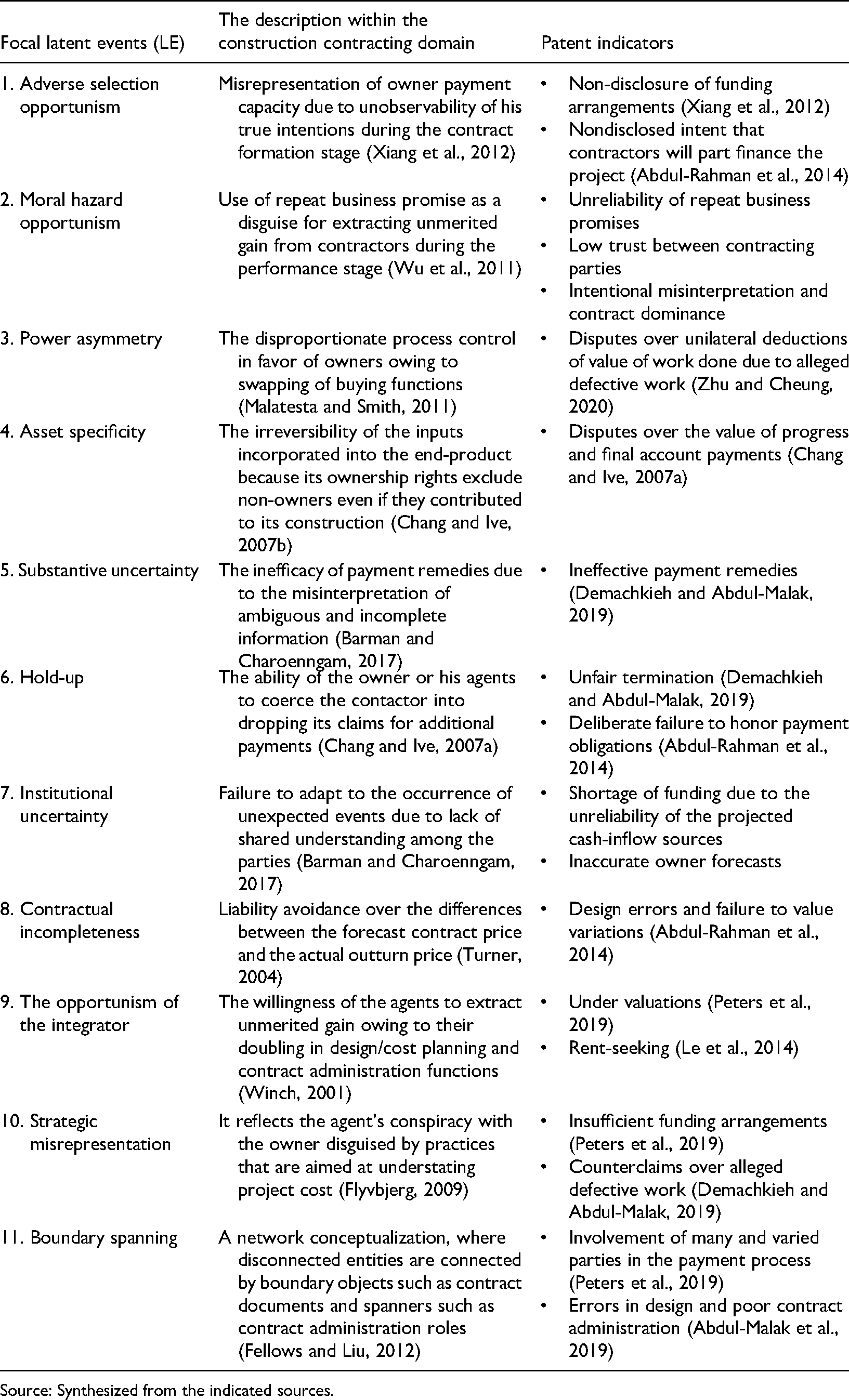
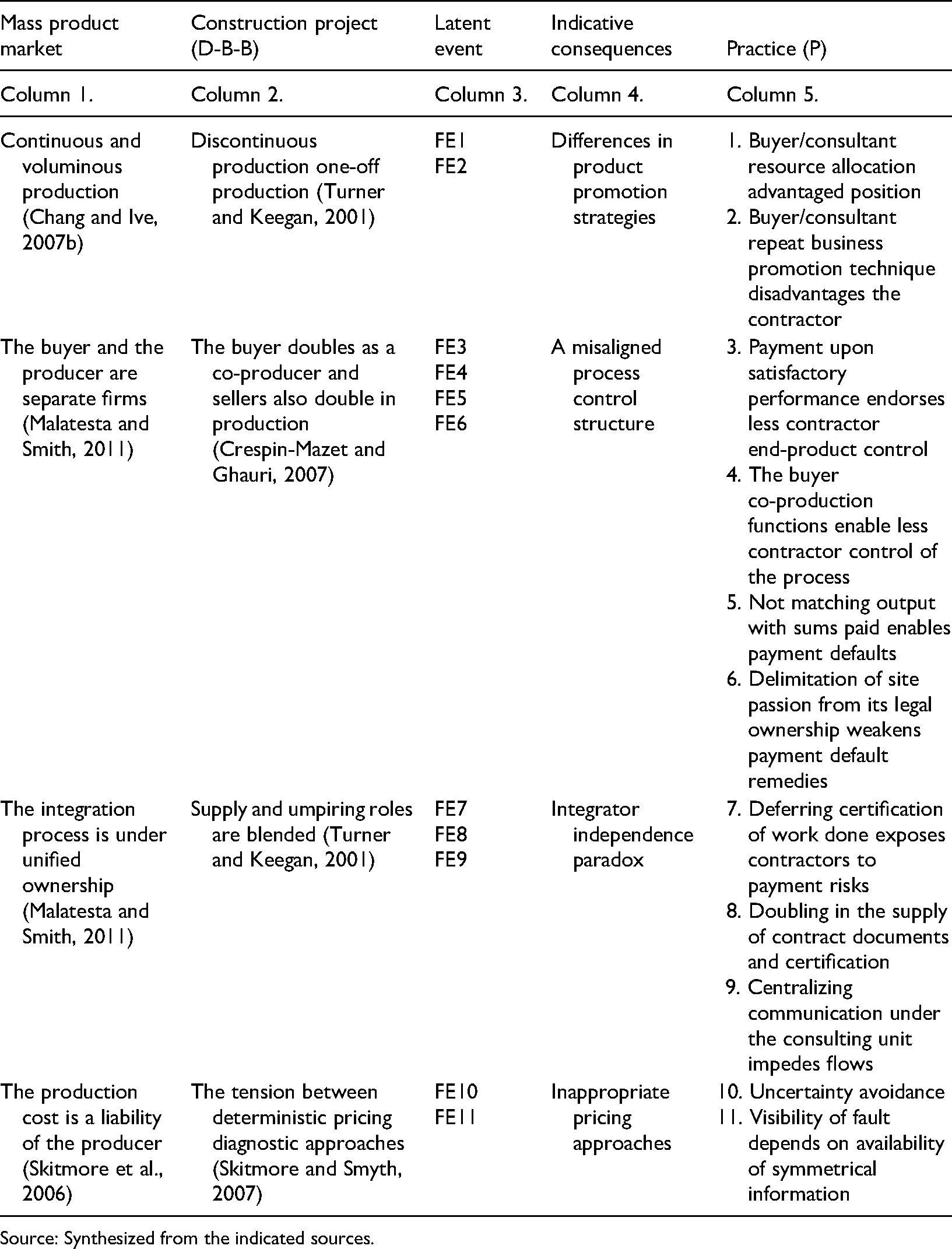
Lastly, “promotion” in the market mix refers to a network of relationships between producers, suppliers, and buyers (Crespin-Mazet and Ghauri, 2007). As a result, its strategies are designed to serve the interests of the producer rather than the seller. This contrasts with construction promotion practices in terms of their buyer-determined procurement systems, the nature of which is determined by the site's immovability (Chang and Ive, 2007b). Table 1 illustrates how the interdependence of these assumptions results in incompatible practices (Table 2).
A framework of mediating events.
Source: Synthesized from the indicated sources.
A comparative summary of practices.
Source: Synthesized from the indicated sources.
Transaction cost economics
The economics of transaction costs frequently conceptualizes interdependence through the lenses of transaction frequency, asset specificity, uncertainty, bounded rationality, and opportunism (On Cheung et al., 2018; Qazi et al., 2020). The first three describe transactions, while the last two describe the behavior of the parties. When a good or service passes through a technologically separable interface, a transaction is presumed to have occurred (Winch, 2001). Such interfaces are interdependencies whose character is indicated by transaction factors.
Transaction frequency reflects the number of interactions between the parties and, as a result, reveals the effects of continuous versus discontinuous characterization. Market transactions have continuity, but D-B-B interactions are discontinuous (Chang and Ive, 2007b). Misaligned contexts often result in market imbalances, such as many bidders for few projects (Skitmore et al., 2006). As a result, contractors have to deal with unfair contract terms, which can lead to payment risks (Abdul-Malak et al., 2019).
Uncertainty corresponds to the gap between required and available information (Winch, 2001). Incompatibilities arise when uncertainty and certainty principles are misaligned. An example is the approach of determining the contract price prior to construction rather than after production, as is the case in the standard product market (Malatesta and Smith, 2011). Disagreements over cost variation risks are a notable result (Fidan et al., 2011).
The asset specificity principle emphasizes the irreversibility of resources integrated into a site whose legal ownership excludes suppliers such as contractors (Kenyatta et al., 2022). Additionally, a construction site refers to an owner-defined procurement structure that is intended to serve one-sided interests (Skitmore and Smyth, 2007). Thus, work-first before payment assumes a non-opportunistic owner. However, this misalignment can expose contractors to risks like payment defaults.
The bounded rationality principle states that humans’ cognitive capacities are constrained by their ability to remember, retrieve, and process information (Turner, 2004). As a result, construction contracts contain incomplete information and unreliable historical data (Chang and Ive, 2002). This is demonstrated by objects such as contract documents that connect owners and contractors (Fellows and Liu, 2012). Therefore, the extent of their incompleteness can indicate the owner's potential for cost savings. However, this benefit comes with a price, which includes exposure to contractor payment risk (Xiang et al., 2012).
Lastly, opportunism refers to strategies employed to acquire unjustified gain (Winch, 2001). This implies that each party acts in its own self-interest and helps evaluate mechanisms for integrating divergent economic interests. For instance, the combination of design, supervision, certification, and dispute resolution (Besaiso et al., 2018) assumes an integration agent who is not opportunistic. However, it is difficult to tell whether the integrator is acting in his or her own self-interest, in the best interests of the owner, or against the owner and contractor. Therefore, it is essential to investigate the effect of various opportunistic dimensions on the payment risk of the contractor.
Principal agency theory
The principal agency theory (PAT) refers to the hiring party as the principal, and the hired party as the agent (Schieg, 2008). The principal in the context of the D-B-B is the owner, client, or construction buyer, while the agent is the contractor. However, another type of principal–agency relationship exists between the owner and the integrator, who could be an engineer, project manager, or any other designation (Besaiso et al., 2018). When these agents delegate portions of their responsibilities to various subcontractors, they act as principals as well. Although any actor may be motivated by self-interest (Winch, 2001), the PAT assumes an opportunistic agent and a non-opportunistic principal (Schieg, 2008). Because of this premise, a comprehensive understanding of how principals’ roles as owners expose contractors to payment risks is neglected.
The most important aspect of the PAT is the principle of information asymmetry (Schieg, 2008). Its central premise is that, due to the unequal distribution of information, one party is more informed than the others, and their interests are in conflict (Xiang et al., 2015). In turn, the vulnerable party is faced with opportunistic risks (Xiang et al., 2012). However, because it is widely assumed that project owners are less informed than their contractors, one-sided protective measures are commonly used.
An illustration is the employment of a project engineer with both neutral and agency responsibilities (Besaiso et al., 2018). In a D-B-B situation, contractors are not involved in the design (Ruparathna and Hewage, 2015). This implies a more informed owner regarding aspects such as financing capability. Furthermore, in such a case, the engineer is obligated not to disclose the owner's funding information. Consequently, delayed certification and failure to value variations (Abdul-Rahman et al., 2014) are frequently employed to balance the owner's deficiencies with the contractor's payment rights. As a result, the mechanism combining certification and agency roles suggests a more informed principle. Conversely, a less informed contractor increases the likelihood of risks such as payment defaults.
A framework of mediating principles
Table 1 presents a framework of eleven mediating principles, their explanations, and corresponding indicators. Because of the dormancy of their effects, the principles are classified as latent, whereas their indicators have patent conditions, which are more visible (Aljassmi et al., 2014).
Vulnerabilities as interdependencies between practices
As noted previously, vulnerability is measured through a system's interdependence. In a system, it is assumed that the sum of several entities is greater than the sum of their constituent parts (Fellows and Liu, 2012). Thus, a change in one entity results in a network effect (Lee et al., 2017). These effects create system vulnerability or resilience, through interdependencies. To accomplish interdependencies, the first step is to recognize the network entities as a system. In accordance with this, column 5 of Table 2 lists practices as network entities. These practices result from the incompatibilities between the mass market (Column 1) and the D-B-B (Column 2) contexts, which are mediated by the principles in Column 4. The resulting interdependencies are discussed in 11 thematic areas.
Adverse selection versus owner resource advantaged position
To begin, Table 2 suggests that the incompatibility of continuous and discontinuous production is linked to contractor payment risks. Continuity reflects mass-production markets, while discontinuity reflects one-off nature of construction projects (Turner and Müller, 2003). Without adaptation, this variation results in fewer projects being put on tender than bidders (Skitmore et al., 2006). This imbalance is attributable, among other factors, to the adverse selection behavior that leads to the selection of contractors based on the undisclosed premise of their ability to cover the owner's funding shortfalls (Abdul-Rahman et al., 2014). This is reflected in unfair contract provisions, such as the lack of payment guarantees (Abdul-Malak et al., 2019). Because of this market imbalance, contractors are in a disadvantaged resource position, which can expose them to payment risks.
Moral hazard versus the repeat business strategy
Second, Wu et al. (2011) suggest a link between pre-contract trading imbalances and the contractor's willingness to accept unfair terms in exchange for repeat business. However, because some owners may wish to obtain the built product at the lowest possible cost (Chang and Ive, 2002), the future promise may prove unreliable. In addition to the owner's moral hazard, the need for work can also contribute to contractor risks (Skitmore et al., 2006).
Power asymmetry versus payment upon satisfactory performance
Third, in the standard product market structure, the roles of producers and buyers are distinct (Malatesta and Smith, 2011). Nevertheless, some D-B-B practices imply ambiguity. For instance, despite the owner's obligation to finance the project, working before receiving payment implies a transfer of financing responsibility to the contractor. This results in power imbalances between the parties (Zhu and Cheung, 2020). The notion of power is opposition provided by party A to counter the influence of party B (Emerson, 1976). Power indicators include sanctions, whose effects reflect a shift in bargaining positions (Chang and Ive, 2007b). For instance, the exclusion of advance payment while retaining the ability to determine the amount to be paid implies greater owner control over the final product. Therefore, less control over the final product makes the contractor more vulnerable to payment defaults.
Asset specificity versus doubling in buying and co-production
Fourthly, in addition to end-product control rights imbalances, Crespin-Mazet and Ghauri (2007) suggest that the doubling of production and purchasing tends to result in process control imbalances. This imbalance stems from site ownership. Thus, the transformation of the contractor's resources into a project owner-owned site creates irreversibility, which is consistent with the effect of asset specificity (On Cheung et al., 2018). This is reflected in outcomes such as unjustified contractor termination and replacement (Chang and Ive, 2007a), which suggest a connection with financing burden reduction strategies. Therefore, the doubling of production and buying through a combination of site ownership and financing suggests unbalanced process control, with contractor exposure to payment risks.
Substantive uncertainty versus not matching sums paid with the actual outturn
Fifth, payment defaults are sometimes used to shift variation liability when product and process rights are concentrated with the owner (Chang and Ive, 2002). Consequently, contractors frequently face cash flow difficulties (Peters et al., 2019). As a result of missed contractual deadlines, a connection is typically established between lack of diligent progress and performance breach (El-adaway et al., 2017a). However, since some contracts prohibit remedies such as decreasing the rate of work, substantive uncertainty tends to make contractors vulnerable (Barman and Charoenngam, 2017). This concept demonstrates how a skewed interpretation of contractual terms can lead to liability misallocation and, consequently, payment risk.
Hold-up versus delimiting site possession from its legal ownership
Sixth, in addition to the vulnerability due to the link with end-product and inseparability from its site, there is also a connection with the practice of separating site possession from legal ownership. Typically, the owner of the construction retains legal title, whereas the contractor retains possession. However, contractual possession does not grant legal ownership to a contractor. Therefore, if the contract is terminated, the unpaid contractor is at risk. The level of exposure is determined by the presence of the hold-up condition, which is defined as the level of irreversibility indicated by the amount of unpaid sum and opportunism (Chang and Ive, 2007a). As a hostage-taking tactic, it explains how process imbalance affects payment default remedies. As a result, other than the mechanic lien (El-adaway et al., 2017a), the current remedies for payment defaults are limited.
Institutional uncertainty versus deferred certification
Seventh, the internal operations of mass market firms are typically governed by their intra-relationships (Turner and Keegan, 2001). Because of administrative authority, the context is more cohesive, and thus there are fewer disputes. In contrast, D-B-B cross relationships suggest opposing economic interests (Winch, 2001), indicating a lack of similar understanding. For instance, the position of the engineering agent suggests a variety of paradoxical interdependences (Besaiso et al., 2018). For instance, the engineer is responsible for both design and certification. This combination creates unequal information distribution and opaqueness, which hinders common understanding (Fellows and Liu, 2012). This context is explained by institutional uncertainty (Barman and Charoenngam, 2017), which highlights contextual differences. Thus, ignorance of events like owner-related unanticipated variations and inaccurate cash flow forecasts (Abdul-Rahman et al., 2014) portends contradictory interpretations. As a result, suppliers such as contractors are frequently exposed to payment risks.
Contractual completeness versus doubling in design and certification
Eighth, the lack of consensus is also attributable to the belief that the design's cost estimates accurately reflect the final cost (Malatesta and Smith, 2011). Nevertheless, due to limitations such as imperfect foresight, which leads to contractual completeness (Turner, 2004), the accuracy of cost projections is occasionally overly optimistic. Imperfect foresight indicators include imprecise design specifications and inaccurate cost forecasts (Abdul-Rahman et al., 2014), which are also linked to under-certifications (Peters et al., 2019). Therefore, these interconnections suggest a defense against liability for negligent advice and, as a result, contractor payment risks.
The opportunism of the integrator versus impediment of payment flows
Ninth, there is another link between the contract documents and the engineering agent's certification (Besaiso et al., 2018). However, the opportunism principle states that agents will act in their own self-interest Indeed, some contracts provide engineering agents and contractors with opportunities to collude against owners (Le et al., 2014). However, contractors are often blackmailed because they don't fully cooperate with engineers, resulting in delayed certification and undervaluation (Abdul-Rahman et al., 2014). These observations suggest that there is a link between the engineering agent's rent-seeking behavior and payment risks.
Strategic misrepresentation versus uncertainty avoidance
Tenth, payment risks can be influenced by the pre-contract situation, in which the owner and engineering agency are more knowledgeable than the contractor. In fact, the engineering agent's primary responsibility is to safeguard the owner's best interests (Winch, 2001). As a result, anticipated costs are deliberately understated (Flyvbjerg, 2009). This is demonstrated by actions like under-certifications, which indicate manipulation to align work value with pre-contract strategy. This is further illustrated by factors such as initiating projects without adequate funding (Peters et al., 2019) and opportunistic counterclaims against alleged substandard quality (Demachkieh and Abdul-Malak, 2019). This suggests a link between the procuring party's informational advantages and the contractors’ exposure to payment risks.
Boundary spanning versus poor visibility of fault
Lastly, a payment risk connection is established when the engineering agent serves as a mediator between the owner and the contractor (Besaiso et al., 2018). Moreover, if the dispute cannot be settled, it is escalated to arbitration and court proceedings (Barman and Charoenngam, 2017). However, the precision of the determination is contingent on the sufficiency and dependability of the submitted documents (Zhu and Cheung, 2020). In a D-B-B setting, the engineering agent holds these documents on behalf of the owner. However, due to the need to protect the owner's interests first (Winch, 2001), sensitive information may be withheld. Consequently, the (arbitrator or court's) ability to determine who is at fault is sometimes limited. Therefore, the bridging position of intermediary roles (Fellows and Liu, 2012), can reduce the quality of the third-party's decision, thereby increasing the contractor's exposure to payment risks.
Approaches for modelling interconnected systems
System dynamic modeling (SDM) is one of the most common techniques for representing and capturing interconnectedness (Kenyatta et al., 2022). It lacks, however, operational metrics and concepts. Social network analysis (SNA) is then suggested as a better option (Lee et al., 2017). A network consists of point entities called nodes and lines (Zhu and Mostafavi, 2017). Nodes can conceptualize a variety of entities, including people (Lin, 2015), practices (Pishdad-Bozorgi et al., 2017), and risk causation factors (Eteifa and El-Adaway, 2018). Interdependencies (lines) are used to describe network functions like flows between contracting parties and the cost or capacity to start and send risks (Chowdhury et al., 2011). Due to the interconnectedness of the system, vulnerable components can be identified and analyzed (Guo et al., 2020). In light of this, the SNA was adopted.
Methodology
A combination of qualitative and quantitative methods was used to achieve the study's objectives. The qualitative methods included a literature-based synthesis of incompatible practices and participant interviews from payment dispute cases. Structured interviews provided data for the network analysis, characterized by quantitative methods. This complementarity can increase the reliability of the research (Le et al., 2014).
Case study research design
To gain a better understanding, a case study on the effects of interdependencies on the payment risk vulnerability of construction contractors was conducted. As a result, payment risk vulnerabilities were exposed in greater depth than in survey-based investigations. In Peters et al. (2019), it's unclear how slow variation approval is linked to the owner's financial limitations and the outlined measures. This study found that contract pricing before construction is more compatible with the standard market than with D-B-B. These disparities highlight the incompatibility of the certainty and uncertainty principles. Incompatibilities between these principles cause payment risks for contractors, while owners can pass on cost risks. Thus, by connecting practices and strategies, the study explains why owners prefer D-B-B over other procurement systems. Because of this level of understanding, a case study is necessary.
Case study selection
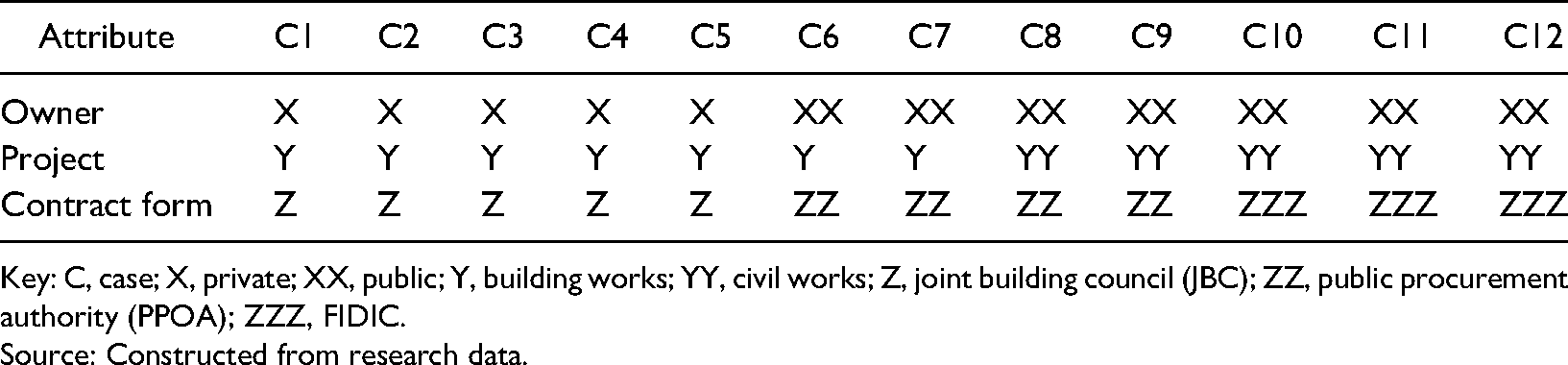
To obtain perspectives from subject matter experts involved in payment disputes, payment dispute cases had to be identified first Dispute resolvers with prior experience as arbitrators or party representatives were thought to understand the context better. Arbitral proceedings are therefore one possible source. However, because of their limited access, construction payment disputes filed in court were deemed an appropriate alternative. In Kenya, such cases are posted on the National Council for Law Reporting's http://kenyalaw.org/caselaw/cases portal. Case selection was limited to 5 years because human memory deteriorates over time (Chang and Ive, 2007a). Consequently, the period 2016–2020 was selected. Then, between 3rd and 10th January 2021, a portal search for “construction contract payment disputes” yielded 28 results. However, five cases were excluded because the parties requested a stay of proceedings pending the outcome of the arbitration. Three more cases were excluded because they sought the arbitrator's removal. Likewise, another case was excluded due to its design-build context. Seven more cases were dropped because the disputants were subcontractors, employees, and consultants, not main contractors, or project owners. In the end, twelve cases were identified, and their descriptions are provided in Table 3.
Payment dispute case descriptions.
Key: C, case; X, private; XX, public; Y, building works; YY, civil works; Z, joint building council (JBC); ZZ, public procurement authority (PPOA); ZZZ, FIDIC.
Source: Constructed from research data.
In Table 3, seven cases are publicly owned and five are privately owned. Seven cases involved building projects, while five involved civil engineering projects. In the 12 cases, three contract types were used. Five cases involved the Joint Building Council (JBC), three the public procurement authority, and three international federation of consulting engineers (FIDIC) contracts.
Selection of subject matter informants
For the purpose of determining the appropriate experts, 12 cases were examined. Typically, many informants are involved in such cases. Arbitrators and disputant representatives were elected since they are better informed. They were identified based on the following criteria: (i) a construction-related degree, (ii) certification as a construction project dispute resolution specialist or representative, and (iii) at least 8 years of experience resolving construction payment disputes. Consequently, 24 names were identified among the 12 cases presented in Table 3. One of them was an arbitrator in cases 2 and 7. This means that only 23 potential informants were identified. Four of them were dropped due to a lack of contact information. In addition, three informants declined to take part in the interviews, and four others revoked their consent. As a result, only 12 informants were interviewed. This is consistent with Yin (2018), who recommends that in a typical case study like this one, between five and ten respondents can provide reliable information.
In contrast to designs such as randomized surveys, where variables are assumed to be independent (Freeman, 2004), it is customary to examine fewer cases when the objective is to demonstrate a deeper understanding. Using documentary data from a single case, Zhu and Mostafavi (2017), established a network of 118 interdependencies. Similarly, Fang et al. (2012) constructed a risk network consisting of 95 interdependencies using a single case and the opinions of eleven experts. Chowdhury et al. (2011) used five cases to build a network of 40 interdependencies to classify case studies. Wang et al. (2020) made a network of risks between contractual factors based on the opinions of five experts in the field. This network has 79 interdependencies. Accordingly, using the opinions of twelve informants is consistent with established methods.
Structured interviews
For the purpose of capturing and analyzing the interdependencies between incompatible practices, standard responses were required. Structured online conferencing interviews were deemed appropriate due to the need to clarify propositions and questions during the scoring process. However, prior to the final data collection, a pilot interview with one of the informants who served as an arbitrator in C1 and C7 was conducted. Consequently, Appendix A contains the refined propositions and questions utilized. Closed-ended questions were measured using a four-point Likert scale: 0 = don't agree, 1 = slightly agree, 2 = agree, and 3 = strongly agree. In addition, respondents were permitted to revise their answers prior to the conclusion of each interview session. Each interview lasted 1.5 hours between April and May 2021. This technique has been utilized by others, including Le et al. (2014).
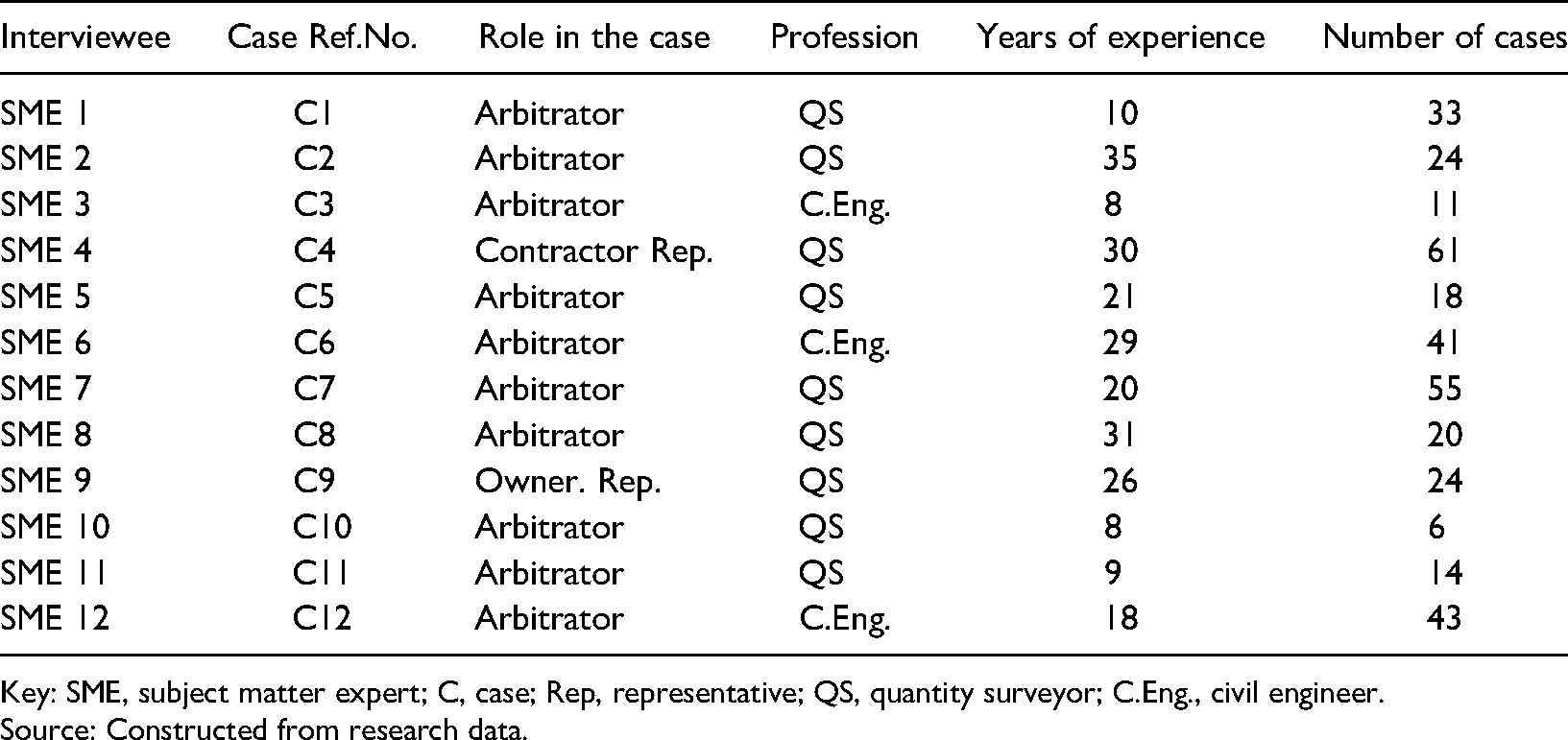
Table 4 summarizes the interviewees’ backgrounds. They served as arbitrators in ten cases, while representing the contractor in one and the owners in the other. Their involvement in disputes ranged from 6 to 61, with the majority having more than 10. Additionally, their corresponding experience ranged from 8 to 35 years, averaging at 20 years. The greater number of cases and years of experience indicates in-depth context knowledge. Because of this, their views indicate the interview's reliability and quality.
Background of interviewees.
Key: SME, subject matter expert; C, case; Rep, representative; QS, quantity surveyor; C.Eng., civil engineer.
Source: Constructed from research data.
Establishment of interdependencies
Typically, interdependencies are established by locating network entities using positional, event, and relational methods (De Stefano et al., 2011). The positional approach establishes interdependencies using a list of organizational roles (Chowdhury et al., 2011). The event-based approach identifies interdependent entities based on their co-occurrence in events. An example is the interdependence of practices that results from an engineering-procurement-construction (EPC) system (Pishdad-Bozorgi et al., 2017). The relational approach involves human interactions, such as team communication. Because Kenya lacks an official list of payment dispute resolvers, assessing the D-B-B practices’ effect on payment risk is event-based.
In order to establish interdependence in this study, 12 experts rated the eleven practices listed in Table 1. This step resulted in a data structure consisting of a two-mode or incident matrix (Appendix B). The rows of this matrix are practices, and the columns are experts. Nodes are independent when the row variables are distinct from the column variables. Nevertheless, if the intersection of the row and column nodes is adjacent, interdependence exists (Pishdad-Bozorgi et al., 2017). This interdependence is represented by an adjacency matrix, which shows how many times the experts interacted through practices. Such interdependencies indicate the co-occurrence of practices at the event of the experts. UCINET steps were used to generate the adjacency matrix (Borgatti et al., 2002). This was accomplished using the Affiliations (2-mode to 1-mode) function on the Data tab. After that, the two-mode matrix was uploaded. Between the column and row tabs, the row was selected. Then, the sum of cross-products was selected from the eleven available conversion methods. This produced a matrix with a single mode.
Quantification metrics and concepts
SNA employs various metrics and concepts to develop and analyze network models, such as the one depicted in Figure 1. Eteifa and El-Adaway (2018) and Lee et al. (2017) provide a detailed review, while Borgatti et al. (2002) present their mathematical notations. The study's concepts and metrics are explained.
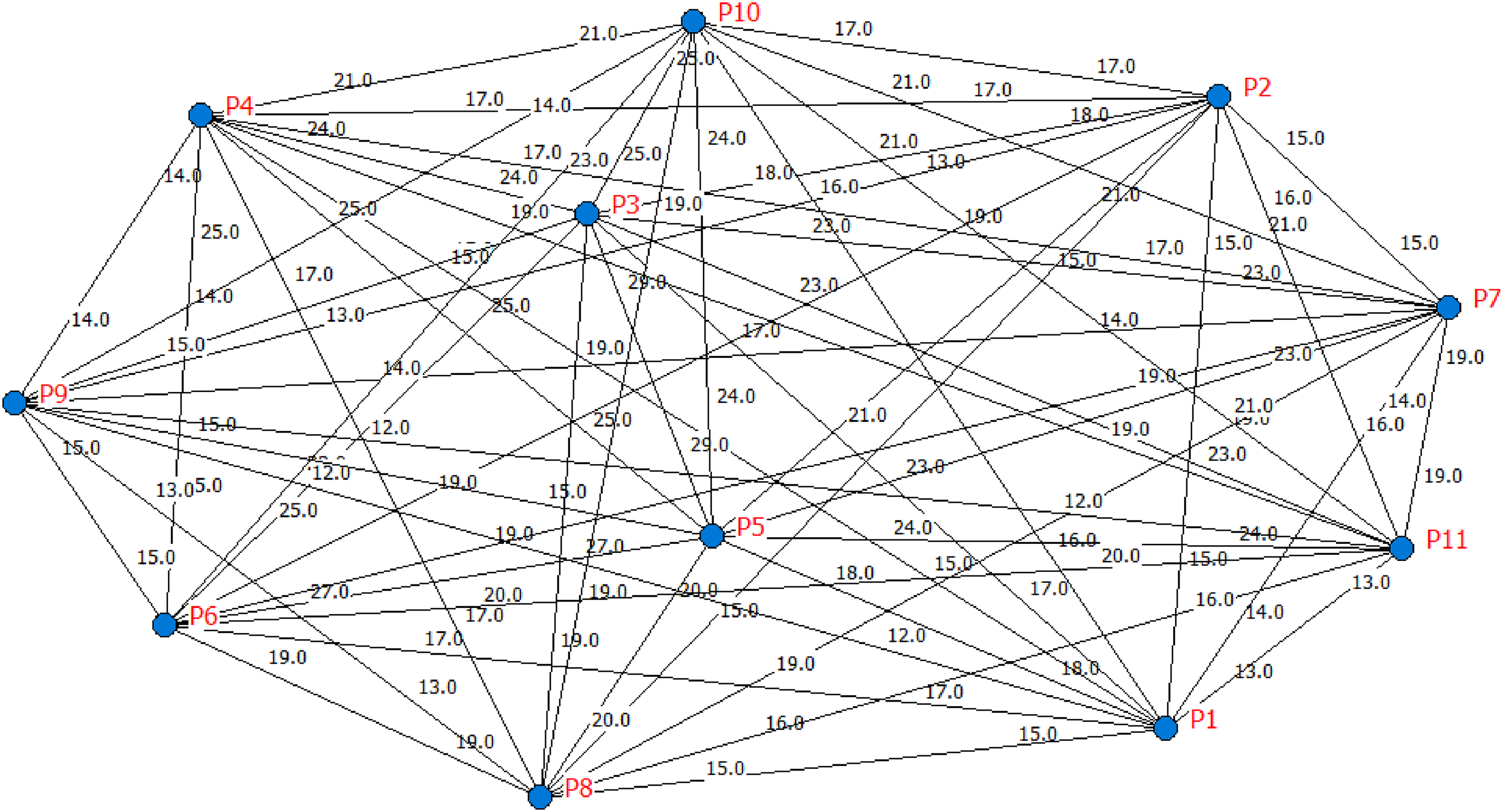
Payment risk model based on spring embedder algorithm. Source: Constructed from research data.
The network modelling and analysis concepts and metrics
In Table 5, a summary of the concepts and metrics used in modeling and analysis is shown.
Basic network modeling and analysis concepts and metrics.
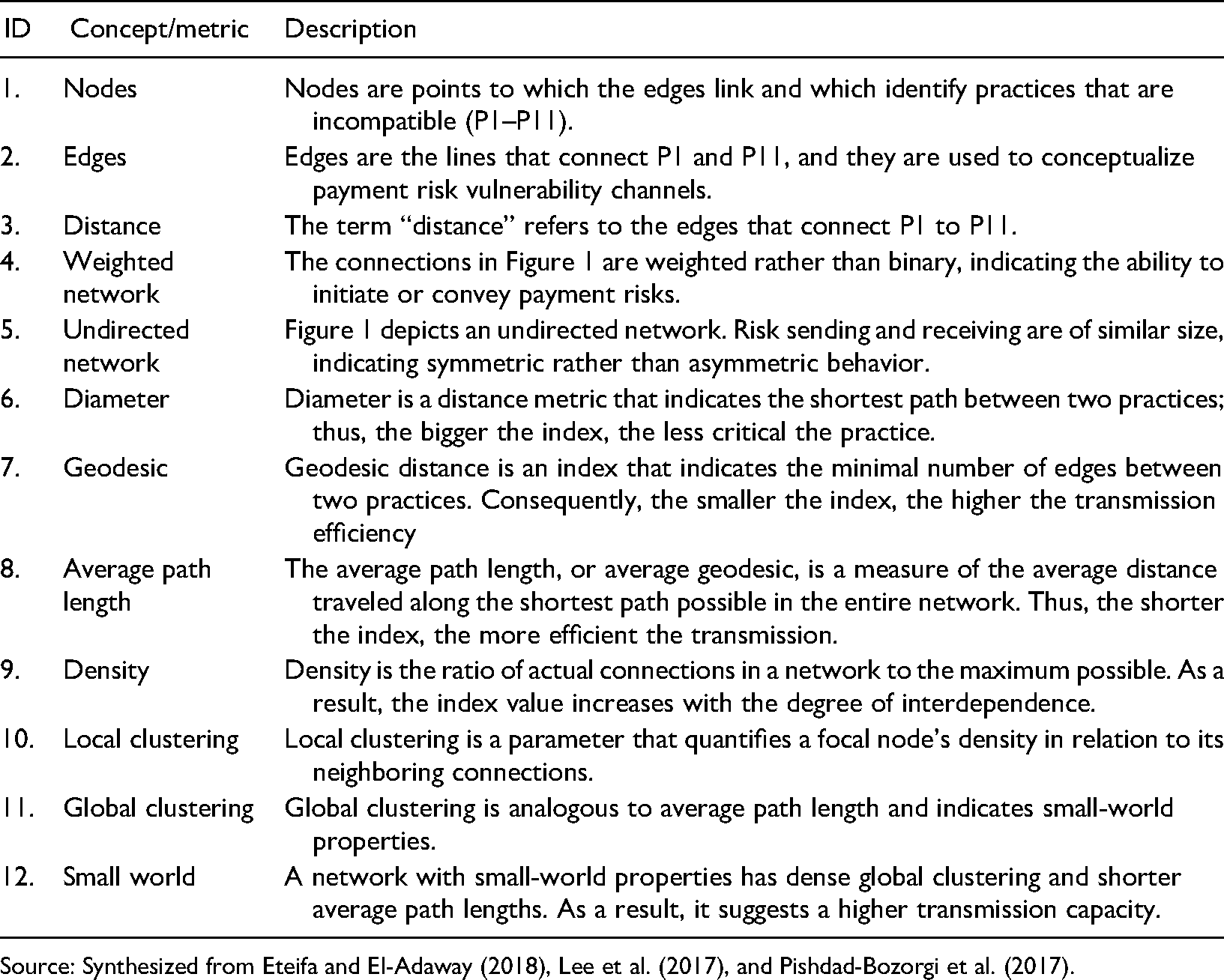
Source: Synthesized from Eteifa and El-Adaway (2018), Lee et al. (2017), and Pishdad-Bozorgi et al. (2017).
Using eigenvector to describe critical initiators and transmitters
In this study, Eigenvector centrality was employed to measure initiating and transmitting payment risks. Typically, the metric is used to link distinct eigenvalue constants with their respective eigenvectors, allowing the identification of the most significant links based on the contribution of the entire network (Lee et al., 2017). To do this, weighted geodesic distances were utilized to locate each node, and Eigenvalues determined the pattern of connections (El-adaway et al., 2017b). This allowed the limits of degree and closeness centrality to be overcome (Chowdhury et al., 2011). Consequently, the weighted geodesic technique was utilized to assess interdependencies between practices (Pishdad-Bozorgi et al., 2017).
Determining vulnerability controls
In identifying vulnerable interdependencies, maximum-flow betweenness was used. This metric calculates the flow intensity between nodes. Unlike conventional betweenness, it is sensitive to weighted connections and concentrates on flows between nodes (Eteifa and El-Adaway, 2018). This qualified it for analysis of the weighted network model in Figure 1. A minimum score in maximum-flow betweenness suggests that interdependence between practices is dissimilar. A maximum score, on the other hand, indicates that interdependencies are similar in terms of their practices.
Locating payment flow disruptors
To find disruptive interdependencies, lambda set was used. This method employs the maximum-flow betweenness score to quantify interdependencies that are susceptible to failure (West, 2014). The highest possible score indicates a weakness. As a maximum-weakest principle, it equates a maximum score with a cut-off point, which is also consistent with interdependencies between resource owners with diverse characteristics. In contrast, the weakest assumption assumes interdependencies between homogeneous units. Indeed, West (2014) used the maximum-weakest technique to identify disruptive interdependencies. Similarly, it was used to find contractor payment default vulnerabilities.
Results and discussion
Payment risk model
The payment risk model shown in Figure 1 was created using the UCINET 6.72 and its NetDraw counterpart. The procedure utilized the spring embedding option, which facilitated the identification of nodes with the shortest average path length (Borgatti et al., 2002). UCINET was chosen over other SNA software because it provided more relevant metrics.
In Figure 1, there are 110 interdependencies between the 11 incompatible practices. Each interdependency has two identical weights, implying that the incoming magnitude is equal to the outgoing magnitude. In addition, such a characteristic demonstrates that the network is undirected and therefore symmetric. Consequently, there are 55 interdependencies as opposed to 110. Appendix C contains the results of unweighted interdependencies, and at least two findings stand out.
The strongest interdependence (P3, P5) has a weight of 29. It represents a link between the sums paid not matching the actual work done and the requirement of payment based on satisfactory performance. As a result, it is critical in transmitting payment risks. The weakest interdependence, as indicated by a weight of 12, is (P1, P9). It represents a link between the consulting unit's centralization of project communication and the consulting unit's advantageous resource allocation position. Nevertheless, because it is part of an interconnected system, it is essential to consider the whole network.
Descriptive statistics of the whole network
Table 6 has 110 interdependencies, ranging from 12 to 29. Their sum is 2042, and their mean, or average, is 18.564% (2042/110). In addition, the deviation from the mean is 17.19%, whereas the standard deviation is 4.137%. Moreover, interdependencies between practices are less dispersed. This is attested by Figure 1.
Whole network descriptive statistics.
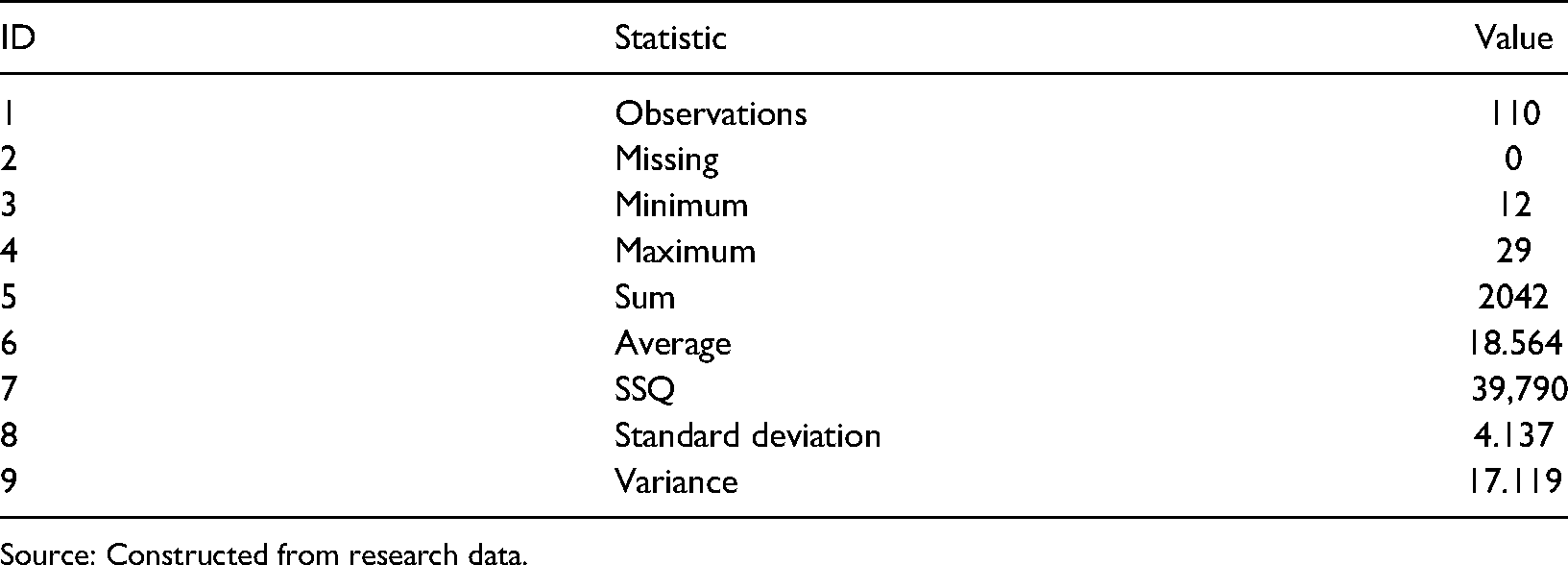
Source: Constructed from research data.
Network interdependency measures
Interdependence is often described in terms of connectivity (Lee et al., 2017). Table 7 shows a mean degree of 10. Each practice is connected to an average of 10 others, indicating the need for alternative channels to convey payment risks. In addition, a distance of 1 and a diameter of 1 are required for their operation. This could be attributed to the functions of the intermediary between the owner and contractor. These capabilities permit the network to be fully connected, as indicated by the value 1. As a result, the average geodesic distance equals one and the weighted density equals the global clustering coefficient. This confirms the 1.291 small-world index. This index is defined as the geodesic distance divided by the global clustering coefficient. A value greater than one satisfies the small-world criteria (Borgatti et al., 2018), but it implies that only one link is required to connect incompatible behaviors that are not neighbors. This suggests that when separated from intermediaries, there is a greater tendency to disintegrate. Therefore, there is a need to investigate the links that generate and transmit most risks.
Network interdependency measures.
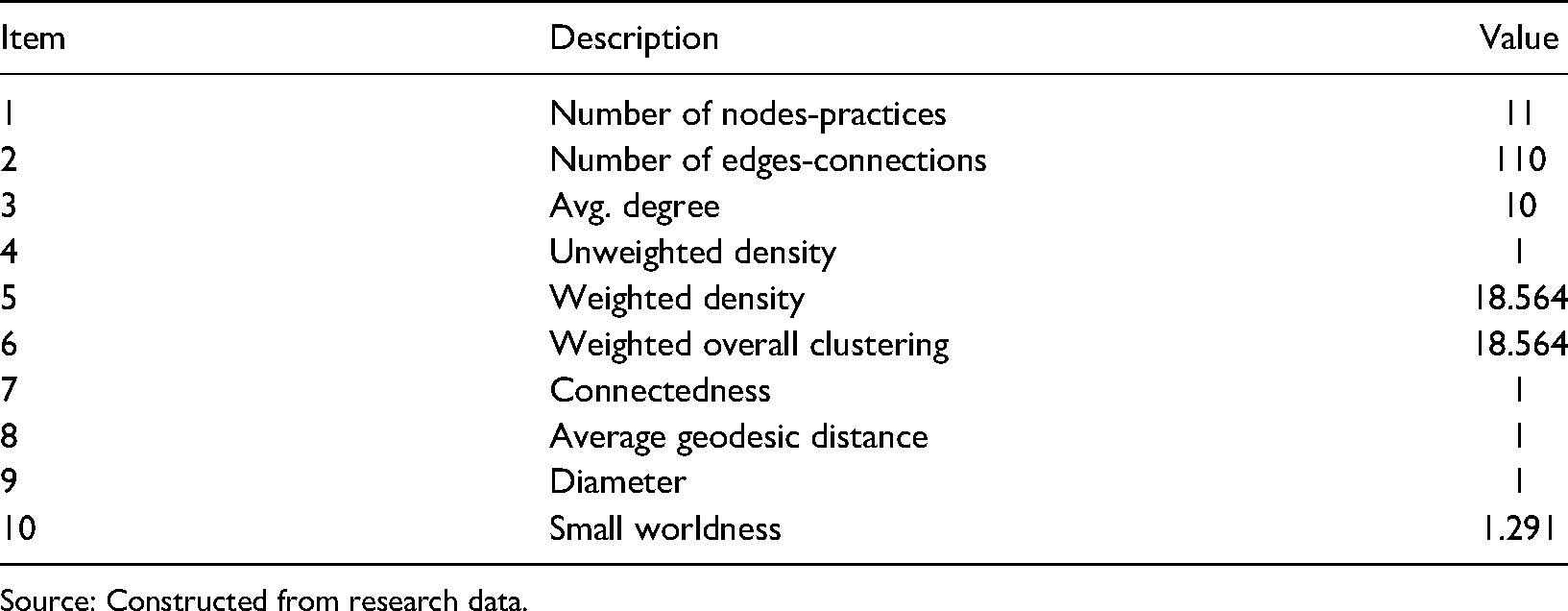
Source: Constructed from research data.
Eigenvalue and eigenvector results
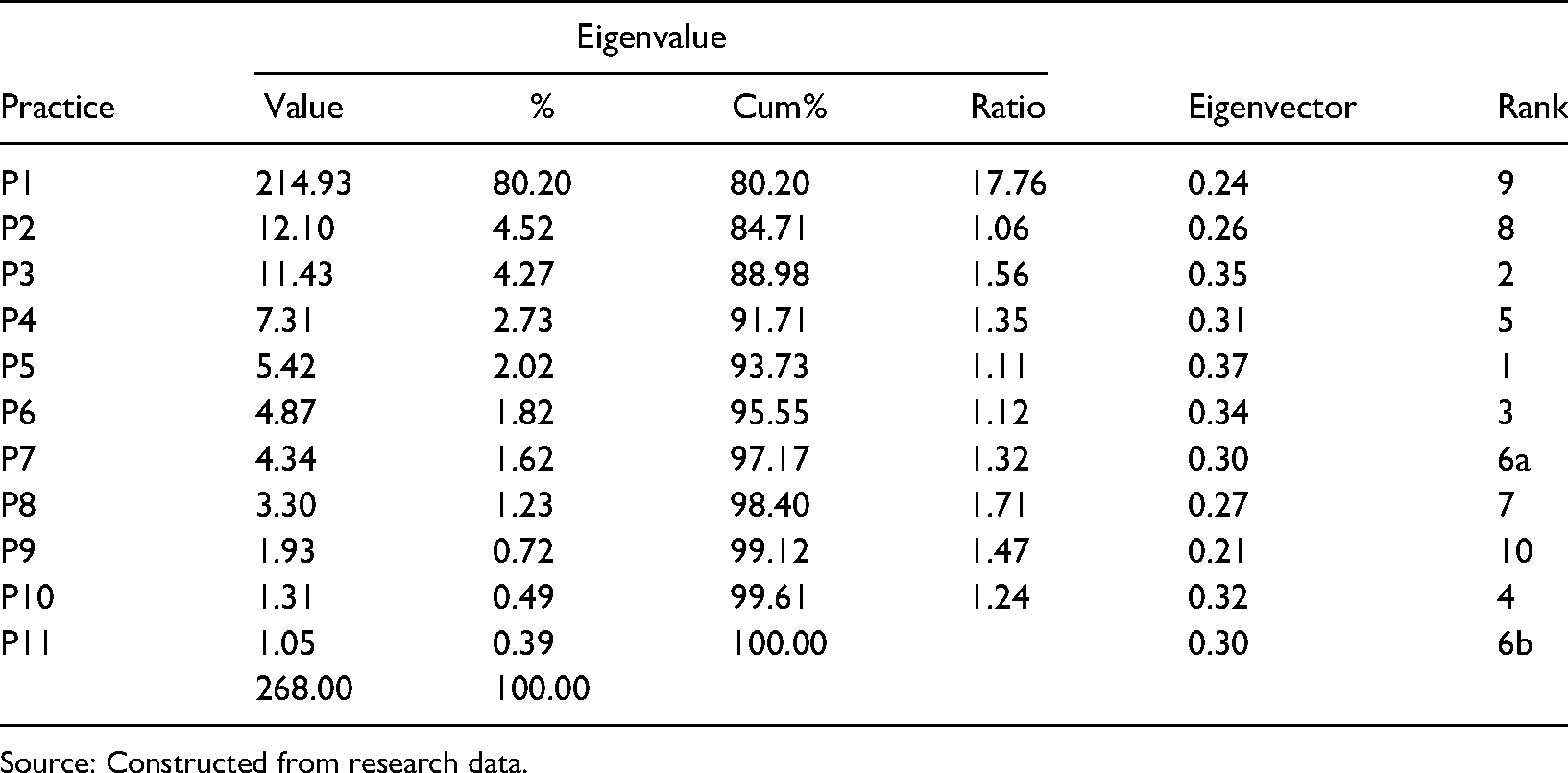
Table 8 presents the Eigenvalue and Eigenvector result. It demonstrates that 80.2% of the distances between connections match the overall network pattern. This is the most critical observable pattern. The criticality threshold is met if the score is greater than 70% (Borgatti et al., 2018). Consequently, the score of 80.2% indicates the significance of the overall pattern in enabling payment risks. The ratio of 17.76 demonstrates that the critical pattern is more significant than the second observable pattern. Since the method for determining the most significant pattern of connections is based on the first eigenvalue, subsequent eigenvalues are less important (El-adaway et al., 2017b).
Eigenvalue and eigenvector centralities.
Source: Constructed from research data.
Moreover, Table 8 illustrates the relative risk contribution capacity of practices. Notably, the practice with the highest eigenvector score is at the center of the most critical pattern of connections, implying it plays a critical role (Chowdhury et al., 2011). A lower score indicates the practice is peripheral to the overall pattern of connection. Thus, P5 and P3 are critical while P9 and P1 are peripheral. Therefore, P3 and P5 initiate and transmit most risks.
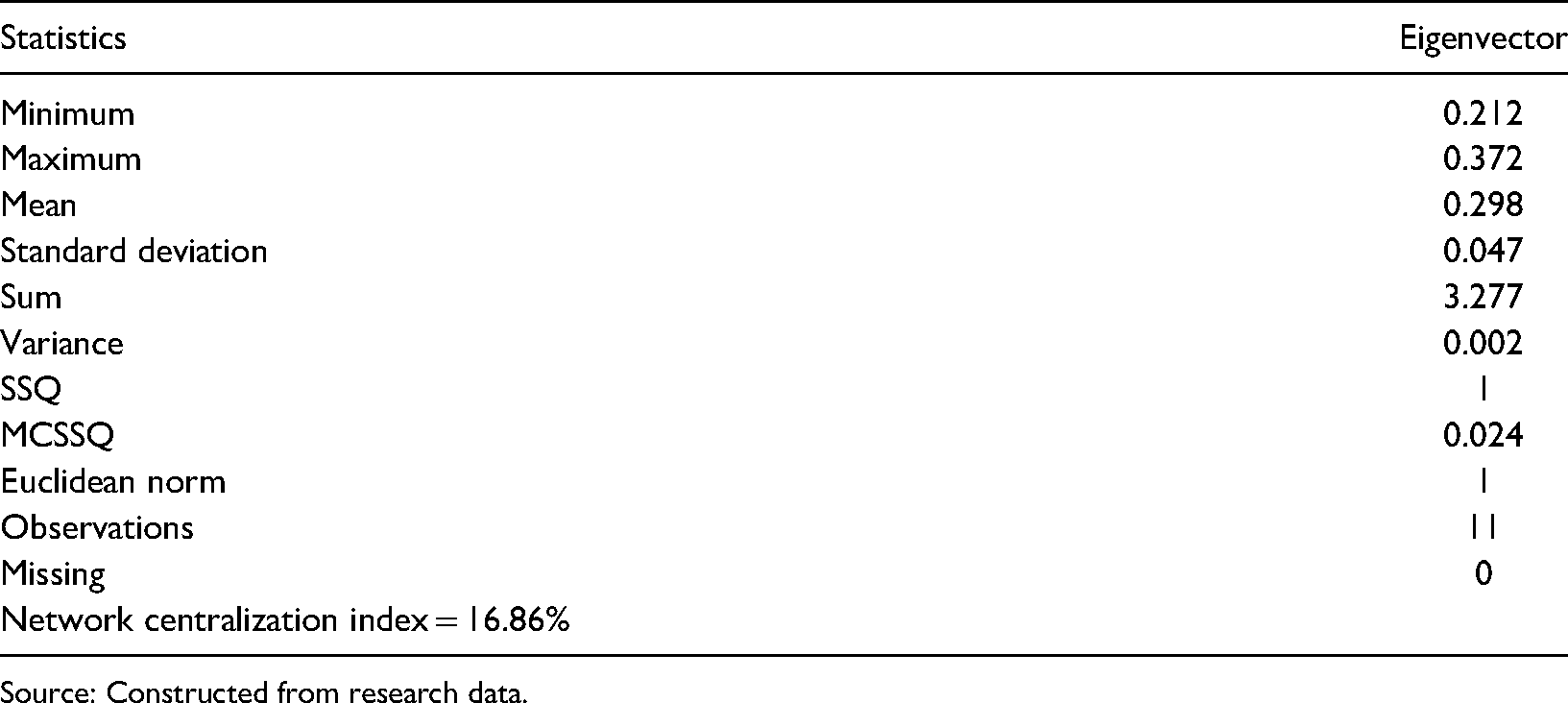
In Table 9, the eigenvector scores and their interdependencies exhibit a slight variation. The range is 0.212 to 0.372. A look at the standard deviation reveals that the variation from the mean is much lower, at 0.047 versus 0.298. This result suggests that there is little variation in the extent to which incompatible practices generate and transmit payment risks. When compared to a pure star network with a random topology (Lin, 2015), the degree of network concentration is 16.86%. This means that a greater number of practices are decentralized, with only 16.86 practices driving the overall pattern of connections.
Statistics for the eigenvalue and eigenvector centralities.
Source: Constructed from research data.
As a result of Tables 8 and 9, the following can be stated:
Critical observable connection patterns account for 80.2% of all patterns. About 20% of incompatible practices determine this, so 80% play a peripheral role. This demonstrates that most payment risks are initiated and transmitted via interdependence (P3, P5). Intuitively, this means that payment for the contractor resources incorporated into the project is contingent upon 20% of the practices. Due to their unpredictability, however, payment risk exposure tends to adhere to the power law or rich get richer principle (Figure 2). In fact, this result is comparable to Lin's (2015).
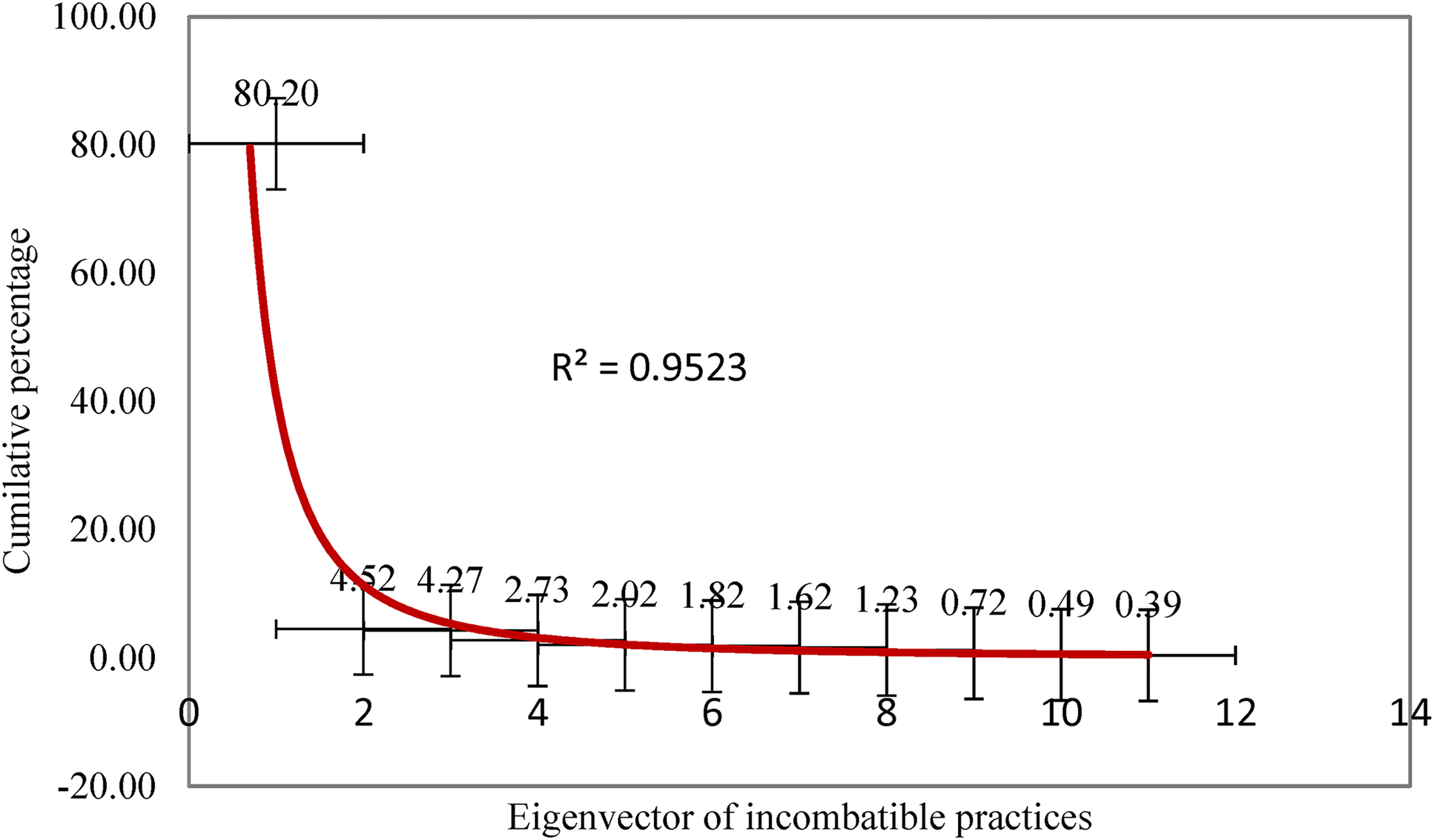
The eigenvector distribution fitting with the power-law equation. Source: Constructed from research data.
Indeed, Figure 2 depicts the relationship between eigenvector scores and the cumulative frequency of interdependencies. This result compares well to the small world, which had a degree of 1.291. It emphasizes that approximately 80% of payment risks are initiated and transmitted by the role associated with the owners, but via their intermediaries. In the context of the D-B-B, this means that the agency in charge of contract document supply and certification is the driver of most payment risks. Therefore, the ability of the D-B-B to mitigate the owner's financial risks is contingent upon its payment default capacity.
Payment risk vulnerability matrix
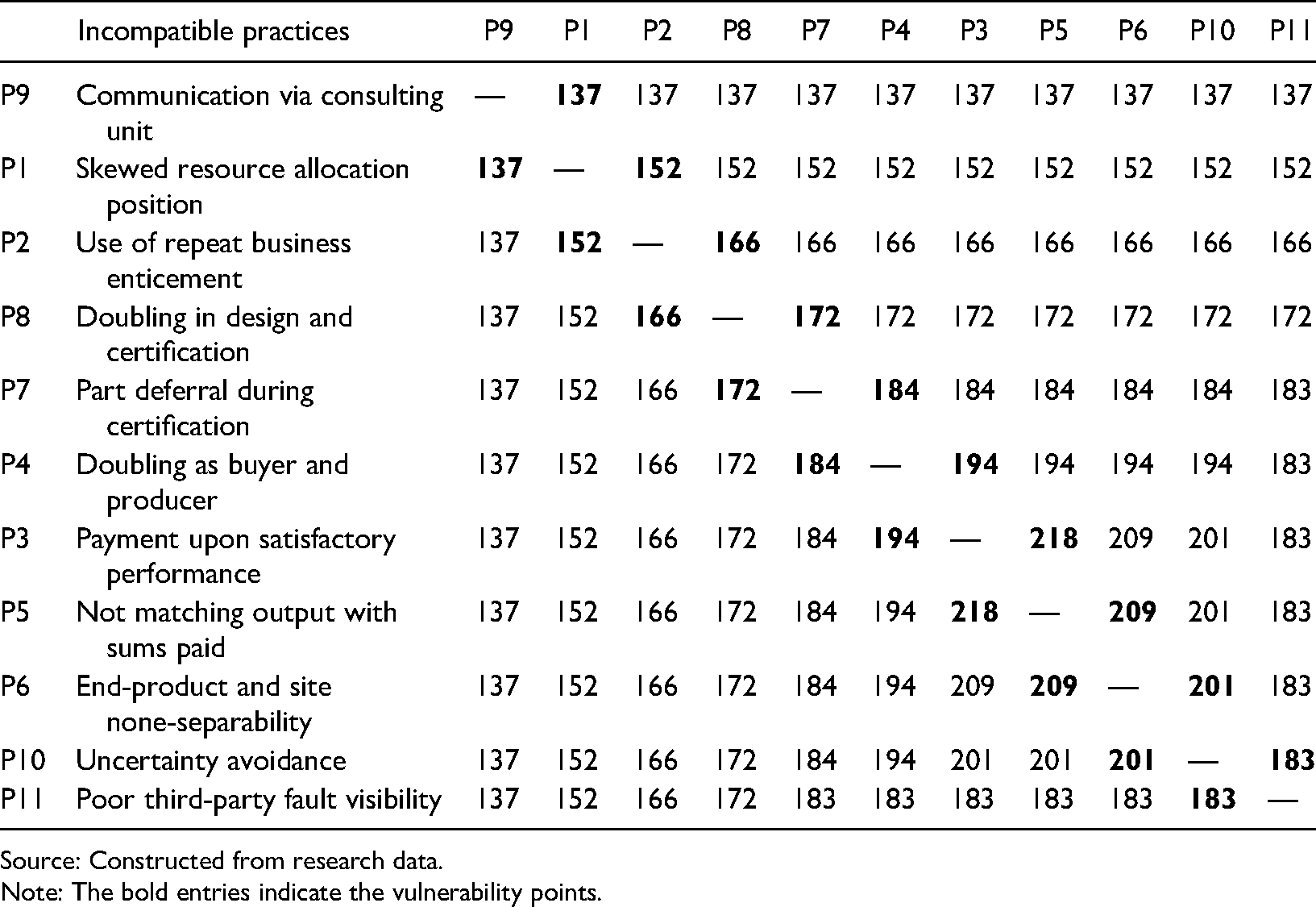
In Table 10, the diverse risk transmission capacities of ten interdependencies are displayed. Their scores are displayed above and below the diagonal. It shows that interdependency 218—payment upon certificated performance and failure to match work with sums paid—transmits most risks. It has P3, P4, P7, P8, P2, and P1. Its transmission capacity is initiated by P3, which is incompatible with irreversible work. Without advance payments, integration process control favors the legal site owner. This inequality explains the rationale for the dominance of the D-B-B option.
Maximum flow matrix.
Source: Constructed from research data.
Note: The bold entries indicate the vulnerability points.
The payment risk vulnerability profile
Figure 3 depicts a vulnerability profile. The horizontal and vertical scales determine 10 interdependencies. The 10 interdependencies fall into three patterns, which suggest themes. These are discussed in more detail below.
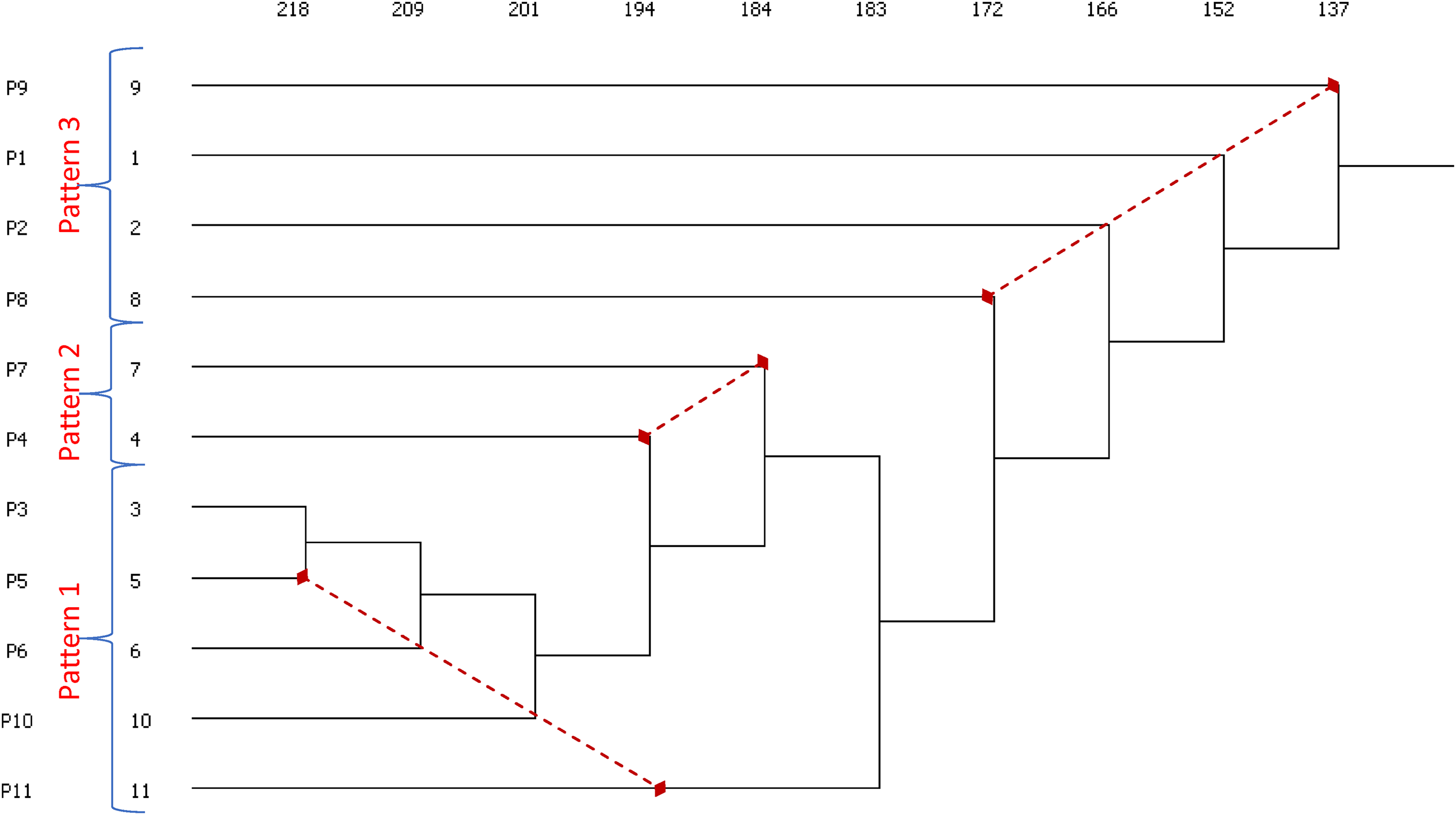
Clustered interdependencies according to the Lambda method. Source: Constructed from research data.
The doubling in buying and production is an economizing strategy
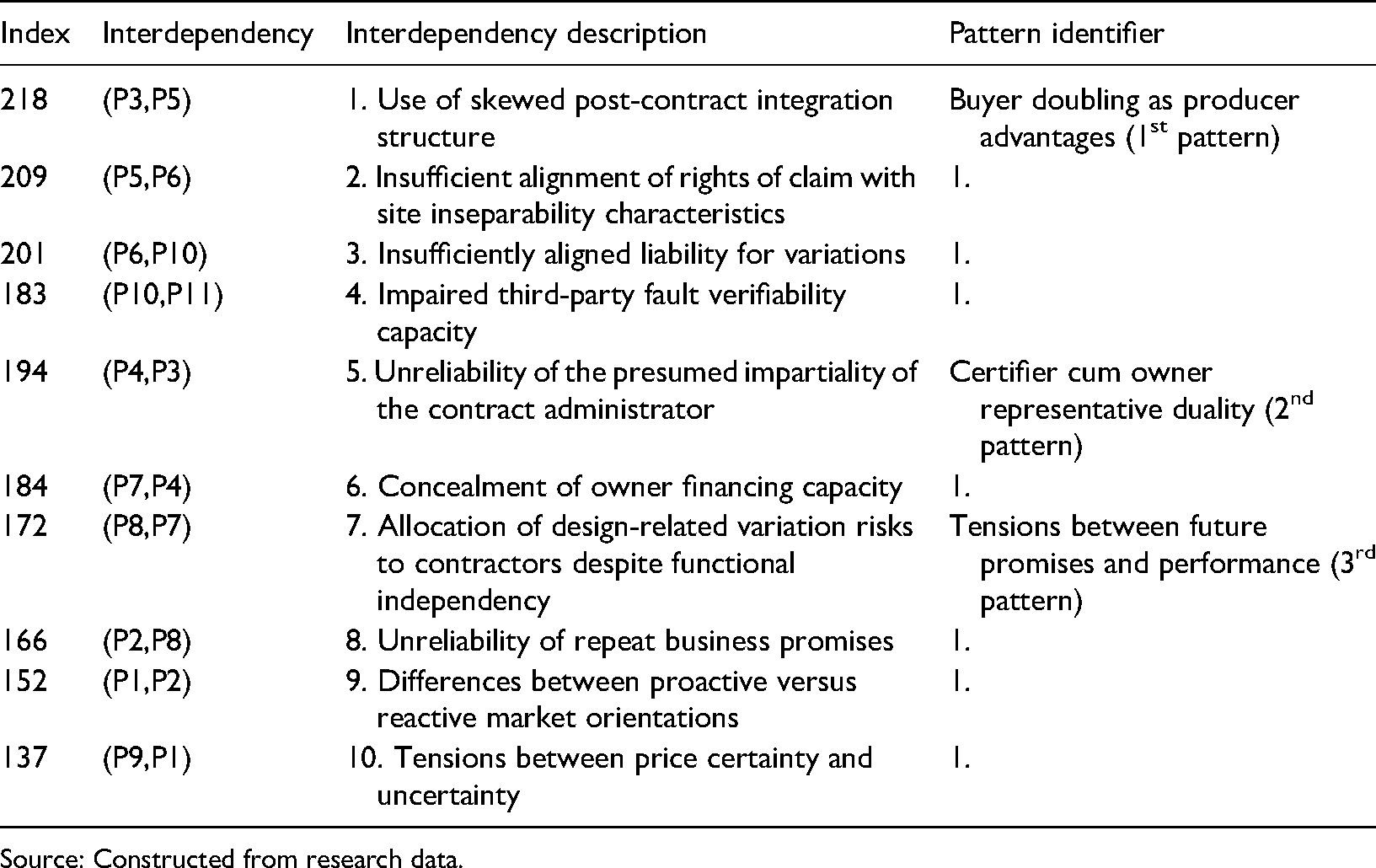
To begin, index 218 is the interdependence with the greatest exposure to payment risk. It initiates the first pattern, made up of indexes 209, 201, and 183. It also has the steepest slope, implying that doubling buying and production creates the greatest vulnerability to payment risks. In contrast, prompt and complete payment is arguably an effective reimbursement mechanism. In fact, once the product has been fused with the immovable production site of the buyer, it cannot be undone. As a result, it provides an opportunity for the owner to profit unjustly by failing to pay his contractors. This could explain why the procuring side prefers the D-B-B system.
Table 11 describes 10 interdependencies and their corresponding patterns. It demonstrates that the overall vulnerability is the result of a network effect as opposed to a single interdependency. By adopting a networked perspective, it is implied that the effectiveness of any given strategy is contingent on a network of practices. Thus, the viability of a network of practices determines the effectiveness of the owner's strategy. In contrast, the effectiveness of payment default remedies depends on how interconnected practices are. In other words, an advantage for one side is a disadvantage for the other.
Pattern and connection specification.
Source: Constructed from research data.
Combining certification and agency centralizes brokerage
Second, according to Figure 3 and Table 11, the second pattern involves indexes 194 and 184. Their primary indication is that the practice of combining agency and certification roles affects the compensation of contractors. By participating in design and bid preparation on the owner's behalf, the engineering agent is better informed about information such as the owner's financing capacity. In contrast, the contractor's absence implies a lack of knowledge regarding the owner's financial capacity. Due to the requirement to advance the owner's interests first (Winch, 2001), payment certification can be manipulated for the benefit of the owner. However, this strategy's success is contingent on the level of trust between the owner and his certifier. This could explain why, in contracts like FIDIC, the engineer has more influence than the owner and contractor. This understanding complements the decentralization proposed by, for instance, Hamledari and Fischer (2021).
Variations between promises and performance are traceable
Finally, index 172 demonstrates the connection between the occurrence of payment risks and variations. This index comes from P1, P2, P8, and P9. Its most important insight is that the practice of establishing the end-product price (contract price) prior to construction is a major source of variation. The outcome includes liability allocation ambiguities. In P8, design is separated from construction, but the designer oversees payment certification. However, design errors and specifications are contributors to cost variances (Eybpoosh et al., 2011). This tends to undermine the certification role's assumed neutrality, which includes allocating liability for the cost of variations. This is complicated further by the fact that the design is supplied on behalf of the owner. Without an objective way to identify cause-and-effect interdependencies, liability tends to shift to the most vulnerable party, and payment default is one mechanism. This, however, can be traced using the profiling depicted in Figure 3 and Table 11. As a result, this study suggests a less ambiguous method of profiling the cause-and-effect connection.
Contributions to practice
Taken together, the study makes at least three recommendations for practice.
The economizing strategy determines the choice of practices
To begin with, it demonstrates that the owner's cost-reduction strategies are linked to the selected contractual practices. This suggests that strategies are influenced by the interactions between practices. In turn, these depend on theoretical principles. Due to the interdependencies between these principles, contractors are vulnerable to payment risks. In this context, contractors are typically in need of work (Skitmore et al., 2006), making them susceptible to the owner's strategies. This may explain why the D-B-B is favored over other procurement alternatives. With this knowledge, disadvantaged contractors have a standard for gauging their vulnerability. On the other hand, owners can choose to make their strategic position stronger or weaker.
Complements decentralization measures
Second, the study shows that most payment risks are initiated and transmitted by intermediary functions at the network's center. As a result, the D-B-B engineering firm is better informed than the owner and contractor. This may explain why such brokerage positions are said to be the leading cause of disputes (Zhu and Cheung, 2020). The blockchain technology has been recommended as one of the countermeasures (Hamledari and Fischer, 2021). However, blockchain payment research has yet to show how such interdependencies can be profiled. By bridging this gap, this study enhances the proposed blockchain measures.
Improves analysis of payment-related disputes
Lastly, this study demonstrates a less ambiguous method of linking causes and effects. This was accomplished by illustrating how incompatibility between practices can lead to payment risks. By viewing such practices as payment default causes, it improves cause-and-effect analysis. Indeed, it is unclear how the multiple causes identified by Abdul-Malak et al. (2019) interacted to contribute to payment defaults. If adopted, the reported increase in contested arbitral decisions leading to litigation can be mitigated (Barman and Charoenngam, 2017).
Limitations and future work
A notable limitation of this study is that it is limited to its intended research purpose. It achieves this by identifying and analyzing the effects of interdependencies on construction contractor payment risks in a D-B-B context. Consequently, data was collected from subject matter experts involved in payment-related disputed cases within Kenya's territorial jurisdiction. While the case study methodology employed is consistent with, for instance, Fang et al. (2012) and Yin (2018), additional research is required. It would be beneficial, for instance, to validate the opinions of the purposefully selected interviewees with those who did not participate. Furthermore, the study proposed important propositions that should be tested in the future using alternative techniques such as random sampling.
Conclusions
The study identified and analyzed the effects of a network of incompatible practices on construction contractor payment risks. It achieved this by creating a network model of practices associated with the D-B-B procurement system. Since some of its practices are based on the standard market system, their application does not fully correspond to their divergent theoretical principles. The resulting network model uncovered 10 interdependencies that expose contractors to payment vulnerabilities.
A common conclusion is that the interdependence between payment on verified performance and failure to match work performed with amounts paid initiates and transmits most risks. In addition, an Eigenvector distribution analysis determined that the practices of contract document preparation and payment administration on behalf of the owner account for over 80% of the vulnerabilities. This is consistent with the power-law principle (Lin, 2015), which indicates network causation as opposed to a single cause. Moreover, 20% of the practices are responsible for 80% of the risks.
The study concludes with at least three recommendations. The first is that the procuring party's cost-reduction strategy dictates the appropriate contracting practices. Second, the method used to profile the interdependencies of intermediary functions has the potential to complement blockchain decentralization measures (Hamledari and Fischer, 2021). By establishing interdependencies between practices, this study addressed the lack of clear causal pathways in the analysis of payment dispute cases. If implemented, there is a chance that ambiguities will be reduced.
Supplemental Material
sj-docx-1-jsc-10.1177_20555636221136469 - Supplemental material for Identifying and analyzing effects of interdependencies on construction contractor payment risks
Supplemental material, sj-docx-1-jsc-10.1177_20555636221136469 for Identifying and analyzing effects of interdependencies on construction contractor payment risks by Mark Obegi Kenyatta, Abednego Oswald Gwaya, Sylvester Munguti Masu and Patrick Ajwang in Journal of Strategic Contracting and Negotiation
Footnotes
Declaration of conflicting interests
The author(s) declared no potential conflicts of interest with respect to the research, authorship and/or publication of this article.
Funding
The author(s) received no financial support for the research, authorship, and/or publication of this article.

Supplemental material
Supplemental material for this article is available online.
Author biographies
References
Supplementary Material
Please find the following supplemental material available below.
For Open Access articles published under a Creative Commons License, all supplemental material carries the same license as the article it is associated with.
For non-Open Access articles published, all supplemental material carries a non-exclusive license, and permission requests for re-use of supplemental material or any part of supplemental material shall be sent directly to the copyright owner as specified in the copyright notice associated with the article.
