




Abstract
This article explains how relational activities affect the design of seemingly paradoxical contractual arrangements among groups of channel intermediaries in Nigeria. The study used a grounded theory approach to investigate and analyze the contractual processes of three groups of channel intermediaries representing three diverse industries. Findings reveal that social relational activities trigger a higher prevalence of word-of-mouth agreements among channel intermediaries, whereas a blend of commercial and social relational activities trigger a higher prevalence of written agreements. Furthermore, we find that negotiation domains moderate the relationship between relational activities and the design of contractual arrangements. Insights from our work offer contributions to the literature on paradoxes, relational embeddedness, and international business.
Introduction
Paradoxes have become an important phenomenon and locus of theorizing in management and organizational scholarship (Cameron and Quinn, 1988; Bloodgood and Chae, 2010; Li, 2016; Van de Ven and Poole, 1988: 2; for recent reviews see Putnam et al., 2016 as well as Schad et al., 2016). Smith and Lewis (2011: 382) defined paradox as “contradictory yet interrelated elements that exist simultaneously and persist over time.” The conceptual foundations of this burgeoning literature on paradoxes build on knowledge and traditions from the West and East (Cunha et al., 2016). While the Western perspective focuses on challenging common assumptions and also on ontological plurality, the Eastern perspective focuses on viewing paradoxes as being composed of trade-offs and synergies (Jansson, 2008; Li, 2016). While these views are critical in understanding the concept of paradoxes, they appear to have “universalized” the notions drawn from the West and East without paying sufficient importance to the role of the cultural contexts in which paradoxes occur (Jackson, 2013; Peng, 2003). Yet, context matters in understanding how paradoxes emerge and persist within the organizational realm (Bloodgood and Chae, 2010). Different contexts could trigger different ways of conceptualizing and responding to paradoxical situations as well as developing knowledge about their management. While certain contexts might tolerate some paradoxes, other contexts might be less tolerant (Peng and Nisbett, 1999).
Africa is an example of such contexts. Africa is also an under-studied context when it comes to the phenomenon of paradoxes. Thus, the recent call to explore the features and specific dimensions of organizational paradoxes in Africa is timely (Cunha et al., 2016). The African context is theoretically interesting because organizations in Africa tend to be born and naturally operate under conditions of paradoxes. In other words, operating under paradoxical circumstances is the normal setting for many organizations in Africa and thus does not come across as a surprise. For instance, organizations continuously contend with paradoxes emerging from the presence of local traditional and foreign modern knowledge, formal and informal contractual arrangements, indigenous and foreign business practices, formal and informal economies, multiple regulatory regimes within the same context (Uzo and Adigwe, 2016; Uzo and Mair, 2014). At the same time, organizations in the continent are embedded in institutional domains that members belong to that stipulate ways of relating to each other and affect economic activities involving members (Dacin et al., 1999; Granovetter, 1985; Uzo and Mair, 2014). Thus, understanding how organizations experience and manage paradoxes in Africa is of theoretical importance because it can help to unravel indigenous social structures and relational activities that sustain seemingly paradoxical business activities. Furthermore, a study of this nature could help to explain how these relational structures and activities affect the nature of channel contracts among a mix of local and foreign intermediaries in Africa.
In this article, we interrogate how relational activities of groups of channel intermediaries (both local and foreign) create and sustain seemingly paradoxical contractual arrangements. We refer to channel intermediaries as the mix of independent organizations that work together to make a product or service available to the final consumer. We derive the empirical question from investigating local realities extracted from data collected on three groups of channel intermediaries representing the newspaper, sausages, and ice-cream industries of Nigeria. Nigeria is selected for this study because it is recognized as Africa’s largest economy (Folarin et al., 2016). The country also has the largest population in the continent (Economic Commission for Africa, 2016) and over 70% of the economic activities in the country take place in the informal economy. Since there are many more businesses in the informal economy than the formal economy of the country, locally and foreign-owned companies in the formal economy tend to transact with manufacturers, retailers, and distributors within the informal economy (Uzo et al., 2018). Thus, Nigeria constitutes a unique and interesting context in Africa to examine the empirical phenomenon we are interested in and expand theorizing around paradoxes and channel contracts. The study contributes to the literature on paradoxes by unpacking how organizations sustain seemingly paradoxical contractual arrangements. As a whole, the study contributes to the literature on organizational paradoxes, channel design among local and international intermediaries, and relational embeddedness. In the next section, we elaborate on the theoretical underpinnings to motivate our research questions.
Literature review
In the last three decades, scholars in the field of management have studied paradoxes based on insights from philosophy and psychology (Schad et al., 2016). Studies have investigated paradoxes at different levels of analysis. At the field level, studies have explained how national culture and local knowledge might influence the way of looking at distinctions (Fang, 2012) or influence inter-firm relationships such as tensions between competition and collaboration (Brandenburger and Nalebuff, 1996; Chung and Beamish, 2010; Das and Teng, 2000; Raza-Ullah et al., 2014). At the organizational level, studies have identified paradoxical situations involving competing demands of exploitation and exploration in ambidextrous organizations (Andriopoulos and Lewis, 2009; Smith, 2014) or tensions between financial and social missions in social enterprises (Hahn et al., 2014; Jay, 2013). Finally, at the individual level, studies have investigated the tensions between participative and directive leadership (Gebert et al., 2010), or between monitoring activities and permitting innovative activities (Denison et al., 1995). Put together, these studies have made a decent effort to demonstrate the pervasiveness of paradoxical situations.
Surprisingly, existing studies have not paid sufficient attention to paradoxical situations that might arise from the interaction between formal and informal contractual arrangements among channel intermediaries. At one extreme, contracts could be formalized or explicit and thus contain terms and conditions that incorporate all future contingencies as well as monitoring and enforcement mechanisms (Hagedoorn and Hesen, 2007; Lusch and Brown, 1996). At the other extreme, contracts could be informal or implicit and thus could be built around mutual understanding existing between parties who are involved in the exchange, with limited terms and conditions to manage future contingencies (Aulakh and Gençturk, 2008; Ring and Van de Ven, 1992). Scholars explain that formal contracts are used in order to protect contracting partners against opportunistic behaviors of their partners (Aulak and Kotabe, 1997; Mayer and Argyres, 2004). On the other hand, informal contracts are built on trust, shared expectations, and solidarity between the exchange partners (Blau, 1964; Cropanzano and Mitchell, 2005).
Scholars who study contracting have emphasized that the two types of contracts cannot co-exist in an exchange partnership and, as such, one contract substitutes for the other (Cao and Lumineau, 2015; Li et al., 2010). However, other scholars assert that a mix of formal and informal contracts are necessary as means for managing complex relationships (Poppo and Zenger, 2002), where explicit as well as implicit knowledge needs to be simultaneously shared and protected (Li et al., 2010; Liu et al., 2009; Poppo and Zenger, 2002). Yet, an understanding of the role of institutional contexts in shaping potentially paradoxical situations involving these two types of contracting has been largely ignored by scholars. Particularly, the cultural context of the exchange is of utmost importance to the nature of contracting. Differences in cultures, languages, and knowledge of the operating environments (Aulak and Gençturk, 2008; Prieto et al., 2009) affect international exchange relationships (Batonda and Perry, 2003) because they make trust building more complex (Geyskens et al., 1996). Knowledge and understanding of the cultural context also affect how contracts are interpreted by channel members (Bamberger, 2008; Heide et al., 2014) and how they respond to monitoring and enforcement efforts of their exchange partners (Heide et al., 2007; Kashyap and Murtha, 2017).
Also, scholars have come to agree that institutions offer “rules of the game” that determine the complementarity or substitutability of the different modes of coordination, especially in Asia (Jansson, 2008; Peng, 2003; Peng, 2006; Peng and Heath, 1996). For instance, scholars have argued that firms in transitional economies could achieve growth by adopting a network-based strategy that borders on personal trust and informal agreements under the constraints of a unique set of formal and informal forces (Peng and Heath, 1996). This was corroborated by the concept of “network societies” used by Jansson (2008) to describe the need for organizations in transitional economies to adopt informal agreements in paradoxical situations. In all, scholars have made decent efforts to examine organizational responses to paradoxical situations. These studies have emphasized “trade-offs” as the common approach to managing paradoxical situations. However, studies could benefit from understanding how relational activities of channel intermediaries embedded in diverse institutional domains affect their responses to seemingly paradoxical contractual arrangements between channel intermediaries.
Studying non-conventional and unique contexts such as the African context offers an important opportunity to build a new theory on paradoxical contractual situations among channel intermediaries who represent both local and foreign organizations. Particularly, the boundaries between formal and informal economies tend to be blurred in Africa. Thus, organizations tend to straddle to manage the institutional demands emanating from both economies (Uzo and Mair, 2014). For instance, while formal contracts tend to be representative of formal economies in Nigeria, informal contracts tend to be representative of a country’s informal economies and tacit knowledge (Uzo and Adigwe, 2016). In the following section, we explain the theoretical foundations for our research question.
Theoretical foundations: Relational embeddedness and institutional theory
Relational embeddedness is a theoretical construct used in the international business literature to explain the relationship between foreign and local exchange partners based on the strength of trust, social bonds, and commonly shared values (Cohen and Prusak, 2001; Dhanaraj et al., 2004; Kale et al., 2000). Foreign firms strengthen their ties with local partners by providing emotional, technological, managerial, and financial support (Kale et al., 2000; Uzzi, 1997; Uzzi and Lancaster, 2003). These activities lead to differences in the strength and interdependence of the relationships between local and foreign exchange partners and thus lead to diverse outcomes such as subsidiary knowledge creation (Håkanson and Nobel, 2001; Mu et al., 2007) and competitive advantages (Nell et al., 2010).
When applied to paradoxical contractual situations involving channel intermediaries, our position is that institutional theory aids the embeddedness perspective to explain the nature of its effect on channel design. The institutional theory provides a valuable theoretical lens for unraveling the role of the context in shaping how organizations experience paradoxical contracting situations and their outcomes. This is precisely because institutions precondition markets, property rights, and rules of exchange and provide the mechanisms for markets to function well such as governance mechanisms (Campbell and Lindberg, 1990; Fligstein, 2001; Mair and Marti, 2009). Institutions offer templates of action to guide individual and organizational behaviour (Lawrence et al., 2011). They are usually made up of formal institutions such as regulations, laws and their supporting structures (North and Weingast, 1989) as well as informal institutions such as unwritten, social, shared and unofficial channels for enforcement (Helmke and Levitsky 2004; Uzo and Mair 2014).
Institutions are defined as rules of the game (North, 1990) perpetuated by actors (states, individuals, and organizations) as a result of their embeddedness in existing institutional domains (Meyer and Jepperson, 2000; Suddaby et al, 2010; Uzo and Adigwe, 2016; Uzo and Mair, 2014). These domains might include family, ethnicity, polity, religion, etc.
The institutional theory offers the opportunity to explore how relational activities propelled by diverse institutional domains of embeddedness affect outcomes regarding channel contracts of local and foreign intermediaries. Therefore, the adoption of institutional theory as the theoretical anchor for this study could help to unpack how relational activities propelled by institutional domains of embeddedness affect the design of channel contracts. Our analysis addresses the following question: How do relational activities of groups of channel intermediaries affect contractual arrangements? This question informs our analysis and makes it possible to unravel the theoretical and managerial implications of our study to the literature.
Methods
Sampling, data collection and sources
We used purposive sampling to collect data on three groups of channel intermediaries representing the newspaper, sausages, and ice-cream industries respectively. Two of the companies in the channels were multinational manufacturers (Sweet Creamery and CUA) and one was a local manufacturer (Reliable Reads). Three other channel intermediaries were local wholesale distributors(Candace, Clinton, and CUA distributor) that served each of the manufacturers. We also engaged with retailers of the various product sectors. In order to preserve the anonymity of the organizations, we used pseudonyms to represent the names of the channel intermediaries.
Reliable Reads
Reliable Reads was the manufacturer of a Nigerian newspaper founded in 2001. The company was locally owned and managed by Nigerians. Also, its intermediaries are wholly Nigerians. Figure 1(a) represents the channel structure of Reliable Reads.
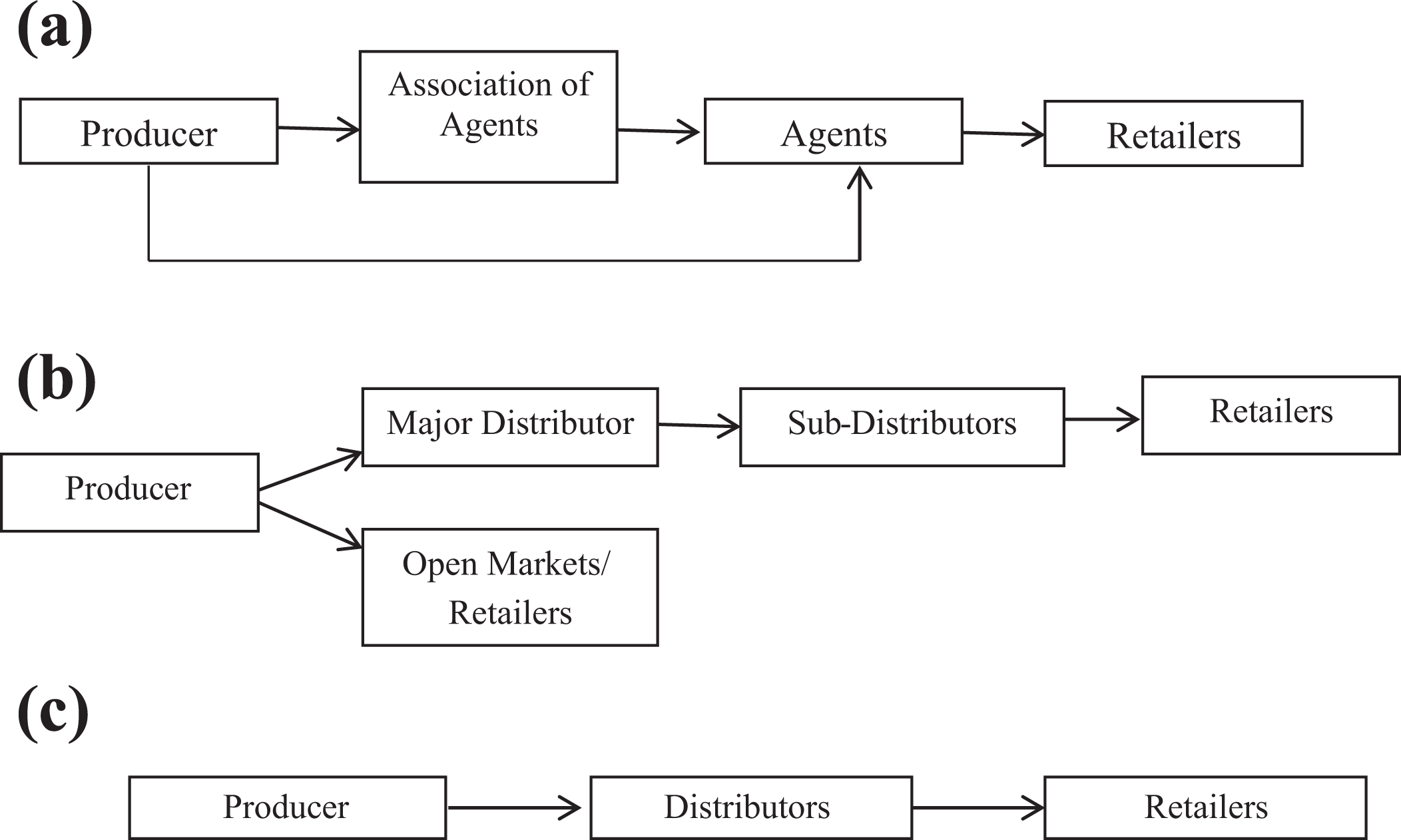
Channel structure of (a) Reliable Reads, (b) Sweet Creamery, and (c) CUA.
Reliable Reads sold newspapers to an association of agents and also agents who were registered members of the association. These agents sold to retailers. Clinton News Agency is the Agent that was selected for this study.
Sweet Creamery
Sweet Creamery is a Danish multinational manufacturing company founded in 1963 with a subsidiary in Nigeria. The subsidiary is owned by the Danish company. This company is known to produce frozen and non-frozen dairy products. The channel structure for the channel intermediaries of Sweet Creamery is displayed in Figure 1(b).
Sweet Creamery sells products, major distributors and retailers. Major distributors sell the products to sub-distributors who in turn sell the products to retailers. The major distributors sampled for the study were Candace and Jack.
CUA
CUA is an African multinational company with subsidiaries within the continent that sells ice-cream products. The headquarters of this company is based in Nigeria. The channel structure is displayed in Figure 1(c).
CUA sells products to distributors who in turn sell products to retailers. The distributor selected for the study is called CUA distributor.
The main criterion for selecting the companies was the ease of gaining extensive access to information about relationships down the distribution channel. Table 1 shows the profiles of the research participants that engaged in this study.
Profile of the research participants.
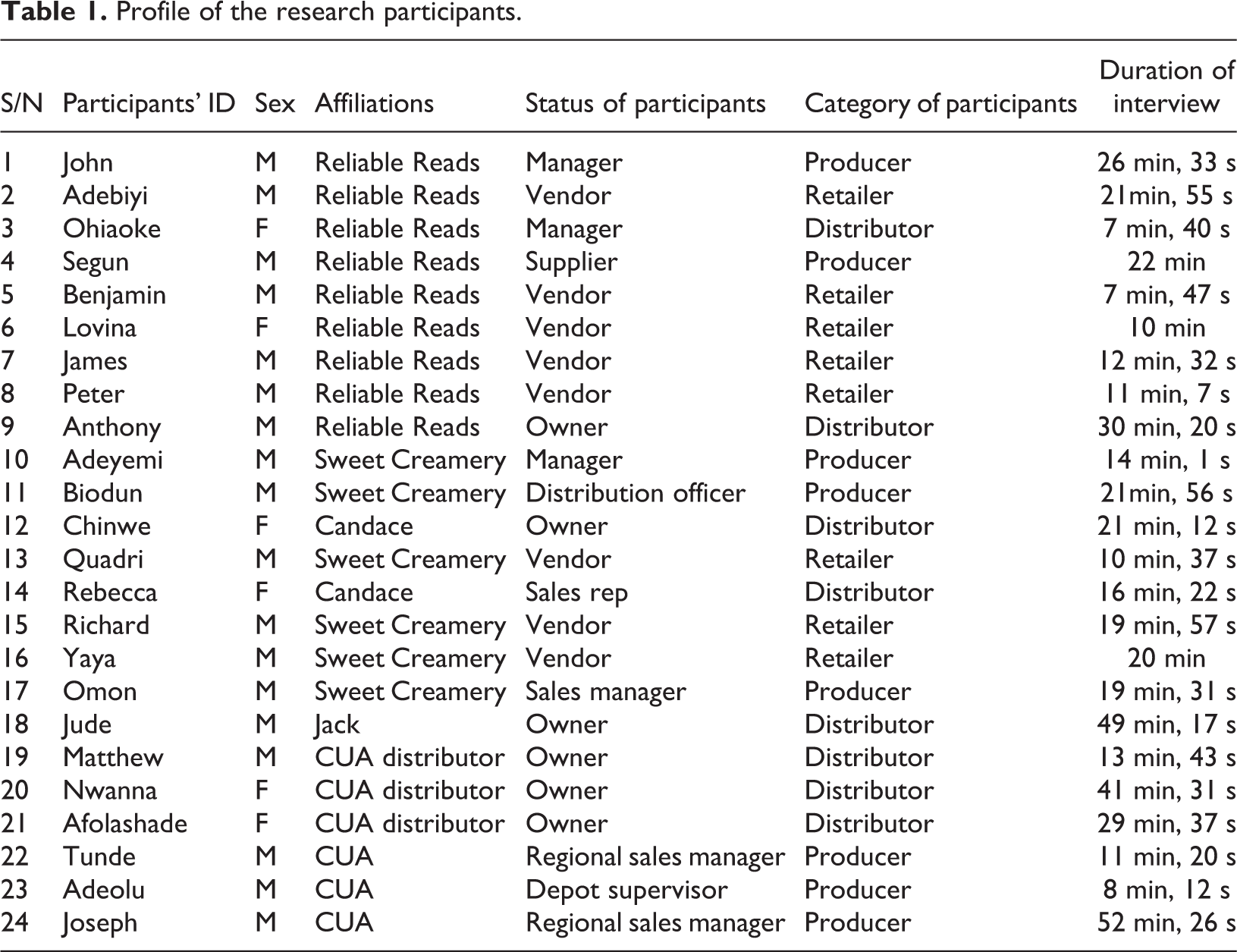
We collected data from three sources: (a) semi-structured interviews, (b) observations, and (c) company documentation. We used interviews as our main source of data while we used the observations and company documentation for triangulation. A total of 71 semi-structured interviews of 10 to 50 min in length were conducted from 2014 to 2017. We started with fewer than 10 interviews, to understand the exchange context. Interview informants included manufacturers, local wholesale distributors, and retailers. We asked informants to describe the contracting processes. Thereafter, we conducted more interviews to unpack the events, interactions, persons involved, and outcomes (Hadjro et al., 2017). We supported the interview data with observation data. A total of 54 site visits were made over a period of 250 hours to observe the daily activities of the sampled organizations. Subsequently, we collected company material (websites and documents) that described the organizational context of the study.
Data analysis
Following the tradition of grounded theory (Strauss and Corbin, 1998), we started with a wider objective to investigate sales exchange patterns involving manufacturers and their channel intermediaries. Our specific interest in contracting strategies emerged only after multiple rounds of data collection and analysis. Likewise, our investigation of the relational activities affecting the channel contracts emerged from the data. As these specific issues emerged, we went back to the literature (Hadjro et al., 2017). The iteration between the literature and our data helped us to define our research questions and develop the theoretical constructs (Edmondson and McManus, 2007). We did not stop the process until we had achieved theoretical saturation.
The data were coded using the ATLAS.ti software. The first step was to create a coding scheme based on a slice of the data comprising of 25 interviews and 20 site visits. This initial coding scheme was discussed and revised by the research team before the entire data were subsequently coded. Next, we carried out a detailed analysis to identify initial first-order codes through in vivo coding (these are verbatim conversations of respondents) (Strauss and Corbin, 1998). Thereafter, first-order codes were merged into second-order codes and then into high-order themes (Hadjro et al., 2017; Lee, 1999). This process helped to identify the types of channel contracts used by the intermediaries (that is, written and word-of-mouth agreements) as well as the relational activities affecting the design of these contracts. For instance, the high order-theme, known as “relational activities,” was generated by merging second-order codes such as “use of local dialects,” “storytelling,” etc.
The next analytical step was to use the same coding process to analyze the moderating mechanism affecting the relationship between relational activities and type of channel contracts. This helped us to unravel the higher-order concept of negotiation domain. Finally, we compared the data obtained within and across the groups of intermediaries in order to identify the similarities and differences. Figure 2 displays the analytical frame of the study.
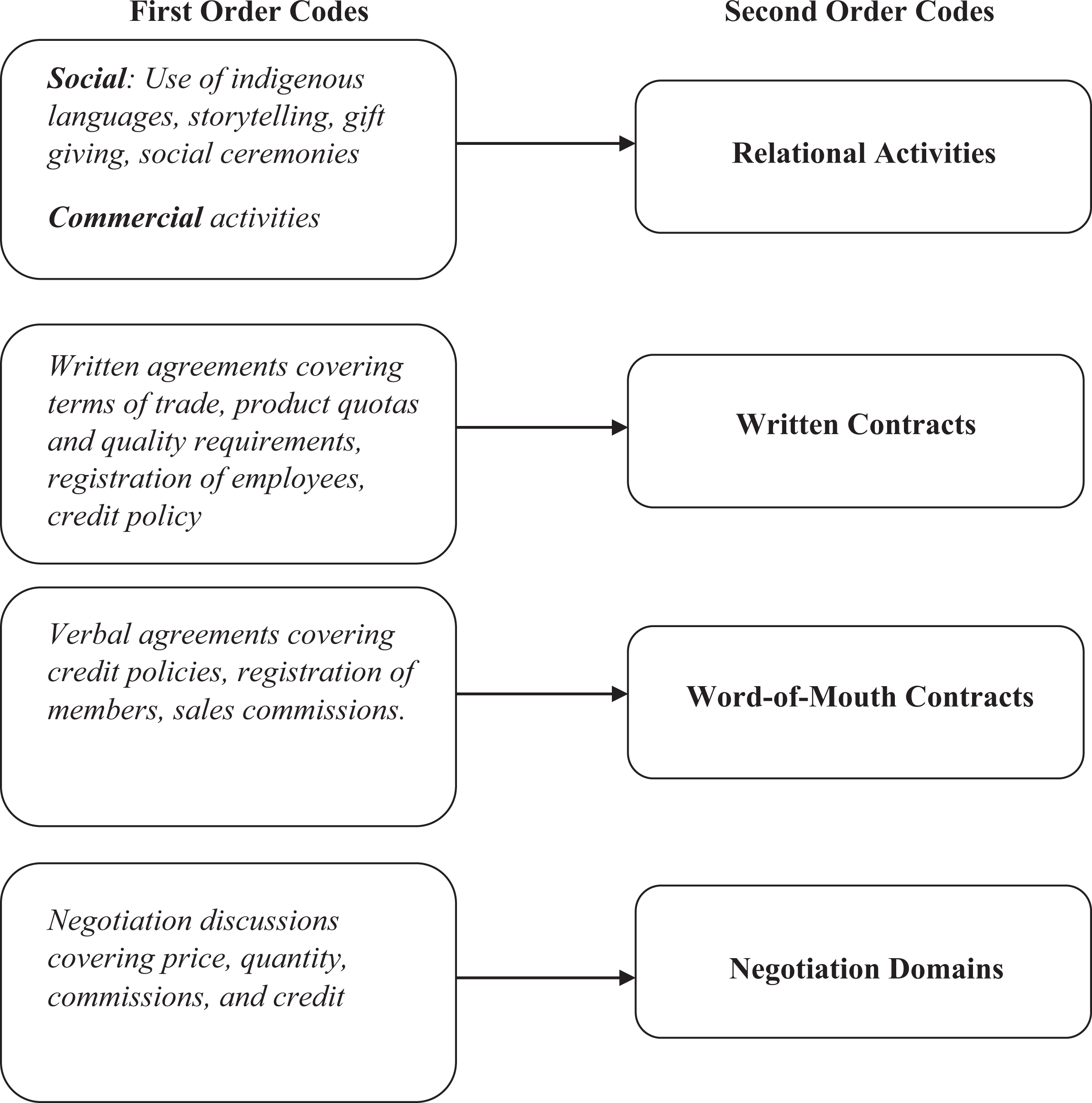
Analytical frame.
Findings of the study
Our findings highlight the role of relational activities in shaping the nature of channel contracts that govern transactions between groups of channel intermediaries with distinct channel structures in Nigeria. We offer three critical insights. First, channel intermediaries with distinct channel structures tend to blend a mix of written contracts and word-of-mouth agreements. However, the weight of the proportion of written contracts to word-of-mouth agreements varies among the different groups of channel intermediaries. Second, the variance in the pattern of contracting processes emanates from the type of relational activities that govern the transactions between groups of channel intermediaries. Third, the domains of negotiation activities among channel intermediaries moderate the influence of relational activities on channel contracting processes. We now explain these insights in greater detail.
Types of contracting processes
How do channel intermediaries governed by distinct channel structures contract when making products available and accessible to the consumer? Insights from our analysis reveal that channel intermediaries blend two seemingly paradoxical contracting practices: word-of-mouth (WoM) and written agreements. Particularly, all sampled groups of channel intermediaries adopted a mix of both WoM and written agreements. However, the weight of the proportion of one to the other varied in the different groups.
Word-of-mouth (WoM) agreements
We refer to WoM agreements as those agreements regarding transactional situations between channel intermediaries that are binding but not put in writing. These unwritten agreements covered a limited range of issues and were socially enforced. For instance, a manager at Reliable Reads explained: “these agreements are not written down, but they are commonly understood from the beginning of the relationship” (Interview). We further identified three main issues covered by WoM agreements. These included registration or recruitment of channel intermediaries, sales commission and credit facilities for channel intermediaries. WoM agreements took care of registration or recruitment requirements for channel intermediaries of Candace according to the owner: “There is no written contract for that purpose. We only ask retailers to provide guarantors and deposit some money which we give back to them when they decide they are no longer interested in the business” (Interview). This view was supported by a retailer of Candace who emphasized: “Contracts are not signed in this business” (Interview). This view was supported by the owner of Jack, who explained that no contracts were signed when registering local retailers. In his words: We don’t really sign contracts with our retailers. They apply on paper, are acquainted with the terms and conditions of work, get their sales targets, and know their compensation (Interview). The agreement between the middlemen and the manufacturer here is that they work out a commission: they give us 30% for any paper that goes for ₦300, and that 30% is what the middlemen (who we call agents) will share between themselves and the vendors. So we have our own agreement (Interview). Our channel members have one dirty book where they are always writing, and sometimes when agreements are not written, they know that the credit limit is five hundred thousand, although many of these things are not written and although there is no contract, they strictly take note of credit (Interview).
Written agreements
In this study, we refer to written agreements as those agreements that were explicitly put in writing to guide the transactions between channel members. This type of agreement covered issues ranging from terms of trade, product quality standards, registration of intermediaries, and franchise arrangements. For instance, the sales manager of Sweet Creamery explained that matters regarding the terms of trade were usually put in writing: “A document explaining the trade terms and agreement details are given, to which the distributors have to abide by and agree to by signing the document before we start a business” (Interview). Similarly, the owner of Jack (Sweet Creamery’s distributor) emphasized that: “The contractual terms are written by Sweet Creamery” (Interview). According to the legal team of Sweet Creamery: “The range of issues agreed upon in our contracts includes, but are not limited to, terms of agreement and interpretation, the tenure of engagement, the scope of fees and expenses…etc” (Interview). Similarly, a sales manager at CUA emphasized: “We use a formal agreement which stipulates terms and conditions that we sign to if we agree with our intermediaries” (Interview).
Written contracts also covered issues that had to do with the registration of channel intermediaries. For instance, a manager at Reliable Reads emphasized that the distribution agents of the association reach agreements by using written contracts to recruit their agents: “the agents’ association have their own contract that before you come in, either a vendor or any member; you have to register with them” (Interview). Likewise, a sales manager of CUA emphasized that contracts are used for registration purposes: “for one to become enlisted as a modern trade outlet with us, one must have a particular size of outlet; the outlet would have a specific type of ambiance, and one must have a specific number in his/her chain”(Interview).
In addition, written contracts dealt with issues concerning product quality standards. In Sweet Creamery, a marketing manager explained: “The contract looks at the quality of the products that you have to sell, because our products are produced frozen, supplied frozen, stored frozen, sold frozen, and consumed frozen” (Interview). The managing director of CUA also explained how contracts stipulate standards of product quality for the organization and its channel intermediaries. “If you eat something and you have a running stomach, I go for the distributor in the area. That’s the other thing, so it transfers responsibility” (Interview).
Finally, the written contracts covered issues that had to do with territorial exclusivity and franchise arrangements. For instance, a regional sales manager of CUA explained: The first thing we do is to know the location of the shop of a new sub-distributor, and if the location is good, he/she signs an agreement that he is our sub-distributor, meaning that he/she is not expected to pick products from any other location; no product should be brought in from another territory into my territory (Interview).
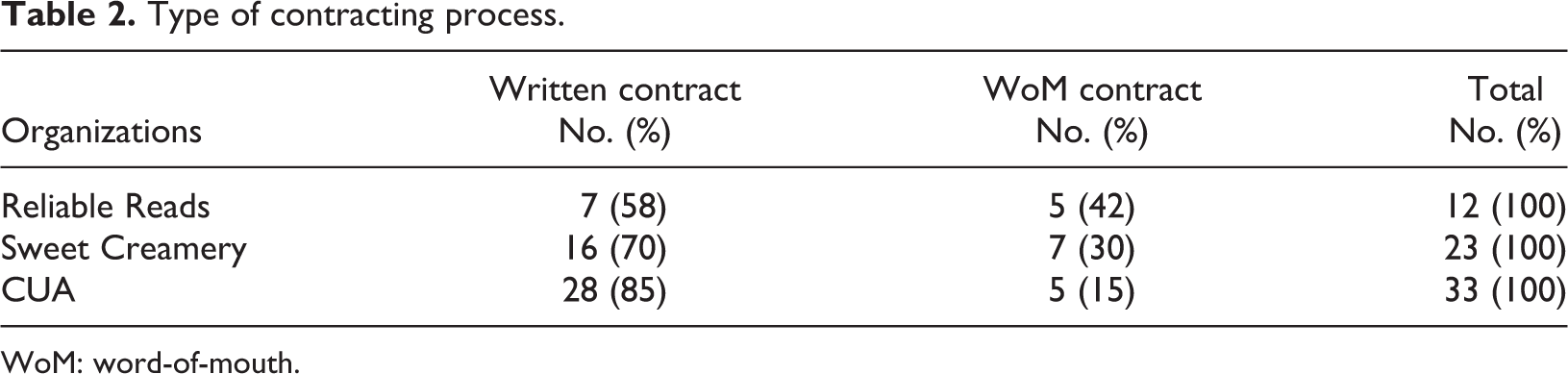
In summary, all groups of channel intermediaries in the sample blended WoM agreements with written agreements; however, both types of agreements were used to cover distinct issues. While WoM agreements covered issues such as registration, sales commissions, and credit facilities; written agreements covered issues such as product quality standards, agent registration, and franchise arrangements. Furthermore, insights from our analysis revealed that there was variance in the proportion of the mix between WoM agreements and written agreements in the focal organizations. Table 2 displays the results of our findings
Type of contracting process.
WoM: word-of-mouth.
Reliable Reads and its channel intermediaries had the highest proportion of WoM agreements at 42% followed by Sweet Creamery’s group at 30%, and CUA’s group at 16%. On the other hand, CUA and its channel intermediaries had the highest share of written agreements at 84% followed by Sweet Creamery’s group at 70%, and Reliable Reads’ group at 58%. Reliable Reads and its channel intermediaries used more WoM agreements than Sweet Creamery and CUA and their channel intermediaries. However, the reverse is the case for Sweet Creamery and CUA and their channel intermediaries; they both adopted more of written contracts than Reliable Reads.
Relational activities
Why do groups of channel intermediaries blend both WoM and written agreements during transactions? Our analysis of interview and observational data reveals that the nature of relational activities propelled by institutional domains affects the contracting strategy of the channel intermediaries. Institutional domains of embeddedness refer to the normative and institutional environments that members belong to, which stipulate ways of relating to each other and affect economic activities involving members (Dacin et al., 1999; Granovetter, 1985; Uzo and Mair, 2014). These domains include family, religion, ethnicity, etc. In our sample, the channel intermediaries were predominantly embedded in the domains of ethnicity (Reliable Reads and intermediaries), family and business (Sweet Creamery and intermediaries) and business only (CUA and intermediaries). Thus, Reliable Reads group was mainly composed of members of the same ethnic group while Sweet Creamery’s had a mix of family and business ties with its intermediaries. CUA had only business ties with its channel intermediaries.
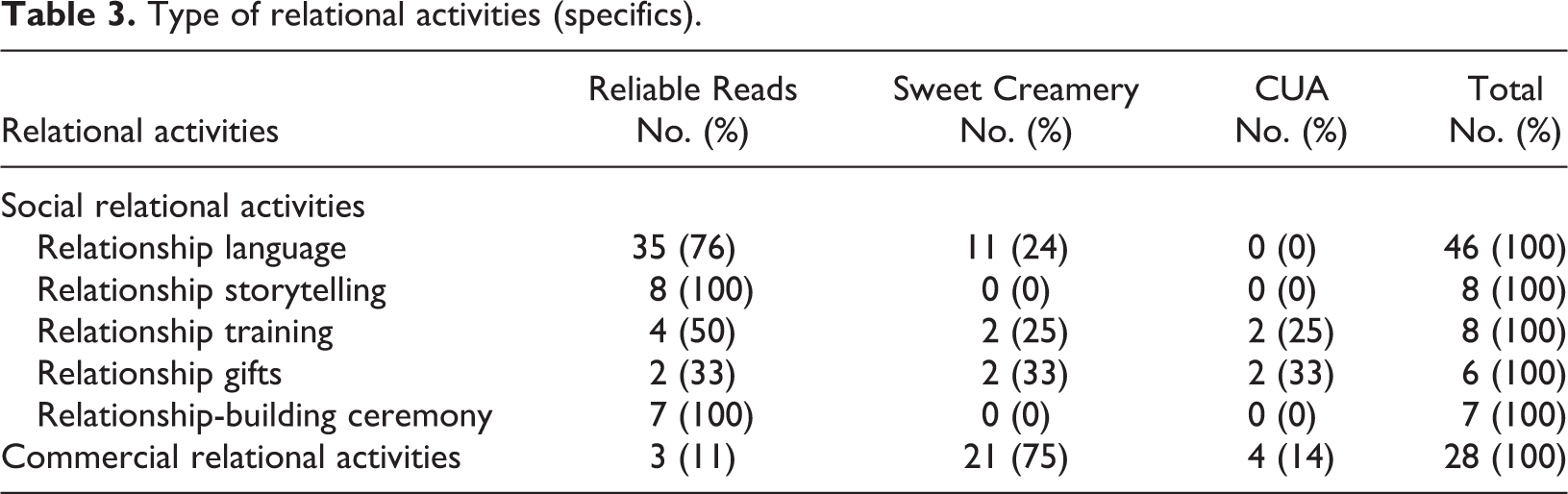
Membership in these domains affected the nature of relational activities that unfolded among channel intermediaries. We refer to relational activities as the set of activities that foster social or commercial bonds between members of a group. Our analysis identified two types of relational activities: social and commercial activities. While the Reliable Reads group had the highest share of social relational activities, Sweet Creamery’s group blended both social and commercial relational activities while CUA’s group had the highest share of commercial relational activities. Table 3 displays the results of our findings.
Type of relational activities (specifics).
Social relational activities
Social relational activities are activities that encourage fraternal bonding and trust between channel intermediaries. We obtained a total of 75 interview quotes and observed instances as evidence of these activities. In our sample, we identified five dimensions of social relational activities: use of ethnic languages, storytelling, counseling, gift giving, and participation in social ceremonies. The first dimension was the use of ethnic languages. This involved the use of local ethnic dialects to communicate among channel intermediaries when the English language is the official language for business transactions. The deliberate use of local ethnic dialects fostered a sense of belonging among members.
Reliable Reads and its channel intermediaries had employees who were ethnic affiliates of the Igbo ethnic group. This made the Igbo language the major means of communication between channel intermediaries. For instance, an association member that transacts with Reliable Reads explained the reason for the existence of this practice. In his view, “this business originated from Igbos, I don’t know why. But not all of them, everyone is free to come and do the business, but it seems that the Igbos in this business are more than other ethnic groups” (Interview). A sales rep of Clinton News (a distribution agent for Reliable Read) corroborated this view: “if we transact with someone who is from the same place as us, we use our mother-language. But if it is someone from a different place, we use the English language, and then transact our business” (Interview). A retail customer of Clinton News also emphasized, “We are from the same place; we use the Igbo language for transactions” (Interview).
Sweet Creamery’s group also, occasionally, used local dialects when communications were between members of the same family. For instance, on several days, it was observed that the sales staff and retailers conversed exclusively in the local dialects during their transactions (Field note, Candace: Distributor of Sweet Creamery).
The second dimension of social relational activities was storytelling. Storytelling took place only in the Reliable Reads group. For example, during a particular site visit, the sales manager told a story about a robbery incident to a retailer (Field note, Clinton). On several days, it was observed that the retailers and employees of the company continuously exchanged stories and jokes during the business transactions (Field note, Clinton). These were stories about events unrelated to the business that was used to foster a sense of a cordial atmosphere during business transactions.
The third dimension of social relational activities was counseling. We observed that channel intermediaries offered some form of pastoral care in the form of counseling to their members in time of need. In the Reliable Reads group, counseling was provided alongside training opportunities for newly recruited intermediaries. For instance, the manager of Clinton News explained, “Our distributors and retailers did not know about the business originally. We were the ones who recruited them and counseled them before they could know about the business” (Interview). A similar phenomenon was observed in the Sweet Creamery group. For example, after a transaction, the owner of the organization counseled Bello (the agent he told he would not sell to on credit) on how to manage his business effectively. In CUA’s group, the managing director explained how counseling operates: “We do stuff like training for distributors; training and counseling them on how to structure your businesses” (Interview).
The fourth dimension of social relational activities is gift giving. Gifts were given to foster bonds of trust among members and a source of motivation for high performance. This phenomenon was present in the three groups of channel intermediaries. For example, a manager of Reliable Reads explained, “We offer gifts such as television, DVDs and so many other things to recognize high performing agents” (Interview). The owner of Candace (distributor for Sweet Creamery) also offered gifts to its retailers. In her words, “During the festive periods, I either cook buy drinks or cakes for them, and I also do for them whatever.” (Interview). This was also a similar situation in CUA’s group when the sales manager claimed that “Sometimes we give them gifts, we visit them at home” (Interview).
The fifth dimension was participation in social ceremonies involving channel intermediaries. This practice was only prevalent in Reliable Reads group according to one of their managers: “We even attend their functions such as birthdays, burial, marriage, etc. This relationship has been on for years” (Interview). Similarly, a retailer of Clinton News emphasized, “Since we have been in the business for long, we have become like family friends, and so I invite them whenever we have social ceremonies” (Interview).
Commercial relational activities
Commercial relational activities are activities between channel intermediaries that are for commercial benefits and aim at fostering the profit-making mindset of the group. We obtained 28 observed instances and interview quotes as evidence for these activities. These relational activities were more focused on improving the performance of channel intermediaries at the point of sale. For instance, a sales manager of Sweet Creamery explained, “One thing we are doing very well is to help maintain the sales point, their pushcarts, their bicycles, etc.” (Interview). The sales operations manager also corroborated this view, saying, “Our engineering team goes to their outlets at least once a week to check on their equipment to see what can be repaired” (Interview).
Visits were also organized to the outlets to achieve the same objective. According to the regional sales manager of Sweet Creamery: The sales officers and the sales managers also visit the customers regularly to find out how business is doing and how to move the business forward and grow the business (Interview).
As shown in Table 3, the summary of our analysis revealed that Reliable Reads had the lowest proportion of commercial relational activities while Sweet Creamery and CUA`s groups had the highest proportion of commercial relational activities. These findings suggest that organizations embedded in ethnic domains that tend to predominantly use social relational activities end up having a higher proportion of WoM agreements than written agreements. Whereas, organizations embedded in business and family domains that tend to mix social and commercial relational activities end up having a higher proportion of written agreements than WoM agreements. In formal terms, the finding suggests the following:
Negotiation domains
How do relational activities of channel intermediaries affect contracting strategies? Insights from our analysis reveal that these relational activities generate negotiation processes that affect how contracting strategies unfold. Particularly, relational activities shape the negotiation domains that affect the contracting strategies that channel intermediaries adopt. We refer to domains of negotiation as the various themes of discussion that are part of the deliberations during the contractual negotiation process. Our analysis obtained 113 observation instances and interview quotes on negotiation processes. The scope of negotiation processes covered four main areas: price, quantity, sales commission, and credit-based negotiation processes. We observed that negotiations continuously occurred on-the-go in these four domains. Table 4 displays the results of our findings.
Negotiation domains of channel intermediaries.
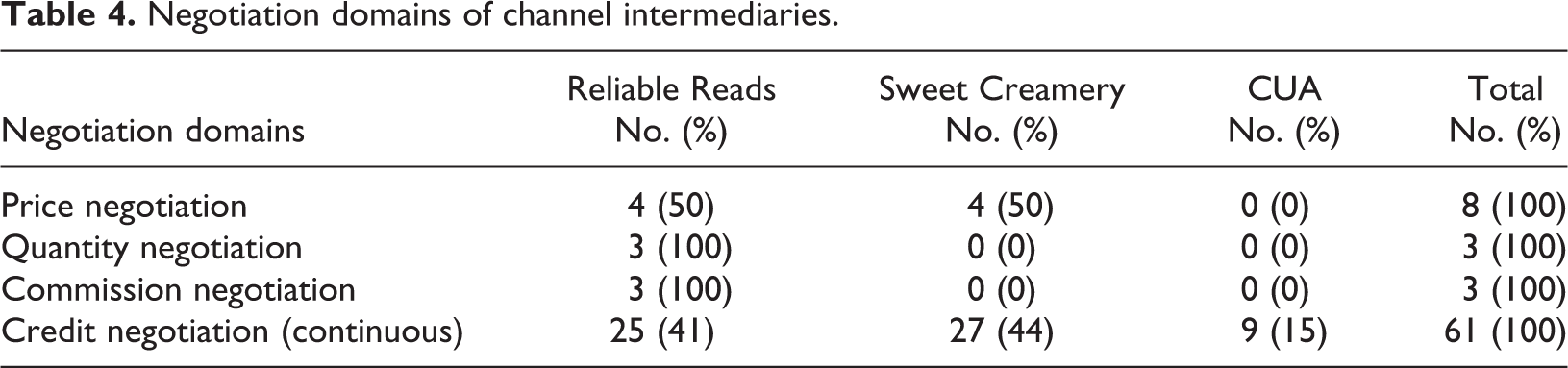
Negotiation processes in the Reliable Reads group covered all the four main areas. Whereas, negotiation processes in Sweet Creamery’s group focused only on price and credit negotiation. CUA’s group focused exclusively on credit negotiation. Price negotiation refers to negotiations between channel intermediaries about price points at the point of sale. A manager of Reliable Reads explains how this works: “The distributors ask for the cover price and then percentages are set in line with the cover price, and so at that foundation, negotiation starts” (Interview). Similarly, a manager of Clinton News explains that price bargaining occurs more frequently when they are notified of possible price changes from Reliable Reads: “Yes we bargain, and when the product’s price increases and the price has to change including the margin, we bargain” (Interview). A retailer of Clinton News also corroborated this position: “Sometimes, when Clinton News is in need of money, they show the products and then I ask them to reduce the money for me to buy” (Interview). A similar practice occurred in the Sweet Creamery group. According to a sales manager of Candace: If I tell the retailers that the price has increased by ₦10, they would all converge somewhere to determine how much they would buy it from me, and if I refuse to sell to them they would go to another outlet (Interview).
The third dimension of negotiation was commission based negotiation. In this case, channel intermediaries negotiated the amount of sales commission to be allocated to them. The Reliable Reads group was the only group in the sample that negotiated sales commissions. A manager at Reliable Reads claimed that “the selling price is the one on the front page of the paper. What we then do is that we discuss the percentage of their commission including the price they sell to the retailers” (Interview). The association of distributors that work with Reliable Reads also negotiates quantities for its members. In the words of a manager at Reliable Reads, “One of the issues they discuss is about the commission, as you know, they sell on commission” (Interview).
The fourth dimension of negotiation was credit negotiation. Channel intermediaries negotiated the credit terms that were applicable to their business transactions. All groups of sampled organizations practiced credit negotiation. According to the manager of Reliable Reads: We are very flexible; it’s not in all cases. We understand that sometimes these distributors may not be able to get all the money or sales because some of these companies sometimes owe them. We then consider as in, for instance, if the agent has money for 300 copies, we give him 200 copies on credit and get the money later (Interview).
CUA’s distributors also affirmed that credit negotiation is common but mainly applies to channel intermediaries that they can trust. The owner of one of the distribution companies stated: “CUA gives credit facilities to trustworthy distributors, who take the filled credit cheques to the accountant” (Interview). Similarly, another distributor affirmed the same position: We negotiate credit only for those who have been good and clear enough and those with good records and straightforward practices; we give them the grace of about 3–4 days to sell the goods and pay back the company (Interview).
Discussion of findings
The main objective of this article was to unravel why and how contracting processes unfold among groups of channel intermediaries with a distinct channel and ownership structures. Our analysis revealed three main findings. First, we found that distinct groups of channel intermediaries working to make products available blended a mix of WoM and written agreements; however, the proportion of the mix varied by groups of channel intermediaries. Thus, the sampled organizations habitually perpetuated seemingly paradoxical situations when it came to contracting between channel intermediaries of the diverse channel and ownership structures (including local and foreign ownership arrangements).
Second, relational activities influenced the design of channel contracts among intermediaries. Particularly, we found that organizations that adopted social relational activities fostered more bonds of trust and solidarity which created a higher preference for WoM agreements. This situation occurred because these channel intermediaries were embedded in the ethnic institutional domain which conditioned the members to behave socially according to the setting rules and expectations. However, organizations that mixed social and commercial relational activities preferred to opt for a larger share of written agreements.
Our third finding reveals that the negotiation domains used by the intermediaries moderated the nature of the relationship between relational activities and the design of channel contracts. Thus, organizations that permitted wider domains of continuous negotiation tended to be propelled by social relational activities which affected the higher adoption of WoM agreements. On the other hand, organizations that allowed fewer domains of continuous negotiation tended to be propelled by a mix of commercial and social relational activities which affected the higher adoption of written agreements.
Below, we discuss the theoretical and managerial implications of these findings and highlight future research directions of the literature on organizational paradoxes, international business, and negotiation. Figure 3 displays the conceptual backbone that explains our findings.
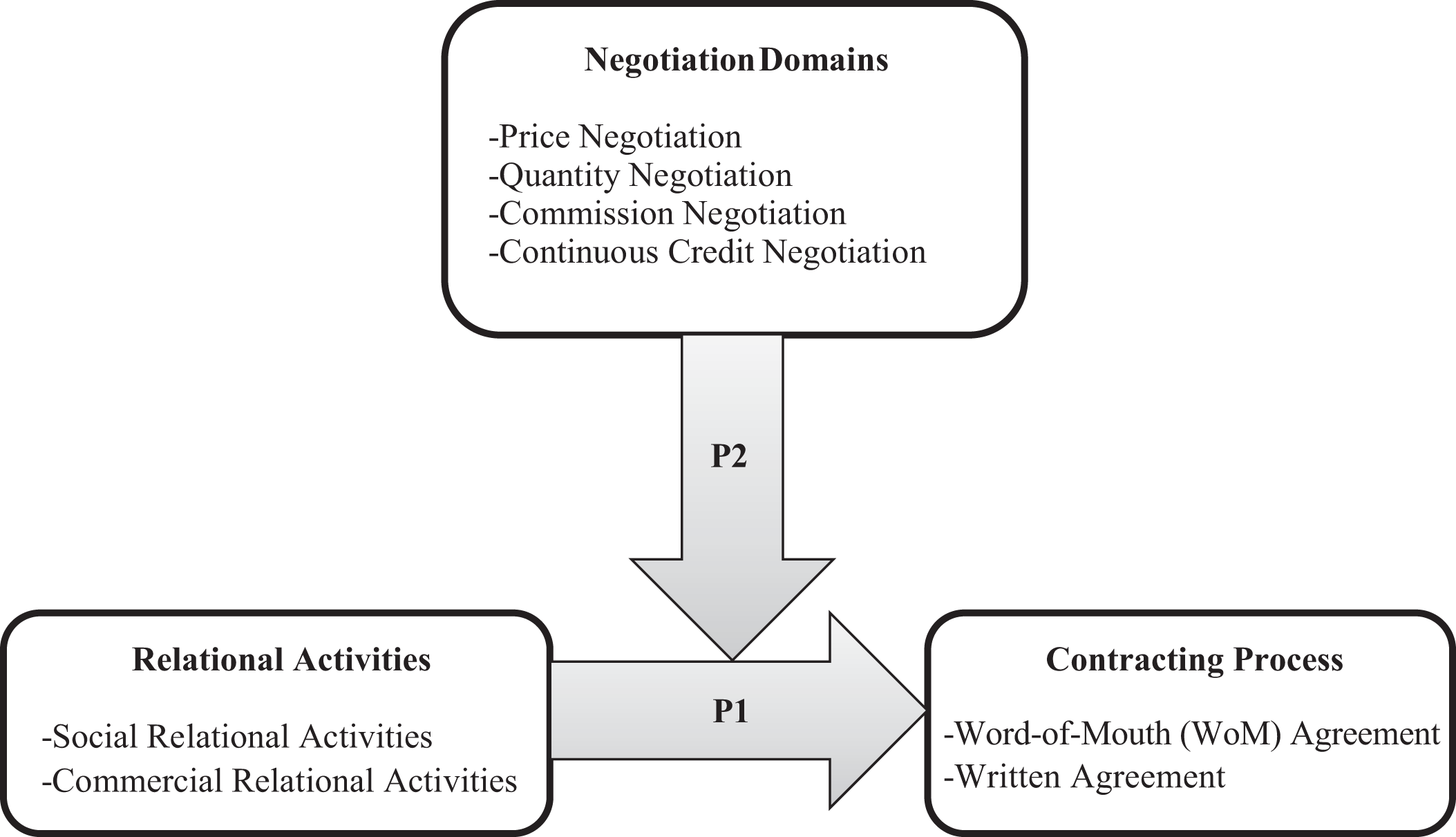
Conceptual framework.
Theoretical implications
This study contributes to the literature on organizational paradoxes by offering an unconventional context for the study. A unique contribution of this article is that it investigates an African context where organizations are born and operate under circumstances that are habitually paradoxical. Prior studies largely investigated situations in which organizations occasionally experienced paradoxes and thus were forced to manage the situations (Brandenburger and Nalebuff, 1996; Chung and Beamish, 2010; Hahn et al., 2014; Jay, 2013). Yet our findings suggest that this is not necessarily the case when it comes to contract design among channel intermediaries in Africa. We empirically reinforce the view in the literature that formal and informal contracts are not strictly dichotomous but proceed along a continuum (Godfrey, 2011; McGahan, 2012; Uzo and Mair, 2014). Thus, paradoxical contractual situations involving a blend of written and WoM agreements may not always be in opposition but might be closely intertwined as channel intermediaries design contracts. Therefore, our study of contracting processes advances a linkage between the literature on contract design and organizational paradoxes.
Our findings also link the work on relational embeddedness in the international business literature (Dhanaraj et al, 2004; Reitz and Anderson, 2011) with institutional theory and organizational embeddedness. Our findings theoretically imply that the institutional context creates the social configurations that ensure the persistence of paradoxical situations. Relational activities between exchange partners acted to varying degrees as “social glues” that reinforce ties existing between the partners (Novicevic and Harvey, 2004; Shepsle, 1989). Therefore, our finding reinforces the idea that paradoxes do not emerge in social vacuums (Cunha et al., 2016) but rather originate from diverse social configurations that interact in a stable manner within a particular context.
Another interesting insight from our findings is that the intensity of the effect of relational activities on channel intermediaries might vary by the type of institutional domain of embeddedness. Particularly, our findings show that ethnic relationships among channel intermediaries tend to command a higher prevalence of social relational activities that business and family relationships. Furthermore, our distinction between social relational activities and commercial relational activities also helps to unravel that the role of relational activities in affecting exchange activities more nuanced than is commonly assumed.
Finally, our findings reveal the dynamics of negotiation domains and processes in shaping the effect of relational activities on the design of channel contracts. We reveal that social relational activities tend to trigger wider domains of negotiation than commercial relational activities of channel intermediaries.
Questions to motivate future studies in this area are: How do strategic choices of channel intermediaries that are born and evolve in paradoxical situations shape contractual boundaries? How do market dynamics differ when paradoxical situations change? How do relational activities evolve when intermediaries are embedded in multiple institutional domains? Future studies of these issues would greatly enrich the perspectives on paradoxes, channel design, and relational embeddedness.
Implications for practice and study limitations
In this article, we investigated contractual processes between channel intermediaries in Nigeria. We do not suppose that our findings are generalizable across all contexts. Despite these limitations, we offer insights from a unique and under-researched setting that open up interesting theoretical insights for future researchers. Particularly, the study has a number of implications for managers of foreign manufacturing firms seeking to expand into developing economies such as those in Africa. Managers of multinational corporations seeking to expand into such markets would need to understand the dynamics of institutional domains in which channel intermediaries operate. An intricate understanding of the nuances of these domains would greatly help such managers in the process of selecting suitable channel partners within those economies.
Another practical implication of our finding to managers of multinational manufacturing firms and their local intermediaries is that success in building effective channel relationships in such markets is closely linked to the ability of these channel intermediaries to serve as “institutional agents” who are prepared to project or negotiate institutional demands. Our findings also imply that managers of multinational manufacturing firms seeking to expand within Africa and other developing economies would need to acquire expertise in designing, monitoring, and executing informal contracts. These managers would also require a deeper understanding of how to create non-financial incentives that would motivate channel intermediaries located in such markets.
Finally, the study has some important implications for managers concerned about channel design in emerging economies. Our findings suggest that continuous haggling is an essential skill for managers in such markets. According to Onyemah and Akpa (2016), “most people in Nigeria and the rest of Africa take for granted that the price voiced by a retailer is not the ‘final’ price. The norm is for the final price to be arrived at after a bargaining process.” Put differently, exchange negotiations without the haggling element are considered by channel intermediaries to be irresponsible even when written contracts exist (Muchiri, 2009). This implies that managers that give room for negotiation across several contractual domains are more likely to secure a higher level of customer satisfaction than managers who do not.
Footnotes
Declaration of conflicting interests
The author(s) declared no potential conflicts of interest with respect to the research, authorship, and/or publication of this article.
Funding
The author(s) received no financial support for the research, authorship, and/or publication of this article.
